Gender at Work A Companion to the World Development Report on Jobs - In the World of - ReliefWeb
←
→
Page content transcription
If your browser does not render page correctly, please read the page content below
Gender at Work
A Companion to the
World Development Report on Jobs

      In the
     World of
      Work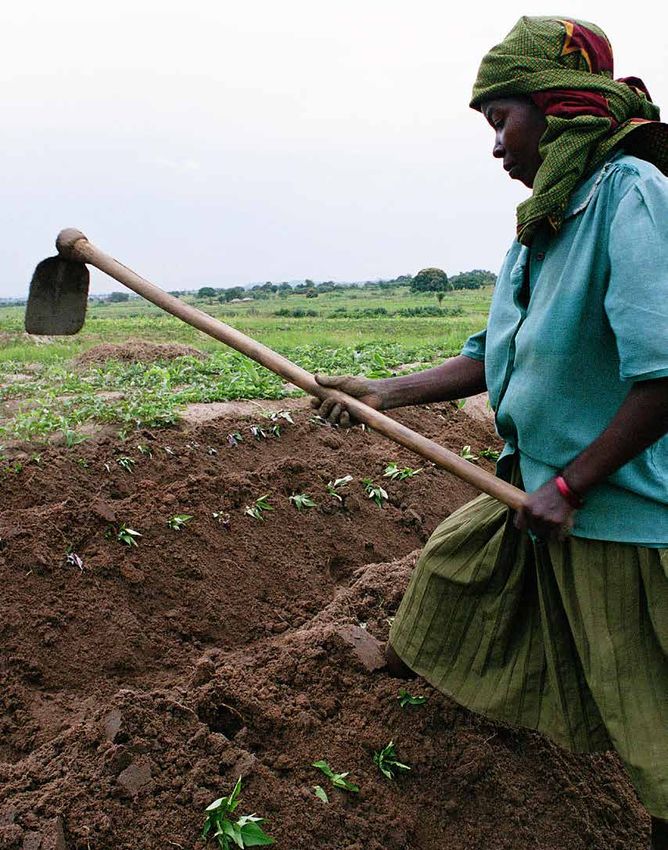
Cover photos from top to bottom:
Construction worker checking progress and quality of dam under construction, Sri Lanka. Photographer Lakshman Nadaraja
Woman attends her produce post in a market, Guatemala City, Guatemala. Photographer Maria Fleischmann
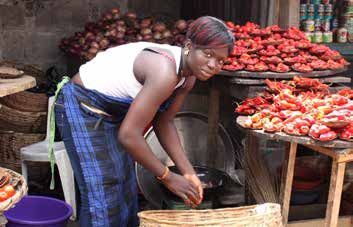
Young woman tending her peppers in the marketplace, Lagos, Nigeria. Photographer Women’s World Banking
Stall owner, Thimphu weekend market, Bhutan. Photographer Michael Foley
Teacher in action, Rajasthan, India. Photographer Michael Foley

Page 1: Women repairing a road, Hanoi. Photographer Tran Thi Hoa
Page 5: Woman works at weaving a carpet, Herat, Afghanistan. Photographer Graham Crouch
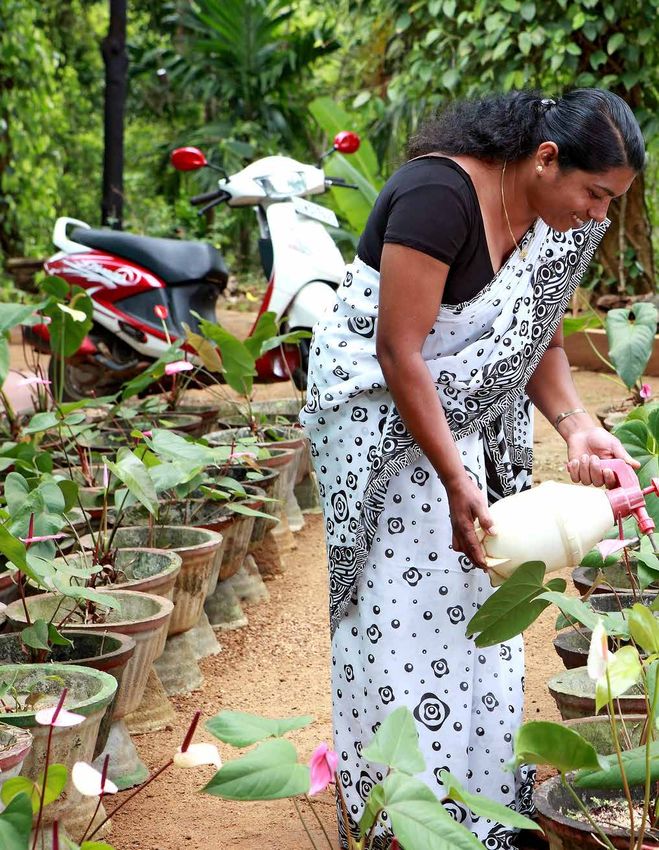
Page 17: Woman tends to plants in a nursery, Sri Lanka. Photographer Lakshman Nadaraja
Page 33: Woman works on her farm, Tanzania. Photographer Scott Wallace
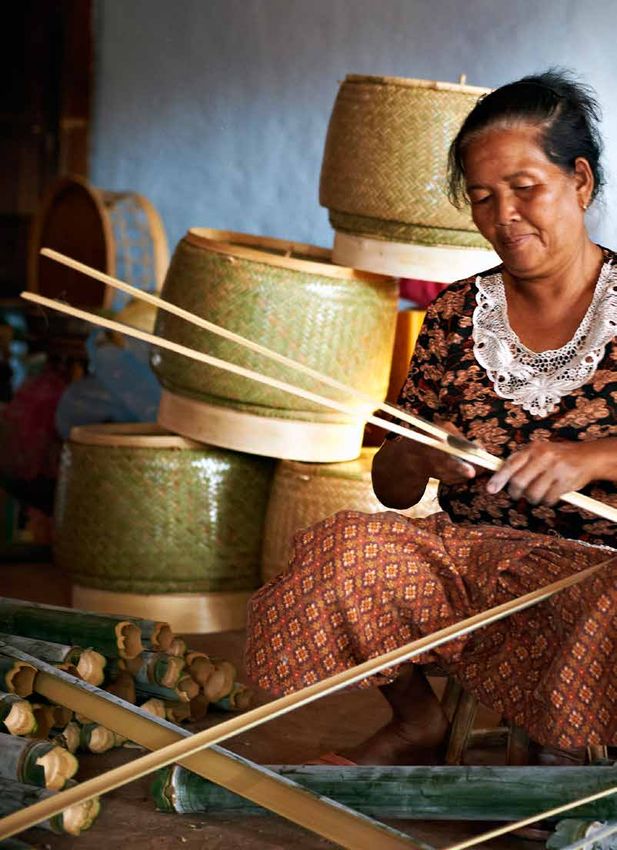
Page 53: Woman cutting bamboo to weave into baskets, Vientiane, Lao PDR. Photographer Stanislas Fradelizi
Gender at Work
A Companion to the
World Development Report on Jobs

                                    In the
                                   World of
                                    Work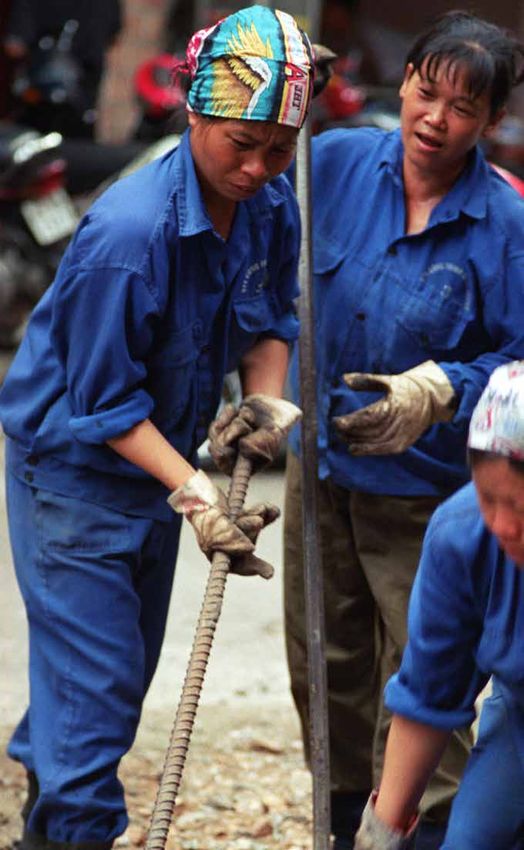
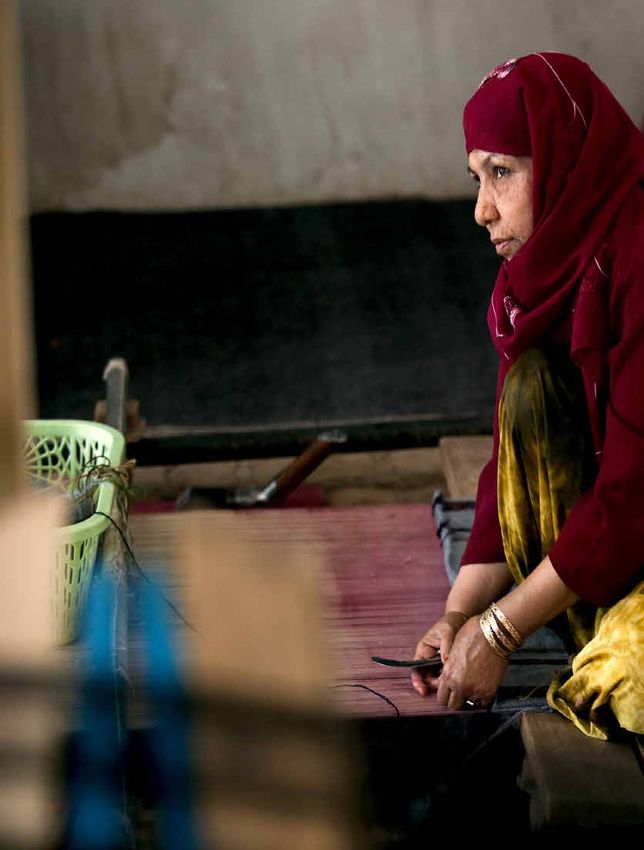
Table of Contents
Acknowledgments                                                           vii
Foreword                                                                   ix

Executive Summary                                                          1
  Gender Equality in the World of Work Matters                             1
  Where Do We Stand?                                                       1
  Overlapping Disadvantages and Gender Equality at Work                    2
  Igniting Gender Equality in the World of Work                            3
  Notes                                                                    4

1. Introduction: Engendering Jobs                                          5
   Context: Gender and the Jobs Challenge                                  5
   Motivation: Inadequate Progress and Missed Dividends for Development    6
   Report Scope, Approach, and Value Added                                 8
   Two Paradoxes Surrounding Equality at Work                             10
   A Note on Male Disadvantage                                            11
   Context Matters                                                        12
   Notes                                                                  13

2. Taking Stock: Stylized Facts About Gender at Work                      17
   Employment Status and Quality                                          18
   Earnings                                                               22
   Differences in Entrepreneurship and Farming                            24
   Labor Force Participation                                              25
   Notes                                                                  28

3. Overlapping Constraints Across the Lifecycle                           33
   Bundled Constraints: Norms, Agency, and Economic Opportunities         34
   Childhood and Youth: The Start of Unequal Trajectories                 38
   Productive Age: Constraints at Work                                    40
   Elderly Years: The Culmination of Lifelong Disadvantage                45
   Notes                                                                  46

4. Igniting Gender Equality in the World of Work                          53
   Diagnostics                                                            54
   Three Levels of Action                                                 55
   Conclusions                                                            72
   Notes                                                                  72
iv   Gender at Work

Boxes
Box 1.1. How gender equality in the world of work contributes to development                                  7
Box 1.2. Regional perspectives on challenges and opportunities for gender equality at work                   12
Box 2.1. To better understand gender at work                                                                 19
Box 2.2. Gender and informality: nuanced perspectives are needed                                             21
Box 3.1. Norms favor men’s economic opportunities, but can policies change them?                             36
Box 3.2. Fragility, gender, and jobs                                                                         39
Box 4.1. Beyond having a job: gender and the Decent Work Agenda                                              55
Box 4.2. Navigating the many policy options for childcare services and financing                             61
Box 4.3. Companies can help level the playing field for women’s work through corporate philanthropy          66
Box 4.4. Starting from within: The World Bank Group and gender equality at work                              68

Resource Box 2.1. Where do countries stand? Global and regional rankings
  on gender equality and women’s economic empowerment                                                        28
Resource Box 3.1. Data sources on deprivations and constraints                                               47
Resource Box 4.1. Using ADePT Gender to support country diagnostics                                          57
Resource Box 4.2. Identifying what works                                                                     65
Resource Box 4.3. Resources for private sector engagement and leadership                                     69

Figures
Figure 1.1. Female labor force participation has increased dramatically in Latin America and the Caribbean    8
Figure 1.2. Gender outcomes result from interactions among markets, institutions, and households              9
Figure 1.3. Countries range widely in the extent of gender gaps in economic opportunities
   despite levels of development                                                                             10
Figure 1.4. In the Middle East and North Africa, not much improvement in female labor force
   participation despite gains in schooling                                                                  11
Figure 2.1. A multidimensional perspective to gender equality in the world of work is needed                 18
Figure 2.2. Women are underrepresented in every type of employment, with greater gaps
   in developing countries                                                                                   19
Figure 2.3. Women are generally less likely to be full-time employed for an employer                         20
Figure 2.4. Women’s employment is more likely to be part-time                                                20
Figure 2.5. Employment status by sex and income level                                                        22
Figure 2.6. Women are underrepresented in firms’ top management                                              23
Figure 2.7. Country differences exceed gender differences in attitudes toward women’s leadership ability     23
Figure 2.8. Distribution of self-employed jobs in 97 developing countries                                    24
Figure 2.9. Women are less likely than men to have formal accounts and credit                                26
Figure 2.10. Gender gaps in labor force participation for different age groups                               27
Figure 3.1. Biased norms and lack of agency across the lifecycle affect equality at work                     34
Figure 3.2. Main reasons given by young women in Morocco for not wanting to work, 2010                       35
Figure 3.3. Women face overlapping constraints (percentages of women facing constraints)                     37
Figure 3.4. Women are doubly disadvantaged by gender and ethnicity                                           39
Figure 3.5. Even where gender parity is reached in higher education, segregation persists                    41
Figure 3.6. There is little evidence of female underperformance in subjects often dominated by men           41
Figure 3.7. Gender-based time allocations have changed in industrialized countries,
   signaling shifting norms                                                                                  42
Figure 3.8. The share of elderly people is growing rapidly in developing countries                           43
Figure 3.9. Percentage of countries with different numbers of sex-based legal differentiations
   by regions, and regional averages across countries                                                        44
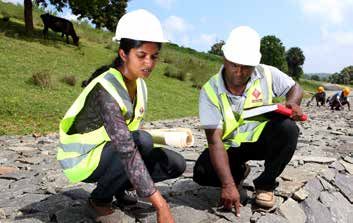
Table of Contents   v

Figure 3.10. Elderly women in India are less independent than elderly men                             46
Figure 4.1. Igniting equality at work: World Bank Group entry points                                  54
Figure 4.2. Both broad-based and targeted actions across the lifecycle can contribute to gender
   equality in the world of work                                                                      58
Figure 4.3. Implementing STEP as an integrated set of programs across workers’ lifecycles             59
Figure 4.4. Enrollment of children in preprimary education remains very low in low-income countries   62

Figure Box 3.1A. Share of the population agreeing that when jobs are scarce, a man should have
   more of a right to a job than a woman                                                              36
Figure Box 3.1B. Discriminating norms are associated with few women working                           36

Tables
Table 4.1. Diagnosing constraints across the lifecycle                                                56
Table 4.2. Indicators where urgent action is needed to close data gaps                                70

Acknowledgments

   This report has been the work of the World Bank Group’s            The team would also like to acknowledge Kathleen Beegle,
Gender and Development unit. The task was led by Matthew           Sarah Iqbal, Leora Klapper, and Claudio Montenegro for their co-
Morton. The report was prepared under the guidance of Jeni         operation; Henriette Kolb, Martin Rama, and Carolina Sanchez-
Klugman (Director, Gender and Development). The main con-          Paramo for their work in conducting peer reviews; and the World
tributors to the writing and analyses were Jeni Klugman, Lucia     Bank Group Gender and Development Board members and
Hanmer, and Dorothe Singer. The team is also grateful to several   others for useful review comments and input. Communications
other individuals—including Julieth Andrea Santamaria Bonilla,     coordination has been led by Sarah Jackson-Han and administra-
Alicia Samantha Hammond, Sveinung Kiplesund, Josefina Posa-        tive support has been provided by Ngozi Kalu-Mba.
das, Emma Samman, and Sarah Twigg—for important contribu-
tions to specific sections and analyses.
Foreword

   Today, many more girls are going to school and living longer,          Public and private policies and actions can promote equality
healthier lives than 30 or even 10 years ago. That was the good         over a lifetime. This includes education and training during youth
news in our flagship 2012 World Development Report on gender.           and creating opportunities for women to participate in paid work
But this has not translated into broader gains. Too many women          during their economically productive years. It extends to imple-
still lack basic freedoms and opportunities and face huge inequali-     menting equitable old-age labor regulations combined with ap-
ties in the world of work. Globally, fewer than half of women have      propriate social protection later in life. We need leadership and
jobs, compared with almost four-fifths of men. Girls and women          innovation as well as scaled-up efforts to fill critical gaps in knowl-
still learn less, earn less, and have far fewer assets and opportuni-   edge and evidence, from the private sector, governments, science,
ties. They farm smaller plots, work in less profitable sectors, and     and media—and individuals. This agenda is urgent. Failure to act
face discriminatory laws and norms that constrain their time and        represents a huge missed opportunity. We know that reducing
choices, as well as their ability to own or inherit property, open a    gender gaps in the world of work can yield broad development
bank account, or take out a loan—to buy fertilizer, for example,        dividends: improving child health and education, enhancing pov-
that would boost food production for whole communities.                 erty reduction, and catalyzing productivity.
  Gender at Work looks closely at existing constraints as well as         Empowering women and girls is vital in order to achieve our twin
policies and practices that show promise in closing the gaps. A         goals: ending extreme poverty by 2030 and boosting shared pros-
companion to the 2013 World Development Report on jobs, the             perity. The World Bank Group is fully committed to this agenda.
report advocates investing more in women’s capabilities and elim-
inating structural barriers such as laws that bar women from own-
ing property, accessing financing, or working without permission                                                                Jim Yong Kim
from a male relative.                                                                                      President, The World Bank Group
Executive Summary

Gender Equality in the World of Work Matters
  Jobs can bring gains for women, their families, businesses, and communities.
Jobs boost self-esteem and pull families out of poverty. Yet gender disparities persist in
the world of work. Closing these gaps, while working to stimulate job creation more
broadly, is a prerequisite for ending extreme poverty and boosting shared prosperity.
   Gender equality in the world of work is a win-win on many fronts. A large
and growing body of evidence demonstrates both the business and the development
case. Booz & Company estimates that raising female employment to male levels
could have a direct impact on GDP, increasing it by 34 percent in Egypt, 12 percent
in the United Arab Emirates, 10 percent in South Africa, and 9 percent in Japan,
taking into account losses in economy-wide labor productivity that could occur as
new workers entered the labor force.1 Yet almost half of women’s productive poten-
tial globally is unutilized, compared to 22 percent of men’s, according to the Inter-
national Labour Organization.2 In places where women’s paid work has increased,
as in Latin America and the Caribbean, gains have made significant contributions
to overall poverty reduction.
   Both the World Development Report 2013 on Jobs (WDR 2013) and the World
Development Report 2012 on Gender Equality and Development (WDR 2012)
provide valuable and complementary frameworks to help policy makers advance
gender equality in the world of work. The WDR 2013 approach helps us to under-
stand how and when promoting gender equality in the world of work adds significant
development value. The WDR 2012, meanwhile, offers an important framework for
diagnosing and addressing gender-specific constraints. An important link between
the two WDRs is the notion of agency—women’s ability to make choices they value
and to act on those choices. Jobs can increase women’s agency by expanding their life
choices and their capacity to better support their families and more actively partici-
pate in communities and societies. Conversely, significant constraints on agency pose
major barriers to women’s work and help explain the persistence of gender gaps.
   Following the WDR 2013, “jobs” are broadly defined to include various
forms of wage and non-wage work, formal and informal. Informal work is the
largest source of employment throughout Africa, Asia, and the Middle East, and
working women are more likely than working men to be self-employed or farming.
The jobs that are best for women’s economic empowerment—and development
goals more broadly—depend on country-specific jobs challenges.

Where Do We Stand?
  Gender equality in the world of work is multidimensional. Broadly, key
dimensions include labor force participation, employment, firm and farming
2   Gender at Work

characteristics, earnings, and job quality. The last is the most     valuable framework for understanding the challenges. It high-
difficult to measure and varies by context. However, full-time       lights key outcome areas—agency, endowments, and economic
wage employment is a strong predictor of subjective well-be-         opportunities—and underscores the fact that disparities are
ing, and jobs that provide higher earnings, benefits, rights, and    driven by multiple constraints that arise in formal and infor-
opportunities for skills development are more likely to expand       mal institutions, markets, and households. The constraints are
women’s agency.                                                      most severe among women who face other disadvantages, such
   On virtually every global measure, women are more eco-            as being a member of an ethnic minority, having a disability, or
nomically excluded than men. Trends suggest that women’s la-         being poor.
bor force participation (ages 15–64) worldwide over the last two        Social norms are a key factor underlying deprivations and
decades has stagnated, declining from 57 to 55 percent globally.     constraints throughout the lifecycle. Norms affect women’s
Participation is as low as 25 percent in the Middle East and North   work by dictating the way they spend their time and underval-
Africa. Globally, Gallup estimates that men are nearly twice as      uing their potential. Housework, child-rearing, and elderly care
likely as women to have full-time jobs—and, in South Asia, they      are often considered primarily women’s responsibility. Further,
are more than three times as likely.3                                nearly four in 10 people globally (close to one-half in developing
   Gender gaps are evident among farmers, entrepreneurs, and         countries) agree that, when jobs are scarce, men should have more
employees alike. Because of gender-specific constraints, female      right to jobs than women.9 Research shows that women are fre-
farmers tend to have lower output per unit of land and are less      quently disadvantaged by gender biases in performance and hiring
likely to be active in commercial farming than men. In the Cen-      evaluations.10
tral Highlands of Ethiopia, the value of output per hectare of fe-      Jobs can increase women’s agency, but a lack of agency also
male-headed households has been estimated to be 35 percent lower     restricts women’s job opportunities. In most developing coun-
than that of male-headed households, a disparity stemming mainly     tries, women have fewer choices in fundamental areas of day-to-
from unequal access to productive inputs.4 Female entrepreneurs      day life, including their own movements, sexual and reproductive
typically operate smaller firms and in less profitable sectors. In   health decisions, ability to use household assets, and whether and
Latin America and the Caribbean, half of established businesses      when to go to school, work, or participate in other economic-re-
owned by women have no employees, compared to 38 percent of          lated activities. Further, a large proportion of women in the world
businesses owned by men.5 Female employees are more likely to        lack freedom from violence. The World Health Organization es-
work in temporary and part-time jobs, are less likely to be pro-     timates that more than 35 percent of women have experienced
moted, and are concentrated in occupations and sectors with lower    gender-based violence.11 Without addressing these critical con-
barriers to entry. Women and girls also do the vast majority of      straints on agency, women cannot take full advantage of potential
unpaid care and housework.                                           economic opportunities.
  Women generally earn less than men. ILO analysis of 83                Inequalities in endowments and assets contribute to gaps
countries shows that women in paid work earn on average be-          in the world of work. While there has been important progress
tween 10 and 30 percent less than men.6 Gaps are particularly        globally, in some countries fundamental deprivations persist. In
acute in the Middle East and North Africa, but also persist in       2010–12, female-to-male enrollment ratios for primary school
high-income OECD countries.                                          were less than 90 percent in 16 countries, mainly in Africa,
   Gender sorting into different jobs, industries, and firm types    and some 57 million primary school age children were not en-
explains much of the pay gap. Throughout the world, women            rolled.12 Many women lack access to land and financial capital.
are concentrated in less-productive jobs and run enterprises in      Other deep-seated differences also persist. For example, young
less-productive sectors, with fewer opportunities for business       women and men often follow different educational streams and
scale-up or career advancement. The latest Grant Thornton In-        develop differences in aspirations and skills that underlie occu-
ternational Business Report indicates that the share of women in     pational segregations later in life. A wider account of productive
senior management roles globally is only 24 percent.7 Across de-     inputs shows women disadvantaged in areas such as access to
veloping countries, 18 percent of non-agricultural self-employed     financial services, technology, training, information, and social
males work in business-oriented services, compared to only 5 per-    networks.
cent of females; women are more heavily concentrated in retail          Legal discrimination is a remarkably common barrier to
services, often in the informal sector.8                             women’s work. Of 143 economies, 128 had at least one legal dif-
                                                                     ferentiation in 2013.13 These barriers include restricting women’s
                                                                     ability to access institutions (such as obtaining an ID card or con-
Overlapping Disadvantages and Gender
                                                                     ducting official transactions), own or use property, build credit,
Equality at Work                                                     or get a job. In 15 countries, women still require their husbands’
  Gender-smart jobs strategies need to identify and address          consent to work. In many economies, especially in the Middle
multiple deprivations and constraints that underlie gender           East and North Africa, women face the cumulative effects of mul-
inequality in the world of work. The WDR 2012 provides a             tiple legal constraints.
Executive Summary 3
Igniting Gender Equality in the World of barriers to women’s work is
Agency is the ability to
Work key to leveling the playing
field. Reforms should focus make one’s own choices
While there are no “magic formulas,” effectively tackling gen- on removing restrictions to and act upon them.
der inequality at work is likely to be an integral part of addressing women’s work in labor and
country jobs challenges. Overcoming gender inequality involves employment; removing un-
understanding local specificities and developing bold, coordinated equal status provisions, such as head-of-household provisions, in
actions to address multiple constraints. It requires investments in family law; allowing and encouraging women’s ownership and
people’s skills and capabilities, and supporting their abilities to joint-titling of land; enforcing equitable inheritance laws; and
contribute to higher productivity activities and economy-wide applying nondiscrimination principles to customary laws. Most
competitiveness over their life cycles. Four broad areas are likely countries have made significant progress toward more equita-
to be important. ble laws over recent decades, but there has been less progress in
1. Integrate gender into jobs diagnostics. Growth and labor some regions, notably in the Middle East and North Africa and
market country diagnostics can identify the gender-specific con- in South Asia.
straints that women face in accessing productive jobs. A joint World Beyond addressing legal discrimination, targeted policies can
Bank and Asian Development Bank gender assessment for Lao PDR address more subtle constraints. Strategies can include family-
found persistent wage gaps and self-employed women running friendly leave and flexibility policies, extending affordable child-
smaller businesses. These diagnostics led to growth strategy recom- care and early child development programs, and developing tech-
mendations focused on improving access to finance and business nology and infrastructure to reduce burdens on women’s time for
training for women entrepreneurs. A gender assessment in Vietnam household chores and care work. The World Bank estimates that
identified adverse impacts of gender differences in statutory retire- adding one year of preschool education in Turkey, for example,
ment ages and outlined policy options for addressing the problem. could increase female labor force participation by 9 percent.17 Fa-
2. Level the playing field through government actions across ther-friendly leave policies in the UK and Nordic countries have
the lifecycle. Biases can begin very early in life, sometimes in sub- strengthened opportunities and incentives for men to share in
tle ways, and start trajectories of inequality that become increas- domestic responsibilities. A World Bank-supported program in
ingly difficult and costly to resolve. Policy actions across the lifecy- Cambodia reduced women’s time devoted to collecting firewood
cle to advance gender equality in the world of work will typically and increased their incomes by selling low-cost, fuel-efficient
include both (a) broad-based actions that, while benefiting every- cookstoves through local female vendors.18
one, may have an even greater impact on women’s economic op- During elderly years, governments can support equitable
portunities (such as early childhood development programming old-age labor regulations combined with appropriate social
or reducing inefficiencies to business registration) as well as (b) protection. The importance of this demographic cannot be ig-
targeted actions to remove or offset gender-specific constraints. nored. In developing countries, the old-age dependency ratio is
The report discusses evidence behind a wider range of targeted expected to increase by 144 percent from 2010 to 2050, whereas
actions, but selected examples are highlighted here. the child dependency ratio is projected to fall by 20 percent during
During childhood and youth, policy actions can tackle in- the same period. This translates to increased elderly care responsi-
equalities through education and training. A growing body of bilities for productive age women, as well as potential challenges
evidence demonstrates the value of cash transfers with special in- for elderly people themselves. Many governments have removed
centives as a demand-side tool for boosting equality in schooling. differences in retirement and pension ages, but gaps remain in
Examples of supply-side strategies that have shown positive results 49 countries. World Bank analysis showed that mandatory earlier
by addressing gender-specific constraints include increasing the retirement causes early labor force withdrawal of urban women
proximity of schools to homes in Afghanistan and building “girl- in China.19 In developing countries, many elderly women are
friendly” schools in Burkina Faso that improve facilities and in- outside the scope of formal social protection—although studies
centives for girls’ education while engaging parents and teachers.14 in Brazil and South Africa have shown that pensions received by
Education systems can challenge stereotypes through curricula. elderly women significantly increased granddaughters’ education
Tanzania’s national curriculum includes substantial gender-related and health.20 More policy experimentation is needed on interven-
material in its secondary school civics syllabus and examinations.15 tions for updating older women’s and men’s skills and increasing
Multicomponent skills-development programs can also make a connections to the labor market.
difference. A World Bank-supported youth employment program 3. Proactive private sector leadership and innovation for
in Liberia that included vocational and life skills training, along gender equality. The private sector accounts for about three out
with job placement help, boosted young women’s employment by of four jobs in countries like Egypt, Finland, and France and nine
47 percent and average weekly earnings by 80 percent.16 out of 10 jobs in countries such as Brazil, Chile, Japan, and South
For women of productive age, actions can focus on remov- Africa. With International Finance Corporation (IFC) support,
ing barriers to getting paid work. Eliminating legal and formal commercial banks in Cambodia, Nigeria, and Romania, among4 Gender at Work
other countries, are increasing their female clientele,21 and com- 7. Grant Thornton. 2013. Women in senior management: Setting the stage
panies in male-dominated sectors, such as chemicals and con- for growth. Washington, DC: Grant Thornton.
struction, are increasing women’s access to jobs through more 8. Authors’ calculations based on World Values Survey data.
concerted recruitment and family-friendly work arrangements. 9. Gender at Work team analyses of World Values Survey data.
Multinational firms have increased profitability in South Korea by 10. Bohnet, I., van Geen A., Bazerman M. When performance trumps gender
actively recruiting women for local managerial positions.22 While bias: joint versus separate evaluations. Cambridge.
success stories are encouraging, a focus on gender equality is still
11. World Health Organization (WHO). 2013. Global and regional esti-
all too rare. ManpowerGroup surveys report that only 2 percent mates of violence against women: Prevalence and health effects of intimate part-
of employers across 42 countries have adopted strategies to recruit ner violence and non-partner sexual violence. Geneva: WHO.
more women.23 12. World Development Indicators. Countries include Afghanistan, An-
Private and public sector actors can form powerful partnerships gola, Benin, Cameroon, Central African Republic, Chad, Comoros, Cote
to support women’s entrepreneurship, which in turn contributes d’Ivoire, Democratic Republic of Congo, Djibouti, Eritrea, Guinea, Mali,
Niger, Pakistan, and Yemen.
to growth and a dynamic private sector. Women’s entrepreneur-
ship can be fostered through a combination of increased access to 13. World Bank Group. Women, Business and the Law 2014. Washington,
capital, networks, and new markets; high-quality business skills DC: World Bank.
and development training; and access to broader services that off- 14. Burde, D. and L. Linden. 2009. The effect of proximity on school
set gender-specific constraints. enrolment: evidence from a randomized controlled trial in Afghanistan; Ka-
zianga, H., D. Levy, et al. 2013. “The Effects of “Girl-Friendly” Schools: Ev-
4. Global action is needed to fill knowledge gaps about both idence from the BRIGHT School Construction Program in Burkina Faso.”
the problems of, and the solutions to, gender inequality in the American Economic Journal: Applied Economics 5 (3): 41.
world of work. This involves addressing data gaps in such areas as 15. Levtov, R. Forthcoming. “Addressing Gender Inequalities in Curric-
earnings disparities, control over assets, and gender-based violence ulum and Education: Review of Literature and Promising Practices.” Back-
in homes and workplaces. But it also means contributing to stron- ground paper to the World Bank’s report on Women’s Voice, Agency & Par-
ger evidence on what works for increasing gender equality in the ticipation. Washington, DC: World Bank.
world of work. The World Bank recently launched enGENDER 16. Adoho, S. C., D. T. Korkoyah, et al. Forthcoming. “The Impact of
IMPACT, a gateway to its gender-related impact evaluations. This an Adolescent Girls Employment Program: The EPAG project in Liberia.”
effort complements gender innovation and evaluation initiatives Washington, DC: World Bank.
in Sub-Saharan Africa and Latin America and the Caribbean, and 17. World Bank. 2013. Programmatic Concept Note: Turkey: Women’s Access
efforts by the IFC to highlight good business practices. to Economic Opportunities in Turkey Trust Fund (P146215): Supplementary
Description. Washington, DC: World Bank.
18. World Bank. 2009. “Building on Tradition as the Way to Women’s Em-
Notes powerment in Cambodia.” East Asia and Pacific Region Social Development
1. Aguirre, D., L. Hoteit, et al. 2012. Empowering the Third Billion: Notes. Washington, DC: World Bank.
Women and the World of Work in 2012. New York: Booz & Co. 19. Giles, J., et al. 2011. “The Labor Supply and Retirement Behavior of
2. International Labour Office (ILO). 2010. “Women in labour mar- China’s Older Workers and Elderly in Comparative Perspective.” Policy Re-
kets: Measuring progress and identifying challenges.” Geneva: ILO. search Working Paper 5853. Washington, DC: World Bank.
http://www.ilocarib.org.tt/images/stories/contenido/pdf/Gender/WD 20. Filho, I. E. 2012. “Household Income as a Determinant of Child Labor
-Women2010_123835.pdf. and School Enrollment in Brazil: Evidence from a Social Security Reform.”
3. Marlar, J. and E. Mendes. 2013. “Globally, Men Twice as Likely as Economic Development and Cultural Change 60 (2): 399–435.; Duflo, E.
Women to Have a Good Job.” Retrieved October 10, 2013, from http:// 2003. “Grandmothers and Granddaughters: Old‐Age Pensions and Intra-
www.gallup.com/poll/164666/globally-men-twice-likely-women-good-job. household Allocation in South Africa.” World Bank Economic Review 17 (1):
aspx; Clifton, J., and J. Marlar. 2011. “Worldwide, Good Jobs Linked to 1–25; Case, A. and A. Menendez. 2007. “Does money empower the elderly?
Higher Wellbeing.” Retrieved June 1, 2013, from http://www.gallup.com Evidence from the Agincourt demographic surveillance site, South Africa.”
/poll/146639/worldwide-good-jobs-linked-higher-wellbeing.aspx. Scandinavian Journal of Public Health 35 (69 suppl.): 157–64.
4. Tiruneh, A., T. Tesfaye, W. Mwangi, and H. Verkuijl. 2001. Gender 21. IFC. 2013. Banking on Women: Changing the Face of the Global Econ-
Differentials in Agricultural Production and Decision-Making Among Small- omy. Washington, DC: IFC.
holders in Ada, Lume and Gimbichu Woredas of the Central Highlands of Ethio- 22. Siegel, J., L. Pyun, et al. 2013. Multinational Firms, Labor Market
pia. El Baton, Mexico: International Maize and Wheat Improvement Center Discrimination, and the Capture of Competitive Advantage by Exploiting
(CIMMYT) and Ethiopian Research Organization (EARO). the Social Divide. Working Paper No. 11-011. Cambridge, MA: Harvard
5. Kelley, D. J., et al. 2013. Global Entrepreneurship Monitor’s 2012 Women’s Business School.
Report.http://www.gemconsortium.org/docs/2825/gem-2012-womens-report. 23. ManpowerGroup. 2013. 2013 Talent Shortage Survey: Research Results.
6. ILO. 2008. Global Wage Report 2008–09: Minimum Wages and Col- ManpowerGroup.
lective Bargaining, Towards Policy Coherence. Geneva: ILO.Introduction
Engendering Jobs
Key messages
▶▶ Gender inequality is a major part of the global jobs challenge. Appro-
priate responses require leveling the playing field and creating the
types of jobs that can empower women.
▶▶ Reducing gender gaps in the world of work can yield big development
payoffs. These extend beyond benefits to the women themselves,
including spillover effects on children, enhanced poverty reduction,
catalyzing business productivity, and broader social cohesion.
▶▶ Policy strategies geared toward economic growth or increasing general
education levels, although necessary, are generally insufficient to close
gender gaps. Targeted, gender-specific, and multi-sectoral solutions are
also needed to respond to country-specific constraints.
▶▶ Connecting women’s agency with economic opportunities and taking a
lifecycle approach lead to better, more comprehensive policy actions.
Context: Gender and the Jobs Challenge
Today, as ever, the global spotlight remains squarely on jobs. As the World De-
velopment Report 2013: Jobs1 (WDR 2013) underscores, good jobs are not just the
engine of poverty reduction or a derivative of growth—they are transformative in
and of themselves and can help drive development. Yet the challenge is daunting.
Globally, 200 million people—disproportionately youth—are unemployed and ac-
tively looking for work.2 Solving the jobs challenge is critical to achieving the World
Bank Group’s twin goals of ending extreme poverty and boosting shared prosperity.
Underlying this immense task is the challenge of equitable access to economic
opportunities. This has many aspects, including income, racial and ethnic dispari-
ties. This report focuses on one dimension of inequality that is often related to other
aspects of disadvantage. The starting point is the recognition that women are dis-
advantaged globally on virtually every indicator in the world of work3—earnings,
quality of employment, employment status, participation—and that these differ-
ences matter for development.
The global jobs challenge is also about fostering the types of jobs that add the
greatest development value. In many low-income countries, unemployment is low
but underemployment is high, and the available jobs often lack basic rights and pro-
tections, not to mention opportunities for advancement. Only about one in four
of the world’s adult population was employed full-time by an employer in 2012.46 Gender at Work
Motivation: Inadequate Progress and agency increase their spectrum of choices and strengthen women’s
Missed Dividends for Development capabilities to act on those choices. Even informal and self-em-
ployed jobs can have positive effects such as increasing aspira-
Gender inequality in the world of work has been stubbornly tions, household decision-making, and control over assets.26 Jobs
persistent across multiple dimensions, despite relatively large can also teach skills, build networks, and change attitudes and
gains in recent decades in women’s health and education.5 The behaviors,27 all of which can improve women’s ability to act on the
evidence presented in chapter 2 shows the persistence of these things they value in life.
gender disparities. For example, women’s labor force participation
has stagnated around 56 percent, and actually fell by one percent- Which jobs are good for women’s agency will vary. For some
age point since 1990. Women remain heavily concentrated into women, a part-time job or small household enterprise close to home
lower-paying jobs, including less-productive and less-profitable are ideal arrangements that provide the flexibility to earn income
while tending to household responsibilities; for other women, they
entrepreneurship and farming, than men. Occupational segrega-
represent poor sources of protection, earnings, and skills-develop-
tion is enduring, as are wage gaps. This lack of progress in eco-
ment and an inadequate range of options. A “good job” can also
nomic opportunities is puzzling. It raises several questions, such
change within a person’s lifetime. A low-wage job without fringe
as: why do these gaps persist? Do gaps simply reflect differences in
benefits, for example, may be desirable as a career entry point and
free choices and preferences between women and men, or are they
opportunity to develop skills, while it may be demoralizing and
better explained by market failures and formal and informal insti-
add little value beyond basic subsistence at a later stage.
tutional biases that constrain women’s choices? Are there examples
at the policy or country levels that stand out as outliers by having Nonetheless, the fact women are disproportionately concen-
made greater progress, and what can we learn from them to en- trated into jobs that offer lower earnings, fewer rights and ben-
courage broader change? These questions are explored in chapters efits, and less opportunity for skill-building and enhancement
3 and 4. means that women are not deriving as much agency from jobs
as men. Jobs among the working poor can even diminish agency
This inequality is costly on multiple levels. It is clear that jobs when they are exploitative or demeaning, because facilities are un-
can add value to people’s lives. They increase people’s incomes, safe, or because they expose workers to harassment and violence.
allowing them to purchase
the goods and services they
Catalyzing business
“Happiness and equality value; and jobs can contrib-
are related. If the husband ute to self-esteem and happi- Companies are increasingly recognizing the business case for
understands that happiness ness.6 One’s ability to choose investing in women’s economic inclusion.28 Gender equality in
is supporting and helping whether to seek a paid job, the world of work generates a broader consumer base. Diversity
his wife in housework and in and what type of work to do, also translates to a bigger and richer talent pool for driving firm
taking care of children, the is itself an important expres- innovation and productivity. Women can additionally bring par-
happiness of the family will be ticular strengths to firms. For instance, some research suggests that
sion of agency (the ability to
reinforced.” women are generally more advanced in negotiating, empathizing,
make choices that one values
and to act on those choices).7 and working behind the scenes to facilitate better cooperation in
—Adult male, Ba Dinh district, the workplace.29
Hanoi, Vietnam, On Norms and Jobs can also be instrumental
Agency in fostering broader empow- Firms can reap significant business payoffs from investments in
erment for women.8 They women and gender diversity:
can teach skills and change ◆◆ Women-friendly work policies have been shown to boost
attitudes, behaviors, and aspirations.9 Even basic informal and firm profitability.30 Channels through which women’s partic-
self-employed jobs, such as microenterprise and casual work with- ipation benefits firms include broadening the talent pool and
out a contract, can advance decision-making power at home and contributing to more diverse—and therefore more innova-
control over assets.10 Women’s economic empowerment is also tive—exchange of ideas.31
smart economics, as it is associated with reduced poverty, faster
◆◆ Gender diversity in senior leadership has been associated
growth, and better economic, health, and educational outcomes
with higher company profits.32 A 2012 Credit Suisse study
for the next generation.11 The WDR 2013 framework for analyz-
of nearly 2,400 companies across the world found that the
ing “good jobs for development” helps us to understand the ways
share prices of companies that have at least one woman on
in which greater gender equality in the world of work can drive
their boards perform 26 percent better than companies that
development (see Box 1.1).
do not. Analysts attribute the better performance of boards
with women to higher risk aversion and lower debt, which
Boosting women’s agency paid off during the global economic downturn.33
Expanding agency is an important way in which jobs contrib- ◆◆ The International Finance Corporation (IFC) recently high-
ute to social cohesion.25 By definition, jobs that expand women’s lighted several cases in which companies profited from en-Introduction 7
Box 1.1. How gender equality in the world of work contributes to development
The extent to which gender-specific jobs strategies have de- more informal, can also have multiplier effects on job creation
velopment payoffs, and the focus of those strategies, depends for women. Research in India has found agglomeration effects,
on country circumstances. Broadly, the WDR 2013 defines with women-owned firms benefitting from lower production
three areas in which jobs contribute to development: living costs arising from urban proximity and, in the Middle East and
standards, productivity, and social cohesion. Gender equality North Africa, tending to hire more women.18 In Africa, non-tar-
is important for all three. iff barriers disproportionately push women traders and pro-
ducers into the informal economy, where a lack of access to
Living standards: Jobs can boost living standards through finance, information, and networks jeopardizes their capacity
earnings opportunities that lift people out of poverty, raise to grow and develop businesses.19 Reducing occupational
their consumption levels, and contribute to their broader segregation can also help drive productivity: women are less
well-being. Jobs for women can have especially positive spill- present in many high-growth fields like science, technology,
over effects on poverty reduction through greater spending on and engineering, which are important to countries’ innova-
children’s health and education. A review of 15 studies found tion, connectedness, and competiveness in global markets.20
that increases in women’s earnings and bargaining power typ-
ically12 translate into greater spending on, and results for, chil- Social cohesion: Jobs contribute to social cohesion by shap-
dren’s education and health.13 In India, the National Rural Em- ing values and behaviors, and encouraging trust and civic en-
ployment Guarantee Scheme increased children’s—especially gagement. Fairness, equity, and social inclusion are elements
girls’—time in school as a byproduct of increasing mothers’, considered constitutive of social cohesion.21 In this sense,
but not fathers’, days of employment.14 Women who migrate gender equality is an end in itself. Further, when jobs redefine
for work have also been shown to send larger amounts of re- women’s roles in society, they contribute to a new and more
mittances home, and over a longer time period, compared to inclusive sense of social cohesion. In some societies, basic
male migrants.15 In terms of broader well-being, research has wage-earning jobs can remold women’s image and status in
also found that jobs can increase women’s self-esteem.16 society.22 In the United States, people with exposure to female
management are more likely to prefer a female boss.23 Jobs
Productivity: Low use of women’s potential resulting from can also expand social networks, which tend to be smaller for
gender gaps in entrepreneurship and labor force participation women. In high-crime and conflict-affected situations, high
can pose sizeable drags on aggregate productivity.17 Investing unemployment and underemployment among young men is
in women-owned enterprises, which are typically smaller and a liability for further violence and fragility.24
Closing
gender gaps in high-
Closing Increasing
growth jobs
gender productivity women’s roles in
gaps in firms value chains
Development
Increasing
women’s More equitable
wellbeing norms
LIVING SOCIAL
STANDARDS PRODUCTIVITY COHESION
Spillover effects Expanding women’s
on children networks
Women’s
remittances Boosting rights
to families and agency
Jobs
Source: Adapted from the WDR 2013.8 Gender at Work
hanced measures to recruit and support women employees. Figure 1.1. Female labor force participation has increased
Finlays Horticulture Kenya, for instance, strengthened poli- dramatically in Latin America and the Caribbean
cies to prevent workplace harassment and introduced wom- 60
58
en’s committees to increase voice. Internal promotion of 57 57 57 57
women resulted in major savings related to advertising costs, 55 55
women in the workforce (%)
55
training and lost productivity, while gender-sensitive policies
slashed absenteeism by 75 percent. In Vietnam, Nalt Textile 51
reduced staff turnover by 10 percent by improving its health 50 49
programs and childcare facilities.34
Given emerging evidence on the business case, the pursuit of
45
gender equality by private sector firms is increasingly understood 43
as a win-win for women, companies, and their communities. The
payoffs imply that companies’ involvement in this agenda is about 40
more than philanthropy or corporate social responsibility. Por- 1990 1995 2000 2005 2012
ter and Kramer (2011) describe investments in gender equality year
as “creating shared value.” When companies help train, prepare, World LAC
and support vulnerable women and men to thrive in the world of
work, they foster a kind of economic value that can promote both Source: World Development Indicators. LAC = Latin America and the
Caribbean.
company success and social progress simultaneously.35
Strengthening development
tial can dramatically reduce poverty levels. Women’s labor force
The business case applies more broadly. The ILO estimates that participation in the region has risen by 35 percent since 1990
almost half (48 percent) of women’s productive potential globally (Figure 1.1), which presents a clear outlier to the lack of progress
is unutilized, compared to about one-fifth (22 percent) of men.36 mentioned above: No other region has enjoyed such a steep in-
As governments struggle to stimulate economic growth, better crease as this in recent decades, and increased participation rates
utilizing this enormous pool of untapped talent is crucial. Al- were highest among low-income women. In 2010, extreme pov-
though aggregate estimates should be interpreted cautiously and erty in the region would have been 30 percent higher and average
in light of their underlying assumptions, a series of studies point income inequality (measured by the Gini coefficient) would have
to significant potential gains: been 28 percent higher were it not for women’s increased income
◆◆ Labor force participation: Booz & Company estimates that through a combination of increased labor earnings, access to pen-
raising female employment to male levels could have a direct sions, and labor force participation between 2000 and 2010.42
net impact on GDP of 34 percent in Egypt, 12 percent in Major drivers of women’s increased labor force participation and
the United Arab Emirates, 10 percent in South Africa, and 9 earnings in the region include increased investments in education
percent in Japan as a result of an increased labor force.37 The alongside the decline of fertility and delays in marriage.
potential gains are highest where female labor force participa- Gaps do remain, including in terms of wages, occupational seg-
tion is relatively low and women are relatively well-educated. regation, and profitability of enterprises. Policies to expand wom-
◆◆ Entrepreneurship: Using a theoretical framework, Cuberes and en’s agency, develop aspirations and marketable skills, increase
Teignier (2012) show that gender gaps in entrepreneurship38 time for market activities, and connect women with productive
can have significant effects on aggregate productivity and re- inputs will be critical to extend progress. Nonetheless, women’s
source allocation. Their model predicts that these effects can contribution to poverty reduction in the region is a powerful illus-
amount to an income loss (in GDP per capita) of between tration of how gender equality in the world of work can influence
4 and 7 percent across geographic regions—the highest loss the development process.
being in the Middle East and North Africa.39
◆◆ Farming: The Food and Agriculture Organization estimates Report Scope, Approach, and Value Added
that developing countries could boost their agricultural out- This report was initiated as a companion to the WDR 2013 on
put between 2.5 and 4 percent by removing the constraints Jobs and builds on key findings and frameworks from both that
that prevent equal yields of land farmed by women and men.40 report and the preceding WDR 2012 on Gender Equality and
World Bank research indicates that reducing time burdens on Development. 43 The value added of this report is to revisit the key
women in Tanzania could increase cash incomes for small- constraints to gender equality in the world of work in light of new
holder coffee and banana growers by 10 percent.41 evidence, and go more deeply into the importance of women’s
The Latin America and the Caribbean region provides a com- agency for boosting their participation in the world of work (and
pelling illustration of how unleashing women’s labor-force poten- vice versa) using a lifecycle perspective.Introduction 9
Building on the WDR 2012 and 2013 Frameworks WDR 2012. This report reinforces these connections and reviews
new evidence that connects agency to both endowments and eco-
The WDR 2013 framework helps us to understand how, when,
nomic opportunities. The lifecycle approach helps to illustrate the
and under what circumstances jobs can boost a country’s devel-
connections between agency and equality in the world of work
opment prospects. It emphasizes that the types of jobs that con-
more fully.
tribute most to development will depend on country context,
outlining three “pillars”—living standards, productivity, and so-
cial cohesion—for assessing the development value. It focuses on Sharpening the focus on equality in the world of work
the benefits of women’s work for living standards, drawing on the through agency and the lifecycle
significant body of evidence demonstrating the positive spillover As well as being fundamental to human rights, key aspects of
effects of women’s increased incomes, although all three pillars women’s agency—such as the ability to move freely and freedom
have important gender dimensions. from violence—have direct economic implications. A randomized
The WDR 2012 provides a basis for analyzing the constraints to evaluation, for example, of ProJoven, a youth employment pro-
and corresponding policy entry points to promote gender equal- gram in Peru, showed that incentives to overcome constraints on
ity, including in the world of work. It emphasizes that households women’s time and mobility, and promoting women’s participation
do not always act as unitary decision-makers. Women’s (and in male-dominated vocations significantly improved young wom-
men’s) individual bargaining power is influenced by markets and en’s (but not men’s) employment outcomes and reduced occupa-
institutions. Intra-household bargaining perspectives help us to tional segregation.44
understand why jobs for women can have especially positive de- An agency perspective underpins the phrase “gender equality in
velopment value, and why women and girls’ lack of agency, and the world of work.” The ability to choose whether or not to seek
therefore bargaining power, within the household can pose a bar- paid jobs, and what type of work to do, is itself an important ex-
rier to jobs. This report builds on this framework. As the “cogs pression of agency.45 Agency in the world of work does not mean
and wheels” image in Figure 1.2 illustrates, interactions between that every woman, or every man, should be in paid employment
markets, institutions, and households influence outcomes in eco- or that they should all have particular jobs. The goal is not to re
nomic opportunities, endowments, and agency. As the framework create the male labor market with women.46 An agency perspec-
suggests, the subcomponents of equality also interact. The con- tive means that women and men enjoy an equal range of choices
tribution of endowments—such as education, land, and financial in the world of work and an equal ability to act on those choices
capital—to economic opportunities was well established in the to realize their own goals.
Figure 1.2. Gender outcomes result from interactions among markets, institutions, and households
Gender Equality
Data & MARKETS
evidence Buyers and sellers
exchange goods
and services. Items
evaluated and ECONOMIC
priced. OPPORTUNITIES
FORMAL
HOUSEHOLDS
INSTITUTIONS
Intra-household
Laws, public AGENCY ENDOWMENTS
bargaining
systems
INFORMAL
INSTITUTIONS
Gender roles,
norms, social
networks
Source: WDR 2012.10 Gender at Work
Our approach identifies constraints that arise at different life jobs can be necessary but insufficient. Indeed fundamentals such
stages. The patterns that foster low labor force participation, earnings as economic growth and education can increase even as women’s
gaps, and occupational segregation begin early in life and accumulate economic opportunities stagnate.
over time. If girls marry early and drop out of school, they will have
a harder time catching up to their male counterparts in adulthood,
Economic growth does not guarantee gender equality
even with increased access to capital or progressive labor regulations.
If social norms and educational streaming limit girls’ opportunities Because jobs tend to improve with development, and gender in-
and aspirations to become engineers, doctors, or business executives equality is sometimes seen as a symptom of low development, it is
early in life, then the female talent pool for these occupations will sometimes assumed that policy makers should focus on economic
automatically be smaller in the next generation of workers. Although growth and gender equality in work will inevitably improve. Some
framing gender equality in the context of a lifecycle approach is not theoretical arguments suggest that market competition can drive
new,47 it merits renewed attention here in light of findings related out discrimination against women by firms as it is inefficient and
to norms and agency. Both the agency and lifecycle perspectives hence costly.48
reinforce the message that overcoming gender inequality will not The WDR 2012 showed that “economic development is posi-
result from specific, isolated programs, but from a comprehensive tively correlated with the share of female workers in wage employ-
approach that involves multiple sectors and stakeholders. ment and negatively correlated with the share of women in un-
The rest of this chapter helps frame the need for addressing paid work, self-employment, and entrepreneurship.”49 However,
overlapping constraints by illustrating how the fundamentals for the direction of cause-and-effect is difficult to untangle. As more
women enter wage jobs that are more stable and higher paying,
jobs, such as economic growth and education, are insufficient to
they can help to fuel economic growth, while growth brings more
facilitate gender equality in the world of work. It then presents
urbanization and wage jobs that move women out of unpaid and
the business and development motivation for prioritizing wom-
less productive work.
en’s empowerment and gender equality in the world of work.
Figure 1.3 plots GDP per capita against the World Economic
Forum’s Gender Gaps in Economic Participation and Opportu-
Two Paradoxes Surrounding nity subindex—a composite measure reflecting inequality in out-
Equality at Work comes related to labor force participation, wages, earned income,
To help illustrate the importance of a broader approach to un- and high-level and professional jobs (with zero representing total
derstanding gender-specific constraints to gender equality in the inequality). A number of high-income countries, including Japan,
world of work, this section explores how obvious fundamentals for Kuwait and Qatar, have high gender inequality, while, at low lev-
Figure 1.3. Countries range widely in the extent of gender gaps in economic opportunities despite levels of per capita GDP
1.0
(0 = perfect inequality, 1 = perfect equality)
Burundi Mongolia USA Norway
Lesotho Barbados
Economic participation and
0.8 Switzerland
opportunity index score
Uganda Ukraine
Spain
Ethiopia Cape Verde
0.6 Japan Qatar
Mexico
Kuwait
Bangladesh Suriname
UAE
India
Jordan Turkey
0.4 Iran
Pakistan Saudi Arabia
Syria
0.2
2.0 2.5 3.0 3.5 4.0 4.5 5.0
log of per capita GDP
Sources: Hausmann et al. 2013 (y-axis data) and World Development Indicators (x-axis data, latest year available [2011–12]).You can also read


