IFRS 17 as BAU: A Question of Timing - Neil Bruce 25 September 2019
←
→
Page content transcription
If your browser does not render page correctly, please read the page content below

IFRS 17 as BAU: A Question of Timing
Neil Bruce

25 September 2019
Agenda
    Iteration of assumptions:
    • Introduction to IFRS 17
    • BAU under IFRS 17
    • Prioritising your effort
    • Conclusion

06 September 2019                2
Introduction to IFRS 17
Application and Progress

04 September 2019
IFRS 17 – the basics
• Common (almost) global standard for reporting to investors, not regulators

What                                                Who
§   Global* accounting standard covering            §   Any entity which issues insurance contracts and
    insurance contracts with a consistent               reports under IFRS
    measurement basis                               §   May be mandated by (inter)national legislation
§   General purpose financial reporting to              (e.g. listed entities in EU or insurance entities in
    meet needs of investors and creditors               some jurisdictions)
§   Not designed to meet requirements of            §   Entities may opt to publish under IFRS alongside
    supervisors/regulators                              national GAAP accounts
                                                    §   Subsidiaries of such entities will need to report
                                                        internally under IFRS (via reporting pack or similar
                                                        simplified mechanism)
                                                    §   Many large entities (particularly unlisted) will
                                                        continue to use local GAAP
                                                    §   US entities will report under US GAAP as now

                                                                                                               4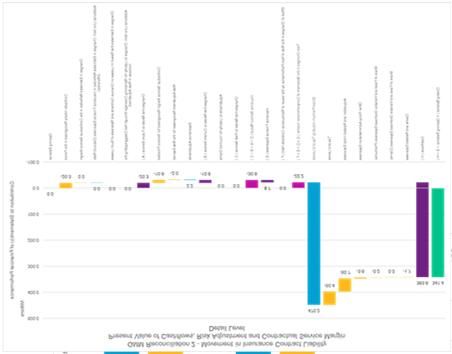
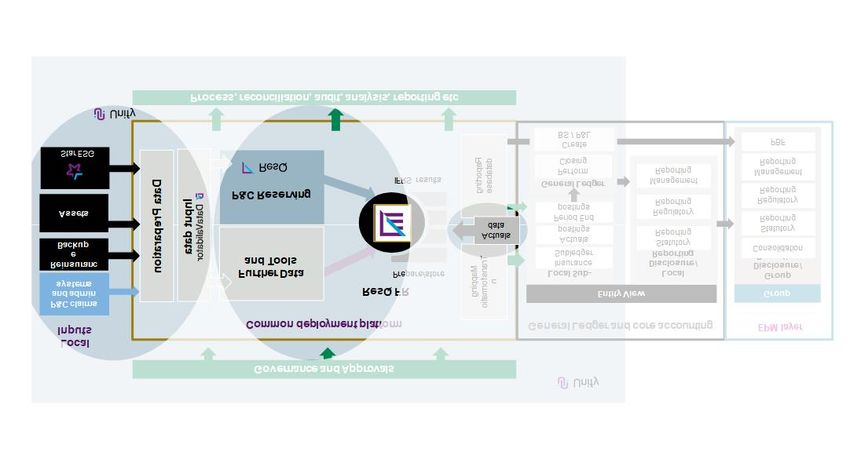
Potential IFRS 17 architecture
§ Usual focus on
Xxxxxx accounting end of the
process
§ Xxxxxx Governance and Approvals
Local § Xxxxxx § Many solutions require
Inputs ̵ Xxxxxx Common deployment platform General Ledger and core accounting EPM layer cashflows to enable
the calculation of the
Transformatio
P&C claims
Mapping
and adm in ResQ FR Entity View Group
systems Financials
n
Further Data Prepare/store Local Sub-Ledger Local Disclosure / Group
Data Preparation
Reporting Disclosure /
§
Reinsuranc Insurance
and Tools
e Subledger Reporting
Derivation of these
Input data
Backup Consolidation
Actuals Statutory
Actuals
data postings Reporting Statutory cashflows in non-trivial
Period End Reporting
Assets Regulatory
§
postings
Reporting
P&C Reserving
Regulatory
Actuarial assumptions
Reporting
database
Reporting
General Ledger
IFRS results
Perform
Management
Reporting Management will be critical in this
Closing Reporting
§
Star ESG
Create
BS / P&L
PBF Multiple other data
sources required
Process, reconciliation, audit, analysis, reporting etc including yield curves,
expenses etc.
5
IFRS 17 – Exposure Draft
• Consultation ends today, timetable indicates final version available mid 2020
                                                       One year delay

                                                                 Presentation at portfolio
                                                                 not group level

          Challenge from                                             Acquisition costs
          multiple insurance
          associations across
          the globe (25 topics)                                      Reinsurance
          +1 from EU (mutuals)
                                                                CSM

                                                        Further issues will be addressed
                                                        after initial implementation

          Most companies are using the delay to optimise their approach rather than slow down
                                      implementation progress

                                                                                                6
IFRS 17 – market progress
• Most that are directly affected are in the implementation stage, after completing a gap analysis
Dry runs:
Implementation:
Gap analysis:
§ No
§ Larger global companies
companies are at this
Monitoring § Smaller stage yet
progress: companies § Mostly driven by
Finance
§ Not directly § Companies
affected indirectly affected
anticipating
implementation
Companies are not consistent in their progress – depends on own situation
7BAU under IFRS 17 An actuary’s perspective
BAU – change in focus
• Focus will change when implementation is complete

 Focus of current efforts will largely be                     Focus will move to more operational issues:
 complete:
                                                              §    Hitting timetables
                                                              §    Feed into other processes (planning, investor
 §   Accounting systems will be in place
                                                                   metrics, M&A impacts, capital modelling)
 §   Pipework tested and mappings in place
                                                              §    Interaction of Finance and Actuarial teams –
 §   (Initial) accounting choices already defined                  controlling information flow and explaining
                                                                   movements

                                            Quarterly WD reporting timetable

          Determine      Extract      Populate      Extract       Interpret   Sign-off   Post data to
         assumptions   q-end data      tools        results        results    results      ledger

                                                                                                             9
BAU – pinch points
• Which areas are likely to cause particular problems
Main issues: = actuarial issue Particular issue:
§ Timeframes for production of Same as current GAAP
numbers and commentary
New sources and detail
§ Data capture
§ Investor comms Board responsibility
§ Planning/ business KPIs CFO responsibility, but need actuarial input
§ Managing effect of change
in assumptions Significant issue
§ Managing effect of change in standards Monitoring rather than pro-active approach
10BAU – pinch points
• Where will you be spending your time?
Main issues:
§ Timeframes for production of numbers Quarterly WD reporting timetable
and commentary
§ Data capture
Determine Extract q- Populate Extract Interpret Sign-off Post data to
§ Investor comms assumptions end data tools results results results ledger
§ Planning/ business KPIs
§ Managing effect of change in assumptions
§ Managing effect of change in standards
Governance and Approvals
Local
Inputs General Ledger and core EPM layer
Absolutely critical to spend time on P&C
claims
Com mon deployment platform
accounting
Mapping
Transfor
and Entity View Group
mation
admin ResQ FR
systems Further Data Prepare/store Local Sub- Local Group
getting the right assumptions into
Reinsur
Preparation
Insurance
and Tools Ledger Disclosure / Disclosure /
Input data
ance Subledger
Reporting Reporting
Consolid’n
Backup Actuals Statutory
Data
Actuals Reporting
data postings Statutory
Period End Regulator Reporting
the calculation, and providing
Assets
P&C postings y Regulator
Reporting y
Reporting
database
Reserving Managem Reporting
IFRS results General ent Managem
Perform
Ledger Reporting ent
Closing
credible and detailed commentary Star
ESG
Create
BS / P&L
Reporting
PBF
Process, reconciliation, audit, analysis, reporting etc
11BAU – level of granularity of setting assumptions
• Emphasis will be on ensuring consistent assumptions
§ Assumptions will be at a granular level
Group
§ Changes in consistency of assumptions
will show up in the reconciliations and hence
Financial Statements
Entity 1 Entity 2
§ Calculations of reserve adequacy on
IFRS 17 basis will need updating
IFRS 17 class 1 IFRS 17 class 2 IFRS 17 class 1
Group 1 Group 2
Exposure/ Actuals (claims,
Yield curves Past service expenses, Initial Current Future Risk
Coverage CSM premium and
(valuation, claims incurred, initial) claims and premium patterns recognition service service Adjustment
units expenses)
12BAU – interpretation of results
• Analysis of results will need to fit within the reporting timetable
§ Vast amount of detail – need to sift to explain all movements
§ Commentary needed for the financial statements
§ Approximations within the assumptions will result in
volatility in the reconciliations
§ Yield curve variation will be a major source of change
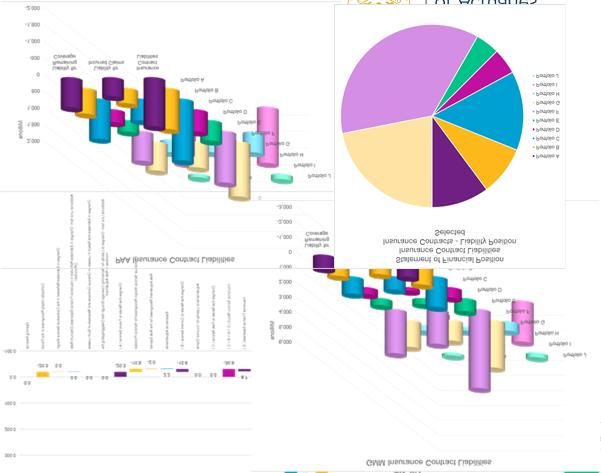
PAA rec
GMM recs
1-4
Group 1
IFRS 17 Portfolio
class 1 analysis
Entity 1 Group 2
IFRS 17 Reserve
Group class 2 adequacy
IFRS 17
Entity 2 class 1
13Prioritising your effort What’s going to be important?
Automate as much as possible
§ Data preparation and
population automatic
Xxxxxx
§ Xxxxxx § Automatic production of
Governance and Approvals assumptions based on
Local § Xxxxxx core reserving process
Inputs ̵ Xxxxxx Common deployment platform General Ledger and core accounting EPM layer
§ Population of IFRS 17
Transformatio
P&C claims
calculations
Mapping
and adm in ResQ FR Entity View Group
systems
n
Further Data Prepare/store Local Sub- Local Group
automatically
Data Preparation
Reinsuranc Ledger
Insurance Disclosure / Disclosure /
and Tools Reporting
e Subledger Reporting
Input data
§ Production of MI/
Backup Consolidation
Actuals Statutory
Actuals Reporting
data postings Statutory
Assets Period End
Regulatory
Reporting drillable results
postings
Reporting Regulatory
P&C Reserving
§ Allow quick review and
Reporting
database
Reporting
IFRS results General Ledger Management
Perform Reporting Management
Closing Reporting playback, with potential
Star ESG
Create PBF to adjust assumptions
BS / P&L
§ Build up story of the
Process, reconciliation, audit, analysis, reporting etc
quarter
15Areas of focus
• Some changes will be expected, others will not
Expected changes: Unexpected issue:
§ Change in level and shape of yield curves Split of impact if not produced as part of OCI
§ AvE on experience in the period e.g. inconsistent assumptions obvious
§ Unwind of CSM / LRC e.g. linear earning, not seasonal
§ New business adding to a cohort e.g. RI adjustments for gross new business
§ Unwind of discount Changes to initial discount rate over the year
§ Expense allocations and Risk Adjustment e.g. impact on expected future profit
§ Interpretation and reconciliations e.g. impact of appetite for reserve adequacy
16Focus area: AvE experience
As normal but
• Includes more detailed analyses due to moving between future/current/past
• Impact on future profits of changes in expectations of pricing strength
• Additional premiums (RP, AP) and allocation of the associated losses
• PAA revenue dependent on allocated expected (not actual) receipt of premium
AvE on
emerging
Future/ Expected
Premium
Current/ Past future
06 September 2019 17Focus area: Unwind of CSM/LRC
Compare
to
expected
Trend in
By Group/ remaining
cohort profit
PAA vs
GMM
Onerous/
Transfer
non-
to LIC
onerous
New
business
06 September 2019 18Focus area: New business
• Assign to a cohort
New • Reinsurance cohorts may have different timing of new
business business to gross
written • “Proportionate” reinsurance will need to include impact
of new gross business
Increase in • Split out from run-off of existing
CSM/LRC business
• Waterfall of effect of
Change in change in discount rate on
initial discount LRC as well as impact on
rate existing LRC
• Change in focus depending on
Interim seasonality
reporting • May have different seasonality for
RI and gross business
06 September 2019 19Focus area: Expenses and Risk Adjustment
These elements can impact not only past
but also future business profitability
CSM changes leading to changes in
expected profitability amount and timing
Changes in expectations of allocation of
RA will impact CSM/ unearned profit
06 September 2019 20Focus area: interpretation and iteration
Iteration of assumptions:
• Controls in setting, reviewing and signing off assumptions
• Reconciliations to core data and finance systems
• New/ different KPIs
• Reserve adequacy calculations and impact on message
• Bridging to other bases
06 September 2019 21Conclusion 18 September 2019
Conclusions
    It’s not going to be easy:
    • Efficient processes are critical
    • Controls will need to be tighter than is usual at the moment
    • Interpreting movements may require significant amounts of analysis
    • Not all movements will be easy to explain, particularly if driven from
      inconsistencies in assumptions
    • Bridging to other bases may vastly increase workloads

06 September 2019                                                          23
Questions Comments The views expressed in this presentation are those of invited contributors and not necessarily those of the IFoA. The IFoA do not endorse any of the views stated, nor any claims or representations made in this [publication/presentation] and accept no responsibility or liability to any person for loss or damage suffered as a consequence of their placing reliance upon any view, claim or representation made in this presentation. The information and expressions of opinion contained in this publication are not intended to be a comprehensive study, nor to provide actuarial advice or advice of any nature and should not be treated as a substitute for specific advice concerning individual situations. On no account may any part of this presentation be reproduced without the written permission of the IFoA or authors. 18 September 2019 24
You can also read


