INDIA'S AIR TRANSPORT SECTOR - THE FUTURE IS BRIGHT BUT NOT WITHOUT ITS CHALLENGES - IATA
←
→
Page content transcription
If your browser does not render page correctly, please read the page content below
INDIA’S AIR TRANSPORT SECTOR
    THE FUTURE IS BRIGHT…
BUT NOT WITHOUT ITS CHALLENGES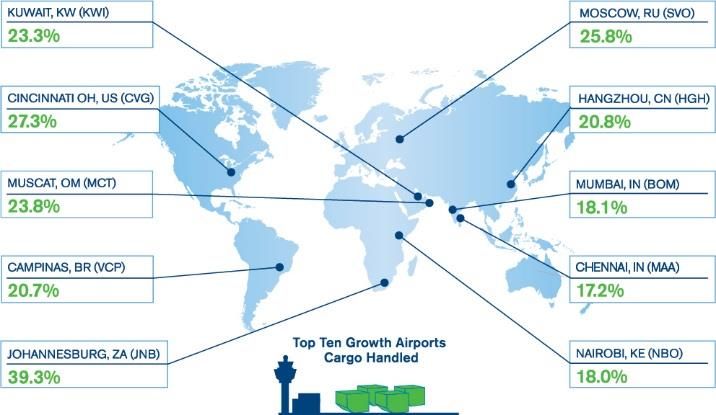
Preface

In a country where train travel has long been the dominant mode of transport, India’s aviation sector has
increasingly established itself as a safe, affordable and credible alternative. The number of passengers flown
by Indian airlines has more than doubled over the past seven years, compared with just a 6% rise in railway
passengers1.

Moreover, as the world’s largest democracy with a population of more than 1.3 billion citizens, India’s
potential for further growth and industry development is very clear. Indeed, we expect air passenger
numbers to, from and within India to increase by 3.3x over the next 20 years, to more than 500 million
passenger journeys per year.

This significant expansion is expected to be underpinned by a trebling in the proportion of middle-class
households and further increases in time-saving options for air passengers. This highlights the important role
aviation can play in connecting the country – both internally and with the rest of the world.

This strong growth outlook for air passenger demand will see India overtake Germany, Japan, Spain, and the
UK within the next 10 years to become the world’s third largest air passenger market.

These are exciting times for the air transport industry in India.

Of course, the future will not be without challenges – for those in the industry and policy-makers and
regulators alike. These challenges will include making sure that the right type of infrastructure is put into
place, at the right time and in the right location to ensure that the demand can be met, as well as ensuring
that the regulatory environment is one which successfully fosters a competitive and healthy airline transport
sector that will continue to make a major contribution to the Indian economy in the years to come. A robust
and financially sound industry is critical to delivering the benefits that aviation can bring – creating jobs,
bringing families together, facilitating business, and supporting trade, investment and economic growth.

Events such as this International Aviation Summit show that the importance of the industry is well-
understood in India and underscores the initiatives that are already being taken to position the country for
the key role it will increasingly have in global aviation leadership. It is my pleasure to contribute this
assessment to the Summit.

Brian Pearce
Chief Economist
International Air Transport Association
Geneva
August 2018

1http://www.indianrailways.gov.in/railwayboard/uploads/directorate/stat_econ/IRSP_2016-
17/Facts_Figure/Fact_Figures%20English%202016-17.pdf
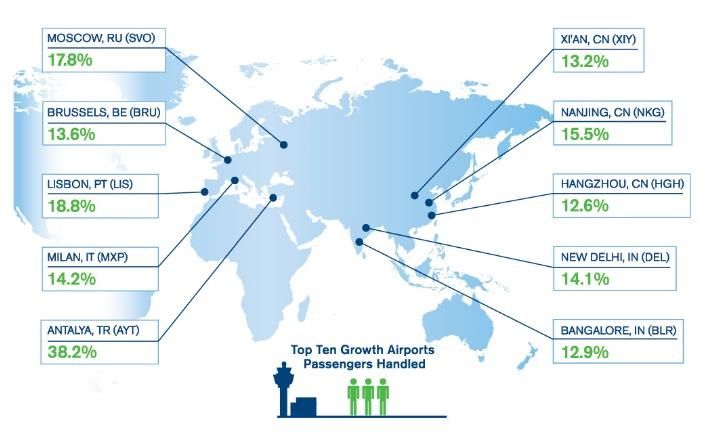
Table of Contents
Preface ................................................................................................................................................................. i

India’s air transport industry; a global perspective ............................................................................................ 1

Recent developments ......................................................................................................................................... 1

   India’s Domestic air transport market............................................................................................................ 2

   India’s International air transport market ...................................................................................................... 5

   India’s air cargo market .................................................................................................................................. 7

Business models & industry structures continue to evolve ............................................................................... 8

Financial performance ........................................................................................................................................ 9

The value of air transport to India ....................................................................................................................10

   7.5m jobs and a $30bn contribution to GDP ................................................................................................10

Looking forward................................................................................................................................................11

   Sound fundamentals point to a bright future ..............................................................................................11

The policy environment matters ......................................................................................................................13

   Air passenger forecast scenarios ..................................................................................................................13

   National Civil Aviation Policy ........................................................................................................................14

   Travel & Tourism Competitiveness ..............................................................................................................14

   Ease of Doing Business .................................................................................................................................15

Concluding comments ......................................................................................................................................16
India’s air transport industry; a global perspective
The Indian air transport sector has shown very strong growth in recent years – particularly on the
domestic market segment.
In June 2018, the domestic India market recorded its 46th consecutive months of double-digit year-on-
year growth; an outstanding performance and one which is showing no signs of ending anytime soon.
The air transport market in India employs more than 390,000 people and supports another 570,000
more in the supply chain. Overall the industry contributes some US$30 billion annually to India’s GDP.
The fundamental drivers of air passenger demand – including population and demographics and
increasing incomes – are favorable and supportive of ongoing growth over the longer-term.
Over the next 20 years IATA forecasts growth of 6.1% per year on average – the number of annual air
passenger journeys is forecast to increase by more than 350 million over the period, moving to almost
520 million journeys in 2037.
The industry must continue to work constructively with its key stakeholders – including the government
and policy-makers – to ensure that this sizeable increase in demand can be met and to realise the full
benefits that the air transport industry can deliver to India.
Recent developments Figure 2: Annual growth in India’s O-D air
passenger journeys
In 2017, more than 158 million passengers flew on
% growth year-on-year
routes to, from and within India (Figure 1). This 30%
represents an increase of almost 15% over 2016 25%
20%
and is the third consecutive year of growth in the
15%
order of 15-20% per year (Figure 2).
10%
The figures for the 2018 year-to-date suggest that 5%
India is on track to record a fourth straight year of 0%
double-digit passenger growth. -5%
-10%
Figure 1: Total air passenger journeys to, from & 2007 2008 2009 2010 2011 2012 2013 2014 2015 2016 2017
within India (annual)2 Source: IATA
Million pax per year
180
The strong performance of air passenger demand
160
140
growth in India has not been confined to just the
120 past few years, however; the total number of air
100 passengers has more than doubled over the past
80
seven years, from a level of 79 million journeys
60
40
undertaken in 2010.
20
Indeed, utilising data from the World Bank and
0
2007 2008 2009 2010 2011 2012 2013 2014 2015 2016 2017 ICAO, which measures the number of passengers
Source: IATA carried by airlines based in the particular country,
we can see the growth of the Indian market in a
longer-term perspective (Figure 3, over).
From flying just 16 million passengers 20 years
ago, Indian airlines have seen their passenger
2 Unless stated otherwise, all data in this report are
calculated on an origin-destination (O-D) basis.
1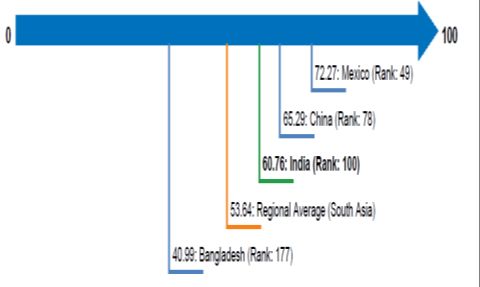
volumes increase more than 8-fold in the period                                                Figure 5: Evolution of market share: Domestic vs
since. Along the way, India has overtaken a host of                                            International
countries, including Germany and Japan, in the                                                  100%
                                                                                                90%
process.                                                                                        80%
                                                                                                70%
Placed in this longer-term context, the relative
                                                                                                60%
performance of the air transport industry in India                                              50%

is stark.                                                                                       40%
                                                                                                30%

Figure 3: Increases in air passenger demand,                                                    20%
                                                                                                10%
1997-2017, selected countries                                                                    0%
         Passengers carried by airlines based in each country (million)                            2007   2008     2009    2010   2011 2012 2013   2014   2015    2016   2017
160                                                                                                                                  DOM INT
                                                                                   UK
140                                                                                India       Source: IATA
120                                                                                Japan

100
                                                                                   Germany     Reflecting the relative size of the domestic and
                                                                                   Brazil
    80                                                                                         international markets, the composition of the
                                                                                   Canada
    60
                                                                                   Korea       current in-service fleet is heavily tilted towards
    40                                                                             Australia   narrowbody aircraft.
    20                                                                             Spain

                                                                                   France      Narrowbodies account for ¾ of the total current
    0
     1997                                  2007                           2017                 fleet, with widebodies contributing a further 10%.
Source: World Bank, ICAO
                                                                                               The remainder consists primarily of turboprops
Returning to more recent outcomes, it is                                                       and regional jet aircraft (Figure 6).
unsurprising to note that the bulk of the flights                                              Figure 6: Composition of India’s current aircraft
taken in 2017 were domestic in nature, accounting                                              fleet
for around 62% of the total (Figure 4).
                                                                                                                 Other*, 14.2%

Figure 4: Composition of 2017 air travel: Domestic
vs International
                                                                                                  Widebody, 9.9%

    International
         38%                                                                                                                                                     Narrowbody,
                                                                                                                                                                    75.9%

                                                                             Domestic          Source: CAPA * incl turboprops and regional jets
                                                                                 62%

                                                                                               The following sections investigate the recent
                                                                                               performance and key developments for the
Source: IATA
                                                                                               domestic and international market segments in
Indeed, the domestic share of total traffic has                                                turn.
been generally increasing gradually over the past                                              India’s Domestic air transport market
decade. From 54.5% in 2007, and notwithstanding
                                                                                               The India domestic market is currently the fastest
some bumps along the way, the domestic share
                                                                                               growing (measured in in terms of revenue
has gradually risen to the 61.7% level of 2017
                                                                                               passenger kilometres3) of the main domestic
(Figure 5).
                                                                                               markets that IATA consistently track around the
                                                                                               world.

3Revenue passenger kilometres (RPKs) is a measure of the
volume of passengers carried by an airline. An RPK is flown
when a revenue (paying) passenger is carried one kilometre.

                                                                                                                                                                          2
Over the year to June 2018, the India domestic Figure 9: Annual growth in origin-destination
market has grown by a very strong 17.6%, well passenger journeys – India Domestic
above the industry-wide (domestic markets) pace 40%
% growth year-on-year
of 7.9% (Figure 7).
30%
Figure 7: Comparison of key global domestic 20%
market RPK growth
10%
Jun-18 May-18
Industry 7.9% 0%
6.7%
Domestic India 17.6%
15.8% -10%
Domestic China 15.3%
11.9%
-20%
Domestic Russia 6.0%
8.6% 2007 2008 2009 2010 2011 2012 2013 2014 2015 2016 2017
Domestic USA 5.3%
5.5% Source: IATA
Domestic Brazil 5.3%
3.8%
3.7%
Domestic Japan 1.7% While such rapid growth cannot continue
Dom. Australia 1.8%
3.1% indefinitely, equally, there are no indications that
0% 2% 4% 6% 8% 10% 12% 14% 16% 18% 20%
the performance is likely to come to an abrupt end
Source: IATA
anytime soon.
June 2018 was the 46th consecutive month of Highlighting this point, and the magnitude of the
double-digit growth in India domestic passenger potential growth in the India domestic market, the
volumes, fast closing in on the four year milestone. number of domestic journeys undertaken in 2017
In 2017, there were a total of 97.7 million represents just 7.3% of India’s total population.
domestic passenger journeys, up almost The strong demand outcomes over recent years
15 million from 83 million in 2016 (Figure 8). have been partly due to the stimulus of lower
Figure 8: Number of origin-destination air airfares.
passenger journeys per year – India Domestic In real (inflation-adjusted) terms, the average cost
120
Million pax per year of an India domestic airfare has been trending
100
lower for more than a decade.
80 After rising in 2013 and 2014 which, again, in large
part reflects the impact of the market disruption
60
associated with the demise of Kingfisher, the
40
downwards trend has since resumed.
20
Figure 10: Average India Domestic airfare,
0
2007 2008 2009 2010 2011 2012 2013 2014 2015 2016 2017 adjusted for inflation
Index, 2005=100
Source: IATA 100
90
Growth in the India domestic market has been 80
70
faster than that of the total market depicted 60
previously in Figure 2. 50
40
Following two lean years in 2012 and 2013 (in part 30
20
reflecting the demise of Kingfisher), growth has
10
recovered strongly. 0
2005 2006 2007 2008 2009 2010 2011 2012 2013 2014 2015 2016 2017
In both 2015 and 2016, India domestic RPKs grew Source: IATA
by more than 20% and in 2017, although the pace
of growth eased moderately, it still recorded a India domestic passenger demand is also being
very strong 17.6% rate (Figure 9). driven in part by rapid expansion in the domestic
air network.
3This is evident both in terms of a strong rise in the Against this backdrop of developments in demand
number of airport pairs in operation within India – and capacity, the India domestic passenger load
these have risen by more than 50% since 2015 – as factor remains elevated.
well as increases in the average frequency of
Indeed, in February 2018, it exceeded 90% for the
flights on each route (Figure 11).
first time ever, hitting an all-time high for the
Both of these factors ultimately translate into time seven global domestic markets4 that we track each
savings for passengers and therefore have similar month (Figure 13).
stimulatory impacts on demand as reductions in
Figure 13: Domestic India – passenger load factor
air fares.
performance
Figure 11: Components of India’s domestic air 95% % of available seat kilometres Domestic passenger load factors
Domestic India
The shaded area shows the min/max load factor range for
network growth: new routes vs increased 85% the 7 global domestic markets we track each month.
frequency*
75%
Number of airport pairs Number of flights per week
700 36
65%
34
Domestic routes (# airport pairs in operation), left axis
600 32 55%
Average flight frequency, right axis Failure of
Tōhoku earthquake Kingfisher
30 impact in Japan
45% Airlines
500
28 9/11 SARS impact in China
26 35%
400 2000
2001
2002
2003
2004
2005
2006
2007
2008
2009
2010
2011
2012
2013
2014
2015
2016
2017
2018
24
300 22 Source: IATA
20
200
2005 2006 2007 2008 2009 2010 2011 2012 2013 2014 2015 2016 2017 2018
18
The bigger picture is that the current load factor
performance represents a significant turnaround
Source: SRS Analyser * aircraft >19 seats, at least 1 flight
per week on average from the early-2000s when India regularly posted
the lowest domestic passenger load factor
Overall, India domestic demand (measured by amongst our group of countries, even dipping
RPKs) have grown faster than the corresponding below 50% on occasion.
rate of capacity growth (measured by available
The evolution and maturity of India’s domestic air
seat kilometers or ASKs) in recent years.
transport market can be illustrated by comparing
While the degree of outperformance has the experiences around the time of 9/11 with that
moderated from that seen in late-2014 and early- of late 2014.
2015, annual RPK growth has still exceeded that of
In the former, domestic capacity continued to
ASK growth by 3 percentage points on average
increase even as demand slumped, while in late-
each month over the past two years (Figure 12).
2014 Indian airlines slowed capacity growth to
Figure 12: India Domestic – passenger demand support the load factor even as demand was
(RPKs) and capacity (ASKs) growing strongly.
% year-on-year
60%
In part this appears to reflect the increasing
50%
40%
influence of competitive (market) pressures over
Revenue passenger kilometres
30% time via a mix of policy, regulatory and industry
20%
developments.
10%
0% Such forces have instilled a greater focus on
Available seat kilometres
-10%
airlines to achieve the load factor levels needed to
-20%
-30%
generate adequate returns for their investors.
2001
2002
2003
2004
2005
2006
2007
2008
2009
2010
2011
2012
2013
2014
2015
2016
2017
2018
Source: IATA
4
India, China, the US, Brazil, Russia, Japan and Australia.
4Figure 14 puts the strong and sustained growth Figure 16: World’s top ten growth airports 2017 –
performance of the India domestic market into a passengers handled
global perspective.
Since 2014, in terms of RPKs flown India has
overtaken Australia, Japan, Brazil, and Russia – all
of the main domestic markets that we follow, with
the exception of China.
The India domestic market now accounts for
around 1.5% of total industry-wide RPKs and is
larger than all of the domestic markets that we
follow, with the exception of China and the US.
Source: ACI, IATA WATS
Figure 14: Main global domestic air transport
markets, share of industry-wide RPKs
1.6%
% of industry-wide RPKs
India’s International air transport
1.5%
India
market
1.4%
Russia
1.3%
In 2017, around 60 million international
Brazil
1.2%
Japan
passengers flew to/from India, up from 55 million
1.1% in 2016 (Figure 17).
1.0%
Australia Figure 17: Number of origin-destination air
0.9%
passenger journeys per year – India International
0.8%
2010 2011 2012 2013 2014 2015 2016 2017 Million pax per year
70
Source: IATA
60
Furthermore, of the 100 largest domestic city pair 50
routes in the world in 2017, ten can be found in 40
India (Figure 15). 30
20
Figure 15: Largest city-pair routes Within India &
10
their 2017 global ranking
0
2007 2008 2009 2010 2011 2012 2013 2014 2015 2016 2017
#pax 2017 YoY growth Global rank
1 Mumbai-Delhi 5,566,510 1.9% 7 Source: IATA
2 Bangalore-Delhi 3,492,889 -1.5% 20
3 Bangalore-Mumbai 2,716,801 3.0% 35 While the international market has not grown as
4 Kolkata-Delhi 2,153,297 5.6% 52
5 Delhi-Pune 1,997,165 17.5% 63
fast as its domestic counterpart, the sustained
6 Delhi-Hyderabad 1,891,240 3.8% 75 period of robust growth, over a number of years,
7 Delhi-Chennai 1,836,447 -5.4% 80
is still readily evident.
8 Mumbai-Goa 1,748,145 -0.2% 89
9 Mumbai-Chennai 1,717,468 5.1% 91
The 2017 outcomes represents an increase of
10 Delhi-Goa 1,692,230 23.6% 96
10.3% on 2016 and is the third consecutive year of
Source: IATA WATS
double-digit international passenger growth
In a similar way, of the top 10 growth airports in (Figure 18).
terms of passengers handled in 2017, two are
located in India, namely Delhi and Bangalore
(Figure 16).
In terms of global rankings, Delhi is #16 globally in
terms of passengers handled and Mumbai is #29.
5Figure 18: Annual growth in origin-destination pairs has been increasing, so too have the average
passenger journeys – India International number of flights on the international city pair
20%
% growth year-on-year routes (Figure 20).
15%
Figure 20: Average flight frequencies on
international airport pairs served, selected
10%
countries
Average flight frequencies (per week per int'l airport pair)
5% 14
India
12 12.1
0%
10 Brazil
8.6
-5% China 8.4
8
2007 2008 2009 2010 2011 2012 2013 2014 2015 2016 2017
7.1
Source: IATA 6
Russia
4
Contributing to this growth performance, India 2
has steadily increased the number of overseas city 0
pairs served by a non-stop service from the 2005 2006 2007 2008 2009 2010 2011 2012 2013 2014 2015 2016 2017 2018
Source: IATA, SRS Analyser
country over time (Figure 19).
In 2018, there are 304 such international pairs, up In contrast to both China and Russia, India is well
from around 230 ten years ago. served by the frequency of flights on the
international markets served.
Figure 19: Non-stop international airport pairs
served, selected countries India has almost four additional frequencies per
1,200
Non-stop int'l airport pairs served week on average between the airport pairs
1030 compared with both Russia and China.
1,000
800
China A choice of flight times is particularly important for
business travelers who value the flexibility the
600 576
Russia additional frequencies provide.
400
India 304 The bulk of international traffic is to the Middle
200
Brazil 149 East and Asian destinations, with these two
0 markets accounting for around 70% of the total
2005 2006 2007 2008 2009 2010 2011 2012 2013 2014 2015 2016 2017 2018
Source: IATA, SRS Analyser share of international traffic from India in 2017
(Figure 21).
In relative terms, the India market appears to have
Figure 21: Share of international traffic by
considerably less international city pairs served
continent, 2017
than either China or Russia. Sth America,
Africa, 2.8%
0.2%
Nth America,
However, Indian travelers have ready access (via 11.6%
the geographic proximity) to the Middle East
super-connector hubs – Dubai, Abu Dhabi and
Europe, 13.6%
Doha – that China and Russia do not. Middle East,
41.5%
This increases the size of the network significantly
for Indian travelers, as well as making India more
accessible for international visitors. As such, it may Asia, 30.3%
go some way to explaining the relatively lower
Source: IATA
number of international city pairs for India relative
to China and Russia. Looking more closely at the composition of
As was the case for the India domestic market, at international travel, at the country-level, the top
the same time as the number of international city
610 international markets account for two-thirds of Figure 23: Top freight country pairs from India,
the total (Figure 22). 2017
Other , 22.2%
The United Arab Emirates (UAE) leads the way,
UAE, 28%
with almost 20% of the total, followed by Saudi
Arabia and the United States each with just over
Kuwait, 2%
9% market share.
Thailand, 3%
Figure 22: Share of international traffic by country, Germany, 4%
2017
Saudi Arabia, 5%
Qatar, 11%
Singapore, 5%
Other, 32.9%
UAE, 19.8%
Hong Kong, 6% UK, 6% Ethiopia, 7%
Source: IATA
US, 9.3%
Figure 24 depicts the relative market size (in
tonnes) and the annual growth rate of India’s top
Qatar, 2.9% S.Arabia, 9.3% 10 air cargo trading partners.
Kuwait, 3.1%
Malaysia, 3.6% Singapore, 5.4% While the UAE is clearly the largest market by
Oman, 3.9% Thailand, 4.6% UK, 5.1%
some margin, the fastest growing market was
Source: IATA
Ethiopia, which more than doubled its cargo
tonnage with India in 2017. Kuwait and Thailand
also deserve a mention with growth exceeding
India’s air cargo market 30% for the year for both countries.
While the focus of this paper to date has been on Of the top ten markets, Hong Kong was the only
the air passenger market, it would be remiss to one to see a fall in its cargo tonnage with India in
overlook the air cargo segment. 2017, down a modest 0.3% compared with its
This is particularly the case given India’s 2016 volume.
integration into the global pharmaceutical value Figure 24: Top freight country pairs from India,
chains – a strong growth performer for the air tonnes & annual growth, 2017
cargo segment over recent years.
tonnes %ch
Nonetheless, 2017 was also an impressive year of UAE 292,556 4.7%
growth for the Indian air cargo market. Qatar 113,652 18.2%
Ethiopia 77,626 114.4%
The total cargo tonnage flown from India crossed UK 66,275 16.0%
the one million tonne threshold in 2017, with a Hong Kong 61,460 -0.3%
Singapore 58,146 5.4%
strong, double-digit growth rate of 16.9%5. Saudi Arabia 52,041 25.6%
Germany 46,583 6.3%
The top ten trading partner countries for Indian air Thailand 32,872 34.2%
cargo account for almost 78% of the total Kuwait 24,576 30.2%
(Figure 23). Source: IATA WATS
The UAE leads the way with almost a 30% market
As was the case on the passenger side, India has
share, followed by Qatar with 11%.
two airports ranked in the global top 10 fastest
growing in 2017, namely Mumbai and Chennai.
These two airports recorded very strong growth of
18.1% and 17.2%, respectively in 2017 (Figure 25).
5
The top freight country pairs cover all scheduled traffic,
excl. integrators. The data are uni-directional in nature.
7In terms of global rankings, Dehli and Mumbai For India the growth of the LCC market has been
appear in the list of the top 50 airports for freight significant. In 2004 there were just over 5 million
handled, at #29 and #31, respectively. total LCC seats offered. Incorporating the
schedules data for the remaining months of 2018,
Figure 25: The top 10 growth airports 2017 – cargo
this figure has risen to almost 135 million seats –
handled
an increase of 27x in the 14-year period
(Figure 27).
Figure 27: Increase in the number of LCC seats in
the Indian air transport market
Total LCC seats (DOM+INT)
160,000,000
140,000,000
120,000,000
100,000,000
80,000,000
Source: ACI, IATA WATS 60,000,000
40,000,000
20,000,000
0
2004 2006 2008 2010 2012 2014 2016 2018
Business models & industry Source: SRS Analyser
structures continue to evolve
Even if you consider just the past five year period,
Globally, air transport is a highly dynamic industry
the number of LCC seats in the Indian market has
and in this regard, the industry in India is no
more than doubled, from 64 million in 2013.
different.
One of the key competitors for airlines
As markets evolve and customer demands change,
domestically is the extensive train network in
airlines must constantly review and update their
India. The train system carries more than 8 billion
operations and product offering to ensure that
passengers per year. Many of these will be
they continue to meet the market need.
commuter trips over relatively short distances, for
One important part of this story is the evolution in which air travel is not a viable substitute.
business models and market structures observed
However, a proportion of these train journeys
in the industry, notably the rise of the so-called
could potentially be taken by air; the market
Low Cost Carrier (LCC) business model (Figure 26).
opportunity for an affordable airline alternative is
All told, at the global level, LCCs account for clear.
around 28% of the total number of seats flown.
Looking at the share of LCC seats in the Indian
Figure 26: Proliferation of the LCC model globally market brings to light a number of interesting
observations.
Firstly, around 55% of all seats in the market are
offered by low cost carriers (Figure 28). Focusing
on the domestic market alone, the LCC share of
total seats is almost 70%.
While the share of LCC seats offered on India’s
international routes is much smaller, at just under
25%, this share has risen from essentially zero in
2004.
Source: SRS Analyser
8Figure 28: Share of LCC seats in the Indian air Amongst Indian airlines, there are currently
transport market around 600 aircraft in service. Evidencing the
LCC seats, share of total optimism and positive outlook for the sector, and
80%
70%
providing some insights as to the near-term
60%
INT DOM TOTAL
evolution of the market, some 1123 aircraft are
50% currently on order for India. The bulk of these
40% deliveries are currently slated for delivery to
30% IndiGo – a major low cost carrier (Figure 29).
20%
10%
Figure 29: Aircraft currently on order – Indian
0% airlines
2004 2006 2008 2010 2012 2014 2016 2018
Air India
Source: SRS Analyser
Vistara
Arguably, the emergence of LCCs has facilitated GoAir
the democratization of air travel and fueled
Jet Airways
aviation growth, albeit in various ways across
SpiceJet
different markets.
IndiGo
In emerging markets LLCs have broadened the
0 50 100 150 200 250 300 350 400 450 500
market and allowed more people the opportunity # aircraft
to fly for the very first time. In more mature Source: CAPA
markets, LCCs have deepened the market allowing
people to fly more often.
Given its prevalence, the LCC model cannot be
Financial performance
ignored in any assessment of India’s air transport
Historically, the global air transport industry has
market. However, LCCs aren’t the only way in
struggled to generate consistent profits. Even in
which the industry is evolving.
periods of strong demand, profitability has,
Increasingly, we are seeing a blurring of the historically, proven to be elusive.
traditional distinction between full service airlines
While, as a rule, airlines have been able to pay
and LCCs as each are increasingly adopting
their debts, equity investors typically have not
practices typically the domain of the other,
been adequately compensated for risking their
resulting in a so-called ‘hybrid’ business model.
capital in the sector.
More broadly, there are range of new and
The last three years – and we expect 2018 to be
alternative investment and alliance or partnership
the fourth – have seen a turnaround in this
structures emerging globally which add a new
situation at the global, industry-wide level.
dimension to the industry, as airlines try to find
new and innovative ways to expand their The industry is now generating returns which
networks and their product offering. In some exceed its cost of capital, and delivering a net
global markets, the changing industry structure is profit figure of around US$30 billion per year
one of consolidation rather than expansion. (Figure 30).
These developments can apply to both the
international and domestic markets. Indeed, some
of these new structures and arrangements are
evident in the Indian air transport industry, having
been supported by changes in the regulatory and
policy environment.
9Figure 30: Global airline industry financial Figure 32: Financial performance of selected
performance Indian airlines vs the global industry, EBIT margin
10.0
% revenues
Global commercial airline profitability
US$ billion
40
2013-2018*
8.0 EBIT margin
30 15%
6.0 EBIT margin (left axis)
20 10%
4.0
2.0 10 5%
0.0 0
0%
-2.0 -10
-5%
-4.0
Net post-tax profit (right axis) -20
-6.0 -10%
-8.0 -30
Air India SpiceJet IndiGo
-15%
-10.0 -40 GoAir Jet Airways Industry
2000 2002 2004 2006 2008 2010 2012 2014 2016 2018
-20%
2013 2014 2015 2016 2017 2018
Source: IATA
Source: Airline Analyst *data for Indian airlines related to
Unfortunately, for the most part, the airlines in year-ended 31 March, industry data relate to the calendar
India have not yet been able to match this recent year prior
improvement in the industry-wide financial
performance (Figure 31). It is clear that the overall industry in India is not
yet on a sound financial footing and this remains a
Over the period shown, most airlines have work-in-progress for the industry and its key
struggled to consistently generate a net profit stakeholders, including policy-makers.
after tax; the main exception being IndiGo who,
along with GoAir, are the only airlines to have While the industry has demonstrated resilience in
generated profits in each year of the period the face of various shocks and disruption
shown. The recent financial performance of Air (including the global financial crisis and airline
India has been well-documented elsewhere. exits), financial stability is a key factor for the
industry to be able to successfully develop and
Figure 31: Financial performance of selected grow.
Indian airlines, Net profit after tax 2013-2018*
Net profit after tax, US$m
500
300
100 The value of air transport to
-100
-300
India
-500 7.5m jobs and a $30bn contribution to
-700
Air India SpiceJet IndiGo
GDP
-900
GoAir Jet Airways The air transport sector makes a significant
-1100
2013 2014 2015 2016 2017 2018 contribution to the Indian economy (Figure 33).
Source: Airline Analyst * data relate to year-ended 31 March
Analysis undertaken by Oxford Economics shows
In a similar way, many Indian airlines have been that the air transport sector directly contributes
unable to match the global industry performance 390,000 jobs in India. This includes airlines, airport
in terms of operating (EBIT) margin either. operators, airport on-site enterprises such as
restaurants and retail, aircraft manufacturers and
The performance of GoAir and IndiGo are again
air navigation service providers.
notable over the period, as is the improved
financial results of SpiceJet in more recent years. In addition, by buying goods and services from
local suppliers the sector supported another
570,000 jobs across the supply chain.
10Figure 33: The value of aviation in India Looking forward
Sound fundamentals point to a bright
future
IATA’s long-term passenger forecasts for India
highlight the potential for significant growth in air
transport demand over the next twenty years.
A favorable population and demographic profile –
notably a relatively young population – along with
the expected continuation of economic
Source: Oxford Economics, IATA development and growth in household incomes
underpins this very positive long-term outlook.
On top of this, the sector is estimated to have
supported a further 350,000 jobs by paying wages India’s population is expected to increase further
to its employees, some or all of which are over the forecast horizon, rising from 1.3 billion
subsequently spent on consumer goods and persons currently to 1.6 billion by the end of our
services and create employment in other sectors forecast horizon (Figure 34).
of the economy. This ongoing population increase is expected to
see India overtake China as the world’s most
Air transport brings tourists and investment into
populous country within the next decade. Of itself,
India, and helps businesses trade their goods and
a growing population will typically have a positive
services around the world. Foreign tourists
impact on the demand for air transport services.
arriving by air to India, who spend their money in
the local economy, are estimated to have Figure 34: India’s population forecast
Population , billion persons
supported an additional 6.2 million jobs. 1.8
1.6
But it’s not all just about employment. 1.4
1.2
The air transport industry (directly and indirectly) 1.0
0.8
is estimated to have supported an $8.9 billion
0.6
gross value added contribution to GDP in India 0.4
while spending by foreign tourists supported a 0.2
further $21.2 billion gross value added 0.0
2006 2011 2016 2021 2026 2031 2036
contribution to GDP.
Source: Oxford Economics, IATA
Furthermore, the air transport jobs tend to be
In addition to the expected increase in population,
highly productive – not just for their airline
India is also forecast to become a richer country
employers but for the economies in which they
over the next 20 years.
are employed.
After adjusting for inflation, per capita incomes
The average air transport services employee in are expected to increase to almost US$5,000 per
India generates nearly INR1.3 million in Gross year in 2036, up five-fold since 2006 and more
Value Added annually, which is around 10 times than double the current level (Figure 35).
more than the economy-wide average.
11Figure 35: India’s rising incomes – GDP per capita Figure 37: India’s forecast air passenger demand,
5,000
GDP per capita, real US$ 2017-37
4,500 Million O-D passengers per year
600
4,000
3,500 500
3,000
2,500 400
2,000
300
1,500
1,000 200
500
100
0
2006 2011 2016 2021 2026 2031 2036
0
2017 2019 2021 2023 2025 2027 2029 2031 2033 2035 2037
Source: Oxford Economics
Source: IATA/TE
At the same time, the number of middle-class
households in India is expected to continue to The additional 359 million passengers will not be
increase over the coming decades, to around 20% sourced evenly from the domestic and
by 2036, compared with just 2% in 2006 (Figure international segments.
36). Domestic passengers will account for around 63%
Figure 36: Increase in the share of middle class of the total growth over this period, or 228 million
households in India additional passengers.
% share of middle class households
20%
Forecast to rise by a further
Foreign passengers will contribute less to overall
18%
16%
13 percentage points over
the next 20 years
growth, representing 37% of the total market
14% growth, equal to 131 million additional passengers
12%
(Figure 38).
10%
Risen by 5 percentage
8% points since 2006 Figure 38: Expected increase in Indian air
6%
4%
7% in 2017
passenger demand 2017-37, and DOM vs INT
2% contributions
0%
Passenger flows (million)
2006 2011 2016 2021 2026 2031 2036 400
Source: Oxford Economics 350
300 INT
36.6%
The latest IATA/Tourism Economics (TE) forecasts 250
suggest the demand for air travel to, from and 200
within India – on an Origin-Destination basis – will 150 DOM
63.4%
increase at an average rate of 6.1% per year over 100
50
the next twenty years.
0
Total pax INT & DOM
India is forecast to gain an additional 359 million
passengers by 2037, compared to 2017 (Figure Source: IATA/TE
37); an increase of 3.3x the current level.
Of the 6.1% average annual growth in Indian air
This means that, by 2037, there will be almost passenger demand over the next 20 years,
520 million passengers flying to/from and within improvements in living standards (via higher
India each year. incomes) are expected to contribute the major
share, at 5.1 percentage points.
Favourable population and demographic factors
are forecast to contribute 0.6 percentage points to
annual growth. Other factors, mainly future
technological gains, will contribute 0.8 percentage
points per year.
12The modest subtraction from growth (0.5 to maintain their ranking over the forecast period
percentage points) from trade mainly reflects the (Figure 41).
Oxford Economics view that the economy will
The mature air transport markets of the UK and US
become slightly less trade intensive over the
are expected to see the largest decline in rankings,
forecast horizon (Figure 39).
losing 3 places and 2 places to #9 and #6,
Figure 39: Sources of growth in India’s air respectively.
passenger demand, 2017-37
Figure 41: Top 10 Indian air transport markets,
Living standards Pop'n & Demog. Technology Trade
7
%, %age pt
2017-37
6 0.8 2017 2019 2021 2023 2025 2027 2029 2031 2033 2035 2037
0.6 Dom. India 1 Dom. India
5
UAE 2 UAE
4
S. Arabia 3 S. Arabia
3 6.1
US 4 Singapore
5.1
2 Singapore 5 Thailand
1 UK 6 US
0 Thailand 7 Oman
-0.5
-1 Oman 8 Qatar
Total pax Drivers
Malaysia 9 UK
Source: IATA/TE Kuwait 10 Malaysia
Putting this performance into a global context, the
Sources: xxxxxxx
Source: IATA/TE
positive outlook will see India move up from the
#7 ranked largest air passenger market in the
world currently to #3 (behind China and the
The policy environment matters
United States) within the next decade. India will
It is important to note that while the fundamental
hold this position through to the end of our
drivers of air passenger demand provide a
forecast horizon in 2037.
favorable tailwind to growth in the sector, these
Along the way, India will overtake Germany, outcomes are not guaranteed.
Japan, Spain and the United Kingdom (Figure 40).
Demand forecasts can be impacted – either
Figure 40: Top 10 global air transport markets, positively or negatively – by a range of other
2017-37 factors, including the availability of infrastructure
US 1
2017 2019 2021 2023 2025 2027 2029 2031 2033 2035 2037
China and broader government policy decisions around
China 2 US market regulation and liberalization, for example.
UK 3 India
Spain 4 Indonesia Air passenger forecast scenarios
Japan 5 UK
As part of the forecast process, we prepare two
Germany 6 Spain
India 7 Japan
generic global scenarios.
Italy 8 Germany
France 9 Thailand
The scenarios are designed to demonstrate the
Indonesia 10 France possible impacts on air passenger demand of both
Sources: xxxxxxx
Source: IATA/TE a more favorable future outcome (where there is
policy stimulus and further air transport market
The composition of the top ten air transport liberalization) and a less favorable future outcome
markets for India show relatively little change over where policies are more restrictive and there is a
the 20-year forecasting horizon. pick-up in protectionism.
Kuwait is set to drop out of the top 10, to be The effect of these two broad scenarios on India’s
replaced by Qatar as the only compositional
air passenger demand forecasts are depicted in
change expected. The top 3 markets (Domestic
Figure 42.
India, the UAE and Saudi Arabia) are all expected
13Figure 42: India’s air passenger demand outlook More recently, a new draft scheme has been
under three scenarios, 2017-37 announced seeking to extend the UDAN
1000
Million O-D passengers per year framework to international routes.
800
Baseline
Travel & Tourism Competitiveness
Policy Stimulus & Market Liberalisation
600
The World Economic Forum’s (WEF) Travel and
Pick-up in Protectionism
Tourism Competitiveness Index provides a
400
framework to assess and benchmark the factors
200 and policies which impact a country’s T&T sector
competitiveness.
0
2017 2019 2021 2023 2025 2027 2029 2031 2033 2035 2037
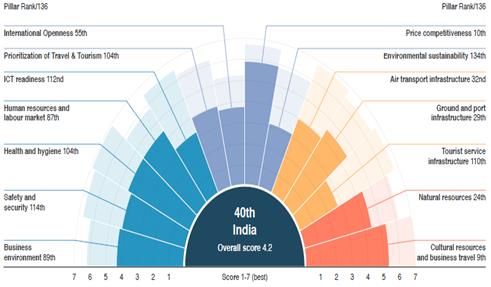
In its latest report, India ranks #40 out of the 136
Source: IATA/TE
countries assessed, a strong improvement of 12
Under the less favorable scenario, India’s air places over the previous survey (Figure 43).
passenger market will still grow, albeit at a slower India’s strengths include its vast cultural and
pace, of 4.9% per year. While this difference natural resources (ranked 9th and 24th,
doesn’t seem significant, it translates to more respectively), and its price competitiveness
than 100 million less passengers per year in 2037 advantage (10th).
than under the ‘constant policies’ scenario.
The WEF notes that India continues to enrich its
On the upside, a more favorable policy backdrop cultural resources, protecting more cultural sites
could see air passenger demand for India growing and intangible expressions through UNESCO
at a near-double digit annual pace of 9.1%, World Heritage lists, and via a greater digital
generating an additional 385 million passengers in presence.
2037 compared with the constant policies
scenario. This would take the number of International openness (55th, up 14 places),
passengers travelling to, from and within India by through stronger visa policies implementing both
air to just over 900 million in 2037. visas on arrival and e-visas, has enabled India to
rise up through the global ranking.
National Civil Aviation Policy
In the Indian context, no consideration of the The travel and tourism sector benefited from
policy environment could overlook the recent improvements in India’s transport infrastructure,
National Civil Aviation Policy (NCAP). which the WEF notes has traditionally been a
challenging area.
The 2016 introduction of the NCAP brought a
number of important initiatives and In this regard, it is notable, that the air transport
developments to India’s air transport industry. infrastructure sub-component places India 32nd
currently in the global ranking.
The policy addresses a range of key areas for civil
aviation including airline operations, safety and Figure 43: India’s travel & tourism competitiveness
security, international traffic rights and
maintenance, repair and overhaul (MRO)
operations.
The NCAP aims to make flying more affordable
and convenient to the general population,
including by establishing a regional air
connectivity scheme, the UDAN initiative.
Source: WEF
14Nonetheless, there is always room for Ease of Doing Business
improvement which could lift India’s ranking into The robustness and efficiency of the broader
the top quartile of countries. business environment is also important – not just
for air transport sector and related parts of the
Within the air transport infrastructure category,
industry supply chain.
India ranks relatively low (133rd) in terms of
airport density (the number of airports per million A strong and vibrant business environment
of population) and 108th for the number of stimulates employment opportunities, investment
departures per 1000 population. and trade which the air transport sector can both
help to enhance and benefit from.
While health conditions in the country continue to
improve, the WEF includes India towards the The World Bank’s Ease of Doing Business Index is
lower end of its global rankings for this indicator designed to provide objective data for use by
(104th). governments in designing sound business
regulatory policies.
Similarly, the WEF notes that while India’s ICT
readiness (112th), security concerns (114th), The latest index ranks India mid-range, at #100 of
tourist service infrastructure (110th) and human 190 countries, slightly ahead of the South Asia
resources (87th) are slowly improving, further regional average (Figure 45).
work is required across these dimensions to lift
India’s overall global ranking. Figure 45: World Bank Ease of Doing Business
ranking 2018 (distance to frontier)6
Importantly, the WEF are clear that steps are
already being taken in the right direction to
address the shortcomings and conclude that “the
Indian transport and tourism sector presents
significant opportunities that are yet to be
reaped”.
India’s travel and tourism competitiveness ranking
relative to its Asia Pacific peers is shown in
Figure 44.
Source: World Bank
Figure 44: Asia Pacific travel & tourism
competitiveness rankings Key challenges for India highlighted by the World
140
Global ranking (out of 136 countries) Bank include dealing with construction permits
124 125
120
(ranked #181), enforcing contracts (#164) and
101 102 103
100 94 trading across borders (#146).
78 79
80
64 67
60
Importantly, and as was the case with the WEF
40 34
40 42 measure discussed above, improvements in the
30
26
20 11 13
15 16
19 broader business environment in India are
4 7
0 underway; India’s ease of doing business ranking
has risen from #132 just five years ago, clearly
moving in the right direction.
Source: WEF
6 from 0 to 100 is used, where 0 is the lowest performance
The distance to frontier measure shows the gap to the best
performance observed on each of the indicators. A scale and 100 is the frontier.
15Concluding comments supporting services, both on the ground and in the
air.
Air transport is the business of freedom. It is so
much more than just moving people and cargo Equally, the broader business and policy
from one destination to another. environment should not place unnecessary
hurdles before the industry which inhibit its
Air transport helps to bring families together, it
growth and development and, in turn, reduce the
supports and enhances business and investment
level of benefits that aviation can deliver to the
decisions, it promotes the transfer of knowledge
nation.
and innovation, and provides opportunities to
study abroad and experience different cultures. There is no doubt that this is an exciting period for
air transport in India.
As this paper has made clear, the future of India’s
air transport industry is bright. And there is a clear mandate for the industry, its
supply chain partners and the government and
However, this does not mean that that the future
policy-makers to all work in a collaborative
flightpath will be without turbulence.
manner, towards the common goal of ensuring
The significant growth potential of the industry in that the benefits that the air transport industry
India will also create challenges – for the airlines, can bring to India are fulfilled.
its industry partners and policy-makers alike – to
ensure that this growth potential can be met.
For example, this will require the right type of
IATA Economics
infrastructure to be put into place, at the right
economics@iata.org
time and in the right place. Infrastructure is not
August 2018
just airports, it includes investment and
16You can also read


