Living withTrees 2021 2026 - South Dublin County Council Tree Management Policy
←
→
Page content transcription
If your browser does not render page correctly, please read the page content below
Living
withTrees
South Dublin County Council
Tree Management Policy
2021 - 2026
2   South Dublin County Council |   Tree Management Policy 2021 - 2026

      1 Introduction
                                                                         Trees make a major contribution to the character, appearance
                                                                         and well-being of South Dublin County.

                                                                         They provide significant economic, social, environmental,
                                                                         ecological and aesthetic benefits to our communities and to our
                                                                         urban and residential streets, parks and open spaces. They also
                                                                         enhance biodiversity and play a crucial role in mitigating climate
                                                                         change. The Council recognises trees as a living asset and will
                                                                         view all the trees within the County as that of an urban forest and
                                                                         part of its Green Infrastructure.

                                                                         The implementation of the Tree Strategy and the delivery of a
                                                                         multi annual tree management programme is outlined as an
                                                                         action in South Dublin County Council’s Corporate Plan 2020-
                                                                         2024 under Objective 2 of the Environment, Water and Climate
                                                                         Change Directorate County Development Plan.
South Dublin County Council |   Tree Management Policy 2021 - 2026   3

Corporate Plan
Objective 2: Improve the visual appearance of our county in the   GI2 Objective 9: To preserve, protect and augment trees,
interest of economic and social development                       groups of trees, woodlands and hedgerows within the County by
                                                                  increasing tree canopy coverage using locally native species and
Increasing the tree canopy cover in the county through the        by incorporating them within design proposals and supporting
continued tree planting and replacement programme is listed       their integration into the Green Infrastructure network.
under Objective 3
                                                                  The Tree Management Policy provides a framework to inform
Objective 3: Support a Green Infrastructure Network across        and support decisions made by the Council on the management
the county to provide a shared space for amenity, recreation,     and development of a sustainable urban forest in the County. The
biodiversity protection, flood management and adaptation to       Policy is a point of reference for the public, Councillors, Council
climate change                                                    staff and professionally interested people to enable informed
                                                                  discussion and to establish a clearer, consistent, and more
The Council’s County Development Plan 2016-2022 includes an       structured approach to the issues affecting trees. This allows
objective to increase the County’s                                for a pro-active and systematic approach to tree management,
tree canopy;                                                      resulting in a healthier tree population and a greener, more
                                                                  sustainable environment for residents and visitors to the County.
4   South Dublin County Council |   Tree Management Policy 2021 - 2026

      1.1 Urban Forest                                                   1.2 Why have a Tree Management Policy?
      The urban forest comprises all the                                 South Dublin County Council has responsibility for the management and maintenance for trees in
      trees in the urban realm – in public                               public spaces – streets, parks and open spaces.
      and private spaces, along linear
      routes and waterways, and in amenity                               Whilst the County has an estimated population of c.60,000 trees, an inventory of street trees
      areas. It is part of green infrastructure                          has not previously been undertaken and information on the number, age and condition of trees
      and the wider urban ecosystem. The                                 is limited. It is also well recognised that parts of South Dublin County’s administrative area,
      Council will use this concept to help                              such as the long established neighbourhoods of Rathfarnham, Terenure, Templeogue, Tallaght,
      in the expansion of the tree canopy in                             Clondalkin, Palmerstown and Lucan, have ageing and mature tree populations where tree
      the County.                                                        maintenance is required in order to sustain the health and viability of these trees into the future.

                                                                         The planting of new trees and replacement planting where trees have been removed has also
                                                                         been very limited in recent years and there is a need to plan for the renewal and continuity of our
                                                                         tree population. The absence of a clearly defined policy for tree maintenance and prioritisation
                                                                         of work has resulted in public expectation of a tree maintenance service beyond that which is
                                                                         necessary or achievable.

                                                                         The environmental, social and economic factors relating to trees are recognised but the pressures
                                                                         on existing trees, opportunities for new tree planting and the impact of development in its many
                                                                         forms tend to be dealt with in isolation.

                                                                         The development of this Tree Management Policy signals a commitment by South Dublin County
                                                                         Council to looking after one of our most valuable natural resources. It represents a significant
                                                                         change in how we manage trees with the development of a more strategic, proactive, planned
                                                                         approach to inspection, planting, maintenance and management. It has enabled progress towards
                                                                         an improved service and a more effective and informed tree maintenance programme.
South Dublin County Council |   Tree Management Policy 2021 - 2026   5

The Council’s aim is move towards more efficient, cost           1.3    Why Trees are Important
effective proactive tree management. Our objectives
are to:                                                          Trees are living organisms and are a unique component of the
                                                                 landscape: They offer aesthetic and environmental value as well as
•   Improve tree management and create a safer, healthier tree   social and economic benefits.
    population
                                                                 Many trees are long-lived, offering enjoyment and a range of
•   Implement a proactive, planned programme of cyclical tree
                                                                 benefits to residents both now and in the future. Trees make a huge
    maintenance
                                                                 contribution to the urban landscape enhancing the quality of life for
•   Maximise the use of the Council’s resources to provide a     people living, working and visiting the County.
    better service and give better value for money.
                                                                 The benefits that trees provide can be categorised as follows:
•   Increase the tree canopy cover in the county
                                                                 • Environmental
                                                                 • Climate Change
                                                                 • Social
                                                                 • Economic
                                                                 • Health & Well Being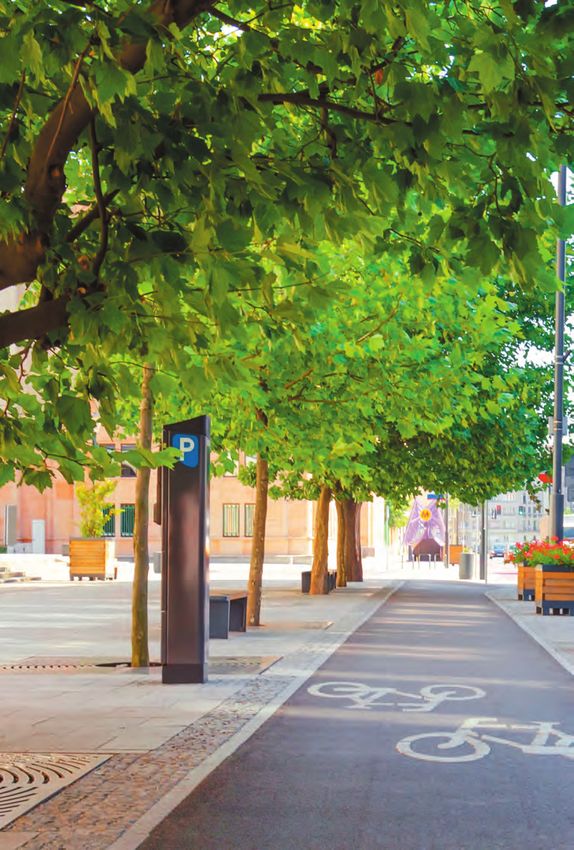
6   South Dublin County Council |   Tree Management Policy 2021 - 2026

      Why Trees
      are Important

      Environmental                                                      Climate Change
      Benefits                                                           •   Carbon: trees are carbon sinks, they store carbon
                                                                             as they grow, temporarily reducing carbon dioxide
      •   Air quality: Trees absorb carbon dioxide and
                                                                             (CO2) in the atmosphere.
          other gases from the air producing oxygen in the
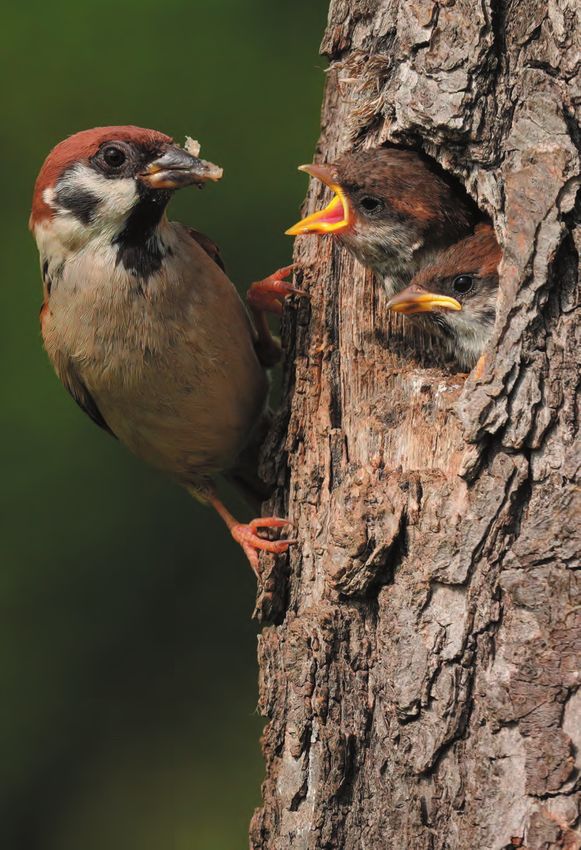
          photosynthesis process. Each year a mature tree                •   Habitats: trees and their ecosystem provide
          produces enough oxygen for 10 people. Trees also                   habitats for wildlife – trees and timber with cavities
          trap dust particles thus improving air quality.                    are especially valuable for animals such as bats
                                                                             and birds.
      •   Flooding: Trees help mitigate the risk of flooding –
          tree canopies intercept rainfall.                              •   Habitat connectivity: trees provide green
                                                                             links between parks and open spaces allowing
      •   Noise barrier: Tree can reduce noise by acting
                                                                             opportunities for wildlife to travel from place to
          as a sound barrier, this is particularly important in
                                                                             place to access new habitats.
          absorbing traffic noise in built up areas.
South Dublin County Council |   Tree Management Policy 2021 - 2026   7

                                          Economic
                                          •   Property values – research
                                              has shown that the presence
                                              of trees can increase the value
                                              of residential and commercial
                                              properties by between 5-18%

                                          •   Village and retail areas: the
                                              presence of trees in retail areas
                                              positively affects people’s
                                              behaviour by attracting consumers
                                              to an area.
Social                                    •   Effects on heating/ cooling
                                                                                                       Health &
•   Sense of place: trees create a            buildings: Trees provide shade,                          Wellbeing
    distinctive landscape, making             shelter in wind and a regulation of
    important landmarks and providing         local air temperature thus reducing                      •   Physical benefits: trees have a
    a unique sense of place and               energy and heat costs.                                       positive effect on health through
    location.                                                                                              the provision of shade, outdoor
                                                                                                           recreation amenity and clean air.
•   Nature: trees connect people with
    nature, marking changing seasons                                                                   •   Mental benefits: research has
    with leaf colour changes and floral                                                                    shown that trees reduce stress and
    displays.                                                                                              give a greater quality of life.

•   Community links: trees are long                                                                    •   Emotional wellbeing: trees with
    lived and are a part of the social                                                                     seasonal changes, flowers, colours
    fabric, culture and history of an                                                                      and aromas can stimulate positive
    area, linking people and building                                                                      emotional feelings.
    community networks.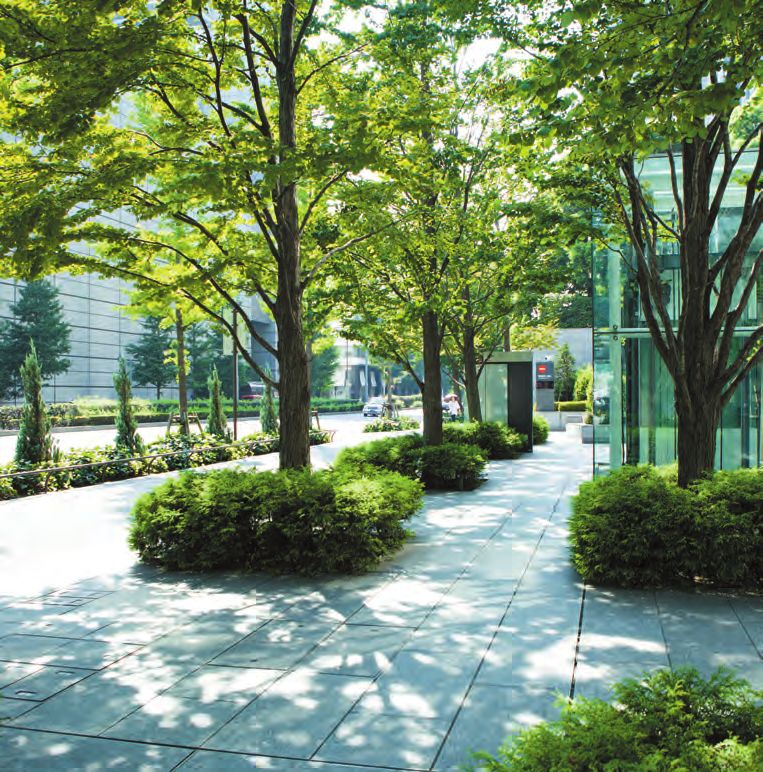
8   South Dublin County Council | Tree Management Policy 2021 - 2026

                                                                       1.4 Challenges of Managing Trees
                                                                       While trees enhance the urban environment, the
                                                                       growing conditions are often hostile to good tree
                                                                       growth. Trees compete for good root growing
                                                                       environments in footpaths and roadside margins
                                                                       with utility networks, foundations for road and
                                                                       footpath works and a variety of pollutants such as car
                                                                       fumes, salt and de-icing agents from roads. Physical
                                                                       damage and disturbance to trees roots is a frequent
                                                                       consequence of road and footpath reconstruction
                                                                       or trenching works of utility companies. Vehicular
                                                                       damage, particularly by skips and high-sided vehicles,
                                                                       and vandalism can damage trees causing death or
                                                                       disfigurement resulting in a misshapen or weak tree.
                                                                       There is also an increasing trend by car users to park
                                                                       their vehicles on verges, causing rutting and soil
                                                                       compaction, which seriously damages tree roots as
                                                                       well as leaving the verge in an unsightly and unsafe
                                                                       condition. Poor management of trees, incorrect
                                                                       pruning and failure to remove tree stakes and tree
                                                                       ties can also negatively affect tree growth. Despite all
                                                                       of this, trees can and do survive, albeit with a more
                                                                       limited life expectancy and with varying degrees of
                                                                       success. However, these challenges demonstrate the
                                                                       need for a strategic approach to tree management,
                                                                       planting and maintenance.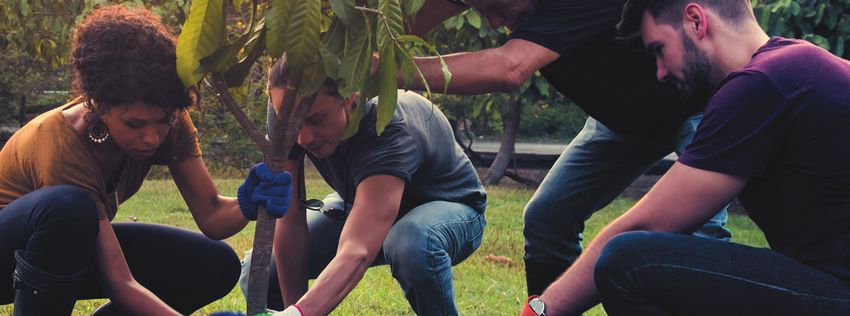
South Dublin County Council | Tree Management Policy 2021 - 2026   9

1.5 Vision
This Tree Management Policy supports South Dublin County Council’s mission:

To make our county a vibrant
and inclusive place for the
people who live, visit, work,
and do business here, now
and for the future.

Our vision is for our trees
to thrive in a well-managed,
safe, sustainable environment
for the benefit of current and
future generations.
10   South Dublin County Council |   Tree Management Policy 2021 - 2026

       1.6 Aims of the Tree Management Policy                                        1.7 Action Plan
       The overall aims of the Tree Management Policy are to ensure the safety       An Action Plan is prepared setting out what we hope
       of Council trees, maintain and encourage biodiversity, maintain and           to achieve between now and 2026. This will support
       improve landscape quality, and through these elements, improve the            and deliver progress against the vision and aims
       quality of life for residents and visitors to South Dublin now and in the     of the Tree Management Policy. The plan identifies
       future. We will achieve this by:                                              several key actions, responsibilities and timescales for
                                                                                     delivery.
       •   ensuring that the Council has a clear programme of tree maintenance,
           management and planting;
                                                                                     1.8 Policy Monitoring and Review
       •   maintaining and improving the tree canopy cover for the future;
                                                                                     This policy will be subject to annual monitoring to
       •   appropriate siting and species selections for all new trees;
                                                                                     assess progress against the Action Plan and to pick
       •   promoting the importance of trees in shaping the distinctive local        up any emerging issues. A more thorough review of
           character and appearance of South Dublin’s urban landscape;               the policy will be undertaken every five years to adjust

       •   recognising the significant aesthetic, landmark, ecological, social and   and incorporate any new changes in legislation, local

           economic value that trees provide;                                        policy, working practices or technical developments
                                                                                     which may arise.
       •   effectively communicating, educating and engaging with the local
           community on trees and their importance;

       •   continuing the proactive management of the Council’s urban tree
           population;

       •   allocating sufficient resources to allow for best practice tree
           management

       •   providing clarity over why decisions and actions are taken;

       •   balancing the risk and nuisance to persons and property against the
           other aims; and

       •   recognising the value of trees as a tangible asset.
South Dublin County Council | Tree Management Policy 2021 - 2026 11
2 Tree Management
Policy: The Council will survey all Council owned and managed trees, so that the collected information can be used to manage the tree
resource in a planned and efficient way, which allows for the development and implementation of long term management plans, work
schedules and the prioritisation of tree work.
2.1 Tree Management System 2.2 Tree Survey
The Council will continue to use the computerised GIS based tree It is estimated that South Dublin County Council has responsibility
management system to enable the mobile mapping, surveying and for the management and maintenance of at least 60,000 trees. To
management of all street trees within the county. An integrated date we have recorded over 30,000 tree surveys. Information about
street tree management system provides a comprehensive record trees is essential if our trees are to be managed effectively and to
of individual trees and enables the Council to trace the full history of enable planned management. A programme of street tree surveying
any tree including inspections and tree works completed. across the county will continue to record details of location,
species, age, size, condition, maintenance history and management
requirements of individual street trees. The Council’s computerised
tree management system will record data. The Council will use the
data to better manage its risks and to prioritise actions for our street
tree population.12 South Dublin County Council | Tree Management Policy 2021 - 2026
2.3 Tree Maintenance Service
It is estimated that South Dublin County Council has responsibility for the management
and maintenance of at least 60,000 trees. To date we have recorded over 30,000 tree
surveys. Information about trees is essential if our trees are to be managed effectively
and to enable planned management. A programme of street tree surveying across
the county will continue to record details of location, species, age, size, condition,
maintenance history and management requirements of individual street trees. The
Council’s computerised tree management system will record data. The Council will use
the data to better manage its risks and to prioritise actions for our street tree population.
2.3 Tree Maintenance Service
The Council’s tree maintenance service will aim to provide a professional and reliable
service to the public, Council members and other Council services. The key roles of the
Council’s tree maintenance service are:
• To manage inspections and surveys of trees under Council ownership and management.
• To develop and maintain the computerised tree management system.
• To plan and monitor all planned and reactive tree works
• To compile and deliver a 3 year programme of tree maintenance works.
• To deal with public enquiries and complaints on tree related matters.
• To provide professional advice to other Council services and Council members.
• To communicate with community stakeholders.South Dublin County Council | Tree Management Policy 2021 - 2026 13
2.4 Tree Management Programme pruning entire roads or whole estates. Having a planned approach
also reduces the risk of tree failure and nuisance to residents, and
The pruning, removal and planting of street trees is currently will help to pre-empt complaints and meet the majority of customer
undertaken under the Council’s 3 year Tree Management Programme requirements for tree works. This planned programme of tree
Arboriculture Programme. This programme is presented to meetings maintenance will be made available to the public via the Council’s
of the Council’s Area Committees . The development of the Area Committees and the Council’s website.
Programme has largely evolved in response to requests for tree
maintenance works received from members of the public and public
In addition to the rolling programme of planned works, some works
representatives and as a result of tree inspections. .
will also arise from unplanned events such as severe weather
conditions or insurance claims. Trees which threaten public safety
Planned maintenance is the Council’s preferred method to maintain
and property will always be given the highest priority which may lead
trees in a safe and healthy condition Since the introduction of the
to plans for programmed works having to be delayed.
Tree Management Policy, the tree maintenance programme has
focussed on tree pruning and removal works on entire roads or whole
estates as opposed to acting on isolated requests for arboricultural
works. The objective of this approach is to increase the efficiency 2.6 Reactive and Emergency Works
and productivity of the tree maintenance crews and to advance a
There will always be a need to carry out reactive works, although
proactive programme of cyclical pruning that is targeted at priority
the quantity of this work should reduce over time as cyclical work
locations where intervention is most needed.
is embedded. Reactive works are carried out to manage risks to
the public. They include felling dead trees, removing hazardous
branches, and clearing obstructions to sightlines and infrastructure.
2.5 Cyclical Programme of Planned Street Reactive works are carried out in response to enquiries from other
Tree Maintenance Council services, residents and Council members or where staff have
identified them when travelling in the county.
Policy: The Council will continue to conduct a cyclical
programme of tree maintenance.
The Council has an emergency plan for severe weather conditions
To ensure ‘Best Value’ service delivery, the Council will continue and has tree maintenance crews on call 24 hours a day for any tree
to work on a planned cyclical programme of tree maintenance - related emergencies.14 South Dublin County Council | Tree Management Policy 2021 - 2026
2.7 Public Awareness, Education &
Engagement
Policy: The Council will engage with the general public,
schools, resident groups and environmental non-governmental
organisations to promote a better understanding of the
management, care and value of trees and to increase public
awareness of their importance in promoting well-being,
environmental sustainability and improving quality of life.
Where practicable, the Council will promote awareness and
appreciation of trees through encouraging and facilitating the
involvement of local communities, schools and other stakeholders
in tree planting, management and educational activities. This will
include organising events for National Tree Week in March and
Tree Day in October, particularly in association with schools and
community groups throughout the county.
2.8 Trees in Parks & Open Spaces
There are 1750 hectares of parkland and open spaces throughout
the County which make an important contribution to people’s
overall quality of life. Trees are one of the major components that
define the landscape and layout of parks and recreational open
space and as such the Council recognises the importance of its
parkland trees. They provide screening, shade and structure to
make our parklands a more attractive environment to visit and in
which to enjoy a broad range of recreational activities. These trees
also offer a rich and unique wildlife habitat, particularly where they
grow to form woodlands.South Dublin County Council | Tree Management Policy 2021 - 2026 15 The parks of South Dublin are well stocked with trees although in places age and species diversity are not optimal. In some parks, there are limited opportunities for planting new trees without encroaching on the recreational open space that, in itself, is important to the structure and use of the parks. Existing trees in parks and public open spaces are managed to reflect the circumstances of the site and their type, age and condition. Ongoing maintenance includes removing dead wood, formative pruning of establishing trees, removing low branches from pathways and removing trees when they come to the end of their safe and useful life. Available resources will be used to plant new trees where a need has been identified. Larger parks and open spaces offer the most scope and potential to plant a mixed range of diverse tree species, large individual trees and urban forests. Tree lined avenues are also a feature of many of our parks. Trees in parks generally have more room to grow compared to street trees and usually grow to their full height and spread. Trees in these areas can be planted with no restriction on size or habit and can include exotic trees which can be in keeping with existing character or history of a park or area. Noteworthy features may also be included in parks such as plantings to remember historical, public and social events. An example is the Famine Commemorative Arboretum in Corkagh Park established in 1995. The arboretum hosts 150 different species of trees native to the countries to which Irish people emigrated following the famine.
16   South Dublin County Council |   Tree Management Policy 2021 - 2026

                                                                          2.9 Trees & Social Heritage
                                                                          Trees are amongst the most important and significant features in the urban
                                                                          and rural landscape. They are a part of our history and culture and have
                                                                          been worshipped, celebrated and revered in myth and folklore. Some
                                                                          trees are remarkable for their age, size, scientific, ecological or botanical
                                                                          interest or are valued for their intrinsic beauty while trees associated with
                                                                          historic events or landmark trees can be special to local interest and
                                                                          affection. There are a number of trees within the administrative area of
                                                                          South Dublin, on both public and private land, which have helped shape
                                                                          the County’s cultural landscape and character.

                                                                          South Dublin Libraries Local Studies section refers to the wonderful
                                                                          heritage of ancient trees in South Dublin County preserved in literature
                                                                          and folklore and indeed some these remarkable trees still survive and
                                                                          grow here. Trees associated with kingship, mythical trees, a hanging tree,
                                                                          saint’s trees and venerable old trees have all been recorded here:

                                                                          https://localstudies.wordpress.com/2012/09/19/remarkable-trees-
                                                                          of-south-dublin-county/

                                                                          One of the trees referred to in the folklore record is the Balgaddy Bush. It
                                                                          lay on the boundary between the parishes of Clondalkin and Lucan, at a
                                                                          crossroads, a location redolent of folklore.. The Balgaddy Bush or similar
                                                                          was replanted on the roundabout next to the area.
                                                                          Trees are also recorded in our local place names -

                                                                          •   Lucan (Irish: Leamhcán, meaning “place of elms”)

                                                                          •   Terenure (Irish: Tír an Iúir, meaning “land of the yew tree”)
South Dublin County Council | Tree Management Policy 2021 - 2026 17 2.10 Autumn Leaf Fall Management The Council’s street cleaning contract includes leaf sweeping during the autumn period. Leaves are removed from public roads and footpaths throughout the county. This usually begins in September and extends to the end of January each year. Residents are responsible for dealing with leaf-fall on their private property. Leaves from private gardens, drives or pathways should not be swept into the road but should be disposed of in a responsible manner. Options may include: • home composting • collection from your home via the brown bin • taking them to the Civic amenity for recycling Resident Associations, Tidy Towns groups and community groups may wish to compost leaves to create beneficial leaf mould which is a valuable resource and can be used to enrich soils.
18   South Dublin County Council |   Tree Management Policy 2021 - 2026

     3 Tree Planting/
       Replacement
       Planting
                      Policy: South Dublin County Council recognises the value of street trees in the urban environment and is committed to planting
                      new trees to ensure that the visual amenity in South Dublin is assured for future generations. We will maintain a database of sites
                      that have been identified as possibilities for new trees and implement an annual programme of tree planting in accordance with
                      available resources.

                     3.1 Right Tree Right Place
                      Policy: The principle of planting the ‘right tree in the right       •   avoid future obstruction of public lighting columns by ensuring
                      place’ will apply for all new and replacement tree planting.             that the fully mature new tree canopy will be ideally greater
                                                                                               than 5m, but certainly no less than 3m from the lighting column
                     The careful selection of appropriate tree species and planting
                                                                                           •   seek to ensure that future tree growth does not compromise a
                     location is essential to minimise future nuisance issues and
                                                                                               minimum footpath width of 1.2m
                     unnecessary maintenance costs. Potential sites for tree planting
                     will be inspected to assess their suitability for new trees,          •   make adequate soil volume a priority to sustain tree health and
                     considering factors such as services, sight lines, warning signs          longevity when selecting planting sites and preparing pits for
                     and traffic signals, space for future growth, etc. When positioning       tree planting.
                     new street trees the Council will specifically aim to:
South Dublin County Council | Tree Management Policy 2021 - 2026 19
3.2 Tree Planting
Currently the Council plans its annual The Council’s Tree Planting Programme will
tree planting in accordance with be implemented between November and
available budget resources. From 2015, March as this is accepted to be the most
the Council carried out an annual tree appropriate time of the year for planting
planting programme. of bare-root and root-balled trees. Tree
planting will be carried out by adequately
Areas targeted for new tree planting trained or supervised staff, and followed
are those where trees have been by appropriate post-planting maintenance.
removed or where there is an identified
need to increase the overall tree cover. All tree planting works will be undertaken
Requests from Council members and in accordance with the Council’s Tree
local residents for new trees in their road Planting Guidelines and with current British
or area will be taken into consideration Standard Codes of Practice including British
within the planting programme. Standard 8545: 2014 Trees: from nursery to
Individual requests will be prioritised independence in the landscape
according to the number of trees already – Recommendations.
on the street, including those in
front gardens and on adjacent land. The vast majority of new trees planted will be
of advanced nursery stock; that is trees with a
Residents and resident associations
stem circumference of between 12-16cm and
must first seek and obtain permission
a height of 3-5m. The planting of trees of this
from the Council before engaging in
more robust tree size has been proven to be
projects to plant trees and shrubs within
effective in reducing the risk of vandalism of
Council managed streets, roadside
newly planted trees.
margins or open space environments.20 South Dublin County Council | Tree Management Policy 2021 - 2026
3.3 Design of Street Tree Planting Schemes
Many of our streetscapes have been planted with trees over succeeding
generations but without the benefit of a clear design. Sometimes this
works well, but in some locations the trees actually detract from the overall
enjoyment of the street environment because there are too many trees, they
are the wrong species or in the wrong place. Given this, we do not believe
that it always appropriate to simply replace a tree in the same place.
Where there is a substantial requirement for new or replacement tree
planting within a streetscape, our preferred approach is to prepare a
tree-planting plan for the site reflecting its character, scale, use and
local interests. The design of any new tree planting should ensure that it
complements the local landscape character and enhances the immediate
environment. Trees will be selected for their appropriateness of scale and
proportion to their surroundings and the aesthetic contribution they make
to that environment. Planting density and species selection should be
guided by available space to ensure that each tree is compatible with its
new site and has every opportunity to develop into a healthy mature
specimen. Such schemes may be subject to community consultation
before being adopted and implemented.
The Design Manual for Urban Roads and Streets (2013) outlines how street
trees are an integral part of street design as they contribute to the sense
of enclosure, act as a buffer to traffic noise / pollution and enhance place.
A traffic calming effect can also be achieved, where trees are planted
in continuous rows and their canopies overhang, at least in part, the
vehicular carriageway. Street trees can also be used to enhance legibility by
highlighting the importance of connecting routes and distinguishing one area
from another through variations in size and species selection. See AppendixSouth Dublin County Council | Tree Management Policy 2021 - 2026 21 3.4 Species Selection The choice of tree species for street tree planting is dependent species of tree to disease or other environmental factors. We can on suitability to the planting location and local landscape enhance the resilience of our tree population by increasing the character. A greater variety of trees can be planted in parks and diversity and variety of new trees planted. However, where the open spaces and species will be selected on suitability to setting, same type of tree species creates an avenue or clearly defined biodiversity value and visual appearance. The selection of street group within part of a street, new and replacement trees will trees is guided by their mature size, water demand, crown shape be of the same or closely matching species in the interest of and future management requirements. Species utilised in tree visual continuity. planting programmes will be those judged by the Council to be appropriate for the circumstances based on policy, arboriculture As well as increasing species diversity, the Council will also seek knowledge and experience. Appendix 1 contains a suggested list to plant large canopy trees, wherever possible, to achieve the of tree species suitable for street tree, open space and garden maximum benefits that trees provide. Large-growing tree species planting,. The list is not definitive and additional species will confer much greater benefits to urban areas than small trees. be considered where they have shown to be appropriate for Where space allows, preference will be given to planting as large the location. a tree as is appropriate for the location. Having too many of the same type of tree in the county is a The Council also encourages the planting of fruit trees in parks, concern because of the increased risk of a loss of one or more community centres and schools.
22   South Dublin County Council |   Tree Management Policy 2021 - 2026

       3.5 Replacement Tree Planting                                      3.6 Use of Tree Guards
         Policy: The Council aims to ensure, subject                      The Council does not install mesh tree guards
         to available budget resources, that every tree                   around street trees or trees on public open
         felled should be replaced to ensure that over                    spaces. It is our experience over the years that
         the years, the County retains its tree stock for                 tree guards attract vandalism and become traps
         future generations, although it is not always                    for unsightly accumulations of litter. They can
         practical or prudent to replace a tree in the                    also have the opposite effect to that which is
         same location or with the same species that                      intended in that the tree guard structure itself
         was previously planted.                                          can provide leverage against which the trunks
                                                                          of young trees can be broken.
       If a site where a tree was removed is suitable to
       support a new tree, the site may be replanted with a               In order to minimise vandalism to newly planted
       suitable tree species. Because the stump is placed                 and establishing trees, the Council’s preferred
       on a stump removal list and sufficient time needs to               approach is to plant trees of robust size stem
       elapse to allow breakdown of residual areplanting                  girth, usually a minimum of 14-16cm and
       may take up to 3-5 years. Replacement tree                         support the tree with a staking mechanism of
       planting will only take place during the dormant                   about 1m above ground. It is our experience
       season.                                                            that the heavier stem girth combined with a low
                                                                          stake minimises the ability to cause damage to
                                                                          the tree.
South Dublin County Council | Tree Management Policy 2021 - 2026 23 3.7 Post Planting Maintenance Programme Care and maintenance of young trees is vital. When trees are first planted, they are at their most vulnerable and are more likely to die within their first 5 years than at any other time in their life. To aid establishment, all new planted trees will be watered during the first growing season, between May and August. Local residents are encouraged to help trees outside or near their property by watering them on dry and windy days (10-20 litres per week). Where present, this can be done via the plastic tubing protruding from the earth at the base of the tree, which is buried around its roots. Residents should conserve water and use a basin in the sink to collect water or collect rainwater in a water butt for watering trees. Maintenance of the tree will also include loosening of tree ties and removal of stakes and ties when the tree has become established. 3.8 Sponsored Memorial Tree Planting The Council will consider the feasibility of a suitable initiative and have a protocol to address occasional requests to accommodate sponsorship of trees as memorials or to commemorate major life events. Due to potential sensitivities surrounding memorial tree plantings, any development of a scheme for sponsored memorial tree planting in public spaces would have to carefully consider the selection of suitable sites where the risk of vandalism or damage to the tree would be minimal.
24   South Dublin County Council |   Tree Management Policy 2021 - 2026

     4 Tree Maintenance
                      Policy: The Council will maintain trees on public spaces, streets, parks and open spaces adhering to relevant industry
                     guidelines when carrying out arboricultural works to ensure all trees are in a safe condition and not causing actionable
                     nuisance or forseen danger.

                                                                           Street tree maintenance includes the inspection, pruning, removal and
                                                                           replacement of trees.

                                                                           4.1     Quality of Work
                                                                           All tree works will be undertaken in accordance with British Standard BS 3998:
                                                                           2010 Tree Work - Recommendations and current Health & Safety requirements.
                                                                           All staff undertaking tree works shall be competent with appropriate training,
                                                                           experience and qualifications. Any tree surgery contractors engaged to work
                                                                           on Council owned trees shall be competent and adequately qualified, trained,
                                                                           experienced and appropriately insured.

                                                                           Any tree work carried out should be essential to the long term retention of the
                                                                           tree in its current position rather than simply for appeasement reasons. The
                                                                           Council will aim to maintain a natural silhouette to a tree unless it can be shown
                                                                           to be in the best interests of the long term health of the tree to do otherwise.
                                                                           The Council will not normally consent to pruning works that are greater than
                                                                           the standard set out by the Arboricultural Association or industry best practice,
                                                                           generally accepted to be crown reductions and thinnings of no greater than
                                                                           30% by volume.
South Dublin County Council | Tree Management Policy 2021 - 2026 25 4.2 Public Information on Tree Works Council’s Area Committee meetings. In order to expand public access to information on the Council’s planned programme of tree works, on the Council’s website www.sdcc.ie to provide a ‘Trees’ webpage with up to date Tree Maintenance Programme. The planned removal of trees can be a particularly emotive and contentious issue and once a tree becomes a removal candidate, and the works are not emergency works, steps will be taken to provide public notice prior to any trees being removed to inform residents and reduce customer enquiries. Trees that are removal candidates are identified by requests from residents or public representatives or through routine survey work. Public notification of any proposed tree removals will consist of a variety of methods that may include posting a list of trees on the Council’s website, emailing known residents associations, notices being attached to trees, and/or letter drops to adjacent properties. Timescales for notice will vary according to the type of work, whether it is urgent and the local significance of the tree but wherever practical, the period of notice will be at least 10 working days before any scheduled tree removals. We will not usually give notice where works involve the felling of dead trees or those in imminent danger of failing.
26   South Dublin County Council |   Tree Management Policy 2021 - 2026

       4.3 Reasons for Tree Pruning and Felling
           Policy: The Council will wherever possible try to avoid removing a tree or undertaking unnecessary pruning works
           where there is no good arboriculture reason. It has a duty to manage the tree population for the benefit of the wider
           community and in accordance with good arboriculture practices.

       The Council will undertake tree works to fulfil its legal
       obligations to ensure the safety of the public and properties.          Tree removal or pruning will not be undertaken where:
       Tree works will be undertaken:
                                                                               •   Trees are perceived to be too large.
       •    Where an inspection has identified visible decay, fungal
                                                                               •   Satellite dish TV reception is interrupted.
            brackets indicating possible root and trunk decay or any
            other defect that would lead to the tree failing.                  •   Sunlight may be blocked from reaching properties
                                                                                   or gardens.
       •    A tree is dead or visibly in decline.
                                                                               •   Views are obstructed.
       •    To abate an actionable nuisance, where branches are
            touching buildings, e.g. physical contact with walls, windows      •   easonal or naturally occurring events happen,
            and gutters.                                                           e.g. falling leaves, fruit, seeds

       •    Where road signs, traffic signals, street lights, and sightlines   •   berries, honeydew sap, bird droppings, pollen allergies.
            for vehicles and pedestrians are obscured.
                                                                               •   Insects or other non-hazardous wildlife are present.
       •    Evidence has been provided that the tree is a contributing
            factor in causing structural damage that cannot be
            reasonably addressed by an alternative solution and
            proactive tree management has had no mitigating effect.
South Dublin County Council | Tree Management Policy 2021 - 2026 27
4.3.1 Tree Pruning 4.3.3 Topping of Trees
The type of pruning works undertaken depends on the tree’s Topping of trees (reduction in height) causes large wounds,
location and its species. Bad or unnecessary pruning can do exposing trees to decay pathogens and causing their long-
more harm than good since each cut has the potential to change term decline, as well as being unsightly and potentially unsafe.
the growth of a tree, cause damage or allow the entry of wood Topping is therefore only considered where trees have serious
decaying organisms, therefore no branch should be removed defects, that cannot be reasonably addressed otherwise, and
without a good reason. Older trees do not tolerate pruning as well their short-term retention is essential or highly desirable.
as younger trees and substantial pruning can be very damaging.
The effect of pruning also varies between species and some are It is often the view of residents that removing the crown or
not naturally tolerant of cutting. In general, minimal pruning works ‘topping’ a tree or trees will improve light levels or views or
will be undertaken in order to sufficiently manage a tree. This improve reception to TVs, satellites etc.. Whereas this may be true
may often only involve removing the lower branches to increase in the short term, any pruning, but especially ‘topping’, will cause
clearance for pedestrians and vehicle traffic and/or cutting back decline in some species or rapid growth in others. Regrowth
the branches from adjacent buildings. resulting from ‘topping’ will often be denser than the original
crown and be weakly attached to the branches it develops from.
4.3.2 Formative Pruning Wounds associated with topping are often large and are more
likely to be colonised by wood decaying fungi. ‘Topping’ is not
Young immature trees, particularly in an urban setting, can
good practice and can lead to dangerous trees in the future. For
benefit from pruning in their formative years. This should be
these reasons the Council will not ‘top’ trees.
carried out in accordance with British Standard BS 3998: 2010
Tree Work – Recommendations as required throughout the
early years of a tree’s life in the landscape. It involves removing
crossing branches and potentially weak forks to encourage a
good natural shape, reduce health issues and reduce the need
for major pruning when the tree is mature.28 South Dublin County Council | Tree Management Policy 2021 - 2026
4.3.4 Removal of Trees
Trees are removed only when necessary as a last resort. The criteria for
tree removal are:
• tree is dead, dying or is considered hazardous due to its poor structural or biological
condition,. Hazardous conditions may exist above and/or below ground and may include
significant root, trunk or crown decay, split trunks and crotches, and large dead limbs.
• The tree has declined beyond the point of recovery and is no longer meeting the
functional or aesthetic requirements of a street tree. Typically, a tree with 30 percent or
less of its foliage remaining would meet this criterion.
• Fatally diseased trees (eg. Ash dieback, Fireblight Disease) may be removed before they
reach the primary threshold in order to prevent the spread of disease to healthy trees.
• To allow space for development of nearby trees that may be more desirable for retention
• To allow space for new planting
• To make way for any approved engineering or building works when unavoidable
construction work will immediately compromise the stability or viability of the tree.
• Tree proven to be causing significant structural damage that cannot be reasonably
addressed by an alternative solution and proactive tree management has had no
mitigating effect.
• To abate actionable nuisance
• Where a tree is located in close proximity to a public lighting column and the long term
viability of the tree if retained in its location would be compromised by a requirement for
ongoing maintenance in order to maintain the effectiveness of the adjoining street light.South Dublin County Council | Tree Management Policy 2021 - 2026 29
4.4 Unauthorised Pruning, Removal or Damage to Council Owned Trees
Policy: The Council may seek to prosecute anyone found to be carrying out unauthorised work or causing damage to its trees
without permission and where appropriate apply the maximum penalty.
The unauthorised removal of trees affects the amenity of an area Unauthorised works or damage to Council-owned trees may
and destroys the many positive benefits of trees in a locality. result in a charge being levied. This charge will reflect the amount
of damage sustained and where the life/safety of the trees is
All Council staff operate from vehicles displaying the Council’s undermined, it will include the cost of total tree replacement and
logo and tree contractors operating on behalf of the Council are compensation for loss of tree value. These charges will be drawn
required to erect signage which refers specifically to South Dublin up by professional parks staff and each case will be assessed
County Council. If a person is observed pruning, removing or on an individual basis using a recognised tree valuation system
causing damage to a Council owned tree and it is suspected that (eg. CAVAT or Helliwell)
the action is being carried out without the Council’s consent, the
matter must be reported by the observer to An Garda Siochana in
the first instance and the Council notified. Unauthorised damage,
pruning or removal of a Council owned/managed tree may be
prosecuted by An Garda Siochana under the Criminal Damage
Act 1991.30 South Dublin County Council | Tree Management Policy 2021 - 2026
4.5 Arrangement or Payment for Street Tree 4.7 Timber and Green Waste
Maintenance by Residents Use Policies
Where tree work is not justifiable as the result of a request for service from Policy: The Council will seek alternative uses for
a resident, some residents may seek to pay for the work themselves. This arisings from tree work to ensure as much as
will often be in relation to minor seasonal nuisance issues. If the Council possible is reused or recycled.
was to engage in pay for service agreements, this would create an unfair
two tier system. This would fail to deliver an even handed service for A large quantity of wood and woodchip is
residents who are unable to pay for service. The Council will not enter into produced each year from pruning and felling trees.
any arrangements where members of the public pay for, or contribute Wherever possible, the wood debris from tree
towards the cost of tree maintenance works. We will also not allow tree work is converted and recycled into woodchips for
surgeons engaged by members of the public, access to climb trees use as a mulch in planted areas or surfacing for
under our stewardship. Except in the case of overhanging branches any woodland paths within the Council’s parks and open
unauthorised works to Council owned trees carried out by any person spaces. Larger sections that can’t be processed
would be treated as criminal damage. by the woodchipper are recycled according to the
condition and species of timber. Timber and green
waste generated from tree works in woodlands is
4.6 Stump Removal usually left in situ to create wildlife habitats.
When a tree is felled by the Council, it is not always possible to remove
the stump immediately. Stump removal may be delayed at least 6 months
after tree removal. Under these circumstances a short tree stump is left
as a temporary measure. The stump is usually left at around 1m high
so that does not constitute a trip hazard in the intervening period. Tree
stump removal is normally undertaken during the winter months between
November and February or may be done when there are a sufficient
number for their removal to be economical.South Dublin County Council | Tree Management Policy 2021 - 2026 31
4.8 Nesting Birds
Policy: The Council will carry out inspections of trees prior to tree works for bird nests during the
nesting period of March 1 – August 31 and comply with the relevant legislation and seek expert
advice from relevant organisations where necessary.
The Wildlife Act 1976 (as amended 2000) is to ensure public safety and minimise
is the principle legislation protecting tree hazards. Phenological and biological
nesting birds in Ireland. The Act makes it research also indicates that a number of
an offence to kill, injure or take any wild tree species including cherry and walnut
bird and to take, damage or destroy any are best pruned in mid-summer to avoid
nest that is either in use or being built. introduction of disease while maple and
Section 40 of the Act prohibits cutting of horse chestnut will bleed sap extensively
vegetation on uncultivated land between if pruned during early season growth.
March 1st and August 31st. However, it
is accepted in practice that street trees Appendix 5 outlines the Code of
are cultivated and as such, this allows Practice for Pre Works inspection of
for tree maintenance works to be carried trees for Nesting Birds The Council’s
out during the closed period subject to tree maintenance crews or contractors
compliance with best practice protocols in engaged by the Council, will be required
regard to pre-works assessment of trees to thoroughly check trees for nesting
for active nests or nesting birds. Where an birds during the nesting period (March 1 –
active nest or nesting birds are observed, August 31) and take appropriate measures
no tree works should be carried out. to prevent disturbance prior to the
commencement of routine works.
The primary reason for a year round
programme of street tree maintenance32 South Dublin County Council | Tree Management Policy 2021 - 2026
4.9 Pest & Disease Control 4.10 Ivy on Trees
Policy: The Council will investigate signs of pests and Policy: The Council will seek to retain an acceptable level
diseases and where practicable, will respond in accordance of ivy on trees where the inspection for decay or defects is
with current best practice. not compromised.
In the last few years, several new pests and diseases have The Council acknowledges the considerable value of ivy
emerged in Europe as significant risks to tree health and plant (Hedera helix) as a habitat and food source for wildlife. Unless
biosecurity. Due to Ireland’s island status, there is a better ivy has established on young or weak trees, where it may
chance of remaining free of many pests and diseases not compete for water and nutrients and suppress healthy growth,
currently found on the island. However, the growth of global it causes little harm. However, where ivy has taken hold on
trade in plants and the increasing movement between countries mature trees, especially those close to roads and public
of plant material increases the risk of new pests and diseases areas, judgements must be made on its retention based on
entering Ireland. There is also a risk of exotic pests arriving in the health of the tree and the possibility of cavities or defects
dunnage and timber packaging through our ports. The predicted being hidden from view as well as its increased vulnerability
changes in climate may increase the risk of these pests and to wind damage. In these situations, removal of ivy may be
diseases spreading. Small changes in temperature or weather deemed necessary for risk management purposes.
patterns, due to climate change, can enable organisms to
become established in areas where previously they would have
struggled to survive.South Dublin County Council | Tree Management Policy 2021 - 2026 33
5 Prioritising Tree Work
It is recognised that residents’ views on trees can vary greatly and a tree that is of great beauty and value to one person can be perceived as an
unsightly nuisance to another. People rarely contact the Council when they are happy about local trees. Only when trees become an apparent
problem are comments made, and therefore a distorted picture of peoples’ perception of trees develops. It is important to seek alternatives to
felling or severe pruning when conflicts arise, so that the trees can remain for the silent majority who value them.
The Council’s role is to try to achieve a compromise, which is acceptable to the community at large but not necessarily to every individual within
the community and to safeguard the tree population for the future, within available resources.
5.1 Response to Enquiries 5.2 Inspections
The Council’s Customer Contact System is usually the first point The Council is currently undertaking tree inspections of all trees in
of contact for enquiries and complaints from the public, including public ownership. Each inspection involves an assessment of the
those relating to trees. tree’s health and condition, and identifies if any work is required.
Any tree-related emergencies are referred for immediate action The planned approach to tree management adopts a proactive
in accordance with the Council’s emergency procedures. An management approach through regular cyclic inspections. The
emergency is defined as a tree that is in immediate danger frequency of inspections will depend on available resources and
of collapse or a tree that is causing an obstruction requiring the severity of identified issues for monitoring in our street tree
urgent attention. population. Following inspection where it is identified that tree
works are required, they are categorised and will be included
For non-emergency tree enquiries, customers will be informed for attention on the Council’s Tree Maintenance Programme
of Council policy within 10 working days of receipt of an enquiry. if required and be undertaken in accordance with a priority
Where a site inspection is considered necessary, customers will based system.
be informed that such a site inspection will be undertaken within
60 working days of receipt after which the customer will The results of tree inspections will be recorded on the electronic
be notified of what action, if any, is considered appropriate. tree management system.34 South Dublin County Council | Tree Management Policy 2021 - 2026
5.3 Tree Risk Management
A risk-based system of tree management based on a programme of regular inspection
prioritised by potential hazard and its potential impact on known targets in the surrounding area
will be developed.
Whether trees are managed for their amenity, social, heritage or environmental benefits, their
management must however be balanced and proportionate to the actual risks from trees.
It is both normal and natural for trees to lose branches or fall and the risk to human safety
is very low. While no research has been carried out in Ireland with regard to the level of risk
posed by falling trees, research by the UK Centre for Decision Analysis and Risk Management
demonstrates about a one in 10 million chance of an individual being killed by a falling tree (or
part of a tree) in any given year. However, the low level of risk may not be perceived in this way
by the public, particularly following an incident and its coverage in the media.
The Council has both a moral and legal duty of care to ensure members of the public and staff
are not put at risk because of any failure to take reasonable precautions to ensure their safety.
All such processes balance the need for safety with the amenity and other benefits of trees on
a risk assessment basis. Exposure to an element of risk is however accepted as an unavoidable
consequence of all environments where trees are present.
The Council will develop a pro-active and systematic good practice approach to tree
management and inspection with the aim of promoting good tree health, condition, diversity,
public amenity and a balanced age profile. This approach will highlight necessary works
at an early stage and enable hazards to be identified and made safe in a cost effective and
efficient way.
All identified tree work will be prioritised and carried out according to identified hazard or risk.
Work is in progress to survey and record Council owned/managed street trees.South Dublin County Council | Tree Management Policy 2021 - 2026 35
5.4 Priority Rating System for Tree Works
To enable efficient use of resources, tree works will be prioritised and programmed based on the Priority Category as shown below, and in each
category a list of maintenance that would normally fall into that priority has been given as guidance. However until the tree has been inspected
and the relevant information has been recorded its true priority cannot be established. It is strongly emphasised that these categories and
figures are only guidelines which are applicable under normal circumstances only. The occurrence of emergencies, storms and other events
beyond our control do occur and thus would have to take priority over programmed work. This would result in scheduled work being delayed.
The following categories will be used when prioritising tree works:
Tree Maintenance Priority
Priority 1: Emergency Works Type Of Maintenance
Response to trees that are perceived to pose imminent danger to • Making safe of storm damaged trees in adverse
people or property. weather conditions
Target completion - within 24hrs • Large limbs snapped and hung up over high vehicular and
pedestrian flow36 South Dublin County Council | Tree Management Policy 2021 - 2026
Priority 2: High Priority Works Type Of Maintenance
Works on trees that are not considered high risk but where • Dead, dying, diseased and dangerous in high pedestrian and
remedial work is required. traffic flow areas
• Tree branches below 2.5m causing obstruction over high
Target completion – action immediately or within 3 months pedestrian flow footpaths
• Tree branches below 4.5m causing obstruction over high traffic
flow roads
• Tree branches causing damage to property
• Trees with root plate movement
Priority 3: Medium Priority Works Type Of Maintenance
Improvement works that are considered desirable to enhance • Crown thinning of trees close to public lighting
street scene or public space. Works to abate nuisance caused by • Crown lifting/ removal of low branches over footpaths
Council trees and roadways
• Pruning of trees near buildings to prevent damage
Target completion – action within 12 months
from occurring
• Snapped limbs/branches on public open space with low
pedestrian access
• Works which promote the effective establishment of newly
planted treesSouth Dublin County Council | Tree Management Policy 2021 - 2026 37
Priority 4: Low Priority Works Type Of Maintenance
Target Completion – action when resources allow within 24 • All other general tree maintenance work that is causing
months plus no risk of harm to persons or property.
Priority 5: No action / Unnecessary Works Type Of Maintenance
• This category consists of trees that have been inspected and
considered healthy and safe with no works required at this time
of inspection regimeYou can also read


