Male circumcision Global trends and determinants of prevalence, safety and acceptability
←
→
Page content transcription
If your browser does not render page correctly, please read the page content below
Male circumcision
                                                                                                 Global trends and determinants of
                                                                                                 prevalence, safety and acceptability

UNAIDS                 Department of Reproductive health and Research
20 AVENUE APPIA        World Health Organization
CH-1211 GENEVA 27      20 AVENUE APPIA
SWITZERLAND            CH-1211 GENEVA 27
                       SWITZERLAND
T (+41) 22 791 36 66
F (+41) 22 791 41 87   T (+41) 22 791 2111
                       F (+41) 22 791 41 71
www.unaids.org                                                          ISBN 978 92 4 159616 9
                       www.who.int/reproductive-health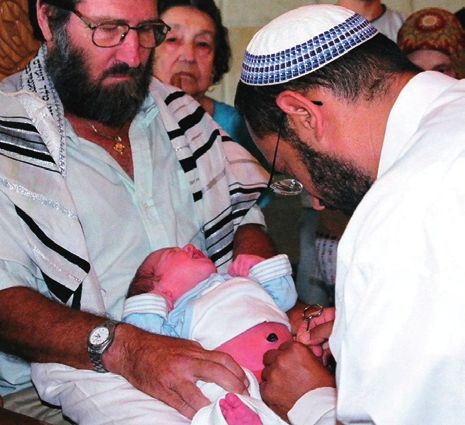
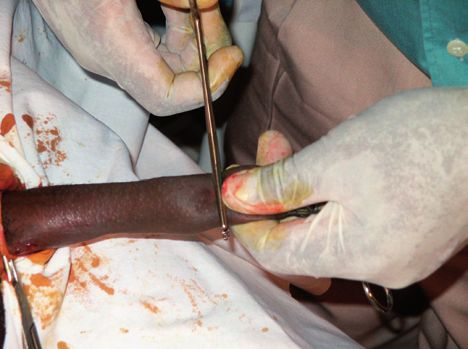
Male circumcision:
global trends and determinants of
prevalence, safety and acceptability
IWHO Library Cataloguing-in-Publication Data

Male circumcision: global trends and determinants of prevalence, safety and acceptability.

« UNAIDS / 07.29E / JC1320E ».

1. Circumcision, Male - trends. 2.Circumcision, Male - methods. 3.HIV infections - prevention and control. I.World Health Organization.
II.UNAIDS.

   ISBN 978 92 4 159616 9 (WHO) 				                                       (NLM classification: WJ 790)
   ISBN 978 92 9 173633 1 (UNAIDS)

© World Health Organization and Joint United Nations Programme on HIV/AIDS, 2007

All rights reserved. Publications of the World Health Organization can be obtained from WHO Press, World Health Organization, 20
Avenue Appia, 1211 Geneva 27, Switzerland (tel.: +41 22 791 3264; fax: +41 22 791 4857; e-mail: bookorders@who.int). Requests
for permission to reproduce or translate WHO publications – whether for sale or for noncommercial distribution – should be addressed
to WHO Press, at the above address (fax: +41 22 791 4806; e-mail: permissions@who.int).

The designations employed and the presentation of the material in this publication do not imply the expression of any opinion whatso-
ever on the part of the World Health Organization concerning the legal status of any country, territory, city or area or of its authorities,
or concerning the delimitation of its frontiers or boundaries. Dotted lines on maps represent approximate border lines for which there
may not yet be full agreement.

The mention of specific companies or of certain manufacturers’ products does not imply that they are endorsed or recommended by
the World Health Organization in preference to others of a similar nature that are not mentioned. Errors and omissions excepted, the
names of proprietary products are distinguished by initial capital letters.

All reasonable precautions have been taken by the World Health Organization to verify the information contained in this publication.
However, the published material is being distributed without warranty of any kind, either expressed or implied. The responsibility for
the interpretation and use of the material lies with the reader. In no event shall the World Health Organization be liable for damages
arising from its use.

Printed in
Contents

Acknowledgements
Abbreviations and acronyms

Summary                                                                                1

SECTION 1. Determinants of male circumcision and global prevalence

1.1 Introduction                                                                       3
1.2 Determinants of male circumcision                                                  3
1.3 Global prevalence of male circumcision                                             7
1.4 Regional prevalence of male circumcision                                           9
1.5 Summary                                                                           12

SECTION 2. Medical indications, clinical procedures and safety of male circumcision

2.1 Introduction                                                                      13
2.2 The foreskin                                                                      13
2.3 Medical determinants of male circumcision                                         14
2.4 Male circumcision in clinical settings                                            16
2.5 Male circumcision in non-clinical settings                                        19
2.6 Summary                                                                           21

SECTION 3. Male circumcision and HIV: Public health issues concerning increased
uptake of male circumcision in sub-Saharan Africa

3.1 Introduction                                                                      22
3.2 HIV prevention in southern Africa                                                 22
3.3 Acceptability of male circumcision in East and southern Africa                    22
3.4 Behaviour change following circumcision                                           26
3.5 Cost-effectiveness of male circumcision for HIV prevention                        26
3.6 Male circumcision and female genital mutilation                                   27
3.7 Human rights, ethical and legal implications                                      28
3.8 Summary                                                                           28

SECTION 4. Conclusions                                                                29

SECTION 5. References                                                                 30
Acknowledgements
This report is the result of collaborative work between the London School of Hygiene and Tropical Medicine,
the World Health Organization and the Joint United Nations Programme on HIV/AIDS (UNAIDS). The
report was written by Helen Weiss, Jonny Polonsky, Robert Bailey, Catherine Hankins, Daniel Halperin and
George Schmid. We also thank the following for their written comments: David Alnwick, Chiweni Chimbwete,
Isabelle de Zoysa, Kim Dickson, Tim Farley, Brian Morris, Inon Schenker and Charles Shey Wiysonge. Layout
by Cath Hamill. Our appreciation also goes to Lon Rahn, Tania Lemay, Mihika Acharya and Constance Kponvi
for their assistance.

Abbreviations and acronyms

AIDS         acquired immunodeficiency syndrome

CI           confidence interval

FGM          female genital mutilation

HIV          human immunodeficiency virus

JHPIEGO      Johns Hopkins Program for International Education in Gynecology and Obstetrics

OR           odds ratio

RR           relative risk

STI          sexually transmitted infection

UNAIDS       Joint United Nations Programme on HIV/AIDS

UNFPA        United Nations Population Fund

UNICEF       United Nations Children’s Fund

WHO          World Health Organization
Male circumcision: global trends and determinants of prevalence, safety and acceptability

Summary
Male circumcision is one of the oldest and most com-       There is substantial evidence that male circumci-
mon surgical procedures worldwide, and is under-           sion protects against several diseases, including
taken for many reasons: religious, cultural, social        urinary tract infections, syphilis, chancroid and inva-
and medical. There is conclusive evidence from             sive penile cancer, as well as HIV. However, as with
observational data and three randomized controlled         any surgical procedure, there are risks involved.
trials that circumcised men have a significantly lower     Neonatal circumcision is a simpler procedure than
risk of becoming infected with the human immuno-           adolescent or adult circumcision and has a very
deficiency virus (HIV). Demand for safe, affordable        low rate of adverse events, which are usually minor
male circumcision is expected to increase rapidly,         (0.2–0.4%). Adolescent or adult circumcision can
and country-level decision-makers need information         be associated with bleeding, haematoma or sepsis,
about the sociocultural and medical determinants of        but these are treatable and there is little evidence
circumcision, as well as risks of the procedure, in the    of long-term sequelae when undertaken in a clini-
context of comprehensive HIV prevention program-           cal setting with experienced providers. In contrast,
ming.                                                      circumcision undertaken by inexperienced providers
                                                           with inadequate instruments, or with poor after-care,
Scope of the review                                        can result in serious complications.

The aim of this report is to review the determinants,      Recent studies of acceptability among non-circum-
prevalence, safety and acceptability of male circum-       cising communities with high prevalence of HIV in
cision, focusing on sub-Saharan Africa. In the first       southern Africa were fairly consistent in finding that
section, we review the religious, cultural and social      a majority of men would be willing to be circumcised
determinants of male circumcision and estimate             if it were done safely and at minimal cost. The pri-
the global and regional prevalences. In the second         mary concerns were around safety, pain and the cost
section, we summarize medical aspects of the pro-          of the procedure. Facilitators of acceptability of cir-
cedure, including medical indications for circumci-        cumcision were perceived protection from sexually
sion, surgical methods used and the complications          transmitted infections (STI), including HIV; improved
of circumcision carried out in clinical and non-clini-     genital hygiene; and improved sexual pleasure of
cal settings. The third section focuses on the public      both the male and his female partner. Public health
health implications of the fact that male circumcision     concerns about increased uptake of male circumci-
reduces risk of HIV infection, including a summary         sion services focus on safety, acceptability and risk
of the acceptability of adult male circumcision in cur-    compensation. To date, there is modest evidence
rently non-circumcising populations in sub-Saharan         of risk compensation following adult male circumci-
Africa with high incidence of HIV.                         sion, and care must be taken to embed any male
                                                           circumcision provision within existing HIV preven-
Results                                                    tion packages that include intensive counselling on
                                                           safer sex, particularly regarding reduction in number
Approximately 30% of males are estimated to be cir-
                                                           of concurrent sexual partners and correct and con-
cumcised globally, of whom an estimated two thirds
                                                           sistent use of male and female condoms.
are Muslim. Other common determinants of male
circumcision are ethnicity, perceived health and
sexual benefits, and the desire to conform to social
                                                           Conclusions
norms. Neonatal circumcision is common in Israel,          There is increasing demand for male circumcision in
the United States of America, Canada, Australia            southern Africa and future expansion of circumcision
and New Zealand, and in much of the Middle East,           services must be embedded within comprehensive
Central Asia and West Africa, but is uncommon in           HIV prevention programming, including informed
East and southern Africa, where median age at cir-         consent and risk-reduction counselling. Male cir-
cumcision varies from boyhood to the late teens or         cumcision can have serious sequelae if carried out
twenties. In several countries, prevalence of non-reli-    in unhygienic settings or by inexperienced provid-
gious circumcision has undergone rapid increases           ers, and it is therefore essential that existing and
and decreases, reflecting cultural mixing and chang-       future demand for circumcision is matched by provi-
ing perceptions of health and sexual benefits.             sion of adequate equipment and training of person-
                                                           nel to conduct safe, voluntary and affordable male

                                                                                                                 1
Male circumcision: global trends and determinants of prevalence, safety and acceptability circumcision. If correctly planned, increased provi- sion of accessible, safe adult male circumcision ser- vices could also increase opportunities to educate men in areas of high HIV prevalence about a variety of sexual and reproductive health topics, including hygiene, sexuality, gender relations and the need for ongoing combination prevention strategies to further decrease risk of HIV acquisition and transmission. 2
Male circumcision: global trends and determinants of prevalence, safety and acceptability

SECTION 1.       Determinants of male circumcision and global prevalence

1.1 Introduction                                                me and you and thy seed after thee: every male
                                                                among you shall be circumcised” (Genesis 17:10).
Male circumcision is one of the oldest surgical
procedures known, traditionally undertaken as a                 Male circumcision continues to be almost univer-
mark of cultural identity or religious importance.              sally practised among Jewish people. For example,
With advances in surgery in the 19th century, and               almost all newborn Jewish males in Israel (2), an
increased mobility in the 20th century, the proce-              estimated 99% of Jewish men in the United Kingdom
dure was introduced into some previously non-                   of Great Britain and Northern Ireland (3) and 98% of
circumcising cultures for both health-related and               Jewish men in the United States of America are cir-
social reasons. In this section we review the main              cumcised (4).
determinants of male circumcision and describe the
global and regional prevalences of male circumci-               Islam
sion today.
                                                                Muslims are the largest religious group to practise
                                                                male circumcision. As part of their Abrahamic faith,
1.2 Determinants of male circumcision                           Muslims practise circumcision as a confirmation
Historically, male circumcision has been associ-                of their relationship with God; the practice is also
ated with religious practice and ethnic identity.               known as tahera, meaning “purification”. There is no
Circumcision was practised among ancient Semitic                specific mention of circumcision in the Qur’an (5),
peoples, including Egyptians and Jews (1), with the             and it is only obligatory (wajib) among one of the
earliest records depicting the practice coming from             six Islamic schools of law (the Shafi’ite school). The
Egyptian tomb work and wall paintings dating from               other schools regard the practice as traditional (sun-
around 2300 BC (Figure 1).                                      nah) and strongly encourage it. It is also essential
                                                                for a man to be circumcised to lawfully make the hajj
Figure 1. Ancient Egyptian relief from Ankhmahor,               (pilgrimage) to Mecca, one of the five pillars of Islamic
Saqqara, Egypt (2345–2182 BC), representing adult               belief (6).
circumcision ceremony
                                                                With the global spread of Islam from the 7th cen-
                                                                tury AD, male circumcision was widely adopted
                                                                among previously non-circumcising peoples. In
                                                                some regions, male circumcision was already a
                                                                cultural tradition prior to the arrival of Islam (for
                                                                example, among the Poro in West Africa, and in
                                                                Timor in South-East Asia) (7–9). In other regions,
                                                                Islam became a major determinant of circumci-
                                                                sion. For example, in Rakai District, Uganda, 99%
                                                                of Muslim men are circumcised, compared with just
                                                                4% of non-Muslim men (10). However, this is not
                                                                always the case, and in nearby Mwanza region of
                                                                the North-west of the United Republic of Tanzania,
http://en.wikipedia.org/wiki/Image:Egypt_circ.jpg
                                                                which has no traditionally circumcising ethnic group,
                                                                circumcision is not universal among Muslim men
1.2.1 Religion                                                  (estimated prevalence is 74% among the Sukuma
                                                                ethnic group), suggesting a continuing influence of
Judaism                                                         the non-circumcising culture among Muslims in this
                                                                setting (11).
In the Jewish religion, male infants are traditionally
circumcised on their eighth day of life, providing there        There is no clearly prescribed age for circumcision
is no medical contraindication. The justification, in           in Islam, although the prophet Muhammad recom-
the Jewish holy book (the Torah), is that a covenant            mended it be carried out at an early age and report-
was made between Abraham and God, the outward                   edly circumcised his sons on the seventh day after
sign of which was circumcision for all Jewish males:            birth (6). Many Muslims perform the rite on this day,
“This is my covenant, which ye shall keep, between              although a Muslim may be circumcised at any age

                                                                                                                      3
Male circumcision: global trends and determinants of prevalence, safety and acceptability
between birth and puberty. In Pakistan, for example, example, among the Mole-Dagbani in Ghana 97% of
the general practice is to circumcise boys born in Muslims are circumcised, 78% of Christians, 43% of
hospital a few days before discharge, whereas those those with traditional religion and 52% of those with
born outside hospital are circumcised between the no religion (13). In Cameroon, circumcision is almost
ages of 3 and 7 years (6). Similarly, in Turkey, Muslim universal among all religions except the Animists
boys are circumcised between the eighth day after (79% prevalence), among whom there is one par-
birth and puberty (12), and in Indonesia, typically ticular ethnic group, the Mboum, who tend not to
between the ages of 5 and 18 years (8). circumcise (40%), compared with a circumcision
prevalence of 89% among non-Mboum Animists.
Other religions
1.2.2 Ethnicity
With the major exceptions of Islam and Judaism,
religion tends not to be a major determinant of male Circumcision has been practised for non-religious
circumcision and many religions, including Hinduism reasons for many thousands of years in sub-Saharan
and Buddhism, appear to have a neutral stance Africa, and in many ethnic groups around the world,
towards it. including aboriginal Australasians (20, 21), the
Aztecs and Mayans in the Americas (5, 22, 23), and
The Coptic Christians in Egypt and the Ethiopian inhabitants of the Philippines and eastern Indonesia
Orthodox Christians practise two of the oldest sur- (8) and of various Pacific islands, including Fiji (24)
viving forms of Christianity (5) and retain many of and the Polynesian islands (7).
the features of early Christianity, including male cir-
cumcision (to take one instance, 97% of Orthodox Prevalence of circumcision within a country can vary
men in Ethiopia are circumcised) (13). Circumcision dramatically by ethnicity. For example, although an
is not prescribed in other forms of Christianity – for estimated 84% of all Kenyan men are circumcised,
example, St Paul wrote: “In Christ Jesus neither cir- the percentage is much lower among the Luo and
cumcision nor uncircumcision count for anything” Turkana ethnic groups (17% and 40%, respectively)
(Galatians 5:6), and a papal bull issued in 1442 by (13), and focus group discussions among adult Luo
the Roman Catholic Church stated that male cir- men and women found no knowledge of any his-
cumcision was unnecessary, “Therefore it strictly tory of male circumcision among the Luo in Kenya.
orders all who glory in the name of Christian, not to Instead, children traditionally had their six lower front
practise circumcision either before or after baptism, teeth removed at initiation. Similarly, male circumci-
since whether or not they place their hope in it, it sion is not practised among the Jopadhola, Acholi
cannot possibly be observed without loss of eternal and other Luo-speaking River-Lake Nilotic groups in
salvation” (14). Focus group discussions on male Uganda and southern Sudan, from where the Luo
circumcision in sub-Saharan Africa found no clear migrated (25).
consensus on compatibility of male circumcision
with Christian beliefs (15). Some Christian churches In the majority of these cultures, circumcision is an
in South Africa oppose the practice, viewing it as a integral part of a rite of passage to manhood, although
pagan ritual (16), while others, including the Nomiya originally it may have been a test of bravery and endur-
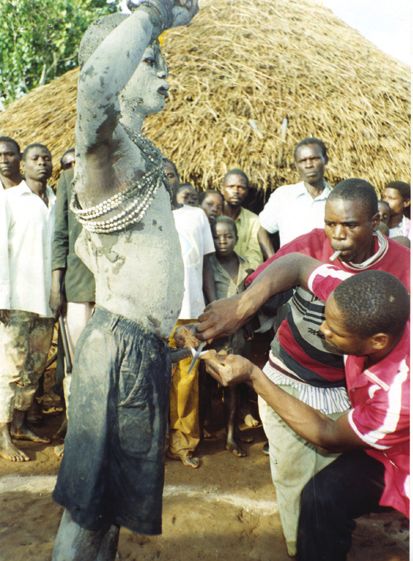
Church in Kenya, require circumcision for member- ance (Figure 2) (26). Circumcision is also associated
ship (17). Participants in focus group discussions in with factors such as masculinity, social cohesion with
Malawi and Zambia mentioned similar beliefs that boys of the same age who become circumcised at the
Christians should practise circumcision since Jesus same time, self-identity and spirituality (27). The asso-
was circumcised and the Bible teaches the practice ciation with initiation to manhood is not universal, how-
(18, 19). ever, with some ethnic groups, such as the Yoruba and
Igbo in Nigeria, circumcising in infancy (21). The eth-
In some West African countries, circumcision preva- nographer Arnold van Gennep, in his 1909 work The
lence tends to be lower among those of traditional reli- rites of passage (28), describes various initiation rites
gion than among Christians (66% vs. 93% in Burkina that are present in many circumcision rituals. These
Faso, 68% vs. 95% in Ghana) (13). Although religion include a three-stage process: separation from normal
and ethnicity can be closely correlated, religion can society; a period during which the neophyte undergoes
be a strong determinant within an ethnic group. For transformation; and, finally, reintegration into society in
4Male circumcision: global trends and determinants of prevalence, safety and acceptability
Figure 2. Traditional circumcision in Uganda discrimination may extend to entire ethnic groups,
as in the case of the Luo in Kenya, who do not tra-
ditionally practise circumcision and report that they
are often discriminated against by other Kenyans
because of this (25).
1.2.3 Social determinants
Social desirability
Today, male circumcision is performed for a range
of reasons, mainly social or health related, in addi-
tion to religion and ethnicity. The desire to conform
is an important motivation for circumcision in places
where the majority of boys are circumcised. A survey
in Denver, United States of America, where circum-
cision occurs shortly after birth, found that parents,
especially fathers, of newborn boys cited social rea-
sons as the main determinant for choosing circumci-
sion (for example, not wanting him to look different).
The main correlate of circumcision status was cir-
cumcision status of the father, with 90% of circum-
cised fathers choosing to circumcise their son, com-
Photo permission granted by New Vision pared with 23% of non-circumcised fathers (33).
a new social role. A psychological explanation for this In the Philippines, where circumcision is almost
process is that ambiguity in social roles creates ten- universal and typically occurs at age 10–14 years,
sion, and a symbolic reclassification is necessary as a survey of boys found strong evidence of social
individuals approach the transition from being defined determinants, with two thirds of boys choosing to be
as a child to being defined as an adult. This is supported circumcised simply “to avoid being uncircumcised”,
by the fact that many rituals attach specific meaning and 41% stating that it was “part of the tradition”
to circumcision that justify its purpose within this con- (34). Social concerns were also the primary rea-
text. For example, certain ethnic groups, including the son for circumcision in the Republic of Korea (35),
Dogon and Dowayo of West Africa and the Xhosa of with 61% of respondents in one study believing they
South Africa, view the foreskin as the feminine element would be ridiculed by their peer group unless they
of the penis, the removal of which (along with passing were circumcised (36).
certain tests) makes a man out of the child (29, 30).
Social desirability may also contribute to the rela-
Ethnicity is thus a major determinant of circumcision tively recent uptake of circumcision among the Akan
worldwide – for example, in ethnic groups of Bendel ethnic group in Ghana, which traditionally did not
State in southern Nigeria, 43% of men stated that elect circumcised men as chiefs. However, in the
their motivation for circumcision was to maintain past century, male circumcision has become more
their tradition (31). In some settings where circumci- common (37, 38) and the most recent Demographic
sion is the norm there is discrimination against non- and Health Survey shows that 99% of Akan men
circumcised men. In some cultures, such as the Yao were circumcised and 83% of Akan men reported
in Malawi, the Lunda and Luvale in Zambia, or the that circumcision was practised in their community
Bagisu in Uganda (18,19, 32), it is unacceptable to (13). The reasons given for the uptake of male cir-
remain uncircumcised, to the extent that forced cir- cumcision included social, hygiene, disease preven-
cumcisions of older boys are not uncommon (15). tion, female preference and enhanced sexual enjoy-
Among the Xhosa in South Africa men who have not ment (39). A further example of recent changing
been circumcised can suffer extreme forms of pun- practice comes from the Sukuma ethnic group in the
ishment, including bullying and beatings (29). This North-west of the United Republic of Tanzania, which
5Male circumcision: global trends and determinants of prevalence, safety and acceptability
is also traditionally non-circumcising. The word for with no education, in the lowest wealth quintile and
circumcision in the Sukuma language is derogatory living in rural areas (13). Circumcision prevalence in
(njilwa); however, now that boys mix with other eth- Ethiopia is universally high (93%) but men are most
nic groups at school, the practice is more accept- likely to be circumcised if they are in a higher wealth
able, with an estimated prevalence of 21% (11). quintile, have at least secondary education and live
in an urban area.
The desire to belong is also likely to be the main fac-
tor behind the high rate of adult male circumcisions Figure 3. Prevalence of male circumcision by
among immigrants to Israel from non-circumcising education and wealth quintiles
countries (predominantly the former Soviet Union)
Circumcision prevalence by education
(40).
No education Primary incomplete
Socioeconomic status
Primary Secondary +
Socioeconomic factors also influence circumcision
prevalence, especially in countries with more recent
Ethiopia
uptake of the practice, such as English-speaking
industrialized countries. When male circumcision
Kenya
was first practised in the United Kingdom in the late
19th and early 20th century, it was most prevalent
Lesotho
among the upper classes (41). A study published in
1953 found that 74% of private-hospital patients in
New York City were circumcised, compared to 57% Malawi
of non-private patients (42). A similar association
United
was seen in a recent nationwide survey in Australia, Republic of
which found that the proportion of men circumcised Tanzania
was significantly associated with higher levels of
Uganda
education and income (43). In the United States of
America, a review of 4.7 million newborn male cir- 0 20 40 60 80 100
cumcisions nationwide between 1988 and 2000 also Per cent
found a significant association with private insur-
ance and higher socioeconomic status (44), which Circumcision prevalence by wealth
is likely to reflect the low circumcision prevalence
Lowest Second
among recent immigrants, many of whom, in addi-
Middle Fourth
tion to coming from non-circumcising countries, Highest
such as China and Mexico, are more likely to be of
lower socioeconomic status. Although circumcision
Ethiopia
is uncommon in Thailand, it tends to be associated
with higher educational and socioeconomic status.
In order to make male circumcision more accessi- Kenya
ble, it was recently added to the procedures covered
under a flat rate payment scheme for a medical visit
or procedure of any type (45). Lesotho
In contrast, the Demographic and Health Surveys in
sub-Saharan African countries show no consistent Malawi
association with socioeconomic status (Figure 3).
For example, in the United Republic of Tanzania, United
Republic of
higher rates of circumcision are seen among men Tanzania
with higher levels of education, of higher socioeco-
0 20 40 60 80 100
nomic status and living in urban areas, whereas in Per cent
Lesotho, circumcision is most common among men
Source: MEASURE DHS (13).
6Male circumcision: global trends and determinants of prevalence, safety and acceptability
Perceived health and sexual benefits even after controlling for education, employment
and beliefs about whether circumcision was associ-
One of the driving determinants in the spread of cir-
ated with disease. Similarly, the majority of women
cumcision practices in the English-speaking indus-
believed that women enjoyed sex more with circum-
trialized world has been the perception that it results
cised men, even though it is likely that most women
in improved penile hygiene and lower risk of infec-
in Nyanza have never experienced sexual relations
tions. These were also the main determinants found
with a circumcised man (17). In the North-west of
in recent studies of factors determining acceptability
the United Republic of Tanzania, younger men asso-
of male circumcision in sub-Saharan African com-
ciated circumcision with enhanced sexual pleasure
munities that do not traditionally circumcise (see
for both men and women (11), and in Westonaria
section 3.3) (15). A male circumcision service was
District, South Africa, about half of men said that
established at the University Teaching Hospital in
women preferred circumcised partners (52). In
Lusaka, Zambia, in August 2004, and of the 895 cir-
southern Nigeria, the enhancement of sexual perfor-
cumcisions that have been undertaken there, 91%
mance and reproductive ability was also an impor-
of clients requested the procedure because they
tant reason given for male circumcision (31).
considered it protective against sexually transmitted
infection (STI), including HIV (46).
1.3 Global prevalence of male
In a study of newborns in the United States of circumcision
America in 1983 (33), mothers cited hygiene as
the most important determinant of choosing to cir- We have estimated the global prevalence of circum-
cumcise their sons, and in Ghana, male circumci- cision among males aged 15 years or over by first
sion is seen as cleansing the boy after birth (27, assuming that all Muslim and Jewish males in this
47). Improved hygiene was also cited by 23% of age group are circumcised. Then, using published
110 boys circumcised in the Philippines (34); and data from the Demographic and Health Surveys and
in the Republic of Korea, the principal reason given other sources (13, 53, 54), we estimated the num-
for circumcision among those who thought it was ber of non-Muslim and non-Jewish men circumcised
necessary, was “to improve penile hygiene” (78% in countries with substantial prevalence of non-
and 71% respectively in two studies) (36; 48) and religious circumcision (Angola, Australia, Canada,
to prevent conditions such as penile cancer, sexu- Democratic Republic of Congo, Ethiopia, Ghana,
ally transmitted diseases and HIV (48). In Nyanza Indonesia, Kenya, Madagascar, Nigeria, Philippines,
Province, Kenya, 96% of uncircumcised men and Republic of Korea, South Africa, Uganda, United
97% of women, irrespective of their preference for Kingdom, United Republic of Tanzania and United
male circumcision, stated their opinion that it was States of America) (Table 1).
easier for circumcised men to maintain cleanliness Using these assumptions, we estimate that approxi-
(17). Men participating in focus group discussions mately 30% of the world’s males aged 15 years or
in Botswana, Kenya, Malawi, the United Republic of older are circumcised (Table 2). Of these, around
Tanzania, Zambia and Zimbabwe also believed that two thirds (69%) are Muslim (living mainly in Asia,
it was easier to keep the circumcised penis clean the Middle East and North Africa), 0.8% are Jewish,
(11, 17–19, 25, 49–51). and 13% are non-Muslim and non-Jewish men living
Perceived improvement of sexual attraction and per- in the United States of America.
formance can also motivate circumcision. In a survey This method is likely to underestimate the true prev-
of boys in the Philippines, 11% stated that a determi- alence of male circumcision, as we have excluded
nant of becoming circumcised was that women like circumcision among non-Muslim and non-Jewish
to have sexual intercourse with a circumcised man men in heavily populated countries such as Brazil,
(34), and 18% of men in the study in the Republic of China, India and Japan where a small proportion of
Korea stated that circumcision could enhance sex- men are also circumcised, for medical, cultural or
ual pleasure (48). In Nyanza Province, Kenya, 55% social reasons. If we assume that 5% of men aged
of uncircumcised men believed that women enjoyed 15 years or above who are not included in the coun-
sex more with circumcised men, and this belief was tries or religions above are circumcised, then our
a strong predictor of preference to be circumcised estimate rises to 33%.
7Male circumcision: global trends and determinants of prevalence, safety and acceptability
Table 1. Estimation of number of males aged 15 years or older circumcised for non-religious reasons, by country
Male population aged 15 years or older
Not Muslim or Jewish
Percent Number
Number Percent Number circumcised circumcised
Country (millions) (55) (millions) (13, 53, 54) (millions)
Angola 3.44 99.0% 3.4 90% 3.1
Australia 8.05 98.5% 7.9 59% 4.7
Canada 11.79 96.9% 11.4 30% 3.4
Dem. Rep. of Congo 16.23 90.0% 14.6 90% 13.1
Ethiopia 20.92 55.0% 11.5 92% 10.6
Ghana 5.61 84.4% 4.7 85% 4.0
Indonesia 84.98 12.0% 10.2 25% 2.5
Kenya 9.99 93.0% 9.3 83% 7.7
Madagascar 4.24 90.0% 3.8 98% 3.7
Nigeria 35.23 50.0% 17.6 90% 15.9
Philippines 28.75 95.0% 27.3 90% 24.6
Republic of Korea 19.71 100.0% 19.7 60% 11.8
South Africa 14.87 98.5% 14.6 35% 5.1
Uganda 6.94 85.0% 5.9 14% 0.8
United Kingdom 24.22 97.3% 23.6 6% 1.4
United Republic of Tanzania 9.84 65.0% 6.4 58% 3.7
United States of America 115.56 98.0% 113.2 75% 84.9
Table 2. Proportion of males aged 15 years or older circumcised globally
Prevalence of Number circumcised Proportion of those
circumcision (millions) circumcised globally
Religious circumcision
Muslim men 100% 455.0 68.8%
Jewish men 100% 5.3 0.8%
Non-religious circumcision
United States of America 75% 84.9 12.8%
Other countriesa 61% 116.3 17.6%
Global total 30% 661.5 100%
a.
Includes countries listed in Table 1. If 5% of men in other countries are assumed to be circumcised for non-religious
reasons, the global prevalence of circumcision is 33%.
8Male circumcision: global trends and determinants of prevalence, safety and acceptability
Further limitations are that the country-level esti- 1.4 Regional prevalence of male
mates rely on self-reported circumcision status, circumcision
which may be unreliable in some (11, 56) though
not all (43) settings. A Kenyan study concluded that Figure 4 shows estimated country-level prevalence
asking men “Are you circumcised?” is misleading, of male circumcision. However, these estimates do
not only because of unreliability of self-report, but not reflect the substantial within-country variations in
also because different styles of circumcision in this prevalence due to the social, cultural and religious
population result in varying amounts of residual fore- determinants discussed in section 1.2. For example,
skin (56). However, the impact of misclassification of the estimated prevalence in Uganda is 26%, but
self-reported circumcision status is not clear. A study 97% of Muslims are circumcised compared with
in the North-west of the United Republic of Tanzania 14% of non-Muslims, and regional prevalence varies
found that the self-reported prevalence of circumci- from 2% in North Central Region to 55% in Eastern
sion was higher than the actual rate upon genital Region (13).
examination (34% vs. 28%) (57), whereas in a study
of adolescents in Texas, United States of America, 1.4.1 Africa
the self-reported prevalence was lower than that Male circumcision is common in many African coun-
found by clinical examination (36% vs. 49%) (58). tries, and is almost universal in North Africa and
Further, in this study, a substantial proportion of most of West Africa. In contrast, it is less common
respondents (27%) stated that they did not know in southern Africa, where self-reported prevalence
their circumcision status. is around 15% in several countries (Botswana,
Namibia, Swaziland, Zambia and Zimbabwe) (13,
53, 59, 60) although higher in others (Malawi 21%,
Figure 4. Global map of male circumcision prevalence at country level, as of December 2006
No data 80% prevalence
Source data: DHS and other data
Note: National prevalence of male circumcision was estimated using Demographic and Health Survey data where available.
For other countries, estimates were made from other published sources. Countries with no published data on male circumcision
prevalence are labelled “no data”.
The boundaries and names shown and the designations used on this map do not imply the expression of any opinion what-
soever on the part of the World Health Organization concerning the legal status of any country, territory, city or area or of its
authorities, or concerning the delimitation of its frontiers or boundaries. Dotted lines on maps represent approximate border 9
lines for which there may not yet be full agreement.Male circumcision: global trends and determinants of prevalence, safety and acceptability
South Africa 35%, Lesotho 48%,1 Mozambique 60%, (13), age 7–10 years in Zambia (62), and age 8–16
and Angola and Madagascar > 80%) (13, 53, 60). years in Kenya (63) to the late teens or twenties, for
Prevalence in Central and East Africa varies from example in parts of the United Republic of Tanzania
approximately 15% in Burundi and Rwanda to 70% and South Africa (11, 64). Age at circumcision can
in the United Republic of Tanzania, 84% in Kenya also vary considerably within a country. For exam-
and 93% in Ethiopia (13). ple, in Burkina Faso, families of higher socioeco-
nomic status and education level or living in urban
This variation is partly due to some groups (mainly areas are more likely to circumcise their sons at a
Nilotic or Sudanic speakers) who are traditionally young age (13).
non-circumcising, and also to different ethnic tra-
ditions among Bantu-speaking populations (which 1.4.2 Asia and the Middle East
include over 400 different ethnic groups in Africa,
from Cameroon to South Africa), some of whom Male circumcision is almost universal in the Middle
gradually stopped the practice, sometimes many East and Central Asia, and in Muslim Asian countries,
centuries ago (61). The reasons for this cessation such as Indonesia (8), Pakistan and Bangladesh
are unclear, but in more recent history it is known (53). In addition, there is a large circumcised Muslim
that in Botswana, southern Zimbabwe and parts of population (estimated at 120 million) in India (55).
South Africa and Malawi circumcision was stopped
There is generally little non-religious circumci-
by European missionaries and colonial administra-
sion in Asia, with the exceptions of the Republic of
tors. In Zululand, King Shaka ordered that circumci-
Korea and the Philippines, where circumcision is
sion schools be abolished during the Zulu wars in
routine. In the Republic of Korea, circumcision pat-
the early 19th century, presumably because of the
terns changed dramatically during the 20th century,
difficulty in holding the schools during the continual
increasing from almost non-existence in 1945 to
fighting (61). For similar reasons, many other groups
over 90% currently (Figure 5). This is thought to be
in southern Africa are thought to have abandoned
largely the influence of the United States of America,
male circumcision at that time, including the Swazi,
which established a trusteeship in the Republic of
when King Mswati II banned the practice as it inca-
Korea in 1945. The very rapid uptake of this prac-
pacitated men at times of war (61).
tice is seen clearly in prevalence of male circumci-
Another smaller region where circumcision was sion among 20-year-olds from 1950 to 2000 (Figure
not traditionally practised is in a contiguous area 5a), rising from almost zero in 1950 to 90% in 2000,
in central and eastern Côte d’Ivoire, north-west- with the sharpest increase in the 1980s. The overall
ern and central Ghana, and south-western Burkina prevalence among men is about 60% (65).
Faso (61). However, the procedure has become
In the Republic of Korea, male circumcision tends to
more widespread in this region over the past cen-
occur in adolescence or later rather than neonatally
tury (37, 39): prevalence has increased to 68% in
(66), and the median age of circumcision among
north-western and central Ghana (still much lower
1500 young men interviewed in South Province was
than the national Ghanaian prevalence of 96%) but
10–15 years, with only 1% of boys circumcised in
remains much less common (28%) among the Lobi
their first year (35). Another survey of 1124 men
in south-western Burkina Faso (national prevalence
found that 80% were circumcised, and the median
90%) (13).
age of circumcision was 12–14 years (67).
Age at circumcision varies by country. Neonatal cir-
The reason for the near-universal prevalence of
cumcision is common in Ghana (47), but in other
male circumcision in the Philippines is less clear, but
countries median age at circumcision varies from
is long-standing and thought to be unrelated to reli-
boyhood (median age 5–7 years in Burkina Faso)
gious influence (34). There are few data on age at
circumcision but one study found that 42% of boys
1
The self-reported prevalence of male circumcision in were circumcised aged under 10 years, 52% aged
Lesotho is 48%, but this figure may refer to attendance at
10–14 years, and 5% aged 15–18 years (34).
a circumcision school or ceremony. In many cases, only a
small proportion of these men are actually circumcised. In
addition, there is wide prevalence of incomplete circumci-
In Malaysia, male circumcision is also very common,
sion, for example an incision only. probably due to the influence of its majority Muslim
10Male circumcision: global trends and determinants of prevalence, safety and acceptability
Figure 5. Republic of Korea: Circumcision trends 1950–2000
5a. Circumcision rate of then 20-year-olds among 5b. Estimated circumcision rate over whole
respondents as a function of calendar year population as a function of calendar year
100 100
Circumcision rate of 20-year olds, %
80 80
Mean circumcision rate, %
60 60
40 40
20 20
0 0
1950 1960 1970 1980 1990 2000 1950 1960 1970 1980 1990 2000
Calendar year Calendar year
Source: Pang and Kim (65). Permission granted by Blackwell Publishing.
population of 60% (68). In contrast, the practice is circumcision rates in the United States of America
rare in neighbouring Thailand (69, 70), apart from increased to about 55% by 1938, and subsequently
among predominantly Muslim communities in south- increased further to about 80% in the 1960s, possibly
ern Thailand. influenced by men returning from the Second World
War, for whom circumcision was reportedly common
1.4.3 North America, Europe, Australia and to prevent penile infections while serving in North
New Zealand Africa and the Pacific (73). The American Academy
During the 19th century, male circumcision became of Pediatrics has issued several statements on neo-
increasingly popular in English-speaking industrial- natal circumcision since 1971, with the most recent
ized countries following the advent of anaesthesia in (issued in 1999; reaffirmed in May 2005) stating that
surgery and the first epidemiological studies such as there are insufficient data to recommend routine neo-
that of venereal patients in 1855, which found that natal circumcision (74). Despite this, there appears
61% of non-Jewish patients (who were uncircum- to be little decline in prevalence of neonatal circum-
cised) had syphilis compared with 19% of Jewish cision in the United States of America. An estimated
patients (71). The Victorian establishment, including 61% of male newborns were recorded as being cir-
the medical profession, was concerned with issues cumcised on hospital discharge sheets in 2000 (44),
surrounding the relationship between sexuality and but the true figure will be higher than this because
disease, and there was a widespread belief that circumcision is not routinely documented on the hos-
circumcision was beneficial, leading to statements pital discharge sheet used to collate the data and,
such as “the prepuce is a frequent source of dis- furthermore, post-neonatal circumcisions for religious
ease, often requiring its removal” (72). or medical reasons are not captured. Community
surveys have found higher neonatal male circumci-
By the end of the 19th century, male circumcision sion prevalence of 76–92% (75). There is also sub-
was advocated in these countries as a preventive stantial regional variability, with lowest prevalence in
measure against a range of conditions and behav- the western United States of America, probably due
iours, including masturbation, syphilis and nocturnal to the high proportion of Hispanics, who have lower
incontinence (72). As a result, neonatal and child rates of male circumcision (73).
11Male circumcision: global trends and determinants of prevalence, safety and acceptability
Most data from Canada are also hospital-based and in the United Kingdom, as in the rest of Europe, is
therefore again exclude a substantial proportion of pro- predominantly related to Muslim or Jewish religion,
cedures. However, in contrast to the United States of medical indications or immigration from circumcising
America, there is clear evidence of a gradual decline in countries.
circumcision prevalence. Data from 1970–1971 found
that neonatal circumcision rates varied from 42% in 1.4.4 Central and South America
Nova Scotia to 67% in Alberta, and prevalence gener-
There is little information on determinants of male
ally declined during the 1970s, with the lowest rate of
circumcision in Central and South America, where
13% in Quebec, and 22% in Nova Scotia in 1978 (76).
the practice is uncommon. Circumcision was tra-
This decline may have been partly due to the American
ditionally practised among the Aztec and Mayan
Academy of Pediatrics and Canadian Pediatric Society
civilizations but largely disappeared following the
statements in the 1970s that there were no medical
European conquests (5, 22, 23). Reports from the
indications for routine neonatal circumcision (77, 78).
17th to the 19th century suggest that male circumci-
A more recent study of 69 100 boys born in Ontario in
sion in the Caribbean was practised not only among
1993–1994 found a prevalence of 44% (79), and there
Jews but also among local Africans working for them
is evidence of declining circumcision rates among
(88).
male infants aged under 28 days in Ontario during the
1990s (inpatient circumcision prevalence of 39% in A study of male partners of women selected as con-
1989–1992 and 30% in 1994–1995) (80). trols in a case-control study of cervical cancer in
Colombia, Costa Rica, Mexico and Panama found
The rate of neonatal circumcision in Australia
that 11% of men were circumcised on genital exami-
declined in the 1970s and 80s, but is now slowly
nation (although 25% of men reported being circum-
rising again (81). A recent nationwide survey of
cised) (89). A more recent study, also among part-
10 173 men found that 59% of men were circum-
ners of controls in a cervical cancer study, found a
cised, decreasing from 66% of those aged 50–59
prevalence of 7% in both Colombia and Brazil (90). A
years to 32% of those aged 16–19 years (43). Other
random sample of 300 men requesting pre-employ-
data confirm this, with reported neonatal circumci-
ment or routine annual worker health certification in
sion rates of 50% in 1974, 24% in 1983 (82), and
low socioeconomic neighbourhoods of Lima, Peru,
17% in 2004 (83). There are few studies from New
found that 6% were circumcised (91). A recent mul-
Zealand. A study of 435 men born in 1972-1973 in
ticountry survey found no countries in Central or
Dunedin found a prevalence of circumcision of 40%
South America with circumcision prevalence greater
(84), substantially higher than that of 26% found
than 20% (53).
among 1265 children born in the Christchurch urban
region in 1977 (85), and just 7% in a 1991 survey in
the Waikato region on North Island (86). 1.5 Summary
Male circumcision is a common surgical procedure
In the United Kingdom, circumcision prevalence is
in many parts of the world, undertaken for religious,
likely to have been 20–30% in the 1940s, with large
cultural and secular reasons. The most common
variations due to socioeconomic status (87). Since
determinant of circumcision globally is Muslim reli-
then, prevalence has declined sharply, probably
gion, and there are many regions of the world where
both for financial reasons, as the newly established
non-religious circumcision is largely unknown. The
National Health Service did not pay for the procedure,
age at which circumcision is undertaken is deter-
and also due to a 1949 British Medical Journal article
mined by sociocultural and religious traditions, and
that concluded that there was no medical justifica-
it may occur from the neonatal period to the early
tion for routine neonatal circumcision (87). A recent
twenties. There have been rapid increases and
probability-based nationwide survey in 2000 found
decreases of prevalence in several settings among
that 15.8% of men aged 16–44 years were circum-
non-Muslims and non-Jews, which may result from
cised, and this was lowest among those born more
increased mixing between different cultures, reli-
recently (for example, 11.7% among boys born in
gions and socioeconomic groups, or from changes
1980–1984 compared with 19.6% among those born
in perceptions of health or sexual benefits associ-
in 1955–1959) (3). This reflects the decreasing prev-
ated with the practice.
alence over time; currently, neonatal circumcision
12Male circumcision: global trends and determinants of prevalence, safety and acceptability
SECTION 2.Medical indications, clinical procedures and safety of male
circumcision
2.1 Introduction In addition, the inner mucosal surface of the fore-
skin is thinly keratinized (98), unlike the penile shaft
In this section, we review the physiology of the fore-
and the outer surface of the foreskin (99), and may
skin, current therapeutic and preventive medical
be more susceptible to minor trauma and abrasions
indications for circumcision, the common methods
that facilitate entry of pathogens (99).
of neonatal and adult circumcision, and the safety of
these procedures when carried out both traditionally There are several mechanisms by which the fore-
and medically. skin may specifically increase risk of HIV acquisi-
tion. Firstly, there is an increased risk of genital ulcer
2.2 The foreskin diseases in uncircumcised men (100), which, in turn,
increases risk of HIV, as the disrupted mucosal sur-
The foreskin is a continuation of skin from the shaft
face of the ulcer increases risk of HIV acquisition
of the penis that covers the glans penis and the ure-
(101). Secondly, the foreskin may increase risk of
thral meatus (Figure 6a). The foreskin is attached
HIV infection directly as tissue from the inner sur-
to the glans by the frenulum, a highly vascularized
face of the foreskin mucosa contains accessible
tissue of the penis. The frenulum forms the interface
HIV-1 target cells (CD4+ T cells, macrophages and
between the outer and inner foreskin layers, and
Langerhans cells) (102). The density of these HIV-
when the penis is not erect, it tightens to narrow the
1 target cells in the inner foreskin is similar to that
foreskin opening. Circumcision removes some, or
in the glans penis and outer foreskin, but those in
all, of the foreskin from the penis. The word “circum-
the inner foreskin are closer to the epithelial surface
cision” comes from the Latin circumcidere (meaning
than those situated elsewhere in the penis, due to
“to cut around”).
the lack of keratin (98). Within the inner foreskin the
There is debate about the role of the foreskin, with Langerhans cells are more likely to be found near
possible functions including keeping the glans moist the epithelial surface than other cells, and are likely
(92), protecting the developing penis in utero (73), to be the first to be infected by HIV-1 (103). More
or enhancing sexual pleasure due to the presence direct evidence of the susceptibility of the foreskin
of nerve receptors (93). The foreskin is part of our to HIV-1 infection comes from Patterson et al. (102),
phylogenetic heritage; non-human primates, includ- who found that infectivity of the inner mucosal sur-
ing our closest living relatives, chimpanzees, have face (assessed by quantity of HIV-1 DNA one day
prepuces that partially or completely cover the glans after ex vivo infection with explant culture) was
penis (94). greater than that of cervical tissue, which is a known
primary site of HIV-1 acquisition in women.
2.2.1 Mechanisms of penile infection
In an uncircumcised man, the cells in the inner
Epidemiological studies have shown circumcised foreskin and frenulum are directly exposed to vagi-
men have a lower risk of several reproductive tract nal secretions during intercourse, and this super-
infections than uncircumcised men (see section ficial location of the HIV-1 target cells presumably
2.3.2). There are several likely biological mecha- increases risk of infection (Figure 6b). In contrast, in
nisms for this. The area under the foreskin is a warm, a circumcised man the penile shaft is covered with
moist environment that may enable some patho- a thickly keratinized epithelium, providing some pro-
gens to persist and replicate, especially when penile tection from infection (98).
hygiene is poor (93). For example, it has been shown
that uncircumcised infants are more likely to harbour 2.2.2 Penile hygiene and circumcision status
a reservoir of uropathogenic organisms (for example
The perception of improved penile hygiene is one
Escherichia coli) in the urethral meatus and periure-
of the main determinants of circumcision. The inner
thral area (95) and that these uropathogenic bacteria
foreskin and glans require regular cleaning to ensure
adhere especially well to the inner mucosal surface
adequate penile hygiene as there is the potential for
of the foreskin as opposed to the keratinized external
secretions to accumulate in the space between fore-
surface (96). These very adherent, more abundant
skin and glans, potentially leading to proliferation of
uropathogenic organisms may then ascend to the
pathogens (93). This substance, known as smegma,
bladder and kidneys, causing urinary tract infections
is a combination of exfoliated epithelial cells, transu-
and pyelonephritis (97).
13Male circumcision: global trends and determinants of prevalence, safety and acceptability
Figure 6. Anatomy of the penis showing areas sectional study, of 150 male partners of women with
susceptible to HIV infection lower genital tract symptoms from a family planning
Figure 6a. Flaccid uncircumcised penis clinic and an STI clinic in Nairobi, Kenya, also found
that increased post-coital washing was associated
Outer Foreskin with lower HIV infection (107). Male circumcision
Inner Foreskin was associated with lower risk of HIV in this study
(OR = 0.12; CI = 0.02–0.91), independently of being
Urethral Meatus associated with superior genital hygiene.
Interventions to improve penile hygiene may help
Glans Penis reduce risk of STI/HIV, irrespective of circumcision
status. Two studies of a topical microbicide (BZK
Frenulum 0.4%) wipe for penile cleaning among both circum-
cised and uncircumcised men in Malawi concluded
Figure 6b. Erect uncircumcised penis with the that this wipe was safe and acceptable, and could
foreskin retracted showing likely sites of HIV-1 entry decrease the frequency of penile colonization with
microorganisms (108). However, it is also possible
H IV Ent r y No HIV Entry that frequent penile cleaning could cause inflamma-
tion and microabrasions, leading to increased risk of
HIV acquisition.
2.3 Medical determinants of male
circumcision
2.3.1 Therapeutic indications for male
circumcision
Outer Foreskin Inner Foreskin Frenulum
The most frequent medical reason for male circumci-
Source: McCoombe and Short. (98). Permission granted by sion is phimosis – a stricture of the foreskin that nar-
Lippincott Williams & Wilkins.
rows the opening and prevents it from being retracted
dated skin oils, moisture and bacteria. However, few to uncover the glans. In the United Kingdom from
studies have assessed the degree of penile hygiene 1997 to 2003, 90% of medically indicated circum-
among uncircumcised men. In a recent study, 49% cisions were for phimosis (109). Phimosis may be
of men attending an STI clinic in Durban, South currently overdiagnosed (110) and there was a 23%
Africa, had detectable wetness under the foreskin reduction in the number of circumcisions performed
(thought to reflect poor genital hygiene) (104), simi- for phimosis during this period (from 11 501 in 1997
lar to the proportion found in a study of men in India to 8866 in 2003), possibly due to greater awareness
(105), but hygiene appeared to be better (9.5% wet- of overdiagnosis or to availability of alternative treat-
ness) among men attending an STI clinic in London ment by corticosteroids (111, 112).
(106). Other, less common, medical indications for cir-
Difficulty in maintaining good penile hygiene may cumcision are otherwise untreatable paraphimosis
contribute to the risk of infections among uncircum- (in which the foreskin is trapped behind the corona
cised men. One cross-sectional study of men in and forms a tight band of constricting tissue, caus-
Durban, South Africa, found a significantly higher ing swelling of the glans and foreskin), balanposthi-
prevalence of HIV among men with penile wetness tis (an acute or chronic inflammation of the mucosal
14 days after treatment for STI after adjusting for surface of the foreskin) and balanitis xerotica oblit-
potential confounding factors (odds ratio (OR) = erans (a chronic sclerosis and atrophic process of
2.38; 95% confidence interval (CI) = 1.4–4.0), and the glans penis and foreskin – a risk factor for penile
the circumcised men in the study had a similar prev- cancer and the only absolute indication for circum-
alence of HIV as the uncircumcised men without cision). In addition, preputial neoplasms, excessive
penile wetness (43% vs. 46%) (104). Another cross- skin and tears in the frenulum are also rare medical
indications for adult circumcision (113, 114).
14Male circumcision: global trends and determinants of prevalence, safety and acceptability
2.3.2 Preventative indications for male cumcised (37.5%) boys in Turkey (136), although
circumcision an earlier study found no association of yeast in 66
Table 3 summarizes the systematic reviews and ran- circumcised and 69 uncircumcised men (137).
domized controlled trials of the association of male In the industrialized world, routine neonatal circum-
circumcision with penile infections. These show that cision is not recommended by national paediat-
circumcised men are at significantly lower risk of ric societies, including those of Australia, Canada,
urinary tract infections, HIV, syphilis and chancroid Finland, New Zealand and the United States of
(100, 115, 116). America, for the prevention of these conditions (74,
In addition, there is consistent evidence from stud- 138–141), because the risks are judged to outweigh
ies in the United States of America that circumcised the benefits.
men are at significantly lower risk of invasive penile There have been several cost–benefit analyses of
cancer (117–120). Most (4, 121–128), but not all impact of neonatal circumcision. Their conclusions
(129), studies have found a reduced risk of gonor- depend on the assumed surgical complication rate of
rhoea among circumcised men, and a significantly neonatal circumcision – for example, a decision-tree
reduced risk of Chlamydia trachomatis infection has analysis found that circumcision would be preferred
been found in female partners of circumcised men if the rate of surgical complications was below 0.6%
(OR = 0.18; CI = 0.05–0.58) compared with partners (142). One study, using data from 350 000 neonatal
of uncircumcised men (90). circumcisions in Washington State, United States of
In addition to these viral and bacterial infections, a America, observed a complication rate of 0.2%, and
recent study found a significantly higher prevalence concluded that six urinary tract infections would be
of yeast in samples from the prepuce and glans prevented for every complication (143). Conversely,
penis of uncircumcised (62.5%) compared to cir- two complications could be expected for each case
Table 3. Association of infections with male circumcision
No. of Relative risk (RR) or odds Strength
Infection Type of study/review studiesa ratio (OR) (95% CI) of evidence
Urinary tract Randomized controlled trial 1 OR = 0.13 (0.01–2.63)
infections (115) +++
Systematic review and meta- 12 OR = 0.13 (0.08–0.20)
analysis
Chancroid (100) Systematic review 7 RRs from 0.12 to 1.11b ++
Syphilis (100) Systematic review and meta- 14 RR = 0.67 (0.54–0.83)
++
analysis
HIV (130–134) Randomized controlled trial 3 RRs from 0.40 to 0.52
Systematic review and meta- 15 RR = 0.52 (0.40–0.68)
analysis of observational data +++
Systematic review of 19 RRs from 0.12 to 1.25c
observational data
HSV-2 (100) Systematic review and meta- 7 RR = 0.88 (0.77–1.01)
+
analysis of observational data
HPV (135) Systematic review and meta- 8 OR = 0.57 (0.39–0.82)
+++
analysis of observational data
a. For meta-analyses of HIV infections in adults, only studies with adjusted RRs are included, as crude RRs are likely to be mislea-
ding due to potential confounding with behaviour and other factors. The meta-analyses of chancroid, syphilis and HSV-2 include best
estimates of effect, which are the adjusted RR if it was available, otherwise the crude RR.
b. Protective effect in 6 out of 7 studies, of which 4 were significantly protective.
c. Protective effect in 18 out of 19 studies, of which 14 were significantly protective.
15You can also read


