Master of Teaching (Primary) Programme Handbook 2019-2020
←
→
Page content transcription
If your browser does not render page correctly, please read the page content below

Faculty of Education and Social Work

         Master of Teaching (Primary)
            Programme Handbook
                  2019-2020

 EPSOM CAMPUS
 Private Bag 92601
 Symonds Street
 Auckland 1150, NZ

 Gate 3, 74 Epsom Ave, Epsom
 Auckland 1023
 P: (09) 623 8899

The University of Auckland | Faculty of Education and Social Work | Internet: www.education.auckland.ac.nz | Ph: 0800 61 62 63
Master of Teaching (Primary) Contacts

Master of Teaching (Primary) Programme Leader
Sally Birdsall
Email: s.birdsall@auckland.ac.nz  Extn: 48458 Office: A320

Master of Teaching (Primary) Practicum Coordinator
Vivienne Mackisack
Email: v.mackisack@auckland.ac.nz Extn: 48347 Office: H211A

Teacher Education Office Co-ordinator
Chris Tennet
Email: c.tennet@auckland.ac.nz Extn: 48650   Office: H201A

Practicum Manager: Practicum Office
Judy Robinson
Email: judy.robinson@auckland.ac.nz   Extn: 48891   Office: H211X

Education Student Centre:
Email: education@auckland.ac.nz   0800 61 62 65     Office: A Block

Page 2
Contents
Master of Teaching (Primary) Contacts ........................................................................................................ 2
Contents .................................................................................................................................................. 3
Welcome .................................................................................................................................................. 5
Faculty of Education and Social Work Academic Roles .................................................................................... 6
Support Systems ...................................................................................................................................... 7
Introduction to the Master of Teaching (Primary) .......................................................................................... 8
Master of Teaching (Primary) Programme Processes ...................................................................................... 9
Programme Structure ...............................................................................................................................11
Administrative Matters / Professional Requirements and Conduct for Students at the Faculty of Education and
Social Work: ............................................................................................................................................12
Master of Teaching (Primary) Student Teachers ...........................................................................................12
Keeping Informed (refer also to: p. 28) .................................................................................................12
Attendance ........................................................................................................................................12
Applications for Leave .........................................................................................................................13
Change of Heart/Circumstances............................................................................................................13
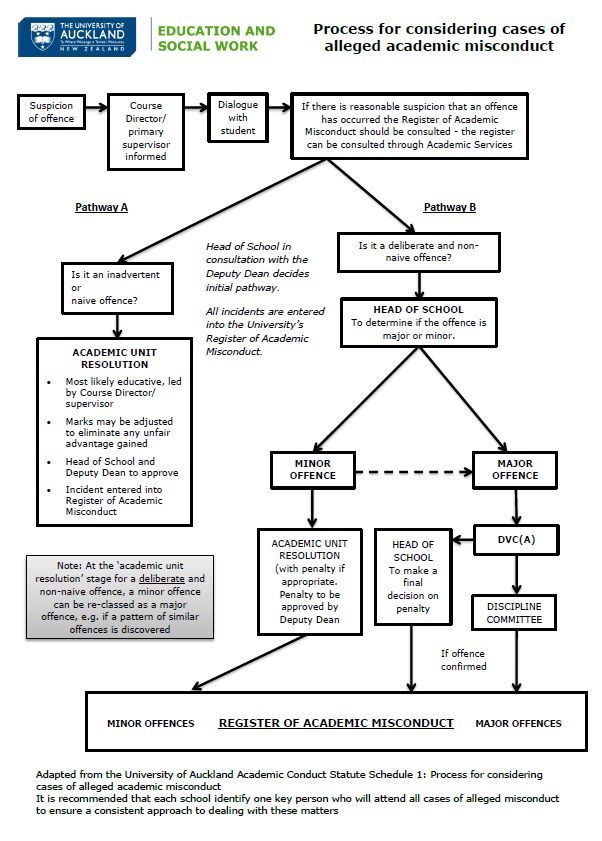
Cheating and Plagiarism ......................................................................................................................13
Failure to Meet Requirements ...............................................................................................................14
Personal Support ................................................................................................................................14
Professional Ethics Related to Conduct and Research ..............................................................................14
Professionalism and the Use of Social Media...........................................................................................14
Student Concerns ...............................................................................................................................14
Assessment .............................................................................................................................................15
Assessment - Purposes and Roles .........................................................................................................15
Assessment - Notification of Assessment Information ..............................................................................15
Assignment Process ..................................................................................................................................15
Non-electronic submission of Assignments .............................................................................................15
Electronic Submission of Assignments ...................................................................................................16
Extensions .........................................................................................................................................16
Penalties for Late work ........................................................................................................................16
Return of Marked Assignments .............................................................................................................16
Compassionate Consideration (Unavoidable Personal Circumstances) ........................................................16
Resubmission .....................................................................................................................................16
Assessment and Grading Scale .............................................................................................................17
Assessment - Practicum ......................................................................................................................18
Course Pass Grades ............................................................................................................................18
To be eligible for a pass grade (or equivalent) a student must: ................................................................18
Course Failure ....................................................................................................................................18
Extensions .........................................................................................................................................18
Group Projects ...................................................................................................................................18
Literacy Standards ..............................................................................................................................18
Penalties for Late Work .......................................................................................................................18
Referencing .......................................................................................................................................18
Repeated Fails....................................................................................................................................18
Requirements Specific to this Degree ....................................................................................................19
e-Portfolio ...............................................................................................................................................19
Professional Practice and Practicum ............................................................................................................20
Professional Practice ...........................................................................................................................20
Practicum ..........................................................................................................................................20
Professional Practice and Practicum: Requirements, Expectations and Procedures ............................................21
Placement Requirements/Restrictions for Professional Practice/Practicum ..................................................21
Balancing Responsibilities during Professional Practice/Practicum ..............................................................21
Resolving Concerns during Professional Practice/Practicum ......................................................................21
Page 3
Confidentiality during Professional Practice/Practicum .............................................................................21 Assessment of Practicum (EDPROF 758) ................................................................................................22 Formal Practicum Report: EDPROF 758..................................................................................................22 Withdrawal from/Discontinuing Practicum ..............................................................................................22 Jury service .......................................................................................................................................23 General University information and policies .................................................................................................24 Academic Integrity..............................................................................................................................24 Academic Misconduct ..........................................................................................................................24 Aegrotat and Compassionate Consideration ...........................................................................................25 Appeal of Course Marks or Grades ........................................................................................................25 AskAuckland ......................................................................................................................................25 Change of Name .................................................................................................................................25 Children’s Act .....................................................................................................................................25 Conceded passes ................................................................................................................................25 Course Deletions and Withdrawals ........................................................................................................25 Deferring from a programme ...............................................................................................................25 Enrolments ........................................................................................................................................26 Fees..................................................................................................................................................26 Forms, Policies and Guidelines..............................................................................................................26 Group assessment ..............................................................................................................................26 Graduation ........................................................................................................................................26 MyAucklandUni ...................................................................................................................................26 Partial Resits ......................................................................................................................................26 Resignation from a programme ............................................................................................................26 Request an official transcript ................................................................................................................26 Student Academic Complaints and Disputes ...........................................................................................27 Student email ....................................................................................................................................27 Storage and Disposal of Student Work ..................................................................................................28 Student Services Online (SSO) .............................................................................................................28 Submission in Māori ............................................................................................................................28 Texts and resources ............................................................................................................................28 Third party assistance .........................................................................................................................28 Transfers between University of Auckland, Faculty of Education and Social Work Programmes .....................28 Transfer to other Colleges/Faculties of Education ....................................................................................29 Updating addresses and personal details ...............................................................................................29 University Proctor ...............................................................................................................................29 Withdrawal from Courses .....................................................................................................................29 Library: Essentials for using the Sylvia Ashton-Warner Library .......................................................................30 Library hours – Epsom Campus ............................................................................................................30 Term hours ........................................................................................................................................30 Term break hours ...............................................................................................................................30 Short Term Loan ................................................................................................................................30 Study Space ......................................................................................................................................30 Computers .........................................................................................................................................30 Workshops.........................................................................................................................................30 Student Feedback ....................................................................................................................................31 Types of feedback...............................................................................................................................31 What happens to your feedback? ..........................................................................................................32 Master of Teaching (Primary)-specific Research ...........................................................................................33 Teacher Registration and Certification .........................................................................................................33 Criminal Convictions while undertaking, or during deferment from, the programme ....................................33 Portfolios and Teaching Council’s Graduating Teacher Standards (TC GTS) ................................................33 Registration and Provisional Certification ...............................................................................................34 Conceptual Model Underpinning Teacher Education Programmes ....................................................................35 Principles Underpinning Teacher Education Programmes and Related Graduate Outcomes .................................36 References: .............................................................................................................................................37 Page 4
Welcome

Nau mai rā ki Te Kura Akoranga me Te Tauwhiro Tangata o Te Whare Wānanga o Tāmaki-makau-rau. Welcome to
the Faculty of Education and Social Work at the University of Auckland.

The aim of all of the faculty’s teacher education programmes is to develop graduates who are able to demonstrate
an evidence-informed, outcomes-focused, inquiry-based approach to teaching. It is envisaged that you, as a
graduate, will have the research, subject knowledge, pedagogical understandings and appropriate dispositions to
enable you to teach in ways that focus on children and young people’s learning, and to address current disparities
in educational achievement.

Underpinning teacher education programmes is the view that education encompasses the intellectual, moral and
emotional growth of the individual and, consequently, the evolution of a democratic society (Dewey, 1916).
Teaching, therefore, is a moral and ethical activity that requires you, as a student teacher, to develop critical
knowledge, skills and dispositions to teach in ways that enable success for all learners. This is a complex
undertaking that requires integrating many kinds of knowledge and skills in order to make the best teaching
decisions for a diverse range of learners (Darling-Hammond & Bransford, 2005). Thus a variety of learning
opportunities will be provided to assist you to develop, integrate and apply knowledge, understandings and skills
that will enable you to become effective beginning teachers.

To this end, the faculty’s teacher education programmes are underpinned by a conceptual framework, at the
centre of which is the overarching goal that you, as a graduate, will become: A research-informed, inquiry-based
practitioner who leads the learning of others by creating purposeful, responsive and safe learning environments
within which all learners achieve valued skills, knowledge and attitudes (please refer to Conceptual Framework on
page 33).

Each of the seven circles within the framework addresses a vital area of critical knowledge, skills and dispositions
that provide a consistent focus across all courses and learning experiences in teacher education programmes. A
related set of principles, along with specific faculty graduate outcomes that contribute to each vital area and
collectively address the overarching goal of the conceptual framework, underpin all teacher education
qualifications. These in turn link to the Teaching Council of Aotearoa New Zealand (Teaching Council) Standards.

Concepts relating to Māori and diversity are fundamental to the achievement of all other outcomes. The first
concept is the recognition of the special place of Māori in education in Aotearoa/New Zealand. This recognises the
commitment to prepare teachers with a sound understanding of Māori education priorities and aspirations, and a
preparedness to work towards the achievement of these aspirations as central to teacher education programmes.
The second central concept embedded within programmes is the acknowledgment that all learners are entitled to
quality education that addresses their diverse learning needs.

It is hoped that your programme will be a fulfilling and rewarding experience that results in you becoming a
successful beginning teacher.

                                                                                                               Page 5
Faculty of Education and Social Work Academic Roles
Dean of Education and Social Work Associate Professor Mark Barrow
Te Tumu Dr Te Kawehau Hoskins
Head of Initial Teacher Education Associate Professor Fiona Ell
Dr Rena Heap (to 1 Dec 2019)
Associate Dean, Academic
Dr Barbara Staniforth (from 1 Dec 2019)
Associate Dean, International (Strategic Engagement) Dr Marek Tesar
Associate Dean, Pasifika Jacoba Matapo
Associate Dean, Postgraduate Professor Gavin Brown
Associate Dean, Research Dr Aaron Wilson
Associate Dean, Teaching and Learning Gail Ledger
Teacher Education
Director Early Childhood Teacher Education Dr Sandy Farquhar
Co-Directors of Primary Programmes Jill Murray
Sandra Chandler
Director Secondary Teacher Education Dr Ngaire Hoben (to 31 Dec 2019)
Barbara Ormond (from 1 Jan 2020)
Director Māori Medium Education Hēmi Dale
Associate Director Early Childhood Education Shareen Sapsworth
Associate Director Graduate Diploma in Teaching (Primary) Paul Heyward
Co-ordinator, The University of Auckland at Manukau Tessa Tupai
Campus Co-ordinator, Tai Tokerau Judy Taingahue
School Head of School
School of Counselling, Human Services and Social Work Dr Allen Bartley
School of Critical Studies in Education Professor John Morgan
School of Curriculum and Pedagogy Associate Professor Katie Fitzpatrick
School of Learning, Development and Professional Practice Associate Professor Richard Hamilton
Te Puna Wānanga Dr Te Kawehau Hoskins (to 31 Dec 2019)
Dr Helene Connor (from 1 Jan 2020)
Contact Details for Campuses:
City Campus Phone: 373 7599
Epsom Campus Phone: 623 8899
Manukau Institute of Technology Campus Phone: 968 8765
Tai Tokerau Campus Phone: 09 470 1000 (or 0800 61 62 63)
Page 6Support Systems
Teaching is both rewarding and stressful and preparing to teach often proves to be more demanding than people
anticipate. There is plenty of support available here within this faculty and we urge you to seek assistance if you
are beginning to feel overwhelmed by the multiple demands made of you. Where students have questions or
concerns about their programme, performance, or personal professional well-being they are urged to seek
immediate assistance from an appropriate source.
Nature of your query or concern: Who to see:
Academic Success Centre Student Engagement and Experience Rebekah Williams ext 48855
(Student Support) Academic English Language Advisers
N Block Level 3 foyer Donglan Zhang, Denise McKay, Ann O’Byrne: edswdelna@auckland.ac.nz
Speech Language Therapist Alaine Tasker ext 48756
Primary Maths Support Angela Spavin ext 48217
Counselling Support Epsom Campus Counsellors: make appointment online under ‘Student
Health and Counselling Services’ or phone 923-7681
Deferral, Resignation, Transfer Education and Social Work Student Centre – request appropriate form
Difficulty with course content Your lecturer/s
Academic Success Centre – N Block
Feeling at risk of failure/progress Your lecturer/s, Academic Success Centre, Student Health and Counselling
causing concern Services, Associate Director or Programme Leader, Course Directors,
Pouarataki
Financial, Hardship, Student ESSA (Education and Social Work Students Association)
Association etc. Office: N335 from 10.30 am – 2 pm during semester time.
Email: info@essa.co.nz
Website: www.essa.co.nz
Health/Medical Student Health and Counselling Service, Epsom Campus, R Block
Phone: 623 8889 or ext 48526
International Students Associate Dean International (Strategic Engagement)
Dr Marek Tesar, ext 46375
LGBTI Student Support Faculty Rainbow Network
Email: rainbowEDSW@auckland.ac.nz
Scholarships Faculty Scholarships or
University scholarships: www.scholarships.auckland.ac.nz
Student Allowances/Loans StudyLink, 0800-889 900
Student Disability Services Email: disability@auckland.ac.nz
Website: www.disability.auckland.ac.nz
Support for Māori students Kaitiaki Tauira Māori /Māori Student Support Advisor:
Te Korowai Atawhai tekorowaiatawhai@auckland.ac.nz
Kaiāwhina & student study space
Support for Pasifika students Pasifika Success Coordinator (Level 2 N211)
Pasifika Success Tim Baice, Academic Coordinator, ext 48469
Support for Students from Denis McKay, Academic Success Centre
Refugee Backgrounds Eman Ghandour, Education and Social Work Student Centre
Sylvia Ashton Warner Library Epsom Campus – Phone: 09 623 8886
Email: library@auckland.ac.nz
Timetables, programme of study. Education and Social Work Student Centre, A Block
Fails, resits, changes to your
programme
Page 7Introduction to the Master of Teaching (Primary)
The Master of Teaching (Primary) is a 180 point 1.5 EFTS Initial Teacher Education (ITE) programme that leads to
New Zealand teacher registration and provisional certification.
Programme Aims
Graduates of the Master of Teaching (Primary) will have the knowledge, skills and dispositions to be effective
teachers of all learners, in particular those from priority student groups. They will meet the Teaching Council’s
Standards and therefore meet the requirements for registration and provisional certification in New Zealand. The
programme is intensive, and academically and professionally demanding. It aims to develop beginning teachers
who are efficacious, resilient, self-motivated and self-regulating professionals who are able to engage in
collaborative practice with learners, colleagues, and parents, whānau and care-givers within schools (learners and
colleagues) and within the wider community.
Graduates will have a critical understanding of how to use research and evidence to inform and develop their
professional knowledge and practice. They will have a passion and commitment to making significant improvements
in the learning and engagement of learners from all backgrounds and in all circumstances. The collaboration
between Faculty and participating primary schools provides extensive and targeted opportunities to practise,
develop and improve knowledge and skills in supportive, and constructively critical, authentic environments; with
an inquiry approach, extensive opportunities for collaborative and individual practice, feedback and reflection.
In her recent discussion paper Learning to Practise Timperley (2013) identified five principles for teacher education
that she believes should provide a solid foundation for the development of adaptive expertise.
The following table shows the link between programme processes aimed at assisting students to develop and
practise the skills, knowledge and attitudes to become teachers who can make a positive difference to priority
learners, and Timperley’s principles.
MTchg (Pry) programme processes Timperley’s Principles
Develop professional knowledge by experience- Develop knowledge of practice through actively
based learning and enacting the facets of constructing conceptual frameworks
practice for equity.
Foreground past experiences and challenge and Systematically build formal theories of practice
review attitudes. by engaging everyday theories
Develop clear understanding of the standards Promote meta-cognition, co- and self-regulated
expected (incl. Teaching Council Standards, learning
Tātaiako and Tapasā) and be able to identify
personal learning goals, seek and receive
feedback on progress, and work with others to
identify next steps.
Acknowledge and understand teaching and Integrate cognition, emotion and motivation
learning as emotional as well as cognitive
activities. Develop self-confidence and self-
efficacy to build resilience as a teacher.
Acknowledge the importance of social context in Situate learning in carefully constructed
shaping learning. learning environments / communities
Page 8Master of Teaching (Primary) Programme Processes
self-efficacy self-regulation
teacher inquiry facets of practices for equity
experience-based learning working with and in school
The Master of Teaching (Primary) is underpinned by the following beliefs, supported by the literature, about what
makes for effective initial teacher education.
While it is clear that ITE cannot completely prepare teachers for the complexities and demands of full-time teaching
(Cameron & Baker, 2004), teacher preparation should develop graduates who are confident and competent
beginning teachers. Darling-Hammond, Chung and Frelow (2002) note that beginning teachers’ feelings of
preparedness are significantly related to their sense of efficacy. They also note that efficacy is related to teacher
behaviours that affect student learning, such as a willingness to try new teaching techniques, attitudes towards
students and persistence in trying to solve learning problems. Rots and Aelterman (2008) also claim that teacher
retention is directly related to efficacy.
Hence the emphasis on self-efficacy in the Master of Teaching (Primary):
Throughout the programme there is a focus on the two components of self-efficacy: efficacy and outcome
expectation and the four sources of efficacy belief (mastery experience, vicarious experience, social persuasion
and physiological and emotional state) (Bandura, 1977). Building robust efficacy beliefs will enable students in the
programme to: cope with the magnitude and complexity of learning and learning to teach, develop resilience and
persistence when faced with setbacks and self-doubt and take responsibility for their successes and failures
(Tschannen-Moran & Woolfolk Hoy, 2001). In turn, an awareness of personal efficacy beliefs and how these are
developed will enable students to: build robust efficacy beliefs in the children they teach, provide support for a
diverse range of learners and utilize teaching techniques which develop student autonomy and self-regulation
(Poulou, 2007).
It has been argued that the overarching purpose of ITE is to provide student teachers with opportunities to
develop knowledge, skills, understandings and attitudes that enable them to enter teaching as confident and
competent beginning teachers, and to provide a strong basis for ongoing professional development and learning as
a teacher (Hagger, Burn, Mutton & Brindley, 2008). As pointed out in Building a High Quality Teaching Profession:
Lessons from Around the World (OECD, 2011), providing such a base is critical given that teacher requirements and
expectations are continuously changing. If ITE is to provide a foundation upon which to build a teaching career
then teacher education programmes should be designed to provide opportunities for student teachers to use
research and evidence to develop their understandings about learning and teaching, and to develop their
professional knowledge through deliberative reflection about, and inquiry into, their practice (Cochran-Smith &
Lytle, 2009).
Hence the focus on teacher inquiry in the Master of Teaching (Primary):
Graduates will have a critical understanding of how to use research and evidence to inform and develop their
professional knowledge and practice. For example, in the final semester of the programme as part of the 15-point
course Investigation into Practice, students will undertake a site-based teacher inquiry into an aspect of their
professional learning and practice. Each student will identify, investigate and report on a key problem related to
their practice in mathematics or literacy. While students will work on an individual inquiry, they will have cohort-
based teaching throughout the programme to develop knowledge, skill and reflective capabilities critical to
completing such research.
Grossman, Compton, Igra, Ronfeldt, Shahan and Williamson (2009) argue that all professional education, including
initial teacher education, must find ways of helping students build professional knowledge in a relatively short
amount of time. They suggest that this includes developing habits of minds and character that are appropriate to
professional practice, learning skills that they will need in their future practice, and developing new ways of thinking
that are characteristic of professional reasoning.
Hence an emphasis on experience-based learning and self-regulation in the Master of Teaching (Primary):
Experience-based learning: The experience of the student occupies a central place in any and all considerations
of teaching and learning (Andersen, Boud & Cohen, 1999). Kolb (1984) maintains that “learning is the process
whereby knowledge is created through the transformation of experience” (p. 38). Experience of earlier life events,
current events and of teaching and learning activities forms the basis for learning and teaching. As students reflect
on, evaluate and reconstruct their experiences new meanings are generated, learning is furthered and action
taken. In an educational context, experienced-based learning is a participative, learner-oriented approach that
emphasises direct student engagement with rich learning activities and the individual and/or joint construction of
new meaning. It is characterised by engagement of the whole person (intellect, affect, conation, senses) with
phenomena; it recognises and makes use of all relevant life and learning events; and it involves on-going
reflection on experiences with a view to developing deeper understandings.
Page 9The Master of Teaching (Primary) programme is grounded in, and informed, by an experience-based approach to
learning. Rather than relying on the more traditional approaches of reading about, observing and/or discussing key
elements of course content, direct experience of this content is deliberately infused into each course so students
have the opportunity to directly encounter the phenomena from a learner’s perspective and use reflections on such
experiences to further their learning and take action.
Self-regulation: In academic contexts, the ability to self-regulate is correlated with successful student
achievement (Zimmerman, 2001). To this end, a central aim of the Master of Teaching (Primary) programme is to
develop and further students’ capability as independent, self-regulating learners who “judge performance relative
to goals, generate internal feedback about amounts and rates of progress towards goals, and adjust further action
based on that feedback” (Butler & Winne, 1995, p. 258). Learners who are self-regulating are meta-cognitively,
motivationally and behaviorally proactive participants in their learning (Zimmerman, 2001). Consistent with the
aforementioned experience-based approach, as students in the programme are developing and refining their self-
regulatory skills and processes, they will also be learning about the nature of self-regulation, its impact on student
achievement, the place of self-regulation in the New Zealand school curriculum and how to develop self-regulatory
behaviours in their students.
Internationally, ITE has long been criticised for being too theoretical. Allen (2009) argues that one of the major
and enduring challenges of initial teacher education (ITE) has been to get right the balance between theory and
practice. To mitigate the so-called theory-practice gap, Grossman, Hammerness et al. (2009) contend that teacher
educators need to attend to the ‘clinical’ features of practice and find ways to help novices develop skilled practice.
They argue that to make this happen, ITE will need to unpick “the historical divisions that underlie the education of
teachers…including the separation between the university and schools” (p. 274). The authors also believe that ITE
should move away from a curriculum focused on what teachers need to know to one organised around a core set
of practices for teaching that student teachers develop during ITE.
Hence, the focus on practice for equity and working with and in primary schools in the Master of Teaching
(Primary):
Facets of Practice for Equity: As part of our work on Project RITE: Rethinking Initial Teacher Education for Equity
(Cochran-Smith et al., 2014), we critically reviewed research syntheses and teacher effectiveness frameworks from
a number of countries to identify teaching practices that were linked with improved outcomes and opportunities for
all learners. We ultimately selected five syntheses: the Measures of Effective Teaching (MET) project (United
States); three New Zealand Best Evidence Syntheses (Aitken & Sinnema, 2008; Alton-Lee, 2003; Anthony &
Walshaw, 2007); and the Teaching and Learning Research Programme (TLRP) United Kingdom (James & Pollard,
2006). Despite their different origins and purposes, we identified practices that were consistently associated with
student learning, including academic, social, civic and emotional outcomes (Grudnoff et al., 2015). We refer to
these as facets of practice for equity in the Master of Teaching (Primary). Students will experience and actively
engage in and use these facets of practice for equity throughout the programme to build transference towards
their practice as beginning teachers.
Selecting worthwhile content and designing learning opportunities aligned to valued learning outcomes
Connecting to students’ lives and experiences
Creating learning-focused, respectful and supportive learning environments
Using evidence to scaffold learning and improve teaching
Adopting an inquiry stance and taking responsibility for further professional engagement and learning, and
Recognising and challenging classroom, school and societal practices that reproduce inequity.
Working with and in schools: The programme’s teaching model blends campus-based and school-based teaching
and learning. Courses will combine working on campus and working in schools. Students will work with university
and school-based teacher educators to make explicit the links between theory and practice, and to assist students to
practise and hone their skills, knowledge and to apply the powerful facets of practice for equity in authentic,
supportive, and critically constructive settings.
Page 10Programme Structure
The programme has 11 compulsory courses: one 30-point and ten 15-point courses. Courses according to
semester and points value are as follows:
Semester One (July-November):
EDPROF 737: Ako: Learning to Teach and Teaching to Learn (30 points) Includes a 3-week practicum at the
end of the semester
EDPROF 738: Te Ao Māori (15 points)
EDPROF 739: Differentiating Learning for Literacy and Mathematics (15 points)
EDPROF 755: Promoting Learning through Inquiry: Responsiveness and Creativity (15 points)
Summer School:
EDPROF 754: Promoting Learning through Inquiry: Understanding our World (15 points)
EDPROF 753: Working Together to Accelerate Learning (15 points)
Semester Two: (March to June)
EDPROF 740: Promoting Learning through Inquiry: Understanding our Communities (15 points)
EDPROF 741: Teaching for Social Justice and Inclusion (15 points)
EDPROF 756: Enacting Responsive Pedagogies in Literacy and Mathematics (15 points)
EDPROF 757: An Investigation into Practice (15 points) – research based (teacher inquiry) course
EDPROF 758: Inquiring into Practice (15 points) – 9 weeks of practicum (3+6weeks)
Page 11Administrative Matters / Professional Requirements and Conduct for Students at
the Faculty of Education and Social Work:
Master of Teaching (Primary) Student Teachers
The following staff will assist you if you have any queries or concerns:
The programme leader for the Master of Teaching (Primary) is Sally Birdsall. Sally will assist students with
matters related to their programme, professional practice in schools/practicum, and progress.
Appointments to see Sally should be made via email at s.birdsall@auckland.ac.nz.
The Co-Director of Primary Programmes are Jill Murray and Sandra Chandler
The Education Student Centre will assist you with programme enquires, enrolment, fees, programme of
study, changes to your programme, academic records, qualification issues, and graduation. Appointments
to see a member of the Education Student Centre staff should be made via email at
education@auckland.ac.nz.
Your lecturers will help you with general questions and concerns about your courses. Contact details are
available at: http://www.education.auckland.ac.nz/en/about/staff.html and via your Canvas sites. If your
lecturers are unable to help you, they will advise you on where to go for help.
Keeping Informed (refer also to: p. 28)
Our main means of communication are as follows:
1. Master of Teaching Primary Programme HOME (Canvas): in the Calendar, Information ‘blocks’, News
Forum, course sites.
2. Programme meetings.
3. Via email.
The University of Auckland policy requires students to use the University’s centrally managed email service (Faculty
of Education and Social Work website, Quick Links, Student Email) and to check this email regularly for official
communications from the University.
It is your responsibility to ensure that your mailing address and telephone number are accurately recorded on
Student Services Online. Please also inform the Education Student Centre of any change of mailing address.
Attendance
Full attendance is expected in all on-campus courses/classes and during professional practice/practicum. Non-
attendance will put a student’s ability to meet learning outcomes at risk.
The University Calendar states that students must attend “to the satisfaction of the examiner.” Students can
expect to have any particular attendance requirements, especially those associated with professional programmes
with registration requirements, notified at the start of the programme. Where attendance is a requirement either
rolls should be taken or teaching and assessment should be structured in such a way that failure to attend
compromises the students’ chances of passing the course.
Additionally, if you cannot attend class/school then we expect you to do what you will have to do once employed
as a teacher: notify your lecturer/associate teacher and adjunct lecturer of your absence. All absences should be
discussed with the lecturer/s or your school colleagues as a matter of professionalism and courtesy.
It is vital that absences be adequately explained, particularly as you may anticipate applying for an extension or
Special Consideration because of this absence.
A leave form is completed for all full days absent from the programme. When the need for leave is known in
advance an application is submitted for approval. Unanticipated leave (e.g. sick leave, tangihanga/bereavement
leave) is arranged through the course lecturer and a leave form completed subsequently. Part-day absences are
approved by your lecturer/s on-campus and *adjunct lecturer during professional practice/practicum.
*Refer p. 13 of this handbook, and the Professional Practice and Practicum Handbook: Master of Teaching (Primary)
Documentation is generally required to support leave applications (medical certificate, bereavement notice, travel
arrangements, etc.). A medical certificate is required for absences of more than 5 days. Medical certificates are
sent to Judy Robinson, Practicum Manager (office: H211x, email: judy.robinson@auckland.ac.nz).
Important note: It is the University of Auckland’s responsibility to confirm that graduates meet ‘satisfactory
teacher’ criteria for registration and provisional certification by the Teaching Council. The university must have
confidence that graduates are reliable (e.g., can “take on responsibilities with due regard for time and place”)
and professional (e.g. is unlikely to be “absent from duty without valid excuse”).
Lecturers/Schools are required to inform the Director of Primary Programmes once a student has missed three
classes in total. A review of a student’s progress may result from concerns in these areas.
Page 12Applications for Leave
Leave Forms for on-campus course days are available on Master of Teaching Primary Programme HOME in Canvas.
These forms are handed/emailed to Judy Robinson, Practicum Manager:
(office: H211x, email: judy.robinson@auckland.ac.nz).
The Leave Form for professional experience/practicum days is available at:
https://www.forms.auckland.ac.nz/en/student/education-and-social-work/request-for-leave-during-
practicum.html
Change of Heart/Circumstances
Should you need to resign from the programme, we ask you to meet with your programme leader/Director of
Primary Programmes to discuss your decision and complete a form available from the Education Student Centre.
Resignation means that you have elected to withdraw from the programme and do not intend to pursue a career
in teaching at this time.
Cheating and Plagiarism
The University of Auckland will not tolerate cheating, or assisting others to cheat, and views cheating in course
work as a serious academic offence. The University Guidelines (2001) on cheating define plagiarism as the use of
other people’s work in an assignment, and presenting it as your own without explicitly acknowledging or
referencing where it came from. Work can be plagiarised from many sources – including books, articles, the
internet, and other students’ assignments. Therefore, all assignments must be accompanied by a signed, student
written declaration. This written declaration can be obtained via the following link:
https://foedassignments.auckland.ac.nz/
You may have up to 100 percent of marks deducted for an assignment if it includes someone else’s
unattributed, or less than fully attributed, work or ideas. In serious cases disciplinary action may be taken.
You can avoid cheating by:
1. Being honest, with appropriate referencing, about all sources you have used and the level of
indebtedness to those sources.
2. Not copying any part of any other student’s work.
3. Not using material from previously submitted assignments.
4. Not making up or fabricating data.
5. Not using material from commercial essay or assignment services, including web-based sources.
You can help others avoid cheating, and avoid being accused yourself, by:
6. Not letting any other student copy any part of your work.
If you have any doubts about what is an acceptable level of collaboration or discussion with other students, you
should talk about this with the Course Director BEFORE you hand in the work for grading.
There is a difference between “getting help” and cheating. “Getting help” is directed towards assisting you to
understand the material and assignment questions so that you are in a better position to create your own
answers – this is acceptable. “Getting help” could be obtained through a discussion with a student group,
academic staff or tutors in preparation for doing an individual assignment.
Talking about an assignment and methods of solving problems with other students is an acceptable form of
collaboration in the learning process, and is encouraged. Cheating arises, for example, if a student copies another
student’s answers or ideas, or someone else writes some, or all, of a student’s assignment. You should keep all
preparatory notes and assignment drafts.
If you are having difficulties with your ability to manage the workload of the course you should seek assistance.
It is better to deal with issues of workload and stress as they arise, rather than to be accused of cheating.
Developing Oral Language Skills
Free and confidential assistance is available for students to further develop their confidence and competence in
English oral language skills to better prepare them for their professional roles.
The following are some of the areas covered:
Developing a more expressive voice Speaking with confidence to groups
Voice projection –especially for the Pronunciation and mastering ‘difficult’ sounds or
classroom words
Classroom instructions Further developing the oral English skills for
Slowing down the pace of spoken English speakers of English as a second or additional
Reading aloud language.
The service is offered by a speech-language therapist, Alaine Tasker, Office N324, Extn 48756
Page 13Failure to Meet Requirements
Where a student’s academic progress is causing concern the Director of Primary Programmes is notified.
Appropriate measures are then put in place. At an assigned programme assessment date the Director of Primary
Programmes will be advised of:
all students who have failed to hand in assignment work by the due date;
students whose work fails to meet the required standards;
students whose attendance is such that meeting programme requirements is at risk;
students whose work/performance on school placement/practicum is causing concern.
Students will be required to meet with a review committee if his/her performance is such that there is a risk that
programme, provisional entry, or Teaching Council requirements may not be met. Where concerns of a Teaching
Council nature are raised about an individual student with the Director of Primary Programmes, a Review Feedback
Form may be circulated among staff working with that student. If there proves to be a pattern of concern, then a
review meeting will be instigated.
Either the student or the Director of Primary Programmes can request a meeting to discuss academic progress.
Personal Support
There are limited health and counselling facilities on this campus. These are located in the lower level of R block.
Students are invited to enrol in the PHO for medical consultations. The counselling services are free of charge to
all students.
Professional Ethics Related to Conduct and Research
As in any professional programme of study, a high level of professional ethics is expected of both staff and
students alike. Particularly when working in professional practice and practicum settings and when conducting
research, students will be expected to observe the University of Auckland and site-specific codes of conduct as
well as the provisions of The Privacy Act.
Professionalism and the Use of Social Media
The faculty launched its Facebook page in March 2011. Access the following links for professional and practical
guidelines for the use of social media to help you maintain professional standards: Professionalism and the use
of social media guidelines http://www.teachersandsocialmedia.co.nz/
Student Concerns
If a student has a concern about a COURSE/CLASS/ASSESSMENT TASK he/she should:
a. Approach the course/class lecturer to discuss the concern.
b. If the concern is not resolved to the student’s satisfaction it should be discussed with the Course Director.
c. If the concern is not resolved to the student’s satisfaction it should be notified in writing to the Head of
School.
d. If the concern is not resolved to the student’s satisfaction it should be notified in writing to the Deputy Dean.
e. If the concern is not resolved to the student’s satisfaction it should be notified in writing to the Dean.
If a student has a concern about a PROGRAMME he/she should:
a. Approach the Programme Leader to discuss the concern.
b. If the concern is not resolved to the student’s satisfaction it should be notified in writing to the Director
responsible for the programme.
c. If the concern is not resolved to the student’s satisfaction it should be notified in writing to the Head of
Initial Teacher Education.
d. If the concern is not resolved to the student’s satisfaction it should be notified in writing to the Dean.
Where a concern or issue about a course or a programme involves more than one student, i.e. it is a group or
general class issue, the group or class would go through the process as above.
Page 14Assessment
Assessment - Purposes and Roles
Assessment within teacher education courses relates directly to the learning outcomes established for that course.
Formative feedback provides on-going commentary aimed at enhancing students’ professional development and
competence in line with course outcomes.
Summative feedback is used to establish students’ grades for each course. Such assessment is clearly linked to
obtaining credentials through ascertaining a student’s level of professional competence against stated outcomes
and ultimately their eligibility to proceed in the programme or to graduate from it. Summative assessment is
formally applied, with purpose and timeframes clearly signalled. Summative assessment tasks include specific
assessment criteria which define the relationship between performance demonstrated and results documented.
Assessment - Notification of Assessment Information
1. Students can expect to receive from the Course Director at the start of the course (in writing - hard copy or
electronically), the following details of assessment requirements:
a. detail of assessment tasks including specific referencing requirements
b. weighting of each task in relation to the overall course assessment load
c. expectations of word limits/workload for each task as appropriate
d. criteria by which each task will be assessed and any significant weighting of criteria
e. due date for each assessment task
f. a statement detailing what “completion to the satisfaction of the examiners” entails
g. reference to the Faculty statement on Cheating
2. All coursework must be submitted by 4.30pm on the due date.
3. Students can expect any change in coursework to be communicated by the Course Director in writing (hard
copy or electronically) at least two weeks in advance of the original due date. Any changes to assessment
dates will be made by the Course Director in conjunction with the Programme Leader.
4. Students can expect to have marked assignments and tests returned within 3 weeks from the due date.
Assignment Process
Assignments are submitted either electronically, or via Canvas, or in person.
Paper based and other non-electronic submissions will continue to be collected at the designated on-campus
locations. These should be submitted with the coversheet that will be available via the Cover Sheet link located in
the left hand navigation bar in your Canvas course site. The coversheets will be individualised with a QR code that
will be scanned on receipt.
All non-electronic assignments are handed in at the campus where you attend the course (unless your lecturer
advises otherwise).
Students must keep a copy of the written component of all assessment tasks submitted.
Assignments with non-electronic submission should be submitted at the campus where you attend the course,
unless your lecturer/Canvas site advises otherwise. Please see below for details of drop off locations and their
opening hours:
Epsom Campus (except Flexi Learning: see below): A109A (The Assignment Centre located at the
Education Student Centre is open Monday – Friday, from 9.30am – 4pm during semester, and
reduced hours during semester breaks).
Drop box located in Student Centre; after-hours drop box located beside the main entrance.
The Assignment Centre will send an automated email to students to confirm receipt of assignments for non-
electronic submission only.
Non-electronic submission of Assignments
Faculty students across all campuses will generate their own individual coversheets for each assignment. Every
coversheet will contain a unique barcode to facilitate prompt processing and automated emails to confirm receipt
and advise when an assignment is ready to be picked up.
Find the answers to common questions about preparing and handing in your assignments where it has been
indicated the submission is to be on paper. If you still have questions please contact
foedassignments@auckland.ac.nz.
Page 15You can also read


