Measuring the Effect of Government Response on COVID-19 Pandemic: Empirical Evidence from Japan
←
→
Page content transcription
If your browser does not render page correctly, please read the page content below
Article
Measuring the Effect of Government Response on COVID-19
Pandemic: Empirical Evidence from Japan
Rui Wang

                                          Faculty of Economics, Rissho University, 4-2-16 Osaki Shinagawa Ward, Tokyo 141-8602, Japan; wangrui@ris.ac.jp

                                          Abstract: The basic approach of this research is to use an estimated series of effective reproduction
                                          number Rt and multiple series of index from Oxford COVID-19 Government Response Tracker
                                          (OxCGRT) to measure the effect of Japanese government’s response on COVID-19 epidemic by
                                          running a time-varying regression with flexible least squares method. Then, we use estimated series
                                          of time-varying coefficients obtained from the previous step as proxy variables for the government
                                          response’s effect and run stepwise regressions with policy indicators of OxCGRT to identify which
                                          specific policy can mitigate the spreading of the COVID-19 epidemic in Japan. The main finding is
                                          that the response of Japanese government on COVID-19 epidemic is basically effective. However,
                                          the effect of Japanese government’ policy is gradually weakening. Under our identification scheme,
                                          we find that policies of quarantine and movement restrictions are still most effective, but policies of
                                          public health system do not show much effectiveness in the regression analysis. Another important
                                          empirical finding is that policies of economic support are effective in reducing the spread of COVID-
                                          19. Within the framework of empirical strategy proposed in this paper, the conclusion should be
                                          explained in the context of the socio-political and health situation in Japan, but the methodology is
                                          assumed to be applicable to other countries and regions in the analysis of government performance

                                   of response to COVID-19.
Citation: Wang, R. Measuring the
Effect of Government Response on          Keywords: COVID-19; government response; effective reproduction number; time-varying regression;
COVID-19 Pandemic: Empirical              flexible least squares; stepwise regression
Evidence from Japan. COVID 2021, 1,
276–287. https://doi.org/
10.3390/covid1010022
                                          1. Introduction
Academic Editor: Tohru Suzuki
                                                The COVID-19 epidemic, which happened in Wuhan, China, in late 2019, has grown
                                          and spread rapidly and has became a global crisis. As of the end of May 2021, this serious
Received: 21 July 2021
                                          pandemic has caused 172 million infections and 3.69 million deaths worldwide (Real-time
Accepted: 19 August 2021
                                          statistics of COVID-19 can be confirmed at WHO Coronavirus (COVID-19) Dashboard
Published: 23 August 2021
                                          (https://covid19.who.int, accessed on 1 June 2021). Based on current knowledge, the
                                          available vaccines can provide effective protection from the infection of COVID-19 but are
Publisher’s Note: MDPI stays neutral
                                          unable to block the transmission completely. In an international context in which there
with regard to jurisdictional claims in
                                          are enormous differences from the point of view of vaccination coverage, it is difficult to
published maps and institutional affil-
iations.
                                          hypothesize that the vaccination campaign could have a drastic effect in the short-medium
                                          time on the spread of COVID-19. Non-pharmaceutical interventions (NPIs), such as social
                                          distance, lockdown, and travel restrictions, are still the government’s main means of
                                          controlling COVID-19 infections. [1] provides the projection of the transmission dynamics
                                          of COVID-19 in the U.S., which shows that COVID-19 will last quite long and prolonged or
Copyright: © 2021 by the author.
                                          intermittent social distancing may be necessary into 2022.
Licensee MDPI, Basel, Switzerland.
                                                For the situation of Japan, by the end of May 2021, Japan had already experienced
This article is an open access article
                                          four periods of rapid spread of infection. The Japanese government has already issued
distributed under the terms and
conditions of the Creative Commons
                                          “Declaration of State of Emergency” three times to prevent the spread of the infection.
Attribution (CC BY) license (https://
                                          The first time of Declaration of State Emergency was from 7 April 2020 to 25 May 2020,
creativecommons.org/licenses/by/
                                          and the second time was from 8 January 2021 to 21 March 2021. The third time of emer-
4.0/).                                    gency state was implemented on 25 April 2021 and is expected to continue until 20 June

COVID 2021, 1, 276–287. https://doi.org/10.3390/covid1010022                                                   https://www.mdpi.com/journal/covid
COVID 2021, 1 277
2021. For the comprehensive summary of government response on COVID-19 pandemic
in Japan, please refer to the homepage of Cabinet Secretariat of Japanese government
(https://corona.go.jp/en/, accessed on 1 June 2021). At the time of submission of this ar-
ticle, the emergency declaration has been extended until 20 July. During the period of
emergency state, Japanese government takes various measures, such as short-time business
requests, school closure requests, and event restrictions, to stop the spread and prevent
the resurgence of COVID-19 pandemic. Given that the epidemic situation in Japan is
still severe, and the declaration of emergency state has been repeatedly extended, it is
very necessary to explore whether the Japanese government’s response to the COVID-19
epidemic is indeed effective. In addition, we also want to know whether the effect of
the Japanese government’s response to the epidemic has changed over time and identify
which specific policy is effective in controlling the epidemic. To answer these questions,
in this paper, we conduct a case study of Japan to evaluate its government response on
COVID-19. Specifically, we take a time-varying regression approach to measure the effect
of government response on COVID-19 pandemic in Japan and use the stepwise regression
to identify the effect of specific policy.
Generally speaking, number of infected cases can be used to measure the severity of
epidemic, but it may be not suitable for regression analysis due to its non-stationarity. We
use a real-time estimation of effective reproduction number Rt to measure the severity of
the COVID-19 epidemic in Japan. Details about the data of Rt will be given in Section 2.1.
Rt , which is a key concept in the epidemiology, is defined as the average number of
secondary cases produced by a primary case. Rt generally changes over time due to the
change of susceptible individuals, as well as changes in control measures and other related
factors. Another important concept in epidemiology is basic reproduction number R0 ,
which measures the average number of secondary cases produced by a primary case when
the whole population is given as susceptible individuals. There are two broad approaches
that can be used to estimate Rt in real time. One approach to estimate Rt is to specify an
epidemiological model and derive Rt explicitly from model. Typical works, such as [2–5]
take this approach. Refs. [6–8] are typical works of another approach that is to use the
information of serial interval (SI) of infectious disease. Ref. [7] proposed a Bayesian method
to estimate Rt , and [9] implemented this method in an R package EpiEstim. Refs. [10–12]
provide the general introduction of estimation of Rt . Recently, ref. [13] derived Rt from a
standard SIR model and estimated it with Kalman filter. Estimation with Kalman filter can
use full-sample information without statistical parameter tuning.
To measure the government response quantitatively, we use the Oxford COVID-19
Government Response Tracker (OxCGRT). Details of OxCGRT can be found in [14] and the
related web pages (https://github.com/OxCGRT/covid-policy-tracker, https://www.bsg.
ox.ac.uk/research/research-projects/covid-19-government-response-tracker and https:
//github.com/OxCGRT/covid-policy-tracker/blob/master/data/OxCGRT_latest.csv, ac-
cessed on 1 June 2021). OxCGRT tracks various anti-epidemic policies and categorizes
them into four categories, containment and closure policies, economic policies, health
system policies, and miscellaneous policies, and record these policies as policy indicators
in the form of ordinal scale or U.S. dollars. Economic policies are recorded as the actual
spending. From 12 June 2021, vaccination policies are added to the OxCGRT Version 3.01.
In addition, OxCGRT summarizes these policies by providing 4 kinds of composite index,
government response index, containment and health index, stringency index, and economic
support index. Stringency index represents the stringency of various containment and
closure policies. Containment and health index evaluate both health system policies and
containment and closure policies. Among the 4 kinds of index, government response index
is the most comprehensive. In addition to the various policies mentioned above, it also
includes economic support policies. Table 1 summarizes the policy indicators and indices
used in this paper.COVID 2021, 1 278
Table 1. OxCGRT index and policy indicator.
ID Name Government Response Index Containment and Health Index Stringency Index
C1 School closing X X X
C2 Workplace closing X X X
C3 Cancel public events X X X
C4 Restrictions on gatherings X X X
C5 Close public transport X X X
C6 Stay at home requirements X X X
C7 Restrictions on internal movement X X X
C8 International travel controls X X X
E1 Income support for households X × ×
E2 Debt/contract relief for households X × ×
E3 Fiscal measures × × ×
E4 International support × × ×
H1 Public information campaigns X X X
H2 Testing policy X X ×
H3 Contact tracing X X ×
H4 Emergency investment in healthcare × × ×
H5 Investment in vaccines × × ×
H6 Facial Coverings X X ×
H7 Vaccination Policy X X ×
H8 Protection of elderly people X X ×
Given the appropriate data that can measure the severity of the COVID-19 epidemic
and the corresponding government response, our method of this paper is a case study of
Japan’s government response to COVID-19. We conduct time-varying regression analysis
between effective reproduction number and the OxCGRT indices. The fixed parameter
regression model can only estimate the average effect of the independent variable on
the dependent variable within the sample period, but the time-varying parameter model
can obtain the real-time effect. By investigating the time-varying coefficients, we can get
better visualization about the effect of government response on COVID-19 epidemic. After
obtaining the time-varying coefficients, we run stepwise regression with time-varying
coefficients on the policy indicators provided by OxCGRT to identify which specific policy
is effective in controlling the spread of COVID-19 infections. The reason that we use
stepwise regression is that, if we use all policy indicators as independent variables in one
regression, multicollinearity in the data of policy indicators makes the regression unfeasible.
We need to find the best combination of independent variables. Stepwise regression is
a smart way to determine the best combination of regressors. Our empirical strategy is
summarized in Figure 1.
EpiEtsim Time-varying Regression Stepwise Regression
Number of Infected Cases Rt Time-varying Coefficients Identification of Policy Effect
OxCGRT Indices OxCGRT Policy Indicators
Figure 1. Empirical strategy.
In this paper, although we take Japan as the research object, the methodology adopted
in this paper is also applicable to other countries and regions. For related literature, [15]
uses the cross-country panel data of Rt . They use Rt estimated by [16] to measure the
COVID-19 spread and OxCGRT to investigate the effects of a variety of NPIs used by
governments to mitigate the spread of COVID-19. Panel data can capture the intrinsic
differences between countries. In addition, the regression specification in [15] can identify
the effect of each specific control measure and provide a more detailed guidance for
government when choosing the control measure. Ref. [13] also provide the empirical
evidence of NPIs in the sample of 14 European countries. Their analysis shows that NPIs
can effectively reduce Rt . Ref. [17] also discuss the government performance and the factors
that affect prediction of the success of national responses to COVID-19 and will influence
future pandemic preparedness. In addition, investigating the effect of specific NPIs policies
between different periods or regions also provides our some important insights. Ref. [18]
study the rate of growth of daily COVID-19 cases in all the Italian regions and find thatCOVID 2021, 1 279
reopening school dose accelerate the growth rate of COVID-19 infection. Compared to
these related works, our approach does not focus on some specific NPIs policies but, rather,
evaluating the government response to COVID-19 in a more general view.
The remainder of the study is organized as follows. Section 2 describes the data and
regressions. Section 3 discusses the empirical results and related topics. Section 4 concludes
this paper and gives the prospect for further research. It should be noted that research
on COVID-19 epidemic is advancing day by day, and the conclusions of this paper are
also tentative. With the accumulation of data, it will be necessary to reassess this topic in
the future.
2. Empirical Analysis
2.1. Data
In our empirical analysis, the sample period is from 1 January 2020 to 31 May 2021.
Figure 2 shows some basic statistics of COVID-19 in Japan that can be downloaded from
the homepage of Ministry of Health, Labor, and Welfare (https://www.mhlw.go.jp/stf/
covid-19/open-data.html, accessed on 1 June 2021). As we can confirm from these figures,
there have been four periods when the infection has spread rapidly. The peak of the first
wave came in April 2020. Following the first wave, the peaks of the second, third, and
fourth waves are in August 2020, January 2021, and May 2021, respectively.
(a) (b)
(c) (d)
(e) (f)
Figure 2. Summary of COVID-19 pandemic in Japan. (a) Number of Daily New Confirmed Infected
Cases. (b) Number of Daily New Confirmed Death Cases. (c) Number of Cumulative Recovered
Cases. (d) Number of Patients in Hospitalization (e) Number of Critical Patients (f) Number of Daily
PCR Testing Cases.COVID 2021, 1 280
As we introduced in Section 1, the main data used in empirical analysis are Rt ,
policy indicators, and 3 kinds of index provided by OxCGRT. OxCGRT index is given in
Figure 3. We do not use economic support index in our empirical analysis because economic
support generally does not directly control COVID-19 infections. The government provides
economic support to the unemployed and companies to combat the recession caused by
COVID-19 epidemic. Each specific policy indicator is given in Figure 4. The gray-shaded
area shows the period of emergency state declared by Japanese government.
Figure 3. OxCGRT index of Japanese government.
Figure 4. OxCGRT policy indicator of Japanese government.COVID 2021, 1 281
Table 1 summarizes the indices and policy indicators provided by OxCGRT. Index
is calculated by aggregating corresponding policy indicators. For the details of calcula-
tion, please refer to the related Github page (https://github.com/OxCGRT/covid-policy-
tracker/blob/master/documentation/index_methodology.md, accessed on 1 June 2021).
We use R package EpiEstim to estimate the Rt from 15 February 2020 to 31 May 2021,
which is given in Figure 5. We can also find obvious 4 peaks of infection spread from
Figure 5. The data of daily infected cases used in the estimation of Rt is collected from
the Johns Hopkins CSEE repository (https://github.com/CSSEGISandData/COVID-19,
accessed on 1 June 2021). When using EpiEstim, we must specify the serial interval (SI)
of COVID-19 infection. [19] fitted the data of 28 infector-infectee pairs on a log-normal
distribution of serial interval and obtained the mean and standard deviation of serial inter-
val as 4.7 days (95% confidence interval: 3.7 days, 6.0 days) and 2.9 days (95% confidence
interval: 1.9 days, 4.9 days). For other important epidemiological features of COVID-19,
ref. [20] provide the a systematic review of COVID-19 based on current evidence.
Figure 5. Rt estimated by EpiEstim.
Finally, we summarize the descriptive statistics of all data in Table 2. Augmented
Dickey–Fuller (ADF) unit root test shows that all variables used in regression are stationary.
Table 2. Summary statistics.
Variables Sample Period Obs Mean Std. Dev Min Max ADF Test t-Statistics ADF Test p-Value 1
Rt estimated by EpiEstim 22 February 2020–31 May 2021 465 1.08 0.25 0.55 1.97 −3.34 0.014
Government Response Index 1 January 2020–1 June 2021 518 43.82 13.38 0.00 57.50 −3.88 0.002
Stringency Index 1 January 2020–1 June 2021 518 36.97 12.34 0.00 50.93 −2.93 0.043
Containment and Health Index 1 January 2020–1 June 2021 518 39.20 11.43 0.00 50.93 −3.87 0.002
1 Test critical values of ADF test is −3.442771 for 1%, −2.866911 for 5%, and −2.569692 for 10%.
2.2. Regression Analysis
We use a simple log-log specification for time-varying regression. ε t represents the
disturbance term in regression equations.
log Rt = β 0,t + β 1,t log Indext + ε t . (1)
Indext represents the index series of OxCGRT. β 0,t is the time-varying constant and
∂ log Rt
β 1,t is the time-varying coefficient. β 1,t = ∂ log Index t
measures the effect of log Indext
on log Rt , which can be explained as 1% change of Indext can generate β 1,t % change of
Rt . Generally, β 1,t < 0 means that the government response can mitigate the spread of
epidemic by reducing Rt . Note that, since the data series of Rt is high series-correlated,COVID 2021, 1 282
it may be appropriate to include autoregression (AR) or moving average (MA) terms in
the regression equation. However, our objective is not to find a time-series model that
can fit Rt well, but to find the statistical significance between Rt and Indext . When we
treat β 0,t and β 1,t as fixed coefficients, we can obtain the values of coefficients by running
an OLS regression. Results of OLS regression are given in Table 3. Given the negative
value of coefficient on Indext with 1% statistical significance, although regressions with
government response measured by different indices and Rt have small difference in the
size of coefficients, it can be confirmed that the government response does have effect on
reducing Rt , which means that government response does reduce and slow down spread
of the COVID-19 epidemic.
Table 3. OLS regression of Equation (1).
Government Response Index −0.470 ***
(0.140)
Containment and Health Index −0.423 ***
(0.129)
Stringency Index −0.269 ***
(0.095)
Constant 1.863 *** 1.630 *** 1.037 ***
(0.546) (0.486) (0.344)
*** p < 0.01 and standard errors in ( ).
These values measure the average effect of government response on fighting the
COVID-19 epidemic during the whole sample period. At the same time, given the fact that
the COVID-19 epidemic situation in Japan is still not in total control, we also want to know
whether the effect of government response changes over time. Flexible Least Squares (FLS)
approach proposed by [21] is a convenient method to do this job. After obtaining the fixed
coefficients of Equation (1) by running the OLS regression, we re-estimate this regression
equation in a time-varying context. We can get 3 series of β 1,t for which we have 3 kinds of
OxCGRT index.
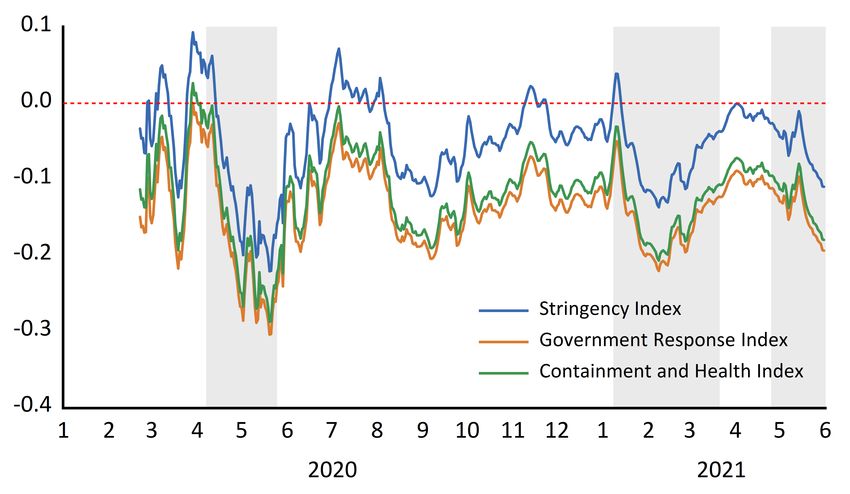
Figure 6 is the plot of time-varying coefficient β 1,t estimated from the FLS regression of
Equation (1). When the coefficients are below 0, it means that the government response can
effectively reduce Rt . During whole sample period, at most times, in Japan, the government
response has some deterrent effect on the COVID-19 epidemic. However, deterrent changes
over time. The gray-shaded area in Figure 6 indicates the period of emergency state in
Japan. The deterrent effect of the 1st emergency state (7 April 2020–25 May 2020) is clearly
stronger than the effect of the 2nd emergency state (8 January 2021–21 March 2021). Table 4
summarizes the average effect of emergency state on COVID-19 epidemic in Japan. The
average effect of government response during the period of emergency state is evaluated
as the average of regression coefficients during the corresponding period.
Table 4. Average effect of emergency state on the COVID-19 epidemic in Japan.
Stringency Index Government Response Index Containment and Health Index
1st Emergency State −0.11 −0.20 −0.18
2nd Emergency State −0.07 −0.16 −0.14
3rd Emergency State −0.06 −0.14 −0.13
From the above analysis, it can be said that the Japanese government’s response
on COVID-19 epidemic is basically effective. However, the effect of emergency state,
which extends to the third time declaration, is gradually weakening. During the period of
emergency state, the government is asking people to refrain from going out or traveling,
but it is thought that people have become accustomed to long period of emergency state
and have reached the limit of “patience”.COVID 2021, 1 283
Figure 6. Time-varying coefficient β 1,t in regression of Equation (1).
After obtaining β 1,t , we use it as a dependent variable in the following regression
equation with specific policy indicators. ∑i Indicatori,t means the set of policy indicators.
For example, β 1,t is the time-varying coefficients obtained from the regression of Rt on
government response index, and, if we put all 16 policy indicators that are aggregated in
government response index into the ∑i Indicatori,t , multicollinearity existing in these policy
indicators makes regression unfeasible. To avoid this difficulty, we use stepwise regression
proposed by [22] to choose the best subset of 16 policy indicators. If γi is negative and
statistically significant, the corresponding policy indicator can be identified as an effective
measure to control epidemic.
β 1,t = γ0 + γi ∑ Indicatori,t + ε t . (2)
i
Tables 5–7 give the results of variable selection and corresponding regression. A policy
indicator that has a statistically significant coefficients with negative sign is identified as
effective policy. From these results, we find that, under our identification framework, not
all policies may be effective in controlling the COVID-19 epidemic in Japan.
Table 5. Stepwise regression of policy indicators in government response index.
Variable Coefficient Standard Error p-Value
Constant −0.259 0.049 0.000
C1 −0.010 ** 0.005 0.054
C3 0.035 0.015 0.019
C5 −0.042 *** 0.009 0.000
C6 −0.033 *** 0.009 0.000
C7 −0.022 * 0.012 0.067
C8 0.004 0.005 0.446
H2 0.074 0.012 0.000
H3 0.036 0.019 0.060
H4 0.008 0.011 0.443
H6 0.031 0.009 0.000
H7 0.032 0.009 0.000
H8 0.018 0.011 0.108
E1 −0.047 *** 0.012 0.000
E2 −0.021 *** 0.005 0.000
*** p < 0.01, ** p < 0.05, * p < 0.1.COVID 2021, 1 284
From the regression results in Table 5, we can find that C1 (school closing), C5 (close
public transport), C6 (stay at home requirements), and C7 (restrictions on internal move-
ment) are statistically significant as the effective policies. E1 (income support for house-
holds) and E2 (debt/contract relief for households) are also effective. The finding that
economic support policies can reduce Rt is worth noting. During the pandemic, many
people lost jobs and had to go outside to find new jobs. Economic support, such as cash
payment and debt relief, can reduce the risk of infection by helping households through dif-
ficult times. Actually, the Japanese government provided 100,000 yen in cash to all residents
in 2020. The validity of this policy can also be confirmed from the above regression results.
Table 6. Stepwise regression of policy indicators in containment and health index.
Variable Coefficient Standard Error p-Value
Constant −0.106 0.041 0.009
C1 −0.004 0.005 0.352
C2 0.008 0.007 0.242
C3 0.034 0.016 0.030
C4 −0.008 0.011 0.478
C5 −0.027 *** 0.009 0.004
C6 −0.052 *** 0.008 0.000
C8 0.006 0.005 0.267
H2 0.041 0.010 0.000
H3 −0.032 ** 0.016 0.048
H6 0.032 0.009 0.000
H7 0.022 0.009 0.016
H8 −0.032 *** 0.009 0.000
*** p < 0.01, ** p < 0.05.
H3 (contact tracing) and H8 (protection of elderly people) are identified as effective
policies in the stepwise regression of policy indicators in containment and health index.
As a specific example of H3, the Japanese government is actively encouraging the public
to use the COVID-19 Contact-Confirming Application (https://www.mhlw.go.jp/stf/
seisakunitsuite/bunya/cocoa_00138.html, accessed on 1 June 2021). This application tracks
contacts with positive infections and reports those contacts to government agencies. In
addition, to protect the elderly people, most elderly and medical facilities have severely
restricted visits, given that elderly people infected with COVID-19 are more likely to
become severely ill. Containment policies, such as C5 and C6, still show the significant
effectiveness in this regression.
Table 7. Stepwise regression of policy indicators in stringency index.
Variable Coefficient Standard Error p-Value
Constant 0.006 0.026 0.809
C1 −0.018 *** 0.003 0.000
C2 0.014 0.006 0.013
C3 0.025 0.015 0.108
C5 −0.016 ** 0.007 0.026
C6 −0.045 *** 0.008 0.000
C7 −0.020 * 0.012 0.084
C8 −0.003 0.005 0.467
*** p < 0.01, ** p < 0.05, * p < 0.1.
From the regression results showed in Table 7, we can find that containment policies,
C5 (close public transport), C6 (stay at home requirements), and C7 (restrictions on internal
movement), are still the most effective methods to control the spread of the COVID-19
epidemic. Especially, C5 (close public transport) and C6 (stay at home requirements)
are two policies chosen in all 3 regressions of Equation (2). Note that, actually, in Japan,COVID 2021, 1 285
not all public transportation has been suspended. Public transportation is responding
to the COVID-19 epidemic by suspending operations, reducing flights, and advancing
the last train time at the request of the government. C6 (stay at home requirements) and
C7 (restrictions on internal movement) are old-fashioned methods to control epidemic,
but these methods are still the most effective. These methods limit the contact of people
to each other and reduce the risk of infection. Note that, although we have differences
among different regressions, we can summarize the common conclusion from these results.
Containment policies are the most effective methods to control the COVID-19 epidemic.
3. Discussion of Empirical Results
Given the empirical results obtained from previous analysis, we can conclude that
that the Japanese government’s response on COVID-19 epidemic is basically effective.
However, the effect is gradually weakening. This can be visually confirmed from Figure 5.
During the period of emergency state, the strategy of Japanese government to completely
control COVID-19 epidemic through the self-restraint of people has a temporary effect, in
the short term. However, given the fact that the period of emergency state is prolonged
now, we have to say that its effectiveness is doubtful. The Japanese government is required
to seek more effective strategies to control the epidemic based on the current laws and
administrative system. At the same time, we should note that the conclusion must be
explained in the context of the socio-political and health situation in Japan.
Recent research shows that the spread of COVID-19 can be affected by many other fac-
tors. Ref. [23] ’s analysis shows that geographical and climatic factors, such as temperature,
humidity, and latitude measurements, are consistent with the behavior of a seasonal respi-
ratory virus. Ref. [24] also confirms the seasonality in the spread of COVID-19. A further
important variable is characterized by the chronic exposure of the population to atmo-
spheric contamination which can affect the severity and spread of the virus. Refs. [25–27]
are typical works related to this topic. It is necessary to consider these factors when we
evaluate the government performance of fighting COVID-19.
The statistical models specified in this paper are one possible alternative to evaluate
the government response to COVID-19 and identify the effect of specific policy, but not the
only one. Just as what we mentioned in the previous paragraph, seasonality, geographical,
and climatic factors and environmental factors should be also considered. In the field of
economics, causal identification methods, such as difference in difference (DID), propensity
score matching, and discontinuity regression, have been widely used. Applying these
methods to identify the effects of infectious disease control measures is expected to be an
important research theme in the future.
4. Concluding Remarks
In this paper, we use the estimated effective reproduction number Rt of the COVID-19
epidemic to measure the severity of it. In addition, we use the OxCGRT to measure the
government response on COVID-19 epidemic. Our research objective is to figure out the
effect of Japanese government’s response on COVID-19 epidemic.
The main methodology is regression analysis with Rt and OxCGRT, including indices
and policy indicators. We confirmed the average effect by OLS regression, which means
that, on the whole, the Japanese government’s response to the epidemic is effective in
curbing the spread of the epidemic. However, time-varying regression with FLS method
shows that the effect is changing over time, specifically, gradually weakening. Finally,
stepwise regression identifies the effect of specific policy. At the time of submission,
the third emergency state is still ongoing, but the epidemic in Japan has not been fully
controlled. The OxCGRT indices in Figure 3 show that the Japanese government’s response
to the COVID-19 epidemic has not weakened, but the analysis in this article implies that
the Japanese government needs to take more powerful measures to control the spread of
this epidemic. The time-varying regression visualizes the effect of government response
on COVID-19 in a consistent and comparable way, but this method is not suitable forCOVID 2021, 1 286
comparison between different countries or regions. Panel data analysis, such as [15] is
more suitable in the context of international comparison.
Restricted by current laws and regulations, the Japanese government cannot restrict
the freedom of citizens to a greater extent, and restrict the flow of people or other economic
activities to curb the spread of the epidemic. The Japanese government has decided to hold
the Olympic Games in July, so it is necessary to seek more effective strategies to control the
epidemic based on the current laws and administrative system. Again, we have to note
that the empirical results and related policy implications should be explained in the context
of the statistical models proposed in this paper.
Funding: This research was funded by Rissho University Research Promotion and Regional Alliance
Centre Fund for supporting Research and Education (Type 3).
Institutional Review Board Statement: Not applicable.
Informed Consent Statement: Not applicable.
Data Availability Statement: All data used in this research is publicly open data. Any further
information will be available from the corresponding authors on request.
Conflicts of Interest: The author declares no conflict of interest.
References
1. Kissler, S.M.; Tedijanto, C.; Goldstein, E.; Grad, Y.H.; Lipsitch, M. Projecting The Transmission Dynamics of SARS-CoV-2 through
The Postpandemic Period. Science 2020, 368, 860–868. [CrossRef] [PubMed]
2. Chowell, G.; Nishiura, H.; Bettencourt, L.M. Comparative estimation of The Reproduction Number for Pandemic Influenza from
Daily Case Notification Data. J. R. Soc. Interface 2007, 4, 155–166. [CrossRef] [PubMed]
3. Cazelles, B.; Champagne, C.; Dureau, J. Accounting for Non-stationarity in Epidemiology by Embedding Time-varying Parameters
in Stochastic Models. PLoS Comput. Biol. 2018, 14, e1006211. [CrossRef] [PubMed]
4. Kucharski, A.J.; Russell, T.W.; Diamond, C.; Liu, Y.; Edmunds, J.; Funk, S.; Flasche, S. Early Dynamics of Transmission and Control
of COVID-19: A Mathematical Modelling Study. Lancet Infect. Dis. 2020, 20, 553–558. [CrossRef]
5. Dehning, J.; Zierenberg, J.; Spitzner, F.P.; Wibral, M.; Neto, J.P.; Wilczek, M.; Priesemann, V. Inferring Change Points in the Spread
of COVID-19 Reveals The Effectiveness of Interventions. Science 2020, 369, eabb9789. [CrossRef]
6. Wallinga, J.; Teunis, P. Different Epidemic Curves for Severe Acute Respiratory Syndrome Reveal Similar Impacts of Control
Measures. Am. J. Epidemiol. 2004, 160, 509–516. [CrossRef]
7. Cori, A.; Ferguson, N.M.; Fraser, C.; Cauchemez, S. A New Framework and Software to Estimate Time-varying Reproduction
Numbers during Epidemics. Am. J. Epidemiol. 2013, 178, 1505–1512. [CrossRef]
8. Chinazzi, M.; Davis, J.T.; Ajelli, M.; Gioannini, C.; Litvinova, M.; Merler, S.; Vespignani, A. The Effect of Travel Restrictions on
The Spread of The 2019 Novel Coronavirus (COVID-19) Outbreak. Science 2020, 368, 395–400. [CrossRef]
9. Thompson, R.N.; Stockwin, J.E.; van Gaalen, R.D.; Polonsky, J.A.; Kamvar, Z.N.; Demarsh, P.A.; Cori, A. Improved Inference of
Time-varying Reproduction Numbers during Infectious Disease Outbreaks. Epidemics 2019, 29, 100356. [CrossRef]
10. Nishiura, H.; Chowell, G. The Effective Reproduction Number as A Prelude to Statistical Estimation of Time-dependent Epidemic
Trends. In Mathematical and Statistical Estimation Approaches in Epidemiology; Springer: Dordrecht, The Netherlands, 2009;
pp. 103–121.
11. Chowell, G.; Brauer, F. The Basic Reproduction Number of Infectious Diseases: Computation and Estimation using Compartmental
Epidemic Models. In Mathematical and Statistical Estimation Approaches in Epidemiology; Springer: Dordrecht, The Netherlands,
2009; pp. 1–30.
12. Gostic, K.M.; McGough, L.; Baskerville, E.B.; Abbott, S.; Joshi, K.; Tedijanto, C.; Cobey, S. Practical Considerations for Measuring
The Effective Reproductive Number, Rt . PLoS Comput. Biol. 2020, 16, e1008409. [CrossRef]
13. Arroyo-Marioli, F.; Bullano, F.; Kucinskas, S.; Rondón-Moreno, C. Tracking R of COVID-19: A New Real-time Estimation Using
The Kalman Filter. PLoS ONE 2021, 16, e0244474. [CrossRef]
14. Hale, T.; Angrist, N.; Goldszmidt, R.; Kira, B.; Petherick, A.; Phillips, T.; Tatlow, H. A Global Panel Database of Pandemic Policies
(Oxford COVID-19 Government Response Tracker). Nat. Hum. Behav. 2021, 5, 529–538. [CrossRef]
15. Chen, L.; Raitzer, D.; Hasan, R.; Lavado, R.; Velarde, O. What Works to Control COVID-19? Econometric Analysis of a Cross-Country
Panel; Asian Development Bank Economics Working Paper Series 625; Asian Development Bank: Metro Manila, Philippines, 2020.
16. Abbott, S.; Hellewell, J.; Thompson, R.N.; Sherratt, K.; Gibbs, H.P.; Bosse, N.I.; Funk, S. Estimating the Time-varying Reproduction
Number of SARS-CoV-2 using National and Subnational Case Counts. Wellcome Open Res. 2020, 5, 112. [CrossRef]
17. Baum, F.; Freeman, T.; Musolino, C.; Abramovitz, M.; De Ceukelaire, W.; Flavel, J.; Villar, E. Explaining Covid-19 Performance:
What Factors Might Predict National Responses? BMJ 2021, 372. [CrossRef]COVID 2021, 1 287
18. Casini, L.; Roccetti, M. Reopening Italy’s Schools in September 2020: A Bayesian Estimation of the Change in the Growth Rate of
New SARS-CoV-2 Cases. medRxiv 2021. [CrossRef]
19. Nishiura, H.; Linton, N.M.; Akhmetzhanov, A.R. Serial Interval of Novel Coronavirus (COVID-19) Infections. Int. J. Infect. Dis.
2020, 93, 284–286. [CrossRef] [PubMed]
20. Park, M.; Cook, A.R.; Lim, J.T.; Sun, Y.; Dickens, B.L. A Systematic Review of COVID-19 Epidemiology based on Current Evidence.
J. Clin. Med. 2020, 9, 967. [CrossRef] [PubMed]
21. Kalaba, R.; Tesfatsion, L. Time-varying Linear Regression via Flexible Least Squares. Comput. Math. Appl. 1989, 17, 1215–1245.
[CrossRef]
22. Derksen, S.; Keselman, H.J. Backward, Forward and Stepwise Automated Subset Selection Algorithms: Frequency of Obtaining
Authentic and Noise Variables. Br. J. Math. Stat. Psychol. 1992, 45, 265–282. [CrossRef]
23. Sajadi, M.M.; Habibzadeh, P.; Vintzileos, A.; Shokouhi, S.; Miralles-Wilhelm, F.; Amoroso, A. Temperature, Humidity, and
Latitude Analysis to Estimate Potential Spread and Seasonality of Coronavirus Disease 2019 (COVID-19). JAMA Netw. Open 2020,
3, e2011834. [CrossRef]
24. De Natale, G.; De Natale, L.; Troise, C.; Marchitelli, V.; Coviello, A.; Holmberg, K.G.; Somma, R. The Evolution of COVID-19 in
Italy after the Spring of 2020: An Unpredicted Summer Respite Followed by A Second Wave. Int. J. Environ. Res. Public Health
2020, 17, 8708. [CrossRef] [PubMed]
25. Fattorini, D.; Regoli, F. Role of the Chronic Air Pollution Levels in The Covid-19 Outbreak Risk in Italy. Environ. Pollut. 2020,
264, 114732. [CrossRef] [PubMed]
26. Conticini, E.; Frediani, B.; Caro, D. Can Atmospheric Pollution be Considered A Co-factor in Extremely High Level of SARS-CoV-2
Lethality in Northern Italy? Environ. Pollut. 2020, 261, 114465. [CrossRef] [PubMed]
27. Domingo, J.L.; Rovira, J. Effects of Air Pollutants on The Transmission and Severity of Respiratory Viral Infections. Environ. Res.
2020, 187, 109650. [CrossRef] [PubMed]You can also read


