Parent Guide to HNHS 2021 - Havelock North High School Aim to excel Whaia te iti kahurangi
←
→
Page content transcription
If your browser does not render page correctly, please read the page content below

Havelock North High School
     Aim to excel
     Whaia te iti kahurangi

Parent Guide to HNHS 2021
                P.O. Box 8476, Te Mata Road, Havelock North
                  Telephone (06) 877 8129 Fax (06) 877 4079
                                 Email: office@hnhs.school.nz
                                          www.hnhs.school.nz
            1
TABLE OF CONTENTS
3    Encompass
4    Foreword by the Principal, Mr Fenton
5    Management Team
6    Staff
8    Guidance Network
9    House Tutors
     Te Waka Awhina Committee
10   Houses
11   Head Students
12   Student Representative on Board of Trustees and House Leaders
14   Enrolment Scholarship Winners
15   NCEA and 2020 Scholarship Success
17   Attendance
18   Communication with Parents/Caregivers - school emails
19   Encompass Programme
20   E-learning in the Classroom
21   Schoology
22   21st Century Vision for Teaching and Learning

24   Uniform
27   Year 9 and 10 Course Structure / Daily Timetable
28   Year 9 and 10 Diploma
29   Timetable and Courses / School Fees / Homework
30   2021 Reporting and Parent/Teacher Consultation Calendar
31   Citizenship
32   The Careers Centre
34   Code of Conduct and School Rules
35   Discipline Lines of Communication
36   Detentions / Detention flow chart / Daily Report
37   Complaints procedure for parents and students - procedure for making a formal
     complaint

38   Procedures for student who wish to make a formal complaint about harassment
39   Board of Trustees / Parent-Teacher Association
40   HNHS Foundation
41   Get involved

                                         2
3

MESSAGE FROM THE PRINCIPAL
                                   Dear Parents and Guardians,
                                   It is a pleasure to write the foreword to the 2021 Parent Guide.

                                   This manual should provide the guidelines by which to negotiate your way
                                   through our systems at Havelock North High School. I hope that it serves to
                                   answer any questions that you may have about your son or daughter’s education
                                   and also the daily operation of the school.

                                   Success at school as you will appreciate, is the result of a number of factors;
                                   none more important than the partnership that should develop between the
                                   school, the student and the family.

This partnership will shape the young person and determine how far they ultimately go in their learning at
secondary school. Academic achievement, like character development is an on-going and evolving process. Your
role as a parent and carer plays a big part in both of these areas.

Heraclitus, an ancient Greek Philosopher said that “Good Character is not formed in a week or a month. It is
created little by little, day by day. Protracted and patient effort is needed to develop good character”. Similarly
achievement in the classroom, on the stage or on the sports field involves building a sound foundation, and then
progressively adding to it.

Over the years I have become a fan of the writings of Stanford University Professor of Psychology, Carol Dweck.
Much of her research has been based around the concept of “growth mindset”, the idea that we can grow our
minds ability, to learn and to solve problems.

Her belief is that for many youngsters they attribute their learning to three factors: “luck, being dumb or being
gifted”.

Thoughts that put learning down to “luck, giftedness or being dumb”, certainly give us an insight into why many
young people may fail to fully reach their potential with their schooling. Learning requires effort, and if you are
attributing your learning or lack of it to “luck, or being dumb”, the likelihood of success is surely reduced. Equally,
putting learning down to “giftedness,” invariably means success is due to chance. Worse still, such thinking will
be dangerous, because those children who have been told they are gifted as youngsters, sometimes struggle to
cope when things get hard, and their status might be threatened.

We have a wonderful teaching staff here at the school. They will challenge the students to extend themselves,
but will also encourage them to be self-managing. We will endeavour to teach our youngsters strategies, to
understand that success requires effort and along the way may involve taking risks and making mistakes. As a
school this means giving students clear boundaries, order and predictability, but also the support to try out new
things.

Children crave routine and ritual and while they have a natural need for mastery of their world, without boundaries
it can become overwhelming and confusing. As a partner in this process, we ask parents to support the school by
ensuring that school expectations are being met, along with getting alongside the student in the many activities
they will be involved in.

As partners in this process I encourage you to ask questions of the school if you have queries, and I welcome
you to be part of the Havelock North High School experience as a contributor not as a bystander. We need you to
be part of this and to work with us alongside the student, to ensure they aspirations have are achieved.

It is a pleasure to welcome you into our school community and I look forward to meeting and talking with many of
you in the months ahead.

G Fenton

BEd, PG Dip Ed, MEd, Leadership (Hons), Dip Tchg

                                                           4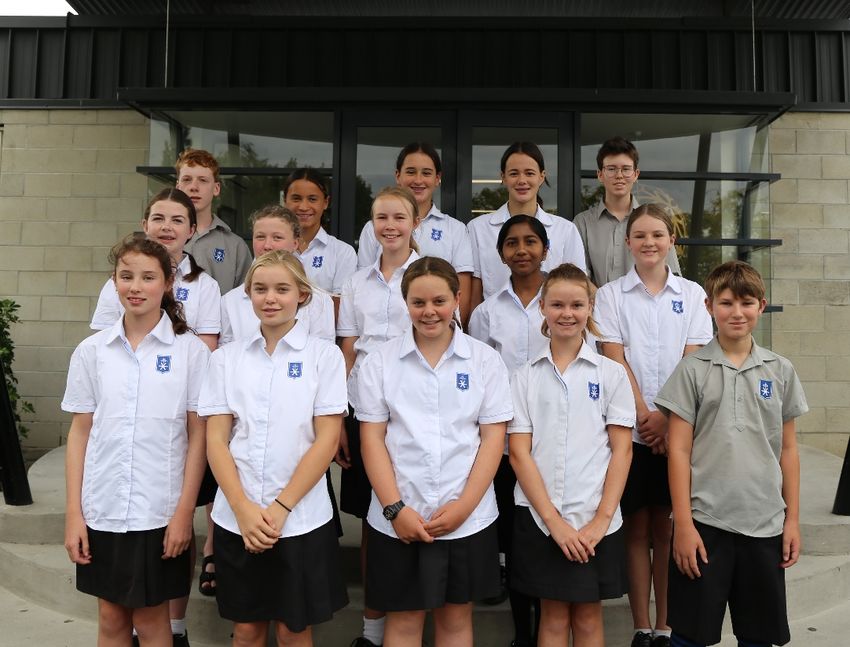
MANAGEMENT TEAM

    Mr G. Fenton               Mr J. Wilton                  Miss G. Sparling-Fenton
     Principal               Deputy Principal                   Deputy Principal
                                Portfolio:                          Portfolio:
                          Teaching and Learning             Student and Staff Welfare
                           • Curriculum Co-                   • Guidance
                              ordinator                        •   Learning Support
                            •   Supervision of I/T             •   Event Management

                            •   Encompass Co-                  •   Prizegiving
                                ordinator                      •   Coursing and
                                                                   orientation of new
                            •   Appraisal
                                                                   students
                            •   Student Leadership             •   Orientation of new
                            •   EOTC and Health and                staff
                                Safety                         •   Monitoring of
                                                                   attendance
                            •   Guidance

         Mr J Kitchin                                        Mr W Bird
     Assistant Principal                                 Assistant Principal
          Portfolio:                                         Portfolio:
 Operations and International                             NCEA and Data
           Students
• Timetable                                      •   Principal’s Nominee
•   Reports                                      •   Assessment Co-ordinator
•   House Competition                            •   Asttle testing and data analysis

                                       5
HAVELOCK NORTH HIGH SCHOOL TEACHING
            STAFF 2021
Principal:                       Mr G. Fenton, B.Ed, Dip.Ed. M.Ed.Leadership (Hons.), Dip.Tchg.
Deputy Principal:                Mr J. Wilton, M.SSL, B.Sc, Dip Tchg
Deputy Principal:                Miss G. Sparling-Fenton, B.B.S., T.T.Cert.
Assistant Principal              Mr J. Kitchin, B.Sc., B.Com., Dip.Tchg.
Assistant Principal:             Mr W. Bird, B.Sc., Dip.Tchg.

GUIDANCE NETWORK
Guidance Co-ordinator:           Miss G. Sparling-Fenton
                                 Mr J. Wilton

Guidance Counsellor:             Ms G. Evans-Love
                                 Mr C. Laubscher
Kauri House Tutor:               Mrs E. Cargill
Miro House Tutor:                Mrs C. Nowell-Usticke
Rata House Tutor:                Mr W. Drabble
Tainui House Tutor:              Mr J. Lloyd

ART DEPARTMENT
Head of Department:              Ms T. McSherry

Assistant Teachers               Mr M. Beamish
                                 Mrs C. Nowell-Usticke
                                 Ms K. Mines

BUSINESS STUDIES DEPARTMENT
Head of Department:              Mrs R. Hulls

Assistant Teachers:              Miss G. Sparling-Fenton
                                 Mr T. Petersen

CAREERS DEPARTMENT
Transition Services Manager:     Mrs H. Tasker

Careers Adviser:                 Mrs L. Fenton
Assistant Teacher:               Mr J. Kitchin

DRAMA DEPARTMENT
Head of Department               Mr M. Brebner

Assistant Teacher:               Mrs J. Hanham

ENGLISH DEPARTMENT
Head of Department:              Mr W. Barnes
Assistant Heads of Department:   Mr S. Murfitt
                                 Miss K. Wilson

Assistant Teachers:              Mr W. Drabble
                                 Ms N. Littley-Va’asili
                                 Mrs N. Lewis
                                 Mrs C. Thomas
                                 Miss E. Lythgoe
                                 Ms R. Zapasnik
                                 Mrs P. Hayes

LANGUAGES DEPARTMENT
Head of Department:              Mr S. Lowry

Assistant Teachers:              Mrs L. McLean
                                 Mrs A. Vennell
                                 Miss R Hapuku

                                                     6
MUSIC DEPARTMENT
Head of Department:                Mr R. Cargill
Assistant Teacher:                 Mrs E. Cargill

MATHEMATICS DEPARTMENT
Head of Department:                Mr S. Caldwell

Assistant Head of Department:      Ms A. Gonscak
                                   Mr A. Daley
Assistant Teachers:                Mrs H. Bell
                                   Mr F. Ramos
                                   Mr M. Baker
                                   Mr C. Thompson
                                   Mr W. Bird
                                   Ms M Van Groenewoud
                                   Mr C. Swain

PHYSICAL EDUCATION DEPARTMENT
Head of Department:           Ms F McDonald

Assistant Head of Department:      Mr K. Hokianga
Assistant Teachers:                Mr I. Johnson
                                   Mrs N. Johnson
                                   Mrs K. Loach
                                   Miss J. Waldin

SCIENCE DEPARTMENT
Head of Department: (Acting)       Mrs D. Taylor
Assistant Head of Department:      Mr M. McGovern
                                   Mrs M. Gertsch

Assistant Teachers:                Mrs N. Johnson
                                   Mr J. Lloyd
                                   Mr P. Lower
                                   Mrs L. Meagher
                                   Mr J. Wilton
                                   Ms J. Cummins
                                   Mrs A. Moys
                                   Mr F. Lumbreras
                                   Mr C. Swain

SOCIAL SCIENCES DEPARTMENT
Head of Department:                Mr S. Wallace

Teacher in Charge of History       Miss B. Jones
Assistant Teachers:                Mr J. Bradshaw
                                   Mr R. Townley
                                   Miss R. Hapuku
                                   Mrs C. Millar
                                   Miss K. Mines

SPECIAL NEEDS UNIT
Director:                          Mrs A Hames
Assistant Teacher:                 Ms L. Hargreaves

TECHNOLOGY DEPARTMENT
Head of Department:                Miss J. Pearson

Assistant Heads of Department:
 Design and Visual Communication   Mrs L. Baker
 Food and Nutrition                Ms K. McLennan
 Digital Technology                Ms S. Smith
Assistant Teachers:                Mr R Reiter
                                   Mr R. Hart
                                   Mrs S Newman
                                   Mrs A. Onekawa
                                   Mr C. Vose
LEARNING SUPPORT
SENCO:                             Miss E Lythgoe

                                                      7
GUIDANCE NETWORK
        Members of the Guidance network are the deputy principals, the guidance counsellors and house tutors:
DEPUTY PRINCIPALS:

                                     Miss G Sparling-Fenton                           Mr J Wilton
                                        Deputy Principal                           Deputy Principal
                                       ph 8778129 ext 723                         ph 8778129 ext 724
                                      spf@hnhs.school.nz                          wlt@hnhs.school.nz

GUIDANCE COUNSELLORS:

                           Ms Gaye Evans-Love              Mr Cameron Laubscher               Ms Nichola Jobson-Walch

                           Guidance Counsellor             Guidance Counsellor                  Guidance Counsellor
                                                           (part time)                         (part time Term I and II)

                            ph 8778129 ext 726             ph 8778129 ext 766             ph 8778129 ext 766

                           evn@hnhs.school.nz              lbs@hnhs.school.nz             jbs@hnhs.school.nz

Appointments: can be arranged by telephone or email. Students can also fill in a form that they leave in the locked box (located in the porch
of the prefab). The counsellors will send for the student when they have an appointment time available.

What happens in counselling?
Students can talk about their problems and concerns in a safe place with someone who will support them. When supporting students there are
times when they need to involve someone else. This is done with the student’s knowledge and permission. If a student, or someone else, is in
serious danger then there are times when the counsellors cannot keep this confidential because of their duty to prevent harm. If possible, they
should talk this through with the student before acting.

 A school guidance counsellor is                 School guidance counsellors (who             How counselling can help - a counsellor
 someone:                                        are members of NZAC (New                     can help students to:
 •   whom students can trust and be open         Zealand Association of                       •    improve how they feel about themselves
     with                                        Counsellors):                                •    think about things in new ways
 •   who listens carefully and sensitively       •   are professionally qualified             •     do things differently
 •   who is non-judgemental and will not         •   attend ongoing training                   •    reduce stress
     blame the student for the problem           •   have a supervisor (someone who            •    open new options or directions
 •   who will try and see things from the            supports them in their work)              •    plan and set goals
     student’s point of view                     •   follow a set of rules called a Code of    •    explore thoughts, feelings and behaviour
 •   who encourages students to make                  Ethics which means they are bound by     •    get to know themselves better
     their own decisions                              confidentiality                          •    improve relationships
 •   who will support students in any                                                          •    resolve issues of concern
     changes they decide to make
 •   who will offer to refer students to other
     help if necessary
Guidance programmes: These are organised each year depending on demand and resources available. They may include group activities
around issues such as grief and loss, healthy relationships, self-esteem, and managing conflict.
Public Health Nurse: we have a nurse available to see students once a week for any health related concerns. Sessions are confidential although
students are encouraged to share any concerns they have with their families. We also take referrals for vision and hearing concerns. The
counsellors are happy to share information about support available or link in with other community support.

                                                                         8
HOUSE TUTORS
There are four houses in the school and each house has a house tutor, whose responsibility it is to help students with problems
they may be encountering and to liaise with home.
House tutors may be contacted by phoning the school or by leaving a phone message so that the house tutor can return your
call.
 Tainui House                    Miro House                      Rata House                      Kauri House

 Mr James Lloyd                  Mrs Chloe Nowell-Usticke        Mr Wyn Drabble                  Mrs Emily Cargill
 lld@hnhs.school.nz              nwl@hnhs.school.nz              drb@hnhs.school.nz              crg@hnhs.school.nz
 ph 8778129 ext. 741             ph 8778129 ext. 741             ph 8778129 ext 742              ph 8778129 ext 742

    You should ring your child’s House Tutor if you are worried about your child’s progress, behaviour,
                                         course, homework, etc.

                     TE WAKA AWHINA COMMITTEE
 The Te Waka Awhina Committee looks after, and promotes, the interests of Māori students and whanau. The
 committee is made up staff members who regularly consult and meet with students and whanau. Tasks include
 the development of policies to support Māori education at Havelock North High School, the gathering of data
 about Māori educational achievement, implementation of school goals around Māori educational achievement
 and consultation with whanau.
 If you would like to know more about the work of Te Waka Awhina, or would like to join a Māori parent support
 group, then please contact Warren Bird, chair of Te Waka Awhina.

                                                                 Warren Bird (Assistant Principal)
                                                                 Gaye Evans-Love (Guidance Counsellor)
                                                                 Nicola Littley- Va’asili (English teacher/Head of Kauri
                                                                 House)
                                                                 Tessa McSherry (Head of Visual Arts)
                                                                 Kaine Hokianga (Physical Education teacher)
                                                                 Ripeka Hapuku (Te Reo teacher)
                                                                 Chloe Nowell-Usticke (Visual Arts teacher)
                                                                 Andrea Wilson (Cultural Co-ordinator)

                       Whare Kahurangi

                                                            9
Tainui Kauri Rata Miro

 Much of the organisation of the school is centred on the House system. On the very first day of
   school students are placed in their House and, as well as attending House assemblies, will
   represent that House with pride in a number of school-wide activities such as athletics and
 swimming sports. House spirit is strong and Houses compete keenly to win the Patu each year.
           In 2020 it was a hard fought contest with Rata coming out on top over Miro.
 This year the swimming sports were on Wednesday the 12th of February at the Village Pool and
                  the athletics sports are on Friday 26th February here at school.
  Other activities throughout the year are house choir competition (which alternates with house
kapa haka), and may include some of the following; orienteering, life skills, football, touch rugby,
                                  netball, triathlon, theatre sports.

                                       Heads of House

        Kauri                    Miro                        Rata                  Tainui
  Mrs Nicola Littley-      Mr Stephen Lowry          Mr Julian Lumbreras    Mr Jeremy Bradshaw
       Va’asili

                                                10
HEAD STUDENTS 2021
Head Girl Head Boy
Rosemary Yorke Munya Marufu
What are your goals as head student of this school? What are your goals as head student of this school?
To ensure each student has a growth mindset towards their To create an inclusive and nurturing environment at school
education by providing a supportive and encouraging school that allows students to freely express their interests and
environment where every pupil feels comfortable to express pursue their dreams. I also want to develop myself as a
individuality and interest. As well as leading by example, by person and learn to practice discipline and to lead a
participating in everything this role has to offer. satisfying life.
Why did you put your name forward for this position? Why did you put your name forward for this position?
Throughout high school I’ve had the opportunity to work with I have always wanted to be a head boy because I have
some amazing leaders who have hugely impacted my attitude always felt comfortable in the forefront of activities.
towards leadership. For me the role of Head Girl was a way to Leadership is in my blood as both my parents were head
pass on the qualities I have learnt to the younger students of students. I hope my brother and future children will
our school, additionally sustaining our reputation as an continue with this legacy.
inclusive and positive place to learn and grow.
What are some of your achievements at Havelock North What are some of your achievements at Havelock
High School? North High School?
During my time at Havelock North High School I have gained I have only been at this school for 1 year and 10 months
NCEA Level 1 and 2 with Excellence Endorsement, along with so I do not wield as impressive a school record as my
the Year 9 and 10 diplomas. I have received principal sports, partner Rosemary. However in this short time I have
cultural and house awards over my four years and was managed to adapt to an entirely new school system, and
awarded prize in Level 1 Maori and Level 2 Physical Education way of life, and gained NCEA Level 1 and 2 endorsed with
and Geography. As well as the Kahurangi award for merit. I have solidified myself as a valuable member of a
outstanding contribution to Tikanga Maori, Mana Korero and school debate team. My most impressive achievement to
Kapa Haka. date is being named Head Boy.
What subjects are you studying this year? What subjects are you studying this year?
English, Statistics, Biology, Geography and Physical Education English, Calculus, Physics, Media Studies and Digital
Technology.
What is your career plan? What is your career plan?
Currently I am quite interested in health science (working in Computer Science Degree (Software Engineering) t
public health units, or with Maori health organisations). Auckland University with the aim of becoming an an Ai
developer or robotics engineer.
What extra-curricular activities are you involved in? What extra-curricular activities are you involved in?
Football, touch rugby, highland dancing, adventure racing, Football and debating.
running, kapa haka and dance.
Who has helped you to be where you are today? Who has helped you to be where you are today?
I have incredibly supportive parents, Jennifer and Tim, who My parents Tariro and Godwin Marufu have been great
have taught me to be compassionate to anyone from any walk inspirations and supporters of me all my life. They teach
of life and to always give 100%. I would also like to me invaluable life lessons and how to be grateful for the
acknowledge whaea Matthews who introduced my passion for amazing position I find myself in. My friends have also
tikanga maori and offered me a different viewpoint on how been my biggest supporters, and, last but not least the
communities and leaders can work together to create harmony teachers who have believed in me and given me many
(reretau). chances even if I may not have deserved them. So for all
the above, I am forever grateful.
11Congratulations to our 2021 student leaders and the student representative on the
Board of Trustees
Board of Trustees Student Representative
Rani Williams
HOUSE LEADERS 2021
MIRO HOUSE LEADERS MIRO DEPUTY HOUSE LEADERS
Amira Gardiner Ben Rush Charlotte McLagan Flynn Dunkerley
em
RATA HOUSE LEADERS RATA DEPUTY HOUSE LEADERS
Caitlin Hedge Max Buller Ruby Rainger Alex van Oeveren
12HOUSE LEADERS 2021 ctd
KAURI HOUSE LEADERS KAURI DEPUTY HOUSE LEADERS
Suzanna Haliburton Rogan Ross Natalya Dender Michael Henrich
TAINUI HOUSE LEADERS TAINUI DEPUTY HOUSE LEADERS
Holly Renwick Adam Engelke Hannah O’Herlihy Nicholas Waitoa
13ENROLMENT SCHOLARSHIP WINNERS 2021
Havelock North High School would like to congratulate those Year 9 students who are recipients of the
Havelock North High School Foundation Scholarships.
The criteria for awarding these scholarships was for Year 8 students to submit a curriculum vitae.
Front Row: L-R: I McKeefry, K Mathieson, M Wilton, L McLagan, A Potter
Middle Row L-R: E Rimmer, N Horsfall, S Ogborn, F Begum, R Fyfe
Back Row: L-R: B Stanley, M Day, K Turei, E Ellis, A Palmer
P Wills
Academic Scholarship All-round Scholarship Leadership Scholarship
Ben Stanley Roxy Fyfe Angus Potter
Faheemah Begum Katie Mathieson Savannah Ogborn
Amelia Palmer Pippa Wills Emma Ellis
Lucy McLagan Mily Day
Niamh Horsfall Isabella McKeefrey
Mabel Wilton
Katelyn Turei
Emma Rimmer
142020 NCEA RESULTS
Havelock North High School students performed very well in NCEA last year,
Year Havelock North High School National
L1 L2 L3 UE L1 L2 L3 UE
2020 77.0% 89% 74% 62% 70% 79% 71% 52%
Level 1 Level 1 Level 1 Level 1
Literacy Numeracy Literacy Numeracy
2020 93% 88% 85% 83%
These results have been achieved while maintaining integrity with a significant number of students
having a balanced course involving internal and external assessments.
Note: From 2018 statistics for all schools were calculated using a different method.
This method includes all students who attend school for 70 days or more, all students who left during the
year and students in the Special Needs Unit.
We continue to achieve high success rates.
2020 Dux
Oscar Moriarity
2020 Proxime Accessit
Amanda Kelly
152020 SCHOLARSHIP WINNERS
In the past five years we have observed a trend of students placing more store on seeking out scholarships that
universities award directly to students; these scholarships are awarded to students who demonstrate all round
academic ability, and who are involved in a range of co-curricular activities. At the start of this university academic
year, 24 HNHS students will head off to their tertiary study with a scholarship ranging in value from $500 to
$35,000 a year. Compared with the prizes awarded for NZ Scholarship, students are seeing this as a more realistic
and achievable objective, while still wanting to maintain their involvement in co-curricular activities, hold down a
part-time job and weighing up the large work-load that goes into preparing for the NZ Scholarship.
The opportunity to enter for NZ Scholarship is something that we still value as a school and is a way that our top
academics can challenge themselves and be recognized for their hard work and talent. Staff continue to provide
tutorial assistance and encouragement for these students; however, the anxiety that is being attached to high
volumes of assessment, the competing demands on the time of young people and the desire to be well rounded
individuals, saw far fewer students register for NZ scholarship at HNHS in 2020 than in previous years.
14 Scholarships (2 outstanding)
HNHS is exceptionally proud of all of our students who achieved NCEA
last year and especially those who gained scholarships.
Congratulations to the nine students who, between them, gained fourteen scholarships, including two
outstanding scholarships, in 2020. Special mention must go to Oscar Moriarity, Dux in 2020, who gained five
scholarships, including one outstanding scholarship, to add to the four scholarships he gained in 2019 as a year
12 student. Special mention should also go to Cindy Wang, a year 11 student who gained one scholarship,
Jesse Perrott who gained an outstanding scholarship and two year 12 students who gained scholarships; Jena
Gregory and Eric Buurmans.
Oscar Moriarity Will Tidswell Cindy Wang Jesse Perrott Jena Gregory
Outstanding Scholarship in Scholarship in Outstanding Scholarship in
Scholarship in Statistics and Statistics Scholarship in Biology
English, Photography English
Scholarship in
Media Studies,
Economics,
Classical Studies
and Religious
Studies
Rani Williams Eric Buurmans Harrison Ella Roberts
Scholarship in Scholarship in Bainbridge Scholarship in
Biology Design and Visual Scholarship in Accounting
Communication Accounting
16ATTENDANCE
It is important that all students attend school regularly. Absences from school can have a serious detrimental effect on learning.
We monitor absence from school carefully and parents are asked to assist with this monitoring by:
• ringing the school to tell the school about why your child is absent and how long they will be away from school
• writing a note or email office@hnhs.school.nz to explain their absence when they return to school
• phoning the school and keeping us informed if your child’s illness continues for longer than two days. You may be asked to
present a medical certificate.
• considering very carefully whether you should give your child permission to be absent. For example, family holidays at times
other than school holidays can be extremely disruptive to your child’s learning and he/she may miss important assessments
at senior level. Such absences are not condoned.
The school does not condone one-day absences for occasions such as cricket internationals or A & P Show day.
Students are expected to attend school unless they are sick. We send text messages to parents through our early notification of
absences system if their child is absent without explanation. Text messages are sent from our office at approximately 11.30 am.
Students who have been marked absent without explanation for periods one and two will generate a text message to the primary
caregiver. If that person does not have a cell phone the text will be sent to the secondary caregiver. Parents are able to reply by
text, giving an explanation for the absence. Parents can also ring the school if they believe that their child is at school even though
the text is indicating they are absent.
If you have not given the school your cell phone number or the information we have is out of date, please forward details
to the school office.
We endeavour to ensure that text messages sent out are accurate. From time to time parents may receive a text message when
in fact their child is on a legitimate school trip or explained absence. We do our best to ensure the accuracy of our absence
checks and parents have indicated a high level of satisfaction with this early notification scheme.
If you do not own a cell phone, then please continue to ring the school in the morning to inform us of your son or daughter’s
absence and provide them with a note or email to their form tutor the next day. All absences are checked and followed up each
week by form tutors.
Where there are ongoing truancy problems, the school will seek the help of truancy officers and, if necessary, other agencies, to
assist in getting the student to school.
Year 13 students have attendance privileges. Year 13 students who have study periods in the first or last period of the day may
come to school at the beginning of period two or leave school early. However, if they have study periods at any other time in the
school day, they are expected to remain in school. Year 13 students may leave the school grounds at lunch time but may not use
their motor vehicles.
Lunch time attendance
All students, except Year 13 students, must remain in the school grounds throughout the lunch hour unless they have a note from
their parents to explain why they need to leave school. No student has permission to leave school every lunch hour. When
students do go out of school at lunch time or any other time during the school day, they must sign in and out at the Student Centre.
If you have any concerns about your child’s attendance please contact Miss G Sparling-Fenton or Mr Joel Wilton, Deputy
Principals, or your child’s house tutor.
Illness at school
If your child becomes ill during the school day they should report to the staff member on duty at the student centre or they will be
taken there by their teachers. If the child is so unwell they are unable to return to class, parents will be rung to come and take
them home. If the child goes to hospital parents will immediately be informed. When the school is unable to contact parents, we
will then try to make contact with the emergency contact indicated on the enrolment card.
Serious health issues
Some students have serious health issues which arise and may require specific attention. We ask parents to inform the school
so that we can provide the best care for your child. You can inform the school, if we were not informed at enrolment, by ringing
the Deputy Principals or the Guidance Counsellor, Gaye Evans-Love.
17cOMMUNICATION WITH PARENTS/CAREGIVERS
We endeavour to keep parents informed of school activities
and the progress of your child in a number of ways.
• School newsletter – emailed out monthly in term time.
• School reports – emailed out (dates included in this
manual)
• Parent-teacher consultation meetings – dates
included in this manual.
• Phone contact – We would like you to ring the school,
877 8129, or make an appointment to see us if you have
any matters you wish to discuss. The following people
will be happy to talk issues over with you:
- Greg Fenton (Principal)
- Joel Wilton (Deputy Principal)
- Glenys Sparling-Fenton (Deputy Principal)
- Gaye Evans-Love (Guidance Counsellor)
- James Lloyd (Tainui House Tutor)
- Wyn Drabble (Rata House Tutor)
- Chloe Nowell-Usticke (Miro House Tutor)
- Emily Cargill (Kauri House Tutor)
SCHOOL EMAILS
Havelock North High School regularly emails parents Parents and caregivers who have provided an e-mail
and caregivers. Emailing is intended to help keep address on their child’s enrolment form will
parents and caregivers better informed about the events automatically receive school emails.
occurring within our school community.
All of our formal school documentation is sent via email, Please ring the school office if you did not write an
including school reports and newsletters. Families who email address or it has changed since enrolment.
do not have access to the internet may request a paper Alternatively email the school office at
copy of the school reports by contacting the school office@hnhs.school.
office.
18ENCOMPASS PROGRAMME
OVERVIEW
The Encompass Programme refers to a course of study that has been developed for the students of
Havelock North High School. The programme starts in year 9 and continues through until students leave
the school in year 13. While the content of the programme has been developed over a number of years it
was the timetable structure introduced in 2018 that allowed the school bring the course to fruition.
As part of the timetable every staff member and student in the school engages in the Encompass
Programme from 12.00 – 12.50pm (50 minutes) every Thursday afternoon. Students grouped randomly
rather than in core classes. The random grouping reflects the holistic learning environment and real-world
learning community that the programme endeavours to provide.
Throughout the programme staff and students share the learning experience and engage in a co-
constructed programme that follows a theme throughout the year. A project or series of small projects
offer students an opportunity to explore the themes by developing tangible outcomes. Throughout the
journey, staff and students develop their understanding and competence with a range of soft skills and it
is the development of these skills that is the ultimate outcome of the programme.
The Encompass Programme recognises that globally there is an emerging understanding of the
importance of providing students with the opportunity to develop soft skills alongside the content
knowledge traditionally delivered. Appreciating this global shift in education and establishing a school
wide response provided the motivation to develop the Encompass Programme.
To thrive in the 21st century, students need more than traditional academic learning. They must be adept
at collaboration, communication and problem-solving, which are some of the skills developed through
social and emotional learning (SEL). Coupled with mastery of traditional skills, social and emotional
proficiency will equip students to succeed in the swiftly evolving digital economy. The Encompass
Programme provides a time in the school week to develop these increasingly important attributes.
19E-LEARNING IN THE CLASSROOM
Modern and Blended Learning
We believe that a ‘blended’ approach to teaching and learning is the most appropriate way to deliver the
curriculum in the 21st century. Blended learning classrooms use the best of both worlds - digital and paper
- to support learning. The focus is on learning rather than the device.
When and how a digital device is used is dependent on the learning intentions for each lesson. Our staff recognise
the important role that digital technology plays in engaging our 21st century learners, accessing information, and
collaborating and sharing with others.
Havelock North High School operates an open BYOD (Bring Your Own Device) environment for all staff and students.
Years 9 -13 students are required to have a digital device suitable for the classroom with them every day. Our state
of the art network infrastructure provides access to the school network and the internet via a site-wide wireless
network. Students can work on any device using any platform in any classroom or learning area around the school.
Alongside the hardware, we offer all staff and students access to a range of school-specific digital tools to assist with
teaching and learning. This includes Schoology, Google Apps for Education and the full suite of Adobe Creative
Cloud software.
An increasing number of subjects in the senior school require students to have their own personal digital device and
to have a personal licence to subject specific software. Details of these subjects and their requirements can be found
in the Senior Course Booklet on our website.
20Schoology
Schoology is an exciting addition to the digital environment at Havelock
North High School. Schoology is a Learning Management System based
on a social networking model. It encourages collaboration and
communication between teachers and students to assist teaching and
learning.
Schoology is also a key organisational tool for students at Havelock North High School. All daily notices are displayed
on Schoology and students are required to check their updates every morning. All homework activities will be added
to students’ Schoology calendars in 2021. The Schoology calendar also displays events and activities for the various
groups that a student is part of e.g. sports matches and music rehearsals.
Parents have the ability to access their child’s Schoology account as ‘advisors’. This means that parents
are able to assist students to meet their homework deadlines and manage their commitments, as well as
viewing some of the work being done in classes each day.
2121st Century Vision for Teaching and Learning
With a blended approach to teaching and learning we aim to develop the higher order thinking skills that are so
important for young people today. To experience success in school qualifications, tertiary study and in the workplace,
students must be able to do more than simply learn new ideas.
Higher order thinking requires students to make connections between ideas and to apply concepts to new and
challenging situations.
Digital technology helps staff and students to develop higher order thinking by offering learning activities and contexts
that were not previously available. These are well summarised in the four key elements of our IT vision:
Engagement - Students use technology to construct and share knowledge in ways that may have been
impossible without technology. Teachers encourage students to use a range of tools to construct
new pieces of work.
Creativity - Students can confidently select from a range of tools to develop and present their work. IT tools
offer staff and students teaching and learning opportunities and outcomes not possible without
technology.
Collaboration - Students regularly use tools for collaboration with peers and experts, irrespective of time zone
or distance. Staff and students work in collaboration outside the classroom. Parents are given the
information they require to support teaching and learning.
Reflection - Students and parents regularly use technology tools to set student goals, monitor progress and
evaluate performance. Students develop the digital literacy required to participate in and
contribute positively to society.
22Buying the Right Device
We encourage and support
students to bring a personal IT
device to school for use in the
classroom. Having a tablet,
laptop or other digital device is
a requirement for our junior
students. A number of senior
subjects require students to
own an appropriate digital
device that is capable of
having software loaded locally.
This means that while an android tablet, iPad or Chromebook may suffice in junior school, it is unlikely to be suitable
for use after year 10.
Parents intending to purchase a digital device for their son or daughter should consider carefully a number of
specifications that need to be met. Below is a list of specifications that need to be considered along with our
recommendations:
• Battery Life – Should last 6-8 hours to be able to get through a school day without recharging.
• Weight – Should be light enough for your son or daughter to carry around all day, anything more than 1.5kg
including the case might be too heavy.
• Wireless – Must be dual-band capable, and state that it has a/g/n, or a/b/g/n.
• RAM – Should be 4GB or more for laptops and 1GB or more for tablets
• CPU – Faster is usually better, but may also reduce battery life. Intel Atom CPUs mean longer battery life,
and Core i5 or i7 are more powerful but reduce battery life, so discuss your needs with the supplier.
• Hard Drive – SSD hard drives are the only hard drives suitable for use in a school environment.
• Robustness – Your device should be strong enough to survive a low fall onto a hard surface.
• Anti-virus Software – Anti-virus and anti-spyware software is essential to protect the data on the device,
and prevent the device being used to spread this malware to other devices at home or at school.
While most internet-capable devices are suitable for use in the classroom, mobile phones are not considered an
appropriate tool for the classroom. This is due to the small screen size and limited functionality. Occasionally
teachers may allow the use of mobile phones for videoing and photographing work and simple internet research
tasks.
Student-owned Devices
The advantages for students bringing their own devices are many and varied. A student-owned internet-capable
device can be an important part of a student’s toolkit, giving them instant access to unlimited resources and enabling
them to support, extend, communicate and share their learning in a way that will prepare them for the future.
Advantages of students using their own personal digital device include:
• Anytime, anywhere access to unlimited resources and information on the internet
• Anytime, anywhere access to class resources, support and extension activities through Schoology and
Google Apps
• The ability to access and contribute to a wider (global) learning community
• The ability to draft, redraft and publish work at the click of a button
• Allowing students to become active partners in their learning
• The ability to develop competency with subject specific software outside of school hours e.g. Adobe
Photoshop, PremierPro and InDesign
23UNIFORM
Acceptance of the rules relating to the wearing of school uniform is a condition of enrolment.
Please note that pupils are required to be in correct uniform on their way to and from school.
The uniform is available exclusively from the Havelock North High School uniform shop, ‘Threads’, on the school
campus.
BOYS’ UNIFORM
Formal Uniform
(Compulsory for Year 13 students)
Day-to-day uniform Students at other levels are permitted to Physical Education Uniform
wear formal uniform throughout the year as
an alternative to the day-to-day uniform).
Shorts Grey regulation shorts Trousers Grey regulation trousers Years 9, 10 and 11 Boys and Girls
White regulation long-sleeved (NB: This uniform will form the basis of the sports
Shirt Grey Aertex shirt Shirt uniform for all teams other than first teams; athletics,
shirt
badminton, cricket, cycling, football, hockey, netball,
Jersey Blue regulation ‘v-neck’ pullover Tie Regulation school tie softball, squash, table tennis, tennis, volleyball.)
Sandals Regulation style (see website) Socks Plain black socks
Shorts Plain black logo regulation shorts
Shoes Regulation style (see website) Blazer Regulation school blazer
Shirt Regulation school physical education top
Socks Grey regulation school socks Belt Plain black leather
School Cap Compulsory Terms 1 and 4
Regulation navy Canterbury
Jacket
jacket
GIRLS’ UNIFORM
Grey regulation skirt
UNIFORM SHOP
Skirt (NB: Skirt must be knee Skirt Grey regulation skirt
length)
White regulation short-sleeved White regulation long-sleeved
Blouse Shirt
blouse
Blue regulation zip front
blouse
Opening hours
Cardigan Tie Regulation school tie
cardigan Mondays 1.00 – 3.15 pm
Black tights may be worn in
Sandals Acceptable styles (see website) Tights
winter
Wednesdays 1.00 – 3.30 pm
Shoes Acceptable styles (see website) Blazer Regulation school blazer Thursdays 1.00 – 3.15 pm
Socks Plain white ankle sock The uniform is available exclusively from
Black tights may be worn in the Havelock North High School uniform
Tights shop.
terms 2 & 3
School Cap Compulsory Terms 1 and 4 Any queries please phone:
Andrea Wilson
Regulation navy Canterbury
Jacket 027 410 8920
jacket
Uniform Shop Manager
24DRESS CODE
YEAR 9 – 12 STUDENTS
The following list outlines the school’s expectations:
• School uniform must be worn correctly at all times
• Extreme hairstyles are not acceptable, either in length or colour
• Boys must be clean-shaven
• Shoes must be regulation style (see website)
• Jewellery is not permitted.
This includes, but is not limited to, rings, bracelets, necklaces etc
• Piercings are not permitted.
This includes, but is not limited to, lip, nose, gum, eyebrow and tongue.
• Earrings – ONLY ONE silver, or gold, stud, or sleeper, in each lobe
• Tattoos must be covered
• The only approved jacket is the regulation school jacket and they are not to be worn in
classrooms
• No scarves, hoodies or beanies in winter
• No make up to be worn
• No nail polish to be worn
Infringements of these rules are subject to a
detention and contact is made with
parents/caregivers.
Students who persistently infringe these rules may
be subject to a stand down.
25YEAR 13 DRESS CODE
Formal Uniform
All year 13 students must have a complete set of the formal school uniform - ‘number ones’. The details of the
formal school uniform can be found on the school website. Students must have their own school tie which must be
purchased from the school uniform shop.
Year 13 students have the option of either:
A. wearing the regulation uniform or
B. wearing mufti, provided that such is clean, neat, tidy and appropriate for schooling.
If the mufti they are wearing is unsuitable, students will be required to return to uniform.
In choosing to wear mufti, year 13 students must remember that they are important role models to the junior
school. What they wear, and how they wear it, has considerable effect upon the way students still in uniform wear
that uniform.
Students choosing to wear mufti are required to meet the above code, taking note of the
following points.
1. Items of school uniform may NOT be worn with mufti.
2. Emphasis will be on the condition of clothes and overall presentation. Singlets may not be worn by either sex.
Strapless tops, three-quarter tops and strap singlets are not to be worn. No bare midriff clothes are to be worn.
Clothing worn by all students should be modest at all times.
3. Items of clothing must not carry slogans or pictures that run contrary to the spirit and rules of the school or that
could be considered objectionable, e.g. liquor advertising or unacceptable language.
4. Shoes/sandals must be worn at all times. No slippers, rubber/plastic jandals, ugg boots, gum boots, steel cap
boots.
5. Jewellery and light makeup may be worn as long as it is in good taste.
Discreet ear piercing is acceptable. Any other body piercing, jewellery or tattoos are not allowed.
6. Extreme hairstyles are not acceptable, either in length or colour.
7. Hats, caps and sunglasses must not be worn in the classroom.
8. Boys must be clean-shaven.
9. Trousers/jeans must be clean, tidy, plain and even-coloured. The following are not acceptable – frayed edged
garments, ripped garments, studs, chains, ‘fat’ pants or pyjamas.
10. Shorts to be neat, plain coloured and no shorter than mid-thigh. Beach shorts, surf shorts, running shorts or
brief shorts are not acceptable for boys or girls.
Rather than compile an extensive list of clothing Students refusing to accept a ruling on
which may or may not be appropriate, students appropriateness of clothing will be subject to
must understand that staff will be arbiters of what is stand-down. Persistent offenders will have
and what is not acceptable. If clothing or their right to wear mufti withdrawn.
presentation is deemed inappropriate, the wearer
will be sent home to change. We have the right to
add to this list at any time.
26YEAR 9 AND 10 CORE CLASS STRUCTURE
The structure of the Year 9 and 10 core classes is shown in the table below. A considerable amount of time is spent
each year arranging students in classes to establish the best and most academically challenging learning
environment.
• In Year 9 we take into account the information from • In Year 10 the Guidance team considers the class
interviews with the staff at contributing intermediate groupings and carefully rearranges the classes to
schools, student interests and hobbies, good and ensure a positive and challenging learning
bad student combinations and asTTle test results. environment is offered to each student. The
classes are balanced for gender, learning needs
and behavioural demands.
Year 9
905 Learning Support Class
Group of students carefully selected in consultation with the school SENCO.
904
Extension Class
Students were selected for the extension class based on their asTTle results and in consultations
with the contributing intermediate schools. Each student shows a high level of ability in both English
and Maths.
The composition of 904 is fixed and the same for each subject.
901, 902, 903,
Mixed ability classes.
906, 907 and
908
Year 10
1005 Learning Support Class
Group of students carefully selected in consultation with the school SENCO.
(1003) and Extension in English, Maths, Science and Social Studies
(1004) These classes contain extension and other less able students. They are not called 1003 and 1004
as the composition of the classes changes for each of the core subjects.
Two classes of each core subject run at the same time. One of the classes will run as an extension
class while the other operates at a standard mixed ability level. This allows the flexibility to offer
extension programmes in each subject.
The class composition changes depending on the subject.
1001,1002,
Mixed ability classes
1006, 1007
and 1008
DAILY TIMETABLE
8.45 - 9.40 am - Period One
9.45 - 10.40 am - Period Two
10.40 - 11.00 am - Interval
11.05 - 12.00 noon - Period Three
12.05 - 1.00 pm - Period four
1.05 - 1.20 pm - Form Time
1.20 - 2.10 pm - Lunch Time
2.15 - 3.10 pm - Period Five
1. A five-minute "transit time" is allowed between Period 1 and Period 2, Period 3 and Period 4, and between
Period 4 and Form Time.
2. A bell will be sounded at the beginning and end of each period and five minutes before the beginning of the
first, third and fifth periods.
27YEAR 9 AND 10 DIPLOMAS
Each Year 9 and Year 10 students works towards a diploma, which is presented
at the end of the school year. An example of a Year 10 Diploma follows.
28TIMETABLE AND COURSES
The timetable is organised on a ten-day cycle of five this point, class size becomes a significant factor in the
periods per day. This enables the school to meet its decision.
obligations to provide instruction in all essential learning Thus, the senior timetable is driven by student subject
areas of the junior curriculum as fully as possible. The choice, rather than students making choices from a fixed
timetable also has to make it possible for students to study list. Classes are placed in the six timetable lines according
at different levels in the senior school and to accommodate to the demand and the availability of teachers and
the needs of particular courses such as the Gateway specialist rooms. Because some classes occur just the
programme. once and some are restricted in size, it is not always
For year 9 students, the curriculum is compulsory, although possible to meet the subject requests of every student. As
there is an element of choice for languages. Year 10 the timetable evolves, changes are made to subject
students have option choices for a limited range of subjects. placement to accommodate as many students as possible
Senior students (years 11-12-13) are asked to make a (target is 90%), but eventually students have to fit the
preliminary selection of subjects in term three before the pattern once it has been finalised. The last step is to
final examinations based on their results in the benchmark balance class numbers so that the most even spread
examinations in term three. Students who wish to change possible is attained. Students are moved from class to
their course selection will be asked to come into school and class in order to achieve this.
meet with their house tutor. If the subject chosen is 'new' The whole process eventually takes the first week of the
or the pre-requisite has not been met, the student is asked first term, but it can take longer for some individual
to negotiate entry with the head of department. Once students. The aim is to have all students enrolled in a
school begins, students whose courses are incomplete, course that has coherence and that can give the students
work with their house tutor to finalise their programme. At reasonable options for their next level of study.
SCHOOL FEES
Activity fee
An annual Activity Fee is charged.
The amount will be:
Methods of Payment
Automatic payment and internet banking. Visa and
$310.00 for one child; Mastercard are accepted if you call into the office to
$225.00 for a second child (maximum of $535 per family) complete the transaction. Cash, Eftpos and cheque
+ $ 25.00 PTA levy per student ($75 family maximum) payments are also accepted at the office. Should
+ $ 25.00 ICT services. you wish to pay by regular direct credits, our bank
account details are: ANZ Bank: Account No. 06
Subject fees 0765 0037008 00. Please quote student ID
Some subjects require materials to be used by pupils and number and student name.
an account is sent out in the first term for all students in the
junior school and for all seniors. In subsequent terms,
juniors whose subjects change term-by-term will receive
further accounts.
HOMEWORK
Teachers set homework to enable students to meet their house tutor. Year 9 students should complete seven hours
course requirements, to practise work already covered in of homework per week. Whilst some homework will be
class and to extend students’ understanding and formally set by teachers, students are expected to use
appreciation of their work. homework time for reading, extra research and keeping
abreast of current events. There is never a time when
When homework is set the teacher will have made it clear your child can tell you they have no homework. Our
when it is due for completion. Sometimes it is required to aim is to develop independent learners and a child taking
be done by the next day but more often than not several responsibility for their homework priorities, revision and
days are allowed for the students to complete the work. extra work is part of that development.
Teachers follow-up to see if homework has been The amount of time devoted to homework should increase
completed and the students’ ability to complete homework as your child studies for NCEA at Years 11, 12 and 13.
is recorded in reports sent home to parents twice a year. Two or more hours of homework a night would then be
seen as appropriate and necessary. We encourage the
If you have concerns about the amount of homework your students to use Schoology to record their homework and
child is receiving please ring and discuss this with the other school commitments.
292021 CURRICULUM EVENTS CALENDAR
Reporting and Parent Teacher Consultations
(please note we endeavour to send reports home on the day indicated below but if, for a number of reasons,
this deadline is not met they will be emailed home on the following one or two days )
TERM ONE
Week Date Events
3 Wednesday, 24th February New Parents’ Evening
7 Thursday, 18 March th
Year 9 and 10 interim reports emailed home
8 Wednesday, 24th March Year 9 and10 Parent Teacher Consultations
9 Wednesday, 31st March Open Night
10 Friday, 9th April Year 11-13 Interim reports emailed home
11 Tuesday, 13th April Year 11 Parent Teacher Consultations
Friday 16th April Year 9 options finish and End of Term 1
TERM TWO
Week Date Events
1 Thursday, 6th May Year 12 and 13 Parent Teacher Consultations
4 Monday, 24th to Wednesday, Two hour practice exams for external assessments and
26th May assessment for internal assessment (Year 11-13)
9 Monday, 28th June Y11-13 progress reports emailed home
Friday, 2nd July Year 9 options finish
10 Friday, 9th July Year 10 options finish and End of Term 2
TERM THREE
Week Date Events
3 Wednesday, 11th August Y11-13 Parent Consultation
Friday, 13th August Y9 and10 progress reports emailed home
5 Monday, 23rd August to Friday, Benchmark examinations – practice for external assessment
27th August (Year 11-13)
7 Friday 10th September Benchmark examination results emailed home
8 Tuesday, 14th September Year 9 and 10 Parent Teacher Consultations
Friday, 17th September Year 9 options finish
10 Friday, 1st October End of Term 3
TERM FOUR
Week Date Events
7 Monday, 29th November Y11 - 13 final reports emailed home
8 Tuesday, 7th December Y9 and 10 final reports emailed home
Thursday, 9th December End of Term 4
30CITIZENSHIP
This school always encourages its students to be good citizens.
Some of the best ways of doing this are:
by volunteering to help in the Special Needs Unit. The staff appreciate any help, and the students in the
unit love the company of all students.
coaching, and/or refereeing for primary and intermediate school sports occasions.
role modelling - this is simply “Doing it like it should be done” and generally being a responsible citizen.
being involved, especially in Form and House activities.
Peer tutoring, during form time, if you are good at a subject, and another student in your form could be
struggling.
All our Year 9 and Year 10 students are required to complete five hours of service in the community. This service
must be carried out for people other than members of the family. Examples of service could be mowing lawns for a
sick neighbour, a beach clean-up, helping out on a marae, or collecting for a charity. Students verify their service
with their form tutor by providing evidence such as photographs and/or a signed statement from the recipient of the
community service.
Senior Students:
• Leadership groups of Year 13 and Year 9 students
• Peer Tutoring
• School Services Committee
• S.A.D.D. (Students against Dangerous Driving)
• Sports Committee
• Community Services Committee
• Taiohi Tu
• Environmental Committee
• Academic Committee
• Cultural Committee
• International Students Committee
• Hauora Committee
31THE CAREERS CENTRE
Location: Careers Centre 100 block Phone: 877 8129 ext. 753
The Careers Centre is staffed from 8:30am to 4pm including most lunch times.
Staff:
Helen Tasker: Transition Services Manager
Lynne Fenton: Careers Adviser
Amanda Knight: Administrator
Raewyn White: Gateway Workplace Coordinator
The Careers Centre is open to all students at Havelock North High School.
This department offers students help in course planning, particularly at senior level. The service provides
students with a wide range of information and assistance.
• Individual and small group interviews. Parents are very welcome
• Career education, guidance and advice
• Career education– Class visits at Year 9, 10 and 12
• Career direction questionnaires - Careers NZ website
• Guest speakers from industry, Armed Forces, Police etc.
• Career Expo visit
• Student allowance/loan applications
• Tertiary Education information, planning and visits
www.careers.govt.nz
www.careers.govt.nz
Check outout
Check this
thisvery helpfulcareers
very helpful careers site!
site!
32Appointments
Appointments can be
made for individual
students and parents/
guardians to meet with
the Careers Adviser,
Lynne Fenton.
Appointments can be
Hawkes Bay Careers Expo made via the Careers
Career information is available to all
Centre or by phone students in the Careers Centre. Students
877 8129 Ext 732. also have access to information via the
student computers within the Centre.
HNHS Careers Centre
The Careers Department is also responsible for delivering the following programmes:
Future Pathways Foundations: Year 11 Exploring interpersonal and work skills with a focus on future
pathways.
Future Pathways StartUp: Year 12 Introduction to trades and industries through hands on courses, with the
Hawkes Bay Schools Trades Academy and others course and industry providers.
Future Pathways individual programmes: For non-conventional
subjects/courses.
Gateway: Combining academic study and industry training. The Gateway
programme includes 1 day a week in the workplace (for terms 2-3).
Life Skills: Knowledge, skills and attitudes for a changing world.
These Programmes can include the following courses:
• Industry trade training in the workplace - see school website
http://www.hnhs.school.nz/curriculum/careers_department.aspx;
• Workplace Tasters
• Short introductory courses
• Customer Service courses
• Holiday short courses
• Tertiary courses purchased in for individual students
• First Aid Certificates
• Health and Safety in the workplace
• Industry-based assessment
• Tourism courses
• Customer Service courses
When do I get Careers Education?
Year 9 Class visits • Career Centre overview of location and services
33You can also read


