Prepared for the future of work - Follow-up on the Danish Disruption Council THE DANISH GOVERNMENT
←
→
Page content transcription
If your browser does not render page correctly, please read the page content below

THE DANISH GOVERNMENT

Prepared for the
future of work
Follow-up on the
Danish Disruption Council

                            FEBRUARY 2019
3

Content

   Preface                                                                                                                                                                              4

   Joint chapter
   The Government’s and Danish Disruption Council’s
   objectives for the future Denmark . . . . . . . . . . . . . . . . . . . . . . . . . . . . . . . . . . . . . . . . . . . . . . . . . . . . . . . . . . . . . . . . . . . . . . . .    6

   The Government’s follow-up on the Disruption Council’s work
   Chapter 1. New and higher requirements for the education system of the future                                                                                                       12

   Chapter 2. Productive and responsible companies in a digital world . 26

   Chapter 3. A modern and flexible labour market . . . . . . . . . . . . . . . . . . . . . . . . . . . . . . . . . . . . . . . . . . . . . . . . . . . . . . . .                      38

   Chapter 4. Globalisation, foreign labour and free trade . . . . . . . . . . . . . . . . . . . . . . . . . . . . . . . . . . . . . . . . . . . . . . . .                             48

   Annex
   Annex 1. Output from the Council . 60

   Annex 2. Financial overview                                                                                                                                                         62
4

Preface

    We have done well for ourselves in Denmark. Over         The Council has set a common goal for Denmark
    the course of generations, we have built a country       to remain one of the wealthiest countries in the
    that gives citizens and companies the opportunity        world and to ensure that Danes get the prosperity
    to live out their potential in a well-functioning        and security that they have every right to expect.
    society.                                                 At the same time, we have set a goal that everyone
                                                             in Denmark must successfully step into the future.
    The fact that our country is prosperous is no            Everyone should have a real prospect of being able
    accident. For many years, we have been good at           to live a good life and a future with many oppor-
    seizing the opportunities provided through tech-         tunities.
    nological advances and globalisation, and thereby
    improving life for the ordinary Dane. That is how it     Over the past two years, the Danish Disruption
    must be in the future as well.                           Council has visited every region of the country. It
                                                             has validated our belief that in Denmark, we have
    And that is why we must prepare Denmark for what         all the necessary preconditions to make the future
    the future will bring. We must exploit the oppor-        even better than the present.
    tunities that robots, artificial intelligence and new
    business models provide while making sure that           We would like to thank everyone who has contrib-
    no one in Denmark is left behind as we move              uted to the work of the Danish Disruption Council
    forward into the future.                                 and supported this initiative. Once more, Denmark
                                                             has shown that we are strongest when we work
    We must carry on with the unique Danish tradition        together in partnership to find a solution.
    where solutions to major societal challenges are
    found in close cooperation between elected repre-        The Danish Government
    sentatives, social partners, companies, civil society,
    experts and citizens.

    The Danish Disruption Council also reflects this
    approach.
6   THE GOVERNMENT’S AND DANISH DISRUPTION COUNCIL’S OBJECTIVES FOR THE FUTURE DENMARK – THE DISRUPTION COUNCIL

The Government’s
and Danish
Disruption Council’s
objectives for the
future Denmark
        We live in a time of great changes, which presents
        us with new opportunities as well as new challenges.
        It is important that we tackle these changes in a way
        that keeps Denmark and individual Danes in a strong
        position in the future.

        The work of the Danish Disruption Council has two       The members of the Danish Disruption Council
        overarching ambitions for Denmark:                      agree that Denmark faces the challenges of the
                                                                future from a strong foundation. We must safe-
        1. Denmark must continue to be one of the               guard the things that make our society great, but
           wealthiest countries in the world. Danes must        we must also exercise prudence and prepare to
           have the prosperity and security that they           seize the opportunities that exist so that all Danes
           rightfully expect, and the public services must      can benefit from what the future holds in store.
           adapt according to societal changes and be
           marked by quality.                                   We must carry on with the unique Danish tradition
                                                                where solutions to major societal challenges are
        2. We must make everyone the winners of the             found in close cooperation between elected repre-
           future. We must not become divided into those        sentatives, social partners, companies, civil society,
           who benefit from change and those who are            experts and citizens.
           left behind because of it. Everyone should have
           a real prospect of being able to live a good life.   The Danish Disruption Council and the three most
                                                                recent tripartite agreements on more apprentice-
        These two ambitions have been the framework             ships, strengthened adult and continuing training,
        around a total of eight meetings in the Danish          and integration of refugees to the labour market
        Disruption Council.                                     are good examples of that.

        Based on analytical work and input from external        The tripartite negotiations are based on a tradition
        guests and speakers, the Council has discussed          that goes back more than a century, where the
        the best course for Denmark to navigate into            Government and the social partners have contin-
        the future.                                             ually come together to take joint responsibility for
                                                                balanced, responsible solutions to labour market
        Throughout our country’s history, we have been          challenges.
        good at taking advantage of new opportunities.
THE DISRUPTION COUNCIL – THE GOVERNMENT’S AND DANISH DISRUPTION COUNCIL’S OBJECTIVES FOR THE FUTURE DENMARK                             7

                          In general, the Danish Disruption Council has           A prosperous welfare state with only
                          not found that the technological changes will           small social divisions
                          mean that Denmark will have to move in a whole          Denmark is one of the wealthiest countries in the
                          new direction. We have a solid foundation to            world with few social divisions between people.
                          build on and a safe and secure society with             That is worth preserving. Therefore, Denmark
                          public services that benefits our citizens and          must remain an open country that trades with the
                          businesses.                                             whole world and attracts qualified foreign labour,
                                                                                  talent and investments from abroad under decent
                          However, the Council seeks to hone in on certain        working conditions. We must strive to maintain an
                          areas and raise ambitions in light of the chal-         open society with few divisions between people,
                          lenges and new opportunities that the future            strong social cohesion and equal opportunities for all
                          will bring.                                             in the future.

                          By being ahead of technological developments,           Free trade is a cornerstone for a small, open
                          citizens and businesses will benefit even more          economy such as Denmark’s. It has made Denmark
                          from the possibilities of the future. This requires     a wealthier place and given Danes greater freedom
                          that we have an ambition to be global leaders           in their choice of goods and services. In some
                          in education, research, entrepreneurship and            countries, there is a resistance to free trade among
                          innovation.                                             the population. Among other reasons, this may
                                                                                  be attributed to the fact that the benefits on a
                          Our businesses and the public sector are far ahead      global scale have not been felt by everyone, and
                          in terms of digitalisation. That is something we        accordingly, this has resulted in society becoming
                          can benefit from; we can lead the way globally for      more divided in some countries. The benefits of
                          responsible use of data and new technologies that       globalisation are therefore not clear enough in
                          contribute to growth and prosperity.                    those countries.

                          Specifically, the Danish Disruption Council has         The Council and Government have discussed the
                          identified four themes where a special commit-          importance of free trade for Denmark and how
                          ment will be needed to achieve the goals of navi-       we can help ensure that Denmark continues to
                          gating successfully into the future with everyone       prosper economically without compromising the
                          on board:                                               fact that all Danes must enjoy equal opportunities.

                          • A prosperous welfare state with only
                            small social divisions
                                                                                  The Council and Government agree upon the
                          • Future education in a digital world                   following objectives:

                          • Competitive companies that are digital                • A prosperous country: Denmark must be among
                            frontrunners                                            the most prosperous countries in the OECD.

                          • A robust, safe and flexible labour market             • An open country: Denmark must remain an open
                                                                                    country that is among the leading
                          Within these four themes, the Council has formu-          participants in global trade and which does
                          lated 15 objectives for the direction in which            business with the whole world on fair terms.
                          Denmark should progress. These are not neces-
                          sarily new. However, they are crucial points to focus   • Equal opportunities for all: Denmark must remain
                          on in the coming years.                                   a safe and secure country with few divisions
                                                                                    between people, strong social cohesion and equal
                          The members of the Danish Disruption Council              opportunities for all.
                          are in agreement that follow-up efforts should
                          be enacted on the basis of the Council’s work.

                          As a way of following up on the Danish Disruption       Future education in a digital world
                          Council’s work, the Government will produce an          A good start in life is crucial to children’s opportuni-
                          annual review concerning the objectives. A selec-       ties in the education system, in the labour market
                          tion of measurement points in the annual publica-       and as citizens in the Danish society. A good educa-
                          tion Report on Growth and Competitiveness (Rede-        tion which results in a professional qualification is
                          gørelse om vækst og konkurrenceevne) will form          important to succeed in a world where needs are
                          the basis for this review.                              rapidly evolving, not least due to the emergence of
                                                                                  new technology.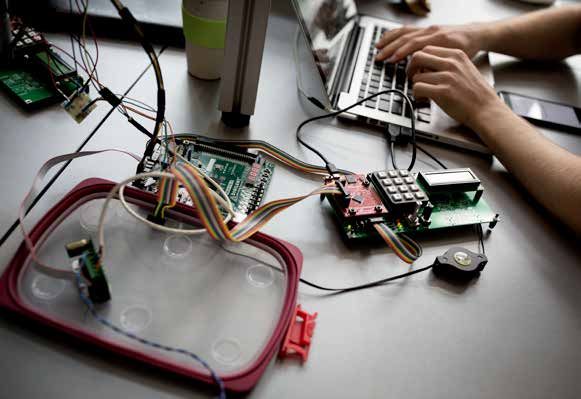
8

RoboDays in Odense invites       Danish children and young people must become             be incorporated into the study programmes
young people aged 13-16 on       ever more proficient in reading, mathematics,            and that the education system must be
a Robot Camp. Here they can
build, program, and test drive   science, etc. At the same time, they must be             suitably flexible.
their own advanced robots.       curious, possess social and creative skills and
                                 acquire new digital skills and technological literacy.   High-quality research will be necessary for
                                 This is a prerequisite if we are to have more people     Denmark to seize the many possibilities that tech-
                                 complete an education that prepares them for the         nological advancements will bring and to find the
                                 future.                                                  answers to future challenges, and we will have to
                                                                                          become even better at converting new knowledge
                                 The availability of a qualified and well-educated        into tangible societal benefits.
                                 labour force is a key framework condition for
                                 Danish businesses and the public sector. Therefore,      The Council and Government have discussed what
                                 study programmes must be of a high standard              competences will be in demand in the future: How
                                 from an international perspective and correspond         do we strengthen the core competences in the
                                 to the needs of the labour market. All study             population while also educating our populace at
                                 programmes must evolve in line with the needs            a high international level? And how can we struc-
                                 of Danish society and businesses. This also              ture the education system so that it is capable of
                                 means that new technology should continually             adapting to new and evolving needs?
THE DISRUPTION COUNCIL – THE GOVERNMENT’S AND DANISH DISRUPTION COUNCIL’S OBJECTIVES FOR THE FUTURE DENMARK                              9

                                                                                   Denmark has a good digital starting point, and we
                          The Council and Government agree                         are still the most digitalised country in the EU when
                          upon the following objectives:                           it comes to citizens’ and businesses’ daily use of
                                                                                   digital technologies.
                          • A good start in life: Danish children should
                            develop good language skills and self-esteem           Developments on the digital front have also resulted
                            from an early age. They must become even               in the generation of massive amounts of data. This
                            better at reading, mathematics and science while       offers considerable potential for new business
                            also developing strong social and creative skills.     models, yet it is crucial that we help ensure that
                            The ambition is that no child leaves the municipal     companies utilise this data potential in an ethically
                            primary and lower secondary school (the Danish         defensible and responsible manner. Cooperation
                            Folkeskole) without basic skills in these areas.       between the public sector and businesses may serve
                                                                                   as a catalyst for innovation and digital transition.
                          • Every young person should be part of society:
                            All young people should either be enrolled             Danish companies are increasingly recruiting
                            in some form of study programme or have a              labour from abroad. It is important that businesses
                            permanent labour market attachment. Ensuring           have access to the qualified labour and talent they
                            that all young people have good opportunities          need. Otherwise, we face the risk of Danish compa-
                            for education and employment is a shared               nies having to turn down orders or relocate their
                            responsibility.                                        headquarters to other countries. Of course, the use
                                                                                   of foreign labour must be under decent working
                          • High quality education: All study programmes           conditions, and we must maintain a strong focus
                            must be of a high quality from an international        on helping unemployed Danes find work.
                            perspective and teach skills and competences that
                            correspond to the needs of the labour market.          Among other issues, the Council and Government
                            This applies to vocational education and training      have discussed how to facilitate growth opportu-
                            (VET) as well as higher education. There should        nities for companies and entrepreneurs and how
                            be a focus on supplementing the classical skills       to handle the issues that arise with the need for
                            with skills and competences in technology and          recruiting foreign labour and international talent.
                            digitalisation. Additionally, there should be good
                            opportunities for transitioning between educa-
                            tion/training and employment.
                                                                                   The Council and Government agree
                          • World-class research: The quality of Danish            upon the following objectives:
                            research should be at the highest international
                            level, and the research should produce benefits for    • Competitive businesses: Danish businesses
                            study programmes as well as society in general.          must have competitive growth conditions so
                                                                                     that they can, for example, attract foreign invest-
                                                                                     ments. The public sector must support businesses,
                                                                                     including through world-class research.
                          Competitive companies that
                          are digital frontrunners                                 • Efficient and strong competition on fair terms:
                          Danish businesses and a well-functioning public            Danish companies, including SMEs, must have the
                          sector constitute the foundation for growth and            best conditions for competing effectively on fair and
                          prosperity in Denmark. We must ensure that compa-          equal terms, also regarding the digital platforms.
                          nies and entrepreneurs are strongly positioned in
                          terms of international competitiveness. They must        • A country with thriving entrepreneurship:
                          be supported by good framework conditions such             Denmark must have more high-growth businesses
                          as fair competition, a well-functioning public admin-      and favourable conditions for innovation. There-
                          istration, good infrastructure, a well-educated labour     fore, we must create competitive conditions for
                          force and access to foreign talent.                        entrepreneurs, for example by ensuring good
                                                                                     access to venture capital.
                          Danish businesses must not have unnecessary
                          burdens and regulations imposed upon them,               • Digital transition: Companies and the public
                          and enforcement should be uniform throughout               sector must be digital frontrunners that harness
                          the EU. The businesses of tomorrow will be                 the benefits of digitalisation, creating a positive
                          founded by the entrepreneurs of today, and they            impact on the rest of society. We must help
                          must be given good conditions to build and grow            ensure that Danish companies exploit the poten-
                          their companies.                                           tial of data – in an ethical and responsible manner.
10   THE GOVERNMENT’S AND DANISH DISRUPTION COUNCIL’S OBJECTIVES FOR THE FUTURE DENMARK – THE DISRUPTION COUNCIL

         • International recruitment under decent                 A flexible labour market and a workforce with the
           working conditions: Companies must have                right skills, knowledge and competences are also
           favourable conditions for recruiting qualified         crucial prerequisites to meeting the needs of the
           labour and talent from abroad. This recruitment        labour market of the future.
           must take place under the same decent working
           conditions that the Danish labour market is            That is why Denmark must continue to provide
           generally characterised by.                            good opportunities for well-functioning, lifelong
                                                                  learning. It is important for the individual to contin-
                                                                  uously develop their competences as new require-
                                                                  ments emerge in the labour market.
         A robust, safe and flexible labour market
         The Danish model and flexicurity system serve as         The individual has a personal responsibility to
         the pillars of our labour market, ensuring among         take advantage of such opportunities, but it is also
         other things that a balance is struck between the        crucial for the public sector and private companies
         companies’ needs for flexibility and employees’          to support their employees’ lifelong learning.
         need for security. The Danish labour market has
         proved itself to be secure and adaptable, resulting      Today, around 600,000 adults in Denmark lack basic
         in great benefits for employees, businesses and the      literacy skills, which presents them with challenges
         economy in general.                                      in a labour market where job functions are becoming
                                                                  ever-more complex and where literacy and digital
         We should not be afraid of new business models           literacy are becoming a common requirement.
         or new ways of working. They can lead to a more
         flexible professional life. At the same time, they can   The Government and social partners are jointly
         help those who struggle to gain a foothold in the        responsible for providing and maintaining a strong
         labour market find a more permanent job.                 adult and continuing training system for those who
                                                                  can benefit from it. The ambition is still to have a
         We must continually monitor these developments           world-class adult and continuing training system.
         in close cooperation between the Government
         and social partners so that we can find solutions        The Council and Government have discussed the
         in areas where the Danish model faces challenges.        future of the labour market in depth as well as
         This could include labour rights or updated busi-        how we can maintain and develop the Danish
         ness regulations. Of course, the labour market must      labour market model in light of the fact that new
         be characterised by decent working conditions and        forms of employment and platform companies
         good terms for employees as well as businesses.          are gaining ground.
         Danish tax rules must be observed.

         All Danes must be equipped with the skills and
         competences they need to succeed in a rapidly            The Council and Government agree
         changing labour market. Anyone who can partici-          upon the following objectives:
         pate in the labour market should do so, as it
         creates economic, social and human value.                • A future-proof labour market: The Danish labour
                                                                    market must remain adaptable and ready for auto-
         Danes are living longer, which means we will spend         mation, digitalisation and new forms of work.
         more years in the labour market. It is crucial that
         workplaces remain healthy and safe.                      • As many as possible should work: The Danish
                                                                    labour market must include everyone who is able
         A financial safety net for unemployment, an active         to participate in it. There is an economic, social
         labour market policy and flexible terms of employ-         and human value in working. The flexicurity
         ment are key aspects of the flexicurity system and         system must remain at the core of the Danish
         thus crucial to a well-functioning labour market in        labour market.
         Denmark.
                                                                  • World-class lifelong learning: More Danes
         The active labour market policy must help unem-            must take advantage of lifelong learning, and
         ployed persons find work. The municipalities and           good opportunities must exist for upgrading
         unemployment insurance funds must motivate                 one’s skills and qualifications for the jobs of
         and help the unemployed find work and help                  the future. Educational offers should be
         ensure they strengthen their competences so                well-functioning, flexible and targeted at
         that they can work in new industries with new              labour market needs.
         responsibilities.
11

Members of the Disruption Council
– Partnership for Denmark’s future

André Rogaczewski                                            Kim Simonsen
CEO and partner at Netcompany                                President of the Union of Commercial and Clerical Employees

Astrid Simonsen Joos                                         Lizette Risgaard
CEO at Signify, Nordics                                      President of the Danish Confederation of Trade Unions

Bente Sorgenfrey                                             Marianne Dahl
Vice president of the Danish Confederation of Trade Unions   CEO at Microsoft Denmark & Iceland

Birgit Aaby                                                  Niels B. Christiansen
Entrepreneur, owner of Combiservice                          CEO at LEGO Group

Brian Mikkelsen                                              Per Christensen
CEO at the Danish Chamber of Commerce                        President of the United Federation of Danish Workers (3F)

Caroline Søeborg Ahlefeldt-Laurvig-Bille                     Pernille Erenbjerg
Businesswoman                                                Board member

Carsten Stendevad                                            Philipp Schröder
Bridgewater Associates                                       Professor at Department of Economics, Aarhus University

Christiane Vejlø                                             Stina Vrang Elias
CEO at Elektronista Media                                    CEO at DEA

Claus Jensen                                                 Søren Skou
President of the Danish Metalworkers Union                   CEO at A.P. Møller Mærsk A/S

Esben Østergaard                                             Vibeke Svendsen
CTO at Universal Robots                                      CEO and partner at Envotherm

Gregers Wedell-Wedellsborg
CEO at Matas                                                 Participating Ministers
Hella Joof                                                   Lars Løkke Rasmussen
Movie director, actor and comedian                           Prime Minister (Chairman)

Jacob Holbraad                                               Kristian Jensen
CEO at the Danish Employers’ Confederation                   Minister for Finance

Jais Valeur                                                  Simon Emil Ammitzbøll-Bille
Group CEO at Danish Crown                                    Minister for Economic Affairs and the Interior

Jan Damsgaard                                                Troels Lund Poulsen
Professor at Department of Digitalization, CBS               Minister for Employment

Jan Grimstrup                                                Sophie Løhde
Union representative at KP Komponenter                       Minister for Public Sector Innovation

Kasper Sand Kjær                                             Merete Riisager
President of the Danish Youth Council (DUF)                  Minister for Education

Kigge Hvid                                                   Tommy Ahlers
Partner in JA studio                                         Minister for Higher Education and Science

Kim Graugaard                                                Rasmus Jarlov
Acting CEO at the Confederation of Danish Industries         Minister for Industry, Business and Financial Affairs
12   1. NEW AND HIGHER REQUIREMENTS FOR THE EDUCATION SYSTEM OF THE FUTURE – THE GOVERNMENT’S FOLLOW-UP

1. New and higher
   requirements for
   the education
   system of the future
13

Danes must be prepared for the labour market
of the future, where requirements relating to
competences, education and training will change.
The Danish Disruption Council has discussed how
the Danish education system can be improved to
meet the societal needs of the future.

                Education and training leads to freedom and
                opportunities for people, and a well-educated         It is on this background that the Government,
                population contributes to growth and prosperity.      among other measures, has:
                Research can enable us to understand the world in
                which we live and tackle major societal challenges.   • Strengthened vocational education and training
                                                                        (VET) programmes and taken initiatives to raise
                In an age where technology and digitalisation           knowledge of practical skills in the Danish munic-
                are becoming an integral part of the labour market,     ipal primary and lower secondary education.
                demand for the right competences has grown.             The aim is to encourage more young people to
                Thus, we must continue to maintain a strong,            enrol in VET programmes and for businesses in
                high-quality education system. As a consequence         Denmark to get the labour they require.
                of changing needs in the labour market, the
                education system must continue to support             • Entered into an agreement with all the political
                lifelong learning, and courses and programmes           parties of the Danish Folketing on the university
                must continually be adapted.                            degree programmes of tomorrow. The agree-
                                                                        ment is intended to help ensure flexibility in the
                                                                        education system, a high academic level, excellent
                                                                        education and strong competences for the labour
                                                                        market of the future.

                                                                      • Presented a research and innovation policy
                                                                        strategy in which the aim is to ensure that
                                                                        Denmark reaps the greatest possible benefits
                                                                        from its significant investments in research. It is
                                                                        important that knowledge generated in research
                                                                        environments spreads to the rest of society.

                                                                      • Launched the Technology Pact (Teknologipagten),
                                                                        a partnership through which Danish businesses,
                                                                        educational institutions, etc., work together to
                                                                        improve Danes’ technical and digital skills.

                                                                      The Government has several more measures
                                                                      planned, including initiatives aimed at particularly
                                                                      talented pupils and students as well as improving
                                                                      digital competences in higher education.
14 1. NEW AND HIGHER REQUIREMENTS FOR THE EDUCATION SYSTEM OF THE FUTURE – THE GOVERNMENT’S FOLLOW-UP
A well-educated population … but there are also
creates a foundation challenges
for growth and prosperity… Technological advancements and globalisation
may lead to certain job functions – especially
A high educational level is an international those performed by early school leavers and
75% competitive factor and important to ensuring
high productivity and quality of life at the indi-
low-skilled workers – becoming automated.
At the same time, new jobs will be created as
Today, just under 75 per cent vidual level. Education is accordingly good for more Danes get an education.
of those aged 25-34 in individuals, businesses and the development
Denmark have an education
of society in general. This places higher requirements on our educa-
leading to a vocational/
professional qualification. tion system. More Danes must obtain an
The education level in Denmark has been rising education leading to a vocational/professional
in a stable trend in recent decades. Higher educa- qualification. Otherwise, they risk not being
tion has gone from being a path limited to the prepared for the future.
privileged few to a people’s privilege.
It is important that the entire education system
Today, just under 75 per cent of those aged 25-34 is characterised by prudent education. Denmark
in Denmark have an education leading to a voca- needs high-quality study programmes and
tional/professional qualification. That is higher courses in which the students learn as much as
than the OECD average, and it helps ensure we are possible. We need study programmes that are
well-prepared for the changes the future holds. relevant to the labour market.
The number of people aged 25-69 with a higher education has grown
from approximately 600,000 to more than 1.1 million since 1995,
an increase of around 80 per cent.
With the current application trends, it is expected that the number of
Danes with a higher education will rise to just under 1.6 million by
2040 – i.e. a further increase of 40 per cent. At the same time, the number
of Danes with a vocational education is expected to fall from today’s
figure of approximately 1.1 million to approximately 850,000 by 2040.
Fewer Danes with low level of educations and more higher education graduates
1,000 persons
3,000 Higher Education:
University programmes ect.
2,500
Higher Education:
2,000
Professional bachelor and Academy
Professional programmes ect.
1,500
1,000 Vocational education and training (VET) ect.
500 Primary and lower secondary education and
General upper secondary education
0
1995
1997
1999
2001
2003
2005
2007
2009
2011
2013
2015
2017
2019
2021
2023
2025
2027
2029
2031
2033
2035
2037
2039
2041
2043
2045
2047
2049
Note: The graph illustrates the development in the Danish population’s highest level of educational attainment. The projection is based on demographic development
distributed by gender, age and background and educational level on the basis of historical trends of study-related patterns. Unknowns are not included.
Source: Ministry of Higher Education and Research calculations based on DREAM’s education projection 2017.THE GOVERNMENT’S FOLLOW-UP – 1. NEW AND HIGHER REQUIREMENTS FOR THE EDUCATION SYSTEM OF THE FUTURE 15
Challenge 1 With the Agreement on better paths to education
and work, educational opportunities have been
Too many Danes are improved for young people under the age of 25
not getting an education who lack a post-compulsory education thanks to
a new preparatory basic education. This initiative
It is important to ensure that
young people are given the is intended to prepare this group for a post-com-
necessary knowledge to Historically, a high educational level has helped pulsory education or job. However, there are still
choose the right education so make Denmark richer while also reducing inequality. young people who never undergo education. Just
that they leave primary and
lower secondary education The more people who undergo education, the under 20 per cent of Danes aged 25-34 do not have
on the right path. bigger the proportion of the population that reaps a post-compulsory education. Furthermore, close
the benefits of the growth in prosperity brought by to 600,000 adult Danes have inadequate literacy
technological advancements and globalisation. skills. They struggle to enter the labour market and
are more likely to be unemployed.
Making the wrong educational choices after primary
and lower secondary education also increases
the risk of dropping out and starting afresh with
a new education. It is important to ensure that
young people are given the necessary knowledge
to choose the right education so that they leave
primary and lower secondary education on the
right path.
600,000
Close to 600,000 adult
Danes have inadequate
literacy skills.
Many people in Denmark have an education leading to a vocational/professional qualification
Pct.
100
Higher education
90
Vocational education
80 and training (VET)
70
60
50
40
30
20
10
0
SK
PL
AT
CH
DE
FI
NL
FR
DK
CA
NO
OECD-avg
SE
EE
NZ
LV
IS
ES
PT
Note: The graphs indicate the educational level of the population in selected OECD countries in 2016. The graphs are calculated as a
percentage of 25-34 year-olds. Note that there may be methodological or definitional differences between each country’s measurements.
Source: OECD’s database (stats.oecd.org) is based on data from the Labour Force Survey.16
Challenge 2
Too few Danes enrol in
vocational education and
training (VET) programmes
It is important that the number of skilled workers
matches the needs of employers in Denmark,
both in the coming years and in the longer term.
Therefore, we must encourage more young people
to apply for and complete VET programmes.
The proportion of pupils who choose to pursue
VET right after primary and lower secondary school
20% has dropped from around 30 per cent in 2000 to 20
per cent in 2018. At the same time, drop-out rates
The proportion of pupils in VET programmes are still too high. This means
who choose to pursue VET that in the future, there may be a shortage of
right after primary and lower
skilled labour for Danish companies and society.
secondary school has dropped
from around 30 per cent in
2000 to 20 per cent in 2018. In some sectors and parts of the country, companies
are already finding it difficult to recruit new employees.
Efforts to reverse this development have begun
to show promising signs. Drop-out rates have
fallen, and applications to VET programmes are
rising. There is still some way to go before we reach
the Government’s target of at least 25 per cent of
young people choosing to pursue VET right after
primary and lower secondary school by 2020 and
30 per cent by 2025.
As more young Danes enrol in upper secondary education, fewer choose VET
Pct.
General upper secondary 80
education
70
Vocational education and
training (VET)
60
Goverment target for 2025
50
Goverment target for 2020
40
30
20
10
0
2000 2001 2002 2003 2004 2005 2006 2007 2008 2009 2010 2011 2012 2013 2014 2015 2016 2017 2018
Source: Danish Ministry of Education, own calculations.17
Challenge 3 number of people than in the past. In per centage
terms, however, the increase will roughly be in line
Prudent education for the with the trend since the 1990s.
labour market of the future
Many study programmes and courses lead to good
job opportunities. However, there are some fields
As a society, we must make the most of our invest- where there are too many Danes who struggle to
ments in education. Accordingly, we must ensure find a job after completing their studies. It is crucial
that our education system matches the needs that we encourage young people to pursue studies
of the labour market. As evermore Danes obtain in fields where labour is in demand. That is why
a higher education degree, a greater number of it is important for the country to have a sensible
highly-educated people are expected to find work mix of higher education programmes and courses.
in the private sector. If more highly-educated At the same time, students must acquire the
Danes find work in the private sector, this will in competences that will be in demand in the labour
turn also contribute to high productivity. market of the future.
The current trend is that a growing proportion of Prudent education is also about improving the
55% this group will be available for employment in the
private sector. In 2015, roughly 45 per cent of those
quality of education; students must learn as much
as possible over the course of their studies, regardless
In 2015, roughly 45 per cent with higher education degrees found work in the of whether they are on their way to becoming archi-
of those with higher education private sector. This proportion is expected to rise tects, carpenters, teachers or business economists.
degrees found work in the
private sector. This proportion
to 55 per cent by 2030. Put differently, approxi-
is expected to rise to 55 per mately 80 per cent of the extra graduates from
cent by 2030. higher education programmes will be available
for employment in the private sector in the years
leading up to 2030.
The increase is greatest among university grad-
uates, where the number working in the private
sector will nearly double in 15 years, from approx-
imately 150,000 in 2015 to 280,000 in 2030. This
constitutes a significantly larger increase in the
More people with a higher education must find jobs in private companies
1,000 persons
Available for private 1,400
employment
1,200
Public employment,
main scenario 1,000
800
600
400
200
0
2015 2018 2021 2024 2027 2030
Note: People with a higher education available to private companies have been calculated as the difference between the estimated supply
and the projected employment numbers, and thus it does not take unemployment into account. The projection of the educational
composition in the public sector is a scenario projection that does not factor in supply and is accordingly subject to considerable
uncertainty. It is not an actual forecast per se.
Source: Danish Ministry of Higher Education and Research and Danish Ministry of Finance, based on register data from Statistics Denmark.18
Challenge 4 This places new requirements for flexibility in the
education system.
The digitalised labour market
of the future requires new Digital skills are expected to be in higher demand
in every sector. Denmark will therefore be in need
competences of programmers, mathematicians, etc., in the
coming years if the country is to realise its auto-
mation potential. In the future, transversal compe-
Based on historical experience, technological tences such as cooperation, creativity, social skills,
advancements since the 1980s have resulted in a adaptability and the ability to learn new things will
rising need for highly skilled labour. It is expected also be in higher demand.
that in the future, a smaller proportion of tasks
performed by highly educated persons will be Students’ academic core competence and espe-
automated compared to the tasks performed cially cognitive abilities such as critical thinking and
by those with lower levels of education. problem-solving are among those skills that are
difficult to automate.
The conclusion of an analysis conducted by
McKinsey on behalf of the Danish Disruption
Council is that the potential of automation of job
functions is less for those tasks that require the
highest levels of education. Digital skills are expected
to be in higher demand in
The analysis also shows that employees in every every sector.
Every profession will be profession will be affected by automation. Accord-
affected by automation. ingly, it is anticipated that people of every educa-
Accordingly, it is anticipated
that people of every education- tional level will have to continually learn new skills
al level will have to continually over the course of their working life (see Chapter 3).
learn new skills over the course
of their working life.
Automation potential is the lowest for the tasks that require the highest levels of education
Ph.D programme/qualification
Academic undergraduate and
postgrad uate programme etc.
Professional bachelor
programme etc.
Academy Profession
programme etc.
Vocational education and
training (VET) etc.
General upper secondary
education
Primary and lower secondary
school
0 10 20 30 40 50 60 Pct. of working hours
Note: McKinsey estimates the automation potential based on work activities that can be automated
by using technology that is already known today.
Source: McKinsey (2017). A future that works. The impact of automation in Denmark. Exhibit 10.19
What the Government At the same time, greater expectations have been
has done placed on municipalities to offer interconnected
youth interventions.
The Government’s ambition is for study programs
in Denmark to be of a high standard and to educate The agreement From primary and lower
students in line with the competence demands of the secondary education to skilled worker
Danish labour market, both today and in the future. – VET for the future
With a view to boosting enrolment and completion
The Government has regularly taken important rates for VET programmes, the Government has
steps to strengthen the entire education system. concluded the agreement From primary and lower
The Danish Disruption Council has also regularly secondary education to skilled worker – VET for the
contributed to several of the political agreements future together with a large majority of the Danish
and initiatives that have been launched in recent years. Folketing’s parties. The agreement contains a total
of DKK 2.3 billion worth of initiatives to be imple-
Reform of the preparatory area: Agreement mented over the next four years.
on better paths to education and work
More young people must be given better oppor- Overall, the agreement makes it easier for students
tunities to move forward in life after primary and to choose the post-compulsory education track
lower secondary school. In October 2017, the Govern- that is most appropriate to them and thereby get
ment and a large majority in the Danish Folketing more young people to pursue VET. In that way, the
passed a reform of the preparatory education area agreement helps future-proof Danish businesses
to enhance efforts aimed at young people who are and society in general.
not ready for post-compulsory education after their
primary and lower secondary school. Science Strategy
Science and technology are essential to Denmark’s
The agreement established a new preparatory basic continued growth and prosperity. With a view to
education for young people under the age of 25 improving science education in primary and lower
” without a post-compulsory education. The new
education will help ensure that more young people
acquire the competences, clarity and motivation
they need to complete a post-compulsory educa-
tion or enter the labour market.
secondary school and in post-compulsory educa-
tion, the Government presented a new strategy at
the 6th meeting of the Danish Disruption Council.
DKK 2.3 billion
The natural sciences help us The agreement From primary and
understand the world and how to lower secondary education to skilled
change it for the better. Scientific
worker – VET for the future contains a
total of DKK 2.3 billion worth of
understanding is formative and initiatives to be implemented over
the next four years.
paves the way for a lot of interesting
jobs. Children and young people
need to be made more aware of that.
That is why we are now launching
a strategy that will strengthen the Visit at Holbæk City School in connection
position of science across the board with the launch of the Science Strategy
in our education system and in our As a prelude to the 6th meeting of the Danish
Disruption Council, the Government launched
society. My hope is that the strategy a national Science Strategy in March 2018. The
can help ensure that the food chain strategy was presented at Holbæk City School by
for science jobs will become bigger the Danish Minister of Education, Merete Riisager,
together with the Danish Prime Minister, Lars Løkke
and stronger. Rasmussen and Esben Østergaard, CTO of Universal
Robots and member of the Council.
Minister of Education Merete Riisager20
By the time they complete their study
programmes, Danish students should be
highly knowledgeable and able to handle
– as well as initiate – change. The picture
shows students at the program “MSc in
Engineering – Robot Systems” at the
University of Southern Denmark.21
The purpose of the Science Strategy is to get more should be on flexibility, a high academic level,
children and young people to take an interest in the excellent teaching and strong competences for
natural sciences and encourage more young Danes the future.
to take scientific subjects in upper secondary educa-
tion or through VET. This not only makes individual The agreement includes the following:
Danes more knowledgeable about the sciences,
but also benefits society as a whole. The strategy is • Extension of bachelor graduates’ legal right to a
also meant to help ensure that Danish educational postgraduate programme to three years, giving
programmes/courses and companies work even bachelor graduates better opportunities to
closer together and thereby give students an insight enter the labour market and resume university
into practical applications of science. studies at a later point.
New objectives for higher education • Option for universities to offer one-year
programmes academic master’s programmes/courses in
Higher education programmes must be of a high the ordinary education system with a view
standard and help promote growth and employ- to creating faster and more flexible routes to
ment. With a view to creating a common direction employment.
for higher education programmes, the Govern-
ment presented the following three objectives • Better opportunities to study part-time
in March 2018: (several 4-year part time master’s programmes).
1. High academic level and significant learning • Removal of bonuses for those starting early
outcomes that foster motivation, knowledge with their studies.
and critical thinking.
The agreement gives university students more
2. Close links between the higher education flexible study programmes and more options to
programmes and society’s current and future structure their education according to their needs.
competence needs.
Research and innovation policy strategy
3. A well-educated population with many years A Denmark ready for the future
in the labour market. Danish research must be of a high international
quality and provide the greatest possible benefits
The Danish Disruption Council has contributed to to education and society. Therefore, the Govern-
the Government’s work on the new objectives for ment has launched a research and innovation
the higher education programmes. The objectives policy strategy. The strategy is intended to ensure
are intended to guide the development of higher that Denmark reaps the greatest possible benefits
education programmes in Denmark and help from sizeable investments in research and innovation
ensure that they are oriented towards the labour and that knowledge spreads from research environ-
market of the future. ments to the rest of society to a greater extent.
Agreement on more flexible university The strategy, which was discussed in the Danish
degree programmes Disruption Council prior to its launch, focuses
By the time they complete their degree on research quality, technological research,
programmes, Danish students should be highly cooperation between knowledge institutions
knowledgeable and able to handle – as well as and companies, etc.
initiate – change. That is why the Government
established a Committee on improving university
degree programmes in April 2017. The committee
was tasked with investigating how university
degree programmes could best be structured in the
future. The Danish Disruption Council has regularly
provided input to the committee’s work and the
Government’s subsequent efforts based on the
committee’s recommendations.
In December 2018, the Government and every
The focus should be on party in the Danish Folketing signed an agreement
flexibility, a high academic level,
excellent teaching and strong that would set the direction for the university
competences for the future. degree programmes of the future. The focus22
Improved technological literacy in the Danish The pact is a partnership between Danish busi-
Future generations must be primary and lower secondary education nesses, educational institutions and other relevant
proficient IT users, and they
must be able to understand, compulsory curriculum actors. The entire education system should facili-
develop and analyse IT so that Future generations must be proficient IT users, tate the development of STEM competences and
they can help shape the future
and they must be able to understand, develop and in so doing help meet Danish businesses’ needs.
of society.
analyse IT so that they can help shape the future
of society. This development already starts in the The goal of the Technology Pact is to increase the
Danish primary and lower secondary education. proportion of Danes pursuing STEM-related study
programmes – both through VET and higher educa-
That is why the Government has launched a pilot tion – by 20 per cent by 2028. This will equate to
programme for the period 2018-2021 which will 10,000 more Danes with STEM degrees.
test different models for how to improve techno-
logical literacy in the Danish primary and lower At the same time, more Danes must make use
secondary education. Based on the findings from of their existing STEM competences in their jobs.
this programme, the Government will assess The goal is two-fold in that regard: First, upgrading
whether a need exists for improving technological the skills and qualifications of the labour force,
literacy in the Danish primary and lower secondary and second, to reduce recruitment problems in
education. STEM fields. These agendas are linked, as adult and
continuing education and training of the labour
The Danish Disruption Council discussed the force can in the short run help alleviate businesses’
framework for the pilot programme ahead of demand for STEM competences.
its announcement.
The Government has implemented a number
The Technology Pact of further initiatives in addition to the above:
STEM is a common acronym With a view to strengthening Danes’ technical and
for Science, Technology,
Engineering and Mathematics. digital skills, the Government has launched the • A tripartite agreement on adequate and quali-
Technology Pact, the aim of which is to raise aware- fied labour and more apprenticeships (2016)
ness about the so-called STEM competences.
• Strategy for improving foreign language skills
in the education system (2017)
• Pilot scheme with 4-year part-time master’s
degree programmes (erhvervskandidatuddan-
nelser) (2018)
20%
The goal of the Technology
Pact is to increase the
proportion of Danes pursuing
STEM-related study pro-
grammes – both through
VET and higher education
– by 20 per cent by 2028.23
New initiatives based on programmes in which the students receive guid-
the Danish Disruption ance from educators, researchers and business-
people associated with global elite institutions and
Council’s work innovative companies. In addition, higher educa-
tion institutions must be given more freedom to
Based on the deliberations of the Council, the develop efforts in relation to talented students.
Government will implement further initiatives
to prepare our education system for the labour Improving digital competences in higher
market of the future. education programmes
The higher education system must help ensure
All pupils and students must be challenged that all students acquire digital competences to
Among other things, funds In order for our most talented and motivated a greater extent than is the case today. A number
will be allocated to ambitious
courses and programmes pupils and students to achieve their potential, the of educational institutions are already in the
where the most talented entire Danish education system – from primary and process of integrating digital competences and
students can be challenged. lower secondary education to higher education technological literacy into their study programmes.
programmes – must be involved in the effort. However, these initiatives are scattered, and in
many cases the efforts are driven by digital enthu-
Therefore, the Government has proposed to siasts. In other words, there is a need for a more
strengthen and focus efforts aimed at the most concerted effort.
talented and motivated pupils in primary and
lower secondary school and post-compulsory As a result of the discussions of the Danish Disrup-
education. Funds will be allocated to establish a tion Council, the Government will allocate funds
national ‘talent unit’ which will prepare, support to support a strengthening of digital competences
and facilitate a consolidated talent strategy. Among in higher education programmes. A specific focus
other things, the unit will be responsible for devel- will be on developing the digital competences
oping a digital universe for the most talented and of educators. The initiative will be executed on a
motivated pupils to share knowledge and build solid basis of knowledge relating to how higher
networks. educational institutions work on linking digital
competences to the academic core competences
At the same time, it is important that the academic of individual programmes.
level of our higher education programmes is high
– also in an international context. The Govern- Additional initiatives to improve
ment will therefore give the most talented and technological literacy
motivated students better opportunities to grow In extension of the Danish Disruption Council’s
across higher education. Among other things, discussions, the Government will implement
funds will be allocated to ambitious courses and three sub-initiatives to complement the pilot
programmes as well as summer schools, such as programme on improving technological literacy in
The effort in relation to
talented pupils and students
must be promoted in primary
and lower secondary education
and general upper secondary
education.24
the Danish primary and lower secondary education. competence needs will change, as well as what
The purpose is to establish country-wide and these new needs will mean for higher education
regional competence networks that can support programmes. The Government has accordingly
primary and lower secondary educations that wish decided to establish a national competence panel
to work with improving technological literacy. which will advise the Minister of Higher Education
and Science as well as higher educational institu
In addition, the initiative is intended to support tions about changes in labour market demands.
learning environments (including vocational colleges
and universities), promote a broad anchoring of tech National awards for excellence in teaching
nological literacy and develop the competences of One of the Government’s goals is for skilled
primary and lower secondary education teachers teachers to exist at all educational levels. While
and educators at vocational colleges. a long-standing tradition has been to recognise
and promote good research, education is not
Competition (Grand Challenge): prioritised as highly today. Talented and inspiring
Solving tomorrow’s big challenges teachers must be recognised and rewarded for
The Government will establish a Danish compe their efforts so that education obtains the same
tition (Grand Challenge) aimed at motivating high status as research at universities. The Govern
researchers, companies and organisations across ment therefore proposes to establish national
all fields to develop research-based, innovative awards for excellence in teaching in higher educa
solutions that can help solve some of tomorrow’s tion programmes, similar to the awards that exist
big challenges. The Government will reward the in the world of research.
best solutions with a prize.
New ‘taximeter’ and subsidy system for
The Government will National competence panel for higher post-compulsory education
establish a Danish competi
tion (Grand Challenge) aimed education programmes. The current taximeter and subsidy system provides
at motivating researchers, Many job functions are expected to become auto- an incentive to increase activities. The taximeter
companies and organisations
mated or undergo change in the future as a conse system thus encourages a focus on increased
across all fields to develop
research-based, innovative quence of technological advancements. At the activity and does not in itself encourage a focus
solutions. same time, workers will face changing competence on quality. The Government will therefore intro
requirements. duce a new taximeter and subsidy system aimed
at encouraging high quality, geographical proximity
We need more knowledge about how society’s and appropriate geographical coverage, faster
educational track changes, etc.
Technological literacy must be
improved in the primary and
lower secondary education.THE GOVERNMENT’S FOLLOW-UP – 1. NEW AND HIGHER REQUIREMENTS FOR THE EDUCATION SYSTEM OF THE FUTURE 25
New and higher requirements for education
and training in the future
Based on the Danish Disruption Council’s discussions, among other
things, the Government has taken a number of initiatives:
• Agreement on better paths to education and work
• The agreement From primary and lower secondary education
to skilled worker – VET for the future
• National Science Strategy
• New objectives for higher education programmes
• Agreement on more flexible university degree programmes
• Research and innovation policy strategy
• Pilot programme on technological literacy in the Danish
primary and lower secondary education
• The Technology Pact
• Tripartite agreement on adequate and qualified labour
and more apprenticeships
• Strategy for improving foreign language skills in the education system
• Pilot scheme with 4-year part-time master’s degree programmes
(erhvervskandidatuddannelser)
New initiatives:
• Initiatives targeted at particularly talented and motivated pupils and students
• Improving digital competences in higher education programmes
• Additional initiatives to improve technological literacy
• Competition (Grand Challenge): Solving tomorrow’s big challenges
• National competence panel for higher education programmes
• National awards for excellence in teaching
• New ‘taximeter’ and subsidy system for post-compulsory education26 2. PRODUCTIVE AND RESPONSIBLE COMPANIES IN A DIGITAL WORLD – THE GOVERNMENT’S FOLLOW-UP 2. Productive and responsible companies in a digital world
THE GOVERNMENT’S FOLLOW-UP – 2. PRODUCTIVE AND RESPONSIBLE COMPANIES IN A DIGITAL WORLD 27
Denmark needs a competitive and digital business
community. The Danish Disruption Council has
discussed how companies can reap the full benefits
of the digital transition.
The business community makes up the foundation
for economic growth and greater prosperity for all It is on this background that the Government,
Danes. Greater prosperity, in turn, lays the founda among other measures, has:
tion for our welfare state.
• Presented the Strategy for Denmark’s digital
A central subject in the Danish Disruption Council’s growth. This was subsequently followed up
discussions has been how companies can reap the with a political agreement on initiatives regarding
full benefits of the digital transition and continue Denmark’s digital growth so that new techno
to create well-paid jobs in Denmark. logies can be used to create growth and increase
prosperity for the Danes.
At the same time, we must maintain and
encourage innovation and entrepreneurship • Strengthened the entrepreneurship and equity
in areas where data can be used in an ethically culture in Denmark with a political agreement on
responsible manner. business and entrepreneurial initiatives.
• Presented the Strategy for growth through the
sharing economy. The Government has also made
a broad political agreement on better conditions
for growth and correct taxation in the sharing and
platform economy.
In addition, the Government will follow up on the
recommendations from the Expert Group on Data
Ethics, strengthen competition supervision with
online platforms and present a national strategy
” for artificial intelligence.
As is the case in the rest of the world,
Denmark faces a digital transition of its
business community and society that is occurring
at a faster-than-ever pace.
If we go about it the right way, we can use this
technological development to create more
growth and prosperity so that Denmark will be
among the wealthiest countries in the world in
the future as well.
Minister for Industry, Business and Financial Affairs Rasmus JarlovYou can also read


