REBOOT In an instant, the pandemic changed the way we work. Now, there's no going back, and it's time to embrace the change - CPA Canada
←
→
Page content transcription
If your browser does not render page correctly, please read the page content below

WIaNnNd E6RSilver
        3 Gold    at the
           medals       ine
                l agaz
                 M
         Nationa : B2B
            Awards
                2020

                                                           REBOOT
                                                               In an instant,
                                                         the pandemic changed
                                                            the way we work.
                                                             Now, there’s no
                                                             going back, and
                                                          it’s time to embrace
SEPTEMBER/OCTOBER 2020

                                                                the change.

+                                    AUDIT FACES
                                     A RECKONING   /   A Q&A WITH
                                                       PAUL MARTIN   /   LEATHER
                                                                         GOES VEGAN
Here’s
to you,
Canada
We’re proud to announce a series of customized
features for Canadian accounting professionals
like you. We’re committed to you and we’re proud
to continue working with amazing partners and
small businesses in Canada.

Join us at an online roadshow to learn more
xero.com/roadshow


”I love working with figures,
 but not the paperwork.“
ScanSnap: Versatile scanners for all needs in finance.

ScanSnap iX100                                                  ScanSnap S1300i                                              ScanSnap iX1500   ScanSnap SV600

www.scansnap.ca
2020 PFU Canada Inc. All Rights Reserved. All names, manufacturer names, brand and product designations are subject to special
trademark rights and are manufacturer‘s trademarks and/or

CONTENTS

                                                 l
                                     H ow wil n d
                                     p  a n ie s— a
                               co m                 a pt
                                          ies—a d
                               in d ustr oming
                                  in th e   c
                                                      rs?
                                           a n d ye a
                               months          o re a t
                                   Rea d m a .c a/
                                              ad
                                  cpacan
                                                fwo rk .
                                    fu tu reo

                                                                                                                                 6 | From the
                                                                                                                                 departing CEO

                                                                                                              ON THE             8 | Letters
                                                                                                              COVER
                                                                                                            PHOTOGRAPH           FIRST IN
                                                                                                             BY DANIEL
                                                                                                            EHRENWORTH
                                                                                                                                 10 | A former prime
                                                                                                                                 minister’s second act.

                                                                                                                                 13 | Infamous stock drops.

                                   44                                                                                            14 | The construction
                                                                                                                                 industry branches out.

                                                                                                                                 16 | What if we
                                                                                                                                 just gave people money?
                                 FEATURES
                                                                                                                                 18 | Reimagining the CPA
                                 22 | The next frontier                                                                          Canada Competency Map.
                                 The Brydon Report has forced the global audit sector to do some
                                 soul-searching. How will the practice adapt for an uncertain future?                            19 | A catalogue
                                 BY JOHN LORINC                                                             WHAT DO              of outlandish cons.
                                                                                                           YOU THINK?
                                 28 | Strength in numbers                                                   Send your letter     20 | Is your face
                                 Indigenous communities have been gaining economic momentum                    to the editor     in a database?
                                                                                                            to pivot.letters@
                                 for years. The result? An increase in financial autonomy.                  cpacanada.ca or
                                 BY RACHEL JANSEN                                                          to 277 Wellington     LAST OUT
                                                                                                           St. W., Toronto, ON
                                                                                                                 M5V 3H2.
                                 32 | Signed, sealed, delivered                                                                  49 | Mask crusaders.
                                                                                                             Letters may be
                                 App-based food couriers are turning to collective action to earn           edited for length
                                 protections. Is this the end of the gig economy, or just the beginning?        and clarity.     50 | Don’t have a cowhide.
                                 BY JASON McBRIDE
                                                                                                                                 52 | Inside the rise of
                                 38 | No fixed address                                                                           personal medicine.
                                 Chad Davis and Josh Zweig built a thriving accounting firm without
ILLUSTRATION BY KAGAN MCLEOD

                                 physically working together. It could be the future of the profession.                          53 | A fete for the times.
                                 BY MATT O’GRADY
                                                                                                                                 54 | Best bets for books
                                 44 | Safe spaces                                                                                and TV shows.
                                 Circles around desks, round-the-clock cleaning and the return
                                 of cubicle walls. A peek inside the post-pandemic office.                                       58 | Pour one out
                                 BY ADRIENNE TANNER                                                                              for this CPA.

                                                                                                                             SEPTEMBER/OCTOBER 2020 PIVOT     5
FROM THE DEPARTING CEO

CHANGING
                                              truism to observe that the pandemic        surveyed) wanted to go back to the
                                              has caused us to rethink the way we        status quo, while 83 per cent wanted
                                              spend our time working, which is such      something different. What’s more, fully

OF THE GUARD
                                              a fundamental part of most of our          60 per cent of the respondents favoured
                                              lives. For many of us, our jobs now,       a shortened workweek—eight hours a
                                              more than ever, intrude into our home      day, four days a week. Citing research
                                              life and vice versa.                       from Europe and other places that have
The profession—and, really,
                                                 We Zoom constantly and have learned     adopted reduced workweeks, Trougakos
the world—is in the midst
                                              to live with provisional workspaces on     says there’s no evidence of a loss of
of a fundamental transition.
                                              dining room tables, in basements and       productivity associated with these alter-
How is the pandemic shaping the
                                              spare rooms. We are rethinking the         native arrangements. Indeed, work time
future of work? BY JOY THOMAS
                                              traditional invisible boundaries           lost to stress, fatigue from exhausting
                                              between work life and home life because    commutes and chronic office interrup-
                                              those realms are no longer separated by    tions costs the economy billions of
                                              a car or transit trip. Consequently, we    dollars in productivity losses each year.
                                              have additional “extra” time, but time,       The prospect of untethering work
                                              strangely, has seemed more amorphous       from the office raises important
                                              than it once was.                          questions, including ones that predate
                                                 The new work life (which today          the pandemic. Are we expected to be
                                              comes with its own acronym: WFH)           reachable at any time of day? And what
                                              has compelled managers to find ways        is the psychological toll of lengthy
                                              of motivating virtual teams and            video-conferencing calls?
                                              onboarding new hires they’ve never            Trougakos spent a lot of time in
                                              met. We’ve gained new respect for          recent months fielding calls from CEOs
                                              cloud-based software applications and      and CFOs who want to know how they

                                                                                                                                     PHOTOGRAPH BY MATT BARNES; HAIR AND MAKEUP BY CLAUDINE BALTAZAR/PLUTINO GROUP; SHOT AT KŌST AT BISHA HOTEL, TORONTO
                                              high-speed digital networks. And those     should begin thinking about managing
                                              of us who oversee the finances of orga-    large, far-flung and now virtual
                                              nizations ponder all the office space we   organizations. One of his observations is
                                              once consumed, which now sits mainly       that people who have removed the stress
                                              empty. We may find ourselves wonder-       from their workday—either by no longer
In July, after four gratifying years          ing about smaller floor plates with no     having to commute or taking regular
leading this organization, I left my post     assigned workspaces and less overhead.     breaks—tend to work more creatively
as president and CEO of CPA Canada.
This will be my final letter to the readers   THE POST-PANDEMIC WORLD POINTS
of Pivot, a publication I am extremely
proud of and one I will continue to read      TO A COMING WORKPLACE REVOLUTION
with interest.
  I informed the CPA Canada board of
                                              —ONE THAT CHALLENGES ASSUMPTIONS
directors of my intentions in 2019, and       ABOUT HOW WE DO OUR JOBS
the decision comes after dedicating
more than 20 years to helping advance           Mostly, we miss our friends and the      and more efficiently over shorter
the Canadian accounting profession.           creative frisson among co-workers.         periods of time. “Although it’s counter-
I have witnessed first-hand much              But we don’t miss lengthy commutes         intuitive, being able to work less but
positive change over that period.             and the carbon costs associated with       more productively is the key,” he says.
In the unification of the profession,         business travel. It’s a fine balance.        Perhaps the most important insight is
evolving education models, making               John Trougakos is an associate pro-      that, in many ways, the pre-pandemic
contributions to social and economic          fessor of management at the University     world of work was still deeply rooted in
development and strengthening our             of Toronto’s Rotman School of              the industrial model: employees and
influence internationally, our profession     Management and an expert on                managers converging on the same place
has risen to every challenge.                 organizational behaviour. His research     or set of places for roughly the same
  Most recently, the organizations            team began compiling an online             periods of time during the day. Yes,
we work for, the clients we serve and         survey last March, asking respondents      technology—smartphones, laptops,
the manner of work itself have been           to talk about the new work life.           high-speed digital networks—eroded
upended by COVID-19. By now, it’s a             Tellingly, only 17 per cent (of 700      the model, but only at the margins, as

6   PIVOT SEPTEMBER/OCTOBER 2020
WINNER
3 Gold
and
medals 6 Silver
the vast geography of workplaces attest. SKIP Nation at the
al Mag
We hear a lot about the Fourth Indus- Award
2020
azine
s: B2B
trial Revolution, but the post-pandemic VOLUME 3 | ISSUE 5
world perhaps points to a coming work-
place revolution, one that challenges SENIOR EDITOR
Lara Zarum
PUBLISHER
Heather Whyte, MBA, APR, CDMP
many of the assumptions about how, ART DIRECTOR Adam Cholewa ASSOCIATE PUBLISHER
where and why we go to work. FRENCH EDITOR Mathieu de Lajartre Tobin Lambie
PRINCIPAL, CONTENT
In this issue, we’ve included a DIRECTOR OF PHOTOGRAPHY
Daniel Neuhaus Douglas Dunlop
special “Future of Work” package, ASSOCIATE EDITOR SALES DIRECTOR
Laura Cerlon
with articles and columns exploring Melanie Morassutti
ADVERTISING SALES,
EDITOR, DIGITAL Stephanie Bomba
everything from the demise of the ASSOCIATE ART DIRECTOR
ACCOUNT REPRESENTATIVE
Ian McPherson
handshake to the emergence of the Dan Parsons (416) 364-3333 x 4059
EDITORIAL ASSISTANTS ian.mcpherson@stjoseph.com
virtual accounting firm, the evolution Harriet Bruser, Ada Tat DIRECTOR, LANGUAGE SERVICES
of the gig economy and the design of COPY EDITORS Jane Finlayson
Jen Cutts, Janet Morassutti EDITORIAL ADVISORY BOARD
the post-COVID office. CONTRIBUTORS CHAIR:
As for the future of CPA Canada, Matt Barnes, Brian Bethune, John Redding, CPA, CMA
MEMBERS:
Kelly Boutsalis, Steve Brearton,
it is in good hands with our new LeeAndra Cianci, Daniel Maury K. Donen, CPA, CMA
Debra J. Feltham, FCPA, FCGA
Ehrenworth, Francis Fong,
president and CEO, Charles-Antoine Matthew Hague, Rachel Jansen, Andrée Lavigne, CPA, CA
Ashley Lowe, CPA, CA
Jason Kirby, John Lorinc,
St-Jean, FCPA, FCA. Charles-Antoine Jason McBride, Kagan McLeod,
and I have known each other for many Matt O’Grady, Miriam Porter,
Jake Sherman, Guillaume Simoneau,
years, and served together as board Adrienne Tanner, Micah Toub,
Irene Wiecek
colleagues for the Canadian Audit
and Accountability Foundation.
I am confident the exceptional track
record and broad range of professional
skills he brings to the position will
guide the organization during these
extraordinary times. Pivot is published six times a year by the Chartered Professional Accountants
of Canada in partnership with St. Joseph Media. Opinions expressed are not
Prior to joining CPA Canada, Charles- necessarily endorsed by CPA Canada. Copyright 2020.
Antoine was appointed chair of the TORONTO SUBSCRIPTION INQUIRIES
Public Sector Accounting Board in 2017 277 Wellington St. W., M5V 3H2,
Tel. (416) 977-3222,
Tel. (416) 977-0748 or 1-800-268-3793
pivot.subscriptions@cpacanada.ca
and served as a member from 2006- Fax (416) 204-3409
ONLINE
MONTREAL
2009. From 2004 to 2007, he served as 2020 Robert-Bourassa Blvd,
cpacanada.ca/pivotmagazine
the comptroller general of Canada. Suite 1900, H3A 2A5,
Tel. (514) 285-5002,
ADVERTISING
advertising.pivotmagazine@
Charles-Antoine earned his Fax (514) 285-5695 cpacanada.ca
accounting designation and held Additional annual subscriptions are available at the following rates: members, $32;
senior positions as partner and students, $45; non-members, $55. Single copy, $5.50. Outside Canada: $89 for a
one-year subscription; $8.90 for a single copy. GST of 5% applies to all domestic
managing partner at EY. He worked subscriptions. For subscription inquiries, call (416) 977-0748 or 1-800-268-3793 from
9 a.m. to 5 p.m., Monday through Friday; fax: (416) 204-3416. GST registration number
with many public sector clients in 83173 3647 RT0001. Publications Mail Agreement No. 40062437. Printed in Canada.
ISSN 2561-6773. Return undeliverable Canadian addresses to the Toronto address above.
Canada and internationally, at all Pivot is a member of the Canadian Business Press and Magazines Canada. All manuscripts,
material and other submissions sent to Pivot become the property of Pivot and the
levels of government, including many Chartered Professional Accountants of Canada, the publisher. In making submissions,
contributors agree to grant and assign to the publisher all copyrights, including, but not
state-owned entities. He also worked limited to, reprints and electronic rights, and all of the contributor’s rights, title and
interest in and to the work. The publisher reserves the right to utilize the work or portions
in Europe for a few years at KPMG. thereof in connection with the magazine and/or in any other manner it deems
appropriate. No part of this publication can be reproduced, stored in retrieval systems or
He has lectured on governance and transmitted, in any form or by any means, without the prior written consent of Pivot.
financial management in the public
sector for many years at Université
Laval (Directors College program) ST. JOSEPH MEDIA
and the University of Ottawa. CHAIRMAN MANAGING DIRECTOR, CONTENT
Tony Gagliano Maryam Sanati
The challenges that loom before us
PRESIDENT MANAGING DIRECTOR, STRATEGIC
require creative thinking and nimble Douglas Kelly CONTENT LABS Jonathan Harris
leadership. The Canadian accounting SENIOR VICE-PRESIDENT, VICE-PRESIDENT, RESEARCH
Clarence Poirier
STRATEGY
profession has earned a stellar reputa- Duncan Clark PRODUCTION DIRECTOR
Maria Mendes
tion globally and we are well poised to DIRECTOR, CONSUMER
MARKETING PRODUCTION MANAGER
be leaders in shaping the future. ◆ Rui Costa Joycelyn Tran
SEPTEMBER/OCTOBER 2020 PIVOT 7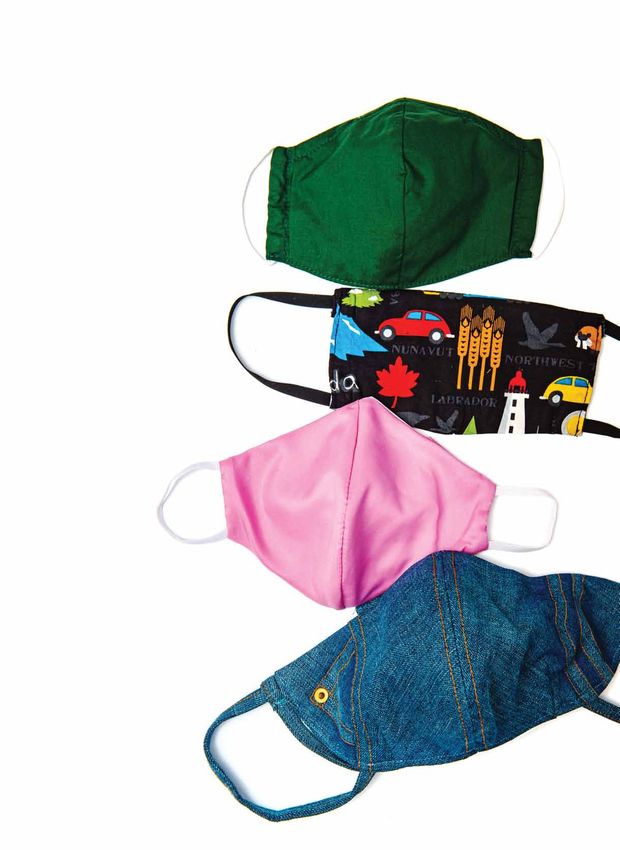
LETTERS

                                                        Ethical champions
                                                        In the May/June 2020 edition I read with interest
                                                        the article entitled “Gimme Shelter.” As CPAs we
                                                        should be lauding and congratulating people who
                                                        have the courage to come forward and identify
                                                        fraudulent or unethical activities in our organiza-
                                                        tions. Instead, we refer to them as “whistleblowers.”
                                                        This name conjures up the concept of “tattletales”
                                                        from when we were young. Why would we brand
                                                        anyone who is acting in good faith to expose
                                                        unacceptable activity with a title that is demeaning
                                                        and, frankly, embarrassing? I have been on a
                                                        crusade to change the term from “whistleblower”
                                                        to “ethical champion.” These people should be
                                                        praised for what they are trying to do and not
                                                        scorned by giving them a condescending name.
                                                                   —Gregg Hanson, FCA, FCPA, C.M., LLD ,
                                                                                                    Manitoba

                                                        A marathon, not a sprint
Casino cleanup                                          I applaud the efforts to increase awareness of
British Columbia Lottery Corporation (BCLC)             mental health in the workplace and enjoyed
takes its role and responsibility seriously             reading “The New 9 to 5” (Sept./Oct. 2019).
regarding reducing the threat of money laundering.      I was fortunate to be provided benefits when
As such, BCLC’s board of directors and executive        I took time off and had a gradual return to work.
team took interest in “Mr. Clean” (May/June             But four months after my return to full schedule,
2020), about Peter German and his review of             I was surprisingly “restructured out.” Mental
B.C.’s anti-money laundering policies and               health isn’t a broken arm that heals after six
practices in Lower Mainland casinos and would           or eight weeks. For some it can be a longer
like to correct the record.                             journey, even after one returns to the job.
   The article says, “[M]oney laundering remains        I was in a solid state and managed through the
rampant.” BCLC asserts that this is not the case        termination relatively okay, but for others in less
in the casino industry in B.C. Anyone who tries         fortunate circumstances, it could have pushed
to buy in with $10,000 or more in cash at a B.C.        them further over the edge.
casino must first prove where the funds came                                                 —Anonymous
from and sign a Source of Funds declaration.
Casinos have the discretion to ask anyone to
provide the source of their funds, regardless of        Clarification
amount. Casinos must clearly label all cheques          In the May/June issue of Pivot magazine,
as “return of funds—not gaming winnings” or as          an article titled “Gimme Shelter” included an
“verified win” to prevent people from buying in         incorrect reference to the circumstances
with large amounts of cash, playing nominally           surrounding the Maid of the Mist boat tour’s
and cashing out with a generic casino cheque.           proposed contract with the Niagara Parks
In fact, we engaged independent analysis to make        Commission. The article referred to “corruption”
sure these safeguards were working. Find out for        and stated that the Maid of the Mist’s deal
yourself: All the final reports are available online.   “cost taxpayers $300 million.” In fact, this figure
   By taking a fact-based and collective                refers to the increase in revenue that is expected
approach, I believe that all industries across          to be received by the Niagara Parks Commission
Canada can best work together to reduce                 from the new operators of the Niagara Falls boat
the threat that money laundering poses to our           tours, Hornblower Canada. As the article
economies and communities.                              noted, there is no evidence that Maid of the Mist
                                       —Greg Moore,     engaged in any wrongdoing. Pivot regrets the
                    interim president & CEO, BCLC       incorrect statement in the article.

8   PIVOT SEPTEMBER/OCTOBER 2020
EARN UP TO

     43
    CPD HOURS*

FACING
UNPRECEDENTED

CHANGE
AS ONE
                                                                                                 STARTING AT

                                                                                                 $
                                                                                                     99

                            September 17-18, 2020
                                         In partnership with CPA Alberta

                                                     Keynote Speakers

    Tony Chapman                    Stephen M.R. Covey           Estelle Métayer          Pamela Steer
    Business Strategist,             Best-selling Author,        Principal, Founder      Chief Financial and
     Keynote Speaker               Speaker & Thought leader          Competia           Corporate Strategy
                                                                                      Officer Payments Canada

*with the purchase of an All-Access + Workshop package               theone.cpacanada.ca | #CPATHEONE
10 PIVOT SEPTEMBER/OCTOBER 2020
FIRST IN

PURPOSE DRIVER

THE NEXT GENERATION
Former prime minister and finance minister Paul Martin
has his eye on the leaders of the future BY JASON KIRBY

One of Paul Martin’s hallmark initiatives as prime        the region. By piloting at this one school we learned
minister was the Kelowna Accord, a five-year,             a major lesson right off the bat: If we were to provide
$5-billion agreement aimed at closing the social          programs for Indigenous students, we couldn’t copy
and economic gap between Indigenous and non-              and paste from existing provincial curriculum and
Indigenous Canadians. His government’s defeat             textbooks. We needed original lessons and material
meant the accord was never implemented, but after         created for Indigenous students with an Indigenous
leaving politics, he launched the Martin Family           lens. So from there we worked with two Indigenous
Initiative (MFI), a charity aimed at improving            teachers and Nelson Education, a major publishing
education, health and well-being outcomes for             house, to create the first set of textbooks and work-
Indigenous children and youth in Canada. He spoke         books teaching business with Indigenous examples,
with Pivot about his foundation’s evolution, the role     perspectives and role models. Since then, the course
of the private sector in tackling social problems and     has taken off and we’re in over 50 schools across
whether we should worry about the explosion in            Canada and have served over 5,500 students.
government deficits.                                        Essentially, we started AYEP because we felt then
                                                          and still feel today that Indigenous students are
Where did your interest in Indigenous youth               entitled to the best.
education come from? Did it predate your
time in politics?                                         As you’ve mentioned in the past, this is also
Yes. When I was 17 I hitchhiked out to Hay River,         important to the Canadian economy.
N.W.T., and got a job as a deckhand on the tug            Growth comes from the younger generations, and
barges that transit the Mackenzie River. The vast         the youngest and fastest-growing segment of the
majority of the people working on them as deck-           Canadian population is Indigenous youth. But I
hands or mates or captains were Indigenous. When          would take this one step further. For a country to
the vessel was laid up we would spend a lot of time       succeed it has to have confidence in its values, and
talking. They were hard-working, very smart and           surely to heaven one of the most important values
a lot of fun. But when you started to talk to some        a country can have is that every young person has
of them about their youth and some of the issues          the opportunity to succeed.
they faced, there was a melancholy I had never seen
before. The attempt by society to take away the           You followed that program with an initiative
culture they had grown up with was the cause.             that focuses on literacy.
                                                          When you look at the Indigenous dropout rates, an
In 2008 you launched the Aboriginal Youth                 awful lot of it begins with kids who can’t read or
Entrepreneurship Program. Why that program?               write by Grade 3. MFI’s Model Schools Literacy
The Aboriginal Youth Entrepreneurship Program             Project began in 2009 with a pilot project at two
(AYEP) at its root is a business course, originally       on-reserve Ontario schools in Walpole Island and
very similar to the provincial business courses offered   Kettle and Stony Point First Nations. When we
in high schools across Canada to Grade 11 and 12          started the pilot projects, only 13 per cent of students
students. AYEP began in 2008 when we introduced           in the schools could read or write at the end of
the standard Ontario business course to a high school     Grade 3. We worked in these schools for four years,
in Thunder Bay that served fly-in communities in          and when they did the testing again literacy was at

PHOTOGRAPH BY LM CHABOT                                                      SEPTEMBER/OCTOBER 2020 PIVOT       11
FIRST IN
81 per cent. The chief at Kettle and Stony Point was, Paul Martin touring Napi’s Playground
at that time, Tom Bressette. And when Tom gave Elementary on the Piikani Nation
the results, he said, talking to the country, “You Reserve in Alberta in 2017
didn’t think we could do this, but we did. We can
do whatever has to be done, provided we have the
tools to do the job.” The Model Schools Literacy
Project is now in 12 schools and will be in 18 by the
start of the new school year.
What is your focus on now?
You are who you are because of the evolution of your
brain from conception to age five. It’s what gives you
your verbal capacity and your resilience. [Child
welfare activist] Cindy Blackstock said it very well
when she said that so many Indigenous peoples
spend their adult lives trying to compensate for their
childhood. So we’ve started a home visitor program
for young mothers or young women who are about
to become mothers. We started in the Ermineskin
Cree Nation in Alberta, and we called upon women “IF YOU DON’T RESPOND
from the community who had successfully raised
their families to form a group of home visitors, who
TO SOCIAL NEEDS, YOU WON’T
are compensated, and we provided a training program HAVE A SUCCESSFUL ECONOMY”
co-developed with the community. The Early Years
program is now in five communities and we’re having means you need mentors, and CPA Canada has
discussions about a very large expansion. provided these mentors. It’s one of the most valuable
programs that we’re involved in because when the
What role do you think the private sector students want to talk, be it about their future
should play in addressing these challenges? career prospects or home life, there’s someone out
There are two things. One of them is funding. These there to listen and to guide them.
programs cost money in the short term but save an
immense amount in the longer term. The second In recent years, we’ve seen a rethink of the
thing brought by our partners is expertise, like the purpose of a corporation and whether it
CPA Martin Mentorship Program for Indigenous should be about more than just generating
High School Students. What we’d like to see with a buck for shareholders. What do you think?
all our programs is students going on to post- There’s no doubt if a business doesn’t turn a profit,
secondary education. In a digital economy, the more it won’t succeed. On the other hand, if you do not
education you have, the better off you will be. That recognize that you have a responsibility to help
HEAD START
The CPA Martin Mentorship Program guides Indigenous for planned activities starting in
high school students to their post-secondary options and beyond Grade 10. The program lasts ideally
for the duration of their high school
careers and even beyond. Students
Since the Martin Family Initiative drawn mostly from national firms have dedicated guides to conduct
launched in 2008, CPA Canada has such as BDO Canada, Deloitte, EY, workshops and answer questions
partnered with the organization to run Grant Thornton, KPMG, MNP and about career paths, resumés and job
COURTESY OF PINCHER CREEK ECHO
the CPA Martin Mentorship Program PwC, as well as the federal govern- skills, and opportunities for work-
for Indigenous High School Students. ment and the academic arena. place visits and social activities. The
In schools across British Columbia, Mentors volunteer their time and get goal is for students to graduate high
Alberta, Saskatchewan, Manitoba, the chance to learn about Indigenous school and go on to post-secondary
Ontario and Quebec, high school issues and culture first-hand. education, with an awareness of
students are paired up with mentorship Students are selected by their the spectrum of career options
teams—CPAs and other accounting schools—the placement process available to them, including careers
professionals who are chosen by their begins in Grade 9—and meet with in accounting and finance, and with
employer. The mentorship teams are their respective mentorship teams the skills to flourish in their careers.
12 PIVOT SEPTEMBER/OCTOBER 2020respond to social needs, then you’re not going to debt and deficits, the result of years of neglect. Back
have a successful economy. then we told Canadians that if we do this, if we wind
My view is that it’s a mistake to make a rigid down our spending now, we will ultimately turn
distinction between social policy and economic the economy around, giving us the money to improve
policy. People will say that education is social health care and education, safeguarding them for
policy. Well, how can you have successful businesses future generations. And we kept our word. However,
without a decent education system? People also say what we’re seeing now with COVID is a situation
health care is social policy. I hope to heaven that created out of crisis, not neglect, and that requires
anybody who’s taking a look at what’s going on massive spending so Canadians can make it through
with COVID-19 can see that decent health care is each day. It’s spending that’s necessary at the
an essential part of a strong economy. Businesses present time but that is ultimately temporary.
can’t just stand apart from social needs. There’s no doubt in my mind that once we get
a vaccine, we will begin to turn the economy
Speaking of COVID, governments have around and the spending we incur now will be
amassed huge deficits and now there are an essential part of our ultimate success. If, on
competing calls for austerity versus more the other hand, we allow the social policy of
government intervention to spur growth. the country to fail now, we’re not going to have
As a former deficit fighter, where do you stand? a population that’s capable of the adjustment
I’ll start by saying that what we’re seeing now is that is required to succeed. To me, investing in
something the likes of which we haven’t seen since Canadians is the key to success. That’s in good
the Second World War. In 1995 we brought down times and in bad, and right now Canadians need
a very tough budget because we had huge national support more than ever. ◆
STOCK SHOCK
Slumping sales, lousy products and C-suite shuffles can sabotage share prices.
But sometimes it’s the ridiculous that prompts a drop. Here, four market free falls
that prove there’s only so much an analyst can predict. BY STEVE BREARTON
OH, SNAP SOLE CRUSHER VICIOUS CYCLE POWER OUTAGE
Snapchat Nike Peloton Tesla
–US$800 MILLION –US$1.1 BILLION –US$1.1 BILLION –US$5.4 BILLION
In a March 2018 ad, During a much-hyped A December 2019 In August 2018, Tesla
Snapchat asked users February 2019 basketball ad for the stationary founder Elon Musk told
whether they would rather game between Duke bicycle company elicited the New York Times
“slap Rihanna” or “punch and North Carolina outrage, with viewers that “this past year has
Chris Brown,” her former universities, superstar claiming the video—in been the most difficult
boyfriend who was prospect Zion Williamson which a husband buys his and painful year of my
convicted of hitting her. sprained his knee wife a Peloton, perhaps career . . . [and] the
Rihanna lamented that because his Nike shoe implying she needs to worst is yet to come.”
PHOTOGRAPHS BY GETTY
the company “spent money disintegrated mid-game. lose weight—was sexist. In reaction to Musk’s
to animate something It didn’t help that Peloton said the commercial claim that stress had
that would intentionally Barack Obama could be was misinterpreted. caused his health
bring shame to [domestic seen on the sidelines, to deteriorate, markets
violence] victims declaring, “His shoe broke!” trimmed about nine per
and made a joke of it.” cent off Tesla’s stock price.
SEPTEMBER/OCTOBER 2020 PIVOT 13FIRST IN
PICTURE THIS
GROWTH INDUSTRY
Why mass timber could be the future
of construction BY LARA ZARUM
Venture into the downtown area of any major
North American city and you’ll be greeted by
clusters of concrete and steel rising from the ground
like sci-fi forests. But recent years have seen a renais- 1
sance in building materials that come from actual
forests. A growing cohort of foresters, academic
institutions and manufacturers is pushing the
construction industry toward a more sustainable
option: prefabricated mass timber.
“More and more companies are recognizing that
it’s faster to build this way, it’s cheaper to build this
way,” says Patrick Chouinard, founder of Ontario-
based mass timber manufacturer Element5.
Mass timber refers to engineered-wood products
like posts, beams and large structural panels that
are made by forming wood into layers, often using
glue or nails. (These components are typically not
exposed to the elements.) The technology is more nearly $50-million plant in St. Thomas, Ont., by
widespread in Europe, where cross-laminated the end of the year.
timber (CLT)—made by gluing together layers of For Anne Koven, the executive director of the
kiln-dried lumber, with each layer perpendicular Mass Timber Institute at the University of Toronto,
to the next—was invented in the 1990s. Structurally the new plant is proof of mass timber’s potential.
comparable to concrete, CLT spurred a revolution More than a third of Canada’s land mass is forests,
that’s making its way to North America, where mass and much of the land available for the forestry
timber manufacturing has grown tenfold since 2010. industry is untapped: Last year, Ontario cut down
In 2017, the Canadian government pledged less than half the timber volume that foresters
$39.8 million to encourage the use of timber in calculated could be sustainably harvested.
Canada currently
non-traditional construction projects, such as tall has more than
“In forestry we’re all about sustainability,” Koven
500
buildings. “We can help reduce greenhouse gas says, “and we like to see every tree that we harvest
emissions while creating jobs for Canadians and be optimized. We want to obtain the highest dollar
opportunities for Canadian businesses,” said Jim value for every tree we harvest.” Mass timber, she PHOTOGRAPHS: LEFT PAGE COURTESY OF ELEMENT5 CO./MARK HEMMINGS;
mass timber
Carr, then the Minister of Natural Resources. says, provides a lot of value for the wood that is cut.
mid-rise buildings
The industry is still nascent, however, and critics either completed And unlike concrete, which accounts for eight per
like the Oregon-based Center for Sustainable or in development cent of global CO2 emissions, a mass timber prod-
Economy have raised concerns about the CO2 uct stores carbon for as long as the wood lasts.
emissions produced in large-scale logging, manu- With the global population expected to grow
facturing and transportation of wood products. from 7.7 billion to 9.7 billion people in the next
There are business challenges, too. “Very few 30 years, proponents of mass timber see it the
RIGHT PAGE BY GUILLAUME SIMONEAU
architects and engineers know how to design and sustainable solution to the housing crisis. Half of
engineer buildings in mass timber,” Chouinard the world’s population lives in urban centres. “We
says. “We quickly realized that in order to be suc- can’t continue to build the way we’ve been building,
cessful we had to provide a host of professional because the concrete and steel industries are spew-
services to guide projects from design to fruition.” ing carbon dioxide into the atmosphere that we’re
With the help of investors, including Kensington getting to the tipping point,” says Chouinard.
Capital’s Tom Kennedy and Frank Dottori, Element5 “Wood is really the only alternative building
is also gearing up to open a 137,000-square-foot, material that helps to combat climate change.” ◆
14 PIVOT SEPTEMBER/OCTOBER 20202
3
1. Element5 manufactured
Cardinal House, a prototype
of a prefabricated mass
timber home designed by
Canadian architect Douglas
Cardinal. The house is
designed to meet the needs
of Indigenous communities
living on reserve.
2. A worker removes excess
glue from the edge of a
rib panel at a plant in Ripon,
4 Que. Glue-laminated timber,
or “glulam,” is highly dura-
ble and can be crafted into
5 unique shapes. The adhesive
is water-resistant.
3. Wood panels can be
joined together by adhesives
or traditional mechanical
fasteners, like these
structural lifting screws.
Building components are
prefabricated in controlled
indoor settings before being
shipped to construction
sites, shortening the time
it takes to erect a building
and eliminating weather-
related delays.
4. Nail-laminated timber
(NLT) has been around
for more than a century.
Mainly used for floors
and roofs, NLT can be
used in place of concrete
slabs and steel decking in
commercial buildings.
5. A completed rib panel
is removed from the
vacuum press. More than
10 metres long, these CLT
panels use glulam “ribs” to
increase their capacity in
a material-efficient way.
SEPTEMBER/OCTOBER 2020 PIVOT 15FIRST IN
Win-win, right?
Some argue that we’re already halfway there.
The Canada Emergency Response Benefit (CERB)
has provided direct cash support to individuals
and households impacted by the pandemic. You
might argue that making that program permanent
would provide the near-term shot in the arm our
wounded economy needs.
But a UBI is far more complex and nuanced than
many observers would have you believe. To start,
the CERB is not a UBI—not even close. Not only
is the program temporary, a UBI is meant to be a
condition-free cash transfer to individuals—i.e.,
no means testing and no employment requirements.
In contrast, the CERB required that one’s employ-
ment income had to be sufficiently impacted by
the pandemic. If you did not lose your job or did
not lose enough of your income to meet the gov-
ernment’s threshold, you were not eligible.
TH E ECONOMIST In fact, a June report from the Canada Revenue
MONEY FOR NOTHING
Agency indicated that roughly 190,000 Canadi-
ans had to return CERB payments due to ineli-
gibility. The program was wildly successful for
It’s time to start taking the idea of a universal basic income
what it was, but it was simply another income
seriously—and not just because of the pandemic
support targeted at a specific at-risk population,
not unlike the Guaranteed Income Supplement
or the Canada Child Benefit. Making the CERB
COVID-19 has been a dizzying permanent in order to support the economy is a
public health and economic shock. non-starter because it would never help everyone
Job losses and GDP declines have who needed it.
eclipsed the previous recessionary But to ask whether an actual UBI would be ben-
record, leaving many with serious eficial isn’t a real question because, of course, the
questions about what ought to be answer is yes. Any number of jurisdictions have
FRANCIS
FONG done to support families and either run pilot programs or had expert panel reports
busi nesses now that the slow, on the subject: Sweden, Finland, Spain, the U.K.,
ILLUSTRATIONS: FONG BY KAGAN MCLEOD; UNIVERSAL BASIC INCOME BY LEEANDRA CIANCI
delicate process of reopening is beginning. How do
we jump-start the economy to get people back to TO MAKE UNIVERSAL BASIC
work? How do we protect vulnerable Canadians
from future shocks of this nature? INCOME AFFORDABLE, YOU NEED
The conversation within some circles is trending
toward the notion that a universal basic income (UBI)
TO EXCLUDE CANADIANS WHO
might achieve both. By having government provide MAY TRULY NEED THAT SUPPORT
direct cash transfers to Canadians at a level that
would guarantee a floor on income, we immediately the U.S., Ontario, Manitoba and Quebec, to name
introduce increased spending capacity when and just a few. Generally speaking, most studies show
where it is sorely needed. According to the federal that these programs have a positive impact on
government’s Labour Market Information Council, everything from incomes and economic well-being
nearly two-thirds of the more than three million jobs to mental, physical and community health. Imple-
lost when the pandemic hit were concentrated among menting such a program now would give tremendous
those in the lowest-paid occupations—in other words, benefits to a scarred economy.
those whom a UBI is notionally meant to support. The problem with UBI programs isn’t that there
Meanwhile, if that floor ensures an individual’s basic aren’t proven benefits. Rather, it’s the series of sticky
needs are met, then we protect them from future implementation issues that policymakers struggle
volatility in economic conditions, as well. with in designing a program.
16 PIVOT SEPTEMBER/OCTOBER 2020For example, the first problem you need to off as a society by consolidating all of the money
solve is, who gets it? Theoretically, a UBI is sup- that we spend as a country on low-income sup-
posed to cover everyone, condition-free. But ports, including the administration of those
consider how much money we could feasibly programs, and providing a direct cash transfer.
provide nearly 38 million Canadians on an annual Proponents of a UBI argue that Canada already
basis. Giving everyone $500 per month would spends an enormous amount of money on an
run the government $228 billion per year. Total inefficient patchwork of low-income supports.
revenue for the federal government last year was Consolidating all of that money would allow us
$332.2 billion—meaning you’d need to increase to afford a more inclusive UBI.
revenues by an enormous amount just to provide There is truth there. But our programs form a
$500 per month. That doesn’t even cover basic Giving everyone patchwork not because of the inefficiency of gov-
monthly expenses anywhere in the country. $500 per month ernment, but because of the nuances of what it
What if you only considered the poorest 20 per would cost means to be low income.
the government
cent of Canadians? We might then be able to Consider a low-income Canadian who requires
provide a larger benefit, but it opens up another
problem: Why is the person who earns the maxi-
$228B
per year
a wheelchair. In Ontario, the province has the
Ontario Disability Support Program that provides
mum allowable income deserving of the protection additional financial support to that person. Would
that a UBI brings, while the person who earns $1 a UBI cover wheelchairs? If not, that’s hardly fair
over the threshold is not? that a person with greater needs would receive the
The bottom line is that to make a UBI affordable, same benefit as a person not living with a disability.
you need to exclude people who may truly need If it would, then we would need administration to
that support, which is exactly what these programs assess that person’s situation and we would need to
aim to avoid. have a UBI that’s flexible to people’s needs.
I’ve left out one key aspect of all this. Theoreti- And if we consider all of the different possibilities
cally, the idea of a UBI is that we would be better for why someone may be low-income or faceFIRST IN
additional challenges as a low-income person, then doing since the spring. To a greater or lesser degree,
perhaps the savings aren’t as great as we might think. constant flux will characterize their future. As CPA
I have no doubt in my mind that Canada will have Canada’s Foresight Initiative concluded through its
a universal basic income in the future. With grow- scenario planning exercises, the coming years will
ing inequality, the increased threat of automation almost certainly be punctuated by both periods and
and the rise of the gig economy, we have more need moments of highly disruptive change, from pan-
now than ever for a policy that helps put an income demics and climate change to quantum leaps in
floor underneath our nation’s most vulnerable. But technology and regulatory uncertainty.
that conversation needs space and consideration The encouraging news is that our students
for the policy to work. Latching it onto our current showed they could adapt, and quickly, by learning
debate about how to support the economy is not how to learn in an unfamiliar setting. The related
only counterproductive, it risks casting a negative question, of course, is whether accounting edu-
light on the policy as a whole. ◆ cation as currently designed will equip them with
the agility they’ll need to succeed in their future
Francis Fong is the Chief Economist at CPA Canada careers. As a profession, we are talking and
thinking a lot about change and the nature of
accounting in the future. But are we creating the
educational experiences to match?
E D U C AT I O N I am presently a member of CPA Canada’s Com-
TEACHABLE
petency Map Task Force, whose mandate is to take
a “blank sheet” approach to reimagining a new CPA
Canada Competency Map. The existing version,
MOMENT
whose origins date back to the merger of the three
legacy bodies, outlines what accountants need to
know in order to practise in Canada. It’s like The
A competency map for changing times
Lord of the Rings: one map to guide us all. It includes
a knowledge reference list, which by its nature is
prescriptive. As an educator, I know that it places
Like most post-secondary institu- very specific demands on institutions that develop
tions, the University of Toronto and offer courses to educate future professionals.
moved all its courses and programs We need to ensure our students have mastered
online as it responded to emergency these core competencies, and that process absorbs
pandemic protocols in mid-March. much of the time we spend in classrooms and in
Our faculty worked hard to reimag- designing assignments and tests.
IRENE
WIECEK ine their summer courses within
the online framework, but once we WE TALK ABOUT CHANGE, BUT
were up and running live, it took everyone about
two weeks to acclimatize to the new normal. The ARE WE CREATING EDUCATIONAL
months that have followed offered us important
lessons on how young people deal with disruption.
EXPERIENCES TO PREPARE
The students took to watching, often more than STUDENTS FOR THE FUTURE?
once, the prerecorded, asynchronous sessions
before the live Zoom or Blackboard Collaborate Yet as educators, we are also acutely aware of the
(BbC) sessions, and thus arrived ready for the wise counsel of the Foresight Initiative, which
debate and discussion that is encouraged in urged that accountants must become more entre-
accounting classes. The virtual breakout rooms preneurial, more prepared to embrace disruptive
in Zoom and BbC seemed to foster more conver- technology and more attuned to new opportunities
ILLUSTRATION BY KAGAN MCLEOD
sation, and some students who may have been to add value in domains like Big Data and artificial
reticent in a classroom didn’t hesitate to participate intelligence. What’s more, as the pandemic has
online. When I asked a question, they all had their demonstrated, this future of constant change is
virtual hands up. very much upon us.
It’s sometimes said that you need to run toward As we think about the Competency Map and the
change, not away from it. And that’s what I’ve observed future of the CPA designation, we should reflect on
this next generation of accounting professionals the importance of the values that we’ve always stressed:
18 PIVOT SEPTEMBER/OCTOBER 2020integrity, ethics, analytical rigour, and professional- Technologies like blockchain are allowing us to
ism in the service of the public interest. But looking work with other organizations and firms in eco-
ahead, future CPAs should be exposed to educational systems that are no longer demarcated by traditional
experiences that embrace other goals as well: boundaries. If we have the opportunity to share
• an increasingly globalized perspective that information globally and collaborate across great
emphasizes collaboration; distances, strong human skills are not a nice-to-
• an outlook that acknowledges the importance have; they’re fundamental.
of speed and flexibility in the face of constant change; The Competency Map Task Force offers the pro-
• a mindset and corresponding skill set that is fession and accounting educators an opportunity
oriented more toward the future than the past. to think about the human skills that CPAs require.
Much of the shift required involves new facility We have long used the shorthand of hard skills
with emerging digital technologies, and the oppor- and soft skills, with the latter implicitly consid-
tunities they present both CPAs and their clients. ered not as robust. But as we are seeing with the
We know, for example, that the CPAs who had COVID-19 crisis, collaboration is critical as we
already helped migrate their clients’ financial records all learn to navigate a socially distanced world
into the cloud when the pandemic hit were far and workplace.
better positioned to navigate the disruption in The upshot is that the change all around us
normal-course tasks, such as audits. must be ref lected in the Competency Map that
As many CPAs and firms are also discovering, defines what CPAs need to know. When the need
cloud-based accounting opens up new vistas, for to adapt to unpredictable change becomes a core
example, the use of artificial intelligence and Big competency, we’ll have prepared the young
Data analytics applications that allow CPAs to people drawn to this profession to meet that
provide more responsive and even proactive future with confidence. ◆
advice to their clients. Cloud-based applications
also allow both clients and CPAs to boost their Irene Wiecek is a professor of accounting and director
productivity, and that extra time, in theory, should of the Master of Management & Professional
provide space for more entrepreneurialism and Accounting Program at the Institute for Management
value creation. & Innovation, University of Toronto.
SHAM, WOW
A catalogue of recent cons
“Kid Rock” $950
Nickname once given to Shipping fees that
BY LUC RINALDI B.C. stock promoter Damien a woman in
Reynolds by Canadian Business Whitby, Ont., paid
magazine. In May, Reynolds— to adopt a “free”
who appeared on The Real dog for her father,
US$250,000 Housewives of Vancouver
and was implicated in the
Panama Papers—managed to
a cancer patient. When the
puppy’s supposed owner
demanded an extra $450
Fine issued to B.C. residents David
Sidoo and Xiaoning Sui, two of avoid a 20-month conditional in video-gaming gift cards,
the 53 people, including actors sentence for failing to report the woman clued in and
Lori Loughlin and Felicity Huffman, more than $600,000 in reported the incident to
who were charged in the 2019 taxable income, among other help others avoid falling for
college admissions bribery scandal. charges. A B.C. Supreme the same scheme, which
Sidoo paid US$200,000 Court judge instead gave has been on the rise during
to obtain fraudulent SAT him 200 hours of community the COVID-19 pandemic.
results for his two sons. service and a nightly curfew.
Sui paid US$400,000
to secure her
$1,000
son’s enrolment
at UCLA. F R AU
FIGHTERD
PHOTOGRAPHS BY ISTOCK
S
Amount in Amazon gift cards that a scammer, posing as the supervisor
of an essential service in North Bay, Ont., told an employee to
purchase. The worker bought the cards but uncovered the scheme
before sending them to the imposter.
SEPTEMBER/OCTOBER 2020 PIVOT 19FIRSTININ
FIRST
TIMELINE
FACE VALUE 1967
Facial recognition can safeguard our digital devices, create seamless
shopping experiences and help keep us safe. But it can also be inaccurate,
biased and dangerous. Regardless of your point of view, the technology is American computer
now so widespread that experts estimate half of all Canadian and American scientist Woodrow
adults may be part of a facial recognition database. Here, a short history of Bledsoe creates the
first automated facial
this technological frontier. —Steve Brearton
recognition technique
for “an unnamed
U.S. Homeland Security funds intelligence agency.”
a biometrics project at Panama
City’s airport to target drug
smuggling and organized
crime—the first facial 1988
recognition system to
be used in an airport.
L.A. police employ
the world’s first
semi-automated facial Using facial recognition to
recognition system, monitor crowds at the 2017
2011 which uses drawings
and videos of suspects
UEFA Champions League
Final, Welsh police wrongly
to search a database identify 2,297 individuals
of digitized mug shots. as potential criminals—a false
positive rate of 92 per cent.
JUNE
2017
Canada’s privacy commissioner
opens an investigation NOVEMBER
Apple launches the iPhone X,
into Cadillac Fairview,
which uses facial recognition which uses infrared and visible 2017
to monitor mall traffic and light scans to identify a user’s
shopper demographics. face and unlock the device.
JANUARY
AUGUST
2018
2018
Amazon Go debuts in
Seattle. The checkout-free
grocery store uses cameras
and sensors to track
movements and identify
the products customers buy.
NOVEMBER MAY
2018 2019
China’s facial recognition network—an
estimated 300 million cameras that San Francisco bans the use of
track individuals and monitor for criminal facial recognition by city agencies,
activity—mistakenly accuses a including police. “Face surveillance
well-known Chinese businesswoman technology is incompatible
of jaywalking because her face appears with a healthy democracy,”
in an ad on the side of a moving bus. says one supporter of the ban.
20 PIVOT SEPTEMBER/OCTOBER 2020Glasses can
prevent software
from finding the markers
HOW FACIAL RECOGNITION WORKS that help create unique
The technology uses algorithms to facial patterns. Companies
measure, compare and record distinctive such as Reflectacles sell
facial features. Specifics vary from system glasses that use infrared
to system, but the technology relies on reflective material
four basic steps: to confuse facial
recognition.
1. CAPTURE
A photograph or
video is cropped
and converted
into a grayscale
facial image
2. EXTRACT
Software analyzes
the image and records
dozens of facial
landmarks, the face’s
shape and the
distances between
key markers to create
a unique signature
3. COMPARE
The facial signature
is compared to others
in a database of
images, which were
likely “scraped” off the
web from search
4. MATCH engines and videos
Software determines
whether the faceprint
matches an existing record
and provides a name
London’s police department Following mass protests against police brutality,
announces it will begin to use facial IBM announces it will no longer develop or sell facial
recognition technology to identify recognition technology. Amazon and Microsoft
and apprehend suspects in real time follow suit, opting against selling the software to
through street-level video cameras. law enforcement without more stringent regulation.
JANUARY JANUARY JANUARY JUNE
2020 2020 2020 2020
The New York Times reports that Clearview AI,
a U.S. firm that sells facial recognition software Police in Detroit make what
to law enforcement, has “scraped” billions of is believed to be the first
images from social media to stock its database. wrongful arrest based on an
The RCMP, Toronto police and other departments inaccurate match from a
across Canada later admit to using the service. facial recognition algorithm.
PHOTOGRAPHS: FACE BY DANIEL EHRENWORTH; PHONE, COP CAR, AIRPLANE, CAMERAS BY ISTOCK;
BUSINESSWOMAN, CHAMPIONS LEAGUE BY GETTY IMAGES SEPTEMBER/OCTOBER 2020 PIVOT 2122 PIVOT SEPTEMBER/OCTOBER 2020
F
        or a famously staid corner of the accounting                 Carscallen also sees a movement toward companies
         profession, the audit sector has found itself in the      migrating their enterprise-wide finance systems into the
         eye of a hurricane that is changing the calculus of       cloud. This means their CFOs and internal controllers need
         how CPAs deliver assurance services to the boards         to be certain the cloud functions as promised in order to
         of public companies. Changes on the audit landscape       manage their own risk.
         have been brewing for years but 2020 has proved             The firm’s strategy, moreover, includes a new “digital
         especially transformative. After work-at-home             university” program established with Simon Fraser
restrictions forced auditors to deliver their services remotely,   University (SFU). It provides KPMG auditors with a one- or
audit teams had to sharply accelerate their reliance on            two-year course in data analytics and accounting. The firm
digital technologies like cloud-based transaction tracking.        had no difficulty filling the 80 available spaces for the first
They also had to devise new ways of interacting with clients       year, and graduates will be able to deliver higher-quality
facing, in some cases, the sorts of existential dilemmas that      audit, provide additional insights and hopefully find more
required auditors to rethink the way they wrote going              business opportunities in the emerging market created
concern assessments.                                               from the intertwining of tech and audit. “As we’ve evolved,”
  Then, in late June, British regulators dropped a bombshell       Carscallen says, “there’s an opportunity to pivot and put
on the Big Four accounting firms, ordering them to ring-           assurance on more than just financial statements.”

                                                                   T
fence their audit divisions by 2024 to address concerns
about potential conflicts of interest and quality control                he story Carscallen tells is just the tip of the iceberg.
issues that have surfaced in the wake of high-profile audit               Last year, CPA Canada’s Foresight process—an
failures and a damning report by a U.K. task force. The                   ongoing project to reimagine the future of the pro-
heightened scrutiny also comes on the heels of the collapse               fession—identified audit as a traditional service that
of the German payments processor Wirecard, whose CEO               will need to be rethought in light of technology advances,
has been accused of fraudulent bookkeeping that eluded             regulatory reforms and the possible emergence of market
the scrutiny of the firm’s auditors.                               demand for assurance services.
  But even before this year’s dramatic turn of events,               The new thinking in Canada has come at a time when the
Canada’s audit profession had been casting around for              global audit sector’s structure and practices are under a level
ways to modernize, improve the quality of its work and             of scrutiny not seen since the Enron collapse in the early
develop new types of assurance services as a means of              2000s. This summer’s decision of the U.K. Financial Reporting
pumping renewed energy into a service offering that some           Council (FRC) to order the restructuring of the audit sector
have come to see as a commodity product—the audited                (see sidebar on page 25) built on the recommendations of a
financial statement. In an era where investors rely on all         hard-hitting 138-page report released last December by Sir
sorts of other information to make investment choices,             Donald Brydon, a British businessperson tasked by the U.K.
broadening the lens of audit is critical.                          government to probe high-profile audit/corporate failures.
  In the past few years, KPMG in Canada has undertaken               “Audit is not broken,” he wrote, “but it has lost its way,
what appears to be a fast-paced strategy to transform its          and all the actors in the audit process bear some measure
audit practice with cutting-edge technology, new forms of          of responsibility.” Brydon made 64 recommendations,
digital analytics training and the development of other            including several that have attracted widespread attention,
varied assurance services, including those geared at non-          such as establishing audit as a separate profession, tackling
regulated forms of disclosure. Kristy Carscallen, Canadian         concentration in the audit sector and adding fraud
managing partner, audit, stresses that improving audit             detection to the list of assurance-related tasks. “At the
quality is a key goal. KPMG’s U.K. arm is being investigated       heart of the report,” he wrote, “lies the objective of making
over audits it conducted for Carillion, the construction           audit more informative to its users and therefore, by
giant whose 2018 collapse prompted intensive regulatory            improving the cost and allocation of capital, adding value
scrutiny and calls for reform.                                     to the economy as a whole.”
  Beyond the ongoing quality-improvement drive,                      Some Canadian audit veterans disagree with Brydon’s
Carscallen points out that KPMG’s clients have started             broad brush. “I don’t think audit has lost its way,” observes
to engage the firm’s audit group to check sustainability           Chris Clark, a former CEO of PwC Canada and currently
metrics. The reason? A growing number of issuers are               the audit committee chair of Loblaw and Air Canada. “But
looking for sustainability-linked financing from                   like every industry,” he adds, “the profession needs to
lenders, which means they likely have to present verified          continue to innovate.”
numbers on emissions and other aspects of their                      Yet for Carol Paradine, who heads the Canadian Public
environmental performance.                                         Accountability Board (CPAB), Brydon’s report contains

                                                                                                 SEPTEMBER/OCTOBER 2020 PIVOT 23
You can also read


