State of Rhode Island General Treasurer Seth Magaziner - Rhode Island Infrastructure Bank Impact Overview 2016 2021
←
→
Page content transcription
If your browser does not render page correctly, please read the page content below

State of Rhode Island
General Treasurer Seth Magaziner

Rhode Island Infrastructure Bank
       Impact Overview
          2016 - 2021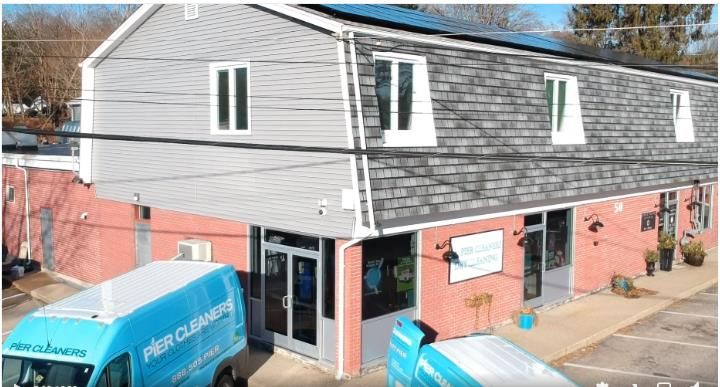
In 2015, General Treasurer Seth Magaziner and Governor Gina Raimondo proposed legislation to expand
the Rhode Island Clean Water Finance Agency with a goal of providing low-cost financing to a broad
variety of infrastructure-based projects, including energy efficiency and renewable energy projects for
public, commercial, and residential properties.

The creation of the Rhode Island Infrastructure Bank significantly increased the availability of capital,
with $734 million in financing being deployed in 32 cities and towns in Rhode Island since passage of the
legislation. This financing has generated over $169 million in financial and energy savings for local
communities, while creating 17,250 jobs, based on the project descriptions provided by the
Infrastructure Bank.

                                         Table of Contents

    Page 3:             Message from Treasurer Magaziner
    Page 4:             The Need for Infrastructure Investment
    Page 5:             Background of the Clean Water Finance Agency
    Page 7:             Creating the Rhode Island Infrastructure Bank
    Page 8:             New Lending Programs of the Rhode Island Infrastructure Bank
    Page 10:            Impact of Rhode Island Infrastructure Bank Financing
    Page 12:            Case Studies: Westerly, West Warwick, Pier Cleaners
    Page 15:            Moving Forward
    Page 17:            APPENDIX: Rhode Island Infrastructure Bank Loans and Grants

                                                                                                        2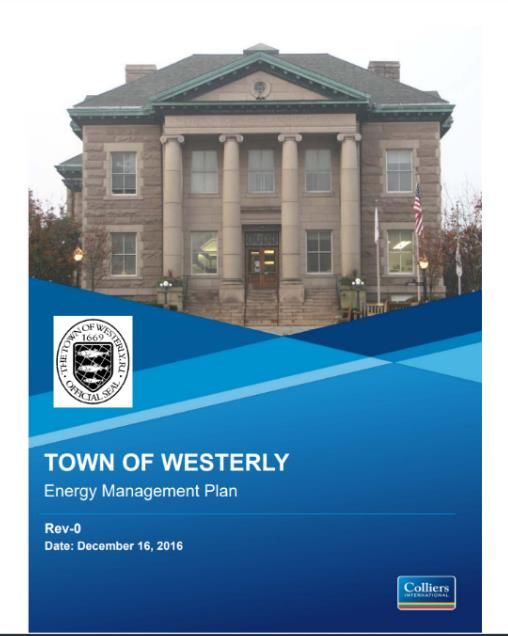
Message from Treasurer Magaziner
                               High-quality infrastructure and a clean environment are vital to Rhode
                               Island's economic prosperity. When I took office in 2015, I made clean
                               infrastructure finance a priority, recognizing that we could put thousands
                               of Rhode Islanders to work in good-paying jobs that would improve our
                               natural environment, reduce carbon emissions, help municipalities and
                               businesses save money on energy costs, and make our state more
                               economically competitive.

                                 Climate change is no longer solely a threat to future generations. The
                                 frequency and severity of extreme weather systems increasingly impacts
the lives of people around the globe and in our own communities. At the same time, Rhode Islanders
face an increasing cost of living – inflation is the highest it has been in 30 years, and thousands of
families are struggling to pay the bills.

Transitioning to a green economy is making Rhode Island more resilient to climate change, solidifying
our leadership in clean energy, improving our industrial competitiveness, and helping residents and
small businesses save on their energy costs. The State has set ambitious goals through the Act on
Climate, requiring net-zero emissions by 2050.

The Rhode Island Infrastructure Bank, under the leadership of Jeff Diehl, has been at the forefront of
financing the clean energy, infrastructure and resiliency investments that require upfront capital and
result in long term benefits. Financing from the Infrastructure Bank allows business owners and
communities to obtain accessible and affordable financing to pay for their energy retrofits, installation
of alternative energy, projects to improve water quality, and resilience projects.

The Infrastructure Bank matches its financing with expert technical assistance for communities to
complete a project at a minimal cost while maximizing the benefits of the project. This financing has
saved cities and towns – and taxpayers – money. Plus, the projects financed by Infrastructure Bank have
put many of Rhode Island's building and construction tradespeople back to work.

To put Rhode Island on a path to meet its net-zero energy goals, the need for the Infrastructure Bank’s
work continues – to strengthen our economy by investing in energy efficiency, renewable energy,
improving water quality, and helping save residents and small businesses money on their energy costs.

I am proud to highlight the investments made by the Rhode Island Infrastructure Bank since 2015, and I
look forward to continued collaboration – as a member of its Board of Directors and as a strong
supporter of its work – as we transition Rhode Island to a green economy.

                                                 Seth Magaziner
                                                 Treasurer, State of Rhode Island

                                                                                                            3
The Need for Infrastructure Investment
     The condition of Rhode Island’s natural environment, including waterways and shoreline, as well as the
     condition of our schools, libraries, public transportation infrastructure, roads and bridges, and other
     public assets, have a direct effect on our local economy. Sustained investment in public school buildings,
     public transportation, roads and bridges, water treatment systems, and other infrastructure is vital to
     supporting and creating good jobs and promoting full economic participation for all Rhode Islanders.

     Growing Rhode Island’s economy and expanding opportunity for every Rhode Island family requires
     schools that are warm, safe, dry, and equipped for 21st century learning. It requires well-maintained
     public transportation, roads, railway systems, and ports. Businesses, schools, and residents must have
     reliable and affordable access to electricity and other utilities, as well as broadband internet.

     The impact of climate change on Rhode Island’s natural resources and infrastructure is wide-ranging,
     well-documented, and growing.

     Every Rhode Islander depends on having well-functioning water and sewer systems to protect our
     health, and the natural beauty of Narragansett Bay – essential for our tourism and fishing industries.

     Historical underinvestment in infrastructure continues to affect our environment, and our health and
     economic well-being. The effects of extreme weather events regularly leave the state and its residents
     vulnerable to wind and flood damage. Temperatures in Rhode Island have increased by more than 3°F
     since the beginning of the 20th century, and the Narragansett Bay has risen more than six inches in the
     last 30 years.

     A warming climate poses significant risks for Rhode Island’s water, wastewater, transportation, and
     energy infrastructure. Repairing and strengthening our infrastructure is essential to economic growth,
     improving everyday lives, and protecting ourselves in the face of a changing climate.

     The Rhode Island Infrastructure Bank is the state’s central hub for financing infrastructure
     improvements for municipalities, businesses, and homeowners. It offers innovative financing for an
     array of infrastructure-based projects including water and wastewater, road and bridge, energy
     efficiency and renewable energy, climate resiliency, and brownfield remediation. These quality-of-life
     projects improve the state’s infrastructure, create jobs, promote economic development, and enhance
     the environment.

                                      Rhode Island Infrastructure Bank
                                            Mission Statement
 Our mission is to actively support and finance investments in the State’s infrastructure. The Infrastructure Bank
does so through a variety of means, including the issuance of bonds, originating loans and making grants, and the
engagement with and mobilization of sources of public and private capital. Through its activities, the Rhode Island
 Infrastructure Bank fosters infrastructure improvements that create jobs, promote economic development and
                                             enhance the environment.

                                                                                                               4
Background: Clean Water Finance Agency
The Rhode Island General Assembly established the Clean Water Finance Agency, which is the precursor
to the Infrastructure Bank, in 1989.

In 2015, when General Treasurer Seth Magaziner first took office, Rhode Island’s economy was still
struggling from the impact of the Great Recession. Rhode Island lost 40,000 jobs during the recession
but gained back fewer than 25,000. This was especially evident in the construction trades – of the
11,000 jobs lost in the recession, fewer than 5,000 had returned. Rhode Island’s unemployment rate
was among the highest in the country.

Meanwhile, Rhode Island’s energy costs were among the highest in the nation. Commercial energy
prices were the second highest of any state and 73% above the national average. Residential electricity
prices were 46% above the national average. Municipalities were spending more than $50 million
annually on electricity – ultimately at the taxpayer’s expense.

But efforts to invest in energy efficiency were not coordinated, resulting in millions of dollars of federal
funds for energy efficiency going unused. Rhode Island’s energy programs were dispersed across various
agencies, including programs at National Grid which were limited in scale. These programs did not
address deep energy retrofits, especially for municipal buildings and public schools.

The Clean Water Finance Agency

Rhode Island established the Clean Water Finance Agency in 1989 to administer federal and state
financing programs for wastewater and safe drinking water projects. To serve as a major source of low-
cost financing for clean water and drinking water for municipalities, drinking water suppliers, and
residents, the Clean Water Finance Agency administered:

    •   Clean Water State Revolving Fund: a subsidized loan program for municipalities and other
        quasi-public agencies to finance infrastructure projects that mitigate water pollution. Clean
        Water is Rhode Island’s largest and most important water pollution abatement financing
        program. Eligible projects include construction and upgrade of wastewater collection systems
        and treatment facilities; nonpoint source pollution best management practices; and other water
        pollution abatement and water quality protection activities. The Clean Water Finance Agency’s
        regulatory partner for Clean Water is the Rhode Island Department of Environmental
        Management. For a project to be eligible for financing, it must first be placed on the
        Department’s Project Priority List and receive a Certificate of Approval from them.
    •   Facility Plan Loan Program: a loan program that provides up to $150,000 in financing to local
        governments to complete water pollution abatement project facility plans. These plans are a
        prerequisite for projects seeking funding from the Clean Water State Revolving Fund.

                                                                                                           5
Background: Clean Water Finance Agency

    •   Drinking Water State Revolving Fund: a financing program that provides below-market interest
        rate loans to community public water systems, nonprofit noncommunity public water systems,
        privately organized water suppliers, and local governmental units to complete water
        infrastructure projects that support the planning, design, and construction of safe drinking
        water supply, treatment, and transmission infrastructure. Eligible projects include land
        acquisition, water supplier restructuring (i.e., consolidation of existing water suppliers),
        refinancing of existing debt, and guaranteeing or purchasing insurance for local debt obligations.
        The Rhode Island Department of Health serves as the regulatory partner for Drinking Water, and
        eligible projects must be on the Department’s Project Priority List and receive a Certificate of
        Approval from them.
    •   Community Septic System Loan Program and Sewer Tie-In Loan Fund: a lending program that
        provides low-cost, long-term financing to residential property owners for repair and
        replacement of substandard or failing septic systems or to replace cesspools (the Community
        Septic System Loan Program) and connect to the local sewer system and abandon individual
        septic systems or cesspools (the Sewer Tie-In Loan Fund). Funds are provided to municipalities
        to make direct loans to homeowners. Financing is interest free for both programs, with only a
        small loan origination fee and a 1% annual servicing fee. Rhode Island Housing partners on both
        programs to underwrite and service the loans.

In 2013, the General Assembly expanded the Clean Water Finance Agency’s scope to establish the
Municipal Road and Bridge Revolving Fund. This program offers long-term financing at a reduced
interest rate to municipalities for transportation infrastructure projects, such as roads, bridges, and
sidewalks. The Rhode Island Department of Transportation serves as the regulatory partner for Road
and Bridge, and eligible projects must be on the Department’s Project Priority List.

The Clean Water Finance Agency, during its history, established a strong reputation for its success
financing projects to promote clean water in partnership with municipalities, the Narragansett Bay
Commission, and drinking water suppliers.

                                                                                                          6
Creating the Rhode Island Infrastructure Bank
In 2015, Treasurer Magaziner worked with Governor Raimondo and the Rhode Island General Assembly
to expand the Clean Water Finance Agency into the Rhode Island Infrastructure Bank. The creation of
the Rhode Island Infrastructure Bank built on the success of the Clean Water Finance Agency to deploy
“green” infrastructure financing to support cities and towns and small business owners.
As a central hub for the existing Clean Water Finance Agency programs and new clean energy and
climate resiliency financing programs, the mandate of the old agency was expanded to finance energy
efficiency and renewable energy projects that would save money for residents, businesses, and
municipalities on their energy bills.
By expanding the scope of the old Clean Water Finance Agency, the programs of the Rhode Island
Infrastructure Bank now also include:
• Efficient Buildings Fund: a low-cost financing program for municipalities and quasi-public
agencies to complete energy efficiency and renewable energy projects in public buildings.
• Commercial Property Assessed Clean Energy (C-PACE): an innovative financing program for
energy efficiency and renewable energy projects in commercial or industrial properties. Eligible
properties include office buildings, manufacturing facilities, agricultural facilities, non-profit
organizations, and multi-family housing units.
• Brownfields Revolving Loan Fund: a funding program for public, private, and non-profit
borrowers to remediate properties contaminated with hazardous substances. Environmental
cleanup on these properties allows them to be redeveloped and returned to productive use.
• Water Quality Protection Charge program: a program funded by a charge on water bills that
supports projects by public drinking water suppliers to protect sources of drinking water. Eligible
projects include the purchase of watershed lands, property surveys and appraisals, water supply
management plans, and other physical improvements that directly protect the quality and
safety of drinking water.
To meet the goal of putting Rhode Islanders back to work, the statute creating the Efficient Buildings
Fund also encouraged project labor agreements for projects over $10 million – the first time this was
included in State law.
To transform into the Infrastructure Bank and accommodate the new programs, the organization
installed new leadership with Merrill Sherman as Chair of the Board of Directors and Jeff Diehl as
Executive Director and CEO. Treasurer Magaziner is also a member of the Board. Former Managing
Director of Program and Business Development, Michael Baer, led increasing collaboration with
municipalities and small businesses. In 2017, the Infrastructure Bank hired David Birkens as COO / CFO
to lead the technological transformation and modernization of its systems and processes. The
Infrastructure Bank’s Shaun O’Rourke was also appointed by Governor Raimondo as the State’s first
Chief Resilience Officer; he was recently promoted to Managing Director and the organization is now
establishing regional Resilience Coordinators, starting with Aquidneck Island. In February 2021, Vahid
Ownjazayeri was selected as the new Board Chair.
7New Lending Programs of the Rhode Island Infrastructure Bank
The Rhode Island Infrastructure Bank’s innovative programs allow it to offer low-cost financing to
municipalities and other entities.
The Infrastructure Bank uses commitments of federal funds – such as those from the Environmental
Protection Agency – and funds from the State of Rhode Island to attract investment from the private
markets. Most of the Infrastructure Bank’s revolving funds have AAA or AA credit ratings from S&P and
Fitch. As borrowers repay their loans – usually
over a 30-year period – the payments Green Bond Principles
replenish the revolving fund. • Full amount proceeds allocated to green projects
Because of the Infrastructure Bank’s • “Green” criteria are used to select projects
commitment to financing green infrastructure • Proceeds are proactively managed and tracked
projects, it has successfully issued bonds • Regular reporting of environmental impact and
designated as “Green Bonds.” use of proceeds is required
Efficient Buildings Fund
Financing from the Efficient Buildings Fund helps cities and towns that need access to capital to finance
energy efficiency retrofits of municipal buildings or to install renewable energy projects like solar arrays
on rooftops. Investing in energy efficiency improvements to public buildings, and saves Rhode Island
cities and towns and their taxpayers millions of dollars a year. Building out renewable energy also
insulates cities and towns from the volatility of gas and oil prices.
Eligible properties include municipal buildings, public schools, publicly-owned utilities and quasi-state
agencies. Projects eligible for Efficient Buildings Fund financing include any measures that will conserve
energy or produce clean energy, including installing new HVAC systems, programmable thermostats,
rooftop solar panels, and LED streetlights, as well as building envelope repairs and other energy
retrofits. The Infrastructure Bank partners with the Rhode Island Office of Energy Resources, and
projects must be on the Office’s Project Priority List to be eligible for Efficient Buildings Fund funding.
To date, projects financed through the Efficient Buildings Fund are expected to create or support 800
direct jobs and ultimately save local taxpayers more than $82 million in projected lifetime energy costs.
Commercial Property Assessed Clean Energy (C-PACE)
By making investments in building efficiency, solar energy, and other renewable energy sources, small
businesses in Rhode Island can reduce their environmental impact and their energy costs.
The types of projects that are eligible for 100% C-PACE funding include energy efficiency, renewable
energy, water conservation, alternative fuel infrastructure (electric car charging stations), and
environmental health and safety projects (such as asbestos or lead abatement).
For larger businesses, financing these projects is relatively simple. For small business owners in Rhode
Island who own their real estate, financing energy efficiency projects can be difficult. The Infrastructure
Bank’s Commercial Property Assessed Clean Energy (C-PACE) program was created to provide low-cost
financing to Rhode Island’s small business community.
8New Lending Programs of the Rhode Island Infrastructure Bank
C-PACE can provide up to 100% of the financing, at a fixed rate, for up to 25 years. Business owners can
invest in their business, with no upfront, out-of-pocket costs, and no additional personal guarantees.
The small business owner repays the loan through an assessment on their property, and typically the
owner realizes energy cost savings that are greater than their assessment payment.
By lowering the cost of doing business in the Rhode Island, the Infrastructure Bank is enabling property
owners to reinvest their money in their businesses - instead of spending it on their energy bills.
Municipal Resilience Program and the Municipal Infrastructure Grant Program
The Infrastructure Bank’s Municipal Resilience Program provides direct assistance to cities and towns to
complete a locally-driven process to identify priority projects that improve the community’s climate
resilience. Once cities or towns participate in the Community Resilience Building process, they are
eligible for Municipal Resilience Program Action Grants to fund projects identified by their plan.
Examples of projects include dam repair or removal, road elevation, hardening or elevation of pump
stations, berms and levies, green stormwater infrastructure, back-up power and energy efficiency,
watershed restoration, urban tree planting, and coastal erosion control.
After creating the Municipal Infrastructure Grant Program in 2018, the General Assembly shifted the
administration of the program to the Infrastructure Bank in 2021 and appropriated $1 million in the
FY2022 budget to support its work. Municipal Infrastructure Grant Program funds will be used to build
or repair public infrastructure like sewers, streets, roads, sidewalks, and water treatment systems.
Brownfields Revolving Loan Fund
A “brownfield” is a property which contains a hazardous substance, pollutant, or contaminant, and must
be cleaned up before any potential expansion, redevelopment, or reuse of which may be complicated.
Many of these properties, which include former industrial sites, are abandoned and are a blight to their
communities.
Reinvesting and restoring brownfield properties not only protects public health and the environment,
but also strengthens the local economy, supports job growth, and utilizes existing infrastructure.
The Department of Environmental Management is the Infrastructure Bank's regulatory partner for the
Brownfields Revolving Loan Fund. For a project to be eligible for financing through the Brownfields Fund,
it must first be placed on the Department’s Project Priority List (PPL).
The Brownfields Fund makes financing available to eligible public, private and non-profit borrowers for
the environmental remediation of brownfield properties in Rhode Island.
The need for affordable financing for redevelopment of Brownfield sites in Rhode Island is significant.
The Rhode Island Department of Environmental Management has identified
over 850 Brownfield properties across the state.
9Impact of Rhode Island Infrastructure Bank Financing
In expanding the programs offered by the Rhode Island Infrastructure Bank, Treasurer Magaziner and
lawmakers sought to provide low-cost financing for energy efficiency and renewable energy projects
that would save residents, businesses and municipalities on their energy bills while putting tradesmen
and women back to work.
Since FY2016, the Infrastructure Bank has financed over $734 million in loans and grants to
municipalities, publicly-owned utilities, quasi-public agencies, small businesses, and non-profit
organizations. This investment has supported the creation of 17,250 jobs.
30 of Rhode Island’s 39 municipal governments have utilized financing from the Infrastructure Bank
from FY2016-FY2021 for energy efficiency upgrades through the Efficient Buildings Fund; water system
improvements through Clean Water and Drinking Water; assisting homeowners with septic system
repairs and replacements through Drinking Water, the Community Septic System Loan Program and the
Sewer Tie-In Loan Fund; and making their infrastructure more resilient with the Municipal Road and
Bridge Program and through the Municipal Resiliency Program.
The Efficient Buildings Fund made a total of $60,941,615 loans to municipalities and quasi-public
agencies from FY2016-FY2021. During this time, an additional $84 million in loans assisted 32 small
businesses and non-profits with energy efficiency and renewable energy upgrades through C-PACE.
Additionally, the Narragansett Bay Commission and a quasi-public agency were also served by
Infrastructure Bank programs.
Total Loans and Grants FY2016-FY2021
$800,000,000.00
$700,000,000.00
$600,000,000.00
$500,000,000.00
$400,000,000.00
$300,000,000.00
$200,000,000.00
$100,000,000.00
$-
FY2016 FY2017 FY2018 FY2019 FY2020 FY2021
10Impact of Rhode Island Infrastructure Bank Financing
The Infrastructure Bank regularly assesses the interest rate environment and bond market conditions
and refinances Clean Water and Safe Drinking Water State Revolving Fund Bonds, as appropriate. In
2021 alone, refinancing of this debt generated $6.4 million in total savings, which was returned directly
to 27 cities, towns, and quasi-public utilities across Rhode Island.
In total, the municipalities, agencies, businesses, and nonprofits that participated in Infrastructure Bank
programs saved $169,894,038.58 on energy and financing costs from FY2016-FY2021, thereby reducing
expenses for ratepayers, taxpayers, and small business owners and their customers. This has a major
impact on reducing utility costs and making it easier for people to keep up with the rising cost of living.
At a time when inflation is the highest it has been in 30 years and thousands of families are struggling to
pay bills, the Infrastructure Bank’s programs help reduce energy use with retrofits like converting to
LEDs, installing modern HVAC systems and programmable thermostats, and repairing and insulating
building envelopes.
The Infrastructure Bank also invests in alternative energy, including wind and solar – to transition
municipalities and small businesses to lower cost and cleaner energy sources. (See page 13 for a profile
of West Warwick’s Efficient Buildings Fund project to install wind turbines.)
This has a direct cost savings for Rhode Island’s residents on their energy bills, the goods and services
they purchase from small businesses, and their taxes.
0% Interest Loan for Lead Pipe Replacement in Providence
Exposure to lead in drinking water can have severe impacts on physical and behavioral health,
especially in children.
The Infrastructure Bank has committed $4 million in financing for its “0% interest” loan program for
customers to replace the pipes that connect their home to the water main.
The 0% interest loans have a 10-year repayment period, making lead pipe replacement more
affordable for homeowners.
Additionally, when a homeowner replaces their private-side service line, Providence Water will also
replace the public-side lead service line at no cost to the homeowner.
Providence Water also provides customers free lead test kits for their homes or businesses.
www.provwater.com
A detailed breakdown of all projects funded by the Infrastructure Bank from
FY2016 through FY2021 can be found in the Appendix, starting on page 17.
11Efficient Buildings Fund Case Study: Westerly, RI
Westerly has been on the front line of extreme weather
caused by climate change. The record-breaking Great March
Flood of 2010 partially flooded the Town’s wastewater
treatment plant. It also raised the Pawcatuck River higher than
the storm surge from the Hurricane of 1938– and this flooding
suspended Amtrak services along the Northeast Corridor.
In 2012, Westerly beaches, homes, and local businesses were
battered by the 65 MPH winds of Hurricane Sandy, leading to
the displacement of residents and months of cleanup.
Recently, Tropical Storm Henri made Westerly’s Atlantic
Avenue impassable – and the storm impacted gas and
electricity service across Rhode Island for several days.
In 2016, the Town created an Energy Management Plan to
mitigate the risks associated with volatile energy prices to
reduce its greenhouse gas emissions. Westerly was listed as a
“Priority” project for the initial round of the Infrastructure’s Efficient Buildings Fund financing.
Westerly used $1.6 million in Efficient Buildings Fund financing to make much-needed energy efficiency
projects across the city, including installing solar panels on its Department of Public Works facility,
completing an energy retrofit to Town Hall and police station, and upgrading streetlights to energy-
efficient LED fixtures.
Converting to more energy efficient Light-Emitting Diodes (LED) fixtures throughout public roadways is
one significant step to reduce long-term energy consumption and realize cost savings. Replacement of
traditional high-pressure sodium (HPS) lighting with LEDs can also help reduce maintenance and related
equipment costs. For example, in comparison to traditional HPS fixtures, the newest LEDs have lifespans
of 10-20+ years. They will also help reduce the Town’s greenhouse gas emissions and carbon footprint.
Westerly also replaced major components of the heating system at the Town Hall including the boiler,
water heater and thermostat, and added insulation to pipes and valves.
Additionally, Westerly upgraded the lighting at the Town Hall, which will reduce energy consumption by
13%. Upgraded lighting at the police station is expected to reduce energy consumption by 15%.
The most significant energy savings will be as a result of solar panels being installed on the Highway
Garage building. These panels will provide 64% of the electricity used at the facility.
Over the life of the loan, Westerly is projected to save $8.5 million in energy costs; money that can be
re-invested in services to its residents.
In addition to the financial savings, these energy efficiency upgrades reduce traditional energy usage
and greenhouse gas emissions, improving air quality throughout Rhode Island.
12Efficient Buildings Fund Case Study: West Warwick, RI
West Warwick recently became the first town in Rhode
Island to have all of its electric energy for municipal
buildings supplied through its own renewable energy
projects. As a result, the Town has not had to pay an
electric bill for its municipal buildings in 5 years.
In 2015, local voters overwhelmingly approved a
referendum to issue $18 million in bonds to finance the
purchase of three 1.5-megawatt wind turbines, in
coordination with the Infrastructure Bank’s Efficient
Buildings Fund.
Municipal Resilience Program
In 2016, West Warwick completed work on three
The Infrastructure Bank’s Municipal
wind turbines which, combined, have a system
Resilience Program, in partnership with the
output capacity of 4.5kw. Over the life of the 20-
Nature Conservancy, aims to equip
year loan, the Town could realize over $20 million in
municipalities with technical assistance to
energy cost savings after servicing the debt. The
assess their vulnerability to climate change,
wind turbines have an expected 25-year lifespan,
while providing the necessary funding to
which means that the Town has the potential of
take on specific community resilience
generating an additional $10-$20 million in energy
projects.
costs from the project.
Since the program’s inception in 2019,
Today, every building owned by the Town, including
Barrington, Bristol, Little Compton, Newport,
all schools, the Town Hall, senior center, library,
Middletown, Pawtucket/Central Falls,
wastewater treatment facility, as well as the Town’s
Portsmouth, South Kingstown, Warwick,
ice rink and field house are completely powered by
Warren, Westerly and Woonsocket have
100% renewable energy, which is produced by the
completed Community Resilience Building
wind turbines and rooftop solar arrays.
workshops.
Using Efficient Buildings Fund financing, the Town
As part of the program, municipalities
made efficiency upgrades at town-owned buildings
developed a list of priority projects and
and converted all of its streetlights to LED fixtures.
subsequently applied to the Infrastructure
West Warwick was paying over $350,000 annually
Bank for a share of action grant funding,
to light its streets. LEDs will save the Town about
which require a 25% local match.
$100,000 a year.
A range of resilience projects have emerged
West Warwick also installed solar panel arrays on
from the workshops including stormwater
the Town’s ice rink and field house, taking
management, coastal restoration, dam
advantage of grants from Rhode Island Commerce
repair/removal, tree planting, culvert repair,
and the Rhode Island’s Office of Energy Resources,
and flood mitigation.
to offset the cost of installing the solar panels.
The installation of these solar panels, along with other energy efficiency investments are estimated to
save the town an additional $150,000 - $200,000 per year.
13C-PACE Case Study: Pier Cleaners
Pier Cleaners is a family-owned and operated,
environmentally friendly dry-cleaning business
which was established in 1956 and has multiple
locations in Rhode Island.
The owners, Larry and Phyllis Fish, learned about
the Infrastructure Bank’s C-PACE program during
a public information session at the South
Kingstown Town Hall in 2017. Partnering with
the Infrastructure Bank, Larry and Phyllis
replaced the roof of the South Kingstown location, while also installing solar panels.
Partnering with the Infrastructure Bank, the business financed the project, which will offset an
estimated 81% of the electricity used by the cleaner.
The business is projected to save $280,000 on energy bills over the next 20 years, with a net savings of
$72,000 over the first 15 years. This money can be invested into the business instead of paying energy
bills.
The electricity generated by the solar panels will also eliminate 461 tons of greenhouse gas emissions –
equivalent to 1.1 million miles driven by the average passenger car.
Pier Cleaners installed solar panels at their Westerly location, as well, which is expected to reduce the
energy costs for that location by 94%.
C-PACE utilizes private sector capital to finance energy efficiency and renewable energy projects –
without relying on any taxpayer dollars. By lowering the cost of doing business in Rhode Island, the
Infrastructure Bank is enabling property owners to reinvest their money in their businesses – instead of
spending it on their energy bills.
The installation of solar panels on commercial buildings not only keeps tradesmen and women working,
but also reduces the consumption of fossil fuels and the long-term energy costs for businesses.
“C-PACE is a brilliant program run by the
Rhode Island Infrastructure Bank, that
allows us to finance 100% of this project.
We added solar, and you can’t even see
the panels. The cash flow, with the
savings from the electricity being
generated – we are benefitting our
business and using clean energy. What’s
better than that?” – Larry Fish, Pier
Cleaners.
14Moving Forward
Since establishing the Rhode Island Infrastructure Bank programs in 2015, it has invested $734 million
across 32 communities in energy efficiency, renewable energy, water, roads and bridges, and resiliency
projects. This work has supported 30 municipal governments, 25 small businesses, and 7 non-profits.
These investments have supported over 17,250 jobs. But there is much more work to do.
Communities across Rhode Island are already experiencing the impacts of climate change – including
extreme heat, extreme weather, and sea level rise. This puts critical infrastructure at risk.
In 2021, Rhode Island passed the Act on Climate, which sets ambitious – and vitally necessary – targets
to achieve net-zero emissions by 2050, including transitioning Rhode Island to 100% renewable energy
by 2030. We have the opportunity to create thousands of jobs as the state continues to address the
infrastructure needs of transitioning to a clean energy economy and ensure that the state’s
infrastructure is resilient in the face of climate change. The Rhode Island Infrastructure Bank can be a
vital hub for financing the state’s infrastructure needs.
To make significant progress to expand renewable energy and make communities more resilient, next
steps should include:
• Conducting a statewide assessment of municipal infrastructure to catalogue the need for
climate resiliency projects. Like the model followed to develop the statewide school
construction plan, State and municipal leaders need a clear picture of the deficiencies of existing
infrastructure. Each municipality should then develop a resiliency plan that identifies specific
upgrades needed and estimates the costs of these projects. The Infrastructure Bank should
provide technical assistance through the Municipal Resilience Program to give cities and towns
the guidance they need to craft their plans.
• Expanding the Municipal Infrastructure Grant Program to support municipal resiliency work, as
well as deploying the Efficient Buildings Fund and the Municipal Road and Bridge Program, and
others, to offer project financing.
• To reach the State’s renewable energy goals, more public buildings, schools, and small
businesses will require energy retrofits and renewable energy projects – projects that can be
funded by the Efficient Buildings Fund, C-PACE, and other Infrastructure Bank programs.
• Using the flexibility of the Infrastructure Bank’s Clean Energy Fund to support the necessary
transformation of the heating sector from heating with fossil fuels to heating through clean
electrification. The Infrastructure Bank can provide low- or no-interest loans or grants to
ratepayers, small business owners, municipalities, and non-profit organizations to install heat
pumps, weatherize buildings and install rooftop solar. The transformation of the heating sector
will help the State meet its decarbonization goals and to mitigate the impact of any future gas
outages.
• Capitalizing on the Infrastructure Bank’s success as a conduit of federal funding programs to
direct anticipated federal infrastructure funding that will finance other clean energy and
resiliency projects, such as projects in the transportation section.
• In all its initiatives, the Infrastructure Bank and State leaders should focus on recognizing the
energy needs and cost constraints of ratepayers. The Infrastructure Bank’s success using bond
15refinancing to save ratepayers money must be replicated across all communities to ensure
energy becomes more affordable.
Rhode Island’s clean energy future will rely on innovative and low-cost financing to fund projects that
reduce emissions, improve water quality, and make Rhode Island more resilient in the face of climate
change. The Rhode Island Infrastructure Bank’s investments will continue to benefit municipalities, small
businesses, non-profits, and taxpayers, while improving the environment and creating good jobs.
_________________________________________________________________________________
Acknowledgements: This report was prepared by the staff of the Rhode Island Treasurer’s Office in
collaboration with the staff of the Rhode Island Infrastructure Bank. With additional thanks to Larry Fish,
owner, Pier Cleaners.
Disclaimer: All information and content provided within are for general informational purposes only and should not be relied
upon for making business, legal or any other decisions. While every effort has been made to ensure the accuracy and
completeness of the information and resources in this document, the Treasurer’s Office makes no warranties of any kind,
expressed or implied, about the completeness, accuracy, reliability, suitability, or availability regarding the information
contained within. Any reliance you place on such material is strictly at your own risk and all liability with respect to actions taken
or not taken based on the information contained within are expressly disclaimed.
16APPENDIX
Fiscal Year 2016 Rhode Island Infrastructure Bank Loans and Grants
Loan/ Grant Debt Service Jobs
Borrower Entity Type Program Project Description
Amount Savings Created
Citywide Repaving-Pavement
City of Pawtucket Municipality MRBRF Management Program (2 miles of $3,000,000.00 $305,543.00 32
paving)
Narragansett Bay Phase III CSO Plan, Misc. WWTF &
Utility CWSRF $41,753,500.00 $4,500,000.00 1,190
Commission Collection System Improvements
Providence Water
Municipality DWSRF Central Operations Facility $30,000,000.00 $2,700,387.00 855
Supply Board
Narragansett Bay Phase III CSO Plan, Misc. WWTF &
Utility CWSRF $23,000,000.00 $1,919,057.00 656
Commission Collection System Improvements
Advanced Wastewater Treatment
City of Woonsocket Municipality CWSRF $14,000,000.00 $450,000.00 399
Upgrade
WWTF Flood Berm & Nutrient
City of Warwick Municipality CWSRF Removal Upgrade & Sewer $10,574,900.00 $675,000.00 301
Extensions
Water Pollution Control Plant
City of Newport Municipality CWSRF $9,142,000.00 $633,665.00 261
Upgrades
WWTF Flood Berm & Nutrient
City of Warwick Municipality CWSRF Removal Upgrade & Sewer $8,000,000.00 $584,509.00 228
Extensions
Town of West WWTF Phosphorus Removal
Municipality CWSRF $7,000,000.00 $500,000.00 200
Warwick Upgrade
Town of East RBC Rehabilitation & WWTF
Municipality CWSRF $6,000,000.00 $446,988.00 171
Greenwich Improvements
Pawtucket Water
Municipality DWSRF Main Replacement $5,907,000.00 $590,000.00 168
Supply Board
Wellington Ave. CSO Facility
City of Newport Municipality CWSRF $5,400,000.00 $407,854.98 154
Upgrades
Pawtucket Water
Municipality DWSRF Cleaning and Lining #5 $4,718,000.00 $507,828.00 134
Supply Board
17Loan/ Grant Debt Service Jobs
Borrower Entity Type Program Project Description
Amount Savings Created
WWTF Copper & Phosphorus
Town of Burrillville Municipality CWSRF $3,700,000.00 $264,163.00 105
Removal Upgrades
Replacement of Main Street Bridge
City of Cranston Municipality MRBRF $1,755,000.00 $190,845.00 19
#9960
Town of Barrington Municipality CWSRF Closure of Landfills 3 and 4 $3,000,000.00 $257,302.00 86
WWTF Copper & Phosphorus
Town of Burrillville Municipality CWSRF $2,600,000.00 $264,163.00 74
Removal Upgrades
CWSRF; Misc. WWTF, Pump Stations &
Town of Bristol Municipality $2,500,000.00 $206,653.00 71
CW Admin Collection System Improvements
Misc. WWTF, Pump Stations &
Town of Bristol Municipality CWSRF $2,500,000.00 $215,351.00 71
Collection System Improvements
Town of Cumberland Municipality DWSRF Fisher Tank Rehab $1,750,000.00 $267,918.00 50
Warren WWTF Improvements
Town of Warren Municipality CWSRF $1,700,000.00 $139,701.00 48
(Design)
CWSRF; Pump Stations
Town of Lincoln Municipality $849,000.00 24
CW Admin Repairs/Rehabilitations
CWSRF; Septic System Repair/
Town of Hopkinton Municipality $300,000.00 9
CSSLP Replacement
CWSRF; Septic System Repair/
Town of Jamestown Municipality $300,000.00 9
CSSLP Replacement
Town of North CWSRF; Septic System Repair/
Municipality $300,000.00 9
Kingstown CSSLP Replacement
CWSRF; Septic System Repair
Town of Portsmouth Municipality $300,000.00 9
CSSLP /Replacement
CWSRF; Septic System Repair/
Town of Tiverton Municipality $300,000.00 9
CSSLP Replacement
2016 Pavement Rehabilitation
Town of Bristol Municipality MRBRF $1,175,000.00 $133,320.00 13
Program
Town of New Old Town Road-Road
Municipality MRBRF $296,000.00 $65,424.00 3
Shoreham Improvements
FY2016 Total $191,820,400.00 $16,225,671.98 5,357
18Fiscal Year 2017 Rhode Island Infrastructure Bank Loans and Grants
Loan/ Grant Debt Service Additional Jobs
Borrower Entity Type Program Project Description
Amount Savings Cash Savings Created
FY2017 Asphalt Program: 35 local
Town of East
Municipality MRBRF roads encompassing 15 miles of $5,000,000.00 $329,234.00 54
Greenwich
paving
Citywide Repaving-Pavement
City of Pawtucket Municipality MRBRF Management Program (2 miles of $3,000,000.00 $263,850.00 32
paving)
Water Pollution Control Plant
City of Newport Municipality CWSRF $33,443,000.00 $3,668,071.00 953
Upgrades
Providence Water Replacement of lead water service
Municipality DWSRF $16,272,095.00 $1,194,284.00 464
Supply Board lines
Sewer Extensions & WWTF
City of Warwick Municipality CWSRF Advanced Wastewater Treatment $3,730,000.00 $256,712.00 106
Construction
Town of North
Municipality CWSRF Wickford Sewer Extension $3,600,000.00 $203,240.00 103
Kingstown
Construction of new wells and
Town of Cumberland Municipality DWSRF $3,000,000.00 $344,998.00 86
associated components
CWSRF; Septic System Repair/
Town of Portsmouth Municipality $1,500,000.00 43
CSSLP Replacement
CWSRF; Septic System Repair/
Town of Glocester Municipality $300,000.00 9
CSSLP Replacement
Solar panels at the Newport
City of Newport Municipality EBF $1,242,000.00 $33,903.00 $1,381,500.00 19
wastewater treatment facility
Energy efficiency improvements in
municipal buildings (Fire Stations
and Auxiliary facilities- lighting,
boilers, door seals, programable
City of Providence Municipality EBF $1,252,000.00 $49,148.00 $1,642,986.45 19
thermostats, heating; Police
Facility- boiler, lighting, roof
insulation, heating conversion,
door and window seals)
Embrace Home Loans Small Rooftop solar installation (328 kW
C-PACE $628,013.00 $1,118,696.00 7
(Middletown) Business across 2 projects)
19Loan/ Grant Debt Service Additional Jobs
Borrower Entity Type Program Project Description
Amount Savings Cash Savings Created
Embrace Home Loans Small Rooftop solar installation (328 kW
C-PACE $585,234.00 $1,160,217.00 7
(Middletown) Business across 2 projects)
Laurel Lane Country
Small 121 kW ground mount solar
Club (South C-PACE $507,438.00 $1,260,755.00 4
Business installation
Kingstown)
CWSRF; Septic System Repair/
Town of Portsmouth Municipality $300,000.00 9
CSSLP Replacement
Energy efficiency improvements in
Town of Westerly Municipality EBF municipal buildings; solar panels at $1,350,000.00 $36,144.00 $7,984,453.15 20
DPW garage
Energy efficiency improvements at
Edgewood Highlands School
(boilers, chiller, lighting and
City of Cranston Municipality EBF $2,240,000.00 $29,179.00 $287,325.00 34
lighting sensors, energy
management system, ventilation,
motors, and drives)
Energy efficiency improvements in
municipal buildings (library-
programmable thermostats,
occupancy sensors, energy
management system; Police
Annex- furnace, lighting, door
City of Pawtucket Municipality EBF $3,915,000.00 $90,225.00 $11,522,280.00 59
seals; Public Works Facility- boiler,
programmable thermostats,
lighting, door seals and windows;
Senior Center (unoccupied
temperature set back); Public
Safety Facility (lighting)
Town of West Warwick Municipality EBF Wind Turbine (#1 of 3) $7,184,000.00 $325,754.00 $14,553,710.00 108
FY2017 Total $89,048,780.00 $6,824,742.00 $40,911,922.60 2,134
20Fiscal Year 2018 Rhode Island Infrastructure Bank Loans and Grants
Loan/ Grant Debt Service Additional Jobs
Borrower Entity Type Program Project Description
Amount Savings Cash Savings Created
City of Providence –
Providence Public Municipality MRBRF Road resurfacing projects $10,000,000.00 $1,000,000.00 108
Building Authority
Road resurfacing and utility
Town of Middletown Municipality MRBRF $5,000,000.00 $445,492.00 54
repairs
City of Pawtucket Municipality MRBRF Road resurfacing projects $2,000,000.00 $256,818.00 22
EE Upgrades (Townwide LED
Town of Hopkinton Municipality EBF $221,000.00 $59,620.00 $1,081,660.00 3
streetlight retrofit)
Energy Efficiency (Townwide LED
Town of Westerly Municipality EBF streetlight retrofit and Police $250,000.00 $69,541.00 $608,311.00 4
Station HVAC)
EE Upgrades (Community Center,
Public Safety Building, Town Hall-
LED lighting and controls, building
Town of Warren Municipality EBF shell insulation, energy $504,000.00 $66,879.00 $1,779,526.00 8
management systems, burner and
boiler replacements, motors, and
drives)
Wastewater Treatment Facility
Town of Warren Municipality CWSRF $20,000,000.00 $2,904,377.00 570
Improvements
Construction of new water
City of Woonsocket Municipality DWSRF $12,500,000.00 $630,980.00 356
treatment facility
EE Upgrades (Townwide
streetlight retrofits; Highway
Division Building, Town Hall, and
Library – lighting improvements
Town of Cumberland Municipality EBF $1,343,000.00 $54,606.00 $4,078,604.00 20
and conversion to LEDs, hot water
heater, boiler and AC
replacements, pipe insulation,
and programmable thermostats)
Town of Middletown Municipality CWSRF Sewer Extensions $4,550,000.00 $718,322.00 130
21Loan/ Grant Debt Service Additional Jobs
Borrower Entity Type Program Project Description
Amount Savings Cash Savings Created
Drinking water distribution
Town of Cumberland Municipality DWSRF $4,000,000.00 $234,075.00 114
system upgrades
Town of Bristol Municipality CWSRF Collection system upgrades $2,222,500.00 $200,000.00 63
Helping Hands
Non-profit
Community Partners C-PACE Energy Efficiency Improvements $94,466.00 $20,410.00 1
Organization
(Providence)
City of East Kent Heights Water Tower
Municipality DWSRF $1,850,000.00 $288,232.00 53
Providence repainting and rehab
Kingston Cleaners Small
C-PACE 28 kW rooftop solar installation $162,293.00 $205,426.00 2
(Westerly) Business
Solids separation collection
Town of Westerly Municipality CWSRF $1,664,000.00 $115,563.00 47
system repairs
Town of North CWSRF; Septic System Repair/
Municipality $1,000,000.00 29
Kingstown CSSLP Replacement
Providence Water Private-side lead replacement
Municipality DWSRF $1,000,000.00 29
Supply Board loans
Water service line connection (for
Town of Burrillville Municipality DWSRF $700,000.00 $116,321.00 20
Harrisville Water)
CWSRF; Septic System Repair/
Town of Tiverton Municipality $600,000.00 17
CSSLP Replacement
CWSRF; Septic System Repair/
Town of Richmond Municipality $300,000.00 9
CSSLP Replacement
CWSRF; Septic System Repair/
Town of Scituate Municipality $300,000.00 9
CSSLP Replacement
EE Upgrades (Streetlight retrofits;
Public Works, Senior Center,
City of East Library- LED light retrofits, boiler
Municipality EBF $2,370,000.00 $79,214.00 $5,044,825.00 36
Providence retrofits, thermostats, motors and
drives, hot water heater
replacements
Mill at Lafayette Small Rooftop solar installation (166 kW
C-PACE $95,814.00 $753,596.00 1
(North Kingstown) Business across 3 projects)
Mill at Lafayette Small Rooftop solar installation (166 kW
C-PACE $66,751.00 $136,569.00 1
(North Kingstown) Business across 3 projects)
Mill at Lafayette Small Rooftop solar installation (166 kW
C-PACE $335,293.00 $259,338.00 2
(North Kingstown) Business across 3 projects)
22Loan/ Grant Debt Service Additional Jobs
Borrower Entity Type Program Project Description
Amount Savings Cash Savings Created
Pawtucket Medical Small
C-PACE 38 kW rooftop solar installation $126,453.00 $222,451.00 1
Center (Pawtucket) Business
Pier Cleaners (South Small
C-PACE 42kW rooftop solar installation $135,113.00 $279,534.00 1
Kingstown) Business
Shao Apartment Small
C-PACE 23 kW rooftop solar installation $88,145.00 $197,131.00 1
Building (Providence) Business
US Extruders Small
C-PACE 210 kW rooftop solar installation $503,953.00 $1,125,444.00 4
(Westerly) Business
Town of South CWSRF; Septic System
Municipality $300,000.00 9
Kingstown CSSLP Repair/Replacement
City of East CWSRF;
Municipality Sewer Tie-Ins $150,000.00 4
Providence STILF
Town of New Old Town Road-Road
Municipality MRBRF $449,000.00 $103,786.00 5
Shoreham Improvements
Town of West
Municipality EBF Wind Turbine (#2 of 3) $6,016,570.00 $108,562.00 $10,258,505.00 90
Warwick
FY2018 Total $80,898,351.00 $7,452,388.00 $26,051,330.00 1,821
23Fiscal Year 2019 Rhode Island Infrastructure Bank Loans and Grants
Loan/ Grant Debt Service Additional Jobs
Borrower Entity Type Program Project Description
Amount Savings Cash Savings Created
Town of Westerly Municipality MRBRF Road improvement plan $15,000,000.00 $1,088,709.00 162
Town of Barrington Municipality MRBRF Road Resurfacing $3,500,000.00 $569,314.00 38
City of Pawtucket Municipality MRBRF Road improvement plan $2,000,000.00 $224,188.00 22
Town of Warren Municipality MRBRF Road Resurfacing $2,000,000.00 $128,571.00 22
Road improvement plan -
City of Central Falls Municipality MRBRF $1,500,000.00 $161,513.00 16
Green Streets Initiative
Town of North Townwide LED Streetlight
Municipality EBF $935,000.00 $52,855.00 $2,131,073.00 14
Kingstown Retrofits
AC Property Small Roof improvements and 188
C-PACE $482,698.00 $1,078,148.00 4
Management Business kW solar installation
Matunuck Beach Small
C-PACE 25 kW solar installation $113,722.00 $247,223.00 1
Properties Business
Peck Senior Center Energy
Efficiency (HVAC, roof
Town of Barrington Municipality EBF $2,500,000.00 $81,002.00 $3,200,000.00 38
upgrades, lighting, insulation,
thermostats)
Narragansett Bay CSO III Planning and Misc.
Utility CWSRF $45,000,000.00 $4,945,190.00 1,283
Commission Improvements
Final portion of design and
City of Woonsocket Municipality DWSRF construction of Water $27,292,496.02 $248,287.00 778
Treatment Plant
Construction of new treatment
City of Woonsocket Municipality DWSRF $15,500,000.00 $122,392.00 442
facility
Providence Water Drinking water infrastructure
Municipality DWSRF $14,700,000.00 $142,987.00 419
Supply Board improvement projects
Ferry Road Main Replacement;
Bristol County Water
Municipality DWSRF Child Street Main Replacement; $3,850,000.00 $316,114.00 110
Authority
Water Meter Replacement
Narragansett Bay NBC Pool 21 SW#1 - not an
Utility SW $10,000,000.00 285
Commission accelerator project
24Loan/ Grant Debt Service Additional Jobs
Borrower Entity Type Program Project Description
Amount Savings Cash Savings Created
Portsmouth Water & Portsmouth Water and Fire
Municipality DWSRF $3,100,000.00 $90,069.00 88
Fire District District #5
Harrisville Fire District Municipality DWSRF Water system rebuild, PFAS $2,850,000.00 $2,850,000.00 81
Town of Bristol Municipality CWSRF WWTF Improvements $2,270,000.00 $310,285.00 65
Purchase of the Mercy Lodge
property, Mercy Woods
Pawtucket Water
Municipality WQPC property & Savage property to $831,942.00 24
Supply Board
protect the Diamond Hill
Reservoir
City of East THM Removal System @
Municipality DWSRF $2,000,000.00 $100,093.00 57
Providence Storage Tank
Town of New
Municipality CWSRF Landfill Stabilization $1,995,000.00 $109,038.00 57
Shoreham
Mirror Image Small 81 kW solar installation and
C-PACE $255,873.00 $539,892.00 2
(Pawtucket) Business roof
Four Seasons Mobile
Small Drinking water system
Home Cooperative DWSRF $350,000.00 $360,500.00 10
Business improvements
Association (Tiverton)
CWSRF; Septic System Repair/
Town of Charlestown Municipality $300,000.00 9
CSSLP Replacement
Town of New CWSRF;
Municipality Sewer Tie-Ins $150,000.00 4
Shoreham STILF
Providence Public Non-profit Energy efficiency, windows,
C-PACE $1,583,120.00 $238,833.00 19
Library Organization HVAC
Sunshine Day Care Small
C-PACE 60kW solar installation $183,171.00 $564,025.00 1
(North Kingstown) Business
Woonasquatucket Stormwater improvement and
Non-profit
River Watershed SW pedestrian greenway project at $300,000.00 9
Organization
Council Citizens Bank
FY2019 Total $160,543,022.02 $11,901,107.00 $7,999,194.00 4,057
25Fiscal Year 2020 Rhode Island Infrastructure Bank Loans and Grants
Loan/ Grant Debt Service Additional Jobs
Borrower Entity Type Program Project Description
Amount Savings Cash Savings Created
City of Providence -
Providence Public Municipality MRBRF Citywide road improvements $20,000,000.00 $2,135,617.00 216
Building Authority
Roadway infrastructure and
City of Warwick Municipality MRBRF associated drainage $10,000,000.00 $256,875.00 108
improvements
Town of Cumberland Municipality MRBRF Street pavement improvements $2,500,000.00 $229,808.00 27
Financing conversion of
City of Pawtucket Municipality EBF $1,000,000.00 $46,241.00 15
streetlights to LED
Electric substation for battery
Pascoag Utility District Municipality EBF storage and related infrastructure $1,419,045.00 $54,201.00 21
upgrades
Providence Water Private-side lead replacement
Municipality DWSRF $3,000,000.00 86
Supply Board loans
Small
Acorn Manufacturing C-PACE 25 kW solar installation $156,785.00 $255,993.00 1
Business
Small New construction – energy
Aloft (Providence) C-PACE $4,501,987.00 54
Business efficiency
New Construction of multifamily
residential – energy efficiency
Churchill and Banks Small
C-PACE (LED lighting, high-efficiency HVAC $2,000,000.00 24
(Providence) Business
equipment, improved building
envelope features)
Harbor Animal Hospital Small
C-PACE 92kW solar installation $245,131.00 $583,908.00 2
(Warren) Business
Montabella Grand
Small
Touring (West C-PACE 25 kW solar installation $86,000.00 $219,688.00 1
Business
Warwick)
Improvements to the Cumberland
Town of Cumberland Municipality DWSRF $4,000,000.00 $221,532.00 114
Water System
26You can also read


