Swiss Re - Leading Global Re/Insurer - Company presentation as of April 2019
←
→
Page content transcription
If your browser does not render page correctly, please read the page content below

Swiss Re – Leading Global Re/Insurer
Company presentation as of April 2019

Swiss Re – Leading Global Re/Insurer

  Overview and                 Capital                 P&C and L&H                                     Corporate
  Group Strategy             Management                Reinsurance                                     Solutions
     page 4                    page 23                   page 31                                        page 41

                     Life                    Asset                    Global Re/Insurance
                   Capital                Management                   & Protection Gap
                   page 46                  page 51                         page 58

                                                                     Swiss Re Group | Company presentation | April 2019   2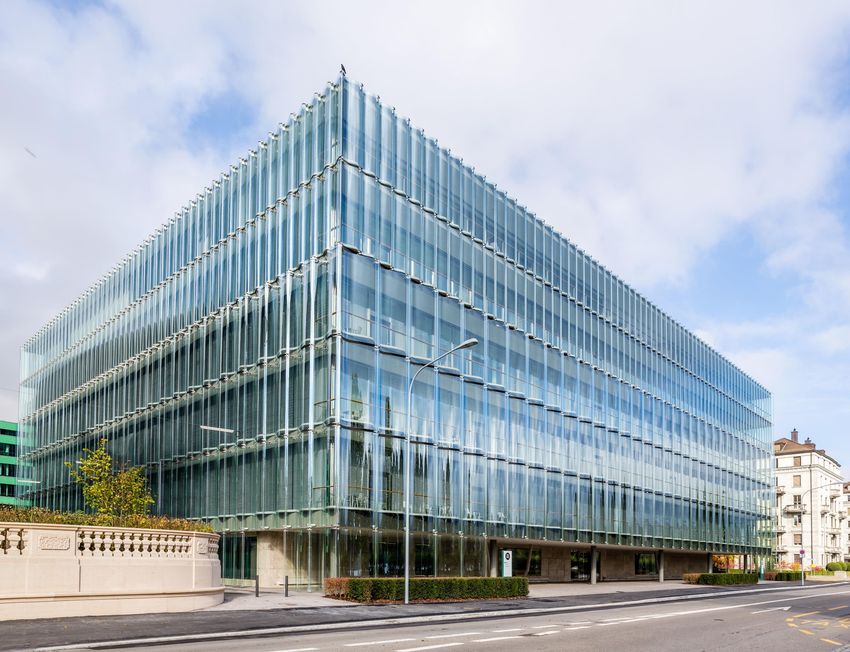
A truly global reinsurer1…                                                          Profitable long-term growth opportunities
                                                                                    •      Reinsurance market growth of 4-5%3 p.a.
               21%
                                                                                    •      Differentiation through transactions, solutions and core                                               Group financial
                                47%                                                 •      No 1 reinsurer in High Growth Markets                                                                     targets
                                                                                    •      Life Capital open book 2015-18 GPW CAGR of 30%                                                             over-the-cycle
             32%
                                                                                    •      Corporate Solutions focusing on ROE target

                                                                                    Financial strength and defensive profile                                                                             RoE ≥
        Americas          EMEA          Asia
                                                                                    •      Group SST ratio of 251%, well above target level of 220%                                                     risk free
                                                                                    •      Capital strength remains resilient to market movements                                                      +700bps
…strongly diversified2                                                              •      AA- S&P credit rating, A.M. Best A+
                 12%                                                                •      Strong diversification benefit
            9%                                                                      •      Low investment risk4
                               38%                                                                                                                                                                   ENW6 per
                                                                                    Sector-leading capital management                                                                               share growth
                40%
                                                                                    •      Net solvency capital generation of USD 2.6bn5                                                             +10% p.a.
                                                                                    •      Dividend CAGR of 8% over 2012-2018
        P&C Re          Corporate Solutions
                                                                                    •      Disciplined M&A strategy and organic deployment
        L&H Re          Life Capital                                                •      Special dividend & buy-backs of USD 6.2bn since 2014
1   Net premiums earned by region                      3   10-year outlook: 5% for P&C reinsurance and 4% for L&H reinsurance; source: Swiss Re Institute   5 Average  2014-2019
2   Economic Net Worth by segment, excl. Group items   4   93% of credit bonds are investment grade rated                                                   6   Economic net worth

                                                                                                                                                                  Swiss Re Group | Company presentation | April 2019   3
Financial highlights
Overview and Group Strategy

                              Swiss Re Group | Company presentation | September 2018   4
Swiss Re Group at a glance

                                Swiss Re is a leading and highly diversified global re/insurer,
                                          founded in Zurich (Switzerland) in 1863
    •   The financial strength1 of the Swiss Re Group is currently rated: Standard & Poor’s: AA- (stable); Moody’s Aa3 (stable); A.M. Best: A+ (stable)
    •   Swiss Re Group’s Swiss Solvency Test Ratio for 2019 is 251%
    •   AAA sustainability rating from MSCI (May 2018)

                     Reinsurance                                Corporate Solutions                                         Life Capital

    Offers traditional reinsurance products,            The commercial insurance arm of the Group          Manages closed and open life and health
    insurance-based capital market instruments          and provides risk transfer solutions to large      insurance books and provides alternative
    and risk management services globally               and mid-sized corporations around the world        access to the life and health risk pool, helping
    through two segments – Property & Casualty                                                             to generate stable returns
    and Life & Health

1   As at 26 March 2019

                                                                                                           Swiss Re Group | Company presentation | April 2019   5
Swiss Re is well diversified across geographic regions and business
segments
Net premiums earned1 by segment Net premiums earned1 by region Economic Net Worth2 by segment
Life Capital Life Capital
Corporate 5% 12%
Solutions Asia
11% 21% Corporate P&C Re
Americas Solutions
P&C Re 38%
47% 9%
47%
L&H Re
37% EMEA L&H Re
32% 40%
Swiss Re benefits from geographic as well as business mix diversification and has the ability to reallocate capital to achieve
profitable growth
1 USD 34.5bn as at 31 December 2018; includes fee income from policyholders; does not reflect the exposure to HGMs through Principal Investments (PI)
2 Share of Swiss Re Group’s Economic Net Worth deployed across Business Units (excl. Group Items), 31 December 2018
Swiss Re Group | Company presentation | April 2019 6
Premium development by line of business and geography

Premiums earned and fee income by line of business                  Premiums earned and fee income by geography
(USD bn, CAGR in %)                                                 (USD bn, CAGR in %)

                                                    34.5                                                                       34.5
                                +5%                                                                   +5%
                                                    14%
                                                                                                                               21%

              25.4                                                                25.4
                                                    28%
              12%
                                                                                  20%
                                                                                                                               32%

              30%                                   10%

                                                                                  42%
              11%
                                                    27%
              21%
                                                                                                                               47%

                                                                                  38%
              26%                                   21%

             2012                                   2018                         2012                                          2018

          Property   Casualty    Specialty   Life          Health            Americas    Europe (incl. middle East & Africa)      Asia - Pacific

                                                                                          Swiss Re Group | Company presentation | April 2019       7
Our near-term priorities remain unchanged
Swiss Re’s strategic framework Near-term priorities Group financial targets
over-the-cycle
I
systematically allocate capital to risk pools / Large & tailored transactions
revenue streams Growth
through
Corporate Solutions RoE ≥
II III
systematic capital
allocation Life Capital
risk free
broaden optimise +700bps
and diversify client resources and High Growth Markets
base to increase access platforms to support
to risk capital allocation
Research & Development
Risk Knowledge ENW per
Technology
IV supporting capital
allocation
share growth
emphasise differentiation
People & Culture
+10% p.a.
We are a risk knowledge company that invests in risk pools
Swiss Re Group | Company presentation | April 2019 8
Based on three differentiation drivers, we have built leading insurance
businesses

                          Client                           Risk                                  Capital
                          Access                        Knowledge                               Strength

                  Reinsurance                             Corporate Solutions                             Life Capital
    P&C Reinsurance          L&H Reinsurance
                                                  • Top 5-10 in Excess Layer market       • Leading UK life & pension
   • #1 global property     • Top 2 global                                                  consolidator
     reinsurer                reinsurer           • Growing in Primary Lead segment
                                                                                          • Leading L&H B2B2C platforms in
                                                                                            core markets
   • #1 global reinsurer in High Growth Markets

                                                                                      Swiss Re Group | Company presentation | April 2019   9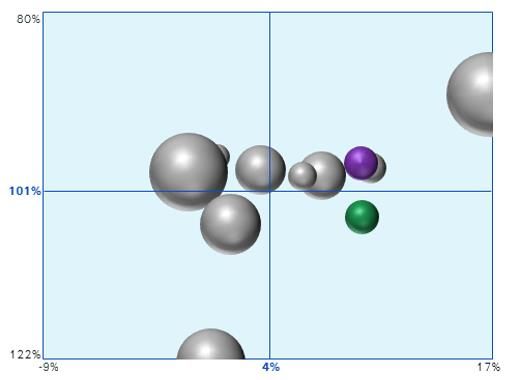
We are benefiting from a more positive current environment and
promising long-term opportunities

Current market environment improved

                            Moderate
                            improvements in P&C                            …to benefit P&C Reinsurance and Corporate Solutions                                           5%
                            pricing…
                                                                                                                                                                    overall market
                            Gradually increasing
                                                                                                                                                                       growth
                                                                           …to benefit the return profile of our investment portfolio
                            interest rates…                                                                                                                          expected1

Long-term opportunities remain

                            Risk pools continue
                                                                           …we can access global risk pools through all Business Units
                            to grow…
                                                                                                                                                                        9%
                            Opportunities in High
                                                                           …we are the #1 global reinsurer in High Growth Markets
                                                                                                                                                                   market growth
                            Growth Markets…                                                                                                                       expected in High
                                                                                                                                                                  Growth Markets1
                            Protection gap still
                                                                           …we develop innovative solutions to increase insurance coverage
                            expanding…

¹ Source: Swiss Re Institute; expected premium growth per annum in reinsurance in nominal USD terms over the next five years
                                                                                                                                        Swiss Re Group | Company presentation | April 2019   10
Focus areas of Annual Results 2018
• Group net income of USD 421m for FY 2018, despite the 2018 large natural catastrophes the Impacted by large
fourth highest year on sigma records in terms of large loss burden for the insurance industry losses and recent
• Group investment result impacted by change in US GAAP accounting guidance (ROI of 2.8%), change in US GAAP
while running yield remains stable at 2.9% accounting guidance
• Price quality improved by 1% and year-to-date Strong outcome of
• The treaty premium volume increased by 19% January renewals
• Life Capital transformation from closed book consolidator to dynamic primary B2B2C Life Capital in
business in motion transition
• 12% regular dividend per share increase to CHF 5.60 per share
Attractive capital
• New share buy-back programme1, in two tranches, consistent with Swiss Re’s capital management actions
management priorities
1 Subject to AGM 2019 approval; commencement of share repurchases subject to Board approval and legal and regulatory requirements being satisfied
Swiss Re Group | Company presentation | April 2019 11Second consecutive year with significantly higher than expected
large losses
Group ROE 700bps above 10yr US govt. bonds
Group Net Income Impact of change in US GAAP accounting guidance • After benign nat cat loss
years from 2012-2016 the
USD bn
insurance industry
4.6 14% experienced two elevated
4.4 loss years
4.2 12%
4.0 • Estimated claims from
10% multiple nat cat and man-
3.8
made disasters for Swiss Re
3.6
8% amounted to USD 3.0bn in
3.4 2018
6%
1.0
0.8 4%
0.6
0.4 2%
0.2
0.0 0%
2012 2013 2014 2015 2016 2017 2018
Swiss Re Group | Company presentation | April 2019 12Swiss Re’s strong economic earnings track record 2014-2018
EVM profit USD 608m EVM profit
Economic value is created if
new business avg. 2014 - 2018
total economic return generated USD 503m Total contribution to
for shareholders is above
expected total return
avg. 2014 - 2018
ENW
Represents total economic return
for taking risk (capital costs)
EVM profit generated for shareholders
USD 77m (economic earnings) and is the key
previous years’ element of gross excess capital
avg. 2014 - 2018
business generation
Capital cost release,
debt costs and tax
Includes base cost of capital USD 2 922m
EVM profit USD -183m (risk-free return and avg. 2014 - 2018
USD 3 425m
market risk premium)
investments avg. 2014 - 2018 avg. 2014 - 2018
and frictional capital costs
Total contribution to ENW forms the basis for Swiss Re’s attractive capital management actions
Swiss Re Group | Company presentation | April 2019 13Swiss Re’s total shareholder return is best tracked by ENW developments
ENW per share growth vs. total shareholder return1 ENW per share vs. share price development
130
120
300% Total return to shareholders
250% ENW per share growth 2 110
200% 100
150%
90
100%
50% 80
0%
70
ENW per share growth2 Total shareholder return Swiss Re share price (CHF) ENW per share (CHF)
EVM results represent the market relevant information aligned with total return to shareholders
1 Reflects share price development and dividends paid in USD; shown on a cumulative basis and indexed from 1 December 2005
2 Calculated as: (current-year closing ENW per share + current-year dividends per share) / (prior-year closing ENW per share + current-year opening balance sheet adjustments per share); shown on a cumulative basis and indexed
from 1 December 2005
Swiss Re Group | Company presentation | April 2019 14Swiss Re proposes attractive capital management actions
Regular dividend per share (CHF)
+3% +12%
12% regular dividend per share increase
5.00 5.60
4.85 Rebasing supported by long-term economic earnings and sustainable
capital generation
2017 2018 20191
Share buy-back programme (CHF bn) New share buy-back programme1
consistent with Swiss Re’s capital management priorities
• Up to CHF 1bn with no commencement pre-conditions
1.00
1.00 1.00
• Up to CHF 1bn contingent on 2019 Group excess capital development, e.g.
1.00 increase as a result of successful reduction of Swiss Re’s holding in ReAssure
2017/18 2018/19 2019/201 to below 50%
Very strong Group capitalisation, with Swiss Re’s Group SST ratio comfortably above the 220% target level
1 Subject to AGM 2019 approval; commencement of share repurchases subject to Board approval and legal and regulatory requirements being satisfied
Swiss Re Group | Company presentation | April 2019 15Swiss Re’s capital repatriation remains peer-leading
Dividends and share buy-back per share (CHF, CAGR in %)
+17%
9.20
8.65 8.90
8.00 8.25
7.90
7.50
1
4.20 3.30
4.40 3.40
3.30
4.15
4.00
1
3.00
5.60
4.60 4.85 5.00
3.85 4.25
3.50
2012 2013 2014 2015 2016 2017 2018 2019E
Ordinary dividends Special dividends and share repurchases
Swiss Re maintained its very strong capital position and is well positioned to respond to market opportunities while
continuing to focus on its capital management priorities
1 Share repurchase for 2019 includes share repurchase programme of up to CHF 1bn purchase value; subject to AGM 2019 approval; commencement of share repurchases subject to Board approval and legal and regulatory requirements being satisfied;
additional share repurchase programme of up to CHF 1bn contingent on 2019 Group excess capital development, e.g. increase as a result of successful reduction of Swiss Re’s holding in ReAssure to below 50%
Swiss Re Group | Company presentation | April 2019 16Value creation with increasing book value and paid dividends
Book value per share and accumulated paid dividends (CHF, CAGR in %)
+6% 137.99 138.57
131.92
119.62 121.79
30.35 35.20
18.50 40.20
25.75
90.76 93.26
3.00 10.50
107.64 103.37
101.12 96.04
87.76 91.72
82.76
2012 2013 2014 2015 2016 2017 2018
Book value per share Accumulated paid dividends
Swiss Re Group | Company presentation | April 2019 17Swiss Re maintains leadership in sustainability
Key actions in 2018
Close to
Responsible
100%
• Early mover in switching to ESG benchmarks in equity and credit markets
investing • USD 1.6bn of green bonds as of end FY 2018
assets considering ESG criteria
Sustainable
underwriting
•
•
Implemented thermal coal policy – 30% investment threshold extended to underwriting
Active in all renewable energy re/insurance and “lead market” for offshore wind risks
~3 400
wind and solar farms insured
Innovative
•
•
First county-level earthquake parametric cover in China
Largest sovereign-sponsored cat bond issued by the World Bank in Latin America
96
number of (sub-)sovereigns
solutions • Flood insurance for homeowners in Florida, based on proprietary flood model advised on climate risk resilience
Recognised • Externally recognised: AAA-rating in MSCI ESG assessment and top 3 in DJSI
leadership • Active participation in European and global expert groups
More public-private partnerships are crucial to strengthen resilience and mitigate effect of climate change
For further information on sustainability at Swiss Re please visit http://media.swissre.com/documents/Swiss_Re_ESG_Highlights.pdf
Swiss Re Group | Company presentation | April 2019 18R&D builds on our thought leadership position, bringing us
closer to the needs of our clients
How R&D drives value at Swiss Re: Drivers for underwriting
outperformance
Insurance “beta” ~450 FTE in
R&D improves top down Target Strategic
13 R&D teams
capital allocation leading to Liability Asset 50-60%
Portfolio Allocation
outperformance
Insurance “alpha”
R&D improves risk selection Product design
and further portfolio Product pricing
Underwriting
steering given allocation
criteria
>200 R&D
R&D provides services and Client services
initiatives
Thought-leadership
thought leadership enabling publications 40-50% ongoing (50%
higher pricing Curated data focusing on
technology)
Cost efficiency
R&D provides new ideas to
Business process
reduce the cost of generating disruption &
a given unit of revenue improvement
Swiss Re Group | Company presentation | April 2019 19Swiss Re’s tech strategy is embedded in our business strategy and
ensures effective innovation management
1 OUR CLIENTS OURSELVES 2
Increase our clients’ competitiveness Improve our value chain
Provide tools and solutions for clients’ value chains Apply technology to Swiss Re’s value chain
Examples: Magnum, Life Guide, CatNet, Liability Risk Drivers Examples: ATLAS, digital claims, document intelligence
Swiss Re
4 OUR DATA tech strategy OUR EXPOSURE 3
Harvest full potential of data Get closer to risk
Build up competitive advantage from proprietary data Seek access to risk pools through tech platforms
Example: Stargate platform Examples: iptiQ, elipsLife, dynamic parametric pricing platform, Pulse
Our tech strategy is implemented with a combination of in-house developments and strategic partnerships
Swiss Re Group | Company presentation | April 2019 20Swiss Re outperforms its peers with higher margins
Peer-leading margins • The differentiation approach has
enabled Swiss Re to generate higher
US GAAP net operating margins average 2012-18 margins and outperform
12% 7% • Swiss Re outperformed peers on
average by 6%pts since 2012, driven
by underwriting performance (risk
selection, capital allocation and
differentiation)
Swiss Re Group Reinsurance market ¹
Investment Underwriting Operating expenses
Swiss Re is leading insurance business that represents a highly rewarding combination for shareholders
¹ Based on weighted average of Munich Re, Hannover Re, SCOR and RGA
Swiss Re Group | Company presentation | April 2019 21We are committed to our over-the-cycle Group financial targets
Group return on equity Group ENW per share growth2
24.6%
13.7% 13.7% 17.0%
13.4%
10.5% 10.6%
11.0%
9.6% 10.8%
9.4% 9.6%
8.8% 9.2% 9.4% 9.4% Rf +
10% 10% 10% 10% 10% 10% 10% 10%
700 7.2%
bps1
5.4%
4.4%
1.0% 1.4%
2012 2013 2014 2015 2016 2017 2018 Over- 2012 2013 2014 2015 2016 2017 2018 Over-
the-cycle the-cycle
target target
actual 700 bps above 10y US Govt. bonds actual target
1 700 bps above 10y US Govt. bonds. Management to monitor a basket of rates reflecting Swiss Re’s business mix
2 The 10% ENW per share growth target is calculated as: (current-year closing ENW per share + current-year dividends per share) / (prior-year closing ENW per share + current-year opening balance sheet adjustments per share)
Swiss Re Group | Company presentation | April 2019 22Financial highlights
Capital Management
Swiss Re Group | Company presentation | September 2018 23We remain focused on our capital management priorities
I II
Swiss Re’s capital management priorities remain unchanged Group SST ratio
SST 18 SST 19 USD 7.9bn2
I. Ensure superior capitalisation at all times and maximise financial 269% 251% ordinary dividend
(FY 14 to FY 18)
flexibility Rating
Payout
1
AA-/Aa3/A+ ratio 46%
II. Grow the regular dividend with long-term earnings, and at a
minimum maintain it
Capital management priorities
IV III
III. Deploy capital for business growth where it meets our strategy and
profitability requirements USD 6.2bn3
special dividend &
buy-back
(FY 14 to FY 18)
IV. Repatriate further excess capital to shareholders
Extraordinary
Payout ratio 36%1 Business Acquisitions
reinvestments
1 Payout ratio
calculated as capital repatriation over total contribution to ENW; assumes AGM approval of the proposed ordinary dividend of CHF 5.60 per share and the unconditional share buy-back of up to CHF 1bn
2 Includes AGM 2019 proposal for ordinary dividend of CHF 5.60 per share
3 Includes AGM 2019 proposal for unconditional share buy-back programme of up to CHF 1bn
Swiss Re Group | Company presentation | April 2019 24Group capital position remains very strong, even after significant large
losses and continued peer-leading capital repatriation to shareholders
SST ratio development (USD bn, %)
• Group SST ratio remains very strong and
comfortably above the 220% target level
269%
261% 262%
80.0
251% • The SST ratio decreases by 18%pts mainly
due to lower risk-bearing capital reflecting
70.0
SST target
capitalisation1
60.0 capital repatriation, redemption of a
(220%) subordinated instrument and depressed
46.3
44.8 46.1
financial markets at year-end 2018. These
50.0
40.6
40.0 effects are partly offset by positive
30.0
contributions from underwriting activities
20.0 17.2 17.6 17.2 16.2 • Increase in MVM mainly driven by growth in
Asia
10.0
• Swiss Reinsurance Company Ltd solo ratio
also remains strong at 218% with USD
0
2016 2017 2018 2019
USD 5.3bn MVM USD 5.2bn MVM USD 5.9bn MVM USD 7.0bn MVM 14.3bn excess capital above the 100%
regulatory requirement
SST available capital SST economic target capital
Group SST ratio calculation
SST available capital SST risk-bearing capital - MVM2
SST economic target capital
= SST target capital - MVM2
1 SST 220% target capitalisation was only introduced in 2017
2 MVM = Market Value Margin = Minimum cost of holding capital after the one-year SST period until the end of a potential run-off period
Swiss Re Group | Company presentation | April 2019 25Swiss Re’s capital strength remains resilient to market movements
Group SST sensitivities
• Swiss Re uses a central proprietary risk model to
Resulting estimated Group SST ratio 2019 measure capital requirements, define risk
tolerance, risk limits and assess stress test
impacts
Equity markets (-25%) 248%
• Swiss Re remains strongly capitalised under strict
Equity markets (+25%) 254% risk limits curtailing the impact of market moves
on the Group SST ratio
Interest rates (-50bps) 239%
Interest rates (+50bps) 261%
Credit spreads (-50bps) 259%
Credit spreads (+50bps) 244%
Real estate values (-25%) 245%
Real estate values (+25%) 257%
220% 251%
Group SST target Group SST
capitalisation 2019
Swiss Re Group | Company presentation | April 2019 26Swiss Re maintains a leading capital position in the reinsurance sector and
industry
Group SST to Solvency II walk1
>280%
311%
251%
239%
210%
Group SST Risk measure Modelling differences Valuation Eligibility of capital Deferred taxes Group Solvency II Average of Average of
ratio 2019 (1-year risk) (discounting) ratio reinsurers2 insurers3
SST and Solvency II are both comprehensive economic and risk-based solvency regimes
Due to important differences, Solvency II equivalent ratio is significantly higher
For 2019, our comparable Group Solvency II ratio is estimated to be >30%pts higher than our Group SST ratio
1 Comparison was produced on a best effort basis using Swiss Re's SST calculation for 2019; For more details on differences between SST and Solvency II please refer to our “SST vs. Solvency II – comparison analysis” published on our website
(http://media.swissre.com/documents/2016_sst_presentation.pdf). Please note that the difference from “capital cost recognition” has been eliminated in 2017 with FINMA's change in SST ratio definition. Differences between SST and Solvency II also
explained in the booklet “Measuring economic performance & solvency at Swiss Re” published on our webpage.
2 Average of Munich Re, Hannover Re, SCOR
3 Average of Allianz, Aviva, Axa, Generali
Swiss Re Group | Company presentation | April 2019 27Strong solvency capital generation over the last five years
Swiss Re’s solvency capital generation – five year aggregated view from Group SST 2014 to 2019
More details on following slides
17.1 Capital management
-2.8 12.8
-1.5
-3.2
-14.0
-4.4
Economic earnings Capital deployment Other items (incl. fx)2 Net solvency Change in Capital repatriation3 Change in
(Total contribution (capital allocation)1 capital generation supplementary capital excess capital
to ENW)
yearly average
CHF 11 CHF 8 CHF 9
per share
• Solid economic earnings (USD 3.4bn on average) drove Swiss Re’s strong solvency capital generation over the last five years (USD 2.6bn net solvency capital
generation on average per year or CHF 8 yearly average per share)
• In line with its target capital structure, Swiss Re reduced its traditional funded subordinated debt instruments by USD 3.2bn and at the same time strengthened its
financial flexibility through the issuance of USD 2.7bn of pre-funded subordinated debt facilities at Group level (not counting as SST supplementary capital until
drawn)
• Over the period, Swiss Re implemented peer-leading capital repatriation of USD 14bn in total or USD 2.8bn per year, on average
1 Including model changes
2 SST available capital: includes change in other EVM items (including foreign exchange impacts on ENW) and change in SST valuation differences with EVM on a best effort basis; SST economic target capital: includes foreign
exchange, interest rate and other impacts on Swiss Re’s economic target capital on a best effort basis
3 Includes the sum of paid (2015 – 2018) and proposed 2019 dividends and public share buy-backs (a pro-rata share of the 2019 share buy-back programme with no commencement pre-conditions of CHF 0.9bn is used)
Swiss Re Group | Company presentation | April 2019 28Swiss Re’s target capital structure and financial flexibility is supported by
the Group’s strong funding platforms
Implementation and maintenance of target capital structure
USD bn Established funding platforms in all Business Units to fund capital & liquidity requirements
Corporate Life Group
Reinsurance Outlook
YE 2012 – YE 20181 Solutions Capital (SRL)
Continued focus on optimising capital structure and
Subordinated debt -2.02 +0.5
cost of capital
Continued focus on innovative, cost efficient
Contingent capital -0.23 +3.24 contingent capital instruments at Group Holding level
Support business growth in Life Capital in line with
Senior debt -6.9 +1.5
leverage targets
Letters of credit -4.5 In line with Reinsurance requirements
• SST supplementary capital includes traditional funded subordinated debt and funded contingent capital instruments. In line with Swiss Re’s target capital structure,
Swiss Re has reduced its traditional funded subordinated debt instruments by USD 1.5bn between YE 2012 and YE 2018
• At the same time, the Group has significantly strengthened its financial flexibility through senior debt deleveraging and the issuance of USD 1.0bn contingent capital
instruments at the Reinsurance level, a USD 0.5bn contingent capital instrument at the Group level (6-year non-dilutive senior exchangeable bond with anytime issuer
stock settlement) and USD 2.7bn pre-funded subordinated debt facilities at Group level (not counting as SST supplementary capital until drawn)
1 Change in supplementary capital is calculated using YE 2012 and YE 2018 figures
2 EUR 750m and USD 1bn subordinated fixed rate reset set-up callable notes issued in March and April 2019, respectively (not included in the table)
3 Reflects the issuance of USD 1.0bn in 2013 and redemption of the contingent capital instruments classified as equity issued in 2012 (USD 1.1bn)
4 Reflects USD 2.7bn pre-funded subordinated debt facilities (currently fully undrawn), and USD 0.5bn senior non-dilutive exchangeable bond with anytime issuer stock settlement
Swiss Re Group | Company presentation | April 2019 29Peer-leading capital repatriation
USD bn in year paid Ordinary dividends Special dividends and share buy-backs
USD 7.9bn USD 6.1bn
1.5 1.6 1.6 1.6 1.7 1.5 1.3
1.1 1.1 1.0
2015 2016 2017 2018 2019E2 2015 2016 2017 2018 2019E2
Per share in CHF 4.25 4.60 4.85 5.00 5.60 4.40 3.30 3.40 3.80 3.35
14.0 Swiss Re
Capital repatriation P&C Reinsurance L&H Reinsurance Corporate Solutions Life Capital
Group SST 2014-19¹
2.7 2.5
2.0
1.3 1.1 1.1
0.3 0.4 0.7 0.7 0.3 0.4 0.4
0.2 0.2 0.1
2015 2016 2017 2018 2015 2016 2017 2018 2015 2016 2017 2018 2015 2016 2017 2018
Received capital contribution Received capital contribution
of USD 1bn in 2017 of USD 1.6bn in 2016 for the
acquisition of Guardian
1 Capital repatriation includes dividends and share buy-backs paid in 2015-18 and projected for 2019
2 Capital repatriation includes AGM 2019 proposal for ordinary dividend and new unconditional share buy-back programme of up to CHF 1bn, of which a pro-rata share of CHF 0.9bn is used for SST
Swiss Re Group | Company presentation | April 2019 30Financial highlights
P&C and L&H Reinsurance
Swiss Re Group | Company presentation | September 2018 31We seek to benefit from a more positive environment and promising long-
term opportunities in the reinsurance market
Market environment improved
Moderate improvements in P&C reinsurance pricing developments
5%
Gradually increasing interest rates benefit our long tail lines in Life and Casualty overall market
growth1
Global economic growth increases demand in and from primary markets
Long-term opportunities remain
#1 global reinsurer in High Growth Markets, well positioned to take advantage of
projected growth
Mortality
Growth from innovative solutions to address the global protection gap protection gap
> USD 270 billion
As a knowledge company we benefit from the growing importance of R&D and technology
1 Source: Swiss Re Institute, expected growth per annum in reinsurance in nominal USD terms over the next five years
Swiss Re Group | Company presentation | April 2019 32Differentiation is at the heart of what we do
Core Transactions Solutions
Differentiation
Simplify and drive Add value to clients’
Deliver innovative deals by
efficiencies in our original business by
combining our knowledge
traditional business providing tech enabled
and capital
solutions
We access risk pools through the three pillars of our strategy
Swiss Re Group | Company presentation | April 2019 33We leverage technology in solutions to add value to our clients’ original
business and value chain
Selected examples of commercialised solutions in P&C and L&H Reinsurance
Pilot / Proof of concept
With clients and partners
Automotive Parametric Smart SwiftRe® Magnum
Solutions Homes
Development
Build resources and
infrastructures
Commercialisation Customer
Bring to market viable Liability Claims
Life Guide Retention
solutions Analytics Deep Dive
Management
Our innovation mind-set allows us to focus on commercialisation of proven solutions
Swiss Re Group | Company presentation | April 2019 34Swiss Re’s reinsurance client franchise represents the biggest source of
our competitive advantage
We have strong direct relationships with our customers… Direct relationships drive our access to large & tailored
transactions
P&C Reinsurance L&H Reinsurance EVM profit - new business (USD m)
% of premiums from non-
47% intermediated business, 96% CAGR 16%
FY 2018 700
600
500
…with distinct client interactions
400
Client example
300
200
100
Americas
APAC 0
EMEA 2010 2011 2012 2013 2014 2015 2016 2017 2018
Swiss Re
P&C Reinsurance L&H Reinsurance
Swiss Re Group | Company presentation | April 2019 35We have significantly grown and diversified our portfolio
Portfolio developments 2010-18
EVM premium (USD bn) Overall portfolio
Americas EMEA Asia CAGR of 7% from
CAGR 21% 2010 to 2018
15.4
CAGR 7%
12.6 CAGR 4%
3% 43%
10.9
34% 16%
Balanced global portfolios
7.4 7.8
3% 22%
1% 12%
17% 31%
15%
50% 36%
21%
28% 3.3 4%
3% 18%
18% 24% 27%
9% 12% 11%
16% 10% 7% 9% 5%
12%
15% 16% 12%
20%
14% 6% Increased diversification
2010 2018 2010 2018 2010 2018 of product lines
Property Nat Cat Casualty Specialty Life Health
Swiss Re Group | Company presentation | April 2019 36Net premiums earned Net operating margin1 (%) Combined ratio (%)
111.5
104.0
+5.6pts
4.3 93.5
2.9
USD 16.1bn
83.8 83.7
80.7 85.7
8.9 7.8
2012 2013 2014 2015 2016 2017 2018
in 2018
-3.9
-6.4
• Net impact of large nat cat events in 2018 5.0%pts above
USD 16.7bn
in 2017
-6.3 expectations. Favourable prior-year development positively
impacted the combined ratio by 0.9%pts
-1.3
2017 2018
Underwriting Investment Operating expenses
Net income (USD m, LHS), Return on equity (%, RHS)
• Decrease of net premiums earned driven by a reduction of Chinese quota shares and 4 000 26.7 26.0 26.7 30
22.4
US Casualty, partially offset by large transactions in Asia and the US 3 000
25
16.4 20
• Underwriting margin impacted by several large losses in both periods 2 000 15
3 228 3 564
2 990 3 008
• Decrease in investment margin driven by market value losses on equity securities 1 000 2 100 10
3.7
and lower realised gains from fixed income securities 370
5
0
-413 0
• Increase in the expense margin driven by the decrease in premiums earned -3.5
-1 000 -5
2012 2013 2014 2015 2016 2017 2018
Net income Return on equity
1 Net operating margin = EBIT / total revenues Swiss Re Group | Company presentation | April 2019 37P&C Reinsurance strategy in action
Portfolio split by region and line of business CORE
(% of net earned premium, USD bn) US GAAP operating expenses (USD m)
-3.9%
• Leveraging technology to achieve efficiency
Americas 1 159 1 114 across Swiss Re’s value chain
22%
EMEA
2017 2018
Asia
48%
SOLUTIONS – selected examples
30% ADAS risk score Data analytics
Working with OEM partners to Addressing strategic questions
improve the risk assessment of through a combination of the latest
increasingly automated vehicles data science methods with
Property bespoke advisory
6% 3% Liability
5% 3% 3% Motor TRANSACTIONS
37%
A&H Economic profit (USD m)
Marine
200 +5%
23% Engineering • >130 transactions closed in 2018
Credit 100 • Transactions contributed ~23% to
20% Other specialty economic profit in 2018
0
2017 2018
Swiss Re Group | Company presentation | April 2019 38Net premiums earned Net operating margin1 (%) Running yield and ROI (%)
3.8
3.5 3.5 3.4 3.3 3.4
3.2
-3.7pts
13.1 4.7
4.1 4.3
3.4 3.6 3.7
3.2
USD 12.7bn
4.8 9.4
3.3
in 2018 2012 2013 2014 2015 2016 2017 2018
13.7 Running yield ROI
11.4
USD 11.9bn
in 2017
-5.4 -5.3
• Slightly increasing running yield but lower ROI as prior period
positively impacted by significant net realised gains
2017 2018
Underwriting Investment Operating expenses
Net income (USD m, LHS), Return on equity (%, RHS)
• Increase in premiums earned reflected growth across all markets including large 1 500
16.2 15.3
20
transactions in Asia, intra-group retrocession agreements and favourable fx 1 000
12.8
11.1 15
8.9
10
• Decrease in underwriting margin due to unfavourable mortality experience in the 500
6.4
968 1 092
739 807 761
US, partially offset by favourable contribution from transactions 420 5
0
0
• Lower investment margin as prior period was positively impacted by significant net -462
-500
realised gains from sales of equity securities -5
-7.9
-1 000 -10
2012 2013 2014 2015 2016 2017 2018
Net income Return on equity
1 Net operating margin = EBIT / (total revenues – net investment result unit linked & with profit) Swiss Re Group | Company presentation | April 2019 39L&H Reinsurance strategy in action
Portfolio split by region and line of business CORE
(% of net earned premium, USD bn) US GAAP operating expenses (USD m)
0.5%
• Despite strong growth in the last years,
754 758 expense base remained stable
Americas
26% EMEA
2017 2018
43% Asia
SOLUTIONS – selected examples
Magnum Behavioural economics
30% Used by >60 insurers and Creating improvements across the
available in 26 countries; processes insurance value chain by helping to
more than 12m applications per enhance the way insurers connect
year; >1.3m devices in China with customers
10%
6% Mortality
TRANSACTIONS
Disability
11% Economic profit (USD m) • 24 transactions closed in 2018
Critical Illness
• Transactions contributed ~38% to
62% Medical 600 +86%
11% economic profit in 2018
Other 400
• Large and tailored deals in Asia drove
200
transactional growth in 2018
0
2017 2018
Swiss Re Group | Company presentation | April 2019 40Financial highlights
Corporate Solutions
Swiss Re Group | Company presentation | September 2018 412018 Corporate Solutions result impacted by large man-made and nat cat
losses
Net premiums earned Net operating margin1 (%) Combined ratio (%)
133.4
+12.4%pts 117.5
1.9 101.1
7.4 5.4 96.2 95.1 93.0 93.2
USD 3.9bn
in 2018
-11.7
-18.4 2012 2013 2014 2015 2016 2017 2018
-19.2 -11.1
• Profitability continues to be impacted by underwriting
USD 3.7bn
in 2017
-23.5
performance, driven by an increase in severity and frequency of
large man-made losses, and generally depressed rate levels, as
2017 2018 well as unfavourable prior-year development
Underwriting Investment Operating expenses
Net income (USD m, LHS), Return on equity (%, RHS)
• Premiums earned increased by 7.5% driven by growth in Primary Lead which more 400 9.6 12.5
15.5 20
than offset active pruning in US General Liability portfolio 7.4 6.0
200 319 357 10
196 279
• Underwriting margin improved driven by lower nat cat losses, partially offset by an 0
135
0
increase in severity and frequency of large man-made losses
-200 -405 -10
• Investment margin decreased due to lower realised gains from equities, partially -400 -741 -20
offset by increasing yields and a higher invested asset base -19.4
-600 -32.2 -30
• Operating expense margin improved driven by strong growth and continued focus -800 -40
on productivity measures 2012 2013 2014 2015 2016 2017 2018
Net income Return on equity
1 Net operating margin = EBIT / total revenues Swiss Re Group | Company presentation | April 2019 42Addressing Corporate Solutions underperformance
Drivers of underperformance Actions taken
• Difficult market environment: man- • Portfolio pruning started in 2017,
made losses above expectations continued in 2018 and
and price improvements not yet intensifying in 2019
sufficient after years of decline
• Continued focus on productivity
• Higher net exposures led to large Business update to
single event losses • Higher prices already be provided with
• Unfavourable PYD related to
experienced and expecting more Half-year 2019
structure1 and business mix Results
• Reinsurance programme
(Excess Layers and overweight
adjusted but to be revisited
US)
• High cost ratio because of on- • New experienced CEO started in
going investments and continued March 2019
lack of scale
Progress has been made and we will continue to address Corporate Solutions underperformance
Corporate Solutions remains core to Swiss Re and we continue to see long-term attractive potential in the business
1: Positive development on Corporate Solutions historical loss reserves remaining in Reinsurance
Swiss Re Group | Company presentation | April 2019 43Corporate Solutions remains focused on key priorities
Performance improvement actions Increase productivity Primary Lead
• US General Liability pruning actions started 18 • A combination of process improvements, cost • Extension of own domestic and international
months ago; time lag for improvements to be saving measures, use of technology and strong Primary Lead producing capabilities to 19 and 9
reflected in financials growth led to a lower operating expense ratio countries respectively
• Additional improvement actions initiated for less • Maintain focus on productivity to finance • Global network coverage for international programs
strategic segments which are further minimised or continuing investment into Primary Lead > 120 countries
partially exited capabilities
• Pursue sizable rate increases on underperforming
sub-segments and across the board
US General Liability repositioning / pruning Operating expense ratio (%)
(Gross premiums written)
22%
-30% 21%
20% 21.7
20.8
19%
19.4
18%
2016 2017 2018 2016 2017 2018
Own offices Network partners
Positive price momentum expected to continue
Corporate Solutions will continue to take targeted actions addressing business performance issues and price deficiencies
Swiss Re Group | Company presentation | April 2019 44Corporate Solutions has shown disciplined performance within its peer-
group
2012 – 2017 Average 2012 – 2018
2012 2013 2014
Combined ratio
Combined ratio
2015 2016 2017
Gross premiums growth
Corporate Solutions (Combined Ratio incl. Total financial contribution - TFC)
Corporate Solutions (Combined Ratio published)
Gross premiums growth Peers
Source: Swiss Re Institute
Note: Quadrants are determined based on average combined ratio and gross premiums compound annual growth rate (CAGR); premium growth & bubble size are in USD; Size of bubbles corresponds to GPW; From 2011-2014: Unchanged set of 8 peers,
2015: peer group reduced to 7 due to M&A. 2016: 10 peers, 3 players added to ensure comparison is representative of market
Swiss Re Group | Company presentation | April 2019 45Financial
Life Capitalhighlights
Swiss Re Group | Company presentation | September 2018 46UK life & pension closed book Group protection solutions through White-labelled individual protection products
Business consolidator intermediaries through distributors
Protection, annuities, unit-linked
Products insurance
Group life, disability, income protection Individual life, health and non-life protection
Pension providers, pension funds, corporates
Clients Insurers, banks, PE firms
and affinity groups
Distribution partners
UK Closed Book Market Reserves Group L&H Market GPW Individual L&H P&C personal lines
~ USD 440bn ~ USD 150bn ~ USD
~ USD
650bn
920bn
~
~ USD
USD 300bn
300bn
14% 1%ReAssure developments in 2018… …complemented by open book evolution 2019 outlook
Focus on
# new policies ReAssure IPO preparation
# iptiQ written in iptiQ
elipsLife premium distribution 120k
volume (USD m) partners
Enhancing access
19
450
Exceptional GCG: USD 818m
in 2018
to risk pools
with iptiQ platform
MS&AD stake increased to 25% 300
5
60k
IPO preparations continued 150 in 2016
2 Scale-up of
New Chairman and new CEO appointed 0
2009 2014 2018
in 2014 0
2014 2016 2018
elipsLife platform
Swiss Re Group | Company presentation | April 2019 48Exceptional Life Capital GCG; open book growth in line with expectations
Gross cash generation (USD m) Open book - Gross premiums written (USD m)
1196
998 1 567
945
818 CAGR 30%
721
1 039
521 543 868
709
2012 2013 2014 2015 2016 2017 2018 2015 2016 2017 2018
• Exceptional gross cash generation (GCG) driven by strong underlying • Gross premiums written increase reflects significant growth in open
emerging surplus, the sale proceeds from the initial 5% stake in book businesses:
ReAssure acquired by MS&AD and the finalisation of the 2017 Solvency
II position – iptiQ L&H increase driven by a large medex transaction
– elipsLife increase reflects strong growth on core as well as
• GCG 2016-2018 of USD 2.5bn at top end of USD 2.3-2.5bn target
medex business
range (significantly outperforming original target of USD 1.4-1.7bn)
Swiss Re Group | Company presentation | April 2019 49Life Capital open book businesses continue to grow
2016 2018
Weekly
policies sold1 545
2 755
~ 5x
# of Expansion of access to
distribution
partners
5 19 ~ 4x attractive risk pools
# of countries 5 7 +2
GPW2
(USD m) 247
412
+ 67%
Ambition to continue
# of clients < 8 000 ~ 12 000 + 50% growing at an accelerated
pace
# of countries 2 5 +3
1 Weekly policies sold in Q4 2016 and Q4 2018, respectively Swiss Re Group | Company presentation | April 2019 50
2 Reflects core business, i.e. excludes medex businessFinancial highlights
Asset Management
Swiss Re Group | Company presentation | September 2018 51Swiss Re’s investment portfolio
Other investments (incl. policy
Cash and cash equivalents
loans)
Mortgages and other 4%
5%
End loans Short-term investments
4% 4%
USD bn FY 2018
Equities
Balance sheet values 153.3 5%
Unit-linked investments -25.9 Government bonds
41%
With-profit business -4.8
Assets for own account 122.6
(on balance sheet only) Credit bonds
37%
Corporate Life End End
USD bn P&C Re L&H Re Solutions Capital Group items Consolidation FY 2018 FY 2017
Cash and cash equivalents 1.7 1.7 0.8 0.4 0.2 - 4.8 4.9
Short-term investments 2.5 1.2 0.5 1.2 - - 5.4 4.8
Government bonds 25.8 13.1 5.5 6.5 - - 50.9 54.7
Credit bonds 10.2 16.1 2.7 16.1 - - 45.1 47.1
Equities1 3.2 0.7 0.2 0.1 2.1 - 6.3 7.1
Mortgages and other loans 7.5 1.8 - 1.8 4.3 (10.9) 4.5 4.0
Other investments (incl. policy loans) 4.4 1.3 0.1 0.8 0.4 (1.4) 5.6 9.1
Total 55.3 35.9 9.8 26.9 7.0 (12.3) 122.6 131.7
1 Includes equity securities, private equity and Principal Investments Swiss Re Group | Company presentation | April 2019 52Return on investments (ROI) Investment portfolio positioning (USD bn) Net investment income (USD m, LHS)
Running yield (%, RHS)
140
128.0
122.6
120 9.8 3.2 3.2 3.3
10.2 4 000 3.5
2.8% 3.3%1
3.0 2.9 2.9 2.9
100 3.0
52.9 49.3 3 000
80 2.5
in 2018 2.0
60 2 000
3 610 3 386 3 396 1.5
3 178 3 099 3 132
40 53.2 51.1 2 860
1.0
1 000
20
3.9%
0.5
11.2 11.0
0 0.9 1.0 0 0.0
2012 2013 2014 2015 2016 2017 2018
2017 2018
in 2017 Cash and short-term investments
Net investment income Running yield
Government bonds
Credit investments
Equities and alternatives (incl. Principal Investments)
Other
• ROI driven by net investment • No significant net changes in the asset allocation • Net investment income of USD 3.4bn above prior year,
income, partially offset by market reflecting the impact of rising yields as well as additional
value losses across equities and • Net purchases and market value gains on direct income from alternative investments
alternative investments real estate largely offset by market value losses
on equity securities • Group fixed income running yield in line with prior year
• Excluding the estimated impact
of the change in US GAAP • Impairments remain low (USD 9m), reflecting a
accounting guidance, the ROI disciplined investment approach
would have amounted to 3.3%
1 ROI excluding the estimated impact of the new US GAAP accounting guidance on recognition and measurement of financial instruments Swiss Re Group | Company presentation | April 2019 53High quality portfolio drives the Group’s sustainable investment result
Credit bonds: USD 45.1bn Fixed income impairment trend
Below investment grade credit bonds represent approximately
half of peer average of 9%
USD m bps
4%
3%
60
Investment grade rated Typical default rate assumption (Single A) ~13bps 15
Non-investment grade rated
37
Not rated1 10
30
93% 22
3 15 5
2
1 5
Credit spread sensitivity on shareholders’ equity and ENW2 1
0 0
2015 2016 2017 2018
USD -1.9bn USD +2.0bn
Credit spreads +/-50bps
Fixed income impairments (USD m, LHS) ROI impact (bps, RHS)
High quality portfolio drives stable running yield of 2.9% for Impairment trend reflects significant reduction of high yield
2018 (quarterly running yield increased from 2.8% to 3.0% exposure in 2016
during 2018)
1 Determination of credit quality of non-rated securities, which includes catastrophe bonds and infrastructure loans, based on Swiss Re analysis
2 Sensitivity on both shareholders’ equity and economic net worth assumed to take effect on 31 December 2018; sensitivities are comparable but not exact
Swiss Re Group | Company presentation | April 2019 54Fixed income securities
Government Credit
USD m bonds bonds
End
FY 2017 54 658 47 128 • Decrease in government bonds driven by foreign
End exchange impacts as well as net sales and market value
FY 2018 50 876 45 076
losses stemming from rising interest rates across the US
and UK
• Credit bonds include corporate bonds (USD 40.8bn)
and securitised products (USD 4.3bn)
3%
4%
2%
14%
• Decrease in credit bonds driven by foreign exchange
3% 8%
impacts as well as market value losses stemming from
3%
40% 8% rising interest rates and wider credit spreads, partially
3% 48%
4%
offset by net purchases
6%
6% 29%
19%
United States United Kingdom
Germany Canada
France Australia
Italy China BBB A AAA AAEquities and alternative investments
Equity securities Exchange-traded funds
by sector Non-Cyclical Consumer Goods
End End Financials
1% 1%
USD m FY 2017 FY 2018 3%2% 1%
6% Information Technology
Equity securities 3 326 2 695 6% Cyclical Services
General Industrials
Private equity 1 382 1 463 7% 48%
Basic Industries
Hedge funds 359 327 12% Cyclical Consumer Goods
Non-Cyclical Services
Real estate 4 091 4 430 13% Resources
Principal Investments 2 422 2 109 Utilities
Real estate
Equity securities 539 341 by geography
3%
13% Switzerland
Private equity 1 883 1 768 US
Germany
Total market value 11 580 11 024 41% Other Direct
17% Indirect
• Decrease in equity securities mainly driven by net sales and market value losses
26%
• Increase in real estate driven by net purchases and market value gains Principal Investments
by sector
HGM Insurance
• Decrease in Principal Investments reflects market value losses, mainly driven by New 8% 5% PE Funds
China Life
Developed Market Insurance
15% Non Insurance
72%
Swiss Re Group | Company presentation | April 2019 56Swiss Re’s approach to responsible investing: we consistently integrate
ESG criteria across all asset classes
Switch to broad-based ESG benchmarks
Enhancement
focusing on higher ESG-rated investments
Focus on themes and create related
Inclusion mandates, such as green bonds,
renewable or social infrastructure
Exclusions based on the internal
Exclusion Sustainable Risk Framework. Avoid
investments related to thermal coal and tar sands
Governance • Responsible Investment Policy Signatories to • Principles for Responsible Investment (PRI)
• Voting Framework • ICMA Green Bond Principles
• Sustainability Risk Framework
Systematic integration of ESG criteria into investment process and portfolio
Close to 100% assets invested considering ESG criteria
Swiss Re Group | Company presentation | April 2019 57Financial highlights& Protection Gap
Global Re/Insurance
Swiss Re Group | Company presentation | September 2018 58Global cat losses totaled USD 165 billion in 2018, and 49% was uninsured
Swiss Re Group | Company presentation | April 2019 59Disaster losses still mostly uninsured
500
450
400
350 Economic
losses =
300
insured +
250 uninsured
losses
200
150
100
50
0
1970 1975 1980 1985 1990 1995 2000 2005 2010 2015 2018
Insured losses Not insured 10-year moving average insured losses 10-year moving average total economic losses
Source: Swiss Re Institute
Swiss Re Group | Company presentation | April 2019 60Insured losses in 2018: USD 85 billion
Insured losses, 1970-2018 (USD bn at 2018 prices)
Hurricanes
160 Japan, NZ
Harvey, Irma,
earthquakes,
Hurricanes
Thailand flood
140 Katrina, Rita, Wilma
120
100 Camp Fire,
Hurricanes Ivan, Hurricane Typhoon Jebi
Charley, Frances Sandy
80
Winter Storm Lothar Hurricanes
Ike, Gustav
60
Hurricane Andrew WTC
40
20
0
1970 1975 1980 1985 1990 1995 2000 2005 2010 2015 2018
Earthquake/tsunami Weather-related catastrophes Man-made disasters
Source: Swiss Re Institute
Swiss Re Group | Company presentation | April 2019 61Direct premiums as a % of GDP, 2017
United States • Swiss Re’s developed insurance
4% Canada “S-Curve” illustrates the various
Switzerland
Average advanced markets stages of insurance penetration
Germany • Insurance penetration rises most
sharply in middle-income
3% Spain
countries
South Africa
• With our focus on High Growth
Portugal United Kingdom Markets, Swiss Re is well
Italy
2% Morocco positioned to benefit from this
China trend
Brazil
Average emerging markets
Kenya
Mozambique Greece Ireland
1% India Russia
Cote d Ivoire
Ghana Angola
Ethiopia Egypt
Nigeria
0%
0.1 1 10 100
GDP per capita, 1000 USD
Source: Swiss Re Institute, S-Curve in non-life insurance 2017
Swiss Re Group | Company presentation | April 2019 62Lines of business1 (premium equivalents)
Property Cat Property Non-Cat
Premium
~USD 155 bn ~USD 80 bn potential
> USD 500
billion
and growing
Agro Mortality
~USD 30 bn ~USD 270 bn
Source: Swiss Re Institute
1 Excluding Morbidity, Other P&C and Emerging Risks; Protection Gap for Property Cat, Property Non-Cat, Agro and Mortality estimated at ~500bn vs Premium insured of ~900bn
Swiss Re Group | Company presentation | April 2019 63How to close the gap?
Economic Solution type Description
loss Foregone revenues
Damaged public Risk transfer solutions
physical assets
for (sub)sovereigns to cover
Macro their direct or indirect costs
gap Clean up costs
Emergency relief
Damaged Insurance schemes and pools
uninsured
Insured
private assets
Pooling to increase insurance penetration;
loss distribution and simplified products
Livelihood assistance, Simplified products distributed
rehabilitation of the poor Micro via aggregators such as
MFIs1, NGOs, and corporates
1 Monetary Financial Institutions
Swiss Re Group | Company presentation | April 2019 64Swiss Re Public Sector Solutions enables the Group to broaden our client
base and address the protection gap
Florida United Kingdom Turkey Bangladesh
United States Hurricane risk Flood risk Earthquake pool Flood insurance
• First dedicated public sector Flood risk
team in the reinsurance
Caribbean
industry Hurricane, earthquake Heilongjiang
• More than 400 transactions and excess rainfall risk Multiperil disaster risk
since 2011 Louisiana Beijing
Hurricane risk Agricultural risk
• Develop insurance,
reinsurance and capital California/Utah Vietnam
markets solutions on all Earthquake risk Agriculture yield cover
perils (natural disasters, Guangdong
weather risks, pandemics Typhoon/rainfall
and other health topics, Philippines
infrastructure, etc.) Earthquake and
tropical cyclone risk
• Global footprint Mexico
Earthquake/hurricane Pacific Islands
• Pioneer in emerging and Earthquake and
and livestock risk
industrialised markets tropical cyclone risk
Guatemala
Nat cat business
interruption risk
Pacific Alliance IDA countries
(CHL, COL, MEX, PER) Pandemic outbreak
Earthquake risk
Uruguay
Energy production
shortfalls due to drought African Risk Capacity Kenya India Thailand
Government drought Livestock Weather insurance Crop
insurance pool insurance for farmers insurance
Swiss Re Group | Company presentation | April 2019 65Swiss Re Group | Company presentation | April 2019 66
Corporate calendar & contacts

Corporate calendar

2019
17 April              155th Annual General Meeting                  Zurich
3 May                 Q1 2019 Key Financial Data                    Conference call
23 May                Management Dialogues                          London
31 July               H1 2019 Results                               Conference call
31 October            9M 2019 Key Financial Data                    Conference call
25 November           Investors’ Day 2019                           Zurich

Investor Relations contacts

Hotline                  E-mail
+41 43 285 4444          Investor_Relations@swissre.com

Philippe Brahin          Daniel Bischof           Manfred Gasser
+41 43 285 7212          +41 43 285 4635          +41 43 285 5516
Chris Menth              Iunia Rauch-Chisacof
+41 43 285 3878          +41 43 285 7844

                                                                                 Swiss Re Group | Company presentation | April 2019   67
Cautionary note on forward-looking statements
Certain statements and illustrations contained herein are forward-looking. These statements (including as to plans, objectives, targets, and trends) and illustrations provide current expectations of future events based on certain
assumptions and include any statement that does not directly relate to a historical fact or current fact.
Forward-looking statements typically are identified by words or phrases such as “anticipate”, “assume”, “believe”, “continue”, “estimate”, “expect”, “foresee”, “intend”, “may increase”, “may fluctuate” and similar expressions, or by
future or conditional verbs such as “will”, “should”, “would” and “could”. These forward-looking statements involve known and unknown risks, uncertainties and other factors, which may cause the Group’s actual results of operations,
financial condition, solvency ratios, capital or liquidity positions or prospects to be materially different from any future results of operations, financial condition, solvency ratios, capital or liquidity positions or prospects expressed or
implied by such statements or cause Swiss Re to not achieve its published targets. Such factors include, among others:
• the frequency, severity and development of insured claim events, particularly natural catastrophes, man- • failure of the Group’s hedging arrangements to be effective;
made disasters, pandemics, acts of terrorism and acts of war; • the lowering or loss of one of the financial strength or other ratings of one or more Swiss Re companies, and
• mortality, morbidity and longevity experience; developments adversely affecting the Group’s ability to achieve improved ratings;
• the cyclicality of the insurance and reinsurance sectors; • uncertainties in estimating reserves;
• instability affecting the global financial system; • policy renewal and lapse rates;
• deterioration in global economic conditions; • uncertainties in estimating future claims for purposes of financial reporting, particularly with respect to large
• the effect of market conditions, including the global equity and credit markets, and the level and volatility of natural catastrophes and certain large man-made losses, as significant uncertainties may be involved in
equity prices, interest rates, credit spreads, currency values and other market indices, on the Group’s estimating losses from such events and preliminary estimates may be subject to change as new information
investment assets; becomes available;
• changes in the Group’s investment result as a result of changes in the Group’s investment policy or the • extraordinary events affecting the Group’s clients and other counterparties, such as bankruptcies,
changed composition of the Group’s investment assets, and the impact of the timing of any such changes liquidations and other credit-related events;
relative to changes in market conditions; • legal actions or regulatory investigations or actions, including those in respect of industry requirements or
• the Group’s ability to maintain sufficient liquidity and access to capital markets, including sufficient liquidity business conduct rules of general applicability;
to cover potential recapture of reinsurance agreements, early calls of debt or debt-like arrangements and • changes in accounting standards;
collateral calls due to actual or perceived deterioration of the Group’s financial strength or otherwise; • significant investments, acquisitions or dispositions, and any delays, unexpected costs, lower-than expected
• any inability to realize amounts on sales of securities on the Group’s balance sheet equivalent to their values benefits, or other issues experienced in connection with any such transactions;
recorded for accounting purposes; • changing levels of competition, including from new entrants into the market; and
• changes in legislation and regulation, and the interpretations thereof by regulators and courts, affecting us • operational factors, including the efficacy of risk management and other internal procedures in managing
or the Group’s ceding companies, including as a result of shifts away from multilateral approaches to the foregoing risks and the ability to manage cybersecurity risks.
regulation of global operations;
• the outcome of tax audits, the ability to realize tax loss carryforwards, the ability to realize deferred tax
assets (including by reason of the mix of earnings in a jurisdiction or deemed change of control), which
could negatively impact future earnings, and the overall impact of changes in tax regimes on business
models;
These factors are not exhaustive. Swiss Re operates in a continually changing environment and new risks emerge continually. Readers are cautioned not to place undue reliance on forward-looking statements. Swiss Re undertakes
no obligation to publicly revise or update any forward-looking statements, whether as a result of new information, future events or otherwise.
This communication is not intended to be a recommendation to buy, sell or hold securities and does not constitute an offer for the sale of, or the solicitation of an offer to buy, securities in any jurisdiction, including the United States.
Any such offer will only be made by means of a prospectus or offering memorandum, and in compliance with applicable securities laws.
Swiss Re Group | Company presentation | April 2019 68You can also read


