The Bank of Israel Explained - Goals, Functions and Authority
←
→
Page content transcription
If your browser does not render page correctly, please read the page content below
The Bank of Israel Explained
Goals, Functions and Authority
© Bank of Israel
Passages may be cited provided source is specified.

Layout and design: Maor Wallach Printing

Catalog #3000110002/2
www.bankisrael.org.il

Jerusalem, 5771–2011
Dear reader,
This booklet is intended to shed light on the Bank of Israel.

The Bank of Israel was established by law in 1954. In 2010 a new Bank of
Israel Law was passed which redefines the objectives and roles of the Bank,
the tools available to it to achieve those objectives, and how decisions are
made in the Bank––in line with the norms accepted in most major economies.

Since its establishment the Bank of Israel has made an important contribution
to building the economy and maintaining its strength and stability, and the
history of the Bank is interwoven with the history of Israel.

The Bank remains an integral part of Israel's economic progress, and we invite
you to learn more about its activities.

Sincerely,

Stanley Fischer
Governor, Bank of Israel

What is the Bank of Israel?

The Bank of Israel is the central bank of the State of            after recommendations regarding its functions and its
Israel. Like other central banks around the world, it sets        organization were formulated, and the law establishing
and conducts monetary policy, holds and manages the               the Bank was passed. The Bank operated under
country's foreign exchange reserves, regulates and                that law from 1954, for a period of fifty-six years. In
supervises the banking system, advises the government             2010 a new Bank of Israel Law was passed, and
on economic matters, provides banking services to the             since then the Bank has operated under the new law,
government, operates a system of information and                  which emphasizes the independence of the Bank and
statistics on Israel's economy, regulates the country's           redefines its goals, the tools available to it, and how its
payment and settlements systems, and issues the                   decisions are made.
country's currency, i.e., banknotes and coins.
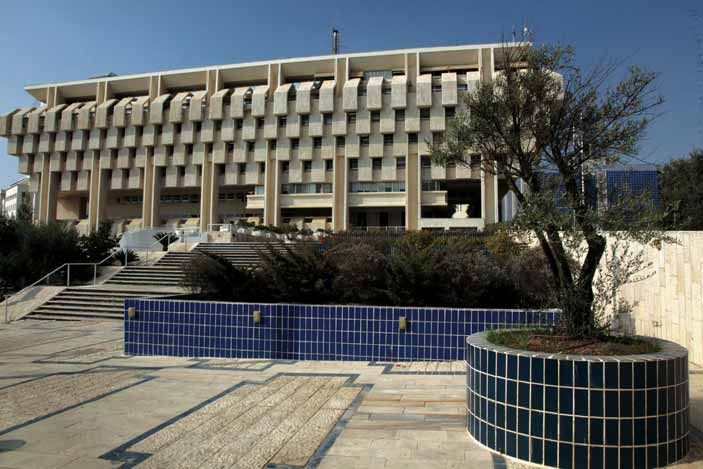
                                                                  The Bank is located in Jerusalem in Kiryat Ben Gurion,
The Bank is a professional body, whose independence               close to the Knesset (Israel's parliament), the Supreme
and freedom from the political arena enable it to use             Court, and government ministries. The Bank also has a
the tools available to it to achieve the goals that the law       branch in Tel Aviv.
has set for the Bank.

The need for a central bank, the norm in every
independent state, arose with the establishment of the
State of Israel in 1948. The Bank was established in
1954, six years after the establishment of the State,
                                                              4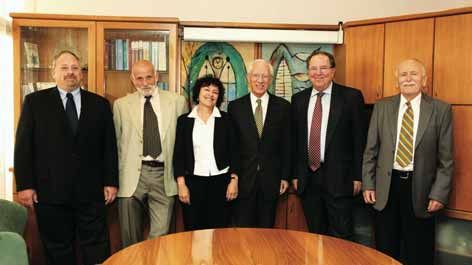
The Functions of the Bank of Israel

1. Conducting monetary policy                                  Why is it important to avoid high
The Bank of Israel's main function is to protect the           inflation?
value of the local currency, in other words, to maintain       Inflation creates uncertainty about the future value
price stability. Additional functions are to support the       of money, so that individuals and economic entities
attainment of the other goals of
the government's economic policy,
especially growth, employment,
and the narrowing of social gaps,
as well as the stability and proper
activity of the financial system––all
these provided that price stability is
not undermined in the long run.

Maintaining the value of money is
important for economic stability and
strength, and for creating the conditions necessary for        invest time and effort in financial activities to protect
continued growth of output and employment. The value           against the erosion of the value of their money and
of money is reflected by the prices we need to pay             uncertainty, activities reflected in reduced efficiency and
for goods and services. Price increases––inflation––           productivity that hinder the economy from achieving its
reduce the value of money, as the same amount of               potential output. Uncertainty about the future value of
money can buy less.                                            money also has a negative impact on the profitability
                                                           5
of investments, deters long-term investment, and                the basis of the interest the Bank charges the banks
increases the risk premium required by investors                on the liquidity it makes available to them and of the
and savers. High inflation also affects the economy's           interest it pays the banks on their deposits with the
credit rating, thereby increasing the cost of credit and        Bank. The Bank sets the rate of interest at a level that
reducing the amount granted.                                    will keep inflation within the target range, or that will
                                                                return inflation to within the range in a period not longer
What is price stability?                                        than two years. The Bank is independent in setting the
                                                                short-term rate of interest and in using the monetary
Israel's government, in consultation with the Governor
                                                                instruments to achieve its goals.
of the Bank, sets a price stability target––an annual
rate of increase in the Consumer Price Index (CPI).             The Bank's interest rate serves as the basis according
The current target is between 1 percent and 3 percent           to which a range of interest rates are set in the
a year, and the Bank is obliged to strive to achieve that       economy, including the rates of interest that the public
                                                                (households and businesses) pays the banks on short-
goal. Some prices of goods and services will increase
                                                                term loans and the rates of interest that it receives from
by more, and some by less, but the intention is that the
                                                                the banks on its short-term deposits.
prices of goods and services included in the CPI will
increase on average at a rate within the target range.          The levels of interest affect expenditure and savings,
The aim is not to achieve as low a rate of inflation as         and hence, prices. A rate of interest that is too low
                                                                discourages households and businesses from saving
possible, and downward deviations from the target are
                                                                and makes it cheaper to borrow, encouraging them
considered in the same way as upward deviations.
                                                                to increase expenditure, leading to pressure for
                                                                price increases, while an interest rate that is too high
How is price stability achieved?                                discourages borrowing and excessively reduces
To achieve its objectives the Bank of Israel has a              demand and investment, leading to a slowdown in
number of policy instruments in its arsenal, the main           economic activity and to unemployment. Thus, in times
one being the short-term interest rate, which is set            of inflation the Bank increases the interest rate, and in
by a Monetary Committee headed by the Governor.                 times of recession and economic standstill, when there
That interest rate––the Bank of Israel interest rate––is        is no inflationary pressure, it lowers the interest rate.
                                                            6
What tools are available to achieve                             with it for short periods––according to the situation in
                                                                the money market and the rates of interest set in the
the interest rate set by the Bank?
                                                                auctions. Against loans they take from the Bank, the
The Bank of Israel has several tools which it uses so           banks put up collateral, including government bonds
that the rate of interest in the economy will accord            and short-term loan certificates (makam, their Hebrew
with that set by the Monetary Committee headed by               acronym).
the Governor. The rate of interest achieved via those
tools directly affects banks' rates of interest vis-à-vis       The monetary loans and deposits window: The Bank
the public. The following are the main tools used by            of Israel makes a window for monetary loans (against
the Bank.                                                       collateral) available to the banking corporations, the
                                                                interest on which is a certain amount higher than
Deposit and/or loan auctions for the banks: These
                                                                the Bank's headline interest rate, and a window for
constitute the main tools used by the Bank to achieve
                                                                monetary deposits, on which it pays a rate of interest a
the interest rate, because of the precision and speed
                                                                certain amount below the Bank's headline interest rate.
of their effect. The Bank of Israel invites the banks
to participate in auctions to borrow money from it for          Short-term loans (makam): These are short-term
periods of one day or one week, or to deposit money             securities (up to one year) issued by the Bank of Israel
                                                            7
to affect the level of the interest rate in the money 2. Holding and managing the country's
market. They are issued to the general public, and
foreign exchange reserves
their rate of return is determined in trading on the stock
exchange and can be used to calculate the public's The Bank of Israel holds the foreign exchange reserves
to provide liquidity in foreign currency when it is needed,
inflation expectations and expectations of changes in
such as to finance the repayments of the country's
monetary policy. debt, to pay for exceptional government expenditure on
Repo: A repurchase agreement (repo) is a transaction imports at times of emergency, to provide liquidity in a
in which the Bank of Israel sells, possibly by auction, financial crisis, or to be sold as necessary in the course
of conducting monetary policy. The appropriate level of
government bonds and makam to banks and financial
foreign exchange reserves is also important from the
institutions, and buys them back after one week at
aspect of the international standing of the economy.
a pre-set price. In a reverse repo, the Bank of Israel The proper level of reserves reduces economic risk
purchases the government bonds and makam from the and improves the country's international credit rating,
banks and financial institutions, and sells them back helping it to obtain credit at a reasonable cost.
after one week at a pre-set price. In the case of the In managing the reserves the Bank of Israel, like
reverse repo, the amount paid by the Bank of Israel other central banks, follows a cautious approach,
for those securities serves to increase liquidity in the directed towards three objectives: maintaining a high
economy. The difference between the price at which level of liquidity; minimizing the various financial and
the Bank of Israel buys the securities and the price at credit risks; and maintaining the purchasing power of
which it sells them back represents the interest. Repos the reserves and obtaining an adequate return on the
are one of the important tools used by central banks in investments. The reserves are therefore invested mainly
in low risk tradable assets with a relatively short time
many advanced economies to conduct monetary policy.
horizon, subject to the limitations specified in the law.
Open market operations: Another tool used by the Bank The currency mix of the foreign exchange reserves and
of Israel to provide liquidity is the purchase and sale in their preferred level are determined in accordance with
the secondary market of various types of government the policy rules, which are derived from the functions of
bonds for various terms. the reserves.
83. Supporting the orderly activity of 4. Regulating and supervising the
the foreign currency market in Israel banking system
Foreign currency is traded between banks and their The banking system plays a central role in every country.
customers, and between the banks themselves. Every The public deposits most of its monetary savings in the
foreign currency trading day the Bank of Israel publishes banks, and the banks, among other things, use that
representative exchange rates of the shekel against money to give credit to businesses and households.
other currencies, based on the market rates some time The public's bank accounts are used to implement a
prior to the announcement. It should be noted that the major part of payments made in the economy, and
representative exchange rate is an indicator of the rate activity in foreign currency also takes place mainly
prevailing in the market, but it has no legally binding via the banks. The need to regulate and supervise
significance. The parties to a transaction indexed to the banking system arises from the vital role that the
foreign currency can therefore carry it out at any agreed system plays, from the recognition that the public's
exchange rate. money must be protected, and the fact that a failure
in the system is likely to have a severe impact on the
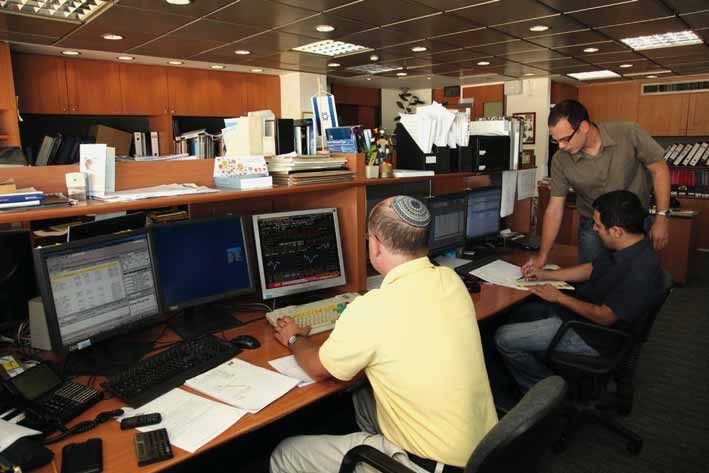
The Bank of Israel analyzes developments in the
functioning of the economy and those who deposited
foreign exchange market (as well as developments in
their money in the banks.
the domestic bond and securities markets). It collates
information on trading in those markets and constructs
The functions of the Banking
indices that enable it to examine whether the financial
markets are operating properly.
Supervision Department
• Supervising the stability of the banking
The Bank of Israel has announced that it will operate
corporations––avoiding excess risks to their stability
in the foreign exchange market in situations in which
and protecting depositors' money;
there are unusual exchange rate movements that
do not reflect fundamental economic conditions, or • Ensuring that the banking corporations are managed
when the foreign exchange market is not functioning properly;
appropriately. • Maintaining fairness in bank/customer relations.
9A corporation that wants to be a banking corporation and acts to correct the flaws, if any, and in cases of serious
anyone who wants to hold five percent or more of the deficiencies even imposes sanctions.
shares of a banking corporation must obtain a permit.
The Bank of Israel acts to increase public supervision
Permits are granted after a comprehensive examination
and discussion in the Licenses Committee. This is over banks' activity; it does so mainly by extending
intended to ensure the bank's ability to operate, and to banks' obligations regarding proper disclosure of their
prevent unsuitable parties from engaging in banking, business situation, their activities in the customer
or from owning or wielding significant influence on a services field, and prices of their services.
banking corporation. Customers who feel that they have been treated
A bank's activity is subject to rules and limitations in wrongly by a bank can submit a complaint to the Public
the area of proper management and risk control––rules Enquiries Unit in the Banking Supervision Department
regarding the structure of the board of directors and in the Bank of Israel. The Unit investigates the
how it operates, adequate capital requirements taking complaint, and advises the customer and the bank of
into account the extent of the bank's risk-weighted the results of its investigation. If the complaint is found
assets, restrictions on the maximum size of loan that to be justified, the bank must correct the fault. Further
can be given to a single borrower and to parties with information on how to submit a complaint is available
connections with the bank, etc.
on the Bank's website.
The Banking Supervision Department performs bank
The Bank of Israel carries out and publishes research
inspections and assesses each bank's activity, based
on banking issues, and produces an annual review
on the large amount of information that it receives
from them. The purpose is to assess their stability and that describes and analyzes developments in Israel's
their business situation, to prevent them from taking banking system. In that way it broadens and deepens
excessive risks, and to ensure the observance of the professional knowledge in that area, promotes the
directives relating to the proper management of banking understanding of the processes in the system, and thus
business issued by the Supervisor of Banks. Based helps to strengthen the system, while also helping to
on the findings, the Banking Supervision Department discover any weaknesses and deal with them.
105. Advising the government on committees and to the public, and contribute to the
understanding of economic processes, the identification
economic matters
of trends and risks, the professional examination of
One of the functions of the Governor of the Bank of Israel policy proposals, and the formulation of policy in the
is to provide the government with advice on economic Ministry of Finance and other ministries, including the
matters. The various departments in the Bank, and in formulation of the state budget.
particular the Research Department, help the Governor
in his formulation of policy recommendations and in Research and economic analysis follow three routes:
assessing the government's policy by monitoring and • Monitoring and analyzing ongoing developments
analyzing economic developments, and by creating a in the economy. The results are published in the
research infrastructure for informed policy decisions. Bank's Annual Report, which by law is submitted to
The results of ongoing analysis, research and the government and the Knesset, and in periodic
assessments are presented to the decision makers in reports such as the Monetary Policy (Inflation)
the Bank of Israel, government ministries and Knesset Report and Recent Economic Developments.The
11Research Department also publishes a monthly multi-year framework for the defense budget, and
composite state-of-the-economy index which gives analyze the proposals put forward by other entities
a real-time indication of developments in the real in the economy.
side of the economy. It also publishes forecasts
• Studies into various aspects of Israel's economy.
of GDP and uses (private consumption, public
These are published in the Bank's Discussion Paper
consumption, exports and investment) and the rate
series and in the Israel Economic Review, published
of unemployment.
jointly with the Israel Economic Association, and in
• Initiating economic policy proposals in other publications in Israel and abroad. The studies
accordance with the changing needs of the deal with identifying and analyzing basic economic
economy. Notable instances of this are the processes and various policy issues.
participation in the preparation of the Economic
Stabilization Program (1985), the formulation of the 6. Providing banking services to the
economic approach to the program to absorb the government
mass immigration of the 1990s, and the reforms in
The Bank of Israel is by law the government's only
the money and capital markets. Other examples
banker for its activity in Israel's domestic currency.
are participation in the formulation of the program
The government, may, with the consent of the Bank
to reduce poverty in Israel, the examination of the
of Israel, obtain services from other banks or financial
contribution of the negative income tax program (or
entities only for purposes of its debt management and
Earned Income Tax Credit, EITC) to the reduction
its fiscal activity. The Bank of Israel also provides the
of poverty and encouragement of employment,
government with banking services in foreign currency.
and the formulation of proposals for government
policy in reaction to the global economic crisis. The As the government's banker the Bank also implements
Bank's researchers participate in the formulation payment orders of government ministries and budgeted
of economic policy via various committees, such units or agencies in shekels or foreign currency, and
as the Brodet Committee that recommended a manages their accounts.
127. Managing systems of information 8. Regulating the payment and
and statistics on Israel's economy settlement systems
The Bank of Israel manages a range of information The expansion of financial activity characteristic of
and statistics systems on economic activity in Israel, many economies around the world and the increase in
systems that support the Bank's ability to fulfill its payments in international capital markets has boosted
functions and achieve its goals. By law the Bank of the importance of payment systems. As a result,
Israel is entitled to obtain data and information from central banks act to promote the security, reliability and
financial entities in Israel. In practice it collates and efficiency of payment and settlement systems, and take
processes economic data and information from various steps to reduce settlement risks, headed by systemic
sources: the Central Bureau of Statistics, the banks, risk, credit risks and liquidity risks. The central bank's
the Tel Aviv Stock Exchange, the Israel Securities activity in the payment systems––providing cash,
Authority, and others.
settling payment orders, managing banks' current
The Bank of Israel provides information and data on accounts, and overseeing the payment systems and
economic activity to the general public, international means of payment––is a cornerstone of a modern
organizations, researchers, analysts and others in payment system, and its involvement has deepened
Israel and abroad, subject to secrecy and data security even further in the last few years.
limitations. The Bank of Israel is a leading source of
The main payment systems in Israel are the Zahav
information on Israel's economy, especially on the
financial sector and the capital market. system (the Hebrew acronym for Israel's Real Time
Gross Settlement (RTGS) system), set up to enable
The Bank of Israel meets international standards with immediate and final settlement of large sums to take
regard to statistical methods and definitions of the place; the paper-based clearing house, for transferring
economic aggregates, as well as the management of paper payment instruments (checks, and various
data and the development of new sources of data. debits and credits); the banks' clearing house, that
Information, data and statistics are published on an settles electronic debit and credit instructions; the Tel
ongoing basis on the Bank's website. Aviv Stock Exchange Clearing Houses (the Securities
13Clearing House and the Ma'of (Derivatives) Clearing 9. Issuing currency, and regulating
House); and the credit card companies. and guiding the cash system in
Since the shekel joined the international Continuous the economy
Linked Settlement (CLS) system in 2008, that system The Bank of Israel has sole legal authority to issue
has settled the shekel against the other currencies banknotes, coins and commemorative coins.
it handles. The addition of the shekel to the list of
The Governor, with the authorization of the Bank's
seventeen currencies settled through the system
Council and the government, determines the nominal
significantly reduces the conversion risks involved in value of banknotes to be issued, and they bear his
foreign currency transactions vis-à-vis the shekel. facsimile signature. A public committee, the Committee
The payment system incorporates transactions via for Planning Banknotes, Coins, and Commemorative
various means of payment, Coins, made up of artists, public figures, academics,
media experts and others, advises the Governor on all
including electronic debit or
matters relating to the content, motifs, size, design, and
credit instructions, checks, security features, etc., of banknotes and coins.
debit cards, cash and
payments via the Internet
When is it decided to issue a new banknote?
In a situation of high inflation, when the purchasing
and cellular phones.
power of money is falling, the need arises for a
Most of the participants larger denomination banknote, to make day-to-day
in the different payment transactions easier. Most series of banknotes around
systems are banks and the world have four to six denominations.
large institutions. The When is it decided to issue a new series of
general public makes direct use of the various means banknotes?
of payment, and needs the interbank payment systems The following are instances when it would be decided
for transferring money from one bank to another. to issue a new series of banknotes:
14A governmental decision to change At the design stage the anti-counterfeit security
the public message or the images features are also chosen––a watermark, a metal
depicted on the banknotes; security thread, ink that changes color when viewed
A change in the name of the from different angles, etc.
currency;
Since 1969 the banknotes have usually carried portraits
The design and security features of Israel's deceased presidents, prime ministers and
have become outdated;
other personalities who left their imprint on Israel and
Counterfeits in excess of a certain the Jewish people, and also give expression to subjects
level.
related to their activities.
How is a banknote issued?
Based on the design chosen for the banknote, the
The process starts with the selection
printing house prepares the printing plates. At the
of a subject to be featured on the same time the paper on which the notes will be printed
note. Following approval by the is prepared. The paper most commonly used around
Government, there is a competition the world is that manufactured from cotton. The current
between designers. The Committee series of Israel's banknotes includes one made from
for Planning Banknotes, Coins, and polymer (a high durability plastic-type material)—the
Commemorative Coins selects NIS 20 note.
what it considers the most suitable
The printing process consists of several stages,
proposed design, and presents it to and at the end of each stage checks are performed
the Governor for approval. When the on the sharpness of the color, the amount of ink, the
Governor has approved the design accuracy of the positioning of the different elements,
for the banknotes, and the other the inclusion of the security features, etc. The notes
approvals required by law have are printed on large sheets, each of which contains a
been obtained, the preparations for number of banknotes. The banknotes are then cut from
printing commence. the sheets and packed into bundles.
15The Bank releases the banknotes into circulation via a decision has been made regarding the design, the
the commercial banks. size of the coin and the metal from which it will be
produced, a tender is held to select a designer. Certain
How to prevent counterfeiting elements appear on all coins: the year of minting, the
Counterfeiting has existed since currency first came into
emblem of the State of Israel, and captions in Hebrew,
use; in extreme cases it may result in the public's losing
English and Arabic.
confidence in a currency. To make counterfeiting more
difficult, banknotes incorporate various security features. When the Governor has approved the design and other
legally required approvals have been obtained, the
Some of the security features can be checked either
production process starts.
with the naked eye (including some that require the
banknote to be moved or tilted), or by touch. These The graphic design of the coin is transferred to the
include watermarks, a metal security thread, microtext, mint, selected by tender, which then produces the
the combination of several see-through shapes, raised dies. These will be used for stamping the previously
print (intaglio), ink that changes color when viewed produced blanks, ordered according to a specification
from different angles, transparent ink, and ultraviolet regarding the type of alloy, the diameter and thickness
serial numbers. In addition to these, banknotes contain of the blank, and its metallurgical properties.
intaglio signs for the blind. The mint first carries out a trial run of production.
The public is strongly urged to be familiar with these When this has been approved, the quantity of coins
security features, and to check more than one to ensure ordered is minted. Coins are minted to be counterfeit-
that a banknote is not a counterfeit. proof and recognizable by all automatic vending and
other machines. As with the printing of banknotes, the
How is a coin issued? minting process takes place under strict scrutiny.
Israel's coins generally feature motifs that appeared on
ancient Jewish coins.
The Committee for the Planning of Banknotes, Coins
and Commemorative Coins selects such a motif. After
16Decision Making in the Bank of Israel
The Bank releases the coins into circulation The Governor of the Bank
via the commercial banks. Damaged The Governor of the Bank of Israel is appointed by the
coins received by the banks from the President of the State, on the recommendation of the
public are withdrawn from circulation, and government, for a five-year term of office, and can be
reappointed for one additional term of office only. The
are transferred to the Bank of Israel for
Governor manages the Bank, acts as chairperson of
melting. Counterfeit coins are sent to the the Monetary Committee, is a member of the Bank's
police. Council, and serves as advisor to the government on
The Bank of Israel also issues economic matters. Decisions on the Bank's economic
policy are taken by the Monetary Committee, and the
commemorative and special coins, and
Council supervises the management of the Bank.
numismatic items. In this too it is aided
by the Committee for the Planning of The Monetary Committee
Banknotes, Coins and Commemorative The Monetary Committee sets the policy for achieving
Coins. The Bank issues several the Bank's objectives, including monetary policy. The
commemorative coins each year, and Committee decides on the level of the Bank of Israel
interest rate and the tools of monetary policy to be
coins to mark special events. These coins
used by the Bank. The Committee may decide that the
are made of gold or silver, and are sold Bank should intervene in the foreign currency market if
to collectors and the public via the Israel necessary to achieve its objectives.
Coins and Medals Corporation. The
The Governor decides on the desired long-term level
Governor, with the approval of the Council of the foreign exchange reserves, and the Monetary
and the government, declares them legal Committee, with the approval of the Minister of Finance,
tender in Israel. may change the principles by which that level is
17determined. The Monetary Committee, in consultation financial statements, approve the salary terms for Bank
with the Minister of Finance, determines the guidelines employees, appoint an internal auditor for the Bank,
for the policy regarding the investment of the foreign discuss recommendations of the Audit Committee,
exchange reserves. made up of representatives of the public on the Council,
The Monetary Committee has six members. Three and appoint a committee headed by the Governor to
are from the Bank––the Governor, who serves as correct any deficiencies.
chairperson of the committee, the Deputy Governor, and The Council has seven members: two from the
an additional Bank employee who is appointed by the Bank––the Governor and Deputy Governor––
Governor. The other three members of the committee and five representatives of the public. One of the
are representatives of the public with the appropriate representatives from among the public is appointed by
skills, experience and academic achievements. the government, in consultation with the Governor, to
Since research on the subject shows that decisions by serve as chairperson.
a group of professionals are on average better than
those of one person, the process of decision making by
The Visitors Center
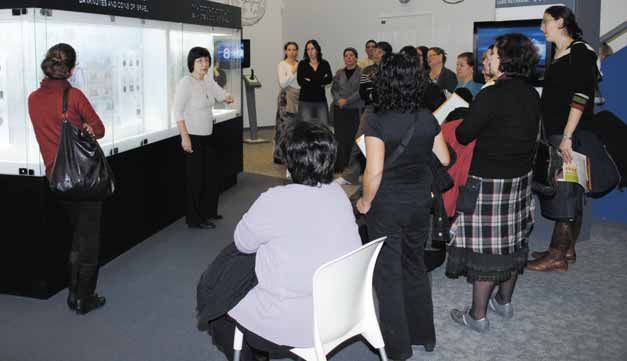
the Monetary Committee should contribute to the right The purpose of the Bank of Israel's Visitors Center is to
decisions being made. familiarize the public with:
The Bank's main functions and its contribution to
The Committee's decisions are made by a majority
Israel's economy;
vote, with the Governor having a casting vote in the
event of a tied vote. The history of money in Israel and how Israel's
banknotes and coins reflect the heritage of the Jewish
The Council people and the State of Israel.
The functions of the Council are to supervise the A visit to the Center incorporates a variety of interesting
orderly and efficient management of the Bank, attractions and exhibits, including:
discuss the annual work plan formulated by the An exhibition of ancient coins; banknotes and coins
Bank's management, approve the annual budget issued in Israel from pre-State days to the present,
for the Bank's administrative activity and the Bank's substitutes for money, and more.
18A tour through the exhibits shows the development • Talks on special economic issues (by prior arrangement).
of different means of payment, such as, what served
as money before coins existed? When were coins The Visitors Center is intended for the general public,
first used? What was the first series of banknotes including children aged eight years or older. Visits are
issued in Israel? What is the origin of the motifs used in the form of guided tours, and are free of charge, but
in the designs on Israel's currency? What events and must be arranged in advance, by telephone: 02-655-
personalities that left their mark on the nation and Israel 2828, fax: 02-666-9552, or Internet:
are depicted on the currency?
Within the museum are: www.bankisrael.org.il/vcenter.htm .
• Interactive computer stations that by means of games
illustrate the functions of the Bank of Israel, the history of Interested in more information?
money, and the Bank's contribution to Israel's economy.
Much information on all areas of the Bank of Israel's
• Films that show the development of the means of activities is available on the Bank's website:
payment and the essential role fulfilled by the Bank
of Israel in maintaining price stability. www.bankisrael.org.il
19You can also read


