The Bay Area-Silicon Valley and Australia - An Expanding Trans-Pacific Partnership - Lendlease Podium
←
→
Page content transcription
If your browser does not render page correctly, please read the page content below
The Bay Area-Silicon Valley
and Australia
An Expanding Trans-Pacific Partnership

December 2020
Acknowledgments
This report was developed in partnership with the          Odette Hampton, Trade and Investment Commissioner
American Chamber of Commerce in Australia, with              and Deputy Consul General, Australian Trade and
support from Cisco, Google, Lendlease, Salesforce,           Investment Commission (Austrade)
Telstra, University of Technology Sydney, and Wipro.       Joe Hockey, Founding Partner and President, Bondi
Development of the project was led by Sean Randolph,         Partners, Australian Ambassador to the US, 2016–2020
Senior Director at the Bay Area Council Economic
Institute. Neils Erich, a consultant to the Institute,     Vikas Jain, Asia-Pacific Business Head for Engineering,
was co-author. The Institute wishes to thank April            Construction and Mining, Wipro
Palmerlee, Chief Executive Officer of the American         Claire Johnston, Managing Director, Google
Chamber of Commerce in Australia, for her support            Development Ventures, Lendlease
throughout this effort and the following individuals for
                                                           Joe Kaesshaefer, Trade and Investment Commissioner–
their valuable input:
                                                             USA, Department of Industry, New South Wales
Jeff Bleich, Chief Legal Officer, Cruise, US Ambassador
                                                           Michael Kapel, Trade and Investment Commissioner to
   to Australia 2009–2013
                                                             the Americas in San Francisco, Government of Victoria
Michael Blumenstein, Associate Dean, Research
                                                           Damian Kassabgi, Executive Vice President, Public
  Strategy and Management, Faculty of Engineering
                                                             Policy and Communications, Afterpay
  and Information Technology, University of
  Technology Sydney                                        Leigh Kelson, Program Director, FireTech Connect

Chris Boshuizen , Operating Partner, DCVC                  Dawn Lillington, Executive Director, Australian American
  (Data Collective)                                          Chamber of Commerce

David Brown, Director, Market Entry Services,              Susan Lucas-Conwell, Executive Vice President,
  San Francisco Landing Pad (Austrade)                       CSIRO (Commonwealth Scientific and Industrial
                                                             Research Organization)
William Caswell, Lendlease Digital Products Group
                                                           Alex Lynch, Manager, Australia Public Policy and
Diana Coatney, Director, Business Development & Trade,       Government Relations, Google
  Sydney and New South Wales–San Francisco Office
                                                           Pip Marlow, Chief Executive Officer, Salesforce Australia
Chloe Cohen, Community Manager,                               and New Zealand
  Aussie Founders Network
                                                           Geoff McQueen, Founder & CEO, Accelo
Nicholas Collins, President, Americas, Telstra               Excutive Director, Aussie Founders Network
Hayden Cooper, Head of Corporate Communications,           Zina Moukheiber, Director of Corporate
  Atlassian                                                   Communications, 500 Startups
Robyn Denholm, Global Chair, Tesla, Inc.                   Nick Nichles, Australian Consul General, San Francisco
Michael Farrell, Chief Executive Officer, ResMed           Vijay Rajendran, Director, Head of Corporate Innovation
Tim Fawcett, Director of Government Affairs, Cisco            and Partnerships, Ecosystems Group, 500 Startups
  Australia-New Zealand                                    William Ruh, CEO, Lendlease Digital, Lendlease
Viki Forrest, Trade and Investment Commissioner–North      Pankaj Srivastava, Chief Technology Officer and Senior
   America, Trade and Investment Queensland                  Vice President, Digital Technology, Lendlease
Contents
A Message from Australia’s Ambassador                                               Chapter 3
to the United States...................................................2            Trade: An Evolving Value Proposition......................33
Foreword....................................................................3          California-Australia Trade......................................... 36
Executive Summary....................................................4                 Bay Area-Australia Trade.......................................... 36
   Converging Economic Interests.................................. 4
                                                                                    Chapter 4
   A Busy Two-Way Street............................................... 6           Foreign Direct Investment:
   Trade and Investment................................................. 6          A Busy Two-Way Street............................................39
   Coordinated Networks............................................... 8                 Navigating the Obstacles..................................... 41
   Conclusion.................................................................. 9     US-Australia FDI........................................................ 41
Introduction..............................................................10             Cisco Systems: Getting Research to Market........ 42
Chapter 1                                                                                Salesforce: Do-it-Yourself IP................................. 44
Australia Performs in the Global Economy.............. 11                                Google: Every Successful Journey Starts
  Slow but Steady........................................................ 12             with a Map............................................................ 46
  A Snapshot of the Economy..................................... 12                      Tesla: A Wall That Australians Will Pay For........... 47
     Resources............................................................. 15        Australia-US FDI........................................................ 48
     Agriculture............................................................ 15       Investment Growth Trends....................................... 49
     Manufacturing...................................................... 18              Telstra: Balancing Global with Local.................... 55
     Construction......................................................... 20            Lendlease Embraces Building 4.0........................ 56
     Banking and Finance............................................ 21             Chapter 5
     Healthcare............................................................ 22      The Australian Community
                                                                                    in Northern California..............................................59
Chapter 2
Australia Strengthens Its Innovation System...........25                               A Colorful History..................................................... 59
  A Snapshot of the Innovation System....................... 26                        Building Today’s Community.................................... 60
     Innovation Activity................................................ 26            Academic Connections............................................. 61
     Digital Innovation................................................. 26              UTS Seeks Industry Partners
                                                                                         to Commercialize Research.................................. 63
     Entrepreneurship.................................................. 27
                                                                                         Supporting Digital Democracy and Security....... 64
     Startup Finance.................................................... 27
                                                                                       Coordinated Networks............................................. 65
     Research Spending and Output........................... 28
                                                                                         Startups and Venture Capital............................... 65
     Innovation Connections....................................... 29
                                                                                         Government Trade Promotion and Investment.... 66
     Skills and Capability............................................. 30
                                                                                         Strategic Connections.......................................... 67
     Innovation Capability........................................... 30
                                                                                         Business and Professional Support...................... 70
  The Vision for Australia in 2030................................ 30
                                                                                       Growing in the United States.................................... 71
     Education.............................................................. 30
                                                                                         Space Entrepreneur.............................................. 71
     Industry................................................................. 30
                                                                                         Afterpay: A Retail Fintech Survives COVID-19..... 72
     Government.......................................................... 31
                                                                                         ResMed: Respiratory Care and
     Research and Development................................. 31
                                                                                         Digital Transformation in the COVID-19 Era........ 73
     Culture and Ambition........................................... 31
  Government Support for Innovation........................ 31                      Conclusion................................................................75
     Public-Private Collaboration................................. 31
     Cross-Border Opportunities................................. 32                 Notes........................................................................ 76
     Growing Innovation Through Immigration........... 32
A Message from Australia’s Ambassador
to the United States
The relationship of California and the San Francisco Bay    Bay Area’s commercial
Area with Australia is long standing and ever growing.      world through people
It goes back one hundred and seventy years, shaped by       like Robyn Denholm,
strong people-to-people links and common values that        Chair of Tesla, to name
we have not been afraid to fight for, together.             but one.

On 4 July 2018, Australia and the United States             Australia even managed
celebrated the first 100 Years of Mateship. The             to penetrate the rarefied
mateship forged in battle is the bedrock of a unique        halls of American
contemporary relationship that carries across               college sport through
government, business, and societies. San Francisco          Saint Mary’s College
was once the staging area for many US soldiers, sailors     successful recruitment of
and airmen who fought alongside their Australian            Australian talent to lead
counterparts during the 20th Century.                       its basketball program to several appearances in the
                                                            NCAA tournament. Current NBA players Patty Mills and
Today Australia and the United States are forging a         Matthew Dellavedova are Saint Mary’s alumni.
new partnership that embraces science, technology,
                                                            Major Bay Area companies with operations in Australia
and innovation to build the industries of the future.
                                                            that are headquartered in the region include Apple,
The United States-Australian relationship in the San
                                                            Chevron, HP, and Alphabet (Google). There are over
Francisco Bay Area is integral to that vision. California
                                                            100 Australian companies with operations in the Bay
and the Bay Area are at the heart of American
                                                            area including Telstra, Atlassian, and Culture Amp.
innovation and technological leadership. In 2018,
we celebrated the 50th anniversary of the sister city       Today, San Francisco is the home of the Australian
relationship between Sydney and San Francisco.              government’s Landing Pad. It offers 90-day residencies
                                                            (currently virtually) for Australian tech-enabled scale-ups
Australians play a prominent role in the San Francisco
                                                            to land and expand in the Bay Area and beyond.
Bay Area’s celebrated research and innovation
communities such as Prof. Sam Hawgood, Chancellor           Australia’s connection to the Bay Area is multi-
of UC San Francisco, and Prof. Akshay Venkatesh,            faceted and long standing, and I welcome this
winner of Mathematics’ most distinguished award, the        report and the insights it provides to creating a
Fields Medal. Australia’s influence spills over into the    better future together.

                                                            The Hon. Arthur Sinodinos AO
                                                            Ambassador of Australia

2
Foreword
Australians have long enjoyed a mutually beneficial          Australian trade with
relationship with Californians. Beginning with the Gold      California is especially
Rush of 1848 and continuing to today, these two major        noteworthy: California
Pacific powers have shared active two-way flows of           was the leading US
trade, investment, research, innovation, education,          exporting state to
culture, ideas, and people.                                  Australia, with nearly
                                                             US$4 billion in combined
In October 2019, the American Chamber of Commerce            goods and services in
in Australia (AmCham) visited the Bay Area to explore        2019. Australia was the
economic opportunities to create jobs and grow both          14th largest importer
economies. At a high-profile visit to the Bay Area           of California goods and
Council Economic Institute headquarters, AmCham              services. Key to the
announced its support for a special research project to      investment is the potential for new technology solutions
analyze the important economic connections that bind         to allow areas such as mining, manufacturing, agriculture,
Australia and the Bay Area. This report is the product of    banking, aerospace, and healthcare to improve
that research, which was championed by Lendlease and         productivity, upgrade workforce skills, and compete
also supported by Google, Salesforce, Telstra, University    globally. Bay Area investment in Australia since 2015
of Technology Sydney, Wipro, and Cisco.                      has been, with a few significant exceptions, nearly all in
                                                             the tech sector. Key verticals include ICT, cybersecurity,
Australia and the United States enjoy a US$58.9 billion      fintech, biotech, and renewable energy. US Investors see
two-way trade relationship and have made over                Australia as a market with considerable upside potential
US$1.3 trillion in reciprocal investments. The United        in terms of future population growth, a world-class
States is both the leading foreign country investor in       education system, IP protections, and rule of law.
Australia and Australia’s largest investment destination.
US investment accounts for approximately seven               As the world economy emerges from a COVID-induced
percent of the Australian GDP, or A$131 billion.             contraction, innovation is particularly vital to driving
American companies in Australia employ hundreds of           economic growth and development. US and Australian
thousands of people, and US companies spend over             industries and investors need one another more than
A$1 billion annually on research and development.            ever right now. This report is intended to inform and
Australia is deeply invested in the United States as well:   inspire public and private sector leaders to harness
more than 10,000 Australian firms sell to or operate in      technology and leverage the bi-lateral relationship to
the United States, and trade with Australia supports in      help Australia and the Bay Area emerge stronger from
total more than 300,000 US jobs.                             the current crisis.

                                                             April Palmerlee
                                                             Chief Executive Officer
                                                             American Chamber of Commerce in Australia

                                                                                                                        3
Executive Summary
Australia enjoys close and longstanding economic,            affiliates of US multinational enterprises employed a
strategic and cultural ties to the United States. Its        workforce of nearly 325,000 in Australia,5 compared
relationship with California and the San Francisco           to a reported 2,039 firms employing nearly 273,000
Bay Area dates back 170 years. These ties begin with         in FY2014–15, suggesting a shift toward larger
a shared language but extend well beyond that to             investments by fewer companies.6 At the same time, the
include a set of shared, deeply held values rooted in an     United States is Australia’s top investment destination,
appreciation for democracy, open markets, free trade,        accounting for 28% of its global investment stock.7
and the rule of law.
                                                             The San Francisco-Silicon Valley region is an important
Australians have fought alongside Americans in every         contributor to the broader bilateral economic
major US military engagement in the last 100 years,          relationship. In particular, its role as the leading
including World War I, World War II, Vietnam, the Persian    global platform for technology, venture investment,
Gulf, Afghanistan, and Iraq. The two countries have          entrepreneurship, and innovation provides the basis
been formally linked since 1951 by the Australia-New         for partnerships that support business growth and also
Zealand-United States Defense Treaty (ANZUS) and             enable Australian companies and organizations to
share intelligence with each other and with Canada, New      leverage Silicon Valley assets to advance innovation at
Zealand, and the United Kingdom under the “Five Eyes”        home. This report assesses the unique ties that connect
framework. This in turn has translated into similar paths    Australia with the San Francisco Bay Area and the
for industrial development, in areas such as defense,        opportunities they present.
aerospace, and advanced manufacturing and materials.

More than A$81 billion (US$58.9 billion) in annual           Converging Economic Interests
two-way trade1 and A$1.8 trillion (US$1.3 trillion)2 in      Crosscurrents at work in the global economy offer
reciprocal investment reflect the complementary nature       unique opportunities for closer US-Australia economic
of the two countries’ economies. The United States is        cooperation.
Australia’s third largest trading partner, second largest
import source, and fourth largest export destination.3 It    In the first quarter of 2020, Australia’s economy
is also the largest and most significant overseas investor   performed among the best in the world, with GDP
in Australia, accounting for 25.6% of Australia’s inward     having fallen just 0.3% in that quarter in the midst of
foreign investment in 2019.4 In 2018 (the latest year        the global coronavirus pandemic.8 Like other countries
of available US data), 1,101 majority-owned foreign          impacted by COVID-19 around the world, Australia saw

4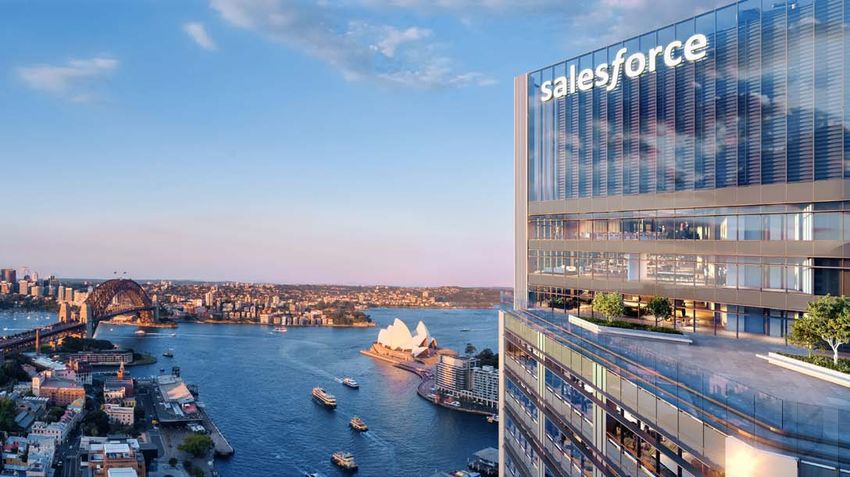
Executive Summary

its economy contract severely in the second quarter,         the country has historically been subject to the
with GDP dropping 7%, the largest contraction on             cyclical whims of nature—storms, floods, droughts,
record. Still, Australia fared well in comparison to other   and bushfires—which have increased in frequency
developed counties, which saw second quarter GDP             and magnitude in recent years. While immediate
drops ranging from 7.8% in Japan,9 to roughly 9% in the      emergency response solutions are needed, a longer-
United States, Germany, and the Netherlands, to 20.4%        term discussion is now underway toward diversifying
in the UK.10                                                 the economy, building on a robust resource sector while
                                                             expanding sustainable, value-added growth through the
Australia’s domestic market of more than 25 million11        application of new technologies. Key elements include
has a structure dominated in key sectors by a handful
of large, sophisticated companies and millions of            ■■ digital transformation to help legacy industries
small and mid-sized suppliers and independent niche             modernize and compete globally;
players. Australia’s abundant mining and energy              ■■ basic research in technologies of the future, such as
natural resources along with agriculture account for a          artificial intelligence, quantum computing, robotics,
significant share of GDP and employment, although               data analytics, precision medicine, and the Internet
services—property, finance, healthcare, education,              of Things;
and public administration—have posted the strongest          ■■ skills upgrades to help workers keep jobs or switch
growth in recent years, absorbing workers as traditional        careers in a new economy; and
manufacturing has declined.
                                                             ■■ entrepreneurial incentives and financing
Robust public investment has nurtured a world-                  to encourage new business formation and
class system of higher education and an institutional           commercialization of research.
ecosystem for basic and applied research in fields
ranging from aerospace to cybersecurity. International       When it comes to innovation, the Silicon Valley/San
student enrollment has increased steadily in recent          Francisco Bay Area complements Australia well. Silicon
years to more than 758,000 in 2019, with more than           Valley’s organically developed, public-private ecosystem
two thirds of international students coming from Asia-       of federally-funded research institutions, state-funded
Pacific countries, including China, India, South Korea,      and privately endowed universities, graduate-level
Malaysia, Japan, Thailand, Nepal, Indonesia, and             researchers, entrepreneurs, venture and angel investors,
Vietnam. The United States and Brazil are also among         and their deep web of connections is recognized
the top 10 source countries for international students.12    worldwide for its ability to nurture talent and create
Australia’s education export income from international       wealth by bringing innovation to market. These patterns
students more than doubled between 2014 and 2019,            support new cross-border synergies on both sides of the
from A$19.8 billion to A$40.3 billion.13 A large number      Pacific, such as the following:
of total international higher education enrollments are in   ■■ Large Australian firms engage with Silicon Valley to
STEM studies, which have seen an average 17% annual             plan and execute digital transformation strategies in
growth rate since 2014.14 Commercialization remains a           mining and energy, manufacturing, finance, medicine,
gap, however, as an underdeveloped focus on markets             construction, and agriculture.
in guiding research has constrained private capital          ■■ Bay Area companies see Australia as a valuable
formation for investment. Australian STEM graduates             test bed for cutting-edge technologies central to
and entrepreneurs have sometimes had to look abroad             digital transformation and, increasingly, as a secure,
for funding, talent, and customers as they execute on           affordable, politically stable base from which to serve
their business strategies.                                      the Asia-Pacific regional market.
Australia, known for its stable economy, had not             ■■ A growing Australian startup community relies on
experienced a recession for almost three decades,15             Silicon Valley for early- and later-stage venture
although that impressive record ended in 2020, due              capital, business expertise, M&A, and connections to
to the COVID-led economic downturn. In addition,                leverage the US market and scale globally.

                                                                                                                      5
The Bay Area-Silicon Valley and Australia: An Expanding Trans-Pacific Partnership

■■ Australia’s regional governments hope to lure              Australia, up 3.1% over the previous year’s total.25 The
   technology investment in R&D and in innovation             United States is the leading long-haul country destination
   hubs, data centers, and project partnerships.              for Australian tourists, and California is the leading US
                                                              state destination.26 Prior to the COVID-19 crisis, travelers
■■ Australian and Bay Area universities and research          from Australia had access to 87 weekly nonstop flights
   labs are exploring collaborations that better              and 28,000 nonstop seats to and from Australia through
   leverage talent, reduce duplication of effort, and         San Francisco and Los Angeles International Airports.27
   facilitate commercialization.

                                                              Trade and Investment
A Busy Two-Way Street                                         Trade between the United States and Australia is
The first reported Australian emigrants to the United         underpinned by the Australia-United States Free
States were entrepreneurs, escaping an economic               Trade Agreement (AUSFTA). More than 97% of
downturn (with falling wool prices depressing wages) and      Australia’s non-agricultural exports to the United
seeking a fresh start in the 1849 California Gold Rush.16     States move duty-free, and three quarters of
More than 30 ships17 carrying food, clothing, guns,           agricultural tariff lines have been eliminated.28 Under
building supplies, tools, and passengers sailed from          AUSFTA, 99% of US manufactured industrial and
Sydney Harbour to San Francisco Bay and up the delta          consumer goods exports enter Australia duty-free,
toward the gold camps, in a race against settlers traveling   and there are no tariffs on 100% of US agricultural
by wagon from the eastern United States to stake claims       products.29 Australian exporters have access to the
and sell their goods. By May 1850, 11,000 Australians         US$535 billion US federal government procurement
had made the more than three-month voyage.18 Two              market and the government procurement markets of
enterprising Australian prospectors noticed similarities in   31 US states.30 In 2018–19, the United States enjoyed
climate and terrain with their home districts in Victoria,    a total goods and services trade surplus with Australia
decided to return home to hunt for gold, found it in the      of A$26.9 billion (US$19.6 billion).31
Bathurst and Clunes districts, and launched the Australia
Gold Rush of 1851.19 The story is emblematic of a             Since AUSFTA was enacted, US exports to Australia
170-year exchange that continues today.                       have grown by 130%, and two-way investment between
                                                              Australia and the United States has increased by more
More than 10,000 Australian firms sell to or operate          than 150%.32 Both countries have farming, energy,
in the United States.20 Australian companies directly         aerospace, and healthcare sectors that are highly
employed 83,700 American workers at the end of 2017,          compatible in terms of trade. Australian beef and wines
and trade with Australia supports in total about 300,000      are traded for US pork and dairy products. Australian
jobs in the United States.21 Australian companies             component exports return as aircraft and satellites. Price
representing 83 different industries currently operate in     controls in Australia’s public healthcare system make
California.22 The state boasts an Australian expatriate       it a net exporter of pharmaceuticals and protective
community estimated at about 60,000,23 of which more          equipment, but a net buyer of US medical equipment
than a third—around 25,000—are in the Bay Area.               and instruments. Almonds and financial services enjoy
The preferential E-3 visa, reserved for Australians with      healthy two-way trade flows.
special skills entering the United States to work, has
been a draw for STEM researchers, startup founders,           On the investment side, Bay Area energy company
and advanced tech workers.                                    Chevron Corporation has been prominent in the
                                                              Australian market for more than six decades. San
US National Trade and Tourism Office (NTTO) data              Jose-headquartered Cisco Systems arrived in the mid-
compiled by Statista shows 1.32 million Australian visitors   1990s and today employs a workforce of 1,000 at its
to the United States in 2019, down from a peak of 1.45        global technical assistance center outside Sydney, its
million in 2015 but otherwise consistent with levels seen     innovation centers in Sydney and Perth, and its offices in
since 2013.24 In 2018–19, 812,000 US travelers visited        nearly all regions of the country.

6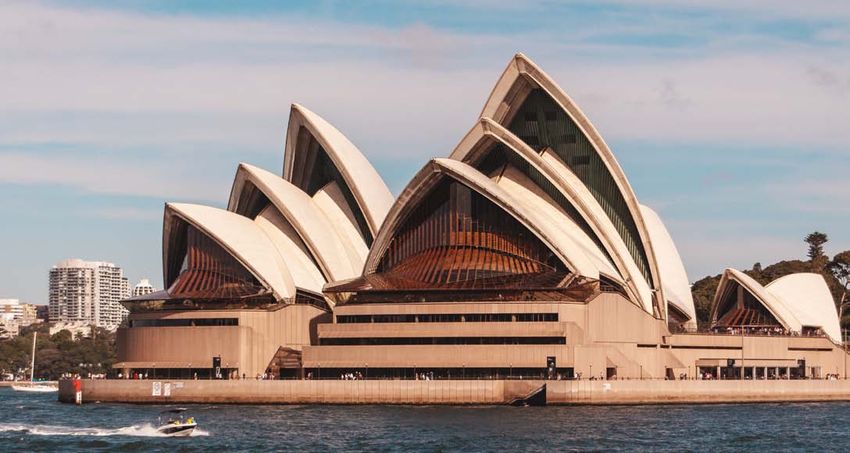
Executive Summary

More-recently-arriving Bay Area tech companies have          Bay Area investment in Australia since 2015 has focused
gravitated to Australia for its extensive pool of STEM       heavily on technology, with companies looking to
talent, fed by world-class universities; its strength in     explore opportunities in key regional markets, but
sectors such as AI and quantum computing, advanced           also to develop R&D capability for local and regional
manufacturing, cybersecurity, biotech, fintech, and          markets. Typical investments have included Australia-
agritech; its shared language and business culture; its      New Zealand and Asia-Pacific headquarters, R&D
early consumer adoption of new technologies; and its         centers, and data centers and other infrastructure
proximity and ties to Asian markets.                         supporting cloud computing and digital transformation.
                                                             Key verticals include information and communications
Examples include the following:                              technology (ICT), cybersecurity, fintech, biotech, and
■■ Enterprise software-as-a-service (SaaS) provider          renewable energy. Further inducements are IP and rule-
   Salesforce sees particular opportunities among small      of-law protections and pent up demand to modernize
   and mid-sized businesses and within education             legacy industries and infrastructure.
   and government to improve efficiency and deliver
   services. The company employs more than 2,000             As a startup culture has taken hold in recent years,
   people across Australia and plans to add another          Bay Area corporate and independent investors
   1,000 when it moves into its 24 floors of headquarters    have also set up shop in Australia, competing with
   space in a new $1.9 billion, 53-story tower at Circular   a fast-growing homegrown sector. Major players
   Quay overlooking Sydney Harbour, which is set to be       include Accel, Sequoia Capital, Khosla Ventures,
   called Salesforce Tower Sydney and scheduled for          and Salesforce’s Trailblazer Fund.
   completion in 2022.33
                                                             In the reverse direction, more than 1,200 Australian
■■ Google opened a one-person office in 2002 to work         firms have operations in the United States36 in a wide
   with two brothers and their fledgling company, Where      range of industries, including manufacturing, wine
   2 Technologies, on the interactive mapping and            production, retail, property development, finance,
   navigation technology that would become Google            aerospace, and life sciences. The Australian Trade
   Maps.34 The company’s 1,500 Australia employees           and Investment Commission (Austrade) estimates that
   work on products such as Google Maps, Google              between January 2003 and February 2017 Australian
   Photos, and mobile browser Chrome.35                      companies invested US$20.9 billion on new capital
■■ As well-known in Australia for its solar energy and       projects in the United States. The industry sectors
   battery storage technology as for its cars, Tesla is      receiving the largest number of these new projects
   working with the South Australian Government on           were software and IT services, business services, and
   developing a network of potentially 50,000 home           natural gas, oil and natural gas liquids. The highest
   solar PV and Powerwall battery systems across South       ranking industry activity receiving these projects was
   Australia—all working together to form the world’s        sales, marketing and support services, which had more
   largest virtual power plant (VPP). There are currently    than 150 new investment projects generating more than
   more than 1,000 homes involved in the VPP, which          6,500 new jobs.37
   uses smart technology to lower consumer electricity
   prices and help stabilize the grid.                       Australian investment in the Bay Area since 2014 has
                                                             come from a mix of established companies delivering
Other Bay Area firms with significant Australian             innovative products and services at scale, alongside
presences include Oracle, Facebook, Square, Uber,            smaller growth-stage tech companies raising funds and
Industrial Light & Magic, Slack, Stripe, and DoorDash.       entering the US market via Silicon Valley to achieve
A US firm with a footprint in both the Bay Area and          scale. Sectors range from telecommunications and
Australia is Boeing, whose $A73 million investment           renewable energy, to agritech and fintech, to healthcare
in R&D in 2019 spanned modeling and simulation,              and e-commerce. Investment projects have included
autonomous systems, advanced composites, mission             agricultural seed producer Nuseed’s R&D center in West
systems technology, and augmented/virtual reality.           Sacramento, telecom provider Megaport’s dark fiber

                                                                                                                    7
The Bay Area-Silicon Valley and Australia: An Expanding Trans-Pacific Partnership

facility in San Francisco, and automotive OEM supplier       in Australia (AmCham). With offices across Australia and
Futuris Automotive’s Newark plant that builds seating        connections to Bay Area organizations, AmCham provides
and interior systems for Tesla.                              networking, advocacy, access, information, and visibility
                                                             for those involved in two-way trade and investment.
Telstra, originally Australia’s national telecom provider,
today is a private carrier operating more than 400,000       Research and student exchange programs link
km (249,000 miles) of subsea cable, 58 data centers,         universities such as Stanford, UC Berkeley, UC Davis,
2,000 points of presence in more than 200 countries,         and UC San Francisco with Australian counterparts
and access to 60 satellites globally.38 Outside of           including Australian National University, University of
Australia, Telstra’s services are exclusively B2B, making    Sydney, Curtin University (Perth), Monash University
it a critical technology partner for major Bay Area          (Melbourne), University of Melbourne, University of
tech firms which rely heavily on high-capacity, resilient    Queensland, University of Adelaide, University of
and secure cross-border regional and global services,        Western Australia, and others.
particularly connecting the United States to Asia and
Australia. Telstra in the Americas, which primarily          Another recently added link has been the creation of
handles sales, marketing, and customer/partner support       the Jeff Bleich Centre for the US Alliance in Digital
in North America, is headquartered in San Francisco.         Technology, Security and Governance at Flinders
Key technology partners include Cisco, Salesforce,           University in Adelaide. Named after former US
Juniper Networks, Infinera, and Equinix. Telstra has         Ambassador to Australia and Bay Area resident Jeff
been a customer of Sunnyvale cybersecurity firm              Bleich, the center focuses on educating the public and
CrowdStrike since 2013 and an investor since 2017            policymakers on the challenges posed to democratic
through its Telstra Ventures investment arm.39               societies by digital technologies and on promoting
                                                             cooperative initiatives through research and support
Team collaboration and productivity software company         for policymakers.
Atlassian is rooted in both Australia and Silicon Valley.
The company raised US$60 million from Accel in 2010          Australia’s government is represented in the Bay Area
in a funding round that brought Accel’s expertise onto       not only by the Australian Consulate General in San
its board, fueled acquisitions, and was also used to         Francisco, but also by the national science organization,
facilitate liquidity for employees.40 Headquartered in       CSIRO, and by regional trade and investment specialists
Sydney, with 5,000 employees41 and US$1.6 billion in         representing the states of Victoria, Queensland,
revenue for the fiscal year ending in mid-2020,42 the        and New South Wales. Landing Pad, an accelerator
company currently has 12 offices in seven countries,         program run by Austrade, has hosted 94 startups to
including two Bay Area offices (in San Francisco and         date, connecting them to resources and partners in the
Mountain View).43                                            region. In the private sector, the Australian American
                                                             Chamber of Commerce links many of the larger
Starting in 2002, Australia’s shopping center developer      companies, while the Aussie Founders Network offers
Westfield Group acquired and developed two major             informal mentoring and network support to startups.
shopping complexes in Northern California (the
downtown San Francisco Center and the Westfield              Innovation is an important theme linking the Bay Area
Galleria at Roseville in the Sacramento metropolitan         with Australia which, as mentioned previously, has a
area) before being acquired itself in 2018 by the Paris-     strong university system and high research capacity but
based Unibail-Rodamco commercial real estate group.44        limited venture capital and a small domestic market.

                                                             ■■ Institutions like the University of Technology Sydney
Coordinated Networks                                            (UTS), a STEM and technology-oriented public
                                                                university with a mission to transform the culture of
The largest and most influential membership organization        business and academic engagement, see a natural
for companies operating between Australia and the               synergy with Silicon Valley and are making deeper
United States is the American Chamber of Commerce               ties with the region a top priority.

8
Executive Summary
■■ The Australian founder of San Francisco-based Planet Lendlease’s latest and most ambitious Bay Area
Labs leveraged a stint at NASA Ames Research project involves a 15-year, US$15 billion partnership
Center in Mountain View and venture funding from with Google to develop up to 15 million square
DCVC (Data Collective) to launch his company. feet of residential, retail, hospitality, and community
uses in three Bay Area cities: San Jose, Sunnyvale,
■■ Afterpay, a highly successful Australian fintech and Mountain View.46 Behind the design is a data-
company launched in the United States with funding driven approach that aims to revolutionize property
from Matrix Partners, is currently used by more than development globally through digital processes
15,000 brands and retailers and is serving five million that draw on domain knowledge of architecture and
active users in the United States.45 With a Bay Area- construction in Australia and the digital and software
based team of 120, the company was drawn to the expertise of the Bay Area.
region in a quest for talent and now plans to enter
global markets from its San Francisco base.
Conclusion
■■ Sydney-headquartered unicorn graphic design
The complementary nature of the US and Australian
platform Canva also turned to Silicon Valley for
economies provides significant opportunities for
growth capital from Sequoia and other venture firms.
economic growth and development. As countries with
The innovation connection extends beyond core deep cultural and geopolitical ties, Australia and the
technology companies to include companies in United States can capitalize on their shared values and
traditional industries such as financial services, democratic systems to collaborate more closely on
healthcare, agriculture, mining, and construction issues ranging from defense and cybersecurity to the
that are applying digital transformation methods development of strategic and emerging technologies.
to modernize their industries as they build
COVID-19 notwithstanding, it is becoming ever easier
new markets. A prominent example is Sydney-
for Australians and Americans to live and work in each
headquartered global property developer, builder,
other’s countries. Australians in tech and other high-
and investor Lendlease, known worldwide for
demand industries enjoy streamlined visa availability
projects such as the Sydney Opera House and
due to the preferential E-3 visa program, and highly
the Petronas Towers in Kuala Lumpur, as well as
skilled professional Americans can now apply for
the Grand Central Station renovation and the
expedited admission to Australia through the Global
September 11 Memorial and Museum in New York.
Talent Independent Program.
Lendlease has been active in San Francisco for
more than a decade, with mainly high-rise multi- Australia’s high-quality universities provide a further
unit residential projects in the city’s downtown core. platform for cooperation in higher education but also in
Beyond individual structures, the company focuses technology research and commercialization.
on urbanization and the design and technology
that can support livable workplace environments Complementary economies, strong trade and
while using digital transformation to improve investment ties, and growing technology links, create a
processes throughout the full life cycle of property strong relationship between the Bay Area and Australia
development—investment, master planning, design, that is deepened by the connections of history, shared
development planning, construction, and operation. values, and mutual confidence.
9Introduction Australia and the United States enjoy close and longstanding economic, strategic, and cultural ties, allowing for important cooperation in the rapidly emerging hi-tech and innovation fields. In addition to shared values, language, history, and democratic systems, Americans and Australians have a shared love of freedom. Australians have fought alongside Americans in every major US military engagement over the last 100 years. The two countries have been formally linked since 1951 by the Australia-New Zealand-United States Defense Treaty (ANZUS), and share intelligence with each other and with Canada, New Zealand, and the United Kingdom under the “Five Eyes” framework. Since 2005, the US-Australia Free Trade Agreement has facilitated a huge increase in the two-way flow of trade and investment. This alignment has translated into close cooperation in areas such as defense, aerospace, and advanced manufacturing and materials. While Australians were attracted to California in the 1800s to mine for gold, today Australian founders and entrepreneurs come to the Bay Area for a different kind of gold—innovation and access to global markets. The ties underlying these relationships begin with a common language but extend beyond that to include a set of shared, deeply held values rooted in an appreciation for democracy, open markets, open trade, the protection of intellectual property, and the rule of law. Given current geopolitical challenges around the world, the Indo- Pacific region will continue to grow in importance for the United States, and so, too, will its relationship with Australia. This report assesses Australia’s economic ties to the Bay Area and outlines areas where capabilities, resources, and close alignment will offer stronger opportunities for business and other collaboration in the future.
1
Australia Performs in the Global Economy
In the first quarter of 2020, Australia’s economy            abundant natural resources contribute to mining leading
performed among the best in the world, with GDP              with a 1991–2019 CAGR of 4.5%—that matches
having fallen just 0.3% in that quarter in the midst of      the growth rate of healthcare—while agriculture,
the global coronavirus pandemic.1 Like other countries       forestry and fishing has had a growth rate of 1.6% and
impacted by COVID-19 around the world, Australia saw         manufacturing has lagged with a 0.7% CAGR.6
its economy contract severely in the second quarter,
with GDP dropping 7%, the largest contraction on             Robust public investment has nurtured a world-
record. Still, Australia fared well in comparison to other   class system of higher education and an institutional
developed counties, which saw second quarter GDP             ecosystem for basic and applied research in fields
drops ranging from 7.8% in Japan,2 to roughly 9% in the      ranging from aerospace to cybersecurity. International
US, Germany, and the Netherlands, to 20.4% in the UK.3       student enrollment, primarily from Asia-Pacific
                                                             countries, has increased steadily in recent years, to
Australia’s domestic market of more than 25 million4         more than 758,000 in 2019, with more than two thirds
has a structure dominated in key sectors by a handful        of international students coming from Asia-Pacific
of large, sophisticated companies and millions of small      countries, including China, India, South Korea, Malaysia,
and mid-sized suppliers and independent niche players.       Japan, Thailand, Nepal, Indonesia, and Vietnam. The US
Australia’s diversified economy is strongly based on         and Brazil are also among the top 10 source countries
services, which accounted for 88.4% of employment            for international students.7 Australia’s education export
and 79.2% of real gross value added (GVA) in 2018–19.5       income from international students more than doubled
(GVA is a government measure which focuses on the            between 2014 and 2019, from A$19.8 billion to
structure and performance of the economy through             A$40.3 billion.8 A large number of international higher
value added by specific producers, industries, or            education enrollments are in STEM studies, which have
sectors.) Between 1991 and 2019, Australian services         seen an average 17% annual demand growth rate since
sectors have grown strongly, with the information, media     2014.9 Commercialization remains a gap, however, as an
and telecommunications sector recording the highest          underdeveloped focus on markets in guiding research
compound annual growth rate (CAGR) at 5.1%, followed         has constrained private capital formation for investment.
by professional, scientific and technical services with      Australian STEM graduates and entrepreneurs have
a 4.9% CAGR, and healthcare and social assistance at         sometimes had to look abroad for funding, talent, and
4.5%. Among the three goods sectors, the country’s           customers as they execute on their business strategies.

                                                                                                                   11
The Bay Area-Silicon Valley and Australia: An Expanding Trans-Pacific Partnership
Slow but Steady In mid-April, the Australian Bureau of Statistics reported
that nearly 6% of workers had lost their jobs in the past
Australia, known for its stable economy, had not month, primarily as a result of COVID-19 lockdown
experienced a recession for almost three decades,10 restrictions. The unemployment figures for the first two
although that impressive record ended in 2020, weeks of March had shown only a small increase from 5.1%
due to the COVID-led economic downturn. In to 5.2%, but the dramatic employment loss happened in
addition, Australia’s historically robust economy has late March and early April.16 The Treasury said in early May
been buffeted in recent years by forces outside its that it expected to see 10% unemployment for Q2, with a
control, ranging from depressed commodity prices projected A$50 billion (US$32 billion) falloff in economic
to natural disasters. activity. Hardest hit sectors have been food and hospitality
services and arts and recreation. Youth unemployment was
Severe drought and bushfires have taken an economic toll estimated at more than 18%. Australia’s low debt-to-GDP
on agricultural, tourist, and residential areas in the eastern ratio enabled the government to commit A$200 billion
part of the country. Bushfires across New South Wales, for direct support to businesses and workers, and another
Victoria, and South Australia since September 2019 have A$120 billion in loans and guarantees for the financial
burned some 8.4 million hectares (nearly 21 million acres), system, effectively backstopping 16% of the economy.17
killed 25, and caused more than $600 million in damage
based on claims filed as of January 2020. Moody Analytics A Snapshot of the Economy
estimates total fire damage exceeding the A$4.4 billion of
In recent years, Australia’s economy has achieved
the 2009 Black Saturday fires, which destroyed a smaller
significant global success18 in two key goods export
but more densely populated area.11 Estimates to date
sectors—mining (10.2% of GVA in 2018–19) and
suggest a potential reduction in 2019–20 GDP of as much
agriculture (2.2% of GVA)—while manufacturing (6% of
as 1%, due to the fires.12 Annual GDP growth has moved
GVA) and construction (8% of GVA)19 have struggled.
in a 2–3% band since 2010, but dropped to 1.85% for
2019, according to IMF data compiled by Statista.13 IMF Service sectors—notably finance, tourism and
data also shows an annual GDP total of US$1.36 trillion for hospitality, healthcare, and public administration—
Australia in 2019.14 contributed nearly 67% of Australia’s US$1.36 trillion
GDP in 2019, according to Statista,20 and 72.9% of
Until COVID-19 hit, the governing Liberal-National gross value added (GVA) in 2018–19. Financial and
Party (LNP) under Prime Minister Scott Morrison insurance (9.3% of GVA), construction (8% of GVA),
had continued a policy of fiscal austerity initiated by and health care and social assistance (7.5% of GVA)
predecessor Malcolm Turnbull in 2015. While embracing contribute almost a quarter of total services GVA.
increased spending on infrastructure, drought relief, Professional and technical services, transportation,
and care for the aged, the LNP coalition had committed retail and wholesale trade, hospitality, real estate
in 2019 to achieving a budget surplus in 2020. As in services, and various public and cultural services make
many other countries, however, those plans have been up the remainder.21
impacted by the COVID-19 crisis. Before the crisis
struck, growth was forecast at 2.25% for 2019–20 and From 2016 to 2019, employment grew at a healthy
2.75% for 2020–21. pace and the share of the Australian population
employed reached an all-time high, while the
Having suppressed the COVID-19 virus, Australia unemployment rate resumed its decline and then
announced on May 8, 2020 a three-step plan to plateaued in mid 2019. Analysis by the Reserve
reopen its economy. The announcement was made Bank of Australia indicates that new jobs created in
jointly with the government of New Zealand, which recent years have averaged fairly evenly across the
had put strict lockdown measures in place early. As of spectrum of low wage and high wage jobs as well as
mid-May, Australia had 6,900 reported cases and 97 the spectrum of lower skilled and higher skilled jobs.
reported deaths, with 855,000 people tested out of the Two-thirds of the employment growth during 2018 and
population of 25.6 million.15 2019 has been in full-time jobs.22
12Australia Performs in the Global Economy
Exhibit 1
Annual GDP growth has moved in a 2–3% band in recent years but dropped
to 1.85% in 2019.
Australia Real GDP Growth Rate, 2010–2019, percent
4.0
3.8
3.5
3.0
2.84 2.78 2.73
2.5 2.58
2.36 2.46
2.31
2.0 2.13
1.85
1.5
1.0
0.5
0
2010 2011 2012 2013 2014 2015 2016 2017 2018 2019
Source: IMF data compiled by Statista Visualization: Bay Area Council Economic Institute
Exhibit 2
From 2016 to 2019, employment grew at a healthy pace and the share of
the Australian population employed reached an all-time high.
Australia Labor Force Participation Rate, 2015–19, percent Australia Unemployment Rate, 2015–19, percent
66.5% 6.4%
6.2%
66.0%
6.0%
5.8%
65.5%
5.6%
65.0% 5.4%
5.2%
64.5%
5.0%
64.0% 4.8%
2015 2016 2017 2018 2019 2015 2016 2017 2018 2019
Source: Australian Bureau of Statistics, Reference Period August 2020 Visualization: Bay Area Council Economic Institute
13Insight
Coal: It’s Complicated
Coal is a contentious commodity for Australia, given Australia’s coalition government stands by its
its importance to regional development and to the commitment under the Paris Agreement to reduce
country’s commitment to addressing global climate greenhouse gas emissions by 26–28% from 2005
change. Australia produces more than 500 million levels by 2030.6 Australia’s initial National Climate
metric tons of coal annually—both metallurgical Resilience and Adaptation Strategy released in
coal for steel production and thermal coal for power 2015 7 has been supplemented by the government’s
generation—of which 75% is exported. Coal has been investment of a total of A$4.5 billion in the Emissions
the second largest resource export after iron ore for Reduction Fund and the Climate Solutions Fund,
nearly a decade, comprising 14% of Australia’s total both aimed at helping businesses and farmers
exports by value (A$67 billion and more than 3% of lower emissions by 100 million tons by 2030.8 Amid
GDP in 2018).1 Much of the industry workforce of continuing drought and fires, public sentiment that
38,0002 is located in otherwise economically distressed more needs to be done is on the rise.
areas of the country.
Australia supplied 30% of total worldwide coal 1 Cunningham, Michelle, Luke Van Uffelen, and Mark Chambers,
“The changing global market for Australian Coal,” Reserve Bank of
exports in 2018, accounting for half of global Australia, September 19, 2019, https://www.rba.gov.au/publications/
metallurgical coal exports and 20% of thermal coal bulletin/2019/sep/the-changing-global-market-for-australian-coal.html.
exports. India, China, and Japan are the top buyers, 2 “Are there really 54,000 people employed in thermal coal mining?”
RMIT ABC Fact Check, July 10, 2019, https://www.abc.net.au/
with growing markets across Southeast Asia. The news/2019-07-11/fact-check-are-there-54000-jobs-in-thermal-coal-
Reserve Bank of Australia sees demand growth mining/11198150.
slowing in China, Japan, and South Korea, as cheap, 3 Cunningham, Michelle, Luke Van Uffelen, and Mark Chambers,
“The changing global market for Australian Coal,” Reserve Bank of
plentiful, cleaner natural gas displaces coal in a Australia, September 19, 2019, https://www.rba.gov.au/publications/
transition to energy from renewables. Coal purchases bulletin/2019/sep/the-changing-global-market-for-australian-coal.html.
by India and Southeast Asia may pick up some of the 4 “Do Australia’s greenhouse gas emissions account for more than
5% of the global total once exports are included, as Mike Cannon-
slack, however, for a possible modest net increase in
Brookes says?” RMIT ABC Fact Check, November 19, 2019, https://
exports through 2025.3 www.abc.net.au/news/2019-11-20/fact-check-australia-carbon-
emissions-fossil-fuel-exports/11645670.
Australia, with its own domestic reliance on coal- 5 “Lowy Institute Poll 2019: Climate change and energy,” Lowy
Institute, https://lowyinstitutepoll.lowyinstitute.org/themes/climate-
fired generation, contributes 1.3% of global carbon change-and-energy/.
emissions directly, as calculated by the Australian 6 Hanna, Emily, “Climate change—reducing Australia’s emissions,”
government. Its contribution rises to 3.3% if its Parliament of Australia, Parliamentary Library Briefing Book, August
2016, https://www.aph.gov.au/About_Parliament/Parliamentary_
exports are also counted4 —a high per capita level for Departments/Parliamentary_Library/pubs/BriefingBook45p/
a population of 25.6 million. Worsening drought, fire, EmissionsReduction
and storms have brought mounting public pressure 7 Hanna, Emily, “Climate change—a science overview,” Parliament of
to bear on industry and government. An annual Lowy Australia, Parliamentary Library Briefing Book, August 2016, https://
www.aph.gov.au/About_Parliament/Parliamentary_Departments/
Institute public opinion poll showed in 2019 that 61% Parliamentary_Library/pubs/BriefingBook45p/ClimateChange.
of Australians view coal production as “a serious and 8 “About the Climate Solutions Fund – Emissions Reduction Fund,”
pressing problem” which must be addressed now Australian Government, Department of Industry, Science, Energy
and Resources, accessed July 7, 2020, https://publications.industry.
“even if this involves significant costs”—up from a gov.au/publications/climate-change/climate-change/government/
2012 low of 36%.5 emissions-reduction-fund/about.html.
14Australia Performs in the Global Economy
Resources in recent years,32 amid China’s financial deleveraging,
slowing urbanization, and import substitution. More
Mineral and energy resources generate about 60% immediately, it had been feared that China’s shutting
of Australia’s exports,23 with a combined value of down of businesses and industrial operations in
A$266.9 billion in 2018–1924 and a workforce of response to the coronavirus would dampen imports of
nearly 256,000 in 2018.25 Seven of the country’s top Australian coal, gas, and iron ore.33 Recent reopening
10 goods exports are mined or drilled: iron ore, coal, and signs of recovering demand in many areas of China
natural gas, gold, aluminum, crude petroleum, and suggest otherwise at the moment, but the possibility of
copper ore.26 A tripling of global commodity prices a second wave remains. Over the longer term, Australia
between 2004 and 201127 spurred a record A$720 expects organic growth in the Indo-Pacific region—in
billion investment in the resources sector since 2005, particular India and Indonesia—to fill any gaps.34
in turn doubling employment in the sector between
2005 and 2018. By 2013, the sector had added an
estimated 13% to household disposable income and Agriculture
6% to real wages.28 Australia’s agricultural production is expected to
reach $60.6 billion for 2019–20, down 2.5% from
The sector has special geographic significance. More
A$62.2 billion in 2018–19, according to Australian
than half of its workforce is employed outside of
Bureau of Agricultural and Resource Economics and
major cities, in small communities and in remote rural
Sciences (ABARES) forecast data. That total breaks
and aboriginal regions, offering opportunities for
down into A$28.3 billion for crops, and $32.3 billion
training and highly-skilled, better-paying work. Surging
for livestock. The yearly decline represents a 6.7%
investment in recent years has introduced advanced
drop in the gross value of crop production, in a third
technology to production lines and supply chains
year of falling production amid drought conditions,
and encouraged partnerships with government and
against a 1.4% gain for livestock production as
university research centers.29
export demand rises.
Investment in the resource sector peaked in 2012
and has edged down since, but long-term prospects Export earnings are projected to total A$44.7 billion,
remain bright. In a June 2019 presentation to the down 8.2% from $48.7 billion in the previous year, with
Association of Mining and Exploration Companies, livestock product exports partly offsetting crop losses.
Reserve Bank of Australia head of economic analysis Livestock is expected to account for 53% of total farm
Alexandra Heath identified opportunities, stemming production for the first time in 30 years, as an outbreak
from Australia’s efficient production and proximity to of African swine fever across China and Southeast Asia
Asia, for long-term export growth in iron ore, coking has scaled back pork production and created protein
coal, steel, and copper for construction; in thermal shortages. A fall in national crop production has diverted
coal, oil, and gas for power generation; in gold; and grain from exports to meet domestic demand.35
in rare minerals, such as lithium and cobalt, that are
essential for electronics and fuel cells.30 While Australia is historically prone to seasonal droughts,
the current one is the most severe in more than a decade.
Over the past decade, China has been an indispensable Nationwide 2019–20 summer crop production and area
trading partner for Australia, in large part due to planted are expected to fall by roughly half from a year
China’s high demand for mineral resources (as well as earlier; winter crop production is expected to be flat with
agricultural products).31 Of Australia’s total exports, the comparable area planted compared to 2018–19, but
share going to China has hovered steadily around 30% down by nearly half from the 2016–17 peak season.36
15You can also read


