THE IMPACT OF BIOPHILIC LEARNING SPACES ON STUDENT SUCCESS
←
→
Page content transcription
If your browser does not render page correctly, please read the page content below
THE IMPACT OF BIOPHILIC
  LEARNING SPACES ON
  STUDENT SUCCESS
  Jim Determan, FAIA                               October 2019
  Craig Gaulden Davis
                                                   This study is a collaboration of Craig Gaulden Davis, Morgan State University,
  Dr. Mary Anne Akers
                                                   The Salk Institute for Biological Studies and Terrapin Bright Green.
  Morgan State University

  Tom Albright, Ph.D.                              The purpose of this study is to examine to what extent the design of the physical
  Salk Institute                                   learning space, enhanced with biophilic design, contributes to student stress
                                                   reduction and improved learning outcomes for a middle school Math class
  Bill Browning, Hon. AIA
  Terrapin Bright Green                            at a public charter school in West Baltimore. The study presents findings of
                                                   data collected from a biophilic classroom and a control classroom, where the
  Catherine Martin-Dunlop, Ph.D.                   physical design of each space varies—one is a traditional classroom while
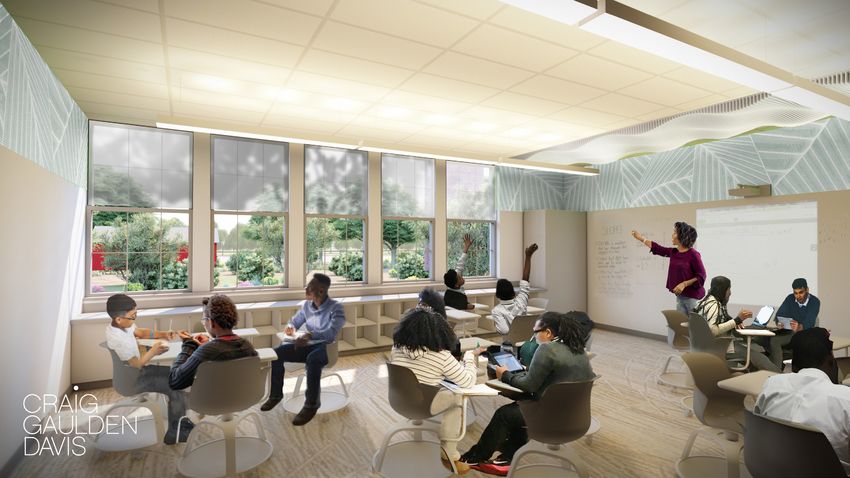
  Morgan State University                          the biophilic classroom is enriched with views to nature, dynamic and diffuse
                                                   daylight and biomorphic patterns. Data was collected by monitoring students’
  Paul Archibald, Ph.D.
  Morgan State University                          HRV (heart rate variation) as a measure of stress, comparing academic
                                                   performance, student surveys, and student and instructor interviews.
  Valerie Caruolo, AIA
  Hord Coplan Macht

               Architecture Planning Interiors

Citation: Determan, J., Akers, M. A., Albright, T., Browning, B., Martin-Dunlop, C., Archibald, P., & Caruolo, V. (2019). The impact of biophilic
learning spaces on student success. Retrieved from https://cgdarch.com/wp-content/uploads/2019/12/The-Impact-of-Biophilic-Learning-Spaces-
on-Student-Success.pdf

                                                                                 Impact of Biophilic Learning Spaces on Student Success | 1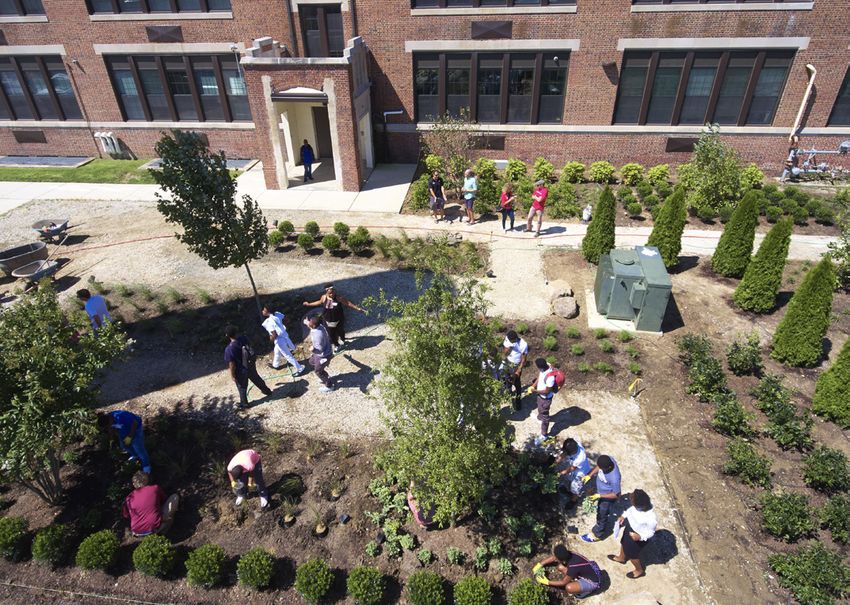
Introduction

Robust research has reinforced Edward O. Wilson’s Biophilia
Hypothesis that humans possess an innate tendency to
seek connections with nature (Wilson, 1984). Patterns
in findings have emerged linking biophilic design with
attention restoration to combat mental fatigue, with stress
recovery, enhanced creativity, relaxation, and excitement.
Who better to benefit from the positive side effects of
nature-inspired elements than students? Children spend
much of their time in school when not at home and, given
significant exposure to this environment, schools are an
opportunity for improvement by incorporating evidence-
based design that associates biophilic spaces with health
and cognitive benefits. Learning spaces have the potential
to impact generations through the employment of design
strategies that promote early academic success and ignite
a positive trajectory in a young person’s life. Few studies
have measured the impact of biophilic design in learning
spaces and its impact on learning outcomes. However
many studies reference positive correlations between
biophilia, improved cognitive function, and physiological
response in health-care, workplace and hospitality
environments. As a result we see biophilic design being
employed in these spaces. Rarely do we see it in learning
spaces, and we hope to change that.

In addition, our approach was designed based on current
neuroscience theory. Neuroscience literature indicates
perceptual sensitivity to visual contours that are collinear,
or nearly collinear is facilitated by the organizational
properties of the visual cortex (Albright, 2015). Patterns
with repeating lines in collinear, curvilinear and radial
patterns are easily processed by the brain. These patterns
are found throughout nature; some examples include
veins of a leaf, branches of a tree and ocean waves. The
visual ease of detecting these patterns creates a calming
and sensory acuteness that should facilitate improved
classroom functions.

Therefore, based on biophilia and neuroscience literature
we hypothesize that biophilic design will contribute to
reduced student stress and enhanced learning outcomes
for a class of middle school Math students. The results
will critically inform the architectural design of future
learning space.

                                                                Impact of Biophilic Learning Spaces on Student Success | 2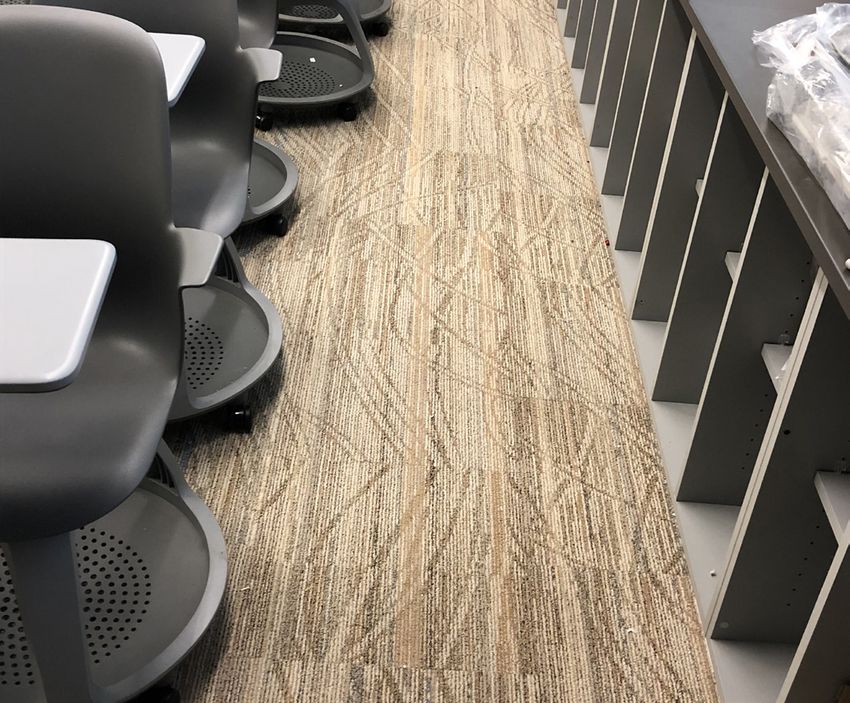
Literature Review
NEUROSCIENCE IN THE BUILT ENVIRONMENT

A longstanding question in design concerns the ways             Many of these neurons encode a ubiquitous feature
in which we might manipulate the built environment to           of the visual world that is fundamental to perceptual
improve cognitive performance. The modern field of              experience, namely the orientation of an image contour
neuroscience affords new opportunities to address this          (Hubel & Wiesel, 1968). Contours commonly occur at
question through the creation of environments motivated         the boundaries of objects, such as the edge of a table or
by our understanding of human brain organization and            the outline of a hand. One such “orientation selective”
functions, and principles of the neuronal information           neuron may “prefer” a horizontal contour, while another
processing (Kandel et al., 2012). Perhaps the most pressing     prefers a vertical contour, such that all possible contour
application for this new knowledge is school design, since      orientations are encoded by distinct populations of cells
the future of human civilization surely rests upon the          (Hubel & Wiesel, 1974).
successful education of our children.
                                                                Neuroscientists have also asked what is the anatomical
The fundamental school design problem is this: What type        relationship between contour-detecting neurons that
of environment optimizes cognitive function – learning,         prefer different orientations? It turns out that similarly
memory, emotion, communication, and social intelligence         oriented neurons have strong connections to one
– in a developing child? One neuroscientific approach to        another, whereas differently oriented neurons are less
this problem is to ask what sensory information is easiest      well connected (Stettler et al., 2002). The orientation
to acquire and what keeps us focused and cognitively            selectivity of these neurons, together with the biased
engaged. Partial answers to these questions come                patterns of anatomical connections, creates a network of
from recent discoveries that reveal how visual sensory          neurons that preferentially detect curvilinear contours with
information is represented in the brain.                        smoothly varying contour orientations (Field et al., 1993).
                                                                Study of human observers reveals that they exhibit exactly
One of the fastest growing areas of neuroscience                this type of sensitivity, as predicted by the neurobiology (Li
knowledge concerns the neuronal basis of visual                 & Gilbert, 2002).
perception, visual memory and visually guided behavior
(Albright et al., 2000). Vision happens because light is        A simple analysis of the visual image statistics of the
reflected off of surfaces in the environment, refracted by      natural world reveals that it is replete with smoothly
the crystalline lens at the front of the eye and projected as   varying curvilinear contours (Geisler, 2008). Consider,
a pattern of light onto a specialized neuronal tissue known     for example, the veins of a leaf, the blades of grass in a
as the retina, which lines the back of the eye. Cells in the    meadow, or the graceful curves of the human body. The
retina convert luminous energy into neuronal energy and         existence of a specialized neuronal system for processing
those neuronal signals are conveyed through a series of         such image statistics is surely a product of the adaptive
hierarchically organized processing stages, many of which       value of detecting these patterns over the course of
are located in the cerebral cortex (Gilbert et al., Kandel et   human evolution. Without awareness of the underlying
al., 2012).                                                     neurobiology, architects and designers have long produced
                                                                patterns that possess these special image statistics, for
The cerebral cortex is the largest anatomical subdivision       example in the form of wallpaper patterns, cornice friezes,
of the human brain – approximately three-quarters by            or radial mullions (Albright, 2015).
volume – and is a computational powerhouse. One-third of
the human cerebral cortex – the visual cortex – is devoted      These patterns most commonly serve no function except
to the processing of visual information, as is fitting of our   aesthetic – in the case of friezes and wallpaper that are
functional dependence on this type of sensory information.      explicitly decorative and rectilinear windows are much
Neurons in the cerebral cortex detect and encode various        easier to produce than round windows. These ubiquitous
attributes of the visual world through patterns of activity     curvilinear features of the built environment please us. We
in small neuronal circuits.                                     hypothesize that one reason for this pleasure is the ease

                                                                    Impact of Biophilic Learning Spaces on Student Success | 3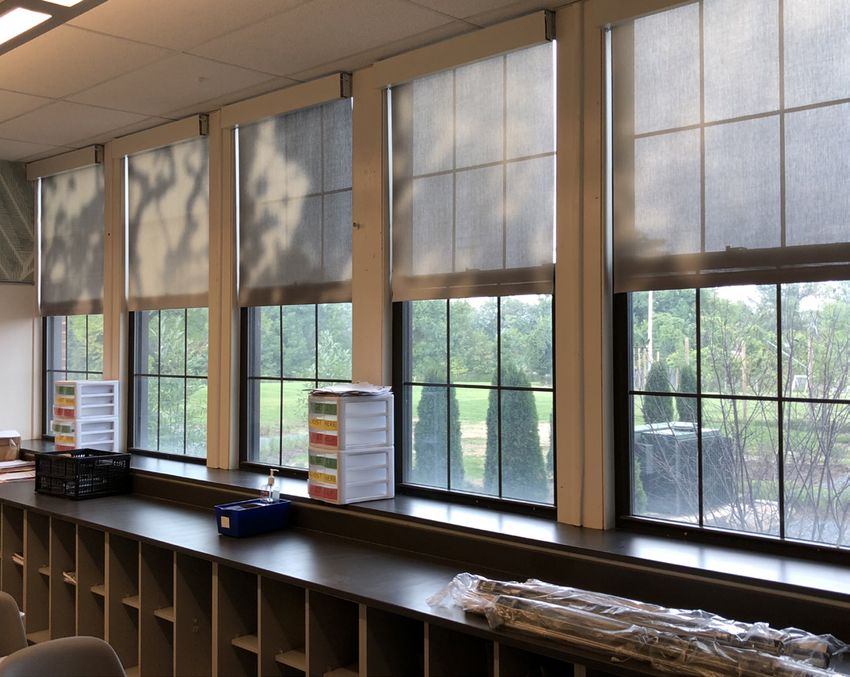
by which they are detected and structurally understood         Cognitive Response
by a nervous system that evolved in the presence of such
patterns (Albright, 2015). We hypothesize further that this    Much of the research on biophilia has focused on stress
ease of detection/understanding – this “sense of order”        reduction as measured through heart rate, blood pressure,
(Gombrich, 1984) enhances focus and allows limited             cortisol levels and psychological response. Another thread
sensory resources to be allocated to processing the more       of research has focused on the cognitive response. As far
complex and novel stimuli that our survival depends upon       back as the 1800s it had been theorized that the brain
– e.g. recognizing and assigning meaning and emotion to        operates differently while experiencing nature (Olmsted,
food sources and mates.                                        1865). It was thought that when out in nature, the brain
                                                               operates on a level of ‘soft fascination’. This eventually
In the context of a classroom, rather than the savannas        became the basis for Attention Restoration Theory (ART),
and forests in which primates evolved, the visual ease         (Kaplan & Kaplan, 1989, Kaplan, 1995) which posited
afforded by patterns that tap into the native organization     that portions of the prefrontal cortex quiet down while
of the brain should afford a relaxed and focused disposition   experiencing nature. After this mental pause, we have
toward the complexities of academic problems. For this         better cognitive capacity.
reason, we predict that a classroom that features abstract
visual patterns based on these neuroscientific principles      A recent confirmation of the ART theory came in an
should promote cognitive focus and academic success.           experiment using fMRI measurement to observe brain
                                                               activity. After a stressor, participants viewed either an
BIOPHILIA AND HUMAN RESPONSE                                   image of an asphalt roof top, or the same image with
                                                               flowers on the roof top. Within 40 seconds of viewing the
Healing and Stress Reduction                                   image of the rooftop with flowers, the prefrontal cortex
                                                               decreased activity and subsequently the participants
Roger Ullrich led one of the earliest studies of health-       performed better on the recovery task (Lee et al., 2015).
related outcomes and biophilia (Ulrich, 1984). Patients
recovering from gall bladder surgery were placed in rooms      There is also evidence that the presence of nature may
along one side of a building. Half of the rooms had a view     help the rate of cognitive development among school
to a brick wall; the others a view to some trees and shrubs.   age children. A study of 2,593 children in grades 2–4 in
The patients were matched by demographics and paint            Spain’s Barcelona school system found that, separate from
color of the room, so the view was the remaining variable.     demographics, children in schools with more tree canopy
The patients with the view to the brick wall took an average   in the schoolyard had an increased rate of cognitive
of 8.7 days to recover, while the patients with the view to    development over the course of a year of measurement
the trees took an average of 7.9 days. The patients with       (Dadvand et al., 2015).
the view to the trees had far fewer nursing calls and took
fewer pain killers.                                            In reality the effects of biophilic experiences are not just
                                                               stress reducing or cognitive impacts but frequently a
In subsequent studies with cardiac patients in Sweden,         combination of both. An experiment in which participants
Ulrich and his team showed patients either images of           spent five minutes seated in a windowless classroom and
nature or blank sheets of paper before or after heart          five minutes seated in a space with plants, a metal screen
surgery. They found that patients who viewed the nature        with biomorphic patterns and a view to the river outside
images prior to or post-surgery had lower blood pressure,      found significantly different outcomes. The biophilic
lower heart rate and improved recovery times (Ulrich &         setting led to lower blood pressure, lower galvanic skin
Lunden, 1990).                                                 conductance, and 14% improvement in short-term
                                                               memory performance (Yin et al., 2018).
Similarly, Peter Kahn and colleagues (Friedman et al.,
2008) found that installing a video screen showing images      Fractal Fluency
of nature would lower blood pressure, lower heart rate
and have positive psychological benefits for workers in a      Real and simulated views of nature are not the only
windowless space.                                              way to create a biophilic experience. Nature can also
                                                               be represented in patterns, finishes and objects that
                                                               have biomorphic forms and fractals. Fractal patterns

Literature Review                                                  Impact of Biophilic Learning Spaces on Student Success | 4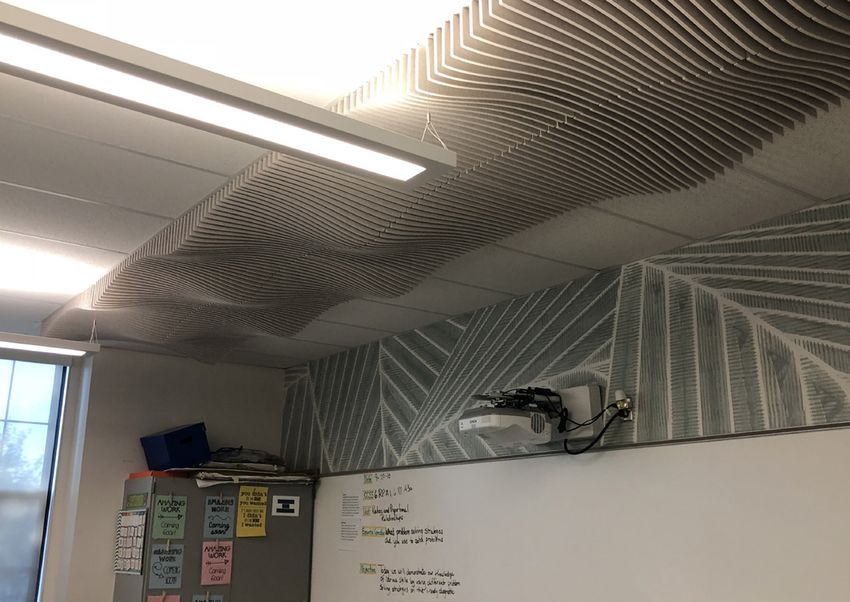
and biomorphic forms can be identified in classical art           artwork and high-dimensional fractal artwork have shown
and vernacular architecture from the column capitals of           to induce stress (Hägerhäll et al., 2008; Taylor, 2006).
ancient Greece and Egypt, the art of Ancient Mayans,
Islamic and Egyptian art, Hindu temples, Angkor Wat in
Cambodia, the Eifel Tower in Paris, and the structures of         BIOPHILIA IN LEARNING SPACES
Santiago Calatrava. Fractals are also evident in such well-
known works as those of Botticelli, Vincent van Gogh, and         Lighting & Daylight in Schools
Jackson Pollock.
                                                                  Some research has found that daylight does not have an
                                                                  impact on improved cognitive performance (Li & Sullivan,
Viewing biomorphic forms in art and architecture elicit a
                                                                  2016). Other studies convey indirect health benefits of
good visual preference response and lower stress (Joye,
                                                                  daylight in classrooms (Aggio et al., 2015; Eitland et al.,
2007). It may be that human brains associate biomorphic
                                                                  2018). Research suggests associations between light
forms and patterns with living things (Vessel 2012), and
                                                                  variation perception and mood and physiological effects
these forms tend to conform to the collinear characteristics
                                                                  that variations in light can have (Abboushi, Elzeyadi,
that ease visual processing (Albright, 2015; Gombrich,
                                                                  Taylor & Sereno, 2019; Cialdella & Powerll, 1993). A study
1984).
                                                                  involving students from low socio-economic backgrounds
                                                                  investigated the impact of light levels and daylight on
Fractals can be the consecutive magnifications of self-
                                                                  learning outcomes. By the end of the academic year,
similar patterns. These can be exact replications as in a
                                                                  students in the focus lighting group showed larger gains
fern leaf, snowflake or the branching pattern of an elm
                                                                  in oral reading fluency performance than the non-focus
tree. Statistical fractals which are also self-similar patterns
                                                                  lighting group and their improvement trajectory more
that are not exact repeats of each other, such as flames in
                                                                  closely aligned with national trends (Mott et al., 2012;
a fireplace, waves on a beach and the pattern of dappled
                                                                  Mott et al., 2014; Eitland et al., 2018). Whereas Li and
sun light under an aspen grove. There is a predictability of
                                                                  Sullivan’s 2016 study suggests that improved academic
the occurrence of fractal design in nature (Bejan & Zane,
                                                                  performance or restoration of attentional capacities
2012). Experiences of fractals in the built environment
                                                                  may be affiliated with green views to nature rather than
that have the characteristics of those most found in nature
                                                                  daylight, the Motts study attributes improved learning
lead to measurable stress reduction responses -- heart
                                                                  outcomes to daylight and light levels within the classroom.
rate, blood pressure and galvanic skin responses. Taylor
                                                                  Access to good-quality and task-appropriate lighting at
and others posit that because certain fractal ratios occur
                                                                  school is important because many classroom activities
so frequently in nature, that the human brain is fluent
                                                                  - like reading and writing - are visually oriented and form
with patterns that have those characteristics (Hägerhäll
                                                                  the basis of student learning (Eitland et al., 2018), thereby
et al., 2015; Taylor et al., 2016, 2017). While the statistical
                                                                  considering lighting as a visual aid for learning, rather than
fractals do not have the collinear characteristics identified
                                                                  a trigger for physiological change.
earlier, the response may be similar.
                                                                  Research has found that children are more sensitive to light
Research has repeatedly confirmed correlations between
                                                                  exposure than adults because they have larger pupils and
fractal geometries in nature and those in art and architecture
                                                                  significantly greater light-induced melatonin suppression,
(Joye 2007; Taylor 2006), but there are opposing opinions
                                                                  with young adolescents having greater circadian-system
over which fractal dimension is optimal for engendering a
                                                                  sensitivity to light exposures than older adolescents
positive health response, whether an optimal ratio exists,
                                                                  (Crowley et al., 2015; Eitland et al., 2018; Higuchi et al.,
or if such a ratio is even important to identify as a design
                                                                  2016; Lund et al., 2012; O’Hagan et al., 2016). In children,
metric or guideline. Nikos Salingaros (2012) has examined
                                                                  higher levels of average daily daylight exposure have also
a series of these perspectives with great clarity, noting that
                                                                  been associated with reduced weekday and weekend
the range of preferred fractal dimensions is potentially
                                                                  sedentary time and with increased levels of physical
quite broad (D=1.3-1.8) depending on the application.
                                                                  activity on the weekends (Aggio et al., 2015; Eitland et al.,
The stress reduction response, however, appears to
                                                                  2018). Access to natural daylight has been linked to greater
not be limited by proximity or distance for the surface
                                                                  subjective well-being, higher levels of alertness, faster
that exhibits the fractal patterns (Abboushi et al., 2019).
                                                                  cognitive processing speed, [and] better concentration
However, at either end of the spectrum, both non-fractal
                                                                  performance (Eitland et al., 2018).

Literature Review                                                     Impact of Biophilic Learning Spaces on Student Success | 5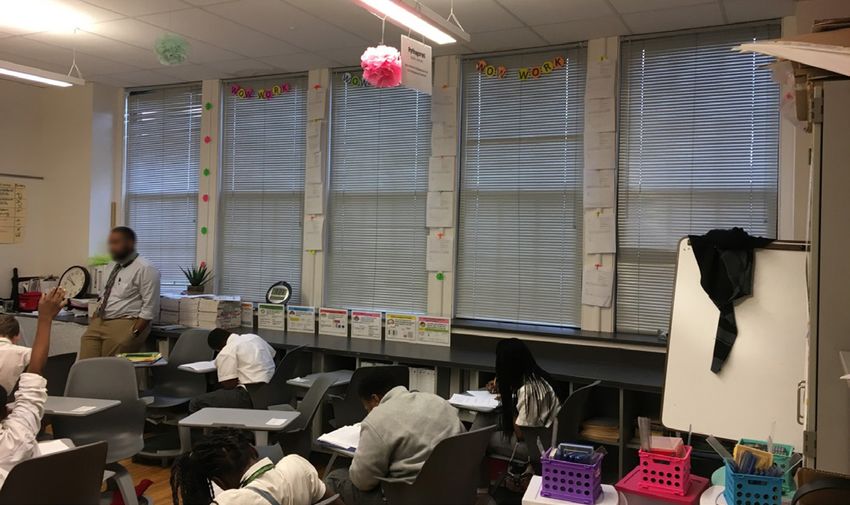
Effect of Surrounding Green Space on the Learner                  as research has repeatedly shown that students who
                                                                  report lower personal and school-related stress attain
A study completed in an elementary school in Baltimore,           higher GPAs (Gillock & Reyes, 1999), show more academic
Maryland, reported that students find green schoolyards           achievement (Grannis, 1992), and are less likely to engage
a safe retreat from stress because the natural areas              in behaviors that lead to lower performance (e.g. truancy,
allow students to build competence and form supportive            dropping out of school) (Hess & Copeland, 2001).
relationships (Chawla et al., 2014; Li & Sullivan, 2016). The
Chawla study references the psycho-physiological impact
                                                                  STRESS AND COGNITION
of direct interaction with nature and school yard green
spaces. Nature immersion and its effect on creativity and         There has been growing interest in understanding the
human productivity, are both aspects that are considered          impact of stress on students’ academic performance so that
positive qualities for a learner but which have mainly been       appropriate interventions can be developed. For instance,
studied either within the context of workplace design or          (Blair, Granger, and Peters, 2005) reported that chronic
public environments (Abdelaal & Soebarto, 2018; Shibata           exposure to financial stressors was associated with poorer
& Suzuki, 2002).                                                  cognitive performance. Other researchers discovered that
                                                                  chronic exposure to environmental stressors influence the
A Massachusetts study also investigated improved                  academic performances of children (Haines et al., 2001).
learning outcomes in relation to surrounding green                The relationship of stress and academic performance
landscapes. Researchers examined the relationship                 was found to be highly related to the children’s stress
between [the] vegetation condition surrounding schools            perception (Brown, Nobiling, Teufel, & Birch, 2011). Most
and school-based student performance on Math and                  recently, it has been reported that African American
English (Wu et al., 2014; Li & Sullivan, 2016). Using the         and social and economically disadvantaged children are
state’s standardized assessment system as a measure,              exposed to more stressful situations than White children
they found a positive association between vegetation              (Morsy & Rothstein, 2019). In fact, African American
cover and academic performance thereby leading them               children were 45 percent more likely to be exposed to
to conclude that landscapes containing vegetation impact          one frightening stressor compared to Whites; 29 percent
student performance (Li & Sullivan, 2016; Wu et al., 2014).       more likely to be exposed to two frightening stressors; and
Another study which shares a common focus with our                21 percent more likely to have been exposed to three or
study, measured high school environments including the            more frightening stressors (Jimenez, Wade, Lin, Morrow,
amount of vegetation visible from classroom and cafeteria         & Reichman, 2016). Those students who were exposed
windows, the size of windows, and the density of the              to these stressors were more likely to be unable to name
vegetation in each part of the campus, to predict student         letters; unable to understand a story that was read to them;
performance (i.e. standardized test scores, graduation            unable to understand the conventions of print; had below
rates, percentage of students planning to attend college).        average reading and math skills; and were unable to read
The findings demonstrated a positive relationship between         a simple book independently compared to those students
nearby nature and school-wide academic performance (Li            who were not exposed to these frightening stressors.
& Sullivan, 2016; Matsuoka, 2010).

Recalling Li and Sullivan’s study, one of their most surprising
findings, was the lack of difference between attentional
functioning and stress recovery between classrooms with
views to buildings versus no windows (Li & Sullivan, 2016).
This finding suggests that views to nature play a significant
role in providing students with opportunities for mental
breaks throughout the class period, thereby making the
case for improved attentional functioning, rather than
daylight being the cause of improved learning outcomes.

Our study sought to explore effects of attention restoration
and positive correlations with reduced stress over time

Literature Review                                                     Impact of Biophilic Learning Spaces on Student Success | 6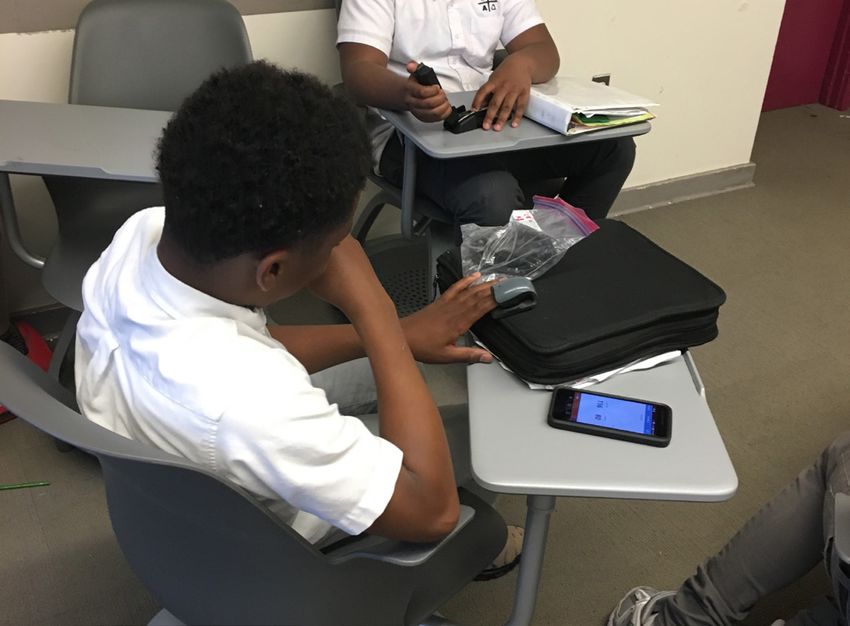
Methodology

To analyze the impact of biophilic design on student           DESIGN
outcomes we focused on several effects—stress,
perceptions of the learning environment, enjoyment, and        Biophilic Classroom
math academic performance. The experimental design             The 6th grade Math class taught by Ms. Heather Bobbitt
consisted of a classroom enriched with biophilic design        was selected as the biophilic classroom. We asked the
enhancements and a control classroom that did not. The         teacher to refrain from posting excessive teaching aids
effects in each are compared.                                  on the classroom walls to give students some visual relief.
                                                               Three biophilic design devices were chosen to enhance
EXPERIMENT LOCATION                                            the room.

The experiment location is Green Street Academy, a                 View to Nature
Baltimore City public charter school, located at 125 Hilton        A garden was planted outside the window of
Street in West Baltimore. There are 857 students, called           the biophilic classroom. A variety of evergreen
Scholars, in grades 6 to 12. The student body is 97% African       and deciduous plants were provided. Views to
American, 2% White and 1% Other; 97% percent receive               nature have been found to reduce heart rate
free and reduced lunch; 29% receive special education.             and blood pressure (Brown, Barton, & Gladwell,
The school has a reputation as an innovative teaching and          2013; Tsunetsugu & Miyazaki, 2005; van den Berg,
learning environment where teachers use project-based              Hartig & Staats, 2007), and improve attentiveness
learning and entrepreneurship opportunities to prepare             (Biederman & Vessel, 2006) and overall happiness
students for sustainability-oriented careers. School leaders       (Barton & Pretty, 2010). Plants that bloom and
welcomed an inquiry-based study to improve student                 maintain their leaves in the winter were preferred.
outcomes. The design team selected middle school Math              Blooms will attract birds, butterflies, and insects
classes as the focus for the study.                                and winter leaves catch the breeze. Students
                                                                   may notice the incidental movement outside the
                                                                   window and take a break from focused attention
                                                                   on school work to look outside. This short break
                                                                   seems to restore attention and allow the student
                                                                   to learn and remember more content (Windhager
                                                                   et al., 2011).

                                                                   Impact of Biophilic Learning Spaces on Student Success | 7
Biomorphic Forms and Patterns
                                                                                      Nature-inspired patterns were provided on several
                                                                                      classroom surfaces. A wall graphic was designed
                                                                                      by the collaboration of Dr. Tom Albright,
                                                                                      neuroscientist (Salk Institute), and Sara Balderi,
                                                                                      artist (Designtex). The graphic design aligns with
                                                                                      Dr. Albright’s theory on nature patterns that are
                                                                                      easily processed by the brain’s visual system, an
                                                                                      ability developed through evolutionary adaption.
                                                                                      Additional patterns were provided including
                                                                                      carpet with the print of “prairie grass”; a row of
                                                                                      3-dimensional ceiling tiles consisting of vertical
                                                                                      planes carved into a wave; and the shades printed
                                                                                      with the image of tree shadows. These patterns
View of the Garden at the Biophilic Classroom         Patrick Ross Photography        have been associated with observed view
                                                                                      preference (Joye, 2007; Vessel, 2012).
     Dynamic and Diffused Lighting
     The classroom’s opaque mini-blinds were
     replaced with motorized, perforated, translucent
     roller shades operated by a solar cell. The shades
     were imprinted with the image of a tree shadow.
     Often teachers lower blinds to darken the room
     for projection then fail to raise the blinds when
     the projection ends. This robs students of daylight
     which can enhance learning outcomes (Heschong,
     1999). The shades raise and lower automatically
     based on the sunlight level on the window.

     The lowered shade still provides diffused daylight
     but is also dynamic due to the raising and lowering
     of shades and atmospheric changes. Dynamic and
     diffused lighting has been associated with positive
     impacts on circadian rhythm functioning (Beckett
     & Roden, 2009; Figueiro, Brons, Plitnick et al.,                            Biomorphic Patterns - Carpet
     2011), and increased visual comfort (Elyezadi,
     2012; Kim & Kim, 2007).

                                                                                 Biomorphic Patterns - Wallcover and Ceiling Panel

Dynamic and Diffuse Light - motorized shades with prints of tree shadow

Methodology                                                                           Impact of Biophilic Learning Spaces on Student Success | 8
Control Classroom - Stress Testing                           open-ended. The 13 questions provided students with four
Because of the limitation of only one 6th grade classroom,   choices to express their feelings and thoughts during the
our control classroom was the 7th grade Math class.          previous week the survey was administered. For example,
Admittedly, we did not control for differences in teacher    question 2 asks, “In the last week, how often did you feel
and course content. But, even with these variables not       rushed or hurried?” Students observed a simple diagram
controlled, the findings are interesting and valid           along with the options: Never, A Little, Sometimes, or A
conclusions may be drawn on the impacts of the biophilic     Lot and circled their choice. For scoring, choices were
enhanced classroom. The control classroom was enhanced       converted to a number—0 for Never, 1 for A Little, 2 for
by adding a neutral carpet with no pattern. Our intent was   Sometimes, and 3 for A Lot. Seven items were considered
to remove the variable of acoustic absorption differences    ‘stress buffers’ and, therefore, were reverse-scored.
between a carpet and a hard floor. No other changes were     Maximum score possible was 39. The higher the score, the
made to the control classroom.                               higher the stress perception. To analyze and summarize
                                                             the scores, a simple mean and standard deviation for each
                                                             group and condition were calculated.

                                                             The second survey assessing perceptions and enjoyment
                                                             was also given to students in both the biophilic and control
                                                             classrooms. However, the survey was given only once in
                                                             April of 2019. The survey included three scales or measures
                                                             extracted from three, pre-existing instruments used in
                                                             the learning environments research field. Perceptions
                                                             of Physical Space in our survey originally came from the
                                                             Structural, Physical And Campus Environment Survey
                                                             (SPACES) (Zandvliet, 2014). However, we only included
Control Classroom                                            seven items that were relevant to our study. Examples of
                                                             items are: “I have views of the outside in this classroom”,
ASSESSMENT                                                   and, “The amount of light in this classroom is good for
                                                             me”. Five items from the Enjoyment of Lessons scale were
The project assessment included both qualitative and         used from the Test Of Science-Related Attitudes (TOSRA)
quantitative data in order to determine how the biophilic    (Fraser, 1981) but the word ‘math’ was substituted for
design impacted students’ well-being (stress), enjoyment,    ‘science’ in the five statements. An example from the
perceptions of the physical space, and learning outcomes     Enjoyment scale is: “I really enjoy going to math classes”.
in math. Quantitative assessment techniques included         The last eight items included the complete scale, taken
a student stress survey, a student perceptions and           verbatim, called Involvement from What Is Happening
enjoyment survey, biological stress testing (CorSense        in This Class? (WIHIC) (Fraser, Fisher, & McRobbie, 1996)
Sensor), and a comparison of math learning outcomes.         bringing the total number of items in the survey to 20.
Qualitative measures included student interviews and an      Examples from the Involvement scale include: “I explain
instructor interview.                                        my ideas to other students in this class”, and, “In this class
                                                             I learn how to solve problems”.
Student Surveys
                                                             The survey was reviewed by an expert in elementary
The study used the Perceived Stress Scale for Children
                                                             children’s reading and literacy at Morgan State University
(PSS-C) (White, 2014) to assess the impact of a biophilic
                                                             prior to using it with students at Green Street Academy.
learning space on student success and perceived stress
                                                             The expert recommended some rewording for the scale
levels. It has been found that the PSS-C is a validated
                                                             of Perceptions of Physical Space. This scale and Enjoyment
tool that can be used to assess the stress perception in
                                                             had a 1-5 Likert response scale consisting of Strongly
children ages 5-18 years while discriminating between
                                                             Disagree, Disagree, Neither Disagree or Agree, Agree,
those children who are stressed from those who are not.
                                                             and Strongly Agree. Involvement also had a 1-5 response
The PSS-C was given to students in both the biophilic
                                                             scale but students had to decide how often a particular
classroom and the control classroom near the beginning
                                                             practice took place and chose from Almost Never, Rarely,
of the semester in February 2019 and at the end in June
                                                             Sometimes, Often, and Almost Always. No items in the
2019.
                                                             survey were negatively worded that would have required
                                                             reverse-scoring.
The PSS-C consists of 13 closed-ended questions and two

Methodology                                                      Impact of Biophilic Learning Spaces on Student Success | 9
Student Interviews
Research investigators interviewed three students in
the biophilic classroom using a semi-structured format.
Students represented low, middle and high academic
performers (but investigators were not aware of who
belonged in each category). Students were encouraged
to assess the biophilic classroom as it compares to their
other classrooms by responding to 11 questions. They
were asked to evaluate specific physical affordances within
the space in terms of how they impacted their well-being
and learning. The interview was video-recorded as well as
audio-recorded on an iPhone. The audio-recording was
then transcribed verbatim into a Word document.

Instructor Interview                                            Student Stress Testing - Measuring heart rate variability using the CorSense
                                                                device by Elite HRV
The instructor of the biophilic classroom was asked about
her thoughts about the space, her observations about
how the students behaved, performed, participated, their        Learning Outcomes
energy level and general well-being. We also asked about        We compared math learning outcomes between 125 (5
how the instructor felt herself and how she performed           classes) 6th grade Scholars in this classroom during the
in the space. She offered her opinions on what biophilic        2018-2019 school year with learning outcomes of 122
enhancement devices had the most and least impact. The          (5 classes) 6th grade Scholars in this classroom during
teacher’s audio-recording was also transcribed verbatim.        the 2017-2018 school year, prior to the installation of
                                                                the biophilic enhancements. The classroom, the teacher,
Stress Reduction                                                and the course content were the same during this period;
Heart rate variability (HRV) measures the variation             the only difference was the biophilic enhancements in
between successive heartbeats. A heart rate is understood       the classroom for the 2018-2019 Scholars. Although
in terms of 60 and 90 beats per minute. During inhalation,      the students in the two classrooms were different, their
heart rate speeds up and slows down during exhalation—          demographics such as age, race and gender distribution,
hence, the heart rate varies between 55 and 65. HRV is          socio-economic diversity, and percentage of special
the measure of this natural irregularity in the heart rate.     education students were similar. Further, as we indicate in
Research has shown that HRV is a stress biomarker showing       the Findings section, both classes entered 6th grade with
changes in the autonomic nervous system. Generally, less        identical average math scores.
variability in the heartbeat (low HRV) indicates that a
person is experiencing high levels of stress and when the       i-Ready
HRV is high, this is an indication of less stress and higher    Green Street Academy uses the i-Ready test to understand
resiliency (Fohr et al., 2015).                                 the comprehension growth of Scholars in Math and
                                                                Reading. i-Ready Diagnostic is a validated test offering a
The quantitative measure of stress (HRV) was assessed           complete picture of student performance and growth.
utilizing the CorSense Sensor by Elite HRV (https://elitehrv.   By adapting to student responses and assessing a broad
com/corsense). Nineteen students in the biophilic               range of skills—including skills above and below a
classroom and nineteen students in the control classroom        student’s chronological grade—the i-Ready Diagnostic
participated in the stress testing. We allowed students to      pinpoints student ability level, identifies the specific skills
adjust to each room for four months before we began             students need to learn to accelerate their growth, and
stress testing. Research assistants facilitated the student     charts a personalized learning path for each student.
testing from February 4, 2019 to May 31, 2019, three            Based on Diagnostic results, i-Ready reports provide
times/week, for the first minute and last minute of each        detailed information on student performance by domain
class. Students inserted their forefinger or thumb into the     and aggregates data for spotting trends across groups of
CorSense device which provided a numerical value to a           students.
smart phone equipped with the Elite HRV application. The
data was collected into a dashboard and later analyzed by       i-Ready tests were given throughout the 2018-2019
researchers. Using the CorSense device resulted in 1,448        academic year in September, December and March. Each
HRV tests, or data points.                                      student was assessed with a numerical score and grade

Methodology                                                        Impact of Biophilic Learning Spaces on Student Success | 10
level. The Scholars’ gain in math comprehension from September to December to March is the metric used in this study. A comparison of the average gain in test scores and gain in grade level between the biophilic classroom (2018-2019) and the control classroom (2017-2018) were used to determine if the biophilic enhancements made an impact on math performance. Methodology Impact of Biophilic Learning Spaces on Student Success | 11
Findings

STUDENT SURVEYS

Student Stress Survey

Figure 1 summarizes the students’ opinions about their                                 The overall distribution was skewed due to a tendency for
own level of stress in both the biophilic and control                                  scores to fall in the lower value direction (i.e., lower stress
classrooms at the beginning of the semester in February                                perception). Results also showed that more students in the
2019 (pretest) and again at the end in June 2019 (post                                 biophilic classroom (67 percent) perceived their stressors
test). Scores on the pretest and post test ranged from                                 to be high compared to those students in the control
1—21 (maximum 39) for the biophilic classroom, and from                                classroom (56 percent) in February. However, by the end
1—30 in the control classroom. The difference between                                  of the semester, fewer students in the biophilic classroom
the average mean on the pretest versus the post test for                               (35 percent) perceived their stressors to be high compared
students in the biophilic classroom was 0.66, compared to                              to 67 percent of students in the control classroom. This
a difference of 0.40 for students in the control classroom.                            finding suggests that the biophilic classroom helped to
                                                                                       reduce students’ stress levels during the semester to a
                                                                                       greater extent than the control classroom.

                                         30

                                                                                                                                     Pretest

                                                                                                                                     Posttest
         Average Score (maximum of 39)

                                         25

                                         20

                                                                                         14.4                     14
                                         15

                                                 12.36                       11.71

                                         10

                                          5

                                         0
                                                      BIOPHILIC CLASSROOM                CONTROL CLASSROOM

                      Figure 1. Students’ opinions about their own stress level comparing the biophilic classroom (n=12) with the control classroom
                                (n=12) at Green Street Academy, Baltimore, MD.

                                                                                           Impact of Biophilic Learning Spaces on Student Success | 12
Students’ Perceptions of the Learning Environment and Enjoyment Survey Figure 2 summarizes the students’ responses on the survey. Average item means (maximum of 5) indicated a statistically significant difference favoring the biophilic classroom for all three scales (p
STUDENT INTERVIEWS

To understand the efficacy of the biophilic classroom we
asked individual students a series of questions during
one-on-one interviews. The teacher selected students
who were low, middle and high performers in the 6th
grade Math class to help reduce bias in selection. Partial
transcripts of the interviewer’s questions and student
responses follow.

  What was it like to learn in this classroom?                    Why do you like that?

  Sharone: Well in that classroom it’s like very, it’s like a     Irwin: Because that makes me feel good… It calms me.
  nice environment. It’s like a nice bright light, so it’s like   When you turn the air on and you’re underneath it
  more, it gives me a more purpose to learn knowing               cools you down, especially when it’s hot.
  that I’m in a good environment.

  Casey: Well, it’s comfortable and fun learning in the           Tell me about your stress level in the class.
  class, it’s just the work is really hard, but the actual
  classroom is nice to learn in. Oh the blinds, how they          Sharone: Honestly, when I go into Math class, I get
  go up and down automatically so there’s light in it.            very nervous because I don’t like Math and I’m not
                                                                  really good at it, in my opinion. But now I just-- well,
  Irwin: Yeah, we have carpet. Is easier to run the               my stress level I wouldn’t say is high. But most of the
  chair through… Well, the windows are solar panels.              time, my stress level is very calm. Nothing really to
  (reference to solar motorized shades) Now it would be           stress about, so...
  like cool if you do that for every classroom. It’s cool.
                                                                  Irwin: For a test, no.
  Okay, so you got the solar blinds and the carpet. Do
  these things help you learn math do you think?                  You never ever get stressed in your life?

  Irwin: It relaxes you.                                          Irwin: Yeah, I have stress for a science test.

  How does it do that?                                            You get stressed in science, but you don’t get
                                                                  stressed in math?
  Irwin: Because with the light of the sun makes you
  concentrate better, instead of having regular lights.           Irwin: No

  The light from the sun helps you relax? But the other           Casey: In the beginning, I’m without stress at all. But
  lights, it doesn’t. Really? Have you always known               being like the middle or in the middle closer to the
  that?                                                           end, it’s harder because of the work. But the classroom
                                                                  helps relieve the stress a lot. Along with the floors, the
  Irwin: Just in this classroom.                                  lighting and stuff, it just makes it easier for me to focus
                                                                  more and get back into what I’m doing.
  Is there anything else that you like about the math
  classroom that’s different from other classrooms?               It makes you more focused. How does it do that?

  Irwin: The ceiling.                                             Casey: Because it kind of draws out the distraction
                                                                  and stuff that might be happening in the room so it
  What about it?                                                  can make it easier for me to stay focused on what I’m
                                                                  doing. It (stress) goes down. I can refocus and calm
  Irwin: So, it’s just plain like almost at the front of room,    down. With less stress, I can get back to what I’m
  the ceiling has like little-- it look like waves.               doing.

Findings                                                           Impact of Biophilic Learning Spaces on Student Success | 14
TEACHER PERCEPTIONS It is calmer in here, so a lot of times I will just turn the
classroom lights off, let the natural light in and calm
myself especially if it’s a class that can be a little more
Describe what it was like to teach in this class. What rambunctious than the others. I will sit in a student
are your thoughts about this classroom? desk and stare at the window myself if I need to. I
think, “Oh, this is peaceful.” I’ve had other teachers
In the beginning, it was very apprehensive because I’m come in here just to calm themselves down. They
a traditional teacher. I like to put a lot of stuff in the will come in and say, “I actually do feel calmer in this
room and that was taken away from me but it forced space.” Like it’s really comfortable being in a space like
me to find another way. As far as the room, the room is this versus what they’re normally used to.
beautiful. It feels very homey, it’s a comfortable space
to be in. The windows, being able to get that natural Do you think that this classroom makes you more
light in here at different times of the day, I really effective as a teacher?
enjoyed the windows. Outside, the scenery, now that
it’s spring, it’s all nice and everything has bloomed, Absolutely. Because I think the kids can sense my
you can see all the trees and things outside. It’s a anxiety. Even with testing this year, I will say I’ve been
space you can easily just get caught up staring outside teaching for a long time and the national test really
and I’ve noticed that students do that too and they causes me a lot of anxiety. This is probably the first year
quickly kind of get themselves back together. It helps where I was not anxious at all for the testing. I don’t
the kids that are having a difficult time and they just even know what it was but I felt really comfortable
space out for a minute and then they come back to watching them. I was not anxious, I didn’t have my
what’s going on in the classroom. We just did our state nervousness waiting to see the results. I felt like this
PARCC (Partnership for Assessment of Readiness for year, I was very effective teaching them.
College and Careers) test and I noticed they wanted to
face the direction of the windows during testing. They Do you think this is scalable, transferable to other
all voted to face the windows so that they can look grades?
outside. I don’t know if it was the swaying of the trees
or whatever it was outside going on. It seems to calm Absolutely, absolutely. I think this would be probably
them, so they were less anxious when they were taking really good in the high school setting too because high
the assessment and that part I really like because they school is a very big transition time period for students
didn’t seem as tense as some other scholars are when and I think having an ambiance where they feel less
they just have to face the wall during testing. stress and they don’t feel pressured but maybe in an
environment where they feel like a sense of comfort
Did you notice anything different about the student and warmth going into the classroom.
behavior or mood?
Do you think, in classrooms like this, students are
Their mood, it just seemed like they would come in a less likely to be aggressive and act out?
rush and frantic and chaotic. But then, after a while,
they would just kind of calm themselves down. I I’ve heard of students who were in one class, they’re
mean, it could be attributed to the room, it could be very aggressive. Then they come in here and I don’t
the lighting in here, because everything is a little softer see those same type of behaviors in this classroom.
in here. I’m speaking mostly where they’ll be in my class and I
don’t have any issues and they’ll go to the class right
Behavior - A lot of behavior shifts in the spring. I don’t after mine or the class right before mine and they’re
know if it’s a hormonal thing or what it is but their creating chaos in the classroom.
behavior seems to shift in the spring. Sometimes for
the better, sometimes it’s just a little different but I Are you an easy teacher?
think being in a setting where they are surrounded by
a lack of chaos, a lack of clutter, just a lot extraneous I am very tough but it’s all out of love because I see a lot
stimuli. They kind of calm it down. of potential and sometimes they don’t have someone to
push them to their limit. A lot of times, if they say, “I don’t
Did you notice anything different about your stress want to do it. I don’t feel like doing it.” Others would say,
level or performance? “Okay, that’s fine”. I’m not going to let you do that.
Findings Impact of Biophilic Learning Spaces on Student Success | 15STRESS REDUCTION
Student stress was assessed using the CorSense Sensor In Figure 3 the data of student B12 for the month of
which sent HRV data to a smart phone and aggregated March is shown. We see the date, duration and HRV score
the data to a dashboard. Each student was assigned their for each test. There are usually two valid scores per day.
own HRV device and smart phone. Student stress level Where there is only one score reported on March 8th this
was measured at the first minute and last minute of class indicates there was no valid 2nd score; therefore the delta
to capture the change in stress as an effect of the students’ between daily scores was not used. The student’s average
experience for the duration of the class. The delta between HRV for the month, the daily HRV delta and monthly delta
the HRV scores at the beginning of class and the end of subtotal are noted. These data suggest that student B12
class gives us a numerical value of the stress reduction. is usually less stressed after his/her experience in the
The larger the delta, the greater the stress reduction. biophilic classroom.
Students are identified by codes, i.e. student B12 is the
number 12 student in the biophilic classroom.
Figure 3. Raw Data - Typical Student Monthly HRV Scores
Impact of Biophilic Learning Spaces on Student Success | 16100
Average HRV Scores
1,448 Total Readings
69.89 71.18 71.15 72.60 69.13
HRV Score 0 - 100
67.03 67.84
65.75
50
216 Readings
157 Readings
226 Readings
180 Readings
194 Readings
163 Readings
151 Readings
161 Readings
CONTROL CLASSROOM
7TH GRADE MATH
BIOPHILIC CLASSROOM
6TH GRADE MATH
0
FEBRUARY MARCH APRIL MAY
Figure 4. Monthly average HRV scores for biophilic and control classes
Figure 4 indicates a comparison of the average HRV indicative of any number of factors that make-up who we
scores each month for students in the biophilic and are as individuals, i.e. health, relationships, home-life, etc.
control classrooms. Consistently, each month we see a But how HRV changes is reflective of the efficacy of an
larger HRV score for students in the control classroom. experience, i.e. exercise, yoga, etc. It is interesting to note
Although the difference is not significant, this indicates that the students in the biophilic classroom are slightly
the students in the control classroom are subtly less more stressed initially than the students in the control
stressed than the students in the biophilic classroom. classroom, but how does that stress change when exposed
HRV interpreters explain that single HRV scores can be to a biophilic environment?
Findings Impact of Biophilic Learning Spaces on Student Success | 174.0
Average Change in HRV
Scores Per Day 3.69
Average HRV Score Change
3.0
2.0 2.15
1.797 1.862
1.65
1.0
CONTROL CLASSROOM
1.049 7TH GRADE MATH
0.716
BIOPHILIC CLASSROOM
0.540 6TH GRADE MATH
226
180
194
163
216
157
161
151
0
FEBRUARY MARCH APRIL MAY
Figure 5. Average Change in HRV Scores per Day
Figure 5 indicates the average daily HRV delta is significantly the teacher’s interview, “their (students) behavior seems
larger for the biophilic students indicating a significantly to shift in the spring” and “They kind of calm it down”.
higher stress reduction between the start and end of each Perhaps the unobstructed view to the newly blooming
class in the biophilic classroom. Although there is stress vegetation in April could explain the significant difference
reduction in both classrooms, the biophilic students’ stress in student behavior and profound stress reduction in April
reduction is much higher. Further, it is cumulatively higher for the biophilic students. The data clearly indicate for all
each month until its zenith in April when the delta is almost four months of testing, the average daily stress reduction
seven times higher in the biophilic classroom. We recall is far greater in the biophilic classroom.
Impact of Biophilic Learning Spaces on Student Success | 1815
Average Change in HRV 14.58
Scores Per Month
12
Average HRV Score Change
9
8.526
7.05
6
6.526
5.73
CONTROL CLASSROOM
3 3.555 7TH GRADE MATH
2.526 2.1 BIOPHILIC CLASSROOM
6TH GRADE MATH
226
180
194
163
216
157
161
151
0
FEBRUARY MARCH APRIL MAY
Figure 6. Average Change in HRV Scores per Month
Figure 6 reinforces the data in Figure 5. The monthly average HRV score delta is significantly larger for the biophilic
students. The cumulative stress reduction for students in the biophilic classroom is worthy of note.
Findings Impact of Biophilic Learning Spaces on Student Success | 19LEARNING OUTCOMES
As described in the Methodology section, we assessed In Figure 7 we compare the class average i-Ready
math learning outcomes using the i-Ready diagnostic numerical test scores for the 125 biophilic classroom
test. Each Scholar is assessed three times per year for Scholars and 122 control classroom Scholars for tests given
Math comprehension and a report is created assigning in September, December and March. Both cohorts have
a numerical score and grade level for each Scholar. A almost identical average scores in September revealing
comparison of the average gain in test scores and gain that each group enters the 6th grade with comparable
in grade level between the biophilic classroom (2018- Math comprehension. However, in both December and
2019) and the control classroom (2017-2018) was used March there is a positive gain for the biophilic classroom
to determine if the biophilic enhancements made an Scholars. From September to March, the average gain
impact. We want to emphasize that the only variable that in Math test scores for the control classroom Scholars is
has been manipulated between the biophilic and control 5.48; the average gain in Math test scores for the biophilic
classrooms is the biophilic enhancements made for the classroom is 18.45. The biophilic classroom average Math
2018-2019 cohort. All other variables including teacher, test score gain is more than three times the gain in the
course content and basic room design are the same. control classroom.
500
iReady Test Score Averages
in = 18.45
Avg Ga
478.04
472.616
iReady Test Scores
Avg Gain = 5.48
465.07
462.36
459.59 459.54 The Average
450 Test Score
Gain is
Higher in the
Biophilic
Classroom
400
SEPTEMBER DECEMBER MARCH
2017 - 2018 2018 - 2019
CONTROL CLASSROOM BIOPHILIC CLASSROOM
Figure 7. Average Math i-Ready scores for the biophilic and control classes
Findings Impact of Biophilic Learning Spaces on Student Success | 20100
iReady Test Scores: # Testing at 5th & 6th Grade Level
89
Number of Students
80
More Students
70 Tested at
Grade Level
in the
Biophilic
Classroom
56 57
40
SEPTEMBER MARCH
2017 - 2018 2018 - 2019
CONTROL CLASSROOM BIOPHILIC CLASSROOM
122 Students 125 Students
Figure 8. Average number of students testing at grade level
In Figure 8 we compare the average number of students testing at Grade Level. In March there were 80 students
testing at Grade Level. We define Grade Level to mean in the control classroom and 89 students in the biophilic
students testing at 5th and 6th grade level. In September classroom testing at Grade Level. Nine more students, or
there were 56 students in the control classroom (2017- 7.2% more students tested at Grade Level in the biophilic
2018 6th grade Math class) and 57 students in the classroom when compared to the control classroom.
biophilic classroom (2018-2019 6th grade Math class)
Findings Impact of Biophilic Learning Spaces on Student Success | 21600
iReady Test Scores Avg Gain =
19
497 506
iReady Test Scores
487 Avg Gain = 13
451 464 464
400
200
0
SEPTEMBER DECEMBER MARCH
2017 - 2018 2018 - 2019
CONTROL CLASSROOM BIOPHILIC CLASSROOM
Figure 9. Comparison of i-Ready scores for students in the stress study
We also compared the i-Ready scores of the students biophilic classroom students out-performed the control
that participated in the stress study in the biophilic and room students. Further, the trajectory of the gain in the
control classrooms. The results are indicated in Figure biophilic classroom was continually positive while the
9. (r= -0.881, pSUMMARY OF FINDINGS
This pilot study used several design devices under the
umbrella of biophilic design to understand their impact
on student well-being and academic success in a middle
school Math classroom. Although this study is one of the
first to test the effectiveness of biophilic design on learning
outcomes, our findings confirm those from studies in
alternate space types.
Student Perceptions Student Stress Reduction
▪ 35% of students in the biophilic classroom perceived ▪ The average reduction in student stress from the
their stress to be high compared to 67% of students in beginning to the end of class was much higher in the
the control classroom. biophilic classroom when compared to the control
classroom.
▪ Students felt significantly more positive in the biophilic
classroom when compared to the control classroom Learning Outcomes
regarding physical space, their enjoyment of math
lessons, and their level of involvement. ▪ Improvement in average Math test scores over a 7
month period was more than 3 times higher in the
▪ Students claimed to feel “more relaxed”, “calm”, biophilic classroom when compared to a control
“better able to concentrate”, “easier to focus” and classroom.
have “more of a purpose to learn” in the biophilic
classroom when compared to their other classrooms. ▪ After 7 months in the biophilic classroom, 7.2% more
students tested at grade level than control classroom
Teacher’s Perceptions students.
▪ The teacher identified the shades/daylight, views
to nature and the classroom’s lack of clutter as
contributors to student calming and attention
restoration.
▪ The “peaceful” and “softness” qualities of the space
are agents of her own reduced anxiety which made
her a more effective teacher.
▪ The teacher hears from colleagues about the
aggressive behavior of these students in classes before
and after her class, but does not see this behavior in
the biophilic classroom.
Findings Impact of Biophilic Learning Spaces on Student Success | 23You can also read


