THE JANUS OF RUSSIAN - Baltic Worlds
←
→
Page content transcription
If your browser does not render page correctly, please read the page content below
peer-reviewed article       57

THE JANUS OF RUSSIAN

 MODERN
IZATION
Discussions at the 3rd Cultural
Forum of the Regions of Russia                                                                  by Ekaterina Kalinina

                                                                              he interaction between the ideas of great power,
abstract                                                                      traditionalism and democratization makes it dif-
The growing sector of heritage industry and creative uses                     ficult not to notice the hybrid nature of Russian
of the past in Russia illustrate that, besides the undeniable                 modernization that simultaneously combines global
existence of restorative nostalgia, there are other, more pro-    and local elements, strategies for sustainable development,
gressive forms of nostalgia that address social change and        authoritarianism and traditionalist ideology.1 Recent empiri-
the protection of heritage sites. To analyse these forms of       cal studies that specifically focused on Russian foreign policy,2
nostalgia, I visited the Third Cultural Forum of the Regions of   welfare regimes,3 political regimes,4 economy, technology,5
Russia, which opened on September 22, 2017, at the Public         and religion6 show a complex picture of Russian society. Schol-
Chamber of Russian Federation in Moscow, and analysed             ars concluded that “a conservative turn and a modernization
discussions that took place. I have chosen to focus on the        effort at the same time seems to be a typical Russian paradox”.7
panels Sviaz’ Pokoleniy (The Link between the Generations)        Given the amount of space that culture, heritage and values
and Delovoy Klub Nasledie i Ekonomika (Business Club              occupy in Russian public and political discourse,8 the study
Heritage and Economics), as they best represent distinct          of their role in the process of modernization seems to be im-
attitudes towards past and the use of nostalgic sentiments        portant. In order to understand how discourses on culture,
as an impetus for change, and conducted discourse analysis        values and heritage are articulated and operationalized, it is
of the discussions that took place at these panels.               necessary to study specific practices and the appropriation
KEYWORDS: Modernization, nostalgia, heritage, Russia.             of these discourses at local levels and question their role in
                                                                  Russian modernization. How are values and cultural heritage
                                                                  articulated on the level of public institutions? Which actors are
                                                                  given agency in the sphere of culture and what do they do with
                                                                  this agency? How is heritage understood and operationalized?
                                                                  In order to answer these questions this article will analyze
                                                                  the discourses at the plenary and panel sessions organized by
                                                                  cultural actors and representatives of regional governments at
                                                                  the 3rd Cultural Forum of the Regions of Russia that took place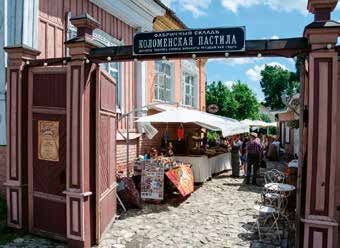
58      peer-reviewed article

                                                                                                                                              PHOTO: SHUTTERSTOCK
                        Zarnitsa was a compulsary children's war game organized within the
                        Young Pioneers organization all over the Soviet union. The game, which
                        was an imitation of military actions, was aimed at school children between
                        10 and 13 years. Today Zarnitsa has made a comeback thanks to the pro-
                        Kremlin movements and the state programmes of partiotic upbringing.

on September 22, 2017 at the Public Chamber of the Russian             revision of a system based on personal power.11 His successor,
Federation in Moscow.9                                                 Vladimir Putin, in his efforts to consolidate power, has turned to
   The article will start with a brief overview of the moderniza-      conservative-liberal ideology that “has partly replaced and part-
tion projects that were launched after the collapse of the Soviet      ly built on Soviet and traditional models”.12 This synthesis of the
Union. The following chapter will describe the 3rd Cultural            imitation of liberal politics and traditionalism was also directed
Forum of the Regions of Russia and will explain why it is impor-       towards “a positive reconfiguration of nostalgia for the Soviet
tant to study the forum. The subsequent chapters will focus on         past into new Russian patriotism”.13 However, even if Putin’s
communication and more notably on themes of discussions,               nostalgic modernization, as Il’ya Kalinin has called it, was based
imaginaries, interpretative schemes and, to a lesser extent, on        on the positive channeling of nostalgia and the “transformation
the legislative framework used by the participants to legitimize       of initially politically charged language of the Soviet symbols to
their actions. The article will conclude with some final remarks       politically neutral language of common cultural heritage […]”,14
that summarize the main findings.                                      the character of this nostalgic modernization project appeared
                                                                       to inhabit many elements that the opponents of nostalgic senti-
The Janus of Russian modernization                                     ments feared all along.
By the time of the collapse of the Soviet Union in 1991 it became          Compared to President Dmitry Medvedev’s modernization
evident that the centrally managed and planned economy and             project that focused on decreasing Russia’s dependency on
the rule of a single party have reached their limits. Reforms that     gas and oil revenues and creating a diversified economy based
would modernize the economy, social                                                                 on innovation and technology,15
infrastructure and political institu-
tions to enable the country to become
                                           “MEMORY POLITICS IN                                      Putin’s version of modernization ap-
                                                                                                    peared to not only include claims
competitive in a globalized world were     RUSSIA WERE TAKING                                       about technological innovations and
urgently needed.10 Despite Gorbachev’s      A DANGEROUS TURN,                                       competitiveness in the global market
attempts to modernize the Soviet                                                                    economy, but also a strong ideological
Union by democratizing the political       FORCING COMMUNIST                                        element that was supposed to be the
system and introducing perestroika         CRIMES INTO OBLIVION                                     driving force behind the proclaimed
reforms aimed at transforming the                                                                   transformations. Already in 2001, the
planned economy into a market-driven
                                             AND LEGITIMIZING                                       Russian state launched a series of four
economy, the results were quite the        AUTHORITARIANISM.”                                       state-sponsored programs of patriotic
opposite. Political, social and economic                                                            education in which the latter was un-
tensions led to the dissolution of the Soviet Union.                   derstood to be a “system of centralized government-approved
   The first president of independent Russia, Boris Yeltsin, at-       and sponsored activities aimed at instilling patriotic sentiments
tempted to introduce a capitalist market and democratic values.        for the purpose of mobilizing the population to support official
However, shortly after securing his position, he opted for the         policies”.16 This campaign came into being because of the gov-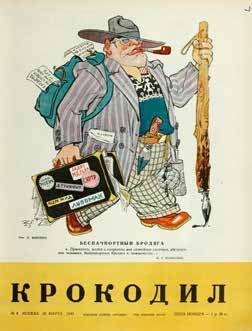
PHOTO: GOVERNMENT.RU
                                                                                                                              peer-reviewed article        59

                                                                                                                                Prime Minister Vladimir Putin
                                                                                                                                presented awards to the win-
                                                                                                                                ners of the “Battle for Respect:
                                                                                                                                Start Today” rap competition on
                                                                                                                                Muz-TV, 2009.

                       ernment’s need to “bring the population together in a common              Two years later, Vladimir Putin further elaborated on the
                       bond of support for the current regime”17 and to increase the         elements of Russian cultural development by announcing that
                       number of men willing to serve in the military18 which, in turn,      patriotism was a national idea, stressing its key role for national
                       shaped the content of the programs with stark military focus.         security and the economic renaissance. This new patriotic ideol-
                       Some scholars believed that such a model of education was a           ogy was supposed to secure Russia’s economic growth and tech-
                       vivid sign of a re-Sovietization.19                                   nological modernization by also capturing aspects of a global
                          Putin’s third presidential term, marked by a gradual but           agenda for sustainable development, as announced in Putin’s
                       persistent assault on political and civic freedoms in Russia, con-    presidential address to the Federal Assembly in 2016.24
                       firmed the fears of the liberal elites and intellectuals. Political       It quickly became obvious that military games such as Pobeda
                       tensions between the liberal opposition and the regime have           and Zarnitsa supported by federal funds and presidential grants
                       become more severe, while the debates about the legacy of the         were hardly enough to mobilize young people who, despite anti-
                       Soviet past and the instrumentalization of nostalgic discourses       Western propaganda, enjoyed the popular culture imported
                       and practices have intensified. The attempts to neutralize the        from the West.25 In an attempt to win young people, the state
                       Soviet past failed with the restructuring and closing down of         started supporting various street culture projects with Mr. Putin
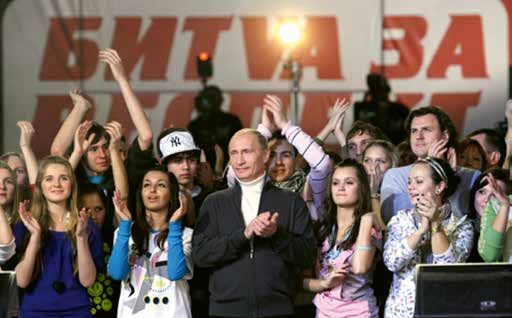
                       the Museum of the History of Political Repression Perm-36 in          leading the way: in November 2009 he congratulated the winner
                       2012—2016 and the subsequent assaults on the human rights             of the rap battle Bitva za Respect — 3 (Battle for Respect — 3) orga-
                       organization, Memorial, and its activists.20 It suddenly became       nized by the music channel MUZ-TV and almost ten years later
                       clear that memory politics in Russia were taking a dangerous          in 2018 even suggested that instead of prohibiting rap concerts
                       turn, forcing Communist crimes into oblivion and legitimizing         in Russia, the state should reach out to rap singers by “leading”
                       authoritarianism.                                                     popular musicians “in the necessary direction”.26

                       MEANWHILE, THE QUEST had started for the new ideology that            The 3rd Cultural Forum
                       would become the basis of the country’s development and               of the Regions of Russia
                       Putin’s rule. Starting from the early 2010s, Vladimir Putin21         The 1st Cultural Forum of the Regions of Russia was organized in
                       promoted culture as an essential element of state building, pay-      2014 and was meant to function as a communicative platform
                       ing specific attention to the values that would define Russia as      between federal and regional governments, public organizations
                       a unique civilization. In 2013, in his national address, Putin22      and cultural actors. As can be read form the title of the Forum,
                       raised a discussion about so-called traditional values as the very    Education and Culture: The Potential for Cooperation and the Re-
                       basis of Russian civilization, emphasizing the country’s unique       sources of NGOs in the Socio-Cultural Development of the Regions,
                       position and mission in the world. These traditional values were      its work was to be specifically focused on the potential of non-
                       solidified two years later in the National Security Strategy of the   governmental organizations to participate in the socio-cultural
                       Russian Federation (2015),23 determining the direction of the         development of Russia’s regions. Ideally, the NGOs should help
                       ideological and cultural transformation.                              local administration develop and provide social, economic and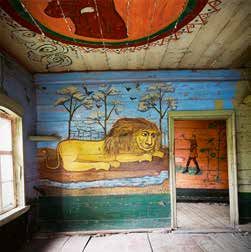
60      peer-reviewed article

cultural infrastructures in the provinces, thereby assuming some       to this communicative platform and political debate is rather
of the responsibilities of the state.                                  limited, it is still important to study how these organisations rou-
    The delegates from regional public chambers and regional           tinize the dominant discourses of modernization and culture,
ministries of culture were supposed to discuss the know-how            which organizations are allowed to voice their position, and
of collaboration with public organizations, investors and NGOs         what they can do in such compromised situation to achieve so-
in order to identify solutions to the various problems faced by        cial change. In the context of a shrinking public sphere activists,
the Russian regions. These problems were complex — economic            public organizations, NGOs and private foundations do not get to
and social decay, the destruction of heritage sites, the collapse      choose which communication channels they could use to reach
of communication infrastructures, lack of funding — and de-            out to lawmakers and public executives. Instead, they adopt a
manded immediate and long-term solutions. The discussions              pragmatic approach, using any public platform that gives them
focused on a broader set of suggestions ranging from the use of        the opportunity to communicate their ideas and needs to the
volunteer brigades in clearing garbage from local parks to the         federal and regional administrations.
role of cultural heritage in the economic and social regenera-
tion and transformation of the provinces into profit-generating        FOLLOWING MARKKU KIVINEN’S and Terry Cox’s29 advice about us-
tourist attractions. These discussions signaled that material and      ing Anthony Giddens’ theory of structuration 30, based on the
immaterial cultural heritage was regarded as important sociopo-        observation that actors not only reproduce the structures but
litical and economic capital that could foster collective identities   also produce and change them, this article will provide analy-
and agencies.                                                          ses of the discussions that took place in the Public Chamber
    The 3rd Cultural Forum of the Regions of Russia was attended       during the 3rd Cultural Forum as both a constraining and an
by representatives of the Ministry of Culture and members of the       enabling structure. Adopting Giddens’ perspective will allow
regional public chambers, regional administrators, local muse-         an analysis of the discussions as an active constituting process,
um workers, business people, scholars and cultural heritage ac-        accomplished by active subjects. The analysis will particularly
tivists. Compared to the St. Peters-                                                                    focus on the rules and resources,
burg International Cultural Forum,
which usually includes a number of
                                          “THESE DISCUSSIONS                                            i.e. legislative acts that the actors
                                                                                                        raised as disabling/enabling prac-
renowned international guests and       SIGNALED THAT MATERIAL                                          tices: funding schemes, official and
speakers, there were no represen-
tatives of international or foreign
                                            AND IMMATERIAL                                              alternative discourses — which will
                                                                                                        be seen as properties that make it
organizations among the delegates.      CULTURAL HERITAGE WAS                                           possible for similar and different
The plenary session was opened by       REGARDED AS IMPORTANT                                           social practices to co-exist and, as
the (then) head of the Public Cham-                                                                     a consequence, create somewhat
ber, Valerij Fadeev, who declared
                                          SOCIOPOLITICAL AND                                            overlapping and contradictory so-
the importance of culture in eco-         ECONOMIC CAPITAL.”                                            cial structures.
nomic and social development and                                                                            An analysis of agency, albeit
the urgent need for cooperation with non-governmental and              limited due to the nature of the material (observations at the
non-commercial organizations in the regions, in which “culture         forum) will be made. According to Giddens’31 there are three
can develop as a branch of industry”.27 Meanwhile, the panels at       characteristic forms of agency: communication, the exercise
the forum focused on a wide range of issues from the ideological       of power and sanction. The main focus of this article will be on
functions of libraries to the strategies of cooperation between        the first form — communication and therefore more specifically
investors, creative clusters and local administrations.                on signification and discursive and symbolic order (predomi-
    The Forum is an interesting subject of research from the           nant imaginaries, themes of discussions). Attention will then
perspective of the articulation and routinization of discourses28,     be paid to legitimization, i.e. legal documents that enable/dis-
power struggles, agency and resilience. Many delegates and             able specific cultures, and the dimension of domination, which
organizers are from regional public chambers and their role is         concerns material and allocative resources, such as institutions
to accommodate the needs and demands of the public, promote            and the financial support that enables various activities. Finally,
the interests of citizens and convert their interests into laws and    the focus will be on modalities, the means by which structural
regulations. Despite this proclaimed aim, the Public Chamber           dimensions are expressed in action (the interpretative schemes
could be criticized for controlling and directing the work of pub-     linked to structures of signification, organizational positions,
lic organizations and active citizens instead of controlling politi-   and norms of appropriate behavior embedded in structures of
cal institutions and the actions of politicians. A further subject     legitimization).
of criticism is the systematic difficulties faced by the representa-      Data used as the empirical basis for this article were col-
tives of independent organizations to become members of the            lected in 2017 during ethnographic fieldwork in Moscow, which
Public Chamber, which makes the Public Chamber more of a               included participant observations, recorded presentations and
decorative institution that imitates democratic procedures.            discussions at the Forum. In order to better understand the con-
    However, even if independent organizations have little access      text of the Forum and the actors who took part in it, participant
peer-reviewed article          61
observations were also made during lectures given by the School
Khraniteli Nasledia (School Keepers of Heritage in English), a part-
ner organization of the Business Club Nasledie i Ekonomika (Busi-
ness Club Heritage and Economics in English).
    From many parallel sessions, two panel discussions attracted
the most attention, the first being a roundtable discussion:
Sviaz’ Pokoleniy (The Link Between the Generations in English).
Most of the delegates at the roundtable discussion were female
cultural workers employed at regional and municipal museums
and municipal libraries, as well as several representatives of the                                                         A kinless
regional branches of the Public Chamber. The second panel — a                                                              cosmopolite
meeting of a Business Club Nasledie i Ekonomika, comprised a                                                               [bezrodnye
number of presentations by the leaders of various creative clus-                                                           kosmopolity]
ters, architects and scholars, investors and activists who focused                                                         appeared on
on the know-how of urban and rural regeneration, the attraction                                                            the cover of
of investments and the protection of cultural heritage in Russia’s                                                         Crocodile
regions. Both sessions were recorded and then transcribed by                                                               magazine
the author of this article.                                                                                                in 1949.
                                                                                                                           Illustration by
Conspiracies and nostalgia                                                                                                 Konstantin
for the good old days                                                                                                      Eliseev.
The delegates started the roundtable discussion Sviaz’ Pokoleniy
by articulating a widespread popular belief “about the complete
and irrevocable loss of moral norms” by Russian society and its        viet Union with the economic crisis of 2014, and the US 36 and EU
citizens. In her opening speech, a member of Ryazan’s Public           sanctions 37 against the Russian Federation.
Chamber and professor at Ryazan State University, Olga Vorono-             In Voronova’s argumentation, historical narratives about
va, described the collapse of the Soviet Union — using the words       the Great Patriotic War (1941—1945) and the current economic
of President Putin — as the “major geopolitical catastrophe of the     hardship merged, forming a conspiracy theory about the long-
20th century”,32 and by doing so integrated her talk into popular      planned colonization of Russia by the Western democracies
official discourses voiced at the Forum and in its publications: 33    and “evil outsiders”.38 Her remarks suggest that this discursive
                                                                       construction of material and ideological dispossession also feeds
      It is no secret that in the 1990s, our country ended             into and is a result of conspiracy theories about the existence of
      up under colonial rule (kolonial’naia zavisimost’) of            internal enemies (the liberal intelligentsia, the fifth column, as
      the United States of America, of the West (kollektivnyi          she called it), echoing Soviet anti-Western propaganda and the
      zapad), and this has already been proved on a serious            Stalinist campaign against “kinless cosmopolites” (bezrodnye
      scientific level […]. When our country is forced to sur-         kosmopolity in Russian). As an example of such enemies within,
      vive in conditions of international isolation, when there        Voronova named Moscow-based stage and film director Kirill
      was a declared economic, psychological, information              Serebrennikov 39 and writer Anna Kozlova, whose novel F20 was
      and diplomatic war, the existence of a fifth column in the       nominated for the national book award Natsionalniy Bestseller
      creative environment was the same as during the Great            2017.40 By describing Serebrennikov’s Seventh Studio produc-
      Patriotic War in the country when the enemy was present          tions as demoralizing, Voronova anticipated the final ruling of
      [on our territory]. 34                                           the Moscow District Court, which declared the members of the
                                                                       Seventh Studio guilty, and therefore forever banished indepen-
Voronova’s words suggest that she mourned the collapse of the          dent contemporary theatre. Voronova used a similar rhetoric
Soviet Union: she talked about the devastating outcomes of the         when describing the novel as being devoid of meaning and mor-
economic reforms of perestroika and the difficult transition from      als. Firmly juxtaposing immorality, pervasiveness and abnor-
a planned to a market economy. Her views echoed common                 mality (i.e. mental illness), Voronova shaped the perception of
nostalgic discourses highlighting the negative effects of market       the existing capitalist order, its moral economy and modern cul-
changes, the persistent assault of the capitalist economy and          ture as a system of demoralization and degradation. While doing
the detrimental effects of Western values of liberal democracy.35      so, she nostalgically reminisced about the Soviet Union which, in
Being unable to convincingly explain the individual or collective      her opinion: “raised a whole generation of heroes (pobeditelei in
losses, she described the economic and social hardships of the         Russian) by setting high ideals for its citizens as the norm”, com-
Russian people as being the meddling of external enemies in the        pared to “modern Russian literature that demoralizes people
country’s affairs and the presence of an internal enemy — the          by making psychological anomaly the new norm!”41 By using
liberal intelligentsia. She also juxtaposed the collapse of the So-    a similar rhetoric for war and conspiracy, she announced that
62 peer-reviewed article
age by enrolling children in various kinds of military and patriot-
PHOTO: KOLOMNAONLINE.RU
ic organizations, such as Yunarmy. 44 Echoing the military mood
of the state program of patriotic education,45 the delegate called
for the reintroduction of recruitment education in schools (pri-
zyvnaia podgotovka in Russian), with military specialization for
boys and medical specialization for girls. By arguing for the need
of such military-patriotic education, the delegate highlighted
young people’s neglect of national culture and their growing fas-
cination with Western popular culture.
This discursive transfer to morality in the discussions of both
delegates is hardly surprising, given that economic transforma-
tions “inevitably involve a comprehensive reorganization of the
moral presumptions necessary for justifying new choices and
alternatives”.46 Such a discursive transfer to morality resonated
with the perception of globalization processes as leading to
cultural homogenization. In Russia in particular, it is common
Entrance to the cluster Kolomenskiy Posad. to talk of so-called Americanization, understood as a global influ-
ence of American culture, and the necessity of sustaining and
defending own unique identity in response to globalization.47
“the lack of artist-patriots was a result of the creative elites being
united on the barricades of the fifth column”.42 IN THIS PARTICULAR CASE, nostalgia for the past and values was
As it can be read from the quote, Voronova shifted the discus- revealed in the rhetoric; the transformation of Russian society
sion from an analysis of internal political reasons for the collapse appeared to be articulated in the language of traditional (patri-
of the planned economy to imported ideological reasons and archal) values, family, homeland and borders, which resonated
concluded that culture and morality (kultura i nravstvennost’) are in the presidential speeches. This restorative nostalgia of the
the key instruments of Russian modernization, capable of “pro- delegates was an affective resource in stimulating their active
tecting Russian society from external ideological expansion, de- participation in cultural production and youth mobilization in
structive information and psychological influence”. 43 Instead of the support of the Russian state. The essential premise of their
looking for economic and political solutions for modernization nostalgic longing was in place, as the delegates mourned the loss
she saw the only option in a change of the legislative framework of the Soviet Union in the face of Western capitalism, as well as
in order to safeguard the cultural sovereignty of the Russian the impossibility of using the same ideological and administra-
Federation: tive resources that had been employed during the Soviet period.
The issue of available resources as an essential element of
It is often said that our society lacks a national idea. agency was raised by the delegates several times during the
There are many discussions about this. The President roundtable discussions. Being fully aware that their positions as
was clear that the national idea is indeed patriotism. members of public chambers and educational workers were not
But, until now, the 13th Article of our Constitution states sufficient to drive their agenda, they discussed the need to be in
that any official state ideology in Russia is forbidden. control of financial and administrative resources and were bewil-
You see that the Strategy of National Security that for- dered by the sudden closure of some state-sponsored programs.
mulates what should be our ideological foundation Being sure about the importance of events such as a regional
breaches the article of our Constitution, which some festival of poetry for the cultural education of young people,
call a ‘colonial article’, as it was written in the 1990s Voronova explained the sudden cut in funding as the president’s
with the help of American consultants. We proposed lack of awareness of the situation, echoing a popular refrain of
the following formulation: to consider amending the the Soviet period about the lack of awareness of the country’s
13th article of the Constitution of the Russian Federa- leaders in the current state of affairs.
tion prohibiting any state ideology and instead suggest From a Giddensian perspective, the social and hierarchi-
that the basis of national ideology is the idea of Russian cal position of this member of the Public Chamber is a reliable
patriotism. (Voronova, Transcription, 16: 49) predictor of her actions. Agency is enhanced by the control of
resources and is exercised by the complying with or the reject-
A similar rhetoric and the intention to influence the attitudes of ing of rules. Being aware of the particpants’ political position,
young adults and children towards the state, culture and edu- Voronova felt comfortable criticizing political opposition and
cation can be found in the presentation of another delegate at cultural workers who did not fit her picture of the world. At
the roundtable discussion. Agreeing with Voronova that young the same time, she was careful about criticising the state and,
people show little interest in national culture and its past, the instead of holding the Ministry of Culture accountable, she justi-
delegate suggested introducing patriotic values from an early fied the budget cuts by the presence of internal forces destabiliz-peer-reviewed article 63
ing the cultural politics of the state. Voronova’s explanation of in other words, self-actualizing citizenship, which is based on
the budget cuts can be seen as an example of the enduring struc- the phenomenon of affective solidarity, i.e. solidarity embodied
tural properties of governance in Russia. Justifying the economic though practices of communication and the pleasure derived
and social hardships using moral degradation and conspiracy from group activities.53
theories is part of a social convention about which the cultural Having said that, Metelev saw the modernization of the cul-
and educational workers at this roundtable discussion agreed. tural sector as a two-fold process: 1) reorganization of the cul-
Access to resources, be it allocative (involving command of tural sector through the creation of an international platform for
objects and material phenomena), or authoritative (involving self-actualizing and lifestyle citizenship;54 2) introduction of tech-
command of people), was also explained by the moral right of nological innovations and social media to recruit young people
organisations to promote the right kind of patriotism and the and provide them with the necessary tools to take action.
dominance of a patriotic ideology. The understanding of modernization as a technological in-
novation was later echoed in another presentation. Speakers
Youth and modernization from the Victory Museum in Moscow55 talked about the need
Nevertheless, not all the proposed measures had a strong nos- to use computer technologies to attract a younger audience.
talgic and militaristic rhetoric. One of the representatives of New technologies, the internet, immersive and interactive
the Federal Public Chamber and the head of the Association of expositions with the application of virtual reality were seen
Volunteer Centers,48 Artem Metelev, appealed for a change of as a panacea for the low number of visitors to war museums.
heart towards young people in Russia. Arguing for the need for increased
Instead of endorsing his colleague’s interactivity in exhibitions, the pre-
loathing of popular culture, young “IT IS COMMON TO TALK senters proposed several solutions
people and the West, he emphasized OF AMERICANIZATION, with “picturesque spots for taking
the need to create opportunities for
activism, which would be distanced
THE GLOBAL INFLUENCE selfies and photos in costumes”
to inspire a sense of patriotism.56
from formal political institutions such OF AMERICAN CULTURE, Meanwhile, hashtags such as #nash-
as party membership, or openly sup-
port specific politicians (as was the
AND THE NECESSITY vyborpobeda (#our choice is victory
in English) were seen as another in-
case of Nashi, an open pro-Kremlin OF SUSTAINING AND teractive element that could attract
youth organizations — author’s com- DEFENDING YOUR a young audience. Interestingly, the
ment). Instead, these activities should delegates barely reflected on the
be bottom-up and embody alternative
OWN UNIQUE IDENTITY ideological content of these narra-
forms of participation that had gained IN RESPONSE.” tives. Even though they stressed the
prominence throughout the world importance of the communication
with regard to young people’s disenchantment with formal poli- of universal values, they predominantly focused on the need to
tics.49 Metelev pointed out that volunteer movements play a sig- translate ideas of the pride and heroism of the Soviet people,
nificant role in social development at an international level and not of the tragedies of war.
are often seen as an attempt to positively change the surround-
ing environment through socially useful actions.50 Capitalist modernization
Metelev illustrated his opinion with PowerPoint images of and creative industries
book swaps, literature quests, and volunteer brigades organized The discussants at the panel of the Club Nasledie i Ekonomika had
in the republics of Tatarstan and Crimea (the Crimean penin- a somewhat different understanding of Russian modernization
sula was annexed by the Russian Federation in 2014 as a conse- than their counterparts from the roundtable discussion Sviaz’
quence of the Maidan Revolution in Ukraine — comment of the pokolenii. Firstly, they saw the potential in developing creative
author) and called these actions examples of civic participation industries in Russia and therefore had a broad understanding
(primery grazhdanskogo uchastiia in Russian), arguing for young of culture and heritage not limiting it, as their colleagues did, to
people’s need for “self-actualization” and the realization of their commemorations of the Great Patriotic War. Instead, they ap-
potential for society at large. 51 Echoing the words of sociologist peared to understand culture in Raymond William’s57 terms as
Daria Krivonos,52 who wrote about the “affective and emotional a whole way of life, including various forms of crafts, traditions
ties” that young people enact “through embodied and sensory and attitudes, popular culture and technology. Secondly, they
practices of obschenie (‘communication’) and dvizhuha (‘moving argued for the positive effects of cultural industries on regional
around’ or ‘hanging out’)”, he highlighted young people’s need economies. According to this line of thought, creative clusters,
for self-actualization through participation in volunteer activi- which merge traditional crafts and arts, modern technologies
ties because “it is fun and gives them something”. Describing and the bottom-up organization of creative citizens, could be-
such projects as practices of “doing good” and “self-realization”, come the nodal points of socio-cultural development and be the
Metelev presented them as part of a global trend of personal- very solution to the challenges outlined in the Strategy of Eco-
ized engagement through lifestyles, consumption and leisure, nomic Security.58 Thirdly, the delegates had a somewhat different64 peer-reviewed article
attitude towards young people than some of the delegates at the competitive and highly technological country if “the state was
roundtable discussions and shared Artem Metelev’s view of life- afraid of businesses and NGOs and saw enemies everywhere”.63
style citizenship as a potential driver for change. While also be- Moreover, the inability and unwillingness to extend the under-
lieving in youth as a driving force behind economic and cultural standing of patriotic action to include self-actualizing citizenship
modernization, they saw young people not as passive receivers and small-scale entrepreneurship allowed little room for innova-
of information who must be shielded from negative influences, tion and cooperation with non-governmental organizations and
but rather as active participants of economic, social and cultural businesses. One of the delegates emphasized that, for the state-
life with their own agency. They conceptualized young people run organizations, culture was still regarded as being more of an
as a creative class of “socially engaged individuals”, “the basis of ideological tool of propaganda than as a resource for economic
cultural development” and “an investment in the future, which development and a form of civic action.
will give dividends later”.59 According to this logic, investments On the level of business and economic development, the
in the cultural sector could provide an infrastructure that would main constraint was a resource economy that was no longer sus-
enhance human capital already present in the country and also tainable in a world driven by information technologies, creative
cultivate new forms of creativity that would contribute to Rus- economies and alternative energy resources. The heavy focus on
sia’s competitiveness in the international market of creative a resource economy was a reason for the dominant modus ope-
products. The presence of many young entrepreneurs and activ- randi, which included a focus on short-term solutions instead
ists in the panel also proved this point. of long-term planning. This kind of attitude towards planning
Having said that, the modernization was understood as the and problem solving also prevented state officials from entering
process of overcoming a number of con- into public discussions with citizens,
straints that existed on three levels of
societal structure: governance, society
“THE IMPORTANT which are more time consuming but
essential if there is a determination to
and business. According to Nikolay Pri- ROLE OF CULTURE identify sustainable solutions to existing
anishnikov, a scholar from the Moscow LIES IN THE PROCESS problems. Similarly, investor and head
School of Social and Economic Sciences of the Club, Dmitry Oinas, believed that
and an expert in urbanism, on the level OF TRANSITION “orientation to a resource economy re-
of governance modernization of creative FROM A RESOURCE quired a specific mentality, expectations
processes was primarily countered by of support from the state as the only
the lack of democratic culture in Russian
TO AN INNOVATION option for development, as well as focus
society: “The creative approach is hin- ECONOMY.” on large-scale businesses, rather than
dered by a lack of freedom [….] which has supporting small- and medium-sized
a long history in Russia”.60 The centralization of decision-making businesses. In the meantime, the backbone of the creative indus-
process and a low degree of freedom given to the regional gov- tries was small- and medium-sized businesses”.64
ernments and initiative-taking businesses, he conceptualized
as a problem for sustainable development: “For sustainable PRIANISHNIKOV SUGGESTED that cultural heritage could indeed
development to take roots, it is necessary to surrender initiatives allow the formation of alternative paths, stating that: “The
instead of trying to control everything by important role of culture lies in the process of transition from
force ”.61 a resource to an innovation economy”.65 Hence, in order to
overcome the above-mentioned constraints and follow an al-
ON A SOCIETAL LEVEL, according to Prianishnikov, the repercus- ternative path, as Prianishnikov proposed, internationalization
sions of the Soviet mentality — manifested in the incompetence should become part of the modernization process. Learning
of legislators and the inadequacy of spent resources and pro- from the experience of other countries such as Great Britain and
duced outcomes — became another constraint of moderniza- Germany, who successfully profited from the development of
tion. “The lack of experts who could act as mediators of the best creative industries, was seen as essential. The delegates admit-
practices and scientific knowledge about creative industries” ted that Russia could not and should not be excluded from global
was paired with “persistent stereotypes about the impossibility developments, and instead of trying to isolate itself from the
of merging culture and heritage with the economy, industrial rest of the world, should accept globalization as a fait accompli
production and trade”.62 In other words, the inability of cultural and try to maximize its benefits, while simultaneously trying to
institutions to reconsider their attitudes towards the market minimize its drawbacks: “Creative markets are first and foremost
economy and the monetization of cultural heritage, the inter- global markets. Thus, it is very important to support Russian
actions between the state, citizens and businesses, in order creative industries in global markets”.66 Having said that, sus-
to revise funding schemes that would enable the long-term tainable social, economic and cultural development, which are
development of a creative capital and cultural heritage, was a types of development that meet the needs of present societies
considerate constraint of the present system. For Prianishnikov, without compromising the ability of future generations to meet
it was clearly impossible to follow The Strategy for Economic their own needs, was presented as the best way of counteracting
Security, the main goal of which was to transform Russia into a the negative aspects of globalization. By referring to the Sustain-PHOTO: DTRA87/FLICKR
peer-reviewed article 65
PHOTO: PRESS IMAGE
Kolomna Marshmallow Museum and The House with Lion in Popovka are examples of cultural heritage projects in local communities.
able Development Goals (SDGs) adopted by all United Nations who discovered a decaying timber house decorated from floor
Member States in 2015 as a universal call to action to end pover- to ceiling with wall paintings. Over the last ten years, Terekhova
ty, protect the planet and ensure that all people enjoy peace and has invested her own money, as well as successfully applied for
prosperity by 2030 (UNDP), the speakers specifically included several grants, started a crowdfunding campaign and restored
Russia in the global community. the house .68
Being open to globalization and international experiences,
the delegates also believed that the free movement of people BOTH THESE PROJECTS are good examples of the bottom-up ac-
across regional and national borders not only encouraged cre- tions of private individuals who pursued multiple goals includ-
ativity and the acquisition of skills and knowledge, it also led to ing: the preservation of both material and immaterial heritage
a new understanding of the home and practices of belonging, (buildings, industrial heritage); encouragement of local citizens
adhering to the proposition that place attachment is no longer to re-discover local industrial and rural heritage sites; and, final-
possible or even necessary.67 What mattered most was a comfort- ly, making the enterprises commercially viable in order to cre-
able socio-economic and cultural infrastructure, which was sup- ate jobs and contribute to economic development in otherwise
posed to be jointly created by the state, businesses and citizens. economically distressed regions. Beyond being a sign of growing
interest in the past, these acts of volunteerism and social entre-
The heritage industry preneurship are also a response to the withdrawal of the state
Similar to the panelists in the roundtable discussion, the dele- from heritage protection and its inability to address the alarming
gates in the second panel emphasized the inadequacy of current issue of decay as a result of short-sighted investment and devel-
legislation in the cultural sphere. They highlighted the absence opment projects, as well as corruption.
of a detailed description of support mechanisms and articles While some urban and rural cultural centres became mu-
regulating the work of professional associations that represented seums through sufficient financial funding from the state and
the interests of investors, non-governmental organizations and sponsors, as well as profited from tourism and corresponding
activists. Regarding the instruments of support, the delegates commercial activities, other heritage sites were not as lucky.
also complained about the absence of grants and subsidies for Alarming news coming from the members of the Club and heri-
non-commercial organizations working with urban and rural re- tage activists about illegal demolitions of historical buildings
generation projects, which have multiplied in recent years. confirm that private development interests win over the inten-
As an illustration of the current state of affairs in the use of tions to safeguard historical sites. As the result heritage sites all
cultural heritage for sustainable regional development, the pan- across Russia disappear leaving little hope for the remaining one
elists presented several projects, two of which are shown below: to be turned into profitable art clusters where memory and cul-
Kolomna Marshmallow Museum (Musei Kolomenskaia Pastila in ture is preserved.69
Russian), a part of a larger creative cluster, Kolomenskii Pasad;
and House with Lion (Dom so L’vom in Russian) (Popovka village, Three visions of modernization
Saratov province). The museum and cluster are examples of The analysis of the discussions of the two panels arranged at the
social entrepreneurship, individual investments and extensive 3rd Cultural Forum of Regions showed that there are three dis-
negotiations with local authorities. The House with Lion project tinct visions of modernization.
is a result of the efforts of a young art historian, Yulia Terekhova, The first vision, a vision of conservative modernization, is66 peer-reviewed article
based on conservative ideology, restorative nostalgia for the So- of public chambers. They legitimize their actions and choice of
viet Union70 and is dependent on the creation of a technological rhetoric by referring to the Strategy of National Security, state
infrastructure that would ease the one-way communication be- programs of patriotic upbringing, and Vladimir Putin’s national
tween the state and young people. The proponents of this vision address. University lecturers can be also found among the pro-
of modernization expressed a sense of nostalgia for lost values ponents of the third vision, alongside activists and businessmen.
— collectiveness, heroism, altruism and active civic positions, as The proponents of the third vision build their arguments by
well as a sense of nostalgia for the modus operandi of the com- referring to the Strategy of Economic Security and the Global
munist regime, its rigidness regarding the oppression of oppos- Development Goals set by the UN. The second vision is mainly
ing opinions. Henceforth, culture was discursively constructed presented by the members of public chambers and the leaders
vis-à-vis the commemoration of the Great Patriotic War with the of volunteer organizations that have been sanctioned by the V.
help of references to heroism and sacrifice, memory of the war Putin’s initiative and therefore refer to his official statements.
victory, while everything that fell outside this framework, i.e. When it comes to the question of resources, all actors agreed
modern art and popular culture, was described as unworthy. that more resources are needed, but disagreed on the issue of
Having said that, culture was given the role of indoctrinating state-private partnership and the role of businesses and activists
and raising young people as heroes capable of sacrifice, as well as in the modernization process. While the first group supported
providing an ideological basis to support the state and existing the state and the legitimacy of its actions, but was firmly against
political structure. businesses and activists, the third group insisted on an open dia-
The second vision of modernization is based on ideas of logue between all actors and the merging of resources to achieve
lifestyle citizenship and an information society, in which young a common goal. The second group, which is largely funded by
people can produce content and communicate with each other. the state and received generous funding in recent years through
According to this vision, the state should nurture the creative the system of direct support and president grants, found itself
and altruistic potential of young people in order to solve the on- in a privileged position having obtained full support of the Presi-
going socio-economic problems with minimum investment. dent and funding. ≈
A strong focus on volunteer movements, some international-
ization and the use of global experience in solving important Ekaterina Kalinin, PhD and Assistant Professor at the Department
societal issues, as well as little remaining scope for criticizing the of Media and Communication Studies, Jönköping University, Sweden.
state, suggest that this type of modernization might be narrowed
down to neoliberal modernization, which would not solve deep-
ly entrenched problems but would create a kind of façade.
The third vision of modernization means introducing po-
litical democratization first of all, a change in the relationship
between state, businesses and activists in order to create a new
modus operandi based on trust, transparency, equality and re- references
spect between partners, i.e. the state, businesses and society. 1 Michael Durawoy and Katherine Verdery, eds., Uncertain Transition:
Sustainable development goals are seen as a call for action, while Ethnographies of Change in the Postsocialist World (Lanham, MD,
creative clusters are understood and presented as a potential Rowman and Littlefield, 1999); Daphne Berdahl, Matti Bunzl, and Martha
form of management, which allows a number of issues to be Lampland, eds., Altering States: Ethnographies of Transition in Eastern
Europe and the Former Soviet Union (Ann Arbor, MI: University of Michigan
simultaneously resolved: the protection of historical sites, the
Press, 2000); Ruth Mandel and Caroline Humphrey, eds., Markets and
regeneration of depressed areas through activism and socially
Moralities: Ethnographies of Postsocialism (Oxford & New York, NY: Berg,
responsible businesses. 2002); Davis Johnson, ed., Politics, Modernization and Educational Reform
in Russia from Past to Present (Oxford: Symposium Books, 2010); Marina
HAVING SAID THAT, these three different visions of modernization Khmelnitskaya, The Policy-making Process and Social Learning in Russia:
provide different discursive constructions of heritage and cul- The Case of Housing Policy (Croydon: Palgrave Macmillan, 2015); Markku
ture. In the first vision, heritage is narrowed down to the monu- Kivinen and Terry Cox, “Russian Modernisation: A New Paradigm,”
ments that commemorate the Great Patriotic War and culture Europe-Asia Studies, 68(1), (2016) 1—19, accessed November 3, 2020, doi:10.
1080/09668136.2015.1125573.
that is traditionally understood as highbrow: literature, theatre
2 Sirke Mäkinen, Hanna Smith, and Tuomas Forsberg, “With a Little Help
and classical dance, and includes forms of communication that
from my Friends’: Russia’s Modernization and the Visa Regime with the
imply a respect of authority. In the second vision, heritage and
European Union,” Europe-Asia Studies, 68(1), (2016), 164—181, accessed
culture become instrumental and understood in much broader November 3, 2020, doi:10.1080/09668136.2015.1123223.
terms, including popular culture. In the third vision, the term
3 Meri Kulmala and Anna Tarasenko, “Interest Representation and Social
heritage includes all forms of material and immaterial culture Policy Making: Russian Veterans’ Organisations as Brokers between the
that could help people understand the history of their region or State and Society,” Europe-Asia Studies, 68(1), (2016), 138—163, accessed
country. November 3, 2020, doi:10.1080/09668136.2015.1124842.
The proponents of the first vision are school and university 4 Vladimir Gel’Man and Andrey Starodubtsev, “Opportunities and Constraints
teachers, employees of state war museums, as well as members of Authoritarian Modernization: Russian Policy Reforms in the 2000s,”peer-reviewed article 67
Europe-Asia Studies, 68(1), (2016), 97—117, accessed November 3, 2020, doi:1 22
Vladimir Putin, “Poslanie Presidenta Federal’nomu Sobraniiu,” Moscow,
0.1080/09668136.2015.1113232; Jussi Lassila, “Aleksei Naval’nyi and Populist December 12, 2013. Accessed September 1 2020. Available at: http://
Re-ordering of Putin’s Stability,” Europe-Asia Studies, 68(1), (2016), 118—137, kremlin.ru/events/president/news/19825.
accessed November 3, 2020, doi:10.1080/09668136.2015.1120276. 23 Presidential Decree N 683 on National Security Strategy of The Russian
5 Pami Aalto, “Modernization of the Russian Energy Sector: Constraints on Federation, Moscow, Kremlin, December 31, 2015, accessed November
Utilizing Arctic Offshore Oil Resources,” Europe-Asia Studies, 68(1), (2016), 4, 2020. Available at: https://rg.ru/2015/12/31/nac-bezopasnost-site-dok.
38—63, accessed November 3, 2020, doi:10.1080/09668136.2015.1113509 ; Sari html.
Autio-Sarasmo, “Technological Modernization in the Soviet Union and Post- 24 Presidential Address to the Federal Assembly. Moscow, December 1,
Soviet Russia: Practices and Continuities,” Europe-Asia Studies, 68(1), (2016), 2016, accessed November 4, 2020 http://kremlin.ru/events/president/
79—96, accessed November 3, 2020, doi:10.1080/09668136.2015.1118018. news/53379.
6 aarina Aitamurto, “Protected and Controlled. Islam and ‘Desecularisation
K 25 “Molodezh Novoj Rossii: Tzennostnije Prioritety” Insittut Sotziologii, last
from Above’ in Russia,” Europe-Asia Studies, 68(1), (2016),182—202, accessed edited 2018, accessed September 1, 2020 https://www.isras.ru/analytical_
November 3, 2020, doi:10.1080/09668136.2015.1119250. report_Youth_7_1.html.
7 Kivinen & Cox 2016, 3. 26 “ Putin pro Reperov: ‘Vozglavit’ i Pravit’’ — khorosho, ‘Khvatat’ i ne
8 Elena Stepanova, “ ‘The Spiritual and Moral Foundation of Civilization in Puschat’’ — Plokho.” BBC, 15 December, 2018, accessed September, 1,
Every Nation for Thousands of Years’: The Traditional Values Discourse in 2020https://www.bbc.com/russian/news-46579176.
Russia,” Politics, Religion & Ideology, 27 Valerii Fadeev 2017, Opening speech, Transcription, 02:00.
16 (2—3), (2015), 119—136, accessed November 3, 2020, doi:10.1080/21567 28 Anthony Giddens, The Constitution of Society. Outline of the Theory of
689.2015.1068167; Jardar Østbø , “Securitizing ‘Spiritual-Moral Values’ in Structuration, (Cambridge: Polity Press,1984), xxii.
Russia,” Post-Soviet Affairs, 33(3), (2016), 200—216, accessed November 3,
29 Kivinen & Cox, 2016
2020, doi:10.1080/1060586x.2016.1251023.
30 Giddens, 1984.
9 The III Cultural Forum of the Regions of Russia, like previous forums, was
organized by the Ministry of Culture of the Russian Federation, Public 31 Ibid.
Chamber and several public organizations. 32 Vladimir Putin, “Raspad SSSR — Krupnejshaja Geopoliticheksaja
10 Kivinen & Cox 2016, 1. Katastrofa Veka,” Regnum, April 25, 2015, accessed September 1, 2020
https://regnum.ru/news/444083.html
11 Lilia Shevtsova, “Gorbachev and Yeltsin: Reformer and Terminator”,
Carnegie Moscow Centre. (2011), accessed September 1, 2020 https:// 33 Egorov Vladimir, “Kachestva Chelovecheskogo Kapitala: Effektivnoe
carnegie.ru/2011/02/01/gorbachev-and-yeltsin-reformer-and-terminator- Upravlenie i Razvitie,” in eds., Ol’ga Astaf’eva and Ol’ga Koroteeva,
pub-42455. Obrazovanie i Kultura: Potentsial Vzaimodejstviia i Resursy NKO v Sotsio-
Kulturnom Razvitii Regionov Rossii. Sbornik materialov III Kulturnogo
12 Kivinen & Cox 2016, 3.
Foruma Regiononv Rossii. Vol. 2. Moscow: Lyadov, 2017), 21—27; Ol’ga
13 Ilia Kalinin, “Nostial’gicheskaia Modernisatsiia: Sovetskoe Proshloe kak Kravchenko, “Sotsio-Kulturnye Osnovaniia Rossiiskogo Gosudarstva”, in
Istoricheskii Gorizont,” Neprikosnovennii Zapas, 6 (74), (2010), accessed eds., Ol’ga Astaf’eva and Ol’ga Koroteeva, Obrazovanie i Kultura: Potentsial
November 3, 2020, http://magazines.russ.ru/nz/2010/6/ka2-pr.html. Vzaimodejstviia i Resursy NKO v Sotsio-Kulturnom Razvitii Regionov Rossii.
14 Kalinin 2010, Sovetskoe proshloe… Sbornik materialov III Kulturnogo Foruma Regiononv Rossii. Vol. 2. Moscow:
15 Kivinen & Cox 2016, 1—2. Lyadov, 2017), 27—30; Galina Avanesova and Ol’ga Astaf’eva, “Natsionalnyie
Kultury v Usloviiakh Globalnykh Ugroz: Mirovaia Praktika i Nauchnii Analiz”,
16 Valerie Sperling, “The Last Refuge of a Scoundrel; Patriotism, Militarism
in eds., Ol’ga Astaf’eva and Olga Koroteeva, Obrazovanie i Kultura: Potentsial
and the Russian National Idea,” Nations and Nationalism, 9 (2), (2003),
Vzaimodejstviia i Resursy NKO v Sotsio-Kulturnom Razvitii Regionov Rossii.
235—253, quoted in Anatolii Rapoport,109, “Tendencies in Civic Education
Sbornik materialov III Kulturnogo Foruma Regiononv Rossii. Vol. 2. Moscow:
in Russia: The Perception of Patriotism among Secondary School
Lyadov, 2017), 30—38; Vladimir Lukash and Ol’ga El’kan, “ ‘Russkaia Ideia’
Teachers”, Journal of International Social Studies, 6 ( 2), (2016), 109—124.
kak Osnova Rossiiskoi Gosudarstvennosti, “ in eds., in O. Astaf’eva and O.
17 Sperling 2003, 236. Koroteeva, Obrazovanie i Kultura: Potentsial Vzaimodejstviia i Resursy NKO v
18 Valerie Sperling, “Making the Public Patriotic: Militarism and Anti- Sotsio-Kulturnom Razvitii Regionov Rossii. Sbornik materialov III Kulturnogo
militarism in Russia,” in Russian Nationalism and the National Reassertion Foruma Regiononv Rossii. Vol. 2. Moscow: Lyadov, 2017), 43—48.
of Russia, ed. Marielle Laruelle, (London, UK: Routledge, 2009), 218—271. 34 Voronova, Transcription, 07:40.
19 Vyacheslav Karpov and Elena Lisovskaya, “Educational change in time 35 Oana Godeanu-Kenworthy, “Deconstructing Ostalgia: The National Past
of social revolution: The case of post-Communist Russia in comparative between Commodity and Simulacrum in Wolfgang Becker’s Good Bye
perspective,” in Educational reform in post-Soviet Russia: Legacies and Lenin! (2003),” Journal of European Studies 41( 2), (2011), 161—77 , accessed
prospects, eds Ben Eklof, Larry E. Holmes, and Vera Kaplan, (London: November 3, 2020, doi:10.1177/0047244111399717; Anna Novikova and Elena
Frank Cass, 2005), 22—46. Dulo “The Soviet in Contemporary Russian Television as the Manifestation
20 “Muzei Repressii Perm-36 Zavershil Protseduru Likvidatsii,” Novaya of Glocalization.” In World of Media: Yearbook of Russian Media and
Gazeta, August, 16, 2020, accessed September, 1, 2020 https:// Journalism Studies, ed. Elena Vartanova (Moscow: Media Mir. 2011), 191—208.
novayagazeta.ru/news/2016/08/16/124175-muzey-repressiy-perm-36- 36
Russia and Moldova Jackson–Vanik Repeal and Sergei Magnitsky Rule of
zavershil-protseduru-likvidatsii; “Verkhovnyi Sud Otlkonil Isk o Likvidatsii Law Accountability Act of 2012 was a reaction of the US Government to the
‘Memoriala’” Interfax, January, 28, 2015, accessed September, 1, 2020 illegal persecution of lawyer Sergey Magnitsky.
https://www.interfax.ru/russia/420613.
37 EU restrictive measures against the Russian Federation were adopted
21
Vladimir Putin, “Natzionalnij Vopros,” Nezavisimaja Gazeta, January 23, in response to the illegal annexation of Crimea and the deliberate
2012, accessed September 1 2020 https://www.ng.ru/politics/2012-01-23/1_ destabilisation of Ukraine in 2014 (EU restrictive measures in response to
national.html. the crisis in Ukraine, last reviewed on October 5, 2020, European CouncilYou can also read


