THE ROAD AHEAD National Highway Traffic Safety Administration Strategic Plan 2016-2020 - NHTSA
←
→
Page content transcription
If your browser does not render page correctly, please read the page content below
THE ROAD AHEAD
National Highway Traffic Safety Administration Strategic Plan
2016—2020

Contents
 Message From the Administrator ..................................................................................... 6
 Executive Summary....................................................................................................... 7
 Introduction ............................................................................................................... 8
 Planning Process ......................................................................................................... 9
 Strategic Goal 1: Safety ................................................................................................ 11
 Objective 1: Reduce Fatalities and Injuries .......................................................................... 12
 Objective 2: Increase Survivability From Crashes ................................................................. 13
 Objective 3: Reduce Economic Costs ............................................................................... 15
 Strategic Goal 2: Proactive Vehicle Safety ........................................................................ 18
 Objective 1: Promote the Proactive Safety Principles ............................................................ 18
 Objective 2: Retool Recalls ............................................................................................ 20
 Objective 3: Inform and Empower Consumers ................................................................... 21
 Objective 4: Coordinate Global Road Safety ....................................................................... 23
 Strategic Goal 3: Highly Automated Vehicles..................................................................... 24

 Objective 1: Provide National Leadership for the Safe Deployment of Automated Vehicles ............ 25
 Objective 2: Provide Federal Leadership for the Deployment of Vehicle-to-Vehicle Communications .. 27
 Objective 3: Enable a Robust, Layered Framework for Vehicle Cybersecurity .............................. 27
 Objective 4: Democratize Safety Technologies ................................................................... 28
 Strategic Goal 4: Human Choices ................................................................................... 31
 Objective 1: Promote Innovative Solutions for Behavioral Safety .............................................. 31
 Objective 2: Leverage Law Enforcement Partnerships ........................................................... 35
 Objective 3: Provide Oversight and Guidance to State Highway Safety Offices ............................ 35
 Objective 4: Provide Assistance and Oversight to State Departments of Motor Vehicles ................. 36
 Strategic Goal 5: Organizational Excellence ...................................................................... 38
 Objective 1: Properly Identify Human Capital Needs ............................................................. 38
 Objective 2: Improve NHTSA’s Ability To Deliver Quality Data and Analysis ................................. 39
 Objective 3: Ensure NHTSA Has State-of-the -Art Information Systems ...................................... 40
 Objective 4: Improve Financial Performance ...................................................................... 41
 Conclusion ............................................................................................................... 42
Mission
  Save lives, prevent injuries, and reduce
  economic costs due to road traffic crashes
  through education, research, safety
  standards, and enforcement activity.

                                                     3
Vision
  Eliminate traffic fatalities and major
  injuries on the Nation’s roadways.

Core Values
  Leadership

  NHTSA leads through the development of
  innovative approaches to highway and vehicle
  safety driven by data and sound science.

  Innovation

  NHTSA fosters innovation in the
  development and delivery of highway and
  vehicle safety programs and policies, as well
  as internal operations.

  Transparency

  NHTSA is committed to appropriately sharing
  non-proprietary information with stakeholders to
  improve communications and accountability.

  Service

  NHTSA delivers outstanding service, internally
  and externally, through mutual respect,
  collaboration, and accessibility.
TWO VERY
IMPORTANT NUMBERS:
35,092
In 2015, 35,092 people lost their lives on our
roads, a 7.2-percent increase over 2014. Those
aren’t just numbers. These were our children,
parents, spouses, friends, neighbors, and
colleagues. They were somebody’s everything.
That’s the percentage of crashes caused by
94
human choice or error. That’s a fatal decision
to get behind the wheel after drinking. It’s the
decision to speed through an intersection as
a light is changing, or the inability to brake
fast enough to avoid the person who just
sped through. It’s the decision to drive after a
sleepless night or to send one more text from
behind the wheel to let someone know
you’re on your way.
4Message From the Administrator
At the National Highway Traffic Safety We also embrace the lifesaving potential of
Administration (NHTSA), where our mission is to automated vehicle technologies. Too often
save lives on American roads, we often talk about we talk about a tension between safety and
two very important numbers: 35,092 and 94. innovation. A study we did showed that over
50 years, basic safety technologies such as seat
In 2015, 35,092 people lost their lives on our belts and air bags saved 613,501 lives. Yet those
roads, a 7.2-percent increase over 2014. Those technologies were also once controversial.
aren’t just numbers. These were our children,
parents, spouses, friends, neighbors, and On September 20, 2016, the U.S. DOT and
colleagues. They were somebody’s everything. NHTSA announced the Federal Automated
Vehicles Policy, a proactive, four-part measure
The second number is 94. That’s the percentage designed to help facilitate the safe testing and
of crashes caused by human choice or error. deployment of automated vehicles nationwide.
That’s a fatal decision to get behind the wheel This approach is an unprecedented move
after drinking. It’s the decision to speed through by the Federal Government to harness the
an intersection as a light is changing, or the enormous safety and mobility potential of
inability to brake fast enough to avoid the person these technologies, maintaining oversight and
who just sped through. It’s the decision to drive authority, while allowing innovators to develop
after a sleepless night or to send one more text bold new safety and mobility solutions.
from behind the wheel to let someone know
you’re on your way. However, we can’t wait until that revolution is
here to address the toughest challenge in front
These two numbers are a call to action, because, of us: the 94 percent of crashes caused by
frankly, at NHTSA we are working to create a human choice or error. We seek new strategies
future where no one dies on our roads. How and new partners to help people make the right
then, do we get to zero fatalities from a near- choices on the road. This fall, we convened a
term record high? We know we can’t do more behavioral safety summit to lay out a roadmap to
of the same and expect a different result. This deal with issues like impaired driving, distracted
plan is our renewed commitment to our many and drowsy driving, and speeding.
successful safety programs, and our dedication
to finding innovative tools that save lives. Transportation touches every part of our lives,
and the solutions to the challenges we face must
In January 2016, we announced the Proactive likewise come from all of us. I’m confident that
Safety Principles, a historic agreement between with NHTSA’s mission-driven staff and our many
the U.S. Department of Transportation, NHTSA, dedicated stakeholders, we can make a real
and 18 automakers on a set of broad-ranging difference in all of our lives in the years to come.
actions to help avoid the type of safety crisis that
led to record-setting safety recalls. This approach Mark R. Rosekind, Ph.D.
is already yielding results and we’re excited about Administrator
its future potential.
6Executive Summary
The National Highway Traffic Safety new tools to prevent crashes from occurring.
Administration (NHTSA) is responsible for With driver choice or error accounting for 94
reducing injuries and fatalities on the Nation’s percent of all crashes, however, we must seek
roadways. This strategic plan, covering 2016 – new ways to improve driver and other road-user
2020, renews our commitment to our safety behaviors. We are committed to exploring new
mission, while outlining innovative strategies partnerships and tools to augment our proven
to move the Nation down the road toward safety programs to meet the challenges we face.
eliminating roadway fatalities altogether.
Lastly, we will continue to focus on improving
We are adopting five strategic goals that illustrate our internal processes by improving data
our commitment to improving roadway safety, collection and critical information technology
and boldly pursue our vision of eliminating infrastructure to help us work smarter and more
fatalities. These goals aresupported by effectively with our resources. By employing
measurable strategies to reach our strategies to attract and retain the brightest
safety objectives. minds in transportation safety to enhance
NHTSA’s dedicated staff, we can lead the
Safety is and will always be NHTSA’s mission and Nation down the road toward eliminating
primary goal. We will pursue proactive safety roadway fatalities.
and the use of advanced safety technology as
NHTSA Strategic Goals and Objectives 2016—2020
Strategic Goal Strategic Objectives
Safety Reduce Fatalities and Injuries
Increase Survivability From Crashes
Reduce Economic Costs
Proactive Vehicle Safety Promote the Proactive Safety Principles
Enhance ODI
Conduct Campaigns To Improve Recall Completion Rates
Inform and Empower Consumers
Coordinate Global Road Safety
Automated Vehicles Safely Deploy Highly Automated Vehicles
Safely Deploy V2V Communications
Enable a Robust, Layered Framework for Vehicle Cybersecurity
Human Choices Promote Innovative Solutions for Behavioral Safety
Leverage Law Enforcement Partnerships
Provide Oversight and Guidance to State Highway Safety Offices
Organizational Excellence Improve NHTSA’s Ability To Deliver Quality Data and Analysis
Strengthen Mission Critical Information Technology
Properly Identify Human Capital Needs
Improve Financial Performance
Figure 1. NHTSA Strategic Goals and Objectives 2016—2020Introduction
The National Highway Traffic Safety making such crashes a leading cause of death in
Administration (NHTSA) was established by the United States. The toll of these preventable
the Highway Safety Act of 1970 as an agency crashes is devastating emotionally and drains our
within the U.S. Department of Transportation to economy of $242 billion annually.1
carry out highway safety programs previously
In 2015, an estimated 35,092 people lost their
administered by the National Highway
lives on our Nation’s roadways, an 7.2-percent
Safety Bureau.
increase over 2014. While the increase coincides
We are responsible for reducing deaths, injuries, with lower gas prices and an improved economy,
and economic losses resulting from motor both typical indicators of increased discretionary
vehicle crashes. We do this by setting and driving, we know that 94 percent of crashes
enforcing safety performance standards for are due to human choice or error. This plan is
motor vehicles and equipment, identifying safety our call to action, and outlines the innovative
defects, and through the development and partnerships and strategies that NHTSA will use
delivery of effective highway safety programs for in addition to its core programs to achieve our
State and local jurisdictions. mission, and further the nation down the road to
eliminating traffic fatalities. It covers 2016-2020,
Since NHTSA’s creation, the rate of fatalities due and aligns with the 2014-2018 U.S. DOT
to highway crashes has dramatically and steadily Strategic Plan.
declined, making our roadways safer than they
have ever been. However, every year, tens of
thousands of Americans still die, and millions
more are injured due to motor vehicle crashes,
1
www-nrd.nhtsa.dot.gov/Pubs/812013.pdf
8Planning Process
Strengths, Weaknesses, Public Input
Opportunities, Threats
In addition to internal planning, we opened two
As we developed the plan, we organized several dockets for public comment during the strategic
internal workgroups to conduct an analysis planning process, and held a public meeting in
to determine our Strengths, Weaknesses, February 2014. Additionally, comments and ideas
Opportunities, and Threats (SWOT). This standard informally generated through NHTSA’s many
strategic planning exercise forces an organization public forums informed, and continue to inform,
to identify the various SWOT elements and to our planning. These include:
chart a path to leverage its strengths, address
Retooling Recalls: Getting to 100%
its internal weaknesses, pursue external
(April 28, 2015)
opportunities, and mitigate potential threats. This
activity enabled us to identify areas of strategic Cognitive Distraction: What Were You
change and growth. Thinking? (May 12, 2015)
The SWOT analysis allows us to leverage our School Bus Occupant Protection: Taking
Strengths into Opportunities as they arise. By Safety to a New Level (July 23, 2015)
identifying Weaknesses and Threats, we can
strategically transform them into Strengths and Asleep at the Wheel: A Nation of Drowsy
Opportunities, thus mitigating their impact on Drivers (November 4-5, 2015)
our programs.
Public Hearings on Planned Upgrades to the
New Car Assessment Program
SWOT Analysis Matrix (January 14 and 29, 2016)
Helpful Harmful NHTSA Vehicle Cybersecurity Roundtable
(to achieve mission) (to achieve mission)
(January 19, 2016)
S W
Driving Behavioral Change in Traffic Safety
(5 Regional meetings February and March
(attribute of the
Internal
agency)
2016, and National meetings
March 10-11, 2016)
strengths weaknesses Public Hearings on NHTSA Automated
Vehicle Operational Guidance
O T
(April 8 and 27, 2016)
(attribute of the
environment)
External
opportunities threats
Figure 2. SWOT Analysis Matrix
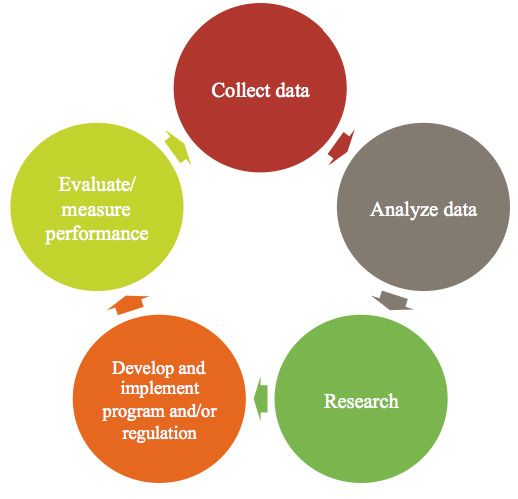
9Data-Driven, Science-Based Approach After analyzing the data, we conduct research
to develop and implement safety programs,
Data is the foundation for all of NHTSA’s campaigns and/or vehicle regulations to
programs. We collect nationally representative address and mitigate the primary factors
crash data from a number of sources, such as leading to crashes and fatalities. We work
the Fatality Analysis Report System (FARS) and with various Federal, State and local entities,
the General Estimates System (GES), in addition vehicle manufacturers, safety advocates, and
to research studies on specific issues, such as many others to develop and deliver safety
that gathered through the National Roadside programs, regulations, and campaigns. These
Survey of Alcohol and Drug Use by Drivers. We countermeasures are evaluated to make sure that
use this data to identify the nature, causes, and they are effective in addressing the behavioral
injury outcomes of crashes in order to analyze or vehicle safety issues the data presented. This
trends, and develop countermeasures to mitigate cycle allows the agency to make continuous
crashes. This allows us to marshal limited improvements to lifesaving programs.
resources to develop the programs, policies and
regulations that can have the greatest impact and Mission, Vision, and the Three Lanes
save the most lives. On the Road to Zero Fatalities
We are known as a mission-driven organization,
with a lean cadre of employees dedicated to
its many successful lifesaving programs. Yet, as
successful as those programs have been, after
years of steady, hard-won reductions in fatalities,
in 2015 fatalities showed show a significant
7.2-percent increase over 2014.
In every organization, it’s necessary to constantly
correct course, which is only possible with a
clear vision of the future. Our vision is bold:
Eliminate traffic fatalities and major injuries on
the Nation’s roadways. Achieving it will not
happen overnight, but our lifesaving mission is
too important to maintain the status quo. On
the next page are the strategies that lay the
groundwork for our Threes Lanes on the Road
Figure 3. NHTSA’s Data-Driven, Science-Based Approach
to Zero. In addition to our core safety programs,
these priority programs will focus on improving
proactive vehicle safety, promoting advanced
safety technologies, and finding innovative ways
to promote safe choices and reduce
human error.
10Three Lanes on NHTSA’s Road to Zero
Proactive Advanced Safety Human
Vehicle Safety Technology Choices
Proactive Safety Principles Highly Automated Vehicles Innovative Solutions
ODI Enhancements Vehicle-to-Vehicle Leverage Law
Communications Enforcement
Improve Recall
Completion Rates Democratize Safety Guidance and Oversight
Technology for State Highway Safety
Inform and Empower Programs
Consumers Automated Emergency
Braking (AEB)
New Car Assessment
Program (NCAP) Upgrades Driver Alcohol Detection
System for Safety (DADSS)
Global Road Safety
Cybersecurity
Strategic Goal 1: Safety
Safety is NHTSA’s top priority. We are the lead
agency for traffic safety in the United States, with
the mission to save lives, prevent injuries, and
reduce economic costs due to roadway crashes
through education, research, safety standards,
and enforcement activities.
In 1969, Dr. William Haddon, NHTSA’s first
administrator, introduced the Haddon Matrix.
The Matrix identifies the factors involved in
crashes, from the pre-crash phase, to the crash
Figure 4. Haddon Matrix
and post-crash phases, and how drivers, vehicles
and the environment influence the outcomes
Today, the lines of the Haddon Matrix are blurred,
of each. The Haddon Matrix embodies the core
as advancements in technology and cultural
elements of our historic efforts to reduce traffic
thinking hurdle us into a new transportation
injuries and fatalities by using data to identify
era where crashes can be prevented from ever
traffic safety issues and employ countermeasures
occurring. We remain firmly committed to our
to target those issues.
safety mission. Our approach will be innovative
11and proactive, and leverage new technology to eliminate driver error, we are still faced with the
address the behavioral factors that account for fact that 94 percent of all crashes are caused by
94 percent of all motor vehicle crashes. human factors. In the years and decades ahead,
we will need to deftly use all of the tools at hand,
To truly strive toward eliminating fatalities on our rapidly identify new ones, and transition to the
roadways, equal focus must be placed on drivers safe deployment of highly automated vehicles
and other road users in addition to vehicles. as we strive toward eliminating fatalities on the
While we are poised on a bold new era of Nation’s roadways altogether.
automated safety technology that may someday
Objective 1: Reduce Fatalities and Injuries
Since reaching a near-term high in 2005, there in order to reverse the increase in fatalities in
was an unprecedented decline in traffic fatalities 2015, and then seek to eliminate fatalities on our
and the fatality rate. The number of fatalities roadways altogether.
dropped 25 percent over the next decade, and
Traffic safety is a complex responsibility shared
in 2014, the fatality rate of 1.08 per 100 million
by many partners, and it requires a multi
vehicle miles traveled (VMT) was the lowest on
disciplinary approach. We work closely with
record. This is a result of our efforts to ensure
Federal, State, tribal and local partners, along
safer vehicles through the development of
with industry, safety advocates, law enforcement,
vehicle safety standards, and by delivering
public health agencies, and many others to
programs that promote safe behaviors by all road
accomplish NHTSA’s goals. The Agency provides
users.
grants to States and local governments vital to
However, 2015 sounded a bleak wake-up call: the success of our behavioral and data programs.
35,092 people lost their lives on our roadways, These partnerships help develop and enforce
an increase of 7.2 percent over 2014’s record-low laws against drunk and distracted driving,
number of traffic fatalities. And the data reminds technical assistance on graduated driver licensing
us that three persistent facts remain in traffic and other safety issues, and to support a wide
safety: range of activities that save lives.
Forty-eight percent of passenger vehicle Strategy: Reduce Impaired Driving
occupants killed in crashes are unbelted;
Nearly one-third of traffic fatalities each year
Twenty-nine percent of highway fatalities occur in crashes that involve an impaired
involve impaired driving; and driver (in which a driver or motorcycle rider
had a blood alcohol concentration [BAC] of
Ninety-four percent of crashes involve an
.08 or greater). Approximately one-third of
element of human error.
impaired driving offenders are subsequently
This is why we will continue to strengthen re-arrested for impaired driving. Therefore,
core safety programs while boldly seeking new appropriate sentencing and supervision are
partners and new strategies to affect change critically important to reducing impaired driving
12incidents. However, according to Fatality Analysis Strategy: Increase Occupant
Reporting System (FARS) data, the majority of Protection Use
impaired drivers involved in fatal crashes had not
previously been convicted of impaired driving Wearing a seat belt is the single most effective
(during the last three years). Therefore, in addition means of saving lives and reducing injuries in
to addressing recidivism, effective prevention crashes, and thankfully, seat belt use remains high
and intervention strategies also are necessary. across the Nation at 88.5 percent. National high-
Since impaired driving systems are complex visibility enforcement campaigns, coupled with
and involve many interrelated elements, States strong primary belt laws have made an immense
must consider a comprehensive and strategic impact on belt use. However, while seat belt
approach to their countermeasure development use has increased since 2000, the fact remains
and implementation. that the nearly half of all fatalities are those of
unrestrained occupants.
With the legalization of marijuana in several
States, comprehensive research in the area In order to make new strides in belt use, we have
of drug-impaired driving is especially urgent to reach audiences typically resistant to belt or
as additional States consider legalization of child-restraint use. We will continue to work with
marijuana use. NHTSA plans to conduct research law enforcement to address fatalities in States
to improve the understanding of the magnitude with secondary seat belt laws, States with primary
of the drug-impaired-driving problem so enforcement laws and low belt use rates, and
that States can appropriately scale and target in suburban and rural areas where a significant
countermeasure activities, and complete a study portion of those killed in motor vehicle crashes
on marijuana impaired driving as required by the are not restrained. Additionally, we will engage
Fixing America’s Surface Transportation (FAST) the public health and medical communities in
Act of 2015. In this study, we will examine the developing messages and programs to increase
effect of key State policy differences on the the use of occupant protection, especially
prevalence of marijuana use by drivers and will among hard-to-reach populations and resistant
conduct a descriptive analysis of State policies communities. We will also explore new way to
to control the use of marijuana. increase belt use through new and accelerated
technologies.
Objective 2: Increase Survivability From Crashes
Safe vehicles are a vital component of preventing Additionally, advancing post-crash emergency
roadway fatalities. NHTSA’s vehicle safety response will save lives. The National Emergency
research considers the entire spectrum of a crash Medical Services (EMS) community, other
to improve our understanding of the benefits Federal agencies and State EMS offices rely
of crash avoidance technologies, and ensuring upon NHTSA’s EMS program for leadership and
occupant protection. In addition to choosing coordination in improving EMS functions and
safer vehicles, drivers and passengers can also processes. Recent studies show that effective
improve their survivability by adopting safe systems of emergency trauma care can improve
behaviors, such as wearing seat belts, avoiding survival from severe injuries by as much as 25
driver distractions, and not driving impaired. percent. Counties with coordinated systems for
13trauma care have been shown to have crash the safety of motor vehicles and restraint systems
fatality rates as much as 50 percent lower than for passenger vehicles, heavy trucks, school
counties without trauma systems. buses and motorcoaches.
For almost 50 years, the 911 system has provided We use a broad range of crash test dummies
efficient, effective public access to emergency that have allowed us to drive improvements to
help for all types of emergencies (i.e., crime, fire, occupant protection and vehicle safety over
medical emergencies, traffic crashes, natural the years. As the vehicle fleet evolves, we are
disasters, acts of terrorism). Every incident, large constantly gauging the impact of those changes
or small, starts with a call to the 911 system for on vehicle occupants in a crash scenario. We
help. Unfortunately, while the 911 system has are developing test procedures with newer,
been a success, its infrastructure is incompatible more human-like dummies to improve our
with the methods of personal communications understanding of crash dynamics, particularly in
that we use today, such as smartphones. An frontal and side impact crashes. These new tests
update is planned to allow citizens to securely will allow us to develop test criteria and apply
send text messages, video, photographs and tools such as virtual modeling to improve safety
other data to 911, and in turn allow 911 to send for a wider range of occupants based on age,
this and location information to emergency stature, gender, and those with vulnerabilities due
responders – something that isn’t possible today. to medical issues.
Data shows that the ability to accurately locate
crash victims and quickly assess injury types In coming years, we will also conduct feasibility
greatly improves patient outcome. studies on highly automated vehicles. We will
explore occupant design issues, such as seating
Strategy: Improve Vehicle configuration, to explore what role this places
Crashworthiness on both crashworthiness and driver acceptance.
We will also look at how such vehicles interact
Crashworthiness is a vital component of vehicle with other road users, such as pedestrians and
safety that focuses on protecting occupants in bicyclists.
the event of a crash. Making vehicles stronger
and more stable, as well as ensuring occupants Strategy: Enforce Compliance
are secured and remain within the vehicle in With Vehicle Safety Standards
the event of a crash helps reduce fatalities and
Our Vehicle Safety Compliance program
injuries.
develops and implements performance tests
Crashworthiness research encompasses new to help ensure the auto industry’s compliance
and improved vehicle design, biomechanics and with the FMVSS, thus saving thousands of lives in
injury causation, field data collection and analysis recent years through crash protection and crash
of serious injury cases, safety countermeasures avoidance. NHTSA’s tests and investigations help
and vehicle equipment to enhance occupant protect millions of consumers from the risks
safety. We develop and upgrade test procedures posed by noncompliant vehicles and items of
and devices, such as crash dummies, to evaluate equipment.
14Strategy: Save Lives Through and other injuries. The program was created as a
Improved Emergency Response Federal point of coordination for activities among
911 stakeholders and to provide information that
When crashes occur, the rapid response of can be used by State and local 911 authorities
trained emergency responders can mean the to improve the 911 system. We work toward
difference between life and death. NHTSA is the achieving these goals through collaboration with
recognized national leader for the coordination Federal agencies, national organizations, and 911
and support of Federal efforts to improve authorities at the State and local levels involved in
prehospital EMS. A comprehensive EMS system 911 emergency communications. We develop a
is essential to highway traffic safety and to variety of resources with their active involvement,
the health of the Nation; it provides the last including tools that can be used to plan and
opportunity to reduce fatalities and minimize implement Next Generation (NG) 911.
injuries from motor vehicle crashes and other
medical emergencies. Our EMS program We are also committed to working toward
provides essential leadership and coordination the next generation of automatic collision
for developing a nationwide emergency medical notification (ACN). In the event of a traumatic
services system. crash, a patient’s outcome greatly improves
when they are routed to an appropriated trauma
The National 911 Program provides national center as soon as possible. ACN technology has
leadership and coordination of comprehensive, the potential to convey patient data in real time,
data-driven and evidence-based Next Generation from the vehicle to trauma centers, improving
(NG) 911 systems to reduce fatalities and crash outcomes.
minimize injuries from motor vehicle crashes
Objective 3: Reduce Economic Costs
Car crashes on our Nation’s roadways cost the Administration estimated would achieve
$242 billion annually, including lost productivity, 54.5 miles per gallon equivalent for cars and
medical costs, legal and court costs, emergency light-duty trucks by Model Year 2025, if all of the
service costs, insurance administration costs, improvements are made with fuel-economy
congestion costs, property damage, and increasing technologies.
workplace losses. This represents $784 per
person each year and 1.6 percent of the U.S. Strategy: Improve Fuel Economy
Gross Domestic Product.
U.S. DOT has set Corporate Average Fuel
Additionally, our efforts to improve fuel Economy (CAFE) standards since the late
economy will also lead to economic savings. 1970s with the passage of the Energy Policy
In July 2011, President Obama announced an and Conservation Act of 1975 (EPCA). The
historic agreement with 13 major automobile CAFE program continues to play a key role
manufacturers to increase fuel economy in addressing the intertwined and critically
standards each year from 2017 to 2025, which important challenges of dependence on oil,
15energy security and climate change facing the were called for by President Obama’s Climate
Nation. In the coming years, it’s necessary that Action Plan, and respond to the President’s
we maintain leadership in establishing national directive in early 2014 to develop new standards
fuel economy standards for passenger and heavy that run into the next decade.
vehicles, without adversely impacting vehicle
Heavy-duty trucks currently account for about
safety.
20 percent of GHG emissions and oil use in
In July 2016, the Environmental Protection the U.S. transportation sector. Globally, GHG
Agency (EPA), DOT, NHTSA, and the California emissions from heavy-duty vehicles are growing
Air Resource Board (CARB) took the first step in rapidly and are expected to surpass emissions
the mid-term evaluation of the National Program from passenger vehicles by 2030. The final
for greenhouse gas emissions and fuel economy standards are expected to lower CO2 emissions
standards for light-duty cars and trucks by by approximately 1.1 billion metric tons, save
releasing a draft Technical Assessment Report vehicle owners fuel costs of about $170 billion,
(TAR) for public comment. The release of the and reduce oil consumption by up to two billion
TAR delivers on a commitment that EPA made barrels over the lifetime of the vehicles sold
in 2012 as part of the rulemaking establishing a under the program. Overall, the program will
National Program for the 2017-2025 period. The provide $230 billion in net benefits to society
draft TAR covers model years 2022-2025. including benefits to our climate and the public
health of Americans, and addresses the second
The National Program is designed to let largest segment of U.S. transportation in terms of
consumers to choose the car or truck they want, emission and energy use.
while ensuring that the vehicle also reduces
carbon emissions and saves on fuel costs. The Strategy: Reduce Odometer Fraud
program will apply to passenger cars and light-
duty trucks through model year 2025. It requires Odometer fraud often masks the actual
manufacturers to improve average fuel efficiency condition of used vehicles, which increases the
and reduce average greenhouse gas emissions safety risks associated with their use and could
over time. The National Program standards were hide the need for necessary safety maintenance
projected by MY 2025 to double fuel economy and repairs. Strong enforcement of the Federal
and cut Green House Gas emissions in half, save and State odometer laws through prosecutions
6 billion metric tons of carbon dioxide pollution with stiff sentences appears to be the most
and 12 billion barrels of oil over the lifetime of effective way to address the problem. NHTSA’s
MY 2012-2025 vehicles, and deliver significant criminal investigators conduct investigations of
savings for consumers at the gas pump. large-scale odometer fraud schemes and work
closely with Department of Justice’s Office of
On August 16, 2016, EPA and NHTSA jointly Consumer Litigation prosecutors to ensure that
finalized fuel economy standards for medium- worthy cases are effectively prosecuted.
and heavy-duty vehicles that will improve
fuel efficiency and cut carbon pollution, Since 1984, odometer fraud investigations have
while bolstering energy security and spurring resulted in more than 273 criminal convictions
manufacturing innovation. The final standards in 36 States with prison sentences ranging from1 month to 10 years, criminal fines totaling more exemption from the parts-marking requirements
than $3 million, and court ordered restitution of the theft prevention standard, (49 CFR Part
totaling more than $16 million. 541). This final rule amends the procedures for
obtaining an exemption from the vehicle theft
Strategy: Reduce Vehicle Theft prevention standard for vehicles equipped with
anti-theft devices by adding performance
In 2014, there were 689,527 motor vehicles
criteria for immobilizers.
reported stolen in the United States—that’s a
vehicle stolen every 46 seconds. Nearly 45 The adoption of these performance criteria for
percent of these vehicles are never recovered. immobilizers would bring the U.S. anti-theft
The estimated total value of vehicles stolen requirements more in line with those of Canada
nationwide is more than $4.5 billion. NHTSA and also support the harmonization initiatives
publishes an annual report to identify vehicle and being undertaken pursuant to ongoing bilateral
motor vehicle equipment thefts. regulatory cooperation efforts between the U.S.
and Canada.
In January 2016, NHTSA published a notice for
proposed rulemaking proposing an alternative
method for manufacturers to obtain an
Performance Goals and Indicators for Safety
Strategic Goal: Safety
Strategic Objective: Reduce Fatalities and Injuries
Performance Goal Performance Indicators
Reduce number of impaired-driving fatalities Reduced rate of impaired-driving fatalities
(Government Performance and Results [GPRA]
Modernization Act goal).
Increase seat belt use Increased rate of belt use (GPRA goal/National
Occupant Protection Use Survey [NOPUS]).
Increase use of child protective seats Increased rate of child safety seats use (GPRA
goal/NOPUS).
Strategic Objective: Increase Survivability From Crashes
Lead the nationwide development, adoption of By 2020, increase to 30, the number of
and evaluation of trauma-care evidence-based States using Next Generation 911 (NG911)
guidelines for EMS systems, including EMS infrastructures to process 911 calls.
guidelines for the Field Triage of Injured Patients.
Improve EMS systems of care by adopting a By 2021, save an additional 500 lives by
meaningful national performance measure for enhancing crash recognition, response, and
trauma care. emergency medical care.
Strategic Objective: Reduce Economic Costs
Maintain the agency’s leadership in establishing Issue Midterm Evaluation for Light-Duty
national fuel economy standards. Vehicle CAFE by 2018.
Issue Medium-Heavy Truck Phase 2 by 2017.
Table 1. Performance Goals and Indicators for SafetyStrategic Goal 2: Proactive Vehicle Safety
The automotive industry has experienced several Highly automated vehicles hold amazing
years of unprecedented recall activity, and we potential to save lives; however, it also demands
responded with unprecedented enforcement our utmost trust in the vehicle that we are
activity. We did this because it was best for public enabling to protect our most precious cargo.
safety. However, the paradigm must change if While we will continue to use all regulatory and
we are to eliminate roadway fatalities in an enforcement tools at our disposal when they
age of automation. are needed, we are committed to working with
vehicle and equipment manufacturers to make
We are rapidly accelerating into a new era of proactive safety the industry norm. Proactive
automotive safety. For more than a century, safety allows for the identification of risk and
safety professionals held the assumption that remedy of design flaws before they are built. True
cars would crash, and for that reason, focused safety is preventing tragedy from happening, not
their efforts on reducing the damage when it reacting after a tragedy.
occurred. Today, we see a new possibility – the
possibility that we can prevent those crashes
from ever happening in the first place.
Objective 1: Promote the Proactive
Safety Principles
On January 15, 2016, U.S. DOT, NHTSA, and 18 communication on safety issues and trends can
manufacturers adopted a historic set of Proactive foster proactive safety solutions and enhance
Safety Principles. Broadly, the group committed timely, consistent issue identification, building
to improving the safety culture of the automobile on existing tools, such as complaints and Early
industry by exploring a more effective dialog Warning Reporting (EWR) data.
on cross-industry safety issues and trends to
foster proactive safety solutions, and enhance Strategy: Enhance Analysis and
timely, consistent issue identification. We remain Examination of EWR Data
committed to implementing and expanding
The Transportation Recall Enhancement,
these principles as way to improve vehicle safety.
Accountability, and Documentation (TREAD) Act
Strategy: Enhance and Facilitate of 2000 required us to prescribe rules requiring
Proactive Safety manufacturers to provide data and information
designed to assist in the early detection and
The first principle is, “Enhance and Facilitate remedy of safety defects in vehicles. To better
Proactive Safety,” in order to emphasize and hone that tool for the benefit of proactive safety,
actively encourage steady improvements in we, along with the automobile manufacturers
vehicle safety across the industry. The group committed to forming an agency/industry
is exploring how effective cross-industry working group to analyze the current EWR
18data set, reporting, and use, and then explore and implementing effective strategies to inform
enhancements, as well as the use of advanced consumers of safety defects. We envision that
analytics to improve risk-identification. these coordinated efforts will bolster our internal
recall campaign efforts, as well as those of the
Additionally, we conducted an assessment of manufacturers to improve completions rates.
current industry reporting practices in order to
identify inconsistencies and best practices across Strategy: Enhance Automotive
the industry. While additional improvements to Cybersecurity
EWR reporting may require future rulemaking,
which is a lengthy process, we have established In an age where computers increasingly govern
a timeline for annual review and update of key decision-making in the driving environment,
agency guidance, incorporating emerging the cybersecurity of those computers is
developments and newly identified trends. By paramount to passenger safety. Electronic
providing regular guidance based on real-world, systems in a typical passenger car now control
cross-industry data, we can make progressive dozens of features, from entertainment and
improvements within the scope of our current navigation to active safety applications like anti-
regulatory authority. lock brakes (ABS), electronic stability control
(ESC), automatic emergency braking (AEB), and
Strategy: Maximize Safety Recall lane keeping assist (LKA). As these active safety
Participation Rates technologies become increasingly automated,
the cybersecurity of the electronic systems
Our vision is to achieve a 100-percent governing them is of the utmost importance.
completion rate for every recall by improving
communication at every level, at every step In January 2016, the automotive industry, at
of the way. Yet, the current rate of completion our recommendation, stood up an information
can be much lower, leaving vehicles with sharing and analysis center (ISAC) to identify
potentially deadly safety defects on the road. and share vulnerabilities across the industry. The
On April 28, 2015, we hosted a day-long Auto-ISAC role is to coordinate the voluntary
Retooling Recalls event that brought together sharing of cybersecurity threats across the
leading transportation officials, automotive industry, as well as to enhancing it with common
industry representatives, safety advocates, countermeasures over time. The Proactive Safety
and researchers to examine how to increase Principles show strong support of the Auto-ISAC,
unacceptably low recall completion rates. and we remain committed to providing proactive
leadership to be ahead of, and eliminate,
Participation in this event in no small part led to potential vehicle cybersecurity challenges. The
heightened awareness that by working together Auto-ISAC released cyber security best practices
and engaging non-traditional partners, industry for light-duty vehicles in July 2016, and NHTSA
could collaborate in an unprecedented way is also planning to release cyber security best
to improve recall completion rates. Through practices for all vehicle manufacturers.
the Proactive Safety Principles, NHTSA and the
auto industry have committed to identifying
19Objective 2: Retool Recalls
Our system for identifying and addressing On June 5, 2015, U.S. DOT Secretary Anthony
defective vehicles came under intense scrutiny Foxx announced the release of two documents:
in 2014 with the GM ignition switch recall. Much one that outlined our investigation into the
of that scrutiny came from the outside – from GM ignition switch recall and the changes
Congress, the media, and safety advocates. We NHTSA has adopted to strengthen our defect
welcomed the constructive suggestions of those investigation work, and a comprehensive
who share our dedication to saving lives. But we workforce assessment that detailed our
also scrutinized ourselves, and began to make optimal staffing needs to more effectively
changes to our processes and our partnerships identify safety defects.
in order to improve our recall program.
ODI is currently realigning its structure to enable
On April 28, 2015, we hosted a day-long ODI to identify and remedy issues earlier in the
workshop with leading transportation official, safety defect identification process.
automotive industry, safety advocates, and
researchers to examine ways to improve the Strategy: Conduct Campaigns to
recall completion rate across the country. This Improve Recall Completion Rates
became starting a block for a year-long sprint
In order to achieve our vision of a 100-percent
that would lead to historic discussion about
completion rate for every recall, we are focused
proactive safety, and would further improve our
on improving communication at every level,
recall program in the future.
at every step of the way. In January 2016, we
Strategy: Office of Defects launched our first ever national recalls campaign.
Investigations Enhancements The Safe Cars Save Lives campaign’s main
objective is to raise public awareness of the
While moving to protect the driving public by importance of finding out if your vehicle is under
enforcing the 2014 GM ignition switch recall, a recall and getting it fixed if it is.
we also looked inward to examine how to
The ad messages are very simple and clear:
improve the structure, resources and processes
taking action on a safety recall keeps you
within our Office of Defects Investigations
and the ones you love safe. The campaign is
(ODI). Since the GM recall, ODI has evolved to
highlighted with a national online advertising
allow the agency to identify defects and trends
buy that directs consumers to a dedicated
earlier, despite a historic increase in consumer
campaign page – Safercar.gov/checkforrecalls.
complaints and other data sources. In 2014, we
The page encourages consumers to take one of
began implementing the Corporate Information
two actions: use the VIN look-up tool or use the
Factory (CIF) to integrate multiple databases that
Make/Model search tool to check their vehicles
facilitate data mining across internal and external
for a recall. It also features NHTSA’s Driven by
data sources. We continue to enhance the CIF,
Safety videos that educates consumers on a wide
allowing ODI to use more sources of data to
variety of safety subjects related to their vehicles
identify trends and detect unsafe vehicles and
as well as offers consumers the opportunity to
equipment earlier.
sign up for e-mail alerts and to file a complaint
20on their vehicles. As an off-shoot of this in the State. U.S. DOT proposed the pilot in
campaign, we launched the Safe Cars Save Lives its GROW AMERICA surface transportation
bus tour from August 9-13, 2016, to spread the reauthorization proposal and Congress included
word about vehicle and passenger safety, taking it in the Fixing America’s Surface Transportation
a team of safety experts to the streets to talk (FAST) Act.
to motorists about recalls, tires, car seats
As mentioned previously, we are working with
and heatstroke.
industry, trade groups, and non-traditional
We are exploring new ways and new partnerships partners as part of the Proactive Safety Principles
to achieve 100-percent completion. We will to explore new ways to reach consumers about
implement a two-year pilot program to evaluate recalls and to develop and share best practices to
the feasibility and effectiveness of an innovative improve recall completions.
State process for informing consumers of open
recalls at the time of motor vehicle registration
Objective 3: Inform and Empower Consumers
Consumers play an invaluable role in creating aggressive media and public education effort.
a national traffic safety culture. Over the years, This information reaches the public through a
we have successfully proven that adopting variety of medium including broadcast, digital,
safer behaviors on the road improves safety for and print. But the general public is usually
everyone, but the consumer’s role in creating not aware of the agency by name. The lack
safer vehicles is not as apparent. By highlighting of awareness and recognition can negatively
their role in the development of safer motor impact our overall mission. For example, we
vehicles and equipment, and encouraging safer rely on vehicle owners to report problems with
driving behavior, we can empower them to their vehicle in order to identify vehicle defect
become active partners in improving trends. By increasing public awareness of
vehicle safety. NHTSA, we can improve defect data collection
to support investigation activities. Additionally,
Similarly, we know that people make safer public partners leverage our data resources and
choices while driving, riding, and walking when statistics that help us make policy and program
they are educated about roadway dangers, and decisions that improve road safety.
the countermeasures that can protect them.
The success of our early campaigns, such as We have developed a robust communications
Vince and Larry’s “You Can Learn A Lot From program over the years, and effectively use a
a Dummy,” and “Buckle Up for Safety,” are variety of available communications and media
excellent examples of our pioneering work using platforms to disseminate information. Social
communications to affect public health. media is the newest channel to share research
results and promote safety campaigns. We
We provide reliable, timely, and accurate traffic are actively engaged on Facebook, Twitter,
safety information to the public, consumers, Instagram and YouTube to share vehicle and
partners, and news organizations through an
21behavioral safety information with a wide In recent years, it is clear that vehicle
audience. By increasing our use of social manufacturers are responding quickly to NCAP
media, we raise the visibility of important traffic program enhancements by making additional
safety issues to new audiences. For example, safety improvements to their vehicles in order
we host live Twitter parties on hot topic to earn top NCAP performance ratings and
issues and campaigns using hashtags such as recommendations. Although it took nearly
#TheRightSeat, #CheckforBaby, #BuzzedDriving, three decades for most vehicles to achieve the
#BuckleUpAmerica, and #CheckForRecalls. program’s highest star rating of 5 stars for the
Techniques like these provide interaction original crash test, it has taken only a few years
between us and the communities we serve, and for manufacturers to achieve similar levels of
help consumers easily find traffic safety tips they safety performance for more recently added
can use to keep them and their loved ones safe. tests. Today, more than ever before, consumers
consider safety to be an influential factor when
Strategy: Improve the New Car making vehicle purchasing decisions, and are
Assessment Program demanding ever-increasing levels of safety.
Since its inception, the New Car Assessment In December 2015, we announced plans to
Program (NCAP) has proven highly effective; improve the 5-Star Safety Ratings program,
its success can not only be measured by the known as NCAP. We held two public meetings
number of injuries prevented and lives saved, in January 2016 on the proposal, known as
but in how consumers use NCAP star ratings NCAP Tomorrow, and we intend to analyze the
to influence their vehicle purchasing decisions. comments received from those, as well as from
When consumers select safer vehicles, vehicle the public docket, and issue a final decision
manufacturers are incentivized to make safety notice on the planned changes. We will launch
improvements to new vehicles. a consumer awareness effort to help vehicle
shoppers understand the new ratings, as well as
NCAP crash-tests new vehicles every year and
briefing industry and safety stakeholders.
currently rates them on how well they protect
occupants in frontal, side and rollover crashes. Strategy: Enhance Public
Results from these tests are compiled into a Understanding of NHTSA’s Programs
rating of 1 to 5 stars, with more stars indicating
a safer car. The vehicle safety ratings appear on NHTSA has a breadth of data, knowledge and
window stickers of new cars, and searchable expertise readily available to assist everyone
ratings are available on the agency’s Safercar.gov from small children to public policy makers in
website. The current program also includes making safe decisions about vehicles, occupant
a checklist of recommended advanced protection and traffic safety. Yet we need to
technology features, such as rear-visibility improve the public’s understanding of what we
cameras, lane departure warning, and forward do, in order to share these resources. Through
collision warning. our website and other outreach tools, we are
working to make sure consumers recognize us as
22the trusted agency for all things related to vehicle mobile-friendly responsive design, optimize
and traffic safety. Our new logo and marketing search capabilities, and integrate our social
materials aim to make the public more aware of channels in order to spread important, timely
the breadth of NHTSA’s programs. safety messaging.
Strategy: Update NHTSA’s Website
When consumers need information, the first
place they typically turn is to the Internet. We
are consolidating our consumer-facing websites
(NHTSA.gov, Safercar.gov, and Distraction.gov)
into a comprehensive, user-friendly platform that
will serve as the premier source of traffic and
vehicular safety information. It will incorporate
Objective 4: Coordinate Global Road Safety
According to the World Health Organization Strategy: Promote Best Traffic Safety
(WHO) estimates in its Global Status Report Practices Globally
on Road Safety, more than 1.25 million people
die and nearly 50 million are injured each year We work with domestic and foreign
on the world’s roads. We work with road and stakeholders to gather and exchange
vehicle safety experts around the world to information on road crashes in order to
share our experience and countermeasures consider appropriate strategies and develop
and programs we have developed and effective countermeasures.
implemented to curb the road crash fatalities
in the United States. We exchange information Strategy: Improve Motor Vehicle Safety
with other nations concerning emerging Through Global Harmonization
traffic problems, countermeasure strategies,
We will work with foreign governments, non
and program evaluations, as well as provide
governmental stakeholder groups, the motor
critical technical assistance for developing and
vehicle industry and automotive safety consumer
newly motorizing nations to prevent escalating
groups to cooperate on global harmonization
vehicle related fatalities as a result of increasing
of vehicle regulations as a means for improving
mobility. Additionally, we work with international
motor vehicle safety.
partners in an effort to evaluate advanced motor
vehicle safety technologies and investigate
alternative regulatory approaches to ensure safe
deployment of these technologies and set the
stage for harmonized standards and
regulations for vehicle safety.
23Performance Goals and Indicators for Proactive Safety
Strategic Goal: Safety
Strategic Goal: Proactive Vehicle Safety
Performance Goal Performance Indicators
Improve EWR reporting and analysis fatalities. Establish an Agency/industry EWR
working group.
Improve cybersecurity threat information sharing Support continuous updates, through the
across the automotive industry. Auto-ISAC, of industry-wide cybersecurity
best practices.
Strategic Objective: Retool Recalls
Increase recall completion rates. Identify industry-wide best practices and
conduct nationwide campaigns.
ODI Enhancements. Roll-out realignment.
Strategic Objective: Inform and Empower Consumers
Improve NCAP. Issue NCAP upgrade final rule.
Conduct a consumer awareness campaign.
Increase public recognition of NHTSA’s activities. Increase the engagement of the public
with our content through our social media
channels.
Strategic Objective: Coordinate Global Road Safety
Through global harmonization, improve safety of motor Global NCAP to improve safety technologies
vehicles and promote the deployment of proven safety on vehicles world-wide.
technologies.
Table 2. Performance Goals and Indicators for Proactive Safety
Strategic Goal 3: Automated Vehicles
Advanced vehicle technologies promise to beyond the traditional regulatory approaches to
revolutionize roadway safety by preventing ensure the safety of new vehicle technologies
crashes from ever occurring. Automated driving through innovation, research, and partnerships.
systems, including fully self-driving vehicles, will
In addition to the many policy issues surrounding
pioneer a new world of vehicle operation and
automated vehicles (AV), we will continue
safety. As the Federal agency responsible for
research on safety performance measures and
vehicle safety, and having been actively engaged
tests for these systems. We will also study the
in advanced safety technology research for
effects of automation on human capability,
decades, we are uniquely positioned to move
and conduct feasibility studies to address
occupant design issues.
24You can also read


