The understanding of congruent and incongruent referential gaze in 17 month old infants: an eye tracking study comparing human and robot - Nature
←
→
Page content transcription
If your browser does not render page correctly, please read the page content below
www.nature.com/scientificreports
OPEN The understanding of congruent
and incongruent referential
gaze in 17‑month‑old infants:
an eye‑tracking study comparing
human and robot
F. Manzi1,7*, M. Ishikawa2,7, C. Di Dio1, S. Itakura3, T. Kanda4,5, H. Ishiguro5,6, D. Massaro1 &
A. Marchetti1
Several studies have shown that the human gaze, but not the robot gaze, has significant effects
on infant social cognition and facilitate social engagement. The present study investigates early
understanding of the referential nature of gaze by comparing—through the eye-tracking technique—
infants’ response to human and robot’s gaze. Data were acquired on thirty-two 17-month-old infants,
watching four video clips, where either a human or a humanoid robot performed an action on a target.
The agent’s gaze was either turned to the target (congruent) or opposite to it (incongruent). The
results generally showed that, independent of the agent, the infants attended longer at the face area
compared to the hand and target. Additionally, the effect of referential gaze on infants’ attention to
the target was greater when infants watched the human compared to the robot’s action. These results
suggest the presence, in infants, of two distinct levels of gaze-following mechanisms: one recognizing
the other as a potential interactive partner, the second recognizing partner’s agency. In this study,
infants recognized the robot as a potential interactive partner, whereas ascribed agency more readily
to the human, thus suggesting that the process of generalizability of gazing behaviour to non-humans
is not immediate.
Human infants display a sensitivity towards the human eyes from birth, a phenomenon known as preference
for direct g aze1. Direct gaze has been suggested to activate social brain networks and facilitate social cognition
in infants2. Additionally, some studies have shown that averted gaze also affects infants’ cognitive processing of
objects and f aces3,4. It has been shown that new-born babies can discriminate between direct and averted gaze as
they are faster to make saccades to peripheral targets cued by direct gaze5. Such sensitivity to other’s eye-gaze may
be regarded as precursor of gaze following in later development, which is essential for efficient social l earning6.
In experimental settings, gaze following has been studied in infants as young as 3 months7. Data generally show
that infants begin to follow eye-gaze at about 6 months8–10. Infants have also shown to be able to use information
provided by eye-gaze to understand intentions behind actions. For example, it has been shown that infants use
other’s gaze direction to predict or anticipate action11. In the study by Phillips and colleagues11, an actor grasped
one of two objects in a situation where cues from the actor’s gaze could serve to determine which object would
be grasped. The results showed that 12- and 14-month-olds, but not 8-month-olds, recognized that the actor was
likely to grasp the object which she looked at before grasping, in line with the referential nature of the actor’s gaze.
In the present study, we explored early understanding of referential gaze toward a target when infants
observed either a human or a humanoid robot performing an action toward an object in a gaze-following task12.
1
Research Unit on Theory of Mind, Department of Psychology, Università Cattolica del Sacro Cuore, Milan,
Italy. 2School of Graduated Letter, Department of Psychology, Kyoto University, Kyoto, Japan. 3Centre for Baby
Science, Doshisha University, Kyoto, Japan. 4Human‑Robot Interaction Laboratory, Department of Computer
Science, Kyoto University, Kyoto, Japan. 5Advanced Telecommunications Research Institute International,
IRC/HIL, Keihanna Science City, Kyoto, Japan. 6Department of Systems Innovation, Osaka University, Toyonaka,
Japan. 7These authors contributed equally: F. Manzi and M. Ishikawa. *email: federico.manzi@unicatt.it
Scientific Reports | (2020) 10:11918 | https://doi.org/10.1038/s41598-020-69140-6 1
Vol.:(0123456789)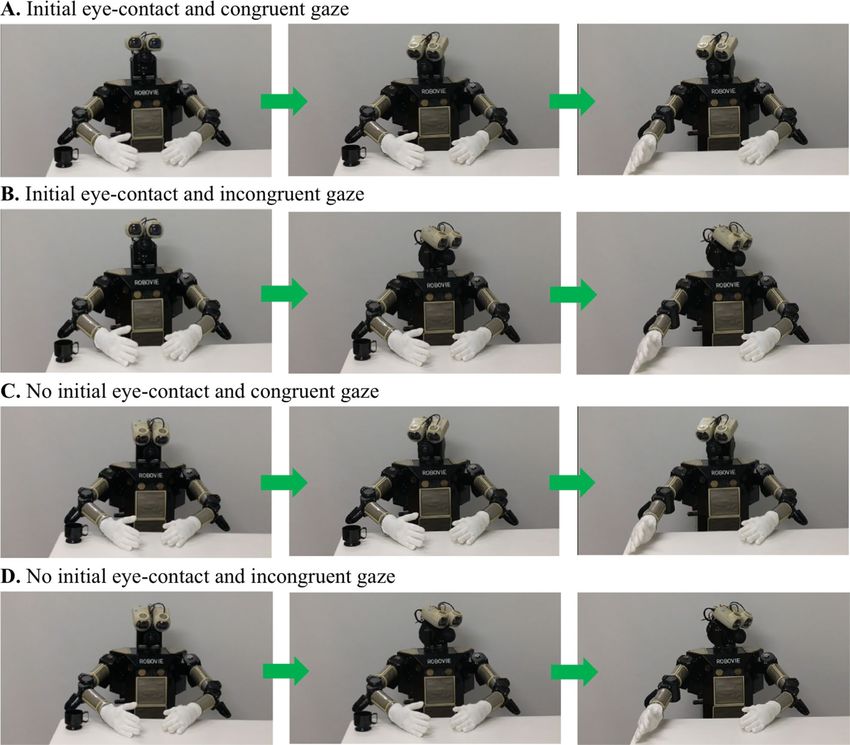
www.nature.com/scientificreports/
This task resembles the classical visuo-spatial cueing paradigm13 used to evaluate the process of attention shift,
i.e. visuo-spatial orienting14–16, toward the same direction/object/event that another person is attending to.
Using a gaze-following task, Senju et al.17 studied the referential gaze with infants. The authors recorded ERPs
of adults and 9-month-old infants while watching scenes containing a human congruent-object gaze shifts or
incongruent-object gaze shifts. The ERP results suggest that 9-month-olds process the object-congruent gaze
shifts similarly to adults. In addition, an early frontal component was observed in infants, which showed greater
amplitude in response to congruent gaze. This component may reflect a rapid processing of socially relevant
information, such as the identification of communicative or informative situations, and could provide a basis
for the development of attention sharing, social learning and Theory of Mind (ToM).
With respect to robots, several studies have shown that people tend to perceive robots as interactive p artners18,
19–21
although—with increasing age—generally attribute to them poor human-like mental q ualities . Only a few
studies, however, have investigated early socio-cognitive responses to robots’ b ehaviour22,23. While the human
gaze has been shown to have significant effects on infants’ social cognition and facilitate social e ngagement4,24,
social cognitive studies with robots have failed to find an effect of the robot gaze on infants’ behaviour. For
example, while reporting that 12-months-old infants do follow the robot gaze direction, Okumura et al.22 also
found that the robot gaze does not facilitate the learning processes of a new object. Nevertheless, infants appear
to become sensible to the direction of the robot gaze if they first observe the robot engaging in social interaction
with an a dult25. Likewise, infants imitate the robot’s goal-directed actions only when the robot first establishes
eye contact with an a dult26. These findings suggest that the robot gaze may not be as meaningful to the infant as
the human gaze, although it can be charged of social meaning through a triadic social engagement, where the
human adult provides a role model of the relationship.
Additionally, it has also been shown that infants do not display anticipatory gaze in response to robots’
action, suggesting a lack of intentionality attribution to the robot23. In support of this observation, Kanakogi
and Itakura27 found that 10-month-old infants showed anticipatory looking at human reaching actions, but no
anticipation in response to a mechanical hand. Furthermore, a brain imaging study using functional near-infrared
spectroscopy (fNIRS) examined infants’ brain activation while watching either functional or non-functional
actions performed by a human and a mechanical h and28. The result showed that the left middle-posterior tem-
poral cortex responded selectively to the human hand, but only in the context of functionally relevant actions
on objects. This evidences infants’ sensitivity to agency when a meaningful action is performed by a human and
not by robots.
Altogether, these findings seem to suggest poor involvement of early social cognition when facing a robotic
agent. Also, there is no direct evidence of infants’ sensitivity to the robot’s action when paired with the robot
referential gaze, which represents an extremely important cue enhancing social engagement. To this purpose, we
monitored the gazing behaviour of 17-month-olds infants while watching video-clips showing either a human
or a humanoid robot performing an action. We selectively involved 17-month-old infants because at this age
infants are able to follow the gaze of o thers29 and have reached an understanding of the referential nature of the
7,30–34
gaze . The action performed by the agents was either congruently or incongruently anticipated by the direc-
tion of the agent’s gaze. Additionally, to enhance socio-cognitive engagement, we also had the human and robot
agents either performing or not direct eye-contact to the infant before action performance. Based on previous
findings, we hypothesized to find the following: (1) infants would be equally sensitive to the effect of direct eye-
contact on attention by both agents; (2) infants would be more sensitive to the referential gaze of both agents in
the congruent with respect to the incongruent condition; (3) in the congruent condition, infants would be more
sensitive to the referential gaze of the human with respect to the robot agent.
Results
Total fixation duration. The results showed a main effect of area of interests (AOIs), F(2, 27) = 50.628,
p < 0.001, partial-η2 = 0.789, δ = 1, indicating that, independent of eye-contact, gaze direction, AOIs and agency,
infants exhibited a greater fixation time on the face compared to both the hand, Mdiff = 0.557, SE = 0.05, p < 0.001
and the target, Mdiff = 0.326, SE = 0.07, p < 0.001. Additionally, infants’ general attention was greater to the target
compare to the hand, Mdiff = 0.231, SE = 0.048, p < 0.001 (Fig. 1A). Additionally, the results revealed a main effect
of sequence, F(2, 56) = 5.187, p < 0.01, partial-η2 = 0.15, δ = 0.80, indicating that, independent of eye-contact,
gaze direction, AOIs and agency, infants exhibited a shorter total fixation time in sequence 2 (Gaze-Direction),
compared to sequence 1 (No-Movement), Mdiff = − 0.093, SE = 0.25, p < 0.01, but not with respect to sequence
3 (Hand-Movement). This main effect is plotted in Fig. 1B. Overall, both results highlight the relevance, for
infants, of the face region and gazing behaviour.
Furthermore, the results showed various interaction effects. A significant interaction between AOI*eye-con-
tact, F(2, 56) = 5.228, p < 0.01, partial-η2 = 0.15, δ = 0.81, revealed that the face was looked longer in the presence
of eye-contact compared to the absence of eye-contact, Mdiff = 0.125, SE = 0.40, p < 0.01. Conversely, total fixation
on the hand and target was not affected by the presence or absence of the initial eye-contact. This interaction is
plotted in Fig. 2.
Additionally, a significant two-way interaction AOI*sequence, F(4, 112) = 48.396, p < 0.001, partial-η2 = 0.15,
δ = 0.81, revealed that the face was looked at longer in sequence 2 (Gaze-Direction) compared to both sequence 1
(No-Movement), Mdiff = 0.243, SE = 0.078, p < 0.05, and sequence 3 (Hand-Movement), Mdiff = 0.658, SE = 0.078,
p < 0.001. Furthermore, the post-hoc analyses revealed that the hand was looked at longer in sequence 3 (Hand-
Movement) compared to both sequence 1 (No-Movement), Mdiff = 0.100, SE = 0.028, p < 0.01, and sequence
2 (Gaze-Direction), Mdiff = 0.093, SE = 0.029, p < 0.05. Finally, the post-hoc analyses revealed that the target
was looked at longer in sequence 3 (Hand-Movement) compared to both sequence 1 (No Initial Movement),
Scientific Reports | (2020) 10:11918 | https://doi.org/10.1038/s41598-020-69140-6 2
Vol:.(1234567890)www.nature.com/scientificreports/
Figure 1. (A–B). Infants’ total fixation duration scores. (A) The graph shows the mean scores (ms) for each
area of interest (Face, Hand, Target) across eye-contact, gaze direction, video sequence and agent; (B) The graph
shows the mean scores (ms) for each video sequence (No-Movement, Gaze-Direction, Hand-Movement) across
areas eye-contact, gaze direction, area of interest and agent. The bars represent the standard error of the mean. *
indicates significant differences.
Figure 2. Infants’ total fixation duration scores. The graph shows the mean scores (ms) as a function of area of
interest (Face, Hand, Target) and as a function of eye-contact (Eye-Contact, No Eye-Contact). The bars represent
the standard error of the mean. * indicates significant differences.
Mdiff = 0.463, SE = 0.08, p < 0.001, and sequence 2 (Hand-Movement), Mdiff = 0.435, SE = 0.052, p < 0.001. This
interaction is plotted in Fig. 3.
Finally, a significant three-way interaction (Table 1) gaze-direction*sequence*agency, F(2, 24) = 3.241, p < 0.05,
partial-η2 = 0.104, δ = 0.595, revealed, for the human condition only, greater total fixation duration on all AOIs
in sequence 2 (Gaze-Direction) compared to sequence 1 (No-Movement), for both gaze conditions (Congru-
ence, Incongruence).
Time to first fixation on the target. The results showed a main effect of agency, F(1, 28) = 4.891, p < 0.05,
partial-η2 = 0.149, δ = 0.570, indicating that, independent of eye-contact and gaze direction, infants exhibited
faster attendance to the target in the human condition compared to robot condition, Mdiff = − 0.192, SE = 0.087,
p < 0.05 (Fig. 4).
Additionally, the results showed a significant interaction between gaze-direction*agency, F(2, 27) = 5.516,
p < 0.01, partial-η2 = 0.29, δ = 0.81. The post-hoc analyses revealed that infants’ attended faster to the target in the
human gaze-congruent condition compared to human gaze-incongruent condition, Mdiff = -0.411, SE = 0.138,
p < 0.005. This result was not found in the robot condition. Finally, infants’ time to first fixation on the target was
faster in the human gaze-congruent condition compared to robot gaze-congruent condition, Mdiff = − 0.535,
SE = 0.148, p < 0.001 (Fig. 5).
Scientific Reports | (2020) 10:11918 | https://doi.org/10.1038/s41598-020-69140-6 3
Vol.:(0123456789)www.nature.com/scientificreports/
Figure 3. Infants’ total fixation duration scores. The graph shows the mean scores (ms) as a function of gaze
(Congruent, Incongruent) and sequence (No-Movement, Gaze-Direction, Hand-Movement). The bars represent
the standard error of the mean. * indicates significant differences.
Gaze congruence Gaze incongruence
Sequence Mean difference Standard error Sign Mean difference Standard error Sign
Human
1 versus 2 − 0.144 0.043 0.007 − 0.101 0.034 0.018
1 versus 3 0 0.068 1 − 0.047 0.041 0.794
2 versus 3 0.144 0.06 0.069 0.054 0.033 0.354
Robot
1 versus 2 − 0.052 0.046 0.796 − 0.076 0.036 0.139
1 versus 3 − 0.121 0.073 0.326 − 0.031 0.044 1
2 versus 3 − 0.069 0.064 0.88 0.044 0.036 0.674
Table 1. Statistics comparing total fixation duration between sequences (1. No-Movement; 2. Gaze-Direction;
3. Hand-Movement) as function of agency (Human, Robot), gaze (Congruent, Incongruent).
Discussion
This study analysed 17-month-old infants’ sensitivity to human and robot’s referential gaze. To this purpose,
the infants’ gazing behaviour was assessed while watching videos showing either a human or a humanoid robot
(Robovie) performing an action anticipated by either congruent or incongruent gaze toward a target. The results
on total fixation duration showed that infants paid the greatest attention to the face area of both agents, and
were equally engaged by both agents’ initial eye-contact. However, infants showed to be particularly sensitive
to the human gaze direction, as indexed by greater attention to head movement (compared to still face) in the
human condition only. Sensitivity to the human gaze is also supported by data on time to first fixation, evaluat-
ing infants’ response to the agents’ referential gaze. The results showed that infants attended to the target faster
when the action was performed by the human compared to the robot, and particularly in the presence of a
congruent referential gaze.
With respect to the infants’ attention pattern to the video stimuli, indexed by total fixation time on specific
AOIs (face, hand, object), the results showed that, independent of agent, infants preferred the face over both the
hand and the target. Preference to the face was greater in the condition in which the action was primed by the
agents’ direct eye-contact toward the infant. These findings are in line with previous data on humans showing
that the face attracts greater attention compared to other body parts already from 6 months of age36,37. This effect
is enhanced by the presence of direct eye-contact37,38. Interestingly, our data enrich previous findings suggesting
that, besides the f ace22, also direct eye-contact of the robot exerts a similar attraction on the infant’s attention as
that observed for the human. These results suggest that the robot’s anthropomorphic features and behaviours,
such as the face and eye-contact, are able to activate similar attentional responses in infants aged 17 months.
This might enable the robot to be ultimately perceived as a potential interactive partner. Nevertheless, we did
find also differences in how the infant regards the referential nature of gaze between human and robot. First, our
results on total fixation duration showed that infants paid greater attention to the human face in the sequence
Scientific Reports | (2020) 10:11918 | https://doi.org/10.1038/s41598-020-69140-6 4
Vol:.(1234567890)www.nature.com/scientificreports/
Figure 4. Infants’ time to first fixation. The graph shows the mean scores (ms) as a function of agency (Human,
Robot). The bars represent the standard error of the mean. * indicates significant differences.
Figure 5. Infants’ time to first fixation scores. The graph shows the mean scores (ms) as a function of agent
(Human, Robot) and gaze direction (Congruent, Incongruent). The bars represent the standard error of the
mean. * indicates significant differences.
representing the gaze shift compared to the sequence in which there was not gaze shift. This effect was not
found for the robot, suggesting that human referential gaze is more valuable (or informative) than the robot’s
gaze. Additionally, data on time to first fixation on the target showed both faster shift to the target in the human
gaze, with respect to the robot gaze, congruent condition, and faster response to the target in the congruent vs.
incongruent condition, for the human and not the robot. Infants’ faster response to the congruent vs. incongruent
human gaze shifts is in line with previous findings17, also suggesting that this effect emerges as early as at nine
months17. As a counterproof, the differences between human and robot disappeared with gaze incongruence.
These findings suggest that 17-months infants do not regard the robot’s gaze as a social signal as they do for the
human, where the inconsistency of gaze leads to a delayed response to the referential cue. Previous studies with
12 months infants22 have shown that, despite gaze following was similar when attending to the human or robot’s
gaze, the human gaze was more informative and induced greater object learning compared to the robot’s gaze.
This suggests that infants may be keen to treat humans as prevalent sources of information. Also, and congruently
with our findings, 12-month-olds, but not 10-months old infants, showed greater anticipation time on the target
Scientific Reports | (2020) 10:11918 | https://doi.org/10.1038/s41598-020-69140-6 5
Vol.:(0123456789)www.nature.com/scientificreports/
object when primed by the human than the robot’s g aze22, thus supporting that infants privilege the referential
nature of the human gaze compared to the robot’s gaze.
The mechanism of referential gaze recognition at 17 months is strictly related to human social cognition.
The preferential attitude exhibited by infants for the referential gaze of a conspecifics compared to the gaze of a
robot leads to at least two possible interpretations. The first one accounts for the specificity of a socio-cognitive
mechanism, which would not allow the generalisation to other species or entities (e.g., robots). This would be in
line with the hypothesis of a human species-specific eye-gaze mechanism suggested by studies demonstrating
that infants prefer human gaze compared to the gaze of other living species, like m onkeys39, or non-living ones,
22,25
like robots . The second interpretation would take on the experiential account and argue that preference for
the human gaze is due to the inexperience that infants have with the gaze of other species or entities, like robots.
Several studies have shown that gaze following develops within 12 months33,40–45, although the debate is still open
on the exact onset p eriod5,7,9,24,31,46,47. At this age, infants appear to be selectively attuned to follow the human
gaze, and this would be in line with findings showing that 12-month old infants have difficulties in following the
gaze of other species39. This selectivity may be plausibly due to extensive exposure to human interaction in early
life. Generalization of gaze-following may then occur in subsequent stages of development, possibly through
experience, i.e. learning. The importance of learning is supported by evidence suggesting that the mechanism
of gaze-following gradually emerges through social experience48–50. Accordingly, infants would display prefer-
ence for the human referential gaze because had not had the experience of the robot’s gaze. The hypothesis of a
narrowing of such inborn gaze sensitivity through extensive experience with human gaze is also supported by
studies with precocial bird species suggesting that the mechanism for gaze following is highly conserved among
vertebrates, is active at birth, and therefore it is not species specific51,52. Future studies could specifically address
this interpretation by, for example, exposing infants of different ages to several sessions with robots and observe
if sensitivity to referential gaze increases with experience. Also, robots could be placed in ecological settings for
infants where they typically experience human interaction.
In sum, our data indicate, on the one hand, that children recognise the physical traits and behaviours that
are salient for social interaction, such as the face and direct eye-contact, in both agents. Conversely, when
agents perform an action—look at an object—, infants appear to be more sensitive to the human than the robot
agency. This data leads to an important consideration regarding the possible presence of two distinct levels of
gaze-following mechanism: a first preparatory level that focuses the infant’s attention on the parts considered
salient for interaction, allowing to recognise the other as a possible interactive partner; and a second level that
evaluates whether the partner has agency. The results of the present study seem to suggest that at 17 months the
first level of the gaze-following mechanism—recognise the other as a plausible interactional partner—is both
active and generalised, while the second level—attribution of agency to the partner—is active with human but
not (yet) generalised to other species or entities, i.e. robots.
Conclusions
Infants at 17 months of age do not recognize the referential nature of the robot’s gaze: this type of attribution,
referential, is more readily made with conspecifics. Nevertheless, infants seem to be sensitive to some of the
robot’s physical and behavioural human attributes, and namely its face and eye-contact. More specifically, data
showed that children recognize, on the one hand, the robot as a plausible interactive partner but, at the same
time, do not ascribe agency to it. These results allowed us to hypothesize two distinct processing levels of the
gaze-following mechanism: the first one that evaluates if an entity is an interactive partner; the second one that
evaluates if it is endowed with agency. Infants at 17 months of age seem to be particularly sensitive to human
features also when embedded in a robot (first processing level), but they are not equipped with a generalization
mechanism that enables them to regard the robot as a human-like agent (second processing level). As suggested,
this mechanism may develop with experience.
Limitations and future directions
Since at this age infants do not seem to react to the referential nature of the robot’s gaze, it might be important to
study whether these effects change as function of age. Additionally, it is important to underline that in our study
the infants might have followed the head movement rather than just the eye-gaze. This choice was necessary
because it was not possible to recreate in the robot the contrast between the dark pupil and the white sclera that
guides eye-gaze perception. Therefore, future studies should find the way to test these two effects (head move-
ment and eye-gaze) independently. Also, the results presented in this study were acquired with only one type of
robot, while it might be interesting and important to evaluate the effect of robots differing in physical features,
with different cues of embodiment/anthropomorphization. Moreover, it would be interesting to specifically
compare in future related studies two alternative interpretations of the data: the idea of a species-specific gaze-
following mechanism that is not generalized to robots vs. the lack of experience with robots. Finally, in line with
current theoretical claims that studies with robots can be used to understand the nature of human psychological
mechanisms53,54, this line of research with infants and robots can shed light on the mechanisms underpinning
the development of early social cognition.
Methods
Participants. Data were obtained from an initial sample of 36 infants. Four infants were excluded from
the analyses because of inattentiveness (one, whose gaze pattern was fuzzy; two who completed fewer than 3
trials of gazing; one for technical acquisition errors). The final sample was composed of thirty-two 17-month-
old Japanese infants (F = 15; M = 17.43 months, SD = 0.96). The infants were divided into two groups for each
condition as follows: (1) 16 infants for the Human condition (F = 8; M = 17.25 months, SD = 0.83); (2) 16 infants
Scientific Reports | (2020) 10:11918 | https://doi.org/10.1038/s41598-020-69140-6 6
Vol:.(1234567890)www.nature.com/scientificreports/
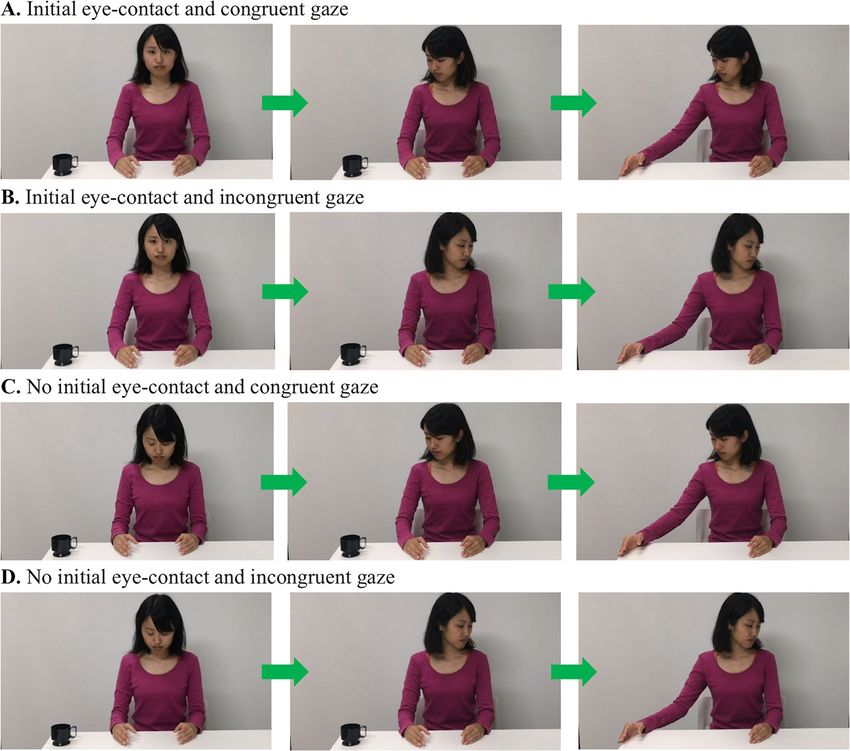
Figure 6. (A–D) Images representing the four human conditions (informed consent was obtained from the
actress for publication of the images).
for the Robot condition (F = 7; M = 17.64 months, SD = 1.08). The children’s parents received a written explana-
tion of the procedure of the study, the measurement items, and provided written informed consent before their
infants took part in the study. The study was conducted in accordance to the Declaration of Helsinki and the
experimental protocol was approved by the Research Ethics Review Board, Department of Psychology, Kyoto
University, Japan.
Design and stimuli. The design of the study was a multifactorial 2 × 2 × 3 × 3 × 2 mixed-model, with two
levels of initial eye-contact (present, absent), two levels of gaze-congruence with the action (congruent, incon-
gruent), 3 levels of area of interests (AOIs: face, hand, object), 3 levels of video sequence (no movement, head
movement, hand movement) as the within-subject factors, and two levels of agency (Human, Robot) as the
between-subject factor. The experimental stimuli where 4 video clips of the total duration of 6 s, in which either
a human (a female; Fig. 6A–D) or the robot (Fig. 7A–D) gazed at a cup and then moved her/its right arm drop-
ping the cup off the table. The size of the video stimuli is 1,280 × 1,024 pixels, while the AOIs were created of an
equal size of 250 × 250 pixels.
Each video began with a scene in which the agent looked either at the camera or down at the table (2 s), thus
defining the presence or absence of an initial eye-contact. Next, the agent turned toward and fixated on (2 s)
the cup (congruent condition) or toward the portion of the table without the object (incongruent condition). In
both conditions, the agent then moved her/its right arm (2 s) dropping the cup off the table. The human model
maintained a neutral facial expression and remained silent throughout the entire sequence. Before each trial,
an object (toy animation) appeared at the centre of the screen accompanied by a tinkling sound (2 s) to attract
the infant’s attention.
Scientific Reports | (2020) 10:11918 | https://doi.org/10.1038/s41598-020-69140-6 7
Vol.:(0123456789)www.nature.com/scientificreports/
Figure 7. (A–D) Images representing the four robot conditions.
Before the test videos, infants were administered a familiarization trial that displayed the human or robot
upper body (5 s) followed by the presentation of a fixation point paired with a beeping sound (1 s). The aim of
this trial was to familiarize the infants with the setting and the agents (human or robot).
Procedure and apparatus. The infants were assessed individually in the presence of their mother in the
Baby Centre at Kyoto University. Caregivers were instructed to close their eyes and to not talk to or interact
with the infants during the task. The infants were randomly assigned to the Human or Robot condition and
the presentation order of each condition (presence/absence of initial eye-contact; congruent/incongruent gaze
direction) was randomized across infants.
We used the Tobi T60 (Tobii pro studio, Tobii Technology, Stockholm) to record the infant’s eye-gaze. The
robot used for the tasks was the humanoid robot Robovie2 (Hiroshi Ishiguro Laboratories). The sampling rate
of eye tracking was 60 Hz. The participants were seated on the caregiver’s lap approximately 60 cm from the
monitor. Prior to recording, a five-point calibration was conducted. A clearview fixation filter was used for the
eye-tracking data. Fixation was defined as gaze recorded within a 50-pixel diameter for a minimum of 200 ms,
and this criterion was applied to the raw eye-tracking data to determine the duration of any fixation.
Data analysis. The infants had to complete at least 3 out of 4 trials (video stimuli) to be included in the
final analysis. More specifically, if more than one trial produced no data on the dependent variables (due to the
infant’s disengagement or technical issues), the infant’s data were completely removed from the analysis. For
each video, 3 AOIs were defined as follows: (1) the agent’s face, (2) the agent’s hand and (3) the target object
(the cup). Face and hand have been defined as areas of interest in line with recent studies that demonstrate
their importance as early social c ues35. In addition, each video was divided into three sequences: (1) an initial
Scientific Reports | (2020) 10:11918 | https://doi.org/10.1038/s41598-020-69140-6 8
Vol:.(1234567890)www.nature.com/scientificreports/
sequence in which there was no movement or action by the protagonist; (2) a sequence that included the move-
ment of the gaze towards the object or its opposite position; (3) a final sequence representing the completion of
the action, i.e. dropping the object from the table.
The dependent variables were the following: (1) the total fixation duration to evaluate infants’ general atten-
tional pattern on the different AOIs in the 3 sequences as a function of agency; (2) time to first fixation on the
target in the final sequence showing the agent’s action completion (anticipation), and assessing infants’ sensitivity
to the agents’ referential gaze. Time to first fixation was calculated as the time interval between the beginning of
sequence 3 (hand movement towards the target object) and the onset of the saccade from the infant’s point of
fixation at the end of the sequence 2 to the lateral target (in milliseconds). As outlined in the results, in sequence 2
infants fixated on the face area substantially more than on the target or the hand. Any possible differences in time
to first fixation on the target in sequence 3 due to infants’ final gaze positioning in sequence 2 were counterbal-
anced by randomisation of conditions (initial eye contact/no eye contact, gaze congruence/gaze incongruence).
To evaluate infants’ general attentional pattern to the video stimuli, total fixation duration was entered in a
repeated measures GLM analysis with 2 levels of eye-contact (Present, Absent), 2 levels of gaze-direction (Congru-
ent, Incongruent), 3 levels of sequence (No-Movement, Gaze-Direction, Hand-Movement) and 3 levels of AOIs
(Face, Hand, Target) as within-subjects factors, and 2 levels of agency (Human, Robot) as the between-subjects
factor. To assess the effect infants’ sensitivity to the agents’ referential gaze, time to first fixation on the target was
entered in a repeated measures GLM analysis carried out only on sequence 3, with 2 levels of eye-contact (Present,
Absent), 2 levels of gaze-direction (Congruent, Incongruent) as within-subjects factors, and 2 levels of agency
(Human, Robot) as the between-subjects factor. The Greenhouse–Geisser correction was used for violations of
Mauchly’s Test of Sphericity (p < 0.05). Post-hoc comparisons were Bonferroni corrected.
Received: 18 April 2020; Accepted: 6 July 2020
References
1. Farroni, T., Csibra, G., Simion, F. & Johnson, M. H. Eye contact detection in humans from birth. Proc. Natl. Acad. Sci. 99, 9602–9605
(2002).
2. Senju, A. & Johnson, M. H. The eye contact effect: Mechanisms and development. Trends Cogn. Sci. 13, 127–134 (2009).
3. Ishikawa, M. & Itakura, S. Observing others’ gaze direction affects infants’ preference for looking at gazing- or gazed-at faces.
Front. Psychol. 9, 1503 (2018).
4. Ishikawa, M., Yoshimura, M., Sato, H. & Itakura, S. Effects of attentional behaviours on infant visual preferences and object choice.
Cogn. Process. 20, 317–324 (2019).
5. Farroni, T., Massaccesi, S., Pividori, D. & Johnson, M. H. Gaze following in newborns. Infancy 5, 39–60 (2004).
6. Csibra, G. & Gergely, G. Natural pedagogy. Trends Cogn. Sci. 13, 148–153 (2009).
7. D’Entremont, B., Hains, S. M. J. & Muir, D. W. A demonstration of gaze following in 3- to 6-month-olds. Infant Behav. Dev. 20,
569–572 (1997).
8. Butterworth, G. & Jarrett, N. What minds have in common is space: Spatial mechanisms serving joint visual attention in infancy.
Br. J. Dev. Psychol. 9, 55–72 (1991).
9. Senju, A. & Csibra, G. Gaze following in human infants depends on communicative signals. Curr. Biol. 18, 668–671 (2008).
10. Gredebäck, G., Fikke, L. & Melinder, A. The development of joint visual attention: A longitudinal study of gaze following during
interactions with mothers and strangers: The development of joint visual attention. Dev. Sci. 13, 839–848 (2010).
11. Phillips, A. T., Wellman, H. M. & Spelke, E. S. Infants’ ability to connect gaze and emotional expression to intentional action.
Cognition 85, 53–78 (2002).
12. Slaughter, V. & McConnell, D. Emergence of joint attention: Relationships between gaze following, social referencing, imitation,
and naming in infancy. J. Genet. Psychol. 164, 54–71 (2003).
13. Posner, M. I. Orienting of attention. Q. J. Exp. Psychol. 32, 3–25 (1980).
14. Driver, J. et al. Gaze perception triggers reflexive visuospatial orienting. Vis. Cogn. 6, 509–540 (1999).
15. Friesen, C. K. & Kingstone, A. The eyes have it! Reflexive orienting is triggered by nonpredictive gaze. Psychon. Bull. Rev. 5, 490–495
(1998).
16. Langdon, R. & Smith, P. Spatial cueing by social versus nonsocial directional signals. Vis. Cogn. 12, 1497–1527 (2005).
17. Senju, A., Johnson, M. H. & Csibra, G. The development and neural basis of referential gaze perception. Soc. Neurosci. 1, 220–234
(2006).
18. Marchetti, A., Manzi, F., Itakura, S. & Massaro, D. Theory of mind and humanoid robots from a lifespan perspective. Z. Für Psychol.
226, 98–109 (2018).
19. Di Dio, C. et al. It does not matter who you are: Fairness in pre-schoolers interacting with human and robotic partners. Int. J. Soc.
Robot. https://doi.org/10.1007/s12369-019-00528-9 (2019).
20. Cinzia, D. D. et al. Come i bambini pensano alla mente del robot. Il ruolo dell’attaccamento e della Teoria della Mente
nell’attribuzione di stati mentali ad un agente robotico. Sistemi intelligenti 32, 41–56. https://doi.org/10.1422/96279 (2020).
21. Di Dio, C. et al. Shall i trust you? From child–robot interaction to trusting relationships. Front. Psychol. 11, 469 (2020).
22. Okumura, Y., Kanakogi, Y., Kanda, T., Ishiguro, H. & Itakura, S. The power of human gaze on infant learning. Cognition 128,
127–133 (2013).
23. Okumura, Y., Kanakogi, Y., Kanda, T., Ishiguro, H. & Itakura, S. Infants understand the referential nature of human gaze but not
robot gaze. J. Exp. Child Psychol. 116, 86–95 (2013).
24. Ishikawa, M. & Itakura, S. Physiological arousal predicts gaze following in infants. Proc. R. Soc. B Biol. Sci. 286, 20182746 (2019).
25. Meltzoff, A. N., Brooks, R., Shon, A. P. & Rao, R. P. N. “Social” robots are psychological agents for infants: A test of gaze following.
Neural Netw. 23, 966–972 (2010).
26. Itakura, S. et al. How to build an intentional android: Infants’ imitation of a robot’s goal-directed actions. Infancy 13, 519–532
(2008).
27. Kanakogi, Y. & Itakura, S. Developmental correspondence between action prediction and motor ability in early infancy. Nat.
Commun. 2, 341 (2011).
28. Biondi, M., Boas, D. A. & Wilcox, T. On the other hand: Increased cortical activation to human versus mechanical hands in infants.
NeuroImage 141, 143–153 (2016).
29. Gredebäck, G., Theuring, C., Hauf, P. & Kenward, B. The microstructure of infants’ gaze as they view adult shifts in overt attention.
Infancy 13, 533–543 (2008).
Scientific Reports | (2020) 10:11918 | https://doi.org/10.1038/s41598-020-69140-6 9
Vol.:(0123456789)www.nature.com/scientificreports/
30. Butterworth, G. & Cochran, E. Towards a mechanism of joint visual attention in human infancy. Int. J. Behav. Dev. 3, 253–272
(1980).
31. Hood, B. M., Willen, J. D. & Driver, J. Adult’s eyes trigger shifts of visual attention in human infants. Psychol. Sci. 9, 131–134 (1998).
32. Morales, M., Mundy, P. & Rojas, J. Following the direction of gaze and language development in 6-month-olds. Infant Behav. Dev.
21, 373–377 (1998).
33. Butterworth, G. & Itakura, S. How the eyes, head and hand serve definite reference. Br. J. Dev. Psychol. 18, 25–50 (2000).
34. Woodward, A. L. Infants’ developing understanding of the link between looker and object. Dev. Sci. 6, 297–311 (2003).
35. Fausey, C. M., Jayaraman, S. & Smith, L. B. From faces to hands: Changing visual input in the first two years. Cognition 152, 101–107
(2016).
36. Marquis, A. R. & Sugden, N. A. Meta-analytic review of infants’ preferential attention to familiar and unfamiliar face types based
on gender and race. Dev. Rev. 53, 100868 (2019).
37. Blass, E. M. & Camp, C. A. The ontogeny of face recognition: Eye contact and sweet taste induce face preference in 9- and 12-week-
old human infants. Dev. Psychol. 37, 762–774 (2001).
38. Parise, E., Reid, V. M., Stets, M. & Striano, T. Direct eye contact influences the neural processing of objects in 5-month-old infants.
Soc. Neurosci. 3, 141–150 (2008).
39. Kano, F. & Call, J. Cross-species variation in gaze following and conspecific preference among great apes, human infants and adults.
Anim. Behav. 91, 137–150 (2014).
40. Moore, C. & Corkum, V. Social understanding at the end of the first year of life. Dev. Rev. 14, 349–372 (1994).
41. Deák, G. O., Flom, R. A. & Pick, A. D. Effects of gesture and target on 12- and 18-month-olds’ joint visual attention to objects in
front of or behind them. Dev. Psychol. 36, 511–523 (2000).
42. Hofsten, C., Dahlström, E. & Fredriksson, Y. 12-month-old infants’ perception of attention direction in static video images. Infancy
8, 217–231 (2005).
43. Brooks, R. & Meltzoff, A. N. The development of gaze following and its relation to language. Dev. Sci. 8, 535–543 (2005).
44. Carpenter, M., Nagell, K., Tomasello, M., Butterworth, G. & Moore, C. Social cognition, joint attention, and communicative
competence from 9 to 15 months of age. Monogr. Soc. Res. Child Dev. 63, i (1998).
45. Mundy, P. & Newell, L. Attention, joint attention, and social cognition. Curr. Dir. Psychol. Sci. 16, 269–274 (2007).
46. Imafuku, M. et al. Preference for dynamic human images and gaze-following abilities in preterm infants at 6 and 12 months of
age: An eye-tracking study. Infancy 22, 223–239 (2017).
47. Astor, K. & Gredebäck, G. Gaze following in 4.5- and 6-month-old infants: The impact of proximity on standard gaze following
performance tests. Infancy 24, 79–89 (2019).
48. Triesch, J., Teuscher, C., Deak, G. O. & Carlson, E. Gaze following: Why (not) learn it?. Dev. Sci. 9, 125–147 (2006).
49. Deák, G. O., Krasno, A. M., Triesch, J., Lewis, J. & Sepeta, L. Watch the hands: infants can learn to follow gaze by seeing adults
manipulate objects. Dev. Sci. 17, 270–281 (2014).
50. Ishikawa, M., Senju, A. & Itakura, S. Learning process of gaze following: Computational modeling based on reinforcement learn-
ing. Front. Psychol. 11, 213 (2020).
51. Rosa Salva, O., Regolin, L. & Vallortigara, G. Chicks discriminate human gaze with their right hemisphere. Behav. Brain Res. 177,
15–21 (2007).
52. Jaime, M., Lopez, J. P. & Lickliter, R. Bobwhite quail (Colinus virginianus) hatchlings track the direction of human gaze. Anim.
Cogn. 12, 559–565 (2009).
53. Wykowska, A., Chaminade, T. & Cheng, G. Embodied artificial agents for understanding human social cognition. Philos. Trans.
R. Soc. B Biol. Sci. 371, 20150375 (2016).
54. Wiese, E., Metta, G. & Wykowska, A. Robots as intentional agents: Using neuroscientific methods to make robots appear more
social. Front. Psychol. 8, 1663 (2017).
Acknowledgments
This research was funded by the Japanese Society for the Promotion of Science, Programme Grant # 16H01880,
16H06301, 15H01846, 25245067. Also, this research was supported by JST CREST GrantNumber JPMJCR17A2,
Japan. Finally, the research received a support by the Universitá Cattolica del Sacro Cuore, Milan. In addition,
we would like to thank the entire Baby Science Centre of Doshisha University and Kyoto University, especially
Fumina Sano and Nanami Toya, for data collection.
Author contributions
F.M. and M.I. conceived the experiment. M.I. conducted the experiment. F.M., M.I. and C.D.D. analysed the
results. All authors contributed to the writing of the manuscript.
Competing interests
The authors declare no competing interests.
Additional information
Correspondence and requests for materials should be addressed to F.M.
Reprints and permissions information is available at www.nature.com/reprints.
Publisher’s note Springer Nature remains neutral with regard to jurisdictional claims in published maps and
institutional affiliations.
Open Access This article is licensed under a Creative Commons Attribution 4.0 International
License, which permits use, sharing, adaptation, distribution and reproduction in any medium or
format, as long as you give appropriate credit to the original author(s) and the source, provide a link to the
Creative Commons license, and indicate if changes were made. The images or other third party material in this
article are included in the article’s Creative Commons license, unless indicated otherwise in a credit line to the
material. If material is not included in the article’s Creative Commons license and your intended use is not
permitted by statutory regulation or exceeds the permitted use, you will need to obtain permission directly from
the copyright holder. To view a copy of this license, visit http://creativecommons.org/licenses/by/4.0/.
© The Author(s) 2020
Scientific Reports | (2020) 10:11918 | https://doi.org/10.1038/s41598-020-69140-6 10
Vol:.(1234567890)You can also read


