TOP 2021 EDUCATION ISSUES
←
→
Page content transcription
If your browser does not render page correctly, please read the page content below

TOP
EDUCATION ISSUES

  2021

Introduction

 We find ourselves at a critical moment in which we face growing inequities,
 complexities, and crises that span all aspects of our lives. During these times,
 we must focus on how to make progress towards a more just and equitable
 world. Central to change is, and always has been, the ability of our communities
 to thrive and for our young people to receive a high quality and equitable
 public education to ensure they are prepared for college, career, and engaged
 citizenship and that North Carolina continues to have a strong workforce and
 thriving economy for all.

 Central to the Public School Forum of North Carolina’s mission is the imperative
 to ensure that all students in North Carolina have equitable access to a
 meaningful, high quality education through a strong system of public schools.
 It is important to note that equitable does not mean equal. Achieving equitable
 access to high quality education for all requires that every child has what
 they need to be successful, and that oppressive systems are dismantled and
 structural inequities are redressed. Equity is at the core of the Forum’s policy
 and programmatic work and is both the overarching umbrella and the common
 thread throughout each of our Top Education Issues.

         The great motivator is possibility… we’re not
         there yet. We will get there, but we will only do
         that if we keep the faith and believe that there is
         a destination.                      —Dr. Dudley Flood

                                                                      ncforum.org | Page 1
About the Top Education Issues

    The 2021 Top Education Issues outline the Forum’s priorities on what should be at the forefront of
    education policy decisionmaking in the coming year, as we work toward eliminating the systemic
    racism and inequities that exist and are reflected in our educational system. The issues are
    informed by engagement with our board and advisory board members, educators and students
    across the state, and key partners and stakeholders, and provide evidence-based analysis and
    recommendations to help guide discussions and consideration by state and local policymakers of
    the most critical needs facing public school students across the state.

Last year, our 2020 Top Education Issues began with          plan outlining necessary actions for the state to meet
the statement, “we believe it will be evident that our       its constitutional obligation to provide a sound basic
state faced a pivotal moment in time when it comes to        education to every child in North Carolina — especially
our system of K-12 public education,” which certainly        to those who have been historically and consistently
has come to pass in more ways than we ever could             denied access to resources and opportunities.
have imagined at the time. In education and beyond,
COVID-19 illuminated and exacerbated the inequities             Tracking Progress
that exist in our society, and the pandemic’s impact            Last year, our Top Education Issues for 2020
will undoubtedly be felt for many years to come.                set the stage for the Forum’s priorities for the
Despite the incredible challenges that our public school        next decade, as the state works toward the
communities have faced as a result of the pandemic, this        goal of ensuring that every child is provided
past year has also shone a bright light on the strength         with equitable educational opportunities. This
and resilience of North Carolina’s students, families,          year’s report focuses on specific actions that
educators, and administrators.                                  we hope to see our policymakers tackle in the
                                                                2021-22 legislative sessions. Over the next two
The path forward — as we work to address short-
                                                                years, the Forum will work toward, monitor, and
term COVID recovery needs and longer-term,
                                                                track progress on these Top Education Issues.
systemic inequities in our educational system — will
                                                                Our Metrics Table identifies specific goals
be challenging. Several of the Forum’s Top Education
                                                                and measures of progress for each of the Top
Issues align with the Leandro Fiscal Year 2021 Action
                                                                Education Issues. We have much work ahead
Plan for North Carolina, which was agreed upon by all
                                                                of us; and despite the challenges of this past
parties in the Leandro v. State of NC case and approved
                                                                year, our state leaders have an opportunity to
by Judge David Lee in September 2020. This action
                                                                set North Carolina’s public schools on a path
plan, written in the context of the pandemic, details
                                                                to make our public school system stronger and
the initial steps in what will eventually be an eight-year
                                                                more equitable than ever before.

                                                                                            ncforum.org | Page 2
TOP
EDUCATION ISSUES

                                                2021
 1     Broadband Access

 2     Teacher & Principal Recruitment, Retention and Diversity

 3     Social and Emotional Learning

 4     Inclusive, Culturally Responsive Curriculum and Pedagogy

 5     Flexibility for Local School Districts

 6     Assessment and Accountability

 7     Afterschool Programs and Expanded Learning

 8     Early Childhood Education & Literacy

 9     Post-Secondary Attainment

 10    Adequate and Equitable State Funding to Support Public
       Education

                                                       ncforum.org | Page 3
Broadband Access

Why it Matters
High-speed internet, or “broadband,” is defined as a download speed of 25mbps or higher. It is critical
for work, school, and life in North Carolina — especially as families and educators engage in remote
learning efforts during the pandemic. Over 30 percent of households across our state do not adopt
broadband due to affordability, a lack of infrastructure, and/or a gap in digital literacy skills. As of
spring 2020, approximately 192,000 students, or nearly 15 percent of the public school student
population, lacked high-speed internet access in their homes. Ensuring all North Carolina households
have access to broadband will be a multi-stakeholder effort. Understanding access, digital literacy, and
engagement is important as we continue the transition and recovery from COVID-19 and beyond.

Recommendations
•   Fortify short-term broadband access solutions to address affordability concerns. During
    COVID-19 many stakeholders have implemented short-term solutions to broadband access for
    students, including WiFi hotspots, “park and learn” internet sites, deployment of devices, and
    digital literacy training. Post pandemic, affordability will be a primary concern, notably the
    difficulty in paying for internet service plans that these devices require. The second federal
    coronavirus stimulus package provides $50/month subsidies for low-income households to support
    broadband service plan affordability, but additional long-term solutions to the affordability
    challenge will be needed.
•   Gather better data. Accurate and current data on broadband access is needed to implement
    long-term solutions that eliminate the digital divide. To augment the federal data that is available,
    the North Carolina Department of Information Technology launched a statewide survey to gather
    more complete data to guide further investments. The state will need to increase its support for the
    continuation of robust data analysis and mapping of the state’s broadband infrastructure needs.
•   Deploy long-term access solutions for students
    and households. The extension to use the federal
    coronavirus recovery aid until the end of 2021
    provides time to establish the longer-term efforts
                                                                                     ~40%
                                                                                     of households across
    and solutions. At the state level, expanding                                     North Carolina
    the state’s GREAT Grant Program, which has                  have access to a wired broadband
    disbursed tens of millions of dollars directly to           internet connection that costs
    Internet Service Providers (ISPs) to connect
    rural, economically distressed communities to the
                                                                         $60 per month
    internet and continues to experience high demand,
    will help to implement long-term solutions. This is     Source: Coble, C. (2020). Perspective| The Reality of Broadband in
                                                            North Carolina. EdNC. https://www.ednc.org/perspective-the-reality-
    also critical to support student engagement with        of-broadband-in-north-carolina/

    learning opportunities.
•   Support local communities to invest in broadband infrastructure. The state should authorize
    local governments and counties to invest in and build broadband infrastructure that they can
    then lease or allow Internet Service Providers to use, as well as help local communities build the
    capacity they need to take advantage of funding and grant opportunities.

                                                                                               ncforum.org | Page 4
Teacher & Principal Recruitment,
Retention and Diversity

Why it Matters
Access to effective teachers and principals are the first and second most important school-related
factors, respectively, that impact students’ academic outcomes.1 The ability to recruit and retain high
quality teachers is critical, but North Carolina continues to experience considerable challenges in most
grade levels and subject areas. Educator preparation programs in North Carolina have experienced
declining enrollments of more than 50 percent since 2008-2009. While students of color comprise over
half of the total student population in our state, 80 percent of our teachers are white. Research has
found that students of color have stronger academic and social-emotional outcomes when they have
same-race teachers in their classrooms, 2 and all students are at a disadvantage by not having teachers
of color. 3 Teacher shortages are expected to be dramatically exacerbated with the pandemic that has
left many educators feeling unsafe teaching in person in the classroom. North Carolina has strong
programs in place to to identify and grow principals, but recruiting and retaining principals remains a
challenge, especially in high-poverty schools.4 A concerted effort to continue to grow preparation,
recruitment, retention, and support through professional learning is critical to ensure every school has
a high quality principal.

                     In North Carolina Public Schools

                        50%
                        of students
                                                            80%
                                                            of teachers

                    identify as people of color        identify as white

Recommendations
•   Raise teacher and instructional support staff salaries by 5 percent and reinstate health
    benefits for retirees. North Carolina has seen some increases in teacher pay over the past decade;
    however, the state remains in the bottom half of the nation in teacher pay rankings. There is a
    substantial gap in average teacher pay across districts, with teachers in four out of five districts
    receiving less pay than the state average.5 With a long-term goal of having teacher salaries at least
    at the national average, raising teacher and instructional support staff salaries by at least an
    average 5 percent in the coming legislative session, consistent with the Leandro Short-term Action
    Plan, is paramount in recruiting the number of high quality teachers we need to ensure our
    students are able to succeed. In addition, state leaders must reinstate health benefits for state
    employee retirees, including educators — a benefit that was lost at the beginning of 2021.

                                                                                      ncforum.org | Page 5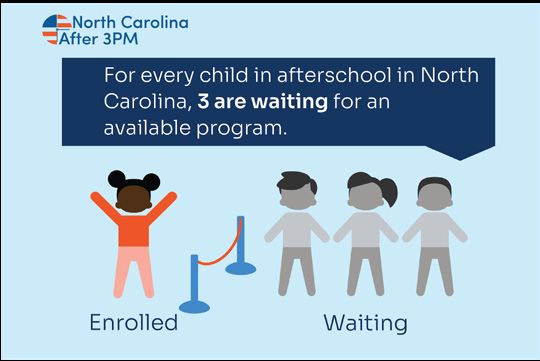
•   Use innovative strategies to build the teaching pipeline. By expanding and financially
    supporting teacher pipeline programs that aim to recruit homegrown teachers to work in their local
    communities, North Carolina can more effectively invest in the future teacher workforce — and the
    future economy. Some promising models include the Partnership Teach program at ECU, Halifax
    Community College and Elizabeth City State University’s 2+2 Teacher Prep Program, and Johnston
    County and NCSU Dual Enrollment Program.
•   Expand racial and ethnic diversity of the teacher workforce. As recommended by Governor Roy
    Cooper’s DRIVE taskforce, North Carolina leaders can develop and expand entry points into the
    educator pipeline that are based on models with proven success in recruiting racially, ethnically, and
    linguistically diverse educators; provide sustainable investments in educator preparation programs
    at North Carolina’s Historically Minority Serving Institutions (HMSIs); and adjust North Carolina’s
    teacher licensure requirements to permit teacher candidates to demonstrate their competency
    through multiple performance measures, in lieu of licensing exams, that are less likely to generate
    racial, ethnic, and linguistic disparities. North Carolina should also expand the NC Teaching Fellows
    program to additional colleges and universities across the state, especially to HBCUs.
•   Provide supports for beginning teachers. Provide support to the North Carolina New Teacher
    Support Program, as laid out in the Leandro short-term action plan. This would provide
    comprehensive induction services to 300 additional beginning teachers in low-performing, high-
    poverty schools.
•   Strengthen the pipeline, ongoing professional learning, and pay schedule for principals. North
    Carolina has made several important steps for principal preparation, recruitment, and support
    across the state and must continue to invest and expand these efforts to ensure that every school
    has a high quality principal. Once principals are leading in our schools, they need ongoing, job-
    embedded professional learning and support to be prepared for the changing landscape and
    additional demands. This was critical before the pandemic and even more so with the current
    learning environments and through COVID-19 transition and recovery. NC must also ensure that the
    principal pay schedule allows our state to remain competitive with other states.

                                                                                        ncforum.org | Page 6
Social and Emotional Learning

Why it Matters
Social and Emotional Learning (SEL) is a critical part of addressing the whole child                Social
in our education system, and this year has made the importance of SEL even                         Workers
clearer. SEL can improve students’ social-emotional skill development, attitudes,               recommended
and general well-being, in addition to their academic outcomes6 . Adverse
Childhood Experience (ACE) include coming to school hungry or not having basic
needs met, experiencing a traumatic event such as abuse, or living with a
caregiver with a mental illness or substance abuse. What is not included in the                      1:250
definition of an ‘ACE’ are instances of racism and discrimination or the experience               actual 1:1,289
of a global pandemic, which we know are events that may be causing significant
stress and trauma for students throughout our country right now. When trauma is
present, students arrive at school besieged by the neurological impact of a stress                 School
response system that is operating on high alert, with attention focused on                      Psychologists
scanning the environment for danger rather than concentrating on school work.                   recommended
Too often, behaviors that are connected to trauma are addressed through
punitive discipline rather than SEL support. It is therefore imperative that we work
to address students’ mental health needs and ensure that they feel physically and
emotionally safe when they enter the school building, so that they are able to                       1:500
self-regulate and are ready to learn.                                                             actual 1:1,800

Recommendations
•   Increase flexible funding for Student Instructional Support Personnel
    (SISP). To meet the academic, physical, and mental health needs of students                    School
    and to ensure that schools are safe and supportive learning environments, North              Counselors
    Carolina should increase the number of school counselors, nurses, social                    recommended
    workers, and psychologists to begin to meet national guidelines, initially
    prioritizing high-poverty schools. North Carolina should also provide school
    districts appropriate flexibility in position allotments for these personnel so that
    they may strategically hire staff to best meet the needs of their students.7 North               1:250
                                                                                                   actual 1:353
    Carolina may also need to consider an evaluation of the pay scale for these roles
    to ensure they are able to attract qualified individuals to fill vacant positions.
•   Support schools and educators to understand ACEs and SEL and to
    implement effective Trauma-informed SEL Programs for their students.
                                                                                                   School
    Many educators, administrators, and school staff will need support to
                                                                                                   Nurses
    implement ACEs training, SEL, and trauma-informed practices. This requires
                                                                                                recommended
    human and financial resources to help build capacity in schools by funding and
    providing additional professional learning, school-level coaching, and resources
    for this work.
                                                                                                     1:750
                                                                                                   actual 1:1,013

                                                                                           ncforum.org | Page 7
Inclusive, Culturally Responsive
Curriculum and Pedagogy
Why it Matters
Culturally responsive or relevant pedagogy that draws from and honors the cultural knowledge and
understandings that students bring into the classroom can improve students’ brain processing, critical
thinking, and problem-solving skills; strengthen their racial and ethnic identities; promote feelings of
safety and belonging; and increase engagement and motivation.8 Curriculum and pedagogy needs to
be made more relevant, engaging, and inclusive to North Carolina’s very diverse student population
—many of whom have traditionally been excluded from mainstream curriculum and pedagogy — so that
our schools can better meet these students’ social, emotional, and intellectual needs.
Recommendations
• Revise the state social studies standards. The State Board of Education is currently in the
process of revising the state social studies standards to ensure that curriculum is inclusive and
representative of the racially and ethnically diverse student population in North Carolina. The
recommended revisions of these standards represent important steps and will also require
professional learning, resources, and support to ensure that educators are adequately equipped to
implement them with fidelity.
• Assess curriculum in all disciplines
to ensure inclusivity and cultural
responsiveness. North Carolina Reflect on Recognize and
can begin the process of developing one’s cultural redress bias in
lens the system
standards to evaluate and improve the
cultural responsiveness of curriculum
in all disciplines, including math, Communicate Draw on
linguistically student’s
science, and English/language arts. and culturally culture to shape
curriculum and
8
responsive
• Prepare teachers and school ways instruction
leaders to equitably serve a racially
Competencies
and ethnically diverse student for culturally
responsive teaching
population. All educators must
Collaborate Bring real-world
be well-equipped with the skills to with families issues into the
and the local classroom
implement culturally responsive community
curriculum and pedagogy in North
Carolina’s public schools. State
leaders should fund ongoing, job- Promote respect Model high
embedded professional learning for student expectations for
differences all students
and mentorship opportunities for
preservice and current teachers and
school leaders. Student teachers Source: New America Foundation. (2020) Culturally Responsive Teaching: A Reflection Guide.
should also be placed in schools that https://www.newamerica.org/education-policy/reports/culturally-responsive-teaching/teacher-
competencies-that-promote-culturally-responsive-teaching/
mirror the diversity of the state with
respect to both location and student population.
ncforum.org | Page 8Flexibility for Local School
Districts
Why it Matters
The pandemic has shown us that local school districts can be very nimble in developing innovative ways
to meet students’ needs. With necessary, temporary flexibilities granted to districts as a result of
COVID-19, local school leaders quickly developed virtual learning academics and implemented creative
approaches to deliver nutrition and other services to students. But even before the pandemic, North
Carolina’s school district leaders have consistently asked for increased flexibility — flexibility for both
funding and school calendars. To facilitate new innovations in the delivery of instruction and other
wrap around services going forward, the flexibility to do what is best for students is needed now more
than ever before.
Recommendations
• Increase Local Education Agency (LEA) budgetary flexibility. As called for in the Leandro
short-term action plan, this can be accomplished by lifting restrictions on critical allotments
through the ABC transfer system. Some specific line items that need flexibility for districts to more
effectively serve our students’ local needs include, but are not limited to, textbooks, low wealth
supplemental funding, and classroom supplies, in addition to other funding areas. This is
particularly important for low wealth school districts that have minimal local funding to supplement
necessary expenses.
• Provide school calendar flexibility to all districts. This is critically important so that local school
districts can align with local community college and university calendars to meet the needs of their
students in the contexts of their communities. This is also important as we focus on the transition and
recovery from COVID-19, as districts try to build in expanded learning opportunities for students.
• Extend flexibility to districts on seat time requirements. The flexibility would enable local
school districts to continue to provide innovative instructional solutions in a range of learning
environments to all students.
But even before the pandemic, North Carolina’s
school district leaders have consistently asked
for increased flexibility — flexibility for both
funding and school calendars.
ncforum.org | Page 9Assessment and Accountability
Why it Matters
Standardized tests can be useful to make uniform comparisons across students, classrooms, schools,
and subgroups, and can shine a light on the educational needs of historically marginalized and
underserved students. These standardized tests are typically given on one day and provide one
measure of a student’s progress; and our current End of Course or End of Grade standardized testing
does not typically provide the opportunity to impact instruction for individual students. The high-stakes
nature of assessment policies has led to increased stress and anxiety for students as well as educators
whose job status and pay are sometimes directly tied to their students’ performance on these
assessments. This year, COVID-19 has presented further challenges with regard to assessment and
accountability, setting up a scenario in which students feel unsafe sitting for exams. Assessment
outcomes, as a result, may not provide a valid picture of learning gains or losses during this time.
School Performance Grades by Percent Economically Disadvantaged
(Current Formula) 2018-2019
100%
80%
0-50% Economically
disadvantaged
60%
51-100% Economically
disadvantaged
40%
20%
0%
A B C D F
Source: Antosyk, E. (2019). Mapping the 2018-2019 School Report Cards. EdNC.
Recommendations
• Amend the state’s current accountability model. North Carolina should make changes to its
accountability model so that it reliably assesses multiple measures of student progress. In addition, A-F
school grades currently serve more as an indicator of the socioeconomic status of a school’s student
population, rather than a reflection of a school’s ability to improve students’ academic progress. While the
Forum would like to see A-F school grades eliminated, the formula for awarding them should at a minimum
be revised to reflect a 50/50 split between student growth and student proficiency.
• Ensure students and educators do not suffer undue penalty from assessments administered during
COVID-19. The Forum recommends multiple short-term actions to relieve students and families from
concerns they have with regard to undergoing assessments during the pandemic. These recommended
actions include seeking federal waivers for statewide assessments, suspending A-F school grades for the
2020-21 academic year, promoting expanded testing windows, pausing the rule that End of Course tests
account for 20 percent of a student’s grade, and removing student performance on standardized tests
from the evaluation process for teachers and from compensation packages for principals, while holding
salaries harmless. [For more information, read our policy brief here.]
ncforum.org | Page 10Afterschool Programs and
Expanded Learning
Why it Matters
Programs that support students outside of the traditional school day here in North Carolina augment
the academic, social, and emotional learning for our students. For every dollar spent on afterschool
programs, there is a three dollar return on that investment.9 The Afterschool Alliance finds that North
Carolina ranks in the top 10 states in the nation for its afterschool programs, and overall parent
satisfaction ranks North Carolina first out of all 50 states.10 However, unmet demand for these
programs remains very high, especially among low-income families who report cost as a significant
barrier. For every child in an afterschool program in North Carolina today, three more are waiting to get
in. And that unmet need is even more stark in rural communities across our state.
Source: The Afterschool Alliance. (2020). America After 3PM 2020.
Recommendations
y Increase state support for North Carolina’s afterschool programs. Communities face major
funding constraints for afterschool programs, which leads to the significant unmet demand. Federal
and state investments are critical to ensure access for all families who want and need their children
to participate in afterschool programs. Historically, these programs have bipartisan support
because they promote workforce development, increase community safety, promote leadership and
skill development, and provide greater support for working families, which are critical to the
success of our local communities.
ncforum.org | Page 11Early Childhood Education and
Literacy
Why it Matters
High quality care and learning environments beginning at birth are critical to the success of North
Carolina’s children and set the foundation for how children are positioned to succeed in school and
beyond. Early childhood education is typically defined as the span of time between birth through age 8
and includes child care, informal and formal education, and literacy. North Carolina faced challenges in
all of these areas pre-pandemic, and each has been affected even more by COVID-19.
According to recent research, pre-pandemic, only half of all parents were able to access any type of
center-based or formal early childhood care. Six months into the pandemic, this rate fell to less than one-
in-three.11 Further, the analysis finds that “households of color face more early education challenges: the
care they rely on is lower quality, with fewer employer supports; and the pandemic has disproportionately
impaired their access to child care.”12 For our economic recovery and future prosperity, it is imperative
that North Carolina takes swift action to support these critical workforce support structures that can
ensure all of our children are well cared for and well prepared for academic and social success.
Additionally, having a laser-focus on literacy in these early years is essential to supporting our students
to reach their full potential. According to a longitudinal study of the long-term impacts of reading
proficiency, students who were not proficient in reading by the end of third grade were four times
more likely to drop out of high school than proficient readers, and 88 percent of students who did not
graduate from high school struggled with reading in the third grade.13 In 2018-19, 56.8 percent of third
graders were considered grade-level proficient in reading.14 North Carolina, in partnership with school
districts and educators, has the opportunity to invest deeply in supporting all students in literacy as a
critical part of a more equitable and high quality education.
ncforum.org | Page 12Recommendations
• Ensure COVID relief funds stabilize the child care system. Federal and state COVID relief funds
should be allocated for the stabilization of child care centers across the state that have suffered
severe fiscal impacts due to COVID-19.
• Increase compensation for early childhood educators. The development of a robust statewide
compensation plan for early childhood educators that sets wages adequate for attracting and
retaining a high quality educator workforce is paramount to ensuring all children have access to high
quality learning environments during the years before they set foot in a kindergarten classroom.
• Improve childcare subsidy rates. As called for by the NC Early Education Coalition, the Forum
also believes in the urgency of developing and funding a new child care subsidy rate structure that
provides child care programs in all 100 counties with adequate and equitable rates that incorporate
the true cost of care, including workforce compensation and benefits.
• Support implementation of the Leandro short-term action plan. The plan specifically calls
for scaling up NC Pre-K and Smart Start, as well as strengthening the NC Infant Toddler Early
Intervention Program, among other important calls to action.
• Support schools, teachers and students in literacy improvements. As North Carolina’s third
grade students continue to grapple with achieving proficiency in reading, North Carolina should
prioritize supporting schools and families in efforts to improve literacy rates. These efforts can
begin early, with both ensuring that NC Pre-K and Smart Start have the resources necessary
to expand access to families across North Carolina, as well as the thoughtful design of reading
interventions grounded in positive outcomes that are supported in grades K-3.
ncforum.org | Page 13Post-Secondary Attainment
Why it Matters
As technological advancement continues to transform the 21st-century labor market, more and more
jobs across all industries are requiring candidates to hold postsecondary credentials or degrees.
Through the work of myFutureNC, the state of North Carolina has set an ambitious goal for 2 million
North Carolinians to have a high-quality postsecondary credential or degree by 2030. As of 2018, 1.3
million North Carolina residents held a postsecondary credential or degree, and without any changes
to our current system, this number is expected to reach only 1.7 million by 2030.15 Making this goal a
reality requires strategic investments and supports for districts, schools, and students.
Percentage of NC Adults (25-64) with a postsecondary degree or
nondegree credential, by race/ethnicity (2016)
Total 25-64 47%
Asian 67%
White 53%
Black 37%
American Indian 29%
Hispanic 27%
0% 20% 40% 60% 80%
Source: Tippett, R. and Stanford, J. (2019). NC’s Leaky Educational Pipeline & Pathways to 60% Postsecondary Attainment:
Report for the John M. Belk Endowment. Carolina Population Center, University of North Carolina at Chapel Hill. www.
ncedpipeline.org.
Recommendation
• Implement school calendar flexibility. State leaders should provide school districts with more
flexibility in creating their school calendars to better align with the local community colleges and
four-year institutions. Doing so would provide students with better opportunities to participate in
dual-enrollment courses, certificate programs, and other career and technical opportunities.
Currently, the traditional high school calendar ends the first semester in mid-January, while
postsecondary institutions end in December. As a result, students taking dual-enrollment courses
must operate on two different calendars simultaneously.
ncforum.org | Page 14• Provide additional support for Cooperative Innovative High Schools. Cooperative Innovative
High Schools, which include early colleges, are small public high schools that are typically located
on the campus of a community college or university. These schools specifically target students
who may be at risk of dropping out of high school, first generation college students, and other
students who would benefit from their accelerated programming. Students at these schools work
towards completing both a high school diploma and an associate’s degree, transferable credit, or a
certificate. Additional financial support for Cooperative Innovative High Schools is needed to allow
more high school students the opportunity to complete high school courses that will lead to college
credit or a credential.
• Expand access to college and career advising. One of the best ways to equip students with
support in pursuing, applying for, and enrolling in college or pursuing a high quality credential is to
connect them with a college counselor or career coach. Many schools rely on school counselors to
fulfill this job, but these counselors are often overwhelmed with students and other responsibilities.
In North Carolina, public schools have an average ratio of 353 students per counselor. Dedicated
college counselors and career coaches can focus on supporting students with their application
process, as well as informing younger students of their college and career options. For the coming
year, the Forum supports the recommendations of the Fiscal Year 2021 Action Plan, which include
expanding the NC Community College System Career Coaches program and expanding the reach of
the College Advising Corps in low-wealth North Carolina school districts.
ncforum.org | Page 15Adequate and Equitable State
Funding to Support Public Schools
Why It Matters
The 2021 Top Education Issues report identifies critical needs facing our students and schools during
COVID-19 recovery and beyond, and the majority will require investments from the NC General
Assembly in order to be realized. This year, we will look to our state legislators to provide the resources
necessary to support our educators and students during this challenging time, while also keeping an
eye on investments that support long-term goals. Meeting the requirements laid out in the Leandro
Fiscal Year 2021 Action Plan and subsequent orders are essential steps toward ensuring the state’s
students will have the resources they need to achieve academic success both during the COVID-19
pandemic and beyond. The data presented throughout the Top Education Issues demonstrate why the
investments make sense for North Carolina - to ensure an equitable and high quality education for all
and a strong workforce and economy for our state.
1 3
Sufficient ability to read, Sufficient academic and
write, and speak the English vocational skills to enable
language and a sufficient the student to successfully
knowledge of fundamental engage in postsecondary
mathematics and physical education or vocational
science to enable the student training
to function in a complex and
rapidly changing society A Sound Basic
Sufficient fundamental
Education Sufficient academic and
knowledge of geography, vocational skills to enable
history, and basic economic the student to compete on
and political systems to an equal basis with others
enable the student to make in further formal education
informed choices with regard or gainful employment in
to issues that affect the contemporary society.
student personally or affect
the student’s community,
state, and nation
2 4
Source: Leandro v. State, 346 N.C. 336, 488 S.E.2d 249 (1997). In 1997, the NC Supreme court held that the right to
education guaranteed in the North Carolina state constitution is a right to a sound basic education, defined above. Then
Chief Justice Burley Mitchell wrote, “An education that does not serve the purpose of preparing students to participate and
compete in the society in which they live and work is devoid of substance and is constitutionally inadequate.”
ncforum.org | Page 16Recommendations
• Ensure all districts have adequate and equitable funding to support COVID-19 recovery. All
students and staff must be equipped with the resources and support they need to be safe and
successful. While some districts continue with remote learning and hybrid models, as well as when
schools are able to safely transition back to full-time in-person instruction, state and federal
leaders must provide financial support. The state has approximately $4 billion in unspent non-
recurring funds, as well as additional federal stimulus funding that will be distributed directly to
districts, which can help to address these immediate needs.
• Provide funding for the implementation of the Leandro Fiscal Year 2021 Action Plan and
subsequent orders. The items outlined in the Fiscal Year 2021 Action Plan, many of which are
included in our 2021 Top Education Issues, require an additional state investment of $426,990,610.
This includes recurring funding for additional school support personnel such as school counselors,
nurses, social workers, and psychologists, expansion of the NC Pre-K program, teacher salary
increases, and much more. These investments are critical in the short-term due to the impact
of COVID-19, and will also begin to address the well-documented resource inequities that
disproportionately disadvantage students of color, English language learners, and low-income
students in North Carolina. State leaders should provide funding for all items outlined in the 2021
Action Plan as well as subsequent court orders in the Leandro case.
• Amend the funding formula to provide additional resources to the schools and students with
the most need. The action plan calls for incremental increases in funding for the Disadvantaged
Student Supplemental Funding (DSSF) allotment, beginning in 2021. Legislators should also prepare
for additional investments in other critical allotments, including supplemental funding for low-
wealth districts.
• Pass a statewide school bond. Our public schools have long been in need of a statewide bond to
address what is now likely to be more than $8 billion in school infrastructure needs.16 The last K-12
statewide school bond of $1.8 billion was passed 25 years ago, in 1996.17 Interest rates are currently
very low, and the time is now for the General Assembly to approve a multi-billion dollar school bond
referendum to be placed on the ballot.
ncforum.org | Page 17Metrics to Measure Progress on
Top Education Issues, 2021-2022
Area Metrics
Broadband Access 100% of K-12 students have access to broadband outside of school by
June 30, 2022.
Local communities with the lowest adoption rates have the capacity
and resources to implement innovative approaches for long-term
solutions to affordable and reliable broadband are in place in more
districts.
Teacher Recruitment, Teacher and instructional support staff salaries are increased by 5%
and retiree health benefits are reinstated by December 31, 2021.
Retention and
Diversity Teacher recruitment programs are put in place by June 30, 2022 that
will make progress towards increasing the current teacher pipeline to
match 7.5% of our current teaching workforce (the average teacher
turnover rate across the state).
Amend state requirements for teacher licensure to replace barriers
to entry that disproportionately impact educators of color, including
the Praxis Core EPP entrance exam and other current licensure
testing barriers, with multiple, unbiased measures of performance
and effectiveness by June 30, 2022.
NC Teaching Fellows Program includes at least one HBCU by June
30, 2022.
Principal preparation, recruitment, and professional learning are
strengthened to increase the pipeline for and retention of high
quality principals by June 30, 2022.
Social and Emotional The number of social workers, psychologists, nurses, and counselors
are increased so that the gaps for each role are decreased by 25% by
Learning
December 31, 2021, including Social Worker at 1:1,029, Psychologists
at 1:1,475, Counselors at 1:327, and Nurses at 1:1,947.
Financial and human resources are in place to support the
development and implementation of SEL and trauma-informed
practices in all of our schools by June 30, 2022.
Inclusive, Culturally New social studies standards are implemented with fidelity, including
Responsive Curriculum professional learning supports for all teachers of social studies by
June 30, 2022.
and Pedagogy
Pre- and in-service Educators across North Carolina have access to
professional learning on culturally-responsive curriculum so that
they can serve a racially and ethnically diverse student population by
Summer 2022.
ncforum.org | Page 18Area Metrics
Flexibility for Local Districts have the flexibility to use particular funding line items,
including textbooks, low wealth supplemental funding, and classroom
School Districts
supplies, to meet the needs of their students by June 30, 2021.
Districts have the flexibility to establish calendars that allow them
to maximize student learning opportunities in the context of their
communities by June 30, 2021.
Assessment and Revise A-F school grades to a 50/50 split between student growth
and proficiency by September 30, 2021.
Accountability
Remove any punitive measures connected with high stakes testing,
while holding harmless any educators or administrators who receive
additional pay based upon the testing outcomes by March 31, 2021.
Afterschool Programs Reduce unmet demand, currently at 666,635, by 20%, to 533,300,
and Expanded Learning by June 30, 2022.
Early Childhood Fund and implement a new child care subsidy rate structure that
Education and Literacy provides child care programs in all 100 counties with adequate and
equitable rates that incorporate the true cost of care, including
workforce compensation and benefits by June 30, 2022.
Post-Secondary Districts have the flexibility to establish calendars that allow them
to maximize student learning opportunities in the context of their
Attainment
communities by June 30, 2021.
Expand the NC Community College System Career Coaches Program
and the College Advising Corps to serve more low-wealth students,
students of color, and English Language Learners by June 30, 2022.
Adequate and Appropriate additional state funds to fulfill the requirements of the
Leandro FY 2021 Action plan and any subsequent court orders by
Equitable State
September 30, 2021. The bulk of these funds should be recurring,
Funding to Support and are in addition to short-term federal and state COVID relief
Public Education appropriations.
Approve a statewide school bond to be placed on the ballot by May
2022.
ncforum.org | Page 19Board of Directors
Tom Williams, Chairman Steve Stephenson
Strategic Educational Alliances, Inc. Ward and Smith, P.A.
Alfred Mays, Chair Elect Richard Urquhart
Burroughs Wellcome Fund Investors Management Corporation
Doug Sprecher, Secretary/Treasurer Tony Watlington
First Citizens Bank Rowan-Salisbury Schools
Michael Priddy, Immediate Past Chairman Willis “Bill” Whichard
21st Century Leadership, LLC Tillman, Whichard, & Cagle, PLLC
Mary Ann Wolf, President and Executive Mekeisha Williams
Director Duke University and Health System
Public School Forum of North Carolina Saundra Wall Williams
Margaret Arbuckle Vision Building Institute for Women
Guilford Education Alliance (Retired) David Young
Keisha Bentley-Edwards Participate Learning
Duke University School of Medicine, Samuel
DuBois Cook Center on Social Equity Emeritus Members
Shirley Carraway Barbara Allen
Retired Educator Consultant
Van Dempsey Lynda Anderson
UNC Wilmington Watson College of Education Retired Education Policy Advisor
Miles Devaney Gene Arnold
Biogen Former NC House Legislator
Dudley Flood Tom Bradshaw
Consultant Tom Bradshaw & Associates
John Healy Gerry Hancock
Kelly Education Everett, Gaskins, Hancock, LLP
Melody Johnson Sam Houston
Johnson & Johnson Medical Devices NC Science, Mathematics, & Technology
Tammorah Mathis Education Center
NC Department of Public Instruction Tom Lambeth
Costa Panagos Z. Smith Reynolds Foundation
IQVIA
Yesenia L. Polanco-Galdamez
Polanco Law, P.C.
Richard Schwartz
Schwartz & Shaw PLLC
Cyndi Soter O’Neil
ChildTrust Foundation-Investors Management
Corporation
ncforum.org | Page 20Advisory Board
Marina Aleman, Que Pasa Media Network Bill McNeal, Wake County Public School System
Bruce Beasley, The Beasley Group (Retired)
Amanda Bell, Rockingham County Board of Education Bill Medlin, Professional Educators of NC
Chris Bell, SunTrust Bank Rep. Graig Meyer, NC House
Rep. Hugh Blackwell, NC General Assembly Mariah Morris, 2019 NC Teacher of the Year
Matthew Bristow-Smith, 2019 NC Principal of the Year Catherine Otto, SAS
Evelyn Bulluck, NCSBA, Nash/Rocky Mount Public Tom Oxholm, Wake Stone Corporation
Schools LaTanya Pattillo, Teacher Advisor to Governor Roy
Sue Burgess, Retired Superintendent, Dare County Cooper
Schools Scott Penland, Clay County Schools (Retired)
J.B. Buxton, Durham Technical Community College Justin Perry, Perry Counseling Healing and Recovery
Dennis Carroll, Emeritus Provost (Retired) Jim Phillips, Brooks, Pierce, McLendon, Humphrey &
Alisa Chapman, Association of Teacher Educators Leonard
Gina Chung, Empowered Parents in Community (Board) Mari Pokornowski, NC PTA
Kisha Clemons, 2020 NC Principal of the Year Philip Price, NC Department of Public Instruction
(Retired)
Sandra Wilcox Conway, Conway and Associates
Shirley Prince, NC Principals & Assistant Principals’
Jeni Corn, myFutureNC
Association
Courtney Crowder, Crowder Consulting
Karl Rectanus, LearnPlatform
Dick Daugherty, IBM (Retired)
Sen. Gladys Robinson, NC Senate
Eric Davis, State Board of Education, Chair
Marion Robinson, State Employees Credit Union
John Denning, New Educational Ventures, LLC
Katie Rosanbalm, Center for Child and Family Policy,
Bob Eaves, Business Owner, Investor Duke University
Catherine Edmonds, Elizabeth City-Pasquotank Public Art Rouse, East Carolina University College of
Schools System Education
Lou Fabrizio, Fabrizio Education Consulting Peggy Smith, Campbell University
Cristal Figueroa, Access Family Services Mark Sorrells, Fayettville Technical Community College
Jayne Fleener, College of Education at NC State Julie Spencer, NC Association for Supervision and
Patti Gillenwater, Elinvar Curriculum Development
Barbara Goodmon, 2019 Jay Robinson Education Maureen Stover, 2020 NC Teacher of the Year
Leadership Award Recipient Caroline Sullivan, NC Business Committee for
Jim Goodmon, 2019 Jay Robinson Education Education
Leadership Award Recipient Erin Swanson, Edgecombe County Public Schools
Ann Goodnight, SAS Catherine Truitt, State Superintendent of Public
Jessica Holmes, Wake County Board of Commissioners Instruction
(Former) Tamika Walker Kelly, NC Association of Educators
Rick Horner, Former NC Senate Legislator Hope Williams, NC Independent Colleges & Universities
Anthony Jackson, 2020 NC Superintendent of the Yea Blount Williams, Alfred Williams & Company
Katherine Joyce, NC Association of School Brent Williams, 2021 NC Superintendent of the Year
Administrators
Leanne Winner, NC School Boards Association
Graham Lewis, Schneider Electric
Marco Zarate, NC Society of Hispanic Professionals
Shanta Lightfoot, Wake County Public School System
Matt Liles, NC Department of Justice
Kaye Bernard McGarry, Educational Consultant,
Community Leader
ncforum.org | Page 21Endnotes
1 Darling-Hammond, L. (2000). Teacher quality and student achievement. Education policy analysis
archives, 8(1).; Goldhaber, D., & Anthony, E. (2003). Teacher Quality and Student Achievement.
ERIC Clearinghouse on Urban Education. Urban Diversity Series No. 115.; WestEd, Learning Policy
Institute, & Friday Institute for Educational Innovation at North Carolina State University (2019).
Sound Basic Education for All: An Action Plan for North Carolina.
2 Gershenson, S., Hart, C., Hyman, J., Lindsay, C., & Papageorge, N. W. (2018). The long-run impacts of
same-race teachers (No. w25254). National Bureau of Economic Research.
3 Lash, Martha, and Monica Ratcliffe. “The journey of an African American teacher before and after
Brown v. Board of Education.” The Journal of Negro Education 83, no. 3 (2014): 327-337.; Carver-
Thomas, D. (2018). Diversifying the teaching profession: How to recruit and retain teachers of color.
Learning Policy Institute.
4 WestEd, Learning Policy Institute, & Friday Institute for Educational Innovation at North Carolina
State University (2019). Sound Basic Education for All: An Action Plan for North Carolina.
5 Public School Forum of NC. (2019). NC’s Average Teacher Pay Myth. https://www.ncforum.org/north-
carolinas-average-teacher-pay-myth-an-analysis-by-the-public-school-forum-of-north-carolina/
6 School Mental Health/Specialized Instructional Support Personnel (SISP) Overview. (2020). NC
Department of Public Instruction. https://drive.google.com/file/d/19LdKv_1pDntB2KnoYuL8Fqg8JfKf
8gHl/view
7 Taylor, R. D., Oberle, E., Durlak, J. A., & Weissberg, R. P. (2017). Promoting positive youth
development through school-based social and emotional learning interventions: A meta-analysis of
follow-up effects. Child development, 88(4), 1156-1171.
8 Muniz, J. (2019). 5 Ways Culturally Responsive Teaching Benefits Learners. New America
Foundation. https://www.newamerica.org/education-policy/edcentral/5-ways-culturally-responsive-
teaching-benefits-learners/
9 “The Power of Afterschool in North Carolina.” Accessed on January 21, 2021 at https://
ncafterschool.org/the-power-of-afterschool-in-north-carolina/
10 The Afterschool Alliance. (2020). America After 3PM 2020. http://www.afterschoolalliance.org/
AA3PM/
11 Belfield, Clive, R. “Early Education in the Time of COVID-19: An Economic Analysis for North
Carolina.” December 15, 2020. Accessed at:
https://buildthefoundation.org/wp-content/uploads/2020/12/Early-Education-in-the-Time-of-
COVID-19_Final-1.pdf
12 Ibid.
13 Hernandez, D. (2012). Double Jeopardy: How Third-Grade Reading Skills and Poverty Influence High
School Graduation. The Annie E. Casey Foundation.
14 NC Early Childhood Foundation. (2019). Third Grade Reading Scores Flatline Again – Time for a
Comprehensive Approach.
https://buildthefoundation.org/2019/09/nc-third-grade-reading-scores-flatline-again-time-for-a-
comprehensive-approach/#:~:text=The%20percent%20of%20all%20third,in%20the%20two%20
previous%20years.
15 myFutureNC. (2020). A Year In Review 2019-2020. https://www.myfuturenc.org/wp-content/
uploads/2020/09/myFutureNC-Progress-Report-to-the-JLEOC-9.1.2020.pdf
16 Recent Results from 2015-16 Public School Facility Needs Survey. (2016). North Carolina Association
of County Commissioners. https://www.ncacc.org/Blog.aspx?IID=207
17 Bostic, R. & Reese, J. (2017). Public School Facility Needs. Presentation to the House Appropriations
Committee on Capital.
ncforum.org | Page 223725 National Drive Suite 101
Raleigh, NC 27612
Phone: 919.781.6833
www.ncforum.org
Our Vision
All North Carolina children shall have the opportunity to reach their full potential through equal and
meaningful public education that nourishes our state’s civic and economic vitality.
Mission of the Public School Forum of North Carolina
To provide trusted, nonpartisan, evidence-based research, policy analysis and innovative programs
that empower an informed public to demand that education best practice becomes common practice
throughout North Carolina.
Acknowledgments
This year’s Top Education Issues was authored by Dr. Mary Ann Wolf, Dr. Lauren Fox and Lindsay
Wagner. The entire Forum team contributed to the development, drafting and editing of this
publication. We are grateful to the Forum’s Board of Directors and Advisory Board who helped to
shape this document and the Forum’s perspective by generously sharing their expertise.You can also read


