WHAKATU 2020 E TU WHAKATU - Hastings District Council
←
→
Page content transcription
If your browser does not render page correctly, please read the page content below
WHAKATU 2020
                                           E TU WHAKATU
    For further information contact the
Economic and Social Development team at:
        Hastings District Council
        Private Bag 9002
        Hastings
        New Zealand

        Ph. 06 871 5000

        www.hastingsdc.govt.nz

          Published May 2014.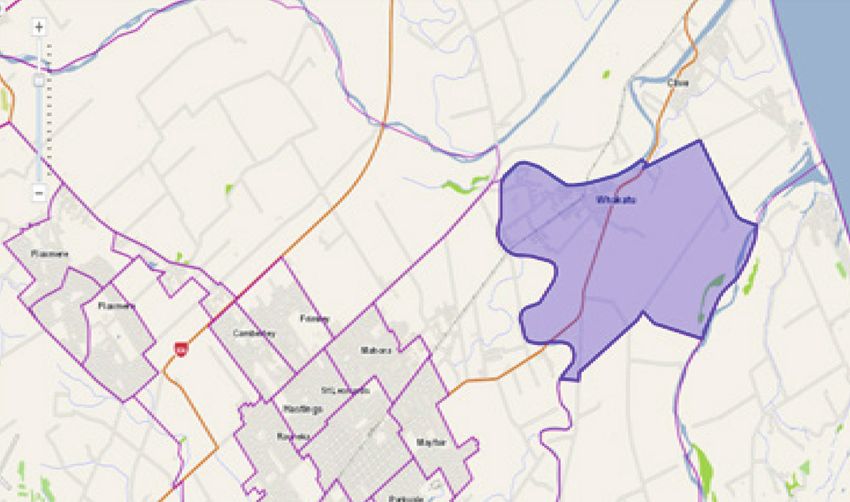
Ma te huruhuru ka rere te manu                                                                REFERENCES   Boast, R. 2008

                                                                                                                                   Buying the Land, Selling the Land.
                                                                                                                                   Victoria University Press, Wellington.

Tihei Mauri ora                                                                                            Bevin. S. Feb 2012. Proposed Roading Development. Whakatu Economic Benefit
                                                                                                           			Assessment.
Ko te mihi tuatahi ki te Matua i te Rangi nana nei nga mea katoa                                           			                 Prepared by Economic Solutions Ltd., Napier for Hastings
                                                                                                           			District Council.
To matou inoi nei kia aia hei tiaki, manakitia mai matou hapori Whakatu
E nga mana, e nga reo, e nga karangamaha tena koutou katoa
                                                                                                           E Tu Whakatu 2014.      Household Survey Report.
Nga mihi kia ratou kua wehi atu ki te po moe mai ra                                                        			                     Eru Pomare Research Centre, Wellington.
Kia koutou nga tangata e noho ana ki Whakatu e mihi mai ra.
Kia ratou nga Kaiwhakahaere o te kaunihera HDC me TPK nga mihi                                             Mauri Mahi, 2001. Does being made unemployed affect health?
mahana ki o koutou tautoko mo tenei taonga ara te pukapuka nei                                             			               The Closures of Whakatu and Tomoana.
                                                                                                           			               Te Roopu Rangahau Hauora a Eru Pomare & Ngati Kahungunu Iwi
o nga moemoea mo te hapori Whakatu.
                                                                                                           			Inc. Wellington.

E tu Whakatu mo ake tonu ake                                                                               Modelling Analysis Prepared By Dr W. Hughes, Economic Impact Consultant,
                                                                                                           Results 2012. 		   Auckland. Economic Impacts For The Whakatu Roading
Na - Whakatu PCG & Whakatu Action Group                                                                    			Development

                                                                                                           Napier Minute Book 19. Maori Land Court, Hastings.

                                                                                                           Patrick Parsons, 1998   Tanenuiarangi. A history of Kohupatiki.
ACKNOWLEDGEMENTS
                                                                                                           Whakatu Community       Whakatu Community Plan 2006 -2016.
The Whakatu Project Control Group acknowledge TePuni Kokiri for their support and
                                                                                                           Trust, March 2007.      Published by Hastings District Council
sponsorship of this project. Our thanks to Hastings District Council’s Social and Economic
Development team for accommodating the development of this community plan.

Appreciation to all Whakatu residents who provided input and participation through surveys                 Whakatu Employer Survey 2014. Report of survey findings. Aaron MacIntosh, Napier.
and hui. To those providing the survey expertise, Anaru Waa and Bridget Robson for
community and Aaron MacIntosh for the industry survey thanks to you all.                                   Whakatu Master Plan 2011. Whakatu at the Heart of the River. A landscape report
                                                                                                           prepared by Terra-forme Landscape Architecture.
To those who presided over this work and were the impulse behind it, Joseph Whare, Aki
Paipa, Des Ratima, Paddy Steffert, Steve Breen and Farley Keenan salutations to all of you.

Finally, to Wayne Ormsby planner and facilitator, thank you for shaping our community
dreams and vision into structured and workable pathways through to 2020.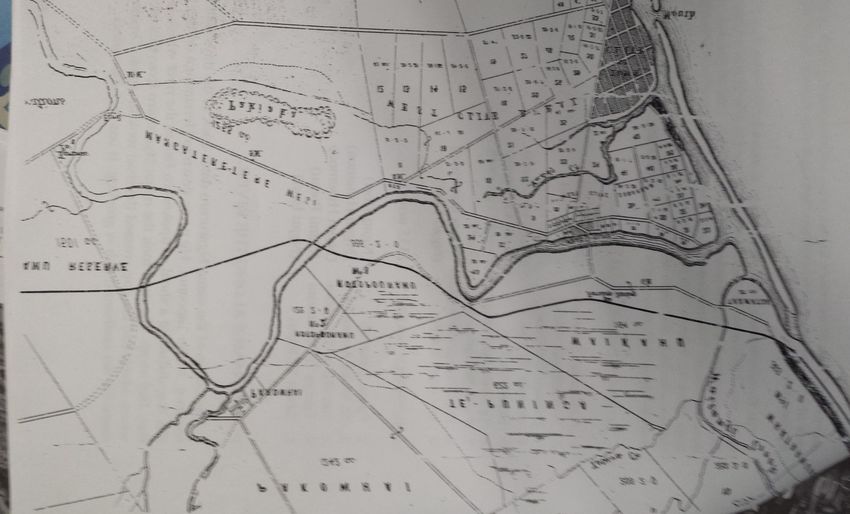
WHAKATU
          COMMUNITY
            PLAN
            2015 - 2020

            THE VISION

Whakatu 2020: A village that is friendly,
   safe, thriving and supported in a
harmonious relationship by its industrial
               neighbours.
      “Whakatu 100% employed”
MAYORAL                                       Nga mihi nui ki o koutou katoa

    MESSAGE                                       I am pleased to present the 2020 Whakatu
                                                  Community Plan.

                                                  Whakatu is a unique community within Hawke’s Bay
                                                  and recognised as an industrial powerhouse of the
                                                  region.

                                                  The community’s vision for the future is a reflection of
                                                  the feeling that exists in the Whakatu area.“Whakatu
                                                  2020: A village that is friendly, safe, thriving and
                                                  supported in a harmonious relationship by its industrial
                                                  neighbours; Whakatu 100% employed”

              The resilience of the community, the passion demonstrated by its residents and their
              commitment to the village is very inspiring.

              The 2020 plan is built around a framework that will ensure all Whakatu residents have the
              opportunity to become fully employed and prosperous and the township will become an
              even better place to live and visit. Council is committed to working with the community to
              ensure the goals outlined in the plan are achieved.

              I would like to congratulate the whole Whakatu community on your input during the
              development of the plan. I know that the next steps in the implementation of the plan will
              be exciting and look forward to watching the progress that will be made in preparing your
              historic village settlement for a prosperous future.

              Ma te Atua e manaaki, e tiaki i nga wa katoa

              Na Lawrence Yule
              Mayor of Hastings District

4
TABLE OF   Mayoral message                           4
            The Plan                                  6
CONTENTS    Summary of the Plan                       7
            History of Whakatu
                  Tribal Settlement                   8
                  Industrialism                      10
                  Effects of Whakatu Works Closure   12
                  2006-16 Whakatu Plan Reviewed      14
                  Summary of Plan                    18
            Industry
                  Section 1.
                  Economic Profile                   19
                  Community – Industry Interface     23
            Structure and Organisation
                  Section 2 - Community Survey.
                  Organisation                       34
                  Hub Structure                      35
                  Operating Principles               36
            Six Goals
                  Youth                              39
                  Employment                         53
                  Education & Training               59
                  Economic Development               62
                  Environment                        65
                  Community Wellbeing                71
            Overview and Summary
                  Implementation                     79
                  Towards Whakatu 2020               83
            Methodology                              84
            Conclusion
                  References                         87

                                                          5
THE    The 2020 Whakatu plan (The Plan) was instigated by the community for the community
                  and is tailored to the community. The plan is wholly owned by the people of Whakatu.
          PLAN    The earlier 2006-2016 Whakatu community plan has successfully run its course. In 2013,
                  residents began succession planning for the next Whakatu community plan 2015 – 2020.
                  The Whakatu area has always been an economic and industrial location throughout
                  its history hence the Whakatu community desire to be 100% employed. The aim of
                  100% employment has placed a greater emphasis on building community and industry
                  relationships, facilitating careers development and supporting education and training to
                  employ Whakatu people. The community aspirations are contained within six strategic
                  goals namely; Employment; Education & Training; Youth; Economic Development;
                  Community Wellbeing and Environment. The goals aim for increased employment
                  opportunities, a desire to create more wealth and economic activity in the community,
                  endeavour to beautify the residential and natural environment, make every effort to
                  improve youth education and training opportunities and uphold community social and
                  cultural development.

                  The plan is written in a descriptive and explanatory fashion rather than a pure planning
                  document of vision, goals and actions. The intent is to provide adequate information to
                  reduce inference and conjecture around past, present and future community movements.

      SUMMARY     The opening chapter begins with the historical Whakatu setting. The foundation of its
                  industrial and economic significance is established here from early Maori settlement
    OF THE PLAN   to European arrival. The seven decades of the Hawke's Bay Farmers Meat Company
                  operations and its sudden closure and impacts are emphasized. The Whakatu community
                  recovery including the 2006 plan is evaluated and set the conditions for the 2015-2020 plan.
                  Community hui confirmed the goals and survey data informed the 2020 Plan.

                  Chapter two provides the industrial setting and highlights the strategic significance of
                  Whakatu as a key business and employment node for Hastings. The importance of the
                  Whakatu community and industry interface is discussed as a platform to establish career,
                  employment and trade training pathways. The interface reflects the necessity to provide
                  organisation and structure for pathways, relationships and desired outcomes.

                  Chapter three articulates how the six strategic goals can be fulfilled and key activities to be
                  delivered. Each goal is an entity in its own right to perform functions specific to its purpose.
                  Other agencies, groups or organisational networks can engage directly with the particular
                  portfolio goal relevant to the service the network provides. Community volunteers choose a
                  strategic goal they have an interest in assisting with and attaining that goal is their focus.

                  The implementation overview and summary is a concise snapshot of the six strategies,the
                  components for implementation and actions. The summary is a quick easy view of chapter
                  three. ‘Toward Whakatu 2020’ specify items to help manage the administration of the plan.

                  The Methodology section describes the procedures undertaken throughout the Plans
                  conception and what, why and who was involved. The methodology and processes
                  employed sought to produce the best outcomes and these are explained to provide a
                  context on how the Plan unfolded from the community and for the community.

                  The following page provides a quick view map of the 2020 Whakatu plan

6
WHAKATU COMMUNITY PLAN
                                                            2015 - 2020

                                                    COMMUNITY ASPIRATIONS

                                                                   VISION

                                                          STRATEGIC GOALS

                               1. Youth                                4. Economic Development
                               2. Employment                           5. Community Wellbeing
                               3. Education/Training                   6. Environment

                                                     HUB STRUCTURE               WAG

                                                           IMPLEMENTATION
            Community Coordinator Role
                   and Projects
                (funding needed)

                                                                                                     HEALTH &
     JOBS                  TRAINING                                                                   SAFETY
                                                                                                                BEAUTIFICATION
    TRADES                   SKILLS               INDUSTRIAL                BUSINESS                NEGATIVE
                                                 RELATIONSHIPS           ENTRPRENUERIAL             IMPACTS         AWA
     YOUTH                BECOMING                                                                              ENHANCEMENT
    CAREERS               QUALIFIED                                                                  SOCIAL
                                                                                                    CULTURAL

                                                                   Outcomes
•    Industry relationships established                                  •    Agreements/ pledges honoured
•    Career/Trade positions sponsored                                    •    Funding applications submitted
•    Unskilled vacancies proffered                                       •    Neighbourhood Support plans
•    Tertiary pathways in place                                          •    Emergency & Evacuation plans
•    Mentoring system developed                                          •    Odour mitigation responses
•    PTE networks established                                            •    Bus shelter
•    Courses available, CVs                                              •    Entry sign
•    Database info secure/protected Set standards for job assistance     •    Youth facility
•    Vetting procedures created                                          •    More community events
•    Interventions in place                                              •    More volunteers
•    Referral system operating                                           •    Promote healthy lifestyles
•    Scholarships documented                                             •    Activate Landscape Plan
•    Leadership programs developed                                       •    Maintain healthy waterways
•    License training program available                                  •    Roads/River planting,
•    Entrepreneurial options arranged                                    •    Walkways
•    Business start-ups being taught                                     •    Design Landmarks area & marker
•    Whanau support guidelines set                                       •    Politically involved community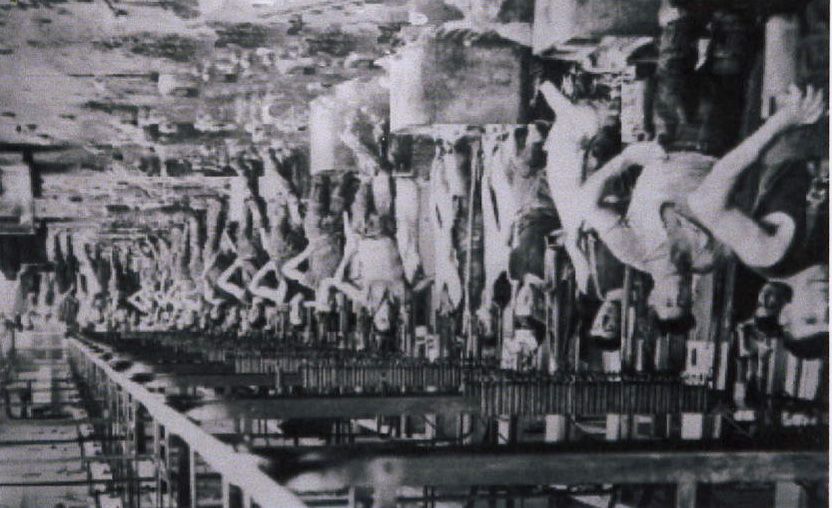
HISTORY OF   TRIBAL SETTLEMENT
      WHAKATU    Whakatu is located on the banks of the old Ngaruroro river. Prior to the great flood of 1867
                 the river flowed through Havelock North and past Ruahapia Marae where the present
                 day Karamu stream runs. The river was tidal as far as Wahaparata, midway between
                 Mangateretere and Havelock North.

                 Wahaparata took its name from the Parata, a Taniwha of the deep oceans, who caused
                 the tides by breathing in and out.

                 On a high terrace behind Tucker’s Wool Scourers, stood the ancient Pa site Tanenuiarangi
                 which belonged to an earlier age. It took its name from the Rangitane tribe (Rangi-nui-a-
                 tane in reverse) who occupied the territory before the Ngati Kahungunu invasion in the mid
                 1500’s. The pa site was more than 500 years old when it was abandoned during the 1860s.

                 Tane-Nui-A Rangi Pa. A fortified village on the Ngaruroro River. From a drawing by
                 Lieutenant H.S. Bates, 65th Regiment, 1858 (Turnball Library).

                 Since ancient times the Ngaruroro river served as a tribal boundary. Prior to the Ngati
                 Kahungunu invasion it was the boundary between Rangitane who occupied the south
                 side of the river and Ngati Whatumamoe to the north. After Taraia a famous Kahungunu
                 chiefs’ arrival,he too established boundaries on either side of the river. Before European
                 settlement Whakatu was a densely inhabited part of the Ahuriri district being abundant in
                 food, fisheries resources, birds and timber. Tanenuiarangi Pa was subject to many battles
                 and occupations over the centuries, too many to mention here. However one of the last
                 battles concerning Tanenuiarangi Pa began in 1858 at Pakiaka which is located at the
                 south-west end of Whakatu near Mangateretere (Parsons, 1998).

                 Prominent in the Pakowhai area at that time were Karaitiana Takamoana, Te Meihana
                 Takihi, Henare Tomoana and Pene Te Uamairangi, the four sons of Winipere, Te Waka
                 Kawatini, Tamehana Pekapeka and his son Manaena Tini were the chiefs of Ngati
                 Hinemoa living at the Pa.

8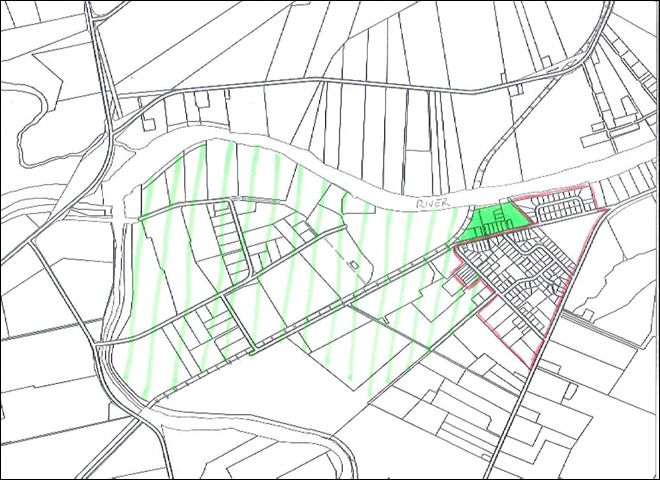
1
This was when the so called twelve apostles chiefs of Heretaunga in the 1860s, were
visited by Crown agents first leasing then purchasing the Heretaunga block. By the 1880s
most of the surviving chiefs had relocated and after the flood of 1897 Pakowhai was
abandoned.

In 1856 Te Hapuku was living at Te Ngaue Pa across the Ngaruroro river and a little
upstream from Pakowhai. Te Hapuku had long been on the Government payroll as their
agent, negotiating and facilitating the sales of Maori land in the wider Heretaunga district.
Between 1855 and 1857 relations between Te Hapuku and the allied chiefs of Heretaunga
continued to deteriorate as lands they all had an interest in were sold out from under them
without consultation (Parsons 1998).

G.S. Cooper was the Government Land Commissioner at the time and he authorised a
payment of 1,300 pounds to Renata Kawepo dated 4 July 1857 for the loss of lands in
the Maraekakaho district. It failed to ease tensions and when Karaitiana Takamoana met
with Renata Kawepo and Paora Kaiwhata at Omahu, they decided they would settle for
nothing less than Te Hapuku’s removal from Heretaunga. “In 1857 the Pakiaka war broke
out in Hawkes Bay largely caused by the actions of McLean and other Crown officials
acquiring land from Te Hapuku while ignoring the protests of other chiefly leaders” (Boast
2008 pg 31). Ngai Te Upokoiri, Ngati Parau, and Ngati Hinepare assembled at Pawhakairo
then marched to join Te Moananui at Te Wairua. Word reached them that Te Hapuku was
about to occupy Tanenuiarangi. Pre-empting his action they occupied it themselves and
Te Moananui set about strengthening the fortifications while Ngati Tu, Ngati Kurumokihi
and Ngati Matepu made arrangements to join them from Tangoio and Petane. A squad
was stationed at Pakiaka forest to prevent Te Hapuku getting access to timber and fuel.
The Rev. Samual Williams intervened on Te Hapuku’s behalf but when Te Hapuku was
observed cutting green timber they knew he was fortifying Te Ngaue and any further
attempts at reconciliation were abandoned (ref. Napier Min. Bk 19, p444).

Map 1: Pakiaka Bush was situated a few hundred metres past the top end of Station Road

1. The twelve apostles refers to the Settler government passing laws vesting the communal owned
   Maori land into the names of twelve Heretaunga chiefs. The law made the purchase of Maori land
   by Europeans easier. Credit at exorbitant prices was extended to chiefs and non-payment meant
   land could be taken to cover the debt.

                                                                                                    9
When Te Hapuku’s men next came to gather timber from Pakiaka they were greeted by a
     volley of musket fire and hastily retreated. Battle lines were drawn and spasmodic bouts of
     combat kept Te Hapuku pinned down in the latter stages of 1857. The decisive battle took
     place on 9 December when Te Hapuku was worsted and several of his followers killed.
     Attempts at mediation were made by the Wairoa missionary James Hamlin and by Donald
     McLean but the allied chiefs were unrelenting.

     Te Hapuku delayed his departure until 4 March 1858 after a spectacular ceremony the
     previous evening during which Te Ngaue was torched and a lengthy tangi was concluded.
     He exhumed his dead and set out for Te Hauke where he lived till his death in 1878.

     Various hapu of Ngati Kahungunu have continued to live in the Whakatu district since that
     time. The present day Kohupatiki Marae established in 1863 by Te Waka Kawatini has
     whakapapa back to Tanenuiarangi Pa. Kohupatiki named their ancestral meeting house
     ‘Tanenuiarangi’ to preserve the tradition of the ancient Rangitane Pa formerly located
     across the river at Whakatu.

     The 1867 flood saw the Ngaruroro change its course to its present channel between
     Fernhill and Chesterhope, and down what is now called the Clive River. The Clive River
     name did not exist until the 1969 man-made diversion, which saw the Ngaruroro River
     channel shifted to the north, leaving the Karamu and Raupare Streams to feed the Clive
     (Whakatu Community Plan 2006).

     INDUSTRIALISM
     Whakatu was settled by Europeans from the 1850s. Much land was leased from Maori,
     and later purchased by government under the Native Lands Act 1865. By the 1860s
     blocks in the Whakatu area were cut up and used for small agricultural settlements. Robert
     Cashmore set up a Sawmill to process timber from the nearby Te Pakiakia bush. However,
     the main industries of Whakatu were driven by pastoralism during the nineteenth century.

     Meat was not feasible to export in the 1860s, but fat offered prospects and in 1867,
     local pastoralists formed the Hawke’s Bay Steam Boiling Down Company on a capital
     of £1,500, and set up a plant at Whakatu. The factory was capable of rendering 2,000
     carcases a week, producing just over eight kilograms of tallow per carcase.

     Sydney King established a wool scouring plant at Whakatu in the late nineteenth century.
     This was taken over in 1903 by Richard Tucker, a long-standing Clive resident, who
     developed a solid reputation as an expert wool scourer. With his brother Frederick, Tucker
     set about transforming the factory into a large-scale operation, and apart from a brief
     period in other hands, the plant continued to operate as a family-owned business until the
     1970s (source - Whakatu Community Plan 2006).

     The introduction of rail boosted Whakatu industries during the 1870s and in the early
     twentieth century and later the development of refrigeration technology transformed the
     meat industry. The first definite steps towards the establishment of a farmers freezing
     works was a meeting held on 2nd July 1912 at Waipukurau. A Company was set up with
     106 shareholders and a capital of 70,000 pounds. A plant was built at Whakatu and the
     first Board of Directors was established in 1913. The opening of the killing season was on
     the 6th of January 1915. 123,000 sheep and lambs and 3,190 cattle were processed that
     season. Slaughtering of Pigs began at the plant in 1922. The Whakatu Works was badly
     damaged in the 1931 earthquake but after repairs a new chain system was introduced in
     1932, an improvement on what was there before.
10
In 1940 women were first employed in the bag room but it was not until much later that
they were employed in other areas of the Works. In 1959 the first ‘one million carcase’ was
killed and processed in a single killing season. 1972 saw the new E Block freezer complex
built that covered an area of 6 acres. Whakatu residents referred to the occasional odours
that emanated from the Works as “the smell of money” in acceptance but also recognition
of the economic and social benefits provided to the community. Seventy one years later on
the 10th of October 1986 Whakatu Freezing Works closed.
The sudden closure of the freezing works on October 10, 1986, affected the economy
and communities in the Hawke’s Bay region. It was described by Jim O’Connor, who was
then chairman of the Hawke’s Bay United Council and the retiring Mayor of Hastings, as
the greatest disaster in Hawke’s Bay since the 1931 earthquake. About 2,200 people lost
their jobs at the plant however the impacts were felt by thousands more men, women,
children and families. For many freezing workers it was regarded as the ‘University of Life’.
Its main business was the slaughter and processing of sheep and beef and this provided
employment for local whanau and people of Hastings and Napier. Whakatu was also a
focus for identity and friendship for workers, their families and the wider community.
Whakatu solo butchers
11EFFECTS OF WHAKATU WORKS CLOSURE
Unemployment impacts on communities in many ways. Overseas research shows that it
increases the risk of many different health problems including heart disease, respiratory
illness, cancer and mental illness. In the early 1990’s a health study was commissioned
by the Wellington based ‘Eru Pomare Maori Health Research Centre’ into the effects of
unemployment on health. The study design was named ‘Mauri Mahi’ and compared the
group of workers at Whakatu who were made unemployed in 1986 when the Works closed
with workers from Tomoana who were working in the same year. Both group’s health events
were followed until 1994 when Tomoana closed. These health events included hospital
admissions, registrations for cancer and deaths. In short, the study aimed to see if Whakatu
workers made unemployed had more hospital admissions or deaths than Tomoana workers
who were not made unemployed. To check that the two workforces were similar health-wise
before Whakatu closed the researchers compared the health of freezing workers who were
at Whakatu and Tomoana between 1977 and 1986 (Mauri Mahi, 2001).
About 9,000 former workers were in the ‘Before Closure’ and ‘After Closure’ studies. The
quality of the study results depended on following up or tracing workers from both works
from 10 October 1986 until 19 August 1994. This involved checking to see if the participants
had been admitted to hospital, had died, had been registered with cancer or migrated
overseas. Research ethics required people being able to opt out of the study if they so
desired. The study struck a few problems with different personal information of the workers.
The date of birth on personnel records was especially difficult. A number of freezing workers
were younger than the legal age when they started at the Works. Some had put their age
up by changing their date of birth and even though they remained employed at the Works
for a number of years, they never corrected their date of birth. Some older workers as they
matured put their age down. Despite the challenges, the follow up for 1986 – 1994 was
96% complete for both Tomoana and Whakatu meaning the research was able to trace
nearly all of those workers by various means.
The findings revealed that during the ten years before Whakatu closed both Tomoana and
Whakatu workers had very similar levels of deaths and suicides. There were no significant
differences in mental health admissions or cancer registrations.
The after closure study found that the group made unemployed had significantly higher
levels of serious self-harm (that is suicide and attempted suicide resulting in hospital
admission). It was concerning that while there was this important sign of serious mental
distress, there was no increase in admission to hospital for mental illness. For other causes
of death and admission to hospital the differences found were not statistically significant. It
was noted earlier that plant closure studies in other countries found increased heart attacks,
stomach ulcers and cancers. In this study these problems have not been found. It is thought
that this may be because the average age of these groups is still quite young (36.5 years in
1986) and would not expect many of these types of illness until the average age was closer
to fifty years.
In summary this research found that being made unemployed caused more people to have
2
severe mental stress and this showed up as increased serious self-harm and suicide . The
study finished in 1994 when Tomoana closed (source - Mauri Mahi, 2001).
2. The 2013 community survey indicated 17% of Whakatu 15 – 24 year olds are not in education,
employment or training. This is higher than the national average of 12%. Mental health issues in
this group are unknown.
12Over time the economic impact of the Freezing Works closure on the Whakatu village
showed through in a slowly but increasingly run down appearance. Previously, it was a
thriving and bustling community that once had the largest meat company in New Zealand.
The company operated a Butcher shop,provided a community hall, tennis courts, bowling
club and bar and funded the volunteer fire station, fire truck and equipment. There was
also a post office, grocery store, petrol station and service garage. The subsequent loss of
patronage saw a number of amenities close. The few amenities that continued no longer
had the support of a 2000+ workforce or a meat company that assisted with maintenance
of local buildings and grounds. Whakatu began to lose its former vibrant appearance.
Shortly after the Works closed the government implemented a number of work schemes
aimed at retraining people. The Whakatu Community Trust was formed to support the
community and improve job opportunities for unemployed residents through government
training scheme initiatives. The Whakatu Community Trust operated for a number of years.
Prior to its expiry the Trust instigated the 2006 -2016 ten year ‘Whakatu Community Plan’.
Shortly after the ten year plan was completed the Whakatu Community Trust wound up
and was replaced by the Whakatu Action Group (WAG are interested residents that meet
regularly to discuss community issues).
The ‘Whakatu Community Plan’ set out the vision of “Whakatu 2016; A village that is friendly,
safe, thriving and supported in a harmonious relationship by its industrial neighbours”. In
April 2004 the Whakatu Community Trust approached the Hastings District Council to help
bring the plan together. Although Council worked in conjunction with the Trust to develop
the plan it was wholly owned by the people of Whakatu who have been actively involved in
shaping their own future.
The purpose of the 2006 plan was to improve the social, cultural, environmental and
economic well- being of the community. The plan provided a framework outlining goals
and actions to achieve the community vision, “Whakatu 2016; A village that is friendly, safe,
thriving and supported in a harmonious relationship by its industrial neighbours.
A mural depicting Whakatu’s journey from past to the future was commissioned and named
Te Waka Wairua ki Whakatu meaning The Spiritual Canoe (or journey) of Whakatu. With
advice from Tohunga Whaikairo Haami Moeke, the Artful Achievers Project of Jay Roberts,
James Hutton, Tui Makirere-Haewera and John Roberts produced the mural. The mural was
printed across the front and back cover of the plan. The mural depicts a journey from past
to future. The waka represents the community, the enduring spirit of the people of Whakatu,
and the Matariki constellation guides and inspires (see inside covers).
The plan provided a brief history of Whakatu, statistics about the community from the 2006
census and predicted growth patterns beyond 2006, and an outline of the communities top
concerns raised during consultation.
Those concerns were categorized into three broad themes:
1.Environmental
2. Social and Cultural
3. Economic
13Each theme specified a number of sub goals with particular actions, due dates and
outcomes.
In 2008, a Whakatu landscape plan was also commissioned and completed. The landscape
plan concerned the beautification of the residential area and river.
2006-16 WHAKATU PLAN REVIEWED
Nine years on, the Whakatu Community Plan has been reviewed. In 2013 members of the
community were asked how the plan had progressed, have the objectives been achieved,
does the plan still reflect the issues, needs, and wants of the community and does the
community still want their vision for 2016?
Discussions at community consultation hui revealed the broad goals outlined in the 2006-
16 plan were consistent with current 2013 needs and aspirations. This helped confirm
comparable strategic goals through to 2020 and to analyse what has been achieved and
what is still a work in progress.
2006: Three Strategic Goals Thirteen Specific Goals
• Environmental Goals comprised of five sub goals
• Social and Cultural Goals comprised six sub goals
• Economic Goals comprised of two sub goals
Each of the thirteen sub goals identified –
1. Actions
2. Target dates
3. Milestones or outcomes
4. Progress partners or those involved in the actions
In 2006, a multi-partner approach was taken and included Whakatu Community, Whakatu
Community Trust, Whakatu Industrial Community, Whakatu Sports Association, Hastings
District Council, Hawke's Bay Regional Council, Ministry of Social Development, NZ Police,
Transit NZ, Sport Hawke's Bay, Ropu Huihuinga Hauora and Heretaunga Taiwhenua.
Since 2006, a number of dedicated community members have led the charge and continue
to progress the aspirations in the plan. Past progress reports from Whakatu Action Group
meetings provides documentation of the milestones achieved relating to the goals and
actions in the 2006 Whakatu community Plan. In 2013, analysis of the goals and actions
from 2006 showed that of the thirteen specific goals and their 49 related actions, all
thirteen goals have been worked on and many achieved (see tables on following pages).
This is a significant success and reflects a high work rate to fulfil the communities planned
aspirations. Those voluntary efforts must be acknowledged including the dedicated hard
working community members we all know and appreciated.
To easily understand the following tables colour codes are used –
• green for accomplished
• blue for limited accomplishment
• red for not accomplished
Please note - 'not accomplished’ does not mean the action has not been worked on.
14The following table attempts to illustrate some of the 2006-16 plans objectives and results. Please note the table is indicative
only and not a full or final summation.
Goal (1.1) Action Target Date Outcome
To improve traffic safety
Reduce speed in residential areas Annual Plans Accomplished
and awareness
Reduce heavy vehicle traffic in residential streets 2006 - 2010 Mostly accomplished
Organise traffic safety programs for children 2006 - 2008 Mostly accomplished and ongoing
Reduce speed limit/signs for Mangateretere school 2006 - 2008 Accomplished
Progressing and ongoing
Develop traffic management plan for Whakatu 2006 - 2009
(Arterial Route)
Goal (1.2) Action Target Date Outcome
To beautify Whakatu Local area entry statements 2006 - 2009 Not completed
Increase rubbish bins 2007 - 2008 Bins for shop area
Maintain all Council landscape/gardens 2007 - Accomplished and ongoing
Accomplished -
Landscape plan for Whakatu 2007 - 2008
implement 2015 - 2020
Phone/Power lines put underground 2006 - 2009 Mostly accomplished
Drains to be upgraded/enclosed especially Station Rd Annual Plans Accomplished
Goal (1.3) Action Target Date Outcome
To reduce environmental Routine comliance checks
Industry RMA compliance (HDC) 2006 - 2007
pollution undertaken
Industry register/stored substances 2007 Accomplished
Rain gardens - industry Ongoing Commenced - ongoing
Establish emergency response team and emergency plans 2007 - 2008 Not completed
Goal (1.4) Action Target Date Outcome
Reduce impact of
Interface operated
industrial - residential Establish community / industry working group 2007 - 2008
for short period
interface
Address concerns- heavy vehicles, dust, noise, smells,
Ongoing Progressing and ongoing
amenity
Inform community about new industry activity/expansion Ongoing Progressing and ongoing
Goal (1.5) Action Target Date Outcome
Enhance and maintain HBRC update community on Karamu stream project, Interface operated
2011
the awa Whakatu work commences 2011 for short period
Improve river access Ongoing Progressing and ongoing
Involve community in guardianship Ongoing Progressing and ongoingGoal (2.1) Action Target Date Outcome
Promote community Building donated to Whakatu
Promote Essex Cres Church as a community facility 2007
identity and pride community – Trust set up
Research venue needs/ community focal point area 2007 - 2008 Progressing & on going
Source funding for community facility 2007 - 2010 Progressing & on going
Progressing & on-going -
Promote Whakatu as a lifestyle choice Ongoing residential expansion unlikely due
to Plains and Industrial Zoning
Goal (2.2) Action Target Date Outcome
Enhance and maintain
Encourage involvement in community activities Ongoing Accomplished - ongoing
social networks
Compile distribute program flyers 2007 - 2008 Accomplished and ended
Community Trust provide focus on economic, health, Mostly accomplished – through
Ongoing
social programs voluntary efforts
Accomplished - discontinued
Hold an annual lunch for elderly Annual
due to low attendance
Goal (2.3) Action Target Date Outcome
Support community
Deliver healthy living programs 2006 - 2007 Progressing and ongoing
health ventures
Develop walk/cycle ways recreation opportunities
Ongoing Mostly accomplished
along the river
Accomplished but up-keep of
Promote and utilise Whakatu Sports Association facilities Ongoing
facilities beyond residents control
Promote and support Whakatu as a holistic health centre Ongoing Not completed
Goal (2.4) Action Target Date Outcome
Provide challenging
recreational opportunities
Upgrade Ngaruroro Reserve playground 2007 Accomlished
and encourage
community participation
Hold arts and crafts workshops 2008 Accomlished
Provide activities to engage and challenge young people
Ongoing Accomplished and ongoing
of Whakatu
Goal (2.5) Action Target Date Outcome
Foster acceptance for Mostly accomplished
Promote te reo, kapa haka, waiata classes Ongoing
cultural diversity and ongoing
Accomplished - tertiary avenues
Look into set up of drama classes 2008
more suitable
Mostly accomplished
Create and support inclusive community spirit Ongoing
and ongoing
Goal (2.6) Action Target Date Outcome
Enhance community
Promote neighbourhood support in Whakatu 2006 - 2007 Accomplished and ongoing
safety
Establish neighbourhood support groups/networks 2007 Accomplished and ongoing
Lobby for regular checks on transformers 2007 Accomplished and ongoingGoal (3.1) Action Target Date Outcome
Increase employment Utilise Youth transition service to provide education,
Ongoing Progressing & on going
and training opportunities training and employment
Promote encourage Whakatu industry to employ Whakatu
Ongoing Progressing & on going
people
Develop register of local industries 2007 Accomplished
Research opportunities for training, education and
2007 onwards Progressing & on going
employment
Goal (3.2) Action Target Date Outcome
To diversify work and
Input into HBRCs passenger transport plan and lobby for Accomplished - bus link trialled,
education opportunities 2007
public transport bus link through Whakatu passenger usage low - not viable
for residents
HBFMC Commemorative StoneSUMMARY OF WHAKATU PLAN 2006
The 2006 plan attained most of the specified goals within eight years of the ten year time
period. Of the thirteen high level goals;
• Six had high success
• Seven goals had moderate success.
More notably, of the forty nine actions to achieve those thirteen sub goals, thirty six
are accomplished or mostly accomplished, ten are still progressing and three were not
accomplished, at least not yet.
The three actions not completed from the previous plan are
1. Local area entry statements
2. Establish emergency response team and emergency plans
3. Promote and support Whakatu as a holistic health centre
Local area entry statements and emergency evacuation plans (1 & 2) will be carried over as
actions for the 2015-2020 plan. Promoting Whakatu as a holistic health centre was primarily
driven by the now defunct Te Roopu Huihuinga Hauora previously based at the Whakatu
office buildings. During the consultation phase of the 2015-2020 plan there were no strong
indications to continue promoting Whakatu as a holistic health centre. Instead the desire is
for healthy lifestyles and to provide local programs to assist that.
In planning it is common for high level strategic goals to be retained when updating plans. In
this case the environmental, social/cultural and economic goals of 2006 are still applicable
albeit defining the actions and specific pathways may differ as might the outcomes.
The 2006 plan set the momentum and was a blueprint for community forward thinking. The
2015 – 2020 plan will continue that momentum by addressing unfinished business and seek
to achieve fresh dreams and aspirations residents have identified. In conclusion the Whakatu
Plan of 2006 accomplished a decent amount of work. Although there is more to do, without
doubt the past eight years has been productive. Well done Whakatu.
Ka mau te wehi
18SECTION INTRODUCTION
ONE This chapter discusses the aim of robust and enduring Whakatu industrial and community
relationships to achieve the Whakatu vision of being supported by its industrial neighbours
and 100% employment. As stated in the historical chapter Whakatu has long been an
INDUSTRY industrial location of substantial significance and size. Twenty eight years on from the closure
of the Hawke's Bay Farmers Meat Company, the establishment of new Whakatu based
industries numbers approximately forty enterprises operating in the Whakatu industrial zone
that have employees. A further five single person businesses operate with no employees.
The industrial zone has space available to add more businesses over time. Potential future
developments particularly the Port of Napier operating an inland port at Whakatu has
significant long term implications, including off-site Port storage and distribution facilities
in the Whakatu area. The water harvesting initiatives being debated in Hawke's Bay via
the Ruataniwha dam, if approved will encourage additional farming, crop and horticultural
exports increasing the industrial flow on activity at Whakatu.
Building a community and industry interface is the platform for 100% employment.
Establishing strong and robust community – industry relationships is crucial to secure
employment pathways for local residents. The chapter begins with an overview of the
industrial zone on the community doorstep including economic profiling. This is followed by
the community survey data that helps shape the relationship with industry. The next section
outlines the organisation of the community’s six strategic goals. The goals are packaged to
operate as distinct entities under the auspices of the Whakatu Action Group. The goals are
structured within a collective hub.
SECTION 1
ECONOMIC PROFILE
The new Whakatu Arterial road to be built by 2015 will service Whakatu as an industrial
precinct. It will create an inland storage port for containers and goods destined to exit
the Port of Napier which itself has no room for further expansion. The port has land in
Whakatu for this purpose. The main international commodities exported through the Port
include containerised items, forest products (logs, sawn timber and pulp), fruit, horticultural
products, meat, wool and textile products. Imported items include chemical products,
fertiliser, horticultural preparations and a range of containerised consumer goods.
An economic assessment has been undertaken as part of the proposed Whakatu Arterial
Link (public notification is expected in July 2014). Economic projections discussed at
previous arterial road consultation hui estimate an inland port and new industry groups
establishing at Whakatu in future, will provide a significant amount of jobs and economic
benefit to Hastings and the wider Hastings District. A significant number of new jobs
are anticipated to be based at the Whakatu industrial area. Whakatu village is uniquely
positioned to capitalise on the industrial expansion on their door step. Whilst industry growth
in Whakatu is not new, the current community approach to industrial relationships is.
19The Whakatu area, as represented by the New Zealand ‘Census Area Unit’ CAU is one
of the Hastings district’s key business and employment nodes. The Whakatu CAU is
larger than Whakatu industrial park and includes the Tomoana area. Statistics NZ industry
employment information for 2011 indicates that Whakatu is the third largest employment
node in the district after the Central Hastings and combined Camberley/Woolwich CAUs.
Total full and part-time employment in the Whakatu CAU area in 2012 was recorded at
3,010. This represented 7.6% of total industry employment across Hastings district.
Seasonal employment can fluctuate depending on weather and bumper or average crops.
Table 1: Whakatu Area Industrial Employment Levels 2011
Industry Total Employment % of Total
Manufacturing 620 24.1
Construction 40 1.6
Wholesaling 230 8.9
Transport/Storage 120 4.7
Professional/Scientific/Technical Services 70 2.7
Administration/Support Services 1420 55.3
Other 70 2.7
TOTAL 2570 -
Table 1 provides industrial employment details for the Whakatu area in February 2011 that
increased to 3,010 in one year. The employment indicator covers both full and part time
employees
In broad terms, the leading industry employers are, in order, administrative and support
services, manufacturing and wholesaling. The main manufacturing employers are involved
in food products and textiles. The main wholesaling activity concerns food and beverages.
Statistics New Zealand information indicates a significant number of business enterprises
based in the Whakatu CAU area, with a total of 103 business units recorded in 2011. The
leading industry categories in terms of the number of firms are manufacturing, construction,
wholesaling, property operations and packaging/labelling services.
The range of some Whakatu firms based at the industrial park and their business focus
include:
• Apollo Apples (apple packhouse and coolstore)
• Fruit Packers Hawke's Bay Cooperative (fruit packing)
• Silver Fern Farms Ltd (meat processing and marketing)
• Whakatu Coldstores Ltd (cold storage services)
• Mr Apple New Zealand (apple packing and exporting)
• NH Packing (packing squash and pumpkins)
• Carter Holt Harvey (handling/packaging of building products)
• Nimons Bus Depot (bus operations) Patton Engineering Ltd (engineering services),
• Total Lubricants (oil and related vehicle/equipment lubricants),
• Turners and Growers International (horticultural product storage),
• Etika Dairy (production of bottled milk and juice products),
• Unison Contracting (Electrical power)
• Whakatu Wool Scour Ltd (wool scouring).
• Diamond Drycleaning
20 • Bidvest Food ServiceTRENDS
Statistics New Zealand building consent information indicates that over the 1991-2001
period, twenty five new primary production sector buildings in the Whakatu area were
consented; this was followed by a further twenty nine buildings over 2002-2011. The 1991-
2001 interval saw five new service sector buildings consented in Whakatu, with a further five
consented during 2002-2011.
The following ‘figure 1’ indicates the annual trend in total Whakatu area employment, since
Year 2000. Employment increased over 2000-2002, fell back over 2003/04 and generally
increased again over 2005-2011. Employment in the area in 2011 was up 35% on the Year
2000 level and up 61% on the Year 2004 low-point for the whole period of 1,860. Total
employment in the narrower Whakatu industrial zone last year was up an estimated 73%
on the Year 2000 figure and up 30% on the 2009 level. Significant employment gain in the
Whakatu area over the past five years has been recorded for fruit-growing, wholesaling,
employment services and packaging/labelling industries.
Figure 1: Whakatu Area Employment 2000 - 2011
300
2500
2000
Employment
1500
1000
500
0
2000 2001 2002 2003 2004 2005 2006 2007 2008 2009 2010 2011
21PORT OF NAPIER
Figure 2 below indicates the trend since 1989 in total international export and import
volumes handled by the Port of Napier. During the period, export volumes have risen overall
by 254%, whilst import volumes have risen by 115%.
Total trade volumes have risen by 223%.
Figure 2: Total Port of Napier Trade Volumes 1989 - 2011
4
3.5
3
Millions of Tonnes
2.5
2
1.5
1
.5
0
1989
1990
1991
1992
1993
1994
1995
1996
1997
1998
1999
2000
2001
2002
2003
2004
2005
2006
2007
2008
2009
2010
2011
The Port also accounts for 8% of all sea-port overseas exports from New Zealand. Last
year saw a continuation of the long-term trend increase in container volumes handled at the
Port. The Port Company is currently anticipating continuing annual growth in overall activity
at the facility, in the order of 8% over the longer-term. Most of the growth is anticipated
to be driven from outside the immediate Hawke's Bay region for example, Central North
Island and East Coast forestry developments. Export growth has been led by logs, timber,
wood chips and dairy products. Exports presently account for 83% of total annual tonnage
handled by the Port and imports 17%.
Potential future developments related to the Port of Napier operation which could have
significant longer-term transport network implications in the future, include off-site Port
storage and distribution facilities in the Whakatu area and water harvesting initiatives in
Hawke's Bay.
The Hastings District Council’s current policy is that no further industrial land will be zoned in
the Whakatu area prior to Year 2019. After then, the Council’s current intention is to zone an
additional 25 hectares in the Tomoana/Whakatu area.
22INDUSTRY-COMMUNITY INTERFACE
The 2020 vision is, “A village community that is friendly, safe, thriving and supported in a
harmonious relationship by its industrial neighbours; Whakatu 100% employed.” Firstly the
notion of ‘supported by its industrial neighbours’ should be clearly understood by both the
community and industry. Either sector will interpret the meaning to a greater or lesser extent.
The interface stage provides opportunity for dialogue to discuss how our industrial neighbours
can support the vision as different businesses will agree to different support statements
relevant to their needs.
In January 2014, the Whakatu community undertook its own industrial survey at Whakatu
industrial park. Of the thirty eight businesses in the sample eighteen completed the survey.
The businesses employ 2,349 staff in a number of different ways including seasonal work. This
number is the lower estimate and depending on the size of seasonal crops staff numbers may
reach 3,000
The 2014 industry survey showed some encouraging support responses to the community
vision and aspirations. All employers that responded to the survey said they would welcome
locals in their workforce and reasons ranged from, “close by and no transport issues; we
want to support the locals; and great to see the community trying to help itself.” Two survey
comments reflect the importance of a close relationship between the community and
businesses
1. “We do not appear to see many applicants coming forward for the local community
and wonder how much locals know about opportunities with Mr Apple NZ Ltd.”
2. “Great initiative, look forward to working together.”
Eleven of the seventeen employers wish to assist with Whakatu 100% employed and a further
two indicated ‘maybe’s if they could.’ Twelve employers were keen to assist and learn more
about a community youth strategy (see page 43).
Knowledge that industry is willing to support the community vision informs the community
plan. The plan identifies priorities - priorities require pathways - pathways require actions.
The actions must also safeguard the broad industry commitment ‘to support the locals’ by
ensuring opportunities are wisely managed. This calls for a professional approach to engage
corporate businesses, build a relationship of trust and provide employees worth investing in.
The ever present threat of change in any support arrangement must be implicitly understood
and to an extent be expected particularly where business is concerned. Change brought
about by political or legal decisions should not be a pretext to end or strain a relationship
rather a challenge to overcome.
Other interface issues that emerge from time to time concern environmental issues. Whist
both industry and community are likely to agree and support the intent of having a healthy
environment difficulty may arise over the options used to achieve that, how much it will cost,
how long it will take and how effective it is. The ongoing impact of industrial odours highlights
that notwithstanding the community’s patience and long suffering.
NET BENEFIT TO 1. Interface improves communication
WHAKATU 2. Harmonious relationship with industry achieved
23E TU WHAKATU:
A SURVEY OF THE WHAKATU COMMUNITY 2013
INTRODUCTION
Drafting of the Whakatu community plan commenced in mid-September 2013. The first
of four consultation hui to gauge and confirm the communities future aspirations was
convened on September 30th. In extrapolating aspirations at the hui there were strong
statements made. Including a reminder that before we undertake new goals there are
unresolved community issues yet to be addressed concerning industrial impacts and
infrastructure.
There were also positive statements made urging residents to “utilise industrial opportunities
at our door step”. One member expressed the view that, “the promise of success starts
in the home and the pathways to success require families to take more responsibility.” In
contemplating the future a leading community priority emerged concerning employment
prospects and future careers for Whakatu children and youth. With many industrial
neighbours close by the community saw merit in advancing career and skilled work
opportunities for young people. As a result the community vision from 2006 was considered
‘still relevant’ and has been retained for 2015-2020 with the addition of ‘Whakatu 100%
employed’.
Recent TPK sponsored individual Whakatu whanau ora plans (12) indicated areas whanau
desired to improve and includes educational qualifications, employment aspirations,
business opportunities and healthy lifestyles. These areas were consistent with community
ambitions forthcoming at the consultation hui discussions meaning outcomes from the 2020
Whakatu community plan will assist aspirations in the twelve individual whanau ora plans.
The first of six strategic goals was identified as ‘Employment’. Korero describing the plight
of Whakatu youth provided the 2nd strategic goal, ‘Youth’. Concerns over numeracy and
literacy, job qualifications and skills provided the 3rd goal, ‘Education & Training’. The
three goals from the 2006 plan,Social/Cultural, Economic and Environment were retained
as further aspirational ideas crossed into all those areas. (Note: Social/Cultural has been
renamed Community Wellbeing).
In addition to the consultation meetings a community survey was developed. The main
focus of the survey was to assess the aspirations expressed at hui through questions to
the wider community and use that data to inform the plan and design pathways to attain
the vision. Statistical and demographic data gauged the extent of what will be required to
accomplish the goals. The NZ Census data for Whakatu (used in the 2006 plan) covers a
larger area and does not provide an exact picture of the Whakatu residential situation hence
the necessity for a more precise survey became obvious.
THE DEMOGRAPHY OF WHAKATU
According to the New Zealand census the residential population of Whakatu numbers 822
people (NZ Census 2013). The Whakatu census boundary is larger than the traditional
Whakatu residential zone built around the former meat works. The NZ census area for
Whakatu includes Richmond Road, Mill Road, Lawn Road, Mangateretere and the Whakatu
industrial and residential zones.
24Map 2: Census map of Whakatu area in purple; residential area in red.
Whakatu
2001 2006 2013
834 843 822
The above NZ census ‘usually resident population’ for Whakatu over the past three census
reviews fluctuates from 822 – 843. However the Whakatu census area is not used for the
purpose of this community plan. As shown in the above map the Whakatu census area
includes places and roads that do not associate themselves to the traditional Whakatu
residential zone. Use of Whakatu census data may misrepresent the Whakatu residential
statistics. The Whakatu residential community (red triangle in above map) is the focus of
this community plan and was surveyed to acquire accurate and specific information on the
people who live beside the Whakatu industrial zone. The household survey was conducted
in December 2013.
SURVEY SAMPLE
The sample was drawn from the urban area of Whakatu that encompassed the following
streets:
• Essex Crescent • Groome Street
• Railway Road • Ngaruroro Avenue
• Avison Lane • Bowen Place
• Station Road • Buckingham Street
HOW THE ESTIMATE WAS CALCULATED
The Whakatu residential community comprises 157 households with an unconfirmed
estimate of 540 residents. The estimate of the resident population in the survey area
assumes that question eight in the household questionnaire was answered accurately and
make-up of households for those where data was not available was similar to those where
there was.
25The Household survey sample was 125. However, there were thirteen missing or incorrect
responses for question 8 (number of people in the household) so the actual sample used
for this analysis was 112. Data indicates 385 people were resident in the 112 households
where data was available. This gives an average of 3.44 people per household. Of the 157
households identified as eligible for the survey 45 did not have any data (not completed
questionnaire (n=32) or questionnaire incomplete (n=13)). If we assume that those
households where no data was available had similar household composition to those that
did we can multiply the average number of people per household (3.44) by 45 to get an
estimate of 155 people living in households where no data was available and a total
estimate of 540 (155+385) people living in the survey area.
Two surveys were administered in this area. The first was a survey of households and
the second a survey of rangatahi. Eligibility criteria for the household survey were ‘people
normally lived in the household, the person completing the questionnaire normally lived in
the household and the person completing the questionnaire was aged 15 or older’.
Eligibility criteria for the rangatahi survey were – ‘the participant(s) normally lived in the
household and were aged between 15 and 24 years’.One hundred and fifty seven
households were identified as being eligible to participate in the surveys and questionnaires
were delivered. One hundred and twenty five household questionnaires were completed and
returned giving an 80% response rate for the household survey. Data from the household
survey indicated that 56 rangatahi lived within those households that participated in the
survey. This is equivalent to an average number of 0.45 rangatahi living in each of the
surveyed households. If this average is applied to those households that did not participate
in the household survey (n=32) the estimated number of rangatahi resident in the survey
area is seventy. A total of forty two completed rangatahi questionnaires were received. This
gives an approximate rangatahi response rate of 60%.
A questionnaire was developed for the each of the respective surveys. The Household
questionnaire collected data on household demographics as well as the respondent’s own
personal perceptions of the Whakatu community. The rangatahi questionnaire collected
information on personal perceptions of the Whakatu community and participation in
education and employment.
The following seven pages contain the data findings from the Whakatu household survey
report. The results report has been written to inform the Whakatu community plan and is
not to be circulated as an independent report. The rangatahi survey results are interwoven
throughout the youth strategy section.
26HOUSEHOLD SURVEY FINDINGS
This section presents the results from the Household Survey.
HOUSEHOLD SURVEY RESPONDENT DEMOGRAPHICS
GENDER AND AGE
• Number of households that participated in the survey = 125
• Females appeared to be over-represented (n=80, 65%) among household respondents
• Most respondents were aged 30 to 64 (Figure 1)
• The mean age of the respondents was 48 years
Figure 1: Age distribution of Household survey participants
20
18
16
Number of individuals
14
12
10
8
6
4
2
0
0-4 5-9 10-14 15-19 20-24 25-29 30-34 35-39 40-44 45-49 50-54 55-59 60-64 65-69 70-74 75-79 80-84 85+
Age range
10 participants did not provide their age.
ETHNICITY OF RESPONDENTS
• Participants could indicate more than one ethnicity
• 75 (60%) respondents identified as Māori, 60 (48%) as NZ European and 5(4%) as Pacific
• 6 (5%) indicated a Pacific or other ethnicity
LANGUAGES SPOKEN BY RESPONDENTS IN THEIR HOME
• 121 (98%) household survey respondents said they could have an everyday
conversation in English (figure 2). Of the 121 participants 95 (77%) could only
converse in English
• 29 respondents (23%) could have an everyday conversation in Māori. Of the 121
participants 3 (2%) reported they only converse in Māori
• 26 households (21%) could converse in either English or Māori
• 4 households (3%) could speak a language other than English or Māori
27You can also read


