2021 MSRS Presentation - PENSION - Minnesota State ...
←
→
Page content transcription
If your browser does not render page correctly, please read the page content below

2021 MSRS Presentation - PENSION

Who we are

      Minnesota State Retirement System

State Employee    Health Care        Deferred
 Pension Plans    Savings Plan   Compensation Plan
                    (HCSP)          (MNDCP)
Retirement
Readiness
  Section

Sky’s the limit    What do you imagine
                   for your retirement?

                  • Travel
                  • Hobbies
                  • Enjoying time with friends & family
                  • Volunteering
                  • Starting your own business
Stages of Retirement
Each stage has its own characteristics and costs

EARLY YEARS         MIDDLE YEARS         LATER YEARS

Click to edit Master title
       Be Prepared
           style             Consider the realities
                                           health care

                             •   High cost of health care
High cost of health care

         Amount needed to cover health care costs in retirement
   Blank this is an empty field
                                           For a 50% chance                      For a 90% chance
                                              of covering                           of covering

                                                   $79,000                             $144,000
          65-year-old man

                                                  $104,000                             $163,000
        65-year-old woman

                                                  $183,000                             $301,000
        65-year-old couple*

FOR ILLUSTRATIVE PURPOSES ONLY
Source: Employee Benefit Research Institute Issue Brief, May 16, 2019 Excludes long-term care
*For a couple with median prescription drug expenses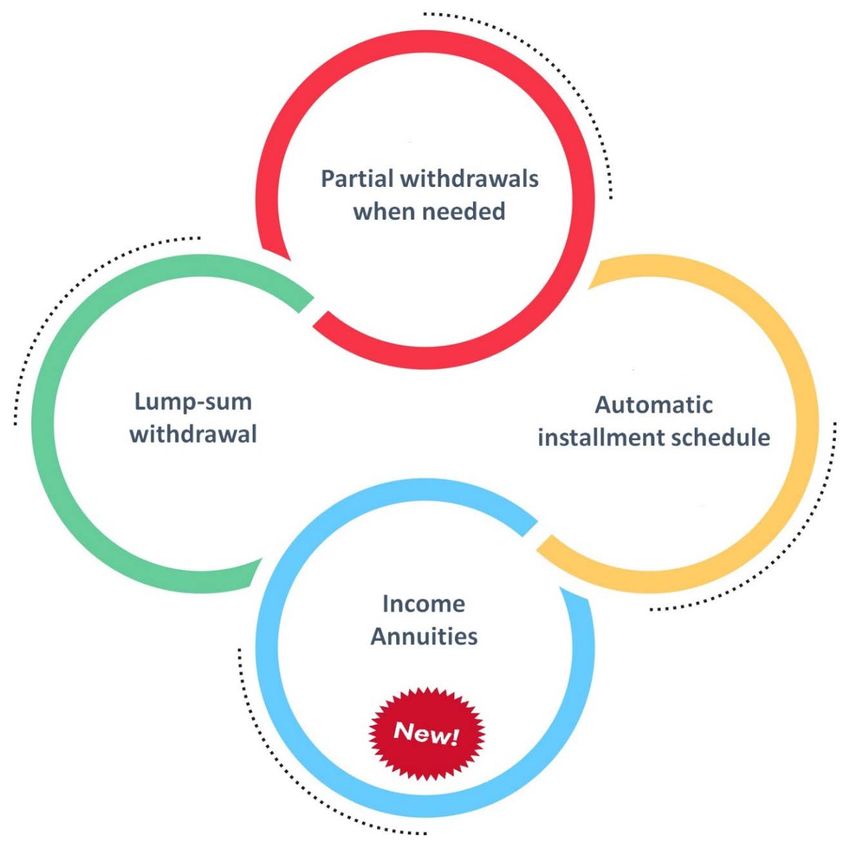
Click to edit Master title
       Be Prepared
           style             Consider the realities
                                          life expectancy

                             •   High cost of health care

                             •   We’re living longer
Life expectancy – we’re living longer

                                   65-year-old man           65-year-old woman          65-year-old couple*

   50% Chance                      Age 87                         Age 90                       Age 94

   25% Chance                          Age 93                      Age 96                      Age 98

FOR ILLUSTRATIVE PURPOSES ONLY
Source: Society of Actuaries RP-2014 Mortality Table projected with Mortality Improvement Scale MP-2014 as of 2015
*At least one surviving individual.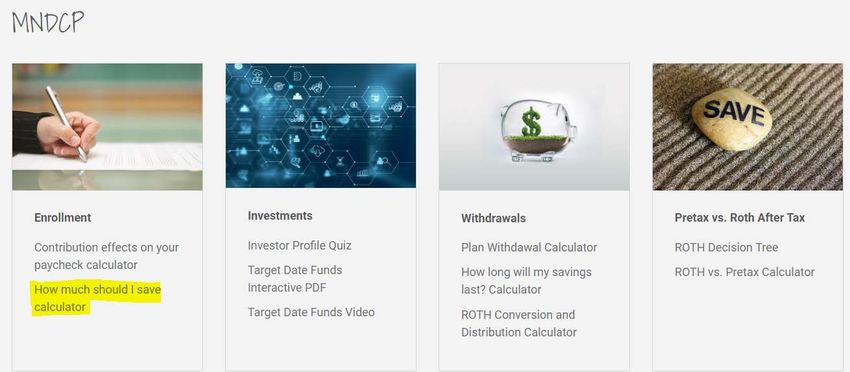
Be Prepared   Consider the realities
                              inflation

              •   High cost of health care
              •   We’re living longer
              •   Inflation
Inflation – what money will buy
The effect of inflation over 20 years
FOR ILLUSTRATIVE PURPOSES ONLY
Source: U.S. Bureau of Labor Statistics, Consumer Price Index, U.S. City Average Price Data (12/1999 – 12/2019)Be Prepared Consider the realities
stock market volatility
• High cost of health care
• We’re living longer
• Inflation
• Market VolatilityExpect stock market volatility
Market volatility over the past 20 years
S&P 500® Index –monthly returns
Dot-com
bubble collapse Mortgage meltdown
FOR ILLUSTRATIVE PURPOSES ONLY Past performance is not a guarantee or prediction of future results. You cannot invest
directly in a benchmark index. The S&P 500 ® Index measures the performance of the domestic large-cap equity market and is
used as a proxy of the stock market in general. The S&P 500 ® is a registered trademark of Standard & Poor’s Financial
Services LLC.
Source: CBOE ®, Chicago Board Options Exchange ® Data from 1/1/1998 – 1/1/2018
www.cboe.com/products/stock-index-options-spx-rut-msci-ftse/s-p-500-index-options/s-p-500-index/spx-historical-dataKeep perspective
It has paid to stay invested in U.S. stocks during troubled times
Subsequent 5-year return
FOR ILLUSTRATIVE PURPOSES ONLY Past performance is not a guarantee or prediction of future results. You cannot invest
directly in a benchmark index. U.S. stock market returns represented by total return of S&P 500®, which is an index used
as a proxy for the stock market in general.
Source: Fidelity Investments. https://institutional.fidelity.com/app/item/RD_13569_23965.html With data
provided by Ibbotson, Factset, FMR Co., Fidelity Asset Allocation Research Team (AART) as of 3/31/2015.
.Be Prepared Prepare your
retirement budget
How much will you need to
maintain your standard of
living?
Review your financial situation
to determine:
• all your sources of
retirement income
• how your expenses will
differ in retirementConsider your income
Take into account all of your assets, including:
• Projected Social Security benefit At
different
• Projected Pension benefit ages
• Money saved in retirement plan accounts
MNDCP 457(b) plan, 403(b) plan, 401(k) plan, IRAs
• Money saved in Health Savings Plans
HCSP, HRA, HSA, VEBA
• Spouse’s retirement plan accountsConsider your expenses Retirement expenses may decrease • Housing • Payroll taxes (e.g., FICA) • Transportation • Retirement plan contributions Retirement expenses may increase • Health Care • Travel
Median consumer expenses
                             Entertainment,Clothing, 2.7%                                         Ages 65-74
                                 6.1%
                     Pension & SS,
                         6.6%

                                                                                      Housing, 33.3%

             Other , 10.9%

                 Health Care,
                   11.6%

                                                                           Transportation,
                                 Food, 12.6%                                   16.2%

1 Includes
         cash contributions, alcohol, tobacco, personal care products and services, reading, education, life and personal
insurance, and miscellaneous expenses
Source: U.S. Bureau of Labor Statistics, Consumer Expenditures in 2015 Report 1066, April 2017
Take action
retirement readiness
Consider how the Prepare a
following factors could retirement
affect your retirement budget
savings
• Higher health care costs
• Increasing life
expectancies
• Inflation
• Stock market volatilityPension
Pension benefit factors

Service   High-5    Benefit      Possible
 Credit   Salary   Multiplier   Reduction
What you receive
                  credit for
          •   Every month that deductions
              from pay are taken
                 Part-time ( 7-1-2010
Combined service annuity
(CSA)
Service with another MN public
plan (e.g., TRA or PERA)
Service
Credit Requirements:
• Minimum six months with each
plan
• Must terminate from all plans
• Must collect from all plans within
one yearAverage monthly salary
• Highest five successive years’ wages
(High-5)
• Includes gross salary
High-5 • Excludes unused vacation & sick
Salary leave payouts
• NOT reduced by contributions to
your MNDCP or HCSP accountA set multiplier
The formula dictated by Minnesota
law used to calculate your benefit
Benefit
Multiplier
1.7%Reduction factor
Depends on age
Full Retirement Age
if hired prior to 7-1-1989
• Age 65, or
• Rule of 90
Possible
Reduction Full Retirement Age
if hired after 7-1-1989
• Age 66
Apply reduction if you collect
pension benefit before your
FULL RETIREMENT AGEMeet Anita & Sarah
Each began employment at the same time
Each earn the same salary
Anita
Plans to retire at age 66
With 30 years at DNR
Sarah
Plans to retire at age 62
With 26 years at DOTBenefit comparison
= MONTHLY
BENEFIT
SERVICE HIGH-5 BENEFIT POSSIBLE
CREDIT SALARY MULTIPLIER REDUCTION
Anita retires age 66
30 years X $5,000 X 1.7% X N/A = $2,550
Sarah retires age 62
26 years X $4,619 X 1.7% X 0.7090 = $1,447
FOR ILLUSTRATIVE PURPOSES ONLY Your actual results will vary based on your retirement date.Benefit deferral comparison
= MONTHLY
BENEFIT
SERVICE HIGH-5 BENEFIT POSSIBLE
CREDIT SALARY MULTIPLIER REDUCTION
Sarah retires age 62
26 years X $4,619 X 1.7% X 0.7090 = $1,447
Sarah retires age 62 BUT DEFERS TO AGE 66
26 years X $4,619 X 1.7% X N/A = $2,042
FOR ILLUSTRATIVE PURPOSES ONLY Your actual results will vary based on your retirement date.Joint & Survivor benefit options
• Irrevocable election
Your Survivor Bounce
Benefit Type • Survivor(s) doesn’t have
Benefit Benefit Back
to be a spouse
Single Life $2,550 N/A N/A
• Younger age survivor(s) =
Joint & Survivor (retiree & survivor both age 66) smaller benefit
100% Option $2,238 $2,238 $2,550 • Non-spouse survivor(s)
between 10 and 19 years
75% Option $2,308 $1,731 $2,550
younger may select 75%
50% Option or 50% option
$2,384 $1,192 $2,550
Life Income 15-Year Certain • Non-spouse survivor(s)
more than 19 years
$2,385 $2,385 N/A younger may only select
50% option
FOR ILLUSTRATIVE PURPOSES ONLY Your actual results will vary.Value of pension benefit
Sarah Anita
Example
Retirement age 62 66
Contributions to MSRS
$65,927 $80,471
(6% of salary)
Monthly benefit $1,447 $2,550
Total benefit paid in retirement
$598,736 $876,186
(live to age 90)
NET GAIN $532,015 $795,715Plan for taxes Your pension benefit is taxable • Withhold federal & state tax (for MN only) • Adjust tax withholding at any time • Receive tax form 1099-R each January
Post retirement
    benefit increase

Retirees receive an annual pension
  benefit increase each January

    •   First increase pro-rated
Working after retirement
If you return to MSRS eligible position ONLY:
• Notify MSRS of re-employment
• 30 day break in service is required
• No retirement deductions taken
• When under Social Security’s full-retirement age,
pension benefit suspends at earnings limit ($18,960 - 2021)
• Restarts at end of employment or January 1st of next year
• May affect eligibility to access your MNDCP & HCSP assetsDeath prior to retirement
Surviving Spouse Benefit
• 100% Joint & Survivor lifetime monthly benefit, or
• Monthly payment for 10, 15 or 20 years, or
• Lump-sum payment of employee contributions
only plus 3% interest
Non Spouse Benefit
• Lump-sum payment of employee contributions
only plus 3% interest
• If no surviving spouse, minor child benefitPension benefit
Application process Forms needed
1. Application for Retirement Benefit
2. Direct Deposit form
3. Birth records
4. Copy of Marriage Certificate
(if applicable)
5. Certified copy of Divorce Decree
or
Contact your pension plan Domestic Relations Order
provider when applying for (if applicable)
your pension benefitTake action
pension
Review Understand the
your estimated impact of retiring
pension benefit before your full
retirement age
• Annual statement
Further you are from your
• Online account full retirement age, greater
the benefit reduction
• Schedule an appointment
with an MSRS
RepresentativeIncome Gap
Income
GAPWhat is an income gap?
You might have an income gap if:
your savings does not meet your retirement
income needs
you retire early and need more retirement
savings
or
you fear you will outlive your savingsHow much income will it take?
You may need
$60,000 annual salary
$48,000
80% to 100%
FOR ILLUSTRATIVE PURPOSES ONLY
Figure represents 80% of $60,000 salary
of your current income to maintain
your lifestyle in retirementBridge any income gaps
Pension & Social Security may not be enough

 Income your MN public pension replaces1
          • 10 years service = 17%
          • 20 years service = 34%
          • 30 years service = 51%
Income your Social Security replaces2
          •   Average MN public employee recipient = 31%

1 Based on the years of service of MSRS pension recipients. Assumes full retirement age of 66. A TRA recipient
  replacement percentage would be higher.
2 Based on the collecting an unreduced social security benefit at age 66 and a final average salary of 2016 retirees from

  MSRS, PERA, TRA public pension plans. Does not assume future earnings. Salary Source: MSRS, PERA and TRA 2016
  Comprehensive Annual Financial Report. Social Security Source: SSA Benefit Calculator.
Case study income replacement
Sarah Anita
Retirement Age 62 66
High-5 monthly salary $4,619 $5,000
Pension replacement 31% 51%
Social Security replacement 25% 30%
TOTAL INCOME
56% 81%
REPLACEMENT
FOR ILLUSTRATIVE PURPOSES ONLY Your actual results will vary.Case study savings needed
Sarah Anita
Retirement Age 62 66
TOTAL INCOME
56% 81%
REPLACEMENT
Savings needed to replace
$257,100* $0
80%
Savings needed to replace
$470,500* $198,500*
100%
FOR ILLUSTRATIVE PURPOSES ONLY Your actual results will vary.
Based on a 5% annual rate of return (not guaranteed) and 2% inflation. Assuming annual
withdrawals to reach stated income replacement lasting until age 90.Calculate how much retirement
income you will need
Do your own calculation www.msrs.state.mn.us/toolbox#mndcpTake action
Ways to bridge the income gap
MNDCP account assets HCSP account assets
Increase your annual Use your HCSP account
contribution if possible assets
Pension & Social Security
Defer, if possible, the date
of your retirementMinnesota Deferred Compensation Plan
What is the MNDCP?

A voluntary savings   Available to all MN   State sponsored
plan to supplement    public employees      457(b) Plan
your pension & Social
Security income
Make the most of the MNDCP

     Maximize your contributions

       Save more each paycheck

    Minimize stock market volatility

     Take advantage of lower fees
Maximize your contribution
Within 3 years of
Age 50 & over normal retirement age
$26,000The impact of saving more
Ramping up contributions by $200/paycheck can add up
3 years $17,075
5 years $30,291
10 years $71,186
What you contribute What you may earn
FOR ILLUSTRATIVE PURPOSES ONLY
Figures represent the growth of bi-weekly contributions at 6% rate of return (not guaranteed) compounded monthly,
reinvestment of earnings with no withdrawals. The tax-deferred amounts shown do not reflect any charges, expenses or fees.Minimize market fluctuation impact
Investment diversification Spreading your investments over
multiple asset classes
FOR ILLUSTRATIVE PURPOSES ONLY Diversification does not ensure a profit or protect against loss in declining markets.How diversification works
Sample asset allocation of Diversification within
an investment portfolio the stock allocation
FOR ILLUSTRATIVE PURPOSES ONLY Diversification does not ensure a profit or protect against loss in declining markets.Sample asset allocation models
Aggressive Portfolio
Best year…………… 29.1%
Worst year………… -31.7%
Average…………….. 8.7%
Conservative Portfolio
Best year…………… 20.0%
Worst year………… -16.4%
Average…………….. 6.8%
FOR ILLUSTRATIVE PURPOSES ONLY The models shown illustrate hypothetical investment allocations for Aggressive &
Conservative risk profiles. Index returns were used to provide calendar year returns from 1/31/1991 to 9/30/2017 based on
asset allocations used for each model. Results are hypothetical and are not based on the performance of actual portfolios.
Intended to illustrate possible investment portfolio allocations that represent an investment strategy based on risk and
return. Investing involves risk, including possible loss of principal. (See last slide for additional information)
Source: State Street Global Advisor with data provided by Factset.Click to edit Master title Investment Disclosure
style
Please consider the investment objectives,
fees and expenses carefully before
investing. The prospectus and/or disclosure
documents contain this and other important
information about the investments offered
through your plan. To obtain a prospectus
or disclosure document, or to learn more
about the investment options, visit
www.msrs.state.mn.us or call
800-657-5757. Read such materials
carefully before investing.Avoid rollover regret
Upon separation of employment:
• You are not required to close or rollout your 457(b)
or 403(b) account to an IRA
• Consider consolidating your retirement plan accounts
• Discuss rolling money from one account to another with
your financial advisor/planner and consider any potential
fees and/or limitations of available investment optionsRollover remorse
One final point!
Once all assets are out of the plan,
you may not rejoinFees can erode your gains
Assumptions
• Starting balance: $65,000
$77,460 $79,330
• No contributions
$60,670
• 5% annual rate of return
• Annual 4% withdrawal
of account balance
• After 25 years
Account balance with a 1.12% advisor fee1
MNDCP account with a 0.10% administrataive fee2
For illustrative purposes only This hypothetical No account fee
illustration is not intended as a projection of future
investment results, nor is it intended as financial
planning or investment advice. Rates of any return may
vary. The illustration does not reflect other associated
charges, expenses of fees. The tax-deferred 1 Source: 2017 Advisory HQ study; Average Financial Advisor Fees
accumulation shown would be reduced if these fees had based on assets under management for a $100,000 account
been deducted. 2 MNDCP administrative fee as of 1/1/2021 capped at $125/yearWithdrawal
Considerations Goals
• Number of years savings should last
• Leave savings to heirs
• Philanthropic wishes
Realities
• Meet fixed expenses
• Allow for discretionary expenses
• Cover emergency expenses
Other
• Coordinate withdrawals with the
use of other assets
• Tax efficient withdrawalsHow to generate income
from your retirement plan
Flexible
Withdrawal
OptionsHow long will your savings last?
No data Savings Balance
Gross Withdrawal $50,000 $100,000 $150,000
$500/month 11 yrs 4 mos >50 yrs >50 yrs
$1,000/month 4 yrs 9 mos 11 yrs 4 mos 22 yrs 3 mos
$1,500/month 3 yrs 6 yrs 8 mos 11 yrs 4 mos
FOR ILLUSTRATIVE PURPOSES ONLY
Your actual results will vary. This hypothetical example assumes a 6% annual rate of return. Rate of return not guaranteed.Calculate how long your savings will last Do your own calculation www.msrs.state.mn.us/toolbox#mndcp
Understand the tax landscape
Withdrawals are taxable
Pre-tax
20% mandatory federal withholding, except
savings
• Withdrawal schedules lasting 10 or more years
• RMD payments
Withdrawals are tax-free if:
Roth
• Withdrawal made after age 59½
after-tax (death or disability)
savings AND
• Roth account established at least
five tax years
Withdrawals made prior to age 59½ that are attributable to rollovers from
another type of plan may incur a 10% early withdrawal IRS penaltyClick to edit Master title
style Fulfill your RMD
RMDs are mandated by the IRS
once you reach age 72 or retire,
whichever is later
Required Minimum
Distributions
(RMDs)Click toCalculation
edit Master title
style
RMD rules to remember
1. MNDCP account balance
as of previous December 31 $______
Required Minimum Distribution
2. Life expectancy factor (see table) • Age 72
The age you will turn this year _______ • Every year thereafter
• Not required if employed
3. RMD Amount (line 1 ÷ line 2) $______
Uniform Lifetime Table III
Life
For use by: Age Expectancy
• Unmarried owner Factor Excess accumulation penalty
• Married owner whose 72 25.6
spouse is not more • 50% of amount not
than 10 years younger 73 24.7
distributed as required
• Married owner whose 74 23.8
spouse is not the sole 75 22.9
beneficiary
Factors change in 2022Keep beneficiary
What designations up to date
happens if
something
happens to
you?
A beneficiary
will inherit your
money
Plan ahead
AVOID
PROBATETake action
Maximize Keep in mind
your contributions you are not required
to roll out or close
your MNDCP account
Minimize
account fluctuations
with a diversified
investment strategy
Consider
a withdrawal plan that
is right for youHealth Care Savings Plan
Sample health care costs
       Amount needed to cover retiree health insurance1 to age 90

                                                Retiree Only                  Retiree & Spouse

                     Anita retires                 $144,000                         $288,000
                       age 66

                     Sarah retires                 $175,236                         $374,196
                        age 62

For illustrative purposes only
SOURCE: MSRS 2020
1Based on SEGIP health insurance cost of $701/month retiree; $2.061 retiree & spouse from age 62 to age 65 and

 $355 SEGIP supplemental insurance and $145 Medicare Part B / month for retiree & spouse from age 65 to age 90
What is the HCSP?
A tax-free savings account
Tax-free contributions
Tax-free potential growth
Tax-free reimbursements
No Social Security, Medicare or income taxes
Reimburse post-employment health care expenses
for employee, spouse, legal tax dependents, and
children up to 26th birthday.
NOTE: Your Social Security benefit may be slightly reduced because no FICA tax is collected on contributionsTax-free matters
Taxable Cash Payout Tax-Free HCSP Payout
Severance payment $10,000 Severance payment $10,000
Federal Income Tax 2,200 Federal Income Tax 0
State Income Tax 680 State Income Tax 0
FICA Tax 765 FICA Tax 0
Net cash payment $6,355 Net cash payment $10,000
For illustrative purposes only
This hypothetical example assumes a 22% federal withholding rate + 6.80% state withholding rate + 7.65% FICA (Social
Security and Medicare) tax rate. Individual tax rates will vary based on total taxable income and filing status for the year.Eligibility for participation
Participation MUST be… Participation CANNOT be…
negotiated in union contract individual choice—group
or participation must be
specified in union contract
included in personnel policy or personnel policy
for non-union employeesInvestment Default Money Market Fund
Seeks to maintain the value of a
participant's original investment
Seeks to earn interest that is
competitive with short-term
interest rates
Plan expenses may exceed
earned interest
You could lose money by investing in a money market, it cannot guarantee it will do
so. An investment in the fund is not insured or guaranteed. Although the fund seeks to
preserve the value of your investment at $1 per share by the Federal Deposit
Insurance Corporation or any other government agency. The fund’s sponsor has no
legal obligation to provide financial support to the fund, and you should not expect
that the sponsor will provide financial support to the fund at any time.Click to edit Master title
Higher Risk
style
Potential Reward
Investment options
T. Rowe Price Small Cap Stock Fund
Vanguard Total International Stock Index Fund
Vanguard Mid Cap Index Fund
Vanguard Total Stock Market Index Fund
Vanguard Dividend Growth Fund
Vanguard Balanced Index Fund
Dodge & Cox Income Fund
Vanguard Total Bond Market Index Fund
Stable Value Fund
Lower Risk
Potential Reward FOR ILLUSTRATIVE PURPOSES ONLY The chart reflects the
expected relative risk/return potential over the long-term. Past
performance is not a guarantee of future results.Investment Disclosure Please consider the investment objectives, fees and expenses carefully before investing. The prospectus and/or disclosure documents contain this and other important information about the investments offered through your plan. To obtain a prospectus or disclosure document, or to learn more about the investment options, visit www.msrs.state.mn.us or call 800-657-5757. Read such materials carefully before investing. No investment is 100% risk free. You can incur loss of principal by investing. There is no assurance that investing will ensure a profit or protect against loss. Foreign investments involve special risks, including currency fluctuation, taxation differences and political developments. Equity securities of small and mid-sized companies may be more volatile than securities of larger, more established companies. Asset allocation and balanced investment options and models are subject to the risks of the underlying funds, which can be a mix of stocks/stock funds and bond/bond funds. A bond fund’s yield, share price and total return change daily and are based on changes in interest rates, market conditions, economic and political news, and the quality and maturity of its investments. In general, bond prices fall when interest rates rise and vice versa.
Click to edit Master title
style When can you request
reimbursements?
Upon termination of
employment… at any age
Once retired
If collecting a disability benefit
from a MN public pension plan
Returning to work?
You may have limited or no accessWhat is reimbursable
Eligible medical/dental expenses, including:
Insurance Premiums
• Health, Medicare, Dental, Long-Term Care
Dental costs
Eye-care costs
Co-payments & prescription drugs
Over-the-counter drugs with prescription
For other eligible expenses, see IRS Publication 502What cannot be reimbursed Life insurance premiums Teeth bleaching Cosmetic surgery Finance charges on bills Fees for health club membership Funeral expenses Vitamins
Reimbursement requests
Patient Billed
Paid directly to participant, not
to insurer or provider
Pay Bill
Out-of-pocket expenses
Request • Minimum payout $75
Reimbursement
from HCSP • Maximum limit: $36,000 in 2021
Eligibility Verification
Monthly insurance premiums
• Medical, dental, long-term care,
Medicare
REIMBURSED
• Set up direct deposit to bank
accountHCSP/HSA compatibility
If a contribution is made to an HSA on your behalf in
same year you are eligible to access your HCSP:
Your HCSP account becomes “limited-use”
May request reimbursements for dental & vision
expenses only during the year.
Complete a Reimbursement Suspension Election
form each calendar year that you or your
employer contribute to an HSAWhat happens if you die?
Spouse or legal dependent
Spouse or legal dependents1
Account balance transfers to HCSP account for spouse
OR, if no spouse
Account balance transfers to HCSP account for
dependent(s) Spouse or legal dependent reimbursements
remain tax-free
1Legal dependent is someone you can claim on your federal tax return.What happens if you die?
If no spouse or legal dependents
If NO spouse or legal dependents1
Account balance transfers to HCSP account for your
designated beneficiaries
Reimbursements taxed as ordinary income
(MSRS will issue IRS Form 1099-MISC)
1Legal dependent is someone you can claim on your federal tax return.Receive an HCSP
Welcome Packet
in approximately 4 weeks:
after your first contribution
is received
after your termination date is
entered or your employer remits
severance paymentTake action
Review Remember
your investments post-employment account
The Money Market for health expenses only
Fund is the
investment default
Do not report
reimbursements from
your account on your
federal/state tax return
since the HCSP is a
tax-free planTime table
Pre-retirement timetable
PRIOR TO RETIREMENT ACTION
                    •   Maximize contributions to your MNDCP account
                        in your final working years
5 years             •   Calculate your retirement budget
                    •   Adjust your MNDCP & HCSP investment allocation
                        as appropriate
                    •   Explore your retirement income & expenses
1 year
                    •   Prepare your retirement budget
                    Contact your pension plan provider to request
6 - 12 months
                    an audited pension estimate

3 months            Contact Social Security, if retiring at age 62+

                    •   Complete pension application
1 - 2 months            File with pension plan
                    •   Contact H.R. about insurance & HCSP eligibility
Post-retirement timetable
AFTER RETIREMENT ACTION
Immediately ENJOY ENJOY ENJOY ENJOY
Up to 6 weeks Receive pension authorization letter & first payment
30 days after receipt of
pension authorization Your joint & survivor benefit option is irrevocable
letter
1st week of the next month Receive monthly pension payment
December Receive notification of post-retirement increase
Receive tax Form 1099-R for pension & MNDCP
January
paymentsContact us
Receive more details about the
information you just saw
or
Make an appointment to speak to
one of our retirement counselors
www.msrs.state.mn.us
Locations:
St. Paul - 60 Empire Drive · Suite 300 1.800.657.5757 or 651.296.2761
St. Cloud - 4150 Second Street S · Suite 330
Mankato - 11 Civic Center Plaza · Suite 150
Detroit Lakes - 714 Lake Ave · Suite 100
Duluth - 625 East Central EntranceImportant Today’s workshop was designed to:
Notes Provide you with fundamental information
on your MSRS retirement plans
Core securities, when offered, are
offered through GWFS Equities Inc. Objectively highlight your
and/or other broker dealers. investment options
Outline other sources of information
GWFS Equities Inc., Member for your decisions
FINRA/SIPC, is a wholly owned
subsidiary of Great-West Life & Annuity
Insurance Company. Please read all investment-related
information prior to investing
GWL&A and/or its subsidiaries are not
responsible for, have not reviewed and This presentation is for general education
do not endorse the content contained
on msrs.state.mn.us. purposes only and does not, nor is intended to
constitute legal, tax, investment or financial
advice of any kind.
• Please consult your own advisors
for such advice
AM553491-07.18Asset Allocation Model Disclosure
from slide 54
The hypothetical illustrations are for informational and educational purposes only. They are not intended to
be a recommendation of a specific investment or investment strategy. In applying a particular asset
allocation model to your individual situation, you should consider other assets, income, and investments in
addition to the account you are considering for investment, to the extent the model does not consider these
additional assets.
Index returns shown are not those of an actual fund or portfolio, and are used to provide calendar year
returns back to 1995 based on hypothetical asset allocations used for a Conservative and Aggressive model,
respectively. They are not backtested returns and do not reflect the changes to glide paths over time. A
benchmark index is not actively managed, does not have a defined investment objective, and does not incur
fees or expenses. You cannot invest directly in a benchmark index.
For calendar year return calculations, the following index data from 9/30/2017 to 1/31/1991 was used,
reflective of the underlying indices used for the asset allocations. US Large Cap Equities: S&P 500 Index;
Global REIT: FTSE EPRA/NAREIT Developed Index; Commodities: Bloomberg Roll Select Commodity Index; US
Core Bonds: Bloomberg Barclays US Aggregate; and International Equity: MSCI ACWI ex USA IMI Index.
For returns back to 1991 for indices with insufficient track records, used current indices for existing track
records and replaced with equivalent indices with longer track records for the periods prior to index
inception. Small/Mid Cap US Equities: Russell Small Cap Completeness Index from 4/1/1999-9/30/2017 and
the MSCI Small/Mid Cap Index from 3/31/1999 to 1/31/1991; US Intermediate TIPS: Bloomberg Barclays US
Treasury Inflation Protected Notes (1-10 Y) from 7/1/2001-9/30/2017 and the Bloomberg Barclays US
Aggregate Index from 6/30/2001 to 1/31/1991 (TIPS returns were not available prior to 2001); US Short Term
Government/Credit: Bloomberg Barclays Capital 1-3 Yr Government Credit Index from 5/1/2004-9/30/2017
and the Bloomberg Barclays US Aggregate Government & Credit (1-3 Y) from 4/30/2004 to 1/31/1991; US
High Yield Bonds: Bloomberg Barclays High Yield Very Liquid from 2/1/1994-9/30/2017 and the Bloomberg
Barclays US Corporate High Yield Index from 1/31/1994 to 1/31/1991; and Long Government Bonds:
Bloomberg Barclays Long Government Bond Index from 1/1/1997-9/30/2017 and the Bloomberg Barclays
Long Treasury Index from 12/31/1996 to 1/31/1991.You can also read


