Australian Physiological Society - THE PROFESSIONAL ASSOCIATION FOR AUSTRALIAN PHYSIOLOGISTS
←
→
Page content transcription
If your browser does not render page correctly, please read the page content below

Australian Physiological Society
                         THE PROFESSIONAL ASSOCIATION FOR AUSTRALIAN PHYSIOLOGISTS

                AuPS News – September 2020
Member Profile:
Dr Danielle Hiam, Victoria University

Can you tell us about your current role and your
experiences so far in physiology?
I began my journey in research after a Biomedical
Science degree, when I undertook an Honours degree
at Deakin University with A/Prof Glenn Wadley in
2010. There I discovered my passion for epigenetics
research and how to do a really good Western Blot
(Thanks Glenn). I took a two year break overseas
before returning and working as an RA for the late
Professor Nigel Stepto who subsequently took me on
as a PhD student at Victoria University. I would like
to sincerely thank Nigel for giving me the opportunity
to do my PhD after being out of science for 2 years
and for the incredible opportunities I was given
during my PhD, including a 2 month secondment at
The Novo Nordisk Foundation Center for Basic
Metabolic Research in Copenhagen with Professor                sex-specific differences in the expression of
Romain Barres. My PhD thesis explored the role of              microRNAs, another form of epigenetic marks, in
epigenetics in the molecular basis of the aetiology of         human skeletal muscle. This unique study addresses
Polycystic Ovary Syndrome. In particular, I                    the critical under-representation of females in clinical
identified specific epigenetic marks (DNA                      and medical research. I have benefited greatly
methylation) that influence molecular signals that             working with A/Prof Nir Eynon, who has been an
drive impairments in reproductive and immune                   excellent mentor and provided me with ample
function in PCOS.                                              opportunities to upskill and from whom I have learnt
What research are you currently working on?                    a great deal. This project is in collaboration with
                                                               another AuPS member and the treasurer of AuPS Dr
Since completing my PhD in 2018, I have been a
                                                               Severine Lamon, from Deakin University. Being a
post-doctoral research fellow in A/Prof Nir Eynon’s
                                                               member of AuPS has no doubt been key in providing
(Production Editor for AuPS) research team at
                                                               me with these opportunities to network and
Victoria University. I am part of the team that
                                                               collaborate.
established the unique Gene SMART (Genes and the
Skeletal Muscle Adaptive Response to Training)
study. Using this cohort as a basis, I am examining

    The Australian Physiological Society is an Incorporated Association in the State of Victoria. Reg. No. A0021266A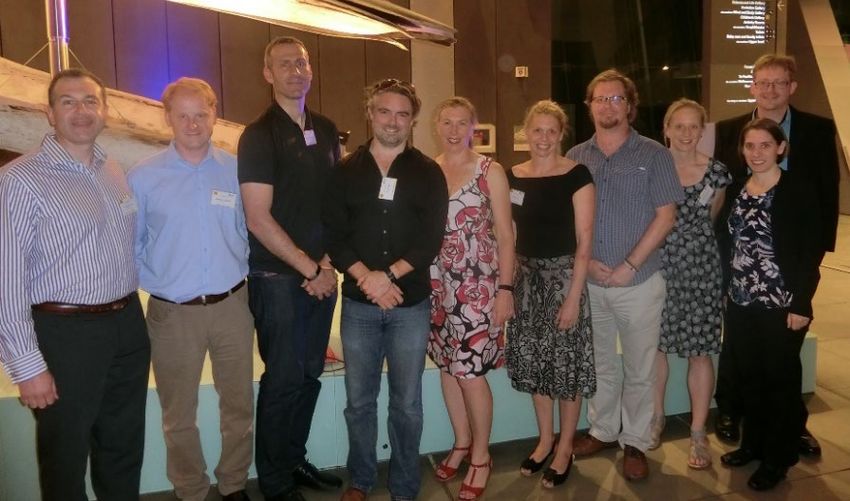
AuPS News – September 2020

Can you tell us about your role on AuPS council?             how extraordinary this year has been. It has been
                                                             incredibly challenging both on professional and
I joined AuPS in 2010 as a student member where I
                                                             personal levels. While everyone’s experience with
presented for the first time during my honours, I
                                                             the COVID pandemic has been unique with different
distinctly remember how nervous I was! Since 2016
                                                             hardships, I have to consider myself lucky that my
I have attended the AuPS conference yearly and it has
                                                             partner and I moved from a small 1 bedroom
become my favourite conference to attend. I find
                                                             apartment into our new house 2 months before the
AuPS to be a welcoming and supportive society and
                                                             lockdown! Since lock-down in March, I have become
I learn a great deal from the annual conferences.
                                                             somewhat of a ‘gym junkie’ where I do F45, 6 days a
Importantly, AuPS has provided an excellent
                                                             week via zoom in our garage, which my partner
platform for me to network and make some excellent
                                                             reluctantly shares with me as I take up his go-kart and
friends and start collaborations with other members
                                                             workbench tinkering space.
including in my current research. In 2019 I was
offered the position on the council as the IT manager,       On a professional note, without the commute I have
taking over from A/Prof Dave Davey, leaving big              found that I have more time to develop my skills in
shoes to fill. I have been responsible for                   research, in particular, data science. I have taken the
implementing the new registration and membership             opportunity to undertake R programming courses and
portal and have played a role behind the scenes in co-       attend many seminars in order to continue my
ordinating this years’ student and ECR on-line forum.        learning in bioinformatics and programming. I cannot
                                                             wait to get back into the laboratory again and resume
This year has been like no other, how have you
                                                             trials but until then I will continue to find unique
adapted to working under the restrictions
                                                             ways to keep my track record going and find silver
associated with the COVID-19 pandemic?
                                                             linings such as being able to wear active wear all day,
This year has been quite the year. I was not expecting       every day. Bring on 2021 and the 60th AuPS meeting
in March to still be in lockdown in September and no         on the Gold Coast!
doubt in years to come, we will look back and realise

Are you one of our followers yet??
                                                             Help us to communicate the achievements of our
                                                             members to the wider world with our AuPS Twitter
                                                             account.
                                                             So what are you waiting for? Follow us and use our
                                                             twitter handle to communicate the achievements of
                                                             our members @AuPhysiolSoc

                                                         2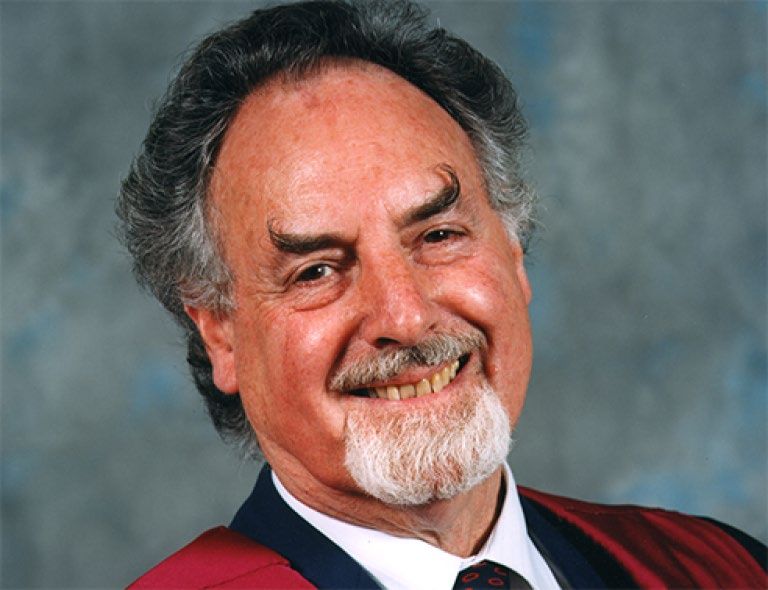
AuPS News – September 2020

                                The AK McIntyre Award
                                          Sponsored by SDR Scientific

The Society’s prestigious A.K. McIntyre award is awarded annually to a member of the Society who is judged to have made
significant contributions to Australian physiological science over their pre-doctoral and early post-doctoral years.
Application and Eligibility
To be considered for this award, nominees must:
-   be financial Ordinary Members of the Society (note: provisional members are not eligible to apply).
-   normally have completed their doctoral degree not more than 7 years prior to the time of their application.
-   be proposed by two financial members of the Society, who should each provide a statement of not more than 500 words
    summarising their nominees achievements.
-   provide a curriculum vitae which includes any involvement with AuPS, along with a list of published works, including
    conference proceedings.
In considering nominations, the judges will take into account the nominee's contributions to scientific meetings of the Society.
No individual may be awarded the prize more than once.
The Prize, sponsored by SDR Scientific consists of a medal and the sum of $1000. The winner will be invited to present their
work at the Physiological Society of New Zealand meeting in Queenstown in the following year, travel costs will be
supported.
The prize winner will be announced at the conclusion of the ECR forum (November 26th) and in the December Newsletter.
Closing Date: Applications close 5 pm, 9th October 2020.
Please email applications to the National Secretary, Glenn Wadley: glenn.wadley@deakin.edu.au
Eligibility and selection criteria can be found here: http://aups.org.au/Prizes/McIntyre.html

Details of other AuPS prizes can be found later in this newsletter and on our website.

                                                                                  Former AK McIntyre winners at the
                                                                                  AuPS conference dinner in 2017.
                                                                                  Pictures from left to right; Gordon
                                                                                  Lynch (1995), Brad Launikonis (2005),
                                                                                  Paul Gregorevic (2006), James Ryall
                                                                                  (2008), Robyn Murphy (2010), Kate
                                                                                  Murphy (2011), James Bell (2012),
                                                                                  Natalie Trevaskis (2015), Kim Mellor
                                                                                  (2016) and James Cuffe (2017).

                                                                                  A full list of previous winners can be
                                                                                  found on the AuPS website.

                                                               3
AuPS News – September 2020

Vale Geoffrey Burnstock – 1929-2020

It was with great sadness the scientific community
received the news of Professor Geoffrey Burnstock’s
passing on 2nd June 2020, at the age of 91.
Geoff was best known internationally as the founder
of purinergic research with his most famous article,
“Purinergic Nerves”, published in the journal
Pharmacological Reviews in 1972. In this review,
Geoff coined the word ‘purinergic’ and came up with
the purinergic hypothesis; nucleotides at P2
purinergic receptors are found in nearly every tissue
and organ and are today recognised as one of the most
important transmitter systems. He was also known as
the ‘smooth muscle man’ due to his early research
career focusing on the biology of smooth muscle.               Image: https://www.ucl.ac.uk/news/2017/may/spotlight-
Over his long and very eminent career, Geoff                   professor-geoff-burnstock
published more than 1500 original papers, reviews             acetylcholine and noradrenaline on the guinea pig
and books with his papers cited over 118,800 times            taenia coli smooth muscle preparation. After
(h-index of 156). The impact and contribution of his          spending a year at the University of Illinois working
research to the scientific community was recognised           with Clifford Ladd Prosser (thanks to a Rockefeller
by the Institute of Scientific Information list, where        Travelling Fellowship), Geoff and his wife Nomi
he placed first of most cited scientists in                   moved to Melbourne in 1959 where he accepted a
Pharmacology and Toxicology (1994-2008).                      Senior Lectureship in the Department of Zoology at
Geoff’s early studies, however, was in mathematics            the University of Melbourne. This was Geoff’s first
and physics having completed a BSc degree at King’s           important academic engagement.
College, University of London in 1953. He then                Geoff presented at the inaugural AuPS meeting in
moved into the field of zoology studying fish gut             1960 alongside Mollie Holman, whom he had met in
motility using organ bath pharmacology and                    Oxford. Their joint interest of how nerves and smooth
histology, completing his PhD in 1957. An invitation          muscles communicate to initiate contraction had led
from Wilhelm Feldberg (National Institute for                 to the initiation of what was to become a very
Medical Research, London) allowed Geoff to learn              successful collaboration. This collaboration was
more sophisticated electrophysiology techniques. It           made easier with Geoff’s move to Melbourne in 1959
was during this time that Geoff, together with Ralph          and Holman’s return to Australia from Oxford in
Straub, developed a novel technique for recording             1958 and a joint NIH grant. Their presentation at the
membrane activities from smooth muscle using the              AuPS meeting on smooth muscle action potentials
“sucrose gap technique”, first introduced by Robert           was pioneering with a series of papers published, the
Stämpli in 1954 to study action potentials in nerve           first one being a one-page note titled “Autonomic
fibres. Geoff’s work led to an invitation to join Edith       Nerve-Smooth Muscle Transmission” to Nature in
Bülbring’s group in the Department of                         1960. Geoff became an AuPS member in 1961 and
Pharmacology, Oxford University, where Geoff                  was the Invited Lecturer in 1972. In November 2009,
studied the effect of the neurotransmitters                   Geoff chaired the historical seminar to mark the 50th

                                                          4
AuPS News – September 2020

anniversary of AuPS at the University of Sydney. The          Melbourne, and an Honorary Professorial Fellow at
year before that he was made an Honorary member               the Florey Institute of Neuroscience and Mental
by the Society.                                               Health.
                                                              Geoff served on many journal editorial boards, was
In 1964, Geoff was appointed Professor and Chair of
                                                              Editor-in-Chief of the journal Autonomic
Zoology at The University of Melbourne where he
                                                              Neuroscience (1985-2016) and the journal
stayed until 1975. It was during this time he
                                                              Purinergic Signalling (2004-2020), which he
established the basic mechanisms of purinergic
                                                              founded in 2004 and led until his passing. His
signalling which led to his aforementioned
                                                              continued passion for, and influence of, purinergic
publication “Purinergic Nerves” in 1972. It all started
                                                              research has led to the establishment of eight Purine
with a critical experiment showing that despite
                                                              Clubs world-wide, with the Australian-New Zealand
blocking the only known autonomic nervous system
                                                              Purine Club established in mid-2018, with Geoff as
transmitter molecules, the muscle still relaxed. Many
                                                              the President.
more experiments later, Geoff concluded that the
transmitter in this case was the purine nucleotide,
ATP. He was heavily criticised for his provoking idea
that ATP functions as an extracellular signalling
molecule and neurotransmitter. Many of the scientific
community were sceptical and he was ridiculed at
numerous international meetings. Nonetheless, this
did not deter Geoff who kept pursuing his ideas and
collecting evidence. The purinergic hypothesis
finally gained momentum in the early 1990s when
Geoff and Eric Barnard, a former fellow PhD student
and old friend, cloned the first G protein-coupled
receptor for ATP (P2Y1). Shortly after, the first two
ATP-gated ionotropic receptors (P2X1 and P2X2)
were cloned. It was not long before seven P2X and
                                                                Geoffrey Burnstock with long term collaborator
eight P2Y receptor subtypes were cloned and
                                                                Mollie Holman - 1960
characterised, cementing Geoff’s prediction.
After 11 years at The University of Melbourne,                Geoff held several visiting and contract professor
Geoff, Nomi and their three daughters, made the               positions throughout his distinguished career:
move back to the UK, where Geoff took up a position           Contract Professor at the University of Siena (1985-
as the Head of Department of Anatomy and                      87) and University of Milan (1993-94); Visiting
Developmental Biology, University College London,             Professor at the Department of Pharmacology, UCLA
in 1975. At the same time, he was appointed                   (1970); the Institute of Experimental Medicine,
Convenor of the Centre of Neuroscience. This was              Hungarian Academy of Science (1983); the Royal
followed by the appointment as the Director of the            Society of Medicine Foundation, USA (1988). He
Autonomic Neuroscience Centre at the Royal Free               was also the Vice-Dean of the Faculty of Medical
Hospital School of Medicine in 1997; an appointment           Sciences, University College London (1980-83).
he held until his retirement in October 2017 at the age
of 88. A month after retiring, Geoff and Nomi moved           Throughout his career, Geoff received numerous
back to Melbourne where he, at the time of his death,         honours, keynote lectures, awards and medals. The
was a Professorial Fellow at the Department of                impressive list would be too long to publish here, but
Pharmacology and Therapeutics, The University of

                                                          5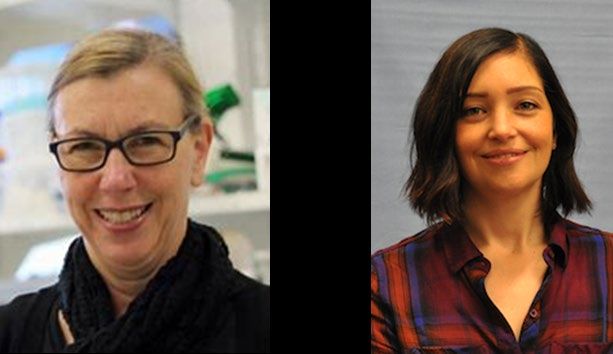
AuPS News – September 2020

most notable are: Royal Society of Victoria Silver           structure-based approaches. Another example of his
Medal (1970); Fellow of the Australian Academy of            significant contribution to the field is his involvement
Science (FAA) (1971); Fellow of the Royal Society            in the discovery and development of the P2X3
(FRS) (1986); Royal Society Queen’s Gold Medal               antagonist gefapixant for chronic cough.
(2000); British Neuroscience Association Annual              Despite Geoff having officially retired at the end of
Award for “Outstanding Contribution to British               2017, his life continued to be centred on research. He
Neuroscience” (2009); Copernicus Gold Medal,                 authored or co-authored five papers in 2018, seven in
Ferrara (2009); British Pharmacological Society’s            2019 (including three Editorials) and four this year,
Gaddum Medal (2010); Erasmus Medal (Academia                 the latest paper published in March.
Europaea 2012); Paton Prize Lecture of IUPS (2013);
The Australian Academy of Sciences’ McFarlane                Geoff will be deeply missed, but his legacy will live
Burnet Medal and Lecture (2018) and the Companion            on and continue to inspire future researchers
of the Order of Australia (AC) the same year. He             exploring purinergic transmission.
received three honorary doctorates, Doctor Honoris
Causa, University of Antwerp (2002); Doctor
Honoris Causa Goethe-University (Frankfurt am                Dr Jennie Cederholm (UNSW Sydney)
Main) (2007); and Doctor Honoris Causa University            Prof. Ronald Sluyter (University of Wollongong)
of Leipzig (2011). He was also consultant and adviser
to many pharmaceutical companies. Many of Geoff’s
original pharmacological concepts have proven                Co-Presidents, ANZ Purine Club
medical importance, e.g. modulators of purinergic
signalling are now designed using sophisticated

The Michael Roberts Excellence in Physiology Education Award
The Michael Roberts Excellence in Physiology Education Award, is an award bestowed by
the Australian Physiological Society in memory of Professor Michael Roberts who was a
lifelong passionate and dedicated advocate of physiology teaching and education. The
award is intended to recognise AuPS members who have demonstrated a sustained
performance of excellence in the delivery of physiology education at the tertiary level, and
make a contribution to the teaching activities of AuPS.

The recipient of this award will be presented with a medal and a cash award. Winners will be announced at the
conclusion of the ECR forum (November 26th) and in the December Newsletter. The winner will be invited to deliver a
keynote lecture at the Educational Symposium in next year's AuPS conference.

Email applications to the AuPS National Secretary: Glenn Wadley: glenn.wadley@deakin.edu.au

Nominations for the 2020 Michael Roberts Award close on 9th October 2020.

See the AuPS website for further details.

                                                         6
AuPS News – September 2020

Professor David Adams inducted as a Fellow of the
American Physiological Society
                                                          demonstrated excellence in research, have made
                                                          substantial contributions to the physiological
                                                          sciences and contributed to the society. Professor
                                                          Adams first joined the APS in 1993 while Professor
                                                          at the University of Miami School of Medicine,
                                                          Miami, FL and was a member of the Editorial Board
                                                          of the American Journal of Physiology – Heart and
                                                          Circulatory Physiology (1991-1996).

                                                          This acknowledgement of Professor Adams’
                                                          achievements follows on from becoming a Fellow of
                                                          the Physiological Society (FTPS) last year, an award
                                                          that also recognises the experience, commitment and
                                                          contribution of distinguished members of the
                                                          Physiological Society. Professor Adams was a
                                                          member of the editorial board of The Journal of
                                                          Physiology (London, 2014-2018) and as a FTPS,
                                                          joins a select group of other Australian physiologists
                                                          including Roger Dampney, George Fink, Simon
                                                          Gandevia, Robin McAllen, Norman Saunders and
                                                          George Stephenson.
Congratulations to our former president, Professor
David J. Adams (Distinguished Professor, IHMRI),          Professor Adams said, ‘I am committed to raising the
on being inducted as a Fellow of the American             profile of Australian physiology and physiologists
Physiological Society (FAPS). Professor Adams             internationally and willing to support the nomination
joins a select group of only four Australian-based        of AuPS members as Fellows of the American
physiologists to receive this honour, joining AuPS        Physiological Society and/or The Physiological
honorary member Roger Dampney, as well as Robin           Society who fulfil the nomination criteria. It would
McAllen and Ida Llewellyn-Smith.                          be great to see the number of Australian Fellows in
                                                          these societies increase over time’.
The rank of FAPS is a prized member status reserved
to honour distinguished leaders who have                  Congratulations Professor Adams on this well-
                                                          deserved recognition of your outstanding
                                                          contributions to Physiology!

                                                      7
AuPS News – September 2020
AuPS PhD Student Grant Winners 2020
Congratulations to the recent winners of the AuPS Student grants for 2020. Following a very competitive round
with many high quality applications we are pleased to announce that the winners are:
Aldo Meizoso Huesca – University of Queensland
Project title: Spatial distribution of mammalian skeletal muscle thermogenesis.
Amanda Denniss – University of Canberra
Project title: Understanding arrhythmogenic interrelationships between posttranslational
modification pathways converging on the cardiac ryanodine receptor, RyR2.
Daniel Singh – University of Queensland
Project Title: Design and validation of a novel malignant hyperthermia diagnostic assay.
Each winner receives $1500 to support the purchase of equipment, consumables or training to further their research
projects. Keep an eye out for future newsletter editions to hear about the work and exciting outcomes from these
projects.
The AuPS Postdoctoral and Student
Publication Prizes
These are annual awards for the best original paper published by an AuPS member during their first 4 postdoctoral years
and during the course of their PhD studies.
Prizes:
The Prizes, sponsored by SDR Scientific, consist of $500 awards, to be used to present work at a conference. (Note:
winners will be reimbursed after providing a copy of an invoice of conference expenses). Winners will be announced at
the conclusion of the ECR forum (November 26th) and in the December Newsletter.
Eligibility and selection criteria can be found on the AuPS website: http://aups.org.au/Prizes/
Email applications to the AuPS National Secretary Glenn Wadley: glenn.wadley@deakin.edu.au
Closing date: Applications close 5pm, 9th October 2020.
8AuPS News – September 2020
AuPS 2020 Virtual Education Forum
We are proud to announce the AuPS Virtual Education Forum, to be held on the 25th of November. This forum
provides an opportunity for educators to present their perspectives and findings in relation to the following
questions:
PHYSIOLOGY TEACHING AND LEARNING: PAST,
PRESENT AND FUTURE
The AuPS virtual education forum provides an opportunity for
educators to present their perspectives and findings in relation to the
following:
PAST: What is a research paper/discovery that has informed your
physiology teaching and been used to inspire your students?
PRESENT: What have you discovered from current evaluations of
your teaching?
FUTURE: How can we educate students to ensure they have the
skills to adapt and respond to changing employment situations and
environments?
Keynote: Professor Dee Silverthorn Physiology education post-
COVID: a continuing role for virtual learning platforms
Presentation prize (AuPS members)
th
When: 25 November; Presentations (10-11:30), Workshop (Reflective
practice; 2-3:30):
Registration, abstract submission and further details: here
9AuPS News – September 2020
(Hosted via Zoom)
Keynote Speakers
Prof Robyn Murphy Dr. Tanya Cully
LaTrobe University University of Otago
REGISTRATION IS FREE
ABSTRACT SUBMISSION
CLOSE 5PM, 18th SEPTEMBER
(visit the AuPS website for more information)
REGISTER NOW
aups.org.au
10
@AuPhysiolSocAuPS News – September 2020
From the Archives: AuPS 1960-2020
11AuPS News – September 2020
The AuPS Archives
This article entitled ‘The Australian Physiological and Pharmacological Society. A brief History’ was written by
Stella O’Donnell in 1983. The article is from the AuPS archives. A special thanks to Prof Roger Dampney,
honorary archivist for the AuPS, for arranging access to these pieces of our history.
12AuPS News – September 2020
AuPS Council
President Membership Officer
Prof Gordon Lynch Dr James Cuffe
The University of Melbourne The University of Queensland
president@aups.org.au membershipofficer@aups.org.au
National Secretary Education Officer
A/Prof Glenn Wadley Dr Julia Choate
Deakin University Monash University
secretary@aups.org.au educationofficer@aups.org.au
Treasurer Student Representatives
Dr Séverine Lamon Macsue Jacques
Deakin University Victoria University
treasurer@aups.org.au
Cassandra Smith
IT Manager & Production Editor Victoria University
A/Prof Nir Eynon and Dr Danielle Hiam
Victoria University Councillors
ITmanager@aups.org.au
Dr Richard Mills
Webmaster The University of Queensland
Dr Renee Ross
University of Tasmania Dr Nicole Beard
webmaster@aups.org.au The University of Canberra
Associate Editor Dr Natalie Trevaskis
Dr Chris Shaw Monash University
Deakin University
newsletter@aups.org.au
This issue of AuPS News was compiled by Chris Shaw with many thanks to the generous contributors.
The next issue of AuPS News will be distributed to members in December 2020.
All contributions for AuPS News should be sent to: newsletter@aups.org.au before the end of November.
13AuPS News – September 2020
Thank you to the supporters of AuPS:
14You can also read


