Structural Engineering Graduate Student Handbook - Texas A&M ...
←
→
Page content transcription
If your browser does not render page correctly, please read the page content below
Structural Engineering
Graduate Student Handbook
    Zachry Department of Civil & Environmental Engineering

    2019-2020

Updated: August, 2019
Structural Engineering Graduate Handbook                                                                                                                     2019-2020

                                                                                       Table of Contents
   Overview ..................................................................................................................................................................... 5
       Program Overview .............................................................................................................................................. 6
       Faculty Members ................................................................................................................................................. 7
   Degree Programs .................................................................................................................................................. 11
       Degree of Master of Science – Non-Thesis............................................................................................ 12
           A.        Advising Committee ........................................................................................................................ 12
           B.        Prerequisites ....................................................................................................................................... 12
           C.        Degree Plan ........................................................................................................................................ 12
           D.        Required Coursework – 18 hours ............................................................................................... 13
           E.        Elective Coursework – 12 hours .................................................................................................. 14
       Degree of Master of Science - Thesis....................................................................................................... 17
           A.        Advising Committee ........................................................................................................................ 17
           B.        Degree Plan ........................................................................................................................................ 17
           C.        Prerequisites ....................................................................................................................................... 18
           D.        Required Coursework (18 semester credit hours): ............................................................... 18
           E.        Elective Coursework (12 semester credit hours): .................................................................. 19
       Doctor of Philosophy ...................................................................................................................................... 21
           A.        Advising Committee ........................................................................................................................ 21
           B.        Departmental Requirements ........................................................................................................ 21
           C.        Structures Area Requirements ..................................................................................................... 22
           D.        Recommended Coursework: ........................................................................................................ 25
   Graduate Coursework ......................................................................................................................................... 27
       Prerequisite Coursework ............................................................................................................................... 28
       Course Description & Typical Schedule .................................................................................................. 28
       Transfer Credit ................................................................................................................................................... 29
       Certificate Programs ....................................................................................................................................... 30
           A.        Certificate in Historic Preservation: ............................................................................................ 30

                                                                                      3
Structural Engineering Graduate Handbook                                                                                                                 2019-2020

          B.        Certificate in Business: .................................................................................................................... 31
   Funding Opportunities ....................................................................................................................................... 32
      Research Assistantships ................................................................................................................................. 33
      Teaching Assistantships ................................................................................................................................. 33
      Fellowships ......................................................................................................................................................... 34
      Tuition Waivers & In-state Tuition ............................................................................................................ 34
      Other job opportunities................................................................................................................................. 34
   Additional Information ....................................................................................................................................... 35
      Full-Time Enrollment....................................................................................................................................... 36
      Mailboxes ............................................................................................................................................................ 37
      Student Offices ................................................................................................................................................. 37
      Academic Probation........................................................................................................................................ 37
   Frequently Asked Questions............................................................................................................................. 38
      Degree Plans ...................................................................................................................................................... 39
      Assistantships .................................................................................................................................................... 42
      Non-Civil Engineering Undergraduates .................................................................................................. 43
      Probation............................................................................................................................................................. 43

                                                                                   4
Structural Engineering Graduate Handbook           2019-2020

                                               Overview

                                           5
Structural Engineering Graduate Handbook                                               2019-2020

                                Program Overview

   Structural engineering is the field of engineering particularly concerned with the design of
load-bearing structures. The field crosses engineering disciplines, and structural engineering can
be found within civil, mechanical, and aerospace engineering. Within civil engineering, it is
largely the implementation of mechanics to the design of the large structures that are
fundamental to basic living, such as buildings, bridges, walls, dams, and tunnels.

   An experienced engineer would tend to design more complex structures, such as multistory
buildings (including skyscrapers) or bridges. It is in the design of these more complex systems
that a structural engineer must draw upon creativity in the application of mechanics principles.
New structural systems and novel application of materials result from this process, and new
technologies, such as control and damage detection systems, are now found in civil engineering
structures, where traditionally they were only found in mechanical or aerospace systems.
Courses at the graduate level build the basic structural knowledge of the traditional systems and
materials of our field and expose students to new technologies and approaches that will
become part of standard practice within the career of our students.

   Research areas of our faculty include:

       •   Building, Transportation, & Offshore Structures
       •   Damage Detection and Assessment
       •   Engineering Risk Analysis
       •   Fatigue & Fracture
       •   Preservation of Historic Structures
       •   Resilience & Sustainability
       •   Seismic & Wind Performance
       •   Smart Materials & Structures
       •   Structural Reliability
       •   Vibrations, Sensing & Control

                                                 6
Structural Engineering Graduate Handbook                                        2019-2020

                              Faculty Members

   Administration

      Department Head:                                       Robin Autenrieth
      Division Head:                                         Stefan Hurlebaus
      Associate Dept. Head – Graduate Programs               Yunlong Zhang

   Structural Engineering Faculty

        Name                        Phone          Email
        Barroso, Luciana            979-845-0290   lbarroso@civil.tamu.edu
        Birely, Anna                979-862-6603   abirely@civil.tamu.edu
        Bracci, Joe                 979-845-3750   bracci@civil.tamu.edu
        Hueste, Mary Beth           979-845-1940   mhueste@civil.tamu.edu
        Hurlebaus, Stefan           979-845-9570   shurlebaus@civil.tamu.edu
        Keating, Peter              979-845-9969   keating@civil.tamu.edu
        Koliou, Maria               979-845-4469   maria.koliou@tamu.edu
        Lowery, Lee                 979-845-4395   lowery@civil.tamu.edu
        Mander, John                979-862-8078   jmander@civil.tamu.edu
        Niedzwecki, John            979-845-4707   j-niedzwecki@tamu.edu
        Noshadravan, Arash          979-845-2449   noshadravan@tamu.edu
        Paal, Stephanie             979-845-4394   spaal@civil.tamu.edu
        Sideris, Petros             979-845-2708   petros.sideris@tamu.edu
        Yarnold, Matthew            979-862-5659   myarnold@tamu.edu

                                              7
Structural Engineering Graduate Handbook                                           2019-2020

             FACULTY RESEARCH INTERESTS
                  Dr. Luciana R. Barroso
                  Associate Professor

                  Professor Barroso’s research interests include structural health
                  monitoring; structural control using active, passive and semi-active
                  devices for multi-hazard mitigation; linear and nonlinear dynamics of
                  structures; finite element modeling; probabilistic hazard analysis;
                  engineering education.

                  Dr. Anna Birely
                  Associate Professor

                  Professor Birely’s research interests include reinforced concrete
                  structures; earthquake engineering; performance-based design; fire
                  resistance of structures.

                  Dr. Joe Bracci
                  Professor

                  Professor Bracci’s research interests include the behavior, adequacy,
                  preservation, and sustainability of building and bridge infrastructure that
                  are exposed to a variety of slow-forming degrading material mechanisms
                  and also to rapid-forming hazardous environmental loading.

                  Dr. Mary Beth Hueste
                  Professor

                  Professor Hueste’s research interests include earthquake resistant design
                  of reinforced concrete structures, structural rehabilitation and repair
                  including seismic retrofitting, performance-based seismic design,
                  probabilistic assessment of structural performance, and design and
                  evaluation of prestressed concrete bridge structures.

                  Dr. Stefan Hurlebaus
                  Professor

                  Professor Hurlebaus’ research interests include smart structures,
                  structural health monitoring, nondestructive testing, structural control,
                  large scale testing, historic preservation, and railroad engineering.

                                             8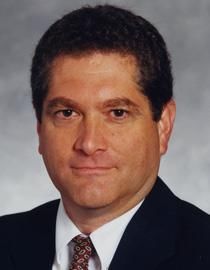
Structural Engineering Graduate Handbook                                            2019-2020

                  Dr. Peter Keating
                  Associate Professor

                  Professor Keating’s research interests include fatigue and fracture of
                  welded structures; structural analysis and design; experimental stress
                  analysis

                  Dr. Maria Koliou
                  Assistant Professor

                  Professor Koliou’s research interests include structural dynamics;
                  earthquake engineering; collapse assessment of structural systems; multi-
                  hazard performance-based design; system functionality; community
                  resilience; risk and reliability analysis; experimental methods in structural
                  engineering; seismic performance of electrical substation equipment.

                  Dr. Lee Lowery
                  Senior Professor

                  Professor Lowery’s research interests include structural failure analysis;
                  structural design and analysis; offshore and coastal structures;
                  instrumentation and experimental testing; structural foundations;
                  computer programming and engineering applications

                  Dr. John Mander
                  Professor

                  Professor Mander’s research interests include reinforced, pre-stressed
                  and structural concrete; earthquake engineering and structural dynamics;
                  blast resistant design; bridge engineering; hazard analysis and financial
                  loss estimation and mitigation; railroad engineering; construction and
                  design integration.

                   Dr. John Niedzwecki
                   Professor

                   Professor Niedzwecki’s research interests include structural dynamics;
                   probabilistic and statistical methods; structural system reliability; multi-
                   hazard design methods including the prediction of lightning interaction
                   with structures, analysis and design of deepwater and coastal structures,
                   green energy systems.

                                             9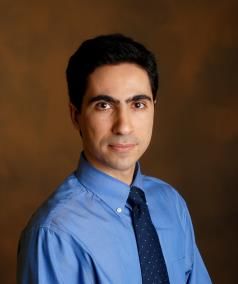
Structural Engineering Graduate Handbook                                           2019-2020

                   Dr. Arash Noshadravan
                   Assistant Professor

                   Professor Noshadravan’s research interests include computational and
                   probabilistic mechanics, multiscale modeling of materials, structural
                   mechanics, uncertainty modelling and analysis, risk and reliability
                   analysis, predictive analytics and model reduction, life cycle assessment.

                    Dr. Stephanie Paal
                    Assistant Professor

                    Professor Paal’s research interests include disaster assessment and
                    routine inspection of civil infrastructure, machine vision, structural
                    health monitoring techniques, earthquake engineering and analysis of
                    reinforced concrete structures.

                    Dr. Petros Sideris
                    Assistant Professor

                    Professor Sideris’ research interests include development of damage-
                    resistant bridge systems against seismic and other hazards, accelerated
                    bridge construction, novel materials, performance-based design and
                    assessment of reinforced concrete structures, aging effects,
                    experimental methods and large-scale structural testing, energy
                    harvesting from structural vibrations, numerical methods and software
                    development.

                    Dr. Matthew Yarnold
                    Assistant Professor

                    Professor Yarnold’s research interests include structural steel
                    behavior; bridge engineering; field experimental assessment of
                    structural systems; novel techniques for structural health monitoring.

                                            10
Structural Engineering Graduate Handbook 2019-2020
Degree Programs
11Structural Engineering Graduate Handbook 2019-2020
Degree of Master of Science – Non-Thesis
A minimum of 30 semester credit hours of approved courses is required for the Master of
Science – Non-Thesis degree (MS-NT). The university places limitations on these credit hours in
addition to the requirements of the structural engineering program that are listed below. A
complete discussion of all university requirements is found in the current Texas A&M University
Graduate Catalog under the heading “The Degree of Master of Science” (available on the
Internet at https://catalog.tamu.edu)
A. Advising Committee
The Master of Science – Non-Thesis (MS-NT) program for structural engineering has a
standard advisory committee with only one departmental member:
• Dr. Joe Bracci (chair)
No external members are required for this degree plan. It is permissible for another faculty
member from Structural Engineering Faculty to serve as your committee chair. In that event,
unless explicitly waived, Dr. Bracci should be added as a committee member to double check
that all requirements for the Master of Science – Non-Thesis degree are met.
B. Prerequisites
The following courses (and their pre- and co-requisite coursework) are considered
prerequisite to the MS-NT program of study in structural engineering: CVEN 302, CVEN 345,
CVEN 363, CVEN 444, CVEN 445, and CVEN 446, or equivalents that are approved by the
structural engineering program. Courses listed for which a student lacks credit must be
completed, but those credits cannot be applied toward the 30 credit hours degree requirement.
Prerequisite coursework needs to be completed during your first semester at Texas A&M
University, as they are prerequisites for all our graduate courses.
C. Degree Plan
The degree plan for Master of Science – Non-Thesis has a set of common courses and
elective courses listed are chosen to enhance the overall education for a practicing structural
engineer.
The proposed degree plan must be typed on the official form as it appears on the Internet at
http://ogs.tamu.edu/ and submitted electronically to your graduate advisor and advisory
committee for their electronic endorsement. Master of Science – Non-Thesis students are
expected to submit their degree plan within 1 month after the start of their second semester.
12Structural Engineering Graduate Handbook 2019-2020
D. Required Coursework – 18 hours
1. Engineering Mechanics – 9 semester credit hours
• CVEN 633 Advanced Mechanics of Materials (typically in Fall) or CVEN 663 Structural
Stability (every 2 years)
• CVEN 657 Dynamic Loads and Structural Behavior (typically in Fall)
• An introductory course in structural finite element analysis. The recommended course
is:
o CVEN 750 Finite Element Theory and Applications in Structural Engineering
(typically in Spring).
With the approval from the committee chair, alternatives are:
o MEEN 672 Introduction to Finite Element Analysis (typically in Fall).
o MEMA 646 An Introduction to the Finite Element Method (typically in Spring)
o MEMA 647 Theory of Finite Elements (occasionally offered)
2. Structural Behavior and Design – 6 semester credit hours
You are required to take at least two structural design courses – one from each group
listed below. The other course in each group can be also be selected for your degree plan
as targeted elective courses, depending on individual student interest as well as course
availability:
Group 1:
• CVEN 671 Behavior and Design of Prestressed Concrete Structures
(typically in Fall)
• CVEN 621 Advanced Reinforced Concrete Design (typically in Spring)
Group 2:
• CVEN 659 Behavior and Design of Steel Structures (typically in Spring)
• CVEN 670 Behavior and Design of Composite Structures
(occasionally offered)
3. Structural System Design – 3 semester credit hours
• CVEN 754 Structural Design Studio (typically in Spring)
4. Seminar – 0 or 1 semester credit hours
All Master of Science students are required to enroll in 2 semesters of CVEN 681 Seminar
taught on a bi-weekly basis. Students can enroll for 0 or 1 semester credit hours and at
most count 1 credit hour towards their degree plan under Open Elective Coursework
below.
13Structural Engineering Graduate Handbook 2019-2020
E. Elective Coursework – 12 hours
The student will select a minimum of 12 additional semester credit hours of coursework
to complement the overall objectives of the proposed degree plan. A maximum of 3 semester
credit hours of CVEN 685 Directed Studies can be applied toward this requirement.
Note that the electives are broken up into two groups: (1) Targeted Electives, and (2) Open
Electives. At least 9 credit hours of your elective coursework must come from courses listed in
the Targeted Electives group. The Targeted Elective group includes courses with a strong
mathematical, solid mechanics and/or structural engineering content. The remaining 3 credit
hours may come from either group of courses.
1. Targeted (Technical) Elective Courses – minimum of 9 hours
Three of your elective courses must come from courses listed in this group:
• CVEN 631 – System Identification and Nondestructive Damage Evaluation
• CVEN 655 – Structural Reliability
• CVEN 656 – Bridge Engineering
• CVEN 662 – Experimental Methods in Civil Engineering
• CVEN 663 – Structural Stability
• CVEN 669 – Design of Structures for Hazardous Environmental Loads
• CVEN 686 – Offshore and Coastal Structures
• CVEN 751 – Advanced Dynamics and Structural Control
• CVEN 752 – Smart Structures
• CVEN 648 – Advanced Numerical Methods in Geotechnical Engineering
• CVEN 651 – Geomechanics
• CVEN 652 – Soil Dynamics (typically every other Spring)
• CVEN 666 – Foundation Structures (typically every Fall)
• CVEN 683 – Dynamic Soil Structure Interaction
• CVEN 685 – Special Problems (3 hrs maximum)
• CVEN 687 – Foundation Engineering (typically every other Spring)
• CVEN 695 – Frontiers in Civil Engineering Research (variable credit hours 1-6)
• CVEN 699 – Engineering Risk Analysis
All four courses listed under Structural Behavior and Design can be used to satisfy this
elective requirement as well. The first two courses taken are used to satisfy the core
coursework requirement, while additional courses in that group automatically can count
towards elective requirements without prior approval.
Additional technical coursework related to the practice of structural engineering can
be found outside the department. Those courses are:
• MATH 601 – Methods in Applied Mathematics I
• MATH 602 – Methods in Applied Partial Differential Equations
14Structural Engineering Graduate Handbook 2019-2020
• STAT 601 – Statistical Analysis
• STAT 626 – Methods in Time Series Analysis
Any other course that is not listed above can only be counted to satisfy the Targeted
Elective Courses with approval from the Committee Chair.
2. Open Elective Course – maximum of 3 hours
Additional courses that are not part of the targeted electives and that are relevant to
structural engineering practice can be part of the degree plan. This includes some technical
courses in other engineering areas, such as materials engineering and construction
engineering. A maximum of 3 semester credit hours may be counted towards the required
coursework. Some courses within civil engineering fall within this category, as well as some
courses offered under Architecture and the Business School. Courses that are pre-
approved for the MS-NT degree:
• CVEN 681 (0/1 hr) – Seminar
• CVEN 684 (1 hr) - Internship
• CVEN 749 (1 hr) – Advanced Visualization & BIM in Structural Engineering Design
• CVEN 624 – Infrastructure Engineering
• CVEN 643 – Advanced Construction Methods and Analysis
• CVEN 641 – Construction Engineering Systems
• CVEN 644 – Project Risk Management
• ACCT 640 – Accounting Concepts and Procedures
• MGMT 655 – Survey of Management
• FINC 635 – Financial Management for Non-Business
• MKTG 621 – Survey of Marketing
• ARCH 628 – Tools for Green Building Design
• ARCH 646 – Historic Preservation Theory and Practice
• ARCH 648 – Building Preservation Technology
• ARCH 653 – Building Information Modeling (BIM) in Architecture
• COSC 626 – Mechanical and Electrical Construction (HVAC Systems)
Any other course that is not listed above can only be counted to satisfy the Open
Elective Course with approval from the Committee Chair.
1. Sample Degree Plan:
Fall Semester (13 hours)
• CVEN 633 – Advanced Mechanics of Materials (Required)
• CVEN 657 – Dynamic Loads and Structural Behavior (Required)
• CVEN 671 – Behavior and Design of Prestressed Concrete Structures (Design Req’t)
15Structural Engineering Graduate Handbook 2019-2020
• CVEN 666 – Foundation Structures (Targeted Elective)
• CVEN 681 (0 hr) – Seminar
• CVEN 749 (1 hr) – Advanced Visualization & BIM in Structural Engineering Design
Spring Semester (13 hours)
• CVEN 750 – Finite Element Applications in Structural Engineering (Required)
• CVEN 754 – Structural Design Studio (Required)
• CVEN 659 – Behavior and Design of Steel Structures (Design Req’t)
• CVEN 662 – Experimental Methods in Civil Engineering (Targeted Elective)
• CVEN 681 (1 hr) - Seminar
Summer Semester (4 hours)
• One targeted elective course
• CVEN 684 Internship (1 hr)
16Structural Engineering Graduate Handbook 2019-2020
Degree of Master of Science - Thesis
A minimum of 30 semester credit hours of approved courses is required for the Master of
Science – Thesis degree (MS-T). At least 24 semester credit hours must be coursework and the
remainder are CVEN 691 research credit hours. The university places limitations on these credit
hours in addition to the requirements of the structural engineering program that are listed
below. A complete discussion of all university requirements is found in the current Texas A&M
University Graduate Catalog under the heading “The Degree of Master of Science” (available on
the Internet at https://catalog.tamu.edu).
A. Advising Committee
The student must select an Advisory Committee Chair, who will serve as their graduate
advisor, from the Department’s structural engineering graduate faculty. A student can have a
Co-Chair from a faculty member that does not have an appointment with the Department’s
structural engineering group. A committee must have either one Chair or one Chair and one
Co-Chair.
The chair and the student collaborate in selecting the remainder of the Advisory Committee.
The advising committee for the Master of Science - Thesis degree in structural engineering must
have a minimum of three members from the Texas A&M graduate faculty (the chair counts as a
member). There must be at least one member from outside the civil & environmental
engineering department and there must be a majority from the Department’s structural
engineering graduate faculty.
B. Degree Plan
The student must identify their research supervisor before the start of their second semester
of study, at which point an advisory committee will be formed including at least one full time
structural engineering faculty member. The student’s advisory committee, in consultation with
the student, will develop the proposed degree plan. The proposed degree plan must be typed
on the official form as it appears on the Internet at http://ogs.tamu.edu/ and submitted
electronically to your graduate advisor and advisory committee for their electronic endorsement.
The office of graduate studies blocks students from further registration if a degree plan is not
filed within 1 month after the start of their second semester. If you are blocked, you are not
considered a full-time student and become ineligible to receive any assistantship.
17Structural Engineering Graduate Handbook 2019-2020
C. Prerequisites
The following courses (and their pre- and co-requisite coursework) are considered
prerequisite to the MS program of study in structural engineering: CVEN 302, CVEN 345, CVEN
363, CVEN 444, CVEN 445, and CVEN 446, or equivalents that are approved by the structural
engineering program. Courses listed for which a student lacks credit must be completed, but
those credits cannot be applied toward the 30 credit hours degree requirement. Note that you
may have been required to complete additional prerequisites as part of your admission into the
program. Those classes also cannot be applied towards the degree credit hour requirement
D. Required Coursework (18 semester credit hours):
All of the following courses are offered once each academic year unless otherwise noted.
1. Applied Mathematics – 3 semester credit hours
• Any 600-level course in Applied Mathematics, Statistics, or Numerical Methods.
Recommended courses are:
o MATH 601 – Methods in Applied Mathematics I
o MATH 602 – Methods in Applied Partial Differential Equations
o STAT 601 – Statistical Analysis
o STAT 626 – Methods in Time Series Analysis
2. Engineering Mechanics – 9 semester credit hours
• CVEN 633 Advanced Mechanics of Materials (typically in Fall) or CVEN 663 Structural
Stability (every 2 years)
• CVEN 657 Dynamic Loads and Structural Behavior (typically in Fall)
• An introductory course in structural finite element analysis. The recommended course
is:
o CVEN 750 Finite Element Theory and Applications in Structural Engineering
(typically in Spring).
With the approval from the committee chair, alternatives are:
o MEEN 672 Introduction to Finite Element Analysis (typically in Fall).
o MEMA 646 An Introduction to the Finite Element Method (typically in Spring)
o MEMA 647 Theory of Finite Elements (occasionally offered)
3. Structural Behavior and Design – 6 semester credit hours
You are required to take at least two structural design courses – one from each group
listed below. The other course in each group can be also be selected for your degree
plan as an elective, depending on individual student interest as well as course availability:
18Structural Engineering Graduate Handbook 2019-2020
Group 1:
• CVEN 671 Behavior and Design of Prestressed Concrete Structures
(typically in Fall)
• CVEN 621 Advanced Reinforced Concrete Design (typically in Spring)
Group 2:
• CVEN 659 Behavior and Design of Steel Structures (typically in Spring)
• CVEN 670 Behavior and Design of Composite Structures
(occasionally offered)
4. Seminar – 0 or 1 semester credit hours
All Master of Science students are required to enroll in 2 semesters of CVEN 681 Seminar
taught on a bi-weekly basis. Students can enroll for 0 or 1 semester credit hours and at
most count 1 credit hour towards their degree plan under Elective Coursework below.
E. Elective Coursework (12 semester credit hours):
The student’s advisory committee, in consultation with the student, will select a minimum of
12 additional semester credit hours of coursework to complement the overall objectives of the
proposed degree plan. A maximum of 3 semester credit hours of CVEN 685 Directed Studies can
be applied toward this requirement. A maximum of 6 semester credit hours of CVEN 691
Research can be applied toward this requirement.
1. Courses Offered Within the Department (typically alternate years)
The following is a list of some of the courses offered through the Civil & Environmental
Engineering Department that are specifically geared towards the master’s level
• CVEN 681 (0/1 hr) - Seminar
• CVEN 631 – System Identification and Nondestructive Damage Evaluation
• CVEN 656 – Bridge Engineering
• CVEN 662 - Experimental Methods in Civil Engineering
• CVEN 663 – Structural Stability
• CVEN 669 – Design of Structures for Hazardous Environmental Loads
• CVEN 686 – Offshore and Coastal Structures
• CVEN 699 – Engineering Risk Analysis
• CVEN 687 – Foundation Engineering
• CVEN 655 – Structural Reliability
• CVEN 683 – Dynamic Soil Structure Interaction
• CVEN 695 – Frontiers in Civil Engineering Research (variable credit hours 1-6)
• CVEN 751 – Advanced Dynamics and Control
• CVEN 752 – Smart Structures
• CVEN 753 – Damage Mechanics of Solids and Structures
19Structural Engineering Graduate Handbook 2019-2020
Additional graduate level courses are offered throughout the department and may be
used to satisfy the elective coursework requirement with approval of the student’s advisory
committee. Particularly for the MS-T degree, courses must be chosen so as to complement
your research program. All four courses listed under Structural Behavior and Design can be
used to satisfy this requirement as well. The first two courses taken are used to satisfy the core
coursework requirement, while additional courses in that group automatically can count
towards elective requirements without prior approval.
2. Additional Technical Elective Courses: Applied Math and Other
Engineering Disciplines
Additional coursework related to the practice of structural engineering can be found
outside the department. Courses listed under MEMA, MATH and STAT can be particularly
applicable, and any graduate level course in those departments is automatically acceptable
pending approval of the student’s chair. Some suggested courses:
• MEMA 601 Theory of Elasticity
• MEMA 602 Continuum Mechanics
• MEMA 605 Energy Methods
• MEMA 633 Theory of Plates and Shells
3. Other Relevant Non-Technical Coursework – maximum of 3 semester
hours
Certain courses being offered under Architecture and the Business School are directly
relevant to structural engineering practice and a maximum of 3 semester credit hours may be
counted towards the required coursework. Courses pre-approved for the MS degree are:
• ACCT 640 Accounting Concepts and Procedures
• FINC 635 Financial Management for Non-Business
• MGMT 655 Survey of Management
• MKTG 621 Survey of Marketing
• ARCH 646 Historic Preservation Theory and Practice
• ARCH 647 Recording of Historic Buildings
• ARCH 648 Building Preservation Technology
20Structural Engineering Graduate Handbook 2019-2020
Doctor of Philosophy
The Doctor of Philosophy (Ph.D.) degree is a research-oriented degree requiring a minimum
of 64 semester credit hours of approved courses and research beyond the Master of Science (MS-
T or MS-NT) or Master of Engineering (M.E.) degree in an approved and related program [96 credit
hours beyond the Bachelor of Science (B.S.) degree]. The university places limitations on these
credit hours in addition to the requirements of the Department of Civil & Environmental
Engineering and the Structural Engineering program listed below. A complete discussion of all
university requirements is found in the current Texas A&M University Graduate Catalog under the
heading “The Degree of Doctor of Philosophy” (available on the Internet at
https://catalog.tamu.edu). For example, university requirements include a preliminary
examination, a final examination, and submission of a dissertation to the university.
NOTE: All documents requiring departmental signatures must be submitted to the Civil &
Environmental Engineering Graduate Office at least one day prior to the Office of Graduate Studies
deadline.
A. Advising Committee
The student must select an Advisory Committee Chair, who will serve as their graduate
advisor, from the Department’s structural engineering graduate faculty. A student can have a
Co-Chair from a faculty member that does not have an appointment with the Department’s
structural engineering group. A committee must have either one Chair or one Chair and one
Co-Chair.
The chair and the student collaborate in selecting the remainder of the Advisory Committee.
The advising committee for the PhD degree in structural engineering must have a minimum of
four members from the Texas A&M graduate faculty (the chair counts as a member). There must
be at least one member from outside the civil & environmental engineering department and
there must be a majority from within the department, with at least two members being from the
structural engineering faculty (the chair counts as one of these members).
B. Departmental Requirements
In addition to fulfilling the University requirements for the Doctor of Philosophy (Ph.D.) degree,
a student enrolled in the Civil & Environmental Engineering graduate program in the area of
Structural Engineering must satisfy the following department requirements.
• For the 64 credit hours PhD program beyond the M.S. degree, a minimum of 24 credit
hours of graduate level coursework is required provided the student already has taken at
21Structural Engineering Graduate Handbook 2019-2020
least another 24 credit hours of graduate course work for the Master of Science (M.S.) or
Master of Engineering (M.E.) degree.
• For the 96 credit hours PhD program beyond the B.S. degree, a minimum of 48 credit
hours of graduate level coursework is required.
• For both PhD programs, a maximum of 3 semester credit hours of CVEN 685 Directed
Studies can be applied toward this requirement.
C. Structures Area Requirements
The student must also satisfy the following area requirements and/or recommendations
described below:
• Seminar – 0 or 1 semester credit hours: All Ph.D. degree seeking students are required to
enroll in 4 semesters of CVEN 681 Seminar taught on a bi-weekly basis. Students can
enroll for 0 or 1 semester credit hours and at most count 1 credit hour towards their degree
plan under Coursework below.
• Qualifying Exam: A Qualifying Examination will be scheduled with members of the
Structural Engineering faculty. The exam should be taken prior to the student’s second
semester (Fall or Spring) of study. A student may get special approval for a time extension
of one additional semester if leveling courses (either technical or in English language) are
required. For direct to PhD students, the exam should be taken prior to the student’s fourth
semester of study. The exam will include both written and oral sessions (closed book)
based on materials from the basic undergraduate structures courses: Statics; Dynamic;
Mechanics of Materials; and Structural Analysis. A list of topics from each course is listed
below. If equations are needed and expected to be used to solve problems in the closed
book sessions, students will be provided a list of standard formulas. However, students
should be able to derive basic equations and exam questions can require that they be
derived from fundamental principles. Once the student’s written exam is graded and
determined to have passed that portion of the exam, an oral examination will be scheduled
usually during the first or second weeks of the semester. The purpose of the oral exam is
twofold: 1. to explore any fundamental deficiencies that were uncovered during the
written exam (students should prepare to answer these questions again during the oral
exam); and 2. to make sure that the student possesses reasonable oral communication
skills required to solve and articulate engineering problems. The committee will make an
immediate pass/fail decision at the end of the oral exam. If a student fails the qualifying
exam the first time, they are allowed to take both portions of the exam a second time at
the start of the next semester (fall or spring). If a student fails the qualifying exam a second
time, they will be terminated from the PhD program.
22Structural Engineering Graduate Handbook 2019-2020
o CVEN 221 Engineering Mechanics: Statics
▪ Units; Newton’s Laws; General Principles of Mechanics
▪ Concurrent Force Systems
▪ Statics of Particles
▪ Equivalent Force/Moment Systems
▪ Centroids and Center of Gravity
▪ Equilibrium of Rigid Bodies
▪ Trusses, Frames and Machines
▪ Internal Forces in Structural Members
▪ Friction
▪ Second Moments of Area
o CVEN 363 Engineering Mechanics: Dynamics
▪ Kinematics of Particles
▪ Kinetics of a Particle: Force and Acceleration
▪ Kinetics of a Particle: Work and Energy
▪ Kinetics of a Particle: Impulse and Momentum
▪ Planar Kinematics of a Rigid Body
▪ Planar Kinetics of a Rigid Body: Force and Acceleration
▪ Planar Kinetics of a Rigid Body: Work and Energy
▪ Planar Kinetics of a Rigid Body: Impulse and Momentum
o CVEN 305 Mechanics of Materials
▪ Stress and Strain – Axial Loading
▪ Stress and Strain – Torsion
▪ Stress and Strain – Pure Bending
▪ Analysis of Beams for Bending and Shear
▪ Shear Stresses in Beams and Thin-Walled Members
▪ Transformation of Stress and Strain
▪ Deflection of Beams
▪ Columns
o CVEN 345 Theory of Structures
▪ Loads on Structures
▪ Static Determinacy and Stability
▪ Statically Determinant Trusses – Methods of Joints and Sections
▪ Statically Determinant Beams and Frames
▪ Virtual Work Method for Calculating Deflection
▪ Indeterminant Structures by Flexibility Method
▪ Influence Lines for Determinant and Indeterminant Structures
▪ Approximate Analysis of Indeterminant Structures – inflection points, portal
method, and cantilever method.
▪ Analysis of Structures by Stiffness Method - Introduction
23Structural Engineering Graduate Handbook 2019-2020
• Degree Plan: An advisory committee must be formed that includes at least two structural
engineering faculty members, and a Degree Plan must be submitted and approved by the
advisory committee after passing the Qualifying Exam and early during their second
semester (Fall or Spring) of study. The degree plan must be filed before the course
registration for the third semester of study. The proposed degree plan must be typed on
the official form as it appears on the Internet at http://ogs.tamu.edu/ with endorsements
by the student’s advisory committee.
• Written Preliminary Exam: After completion of a majority of the coursework listed on the
Degree Plan (with the exception of CVEN 691 Research), but ideally no later than the end
of the fourth semester (Fall or Spring) of study, a Written Preliminary Examination will be
scheduled with members of the advisory committee. The specific scope is defined by the
committee members and may include any topic in structural engineering. The goal is to
get preliminary feedback early during the research process, so the preliminary exam
should not be delayed. This exam consists of written questions from the advisory
committee. The exam in total should be given over a period of one week. The Office of
Graduate Studies (OGS) requires that this exam be completed at least 90 days before the
final defense.
• Oral Preliminary Exam: After passing the Written Preliminary Exam, but ideally no later
than the end of the fourth semester (Fall or Spring) of study, an Oral Preliminary
Examination will be scheduled with members of the advisory committee. The goal is to
get preliminary feedback early during the research process, so the preliminary exam
should not be delayed. At this examination, the student will give a presentation of the
Research Proposal. The questions in this exam will cover the material in the Research
Proposal, Written Preliminary Exam, the Oral Preliminary Exam presentation, and any
relevant coursework. The Office of Graduate Studies (OGS) requires that this exam be
completed at least 90 days before the final defense.
• Research Proposal: As soon as the research project can be outlined in reasonable detail,
but ideally no later than the end of the fifth semester (Fall or Spring) of study, the
dissertation research proposal should be completed. The Research Proposal shall describe
the proposed research, including relevant background information, and clearly
demonstrate how this research will make a unique contribution of new knowledge to the
student’s area of study. Upon approval of the Research Proposal by the advisory
committee chair, the Research Proposal must be submitted to other members of the
advisory committee at least 2 weeks (10 working days) prior to the Oral Preliminary Exam.
• Completion of Dissertation: Upon approval of the Dissertation by the advisory committee
chair, the Dissertation will be submitted to the other members of the advisory committee
at least 2 weeks (10 working days) prior to the Final Defense.
24Structural Engineering Graduate Handbook 2019-2020
• Final Defense: A Final Defense consisting of an oral examination will be scheduled with all
of the advisory committee members. At this examination, the student will give a
presentation of the research work completed for the degree and documented in the
Dissertation. The student is encouraged to invite other interested individuals to the
research presentation.
D. Recommended Coursework:
The student’s advisory committee, in consultation with the student, will select coursework to
complement the overall objectives of the proposed degree plan, with the majority of courses
being in the field of structural engineering. Particularly for the Ph.D. degree, courses must be
chosen so as to complement your research program as well as any future career goals. The
courses listed below will typically have other graduate level courses as prerequisites.
1. Courses within Specialty Area Geared for Research Students
Course Frequency
CVEN 655 Structural Reliability Alternate Years
CVEN 662 Experimental Methods in Civil Engineering Alternate Years
CVEN 663 Structural Stability Alternate Years
CVEN 683 Dynamic Soil Structure Interaction Alternate Years
CVEN 631 System Identification and Nondestructive Eval. Alternate Years
CVEN 751 Advanced Dynamics & Control Alternate Years
CVEN 752 Smart Structures Alternate Years
CVEN 699 Engineering Risk Analysis Alternate Years
2. Graduate Courses required for MS-NT and MS-T students
The courses listed below are part of the core course requirements for our master’s students.
While none of these courses are required for our doctoral students, they frequently serve as
prerequisite courses for higher level courses. Most students admitted into our program have
already taken these courses as part of their own master’s curriculum.
Course Frequency
CVEN 621 Advanced Reinforced Concrete Design Yearly
CVEN 633 Advanced Mechanics of Materials Yearly
CVEN 657 Dynamic Loads and Structural Behavior Yearly
CVEN 659 Behavior and Design of Steel Structures Yearly
CVEN 671 Behavior and Design of Prestressed Concrete Structures Yearly
A student may decide to take one of these courses as part of their doctoral program to: (1)
explore differences in design codes if their corresponding undergraduate coursework was in
another country, or (2) their master’s degree was not in civil engineering and their curriculum
25Structural Engineering Graduate Handbook 2019-2020
would benefit from these core courses for a possible future in academia, or even in practice,
within civil engineering.
3. Additional Graduate Elective Courses within Department
The courses listed below are also offered within the Structural Engineering specialty area and
may be applicable to a student depending to their research focus:
Course Frequency
CVEN 656 Bridge Engineering Alternate Years
CVEN 669 Design of Structures for Hazardous Environmental Loads Alternate Years
CVEN 686 Offshore and Coastal Structures Alternate Years
CVEN 753 Damage Mechanics of Solids and Structures Alternate Years
Note that doctoral students are NOT allowed to enroll in:
• CVEN 754 – Advanced Structural Design Studio
Several other courses are available throughout the department that may also be applicable.
Some recommended courses include:
CVEN 613 Micromechanics of Civil Materials
CVEN 623 Nondestructive Pavement Evaluation
CVEN 658 Civil Engineering Applications of GIS
CVEN 644 Project Risk Management
CVEN 740 Advanced Construction and Behavior of Cement Materials
Additional coursework related to the practice of structural engineering can be found outside
the department. Courses listed under MEMA, MATH and STAT can be particularly applicable.
Some suggested courses:
MEMA 601 Theory of Elasticity
MEMA 602 Continuum Mechanics
MEMA 605 Energy Methods
MEMA 611 Fundamentals of Engineering Fracture Mechanics
MEMA 633 Theory of Plates and Shells
MEMA 641 Plasticity Theory
MEMA 646 Introduction to the Finite Element Method
MEMA 647 Theory of Finite Element Analysis
MEMA 648 Nonlinear Finite Element Methods in Structural Mechanics
MATH 601 Methods of Applied Mathematics I
MATH 602 Methods and Applications of Partial Differential Equations
STAT 601 Statistical Analysis
26Structural Engineering Graduate Handbook 2019-2020
Graduate Coursework
27Structural Engineering Graduate Handbook 2019-2020
Prerequisite Coursework
The following courses (and their pre- and co-requisite coursework) are considered
prerequisite to any graduate program of study in structural engineering:
CVEN 302 – Computer Applications in Engineering and Construction
CVEN 345 – Theory of Structures
CVEN 363 – Engineering Mechanics – Dynamics (minimum of particle and rigid body dynamics)
CVEN 444 – Structural Concrete Design
CVEN 445 – Matrix Methods of Structural Analysis
CVEN 446 – Structural Steel Design
None of these courses may be counted towards any graduate degree in structural
engineering. You may have been required to complete additional prerequisites as part of your
admission into the program. Those classes also cannot be applied towards the degree credit
hour requirement. Prerequisite coursework needs to be completed during your first semester at
Texas A&M University, as they are prerequisites for all our courses. It may be possible to take
some prerequisite course along with graduate courses with the permission of the Graduate
Advisor (Dr. Bracci) and the course instructors.
If you completed a prerequisite before arriving at Texas A&M University and need it waived,
you must bring a copy of your transcript showing the final grade in the course as well as a copy
of the course syllabus to Dr. Bracci (or send by email). These will then be reviewed to see if
indeed they satisfy the requirements, at which time this information will be communicated to
the Civil and Environmental Engineering Graduate Office. The review process can take up to two
weeks.
Course Description & Typical Schedule
A range of courses are offered within the Zachry Department of Civil & Environmental
Engineering. For a full listing and description of the courses, please refer to the Graduate Course
Catalog. Keep in mind that graduate courses are typically only offered once a year at most, with
many of the elective courses only being offered on alternate years.
The following is a table indicating the typical course offering frequency and suggested
prerequisites. Keep in mind that the actual course offering schedule may differ from the table
below. Prerequisite coursework listed are course numbers in the Civil & Environmental
Engineering department unless otherwise noted. Keep in mind that all graduate courses have
28Structural Engineering Graduate Handbook 2019-2020
the program prerequisites automatically applied, and any graduate course with a listed
prerequisite also has the option of “by approval of the instructor.”
Dept No Title Pre-Requisites Tyipcal Frequency
CVEN 621 Advanced Reinforced Concrete Design 444 spring
CVEN 631 Identification of Civil Engineering Systems alternate years
CVEN 633 Advanced Mechanics of Materials fall
CVEN 655 Structural Reliability alternate years
CVEN 656 Bridge Engineering alternate years
CVEN 657 Dynamic Loads and Structural Behavior 363 fall
CVEN 659 Behavior and Design of Steel Structures 446 spring
CVEN 662 Experimental Methods in Civil Engineering alternate years
CVEN 663 Structural Stability alternate years
CVEN 669 Design of Structures for Hazardous Environmental Loads 657 alternate years
CVEN 670 Behavior and Design of Composite Structures 444, 446 alternate years
CVEN 671 Behavior and Design of Prestressed Concrete Structures 444 fall
CVEN 683 Dynamic Soil Structure Interaction alternate years
CVEN 686 Offshore and Coastal Structures 657 alternate years
CVEN 699 Engineering Risk Analysis alternate years
CVEN 750 Finite Element Theory & Applications in Structural Engineering 445 spring
CVEN 751 Advanced Dynamics and Introduction to Structural Control CVEN 657 and MEMA 647 alternate years
CVEN 752 Smart Structures 363 alternate years
CVEN 753 Damage Mechanics of Solids and Structures 633 alternate years
CVEN 754 Advanced Structural Design Studio 659, 621/671 spring
Transfer Credit
A maximum of three courses taken at other universities may be applied towards your
Master’s degree (MS-NT or MS-T) at Texas A&M University. For the doctoral program, courses
may be applied from other universities, pending permission of the student’s research
committee, as long as: (a) the number of credit hours do not exceed one-third of the total
coursework hours taken at Texas A&M University and (b) the courses were not used towards the
completion of any other degree.
In order to use transfer courses on your degree plan, the courses must have been taken in
residence at an accredited U.S. institution or an approved international institution. You can verify
its status with either Graduate Admissions or International Admissions. In addition, you must
have earned a grade of “B” or better, and you must have been in degree seeking status at either
that institution or at Texas A&M University at the time the course(s) were taken. Academic work
used toward a previous degree may not be used again.
29Structural Engineering Graduate Handbook 2019-2020
To receive departmental approval, the student must submit a detailed syllabus and sample
coursework material to the structures graduate advisor after starting with the structures
program. That material will be reviewed and you’ll be notified of the approval decision in about
2 weeks.
Certificate Programs
Certificate programs are designed to provide students an edge over other students who
have similar interests, but do not pursue a certificate program that compliments that interest. A
graduate certification program represents an emphasis area within a particular field or it could
be interdisciplinary and involve several fields. Two programs are of particular interest to
structural engineering students and some of the courses required for those programs may be
applied towards your engineering credit hour requirement.
Keep in mind that these programs are not offered through the Civil & Environmental
Engineering department, so for information please contact the specific department listed for the
program directly. The information provided here is to serve as a preliminary source of
information, but specific program requirements can only be determined through the
department offering the certificate.
A. Certificate in Historic Preservation:
Certificate in Historic Preservation is open to students in any graduate degree program at
Texas A&M University. The cross-disciplinary program in historic preservation draws on strong
discipline-based academic programs that prepare graduates to further their career goals. The
certificate assumes that historic preservation is a cross-disciplinary field, and the program is
designed to ensure that students gain a sense of mutual respect for others in the field, and
appropriate awareness, understanding, and ability within a specific body of knowledge
Requirements
• Graduate students shall declare the intent to seek the Certificate by filing an
application at the time they file a Degree Plan for their chosen degree.
• Certificate coursework must include ARCH 646: Historic Preservation Theory and
Practice (3 credits),
• At least 12 additional credits of coursework with preservation content (equivalent to
four courses). This requirement can sometimes be met through civil engineering
coursework by choosing/defining a course project with preservation content.
30Structural Engineering Graduate Handbook 2019-2020
• At least three (3) credits must be taken from courses outside of the student's major
department. As the required course ARCH 646 is outside civil engineering, this
requirement is automatically satisfied by taking the one required course.
• The degree program must include a professional study, professional paper, thesis or
dissertation with a historic preservation focus.
For additional information, see: the web-site at:
http://archone.tamu.edu/chc/education/links/certificate%20in%20hp.html)
B. Certificate in Business:
Mays Business School offers a Certificate in Business to non-business graduate students at
Texas A&M University. This certificate provides a general overview of the four major functional
areas of business through a set of courses designed for non-business students. To complete the
Certificate in Business, students must successfully complete the following four courses (12 credit
hours). These courses do not have business course prerequisites:
• Accounting 640
• Finance 635 (prerequisite: ACCT 640)
• Management 655
• Marketing 621
If you have completed the undergraduate versions of any or all of these courses (business
minor courses), then you must use a substitute for the course(s). The recommended
substitutions are:
COURSE SUBSTITUTES
ACCT 640 ACCT 641, 642
FINC 635 FINC 629, 632, 642, 645
MGMT 655 MGMT 630
MKTG 621 MKTG 650, 656
Any two of the above courses may be used to satisfy elective coursework requirements at
the maters level. Keep in mind that these courses fall under “Non-Technical Elective
Coursework”, and the master degrees sallow a maximum of 6 semester hours of coursework in
this category. So to complete the ME degree plus the Business Certificate, you would need to
take a minimum of 36 hours.
For additional information, see: the web-site at: http://mays.tamu.edu/degrees-and-
majors/certificate-programs/certificate-in-business/
31You can also read


