Catching Up Fish Welfare in Wild Capture Fisheries - Eurogroup ...
←
→
Page content transcription
If your browser does not render page correctly, please read the page content below

Catching Up

Fish Welfare in Wild Capture Fisheries

January 2021

Authors: Douglas Waley, Moira Harris,
Ian Goulding and Margarida Correira -
MegaPesca Lda, Griffin Carpenter
                                           Contents
Editors: Siobhán McGonigle, Maren Schmid
                                           Executive Summary                                     4
Design: Angela Lyons, Blush (p. 33)
                                           1. Introduction                                       8
© Eurogroup for Animals, January 2021.       Environmental factors impacting
                                             welfare in the wild                                 9
                                             Consumer concern about fish welfare                 10

                                           2. Main hazards to fish welfare during capture        12
                                             Physical injuries                                   12
                                             Depredation                                         14
                                             Thermal shock                                       14
                                             Barotrauma                                          15
                                             Exhaustion                                          15
                                             Asphyxiation                                        15

                                           3. Fishing methods and their impact on fish welfare   16
                                             Common issues across fishing methods                16
                                           		Duration of capture                                 16
                                           		   Crowding density                                 16
                                             Trawling                                            17
                                           		Pelagic or mid-water trawl                          17
                                           		Beam trawl                                          17
                                           		Bottom trawl                                        17
                                           		Dredge                                              18
                                           		Variables and mitigation measures                   18
                                             Seine nets                                          19
                                           		Seine and surrounding nets                          25
                                           		Variables and mitigation measures                   19
                                             Hanging nets                                        20
                                             Drift nets                                          20
                                           		Fixed and set nets                                  20
                                           		Variables and mitigation measures                   21
                                             Hook and line                                       21
5. Fish welfare in EU capture fisheries                36
		Longline                                               21     Fish captured by EU fleets                           36
		Pole and line                                          22     The European Union Common Fisheries Policy           36
		Variables and mitigation measures                      22     Scope and objectives of the CFP                      36
  Traps                                                  23     Provisions significant for fish welfare              38
		Pots and traps                                         23     Implementation of fish welfare aspects of the policy 38
		Variables and mitigation measures                      23
                                                              6. Recommendations                                     40
4. Main hazards to fish welfare after capture            24     Slaughter recommendations                            40
  Onboard handling                                       24     Recommendations for fish handling between
		Hauling aboard                                         26     capture and slaughter                                40
		Onboard sorting                                        26     High-level policy recommendations                    41
		Live storage                                           26     Fishery management recommendations                   41
  Slaughter                                              27     Fishing practices recommendations                    41
		Inhumane slaughter                                     27     Recommendations common across fishing methods 42
		Asphyxiation in air                                    27     Recommendations for specific fishing methods         42
		Live chilling and death in ice slurry                  27   		Trawl                                                42
		Exsanguination                                         27   		Seine nets                                           42
     Decapitation                                        27        Hanging nets                                      42
		Carbon dioxide saturation                              27   		Hook and line                                        42
		Humane slaughter                                       27     Recommendations for fish handling between
		Electrical stunning                                    27     capture and slaughter                                42
		Percussive stunning/killing                            30     Recommendations for ghost gear management            42
  Spiking                                                31
  Overview of welfare issues in wild capture fisheries   33   Conclusions                                            43
  Fish welfare in fisheries management                   34
  Overfishing                                            34   Glossary                                               44
  Discards/by-catch                                      34   References                                             46
  Mutilation of live fish/marine animals                 34
  Declawing                                              34
  Shark finning                                          35
  Ghost fishing                                          35

                                                                                             Eurogroup for Animals   3
EXECUTIVE
SUMMARY
Introduction                                                               brought to the surface. If they survive the capture process, they
Every year, somewhere around one trillion (1,000,000,000,000)              often die of asphyxia due to air exposure, or are killed without
wild fish are captured, with a significant majority being killed for       pre-slaughter stunning. By-catch (e.g. non-target species that are
food. Even with this conservative estimate, this far outnumbers any        inadvertently caught) that are thrown back into the sea often have
animal farmed for food, and yet despite scientific evidence that fish      little chance of survival.
are sentient – i.e. have the capacity to suffer fear, pain or distress
as well as a sense of well-being – public concern and consumer             With more attention on welfare aspects of commercial fishing,
awareness about fish and their welfare is far behind that of other         better practices can be introduced and enforced, attempting
farmed animals.                                                            to close the gap between the scientific consensus about the
                                                                           importance of fish welfare, consumer expectations about making
It is true that unlike farmed fish, wild fish enjoy a near-natural life.   welfare-based choices – made possible with more comprehensive
However, for wild-caught fish, the end of each life is commonly            labelling – and the reality for fish.
exceptionally stressful due to practices that would not be allowed
in any kind of terrestrial animal production. During the capture           This report looks at the various hazards faced by wild fish
process, fish are often chased to exhaustion, crushed, asphyxiated,        throughout the process of capture, through to handling and
injured due to interaction with fishing gear, eaten by predators           death, and proposes measures and strategies to reduce
while trapped, or subject to decompression injuries as they are            unnecessary suffering.

 4    Catching Up – Fish Welfare in Wild Capture Fisheries
EXECUTIVE SUMMARY

Main hazards to fish welfare during capture                                 Ways to improve welfare
Fish are subject to a multitude of hazards during the capture process,      • Select well-designed gear that minimises injury
most of which can cause acute stress and even lead to death.                • Reduce towing speed and duration to prevent exhaustion
                                                                            • Reduce catch sizes to prevent crowding
• Crowding: Overcrowding of fish in a given space, such as when            • Minimise ascent rates to limit decompression injuries
  hauling them onboard in a net, increases stress levels and can
  result in physical injuries and/or asphyxiation.                          Seine nets
• Physical injuries: Whether due to crowding, interaction with             With purse seine fishing, a large net is used to surround a shoal of
  fishing gear or the vessel, the capture process can lead to               fish. The bottom of the net is then drawn together to enclose them.
  unintentional injuries such as fin damage, scale damage and               Fish face injury, asphyxiation and crushing if they are hauled on
  puncture wounds. Fish that are injured before being discarded are         board in nets.
  more likely to die.
• Depredation: When fish are constrained by the fishing gear used,         Ways to improve welfare
  they unable to escape or defend themselves, and are therefore             • Reduce catch sizes and prevent crowding
  more likely to be preyed upon by a predator.                              • Crowd fish in steps and to the minimum density possible
• Thermal shock: Exposing fish to abrupt temperature increases by          • Pump fish on board instead of lifting with nets
  raising nets quickly from deeper water, or by using a chilling or
  freezing process on live fish causes acute physiological responses.       Hanging nets
• Barotrauma: When fish are hauled rapidly to the surface from             A gill net is a wall of netting that hangs in the sea, invisible to fish.
  a great depth, they can experience decompression injuries that            When fish are too large to swim through the mesh of the net, they
  cause internal bleeding, organ distension and organ rupture.              become trapped by their gills as they try to reverse out. Tangle/
• Exhaustion: With long capture periods, fish’s stress levels rise as      trammel comprise looser-hung gill nets that entangle fish rather
  they struggle to escape. This can lead to exhaustion and fatigue          than trap them. Fish can suffer from damage to their gills, fins and
  death.                                                                    scales due to contact with nets.
• Asphyxiation: The main cause of asphyxiation in capture fisheries
  is air exposure, but this can also occur when the breathing               Ways to improve welfare
  movements are restricted due to crowding or being crushed                 • Use thicker twines in place of monofilament
  against equipment or the vessel.                                          • Reduce duration of capture to limit depredation
                                                                            • Reduce target depth and minimise ascent rates to limit
Fishing methods and their impact on fish welfare                              decompression injuries
There are three main methods of catching fish: by towing trawls or
dredges; by encircling fish by nets; or by static means where fish          Hook and line
swim into the gear and become caught or trapped. Depending on               Longlining involves a line of light rope or heavy nylon, sometimes
the method, different types of fishing gear are used. The below             many kilometres long, with numerous baited hooks used to target
looks at welfare issues related to the capture process.                     particular species. With pole and line fishing, fishers use single or
                                                                            multiple hooked rod and reel set-ups to catch demersal species,
Trawling and dredging                                                       often using live bait to create a feeding frenzy.
Trawling involves the capture of fish using a net that is towed
behind the vessel. Fish suffer from exhaustion as they are chased           In all cases, hooks can become deeply embedded (deep-hooking) if
by the net, especially at faster towing speeds and with longer soak         fish try to swallow the bait, with certain types of hook causing more
times. They face injury, asphyxiation and crushing as they are forced       damage.
into the narrow cod end of the net during the capture process.
                                                                            Ways to improve welfare
Dredging involves the towing of a rigid structure along the seabed          • Choose hooks that cause least injury, e.g. barbless and circle
to target shellfish. Shellfish come to the surface alive as this is often     hooks
a requirement for sale. However, non-target species may be injured          • Prohibit the use of live bait
or suffocated, especially with long soak times.                             • Reduce duration of capture to prevent exhaustion and limit
                                                                              depredation
                                                                            • Hooks are removed gently and not torn from fish

                                                                                                                    Eurogroup for Animals           5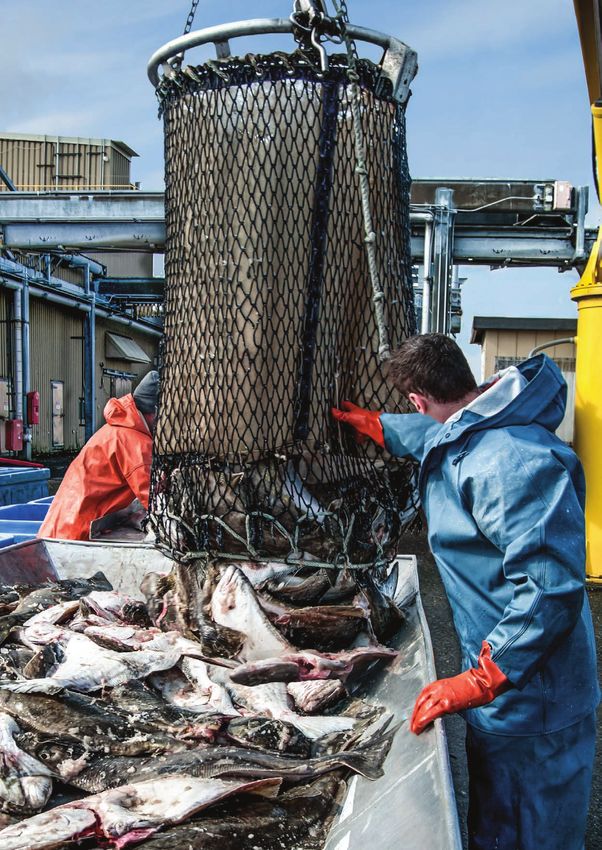
EXECUTIVE SUMMARY

Traps                                                                   Slaughter
Pots, creels and other fish traps are structures where fish or          In most cases in wild capture fisheries, no specific killing method is
shellfish are guided through funnels that encourage entry but           used. Death results incidentally during the capture and processing
limit escape. Traps are usually baited and are often left for several   of the fish, and often results in inhumane slaughter through one of
days. Non-target species have difficulties escaping traps and are       the following methods:
vulnerable to starvation or being preyed upon by a predator.
                                                                        • Death in air: A slow process whereby gill collapse results in
Ways to improve welfare                                                   asphyxiation, causing a maximal stress response.
• Select well-designed gear that minimises injury                       • Live chilling and death in ice slurry: Placing fish in chilled water or
• Reduce duration of capture to limit depredation                         ice slurry induces cold shock, which simultaneously chills, sedates
                                                                          and eventually asphyxiates the fish.
                                                                        • Exsanguination: Blood is drained by cutting the major blood
                                                                          vessels, and depending on the species, can involve throat cut,
Main hazards to fish welfare after capture                                gill cut or pectoral cut. This often takes place without stunning,
Between capture and possible or eventual death, fish face a range         resulting in a slow death.
of hazards.                                                             • Decapitation: Even with the complete separation of the head
                                                                          from the rest of the body, loss of consciousness is not necessarily
Onboard handling                                                          immediate, depending on the species.
When landing fish using nets, the pressure can cause crushing,
resulting in physical injuries or asphyxiation. Further injuries can    Several methods of humane fish slaughter of fish exist, where
result when fishers pull entangled fish from the net rather than        killing is preceded by stunning that renders fish unconscious and
pushing them through. Larger fish that are brought on board using a     insensible to pain:
gaff hook can bleed to death due to the severity of injuries.
                                                                        • Electrical stunning/electrocution: Depending on the parameters
Onboard sorting leaves fish vulnerable to additional hazards that         used, electricity can be used to render fish insensible by stunning
may have a cumulative impact on welfare. Prolonged exposure               or kill them by electrocution. At yet uncommon in wild-capture
to air, increased temperatures, impact with or entrapment in              fisheries, this method has the advantage that handling is
equipment such as conveyor belts, being thrown or moved with              minimised, large numbers of fish can be stunned at the same time,
gaffs are just some of the risks fish face. For fish caught using         and a stressful death due to air exposure can be largely avoided.
hooks, de-hooking can inflict extra injuries. Some fish may even        • Percussive stunning/killing: In percussive stunning, the fish is
have body parts removed, e.g. the bill, for economic reasons or           removed from the water and restrained before a blow is delivered
easier handling.                                                          to its head. When the blow is delivered correctly, cranial pressure
                                                                          massively increases, leading to immediate loss of consciousness
Where fish need to be stored alive after capture, whether for live        and sensibility. In the wild capture context, this method would
sale or use in aquaculture, this can lead to sublethal stress or even     only be practical for the stunning of high-value fish, in low
death.                                                                    volumes.
                                                                        • Spiking: This involves inserting a spike through the fish’s skull to
Ways to improve welfare                                                   destroy the brain. Performed correctly – with individual handling
• Fish should be brought on board using fish pumps rather than           and expert execution – it results in immediate brain death.
  nets
• The use of gaff hooks should be minimised and should always be       Ways to improve welfare
 followed immediately by humane slaughter                               The most urgent need to improve welfare in wild capture fisheries
• Time spent out of water before slaughter should be minimised         is to further develop and implement humane slaughter practices. An
• Fishers should be educated on the correct use of gears and           effective stunning method followed by a suitable killing method, or
  equipment, with a focus on reducing stress and harm                   a killing method that results in immediate loss of sensibility, should
                                                                        be applied as soon as possible after capture.

 6       Catching Up – Fish Welfare in Wild Capture Fisheries
EXECUTIVE SUMMARY

Fish welfare in fisheries management                                  Fish welfare in EU capture fisheries
Overfishing, the removal of a species of fish from a body of water    Article 13 of the Treaty on the Functioning of the European Union
at a faster rate than the population can replenish itself, remains    requires that EU policies, including fisheries policies, ‘pay full regard
a serious problem worldwide, with the United Nations’ Food and        to the welfare requirements of animals’. However, in spite of this,
Agriculture Organization (FAO) estimated that in 2015, one-third      there is no explicit protection of the welfare of wild-caught fish
of the world’s fish stocks were overfished. Overfishing leads to      in EU regulations, including in the 2013 Common Fisheries Policy
resource depletion, reduced growth rates, low biomass levels, and     (CFP) which encompasses the conservation of all marine biological
in some cases, upsets entire marine ecosystems.                       resources – i.e. fish and marine ecosystems – and the management
                                                                      of fisheries activities.

Discarded catch, or by-catch, are fish that are returned to the       The CFP does include provisions directly relevant to fish welfare
sea, either dead or alive, for reasons such as being too small, due   and protection – such as regulations on the technical aspects of
to economic or market demands, or due to fishing quotas being         fishing gear and how they are used – but these face issues in terms
exceeded. By-catch is often injured or highly stressed during the     of implementation and compliance, as well as transparency and
capture process, and as a result, survival rates when thrown back     respect of scientific advice.
into the sea can be low.
                                                                      This means that the welfare of the 40–65 billion wild fish captured
Mutilation of live creatures – such as the declawing of crabs and     in EU fisheries every year needs better protection.
shark finning – also raises serious welfare concerns.

Ghost gear – fishing gear (such as nets, traps or hook and line)
that has been lost or discarded by fishers and that can continue      Conclusion
to passively catch fish and other marine creatures – can have an      The welfare of wild fish has traditionally been overlooked and their
ongoing negative impact on animal welfare. It can inflict physical    plight has had little visibility in civil society, policy circles and in the
injury or cause asphyxiation or depredation, and is an unrecorded     animal welfare movement in general. With the body of evidence
source of mortality and pollution.                                    now clearly showing that finfish have well-established capacities
                                                                      for sentience, pain and fear, it is essential to reduce the level of
Ways to improve welfare                                               suffering of wild-caught fish as much as possible.
• Fishing levels and environmental management regimes should aim
  to reach and maintain the largest fish populations that ‘optimal’   The wide range of technologies and practices used include
  environmental conditions can maintain.                              many opportunities to improve fish welfare. Foremost among
• By-catch should be reduced or where possible, eliminated.           opportunities and priorities is the implementation of effective
• Discards that have a poor chance of survival should be humanely    stunning before slaughter.
  killed.
• No body part should be removed from a live animal.                  Equipment and processes used in wild capture should all be
• Efforts should be made to limit ghost gear, including clearly      reviewed with fish welfare in mind. Ultimately, to meet consumer
  marking gear, logging lost gear, and recovering gear.               demand for higher welfare fish products – and continue to raise
                                                                      awareness of the importance and relevance of fish welfare –
                                                                      product labelling should include clear welfare information so that
                                                                      consumers can make welfare-based purchase decisions.

                                                                      A concerted effort is required from the fishery sector and from
                                                                      regulators to implement meaningful improvements not only
                                                                      improve the welfare of wild-caught fish, but that will also ensure
                                                                      that issues related to fisheries management – such as overfishing,
                                                                      by-catch and ghost fishing – are tackled in a comprehensive way.

                                                                                                              Eurogroup for Animals             7
1. INTRODUCTION
Every year, around one to two trillion wild fish are captured,                           well as a sense of well-being – it is clear that public concern and
with a significant majority being killed for food. Even with                             consumer awareness surrounding fish and their welfare is far
this conservative estimate – there are no official figures, and                          behind that of other farmed animals.
current estimates of between 0.79 and 2.3 trillion are obtained
using tonnage statistics published by the Food and Agriculture                           While the welfare of farmed fish in aquaculture systems has
Organisation of the United Nations (FAO) together with estimated                         started to receive attention – for example, at the end of 2017,
mean weights for fish species – this far outnumbers any other                            the European Commission published a study into the welfare of
animal farmed for food.                                                                  fish during transport and at slaughter in European Aquaculture
                                                                                         – the welfare of wild-caught fish, alongside the scale of fishing
And yet, despite the fact that since the mid-2000s scientific                            operations, deserves to be brought squarely into focus as many of
evidence has increasingly supported the consensus that fish are                          the welfare issues – and environmental issues – are different from
sentient – i.e. have the capacity suffer fear, pain or distress as                       those involved in aquaculture.

                Number of animals slaughtered every year globally

                Fish
                                                at least 787 billion wild (up to 2.3 trillion)

                                                  at least 51 billion farmed (up to 167 billion)

                Chickens &
                other poultry                    86.5 billion**

                Pigs
                                             2.2 billion**

                Rabbits
                                            1.5 billion**

                Sheep &
                goats
                                            1.3 billion**

                Cattle
                                            340 million**
                *finfish caught or farmed for meat annually from 2007 - 2016, fishcount.org.uk
                **killed for meat 2018, FAO
                Source: http://fishcount.org.uk/studydatascreens/2016/fishcount_estimates_list.php

 8    Catching Up – Fish Welfare in Wild Capture Fisheries
INTRODUCTION

An unnatural end to a natural life                                        The welfare of wild-caught fish has previously been investigated
Wild fish may live a near-natural life, but the end of each life is       in the 2010 report, ‘Worse Things Happen At Sea’, which explores
commonly exceptionally stressful. Their welfare is compromised at         the major fish capture methods and the welfare aspects of each,
every stage of their interaction with humans, due to practices that       and also looks at fish welfare after capture and discusses various
would not be allowed in any kind of terrestrial animal production.        research projects and papers. This report builds on that work
During the capture process, fish are often chased to exhaustion,          with up-to-date information and additional analysis.
crushed, asphyxiated, injured due to interaction with fishing gear,
eaten by predators while trapped, or subject to decompression             Environmental factors impacting welfare in the wild
injuries as they are raised to the surface. If they survive the capture   Unlike farmed fish that have been grown and produced in an
process, they often die of asphyxia due to air exposure, or are killed    unnatural environment, wild fish enjoy the freedom of a near-
without pre-slaughter stunning. By-catch (e.g. non-target species         natural life. However, while it might seem logical that these
that are inadvertently caught) that are discarded and thrown back         ‘natural’ seas and oceans would provide a better home for
into the sea often have little chance of survival.                        wild fish, this environment has unfortunately been depleted
                                                                          to such an extent that it is actually much poorer than it should
An inescapable conclusion is that vast numbers of wild fish are           be, especially in two important ways: oxygen depletion and
being caught and subjected to unnecessary suffering as they are           acidification.
captured and killed for food. This situation is not due to unexpected
problems or breakdowns of equipment, but rather due to built-in           The concentration of dissolved oxygen in the ocean is one of the
processes and mechanisms of wild capture fisheries. As such, they         most important environmental factors for marine ecosystems.
can be documented and their negative effects on fish welfare can          It is also the measure that has changed most quickly over a
be mitigated so as to reduce suffering as much as possible.               short period of time as a result of human activities. Hypoxia, a
                                                                          condition that deprives an organism of adequate oxygen supply
With more attention on welfare aspects of commercial fishing,             at the tissue level, is one of the most acute symptoms of the
better practices can be introduced and enforced, attempting               reduction in dissolved oxygen. Among other things, loss of
to close the gap between the scientific consensus about the               oxygen in the ocean is starting to progressively alter the balance
importance of fish welfare, consumer expectations about making            of life, favouring hypoxia-tolerant species at the expense of
welfare-based choices – made possible with more comprehensive             hypoxia-sensitive ones.
labelling – and the reality for fish.
                                                                          Ocean deoxygenation and acidification, along with ocean
Scope of this report                                                      warming, are major ‘stressors’ on marine systems and typically
This report provides an overview of the extent to which fish welfare      occur together because they share a common cause – carbon
can be impacted in wild capture fisheries, and considers the key          dioxide emissions into the atmosphere that simultaneously warm,
welfare issues from the start of the capture process, through landing     deoxygenate and acidify marine systems . Around a quarter of the
and handling until death. Section 2 details the main welfare hazards      carbon dioxide released by burning coal, oil and gas does not stay
faced by wild fish during the capture process. Section 3 describes the    in the atmosphere but instead dissolves in the ocean, which is why
main fishing methods and gears and looks at the hazards associated        ocean acidification has been called ‘climate change’s evil twin’.
with them as well as mitigation measures. Section 4 discusses welfare
issues that arise after capture, notably during onboard handling and      When carbon dioxide dissolves in water, the water becomes
slaughter. It also looks at the fisheries management-related issues       more acidic – oceans are already 30% more acidic than they were
of overfishing, discards/by-catch, mutilation such as declawing and       200 years ago. For marine life including fish, which have evolved
shark defining, and ghost fishing. Section 5 looks at the prevalence      over millions of years, adapting to such rapid change is extremely
of different fished species and fishing methods in EU fisheries and       difficult. The acceleration of ocean acidification is so fast that it
explores fish welfare in European fishery policy. Section 6 is a set      is impossible to predict the consequences. Some organisms will
of recommendations for improving fishing policy and practice. Case        do well, whereas others will struggle and may even go extinct.
studies throughout the report illustrate examples of better welfare       And these changes in biodiversity are affecting fisheries and
practices in commercial use.                                              aquaculture.

                                                                                                                 Eurogroup for Animals            9
IINTRODUCTION

                                                                                                                                      Consumer concern about
                                                                    believe humane slaughter                                          fish welfare
                                                                    is important or essential                                         Recent research across Europe

                                     89
                                                                    for good fish welfare.                                            shows clearly that consumers

                                                         %                                                                            recognise the relevance and
                                                                                                                                      importance of fish welfare, and
                                                                                                                                      want to use welfare as a guide
                                                                                                                                      in their purchasing choices2.

People are looking for welfare guarantees on fish products, as                                                                        A significant majority of people
it is an indication of their most important product attributes:                                                                       agree that fish are sentient,
quality and sustainability.                                                                                                           that their welfare should be

 People know that fish are sentient and that they feel pain, and think that the
 welfare of fish should be better protected than it is now.

                                                          emot                                  m                          ent
                    nt                              ti ve     io                          i ve e oti on                 lig
               ti e                               ga                                    sit                           el                                     in
Fish are sen

                                                                                                                           15
                                                                         Fish feel po
                                   Fish feel ne

                                                                    ns

                  18                                20                                                                                                            14

                                                                                                                                              Fish feel pa
                                                                                                           Fish are int
                                                                                                       s

                                                                                         25
                                                                                                                                                        13
           17                                     16                                                                  24
                         65                                    65                       20        55                             62                                    73

                                                       AGREE         DISAGREE                 DON’T KNOW (%)

People recognise the importance of improving welfare during capture and killing.

                     79                            %
                                                                     of people believe that the welfare of
                                                                     fish should be better protected than
                                                                     it is now.

                                                                     of people think that the welfare
                                                                     of fish should be protected to the
                                                                     same extent as the welfare of other
                                                                     animals we eat.

  10           Catching Up – Fish Welfare in Wild Capture Fisheries
INTRODUCTION
79 %
better protected, and that
humane killing is essential for
good welfare.
There is also growing consumer of people would like to see
demand for welfare information information about the fish’s
to be included on product welfare on the product label,
labelling, with consumers with preferences evenly
believing that there are many split between a stand-alone
welfare label and as part of
benefits from choosing higher-
other labels.
welfare fish products.
Consumer opinions on the benefits of
higher welfare fish products:
Other 1% 50% High product quality
None of
these 6%
41
Caught or
% farmed
sustainably
More
nutritious 23%
40%
Better taste
Fish was well
treated 36 % Food
safety 38%
39% Better freshness
Eurogroup for Animals 112. MAIN HAZARDS
TO FISH WELFARE
DURING CAPTURE
Wild-caught fish experience suffering throughout the capture Fish skin has nociceptors4 (i.e. pain receptors) and nerve fibres
process until death, notably: during the capture process itself, which means that injuries hurt fish. Epidermal injuries can further
which may last hours or days; during the landing process when they compromise fish welfare by disrupting osmotic balance or increasing
are brought on board the fishing vessel; and during the slaughter their vulnerability to infection5. Most commonly, lesions occur on
process when they may be intentionally killed or simply die during a fish’s dorsal surface and flanks, but deeper lesions can penetrate
processing. through the muscle layer revealing structures such as rib bones or
internal organs6. Fish may even be crushed to death.
Some welfare hazards that are likely to result in negative impacts on
fish welfare are common across different types of fishing methods Trauma to fish’s gills can profoundly affect both health and
and gear, while others are more specific to particular practices, welfare7. Injuries can occur due to punctures from hooks, and from
environments or species. crushing and tearing when fish struggle to escape from the mesh of
fishing nets8. In fish that are captured then released, traumatic gill
This section starts by categorising and discussing welfare hazards haemorrhage increased post-release mortality in Atlantic salmon9
that arise during the capture process in capture fisheries – physical while gill trauma directly impacted post-release mortality in Southern
injuries, depredation, thermal shock, barotrauma, exhaustion and flounder10.
asphyxiation.
A review of 85 published articles on fish welfare11 collated what is
Section 3 goes on to detail the major methods that are used for known about the effects of the capture process in capture fisheries
the capture of fish, giving descriptions of each capture method on fish welfare. Teleost (ray-finned) fish – a group that includes most
and gear used, its impacts on the welfare of fish, the prevalence of commonly recognised fish species – caught in commercial fisheries
the method, the species associated with it, and indications of how were specifically considered and the results covered both discarded
welfare can be improved when using the method. and landed fish. Scale, skin and fin injuries occurred more frequently
in trawls, purse seines, gill nets, traps and seines than in capture
Section 4 looks at welfare issues related to practices beyond, or involving hooks. Pressure injuries occurred with all gear types, and
unrelated to, the capture process itself. varied depending on gear depth. Mortality was generally higher in
trawls, purse seines and seines than in gill nets, or with hooks and
Physical injuries traps. The choice of gear type based on concerns for fish welfare
While some physical injuries to fish are intentional, such as hook involves a trade-off between injury types, injury levels, mortality
and line injuries, the capture process can also lead to unintentional levels, and ecological and economic consequences such as by-catch
physical injuries that can vary in severity from minor bruising, rates and fuel costs.
wounds and abrasions to deep wounds and crushing . These injuries
3
are caused by excessive crowding or by interaction with fishing gear, Improvements were available within gear types, such as using circle
with a fishing vessel, or with its crew. Injury types can include scale hooks rather than J-style hooks to reduce deep-hooking and the
loss, fin damage, dermal lesions, haemorrhages, gill damage, eye resulting mortality. Being selective about size (i.e. catching bigger
damage, organ puncture and puncture wounds. fish) and species will contribute to improved welfare. A longer fishing
12 Catching Up – Fish Welfare in Wild Capture FisheriesFISHING METHODS AND THEIR IMPACT ON FISH WELFARE
Wild-caught fish experience
suffering throughout the
capture process until death
Eurogroup for Animals 13MAIN HAZARDS TO FISH WELFARE DURING CAPTURE
duration and a greater capture depth were associated with more be incapable of any escape or defensive reaction, and so are
external injuries and higher mortality – and these could be reduced vulnerable to predation, i.e. being preyed on by a predator.
by reducing fishing duration or by bringing gear to the surface more
slowly to ensure a more gradual change in depth and pressure. While healthy fish in their natural environment are also subject
Reducing capture depth could also reduce injuries and mortality, to predation, the natural avoidance response of fish in the
although most fish species are only found at specific depths. Large process of being captured, as well as escapees and discards, may
changes in water temperature, a longer duration of air exposure be compromised by fishing gear, especially longlines and hanging
and a high density of fish in the net were associated with higher nets.
mortality. Catching fish at lower surface water temperatures could
be one way to reduce mortality12. Other fish, marine mammals, seabirds and other aquatic
predators specifically target fishing activities where it is likely
Some fishing gears specifically aim to cause injury to fish by piercing that captured fish will be easy targets.
parts of the body with a hook, spear or gaff-hook. Hooking occurs
mostly in the jaw13,14, tongue, gills or eye. Escaped fish have been Thermal shock
found with hooks in their oesophagus and stomach, indicating Fish can be exposed to abrupt temperature increases during
that other sites may also be pierced. Hooking injuries and hooking capture as water temperatures change rapidly at different
mortality levels are variable and affected by many factors. depths. Exposure to warmer water was found to increase heart
rate and mortality in lingcod15,16, while elevated sea water
Fish that are injured before being discarded are more likely to die, temperatures in sablefish led to increased mortality within
due to the death of skin, gill and muscle tissues, or due to secondary 48 hours18. On the other hand, removing fish from water in
infections caused by opportunistic bacteria and fungi15. Fin freezing temperatures can cause immediate damage to wet soft
damage such as erosion and splitting may have a negative effect on tissues such as their gills and eyes.
movement and postural control, potentially affecting future welfare
and survival. Acute physiological responses occur as a result of bringing fish
into ambient air temperatures and then exposing them to low
Depredation temperatures as part of a chilling process (like ice, ice/water
Many fishing methods involve long periods of capture with fish slurry, refrigeration or chilled seawater) or a freezing medium
being constrained by the fishing gear used. As a result, fish can (such as air blast or freezing brine) while they are still alive.
14 Catching Up – Fish Welfare in Wild Capture FisheriesMAIN HAZARDS TO FISH WELFARE DURING CAPTURE
Barotrauma Swimming exhaustion and fatigue deaths have, additionally, been
When fishing methods are performed at depth, fish can suffer observed in a variety of different capture methods and for different
from decompression injuries as they are hauled to the surface. Gas species.
can accumulate inside the organs, resulting in pressure-related
injuries known as barotrauma, which can present as internal organ Asphyxiation
haemorrhage, organ distension (particularly the swim bladder) and Fish extract oxygen from water through the fine membranes
organ rupture19,20. When the swim bladder ruptures, gases escape into (lamellae) of their gills and distribute it via the blood to the cells
the abdominal cavity, distending it. In more severe cases, distension in their body. Some fish can obtain oxygen from air, either to
can cause eversion (turning inside-out) of the stomach and gut. supplement gill respiration (e.g. some species of catfish), or, in the
case of obligate air breathers, because they will suffocate if they do
Externally visible pressure injuries can include protrusion of the not have access to air (e.g. African lungfish). The gill lamellae can only
gut or swim bladder from the mouth or anus, bulging of the eye, air function fully and efficiently if water keeps moving across them from
trapped behind the cornea, and air trapped under the skin21. front to back. When the gill filaments are in contact with air, they
stick to one another and collapse. As well as transporting oxygen,
Exhaustion blood picks up carbon dioxide (CO2) from cells and transports it
How fish respond to exhaustive exercise varies among species, but back to the gills to be released. If this gas exchange is compromised,
in all cases, the stress response from excess physical activity causes the fish asphyxiates. When this happens, several physiological
an increase in metabolites and measurable ion imbalances. In spring systems are affected, and the fish suffers severely. The longer
chinook salmon, researchers observed an initial flight response a fish is exposed to the air, the greater the physiological stress
followed by struggles of decreasing magnitude due to exhaustion . 22
response. While the main cause of asphyxiation in capture fisheries
is air exposure24, asphyxiation also takes place when respiration is
Attempts to evade and escape capture lead fish to exhaustive exercise restricted, either when the operculum (the bony structure protecting
stress. When the extent of the stress is so great that consequent the gills) cannot move or due to water oxygen depletion.
physiological stress response overcomes the fish’s ability to cope,
metabolic acidosis (a serious imbalance in the body’s acid-base All of these causes ultimately result in acute anoxia25, i.e. a complete
balance) occurs and, with it, death. For example, The Seafish Industry loss of oxygen supply. Acute asphyxia results in an irreversible loss
Authority reported experiments with gill netting for cod in the North of consciousness and is considered to be one of the most stressful
Sea where all the fish died after a soak time of nine hours .
23
killing methods26,27.
Eurogroup for Animals 153. FISHING METHODS
AND THEIR IMPACT
ON FISH WELFARE
The main fishing methods can be described in three groups: risk of undesirable effects, and the higher the levels of physiological
the towing of trawl or dredge nets; encircling fish by nets; or by distress.
static means where fish swim into the gear and become caught or
trapped. Depending on the method, different types of fishing gear In fish, intense handling can cause a stress response indicated by a
are used: rapid increase in plasma cortisol levels, and even mild handling can
cause a brief rise. There is a clear link between the severity of the
• towed or dragged gear, used for bottom trawling, pelagic or mid- stressor and the magnitude of the stress response, with extreme
water trawling, and dredging,; stressors causing extreme responses.
• encircling gear such as purse seine nets or surrounding nets; and
• static gear such as fixed and set nets, drift nets, longlines, pole There is no doubt that fish welfare is more heavily compromised
and line, pots, and fish traps. during a longer capture process, when compared to a quick death.
And when fish survive the harvesting process, the duration of the
Each type of gear has its own way of working, including the depths capture and the level of exhaustion experienced is likely to make
at which it is deployed and the species it targets. The most common fish more vulnerable to depredation.
methods and gear are described below in relation to the impact
they have on fish welfare. For each type of gear, additional variables Crowding density
will affect how it impacts fish welfare, and the major variables are The presence of a high density of fish in a given space during
shown together with mitigation options below. capture is known as crowding. This jeopardises the welfare and
health of the fish and can result in different stress responses and
Common issues across fishing methods types of injuries.
While some welfare impacts are related to the specific fishing
method and gear used, there are two factors that can leave fish Crowding forces fish into direct physical contact with each other
more susceptible to, and amplify, the hazards discussed in section and/or with fishing gear, potentially resulting in injury, asphyxiation
2; these are duration of capture and crowding density. and elevated stress levels29,30,31. It can lead to hypoxia if respiration
is restricted either because the operculum (the bony structure
Duration of capture protecting the gills) cannot move or due to depletion of oxygen in
The capture process (i.e. the time between the fishers’ first inter- the water32.
vention and the hauling of the fish onboard a vessel or onto land)
can last from minutes to several hours. Capture involves a series of Sea bass and sea bream that had been subjected to overcrowding
physiological changes. It forces fish to combine aerobic and anaer- displayed vigorous movements for several minutes before death,
obic activity and results in the depletion of energy stores, osmoreg- suggesting high levels of stress33.
ulatory changes, pH disruption, and accumulation of metabolites
such as lactate. Fish may die due to a direct cause such as asphyx- Negative consequences of overcrowding have also been reported
iation, or due to a combination of events such as crowding, injury, in wild capture fish species including lingcod, sablefish, walleye
hypoxia or exhaustion . The longer the capture process, the more
28
Pollock, pacific halibut, sardines and salmon.
16 Catching Up – Fish Welfare in Wild Capture FisheriesFISHING METHODS AND THEIR IMPACT ON FISH WELFARE
Trawling
Pelagic or mid-water trawl
Description of method Target species Impact on fish welfare
A trawl net towed in Generally a single pelagic Target species face
the mid-water to catch species (e.g. mackerel, exhaustion, injury,
pelagic fish. herring) with small by- asphyxiation and
catch (e.g. whiting, bass). crushing during towing
The net is towed from
and hauling, with the
the vessel’s bow or stern,
possibility of death
and tow times vary from
during capture.
a few minutes to a few
hours depending on the Barotrauma and thermal
density of the target shock are associated
species and the size and with greater depths.
power of the vessel.
Beam trawl
Description of method Target species Impact on fish welfare
A trawl net towed on the Mainly flatfish and Target species face
seabed, held open by a demersal species (e.g. exhaustion, injury,
wooden or steel beam. plaice, sole, cod). asphyxiation and
crushing during towing
The beam is towed
and hauling, and can
behind the vessel, and
come to the surface alive
tow times can vary from
or dead.
a few minutes to a few
hours depending on the Barotrauma and thermal
density of the target shock associated with
species and the size and greater depths.
power of the vessel.
Large catches of
non-target species are
common.
Can have a significant
impact on seabed fauna.
Bottom trawl
Description of method Target species Impact on fish welfare
A trawl net towed on or Demersal species Target species face
near the seabed, held (e.g. cod, sole, plaice, exhaustion, injury,
open by pair of trawl rays, anglerfish, bass, asphyxiation and
doors. whiting). crushing during towing
and hauling, and can
Usually a much larger
come to the surface alive
net than a beam trawl.
or dead.
The net is towed from
Barotrauma and thermal
the vessel’s bow or stern,
shock associated with
and tow times vary from
greater depths.
a few minutes to a few
hours depending on the Large catches of
density of the target non-target species are
species and the size and common.
power of the vessel.
Can have significant
impact on seabed fauna.
Eurogroup for Animals 17FISHING METHODS AND THEIR IMPACT ON FISH WELFARE
Dredge
Description of method Target species Impact on fish welfare
A rigid structure towed Shellfish, particularly Target shellfish come to
along the seabed to scallops the surface alive as this
target shellfish. is often a requirement
for sale.
Consists of a frame and
a toothed bar to dig Non-target species may
scallops out of the sand, be injured or suffocated.
with a collecting bag
made of chain mesh and
netting.
One or more dredges are
towed on either side of
the vessel, with some
vessels towing up to 22
per side.
Large areas are often
harvested mechanically.
Variables and mitigation measures
Variable Adverse effect on target species Potential mitigation measures
Rigid parts Crushing and physical injuries due to impact. Select well-designed equipment that uses
appropriate materials to avoid fish injuries.
Cod end Crushing, physical injuries, exhaustion and Re-design the wings and cod end to reduce
hypoxia due to crowding and interaction with injuries.
the net.
Reduce the catch size in each haul.
Towing speed Increased speed likely to generate greater Reduce the towing speed.
injuries.
Exhaustion in escapees.
Towing duration Increased exhaustion, injuries and mortality Reduce the towing duration.
rates.
Exhaustion in escapees.
Catch size Gradual blocking of cod end meshes results Reduce the catch size in each haul.
in crushing, increased exhaustion, higher rate
of injury and asphyxiation, increased mortality
during hauling, increased handling while sorting,
and increased air exposure.
Depth Increased injury due to barotrauma and thermal Minimise ascent rates.
shock.
Reduce the numbers caught in deep water fishing.
Increased mortality when hauling.
Handling Crushing and physical injuries during hauling. Use fish pumps rather than nets to bring fish
onboard.
Mechanical damage from sorting.
Swift handling once onboard.
Asphyxiation stress during sorting of large
catches. Gentle handling to reduce physical trauma.
Introduce stunning/humane killing methods.
Eliminate methods that result in thermal shock.
18 Catching Up – Fish Welfare in Wild Capture FisheriesFISHING METHODS AND THEIR IMPACT ON FISH WELFARE
Seine nets
Seine and surrounding nets
Description of method Target species Impact on fish welfare
A large net is used to Pelagic species for Target species are
surround a shoal of fish. Danish seine and crowded and then
The bottom of the net is demersal species for crushed when they are
then drawn together to Scottish seine lifted onto the deck alive
enclose them. (where they subsequently
suffocate or are flash
A headrope carrying
frozen).
numerous floats is used
to keep the net on the Large species like tuna
surface. may also be gaffed
(hooked in the flesh).
The net has rings along
its lower edge through Barotrauma and thermal
which a cable is passed, shock are associated
forming a bowl-like shape with greater depths.
and preventing fish from
escaping downwards.
The operation is carried
out directly from main
vessel (the seiner) or
from an additional
smaller boat.
Variables and mitigation measures
Variable Adverse effect on target species Potential mitigation measures
Catch size Physical injuries due to entanglement in the Minimise catch size with shorter soak times
mesh increased by overcrowding. and smaller net areas.
Duration of capture Exhaustion and hypoxia increased by long Minimise duration of capture.
confinement.
Depredation from other species within the net
and outside.
Net hauling Compression trauma and asphyxiation Avoid crowding densities that results in a
(compressed opercula) during hauling increases maximal stress response.
exhaustion, injury and asphyxiation.
Use fish pumps rather than nets to bring fish on
Holding nets tight may elevate stress and board.
crowding conditions, with oxygen depletion.
Reduce drying up time.
Handling Lengthy period on deck or during sorting leads Smaller net size to reduce catch volume.
to asphyxiation.
Minimise sorting time.
Eurogroup for Animals 19FISHING METHODS AND THEIR IMPACT ON FISH WELFARE
Hanging nets
Drift nets
Description of method Target species Impact on fish welfare
The net is suspended Mainly pelagic species Suffocation, injury,
from buoys in the (e.g. mackerel, herring) exhaustion, depredation.
water and drifts on the but can be set to drift
Barotrauma and thermal
prevailing currents. along the seabed in
shock are associated
The net usually hangs sandy areas to catch
with greater depths.
just below the surface prawns
but can be anywhere
between seabed and
surface to target pelagic
species.
Nets are either attached
at one end to the vessel
or left to drift and be
recovered later.
Fish become entangled
when the mesh is caught
behind their gills.
Soak time is generally a
few hours.
Fixed and set nets
Description of method Target species Impact on fish welfare
The net is suspended in Demersal species (e.g. Suffocation, injury,
the water, either hanging cod, hake, flatfish, exhaustion, depredation.
from buoys to drift on monkfish, rays)
Barotrauma and thermal
prevailing currents or
shock are associated
fixed to anchored poles.
with greater depths.
The net usually hangs
just below the surface
but can be anywhere
between the seabed and
surface.
Nets are attached at one
end to the vessel or left
to drift and be recovered
later.
A gill net is a single wall
of netting whereas a
trammel/tangle net is a
wall of small, fine mesh
between two outer layers
of rope.
Fish become entangled
when the mesh is caught
behind their gills.
Soak times vary from
one tidal cycle to several
days.
20 Catching Up – Fish Welfare in Wild Capture FisheriesFISHING METHODS AND THEIR IMPACT ON FISH WELFARE
Variables and mitigation measures
Variable Adverse effect on target species Potential mitigation measures
Netting materials Gill injury, exhaustion, hypoxia and Modify net materials and applied tension.
exsanguination due to gill net.
Open wounds, scale and skin loss, fin damage,
and other injuries due to entanglement.
Hypoxia due to covered or compressed opercula
in trammel nets.
Duration of capture Increased fatigue and asphyxiation due to Reduce soak times.
escape attempts.
Depredation during entanglement and hauling.
Depth Barotrauma when hauling nets (for deep-water Reduce target depth. Reduce speed of hauling
species). to minimise rate of pressure change.
Handling Removal of entangled fish generates secondary Minimise time spent out of water before killing.
injuries, particularly for smaller fish that are
usually pushed through the net.
Hook and line
Longline
Description of method Target species Impact on fish welfare
Can be left anchored or Can be rigged for Injuries resulting from
drifting, with numerous demersal or pelagic hooks: fish may swallow
baited hooks. species. the bait (deep hooking);
being unhooked can
The main line is made of
result in damage to the
light rope or heavy nylon
gut and throat.
monofilament and may
be many kilometres long. Injuries from use of gaff
hooks to bring fish on
Longlines target
board.
particular species and
can minimise by-catch May swallow bait
based on the time of and remain hooked
year, the depth the line is underwater for several
set to, the soak time, the hours or days.
type and size of bait, and
the hook type.
Eurogroup for Animals 21FISHING METHODS AND THEIR IMPACT ON FISH WELFARE
Pole and line
Description of method Target species Impact on fish welfare
Single or multiple Demersal species (e.g. Injuries resulting from
hooked rod and reel set- mackerel, bass, cod, hooks: fish may swallow
ups using live or dead pollock). the bait (deep hooking);
bait, or artificial lures and being unhooked can
feathers. result in damage to the
gut and throat.
Can also include trolling
(towing baited lines Live bait is held in small
behind a moving vessel). containers until suddenly
introduced to a new
In handlining, trolling and
water environment and a
jigging, the fisher is in
feeding frenzy.
physical contact with the
line and reacts when a
fish bites the bait.
Fishing trips are usually
during daytime hours
only.
Variables and mitigation measures
Variable Adverse effect on target species Potential mitigation measures
Hook size and type Physical perforation and tearing injuries at Restrict use of certain types of hooks, e.g.
mouth. barbed hooks.
Internal injuries from deep-hooking.
Bait type Live bait holding conditions. Reduce/prohibit use of live bait.
Welfare of hooked/unhooked live bait
(intentional perforation).
Exhaustion.
Intentional depredation.
Duration of capture Intentional exhaustion whilst hooked. Reduce capture times.
Depredation whilst hooked (fixed gears).
Depth Injuries caused by barotrauma. Minimise ascent rates.
Depredation during hauling.
Longlining Continuous hyperactivity leading to hypoxia Reduce longlining soak times.
and consequent exhaustion, and death before
hauling.
Handling Asphyxia due to air exposure during the time Reduce use of gaff hooks for handling.
needed to remove hook.
Increase skills and knowledge of fishers.
Inflicted secondary injuries due to hook removal
or use of gaff hook. Rapid handling on board. Minimise time spent
out of water before killing.
Secondary injuries in manual/automatic
hooking.
Morbidity/mortality on discard/release.
22 Catching Up – Fish Welfare in Wild Capture FisheriesFISHING METHODS AND THEIR IMPACT ON FISH WELFARE
Traps
Pots and traps
Description of method Target species Impact on fish welfare
Pots, creels and other Shellfish (e.g. nephrops, Depredation.
fish traps are structures lobster, crab, whelk).
Shellfish and some
where fish are guided
Trap fisheries for wrasse non-target species are
through funnels that
for use in salmon farms. trapped for several days
encourage entry but limit
and are usually captured
escape.
alive.
Traps differ in shape,
Main welfare impacts are
size and material
on non-target species
according to local
that are trapped, and
practices and target
on capture of the bait
species.
species.
Can be set singly on the
seabed or in strings with
a marker buoy at each
end.
Usually baited and can
be left overnight or for
several days.
Variables and mitigation measures
Variable Adverse effect on target species Potential mitigation measures
Trap material Interaction between fish and trap induces Select trap design and material to avoid fish
injuries such as scale loss. injuries
Depth Barotrauma if traps are used at depth. Slowing ascent rates may reduce welfare
concerns
Duration of capture Trapped fish is exposed to depredation and Check traps more frequently.
possible starvation.
Minimise soak times.
Handling Air exposure and on-deck injuries occur during Minimise time spent out of water before killing.
handling.
Eurogroup for Animals 234. MAIN HAZARDS
TO FISH WELFARE
AFTER CAPTURE
AND IN FISHERIES
MANAGEMENT
This section describes fish welfare issues associated with current crushed, decompressed or exhausted. Handling may take place on
and common practices other than the capture method. It includes the deck, through moving, sorting and other onboard operations.
onboard handling and slaughter, and gives an overview of all the The handling time is defined as the time from when a fish is under
welfare hazards in wild capture fisheries. The slaughter of fish is of full control of the fisher to when it is killed or dies. Handling times
particular concern as it is directly linked with preventable suffering can vary considerably with different fishing methods and vessel
in very large numbers of fish. design and, as is the case with capture time, the longer the fish is
exposed to hazards, the greater the threat to its welfare35. Handling
The section goes on to discuss practices related to fisheries time may be zero in cases where fish die in the fishing gear before
management, including overfishing, discards/by-catch, mutilation of being under the control of the fisher (e.g. before a gill net or
live fish/animals (such as declawing of crabs and defining of sharks), longline is hauled).
and ghost fishing. For each, there are descriptions of the practice,
their impacts on the welfare of fish, information on the species Handling out of water stresses fish in combined ways. Fish suffer
they are associated with, and indications of how welfare can be simultaneously from the effects of direct handling and from
improved. deprivation of oxygen, with these events occurring during critical
periods of physiological stress and heavy physical exertion. Long
For some topics in this section, case studies are included to handling in air has the potential to increase physiological stress (for
illustrate examples of better welfare practices in commercial use. example in rainbow trout36). A recent study of Pacific Salmon showed
the lowest mortality range (0 - 5%) was caused by a maximum
Onboard handling handling time of 10 seconds in air and 3 minutes in water37.
Many fish die before coming on board fishing vessels or during
subsequent handling, although it is very difficult to obtain numbers The response to handling extends the suite of acute stress response
of these pre-slaughter casualties. Overcrowding with crushing and reactions initiated during capture, and this complex feedback has
oxygen depletion, decompression, exhaustion and long exposure been found to be species-specific and dependent on the duration
to air are the main causes of death before the designated slaughter and nature of the stressor. During this stage, the additional
process. The time required for fish to die depends on various physiological disturbances as a result of exhaustive exercise may
factors such as species, size and water temperature . 34
lead to enough physiological impairment to cause death. The effects
of handling are magnified by the fact that it occurs in conjunction
If fish are not already dead when removed from their natural with air exposure and temperature increase. Air exposure induces
environment, they are subject to handling in air. This is inherently the collapse of the gill membranes, impeding the flow of gases and
stressful, and additionally so if the fish has been overcrowded, consequently interfering with all metabolic processes.
24 Catching Up – Fish Welfare in Wild Capture FisheriesMAIN HAZARDS TO FISH WELFARE AFTER CAPTURE AND IN FISHERIES MANAGEMENT
CASE STUDY
Holding fish
pre-slaughter
As is apparent from this report, for
optimum quality and best welfare,
fish should be stunned and bled
as soon as possible and preferably
immediately after capture. However,
in reality, when fish are caught on
a large scale, they may be kept in
storage bins for several hours and
the last fish is often dead long before
it has been bled and gutted; limited
numbers of crew members on board
fishing vessels, combined with high
capture efficiency, limits the ability to
stun fish properly.
A series of projects carried out by
the Norwegian research institution
Nofima has evaluated catching
white fish (Atlantic cod, saithe and
haddock) and keeping them alive
in water storage tanks for a period
of time – ranging from hours to
months – until they can be stunned
and killed in a controlled manner.
Results indicate that more than
90% of catches can be kept alive on
board vessels. Currently, around 60
seiner vessels and trawler vessels
have installed technology to keep
white fish alive after capture until
controlled slaughter is possible.
Researchers from Nofima note that
to maximise fish welfare, it is also
important to shorten towing times,
reduce the size of catches, and
handle catches gently until they are
slaughtered38.
Eurogroup for Animals 25You can also read


