Operating Cabled Underwater Observatories in Rough Shelf-Sea Environments: A Technological Challenge - AWI
←
→
Page content transcription
If your browser does not render page correctly, please read the page content below
ORIGINAL RESEARCH
                                                                                                                                          published: 13 August 2020
                                                                                                                                     doi: 10.3389/fmars.2020.00551

                                            Operating Cabled Underwater
                                            Observatories in Rough Shelf-Sea
                                            Environments: A Technological
                                            Challenge
                                            Philipp Fischer 1,2* , Holger Brix 3 , Burkard Baschek 3 , Alexandra Kraberg 4 , Markus Brand 1 ,
                                            Boris Cisewski 5 , Rolf Riethmüller 3 , Gisbert Breitbach 3 , Klas Ove Möller 3 ,
                                            Jean-Pierre Gattuso 6,7 , Samir Alliouane 6 , Willem H. van de Poll 8 and Rob Witbaard 9
                      Edited by:            1
                                              Alfred-Wegener-Institut, Helmholtz Centre for Polar and Marine Research, Helgoland, Germany, 2 Department Physics and
           Johannes Karstensen,             Earth Sciences, Jacobs University Bremen, Bremen, Germany, 3 Institute of Coastal Research, Helmholtz-Zentrum
GEOMAR Helmholtz Centre for Ocean           Geesthacht, Geesthacht, Germany, 4 Alfred-Wegener-Institut, Helmholtz Centre for Polar and Marine Research,
          Research Kiel, Germany            Bremerhaven, Germany, 5 Thünen Institute of Sea Fisheries, Bremerhaven, Germany, 6 Laboratoire d’Océanographie de
                        Reviewed by:        Villefranche, Centre National de la Recherche Scientifique (CNRS), Sorbonne Université, Villefranche-sur-Mer, France,
                                            7
            Justin James Henry Buck,          Institute for Sustainable Development and International Relations, Paris, France, 8 Department of Ocean Ecosystems,
     National Oceanography Centre,          Energy and Sustainability Research Institute Groningen, University of Groningen, Groningen, Netherlands, 9 Netherlands
           University of Southampton,       Institute for Sea Research, Estuarine and Delta Systems, Yerseke, Netherlands
                       United Kingdom
      Christopher Leonard Cardwell,
           University of Southampton,       Cabled coastal observatories are often seen as future-oriented marine technology
                       United Kingdom       that enables science to conduct observational and experimental studies under water
           Joaquin del Rio Fernandez,
                                            year-round, independent of physical accessibility to the target area. Additionally, the
 Universitat Politecnica de Catalunya,
                                 Spain      availability of (unrestricted) electricity and an Internet connection under water allows the
                  *Correspondence:          operation of complex experimental setups and sensor systems for longer periods of
                         Philipp Fischer    time, thus creating a kind of laboratory beneath the water. After successful operation
                philipp.fischer@awi.de
                                            for several decades in the terrestrial and atmospheric research field, remote controlled
                   Specialty section:       observatory technology finally also enables marine scientists to take advantage of
         This article was submitted to      the rapidly developing communication technology. The continuous operation of two
                   Ocean Observation,
               a section of the journal     cabled observatories in the southern North Sea and off the Svalbard coast since 2012
          Frontiers in Marine Science       shows that even highly complex sensor systems, such as stereo-optical cameras, video
         Received: 10 October 2019          plankton recorders or systems for measuring the marine carbonate system, can be
           Accepted: 16 June 2020
         Published: 13 August 2020
                                            successfully operated remotely year-round facilitating continuous scientific access to
                             Citation:
                                            areas that are difficult to reach, such as the polar seas or the North Sea. Experience
         Fischer P, Brix H, Baschek B,      also shows, however, that the challenges of operating a cabled coastal observatory
     Kraberg A, Brand M, Cisewski B,        go far beyond the provision of electricity and network connection under water. In
           Riethmüller R, Breitbach G,
  Möller KO, Gattuso J-P, Alliouane S,      this manuscript, the essential developmental stages of the “COSYNA Shallow Water
      van de Poll WH and Witbaard R         Underwater Node” system are presented, and the difficulties and solutions that have
 (2020) Operating Cabled Underwater
    Observatories in Rough Shelf-Sea
                                            arisen in the course of operation since 2012 are addressed with regard to technical,
       Environments: A Technological        organizational and scientific aspects.
    Challenge. Front. Mar. Sci. 7:551.
      doi: 10.3389/fmars.2020.00551         Keywords: coastal cabled observatories, remote sensor operation, data quality, Arctic coasts, North Sea

Frontiers in Marine Science | www.frontiersin.org                                 1                                             August 2020 | Volume 7 | Article 551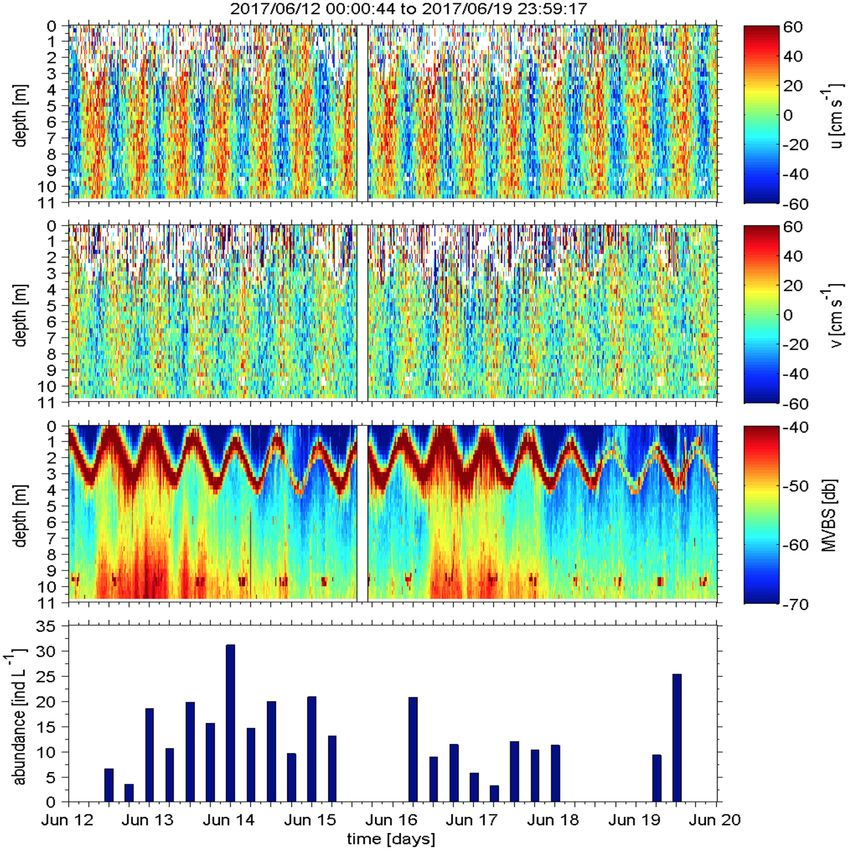
Fischer et al.                                                                                                Operating Cabled Underwater Observatories

INTRODUCTION                                                                in shallow coastal areas (Androsov et al., 2019). Different
                                                                            “ecosystems” (hard bottom areas, seagrass meadows, and so
The coastal zone accounts for 14–30% of the primary production              forth) are often located in the same area but nevertheless act
in the ocean, 80% of organic matter burial, 90% of sedimentary              as separate “functional units.” Understanding coastal processes
mineralization, 75–90% of the oceanic sink of suspended river               and how these ecosystems function therefore often requires
load, and approximately 50% of the deposition of calcium                    an assessment of numerous interacting environmental variables
carbonate (Gattuso, 1998). Hydrological conditions in coastal               covering all process relevant spatio-temporal time scales.
waters change more rapidly compared to the adjacent ocean                      The technology of cabled coastal underwater observatories
and may also form the nuclei for seasonal biological patterns,              has been significantly improved in recent decades (National
such as spring blooms and subsequent biological production                  Research Council, 2003; Hart and Martinez, 2006; Witze, 2013;
(Harding and Perry, 1997; Cloern and Jassby, 2009). Shallow                 Favali et al., 2015). Underwater observatories are often designed
waters often provide important spawning areas and nursery                   to provide ground truth data from static reference points over
habitats for marine biota and serve as foraging areas for many              time (Badeck et al., 2004). In contrast to ship based surveys
fish stocks and mammals (El-Hamad et al., 2009).                            or other mobile observatory platforms such as AUV’s and
    Local hydrography in shallow waters is often strongly affected          autonomous gliders, cabled underwater observatories, however,
by the specific littoral morphometry and the sediment type                  cannot provide spatial coverage of a certain area. Together with
(Shalovenkov, 2000), which subsequently affects the biotic                  mobile systems such as Argo floats that are specifically designed
community across all trophic levels. Additionally, environmental            to cover extended surface areas but with limited temporal
conditions in coastal waters are significantly affected by                  resolution (Levy et al., 2018), cabled underwater observatories
atmospheric conditions due to local and regional wind patterns              can complement an integrated monitoring strategy of a marine
(Savijarvi, 2004) causing complex wave and current patterns as              region as a Long-Term Ecosystem Research (LTER) reference
well as temporal and spatial patterns of physical, bio-geochemical          station and in situ lab facility.
and biological parameters (Comin et al., 2004). These often occur              Most cabled observatories such as MARS (Monterey
over distances and times ranging from millimeters to hundreds               Accelerated Research System)1 , VENUS (Victoria Experimental
of kilometers and from seconds to years.                                    Network Under the Sea) (Dewey et al., 2007), NEPTUNE (North-
    The study of shallow water coastal environments on a                    East Pacific Time-series Undersea Networked Experiments) (Best
functional level is challenging due to the complexity of the                et al., 2007), ALOHA (Howe et al., 2011; Favali et al., 2015),
systems themselves. In particular, temperate and polar coastal              and LoVe (Godø et al., 2014) have been installed in greater
areas, which are increasingly perceived as vulnerable areas                 water depth (Best et al., 2016). However, some installations
of high interest in the context of climate change, are often                were specially developed for shallow water applications to
characterized by harsh wind conditions, low temperatures or                 withstand near-surface conditions and strong hydrodynamic
even ice conditions. The North Sea, for example, has average wind           forces. Examples are the cabled observatory “SmartBay” in
speeds of 7–8 m s−1 , with wind peaks above 6 bft on more than              Galway Bay, Ireland, at 22 m water depth (Cullen et al., 2015)2 ,
300 days a year (Ganske et al., 2005).                                      the EMSO-Molène cabled observatory3 in the Atlantic at 18
    Such harsh weather conditions significantly reduce the days             m water depth, the EMSO Mediterranean Sea observatories at
available for field measurements and oceanographic or biological            20–30 m depth4 , the OBSEA Observatory at 20 m water depth
in situ assessments. This restriction of available observation              (Del-Rio et al., 2020)5 , and the LEO-15 observatory on the East
periods based on conventional ship based sampling techniques                coast of New Jersey, United States (Forrester et al., 1997).
poses considerable risk of either the inability of resolving existing          Although the advantages of permanent underwater
patterns and relationships in coastal systems or, even worse,               observatories are obvious, their operation cannot always be
of misinterpreting those results. Fixed mooring systems are                 maintained in the long term. For example, the WHOI’s PLUTO
highly valuable in providing continuous time series data in                 observatory off Panama was established in 2006, but was partially
coastal areas as well (Hop et al., 2019) but require regular                closed down in 2008. Unfortunately, it is almost impossible
ship time for recovery and suffer from the disadvantage that                to obtain more detailed information about the reasons for the
technical problems are only discovered after the deployment                 closure of such infrastructures, as negative experiences with new
phase. Thus, there is a risk of partial or complete data loss due           technologies or even the complete failure of systems or projects
to system failures or even complete mooring loss. Furthermore,              are rarely reported beyond personal communication. However,
mooring systems normally have limited power resources that                  a thorough discussion of precisely these failures, pitfalls and
often restricting sensor types and operation.                               drawbacks is particularly important in the case of emerging
    Examples of misinterpretation resulting from an insufficient            technologies that are not merely a “flash in the pan,” but seem to
sampling frequency in ecological studies are given in Pearcy et al.         be developing as new tools that enable major advances in science.
(1989) based on the Nyquist theorem (Nyquist, 1928). This risk
is even greater in coastal areas than in the open ocean. While              1
                                                                              https://www.mbari.org/at-sea/cabled-observatory/
excellent models and thorough predictive research capacities are            2
                                                                              http://www.smartbay.ie
available for blue water systems, the capacities for calculating            3
                                                                              http://www.emso-fr.org/fr/EMSO-Molene/Infrastructure
and predicting functional relationships between oceanographic               4
                                                                              http://emso.eu/observatories-node/ligurian-sea/
dynamics and the associated marine biota are rather limited                 5
                                                                              https://obsea.es/

Frontiers in Marine Science | www.frontiersin.org                       2                                            August 2020 | Volume 7 | Article 551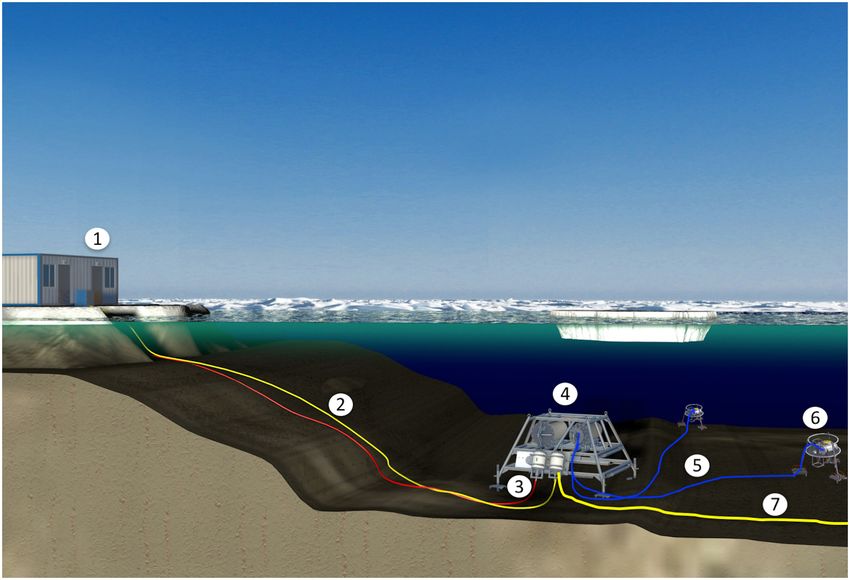
Fischer et al.                                                                                                       Operating Cabled Underwater Observatories

   New technologies must also provide a truly sustainable and                         benthic community and technical installations on the seafloor are
long-term benefit for science. It is therefore necessary to consider                  significantly exposed to strong hydrodynamic forces.
the effort and the risks involved in operating cabled underwater                          The COSYNA-AWIPEV observatory is located in
observatories for science (Buck et al., 2019).                                        the Kongsfjorden Arctic fjord system at 78◦ 550 50.3700
   In this manuscript, we describe the experiences gained from                        N/11◦ 550 12.1000 E (WGS84), at 10 m water depth (± 0.7 m
7 years of operating of two cabled underwater observatories in                        SD tidal amplitude) on the west coast of Spitsbergen (Fischer
the North Sea and Arctic. We present the basic design features                        et al., 2017; Figure 1). The site is comparatively sheltered in
of the node systems used, the data handling procedures as                             the inner part of the Kongsfjord, with average tidal currents
well as the design and procedural changes since the systems                           of 0.1 m s−1 (Fischer et al., 2019b). The major threat for any
were commissioned. In the “Materials and Methods” section,                            fixed scientific installation in this polar area are freely drifting
we describe the observation sites as well as the technical                            small and medium sized ice bergs. Until 2006, the fjord was
specifications of the underwater systems developed within                             regularly covered by sea ice in winter (Gerland and Renner,
the framework of COSYNA (Coastal Observing System for                                 2017). From then on, regular winter ice cover has become
Northern and Arctic Seas) (Baschek et al., 2017) and the                              rare (Cottier et al., 2007) and closed winter ice cover has no
two Helmholtz Association projects ACROSS and MOSES                                   longer been observed since 2009. This is mainly attributed to
(Modular Observation Solutions for Earth Systems). The                                the increasing warming of the fjord system due to the influence
“Results” section describes the experience with the setups                            of climate change (Kortsch et al., 2012). This leads to the
since 2012. Using two scientific examples, the potential of                           situation that today, icebergs which are frequently calving from
cabled observatory technology, especially for coastal research,                       the glaciers inside the fjord are no longer locked by sea-ice
is presented together with the problems that have occurred on                         but are freely floating in the fjord system reaching the shallow
a hardware, software and conceptual level. In the “Discussion”                        water areas, thus posing a considerable threat to permanently
section, the system optimizations carried out during operation                        installed measurement systems. With significantly fluctuating
to overcome those hurdles as well as those planned for the next                       minimum winter water temperatures between -1.6 and 0.8◦ C in
node generation are described. The advantages, disadvantages                          February and March, and maximum average water temperatures
and risks of operating cabled observatories in coastal research                       of more than 6◦ C in August (Fischer et al., 2018b,c,d,e,f,g,h),
are also discussed.                                                                   there is an on-going discussion as to whether the fjord has
                                                                                      exceeded a “tipping point” and will remain permanently
                                                                                      ice-free in the future.
MATERIALS AND METHODS                                                                     A further challenge in terms of continuous operation and
                                                                                      regular maintenance of the COSYNA-AWIPEV Underwater
Study Sites                                                                           Node System is the polar night with a dark phase from November
The two COSYNA Underwater Node Systems are operated                                   to February and air temperatures below -30◦ C. This circumstance
at two sites that differ significantly in terms of climatic and                       limits extensive maintenance work under water to the summer
hydrodynamic conditions, but exhibit a remarkable similarity                          months and makes winter operations in the event of system
in terms of biota composition with respect to the fish and                            failures a challenge for the participating scientific staff, the
macroinvertebrate species present in both areas (Brand and                            scientific divers and the equipment.
Fischer, 2016; Wiencke and Hop, 2016). The “COSYNA-
Helgoland” observatory (Figure 1) is located at 54◦ 110 32.300
N/7◦ 520 42.200 E (WGS84), about 500 m north of the island of                         Observatory Layout: Configuration
Helgoland, at a depth of 9.7 m (± 0.9 m SD tidal amplitude),                          Requirements and Implementation
at the AWI (Alfred Wegener Institute) underwater experimental                         Both node systems have been developed and operated since
field “Margate” (Figure 1)6 close to the Helgoland roads                              2010 as part of the COSYNA framework (Baschek et al., 2017).
time series (Wiltshire et al., 2009). The area is particularly                        They were expanded since then as part of the ACROSS and
characterized by strong hydrodynamic forces with average                              MOSES projects. The main objective was to develop a cabled
current velocities of 0.5 m s−1 (Fischer et al., 2019a) and                           underwater node system for shallow water areas between water
dominant M2 and S2 tides, allowing characterization of this                           depths of 5 and 300 m. The system was to withstand the
area as a hydrodynamically complex ecosystem. Minimum                                 challenging environmental conditions in the North Sea and the
monthly-averaged water temperatures of about 3◦ C are reached                         Arctic with the requirement that it be continuously operated
in February and maximum values of about 18◦ C in August                               year round and fully controlled remotely. The weight of a
(Wiltshire and Manly, 2004; Fischer et al., 2018a). Another local                     single component should not exceed 1 t, so that it could be
feature affecting shallow water habitats and permanently installed                    deployed with smaller coastal vessels using a standard ship
measurement technology are wind speeds up to 147 km/h                                 crane. A further requirement was that all single components
(Climate Data Center [CDC], 2019). These strong storms occur                          can be mounted or dismounted individually underwater by
primarily in autumn and spring and can lead to “groundswell,”                         divers. An additional major requirement was that scientists
where the wave height is greater than the water depth so that the                     must be able to operate a sensor at the node system without
                                                                                      familiarity with the back-end software technology. Based on these
6
    https://www.awi.de/en/science/special-groups/scientific-diving/margate.html       requirements, two industrial (SME) partners were selected to

Frontiers in Marine Science | www.frontiersin.org                                 3                                         August 2020 | Volume 7 | Article 551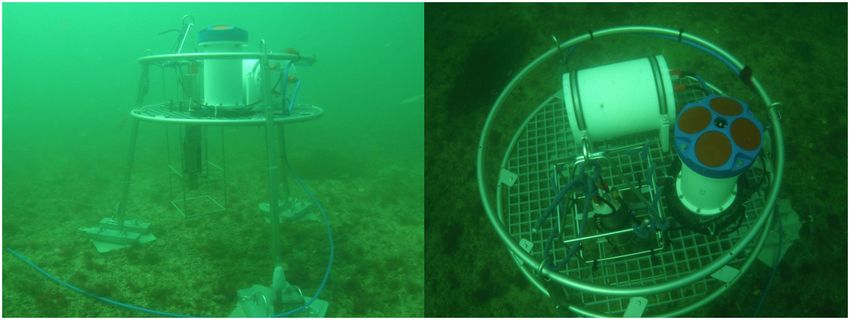
Fischer et al.                                                                                                        Operating Cabled Underwater Observatories

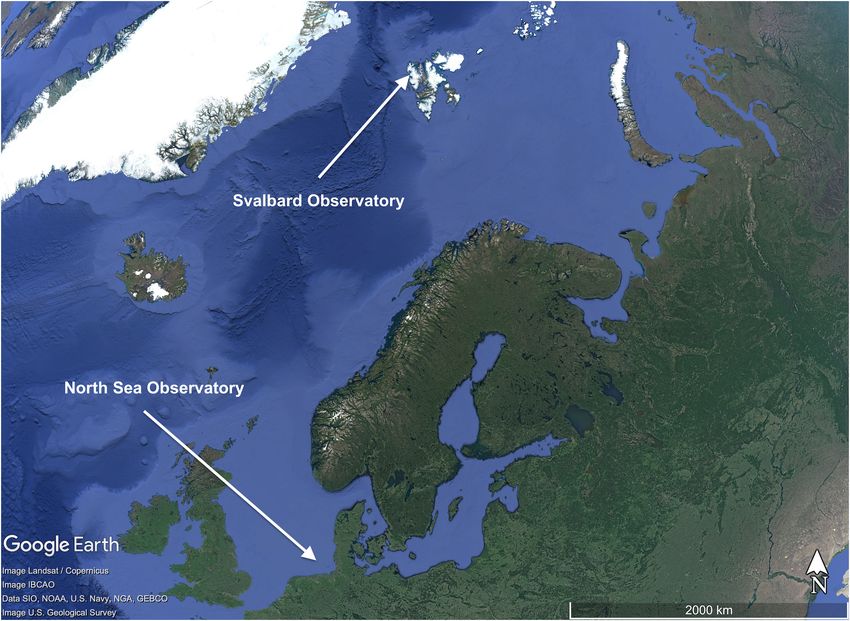
    FIGURE 1 | Location of the two COSYNA observatories in the southern North Sea (COSYNA-Helgoland) and the Arctic Ocean in the Svalbard archipelago
    (COSYNA-AWIPEV).

develop a concept for the node hardware and software in a                           1000 V and 1.2 A, thus providing an input power of up to
consortium with the participating institutes and to construct a                     1200 W per node to the sea cable. The supply system is based
corresponding prototype.                                                            on direct current (DC), which has a lower voltage loss on longer
    In Figure 2, a sketch of the COSYNA underwater node                             distances compared to alternating current (AC). Depending on
deployment configuration is shown. The system consists of a                         the distance from the land station to the node system, the voltage
land station (1), the submarine cable (2), the actual underwater                    delivered by the land station can be reduced to prevent the
node (4) and a connected lander system (6), which serves as                         transfer of unnecessarily high voltages via the underwater cable
a basic sensor carrier. The system’s operational range – that                       and plugs (see also results section “Underwater Pluggable Cables
is, the maximum cable length for connecting the land station                        and Connectors”). This is done, for example at the Svalbard
and a first underwater node system – was defined at 10 km.                          node system, where the distance between the land station and
This maximum distance was constrained by the requirements to                        the underwater node is only 200 m. There, the input voltage
reach different areas of sediment types around the designated                       could be reduced to 250 V without any power limitations for the
test area of the first node system, the island of Helgoland                         sensor operation.
in the southern North Sea. The concept, however, includes a                             As IT infrastructure, a VMware ESXi hypervisor, Version
range extension of up to 30 km by daisy chaining two further                        5.5 was hosted one a local server with local storage (Dell
node installations.                                                                 PowerEdge R710, 12C, 96 GB RAM, 2,4TB Raid6 Storage).
    The land station (Figure 2(1)) comprises one ARGOS 1200                         This early setup was replaced in 2016 by a redundant server
power supply unit for each node7 . Each unit delivers up to                         infrastructure both at the Helgoland and the Arctic node system.
                                                                                    It consists of two VMware ESXi hosts, Version 6.5 (Dell Power
7
 https://tet.industriealpine.de/material/datasheet/de/ARGOS_1200_DATA_de.           Edge R730, 8C, 192GB RAM) and two iSCSI storage units
pdf                                                                                 with each 5TB Raid6 storage. Full seamless fault tolerance is

Frontiers in Marine Science | www.frontiersin.org                               4                                            August 2020 | Volume 7 | Article 551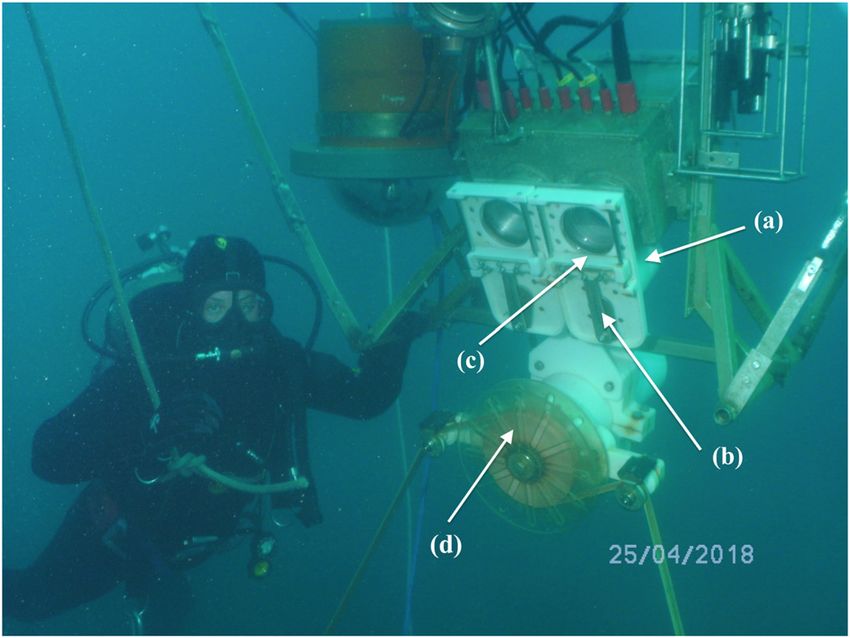
Fischer et al.                                                                                                            Operating Cabled Underwater Observatories

  FIGURE 2 | Basic deployment concept of the COSYNA Underwater Node System: (1) land station, (2) submarine cable (1000V), (3) breakout box, (4) underwater
  node, (5) Power (48V)/TCP-IP hybrid cable, (6) sensor carrier (lander), and (7) submarine cable (1000V) to daisy chained second node. The maximum distance from
  land station to the first node respectively among the daisy chained second and third nodes is 10 km. Maximum water depth is 300 m. See text for a detailed
  description of the single components.

given this way for the failure of one storage unit or one ESXi                       IP addresses to communicate with the components and check
host at either site.                                                                 their function in the event that either no node is connected
   The 6-core (6 × 2.5 mm) sea cable (Figures 2(2), 3) is                            or an undefined error occurs in the system. The breakout
used together with four single-mode fiber optic lines for data                       box is constructed of polyethylene (PE) and is approximately
transmission. The cable is reinforced with an aramid sheath and                      weight-neutral in water. An IP-based water intrusion detector is
has a copper foil shield with a double wire. The coating is made                     mounted to monitor it.
of polyurethane and the outer diameter is 22 mm. The cable is                           Figure 5 shows the complete COSYNA Underwater Node
approved for an operating voltage of 1000 V DC, with a test                          System during operation. The breakout box is connected to the
voltage of 4 kV AC. The cable resistance is 3.3 Ohm/km; the                          node by two wet-mateable cable connectors: one connecting
weight is 705 kg km−1 ; and the maximum tension load is 2000 N.
The calculated voltage drop is 6.9 V km−1 at 1000 V and 1200 W
(maximum power transmission). This results in a maximum
power drop of up to 207 V at a maximum distance of 30 km from
the third node to the land station in the full expansion stage with
daisy-chained node systems. For data connectivity, one pair of the
fiber optic lines is used to establish a 1000-FX network link to the
land station. A further capacity extension by upgrading the fiber
optic transceivers is possible.
   The submarine cable is connected to the underwater node
system at the “breakout box” (Figure 4). In this cable termination,
the optical fiber connection of the underwater cable is converted
into a copper-based data transmission. The incoming 1000 V
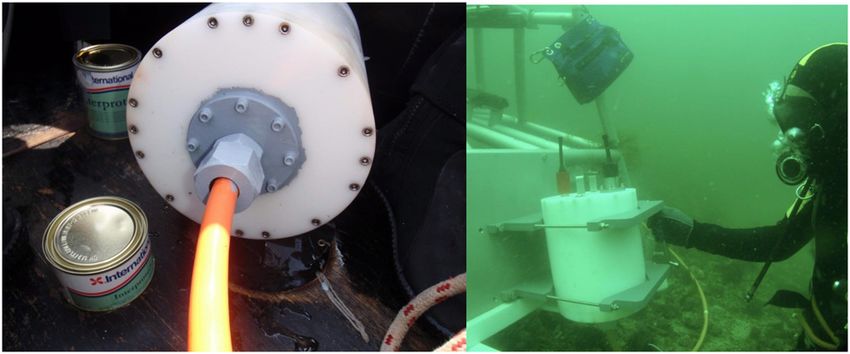
are converted to 48 V to supply the electronic components in                          FIGURE 3 | Sea cable (diameter 22 mm) used to connect the land station
                                                                                      with the node system (1 = insulated cores, 6.0 mm2 ; 2 = filler; 3 = GRP fabric;
the breakout box. This large-step power conversion was achieved
                                                                                      4 = fiberglass cable single mode; 5 = taping; 6 = outer sheath. For additional
by a special power supply unit from SYKO Type BLG.M. The                              details see text). Photo: P. Fischer.
IT components used are active components with their own

Frontiers in Marine Science | www.frontiersin.org                                5                                                August 2020 | Volume 7 | Article 551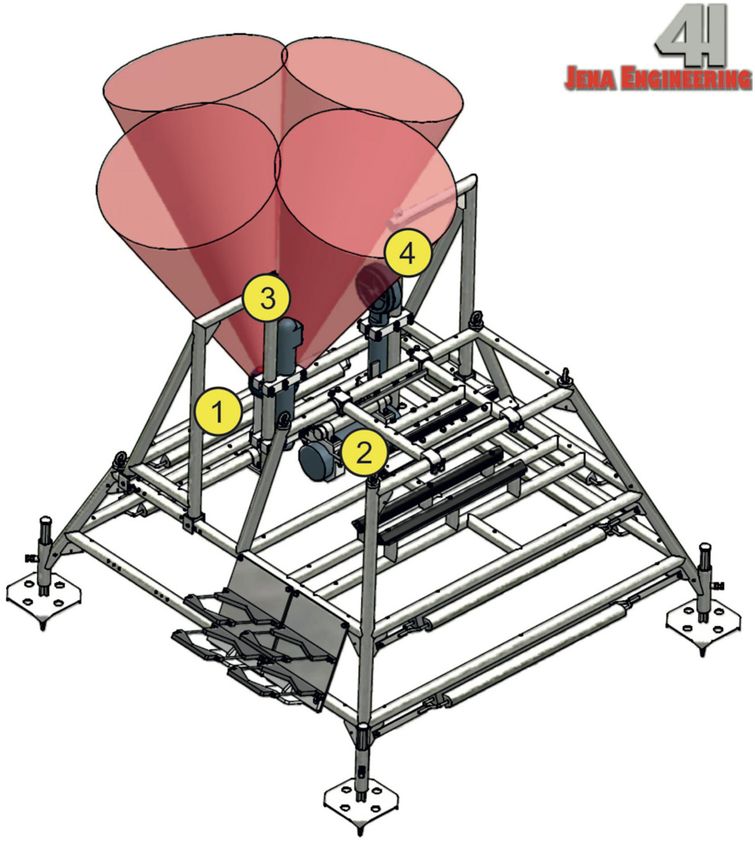
Fischer et al.                                                                                                           Operating Cabled Underwater Observatories

the power (1000 V – type DC), and the other connecting                               operation by divers when the 1000 V land power supply must
Ethernet (1000BASE-T).                                                               be shut down. To keep the system running during intentional
   Communication and data transfer from and to the underwater                        (or unintentional) power cuts, an additional battery buffer is
node systems is performed by standard internet protocol TCP/IP.                      installed (Figure 5(1)), keeping the system alive for at least 2
From 2012 to 2015 at the Helgoland systems and until 2016                            h so that divers can safely approach the system under fully
at the Svalbard system, the land stations of the nodes were                          operational conditions.
connected via IP radio relays over a distance of up to 60 km to the                     For attaching sensors (or even complex sensor units) to the
respective national IP network. Even though these connections                        node, ten underwater mateable connectors are available per
were sometimes identified as possible bottlenecks for remote                         underwater node, each providing 100BASE-T ethernet link (max.
node operation, especially in the Arctic, they never restricted the                  1000BASE-T ethernet) for data transfer, and a 48 VDC power
required bandwidth. From 2015 onward at Helgoland (Germany)                          supply with a maximum of 200 W per connector (Figure 6,
and from 2016 onward at Svalbard, a cable-based fiber optic                          right image). IP-based Ethernet connections are used as standard
connection via the respective national sea cable infrastructure is                   transport protocol. Non-Ethernet sensors can be connected
available for data transfer.                                                         via specific “connector boxes” containing hardware to adapt
   The internal power of the underwater node system and                              sensors to serial or USB interfaces (Figure 6). The connector
connected sensors is set to 48 V to allow for safe underwater                        boxes have been specially designed and developed for the
                                                                                     COSYNA node system. They can be individually configured
                                                                                     depending on the sensors to be connected. The boxes are
                                                                                     made of POM material (polyoxymethylene) which is commonly
                                                                                     used in marine engineering and they are standardized in
                                                                                     size. The standard connector box has a diameter of 27 cm
                                                                                     and a length of 38 cm and can be equipped with various
                                                                                     underwater pluggable connectors in the lid. Connector boxes
                                                                                     only differ in the length of the body and not in the lid,
                                                                                     so that the lid with the connectors and the wiring can
                                                                                     be used with a larger body if additional space is needed.
                                                                                     A COSYNA standard “connector box” can take up to six
                                                                                     sensors and provides 12, 24, and 48 V as well as standard
  FIGURE 4 | Left: Sea cable feedthrough coated with corrosion protection.           RS232 and RS485 communication at each of the six ports.
  Right: Breakout box mounted on the frame of the Helgoland underwater node
  system. Photos: P. Fischer.
                                                                                     For other sensors, a custom configured “connector box” is
                                                                                     provided based on the standard input of 48 V and a 100
                                                                                     Mbit Ethernet connection from the node. For all sensor
                                                                                     communication via the node to the user, industrial Ethernet-
                                                                                     serial/USB converters (AdvantechTM EKI 1524 or WUTTM Com-
                                                                                     Server Serial/USB) are used.

                                                                                      FIGURE 6 | Sensor lander with a “connector box” (white PE tube in the right
                                                                                      image). The “connector box” is connected to the “breakout box.” From there,
                                                                                      a serial, USB or any other sensor is connected via the respective
  FIGURE 5 | Fully operational node system off Helgoland. The left tube (1)           communication protocol. The respective Ethernet interface for a sensor is
  houses a battery pack that provides power for 2–6 h, depending on the               installed in the “breakout box” and connected to the sensor via an underwater
  power consumption of the sensors. The right tube (2) is the node system             mateable subcon plug. The photographs show a COSYNA “standard lander”
  which is connected to the breakout box by the red 1000 V power line and the         that is equipped with a Sea&Sun CTD, a Teledyne ADCP and a SeaBird
  blue Ethernet line. On the front panel, ten sensor ports are available, each        SBE38 temperature sensor. The standard “breakout box” can take up to six
  providing up to 200 W and an Ethernet connection. All cables between the            sensors and provides 12, 24, and 48 V as well as standard RS232 and
  different node components are wet-mateable by divers, except for the sea            RS485 communication at each of the six ports. For other sensors, a custom
  cable that enters the breakout box from below via a permanent cable                 configured “breakout box” is provided based on the standard input of 48 V
  feedthrough (see Figure 4). Photo: P. Fischer.                                      and a 100 Mbit Ethernet connection from the node. Photos: P. Fischer.

Frontiers in Marine Science | www.frontiersin.org                                6                                              August 2020 | Volume 7 | Article 551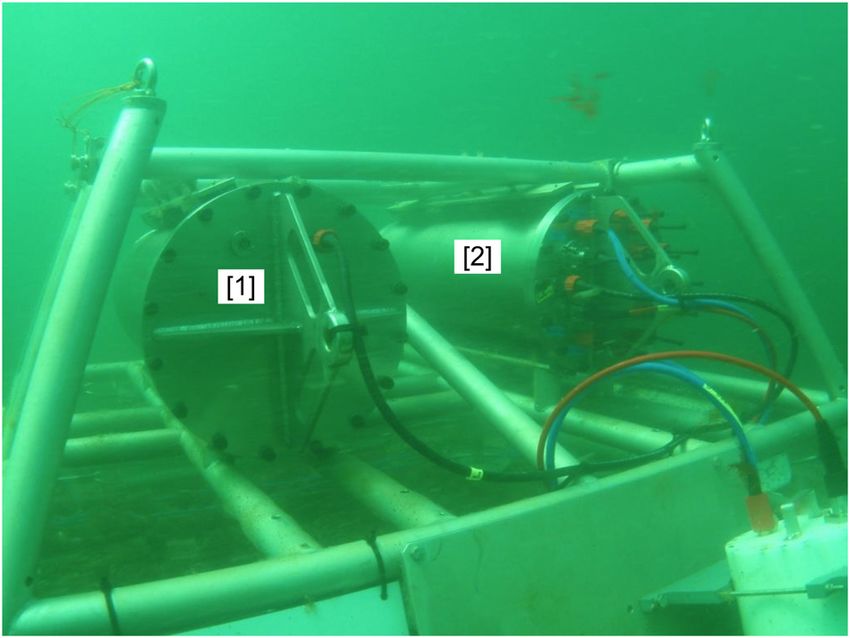
Fischer et al.                                                                                                Operating Cabled Underwater Observatories

Standard Data Provided by the COSYNA                                            the mechanical, electrical and IT integration of the sensor as
Underwater Node System                                                          well as setting up and managing the user access to the sensor,
                                                                                is managed by the COSYNA node consortium, in which the
Each COSYNA Underwater Node System is connected to a
                                                                                two participating partners – Helmholtz-Zentrum Geesthacht and
standard lander (Figure 6, left) carrying a sensor package
                                                                                Alfred Wegener Institute Helmholtz Centre for Polar and Marine
that measures basic oceanographic parameters (Baschek et al.,
                                                                                Research – are represented.
2017) continuously year round. It comprises an upward looking
                                                                                    New sensor integration into the Arctic underwater node
ADCP (Teledyne Workhorse 1200 kHz), sensors for pressure,
                                                                                system is more extensive than for the North Sea node, as there,
temperature, conductivity, oxygen, chlorophyll-a fluorescence,
                                                                                sensors are only accessible once or twice a year. In order to
and turbidity integrated in an extended CTD (Sea&Sun CTD90)
                                                                                ensure the operational stability of these sensors, an integration
and temperature logger (SBE38). All standard oceanographic
                                                                                and in situ test operation phase of at least 14 days at the North
parameters are publicly available in near realtime (based on the
                                                                                Sea node has proven to be important to ensure the reliability
logger after 1 or 24 h) on the COSYNA data portal8 and the
                                                                                of the software and hardware components as well as to ensure
AWI web page9 . Both data portals offer CSV formatted data for
                                                                                the capability of complete remote control in terms of power and
download. The COSYNA data portal offers additional SensorML
                                                                                network. Since the North Sea and Arctic node systems are more
format via the web service OGC-SOS, the AWI dataportal offers
                                                                                or less identical in terms of hardware and network configuration,
JSON format. Discussions in the scientific community revealed,
                                                                                it is thus ensured that a sensor successfully operated at the North
that most biological oceanographers prefer the CSV format, more
                                                                                Sea node will also work at the Svalbard node system.
standard oriented scientists prefer SensorML or netCDF and data
                                                                                    The final access to a sensor or to multiple sensors mounted
scientists often prefer JSON. Even though the three latter data
                                                                                at either node is established with virtual computers that are set
formats are more efficient with respect to information per data
                                                                                up on the central server. A virtual machine is a software-based
volume, according to our experience it is highly recommended
                                                                                individual workstation on which different operating systems
to at least provide one “low-level” data format for download
                                                                                (Windows, Linux, Unix) can be installed. Access to the virtual
to make data accessible in the context of FAIR also for non-
                                                                                machine is provided through remote login via an open source or a
data specialists. On the other hand, CSV formatted data do not
                                                                                commercial remote login program, whereby the programs “Real-
fulfill the FAIR criterium of interoperability because CSV files
                                                                                VNC”10 and “TeamViewer”11 have become the most popular in
are not per se machine readable and linkable. It will certainly
                                                                                the COSYNA consortium. The user has full user rights to install
require further efforts to implement the FAIR standards for all
                                                                                software on his or her workstation to operate a sensor, and
user groups. An important step in this direction would be the
                                                                                each workstation has a standard hard disk size of 500 GB to
consistent implementation of simple to use import routines for
                                                                                temporarily store sensor data. This system architecture allows the
FAIR data formats in the most common spreadsheet programs
                                                                                user to operate a sensor from anywhere in an identical manner
and the provision of easy-to-use import routines for FAIR data
                                                                                and with the same software as used directly in the laboratory
formats in the common script languages such as R or Matlab.
                                                                                without the underwater node system infrastructure.
User Operation of the COSYNA                                                        Data acquisition is important with respect to the software
                                                                                required for continuous sensor operation. For many sensors,
Underwater Node System                                                          only interactive sensor control software is available that requires
The COSYNA system is designed to enable sensor owners                           manual interaction to store data files, read calibration data, or
to operate their sensors at the underwater node without                         perform other operations. The development of software that
special knowledge of specific electronics and IT. Nevertheless,                 allows fully automated operation of sensors, including data
the sensor owner must provide basic information about the                       storage, is usually costly and requires special programming
sensor itself (i.e., the sensor’s user manual), about the power                 for each sensor type. Within the framework of the node
requirements of the sensor (voltage and current consumption)                    system development, we developed an alternative way to
and the type of digital communication. The comparatively strict                 operate sensors permanently and resiliently without an additional
procedure of answering a questionnaire in advance proved to be                  probe-specific software solution. For this purpose, the software
necessary in the course of integrating the first sensors to avoid               “MacroScheduler” was used to code every action a user performs
misunderstandings between sensor owner and node operator and                    on the screen with a keyboard or mouse into a stable executable
to avoid malfunctions, or even damage, to the sensor during                     program. With this procedure, it has been possible to fully
integration. Based on this information, the physical integration                automate any original sensor software thus far. This has the
of the sensor is prepared in the lab. There, the user must                      additional advantage that the generated data files can be read with
demonstrate that the sensor will function properly on a computer                the original software and, if necessary, processed further.
for at least 24 h with the defined power supply and that the                        In parallel to the optimization and development of the node
software used for data acquisition (e.g., the original software from            hardware, the importance of timely, resilient and, in particular,
the sensor manufacturer) will demonstrate working stability. The                traceable plausibility and quality checks of the measured data
final implementation of the sensors in the node system, including               emerged in the course of the operational phase. Especially in
8
 http://codm.hzg.de/codm/
                                                                                10
9
 https://www.awi.de/en/science/biosciences/shelf-sea-system-ecology/main-            www.realvnc.com
                                                                                11
research-focus/cosyna.html                                                           www.teamviewer.com

Frontiers in Marine Science | www.frontiersin.org                           7                                        August 2020 | Volume 7 | Article 551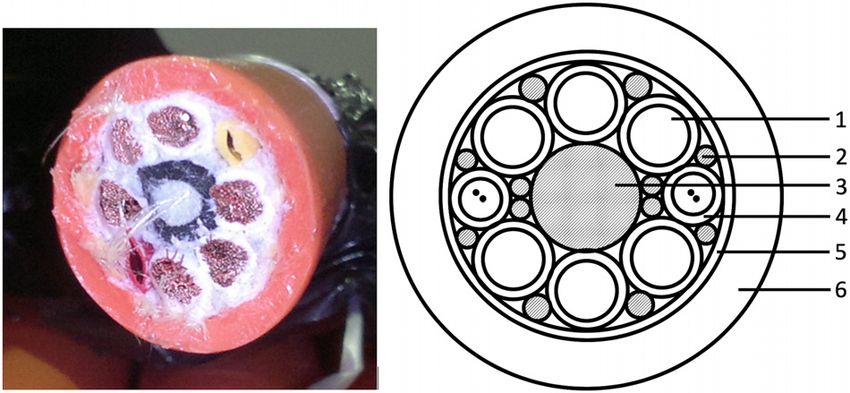
Fischer et al.                                                                                                             Operating Cabled Underwater Observatories

case of cabled observatories, the tendency and the willingness                         RESULTS
is great to feed the measured data directly into respective
databases and thus to make them immediately available to                               Similar to moorings or other autonomous sensors, cabled
science and to public stakeholders, especially when the financial                      underwater observatories offer the opportunity for temporal
support of the systems may depend on this “real-time” data                             high-resolution long-term measurements in areas where it
availability. Without reliable and widely automated quality                            is difficult to perform manual sampling all year round. In
control procedures, there is a considerable risk that unreliable                       addition, automated sensors can form the backbone of intensive
or, in the worst case, false data, e.g., due to sensor failures                        measurement campaigns so that discrete sampling, for example,
or sensor drift, may become available and be used by the                               with (costly) research vessels can concentrate on collecting non-
scientific community or the public. Furthermore, initiatives such                      automatically measurable variables. In addition to moorings and
as “FAIR” (Wilkinson et al., 2016) address the importance of                           autonomous sensors, cabled observatories also allow the use of
adequate metadata for each sensor without which it is often                            highly complex sensors that need frequent human interaction
not possible to use the data for scientific analyses. In the                           for reliable operation – even in remote areas where access is
COSYNA framework, this requirement has been taken into                                 limited. At both underwater observatories, in Helgoland and in
account by checking all oceanographic basic data (see section                          the Arctic Kongsfjorden fjord system, we successfully operate
“Standard Data Provided by the COSYNA Underwater Node                                  additional complex stereo-optic sensors and a video-plankton
System”) according to the international standard (SeaDataNet,                          recorder to assess the local fish, macroinvertebrate and plankton
2010; Breitbach et al., 2016) prior to their transfer to the                           community in detail. These sensors provide large datasets of
corresponding data portals. This ensured that at least impossible                      high-resolution images of a certain water volume or benthic
or improbable data were clearly marked as “bad” data and                               area. The images are transferred online directly to Germany,
therefore could be excluded. In the course of the continuous                           where they are analyzed for total species abundance, species
operation of the two systems, however, it became clear that                            composition, and species-specific length-frequency distributions
pure and fully automated plausibility checks, even though                              (Fischer et al., 2007; Wehkamp and Fischer, 2014).
internationally accepted, were not sufficient to provide “good”                           Even though optical systems can be deployed also
data. We therefore developed a multi-step machine-human                                autonomously, cable connected systems have the advantage
procedure to convert probably good data (data which passed the                         of more or less unlimited power supply and storage volume
automated flagging routines) into “good” data. The procedure                           for the images. Furthermore, image analysis is often time
is entirely written in R and uses well published procedures                            consuming especially when no fully automated object detection
for data de-spiking, data imputation, data cross-validation and                        and measurement algorithms are available, a field of data
visual data inspection and will be published separately. Even                          science in aquatic ecology which is just emerging (Marini et al.,
though it will never be possible to 100% avoid wrong data                              2018). Images are delivered in near-realtime every day and
in datasets especially from continuous operating observatories,                        can be analyzed continuously which is often more feasible
such multi-step machine-human procedure significantly help to                          than analyzing thousands of images after an instrument has
minimize the risk of distributing erroneous scientific data and                        been recovered. In addition, 100% autonomous operation over
should therefore be always made available together with the                            longer time periods is not feasible for such installations. The
respective datasets.                                                                   likelihood is high that such complex systems fail at some point

  FIGURE 7 | Data from the RemOs1 stereoscopic fish observatory attached to the underwater node system in Kongsfjorden. Left panel: Year round survey from
  October 2013 to November 2014 (modified after, Fischer et al., 2017). CPUE (catch per unit effort) is an arbitrary unit showing the total mean number of specimen
  counted per week based on 48 stereoscopic image pairs (one image pair every 30 min) summed up per week. Right panel: The same analysis performed for the
  period September 2017 to April 2018.

Frontiers in Marine Science | www.frontiersin.org                                  8                                               August 2020 | Volume 7 | Article 551
Fischer et al.                                                                                                       Operating Cabled Underwater Observatories

and therefore need human interaction for proper operation.                         concomitantly with the sampling process itself. The latter point
Such systems, however, can nevertheless be operated steadily                       in particular is advantageous allowing a rather interactive than
over long periods of time at cabled observatories because                          static sampling scheme where field campaigns can respond
they can be continuously monitored with automated routines,                        rapidly to signals from the environment, such as the start of the
and many failures and problems during the operation can                            spring bloom or the occurrence of certain species in an area.
be fixed remotely. Furthermore, the samples (e.g., images,                         This is especially advantageous for remote field activities and can
videos, acoustic recordings) can be transferred or streamed                        make the often costly and labor intensive in situ sampling more
online to any land-based server, where the samples can be                          targeted and efficient.
processed and analyzed in real or near-realtime so that not                           Figures 7, 8 show two examples of such labor-intensive
only the functionality of the sensor itself is controlled but                      samplings that are impossible to perform without cabled
also the scientific analysis can be done continuously and                          observatory technology. Figure 7 (left panel) shows a year-round

  FIGURE 8 | An 8-day sample (2017/06/12 00:00 to 2017/06/20 00:00) of horizontal velocity components u and v as well as backscatter estimated from the ADCP,
  moored about 500 m north of the island of Helgoland at a depth of around 10 m at the AWI underwater experimental field “Margate.” The lowermost panel shows
  the total abundance of plankton and particles derived from the VPR measurements (no data = underwater maintenance work at the observatory).

Frontiers in Marine Science | www.frontiersin.org                              9                                             August 2020 | Volume 7 | Article 551
Fischer et al.                                                                                                              Operating Cabled Underwater Observatories

                                                                                              Figure 10 shows a sketch of the remote controlled
                                                                                          zooplankton observatory attached to the Helgoland underwater
                                                                                          node since 2016. This device is based on the combination of
                                                                                          an Acoustic Doppler Current Profiler (ADCP RDI Workhorse
                                                                                          Sentinel 1200 kHz, Teledyne RD Instruments USA, Poway,
                                                                                          CA, United States) with an underwater imaging system (Video
                                                                                          Plankton Recorder, VPR Seascan Inc., United States). The
                                                                                          ADCP provides a three-dimensional measurement of the
                                                                                          flow field and measures the acoustic backscatter strength,
                                                                                          providing continuous high resolution data, for example,
                                                                                          to yield precise estimates of timing, velocity and extent of
                                                                                          the diel vertical migration of zooplankton communities
                                                                                          (Cisewski and Strass, 2016 and Figure 8).
                                                                                              The VPR records high-resolution digital images with a frame
                                                                                          rate of 15 s−1 , illuminated by a ring light strobe synchronized
                                                                                          with the camera shutter. Four calibrated magnification levels
                                                                                          allow the focused imaging of plankton and particles within
  FIGURE 9 | Stereo-optical unit in Kongsfjorden with a mechanical cleaning
                                                                                          a size range of 50 µm to several millimeters and thus
  system (see arrow) for the camera lenses. For each lens, the system
  comprises (a) a remotely controlled electrical power unit, (b) a connection rod         enable a quantitative optical sampling and size estimate of
  transferring the rotation of the engine to a vertical movement, (c) a wiper             marine aggregates and fragile species. This includes gelatinous
  construction moving up and down to clean the lens systems, and (d) remote               plankton, which is often undetected or underrepresented in the
  controlled winch system for vertical profiling and positioning the system in the        traditional plankton sampling methods (Möller et al., 2012).
  water column. Photos: P. Fischer.
                                                                                          Both instruments are mounted on the COSYNA node rack in
                                                                                          a manner such that one beam of the ADCP (depth cell size
                                                                                          25 cm, sampling interval adjusted to one ping per ensemble
                                                                                          with a ping rate of 1 min−1 ) intersects the focal depth of the
assessment of the fish and macroinvertebrate community in                                 camera (Figure 10) to cover the same volume of water. Plankton
Svalbard’s Kongsfjord in the years 2013 to 2014 using the RemOs1                          and other particle images are automatically extracted from each
3D imaging sensors (Fischer et al., 2007).
    The profiling optical sensor takes high resolution stereoscopic
images with a frequency of one image pair every 30 min and
is positioned every week in five different water depths for at
least 24 h. Moving the system vertically was done by an in-
house designed remote-controlled winch system in combination
with a depth sensor (Figure 9D) allowing to vertically position
the entire system in any depth between the surface and the sea
floor. The water column in the littoral zone is thus completely
assessed once a week, with 2 days to spare for repeating
depth strata that were missed – for example, due to technical
problems or poor visibility. The system facilitates measurements
of species abundance, species composition and species-specific
length frequencies, while providing unique time series over the
24 h diel cycle continuously for 365 days of the year. The
observatory enables repeated sampling every year as shown in
Figure 7 (right panel) for the season 2017–2018. This long-term
sampling provided the world’s first year-round dataset of the
littoral fish community in an Arctic fjord system and confirmed
the hypothesis that the polar night is rather important for the
fish and macroinvertebrate community in very shallow areas.
The development and operation of the COSYNA Underwater
Node System enabled year-round collection of oceanographic
variables together with quantitative data of higher trophic levels
in an extremely hostile environment with air temperatures below
-30◦ C and complete darkness during some times of the year.
                                                                                           FIGURE 10 | Sketch of the Zooplankton Observatory consisting of (1) a
This made completely new insights into the temporal dynamics
                                                                                           Workhorse Sentinel ADCP (1200 kHz), (2) VPR electronics housing assembly,
of this polar shallow water ecosystem possible (for details                                (3) camera housing assembly and (4) strobe light housing assembly.
see Fischer et al. (2017).

Frontiers in Marine Science | www.frontiersin.org                                    10                                             August 2020 | Volume 7 | Article 551
Fischer et al. Operating Cabled Underwater Observatories
image frame as regions of interest (ROIs) using the Autodeck
image analysis software (Seascan Inc., United States), saved to the
computer hard drive as TIFF files and immediately tagged using
the system’s timestamp. This allows later merging with the ADCP
and hydrographic parameters.
All images are sent to the land-based server for further
processing, where they are classified automatically into
taxonomic categories following a method by Hu and Davis
(2006). The average power consumption of the entire system
including node, sensors and VPR is about 120 W in standard FIGURE 11 | Underwater plug and respective socket of the 1000 V power
operation mode and the volume of image files from the input circuit after severe damage. Photos: P. Fischer.
VPR is app. 20 GB h−1 . This and the required intermittent
human intervention, reprogramming of the system clearly
demonstrate that such high-end optical systems cannot under water, must be treated with a thin layer of a special grease
reasonably be operated autonomously year-round without supplied by the manufacturer. The analysis of the damage showed
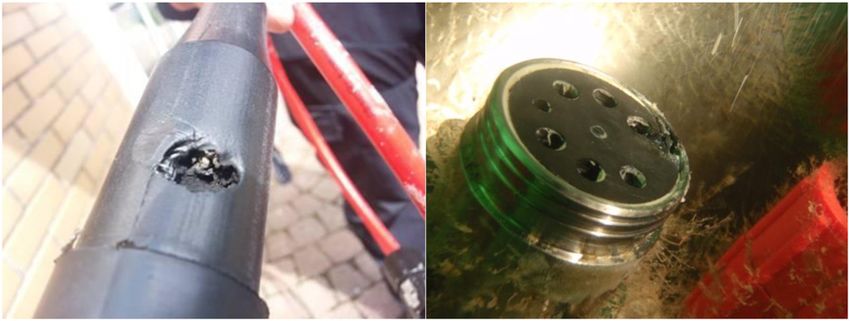
cabled observatory technology. that the (+) pins of the 1000 V plug were completely burnt and
the jacket of the plug had melted (Figure 11), so that sea water
The Node Hardware had penetrated the plug and led to a massive short circuit on the
Experience has shown that almost all generic and sensor-specific socket end as well.
developments or experimental designs required significantly The manufacturer informed us that this damage could
more time in operation than industrially tested software and only be the result of improper handling. We modified the
hardware. Nevertheless, for some experimental approaches, manufacturer’s handling instructions and filled all sockets
no off-the-shelf components are available, so that in-house under water completely with a syringe filled with the grease
developments are necessary. However, this decision should recommended by the manufacturer. This alteration extended the
be carefully examined on a case-by-case basis, as industrial operating time of the connectors to almost 9 months. After that
solutions sometimes do exist, which are, however, more expensive period, however, there was another short circuit and the plug and
initially. For off-the-shelf solutions, however, the financial socket were completely destroyed again.
expenditure is shifted from the investment to the operating Based on these events, the company commissioned its own
expenses. It is important to consider that repairs or adjustments investigations into the plugs. They found that the resistance
during operation are always associated with the risk of data between the individual plug pins was much lower when they
failure or loss. were plugged in under water than when they were plugged
In addition to several small changes and optimizations that in on land, regardless of whether they were properly greased
have occurred over the years during the operation of the nodes, or not. The company offered to replace all underwater plugs
three major problem areas have emerged, each of which has had and cables, worth approximately €45,000. In addition, the
a lasting effect on the operation of the underwater node during manufacturer’s instructions for greasing the plugs was updated,
certain phases. These three problem areas were the underwater the manufacturing process of the plugs themselves was modified
plug connections, the (non-)availability of essential housekeeping and the manufacturers recommendation for the type of grease to
data for error analysis of the system in case of malfunctions as be used for underwater mating was changed to a 100% carbon-
well as the basic software architecture for sensor data processing. free product.
Underwater Pluggable Cables and Connectors Logging of Housekeeping Data
One of the main features of the COSYNA underwater node A second major issue in the operation of the nodes turned out to
is that all individual components – the node, the external be incomplete housekeeping data. In the first node version, the
battery pack and the sensors – can be exchanged underwater input power on land and the output power at the sensor ports
by scientific divers without having to recover the entire system were available as housekeeping data and as Boolean information
itself. The individual components are therefore connected by regarding the leak tightness of the underwater housings and the
cable connections that can be plugged in under water. During the operating temperature of the individual components.
design and construction of the system, special care was therefore Continuous and largely unattended operation of the
taken to ensure that all connectors used were certified by the system showed that additional housekeeping data is required,
manufacturer for underwater connection. particularly in the event of system malfunctions and failures. It
During operation, however, it was found that this specification turned out during operation that the originally selected variables
was not fulfilled. Problems arose, in particular, at the main and their recording frequency were insufficient.
power connection, which delivered up to 980 V to the node. As already mentioned, the most critical components
These plugs were officially certified to 1000 V, but failed after during operation were not the electronic components in the
only 3 months with a short circuit, although the manufacturer’s node, but the cable-bound connection between the individual
handling instructions were followed precisely. This stipulated components. The first node generation did not include an explicit
that both the plugs and the sockets, if they are to be plugged in infrastructure for a continuous and higher-frequency logging
Frontiers in Marine Science | www.frontiersin.org 11 August 2020 | Volume 7 | Article 551Fischer et al. Operating Cabled Underwater Observatories
of the undisturbed functionality of cables between the node with sensors that are not completely developed or automated
components. As a result, it was often unclear which component either in terms of the hardware or the software and therefore
of the system was affected, resulting in unnecessary recovery frequently must be disconnected from the power supply network
of all node components or lengthy underwater troubleshooting in order to reset.
and testing. Based on this experience, we decided to equip
all pluggable cable connections with appropriate sensors for Software Issues With Respect to Sensor Operation
voltage on both ends in order to obtain detailed information In the very beginning of node operation, two different scenarios
on where a possible malfunction is located. The availability of sensor operation were planned: (a) the operation of sensors
of this information significantly accelerates troubleshooting, for standard parameters by the node consortium itself and
as defects in cables and connectors can either be detected (b) the operation of sensors from external partners under the
so early in operation that a problem can be prevented, or full responsibility of the external users. The external users, in
malfunctions can be found and corrected more quickly particular, were thought to be fully responsible for their data
(in case of internal system component failures. In this and, after the initial installation phase, also for the remote sensor
context, we experienced that in addition to the continuous operation and monitoring. Both scenarios were adapted based
monitoring of the voltage and current parameters, a continuous on the experiences of the first year of node operation. Scenario
monitoring of the residual currents of the power lines is of A was initially designed as a type of real-time operation, where
critical importance. Residual current measurements provide the sensor data were to be streamed directly to a central database
information about the insulation condition of the cables at the Helmholtz-Zentrum Geesthacht. While the basic principle
and connectors against the surrounding water. Particularly of this real-time streaming approach works well for our set-up
in the case of the underwater mateable connectors, a slow and is still in place, some shortcomings of a pure streaming
increase in the residual current indicates a gradual loss of procedure became apparent. Many sensors do not deliver “to
insulation of the connector, e.g., due to the washing out of go” data directly from the sensor itself but “raw data,” such
the insulation grease. This problem can then be solved in as voltage, a digital or a binary output. This data must be
time and without potential damage by re-greasing the plug processed by software using calibration coefficients or conversion
connections under water. algorithms to obtain the target parameters in the correct units.
With direct streaming, the raw data (e.g., Volt) are converted
Node Control Software by generic software “on the fly” into scientific values which are
The overall power management of the underwater node then directly fed into the database, however without storing the
(switching the individual ports on and off and providing power original raw (e.g., Volt) data. This holds a considerable risk in
to the sensor ports) as well as the node monitoring (power case the calibration files are technically decoupled from the probe
consumption and network activity) is realized by Programmable and can thus be unintentionally confounded. In 2014, this “on
Logic Controllers (PLC) with discrete software. The first the fly” conversion resulted in almost 2 month data loss from
prototype node used Siemens Simatic S7 PLC, which was replaced a specific sensor, because the wrong calibration file was used.
in rebuild by a Beckhoff CX8090 CPU. Both PLC solution were Because the raw data (Volt) were not stored, the scientific data
equipped with required analog and digital I/O modules. The could not be recalculated with the correct calibration file. To
remote control and monitoring is realized via a web frontend and prevent this, it was decided not only to stream the final scientific
IP, and all available information are logged in a SQL database for readings from each probe, but also to store the raw data from
system monitoring. This frontend has three access levels: “user,” each sensor in the highest possible temporal resolution (e.g., in
“port administrator” and “system administrator.” As of now, volts at 1 Hz) every hour in single files. This makes it possible, in
“users” are allowed to see the status of all ports (i.e., see if a specific case of accidental use of the wrong calibration file, to recalculate
port is on or off); “port administrators” are allowed to switch the data completely afterward. Additionally, it was decided to
all ports on and off and to change the maximal power (watt) implement additional security procedures for the data transfer to
that the individual ports deliver; and “system administrators” the respective databases to avoid the transmission of erroneous
have full access to the system, including adding new users with data in the data portals and to ensure that there is no missing
password settings. metadata for individual sensors. From 2016 on, the transfer
This software design proved not to be ideal for an of data into the database itself was obligatorily linked to the
infrastructure used by several independent groups in parallel. availability of a minimum of up-to-date metadata which means
In particular, the roles and privileges of the “user” and that if metadata were missing, no data entry would be possible
the “port administrator” were not well designed. Currently, at all. This strategic upgrade of redundant data acquisition and
“users” only have read/write access to a port for accessing storage procedure proved to be extremely reliable and allows
a sensor and downloading data. In order to switch off a post-processing of all data in case of a failure in the real-time
sensor completely, “port administrator” rights are required. “Port streaming process occur.
administrators,” however, cannot be enabled for single ports To store raw or scientific data in discrete hourly files, we
only, but have access to all ports and extended functions of prefer to run the original program provided with the sensor.
the node. This leads to the consequence that external users This has the advantage that the program can undertake all
are only assigned the role of “user” and thus cannot switch raw data conversions and usually delivers “readable” ASCII
their own sensor on and off. This is especially problematic files, which can be used for further processing with standard
Frontiers in Marine Science | www.frontiersin.org 12 August 2020 | Volume 7 | Article 551You can also read


