SNP and SCAR Markers for Specific Discrimination of Antler-Shaped Ganoderma lucidum - MDPI
←
→
Page content transcription
If your browser does not render page correctly, please read the page content below
microorganisms
Article
SNP and SCAR Markers for Specific Discrimination
of Antler-Shaped Ganoderma lucidum
O-Chul Kwon 1,† , Chang-Soo Lee 2,† and Young-Jin Park 2, *
 1   Sericultural & Apicultural Materials Division, National Academy of Agricultural Science, Rural
     Development Administration, Wanju-gun 565-851, Korea; jiny5462@daum.net
 2   Department of Integrated Biosciences, Research Institute for Biomedical & Health Science, College of
     Biomedical and Health Science, Konkuk University, Chungju-si 27478, Korea; cslee@kku.ac.kr
 *   Correspondence: yjpark@kku.ac.kr; Tel.: +82-43-840-3601
 †   These authors contributed equally to this work.

 Received: 1 December 2018; Accepted: 8 January 2019; Published: 9 January 2019

 Abstract: In this study we identified single nucleotide polymorphism (SNP) and sequence
 characteristic amplification region (SCAR) markers for specific identification of antler-shaped
 Ganoderma lucidum strains. When the partial mitochondrial SSU rDNA gene sequence of various
 antler- and kidney-shaped G. lucidum strains were analyzed and aligned, an SNP was found only
 in the antler-shaped G. lucidum strain at position 456 bp. In addition, this SNP of antler-shaped
 strains was digested by HinfI restriction enzyme. We further analyzed the polymorphism of various
 G. lucidum strains by random amplified polymorphic DNA (RAPD) analysis. In RAPD analysis,
 we isolated and sequenced a fragment, specific for antler-shaped G. lucidum strains. Based on this
 specific fragment sequence, two sets of specific primer pairs for antler-shaped G. lucidum strains were
 designed. PCR analysis revealed that two specific bands were observed only from antler-shaped
 strains. These two molecular markers will be helpful for identification of morphological characteristics
 of G. lucidum.

 Keywords: antler-shape; Ganoderma lucidum; kidney-shape; mitochondrial SSU rDNA; SCAR marker;
 SNP marker

1. Introduction
      Ganoderma lucidum (Curtis) P. Karst. was named by Petter Adolf Karsten in 1881 based on
material from England [1,2]. The name G. lucidum has been applied to collections from various
countries, including East Africa, Oceania, North America, South America, Asia (China, Japan,
and Korea), and Europe [3]. G. lucidum has been used in traditional medicine for thousands of
years in East Asian countries, such as China, Japan, and Korea. The bioactive compounds such
as flavonoids, ganoderic acid, phenolics, and polysaccharides of G. lucidum have been reported to
show immunomodulatory effect, antitumor activity, and inhibitory activity against histamine release
and cholesterol synthesis [4–7]. Antler-shaped G. lucidum is a variant of G. lucidum that is rarely
found in nature [8]. This rare variant is famous for its medicinal effect in China and Japan [9]. It is
commonly called “Lu jiao Lingzhi” in China, “Rokkaku-Reishi” in Japan [10], and “Nokgak Yeongji”
in Korea. Antler-shaped G. lucidum has been reported to contains much larger amounts of β-D-glucans
and triterpenoids than kidney-shaped G. lucidum [11,12]. It is also known to be more effective in
immunostimulatory and anti-tumor activities than kidney-shaped G. lucidum [12,13]. Therefore,
antler-shaped G. lucidum is expected to show much stronger pharmacological activity. On phylogenetic
analyses of the genus, G. lucidum from different parts of the world were reported to belong to several
separated lineages [14–18]. Regarding research on the markers for Ganoderma species, there are several

Microorganisms 2019, 7, 12; doi:10.3390/microorganisms7010012            www.mdpi.com/journal/microorganisms
Microorganisms 2019, 7, 12 2 of 12
reports about taxonomic diversity by RAPD, RFLP, AFLP, and other methods [19–22]. However,
there is no marker for specific identification of antler-shaped G. lucidum strain.
Molecular markers are developed by several techniques, such as amplified fragment length
polymorphism (AFLP), polymerase chain reaction-restriction fragment length polymorphism
(PCR-RFLP), random amplified polymorphic DNA (RAPD), and sequence characterized amplification
region (SCAR) [23]. Among these techniques, PCR-RFLP and RAPD are the quickest and relatively
simplest methods and are particularly useful for genetic variation and mutation analyses [19,24]. Single
nucleotide polymorphisms (SNPs) have an important role in biomedical and biological researches,
including genetic variations, mutations, and investigation of complex genetic diseases [24,25].
SNPs are found most commonly between DNA sequences obtained from different individuals or
the same individuals [26–29]. Therefore, SNP is the most abundant marker system in animal, plant,
and microorganism genomes and has recently emerged as the new generation molecular marker
for various applications. Furthermore, SNP based technique allows the successful detection and
distinction of specific genetic variations even in a low diversity species [30]. The target SNPs are
distinguished by digestion using specific restriction enzymes in a process called “PCR-RFLP” [24].
In addition, the combination of RAPD and SCAR markers is a simple and useful tool for molecular
analysis or genetic characterization of different species [31].
Ganoderma species has different morphological characteristics due to environmental factors
and genetic variations [32]. In addition, development of cultivation techniques has enabled the
formation of antler-shaped pileus in China, Japan, and Korea [8,13]. Thus, genetic characterization
and accurate identification of antler-shaped G. lucidum are important. In this study, we attempted to
develop SNP and SCAR markers for specific identification of antler-shaped G. lucidum at the mycelial
stage. These SNP and SCAR markers will be helpful in genetically identifying the morphological
characteristics of G. lucidum.
2. Materials and Methods
2.1. Strains and Culture Conditions
Five antler- and nineteen kidney-shaped G. lucidum strains were collected from the Mushroom
Division of the Rural Development Administration (Eumseong, Korea), Incheon University (Incheon,
Korea), the Korean Agricultural Culture Collection (KACC, Suwon, Korea), the Korean Collection for
Type Culture (KTCT, Jeongeup, Korea) (Table 1). In addition, commercial kidney-shaped G. lucidum
(Imsil, Korea) was purchased and used in this study. G. lucidum mycelia were cultured in potato
dextrose broth (PDB; Difco, Detroit, MI, USA) at 28 ◦ C for 2 weeks.
Table 1. Ganoderma lucidum strains used in this study.
No. Species Collection Origin Shape
1 Ganoderma lucidum 1 ASI-7013 Korea antler
2 Ganoderma lucidum ASI-7135 Korea antler
3 Ganoderma lucidum ASI-7146 Korea antler
4 Ganoderma lucidum ASI-7074 Korea antler
5 Ganoderma lucidum ASI-7094 Korea antler
6 Ganoderma lucidum ASI-7004 Korea kidney
7 Ganoderma lucidum ASI-7071 Korea kidney
8 Ganoderma lucidum ASI-7091 Korea kidney
9 Ganoderma lucidum ASI-7117 Korea kidney
10 Ganoderma lucidum 2 IUM-0047 Korea kidney
11 Ganoderma lucidum IUM-0757 Korea kidney
12 Ganoderma lucidum IUM-0938 Korea kidney
13 Ganoderma lucidum IUM-3986 Korea kidney
14 Ganoderma lucidum IUM-4002 Korea kidney
15 Ganoderma lucidum IUM-4100 Korea kidney
16 Ganoderma lucidum IUM-4304 Bangladesh kidney
17 Ganoderma lucidum IUM-4310 Bangladesh kidneyMicroorganisms 2019, 7, 12 3 of 12
Table 1. Cont.
No. Species Collection Origin Shape
18 Ganoderma lucidum 3 KACC42232 Japan kidney
19 Ganoderma lucidum KACC51689 Japan kidney
20 Ganoderma lucidum KACC51690 Japan kidney
21 Ganoderma lucidum ASI-7037 Papuanewguinea kidney
22 Ganoderma lucidum 4 KCTC 16802 Thailand kidney
23 Ganoderma lucidum ASI-7068 USA kidney
24 Ganoderma lucidum ASI-7152 Korea kidney
25 Ganoderma lucidum Commercial strain Korea Kideny
1Agricultural Science Institute, 2 Incheon University Mushroom, 3 Korean Agricultural Culture Collection, 4 Korean
Collection for Type Cultures.
2.2. DNA Extraction and Amplification
Cultured mycelia [filtered through 2 layers of MiraCloth (Calbiochem, La Jolla, CA, USA)]
and fruiting bodies were ground in liquid nitrogen, and genomic DNA was extracted using the
cetyltrimethylammonium bromide (CTAB) method [33]. Samples (0.5 g) were mixed with 400 mL of
extraction buffer (100 mM NaCl, 50 mM EDTA, 0.25 M Tris-HCl, 5% SDS) and 400 mL of 2 × CTAB
buffer (2% CTAB, 100 mM Tris-Hcl pH 8.0, 20 mM EDTA pH 8.0, 1.4 M NaCl, 1% polyvinyl pyrrolidone).
The extracted DNA was clarified with an extraction solution (phenol–chloroform–isoamyl alcohol,
25:24:1) and then was precipitated with 1/30 volume of 3 M sodium acetate and 1 volume of
isopropanol. Purified DNA was sequentially washed with 70% ethanol and dried. The DNA pellet
was dissolved in 60 µL of TE buffer (10 mM Tris-HCl, 1 mM EDTA, pH 8.0) and treated sequentially
with 6 µL of RNase A (20 mg/mL).
The extracted DNA was used as a template (adjusted to 100 ng/µL) for PCR amplification of the
partial mitochondrial SSU rDNA gene and for RAPD analysis. All PCR reactions were performed with
a premixed polymerase kit (Taq PreMix; TNT Research, Anyang, Korea) in a 20 µL reaction mixture
containing 1 µL DNA (100 ng/µL) and 2.5 pmol of each primer. All PCR primer sequences used are
shown in Table 2. Partial mitochondrial SSU rDNA gene was amplified using primer pairs of BMS 105
and BMS 173 [34]. Amplification conditions for the mitochondrial SSU rDNA were 3 min of initial
denaturation at 94 ◦ C, followed by 25 cycles of denaturation at 94 ◦ C for 30 s, annealing at 55 ◦ C for
30 s, and extension at 72 ◦ C for 2 min, and final extension at 72 ◦ C for 10 min using TaKaRa Thermal
cycler (TaKaRa, Tokyo, Japan). RAPD-PCR amplification conditions were 10 min of initial denaturation
at 94 ◦ C, followed by 35 cycles of denaturation at 94 ◦ C for 1 min, annealing at 55 ◦ C for 1 min, and
extension at 72 ◦ C for 2 min, and final extension at 72 ◦ C for 7 min using TaKaRa Thermal cycler
(TaKaRa, Tokyo, Japan). PCR products were detected by electrophoresis on 1.2% agarose gel in 0.5 ×
TAE buffer (Tris-acetic acid-EDTA), stained with ethidium bromide (EtBr), and visualized on a UV
transilluminator. The PCR product sizes were determined by comparison to 1 kb Plus Ladder Marker
(TNT research, Anyang, Korea).
Table 2. Primers used in this study.
Primer Sequences (50 —30 ) Target
BSM105_F ATTAGTCGGTCTCGAAGCAAACG Partial mitochondrial SSU rDNA gene
BSM173_R TGCTATGACTTTTGAGATGTTAC Partial mitochondrial SSU rDNA gene
URP 1 ATCCAAGGTCCGAGACAACC 1 RAPD
URP 5 GGCAAGCTGGTGGGAGGTAC RAPD
KAGL1_F GGAGGCCGCTGGACTGAGG Antler-specific
KAGL1_R ATGGGACTGGATCTTGAGGAACA Antler-specific
KAGL2_F GGCGGCGGCAGAGGAGAG Antler-specific
KAGL2_R TCGCGACTTGAGAACTGGCATAGC Antler-specific
1 Random Amplified Polymorphic DNA.Microorganisms 2019, 7, 12 4 of 12
2.3. Cloning, Sequencing and Sequence Analysis
The PCR products and specific DNA fragments were ligated into pGEM-T easy vector (Promega,
Madison, WI, USA), according to the manufacturer’s instruction. After ligation, the plasmids were
transformed into competent cell (E. coli DH5α; RBC, New Taipei City, Taiwan) by the heat-shock
method [35]. Plasmid DNAs were extracted using FavorPrep™ Plasmid Extraction Kit (Favorgen
Biotech Corporation, Pingtung, Taiwan). Insert DNAs of the recombinant plasmids were confirmed by
restriction enzyme EcoRI. Sequences were determined by a commercial service (Genotech, Daejeon,
Korea) and analyzed using the BioEdit program (http://www.mbio.ncsu.edu/bioedit/bioedit.html).
2.4. SNP Detection and Validation
Restriction enzyme capable of cleaving antler-shaped G. lucidum specific SNP within partial
mitochondrial SSU rDNA sequences was analyzed using SeqBuilder program (DNAStar, Inc., Madison,
Wis., USA). PCR products of partial mitochondrial SSU rDNA gene were digested by the restriction
enzyme FastDigest HinfI (Fermentas, Vilnius, Lithuania). The restriction enzyme digestion reaction
was done by mixing 5 µL of PCR products in 0.5 µL of restriction enzyme and 1.2 µL of 10 × FastDigest
buffer. The total volume was made up to 12 µL using autoclaved distilled water and was then incubated
for 10 min at 37 ◦ C. The digested product was visualized by electrophoresis in 1.2% agarose gel using
1 kb Plus Ladder Marker (TNT research, Anyang, Korea).
2.5. SCAR Primer Design and Validation
Specific DNA fragments were eluted using the Qiaquick Gel Extraction Kit (Qiagen INC.,
Chatsworth, CA, USA), according to the manufacturer’s instruction. Two sets of specific primer pairs
for antler-shaped G. lucidum were designed for SCAR marker. PrimerSelect in Lasergene (DNAStar,
Inc. Madison, WI, USA) was used for the primer design. Specific primers are shown in Table 2. PCR
reactions of specific primer pairs for antler-shaped G. lucidum were performed in a total volume of
20 µL, containing 1 µL of DNA (100 ng/µL) and 2.5 pmol of each primers (KAGL 1F/1R and KAGL
2F/2R primer pairs). The PCR conditions were 5 min of initial denaturation 94 ◦ C, followed by
27 cycles of denaturation at 94 ◦ C for 15 s, annealing at 61 ◦ C for 15 s, and extension at 72 ◦ C for 30 s,
and final extension at 72 ◦ C for 10 min using TaKaRa Thermal cycler (TaKaRa, Tokyo, Japan). The PCR
product was visualized by electrophoresis in 1.2% agarose gel using 1 kb Plus Radder Marker (TNT
research, Anyang, Korea).
2.6. Cultivation of G. lucidum Fruit Body
Sawdust mixed with rice bran in 4:1 ratio was watered and placed into polypropylene bottles.
The substrate was sterilized at 121 ◦ C for 40 min in an autoclave and cooled at room temperature for
24 h. Then, the sawdust medium was inoculated with the cultured Ganoderma mycelium in potato
dextrose agar (PDA; Difco, Detroit, MI, USA) medium. The inoculated sawdust media were incubated
at 28 ◦ C for approximately one month until mycelia spread all over the media. When the mycelium had
colonized the substrate completely, it was transferred to a fruiting room at 26 ◦ C. The substrate was
wetted to increase the moisture content to approximately 60%–80%. The artificially induced formation
of antler shape from kidney shape was achieved under dark and 0.1% CO2 conditions.
3. Results
3.1. SNP Analysis of Partial Mitochondrial SSU rDNA Gene
In PCR analysis, the amplified PCR product sizes from the partial mitochondrial SSU rDNA gene
sequences of the antler- and kidney-shaped G. lucidum were of identical length of 661-bp (Figure 1,
Figure 2A and Figure S1). Among them, SNPs were found only in the antler-shaped G. lucidum
strains at location 456 bp (Figure 1). At 456 bp location, antler-shaped G. lucidum strains contain thenucleotide cytosine (C) but kidney-shaped counterparts contain the nucleotide adenine (A). This SNP
region in antler-shaped G. lucidum is recognized by the HinfI restriction enzyme. Consequently, the
PCR products2019,
Microorganisms of the antler-shaped
7, x FOR PEER REVIEW G. lucidum strains were digested to 209-bp and 455-bp sizes 5 ofby
12
HinfI Microorganisms
restriction 2019,
enzyme.
7, 12 (Figure 2B). Thus, antler- and kidney-shaped G. lucidum strains could 5 of 12 be
nucleotide cytosine (C) but kidney-shaped
distinguished by HinfI restriction enzyme. counterparts contain the nucleotide adenine (A). This SNP
region in antler-shaped G. lucidum is recognized by the HinfI restriction enzyme. Consequently, the
nucleotide cytosine (C) but kidney-shaped counterparts contain the nucleotide adenine (A). This SNP
PCR products of the antler-shaped G. lucidum strains were digested to 209-bp and 455-bp sizes by
region in antler-shaped G. lucidum is recognized by the HinfI restriction enzyme. Consequently, the
HinfI restriction enzyme. (Figure 2B). Thus, antler- and kidney-shaped G. lucidum strains could be
PCR products of the antler-shaped G. lucidum strains were digested to 209-bp and 455-bp sizes by
distinguished by HinfI
HinfI restriction restriction
enzyme. (Figureenzyme.
2B). Thus, antler- and kidney-shaped G. lucidum strains could be
distinguished by HinfI restriction enzyme.
Figure 1. Alignment of partial mitochondrial SSU rDNA sequences of Ganoderma lucidum strains.
Arrow indicates the single nucleotide polymorphism (SNP) found from antler-shaped G. lucidum
strains.
Figure 1. Alignment of partial mitochondrial SSU rDNA sequences of Ganoderma lucidum strains. Arrow
indicates the single nucleotide polymorphism (SNP) found from antler-shaped G. lucidum strains.
Figure 1. Alignment of partial mitochondrial SSU rDNA sequences of Ganoderma lucidum strains.
Arrow indicates the single nucleotide polymorphism (SNP) found from antler-shaped G. lucidum
strains.
Figure 2. PCR-RFLP of antler- and kidney-shaped Ganoderma lucidum. (A) PCR amplification products
in partial mitochondrial SSU rDNA gene containing the SNP location from G. lucidum; (B) The result of
Figure 2. PCR-RFLP of antler- and kidney-shaped Ganoderma lucidum. (A) PCR amplification products
digestion with HinfI restriction enzyme from the PCR products. The arrow indicates the restriction
in partial mitochondrial SSU rDNA gene containing the SNP location from G. lucidum; (B) The result
fragment sizes. Lanes 1–5: antler–shaped G. lucidum. Lanes 6–24: kidney-shaped G. lucidum (numbers
of digestion with HinfIinrestriction
1–24, respectively, enzyme
Table 1). M: from (1
size markers the
kbPCR products. The arrow indicates the restriction
ladder).
fragment sizes. Lanes 1–5: antler–shaped G. lucidum. Lanes 6–24: kidney-shaped G. lucidum
Figure 2. 1–24,
(numbers PCR-RFLP of antler-
respectively, inand kidney-shaped
Table Ganoderma
1). M: size markers (1 kblucidum.
ladder).(A) PCR amplification products
in partial mitochondrial SSU rDNA gene containing the SNP location from G. lucidum; (B) The result
3.2. Development
of digestion of SCAR
with HinfIMarker for Antler-Shaped
restriction enzyme from the G.PCR
lucidum
products. The arrow indicates the restriction
fragment sizes. Lanes 1–5: antler–shaped G. lucidum. Lanes 6–24: kidney-shaped G. lucidum
(numbers 1–24, respectively, in Table 1). M: size markers (1 kb ladder).
3.2. Development of SCAR Marker for Antler-Shaped G. lucidumMicroorganisms 2019, 7, x FOR PEER REVIEW 6 of 12
Microorganisms 2019, 7, 12
In this study, 12 URP primers were used to evaluate the specific polymorphism of G.6 oflucidum 12
strains. Among them, the URP1 and URP5 primers revealed a good polymorphic amplification
pattern
3.2. for antler- and
Development kidney-shaped
of SCAR G. lucidum G.
Marker for Antler-Shaped strains.
lucidumIn addition, amplification with URP1 and
URP5 primers from all antler-shaped G. lucidum strains showed specific DNA bands of 273-bp and
In this study, 12 URP primers were used to evaluate the specific polymorphism of G. lucidum
994-bp, respectively
strains. Among them, (Figure 3). The
the URP1 two target
and URP5 primersDNA bands
revealed (273-bp
a good and 994-bp)
polymorphic for the
amplification specific
pattern
identification
for antler- of
andantler-shaped
kidney-shapedG. G. lucidum were isolated
lucidum strains. andamplification
In addition, sequenced with
to design
URP1 and strain-specific
URP5
primers.
primers from all antler-shaped G. lucidum strains showed specific DNA bands of 273-bp and 994-bp,
respectively (Figure 3). The two target DNA bands (273-bp and 994-bp) for the specific identification
of antler-shaped G. lucidum were isolated and sequenced to design strain-specific primers.
Figure 3. RAPD analysis of 24 Ganoderma lucidum strains using the (A) URP 1 and (B) URP 5 primers.
The arrows indicate the specific fragment sizes of antler-shaped G. lucidum strains. Lanes 1–5:
Figure 3. RAPD analysis
antler-shaped of Lanes
G. lucidum. 24 Ganoderma lucidum strains
6–24: kidney-shaped using(numbers
G. lucidum the (A) 1–24,
URP respectively,
1 and (B) URP 5 primers.
in Table 1).
The arrows indicate the specific
M: size markers (1 kb ladder). fragment sizes of antler-shaped G. lucidum strains. Lanes 1–5: antler-
shaped G. lucidum. Lanes 6–24: kidney-shaped G. lucidum (numbers 1–24, respectively, in Table 1). M:
The DNA(1fragment
size markers sequences and specific primers of antler-shaped G. lucidum strain are shown
kb ladder).
in Figure 4A,B. As predicted, the PCR results from all of antler-shaped G. lucidum strains were found
to
Thehave
DNAtwofragment
specific DNA bands in
sequences 137-bp
and andprimers
specific 532-bp (Figure 4C). However,
of antler-shaped either one
G. lucidum of the
strain aretwo
shown
specific bands (137-bp or 532-bp) or no band was observed from kidney-shaped G. lucidum strains
in Figure 4A,B. As predicted, the PCR results from all of antler-shaped G. lucidum strains were found
(Figure 4C). This result indicates that two sets of specific primer pairs (KAGL 1F/1R and KAGL 2F/1R)
to have two specific DNA bands in 137-bp and 532-bp (Figure 4C). However, either one of the two
are specific to antler-shaped G. lucidum and could be used to differentiate it from kidney-shaped G. lucidum.
specific bands (137-bp or 532-bp) or no band was observed from kidney-shaped G. lucidum strains
(Figure 4C). This result indicates that two sets of specific primer pairs (KAGL 1F/1R and KAGL 2F/1R)
are specific to antler-shaped G. lucidum and could be used to differentiate it from kidney-shaped G.
lucidum.Microorganisms 7, 127, x FOR PEER REVIEW
2019,2019,
Microorganisms 7 of 127 of 12
Figure 4. Primers for specific detection of antler-shaped Ganoderma lucidum and PCR amplification.
The specific DNA
Figure 4. fragments
Primers sequences
for specific amplified
detection with (A)Ganoderma
of antler-shaped URP 1 andlucidum
(B) URPand5 PCR
fromamplification.
the antler-shaped
G. lucidum. Black
The specific boxes
DNA indicatesequences
fragments the primer positions;
amplified with (C)
(A) PCR
URP 1amplification.
and (B) URP 5 Arrows
from theindicate
antler- the
shaped G. G.
antler-shaped lucidum-specific
lucidum. Black boxesamplified fragments.
indicate the Lanes 1–5:
primer positions; antler-shaped
(C) PCR G. Arrows
amplification. lucidum.indicate
Lanes 6–24:
the antler-shaped
kidney-shaped G. lucidum-specific
G. lucidum (numbers 1–24, amplified fragments.
respectively, Lanes
in Table 1–5:size
1). M: antler-shaped
markers (1G. kb lucidum.
ladder).
Lanes 6–24: kidney-shaped G. lucidum (numbers 1–24, respectively, in Table 1). M: size markers (1 kb
ladder). SNP and SCAR markers for the specific identification of antler-shaped G. lucidum
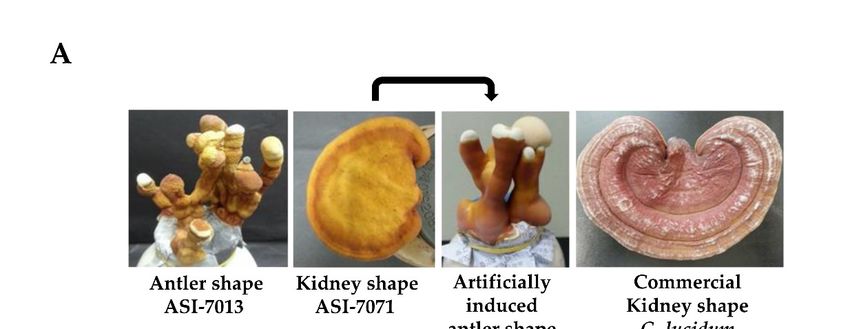
We checked
fruit body and artificial forming of antler shape (Figure 5). Consequently, SNP marker was confirmed
We checked SNP and SCAR markers for the specific identification of antler-shaped G. lucidum
to have two fragments of the sizes 209-bp and 455-bp by HinfI restriction enzyme digestion in the
fruit body and artificial forming of antler shape (Figure 5). Consequently, SNP marker was confirmed
antler-shaped G. lucidum fruit body (ASI-7013), except for kidney-shaped G. lucidum fruit bodies
to have two fragments of the sizes 209-bp and 455-bp by HinfI restriction enzyme digestion in the
(ASI-7071
antler-shaped G. lucidumG.fruit
and commercial lucidum) and artificial
body (ASI-7013), forming
except antler-shapeG.from
for kidney-shaped kidney-shape
lucidum fruit bodies (ASI-7071)
(ASI-
(Figure 5B). Furthermore, SCAR marker revealed that both of two specific bands
7071 and commercial G. lucidum) and artificial forming antler-shape from kidney-shape were(ASI-7071)
found only in
the fruit body
(Figure ofFurthermore,
5B). antler-shaped G. lucidum
SCAR marker strain (ASI-7013)
revealed that both (Figure 5C). These
of two specific bands results showed
were found that
only in SNP
the fruit
and SCAR body ofcan
markers antler-shaped G. lucidum
help distinguish strain the
between (ASI-7013)
antler-(Figure G. lucidum
5C). These results
or kidney-shaped showed thatbody.
fruit
SNP and SCAR markers can help distinguish between the antler- or kidney-shaped G. lucidum fruit
body.Microorganisms 2019, 7, x FOR PEER REVIEW 8 of 12
Microorganisms 2019, 7, 12 8 of 12
Figure 5. SNP and SCAR markers for specific identification of antler-shaped Ganoderma lucidum
fruit body. (A) Morphology of antler- and kidney-shaped G. lucidum; (B) SNP marker validation for
antler-shaped
Figure 5. SNP and fruit
SCAR bodies by HinfI
markers digestion;
for specific (C) SCAR marker
identification validation for
of antler-shaped antler-shaped
Ganoderma fruitfruit
lucidum
bodies. Lane 1: antler-shaped G. lucidum (ASI-7013). Lane 2: Kidney-shaped G. lucidum (ASI-7071).
body. (A) Morphology of antler- and kidney-shaped G. lucidum; (B) SNP marker validation for antler-
Lane 3: artificially induced antler-shape (ASI-7071). Lane 4: commercial G. lucidum of kidney-shape.
shaped fruit bodies by HinfI digestion; (C) SCAR marker validation for antler-shaped fruit bodies.
M: size markers (1 kb ladder).
Lane 1: antler-shaped G. lucidum (ASI-7013). Lane 2: Kidney-shaped G. lucidum (ASI-7071). Lane 3:
artificially induced antler-shape (ASI-7071). Lane 4: commercial G. lucidum of kidney-shape. M: size
4. Discussion
markers (1 kb ladder).
This study aimed to develop the SNP and SCAR markers for specific identification of antler-shaped
Ganoderma lucidum strains. G. lucidum has been widely used as a valuable medicinal agent because of
4. Discussion
its wide variety of anti-inflammatory, antitumor, antioxidant, and other biological activities [36,37].
It hasstudy
This been reported
aimed to thatdevelop
antler-typetheG.SNP
lucidum
andproduces higher levels
SCAR markers for of bioactive
specific compounds such
identification as
of antler-
flavonoids, ganoderic acid, and phenolics than kidney-shaped G. lucidum [11,12,38].
shaped Ganoderma lucidum strains. G. lucidum has been widely used as a valuable medicinal agent
Mitochondrial DNA is one of the most important genetic resources and it is used as a marker for
because of its wide variety of anti-inflammatory, antitumor, antioxidant, and other biological
various phylogenetic classifications [39]. In addition, Hong et al. [34] reported that the information
activities [36,37]. It has been reported that antler-type G. lucidum produces higher levels of bioactive
of valuable domains in mitochondrial SSU rDNA gene was useful in phylogenetic analysis of the
compounds
Ganoderma such as flavonoids,
species. In this study,ganoderic acid,theand
we analyzed phenolics
partial than kidney-shaped
mitochondrial G. lucidum
small-subunit ribosomal
[11,12,38].
DNA gene sequence of various antler- and kidney-shaped G. lucidum strains. We found that the
Mitochondrial
antler-shaped G.DNA lucidumis one
hasofanthe
SNPmost important
in the geneticSSU
mitochondrial resources
rDNA and geneitsequence
is used as a marker
and can be for
various phylogenetic
digested by the HinfIclassifications [39]. In addition, Hong et al. [34] reported that the information
restriction enzyme.
of valuable domains in mitochondrial SSUprimer
We also designed two sets of specific rDNA gene
pairs was useful
to develop in phylogenetic
SCAR-marker analysis of the
for the antler-shaped
G. lucidum
Ganoderma strainsInbased
species. this on RAPDwe
study, analysis. PCR the
analyzed analysis withmitochondrial
partial antler-shaped specific-primers
small-subunitrevealed
ribosomal
that the artificially induced antler-shaped G. lucidum
DNA gene sequence of various antler- and kidney-shaped G. lucidum strains. We foundRAPD
could also be specifically discriminated. that the
with random arbitrary primers has been widely used in genetic diversity
antler-shaped G. lucidum has an SNP in the mitochondrial SSU rDNA gene sequence and can be studies of fungi [40–42].
In addition, genetic relationships can also be inferred even within fungal pathogen species using RAPD
digested by the HinfI restriction enzyme.
markers. Manulis et al. [43] reported that specific banding patterns from RAPD were subsequently used
We also designed two sets of specific primer pairs to develop SCAR-marker for the antler-
as probes to distinguish between races of the carnation wilt fungal pathogen Fusarium oxysporum f. sp.
shaped G. lucidum strains based on RAPD analysis. PCR analysis with antler-shaped specific-primers
dianthi. Moreover, RAPD markers have been reported to be useful in diagnostic studies of fungal
revealed that the artificially induced antler-shaped G. lucidum could also be specifically
discriminated. RAPD with random arbitrary primers has been widely used in genetic diversity
studies of fungi [40–42]. In addition, genetic relationships can also be inferred even within fungal
pathogen species using RAPD markers. Manulis et al. [43] reported that specific banding patterns
from RAPD were subsequently used as probes to distinguish between races of the carnation wiltMicroorganisms 2019, 7, 12 9 of 12
pathogens such as Alternaria species (the causal agent of brown spot of citrus) and Leptosphaeria
maculans (the causal agent of blackleg of crucifers) [40,44]. However, RAPD analysis using random
arbitrary primers tends to result in low reproducibility. Universal rice primers (URPs) developed
from the repetitive sequences of rice genome can be used for PCR fingerprinting of various organisms
including plants, animals, and microorganisms due to their high reproducibility [45]. In addition,
RAPD analysis using URP primers is a useful tool for the characterization and grouping of fungal
species at intraspecific and interspecific levels [46–50].
Antler-shaped G. lucidum is a valuable herbal medicine in China, Japan, and Korea. Antler-shaped
G. lucidum can be cultivated naturally or artificially. A dark condition with poor ventilation does not
expand the pileus. In addition, high levels of carbon dioxide (CO2 ) have been reported to support the
production of antler-shaped fruiting bodies [9,38]. Thus, its morphology can be changed by artificially
modulating the cultivation conditions. Antler-shaped G. lucidum strain has been mainly distinguished
by morphological characteristics. However, this form is not easy to distinguish because of the various
formulations and development of cultivation techniques. Therefore, the SNP and SCAR markers for
the identification of antler-shaped G. lucidum strains will be useful for protection of the breed, breeding,
time saving, and the cost-effective part.
Supplementary Materials: The following figures are available online at http://www.mdpi.com/2076-2607/7/1/
12/s1. Figure S1: Alignment of partial mitochondrial SSU rDNA sequences of Ganoderma lucidum strains.
Author Contributions: Y.-J.P. and O.-C.K. conceived and designed the experiments; O.-C.K. performed the
experiments; C.-S.L. and Y.-J.P. analyzed the data; O.-C.K. contributed to the drafting of the manuscript; Y.-J.P.
wrote the paper.
Funding: This work was carried out with the support of “Cooperative Research Program for Agriculture Science &
Technology Development (Project No. PJ010223112018)” Rural Development Administration, Republic of Korea.
Conflicts of Interest: The authors declare no conflict of interest. The funders had no role in the design of the
study; in the collection, analyses, or interpretation of data; in the writing of the manuscript, or in the decision to
publish the results.
References
1. Curtis, W. Flora Londinensis: Plates and Descriptions of Such Plants as Grow Wild in the Environs of London;
Printed by the Author: London, UK, 1781; p. 530. [CrossRef]
2. Fries, E.M. Systema Mycologicum: Sistens Fungorum Ordines, Genera et Species, huc usque cognitas, quas ad
Normam Methodi Naturalis Determinavit; Ex Officina Berlingiana: Lundae, Sweden, 1821–1832; Volume 1.
[CrossRef]
3. Wang, X.C.; Xi, R.J.; Li, Y.; Wang, D.M.; Yao, Y.J. The species identity of the widely cultivated Ganoderma, ‘G.
lucidum’ (Ling-zhi), in China. PLoS ONE 2012, 7, e40857. [CrossRef] [PubMed]
4. Kao, C.H.J.; Jesuthasan, A.C.; Bishop, K.S.; Glucina, M.P.; Ferguson, L.R. Anti-cancer activities of Ganoderma
lucidum: Active ingredients and pathways. Funct. Foods Health Dis. 2013, 3, 48–65. [CrossRef]
5. Komada, Y.; Shimizu, M.; Sonoda, Y.; Sato, Y. Ganoderic acid and its derivatives as cholesterol synthesis
inhibitors. Chem. Pharm. Bull. 1989, 37, 531–533. [CrossRef]
6. Wang, Y.Y.; Kho, K.H.; Chen, S.T.; Lin, C.C.; Wong, C.H.; Lin, C.H. Studies on the immuno-modulating and
antitumor activities of Ganoderma lucidum (Reishi) polysaccharides: Functional and proteomic analyses of a
fucose-containing glycoprotein fraction responsible for the activities. Bioorg. Med. Chem. 2002, 10, 1057–1062.
[CrossRef]
7. Shi, L.; Ren, A.; Mu, D.; Zhao, M. Current progress in the study on biosynthesis and regulation of ganoderic
acids. Appl. Microbiol. Biotechnol. 2010, 88, 1243–1251. [CrossRef] [PubMed]
8. Nonaka, Y.; Shibata, H.; Nakai, M.; Kurihara, H.; Ishibashi, H.; Kiso, Y.; Tanaka, T.; Yamaguchi, H.; Abe, S.
Anti-tumor activities of the antlered form of Ganoderma lucidum in allogeneic and syngeneic tumor-bearing
mice. Biosci. Biotechnol. Biochem. 2006, 70, 2028–2034. [CrossRef] [PubMed]
9. Upton, R. Reishi Mushroom Ganoderma Lucidum Standards of Analysis, Quality Control, and Therapeutics;
American Herbal Pharmacopoeia: Santa Cruz, CA, USA, 2000; pp. 13–20.Microorganisms 2019, 7, 12 10 of 12
10. Katagata, Y.; Sasaki, F. Antiproliferative activity of extracts prepared from three species of Reishi on cultured
human normal and tumor cell lines. Mol. Med. Rep. 2010, 3, 179–184. [CrossRef]
11. Min, B.S.; Nakamura, N.; Miyashiro, H.; Bae, K.W.; Hattori, M. Triterpenes from the spore of Ganoderma
lucidum and their inhibitory activity against HIV-1 protease. Chem. Pharm. Bull. 1998, 46, 1607–1612.
[CrossRef]
12. Kohguchi, M.; Kunikata, T.; Watanabe, H.; Kudo, N.; Shibuya, T.; Ishihara, T.; Iwaki, K.; Ikeda, M.;
Fukuda, S.; Kurimoto, M. Immuno-potentiating effects of the antler-shaped fruiting body of Ganoderma
lucidum (Rokkaku-Reishi). Biosci. Biotechnol. Biochem. 2004, 68, 881–887. [CrossRef]
13. Watanabe, K.; Shuto, T.; Sato, M.; Onuki, K.; Mizunoe, S.; Suzuki, S.; Sato, T.; Koga, T.; Suico, M.A.; Kai, H.;
Ikeda, T. Lucidenic acids-rich extract from antlered form of Ganoderma lucidum enhances TNFα induction
in THP-1 monocytic cells possibly via its modulation of MAP kinases p38 and JNK. Biochem. Biophys.
Res. Commun. 2011, 408, 18–24. [CrossRef]
14. Zhou, L.W.; Nakasone, K.K.; Burdsall, H.H.; Ginns, J.; Vlasák, J.; Miettinen, O.; Spirin, V.; Niemela, T.;
Yuan, H.S.; He, S.H. Polypore diversity in North America with an annotated checklist. Mycol. Prog. 2016,
15, 771–790. [CrossRef]
15. Moncalvo, J.M.; Wang, H.F.; Hseu, R.S. Gene phylogeny of the Ganoderma lucidum complex based on
ribosomal DNA sequences: Comparison with traditional taxonomic characters. Mycol. Res. 1995,
99, 1489–1499. [CrossRef]
16. Gottlieb, A.M.; Ferrer, E.; Wright, J.E. rDNA analyses as an aid to the taxonomy of species of Ganoderma.
Mycol. Res. 2000, 104, 1033–1045. [CrossRef]
17. Smith, B.J.; Sivasithamparam, K. Internal transcribed spacer ribosomal DNA sequence of five species of
Ganoderma from Australia. Mycol. Res. 2000, 104, 943–951. [CrossRef]
18. Hong, S.G.; Jung, H.S. Phylogenetic analysis of Ganoderma based on nearly complete mitochondrial
small-subunit ribosomal DNA sequences. Mycologia 2004, 96, 742–755. [CrossRef]
19. Park, Y.J.; Kwon, O.C.; Son, E.S.; Yoon, D.E.; Han, W.; Nam, J.Y.; Yoo, Y.B.; Lee, C.S. Genetic diversity analysis
of Ganoderma species and development of a specific marker for identification of medicinal mushroom
Ganoderma lucidum. Afr. J. Microbiol. Res. 2012, 6, 5417–5425. [CrossRef]
20. Sun, S.J.; Gao, W.; Lin, S.Q.; Zhu, J.; Xie, B.G.; Lin, Z.B. Analysis of genetic diversity in Ganoderma population
with a novel molecular marker SRAP. Appl. Microbiol. Biotechnol. 2006, 72, 537–543. [CrossRef]
21. Zheng, L.; Jia, D.; Fei, X.; Luo, X.; Yang, Z. An assessment of the genetic diversity within Ganoderma strains
with AFLP and ITS PCR-RFLP. Microbiol. Res. 2009, 164, 312–321. [CrossRef] [PubMed]
22. Rolim, L.D.N.; Cavalcante, M.A.D.Q.; Urben, A.F.; Buso, G.S.C. Use of RAPD molecular markers on
differentiation of Brazilian and Chinese Ganoderma lucidum strains. Braz. Arch. Biol. Technol. 2011, 54, 273–281.
[CrossRef]
23. Jones, N.; Ougham, H.; Thomas, H.; Pasakinskiene, I. Markers and mapping revisited: Finding your gene.
New Phytol. 2009, 183, 935–966. [CrossRef]
24. Yang, C.H.; Cheng, Y.H.; Chuang, L.Y. A natural PCR-RFLP primer design for SNP genotyping using a
genetic algorithm. In Proceedings of the International MultiConference of Engineers and Computer Scientists,
IMECS, Hong Kong, China, 17–19 March 2010; Available online: https://www.researchgate.net/publication/
44260566_A_natural_PCR-RFLP_primer_design_for_SNP_genotyping_using_a_genetic_algorithm
(accessed on 1 March 2017).
25. Ota, M.; Fukushima, H.; Kulski, J.K.; Inoko, H. Single nucleotide polymorphism detection by polymerase
chain reaction-restriction fragment length polymorphism. Nat. Protoc. 2007, 2, 2857–2864. [CrossRef]
[PubMed]
26. Xu, J.; Sha, T.A.O.; Li, Y.C.; Zhao, Z.W.; Yang, Z.L. Recombination and genetic differentiation among natural
populations of the ectomycorrhizal mushroom Tricholoma matsutake from southwestern China. Mol. Ecol.
2008, 17, 1238–1247. [CrossRef] [PubMed]
27. Antoni, R. Applications of single nucleotide polymorphisms in crop genetics. Curr. Opin. Plant Biol. 2002,
5, 94–100. [CrossRef]
28. Vignal, A.; Milan, D.; SanCristobal, M.; Eggen, A. A review on SNP and other types of molecular markers
and their use in animal genetics. Genet. Sel. Evol. 2002, 34, 275–305. [CrossRef] [PubMed]Microorganisms 2019, 7, 12 11 of 12
29. Xu, J.; Guo, H.; Yang, Z.L. Single nucleotide polymorphisms in the ectomycorrhizal mushroom Tricholoma
matsutake. Microbiology 2007, 153, 2002–2012. [CrossRef] [PubMed]
30. Ferri, L.; Perrin, E.; Campana, S.; Tabacchioni, S.; Taccetti, G.; Cocchi, P.; Ravenni, N.; Dalmastri, C.;
Chiarini, L.; Bevivino, A.; et al. Application of multiplex single nucleotide primer extension (mSNuPE) to
the identification of bacteria: The Burkholderia cepacia complex case. J. Microbiol. Methods 2010, 80, 251–256.
[CrossRef] [PubMed]
31. Fu, J.J.; Mei, Z.Q.; Tania, M.; Yang, L.Q.; Cheng, J.L.; Khan, M.A. Development of RAPD-SCAR markers
for different Ganoderma species authentication by improved RAPD amplification and molecular cloning.
Genet. Mol. Res. 2015, 14, 5667–5676. [CrossRef]
32. Wachtel-Galor, S.; Benzie, I.F. Ganoderma lucidum (Lingzhi or Reishi): A medicinal mushroom. In Herbal
medicine: Biomolecular and Clinical Aspects, 2nd ed.; Wachtel-Galor, S., Yuen, J., Buswell, J.A., Benzie, I.F.F.,
Eds.; CRC Press/Taylor & Francis: Boca Raton, FL, USA, 2011; ISBN 9781439807132. Available online:
https://www.ncbi.nlm.nih.gov/books/NBK92757/ (accessed on 1 March 2017).
33. Cao, H.; But, P.P.; Shaw, P.C. Methodological studies on genomic DNA extraction and purification from plant
drug materials. J. Chin. Pharm. Sci. 1998, 7, 130–137.
34. Hong, S.G.; Jeong, W.; Jung, H.S. Amplification of mitochondrial small subunit ribosomal DNA of polypores
and its potential for phylogenetic analysis. Mycologia 2002, 94, 823–833. [CrossRef]
35. Sambrook, J.; Fritsch, E.F.; Maniatis, T. Molecular Cloning: A Laboratory Manual, 4th ed.; Cold Spring Harbor
Laboratory Press: New York, NY, USA, 1989; Volume 1, pp. 157–174. ISBN 9781936113422.
36. Boh, B.; Berovic, M.; Zhang, J.; Zhi-Bin, L. Ganoderma lucidum and its pharmaceutically active compounds.
Biotechnol. Annu. Rev. 2007, 13, 265–301. [CrossRef]
37. Sanodiya, B.S.; Thakur, G.S.; Baghel, R.K.; Prasad, G.B.; Bisen, P.S. Ganoderma lucidum: A potent
pharmacological macrofungus. Curr. Pharm. Biotechnol. 2009, 10, 717–742. [CrossRef] [PubMed]
38. Sudheer, S.; Taha, Z.; Manickam, S.; Ali, A.; Cheng, P.G. Development of antler-type fruiting bodies
of Ganoderma lucidum and determination of its biochemical properties. Fungal Biol. 2018, 122, 293–301.
[CrossRef] [PubMed]
39. Brown, W.M.; George, M., Jr.; Wilson, A.C. Rapid evolution of animal mitochondrial DNA. Proc. Natl. Acad.
Sci. USA 1979, 76, 1967–1971. [CrossRef]
40. Peever, T.L.; Canihos, Y.; Olsen, L.; Ibanez, A.; Liu, Y.C.; Timmer, L.W. Population genetic structure and
host specificity of Alternaria spp. causing brown spot of Minneola tangelo and rough lemon in Florida.
Phytopathology 1999, 89, 851–860. [CrossRef] [PubMed]
41. Vakalounakis, D.J.; Fragkiadakis, G.A. Genetic diversity of Fusarium oxysporum isolates from cucumber:
Differentiation by pathogenicity, vegetative compatibility, and RAPD fingerprinting. Phytopathology 1999,
89, 161–168. [CrossRef] [PubMed]
42. Yoder, W.T.; Christianson, L.M. Species-specific primers resolve members of Fusarium section Fusarium:
Taxonomic status of the edible “Quorn” fungus reevaluated. Fungal Genet. Biol. 1998, 23, 68–80. [CrossRef]
[PubMed]
43. Manulis, S.; Kogan, N.; Reuven, M.; Yephet, Y.B. Use of the RAPD technique for identification of Fusarium
oxysporum f. sp. dianthi from carnation. Phytopathology 1994, 84, 98–101. [CrossRef]
44. Goodwin, P.H.; Annis, S.L. Rapid identification of genetic variation and pathotype of Leptosphaeria maculans
by random amplified polymorphic DNA assay. Appl. Environ. Microbiol. 1991, 57, 2482–2486. [PubMed]
45. Kang, H.W.; Park, D.S.; Go, S.J.; Eun, M.Y. Fingerprinting of diverse genomes using PCR with universal rice
primers generated from repetitive sequence of Korean weedy rice. Mol. Cells 2002, 13, 281–287.
46. Aggarwal, R.; Singh, V.B.; Shukla, R.; Gurjar, M.S.; Gupta, S.; Sharma, T.R. URP-based DNA fingerprinting
of Bipolaris sorokiniana isolates causing spot blotch of wheat. J. Phytopathol. 2010, 158, 210–216. [CrossRef]
47. González, N.; Godoy-Lutz, G.; Steadman, J.R.; Higgins, R.; Eskridge, K.M. Assessing genetic diversity in
the web blight pathogen Thanatephorus cucumeris (anamorph= Rhizoctonia solani) subgroups AG-1-IE and
AG-1-IF with molecular markers. J. Gen. Plant Pathol. 2012, 78, 85–98. [CrossRef]
48. Aggarwal, R.; Gupta, S.; Banerjee, S.; Singh, V.B. Development of a SCAR marker for detection of Bipolaris
sorokiniana causing spot blotch of wheat. Can. J. Microbiol. 2011, 57, 934–942. [CrossRef] [PubMed]Microorganisms 2019, 7, 12 12 of 12
49. Jana, T.K.; Singh, N.K.; Koundal, K.R.; Sharma, T.R. Genetic differentiation of charcoal rot pathogen,
Macrophomina phaseolina, into specific groups using URP-PCR. Can. J. Microbiol. 2005, 51, 159–164. [CrossRef]
[PubMed]
50. Kang, H.W.; Park, D.S.; Park, Y.J.; You, C.H.; Lee, B.M.; Eun, M.Y.; Go, S.J. Genomic differentiation among
oyster mushroom cultivars released in Korea by URP-PCR fingerprinting. Mycobiology 2001, 29, 85–89.
[CrossRef]
© 2019 by the authors. Licensee MDPI, Basel, Switzerland. This article is an open access
article distributed under the terms and conditions of the Creative Commons Attribution
(CC BY) license (http://creativecommons.org/licenses/by/4.0/).You can also read


