2019/20 St Paul's Collegiate School
←
→
Page content transcription
If your browser does not render page correctly, please read the page content below
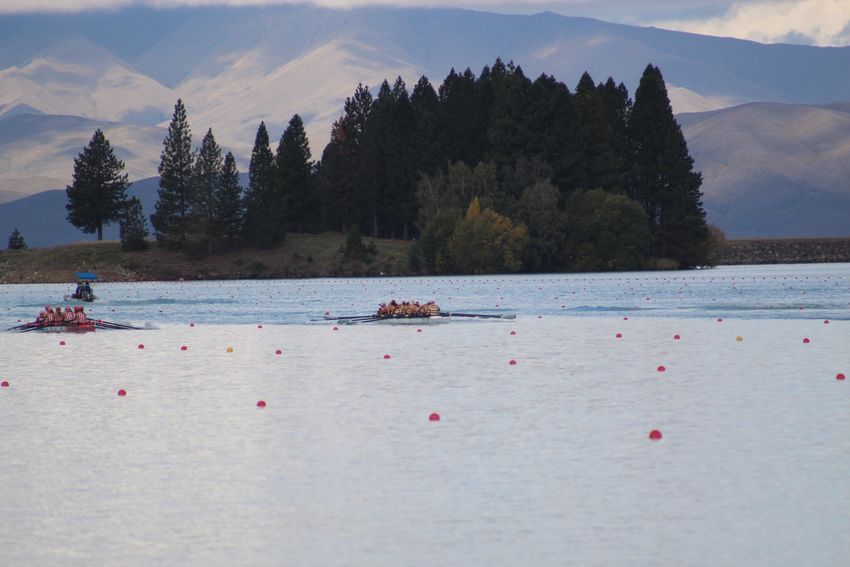
2019/20

                                                VISION
                  To be one of the best school rowing programmes in New Zealand,
                      which enables students to succeed in the sport of rowing.

                                              MISSION
           To foster and encourage participation of students in rowing at St. Paul’s Collegiate.
To build excellence through the development and implementation of first-rate programmes and services.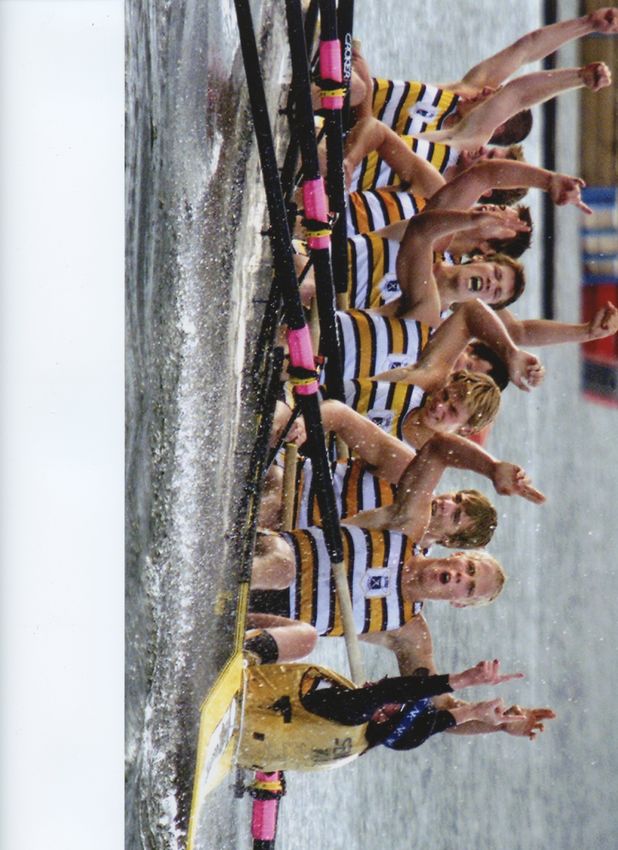
ST PAUL’S ROWING CLUB | 2020 HANDBOOK

Table of Contents

Table of Contents ............................................................................................................................................. 2
Introduction ...................................................................................................................................................... 3
Recent History .................................................................................................................................................. 4
Goals and Objectives ........................................................................................................................................ 5
Our Programme ................................................................................................................................................ 6
What does St. Paul’s expect from your son/daughter? .................................................................................... 7
Who helps to deliver the St. Paul’s Rowing Programme? ................................................................................ 8
How can you help as a new parent? ................................................................................................................. 9
Guidelines for Parents ...................................................................................................................................... 9
The Rowing Season ......................................................................................................................................... 10
Coaching Team ............................................................................................................................................... 14
Rowing Club Committee ................................................................................................................................. 15
Contact, Communication and Liaison ............................................................................................................. 16
How much does it cost to Row? ..................................................................................................................... 17
Fundraising ..................................................................................................................................................... 18
Rowing for Boarding Families ......................................................................................................................... 18
Training ........................................................................................................................................................... 19
Boat Park Protocol at Regattas ....................................................................................................................... 21
Glossary of Rowing Terms .............................................................................................................................. 22
2019/20 season calendar ............................................................................................................................... 23

                                                                                                       2003 Maadi Cup winners – St Paul’s

PAGE | 2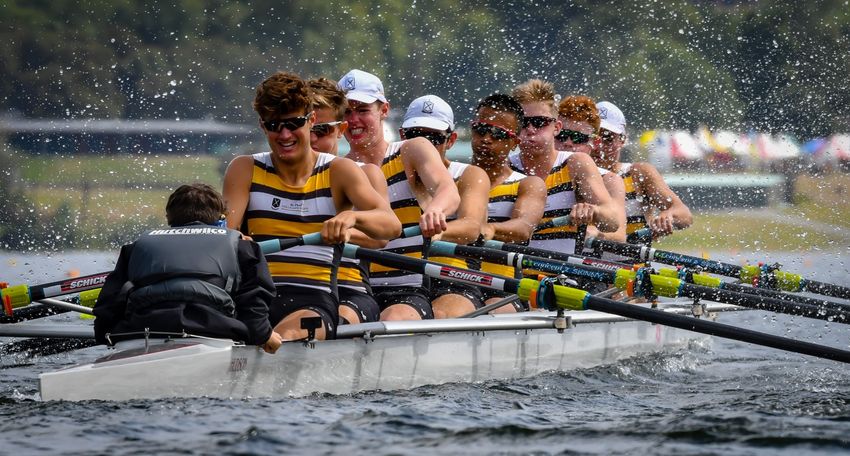
ST PAUL’S ROWING CLUB | 2020 HANDBOOK

Introduction

Hi everyone!
To all new parents and new rowers, it is with great pleasure that we welcome you to St. Paul’s Collegiate
Rowing Club. To those parents and rowers returning for another season, welcome back!
This handbook is designed to assist you throughout the season and contains important information you
require. Please take a moment to read through the handbook and keep it in a safe place for easy reference.
You can download here: https://www.stpauls.school.nz/page/rowing-at-st-pauls-collegiate-school
Rowing is a unique high intensity sport which demands high degrees of endurance, strength, teamwork,
technical expertise, mental toughness, and an ability to continue on when your body is telling you that you
can't. Rowing races (a regatta), held in sleek narrow boats on the water, in changing water and wind
conditions, are held over a distance of 2000 meters. All these challenging factors mean that the rowers
work together and support each other. While it is important that the rowers enjoy their rowing experience,
we also expect them to work hard, be committed and have a good attitude towards each other.
For parents, the sport of rowing is also quite demanding, but can be extremely fulfilling. You can expect to
be a taxi driver, help out at events, assist in fundraising, but mostly hear constantly about your child’s
rowing progress, technique and erg scores. Further, the demands of rowing provide healthy challenges to
your son/daughter, so they may need some guidance to become self-reliant in an intense sporting
environment. As a parent you will also become a member of a much larger family and develop new
friendships with other parents…and have heaps of fun also!
Our Coaching team bring with them extensive rowing experience and coaching credentials. This team is
coupled with a proven governance framework delivered through a strong partnership between the School
and the Club.
We look forward to have you all on board for another enjoyable and successful season.

Kind regards,
St Paul’s Collegiate School Rowing Club Inc

             St Paul’s Rowing Club maintains a policy whereby
 All who are prepared to commit to rowing will get the opportunity to row

PAGE | 3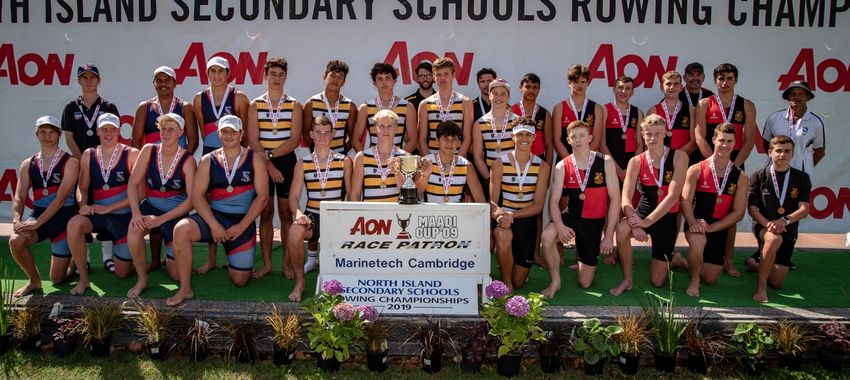
ST PAUL’S ROWING CLUB | 2020 HANDBOOK

Recent History

2019
           Alison Mills selected for NZ Juniors           NZ came fifth at World Junior Championships
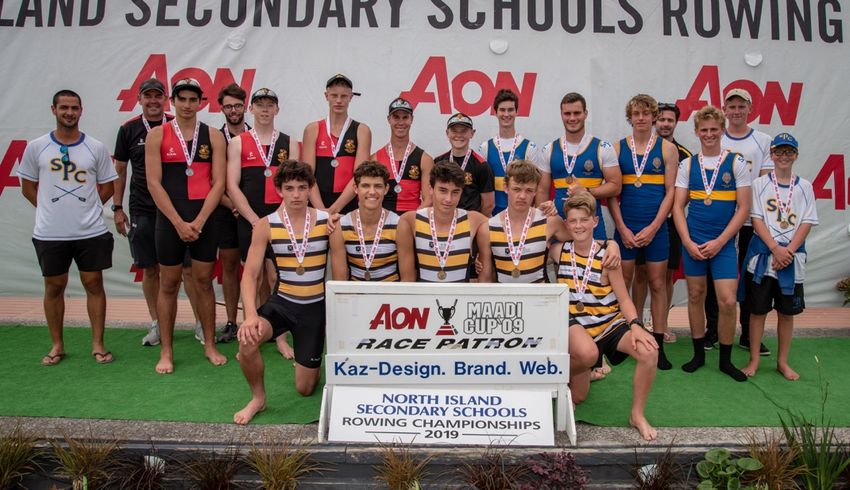
           Boys U18 Novice Coxed Four                     Gold                  Maadi Cup Regatta
           Boys U18 Novice Coxed Eight                    Bronze                Maadi Cup Regatta
           Boys U18 Novice Coxed Eight                    Gold                  NISS Champs
           Boys U18 Novice Coxed Four                     Gold                  NISS Champs
           NZ Indoor Rowing Championships
           Gold - Mens 2000m – Seth Peake, Sam Harcourt, Isaac West, Max Maclean-Bluck (NZ record)
           Gold - u17 – Sam Harcourt 1000m, Sam Harcourt 500m (NZ record)
           Gold - u14 - Logan Spencer 500m, Joe Harcourt 1000m, Joe Harcourt 2000m

2018
           Girls U17 Coxed Eight                          Bronze                Maadi Cup Regatta
           Girls U18 Coxless Pair                         Silver                Maadi Cup Regatta
           Girls U18 Coxless Pair                         Gold                  NISS Champs
           Girls U18 Novice Coxed Four                    Gold                  NISS Champs
           Girls U18 Coxed Eight                          Bronze                NISS Champs
           Girls U17 Coxed Eight                          Bronze                NISS Champs
           Girls U17 Coxed Four                           Silver                NISS Champs
           Boys U17 Coxed Eight                           Bronze                NISS Champs
           Boys U16 Coxed Eight                           Bronze                NISS Champs
           Grace Watson selected for NZ Juniors.
           Jeremiah Macdonald, Max Dobbe, Gus Hanham selected for NI U18, Sam Harcourt trialled NI U18

2017
           Boys U15 Double Sculls                         Gold                  Maadi Cup Regatta
           Boys U15 Coxed Four                            Gold                  Maadi Cup Regatta
           Girls U18 Coxed Four                           Gold                  Maadi Cup Regatta – Dawn Cup
           Boys U15 Coxed Eight                           Bronze                Maadi Cup Regatta
           Boys U18 Novice Coxed Four                     Bronze                Maadi Cup Regatta
           Girls U18 Coxless Pair                         Bronze                Maadi Cup Regatta
           Girls U18 Coxless Eight                        Bronze                Maadi Cup Regatta
           Boys U15 Double Sculls                         Gold                  NISS Champs
           Boys U15 Coxed Four                            Silver                NISS Champs
           Boys U18 Novice Coxed Four                     Silver                NISS Champs
           Girls U18 Coxless Pair                         Silver                NISS Champs
           Girls U18 Coxed Four                           Silver                NISS Champs
           Girls U18 Novice Coxed Four                    Bronze                NISS Champs
           Girls U18 Coxed Eight                          Bronze                NISS Champs
           Kate Littlejohn, Grace Watson selected for NZ Juniors; Victoria Chanwai trialled for NI U18

2016
           Boys U15 Double Sculls                         Silver                Maadi Cup Regatta
           Boys U18 Novice Double Sculls                  Gold                  Maadi Cup Regatta
           Girls U18 Novice Four                          Silver                Maadi Cup Regatta
           Girls U18 LW Double Sculls                     Gold                  NISS Champs
           Josh Balme selected for NZ Juniors Trial

PAGE | 4
ST PAUL’S ROWING CLUB | 2020 HANDBOOK

Goals and Objectives

Strategic Aim
St. Paul’s Collegiate Rowing Club seeks to create an environment and culture that challenges the rowers to
become better athletes and better people.
We also wish to build and support high quality programmes and resources that promote access to rowing,
promote excellence in rowing, and use rowing as a means to foster physical activity, health, leadership, and
community engagement.
We base our programme in strong “family” values as well as respect and trust, teamwork, communication and
athlete focused approach.
The goals and objectives of the Club are to facilitate and support the following:
    •      Athlete development – assisting athletes to reach their next level and produce crews capable of winning
           at NZ Secondary Schools Championships (Maadi Cup).
    •      High standards of effort and dedication at all levels.
    •      Specialised training programmes at each level to develop consistent rowing skills.
    •      High standards of behaviour and conduct in all aspects of rowing and sport.

Success Indicators
    •      Achievement of personal bests
    •      Athletes chosen for higher honours
    •      Improvements from one season to the next
    •      Number of A finalists at Maadi Cup regatta.

  2018 – Indoor rowing - u18 2000m team winners                 2018 – Alison Mills – NZ Juniors representative
  and new NZ record of 5:37:7

PAGE | 5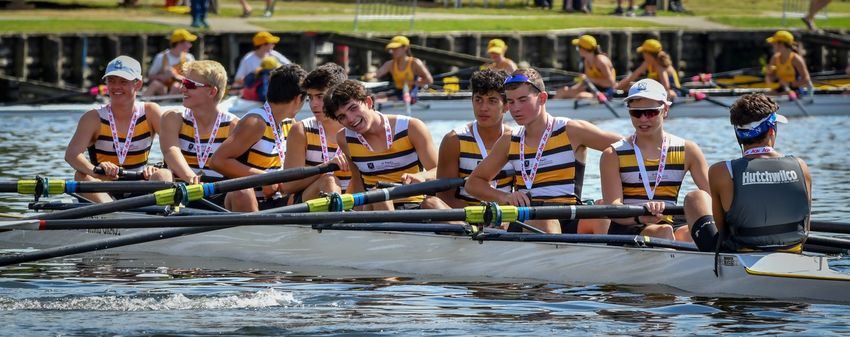
ST PAUL’S ROWING CLUB | 2020 HANDBOOK

Our Programme

Novice – First year Rowing | Introduction to the Sport
    •      Learn the basic of the rowing technique
    •      Enjoy the sport and have fun
    •      Induction to (mainly) a sculling programme
    •      Immersion in to the St Paul’s Rowing Culture
    •      Induction to a fitness programme
    •      Achieve the challenges within the programme
    •      Goal for the season: achieve the best individual and collective performance at North Island Secondary
           School Championship.

U16 – Second year Rowing | Rowing development
    •      Continuous improving and mastering the rowing technique
    •      Enjoy the sport and the new challenges
    •      Small and big boat training and racing, when appropriate for the time of season
    •      Induction to a sweeping programme
    •      Reinforce the St. Paul’s Rowing Culture
    •      Increase the fitness programme on and off the water
    •      Achieve the challenges within the programme
    •      Goal for the season: achieve the best individual and collective performance at NISS.

U17-18 – Third and Fourth year Rowing (Boys) | Rowing performance
U17-18 – Girls Rowing commences St Pauls | Rowing performance / Rowing development
    •      Continuous improving and mastering the rowing technique. Being able to get the best practical and
           efficient rowing stroke for an effective boat running
    •      Enjoy the sport and be prepared to take the next step within the sport
    •      Small and big boats training and racing
    •      Being capable of following effectively a race plan for different race situations
    •      Sweeping and/or sculling programme
    •      Being able to transmit to new members in the club, within the school and in the community the St.
           Paul’s Rowing Culture
    •      Increase the fitness programme on and off the water. Induction to a weight programme
    •      Achieve the challenges within the programme
    •      Goal for the season: achieve the best individual and collective performance at Maadi.

PAGE | 6
ST PAUL’S ROWING CLUB | 2020 HANDBOOK

What does St. Paul’s expect from your son/daughter?

Hard work
Rowing is a high intensity sport. It requires strength, endurance, and the ability to work in a team environment.
In order to succeed in rowing, your son/daughter will need to work hard, strive for excellence and continually
look for opportunities to improve. Furthermore, they will learn about fitness, health and nutrition to get the best
out of their bodies as well as remain healthy during the rowing season.

Time for trainings
As rowing is a technical sport; your son/daughter will need to spend a lot of time on the water training with
his/her fellow rowers. It is essential that the all the rowers attend trainings so that they don’t let their crew
down.
The performance of a boat can be compromised if rowers miss trainings. It may result in the crew not being able
to train OR the crew trains with others who are not normally in that boat which can make the session far less
productive for all involved. Attendance at training is very important.

Self-responsibility
The senior (older) rowers provide leadership in both the rowing and in the broader school environment – the
junior rowers will develop leadership skills as they journey through the rowing programme. Self-responsibility
means taking ownership of tasks, being honest, communicating with fellow rowers and their parents, doing what
you say you will do, and being trusted. Safety is vital, particularly on water.

Self-motivation
Rowing requires self-motivation. It is expected that the rowers will exhibit a strong work ethic, both on and off
the water. Parents often observe that this permeates more broadly into their school work ethic and
organisational skills.

Able to work with others
Rowing at St Paul’s is not about individuals – it is a team sport. Cooperation and working together are
paramount.
Teamwork means working together and supporting other squad members to strive for the best performance
from the whole squad.

Respect for others
Respect is required through all levels of the Club – this is not negotiable. Respect all those involved and in
particular the coaches and the decisions they make – their interest is to support your child to do their best, as
well as to develop the best crews with the best mix of individuals .

PAGE | 7
ST PAUL’S ROWING CLUB | 2020 HANDBOOK

Who helps to deliver the St. Paul’s Rowing Programme?

Five groups are involved in the effective delivery of rowing at St Paul’s. They are:

 Rowers                           The success of St Paul’s Rowing is measured by the on and off water
                                  performance of our rowers. Along with this, they are also involved in
                                  fundraising and ensuring our fleet of boats and equipment are looked
                                  after.

 Head Coach and Coaches           Our coaching team is central to our rowing programme. They impart the
                                  technical skills and manage the development of our rowers.
                                  Coaches make decisions every day that will affect your son/daughter.
                                  There is good logic behind those decisions. These are made in the best
                                  interest of your child and their crews. You need to support those
                                  decisions.

 Director of Rowing               Rowing is a part of the School Sporting programme and falls under the
                                  School’s governance programme. As such the school policies and
                                  procedures apply at all times.

 St Paul’s Club Committee         The Committee, together with parents, assist the Coaching Team to
                                  deliver and manage operational facilities to enable the rowing
                                  programme. This includes organising the transport, food and
                                  accommodation for camps and regattas; the boat and equipment
                                  maintenance; boat transport; safety and first aid; clothing for the rowers;
                                  fundraising and financial management. The Club needs all parents to be
                                  involved in sharing the administrative and physical workload for the club
                                  to remain operational and successful. The Committee members are
                                  unpaid volunteers.

 Parents                          Parents are an integral part of the rowing programme and the club needs
                                  all parents to be involved in sharing the workload managed by the
                                  committee. Additionally, your vocal support at regattas is greatly
                                  appreciated, as well as your demonstration of high quality behaviour and
                                  values which will impact positively on the culture of the club and on the
                                  young athletes.

PAGE | 8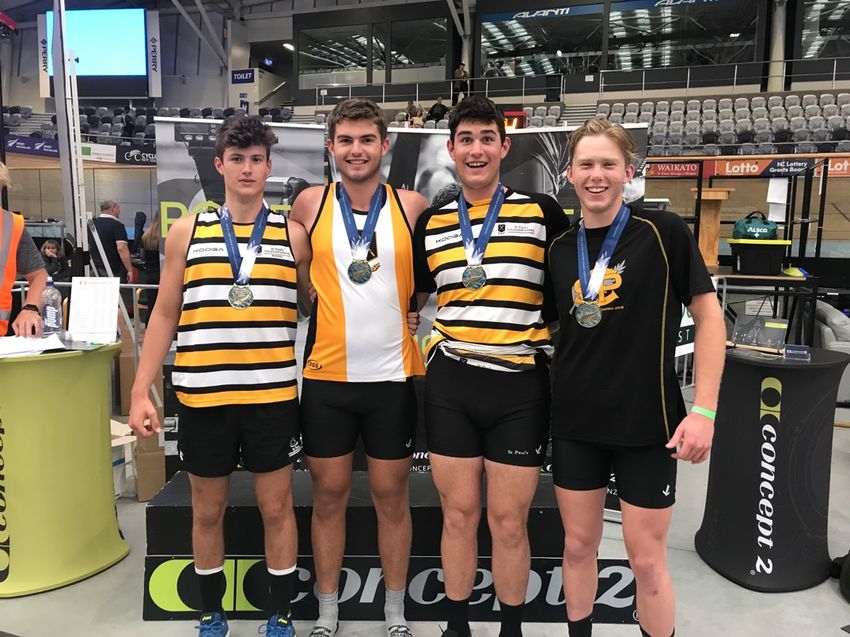
ST PAUL’S ROWING CLUB | 2020 HANDBOOK

How can you help as a new parent?

Volunteering and Fundraising
St Paul’s rowing can only exist with the support of parent volunteers. Our expectation is that every parent will
take on a role at one or more events throughout the season. The responsibilities are many and varied.
The St Paul’s Rowing parent community is recognised as a cohesive, supportive and importantly a committed
group of supporters willing to support each other. Your support is critical to running camps and regattas as well
as to support your sons/daughters in the best possible and positive way.

Fundraising
The rower’s fees cover the regattas/camps. Fundraising is needed for the purchase of new boats and equipment
and maintenance of them.

Guidelines for Parents

As well as supporting St Paul’s Rowing as a volunteer, we also require your support to help the crews row to the
best of their ability. To help crews give their best, form their own identity and mature as a crew, please consider
the following:
Encourage their independence as much as possible. Better that they make their own mistakes and learn for
themselves. Improvement often comes from losing not winning.
Resist the temptation to get involved in crew matters. Speak to the School DOR/Head Coach for information if
you are concerned.
Understand that other top schools are also very professional in their approach and dedication to winning. To win
at national championship level requires good planning, management, total commitment and some good fortune.
Recognise rowing for what it is - a physically and mentally demanding sport requiring supreme dedication. There
is more than enough pressure on the water so please make every effort to minimise it off the water. Avoid
getting involved in the rower or coach discussions and taking sides. The intense nature of the sport can give rise
to conflict within the crew. This is to be expected and needs to be worked out by the crew and coach.
Support any disciplinary action that might be taken as well as any demotions or crew changes. It is a privilege to
race and represent the school/club, not a right. Crew changes are made with a lot of prior thought and invariably
many factors have to be considered - such as the regatta programme, the form and improvement of other
rowers, the availability of boats and entry restrictions by regatta organisers influence selection decisions.

PAGE | 9
ST PAUL’S ROWING CLUB | 2020 HANDBOOK

The Rowing Season

The rowing season runs from September to March/ April depending on the timing of the final regatta for the
season.
In school rowing, rower’s age on the first day of January determines which age group they are eligible to row in
for the season. There are four age groups within rowing: under 15, under 16, under 17 and under 18. Anyone in
their first year of rowing is a Novice - no matter her/his age group. Rowers will typically race in their age group,
especially at the under 15 level. Those who show ability and maturity may be selected to row in crews above
their age group and some others may be young enough to “row-down”.
On-water and land based training commences in Term 4. Novices tend to train less intensely than the Seniors.
Regular training times will be communicated in advance.
After Christmas, the number of training sessions increases in preparation for the North Island Secondary Schools
Championships (NISS) and for selected rowers, the New Zealand Secondary Schools Championships (Maadi Cup
Regatta) both of which are held each year in March or April. There is a break in formal training over the
Christmas/New Year period for two to three weeks but the rowers are required to continue their fitness with a
programme provided by the coaches over the break so as to be ready for the January Camp and regattas.
Before January camp, training and racing crews will vary as different combinations of rowers are tried.
At January camp, potential crews will be selected for the second and more important part of the racing season
as we look forward to NISS and the Maadi Cup. These combinations may however change before these regattas.

Coaching and Training
To be successful at rowing, a combination of fitness and technique is required – the fitter the rowers are, the
better the results they will achieve. The coaches put together on-water and land based training programmes to
ensure the rowers are fit and technically competent and the coaches will inform rowers and parents in advance
as to the training programme for each term.
Trainings are usually organised by crews or age group. The head coach will issue a training schedule for the
respective training groups. Schedules do change and the coaches will advise the rowers. The rowers themselves
are responsible for ensuring they get to training on time (i.e. arrange transport) and be/are prepared to train.
Coaches are very strict on timing – if one rower is absent the entire crew may not be able to train as every
member in a boat has a crucial role to play and a crew is let down if rowers are missing.
All training sessions, whether on or off water, will be on rain or shine so please always attend. Rowers should
bring enough clothing, shoes, food and water to cover all eventualities, as it can get very cold out on the water.
Full commitment to attend every training session is essential, as is arriving at training sessions on time.
Coaches will develop a contact list and means of communicating with your rower. Typically, this will be text,
Team App, email or phone calls. All communications are the responsibility of the rower (not the parent). Rowers
must advise their coaches directly if they cannot attend training.
The coaches will provide the rowers with guidelines and expectations for nutrition, sleep, individual training and
the prevention and care of injuries. They will also provide behavioural guidelines. If a rower isn’t adhering to
these guidelines the coach may decide not to select them or limit their opportunities.
The safety and well-being of the rowers at training is the responsibility of the coach. For this reason, rowers
must follow all directions at all times given by the coaches. School rules apply at all times during training. Failure
to comply may see disciplinary action taken by the School.
If you are injured or sick, please contact the head coach to inform them ASAP before the training session – by
7pm the night before a morning session or by 11am for the afternoon session. A text message is the best option.
If you are sick or injured you must make a full recovery before returning to training.

PAGE | 10
ST PAUL’S ROWING CLUB | 2020 HANDBOOK

Training camps
There are several training camps between September and February. These camps prepare rowers for the season
and are also used to inform crew selections.
The learning curve is steep and the camps are always very successful from a technical rowing perspective and for
team building and personal growth.
Parent volunteers are needed for camps. The camps provide a great opportunity for parents to share in and
observe the rowers’ experiences first-hand.
The camps include:
    1. October camp – this is a 2-3 day camp held in the Sept/Oct school holidays at Mangakino. It comprises
       rowing theory, off-water fitness exercises and on-water technique training.
    2. Trial and training camps –where the rowers work on technique and fitness, as well as developing a
       strong team bond. The training is demanding and the rowers are also competing for places in crews.
Camps are organised by the Committee and coaches, but we are heavily reliant on parent helpers to assist in a
variety of activities. These include transport, catering, drivers, boat maintenance etc. A group of parent helpers
are required on site during the course of the camps, and the camps are also attended by a representative of the
School.
At camp the head coach sets the plan and the Camp Coordinator coordinates parent activities.
Further details on camp logistics are provided closer to each camp.
Travel to and from the camps is by school van or by private vehicles, usually involving car-pooling, as well as
some vehicles towing trailers with coach boats, tents etc.
Catering is provided for all rowers, coaches and parent helpers.

Testing and crew selection
Crew selections are based on a number of criteria. These include:
    •       erg tests – over the season, several erg tests are undertaken, mainly over a distance of 2km
    •       attendance at trainings and camps
    •       on-water seat racing
    •       accumulated regatta results
    •       performance during training sessions.
Crew selection takes into account a number of factors. Parents and rowers need to have trust in the crew
selection process. At any time we are happy to share information on the current performance of your
son/daughter.

Coxwains
The coxswain leads their crew on and off the water as well as steers the boat. A crew’s performance is as
dependent on a well-prepared coxswain as it is on the technical and athletic abilities of the rowers. The
coxswain also plays an essential role in the psychology of the team, maintenance of the equipment, and the
effectiveness and efficiency of a practice session.

If you are a new cox, you have a lot to think about and your coach will expect you to concentrate on
learning how to steer. Always listen to what he or she says both to you and to the rowers, so that you learn
about rowing together with the rowers. Always ask the coach if there is something you don’t understand.
Sometimes it can be easier to talk to the coach after the practice and ask them to explain, rather than on
the water.

PAGE | 11
ST PAUL’S ROWING CLUB | 2020 HANDBOOK Nutrition and rest Proper nutrition and plenty of rest are essential parts of training. All rowers are expected to commit to proper nutrition and rest, just as they are expected to commit to the other parts of their training. Proper rest is especially important when rowers are involved in early morning training and before and during regattas. We expect rowers and their families to follow the Nutrition guidelines during training and that the rowers will keep themselves healthy and ready for regattas. It will be up to each rower to eat for success at regattas and to follow the nutritional guidelines for racing according to their race schedule. Proper nutrition on regatta days will be regarded as just as important as any other part of a rower's pre and post-race routines. Regattas During the season, the School/Club will compete in approximately 10 regattas, culminating in the North Island Secondary Schools (NISS) Championships on Lake Karapiro (refer to the season calendar for dates). Crews who meet separate selection criteria will be eligible to compete in the New Zealand Secondary Schools Championships - Maadi Cup Regatta. For boarding rowers there is normally bus transport to and from the regattas with lunch provided by the school. For day rowers they can get on the bus or meet at Karapiro, bringing their own lunch. Parents are encouraged to attend all regattas and support the rowers. At most regattas, the School/Club will have a Supporters' Tent by the rowing course. Parents and other supporters are encouraged to use the tent as their base for these regattas. Things for supporters to bring to regattas include camp chairs or something else to sit on, binoculars, lunch and snacks for the day. Some reading material is always good to have as there can be lengthy down times between races. The Supporters' Tent is also used as a base to cater for the rowers (and parent volunteers are also needed for this). While coffee and tea is provided for supporters, the food and drink at the Supporters' Tent is generally intended for the rowers and volunteers. Rowers normally have a tent or other shelter in the boat park from where they make their final preparations for each race and go through a debrief and immediate post-race nutrition routines. The boat park is equivalent to the dressing room in other sporting codes. It is the place for the rowers to focus on their racing and it is not a place for parents to visit. Parents are not to visit the boat park during regattas, this area is also out of bounds to parents and supporters for safety reasons. At regattas, all rowers are subject to normal School Rules, including dress and conduct, and a high standard of behaviour is expected from them at all times. Maadi Cup Crews who meet the selection criteria will be eligible to compete in the New Zealand Secondary Schools Championships - Maadi Cup Regatta. St. Paul’s Collegiate is willing to take a strong team of athletes to represent and be good ambassadors of the School in a prestigious National event for rowing. The Aon Maadi Cup Regatta is the National Championships for school rowing in New Zealand. Run by the NZSSRA and Rowing New Zealand and it is New Zealand's largest rowing regatta. The 2020 Aon Maadi Cup will be held at Lake Ruataniwha from 30 March to 5 April, where 2500 competitors from 120 schools are expected and around 10,000 people watch the finals from the bank. PAGE | 12
ST PAUL’S ROWING CLUB | 2020 HANDBOOK

Health and Safety
Safety is of utmost importance in rowing. All precautions are taken to ensure the safety of all involved.
Here are some safety topics to keep in mind when sending your son/daughter to practice or a regatta:
    •       Coaches have first aid training.
    •       All safety boats (boats accompanying row boats when training) are checked with gear (including first aid
            kits) and are audited after each training session.
    •       Please ensure you have informed us of relevant heath or medical history.
    •       Follow the safety guidance issued by Rowing NZ, available on their website.
    •       Rowers are always hungry. Easy recovery food are cans of creamed rice, tinned fish, muesli bars etc…
            They will thank you for the extra food. Please note that we do have students with serious allergies and
            nuts are not allowed at camps and regattas.

Rower Preparedness
There are several recommendations to keep athletes healthy:
    •       Do not share personal items such as hats, towels and water bottles.
    •       Wash your hands frequently or use hand sanitiser when hot water is not available.
    •       Shower immediately after every practice or race, if possible.
    •       Use a clean towel each time you shower.
    •       Keep your feet dry when off the water and change socks regularly.
    •       Clean out and dry gym bags daily.
    •       Ensure rowing gear and towels are washed after each use.
    •       Keep cuts, scrapes and blisters clean and covered with a bandage if out on the water.
    •       Wash water bottles in a dishwasher to sanitize them.

Rowing Conditions
On the water rowing conditions can change very quickly in the course of a training session or regatta, therefore,
rowers must always be aware of the situation. Some conditions include:
Weather: Rowers will practice in most weather conditions (wind, low temperatures, high temperatures,
humidity and rain). It is the extreme of these conditions or the combination that will be the cause for a
cancellation or relocation indoors. We will never row in foggy conditions or when there is thunder or lightning.
You will be notified as early as possible if training or a regatta is cancelled, moved or rescheduled.
Hypothermia: Occurs when a person is subjected to cold temperatures, cold water, ice or snow. Rowers are
expected to dress appropriately for the weather, but parental guidance is very important. Cold weather clothing
should include multiple warm-when-wet layers on top and bottom, polyprops, fleece socks and a warm hat.
Hyperthermia: Occurs when there is an increase in body temperature, usually when the air temperature is very
hot and rowers are exposed to sun and heat in combination with a decrease in fluids. To avoid problems in hot
and humid weather, rowers should:
    •       Maintain a high fluid level. Drink water continuously all day and frequently on the water.
    •       Avoid sunburn by using sunscreen on exposed skin.
    •       Wear lightweight clothing or dress in layers so that they can remove clothes as their body warms up.
    •       Always wear a hat.
    •       Remain in the shade when off the water.

PAGE | 13
ST PAUL’S ROWING CLUB | 2020 HANDBOOK
Coaching Team
Craig Peebles Originally from Zimbabwe, Craig worked as Assistant Director of Sport and Master in
Director of Rowing Charge of Rowing at Peterhouse Boys’ School. During that time, he coached Zimbabwean
Head Coach crews at four junior world championships (i.e. 2011, 2012, 2014 and 2015). Craig most
Coach - Novices recently was his brother’s coach at the Rio de Janeiro Olympics. Craig also has an interest
in rugby and was the coach of that school’s 1st XV and took an active role as a boarding
master.
Craig has his Masters degree in Applied Sport and Exercise Science at the University of
Essex and is employed by the school.
Martin Simoncelli Martin has significant international rowing and coaching experience - at Junior level in
Coach - Girls both New Zealand and Uruguay and U23 level in New Zealand. Martin also has coaching
experience at both Takapuna Grammar and Hauraki Plains College and teaches Spanish at
St Paul’s Collegiate.
In the last three years Martin has had three of his rowers make the New Zealand squad
who went on to race at the World Juniors.
Gordon Trevett Mr Trevett (Gordon) has an extensive and distinguished rowing background, both in
Coach – Boys competition and in coaching. He has recently coached the Bristol University rowing team
for the past six years and helped many rowers go on to represent Great Britain. He has
also coached many world and Olympic medallists.
He is an international rower himself, with several age-group national and world best
times to his name. He currently holds two unofficial world records and four New Zealand
records on the indoor rowing machine, and is in training to break the world record for his
age group over 2000m on the indoor rower.
PAGE | 14ST PAUL’S ROWING CLUB | 2020 HANDBOOK
Rowing Club Committee
All parents of rowers are entitled and encouraged to attend committee meetings and to have input into
management of the Club, guided by the School and the Club Constitution.
Office Bearers are elected annually, from members, at the AGM. Officer Bearers for 2019/20 are:
Patron Chris Foot c.foot@stpauls.school.nz
President Kylie Harcourt Mob: 0274 130 200
president@stpaulsrowing.nz
Vice - President Dave Waddell Mob: 021 818 302
davewaddell01@gmail.com
Treasurer Rick Carter Mob: 021 931 264
rick.carter@smartrak.com
Secretary Whetu Te Ua Mob: 021 021 92500
secretary@stpaulsrowing.nz
Director of Rowing Craig Peebles (arriving NZ late October/early November)
Head Coach
Teacher in Charge Fiona Stapleton Mob: 021 472 215
f.stapleton@stpauls.school.nz
Camp Coordinator Debbie Braks Mob: 021 243 1194
debbiebraks@hotmail.com
Auction Coordinator Brownyn Ward Mob: 027 469 5112
sandypointfarms@gmail.com
Coordinator – Senior Boys Kirsten Yetsenga bartandkirsten@xtra.co.nz
Coordinator – Girls Kalena Finlayson kalenaf@momentogroup.co.nz
Coordinator – Novice Boys Jane Haycock haycock_family1@xtra.co.nz
Coordinator - Coxwains Bronwyn Ward sandypointfarms@gmail.com
To enable as many as possible to attend committee meetings we endeavour to hold these meetings on a Sunday
or Monday evening coinciding with the end of a leave weekend.
PAGE | 15ST PAUL’S ROWING CLUB | 2020 HANDBOOK
Contact, Communication and Liaison
Smartphone App (Team App) - FREE
The main channel for communication is via a smartphone app called Team App. To
download go to Google Play store or App store and search for Team App and then search
for St Paul’s Rowing - Hamilton.
Having Team App keeps you up-to-date with news, events, schedules and much more.
It’s FREE.
• Launch Team App. Then:
• Sign-up to Team App. You'll be sent an email to confirm your registration.
• Log in. Then search for St Paul's Rowing and request access to group(s) that
apply to you.
Facebook
In addition to this the rowing club has a Facebook page (St Paul’s
Rowing Club (Rowers and Parents) which will be a central point for
updates, notices, photos etc… We suggest that you join this page as
it’s a great way of keeping in touch with what is going on within the
Club.
https://www.facebook.com/groups/2034591866854379/
Email
Regular information will also be emailed out to you by the Club
Secretary so please ensure we have your email address on file.
PAGE | 16ST PAUL’S ROWING CLUB | 2020 HANDBOOK
How much does it cost to Row?
“It does not cost, it pays” is a saying that is often associated with rowing.
Fees for the 2019/20 Rowing season have been set as follows;
Rowing Expenses
Administration
School Rowers – full season $2900 Camp Costs Costs
Coaching Costs
School Rowers – Tihoi year $2200
Food Costs
School Rowers – Girls first year $2200
(starting December)
Coxswain $2500 Plant & Equipment
Maintenance
U15 Rowers – Term 4 only $700 Rowing Regattas
(impacts Tihoi intake 1 students) incl Maadi Costs
Club Rowers (left school) $800
Payment and Refund Policy
We understand that rowing fees are a significant expense for many families. There are two options for payment.
1. Payment in Full - by 31st October 2019. Full payment helps the Club manage expenses incurred
throughout the season and would be greatly appreciated.
2. Payment by Instalments – Two instalments of half by 31st October 2019 and half by the December
camp. Payment of fees by instalment must be by Direct Debit in consultation with the Treasurer by 30th
October.
Until payment, full or partial, is received the rower is not deemed to be a member. If payment arrangements
are not in place by 31st October then the rower will not be permitted to continue in the programme.
Ø If a rower withdraws from the Club at, or after, the first training camp then they will incur a charge of
$350 to cover camp related costs and Club expenses up until time of withdrawal.
Ø If a rower withdraws from the Club:
o before 31st October then they will be eligible for a refund of $2200 of the full season’s fee.
o before 30th November then they will be eligible for a refund of $1000 of the full season’s fee.
o After the 1st December no refund will be paid.
Maadi Regatta Fees
The Maadi Cup Regatta (NZ Secondary School Championships) is either held (alternating) at Karapiro or Lake
Ruataniwha (Twizel). Maadi fees will be charged separately for those rowers selected to compete. Depending
where held, fees will be around $600 - $1,700 per rower.
What is included in my Rowing fee? Not included:
• A season of fun-filled rowing or coxing, coached Fees do not include clothing/uniform from
by highly experienced coaches School Shop including row suit, splash
• One training singlet jacket, hoodie, puffer jacket, black
• One hat shorts/spandex or leggings.
• Regatta fees (excluding Maadi Cup) Please note that not all items are
• Camp accommodation and food compulsory kit. More information is
• Access to training facilities and equipment included in the Uniform flyer.
PAGE | 17ST PAUL’S ROWING CLUB | 2020 HANDBOOK
Fundraising
The club has one major fundraising event each year – an auction held in March each year.
A huge amount of time is put into ensuring the success of this annual event and it is not uncommon for the club
to raise around $25,000 - $35,000. This event is the sole fundraiser for the Club and parents are expected to
support this event.
Funds raised are used to purchase new or replacement equipment and if possible to subsidise fees. As all Club
members benefit directly from the auction every rowing family is expected to contribute by selling tickets to the
evening and by providing auction items.
Applications will also be made to appropriate funding organisations to support capital projects like boat
purchases. A Committee representative has been appointed to coordinate these funding applications.
Sponsorship
The Club seeks sponsorship to offset large expenses such as boat purchases and to keep parent fees to a
minimum. Sponsorship packages available are:
PLATINUM | $5000 | Boat naming rights SILVER | $1000 pa
• Logo on boat and named after your company • Sponsors panel at boat house in Days Park
• Logo on sponsors panel at boat house • Logo on sponsors panel at supporter’s regatta
• Logo on sponsors panel at supporter’s regatta tent in premium location
tent in premium location • Social media promotion
• Social media promotion • Two tickets to annual fundraising auction
• Table of 8 to annual fundraising auction
BRONZE | $500 pa
GOLD | $2000 pa • Sponsors panel at supporter’s regatta tent in
• Logo on rowers training clothing premium location
• Logo on sponsors panel at boat house • Social media promotion
• Logo on sponsors panel at supporter’s regatta
tent in premium location
• Social media promotion For enquiries regarding sponsorship please contact
• Four tickets to annual fundraising auction the Club President - president@stpaulsrowing.nz
Rowing for Boarding Families
Rowing brings certain challenges for boarding families especially around Regatta’s that are held outside Term
time. Some useful tips to help you get to grips with rowing include;
• If possible offer as Parent Help at some of the rowing camps. Going to camp is a great way to meet
other rowing families and to get a better understanding of the sport.
• There is a great campground at Karapiro Domain which is often utilised by boarding families. On-site
camping is in high demand during many of the 3-day Regattas. Camping tends to be very social and you
are right on site. Mighty River Domain www.lakekarapiro.co.nz
• During Regattas a Supporter’s Tent is erected on the bank of Lake Karapiro. This affords great views of
all the races and a chance to socialise with other parents and families. Parents help with setting up and
taking down the tent.
PAGE | 18ST PAUL’S ROWING CLUB | 2020 HANDBOOK Training Training is crew and age-related and may be scheduled up to twice daily in Terms 4 and 1. Rowers will be given a training programme with details of sessions they are to attend. It may be necessary to amend this schedule from time to time to meet the differing needs of individual crews. Training will include both land based and on the water training. Water training will take place usually from our Boatshed based on the Waikato River at Day’s Park which is about a 10 minute run from the School. Rowers are expected to make their own way to and from the Boatshed. Rowers will run down to the Boatshed for afternoon sessions, straight after school. Following morning sessions, rowers can walk/run/drive up to school. They may not travel in a car driven by other students. Morning sessions will commence at approximately 6.00am The Club cannot emphasise enough the need to arrive punctually at trainings. Absence (only when absolutely unavoidable) should be advised well in advance to the appropriate Coach or Manager. An Eight cannot train with 7 people! It is compulsory for all rowers to wear the correct training uniform at training. Timing: July – August - recruitment and novice training August – October - conditioning and technical preparation November – December - introduction to racing and training in age groups December – January - mid season break with assigned training programmes and short Camps January – March - preparation for NISS & Maadi Will rowing interfere with school work? Rowing does require a lot of time, especially around Regattas and training, however rowing definitely teaches students skills time management and prioritising. Rowers tend to be more organised, motivated and goal focused than their peers and often this leads to better academic performance. There is no evidence that rowers get behind their schoolwork because of the time they spend training and rowing. Rowing as a sport is highly valued by many of the top academic institutions throughout the World. As a sport rowing fosters a positive attitude, perseverance, self-management and a willingness to work hard to achieve a goal. Uniform Crews train and perform better, and generally feel better about themselves when there is a high degree of consistency in training times, uniforms and how they are treated. All crews will wear a regulation training singlet provided by the club. A long sleeved black polyprop may be worn under this on cold days. Black shorts must be worn and rowers need to wear black socks. The correct school rowing uniform (one-piece) must be worn during all races as you can be disqualified for not doing so. Sports shoes must be worn to and from rowing sheds as running and/or Ergs may be used as an alternative to on the water training. Regulation caps are required to be worn at all times in full sun. Please refer to Uniform Flyer. PAGE | 19
ST PAUL’S ROWING CLUB | 2020 HANDBOOK

Boat loading/rigging
Boat loading, rigging and de-rigging are all necessary parts of rowing.
All rowers are expected to assist with these tasks, ensuring that it is completed in a timely and safe manner.
Please ensure that you bring the tools required to do this (i.e. appropriate spanners).
Rowers are not permitted to leave Regattas until boat loading has been completed and at times rowers will be
asked to return to the Boathouse to assist with unloading.

Joining us from another school
Those students joining the St Paul’s Rowing Programme from another school, especially if your intention is to
participate and compete as a St Paul’s competitor prior to the completion of the current school year, must seek
an Exemption to Row from your existing school. Please speak to Director of Rowing to clarify if you need to
complete this (most affected are Year 11/12 Girls) and we will issue you with the relevant documentation.

Regatta entry and crew selection policy
It is our intention to attend as many regattas as is reasonably possible, with every member of the Club entering
an appropriate number of events to ensure a high level of success.
When the NZ Secondary Schools Rowing Champs are at Lake Ruataniwha in Twizel, the enormous additional
cost of attending means it is necessary that crews meet qualifying criteria in order to participate in this
regatta.
Crew selection is obviously a contentious issue and parents who have watched their son/daughter make huge
sacrifices during the season will share the emotional highs/lows they experience as crew changes are invariably
made.
Please remember that coaches are always trying to put together the fastest crew in each age group. Many
factors contribute to making a boat go fast – strength, ‘power to weight’ ratio, technical proficiency, fitness,
mental strength and attitude, seating order and how the boat is rigged. ‘Seat racing’ in boats where crew
combinations race each other forms a fair basis for finding out who can move a boat faster. Erg scores are also
important but can be misleading as size and body type must be taken into consideration.
Likewise, the best coxswains tend to cox the best crews. This is largely determined by what the coaches see in
and out of the boat.
A selection panel of appropriate coaches in liaison with the Club President will be involved in the selection
process and their decisions will be based on a combination of the above factors. Our coaches have the
knowledge and experience to select good crews. Whilst the decisions of this selection panel will be final; they
reserve the right to make justifiable changes throughout the season. A copy of the Club’s formal Selection Policy
and Process is available from the Head Coach or Club Secretary.

PAGE | 20
ST PAUL’S ROWING CLUB | 2020 HANDBOOK

Boat Park Protocol at Regattas

This is especially important for parents and supporters – please understand and respect the following;
    •       Race mode means that we are fully focused on providing the right atmosphere so that our rowers can
            give their best in their events.
    •       Crews and coaches need time to focus, prepare and recover.
    •       Parents, unless on official business, must please refrain from entering the boat park. This is a rule that
            all Clubs must adhere to throughout the season.
    •       We all handle stress in different ways – some like to be able to talk their way through it while for others
            it is preferable to be left alone to think quiet thoughts undisturbed. Please try to recognise your
            son’s/daughter’s and their crew mate’s needs at this time.
    •       Similarly there will be times of celebration for some and great disappointment for others. Give them
            space.
    •       Leave advice on boat set-up or race plans to the coaches as these are specific to a crew and to the
            particular boat being rowed at the time.
    •       All gear, oars etc must be taken to/from the water by the crew. They are responsible for ensuring
            nothing is left behind.
    •       The launch ramps are for competitors and the coaching team only.
    •       Please do not be offended if we need to remind you of this protocol throughout the season -
            competition time can be a stressful time for all of us.

PAGE | 21
ST PAUL’S ROWING CLUB | 2020 HANDBOOK
Glossary of Rowing Terms
Bow The front of the boat, first to cross the finish line.
Bow side All the rowers with their oars on the left hand side when looking from the bow down to the stern.
Catching a crab When a rower loses control of an oar.
Cox box An electronic device connected to wiring and speakers in the boat which allows the cox to give directions
to the crew. Also monitors stroke rate and time.
Coxswain or Cox The cox controls the boat and is usually a small person under 55kg in weight. They control steering,
stroke rating, and encourage the crew during races... The minimum weight is
55kg for all Under 18 heavyweight events. For all other events the minimum weight is 50kg. Coxes are
usually seen wearing a lifejacket and carrying lead weights and their "cox box".
Double A boat which holds two rowers each with two oars and no cox (Sculling boat)
Eight A boat which holds eight rowers each with one oar and a coxswain (Sweeping boat)
Ergometer (Erg) Indoor rowing machine
Four A boat which holds four rowers each with one oar (coxed or coxless) (Sweeping boat)
Lightweight races Restricted weight events.
Male - rowers whose combined weight as a crew (excluding the cox) does not exceed an average of 70
kg. No individual rower shall weight more than 72.5kg. A single sculler shall not weigh more than 72.5kg.
Female - rowers whose combined weight as a crew (excluding cox) shall not exceed an average of 57kg.
No individual rower shall weigh more than 59 kg. A single sculler shall not weigh more than 59 kg.
Novice Class For rowers who have not competed in a prior season.
Pair A boat which holds two rowers each with one oar and no cox (Sweeping boat)
Quad A boat which holds four rowers each with two oars and a cox (Sculling boat)
Rigging Metal struts that support the oars; these are removed from the boat during transport.
Seat numbering Number one seat is in the bow and the stroke seat is number eight.
Sculls Each rower has two oars – singles, doubles and quads
Single A boat which holds one rower with two oars (no room for a cox) (Sculling boat)
Stern Back of the boat.
Stroke The rower that sits in the stern of the boat and controls the rating (strokes per minute).
Stroke side All the rowers with their oars on the right hand side when looking from the bow down to the stern.
Sweep oar each rower has one oar – pairs, fours and eights
DIRECTION OF TRAVEL
PAGE | 22ST PAUL'S ROWING CLUB | 2019/2020 CALENDAR
2019 2020
PAGE | 23
JUN JUL AUG SEP OCT NOV DEC JAN FEB MAR APR
1 1 1 1 EXEAT 1 1 TRAINING 1 KRI CLUB REGATTA?? 1 NEW YEAR'S DAY 1 TRAINING 1 JUNIOR REGATTA 1 MAADI
2 2 2 2 EXEAT 2 2 TE AWAMUTU REGATTA 2 2 OWN TRAINING 2 2 TRAINING 2 MAADI
MANGAKINO CAMP
3 EXEAT 3 3 3 EXEAT / COMMITTEE 3 3 3 3 OWN TRAINING 3 TRAINING 3 TRAINING 3 MAADI
4 4 4 4 4 4 TRAINING 4 TRAINING HAMILTON 4 OWN TRAINING 4 TRAINING 4 TRAINING 4 MAADI
5 5 5 5 5 5 TRAINING 5 5 OWN TRAINING 5 TRAINING 5 TRAINING 5 CC - AKL - HAM
6 6 6 6 6 6 TRAINING 6 6 OWN TRAINING 6 TRAINING 6 PROPOSED AUCTION 6
7 7 7 7 7 7 TRAINING 7 7 OWN TRAINING 7 TRAINING 7 TRAINING 7
8 8 8 8 8 8 TRAINING 8 8 OWN TRAINING 8 TRAINING 8 8
SCHOOL HOLIDAYS
9 9 9 9 9 9 EXEAT 9 9 OWN TRAINING 9 9 TRAINING 9
(OWN TRAINING)
2019/20 season calendar
10 10 10 EXEAT 10 10 10 EXEAT 10 MANGAKINO CAMP 10 OWN TRAINING 10 TRAINING 10 TRAINING 10 EASTER
11 11 11 EXEAT 11 11 11 EXEAT / COMMITTEE 11 11 OWN TRAINING 11 TRAINING 11 TRAINING 11 EASTER
12 12 12 EXEAT / COMMITTEE 12 12 12 TRAINING 12 12 OWN TRAINING 12 TRAINING 12 TRAINING 12 EASTER
13 13 13 SCHOOL PRESENTATION 13 13 13 TRAINING 13 XMAS REGATTA 13 13 TRAINING 13 NISS CHAMPS 13 EASTER
SCHOOL HOLIDAYS
14 14 14 14 14 Rowing season starts 14 TRAINING 14 XMAS REGATTA 14 14 14 NISS CHAMPS 14
15 EXEAT 15 15 15 15 TRAINING 15 TRAINING 15 XMAS REGATTA 15 15 15 NISS CHAMPS 15
TRAINING RE-START
HAMILTON
16 EXEAT 16 16 16 16 TRAINING 16 MEMORIAL REGATTA 16 16 16 MANGAKINO CAMP 16 TRAINING 16
17 EXEAT 17 17 17 17 TRAINING 17 MEMORIAL REGATTA 17 17 17 17 TRAINING 17 PROPOSED AWARDS
18 18 18 18 18 TRAINING 18 TRAINING 18 TRAINING HAMILTON 18 18 18 TRAINING 18
19 19 19 19 19 TRAINING 19 TRAINING 19 19 19 TRAINING 19 TRAINING 19
20 20 20 20 PARENT INFO SEMINAR 4PM
20 / 6PM 20 TRAINING 20 20 20 TRAINING 20 TRAINING 20
21 21 21 21 21 TRAINING 21 TRAINING 21 OWN TRAINING 21 MANGAKINO CAMP 21 TRAINING 21 TRAINING 21
22 22 EXEAT / COMMITTEE 22 22 22 TRAINING 22 TRAINING 22 OWN TRAINING 22 22 TRAINING 22 TRAINING 22
23 23 23 23 23 TRAINING 23 ERG CHAMPS 23 OWN TRAINING 23 23 23 TRAINING 23
24 24 24 24 24 TRAINING 24 24 OWN TRAINING 24 NTH IS CLUB CHAMPS 24 TRAINING 24 TRAINING 24
25 25 25 GIVE IT A GO KARAPIRO 25 SCHOOL HOLIDAYS 25 TRAINING 25 TRAINING 25 CHRISTMAS 25 NTH IS CLUB CHAMPS 25 TRAINING 25 TRAINING 25
26 26 26 26 26 EXEAT 26 TRAINING 26 BOXING DAY 26 NTH IS CLUB CHAMPS 26 TRAINING 26 TRAINING 26
27 27 27 27 27 EXEAT 27 TRAINING 27 OWN TRAINING 27 NTH IS CLUB CHAMPS 27 TRAINING 27 TRAINING 27
28 28 28 28 28 EXEAT / COMMITTEE 28 TRAINING 28 OWN TRAINING 28 TRAINING 28 TRAINING 28 HAM - AKL - CC 28
29 29 29 29 29 TRAINING 29 TRAINING 29 OWN TRAINING 29 TRAINING 29 JUNIOR REGATTA 29 29
30 30 30 30 MANGAKINO CAMP 30 TRAINING 30 KRI CLUB REGATTA?? 30 OWN TRAINING 30 TRAINING 30 MAADI 30
31 31 EXEAT 31 TRAINING 31 OWN TRAINING 31 TRAINING 31 MAADI
SCHOOL PRIZEGIVING
(30TH)
ST PAUL’S ROWING CLUB | 2020 HANDBOOKST PAUL’S ROWING CLUB | 2020 HANDBOOK
ST PAUL’S COLLEGIATE SCHOOL ROWING CLUB
Rowing Apparel 2019/20 season
ROWSUIT
ROWSUIT | price TBC
• Dry wick
• 90% Micro polyester
10 % Spandex
ROWING CAP | $19.90
• One free cap with fee
• White with school logo and
rowing text in gold on each side
• 100% polyester
• One size fits all
ROWING TRAINING SINGLET | $67.00
• Kooga 100% polyester
• One sponsored training singlet supplied per rower
• Additional training singlets available from School Shop
ROWING FLEECE TOP | $45.00
• 210gsm 100% polyester anti-pill microfleece
• Tapered fit, zip front opening
• Water resistant, anti-pill, stretch
ROWING HELI PUFFER JACKET | $95.00
This jacket is ultra-light but incredibly warm due to its
fibre padding and technical construction.
• Outer and lining: 100% polyester /
Fill: 100% polyester fibre padding
• Detachable adjustable hood
• Side zip pockets, elastic bound cuffs, internal pocket
• Comes with its own carry bag with contrast toggle cord
• Price includes logo and rowing text
ALL ITEMS AVAILABLE FROM THE SCHOOL SHOP
PAGE | 24You can also read


