2021-2023 St John Bosco College - Aboriginal Education Plan
←
→
Page content transcription
If your browser does not render page correctly, please read the page content below
2021-2023 St John Bosco College – Aboriginal Education Plan 1
RATIONALE
Aboriginal people are the original inhabitants of Australia. Catholic education embraces the richness and diversity, which exists within the Aboriginal nations of
Australia. Catholic education is committed to maximising the learning opportunities for Aboriginal people.
Pope John Paul II in his address to the Aboriginal people of Australia said:
The Church of Australia will not be fully the Church that Jesus wants her to be until....(the Aboriginal people of Australia) have made...(their) contribution to her
life and until that contribution has been joyfully received by others.1
The National Catholic Education Commission (NCEC) supports this in its statement:
We call upon the Church— her people, her leaders and her children to listen with new ears, to see with new eyes, what always was and what always will be -
to be awakened to Aboriginal and Torres Strait Islander life, ways, cultures and spiritualties.2
The St John Bosco College community has a responsibility to create an understanding and appreciation of Aboriginal people, their histories, cultures and
spirituality. St John Bosco College will play an important role in the formation of its students to develop as active and contributing members of Australian
society. ‘Catholic schools can serve as models for all within Western Australia who seek to create genuine communities. Such communities are always
founded upon shared commitment to the common good’ (Mandate paragraph 6).

                                                                      DEFINITIONS
The term Aboriginal refers to the original inhabitants of Australia and includes the Torres Strait Islander people.
The term Aboriginal Education applies to all areas within the College including learning and teaching, reconciliation, employment, career pathways and
community partnerships.
The term Aboriginal Education Plan refers to St John Bosco College developing a formalised approach through the development of a strategic action plan to
address Aboriginal education in the College.
The term Aboriginal Nation refers to Aboriginal society as one that is diverse, complex and sophisticated. Australia is made up of many Aboriginal Nations.
1 Pope John Paul II: Address to the Aboriginal People of Australia, Alice Springs, 1986.
2 NCEC Conference ACT 1996.

                                                                      PRINCIPLES
   •   Aboriginal people have a rich history, culture and spirituality that can be shared with all Australians.
   •   St John Bosco College is committed to increasing knowledge and understanding of the histories, cultures and experience of Aboriginal people as the
       first peoples of Australia.
   •   St John Bosco College recognises that parents are the first educators of their children.
   •   St John Bosco College is committed to collaborative decision-making and capacity building with Aboriginal people, parents, caregivers, families and
       communities.
   •   Aboriginal students at St John Bosco College have the right to be provided with educational experiences comparable to all Australians whilst
       maintaining their cultural identity.
2021-2023 St John Bosco College – Aboriginal Education Plan                                                                                                      1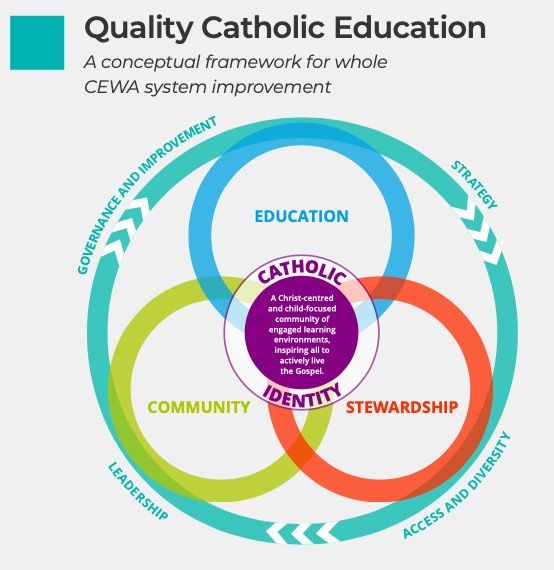
PROCEDURES
• St John Bosco College, in consultation with our communities, shall develop an Aboriginal Education Plan, which is consistent with guidelines provided
by national and state agreements.
• St John Bosco College will continue to offer and run the Aboriginal Families as First Educators playgroup, available to all Aboriginal and Torres Strait
Islander families in the community, on the College campus.
• St John Bosco College shall integrate Aboriginal education across all areas of curriculum.
• Aboriginal language and cultural education programs for use in the College shall be developed in collaboration with the Aboriginal community which
are consistent with relevant documents developed by the Catholic Education Aboriginal Committee (CEAC).
• Ongoing professional learning in Aboriginal understandings shall be provided to all staff working in St John Bosco College. Members of the local
Aboriginal community shall be invited to be involved in the delivery of this professional learning.
• St John Bosco College will actively encourage and support Aboriginal people to be represented appropriately on College decision-making committees
involving Aboriginal students.
• St John Bosco College is fully involved in the reconciliation process through the recognition, acceptance and celebration of Aboriginal cultural traditions
and values by NAIDOC and Sorry Day celebrations.
IMPLEMENTATION
In implementing this policy, St John Bosco College will take responsibility for:
• Providing programs that promote a greater knowledge and understanding of our shared history and reconciliation.
• Providing teaching and learning programs that work towards improving educational outcomes for Aboriginal and Torres Strait Islander students.
• Providing programs that recognise, support, value and promote awareness of Aboriginal and Torres Strait Islander cultures.
• Creating a welcoming atmosphere for Aboriginal and Torres Strait Islander students and families.
• Supporting students who identify as Aboriginal and Torres Strait Islander within the College and the wider community.
• Supporting the cultural safety of Aboriginal and Torres Strait Islander students and removing racism through the College Behavioural Management
Plan.
• Encouraging involvement and participation of Aboriginal and Torres Strait Islander families and communities in College activities.
• In accordance with Church teaching, St John Bosco College acknowledges that parents are the primary educators of their children.
• Aboriginal and Torres Strait Islander parents desire an atmosphere, which promotes a sense of belonging, caring and sharing in which children have
opportunities to develop academically, spiritually, physically and socially.
• Parents and guardians of Aboriginal and Torres Strait Islander students are encouraged to work in partnership with the College to:
Nurture and support their child’s education and holistic development.
Participate in classroom, liturgical, cultural and associated activities.
Assist the College to foster discipline and behaviour management strategies that are consistent, not only with the Christian and College values of love, justice,
respect, joy and compassion, but also with culturally appropriate and acceptable understanding.
2021-2023 St John Bosco College – Aboriginal Education Plan 2CEWA STRATEGIC DIRECTION & TRANSFORMING LIVES INITITATIVE
2019 - 2025
Transforming Lives Initiative
CEWA Strategic direction Transforming Lives Strategy 2025 is a multifaceted strategy, with a focus on strengthening
relationships between schools and their local Aboriginal community.
CATHOLIC IDENTITY Catholic Education Western Australia supports school leadership to develop
1. Inspiring Christ-Centred Leaders Aboriginal education school improvement, resulting in stronger cultural
a. Contemporary models of Gospel leadership that are inclusive, flexible and competencies and increased Aboriginal student enrolments.
responsive to the increasing requirements of church, governments and society. The strategy sets out Four Bold Goals to reach by 2025:
b. Shared leadership
and governance practices that embrace Catholic Social Teaching principles
emphasising common good, participation, subsidiarity and co-responsibility. 1. All Catholic schools will be Culturally Competent.
c. Inclusive leadership formation and development reflecting the commitment and 2. Double Aboriginal students’ enrolments from 2500 to 5000.
diverse talents of staff, students, parents and community members. 3. Increase Aboriginal Year 12 graduations from 100 to 250.
4. Increase the percentage of Aboriginal students achieving the minimum
EDUCATION national literacy and numeracy standard from 75% to 90%.
2. Catholic schools of Excellence
a. Effective communities developing students as whole Christian persons.
b. Catholic schools witnessing effective, contemporary pedagogy and mission-inspired Transforming Lives Strategy 2025 makes use of CEWA’s Aboriginal Education
practice and outreach. Improvement Map (AEIM) as a multipurpose tool for whole-school improvement
c. Shared understanding and commitment to through an Aboriginal education lens.
a Catholic Vision for Learning across all schools.
d. Commitment to providing high quality Religious Education. Underpinned by the Bishops’ Mandate, the CECWA Strategic Directions and a
cultural competency framework, the AEIM supports schools to identify and map
COMMUNITY school improvement across stages of cultural competency, guided by Aboriginal
3. Catholic Pastoral Communities Education Team Consultants.
a. Inclusive communities welcoming and supporting students with diverse learning and
social needs.
b. Shared understanding and commitment to the Transforming Lives: Strategy 2025.
c. Open processes for conversation and engagement with all members of CEWA
communities and their local church.
d. Services to enhance the safety and well-being
of students and staff across all contexts.
STEWARDSHIP
4. Accessible Affordable and Sustainable System
of Schools
a. Initiatives ensuring the accessibility,
affordability, sustainability and growth of
schools.
b. Transparent and inclusive processes for
distributing resources that build equity and
co-responsibility across all schools.
c. Responsiveness to the diverse needs of
students.
2021-2023 St John Bosco College – Aboriginal Education Plan 3Aboriginal Education Plan
2021 - 2023
CEWA CATHOLIC IDENTITY EDUCATION COMMUNITY STEWARDSHIP
Strategic Intent Leadership Formation: Whole college learning and participation: Health and wellbeing of students and staff: Educating at the margins: Engaging and
Transforming our people to lead outstanding Partnering across communities to provide the Providing learning environments that are providing opportunities for the most vulnerable
Catholic Communities best opportunities for our Aboriginal and Torres inclusive and address the diverse different and marginalised in our school community.
Strait Islander families learning and social emotional needs, where Making Catholic Education accessible and
everyone feels safe and can flourish affordable to Aboriginal families.
Aboriginal Education Improvement Map Culturally unaware Culturally Pre-Competent Culturally Aware Culturally Competent
College Cultural Competence CULTURAL COMPETENT STAGE 1 CULTURAL COMPETENT STAGE 2 CULTURAL COMPETENT STAGE 3 CULTURAL COMPETENT STAGE 4
Staff Cultural Competence CULTURAL COMPETENT STAGE 1 CULTURAL COMPETENT STAGE 2 CULTURAL COMPETENT STAGE 3 CULTURAL COMPETENT STAGE 4
Specific Achievable Relevant Time Bound Resources Responsibility Success Criteria
Focus Area Performance & Development goal to What actions will the College take to
How does the goal connect to the What are the timeframe milestones? Support/resources that will be
Who is responsible for the focus How will the College know we have
College’s strategic plan (and/or other Timeframe within which the goal will required to achieve the goal.
be achieved (Stated simply) achieve the goal strategies? been successful?
plans)? be achieved. Key personnel
Focus 1 • Provide continual and • The College Leadership • This connects to the • 3 years (ongoing) • Catholic Education • All Staff • All staff will begin to
Develop Staff Cultural ongoing education to staff team will make a College’s vision in which Aboriginal Education • GECKOS co-ordinator develop and show their
Competence and Knowledge in regard to Aboriginal conscious effort to plan, we are developing the Team cultural competence
Culture and History and organise and deliver whole individual and • Aboriginal Teacher within their learning and
how to teach it. cultural learning aligns with CEWA’s Assistant/Liaison Officer teaching programs.
experiences for staff – via strategic direction and network. • A focus of meaningful
• Providing Cultural the Aboriginal Education Transforming Lives • WANSLEA and culturally respectful
immersion and Cultural Team and external strategy by ensuring that • Aboriginal Community learning programs and
education professional Aboriginal organisations Aboriginal and Torres Directory cross curriculum priorities
development for staff. and communities to Strait Islander people will be developed and
deliver meaningful have access to Quality used as working
learning and upskilling on Catholic education and documents.
Aboriginal culture and cultural competence of • The College with
how to teach it. educators. understand and complete
the appropriate cultural
respects and actions
(welcome/acknowledgem
ent to country) with a
focus on Aboriginal days
of respect and
commemoration. (Sorry
day, Reconciliation week,
NAIDOC ETC.)
2021-2023 St John Bosco College – Aboriginal Education Plan 4Specific Achievable Relevant Time Bound Resources Responsibility Success Criteria
Focus Area How does the goal connect to the What are the timeframe milestones? Support/resources that will be
Performance & Development goal to What actions will the College take to Who is responsible for the focus How will the College know we have
College’s strategic plan (and/or other Timeframe within which the goal will required to achieve the goal.
be achieved (Stated simply) achieve the goal strategies? been successful?
plans)? be achieved. Key personnel
Focus 2 • Staff to collaborate to • Staff to collaborate with • This aligns with the • 3 years (ongoing) • GECKOS Co-ordinator • All Staff • The College will review
Plan, teach and assess develop culturally external Aboriginal College’s mission of • Catholic Education • GECKOS co-ordinator progress of strategic
culturally respectful learning responsive, respectful agencies to develop developing students who Aboriginal Education planning meetings and
experiences and meaningful learning learning programs that contribute positively to Team cyclical reviews to ensure
experiences addressing are culturally respectful, society and are informed • Aboriginal Teacher we are continually
the Aboriginal and Torres responsive, meaningful citizens. Assistant/Liaison Officer reviewing learning
Strait Islander cross- and accurate. • Developing students who network. programs and teaching
curriculum priorities. are culturally aware and • WANSLEA quality content that is
• Teaching historically responsive. • Aboriginal Community culturally responsive and
accurate Aboriginal • Aligns with Catholic Directory updated.
history and culture strategic plan about
Education and
Community and the
Transforming lives
strategy of improving
Aboriginal education
resulting in stronger
cultural competencies
and increased Aboriginal
student enrolments.
Specific Achievable Relevant Time Bound Resources Responsibility Success Criteria
Focus Area How does the goal connect to the What are the timeframe milestones? Support/resources that will be
Performance & Development goal to What actions will the College take to Who is responsible for the focus How will the College know we have
College’s strategic plan (and/or other Timeframe within which the goal will required to achieve the goal.
be achieved (Stated simply) achieve the goal strategies? been successful?
plans)? be achieved. Key personnel
Focus 3 • Staff to undergo learning • The College will contact • This aligns with the • 3 years (ongoing) • GECKOS Co-ordinator • Leadership • The College will ensure
Pedagogy of Piara Waters of the area of Piara elders from the College’s connection to • Catholic Education • GECKOS co-ordinator that within teaching and
area (Aboriginal significance Waters and its area/locality and they will Aboriginal people, place Aboriginal Education learning program this
of land and area) cultural/Aboriginal teach the cultural and culture. Team knowledge becomes
significance. significance of the area. • Aligns CEWA’s strategic • Aboriginal Teacher intrinsically a part of staff
• Learn about the land and The stories of the land plan of developing Assistant/Liaison Officer knowledge. During the
the cultural significance of and place that is Piara effective communities network. Faith, Story and Witness
the area and its Waters. and ensures the College • WANSLEA session of staff
surrounding becomes culturally • Aboriginal Community development, where they
suburbs/locations. competent in knowing Directory can incorporate and
• Piara Water’s Aboriginal about the land on which • Aboriginal elders share this learning with
name. our College is built. students, families and our
wider College community.
Specific Achievable Relevant Time Bound Resources Responsibility Success Criteria
Focus Area How does the goal connect to the What are the timeframe milestones? Support/resources that will be
Performance & Development goal to What actions will the College take to Who is responsible for the focus How will the College know we have
College’s strategic plan (and/or other Timeframe within which the goal will required to achieve the goal.
be achieved (Stated simply) achieve the goal strategies? been successful?
plans)? be achieved. Key personnel
Focus 4 • To foster meaningful and • To reach out and liaise • Aligns with College policy • 3 years (ongoing) • GECKOS Co-ordinator • Leadership • The college will know it
Partnerships ongoing relationships with with surrounding of developing community • Catholic Education • GECKOS Co-Ordinator has been successful
(AFAFE) surrounding Aboriginal Aboriginal in lieu, with CEWA’s Aboriginal Education when there is a greater
organisations and organisations/Schools/Co Education, Community Team partnership with outside
communities. lleges in the area and and Stewardship • Aboriginal Teacher Aboriginal Organisations
• Collaborate and working foster respectful strategies and with Assistant/Liaison Officer and agencies who are
with recognised relationships and Transforming lives network. invited and welcomed to
Aboriginal schools and partnerships where strategy of developing • WANSLEA participate in College
colleges where there is learning and community stronger cultural • Aboriginal Community events and learning
leading Aboriginal involvement and competency. Directory throughout the year.
initiatives and recognition engagement is a result. • Aboriginal elders
(Clontarf, Trinity College
etc.)
2021-2023 St John Bosco College – Aboriginal Education Plan 5Appendix 1
SCSA Scope and Sequence – Aboriginal & Torres Strait Islander Cross Curriculum Priorities (K-8)
English Scope and Sequence
PP Year 1 Year 2 Year 3 Year 4 Year 5 Year 6 Year 7 Year 8
Knowledge and Understanding
Language Understand that English is Understand that people use Understand that spoken, Understand that languages Understand that Standard Understand that the Understand that different
one of many languages different systems of visual and written forms of have different written and Australian English is one of pronunciation, spelling and social and geographical
spoken in Australia and that communication to cater to language are different modes visual communication many social dialects used in meanings of words have dialects or accents are used
different languages may be different needs and purposes of communication with systems, different oral Australia, and that while it histories and change over in Australia in addition to
spoken by family, classmates and that many people may different features and their traditions and different ways originated in England it has time Standard Australian English
and community use sign systems to use varies according to the of constructing meaning been influenced by many
communicate with others audience, purpose, context other languages
and cultural background
Literature Identify and explore ideas Explore the ways that ideas
and viewpoints about events, and viewpoints in literary
issues and characters texts drawn from different
represented in texts drawn historical, social and cultural
from different historical, contexts may reflect or
social and cultural contexts challenge the values of
individuals and groups
Explore the
interconnectedness of
Country/Place, People,
Identity and Culture in texts
including those by Aboriginal
and Torres Strait Islander
authors
Understand and explain how
combinations of words and
images in texts are used to
represent particular groups in
society, and how texts
position readers in relation to
those groups
Recognise and explain
differing viewpoints about the
world, cultures, individual
people and concerns
represented in texts
2021-2023 St John Bosco College – Aboriginal Education Plan 6SCSA Scope and Sequence – Aboriginal & Torres Strait Islander Cross Curriculum Priorities (K-8)
HASS Scope and Sequence
PP Year 1 Year 2 Year 3 Year 4 Year 5 Year 6 Year 7 Year 8
Knowledge and Understanding
History The role that different cultural The diversity and longevity of The economic, political and Key figures (e.g. Henry The importance of conserving
groups have played in the Australia’s first peoples and social reasons for Parkes, Edmund Barton, the remains of the ancient
development and character the ways they are connected establishing British colonies George Reid, John Quick), past, including the heritage of
of the local community (e.g. to Country/Place in Australia after 1800 (e.g. ideas and events (e.g. the Aboriginal and Torres Strait
as reflected in architecture, the establishment of penal Tenterfield Oration, the Islander Peoples
commercial outlets, religious (e.g. land, sea, waterways, colonies) Corowa Conference, the
buildings), compared with skies) and their pre-contact referendums) that led to The significant beliefs, values
development in another ways of life The patterns of colonial Australia’s Federation and and practices of the ancient
community development and settlement Constitution, including British society, with a particular
The journey(s) of at least (e.g. geographical features, emphasis on one of the
one world navigator, explorer and American influences on
The historical origins and climate, water resources, Australia’s system of law and following areas: everyday life,
significance of the days and or trader up to the late transport, discovery of gold) warfare, or death and
eighteenth century government
weeks celebrated or and how this impacted upon (e.g. Magna Carta, funerary customs
commemorated in Australia (e.g. Christopher Columbus, the environment federalism, constitutional
(e.g. Australia Day, ANZAC The role of a significant
Vasco de Gama, Ferdinand (e.g. introduced species) and monarchy, the Westminster individual in the ancient
Day, National Sorry Day) and Magellan), including their system, the Houses of
the importance of symbols the daily lives of the different society’s history
contacts and exchanges with inhabitants Parliament)
and emblems societies in Africa, the
Americas, Asia and Oceania, (e.g. convicts, free settlers, Experiences of Australia’s
and the impact on one Aboriginal and Torres Strait democracy and citizenship,
society Islander Peoples) including the status and
rights of Aboriginal people
Stories of the First Fleet, The economic, social and and/or Torres Strait Islander
including reasons for the political impact of one Peoples, migrants, women,
journey, who travelled to significant development or and children
Australia, and their event on a colony and the
experiences following arrival potential outcomes created
(e.g. treatment of convicts, by ‘what if …?’ scenarios
daily lives, social order) (e.g. frontier conflict; the gold
rushes; the Eureka Stockade;
The nature of contact the Pinjarra Massacre; the
between Aboriginal and/or advent of rail; the expansion
Torres Strait Islander of farming; drought)
Peoples and others (e.g. the
Macassans, Europeans) and The contribution or
the impact that these significance of one individual
interactions and colonisation or group in shaping the Swan
had on the environment and River Colony, including their
people’s lives motivations and actions (e.g.
(e.g. dispossession, groups such as explorers,
dislocation, the loss of lives farmers, pastoralists, convicts
through conflict, disease, loss or individuals such as James
of food sources and Stirling, John Septimus Roe,
medicines Thomas Peel)
Geography The reasons some places are The ways in which Aboriginal Language groups of Aboriginal and Torres Strait The world’s cultural diversity, The spiritual, cultural and
special to people and how and Torres Strait Islander Australia’s Aboriginal and Islander Peoples’ ways of including that of its aesthetic value of landscapes
they can be looked after, Peoples maintain Torres Strait Islander living were adapted to indigenous peoples who live and landforms for people,
including Aboriginal and connections to their Peoples divides their available resources and their in different regions in the including Aboriginal and
Torres Strait Islander Country/Place Country/Place and differs connection to Country/Place world, such as the Maori of Torres Strait Islander
Peoples’ places of from the surveyed has influenced their views on Aotearoa (New Zealand), and Peoples
significance boundaries of Australian the sustainable use of these the Orang Asli of Malaysia
states and territories resources, before and after and Indonesia
colonization
Civics & People belong to diverse How regulations and laws Who can be an Australian The process for constitutional The types of law in Australia,
groups, such as cultural, affect the lives of citizens citizen, the formal rights and change through a referendum including criminal law, civil
Citizenship religious and/or social (e.g. the different types of responsibilities, and shared and examples of attempts to law and the place of
groups, and this can shape laws, how laws protect values of Australian change the Australian Aboriginal and Torres Strait
identity human rights) citizenship Constitution by referendum, Islander customary law
such as the successful vote
on the Constitution Alteration Different perspectives about
(Aboriginals) 1967 or the Australia’s national identity,
unsuccessful vote on the including Aboriginal and
Constitution Alteration Torres Strait Islander
(Establishment of Republic) perspectives and what it
1999 means to be Australian
2021-2023 St John Bosco College – Aboriginal Education Plan 7You can also read


