Air Quality - revision of EU Rules - European Commission
←
→
Page content transcription
If your browser does not render page correctly, please read the page content below
Air Quality
- revision of EU Rules -
Status: 10 May 2021

                           European Commission
                                  Clean Air Unit
Air quality in Europe
Why is it a problem?
Where is it a problem?
What are we doing about air pollution?
Clean air policy works … but …
What can we do better?
Air pollution - why is it a problem?
                                                            Health impacts (EU):
                                                            •   > 400.000 premature deaths each
                                                                year
                                                            •   17% of all lung cancer deaths due
                                                                to air pollution

                                                            Economic impacts (EU):
                                                            •   More than € 20 billion per year in
                                                                ‘direct costs’
                                                            •   plus € 330 to € 940 billion per year
                                                                in ‘indirect costs’

                                                            Environmental impacts (EU):
                                                            •   Eutrophication limits exceeded in
                                                                62% of ecosystem

Source(s): Healthy lives, healthy environment (EEA, 2020)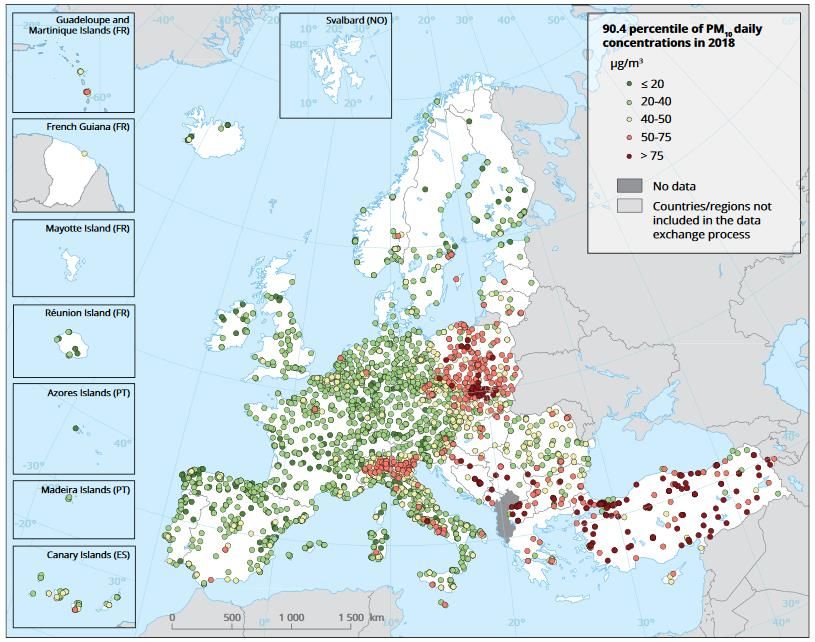
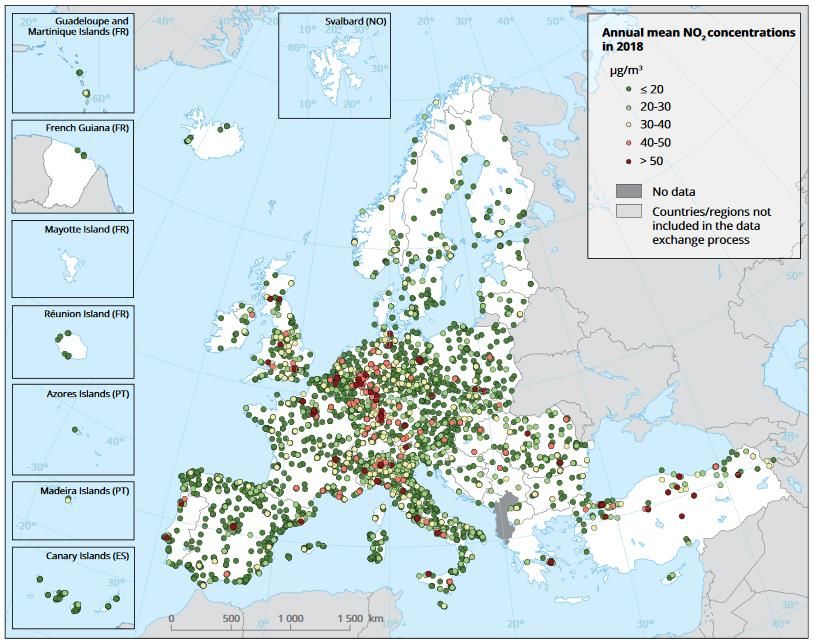
Air pollution - where is it a problem?
 PM10 exceedances are often linked to fuel    NO2 exceedances are often linked to
 combustion (i.e. heating, transport).        traffic, in more than 100 cities in EU.

Source(s): EEA Air Quality in Europe (2020)
Air pollution – who and what causes it?
Air pollution has multiple sources …                  … and originates across all scales

PM2.5: Households (54%), Energy & Industry (21%),               • Transboundary pollution
Transport (13%),…
                                                              • National level background
NOx: Transport (47%), Energy (15%), Industry (15%),
                                                                      • City level sources
Households (8%), …
                                                                      • Road-side peaks
SOx: Energy (47%), Industry (33%), Households (15%),
Transport (3%), …
                                              This combination requires EU Clean Air
NH3: Agriculture (93%), …                     Policy to address all sectors & all scales
Source(s): EEA Air Quality in Europe (2020)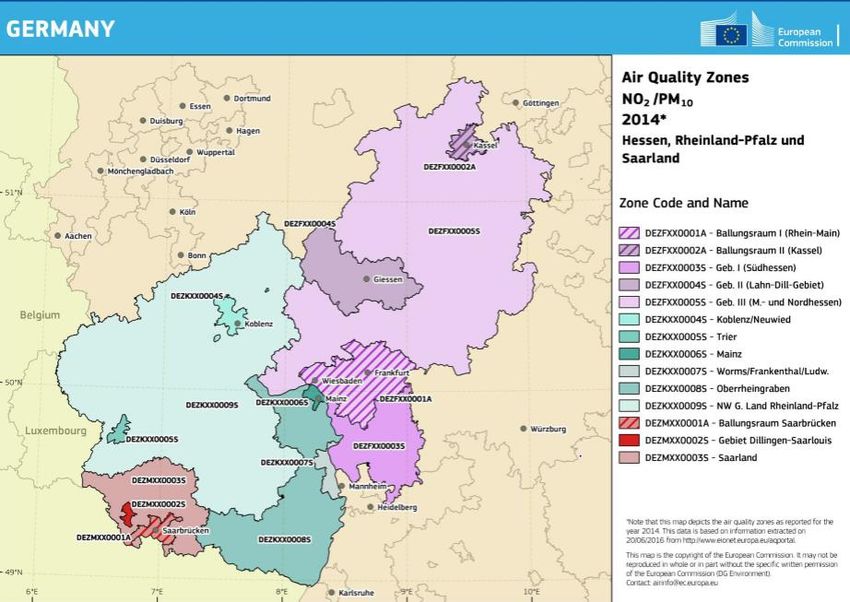
What are we doing about air pollution?
                                Ambient Air Quality (AAQ) Directives
                                       Maximum concentrations of
                                          air polluting substances
                                   (PM10, PM2.5, SO2, NO2, O3 + 8 more)
SETTING OBJECTIVES
FOR GOOD AIR QUALITY

REDUCING EMISSIONS
OF POLLUTANTS
                     National Emission reduction            Source-specific
                     Commitments Directive                  emission standards
                     National emission totals               - IED Directive
                     (SO2, NOx, NMVOC, PM2.5, NH3)          - MCP Directive
                                                            - Eco-design Directive
                                                            - Energy efficiency
                                                            - Euro and fuel standards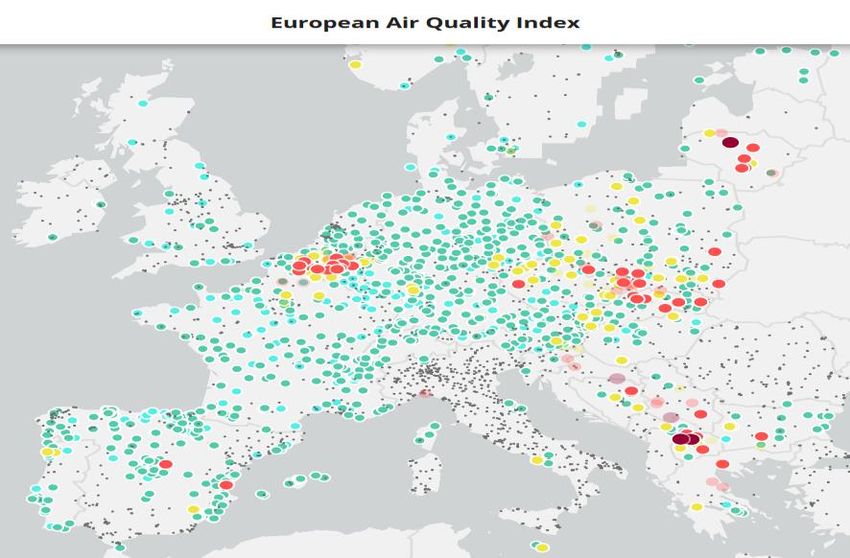
Clean air policy works … but …

      EU urban population exposed to air pollution                                   EU urban population exposed to air pollution above
       above EU standards 2000 to 2018                                               EU standards > WHO guidelines in 2018

                                                                O3
                                                                                   O3
60%                                                             PM2.5            34% > 99%
                                                                PM10
40%                                                             NO2
                                                                                  PM10
                                                                                 15% > 48%

20%                                                                               PM2.5
                                                                                  4% > 74%

0%                                                                                 NO2
                                                                                    4% = 4%

 Source(s): EEA Air Quality in Europe (2020) & https://www.eea.europa.eu/data-and-maps/daviz/percentage-of-urban-population-in-13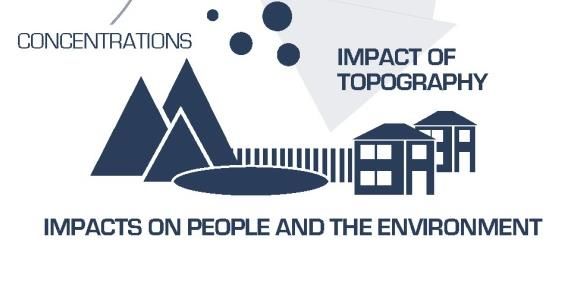
Fitness Check of the AAQ Directives
In 2019, an evidence-based, retrospective evaluation offered a number of lessons learnt:

• Air quality remains a major health and environmental concern;
• Air quality standards have been instrumental, and partially effective, to reduce pollution;
• Current EU standards are less ambitious than scientific advice;
• Limit values have been more effective than other types of air standards;
• Legal enforcement action by European Commission, and civil society, works (with some caveats);
• Scope to further harmonise monitoring, modelling, and air quality plans;
• Not all reported data equally useful, e-reporting allows for further efficiency.

A decade of air data       Stakeholder feedback        Seven case studies            Literature & analysis
For period 2008 to 2018    Open public consultation    BG,DE,ES,IE,IT,SE,SK          600 scientific sources
from all Member States     and expert questionnaires   each with specific focus      & a cost-benefit model

“The Commission will draw on the lessons learnt from the evaluation
of the current air quality legislation.
It will also propose to strengthen provisions on monitoring, modelling
and air quality plans to help local authorities achieve cleaner air.
The Commission will notably propose to revise air quality standards to
align them more closely with the World Health Organization
recommendations.”
                                Communication on the European Green Deal (COM/2019/640 final)
Five shortcomings
Health outcome shortcomings
Implementation and enforcement shortcomings
Governance shortcomings
Assessment shortcomings
Information shortcomings
Health outcome shortcomings
Premature deaths due to air pollution               Pollutants           2005 WHO      EU Air                      EU
                                                                         AQ Guidelines Standards                   Exceptions
halved during last two decades, but …
                                                    PM10 (year)          20 µg/m3             40 µg/m3             -

                                                    PM10 (day)           50 µg/m3             50 µg/m3             (35d a year)

      Health outcome shortcomings                   PM2.5 (year)         10 µg/m3             25 µg/m3             -

                                                    PM2.5 (day)          25 µg/m3             -                    -
      EU Standards are not fully aligned
          with scientific advice …                  NO2 (year)           40 µg/m3             40 µg/m3             -

                                                    NO2 (hour)           200 µg/m3            200 µg/m3            (18d a year)

                                                    SO2 (daily)          20 µg/m3             125 µg/m3            3d a year
Exceedances above
                           Lack of flexibility to   O3 (8-hour)          100 µg/m3            120 µg/m3            (75d in 3yr)
 WHO Air Quality
                            adapt to evolving
  Guidelines and
                            science and new
  negative health
                           recommendations              WHO Air Quality Guidelines are being revised in 2021
  impacts persist
                                                    Source(s): Fitness Check of the Ambient Air Quality Directive SWD(2019) 427
Implementation & enforcement shortcomings
Frequency, extent and magnitude of As of 5 Feb 2021, still 31 cases addressing 18 Member
States (+ 1 vs UK) related to bad application:
exceedances has declined, but …
15 particulate matter (PM10 and/or PM2.5)
1
13 nitrogen dioxide (NO2)
Enforcement shortcomings
1 sulphur dioxide (SO2)
Exceedances are not always addressed
sufficiently and/or on time … 2 monitoring problems
Of these, 13 cases (i.e. 9 Member States + 1 vs UK)
have been referred to the Court of Justice of the EU.
6 cases have seen rulings: BG, PL, RO, IT, HU (for PM10) and FR (for NO2) .
Air quality plans and Insufficient penalties
measures have often and damages linked These cases address both exceedances of air quality
proven ineffective to exceedances standards and not keeping these as short as possible.Air quality governance shortcomings
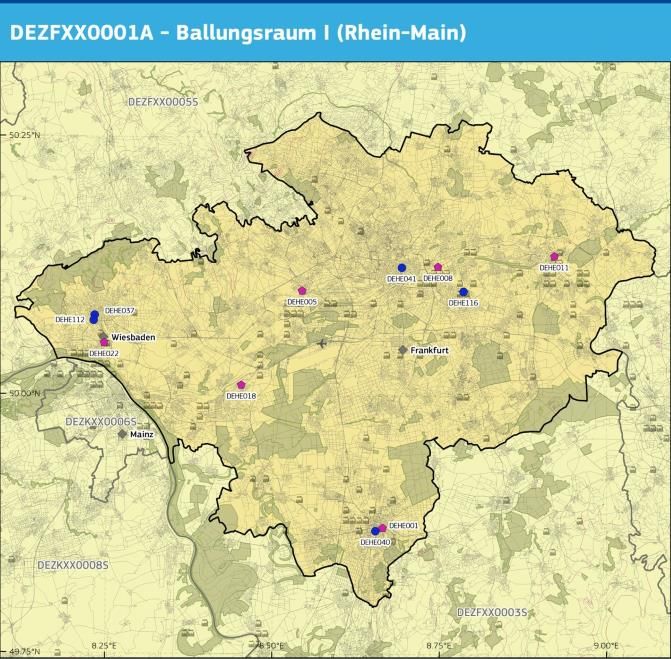
To limit exceedances, competent Example: Air pollution (here: PM2.5) in Frankfurt (DE) is a
combination of emissions in the city, its surroundings,
authorities develop plans, but …
the rest of the country and from other parts of Europe:
Governance shortcomings
Air quality plans do not always address all
sources effectively ...
Local air quality is
Some measures may
impacted by
be ineffective, or
emissions outside This combination requires air quality plans to address
seem disproportionate
local control all sectors & all scales – in a coherent manner (!)
Source(s): Urban PM2.5 Atlas: Air Quality in European Cities (JRC, 2017)Air quality assessment shortcomings
More than 4.000 air quality monitoring
Establish air
stations deliver robust data, but … quality zones
Assessment shortcomings
Flexibilities may sometimes impact
the comparability of data …
Macroscale
siting
Example: Frankfurt, DE
(Friedberger Landstr.)
Monitoring rules Modelling ability has
offering flexibility are improved, allows for
sometimes ‘stretched’ much more detail Microscale
siting
Source(s): https://ec.europa.eu/environment/air/quality/zones.htmAir quality information shortcomings
Reliable air quality information is widely
available, often even in real-time, but …
Information shortcomings
Public feels under-informed about
poor air quality and its impacts …
Concerns about Public information is
health impacts have not always clear, and
increased not harmonised
Source(s): Special Eurobarometer 497 (September 2019) & Air Quality IndexThe consequences Air pollution continues to be a problem Consequences for environment and health Consequences for our economy (with direct and indirect costs) Consequences for our society (not everyone impacted equally) Administrative burden
The consequences of air pollution & air policy
Elevated concentration levels of air pollutants, both Cost to society, EUR 20 bn direct cost to health-care, lost
general exposure of population and at pollution hotspots work-days, crop losses, plus EUR 330-940 bn indirect costs
Economic
Environment & Health
Health impacts, more than 400.000 premature deaths each Measures needed to meet EU air quality standards, with
year across the EU, plus morbidity health impacts costs for industry, transport, energy, and agriculture sector
Ecosystem impacts, eutrophication limits are being Impacts on the EU’s international competitiveness, with
exceeded in 62% of ecosystem areas across the EU territory innovation potential, especially for clean air technologies
Links with climate change, as higher temperature are Sensitive population groups (children, pregnant women,
associated with elevated ozone levels elderly citizens) are more susceptible to air pollution
Social
Synergies with other EU policies, and in particular with the Inequalities and social sustainability, as groups of lower
goals of the (upcoming) EU Zero Pollution Action Plan economic status tend to be more negatively affected
Administrative burden of air quality management, in Measures to address air pollution may have effects on
particular as relates to air quality assessment regimes employment
policy options will need to be assessed against their ability to address the
consequences of air pollution (i.e. our ‘impact assessment criteria’)Policy Context Drivers Problems Consequences Interventions
Exceedances above health Elevated concentration levels of air pollutants
Health outcome guidelines and negative
shortcomings health impacts persist Environment & Current
Economic Social
Health
Current
EU Standards are not fully Lack of flexibility to adapt to AAQDs
elevated ozone levels; ozone levels also linked to hemispheric methane
Links with climate change, as higher temperature are associated with
for industry sector, transport sector, energy sector, and agriculture sector
Measures needed to meet EU air quality standards – and their costs, esp.
including underutilised innovation potential, especially for clean air technologies
Positive and negative impacts on the EU’s international competitiveness
those suffering from pre-existing conditions) are more susceptible to air pollution
Sensitive population groups (children, pregnant women, elderly citizens and
tend to be more negatively affected by air pollution (incl. regional difference)
Inequalities and social sustainability, as groups of lower economic status
Effects of measures to address air pollution on employment
working days, and crop losses, plus EUR 330-940 bn indirect costs
Cost to society, estimated at over EUR 20 bn direct cost to health-care, lost
due to both general exposure of population, pollution hotspots (& COVID)
Health impacts, 400.000 premature deaths each year across the EU,
ecosystem areas and in 73% of Natura2000 areas across the EU territory
Ecosystem impacts, eutrophication limits are being exceeded in 62% of
aligned with scientific evolving science’ and new
advice … recommendations
AAQDs
Insufficient penalties and
AQ Enforcement damages linked to
shortcomings exceedances
Fitness
Check
Exceedances are not
always addressed
sufficiently and/or timely …
Air quality plans and
measures have often proven
ineffective
+
AQ Governance Local air quality is impacted
shortcomings by emission outside control
European Policy Area 1
Green Deal Air quality plans do not
Some measures may seem ‘EU Standards
always address all sources
effectively ... disproportionate, ineffective
Monitoring rules offering
Zero AQ Assessment flexibility are ‘stretched’ in
shortcomings
Pollution
instances
Policy Area 2
Flexibilities may sometimes Modelling ability has ‘legislative frame’
impact the comparability of improved, allows for much
data … more details
Recovery AQ Information
Concerns about health
impacts have increased, not
plan shortcomings addressed Synergies with other EU policies, and in particular with the goals of the
Policy Area 3
(upcoming) EU Zero Pollution Action Plan
Public feels under-informed Public information is not ‘mon-mod-plans’
about poor air quality and always available, and not Administrative burden of air quality management, in particular as relates to air
its impacts … harmonised quality assessment regimesAir quality – revision of EU rules Air policy revision: focus on three policy areas Policy options to inform the level of ambition What stakeholders think about ambition levels Our timeline – clean air milestones 2020 to 2023
Air policy revision: focus on three policy areas Augment the current Ambient Air Quality Directives for three policy areas • Policy area 1: closer alignment of the EU air quality standards with scientific knowledge including the latest recommendations of the World Health Organization (WHO). • Policy area 2: improving the air quality legislative framework, including provisions on penalties and public information, in order to enhance effectiveness, efficiency and coherence. • Policy area 3: strengthening of air quality monitoring, modelling and plans. to be further developed into more detailed options/scenarios for each policy area, also based on inception impact assessment
Policy options to inform the level of ambition
                      Scenario 1: by 2030         Scenario 3: by 2030     Scenario 5: by 2030      Scenario 7: by 2030
                      ALL current standards       WHO interim targets     WHO guideline            updated WHO guideline    Assess at least seven scenarios for EU standards, based
                                                                                                                            on level of alignment with WHO recommendations (i.e.
Policy Area 1         (indicative limit values)   (2005 or 2021, tbd)     exposure levels (2005)   exposure levels (2021)
                                                                                                                            WHO interim targets or guideline exposure levels – which
 ‘EU Standards’                     Scenario 2: by 2050       Scenario 4: by 2050        Scenario 6: by 2050                date back to 2000/2005 and are being updated in 2021), in
                                    WHO interim targets       WHO guideline              updated WHO guideline              a mid-term (2030) or long-term (2050) perspective
                                    (2005 or 2021, tbd)       exposure levels (2005)     exposure levels (2021)

                       Low ambition option:                 Mid ambition option:               High ambition option:
                                                                                                                            Assess three options related to changes to the legislative
                       limited changes to                   criteria for reporting on          mandatory rules on how
                                                                                                                            framework, in particular regarding rules on
Policy Area 2          legislative framework as             provisions on penalties,           provisions on penalties,
                                                                                                                            (a) penalties,
                       relates to penalties,                information provision, and         information provision, and
‘legislative frame’    information or action                participation in planning          participation in planning
                                                                                                                            (b) information provision,
                                                                                                                            (c) action required in case of exceedances.
                                                            are implemented                    are implemented

                       Low ambition option:                 Mid ambition option:               High ambition option:
                       limited changes                      targeted changes                   comprehensive changes        Assess three options related to revised technical
Policy Area 3          to current mon-mod-plans             to current mon-mod-plans           to current mon-mod-plans     requirements for air quality monitoring, modelling and
                       framework                            framework                          framework                    plans (mon-mod-plans), including estimates of related
‘mon-mod-plans’                                                                                                             administrative burden and expected improvements.

                        Low ambition                          Mid ambition                      High ambition
     Baseline             package                              package                            package
What stakeholders think about ambition levels
Level of ambition implied by responses Based on feedback to inception
70 impact assessment in Jan 2021
(62 unique responses).
60
50 A high level of ambition for policy
area 1 was suggested by:
40
• 16 NGOs, 2 companies &
30 2 business assoc.
20
A low level of ambition for policy
10 area 1 was suggested by:
• 1 company & 9 business assoc.
0
Policy Area 1 Policy Area 2 Policy Area 2 Policy Area 3 Policy Area 3
[WHO] [INFO] [OTHER] [MON-MOD] [PLANS]
Similar picture for other policy
LOW MID HIGH-MID HIGH UNCLEAR NO COMMENT
areas, split less pronounced.Clean Air Milestones 2020 to 2023 (indicative)
Fitness Check Expert consultation Council discussions of
(note: published in Nov 2019) (on monitoring, modelling, plans) legislative proposal
(air quality - revision of EU rules)
Council Conclusions WHO Guidelines publication
(precise timing to be confirmed) Submission of Second
NEC Implementation Report Finalisation of National Air Pollution Control
(Commission Communication) Zero Pollution Action Plan Impact Assessment (air quality) Programmes begins
I / 2020 II / 2020 I / 2021 II / 2021 I / 2022 II / 2022 I / 2023 II / 2023
EEA Air Quality Report 2020 EEA Air Quality Report 2021 EEA Air Quality Report 2022 EEA Air Quality Report 2023
Inception Impact Assessment Public consultation: air quality Adoption: legislative proposal 4th EU Clean Air Forum
(revising the Air Quality Directive) (air quality - revision of EU rules) (air quality - revision of EU rules) (location to be determined)
Second Clean Air Outlook 3rd EU Clean Air Forum Review Gothenburg Protocol
(Commission Report) (in Madrid) (Air Convention)
Third Clean Air Outlook
(Commission Report)Contact us: env-air@ec.europa.eu Have your say: https://ec.europa.eu/info/law/better-regulation/have-your-say/initiatives/12677-Revision-of-EU-Ambient-Air-Quality-legislation Thank you
You can also read


