Lynfield College

NCEA Information
Evening 2018
←
→
Page content transcription
If your browser does not render page correctly, please read the page content below
Lynfield College NCEA Information Evening 2018
NCEA
           National Certificate of
          Educational Achievement

●   Main qualification for school students
●   Study a number of courses or subjects
●   Skills assessed against a number of standards
●   Recognised by employers & universities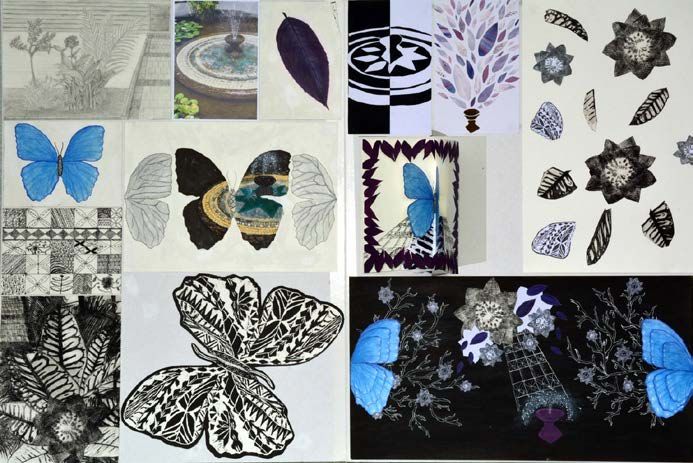
NCEA highlights from 2017
These figures are based on the provisional January results and are participation based.

Level 1: Achieved = 80.6%. 57.6% achieved at
Merit or Excellence.

Level 2: Achieved = 87.7% . 47.1% achieved at
Merit or Excellence.

Level 3: Achieved = 81.7% 47.2% achieved at
Merit or Excellence

UE = 61% Scholarships = 36

http://www.nzqa.govt.nz/qualifications-standards/qualifications/ncea/understanding-ncea/how-ncea-
                                           works/video/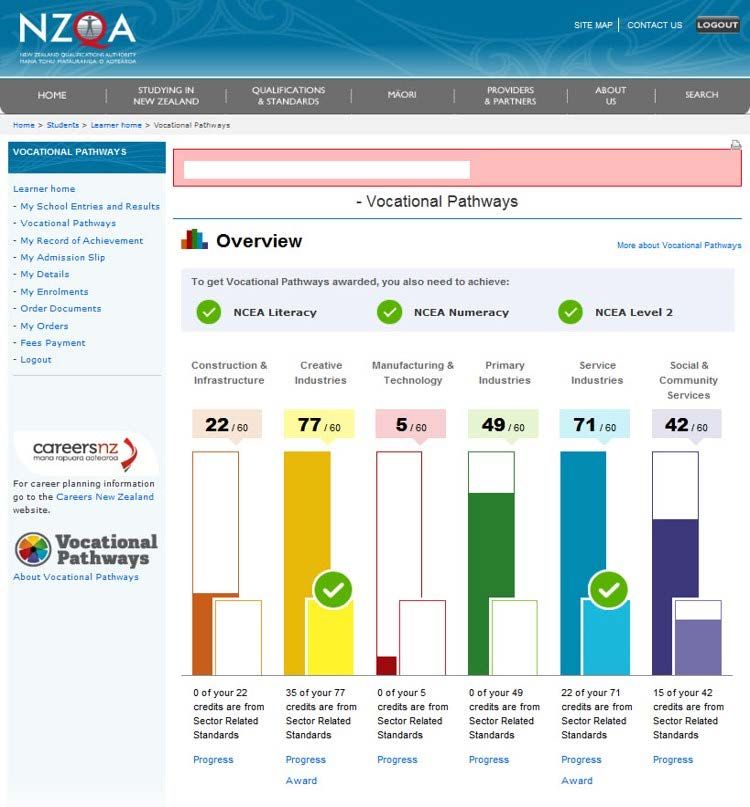
Ms Feist

       Faculty:
Languages and Language
       English
STANDARDS in NCEA
These are topic or units work with an
assessment at the end of it that earns
credits.

What standard are you being assessed
for in English?

ACHIEVEMENT CRITERIA: English 1.5
Achievement               Achievement with Merit     Achievement with
                                                     Excellence
Develop and structure     Develop and                Develop and structure
ideas in formal writing   structure ideas            ideas effectively in formal
                          convincingly in formal     writing
                          writing

Use language features     Use language features      Use language features
appropriate to audience   appropriate to audience    appropriate to audience
and purpose in formal     and purpose with control   and purpose with control
writing                   in formal writing          to command attention in
                                                     formal writing.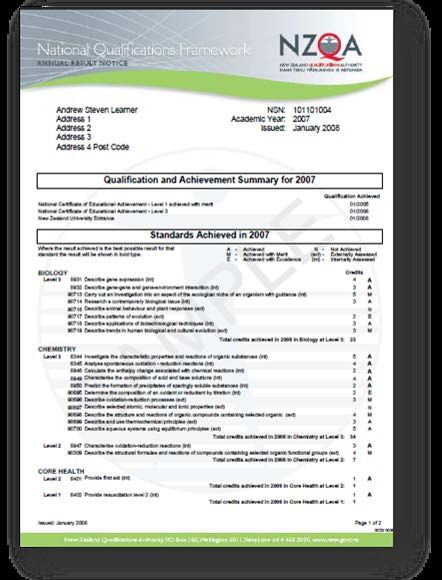
ACHIEVEMENT STANDARDS (Level 1)
ENGLISH 1.5 Produce formal writing
ENGLISH 1.4 Produce creative writing

ASSESSMENT: INTERNAL
● providing opportunities to draft, develop and
  craft several pieces (language features)
● individual topic choice (ideas)
● takes place over an extended period
● teacher-feedback and teaching of specific
  skills to work on

REQUIREMENTS
• This achievement standard involves drafting,
  reworking and presenting of at least one piece
  of formal writing.
• Writing expresses ideas, information and/or
  opinions.
• May include reports, commentaries, text
  reviews, (auto) biographical profiles, articles,
  expository essays.

THE PROCESS USED IN ENF
ENGLISH WITH FORMAL WRITING

   • Students use a writing folio

   • A biographical task in term one

   • An issues based essay in term two

   • Students select best piece for further crafting
     and development and assessment in Term three
Ms Clock Faculty:
Courses –
      “different but the same”

     Mathematics
           &
   Level 1 Numeracy
MATHEMATICS COURSES Year 11 (Level One NCEA) ■ 11 MAA Advanced ■ 11 MAI Intermediate ■ 11 MAX Mainstream ■ 11 MAT Maths Units ■ 11 MAP Maths Applied
SIMILARITIES
       BETWEEN COURSES
All Mathematics courses at Year 11
provide opportunity for:
■ Numeracy Credits
■ Advancement to Level Two
ALL SUBJECTS AT YEAR 11 HAVE THE OPPORTUNITY FOR ADVANCEMENT TO LEVEL 2
DIFFERENCES
       BETWEEN COURSES
All Mathematics courses at Year 11
have varying:
■ Difficulty levels
■ Blends of internal and external
  assessments
■ Assessment methods
Ms Allpress
Faculty: Art
NCEA and Assessment
Using PortfoliosPORTFOLIOS
The collection of evidence over time.
● Various Standards require students to demonstrate their
ability to develop ideas and skills over an extended
period of time.
● The process requires conceptualising, developing,
refining, and producing a final body of work.
● This process occurs most typically within the Visual Arts
and Technology Learning Areas.Year 11 Courses using Portfolios for Assessment
ARTS
11ART Drawing Painting Printmaking
11ADM Digital Art Making
11MUS Music Composition
MATHS
11MAP Measurement / Number / Statistics
TECHNOLOGY
11TFD Fashion and Design
11TMH Hard Materials
11DTG Digital Technologies
11DVC Design and Visual Communication
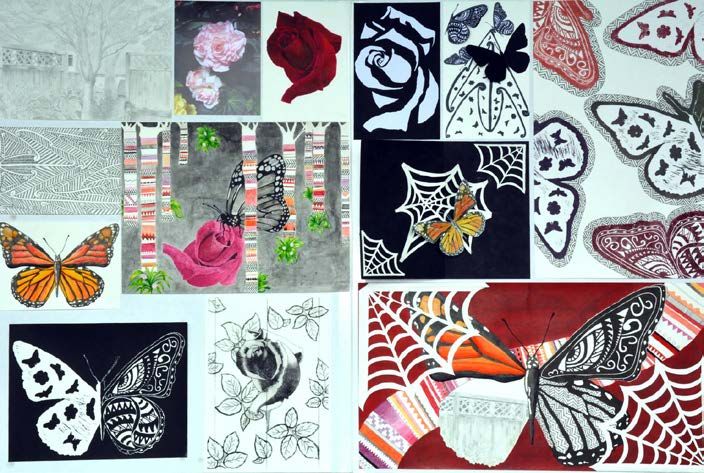
(Graphics)A YEAR LONG PROGRAM OF STUDY (Folio) ❏ All artworks are produced over time and used as evidence for their external folio (Term 4). ❏ Some of the work on the folio is also used as evidence for the two internal achievement standards. ❏ All work in progress is milestone assessed at different stages of the year. ❏ Student work must be informed by established practice (NZ and International artist models). ❏ Student’s practical knowledge improves as the year progresses. ❏ All students working on a folio go through various cycles of learning (technical / conceptual / contextual). ❏ The final body of work is presented as a 2 panelled folio submission.
EXTERNAL FOLIO (12 CREDITS)
                All Visual Art students submit a folio for their external submission
                           (Level 1 and 2 = 2 panels / Level 3 = 3 panels)

                                A TYPICAL LAYOUT OF A LEVEL 1 ART FOLIO

                                                                 DEVELOP / EXTEND IDEAS
                   OBSERVATION DRAWINGS
                      (Wet and dry media)
Also evidence
for AS 1.2
(4 Credits)
Term 1 and 2
                                                               CLARIFY (Making final choices)

Also evidence        DRAWING CONVENTIONS
for AS 1.3           (Referencing artist models)
(4 Credits)
Term 1 and 2

                                                                      FINAL OUTCOME
                         DEVELOP IDEAS

                             PANEL ONE                                   PANEL TWO

                                TOTAL CREDITS EARNED (20 CREDITS)
LEVEL ONE PAINTING
ACHIEVED FOLIO MERIT FOLIO
LEVEL ONE DIGITAL MEDIA
ACHIEVED FOLIO EXCELLENCE FOLIOMrs Marshall Faculty: Social Science Merit/Excellence
How teachers inform students of the
           requirements needed for
             Merit and Excellence

     Achievement Criteria for each standard is
     clearly displayed to inform students:

Achievement          Achievement with    Achievement with
                     Merit               Excellence
Describe the         Describe in depth   Comprehensively
causes and           the causes and      describe the
consequences of consequences of          causes and
an historical event. an historical       consequences of
                     event.              an historical
                                         event.
Teachers explain the meaning of the
language used in the
Achievement Criteria
Merit Criteria Excellence Criteria
❧ Describe in- depth • Describe comprehensively
shows a greater depth shows a thorough
of understanding. understanding.
This means:
This means: • Greater depth & breadth.
- A range & detailed to • Range & integrate detail to
explain consequences explain consequences (eg
making links to show insight).
• JustifyMARKING RUBRIC
Achieved Merit Excellence
∙ Has shown some ∙ Has shown a good Has used geographic terms
understanding of understanding of and concepts to fully
sustainability by making sustainability by making a explain:
a decision and decision and clearly • the sustainability of the
backing it up with explaining the reasons environment under dairy
some valid reasoning for that decision. farming. A decision has
been made and is
Overall: Has described Overall: Has explained backed up with insightful
the sustainability, or the sustainability, or comment and detail.
otherwise, of the otherwise, of the
selected environment selected environment Overall: Has shown insight in
with continued use. with continued use. fully explaining the
sustainability, or
otherwise, of the selected
environment with continued
use.Student exemplars at Merit and Excellence leveled examined Exemplars are annotated explaining why received that grade
Other methods to inform students:
• The learning          • Peer Assessment
  workbooks supply        using a detailed
  the required            marking template
  answers for M & E.
• Past students’ work
  is photocopied
  and shared with
  students.
• Model answers are
  provided by
  teacher at
Mrs Wells
Faculty: Health & Physical Education

      Endorsements
Endorsements
What do they mean?
How do I get them?
Course Endorsement and Certificate EndorsementCourse Endorsement
Course endorsement provides recognition for
students who perform exceptionally well in
individual coursesStudents will gain an endorsement for a
course if, in a single school year, they
achieve:
14 or more credits at Merit or Excellence
(in most courses this must include at least 3 internal and 3 external credits)
11HRE = 21 credits available
11PEA = 17 credits availableCertificate Endorsement
Certificate endorsement provides recognition
for students who perform exceptionally well
across a whole levelMust get 50 Merit credits or 50 Excellence credits If you get 50 level 1 credits at Merit level, you will have your Level 1 certificate endorsed with Merit. If you get 50 level 1 credits at Excellence level, you will have your Level 1 certificate endorsed with Excellence.
Mr Eyre

Faculty: Science
Course Prerequisites
Prerequisites: What are they?
At the start of each course in the course information booklet is a section called
‘prerequisites’.

This is to advise students what they need to have accomplished before they
can start that particular course.
Prerequisites: Why have them?
● They are there as a minimum target for students,
  to help motivate them throughout the year.
● They advise students what skills and
  understanding are required for the course so
  they can choose courses that meet their
  strengths.
● They help to ensure students are likely to be
  successful, by steering them away from courses
  that they may not be successful in.
Prerequisites: Simple or Complex

Some course prereqs are quite simple:
                                   Class teachers
                                   will advise and
Others are more complex:           guide students
                                   on how well
                                   they are doing
                                   to meet the
                                   prereqs for
                                   future courses
                                   throughout the
                                   year.
Faculty Leader Mrs Townsend Thefaculty that wears many different hats!!
Technology Level 1 Courses
                     Providing the skills employers want!
COURSES AVAILABLE

                                            Fashion & Design
                    Materials               Hard Materials
                    Hospitality             Electronics
                    Digital                 Cabinetry
                    ..Technologies
                    Food & Nutrition
                    Design & Visual
                    ..Communication
Unit Standards &
Achievement Standards
QUALIFICATIONS
A pathway for every student!
NCEA Level 1, 2 and 3
Vocational Pathways
University Entrance
ScholarshipThe Vocational Pathways provide new ways
VOCATIONAL PATHWAYS
to achieve NCEA Level 2.
NCEA Level 1 NCEA Level 2
80 credits at any level 60 credits at Level 2 or above including
including Literacy & Level 1 Literacy & Numeracy
Numeracy
These Pathways help students see how their learning and achievement is
valued in the ‘real world’ by aligning Standards - including specific ‘sector-
related’ standards - with six industry sectors.Future-proofing your career
Vocational Pathways at NCEA Level 2 are the foundation for the journey to
employment in this rapidly changing world.
INDUSTRY SECTORS
Service Industries Creative Industries Primary Industries
• Accountant • Artist • Vet
• Chef • Graphic Designer • Wine maker
• Sales Rep • Actor • Farmer
• Hairdresser • Screen Printer • Food Technologist
• Journalist • Set Designer • Production Manager
• Dancer • Forestry
Manufacturing and Social and Community Construction and
Technology Services Infrastructure
• Architect • Teacher • Builder
• Baker • Police Officer • Civil Engineer
• Engineer • Midwife • Project Manager
• Jeweller • Doctor • Interior Designer
• Surveyor • Health Services Manager • Welder
• Electrician • Security Guard
http://youthguarantee.net.nz/vocational-pathways/Finding the hat that fits you! GETTING RESULTS
Mrs Keir
                  Careers Advisor
Occupation Outlook from your APP store

Occupation Outlook is designed to help students make
well-informed career choices. It provides vital information
on over 100 occupations in New Zealand, covering around
90% of employment in the labour market.
Mr Waddington Academic Advisor Qualifications
Level 1 Literacy
                10 credits –
  Accounting, Art Design, Biology, Business
   Studies, Chemistry, Design and Visual
Communication, Digital Technologies, Drama,
   Earth and Space Science, Economics,
 English, Geography, Health, History, Maths,
  Te Reo Maori, Music, Physical Education,
  Physics, Programming and Web, Science,
    Technology Electronics, Technology
            Engineering Materials.
Numeracy 10 credits - Maths Science (except SCB) Geography(4) Design and Visual Communication(3) Technology Materials Hard(3)
UE
Minimum: University Entrance
          NCEA Level 3 (60 cr L3, + 20 cr L 2)

   14 credits           14 credits         14 credits
   approved             approved           approved
    subject              subject            subject

 5 Reading credits + 5 Writing credits - Level 2 or above

        10 numeracy credits Level 1 or above
Limited Entry University
Where can I get past exam papers?
Assessment schedule = Model
answers, as used by teachers marking the
exam

Assessment report = Guide to what
students did well or badly in this assessment.
NZQA administration costs PA

$77.60
$383.30 international students
$30 per subject scholarship
$102.20 per subject (international students)
$20 per candidate or $30 per family (financial
 assistance)
Ms Harris
    How can you help your
      child with NCEA
Ask them:
●   to show you their course leaflets
●   if they have any practical assessments
●   how many external exams they have
●   how many credits they have achieved so far
● if they have any homework ● how you can help them achieve ● if they had a good day ● Log on to the NZQA website with them http://www.nzqa.govt.nz
Thank you for coming this evening
Please collect Student Assessment Guide
            before you leave

         Progress report Nights
       April 5th (A-L) & 10th (M-Z)
You can also read


