ARTS5503 Academic Writing for the Humanities - Term One // 2021
←
→
Page content transcription
If your browser does not render page correctly, please read the page content below
School of the Arts and Media // UNSW Arts and Social Sciences
ARTS5503
Academic Writing for the Humanities

Term One // 2021

  ARTS5503 Term 1, 2021 published at 08-02-2021 // © University of New South Wales, 2021
                                                                                           1
Course Overview
Staff Contact Details
Convenors

Name                 Email                                     Availability        Location                Phone
TBA TBA              sam@unsw.edu.au                           please email school TBC                     93854856

School Contact Information

School of the Arts and Media

Room 312, Level 3, Robert Webster Building (G14)

Phone: (02) 9385 4856

Email: sam@unsw.edu.au

Website: www.arts.unsw.edu.au/sam

The School of the Arts and Media would like to Respectfully Acknowledge the Traditional Custodians,
the Bedegal (Kensington campus), Gadigal (City and Art & Design Campuses) and the Ngunnawal
people (Australian Defence Force Academy in Canberra) of the lands where each campus of UNSW is
located.

                  ARTS5503 Term 1, 2021 published at 08-02-2021 // © University of New South Wales, 2021
                                                                                                                      2
Course Details
Credit Points 6
Summary of the Course
This course will assist you to develop your capacity to write academic essays according to the
conventions of the Humanities. It provides the knowledge and vocabulary by which you can critically
analyse the work of others as well as your own. The course focuses sustained attention on various
modes of academic writing that are used in essay writing and shows how these may be deployed to
present a strong argument. The course includes analysis of a range of exemplars as well as essays from
academic journals researched by students and related to their disciplinary interests. This study will be
accompanied by writing exercises, writing workshops and detailed feedback from both peers and staff.
The course is offered as a Prescribed Elective in the Master of Journalism and Communication and the
Master of Public Relations and Advertising. Students enrolled in other Postgraduate Coursework
Programs in UNSW Arts and Social Sciences, may take the course as an additional elective, but it will
not contribute credit toward those programs.
Course Learning Outcomes
1. Demonstrate facility with grammar, sentence construction and conceptual exposition, associated
with expectations of academic writing in the humanities.
2. Apply the primary modes of academic writing in the humanities, including exposition, description,
narrative and argumentation.
3. Structure, edit, and present a piece of writing according to conventions of academic writing in the
humanities, and in conjunction with inquiry based/research based learning.
Teaching Strategies
Teaching Strategies
Our approach to Academic Writing for the Humanties is founded on our intention to improve writing skills
through understanding foundational concepts of genre and rhetorical theory as well as critical
engagement with one’s own writing and the writing of others. We will begin by exploring the historical
position and current context of the academic essay in the Humanities before moving to a more
systematic account of what constitutes effective sentences, strong arguments and persuasive evidence.
The assessment tasks will allow students to begin to build effective Humanities essays as well as an
opportunity to give feedback to others about their writing. Self-assessment will also form an important
component of the course that students continue to build throughout the term.
The teaching methods used and the assessment components have been developed to reflect a
philosophy of learning and teaching which
fosters an engaging and inclusive learning experience,
promotes peer learning through peer review and assessment
seeks to give every student a stake in, and an opportunity to contribute to, the course as a forum
for learning.
ARTS5503 Term 1, 2021 published at 08-02-2021 // © University of New South Wales, 2021
3Rationale of Assessed Tasks
the Practical exercises are aimed at achieving learning outcomes 1 and 3 and developing English
graduate attributes 1, 4, 6.
the Shorter writings task is aimed at achieving learning outcomes 1-3 and developing English
graduate attributes 1, 3, 6.
the Extended essay is aimed at achieving learning outcomes 1-3, and developing English graduate
attributes 1, 3, 4, 5 and 6
ARTS5503 Term 1, 2021 published at 08-02-2021 // © University of New South Wales, 2021
4Assessment
Assessment Tasks
Assessment task Weight Due Date Student Learning
Outcomes Assessed
Short written pieces 50% Not Applicable 1, 2
Essay 40% Not Applicable 1, 2, 3
In-Class Test 10% Not Applicable 1
Assessment Details
Assessment 1: Short written pieces
Start date: Not Applicable
Details:
Students will write three 350-word responses to topics covered in the readings, and will resubmit one of
the three responses. Written feedback and numerical grade and rubric will be provided via LMS within
short time-period to enable students' learning development within course teaching period.
Assessment 2: Essay
Start date: Not Applicable
Details:
Word length: 1200. This is the final assessment task. Feedback will be provided in the form of marking
rubric and brief comments via LMS.
Assessment 3: In-Class Test
Start date: Not Applicable
Details:
In-class grammar test; 60 minutes. Closed book, handwritten. On topics covered in grammar textbook.
Marked test returned to students with numerical grade. Answer sheet to test can be
downloaded from LMS site
ARTS5503 Term 1, 2021 published at 08-02-2021 // © University of New South Wales, 2021
5Attendance Requirements
Students are strongly encouraged to attend all classes and review lecture recordings.
Course Schedule
View class timetable
Timetable
Date Type Content
Week 1: 15 February - 19 Lecture Introduction to the course and an introduction to
February writing in the Humanities.
Seminar Refreshing your ideas about academic writing &
approaching essay questions.
Readings:
James A. Herrick, 'Introduction to Rhetoric' (see
Moodle)
Pages 1 - 10 of Writing Analytically
'Part 1' of The Little Green Grammar Book, by Mark
Tredinnick.
Online Activity Other readings and online tasks as specified on
Moodle.
Week 3: 1 March - 5 Lecture Introductions and conclusions in the scholarly
March essay.
Seminar Introductions and conclusions in the scholarly
essay.
Readings:
'Chapter 6' of Writing Analytically
From 'Chapter 9' of Writing Analytically (pages 236
- 250).
From 'Part 4' of The Little Green Grammar Book
(pages 199 - 207).
Online Activity Other readings and online tasks on Moodle.
Week 4: 8 March - 12 Lecture Finding, Evaluating, and Citing sources
March Seminar Finding, Evaluating, and Citing sources
Readings:
Chapter 8 of Writing Analytically
From 'Part 2' of The Little Green Grammar Book
(pages 89 - 114).
ARTS5503 Term 1, 2021 published at 08-02-2021 // © University of New South Wales, 2021
6Online Activity Other readings and online tasks on Moodle
Week 5: 15 March - 19 Lecture Analysing the arguments of others
March Seminar Analysing the arguments of others
Readings:
Chapter 2 of Writing Analytically
Chapter 7 of Writing Analytically
From 'Part 2' of The Little Green Grammar
Book (pages 115 - 128).
Other:
Second short writing task due Friday of this
week.
Online Activity Online activities and grammar revision tasks will be
accessible on Moodle.
Week 6: 22 March - 26 Lecture Paragraphs (Part 1): making and supporting claims.
March Seminar Paragraphs (Part 1): making and supporting claims.
Readings:
From 'Chapter 4' of Writing Analytically (pages 89 -
101).
From 'Chapter 9' of Writing Analytically (pages 251
- 260).
Other:
First grammar quiz this week in class.
Online Activity Other readings and online tasks on Moodle
Week 7: 29 March - 2 Lecture Paragraphs (part 2): making your argument
April Seminar Paragraphs (part 2): making your argument
Readings:
From 'Chapter 4' of Writing Analytically (pages 101
- 118).
'Chapter 5' of Writing Analytically.
From 'Part 3' of The Little Green Grammar Book
(pages 129 - 162).
Other:
Third short writing task due Friday of this week.
Online Activity Other readings and online tasks on Moodle
Week 8: 5 April - 9 April Lecture NO LECTURE. STUDY WEEK.
Seminar NO CLASS. STUDY WEEK.
ARTS5503 Term 1, 2021 published at 08-02-2021 // © University of New South Wales, 2021
7Online Activity Other readings and online tasks on Moodle
Week 9: 12 April - 16 Lecture Essay plans/structure
April Seminar Essay plans/structure
Readings:
From 'Chapter 9' of Writing Analytically (pages 229
- 235).
From 'Part 3' of The Little Green Grammar Book
(pages 162 - 196).
Online Activity Other readings and online tasks on Moodle.
FOURTH SHORT WRITING TASK DUE FRIDAY
OF THIS WEEK.
Week 10: 19 April - 23 Lecture Style and Register in academic writing
April Seminar Style and Register in academic writing
Readings:
Chapter 10 of Writing Analytically
From 'Part 4' of The Little Green Grammar Book
(pages 207 - 229).
Second grammar test in class this week.
Online Activity Online activities as readings, as specified on
Moodle.
ARTS5503 Term 1, 2021 published at 08-02-2021 // © University of New South Wales, 2021
8Resources
Prescribed Resources
Writing Analytically, by David Rosenwasser and Jill Stephen Book –
The Little Green Grammar Book, by Mark Tredinnick
Recommended Resources
Any other useful resources will be uploaded to the course Moodle site.
Course Evaluation and Development
Student feedback on this course will be gathered using university automated procedures, as well as
through informal, anonymous feedback forms. Feedback will be used to analyse and assess the course,
and make changes to improve future delivery.
ARTS5503 Term 1, 2021 published at 08-02-2021 // © University of New South Wales, 2021
9Submission of Assessment Tasks
Turnitin Submission
If you encounter a problem when attempting to submit your assignment through Turnitin, please
telephone External Support on 9385 3331 or email them on externalteltsupport@unsw.edu.au . Support
hours are 8:00am – 10:00pm on weekdays and 9:00am – 5:00pm on weekends (365 days a year). If you
are unable to submit your assignment due to a fault with Turnitin you may apply for an extension, but you
must retain your ticket number from External Support (along with any other relevant documents) to
include as evidence to support your extension application. If you email External Support you will
automatically receive a ticket number, but if you telephone you will need to specifically ask for one.
Turnitin also provides updates on their system status on Twitter.
Generally, assessment tasks must be submitted electronically via either Turnitin or a Moodle
assignment. In instances where this is not possible, it will be stated on your course’s Moodle site with
alternative submission details.
For information on how to submit assignments online via Moodle: https://student.unsw.edu.au/how-
submit-assignment-moodle
ARTS5503 Term 1, 2021 published at 08-02-2021 // © University of New South Wales, 2021
10Academic Honesty and Plagiarism
Plagiarism is using the words or ideas of others and presenting them as your own. It can take many
forms, from deliberate cheating to accidentally copying from a source without acknowledgement.
UNSW groups plagiarism into the following categories:
Copying: using the same or very similar words to the original text or idea without acknowledging the
source or using quotation marks. This also applies to images, art and design projects, as well as
presentations where someone presents another’s ideas or words without credit.
Inappropriate paraphrasing: Changing a few words and phrases while mostly retaining the original
structure and/or progression of ideas of the original, and information without acknowledgement. This also
applies in presentations where someone paraphrases another’s ideas or words without credit and to
piecing together quotes and paraphrases into a new whole, without appropriate referencing.
Collusion: working with others but passing off the work as a person’s individual work. Collusion also
includes providing your work to another student before the due date, or for the purpose of them
plagiarising at any time, paying another person to perform an academic task, stealing or acquiring
another person’s academic work and copying it, offering to complete another person’s work or seeking
payment for completing academic work.
Inappropriate citation: Citing sources which have not been read, without acknowledging the "secondary"
source from which knowledge of them has been obtained.
Duplication ("self-plagiarism"): submitting your own work, in whole or in part, where it has previously
been prepared or submitted for another assessment or course at UNSW or another university.
Correct referencing practices:
Paraphrasing, summarising, essay writing and time management
Appropriate use of and attribution for a range of materials including text, images, formulae and
concepts.
Individual assistance is available on request from The Learning Centre (http://www.lc.unsw.edu.au/).
Students are also reminded that careful time management is an important part of study and one of the
identified causes of plagiarism is poor time management. Students should allow sufficient time for
research, drafting and proper referencing of sources in preparing all assessment items.
UNSW Library also has the ELISE tool available to assist you with your study at UNSW. ELISE is
designed to introduce new students to studying at UNSW but it can also be a great refresher during your
study.
Completing the ELISE tutorial and quiz will enable you to:
analyse topics, plan responses and organise research for academic writing and other
assessment tasks
effectively and efficiently find appropriate information sources and evaluate relevance to your
needs
use and manage information effectively to accomplish a specific purpose
better manage your time
ARTS5503 Term 1, 2021 published at 08-02-2021 // © University of New South Wales, 2021
11understand your rights and responsibilities as a student at UNSW
be aware of plagiarism, copyright, UNSW Student Code of Conduct and Acceptable Use of
UNSW ICT Resources Policy
be aware of the standards of behaviour expected of everyone in the UNSW community
locate services and information about UNSW and UNSW Library
Some of these areas will be familiar to you, others will be new. Gaining a solid understanding of all the
related aspects of ELISE will help you make the most of your studies at UNSW.
http://subjectguides.library.unsw.edu.au/elise/aboutelise
ARTS5503 Term 1, 2021 published at 08-02-2021 // © University of New South Wales, 2021
12Academic Information
For essential student information relating to:
requests for extension;
late submissions guidelines;
review of marks;
UNSW Health and Safety policies;
examination procedures;
special consideration in the event of illness or misadventure;
student equity and disability;
and other essential academic information, see
https://www.arts.unsw.edu.au/current-students/academic-information/protocols-guidelines/
Image Credit
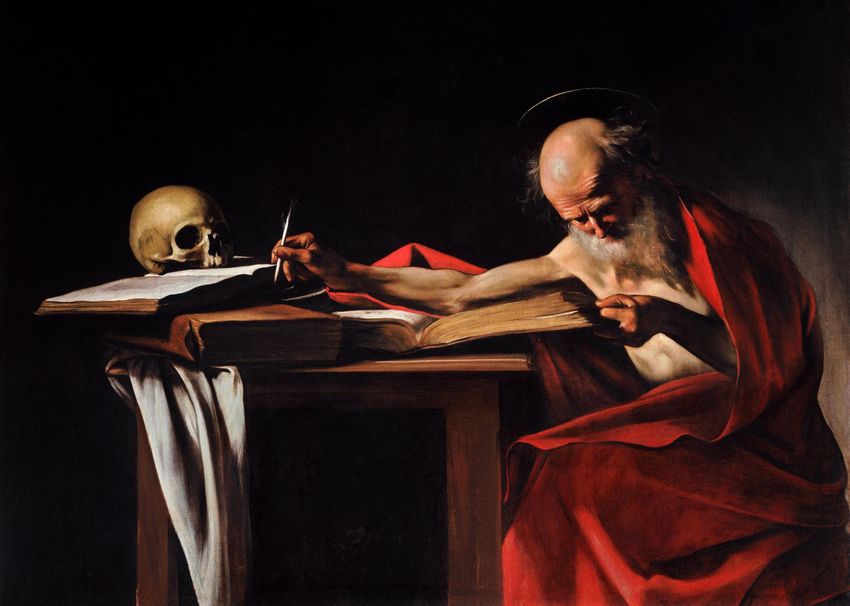
https://commons.wikimedia.org/wiki/File:Saint_Jerome_Writing-Caravaggio_(1605-6).jpg
CRICOS
CRICOS Provider Code: 00098G
Acknowledgement of Country
We acknowledge the Bedegal people who are the traditional custodians of the lands on which UNSW
Kensington campus is located.
ARTS5503 Term 1, 2021 published at 08-02-2021 // © University of New South Wales, 2021
13
Powered by TCPDF (www.tcpdf.org)You can also read


