BANKIER PRIMARY School Handbook 2021-2022 - Falkirk Council
←
→
Page content transcription
If your browser does not render page correctly, please read the page content below

Bankier Primary School Handbook 2021-22

    BANKIER PRIMARY
            1

            2
                 BANKIER PRIMARY -
                REACH FOR THE STARS

      School Handbook

         2021-2022

                                      Communication Environment
                                           Silver Award

1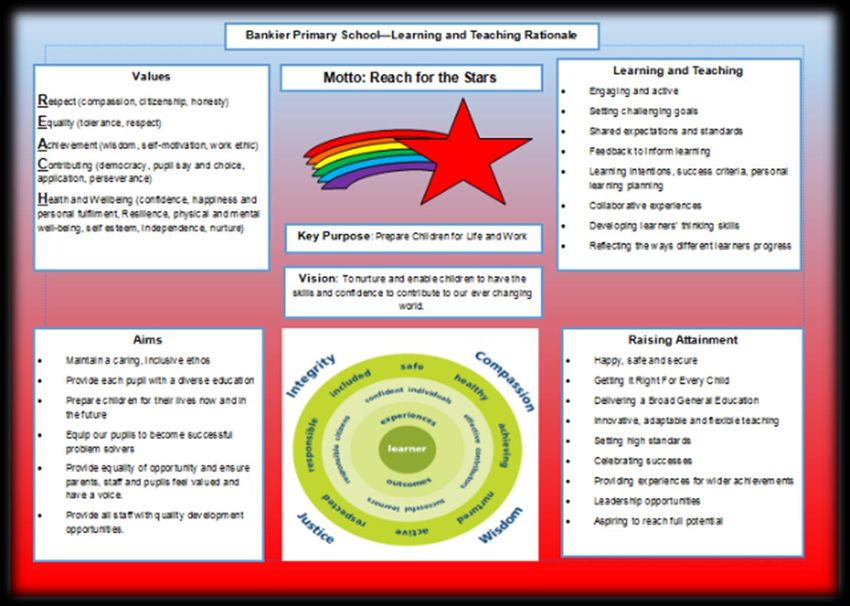
Bankier Primary School Handbook 2021-22

                                CONTENTS

INTRODUCTION

CONTACT DETAILS

SCHOOL ETHOS

PARENTS AS PARTNERS
  • learning at home
  • home / school partnership
  • parental representation
  • parental involvement

CURRICULUM

ASSESSMENT AND REPORTING

TRANSITIONS

SUPPORT FOR PUPILS IN SCHOOL & BEYOND

SCHOOL IMPROVEMENT

SCHOOL POLICIES AND PRACTICAL INFORMATION

CHOOSING A SCHOOL – PERFORMANCE DATA

APPENDICES

2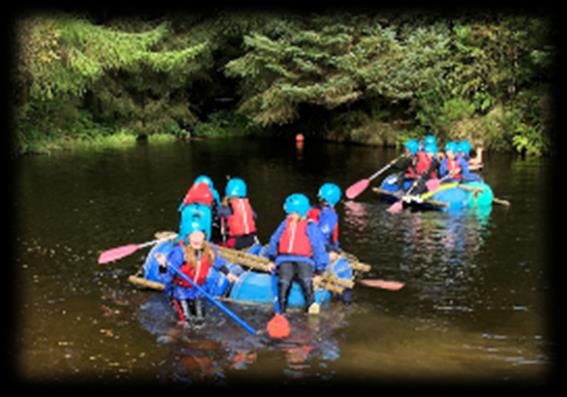
A Foreword from the Director of Children’s Services
                                     Session 2021-22

  This handbook contains a range of information about your child’s school which will be
of interest to you and your child. It offers an insight into the life and ethos of the school
and also offers advice and assistance which you may find helpful in supporting and
getting involved in your child’s education.

Falkirk Council is keen to work with parents, not only to allow you a greater opportunity
to contribute to your child’s education, but also to encourage you to play a greater role
in the life of the school as a whole. We offer a number of opportunities when you will be
able to make your voice heard in relation to your own child’s education, your local
school, and Children’s Services as a whole.

Throughout each school year there will be opportunities for you to discuss your child’s
progress with his/her teacher. There will also be Council-wide events for parents
organised by Children’s Services. These events are spread across the school year and
each focuses on a particular theme. The events are open to all parents and they are
also attended, wherever possible, by the Education Portfolio Holder as well as
members of the Service’s Management Team. Each session offers parents an
opportunity to ask questions about aspects of their child’s education. Dates for these
events will be issued by your child’s school and we hope you will be able to come along
and hear about, and contribute to, our plans for Education in Falkirk.

We are pleased to introduce this handbook for session 2021/22 and trust it will provide
you with all the relevant information you may need concerning your child’s school. If
you have any queries regarding the contents of the handbook please contact the Head
Teacher of your child’s school in the first instance who will be happy to offer any
clarification required.

Robert Naylor
Directors of Children’s Services
Falkirk Council

DISCLAIMER
The information in this school handbook is considered to be correct at the time of
publication (December 2020), however, it is possible, particularly as the result of the
COVID19 pandemic, that there may be some changes/inaccuracy by the start of the
school term in August 2021.

Footnote: If you want a printed copy of this handbook, please ask the school.

It may be possible to offer some assistance in helping to translate all or part of this
handbook to parents whose first language is not English. Enquiries should be directed
in to the Communications Officer for Children’s Services (tel: 01324 506600).

3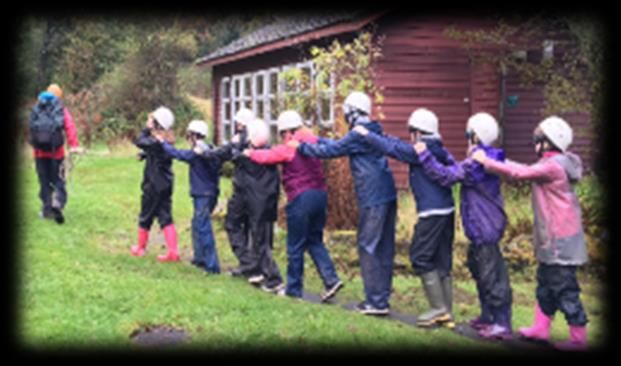
Bankier Primary School Handbook 2021-22

Dear Parent / Carer,

The staff, pupils and parents of Bankier Primary School would like
to extend a very warm welcome to all new pupils, parents and
carers.

Bankier Primary School has served the villages of Banknock,
Longcroft, Coney Park and Haggs since 1964. Whilst education
continues to undergo many changes in order to prepare children
for the demands of a rapidly changing world, the motto at Bankier
remains- Reach for the Stars!

Our handbook provides an overview of our ethos, values and vision
and gives our most recent performance information relating to
literacy, numeracy and health and wellbeing.
From our ELCC to P7, staff seek to work in partnership with parents.
Only by home and school working together can we ensure the best
possible progress for each boy and girl. I hope this brochure will
provide a helpful introduction to Bankier Primary School, to our
vision, aims, curriculum and organisation. If you would like any
further information please contact the school and we will be
delighted to help.

I look forward to a cooperative and productive partnership with all
pupils, staff and parents.

Yours faithfully,

Sarah Ritchie                  Sonia Brown
Headteacher            Chair of Bankier Helping Hands

4
Bankier Primary School Handbook 2021-22

Meet the Staff

 Mrs Sarah           Mrs Fraser,         Mrs Pam            Mrs Laura         Mr Derek            Mrs Curle,
 Ritchie,            Acting Depute       Webster,           Brown, Senior     Stringer, Janitor   Clerical Assistant
 Headteacher         Head Teacher        Principal          Early Years
                                         Teacher            Officer

 Mrs Louise          Mrs Caroline        Mrs Lizzie         Mrs Karen         Mrs Lynn            Mrs Grace
 Noble, Early        Doctor, Early       Milligan, Early    Burke, Early      Przybylinski,       Wright, Early
 Years Officer       Years Officer       Years Officer      Years Officer     Early Years         Years Officer
                                                                              Officer

 Mr Scott Hendry,    Mrs Amanda          Miss Scobbie,      Mrs Aimee         Mrs Naomi Kee,      Ms Roisin
 Early Years         Livingstone,        Early Years        Thomson,          Primary 2           Callaghan,
 Assistant           Early Years         Assistant          Primary 3         Teacher             Primary 5
                     Assistant                              Teacher                               Teacher

 Mrs Fiona           Ms Vicki France,    Mrs Johnson,       Mrs Carol         Mrs Victoria        Vacancy-
 Taylor, Primary 3   Primary 4           Early Years        Lerpiniere,       Paddon, Primary     Additional
                     Teacher             Officer            Primary 6         7 Teacher           Support Needs
                                                            Teacher                               Teacher

 Ms Hendry           Mrs Eleanor Kirk,   Mrs Lynn           Mrs Alison        Mrs Vladi Evans,    Mrs Sharon Kyle,
 Primary 1           Support for         O’Brien, Support   Gibson, Support   Support for         Support for
 Teacher             Learning            for Learning       for Learning      Learning            Learning
                     Assistant           Assistant          Assistant         Assistant           Assistant

5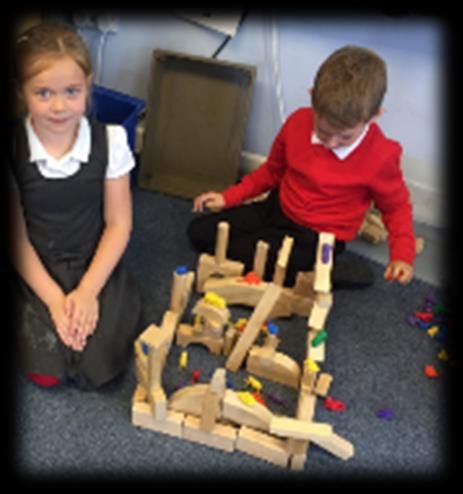
Bankier Primary School Handbook 2021-22

Contact details – Communication – Accessing Information

The school is non-denominational.
School Address:          Bankier Road
                         Banknock
                         Bonnybridge
                         Stirlingshire
                         FK4 1TF
School Tel No:           01324 840206
Nursery Tel No:          01324 849971
Kitchen Tel No:          01324 840230
Community Wing Tel No: 01324 841419
School e-mail address:   bankierprimaryschool@falkirk.gov.uk
Stages of School:        Nursery
                         Primary 1 to Primary 7
School Roll:             198
Nursery Roll:            48 full day

Registration and enrolment
The date for registration of new school entrants is advertised in all local nurseries, the
local press and on the council’s website www.falkirk.gov.uk. Pupils should be
registered in only one school for their catchment area. Parents will be provided with
information about the school, when they register their child.

Pupils who are baptised Roman Catholic are automatically entitled to enrol at the
denominational catchment school. All other pupils must make a placing request to
attend a denominational school.

Parents who want to send their child to a school other than the catchment school must
make a placing request. Please refer to section four of this handbook for more
information on placing requests.

Parents of pupils who have moved into the catchment area or, who wish their child to
transfer to the school, should contact the school office for information.

Attendance and absence
It is the responsibility of parents of a child of school age to make sure that their child is
educated. Most do this by sending their child to school regularly. Attendance is
recorded twice a day, morning and afternoon.

Absence from school is recorded as ‘authorised’ i.e. it has been approved by the
education authority, or as ‘unauthorised’ i.e. the absence remaining unexplained by the
parent.
Please let the school know by letter, email to the school’s generic address or phone if
your child is likely to be absent. If there is no explanation from a child’s parents / carers,
the absence will be regarded as unauthorised.

Please make every effort to avoid family holidays during term time as this disrupts your
child’s education and reduces learning time. In certain extreme situations, the head
teacher can approve absence from school for a family holiday for example, in traumatic
domestic circumstances where the holiday would improve the cohesion and wellbeing
of the family. Please discuss your plans with the head teacher before the holiday. If the
head teacher does not give permission before the holiday, it will be recorded as

6
Bankier Primary School Handbook 2021-22

unauthorised absence. The head teacher may also exercise discretion when a parent
can prove that work commitments make a family holiday impossible during school
holiday times. Normally, your employer will need to provide evidence of your work
commitments. Absence approved by the head teacher on this basis is regarded as
authorised absence.

Parents from minority ethnic and/or religious communities may request that their
children be permitted to be absent from school to celebrate recognised religious and/or
cultural events. Absence approved by the head teacher on this basis is regarded as
authorised absence. Extended leave can also be granted on request for families
returning to their country of origin for cultural or care reasons.

A supportive approach is taken to unexplained absence. However the education
authority has legal powers to write to, interview or prosecute parents, or refer pupils to
the Reporter to the Children’s Panel.

Communication with Home
From time to time you will receive important and routine communications from the
school via variety of methods (email, group call, social media etc.). Parents are also
encouraged to check their child’s schoolbag for these communications. Enquiries of
any kind should be addressed to the Head Teacher in the first instance.

English as an Additional Language
As part of the Additional Needs Service, the Council provides a support service for
children who have English as an additional language. The service visits schools to
work with those bilingual pupils who require assistance in developing English language
skills.

Compliments, Enquiries and Complaints Procedure
Falkirk Council Children’s Services would like you to be completely satisfied with your
child's education. We encourage feedback on our services from parents, pupils and
members of the public. We are interested in feedback of all kinds, whether it be
compliments, enquiries or complaints.

Sometimes, parents/carers may feel that the services provided are not what they
wished for and they may wish to complain. As a Council of the Future, we are
encouraged to view complaints positively. If you have a complaint about the service
provided by the school, please let us know as this enables us to resolve any issues you
or your child are experiencing and helps us to make any improvements to service
delivery.

How do I complain?
Complaints can be made to schools in writing, by email, on the telephone, in person or
by using the Falkirk Council online complaints form on the website.

Who do I complain to?
All complaints are logged confidentially on our Customer First online complaints
handling system. They will be monitored exclusively by each school and Children’s
Services staff at Sealock House to ensure any response is within the timescales. This
system will enable us to learn from complaints to prevent similar issues arising in
future. We will deal with your complaint confidentially and as quickly as possible. If we
have made a mistake we will apologise and try to put things right.

7
Bankier Primary School Handbook 2021-22

How long will it take until I get a reply?
Our aim is to respond within 5 working days to front line complaints, (Stage 1) although
issues can sometimes be complex and the school may need time to investigate them.

What happens next?
If your complaint has not been satisfactorily resolved by the school, it may be eligible
for consideration at the second, investigation stage by Children’s Services
headquarters at Sealock House. Complaints will not be considered by Children’s
Services unless they have been first reported to the school – unless there are
exceptional circumstances. Our aim is to respond to second stage complaints within 20
working days.

Who else can help?
If you remain dissatisfied after the second, investigation stage, you can raise the matter
with the Scottish Public Services Ombudsman
https://www.spso.org.uk/complain/form/start/

You should also be aware that you have the right to raise concerns with your local
Councillor, MSP or MP.

What else do I need to know?
Please note that schools can only respond to complaints about a service that they or
Falkirk Council provides or a service we have contracted from a third party.
The Council’s complaints handling procedure sets a time limit for making a complaint of
six months from when the customer first knew of the problem
You can find out more about the Council’s Complaint Procedure from the Falkirk
Council website - http://www.falkirk.gov.uk/contact-us/complaints/

Transferring Educational Data About Pupils
The Scottish Government and its partners collect and use information about pupils in
schools (e.g. the number and characteristics of pupils, their attendance, absence and
exclusions, their attainment and their destination when leaving school) to help to
improve education across Scotland.

Information on how this data is used and what the Scottish Government and its
partners do to protect the information supplied to them can be found via the link below:
https://www2.gov.scot/Topics/Statistics/ScotXed/PrivacyInformation

For more information on why we transfer educational data to the Scottish Government
and third parties, please see the Primary page on the Falkirk Council website :
www.falkirk.gov.uk/privacy

Concerns
If you have any concerns about the ScotXed data collections you can email the Head of
Schools Analysis, Mick Wilson, at mick.wilson@scotland.gsi.gov.uk or write to
Education Analytical Services, Area 2D, Victoria Quay, Leith, EH6 6QQ.

8
Bankier Primary School Handbook 2021-22

 FALKIRK COUNCIL: CHILDREN’S SERVICES

                      Agreed Term Dates for Session 2021-2022

                                                                                 Days
               School Year                             Term Dates            Staff Pupils

Autumn Term Begins (Staff Only - Dev Day)     Monday 16 August 2021
                   (Staff Only - Dev Day)     Tuesday 17 August 2021
Autumn Term Begins (Pupils)                   Wednesday 18 August 2021
Autumn Term Ends                              Friday 8 October 2021            39       37

Winter Term Begins (Staff Only - Dev Day)     Monday 18 October 2021
Winter Term Begins (Pupils)                   Tuesday 19 October 2021
Winter Term Ends                              Tuesday 21 December 2021         48       47

Spring Term Begins                            Wednesday 5 January 2022
Spring Term Ends                              Friday 1 April 2022              59       58

Summer Term Begins                            Tuesday 19 April 2022
Summer Term Ends                              Friday 24 June 2022              49       48

                                                                              195      190

Term Time Public Holidays                   Staff Development Days

Monday 13 September 2021                    Monday 16 August 2021
Friday 11 February 2022                     Tuesday 17 August 2021
Monday 14 February 2022                     Monday 18 October 2021
Monday 02 May 2022                          Tuesday 15 February 2022
                                            Thursday 05 May 2022

 9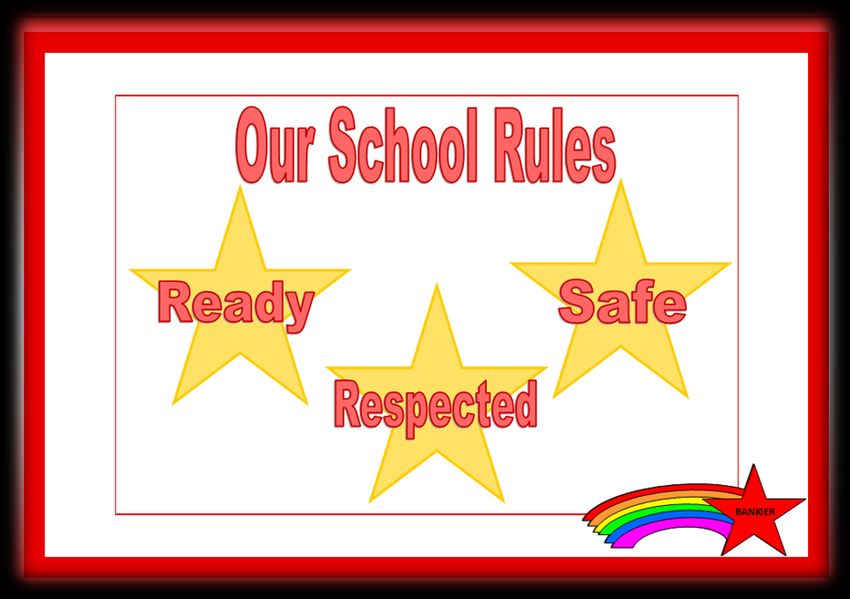
Bankier Primary School Handbook 2021-22

School Ethos

The ethos of our school is encapsulated in our key purpose, vision, values, motto and
aims. This also underpins the rationale for our curriculum.

Our high aspirations for our pupils permeates our curriculum and policies. Bankier is a
very effective learning community where staff and pupils engage in lifelong learning.
We operate in a culture of continuous improvement. We are committed to restorative
approaches and are solution focused in managing behaviour. Adults in the school work
in partnership to develop resilience and pupils are taught peer mediation and conflict
resolution strategies. Pupils, parents and staff have a strong voice in the school. We
have a Rights Respecting Schools committee made up of representatives from every
class chosen by their peers. These pupils consult their peers regularly and represent
their views at committee meetings.

We celebrate wider pupil achievements at assemblies. Pupils receive certificates for
any achievements out of school. We also give out Brilliant Bairn Certificates to children
who demonstrate hard work and a positive attitude to learning and praise post cards
when children have done something well.
The school has a House System and pupils regularly earn points for good behaviour
and good work.
The school is building attainment and wider achievement. This is largely due to the
provision of high quality learning and teaching experiences and a strong work ethic.
There is also a great emphasis on learning through play.

10
Bankier Primary School Handbook 2021-22

School Rules

Everything that we do at Bankier Primary School is underpinned by our motto, Reach
for the Stars and our values,

     •   Fairness
     •   Justice
     •   Equality
     •   Rights
     •   Diversity
     •   Individuality

Article 28 of the UNCRC states that children have the right to an education.
The overall aim of this policy is to create a culture of positive learning and behaviour in
which incidents are reduced through the use of an agreed framework for action.

Bankier Primary School is committed to creating an environment where exemplary
behaviour is at the heart of productive learning. Our Positive Relationships Policy
details expectations on maintaining the highest standards of personal conduct. We also
recognise that behaviour is a form of communication for children and so our policy
guides staff to build relationships with pupils. Learners are taught to how to make good
choices and supported by staff in doing so.

High quality behaviour for learning is underpinned by relationships, lesson planning and
positive recognition.
Our rules- Ready, Respectful, Safe are displayed in each learning space and referred
to in conversations around conduct.

11
Bankier Primary School Handbook 2021-22
Rights Respecting Schools
Rights Respecting Schools
Committee
The Rights Respecting School Committee is made up of representatives from each
class. The pupils vote for their representatives. Class representatives take information
to and from the meetings and make decisions after consulting their class mates.
Partnership Working
Bankier is well regarded in the local and wider community. There are good
relationships between the school, parents / carers, a wide variety of community groups
and local businesses. We pride ourselves on the quality of the relationships within the
school and wider community. We have had a long established link with Haggs Parish
Church which is Church of Scotland although Bankier PS is non-denominational. We
also invite Father Hendry of St Luke’s to any appropriate school events.
We have very close links with Cloybank Estate, Bankview Nursing Home and we work
well with the Community Learning and Development Team. We have links with
Stenhousemuir Football Club and our Active Schools Team who offer after school
clubs. Our links with local people, often former pupils or
parents have helped us to deliver a very successful range
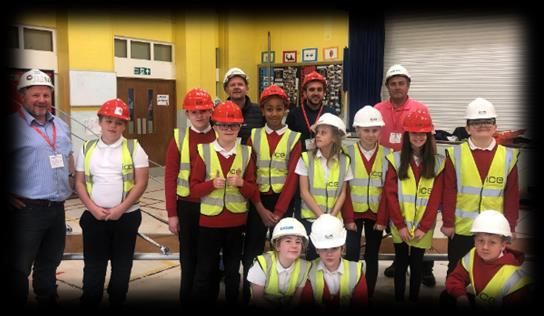
of events in the school. Local businesses and industry
partners help us
facilitate the
development of the
young workforce.
Robot Workshop- MYOW Forth Bridge Building with Balfour
Valley Beattie
12Bankier Primary School Handbook 2021-22
Parents as partners
Parents Welcome
All Falkirk Council schools welcome and encourage parental involvement and
engagement. Research has shown that when parents are involved children do better in
school.
Falkirk Council Children’s Services and all of our schools work and collaborative with
parents in the spirit of the recently published national action plan - “Learning
together”: Scotland’s national action plan on parental involvement, parental
engagement, family learning and learning at home 2018 – 2021’. The plan can be
accessed here: https://www.gov.scot/publications/learning-together-scotlands-national-
action-plan-parental-involvement-parental-engagement/. In light of this new plan,
Falkirk Council Children’s Services are currently updating our Parental Involvement and
Engagement Strategy in consultation with parents. This will detail a series of actions
which we plan to take over a three year period to improve parental engagement with
schools and the service and help to break down barriers which many parents
experiencing when trying to become involved in the life and work of the school.
At Bankier Primary School we proactively encourage parental involvement across the
life of the school. At the start of the academic year we welcome parents with a Meet the
Teacher session. Every class hosts an assembly and welcomes parents to join them
for lunch in the school dinner hall. We have a range of social events- reading lunches,
Burns’ Supper, coffee mornings and sporting events where parents are invited into the
school.
The school keeps in touch with a monthly newsletter, Twitter, E-journals, through the
School App and the School Website. The school welcomes telephone calls and e-mails
from parents. Parental feedback is gathered regularly to inform school improvement
and development.
Here’s what some of our parents had to say…..
My child is happy at school and Generally really pleased with
enjoys his class. His teacher the school and my child’s
has identified an issues with his learning. Any concerns have
work and has been consulting been addressed with care.
us on steps to take to help
support him.
13Bankier Primary School Handbook 2021-22
Attainment Summary
In Primary 1, Primary 4 and Primary 7 all our pupils are performing at or above the
authority averages in Reading, Writing and Numeracy. Data from 2019-20 was not
gathered due to the outbreak of Covid-19.
Primary 1 Attainment 18-19
Numeracy
Writing
Reading
74% 76% 78% 80% 82% 84% 86%
Falkirk Council Bankier Primary School
Primary 4 Attainment 18-19
Numeracy
Writing
Reading
68% 70% 72% 74% 76% 78% 80% 82% 84% 86%
Falkirk Council Bankier Primary School
14Bankier Primary School Handbook 2021-22
Primary 7 Attainment 18-19
Numeracy
Writing
Reading
0% 10% 20% 30% 40% 50% 60% 70% 80% 90% 100%
Falkirk Council Bankier Primary School
Below you will find details of attainment specific to Bankier Primary School
Further details of national attainment can be found on the Parent Zone Website.
https://education.gov.scot/parentzone
Primary 1 Writing Primary 1 Reading Primary 1
Attainment Attainment Numeracy
Attainment
18-19 85% 18-19 85%
18-19 85%
17-18 97% 17-18 100%
17-18 97%
16-17 91% 16-17 94% 16-17 94%
15-16 75% 15-16 68% 15-16 89%
Primary 4 Writing Primary 4 Reading
Attainment Attainment
18-19 78% 18-19 85%
17-18 75% 17-18 86%
16-17 68%
16-17 45%
15-16 57%
15-16 32%
15Bankier Primary School Handbook 2021-22
Primary 4 Numeracy Primary 7 Writing
Attainment Attainment
18-19 85%
18-19 87%
17-18 86% 17-18 65%
16-17 82% 16-17 13%
15-16 75% 15-16 23%
Primary 7 Reading Primary 7 Numeracy
Attainment Attainment
Primary 7 Numeracy Attainment
18-19 90%
18-19 93%
17-18 71%
17-18 85%
16-17 57% 16-17 33%
15-16 45% 15-16 5%
Raising Attainment
Monitoring performance and using the resulting information to secure improvement is
an important part of the work of head teachers, school staff and officers within
Children’s Services. Head Teachers regularly track pupils’ progress at meetings with
each teacher to ensure that progress is maintained and to identify effective strategies
progress when necessary.
16Bankier Primary School Handbook 2021-22 Learning at Home The school’s homework policy can be found here bankierps.schoolwebsite.scot Practitioners provide home learning activities to support reinforcement of learning or to encourage pupils to apply learning in different ways, often in real life situations. Parents are encouraged to get involved in home learning tasks. This helps parents keep up-to- date about learning in class and promote positive learning partnerships. The school encourages parents to sign each homework task. Home / School Partnership Partnership with parents is crucial to provide the best possible learning for pupils. Parents are the primary educators of their children and they entrust teachers to utilise their knowledge and skills to facilitate optimum learning. Best practice builds on the learning children already have on entering school. Partnership with parents includes cooperation in all aspects of learning and particularly in disciplinary matters. Partnership can take many forms and includes parent helpers coming into school, membership of organisations such as Bankier Helping Hands (see below), attendance at parents’ evenings, open days, workshops and other events. Parent Councils Parents are welcomed to be: • involved with their child’s education and learning; • be active participants in the life of the school • express their views on school education generally and work with the school. All parents / carers are automatically members of the Parent Forum at this school. As a member of the Parent Forum all parents should – • receive information about the school and its activities; • hear about what partnership with parents means in our school; • be invited to be involved in ways and times that suit you; • identify issues you want the Parent Council to work on with the school; • be asked your opinion by the Parent Council on issues relating to the school and 17
Bankier Primary School Handbook 2021-22

     the education it provides;
•    work collaboratively with the school; and
•    enjoy taking part in the life of the school in whatever way possible.

Parent Councils are the formal representative body for parents / carers with children
attending school. Parent Councils are different in each school to enable them to meet
the needs of parents / carers locally.

The Parent Forum decides how their representatives on the Parent Council are chosen
and how the Parent Council operates. Parents / carers are encouraged to volunteer or
put themselves forward to be chosen as representatives of the Parent Council if they
wish.

The main aims of the Parent Council are:
   • To support and work collaboratively with the school in its work with pupils
   • To seek and represent the views of parents
   • To promote contact between the school, parents, pupils, providers of nursery
     education and the community
   • To report to the Parent Forum
   • To be involved in the appointment of senior promoted staff in the school.
   • To raise funds for the school for the benefit of pupils- This is done through the
     Bankier Helping Hands (BHH), a fundraising group which runs alongside the
     parent council.
   • To be included in School Improvement Planning

For more information on parental involvement and engagement or to find out about
parents as partners in their children’s learning, please contact the school or visit the
Parentzone website at https://www.education.gov.scot/parentzone/

Please contact the Headteacher or Chair of BHH, Mrs Sonia Brown, via the school for
details on how you can get involved.

In consideration of barriers such as child care and busy working lives, Parent Council
and BHH meetings take place in the evenings.

     The Fundraisers group is mainly responsible for arranging events for pupils and
     parents and raising funds for the school. Volunteers are welcome - please contact
     BHH if you want to join in. The Chairperson of the Fundraisers group is Sonia
     Brown. BHH may be contacted via the School or by email:
     bankierprimarypta@gmail.com

You can find more information about the Parental Involvement Strategy on the Falkirk
Council Website: http://www.falkirk.gov.uk/services/schools-education/school-life/
The PTA or PA is mainly responsible for arranging events for parents and raising funds
for the school. Volunteers are welcome - please contact the PTA/PA if you want to join
in.

Connect (formerly the SPTC) the national organisation for PTAs and PAs in Scotland,
Parent Councils are members too, and it runs an independent helpline service for all

18
Bankier Primary School Handbook 2021-22 parents. They can be contacted by phone on 0131 474 6199, via website https://connect.scot, email on info@connect.scot or write to Connect, Mansfield Traquair Centre, 15 Mansfield Place, Edinburgh, EH3 6BB. Parental Involvement We are keen to involve parents in genuine partnership wherever possible. Parents can get further involved in school life by helping to run extracurricular activities. Parents often help us escort pupils to church services at the end of term, on ‘The Big Fit Walk’ at community events such as the litter picks and on school excursions. Parents have also helped us by going on residential excursions. We try to involve parents by sending hyperlinks to the school website and app and other important networks. GLOW, Scotland’s unique, world leading, online network supports learners and teachers. Plans are already in place for parents across the country to have access to GLOW. In the meantime, all our pupils have access to GLOW. Details of this are sent home to parents who can access GLOW though their children’s logins and passwords. We are encouraging pupils, staff and parents to make far greater use of GLOW. The school also communicates through Twitter. If you log on and follow us you will receive regular updates. Please note that it is never appropriate to raise issues on social media. We’ll consult with parents and carers at regular intervals across the session so that we can gather your views and opinions and act on them. This helps us to evaluate our performance and gives parents a voice in the school. We make every effort to be an open school and try to offer direct and easy access, responding to you within 24 hours if at all possible. We want to encourage continuous engagement with parents through homework diaries, learning journals, open days and other events. There are website addresses with many useful contacts at the end of this handbook. (Appendix 1) Curriculum for Excellence Curriculum For Excellence – Learning to Achieve • Learning to Achieve - Our core educational policy. This describes in detail how Curriculum for Excellence will be delivered in our educational establishments. We use Learning to Achieve along with the national guidance to monitor, develop and improve outcomes for children and young people. • Curriculum for Excellence – Bringing learning to life and life to learning. Curriculum for Excellence is the vehicle by which we deliver a Quality Education across the 4 Contexts of Learning. It aims to raise standards, prepare our children for a future they do not yet know and equip them for jobs of tomorrow in a fast changing world. Curriculum for Excellence balances the importance of knowledge and skills. Every child is entitled to a broad and deep general education, whatever their level and ability. It develops skills for learning, life and work, bringing real life into the classroom, making learning relevant and helping young people apply lessons to their life beyond the classroom. It links knowledge in one subject area to another helping make 19
Bankier Primary School Handbook 2021-22

connections in their learning. It develops skills which can enable children to think for
themselves, make sound judgements, challenge, enquire and find solutions.
• Responsibility of all
Every single teacher and practitioner will be responsible for the development of literacy
and numeracy and health & well-being from Early Level through to Senior Phase.
Teachers and practitioners will share information to plan a child’s learning journey from
3-18, helping their progression from nursery to primary, primary to secondary and
beyond, ensuring each transition is smooth. They’ll ensure children continue to work at
a pace they can cope with and with challenge they can thrive on.
There is an entitlement to personal support to help young people fulfil their potential
and make the most of their opportunities with additional support wherever that’s
needed. There is an emphasis by all staff on looking after our children’s health and
well-being; to ensure that the school is a place where children feel safe and secure.
Pupils from Primary 1 to Primary 7 participate in the Bankier Skills Academy on a
weekly basis. The Bankier Skills Academy promotes skills for learning life and work.
Children are arranged in vertical groups across each stage and lessons are delivered
on social enterprise, thinking skills, leadership, employability and soft skills.
     •   Developing the Young Workforce
Developing the Young Workforce (DYW) is a seven-year programme that aims to better
prepare children and young people from 3–18 for the world of work. This programme
builds on the foundations already in place as part of Curriculum for Excellence.
Collaborative working between primary and secondary alongside partnership
working builds on your child’s experiences in primary school through secondary
school. Curriculum planning and structures in schools have continued to evolve
progressively as new qualifications have been introduced alongside traditional subjects.
There is now on offer a wide range of opportunities for young people to develop their
employability skills, gain experiences of the world of work and incorporate work-based
learning elements together with employers to explore direct pathways into
employment.
Please contact the headteacher if you would like any further information about the
curriculum within our school.
For further information on Learning in Scotland please access the following link:
https://education.gov.scot/parentzone/learning-in-scotland

In Bankier Literacy, Maths and Numeracy and Health and Wellbeing are the top priority.
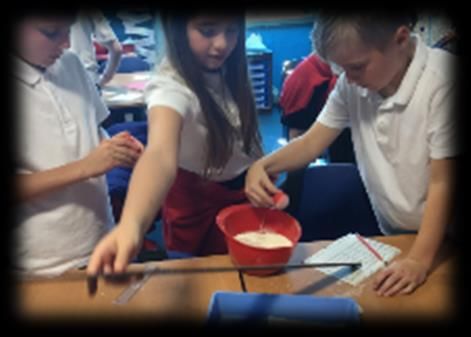
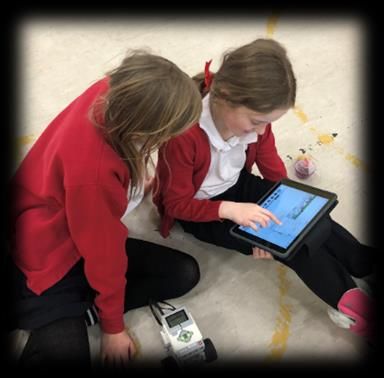
However, we have a special emphasis on science and ICT – particularly to teach
internet safety. In addition, we have specialist teachers of PE and music. There are
opportunities for instrument tuition – double bass, violin, cello and piano. There is a
residential trip every 2 years for P6 and 7 pupils. Pupils learn in discrete areas or
through linked learning which we call interdisciplinary learning. Teachers plan learning
activities based on the Experiences and Outcomes of a Curriculum for Excellence.
Children are offered a flexible pathway through a rigorous framework of skills. These
skills are assessed and tracked throughout the school. The skills are in levels which
cover approximately 3 years each of schooling as follows.

20
Bankier Primary School Handbook 2021-22 Early – Nursery ante preschool, nursery preschool and P1 First P2, 3 and 4 Second P5, 6 and 7. Of course some children might exceed the expected level and be progressing to third level in P7 Alternatively, some children experience learning differences that may mean they are not able to achieve these expected levels. There are support measures for these children. Pupils keep their own record of their learning in learning journals and are encouraged to set their own targets. In addition there is a range of extracurricular activities for pupils. Pupils will be consulted on their learning and participate in planning learning with class teachers. The Authority provides support for pupils who need to develop English as an additional language. The Central Scotland Community Interpreting Group offers the services of training interpreters and translations for those parents who require it. French is taught to children in all stages. Spanish is taught at stages P5-P7. Social, Moral and Religious Education (RME) are inter-related and enable children to develop understanding of religion and to show responsible attitudes through care, respect and concern for others within our multi-cultural society. Assemblies are held most weeks. Religious observance is restricted to some of the weekly assemblies, visits from the minister and others. The RME programme itself does not incorporate religious observance. Parents who wish to exercise their right to withdraw their child from religious instruction and /or observance should contact the Headteacher, in writing, and alternative arrangements will be made for your child. Details of curricular policies and guidelines can be found on the school’s website at: bankierps.schoolwebsite.scot Learning to Achieve is our core educational policy. It describes in detail how Curriculum for Excellence will be delivered in our educational establishments. We use Learning to Achieve along with the national guidance to monitor, develop and improve outcomes for children and young people. In Bankier Primary, there are well established, innovative learning and teaching methods such as active literacy, cooperative learning, thinking hats, multiple intelligences, interdisciplinary learning, storyline and formative assessment. These are used in a balance with other more traditional methods such as rote learning. Please contact the headteacher if you would like any further information about the curriculum within our school. Active Learning Curriculum for Excellence emphasises the value of an active learning approach. In the early years, children will have a range of learning experiences that include planned and purposeful play and stimulating learning which engages and challenges children’s thinking using real life and imaginary situations. As children progress through school they continue to be involved in active learning experiences which give them ownership 21
Bankier Primary School Handbook 2021-22

of their own learning, encourage co-operative working and utilise skills required for
learning, life and work.

Facilities for Physical Education and Outdoor Activities
The gym hall has a variety of apparatus for physical education within the school. There
are two short football pitches across the sports field that combine to form one larger
football pitch. The pitch is suitable in all weather and is floodlit. There are many games
and activities painted on the ground and we have wall mounted basketball hoops for all
stages. We also have an adventure trail, cycle track, climbing wall and assault wall.
Many after school clubs are in place using the school for activities such as dance,
rugby, mini tennis, badminton, orienteering and cross-country. We also have access to
the Sports Centre adjacent to the school during school hours.

Active Schools
Active Schools within Falkirk Community Trust, aims to provide more and higher quality
opportunities to take part in sport and physical activity before, during lunchtime and
after school, to develop effective pathways between schools and sports clubs in the
local community.
Active School co-ordinators work with primary, secondary and additional support needs
schools to increase the number and diversity of children and young people participating
in Active Schools activities. In Falkirk there are 8 cluster schools that co-ordinators
work with to provide clubs, events and coach education training, For further information
please contact 01324 590952.
www.falkirkcommunitytrust.org/sport/active-schools
Follow us on @falkirksport

Planning Children’s and Young People’s Learning
Practitioners use a variety of approaches to ensure that pupils understand the purpose
of their learning and are clear about how to be successful. A variety of planning
approaches are used to ensure that experiences are progressive, skills – focused and
meet pupils’ learning needs. Often individualised targets help pupils to assess their own
learning.

22
Bankier Primary School Handbook 2021-22

Eco-school
It is a matter of great pride that ours is a Green Flag Eco-School. We have achieved 7 green
flag awards over the last 14 years. This means that we have achieved the highest level
awarded at all assessments. We take our Eco- School responsibilities very seriously. Our
Broad General Education (BGE) is based on the 17 global goals ensuring all pupils are fully
prepared to live in a sustainable, fair and just world.

We re-use and recycle a large range of materials. We encourage all our pupils and parents to
walk or cycle to school. We have greatly improved our school grounds and have worked to
improve biodiversity in our area. We try to conserve energy and reduce our energy
consumption. There is an array of 24 photovoltaic panels on the school roof which generate
electricity of a rate up to up to 4Kw hours.

23
Bankier Primary School Handbook 2021-22

Assessment and Reporting
There are a variety of ways to assess progress and ensure that children and young
people achieve their potential. Effective assessment practice within schools and
establishments include:
     •   Learner involvement in setting personal targets and next steps
     •   On-going self-evaluation by learners, staff and school leaders
     •   Identification of strengths and next steps
     •   A range of approaches to assessment
     •   A variety of evidence gathered informally on a day to day basis or formally at
         certain points throughout the year (not exclusively - Teachers’ professional
         judgement, Scottish National Standardised Assessments, National
         Qualifications)
     •   Moderation of standards using Education Scotland Benchmarks
     •   Consideration of data analysis and performance information

Achievement of a Level & Scottish National Standardised Assessments (SNSA):
Learner’s progress is defined within the following levels:

 Level                                        Stage
 Early                                        Pre-school and P1 however may be
                                              later for some
 First                                        To the end of P4 however may be
                                              earlier or later for some
 Second                                       To the end of P7 however may be
                                              earlier or later for some
 Third & Fourth                               S1 – S3 however this may be earlier for
                                              some
 Senior Phase                                 S4-S6 and college or other means of
                                              study

Achievement of a level means that the learner has achieved a breadth of learning
across the curriculum area and has met the appropriate benchmarks; that they have
responded consistently well to the level of challenge in their learning and can apply
what they have learned in new and unfamiliar situation.
From August 2017, National standardised assessments have been introduced to all
schools across Scotland in aspects of reading, writing and numeracy, for all learners in
P1, P4, P7 and S3.
These assessments sit alongside a wide range of other evidence including ongoing
classroom assessment of all aspects of literacy and numeracy. They cannot be used
alone to confirm judgements of achievement of a level.

24
Bankier Primary School Handbook 2021-22
• Within schools and establishments, finding out about your child’s progress
includes:
o Attending parents’ information evenings
o Discussing progress with teacher staff and school leaders by appointment
o Attend open evenings/afternoons including “meet the teacher” events
o Reading learning logs or diaries (which usually invite parents/carers to
comment)
o Summary Reports (sent home to parents/carers including an invite to
make comments)
o Social media updates from staff and/or the school
Further information about what data is collected about your child is given in section 5 of
this handbook.
25Bankier Primary School Handbook 2021-22 TRANSITIONS There are detailed transition arrangements in place for pupils transferring from our own and other nurseries to the school; from primary to our associated and other secondaries and for pupils moving to or from other primary schools. We transfer rich data in the Pupil Progress Record (PPR), Pupil Progress File (PPF) and other files or transfer forms. We liaise with partner agencies such as family support workers,Oxgang outreach, educational psychology, speech and language therapy among others to ensure important information is transferred. Secondary School At the end of P7 pupils normally transfer to: Denny High School Herbertshire Park Denny, FK6 6EE Tel No.: (01324) 827440 Primary to Secondary Transfer Children visit their secondary school in preparation for the move from Primary 7 to 1st Year. Each cluster of schools (i.e. the secondary school and its associated primary schools) makes its own transition arrangements. Generally, visits take place in the summer term, with a programme of activities for pupils in classroom relating to their secondary subjects. Sporting and social activities may also be planned. Pupils, therefore, become familiar with the new school, their new teachers and their new classmates. Clusters also arrange for secondary school subject teachers to visit Primary 7 classes from time to time, with the cluster agreeing each year which subject areas should be the focus for these. Secondary teachers of PE and Music regularly visit primary schools to support the teaching of these subjects. Most secondary schools also have an information evening for parents of Primary 7 children at which they can gain information about uniform, lunchtime arrangements, school clubs, etc. Placing Requests As a parent, you have the right to make a Placing Request for your child(ren) to be educated in a school other than the local school. Applications for Primary 1 and Secondary 1 Placing Requests to commence school in August will only be accepted following the publication of an advert in the local press inviting applications in early December. Every effort will be made to try to meet parental wishes, but you should note that it is not always possible to grant every Placing Request. You should also note that a successful Placing Request for one child does not guarantee a successful one for 26
Bankier Primary School Handbook 2021-22

another child. A parent could, therefore, end up with children attending different
schools.

Primary 1 children must also be enrolled at the catchment area school on the
appropriate Enrolment Form whilst awaiting the outcome of their Placing Request
Application. If the Placing Request is granted, the child’s enrolment at the catchment
school will automatically be withdrawn by Children’s Services.

Placing Requests can only be approved when there are sufficient places remaining in
the class after all catchment area children have enrolled and if staffing and
accommodation at the school are able to meet the numbers of Placing Requests at that
school. Children’s Services will also reserve places in a class for catchment pupils they
expect to move into the area during the school year.

If more Placing Requests are made for admission to a particular school than places
available, these Requests will be prioritised according to Falkirk Council’s Admissions
Policy and requests accepted and refused accordingly.

Online placing request applications can be made via the Council’s website
www.falkirk.gov.uk/placingrequests. Written application forms are available from all
schools and from Children’s Services. Written applications must be returned to the
Director of Children’s Services, Sealock House, 2 Inchyra Road, Grangemouth, FK3
9XB. Placing request for Primary 1 and Secondary 1, commencing in the next school
session, should be made by the 15th March each year. Reponses will be issued no
later than 30th April.

Your Placing Request will be considered against a set of criteria which is set out in the
Council’s priorities for admission.

Any Placing Requests received after the 15th March for Primary 1 and Secondary 1 will
not be considered in the first round of Placing Requests. Parents / Carers will be
notified of the outcome of their request within 8 weeks of receipt.

As soon as a decision has been made, you will be notified of the result. If your Placing
Request is successful, you will be asked to contact the school to establish
arrangements for enrolment.

Mid Session Transfers
You may make a Placing Request at any time during a school session. If your child is
experiencing problems at school, you are advised to discuss the matter with the Head
Teacher prior to making a Placing Request. Completing the Application Form does not
guarantee a place for your child at your chosen school. Your Placing Request will only
be granted if there are surplus places available at the school.

Transport for Placing Requests
If a Placing Request is successful, parents will be responsible for the safety and
transportation costs of their child to and from their chosen school.

27
Bankier Primary School Handbook 2021-22

Pupils with Additional Support Needs

Secondary school Pastoral and Support for Learning teachers make visits to the
Primary 7 class to get to know the children and their needs, including any Additional
Support for Learning needs. Visits by Support for Learning staff sometimes take place
as early as Primary 6 to help with additional arrangements for those children for whom
the move to secondary school may present particular challenges.

Moving to the denominational secondary school

Children who are baptized Catholic

With the exception of some pupils at St Patrick’s PS, pupils who are in Primary 7 in
denominational primary schools (Sacred Heart PS, St Andrew’s PS, St Mary’s PS, St
Francis Xavier’s PS and St Joseph’s PS) move to St Mungo’s HS.

Pupils in Primary 7 at St Patrick’s PS attend St Modan’s HS in Stirling.

Children who are non-Catholic

Parents of non-RC baptised pupils who were enrolled through a Placing Request at a
denominational primary school must submit a further Placing Request if they wish them
to transfer to St Mungo’s High School. These pupils are, otherwise, automatically
entitled to transfer to their catchment non-denomination secondary school.

Moving between denominational and non-denominational schools

Parents who intend to send their children to St Mungo’s HS from a non-denominational
primary school, or from a Catholic primary school to their catchment non-
denominational high school, should make known their intentions both to the primary
school and the secondary school as soon as possible. This enables the necessary
transfer arrangements to be made.

Religious Instruction and Observance

Religious Instruction
Schools have a statutory duty to provide Religious Instruction in the timetable. This
aims to promote a knowledge of the Christian and other faiths, and encourage children
and young people to develop enquiring minds through investigating spiritual, moral and
philosophical issues.

Religious Instruction may include visits to local places of worship, and/or visits from
representatives of places of worship. This helps children and young people to develop
knowledge and understanding of faiths, especially those with which they are less
familiar.

Ultimately, pupils in the upper secondary school can gain a qualification through the
study of Religious, Moral and Philosophical Studies at Higher and Advanced Higher

28
Bankier Primary School Handbook 2021-22

Levels. These courses further develop young people’s skills in logical thinking,
methodical enquiry and ways of expressing ideas effectively.

Religious Observance/Time for Reflection
Religious Observance, which may take the form of a Time for Reflection, is held across
the year, in addition to traditional celebrations central to the life of the school
community. Religious Observance will often (but not necessarily) take the form of an
assembly.

Withdrawal from Religious Instruction and Religious Observance/Time for
Reflection
Parents who wish to exercise their right to withdraw their child from religious
observance are encouraged to discuss their intention with the Headteacher in the first
instance to enable them to make a fully informed decision. Thereafter parents who wish
to proceed to withdraw their child(ren) should notify the Headteacher in writing. This is
so that alternative educational activities can be planned for their child(ren) during times
of Religious Instruction and/or Observance.

Support for pupils in school & beyond

Additional Support Needs

As with all local authority schools in Scotland, this school operates under the terms of
the Additional Support for Learning Act (2009) and its accompanying Code of Practice.
Further details of the policies and procedures can be found on the Falkirk Council
website: http://www.falkirk.gov.uk/services/schools-education/additional-support-needs/
These procedures have been strengthened through the Children and Young People Act
(2014).
Working with other agencies and professionals – for example, Social Work Services,
Educational Psychology Service, National Health Service and parents – decisions are
made jointly with parents, children and young people with regards to the best possible
education to meet the needs of the child within the resources available.

Support for Pupils
Pupils’ additional support needs will be identified and addressed through the Getting It
Right For Every Child processes. This involves close co-operation between the parent
or carer, the child and the staff in school – they are the core part of the Team Around
the Child. Others involved in your child’s education and well-being will also be part of
the Team, and will help to complete a rounded picture of assessment where
appropriate. The Team will also draw up and review plans to meet the needs identified.
Their activities are co-ordinated by the Named Person, who is responsible for ensuring
plans are implemented and has an overall picture of the pupil’s progress. You will be
told who the Named Person is for your child when they start school. If you believe your
child may have unrecognised additional support needs, your first point of contact
should be the child’s EYO class teacher or guidance teacher.
The school makes provision for pupils with additional support needs throughout their
education:
•     each teacher differentiates the Curriculum for Excellence within their class to
      provide educational targets and objectives suited to their age and stage of
      development

29
Bankier Primary School Handbook 2021-22
• the school has a Support for Learning Teacher to co-ordinate and organise
support for children
• the school can allocate s Support for Learning Assistant on a basis of need
exceptional cases
Disputes and Resolution in Additional Support Needs
Schools and Early Years facilities do their best to support pupils, and are responsive to
the needs of parents, carers and pupils. Nevertheless, problems may arise, and it is
important to deal with these as soon as possible.
In the first instant it is usually wise to contact the school or nursery directly, and if the
matter cannot be satisfactorily resolved, they may call on the services of some of
centrally-based staff – the Additional Support for Learning Adviser, the Educational
Psychologist or the school’s attached Team Manager. Children’s Services also
commission independent mediation through Children in Scotland. Their services, called
Resolve, may be arranged by the Additional Support for Learning Adviser, or accessed
directly by parents on 0131-222-2456.
Parents, carers and children with additional support needs can also seek independent
advice and support through:
• Enquire – the Scottish advice and information Service for additional support for
learning: www.enquire.org.uk, 0345 123 2303
• Scottish Independent Advocacy Alliance; www.siaa.org.uk, 0131-260-5380
• Take Note: National Advocacy Service for Additional Support Needs (Barnados in
association with the Scottish Child Law Centre) www.sclc.org.uk, 0131-667-6633.
• Let’s Talk ASN, c/o Govan Law Centre, letstalkasn@edlaw-org.uk, 0141-445-
1955.
Getting It Right For Every Child (GIRFEC)
Taking care of our children's well-being and making sure they are alright - even before
they are born - helps us ensure the most positive outcomes for them later in life. It
gives them the potential to grow up ready to succeed and play their part in society.
Getting it Right for Every Child (GIRFEC) is the Scottish Government’s approach to
improve children’s services. The wellbeing of all children and young people is at the
heart of GIRFEC. Services must work together with children, young people and their
families to provide quick and effective support when it is needed
Wellbeing
The Getting it Right approach looks at eight areas of 'well-being'. These are recognised
as areas in which children and young people need to progress in order to do well now
and in the future. They allow those responsible for the care and support of children -
30Bankier Primary School Handbook 2021-22
including members of their own families - to look at a situation in a structured way that
will help them identify any needs and concerns and plan with the child and family any
action they need to take. The eight well-being indicators are:
• Safe
• Healthy
• Achieving
• Nurtured
• Active
• Responsible
• Respected
• Included
The approach gives them a common language and a way to gather information about a
child's world, making sure the child is growing and developing, and has everything they
need from the people who look after them both at home and in the wider community. It
also encourages practitioners to think about who else might need to be involved (for
example a teacher might need to contact other professionals to make sure that an
education plan with the child and family is meeting all the child's needs).
Role of Named Person
All children and young people are entitled to access help or support from the Named
Person no matter where they live or how old they are (up to eighteen years). It ensures
they have the confidence to know that information, advice or support is there if and
when they need it. The Named Person is therefore the identified point of contact.
The role is generally carried out by a Health Visitor for pre-school children or a
promoted teacher for children and young people enrolled at school. It is an integral
part of existing roles and responsibilities, working within universal services.
The Named Person is also available to other practitioners who may have concerns
about the wellbeing of a child or young person which cannot be addressed within their
own services. Consent to share information, whether being shared with or by the
Named Person, will always be obtained and meaningful discussion will take place with
families to ensure the right support is offered. The exception to this would be if child
protection concern is identified and there is a risk to the child or young person.
When the Named Person is not available, another member of staff in school will be
able to help. During school holidays an officer from Children’s Services Headquarters
will provide the required advice and support.
Educational Psychology Service
Educational Psychologists work in collaboration with teachers, parents and other
professionals to support children and young people with their learning and general
development, and to make the most of their lives, particularly in educational settings.
Every school and pre-five establishment has a link Educational Psychologist who
provides consultation, assessment intervention, training and project work. We work
within the Staged Intervention Approach of Children’s Services
The school must obtain the agreement of parents and, where appropriate, the pupil
before involving the Educational Psychology Service. Further information is on the
website https://blogs.glowscotland.org.uk/fa/epservice
31You can also read


