BIPAR Update 30 April 2021
←
→
Page content transcription
If your browser does not render page correctly, please read the page content below

BIPAR Update
30 April 2021
                                                                     European Federation of Insurance Intermediaries

  INSIDE THIS ISSUE                     1. Commission considers giving UCITS fund
                                           providers 6 more months to prepare for
  1. Commission considers giving           switch to PRIIPs KID
     UCITS fund providers 6 more
     months to prepare for switch to    During a recent speech, Commissioner for Financial services, financial
     PRIIPs KID                         stability and Capital Markets Union, Mairead McGuinness addressed
                                        the ongoing PRIIPs review, and in particular the state of play of the
  2. Non-financial reporting –          new technical standards on the PRIIPs Key Information Document
     Commission's proposal for a new    (KID).
     Directive
                                        She recalled that today, a retail investor can receive two different
                                        types of retail investment information sheet, depending on whether
  3. Taxonomy – Commission              they are buying a fund product or another type of retail investment,
     published Delegated Act on         such as life insurance. She added that this “makes it harder for
     screening criteria                 investors to compare products, especially about risks or costs. Thanks
                                        to the new technical standards adopted by the European Supervisory
  4. EIOPA podcast on Covid-19,         Authorities in February, the Commission is planning to replace
                                        today’s UCITS KID and PRIIPs KID with one revised PRIIPs KID.”
     consumers and insurance
                                        She continued that: “We know that the adoption of the technical
  5. Swedish Covid Business             standards and the political scrutiny of these new rules by the
     Interruption ruling in favour of   European Parliament and the Council will take some time. This would
     insurer                            leave a short period of time for the implementation of these new
                                        rules (initially planned in January 2022) by product manufacturers
  6. EIOPA Cross-Border Cooperation     and advisers. That’s why we are considering the merits in in a short
                                        extension of the current temporary exemption for retail investment
     Platform: Statement from the
                                        funds from PRIIPs. We should propose to give providers of UCITS
     Slovakian national supervisory     funds six additional months (until July 2022) to prepare for the
     authority regarding its decision   switch to the PRIIPs KID. The broader review of the PRIIPs Regulation
     on investment infringement         will be included in our retail investment strategy.”
     against Novis Insurance

  7. Geneva Association's report on
     Public-Private Solutions to
     Pandemic Risk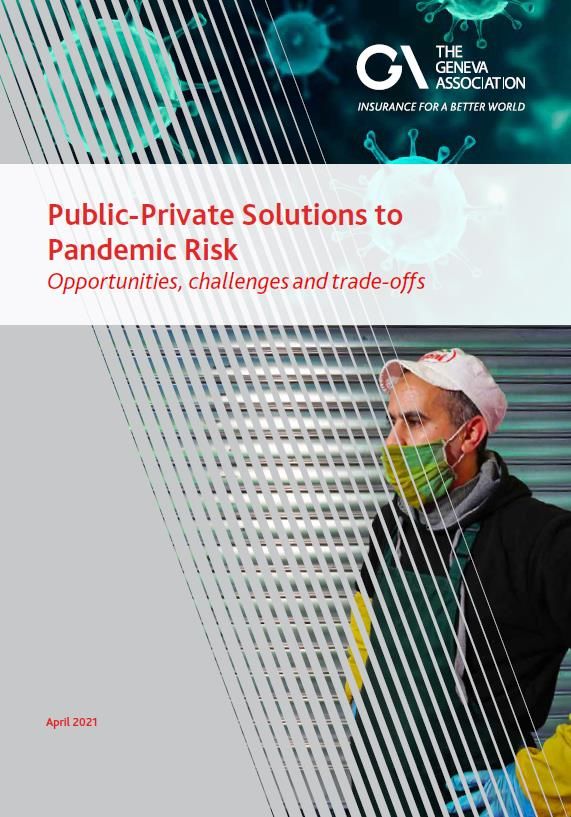
BIPAR Update
30 April 2021
Page 2
2. Non-financial reporting – Commission's proposal for a new Directive
On 21 April 2021, the Commission adopted a proposal for a Corporate Sustainability Reporting Directive
(CSRD). To promote the market for green investments, investors need to know about the sustainability impact
of the companies in which they invest. Sustainability information becomes more and more important
throughout the financial system.
This Directive aims to amend the existing reporting requirements of the Non-Financial Reporting Directive
(NFRD). Non-listed insurance and financial intermediaries are not covered by the scope of this proposal.
The proposal for a CSRD:
extends the scope to all large companies (non-listed) and all
companies listed on regulated markets (except listed micro-
enterprises).
extends the scope to credit institutions and insurance companies
that according to the NFRD/Accounting Directive are not limited
liability companies or are not deemed to have limited liability,
including cooperative banks and mutual and cooperative insurance
companies, provided they meet the relevant size criteria.
requires the audit (assurance) of reported sustainability information
to ensure that such information is accurate and reliable. For the time
being, it is a “limited” assurance requirement, as opposed to
“reasonable” assurance requirement based on standards. Member
States have the option to open up the market for sustainability
assurance services to so-called “independent assurance services
providers”.
introduces more detailed reporting requirements for companies to provide information about their
strategy, targets, the role of the board and management, the principal adverse impacts connected to
the company and its value chain, intangibles, and how they have identified the information they report.
A reference to gender in the description of the diversity policy applied in relation to the company’s
administrative, management and supervisory bodies becomes mandatory.
Introduces requirement to report within the management report and according to mandatory
EU sustainability reporting standards. The draft standards would be developed by the European
Financial Reporting Advisory Group – EFRAG (see also the BIPAR update of 9 April 2021).
requires companies to digitally ‘tag’ the reported sustainability information, so it is machine readable
and feeds into the European single access point envisaged in the capital markets union action plan.
The Commission will put forward a proposal for the EU single access point later this year.
SMEs with securities listed on regulated markets will be allowed to report according to standards that are
simpler than the standards that will apply for large companies. Non-listed SMEs could choose to use the
simple standards on a voluntary basis. The requirements for listed SMEs would apply only three years after
they apply to other companies (January 2026).
The reporting requirements of the CSRD proposal would not apply to SMEs with transferable securities listed
on SME growth markets or multilateral trading facilities (MTFs).
BIPAR Update                                                                                                Page 3
  30 April 2021

         Exemption
         All undertakings that are parent undertakings of large groups should prepare sustainability reporting at group
         level. The exemption regime for consolidated financial statements and consolidated management reports
         operates independently from the exemption regime for consolidated sustainability reporting. This means that
         a company can be exempted from consolidated financial reporting requirements, but not from consolidated
         sustainability reporting requirements. This is the case if the company’s ultimate parent company prepares
         consolidated financial statements and consolidated management reports in accordance with EU law, or
         equivalent requirements if it is a non-EU country but does not prepare consolidated sustainability reports in
         accordance with EU law, or equivalent requirements if it is a non-EU country.

       Background
                                              Interaction with SFDR and Taxonomy
The reporting rules introduced by the         The CSDR aims ultimately to ensure that companies report the
Non-Financial Reporting Directive             information that investors and other financial market participants
(NFRD) established principles for             subject to the SFDR need to comply with their disclosure requirements.
certain large companies to report             Specifically, that means that the reporting standards would include
sustainability information on an              indicators that correspond to the indicators contained in the SFDR.
annual basis. They introduced a
“double materiality principle”,               Article 8 of the Taxonomy Regulation requires companies falling within
meaning that companies have to                the scope of the existing NFRD – and the additional companies brought
report about 1) how sustainability            under the scope of the proposed CSRD, if approved by the co-legislators
issues affect their business and 2)           – to report on the extent to which their activities are taxonomy-aligned.
about their own impact on people and          The indicators for this will be specified in a separate Commission
the environment.                              Delegated Act on key performance indicators to be adopted by June 2021.
                                              Companies will have to report these indicators on taxonomy-aligned
The rules of the NFRD apply to so-            activities alongside other sustainability information mandated by the
called “public interest entities”,            proposed CSRD.
meaning listed companies, banks, and
insurance companies that are large
with more than 500 employees.

            The next step is for the European Parliament and the Member States in the Council of the EU to negotiate
            a final legislative text on the basis of the Commission's proposal. In parallel, EFRAG will start work on a
            first set of draft sustainability reporting standards which should be ready by October 2022. Sustainability
            reporting standards for SMEs should be ready by October 2023.

            Depending on the progress of the interinstitutional negotiations, companies would apply the standards for
            the first time to reports published in 2024, covering financial year 2023.
BIPAR Update                                                                                                  Page 4
30 April 2021

   3. Taxonomy – Commission published Delegated Act on screening criteria
   The Commission has published its first Delegated Act (level 2 text) to the Taxonomy Regulation which defines
   the technical screening criteria for economic activities that can make a substantial contribution to climate
   change mitigation and climate change adaptation. The Delegated Act is expected to be formally adopted by the
   Commission at the end of May. It will then be under scrutiny by the European Parliament and the Council of the
   EU (period of four months that can be extended by another two months). Once approved it will enter into force
   and it will apply from 1 January 2022.

   The EU Taxonomy aims to provide incentives to investors to finance transition projects and encourage companies
   to launch new projects, or upgrade existing ones, to meet these criteria. Financial market participants can, if
   they wish, use the EU Taxonomy as a guide to design green financial products and make investment decisions.
   Taxonomy does not prohibit investment in any activity. There is no obligation for companies to be Taxonomy-
   aligned and investors are free to choose what to invest in.

   According to the Commission press release, the Taxonomy Delegated Act would cover the economic activities of
   roughly 40% of listed companies, in sectors which are responsible for almost 80% of direct greenhouse gas emissions
   in Europe. It includes sectors such as energy, forestry, manufacturing, transport and buildings. Particularly, it
   covers, among others, the activities of bioenergy, hydropower, hydrogen, etc. The Taxonomy’s “do no significant
   harm criteria” excludes power generation where direct emissions exceed 270 grams of CO2 per kilowatt-hour.
   Solid fossil fuels are excluded.

   Mairead McGuinness, Commissioner responsible for financial services, financial stability and the Capital Markets
   Union, said: “Today's new rules are a game changer in finance. We are stepping up our sustainable finance
   ambition to help make Europe the first climate-neutral continent by 2050. Now is the time to put words into
   action and invest in a sustainable way.”

                                             Reactions from experts
                                             Following the publication of the Taxonomy Delegated Act, five NGOs -
                                             members of the Commission Platform on Sustainable Finance made an
                                             announcement with a request to open a negotiation with the
                                             Commission to establish rules of governance in the Platform. The
                                             announcement says “official talks are needed to make sure political
                                             and individual interests do not overrule the scientific integrity of the
                                             EU taxonomy criteria”.

            According to the Commission, the Taxonomy Delegated Act establishing criteria for climate change
            mitigation and climate change adaptation is a living document and will continue to evolve over time,
            with more activities being added to its scope by means of amendments. A complementary Delegated Act
            is expected to be adopted later in 2021 on agriculture and certain energy sectors (i.e. natural gas) not
            yet included in the Delegated Act published. Nuclear power will be added if the Commission experts
            conclude to a positive assessment on the environmental impacts in summer 2021.
            In the future, another Taxonomy Delegated Act will focus on criteria for activities making a substantial
            contribution to the other four environmental objectives laid down in the Taxonomy Regulation.
            In addition, the Commission will consider specific legislation covering the gas activities that contribute
            to reduce greenhouse gas emissions but cannot be covered within the EU Taxonomy as they do not meet
            the screening criteria.

       You can also find some Frequently Asked Questions (FAQs) regarding Taxonomy here.
BIPAR Update
30 April 2021
                                                                                                              Page 5

                                 4. EIOPA podcast on Covid-19, consumers and insurance
                                 On 21 April, EIOPA published a podcast on “Coronavirus, consumers and insurance”.
                                 In an interview format, EIOPA representatives Irina Popa and Marco Traversa discuss
                                 how Covid-19 has impacted policyholders and what this means for industry,
                                 supervisors and EIOPA’s work.

                                 They touch upon:
                                 • The EIOPA 2020 Consumer trends report which focused on the Covid-19 crisis
                                    (business continuity/contract exclusions/…)
                                 • Concerns about unit-linked products
                                 • Concerns about travel insurance (2019 thematic review/EIOPA statements
                                    regarding Covid/NCA questionnaire/consumer study on impact of Covid on
                                    travel insurance)
  •    EIOPA 2020 supervisory expectations on Product Oversight and Governance requirements amidst the COVID-19
       situation
  •    EIOPA thematic review “consumer protection issues with mortgage life and other credit protection insurance
       sold through banks” (data collection exercise to be launched before summer, looking amongst others into
       whether the products are fit for consumer needs/product design/manufacturing process/distribution
       strategy/sales models/commission levels/value for money/can consumers shop around).
  •    Conduct of business supervision
  •    Digital technology (advantages but also risks: cyber/exclusion/digital ethics/…)

  You can listen to the podcast here.

5. Swedish Covid Business Interruption ruling in favour of insurer
The Stockholm District Court has recently ruled in favour of an insurance company (Gjensidige) in a dispute
concerning the right to insurance compensation after a restaurant/nightclub (Sturecompagniet) closed down its
business due to regulations from the Swedish Public Health Agency to prevent the spread of Covid-19.

The restaurant had claimed compensation, referring to the epidemic interruption insurance taken out with the
insurance company and following last year’s Public Health Agency decision that restaurants cannot be crowded and
that visitors may only eat and drink while seated at a table or have takeaway food. The restaurant found itself forced
to close down completely, as running a nightclub int these circumstances did not seem reasonable.

The court stated in its ruling that the insurance conditions do indeed cover damage
caused by a decision directed against the business in the individual case - but that the
conditions do not cover damage caused by the Public Health Agency's general
regulations. If there had been a more specific provision concerning Sturecompagniet,
it could have been covered by the insurance terms and conditions. But since it is a more
general decree, it is not covered by the wording "intervention by the authorities" in the
conditions. The Court also referred to previous decisions on interpretations of insurance
terms and conditions taken by the High Court, where the wording of the insurance terms
and conditions, but also the context and purpose of the terms and conditions, needs to
be taken into account. This could affect the possibilities for the plaintiff to be accepted
for appeal in the High Court going forward.

Sturecompagniet sent its appeal to the Court on 27 April and the plaintiff asked to file
additional agruments by 19 May.
BIPAR Update
30 April 2021                                                                                               Page 6

 6. EIOPA Cross-Border Cooperation Platform: Statement from the Slovakian
    national supervisory authority regarding its decision on investment
    infringement against Novis Insurance
 The following information was published on the EIOPA website on 18 April 2021. It is of interest to intermediaries
 distributing products of NOVIS (Slovak Life insurance company) and its policyholders. Besides its home market, NOVIS
 pursues life insurance activity through freedom of establishment in Austria, the Czech Republic and Germany and
 through freedom to provide services in Finland, Hungary, Iceland, Italy, Lithuania, Poland and Sweden.

 “The Slovakian national supervisory authority (NBS) has issued today a statement regarding the decision on investment
 infringement identified in the onsite inspection against NOVIS Insurance Company, NOVIS Versicherungsgesellschaft,
 NOVIS Compagnia di Assicurazioni, NOVIS Poisťovňa a.s. (NOVIS).

 The onsite inspection determined that NOVIS breached its duty to act prudently because it had invested premiums
 received from clients to a lesser extent than it had committed itself to in its insurance contracts. Therefore, in
 the decision NBS imposes on NOVIS, among other measures, the obligation to invest all premiums in accordance
 with the insurance contracts.

 In order to ensure the adequate protection of policyholders throughout the European Economic Area, EIOPA has been
 working closely with NBS and the other national competent authorities through its cooperation platform to address
 the operations of NOVIS, from both prudential and conduct of business perspective”.

 The full text of the press release and the measure taken by NBS can be found here.

                                                   7. Geneva Association's report on Public-
                                                      Private Solutions to Pandemic Risk
                                                   The Geneva Association published a second report on pandemics
                                                   and insurance: “Public-Private Solutions to Pandemic Risk -
                                                   Opportunities, challenges and trade-offs”. The report explores
                                                   four exemplary and generic types of public-private pandemic risk
                                                   solutions – direct insurance, reinsurance, social insurance and
                                                   post-event protection – and compares the benefits of each
                                                   against seven public policy objectives.

                                                   The report can be found here and a brief of the report here.

                                                   The report will be presented in a webinar, entitled: “How Much
                                                   ‘Skin in the Game’? Public-Private Solutions to Pandemic Risk”
                                                   on 12 May (14:00-15:00): Webinar Registration - Zoom

             E u r o p e a n F e d e r a t i o n o f I n s u r a n ce I n t e r me d i a r i e s
             Avenue Albert-Elisabeth, 40 - 1200 Brussels - Tel +32-2-735.60.48 - bipar@bipar.eu www.bipar.eu
You can also read


