Breathing colour by hella jongerius - Tour Proposal - Design Museum
←
→
Page content transcription
If your browser does not render page correctly, please read the page content below
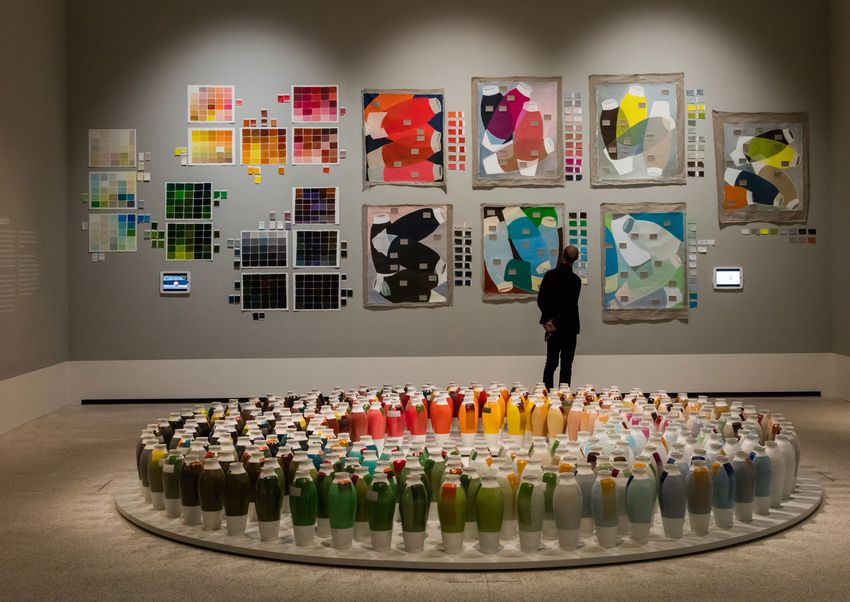
breathing colour
by hella jongerius
           Tour Proposal

               designmuseum.org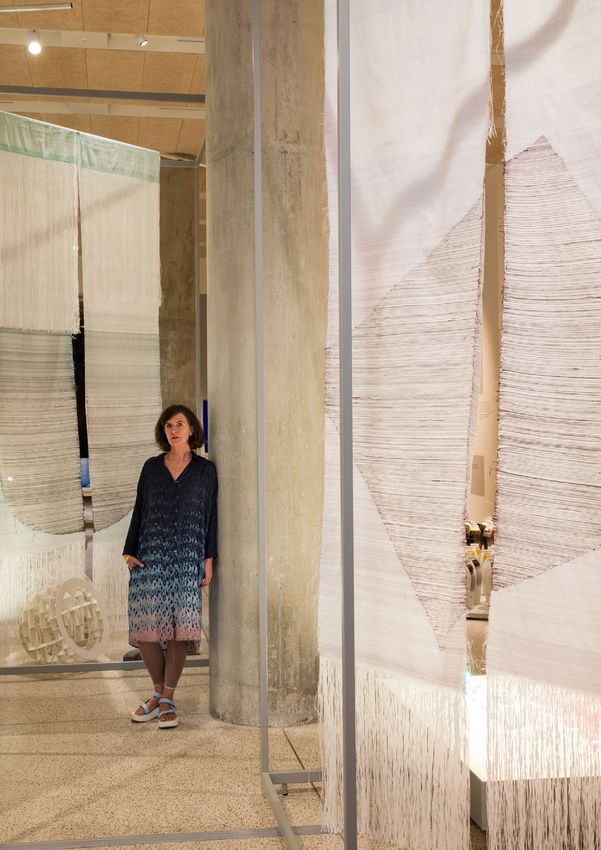
The Design Museum Touring Programme                                       Contents
The programme was set up in 2002 with the aim of bringing             6   Exhibition overview
design exhibitions to audiences around the UK and internationally.   18   Exhibition adaptation
Since then, the museum has organised more than 130 tours to          22   About Hella Jongerius
104 venues in 31 countries worldwide.                                24   Exhibitions details
                                                                     27   Terms and conditions
The Design Museum’s touring exhibitions range in size from           28   Contact
150 to 1,000 square metres and cover all areas of design –
architecture, fashion, furniture, graphics, product and more.

About the Design Museum
The Design Museum is the world’s leading museum devoted
to architecture and design. Its work encompasses all elements
of design, including fashion, product and graphic design. Since
it opened its doors in 1989, the museum has displayed everything
from an AK-47 to high heels designed by Christian Louboutin.
It has staged over 100 exhibitions, welcomed over five million
visitors and showcased the work of some of the world’s most
celebrated designers and architects including Paul Smith, Zaha
Hadid, Jonathan Ive, Miuccia Prada, Frank Gehry, Eileen Gray
and Dieter Rams. On 24 November 2016, the Design Museum
relocated to Kensington, West London. Architect John Pawson
converted the interior of a 1960s modernist building to create
a new home for the Design Museum, giving it three times
more space in which to show a wider range of exhibitions and
significantly extend its learning programme.

In May 2018, the Design Museum was awarded the title of
European Museum of the Year.

                                                                                                  The Design Museum, London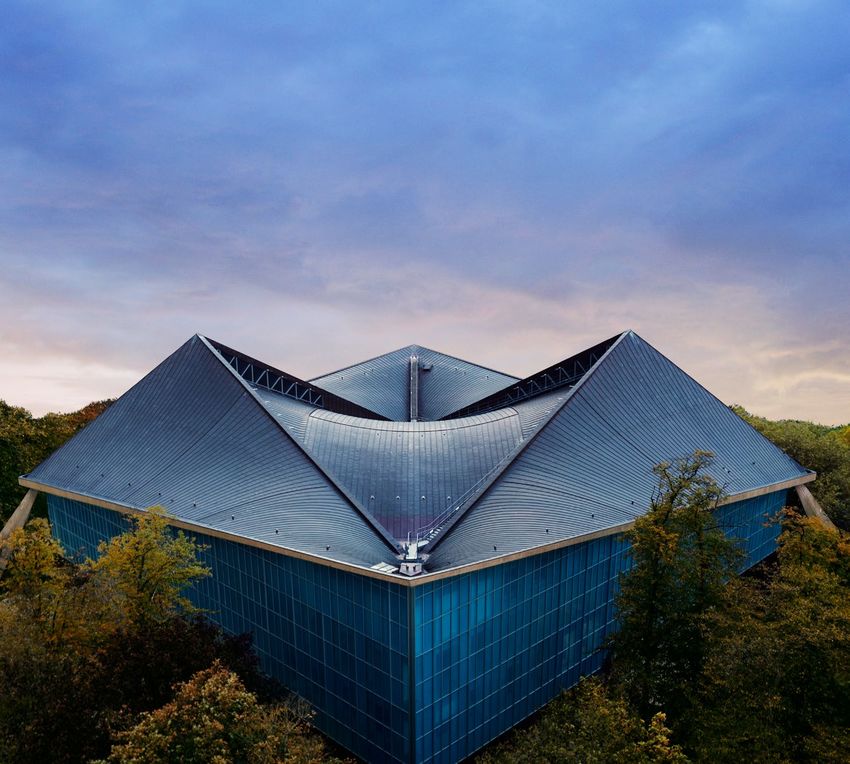
‘A remarkable new show aims to change the   ‘A must-see exhibition on colour’
way we look at the world’                   The Sunday Times
★★★★★ The Times

                                                                           EXHIBITION VIEW, THE DESIGN MUSEUM, LONDON, 2017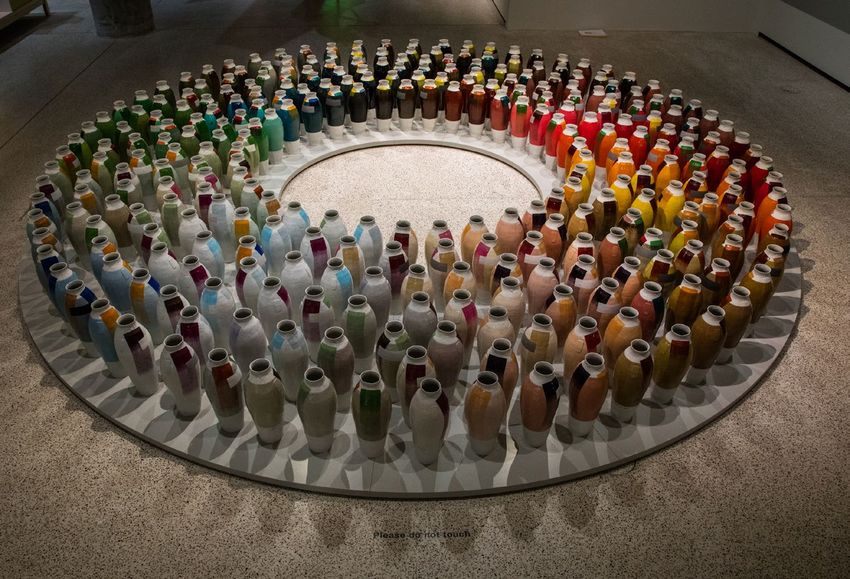
Exhibition overview
                                      Drawing on 15 years of research, acclaimed designer Hella
                                      Jongerius presents Breathing Colour, an installation-based
                                      exhibition that takes a deeper look at how colour behaves. The
                                      show features a diverse collection of specially commissioned
                                      objects, exploring the effects that light conditions have upon our
                                      perception of colour and form. Ultimately, Jongerius’ aim is to pit
                                      the power of colour against the power of form.

                                      Jongerius’ research has been inspired by a wide range of
                                      sources, including celebrated painters, who recognised and
                                      recorded how light affects objects and landscapes. For example,
                                      Monet painted the same haystack over and over to document
                                      the different colours and atmospheres at different times of
                                      the day.

                                      Breathing Colour is an exhibition that blurs the boundaries
                                      between art and design. It combines intriguing shapes and
                                      extensive research; and it questions our preconceptions of
                                      colour, showcasing its imperfection and versatility.

                                      The exhibition is divided into separate spaces that simulate
                                      daylight conditions at specific times of the day – morning, noon
                                      and evening. These three phases explore and expose how our
                                      perception of colour is dependent on changing daylight.
                                      Each installation includes a collection of three-dimensional
                                      objects including textiles, both hand-woven and worked on
                                      industrial looms.

                                      Hella Jongerius explains:
                                      ‘There is a phenomenon in colorimetry called Metamerism.
                                      This was the starting point in my colour research. It occurs
                                      when colours are viewed in different conditions, and describes
                                      the effect when two colours appear to match even though they
                                      might not actually do so. I think everyone once bought a piece of
                                      furniture or clothing in a certain colour, and experienced a shock
                                      when unpacking it back home. Most companies see the effect
                                      as problematic and try to avoid it, and produce colours that
                                      attempt to eliminate it. But I want to make a plea for embracing
                                      metamerism. As a designer, I want to make a plea for plastics,
                                      varnishes and paints to use layered pigments that provide
                                      intense colours that are allowed to breathe with changing light.’

Pigments for Colourful Black paints                                                       EXHIBITION OVERVIEW | 6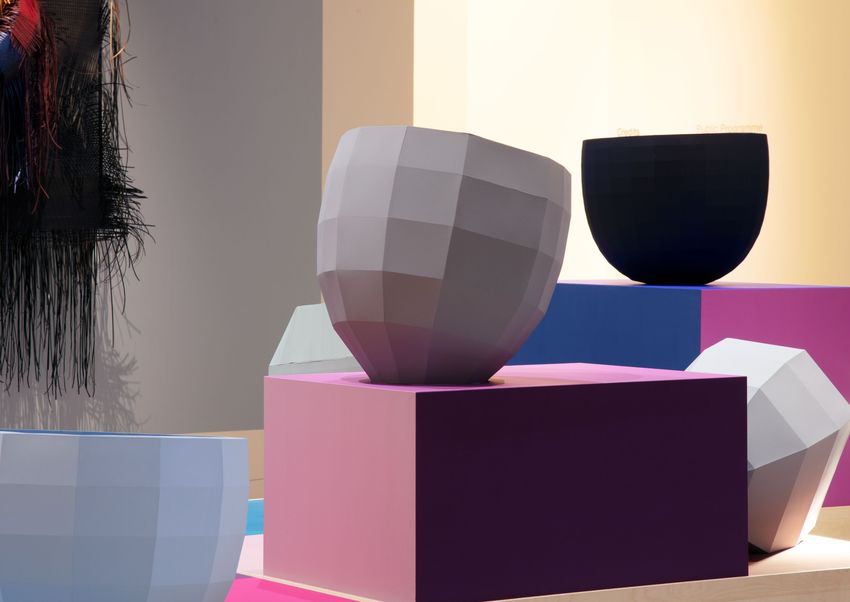
Morning
                                                                                    The ‘Morning’ section of the exhibition explores the differences
                                                                                    between lightness and brightness and the hazy feeling of
                                                                                    waking up. Early morning light first shines from the sun in its
                                                                                    lowest position, just above the edge of the horizon. As the sun
                                                                                    gradually rises the warm shades of dawn recede, and the colder
                                                                                    morning air creates a crystal-clear glow with a blue-ish hue.

                                                                                    The circular Crystal Stones explore how colour changes as light
                                                                                    passes through them. When light travels from one material to
                                                                                    another it changes speed, allowing it to be separated into its
                                                                                    seven constituent colours.

                                                                                    A series of aptly named multi-faceted objects – the Colour
                                                                                    Catchers – have been specially designed as an aide to study
                                                                                    colour, and are used throughout the exhibition. Created
                                                                                    by folding and gluing complex cardboard patterns, the
                                                                                    convex faceted surfaces absorb and reflect nearby colours.
                                                                                    Irradiated with light, they become a three-dimensional colour
                                                                                    chart, illustrating the principle of metamerism as they reveal
                                                                                    gradations of their own base colour mixed with reflections of
                                                                                    other nearby colours.

                          1. Exhibition view, Museum Boijmans Van Beuningen, 2018
                          2-3. Detail, Crystal Stones, the Design Museum, London,
                             2017
                          4. Morning study
                          5. Sketch for Morning section of Woven Movie
7 | EXHIBITION OVERVIEW   6. Exhibition view, the Design Museum, London, 2017                                                          EXHIBITION OVERVIEW | 8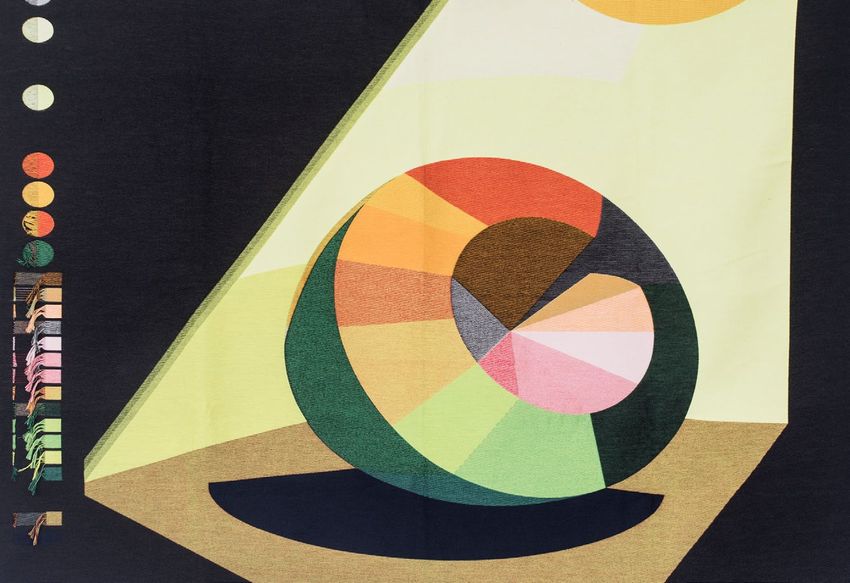
Noon
                                                                                  As the sun reaches its zenith, the intensity of daylight is at its
                                                                                  strongest. The sharp light from above casts strong shadows
                                                                                  and stark contrasts. In the ‘Noon’ section, the shape and colour
                                                                                  tones of the exhibits become sharp and bright.

                                                                                  Grey Colour Catchers are displayed on bright surfaces. This
                                                                                  enables multiple colours to be seen across their faceted surfaces
                                                                                  despite, in actuality, remaining grey. Lighting projections create
                                                                                  sharp shadows and transition the visitor from the haze of early
                                                                                  morning to the intensity of midday.

                                                                                  Hella Jongerius comments:
                                                                                  ‘The Colour Catchers are an abstraction of all the daily objects
                                                                                  that surround us. They are designed as the ultimate shape
                                                                                  to research colour, shadows and reflections. They are my
                                                                                  canvases. The folding acts as a shift between two different
                                                                                  colours, it turns the form of an object into a generator of new
                                                                                  colour tones.’

                          1-2. Exhibition view, the Design Museum, London, 2017
                          3. Detail, Colour Catcher, the Design Museum, London,
                             2017
                          4. Sketch for Woven Movie 2:45pm, 2016
9 | EXHIBITION OVERVIEW   5. Exhibition view, the Design Museum, London, 2017                                                        EXHIBITION OVERVIEW | 10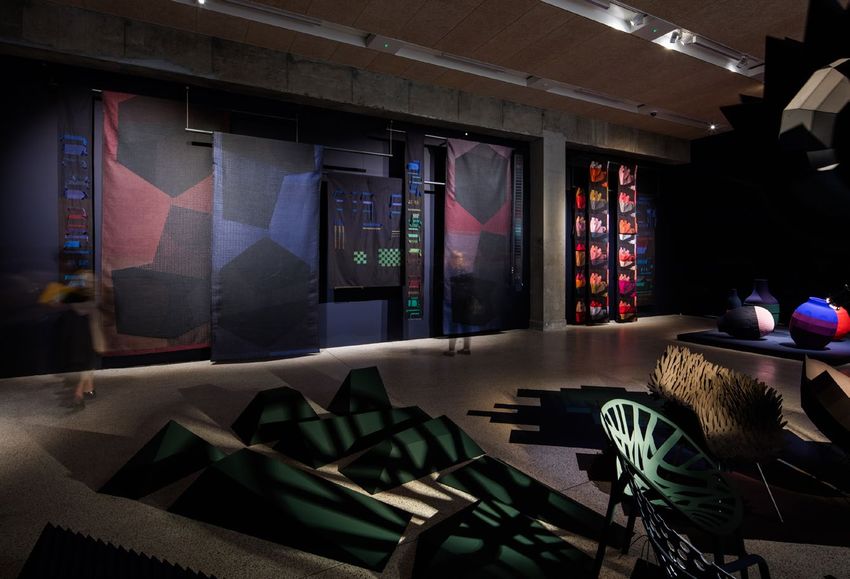
Evening
                                                                                       The ‘Evening’ element of the exhibition provides a very different
                                                                                       experience. As the day draws to a close and sunlight moves
                                                                                       downwards, shadows play a more crucial role in our perception
                                                                                       of colour.

                                                                                       Large-scale textiles are used to experiment the creation of black
                                                                                       tones without the use of black material. Woven from threads
                                                                                       of wool, linen and cotton, these textiles are an extension of
                                                                                       Jongerius’ previous research into the colour black, and her
                                                                                       rejection of the standard industrial approach of adding carbon
                                                                                       to colours in order to darken them. The textiles demonstrate
                                                                                       how it is possible to create a larger range of colours and hues
                                                                                       by optically mixing from a limited palette of coloured yarns. By
                                                                                       weaving in several materials, with different textures and finishes,
                                                                                       these textiles produce a range of vibrant colours as well as a
                                                                                       spectrum of rich and varied blacks.

                           1. Exhibition view, the Design Museum, London, 2017
                           2. Exhibition view, Museum Boijmans Van Beuningen, 2018
                           3. Detail, Colour Wheels, the Design Museum, London, 2017
                           4. Exhibition view, the Design Museum, London, 2017
11 | EXHIBITION OVERVIEW   5. Exhibition view, Museum Boijmans Van Beuningen, 2018                                                        EXHIBITION OVERVIEW | 12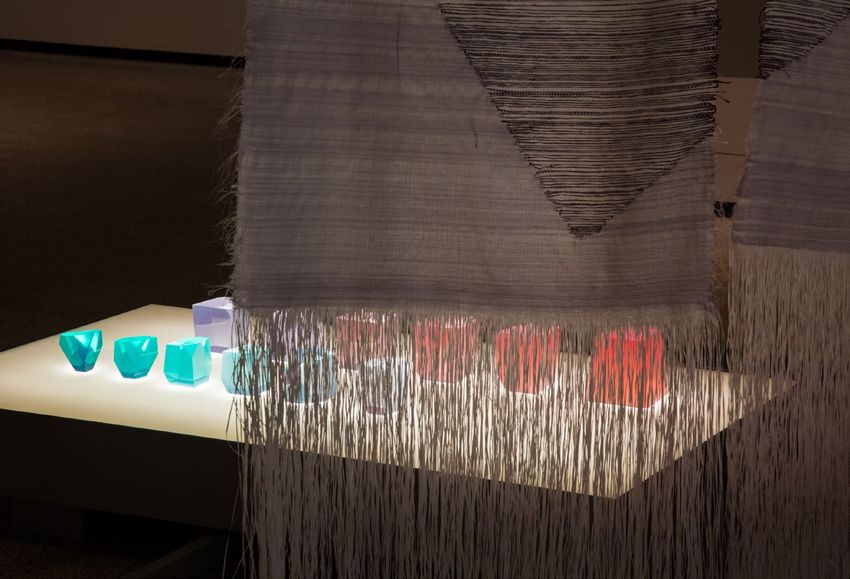
Woven Movie
                                                                                      Running the length of the gallery is the Woven Movie, a series of
                                                                                      hanging textiles that use varying colours, materials and designs
                                                                                      to reinterpret the repetitive image of the Colour Catchers. Using a
                                                                                      range of fabrics and techniques, the image shows the changing
                                                                                      nature of the object through the different phases of the day. Each
                                                                                      of these ten woven textiles depicts a Colour Catcher at different
                                                                                      times of the day. The textiles can be viewed individually but also
                                                                                      as a sequence of still frames in an animated movie.

                                                                                      The Woven Movie is a continuation of the work pioneered by the
                                                                                      German textile designer and printmaker Anni Albers. Developed
                                                                                      during her time at the Bauhaus, Albers’ work endeavoured to find
                                                                                      new weaving solutions that could be produced and applied at a
                                                                                      large industrial scale.

                           1. Woven Movie 2:45 at Jongerius’ studio in Berlin, 2017
                           2. Detail, 12 noon, the Design Museum, London, 2017
                           3. Detail, 11:30am, the Design Museum, London, 2017
13 | EXHIBITION OVERVIEW   4. Exhibition view, the Design Museum, London, 2017                                                           EXHIBITION OVERVIEW | 14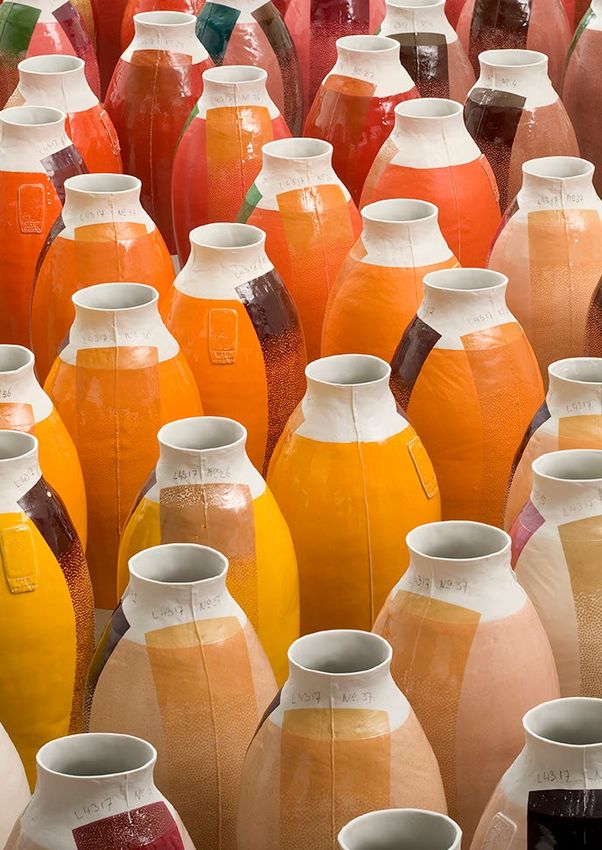
Coloured Vases
                                                          Coloured Vases (series 3), a series of 100 unique vases
                                                          orientated in a circular display, is one of the existing works
                                                          from the Jongeriuslab archives included in the exhibition.
                                                          Manufactured in 2010, the installation was part of the studio’s
                                                          research into minerals and oxides; a technique no longer
                                                          used because of its inability to produce stable colouring. The
                                                          lacquering of the vases with copper oxides results in a green
                                                          colouring, the combination of cadmium and zirconium creates
                                                          orange, tin oxides with iron produce beige and the manganese
                                                          dioxide enriched lacquers develop purple tones.

                                                          We see the world in a rich mix of colours, but rarely do we
                                                          appreciate how complex they can be. Colours are often presented
                                                          to us as chemically optimised and consistent commodities,
                                                          categorised according to paint charts and standardised colour
                                                          systems. Where colours were once produced by mixing pigments
                                                          into infinite permutations, we now select them according to a
                                                          name or code on a chart.

                                                          Jongerius argues that these processes of industrialisation have
                                                          narrowed our experiences of colour and its cultural meanings.
                                                          Breathing Colour proves how we relate to colour in a more
                                                          intimate and personal way.

Detail, Coloured Vases, the Design Museum, London, 2017                                                     EXHIBITION OVERVIEW | 16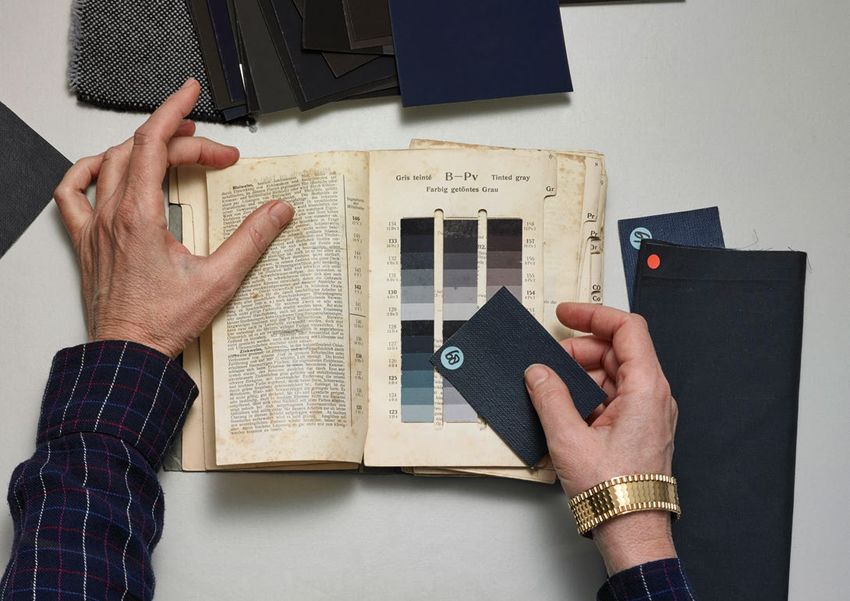
Exhibition adaptation
                                                                                     By its nature and content, the exhibition can be staged either as
                                                                                     a series of stand-alone installations or in conversation with other
                                                                                     works of visual arts.

                                                                                     For its original arrangement at the Design Museum Jongerius’
                                                                                     collection of specially designed objects was presented
                                                                                     unaccompanied, with the focus of the exhibition placed solely
                                                                                     on her research into how our experience of colour and form is
                                                                                     affected by changing daylight throughout the course of a day.

                                                                                     In contrast to this, at the Museum Bojmans Van Beuningen,
                                                                                     Jongerius collaborated with artist Mathieu Meijers to select
                                                                                     artworks from the museum’s permanent collection and create
                                                                                     a dialogue between her research and the works of old master
                                                                                     and contemporary artists such as Francis Picabia and Cornelis
                                                                                     van Haarlem. In this context, the chosen works accompany and
                                                                                     emphasise the three phases; morning, noon and evening; and
                                                                                     the viewer is invited to consider how Jongerius’ exploration of
                                                                                     metamerism is contextualised within a wider body of art and
                                                                                     design works.

17 | EXHIBITION ADAPTATION   Exhibition views, Museum Boijmans Van Beuningen, 2018                                                     EXHIBITION ADAPTATION | 18
STILL FROM THE FILM ‘COLOUR RECIPE RESEARCH’, 2014
About Hella Jongerius
                                                   Hella Jongerius’ (1963, the Netherlands) work combines the
                                                   traditional with the contemporary, the newest technologies with
                                                   age-old craft techniques. She aims to create products with
                                                   individual character by including craft elements in the industrial
                                                   production process.

                                                   Graduating from Eindhoven’s Design Academy in the early
                                                   1990s, Jongerius is from a generation of designers who explored
                                                   the emergence of conceptual design, and how industrial design
                                                   might better respond to our emotional as well as physical needs.
                                                   In 1993, she founded her own studio, Jongeriuslab, which has
                                                   a diverse client base including the conceptual Dutch design
                                                   company Droog, US textile manufacturer Maharam, furniture
                                                   brands Vitra and Artek, and the Dutch airline KLM. In 2013,
                                                   Jongerius was part of the team that worked on the interior design
                                                   of the Delegates’ Lounge at the United Nations Headquarters in
                                                   New York.

                                                   Throughout her career, Jongerius has strived to combine craft-
                                                   led practice with contemporary industrial processes, from textiles
                                                   to furniture. She is renowned for her thoughtful and experimental
                                                   use of colour, often rejecting conventional approaches in favour
                                                   of more nuanced and bespoke colour solutions.

                                                   Since 2007, she has been Art Director of Colour and Surfaces
                                                   for Vitra, where she works to build a colour library for reissues of
                                                   classic designs as well as new products.

Hella Jongerius, the Design Museum, London, 2017                                                                 ABOUT | 22
Exhibition details
Curators
Alex Newson was Senior Curator at
the Design Museum from 2009 to 2019 and is now Senior
Curator at the V&A Museum of Childhood, London
Hella Jongerius is a Dutch designer based in Berlin and founded
the Jongeriuslab studio in 1993
Exhibition and graphic design
Jongeriuslab
Venues
Design Museum, London
28 June – 24 September 2017
Museum Bojmans Van Beuningen, Rotterdam
9 June – 12 August 2018
Nationalmuseum, Stockholm
17 October 2019 – 9 February 2020
Gewerbemuseum Winterthur
29 November 2020 - 23 May 2021
Tour availbility
from Summer 2021
Space
approx. 300 – 500 square metres
Detail of Crystal Stones, 2017 EXHIBITION DETAILS | 24EXHIBITION VIEW, THE DESIGN MUSEUM, LONDON, 2017
Terms and conditions                            Contact
Hire fee, on request, includes:                 To find out more about this exhibition and other tours available
                                                from 2020 onwards, please contact:
– Curation and exhibition concept
– Tour management by Design Museum staff        Charlotte Bulté
– Exhibits                                      Acting Head of Touring Exhibitions
– Images and films                              charlotte.bulte@designmuseum.org
– Exhibition text in English                    00 44 (0) 20 3862 5883
– 2D and 3D design concept
– Selected display kit                          designmuseum.org/exhibitions/touring-exhibitions

Costs payable by the venue:

– Hire fee, in instalments
– Exhibition and graphic design adaptation
– Share of transport and crating costs
– Storage of empty crates
– Nail-to-nail insurance
– All costs relating to exhibition production
– Installation and de-installation costs
– Marketing

                                                PICTURE CREDITS
                                                Every reasonable attempt has been made to identify owners of copyright. Errors and omissions notified
                                                to the museum will be corrected in subsequent editions.

                                                Cover image, © Luke Hayes; p.2, © Gravity Road; pp.3-4, © Luke Hayes; p.5, © Susanne Stauss; p.7,
                                                (top left) © Lotte Stekelenburg, (top right) © Luke Hayes, (bottom left) ©Jongeriuslab, (bottom right)
                                                ©Jongeriuslab; p.8, © Luke Hayes; p.9, (top left) © Luke Hayes, (top right) © Luke Hayes, (bottom left)
                                                © Luke Hayes, (bottom right) © Jongeriuslab ; p.10, © Luke Hayes; p.11, (top left) © Luke Hayes, (top
                                                right) © Lotte Stekelenburg, (middle) © Luke Hayes, (bottom) © Luke Hayes ; p.12, Lotte Stekelenburg;
                                                p.13, (top) © Roel van Tour, (bottom left) © Luke Hayes, (bottom right) © Luke Hayes; p.14, © Luke
                                                Hayes; p.15, © Gerrit Schreurs; p.16, © Luke Hayes; pp.17-18, © Lotte Stekelenburg; pp.19-20, ©
                                                Jongeriuslab; p.21, © Luke Hayes; p.23, © Roel van Tour; pp.25-26, © Luke Hayes

                                                Exhibition and graphic design adaptation by Jongeriuslab.

                                                Cover image: Detail, Colour Catchers, the Design Museum, London, 2017

                                                                                                                                    designmuseum.org
the Design Museum 224–238 Kensington High Street London, W8 6AG Charity no. 800630 designmuseum.org
You can also read


