Brexit: Losing control - Andrew Duff - DISCUSSION PAPER EUROPEAN POLITICS AND INSTITUTIONS PROGRAMME 24 APRIL 2019 - Archive of European Integration
←
→
Page content transcription
If your browser does not render page correctly, please read the page content below
DISCUSSION PAPER
                              EUROPEAN POLITICS AND INSTITUTIONS PROGRAMME
                                                                24 APRIL 2019

Brexit:
Losing control                                                   Andrew Duff

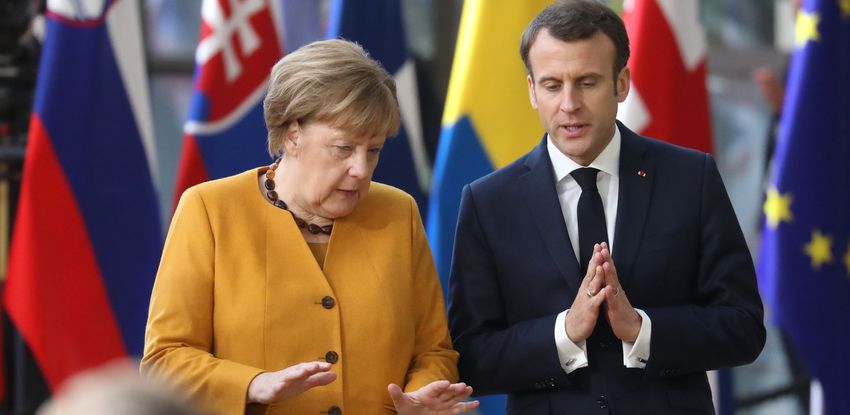
Credit: Ludovic MARIN / AFP
Table of contents
Pursuing ratification 3
Mock elections to the European Parliament 3
How a withdrawing state should behave 3
The folly of ‘flextension’ 4
The European Council loses control 4
Meanwhile at Westminster 5
The Attorney General goes to Brussels 5
Improving the Political Declaration 5
Labour-Tory talks 6
A new prime minister 6
The referendum question 7
The referendum answer 7
Taking back control 8
Endnotes 9
ABOUT THE AUTHOR
Andrew Duff is President of the Spinelli Group and a Visiting Fellow at the European Policy Centre. He was
a member of the European Parliament 1999-2014. He tweets @AndrewDuffEU.
DISCLAIMER
The support the European Policy Centre receives for its ongoing operations, or specifically for its publications, does not constitute
endorsement of their contents, which reflect the views of the authors only. Supporters and partners cannot be held responsible
for any use that may be made of the information contained therein.PURSUING RATIFICATION If 73 British MEPs turn up at Strasbourg in July they
Easter provided only a brief respite from Brexit. The will be a motley crew. Many will have been elected
crisis now continues, with escalating chaos in Britain hurriedly on the basis of highly ambiguous mandates
and a breakdown of unity on the side of the EU. and scant scrutiny by the electorate. The elections
will be treated as a proxy Brexit referendum.9 The
At its meeting on 21 March the European Council squabbling Brexiteering parties will be fighting to
considered a request from the British prime minister finish the job of Leave, but without offering any
to extend the Article 50 timetable from 29 March serious prospectus for Britain after Brexit. The
until 30 June.1 The heads of government rejected squabbling pro-European parties will campaign to
her request but agreed instead to an extension stay in a ‘reformed’ European Union, but without
to 22 May, provided that the House of Commons giving any substance to the notion of reform.
had concluded its ratification of the Withdrawal
Agreement by 12 April.2 That did not work. Although MEPs elected from the UK will be
effectively on probation, they will nonetheless be
able to take part in all the important constituent
votes that mark the beginning of the parliamentary
term – notably the election of Parliament’s
The crisis now continues, with escalating
president, vice-presidents and committee chairs,
chaos in Britain and a breakdown of unity and the election of the new Commission president
on the side of the EU. (and approval of his or her programme), followed by
the parliamentary auditions of the candidates for
the Commission (including one hapless Brit).
Mrs May returned with a second request for an
extension until 30 June.3 On 10 April, the European
Council agreed to adjust the clock again, but not to
If 73 British MEPs turn up at Strasbourg
stop it ticking. A flexible extension is now granted
until 31 October “to allow for the ratification of the in July they will be a motley crew.
Withdrawal Agreement”. If ratification by both parties
takes place earlier, the UK will leave the EU on the
first day of the following month.
HOW A WITHDRAWING STATE
If the British parliament acts decisively and accepts SHOULD BEHAVE
the Withdrawal Agreement in May or June, the
outgoing European Parliament will be recalled, British MEPs will not be touched by the injunction
somewhat reluctantly, to ratify the Brexit treaty. of the European Council that the British government
(A quorum of one-third of MEPs is required.)4 If is expected to behave itself during this period. In a
nothing happens in London during this period, any significant elaboration of the Article 50 process, the
ratification will fall to the new European Parliament heads of government asserted:
which first assembles in Strasbourg on 2 July. The
European Council will in any case take stock of the “The European Council takes note of the
situation at its next formal meeting on 20-21 June. commitment by the United Kingdom to act
in a constructive and responsible manner
MOCK ELECTIONS TO THE EUROPEAN throughout the extension in accordance with
PARLIAMENT the duty of sincere cooperation and expects
the United Kingdom to fulfil this commitment
Unless the UK ratifies the Withdrawal Agreement by and Treaty obligation in a manner that reflects
22 May (in which case it leaves the Union on 1 June), its situation as a withdrawing Member State.
the UK will hold elections to the European Parliament To this effect, the United Kingdom shall
on 23 May.5 Three years after Britain voted to leave facilitate the achievement of the Union’s tasks
the EU, this may seem preposterous. But the European and refrain from any measure which could
Council declined to stretch the Article 50 rubric that jeopardise the attainment of the Union’s
would have allowed the UK to derogate from EU objectives, in particular when participating in
electoral law in the pursuit of an orderly withdrawal.6 the decision-making processes of the Union.”
The new 2019 Parliament, therefore, will be Theresa May agreed to these rather humiliating
composed of 751 members on the same basis as terms, presumably safe in the knowledge that
the 2014 Parliament, with an apportionment of they were aimed not at her personally but at her
seats between member states that includes several successor as prime minister. No obvious sanctions
blatant breaches of the principle of degressive exist at the hands of the European Council if the UK
proportionality.7 If the UK ever leaves the Union, disregards these terms of engagement in its capacity
the House will be re-composed mid-term of 705 as the “withdrawing member state”. To take the
members, in a somewhat undignified fashion.8 UK to the European Court of Justice for breaching
the principle of sincere cooperation would, in such
3circumstances, be bizarre.10 But it is obvious that
were the British to deliberately pollute the on-going
business of the EU 27, their chances of achieving a
More prevarication means extra costs
quick, decent and long-term association agreement
with the Union would be much diminished. and investor uncertainty.
Guy Verhofstadt, the Liberal leader in the Parliament
No obvious sanctions exist at the
and Brexit coordinator, laments the loss of unity
hands of the European Council if the among the EU 27 and between the EU institutions.
UK disregards these terms of engagement For him, the six-month extension imposed by the
in its capacity as the “withdrawing European Council releases the pressure on the British
member state”. to reach an agreement but is too short a time to allow
for a genuine reorientation of Britain’s European
policy. Verhofstadt fears that toxic British politics will
poison the new Parliament and Commission.
THE FOLLY OF ‘FLEXTENSION’ There are many, not least in business, who agree
with Verhofstadt about the risk of further delay.
Donald Tusk, President of the European Council, Many businesses have already spent a lot of money
takes pride in the concept of the flexible extension. in making contingency arrangements for the UK’s
If it had not been for the objection of Emmanuel leaving the EU on 29 March. More prevarication
Macron, indeed, the extension offered would have means extra costs and investor uncertainty.
been twelve rather than six months. But what use And business seems to have a better grasp than
will really be made of this flexibility? At present, politicians of the fact that extending Article 50
the most likely scenario is continued political eats into the valuable transition period – guaranteed
paralysis in the UK leading to a demand for a under the Withdrawal Agreement only until
further extension of Article 50 in October. Other 31 December 2020.11
possibilities, not mutually exclusive, include:
the election of a new Conservative prime minister after
q
the more or less voluntary retirement of Mrs May;
Their decision to allow the British a
a surprise
q agreement between the Conservative flexible extension has put the heads of
and Labour leadership on a renegotiated Political government in an invidious position.
Declaration in a soft Brexit direction;
a clear
q preference indicated by the House of
Commons for a softer Brexit, mandating the Commission President Jean-Claude Juncker told
government; the Parliament (16 April) that it is “not my working
hypothesis” that the 31 October deadline will be
another
q general election leading to a majority further extended. But it is perfectly possible that the
or a coalition government; European Council on 17-18 October will be faced by
a fresh demand from the British prime minister for a
a second
q referendum decisively in favour of Brexit further extension.
or not – as the case may be.
THE EUROPEAN COUNCIL LOSES CONTROL
In truth, their decision to allow the British a flexible
extension has put the heads of government in an
The most likely scenario is continued
invidious position. On the one hand, it is unwise, by
political paralysis in the UK leading granting ‘flextension’, for the European Council to
to a demand for a further extension of allow itself to be blamed for trapping the UK inside
Article 50 in October. the Union against the expressed will of the British
people to leave it.
That it only takes one head of government to veto a
Although he does not speak on behalf of a unified further extension of Article 50 does not mean that,
European Council, Mr Tusk boldly proposes that come October, yet more procrastination will not be
the UK should rescind Article 50 after holding a the preferred option.12 Under the duty of unanimity,
referendum. Other EU leaders are more reticent the European Council could tend to take the line of
with their advice, waiting impatiently for the UK to least resistance, especially as Presidents Juncker and
expedite its decision to quit. Tusk will be readying to leave office.
4On the other hand, no single leader, including confounded. Options for outcomes that implied
President Macron, wants to stand accused of a rewriting of the Political Declaration in the
throwing the British out of the Union without a deal. direction of a customs union and even single market
Leo Varadkar, the Irish leader, will continue to fight membership did well. This came as no surprise to
against a no deal Brexit. The position of Chancellor anyone who had been paying attention.15
Merkel remains decisive. The European Council’s
Brexit rain-check in June is critical: if by then For example, on 1 April a resolution tabled by Kenneth
nothing has moved in London to break the deadlock, Clarke, the father of the House, was only lost by 273
the mood of the chiefs will harden, Angela Merkel votes to 276. It sought to instruct the government to
among them. “ensure that any Withdrawal Agreement and Political
Declaration negotiated with the EU must include, as
a minimum, a commitment to negotiate a permanent
and comprehensive UK-wide customs union with the
EU”. It was a pity, then, that after a tied vote on 3 April
The future of the European Union seems
the rebel MPs had to surrender control of the business
to be left entirely exposed to the alarming of the House back to the government.
caprice of British politics.
THE ATTORNEY GENERAL GOES TO BRUSSELS
The EU’s constant reiteration of its invitation to
It is hard to avoid the conclusion that the European improve the Political Declaration has been ignored
Council has for the moment lost control of Brexit. by the prime minister. She has preferred to make
It will be difficult to retrieve. The future of the unilateral British declarations intended to mollify
European Union seems to be left entirely exposed the arch-Brexiteers in her own party and in the
to the alarming caprice of British politics. As Democratic Unionist Party (DUP) of Northern Ireland.
Mr Juncker remarked, while the EU has established In this enterprise, largely focussed on the Irish
how Britain should withdraw, it now appears to be backstop, Mrs May has fielded her melodramatic (but
up to Britain alone to decide when it will do so. in EU matters unschooled) Attorney General Geoffrey
Cox on missions to Brussels.
MEANWHILE AT WESTMINSTER
While the European Council confirmed its absolute
refusal to reopen the Withdrawal Agreement
The astonishing, if brief, experiment in
to placate the hard Brexiteers, it repeated its
willingness to revise the Political Declaration on the bipartisan politics at Westminster has not
future relationship with a view to a softer Brexit. In been wholly in vain.
effect, the EU is offering the UK a very privileged
partnership wrapped up in a dynamic association
agreement designed to foster cooperation, manage
conflicts and encourage convergence.13 Brussels is Mr Cox’s excursions have not been met with
astonished that the prime minister cannot even unalloyed success.16 Indeed, the most recent
oblige her own cabinet to rally round this package European Council saw fit to warn Mrs May that
deal under the discipline of collective responsibility. “any unilateral commitment, statement or other act
should be compatible with the letter and the spirit
of the Withdrawal Agreement and must not hamper
its implementation”.
The EU is offering the UK a very privileged
partnership wrapped up in a dynamic IMPROVING THE POLITICAL DECLARATION
association agreement designed to Nevertheless, the astonishing, if brief, experiment
foster cooperation, manage conflicts and in bipartisan politics at Westminster has not been
encourage convergence. wholly in vain. Members of the Labour shadow
cabinet have been meeting since with certain
government ministers in pursuit of a compromise.17
The exercise is supported by Jeremy Corbyn. Theresa
May’s position is, as ever, harder to read: whatever
The EU was encouraged, therefore, when a cross- compromise emerges is bound to oblige her to modify
party group of MPs, led by the veteran Tory Oliver her previous red lines with regard to a customs union,
Letwin, managed to seize control of the business of independent trade policy and freedom of movement.
the House of Commons for a day or two.14 The time What is significant, however, is that the fury of the
was used to mount a series of indicative votes to Conservative Brexiteers, volubly expressed, has
test options. While no option attained a majority not been enough to block the more pro-European
of the House, the option of no deal was repeatedly Conservative ministers from continuing to commune
and roundly defeated – and the arch-Brexiteers were with their Labour counterparts.
5Some of us have argued that the first draft of the another Switzerland, free-riding on the back of the
Political Declaration was too tentative in tone, single market without adherence to the disciplines
ambiguous in meaning and negative in substance of the market place. But it is very much in the EU’s
to orientate the UK and EU in a fruitful direction. interest to reach a sustainable accommodation with
Both the form and content of the final association Britain, its largest strategic neighbour.
agreement needs to be made more explicit. It is
possible to rewrite the document in a manner that Orthodox EU opinion may be aghast at some aspects
explains more clearly the relevance of the Irish of the British negotiating position. The Commission
backstop and its essentially transitional nature.18 The might well object at offering the UK the same,
EU’s more consensual language offered to the UK in exceptional and rather loose deal that was agreed for
December and January can be included in any new the Channel Islands in 1972.23 Pragmatic voices will
draft.19 As can the supplementary joint statement need to be heard in Brussels, on the understanding
of March aimed at speeding up proceedings and that the pull of a customs union type agreement
allowing for the provisional application of measures with the UK will lead to closer market integration,
intended to transcend the Irish backstop.20 involving British acceptance of EU state-aids, public
procurement and competition policy. Theresa May’s
LABOUR-TORY TALKS bid for “as frictionless a border as possible” deserves
more than token respect – especially if seconded by
The talks between government and opposition have Mr Corbyn.24
focussed on modifying the Political Declaration with
the following range of possible objectives:
to commit the UK to seek a new UK-wide customs
q
Mr Corbyn should aim to ensure that the
accord with the EU that minimises border disruption,
sustains industrial supply chains and ensures tariff final deal is done before the June meeting
and quota free trade in goods; of the European Council, in time to stop
British MEPs from taking their seats.
to
q strengthen dynamic regulatory alignment
with the EU acquis in labour, consumer and
environmental policies;
One insider estimates that the Tory-Labour talks
to
q seek wider UK engagement with relevant EU have about a 30% chance of succeeding in the
agencies, subject to trustworthy regulatory alignment; next two or three weeks, although the trickiest
customs union issue is being left until last. If
to
q clarify the future security partnership. they fail, both sides have agreed in principle to
support the outcome of more indicative votes by
MPs, ideally using a preferential system such as a
single transferable vote (STV). This would clear the
air and prepare the ground for the passage of the
Orthodox EU opinion may be aghast
Withdrawal Agreement Bill which, under the terms
at some aspects of the British of section 13 of the EU Withdrawal Act 2018, must
negotiating position. be enacted before Brexit day.
For party advantage, the Labour leader may want to
delay his agreement to the deal until after votes have
Mr Corbyn wants the UK to have “a say” in future EU been cast in the European elections. But Mr Corbyn
trade talks and to attain a guarantee of reciprocal should aim to ensure that the final deal is done before
access to trade deals that is not, for example, the June meeting of the European Council, in time to
currently offered by the EU to Turkey.21 The stop British MEPs from taking their seats.
Commission may be asked to redress the asymmetry
built into the EU’s Turkish customs accord when it A NEW PRIME MINISTER
comes to crafting a bespoke deal for Britain. Both
Mr Corbyn and Mrs May want to conform to the EU’s Theresa May has already announced that she will
common commercial policy in goods only, leaving resign shortly after delivering Brexit. This raises
open the possibility to negotiate international concern in Brussels and Westminster that she could
treaties on services, such as telecoms, transport, be succeeded, as a senior EU official tells me, by
finance, investment, the professions, IPR and data. “someone worse”. One way of constraining the next
In return for concessions on trade in services, the prime minister (and of corralling the EU 27) is to
UK will have to drop its rigid attitude to the mobility upgrade the legal status of the Political Declaration.
of EU workers.22 The prime minister has yet to Giving it greater clout would involve confirming its
acknowledge this. function as the draft mandate for the negotiation of
the final association agreement, thereby rendering it
The EU will continue to maintain its four principles soft law and politically binding. Kenneth Armstrong
of free movement. It will not tolerate the creation of has made an elegant proposal for a new legally
6binding protocol that could be attached to the 31 October for parliament, first, to approve
Withdrawal Agreement to act as a legal bridge to the and ratify the Withdrawal Agreement (with its
Political Declaration.25 implementation suspended pending a public
vote), and then, second, to enact new legislation
An alternative approach to upgrading the Political to organise the referendum, with adequate time
Declaration would be to downgrade it, or, more allowed for the fighting of the referendum campaign.
accurately, to detach it from the Withdrawal Deciding to hold a confirmatory referendum,
Agreement altogether. In this case, the Commons therefore, would mean the UK asking the EU for a
would only be asked to approve the legal treaty further, longer extension.
that extricates the UK from its obligations to the
EU and to leave until later the matter of the final The UK Electoral Commission would insist that the
relationship. This manoeuvre could be achieved by conduct of the referendum was both free and fair.
amending the Withdrawal Agreement Bill. Revising The Commons would need to agree on a binary
the Declaration would then become the top priority question that did not effectively disenfranchise that
of the transition period. large part of the electorate opposing not only the
EU’s deal on offer but also the revocation of Brexit.
The EU would have no objection to this course Parliament could overrule the Electoral Commission,
of action if it facilitated the ratification of the but not without litigation and public outcry.
Withdrawal Agreement, although the Declaration
would then risk depredations at the hands of the THE REFERENDUM ANSWER
“someone worse” prime minister. And some MPs at
Westminster would legitimately grumble at being On a political level, the majority of MPs from all
asked to take the plunge at a blind Brexit. parties (except the SNP) are acutely sensitive to the
fact that they promoted the 2016 referendum in the
THE REFERENDUM QUESTION first place, pledged solemnly to respect its outcome
and then, accordingly, voted to trigger Article 50.
One cannot safely predict the outcome of all these
efforts to free Brexit from its current impasse. One is One can be sure that another referendum promoted
scarcely on safer ground with respect to the political specifically to overturn the result of the first would
process which will conclude the saga. deepen the divisions in the nation in terms of social
class, generation and province. Those who claim
that a ‘people’s vote’ would magically heal the rift
across the country and settle the issue of Britain’s
European policy once and for all are likely to be
Confusion of outcome and process greatly
proved badly wrong. Brussels knows that unless
reduces the chance the Commons can the result of a second referendum were a massive
reach a majority in favour of anything. majority on a high turnout for revocation, nothing
very much would be settled at all.
Different results in the four nations of the United
There are many Remainers in Britain, somewhat Kingdom, as we had in 2016, would quicken the
encouraged by the blandishments of Tony Blair debate about the breakup of the Kingdom, provoking
and Donald Tusk, who believe without fear of a return to violence in Northern Ireland. While no
contradiction that a second referendum would be political party would emerge unscathed by internal
bound to lead to the immediate revocation of divisions during the referendum campaign, the
Article 50. Opinion polls are much more Conservative and Labour parties would be shattered.
nuanced, however.26
During the indicative votes in the Commons, a
motion was supported by 280 MPs which would “not
It would seem to be folly of the highest
allow” the ratification of the Withdrawal Agreement
and Political Declaration “unless and until they have order, having made the big mistake
been approved by the people of the United Kingdom of holding one referendum, to compound
in a confirmatory public vote”.27 Such confusion of the error by holding another.
outcome and process greatly reduces the chance
the Commons can reach a majority in favour of
anything. The confused aside, there are many MPs
who want a deal but no referendum, and many Indeed, is it realistic to imagine that the Conservative
others who want a referendum but no deal. and Labour parties, having just ratified the Withdrawal
Agreement in Parliament, would then go out to the
Moreover, there are important technical as well country campaigning to reject it? And what would
as political and constitutional arguments against be the impact on the British system of parliamentary
pursuing another referendum. On the technical government were the people to pitch themselves
level, there is simply not enough time before directly against a deal just done by parliament?
7It would seem to be folly of the highest order, having European Union may find it impossible to cast off its
made the big mistake of holding one referendum, to wounded British limb.
compound the error by holding another.
Time and common sense are of the essence. The
The concept of a ‘confirmatory referendum’ has House of Commons has a huge responsibility in
superficial appeal, especially to MPs lacking the these circumstances to come together quickly on a
self-confidence to take the decision about Brexit decent compromise and to park for the moment its
on their own account. But having to resort to a normal adversarial and opportunistic behaviour. The
referendum because parliament is weak is liable only lunge to populism must be reversed.
to enfeeble further that parliament. A referendum
which is merely opportunistic would transfer on to
the shoulders of the British public that very same
complex dilemma with which MPs themselves are
Failure to reach an agreement before the
unable to cope. Militants and extremists on either
side of the Brexit argument would relish doing summer will cause intractable problems on
battle: the rest may watch in dismay as the country both sides of the Channel. An antagonistic,
spirals out of control. nationalist Britain will be an inhospitable
place for EU citizens. A hobbled European
TAKING BACK CONTROL Union may find it impossible to cast off its
Britain’s national crisis is grave and worsening. wounded British limb.
Brexit by accident without a deal remains a real
possibility. The Good Friday Agreement is in
jeopardy. The electorate is deeply polarised. The
government has no majority in parliament and the The elements of compromise on the Political
prime minister has lost control of her cabinet and Declaration are there. The Withdrawal Agreement
party. The British economy continues to sink. does the job of extricating the UK from its
membership of the Union in an orderly manner,
The European Union, poised to elect new leadership, minimising collateral damage. It provides a decent
is being destabilised by Brexit. Anxious to move on and flexible transition period. It offers the prospect
to tackle some big legislative and diplomatic issues, of negotiating the best association agreement that
the EU is distracted from doing so. Having dealt the EU has ever struck with any third country.
efficiently with the first phase of Brexit, it now faces
the possibility of years of wrangling with the British. Having tasted Brexit, in a number of years’
The longer the Brexit crisis prevails the greater the time, it is quite likely – and would be utterly
cracks in the unity of the 27 member states and in desirable – that the British people will have another
the cohesion among the EU institutions. look at membership of the European Union. One
could have another referendum at that stage, but
Failure to reach an agreement before the summer on triggering Article 49, not on revoking Article 50.28
will cause intractable problems on both sides of the And by then Europe, having moved further in the
Channel. An antagonistic, nationalist Britain will federal direction, should be more able to cope with
be an inhospitable place for EU citizens. A hobbled its wayward island neighbour.
81
May letter to Tusk of 20 March.
2
The European Council conclusions were crystallised in a European Council
Decision of 22 March 2019 taken in agreement with the United Kingdom,
extending the period under Article 50(3) TEU.
3
May letter to Tusk of 5 April.
4
Rule 168 of the Parliament’s rules of procedure. About half of the old
Parliament, having been re-elected, will be in Brussels for group meetings
during June.
5
The Withdrawal Agreement and Political Declaration are now published in
OJ C 66 I, 19-02-19.
6
The legal service of the European Parliament favoured a derogation as long
as the UK left by 1 July. See also the Opinion of David Anderson QC et al,
Timing of Brexit: European Parliamentary elections, 28 March 2019.
7
Article 14(2) TEU.
8
European Council Decision (EU) 2018/937 of 28 June 2018 establishing the
composition of the European Parliament, OJ L 165 I, 02-07-2018.
9
See, for example, Timothy Garton Ash, Britain will have its second referendum –
on 23 May, The Guardian, 18 April 2019.
10
Article 4(3) TEU.
11
Although the Joint Committee may decide, before 1 July 2020, to extend
the transition period once for either one or two years (Article 132 of the
Withdrawal Agreement).
12
Article 50(3) TEU.
13
Article 137 TFEU.
14
27 March, 1 April, 3 April.
15
See, for example, my previous paper for the European Policy Centre, Brexit:
The Compromise, 14 February 2019.
16
See Cox’s letter to the Prime Minister of 12 March, Legal Opinion on Joint
Instrument and Unilateral Declaration concerning the Withdrawal Agreement.
17
Mainly, for the Opposition: Keir Starmer, John McDonnell, Rebecca
Long-Bailey, Sue Hayman; for the Government: David Lidington, Greg Clark,
Philip Hammond, Michael Gove, and Steven Barclay.
18
For my own ‘texte martyr’ see New proposal for amending the Political
Declaration on Britain’s future in Europe, European Policy Centre,
19 March 2019.
19
Notably as set out in the exchange of letters between Juncker, Tusk and May
of 14 January 2019.
20
Joint statement supplementing the Political Declaration setting out the
framework for the future relationship between the EU and the UK,
11 March 2019.
21
Corbyn letter to May, 6 February 2019.
22
For a good discussion of these issues, see Sam Lowe, Dreaming of life after
Brexit, Centre for European Reform, April/May 2019.
23
Protocol No 3 of the UK Accession Treaty and Article 355(5)(c) TFEU.
24
Mansion House speech, 2 March 2018.
25
Kenneth Armstrong, An ‘Implementation Protocol’ to Unblock the Brexit Process:
A Proposal for a Legal Bridge between a Revised Political Declaration and the
Withdrawal Agreement, University of Cambridge Faculty of Law Research
Paper No. 9/2019, 19 February 2019.
26
See John Curtice, Third Time Lucky – Perhaps?, 18 March 2019.
27
Moved by Peter Kyle, 1 April.
28
Article 49 TEU provides that any European state respecting the values of the
EU may apply for membership..
9MISSION STATEMENT
The European Policy Centre is an independent, not-for-profit think tank
dedicated to fostering European integration through analysis and debate,
supporting and challenging European decision-makers at all levels to make
informed decisions based on sound evidence and analysis, and providing a
platform for engaging partners, stakeholders and citizens in EU policymaking
and in the debate about the future of Europe.
The European Politics and Institutions Programme is one of the five thematic
programmes of the European Policy Centre. It covers the EU’s institutional
architecture, governance and policymaking to ensure that it can move forward and
respond to the challenges of the 21st century in a democratic and effective manner.
The programme also monitors and analyses political developments at the EU
level and in the member states, discussing the critical questions of how to involve
European citizens in the discussions about the Union’s future and how to win their
support for European integration. It has a special focus on enlargement policy
towards the Western Balkans, questions of EU institutional reform, and illiberal
trends in European democracies.
EUROPEAN POLICY CENTRE | 14-16 RUE DU TRÔNE/TROONSTRAAT | B -1000 BRUSSELS | BELGIUM | WWW.EPC.EUYou can also read


