C VID-19 MEASURES in - Common Market for Eastern and Southern Africa - As at 19th February 2020 / 36th Edition - COMESA
←
→
Page content transcription
If your browser does not render page correctly, please read the page content below
MEASURES IN PLACE IN MEMBER STATES

Common Market for Eastern
and Southern Africa

 C VID-19
 MEASURES in
 MEMBER STATES

   As at 19th February 2020 / 36th Edition
 As at 25th September 2020 / 23rd Edition

                                                                              1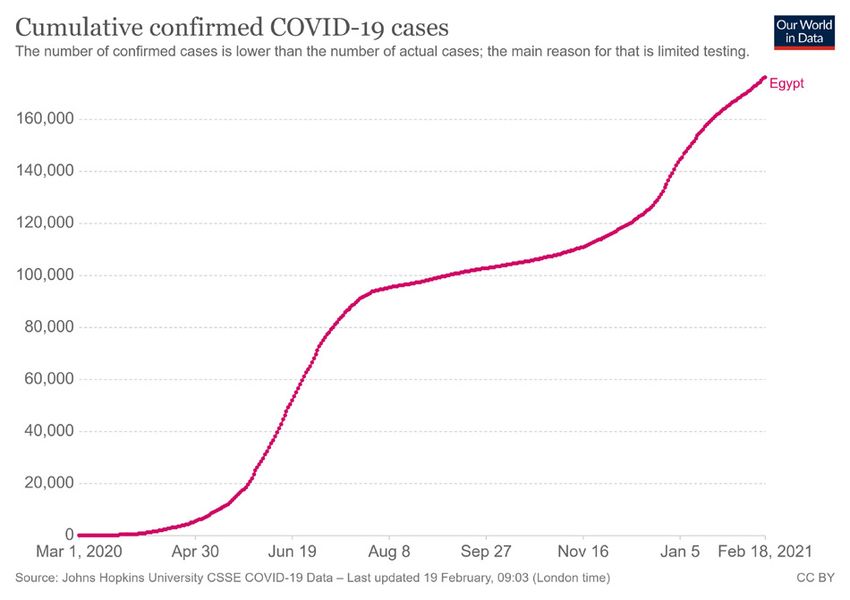
T   his publication comprises a listing of measures that COMESA
                                 Member States have put in place to contain the spread of the
                             corona virus. They cover trade facilitation and support to businesses,
                             protection of the vulnerable from the impact of the spread of the virus
                             and other relevant measures. It also includes the support received from
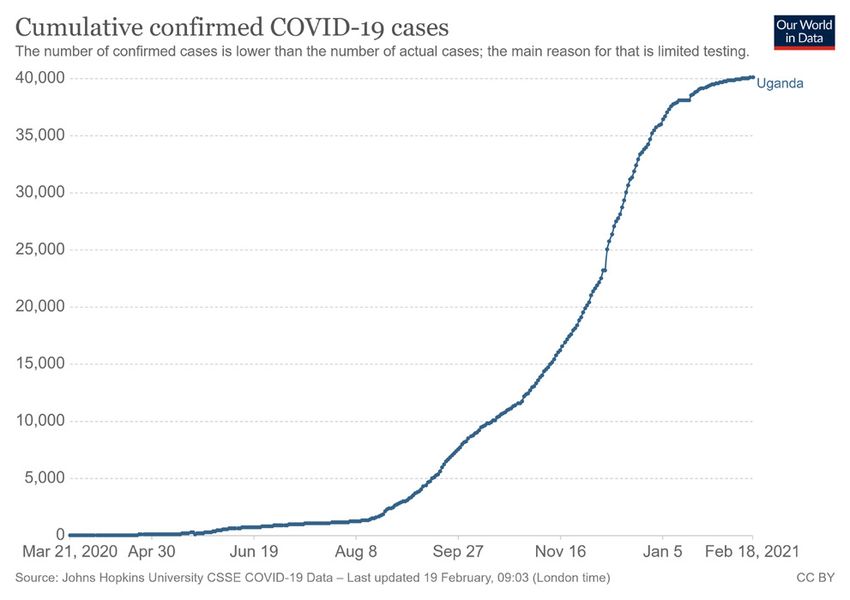
                             the international community aid agencies. A trendline on the number
                             of cases reported has also been included as well as the contacts of the
                             focal points in the Ministries that coordinate COMESA activities in
                             Member States.
                             This document will be updated on a regular basis to take into account
                             the new measures that governments are putting in place in response to
                             changing circumstances.

                             The data and information are drawn from monitoring press briefings of
                             the national COVID-19 response task forces and other open sources.

                             Compilation
                             Trade and Customs Division
                             Governance, Peace and Security Unit

                             Editing/Publishing
                             Corporate Communications

                             COMESA Secretariat

COVID-19 Response Measures    2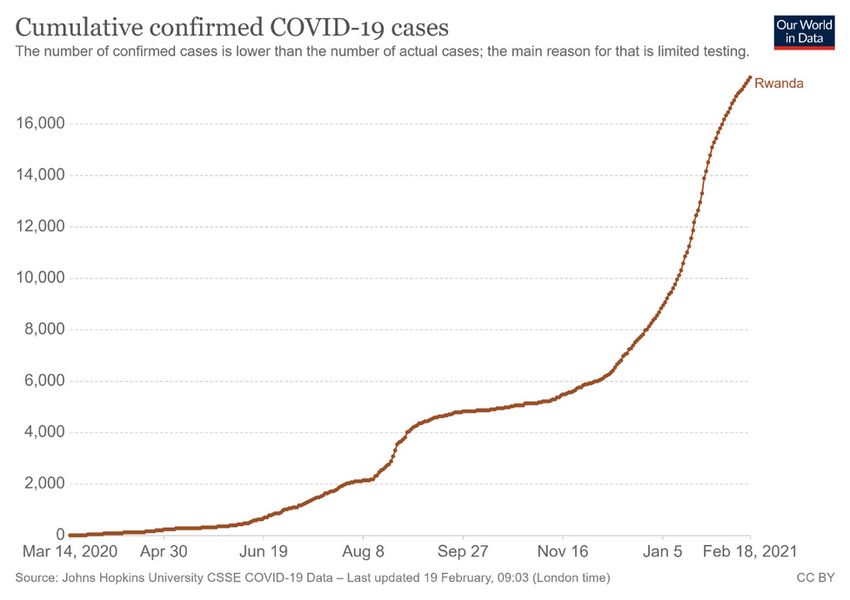
MEASURES IN PLACE IN MEMBER STATES

                                                                              Burundi

                                                                              Background
                                                                              The first case of COVID-19
                                                                              was reported on 31 March
                                                                              2020
                                           BACKGROUND

Preventive        •    From 11th January 2021, the government of Burundi extended the quarantine
Measures in            period. Anyone entering Burundi by air must be confined for seven days instead
Place                  of three days.
                  •    Limited access to hotel premises.
                  •    Sensitization and awareness campaigns have been created through TV and
                       radio.
                  •    Installation of hand sanitizers and water for hand washing in public places.
                  •    Hospitals to make beds available for potential cases (20 for each national
                       hospital and five for each local hospital).

Trade             •    On 6th January 2021 Burundi closed its land borders with the exception of
Facilitation           freight carriers.
/ Business        •    Melchior Ndadaye International Airport (BJM) will remain open and all incoming
Support                and outgoing passengers must possess negative COVID-19 test results taken
                       within 72 hours prior to travel.
                  •    All travelers must take a test on arrival in Burundi, and a second test after six
                       days in isolation.
                  •    Travelers will be isolated at facilities approved by the authorities and will be
                       transported to and from these sites by the security forces.
                      Directeur général du Commerce
Coordinating          Ministère du commerce, de l’Industrie, et du Tourisme
Ministry              B.P. 492 BUJUMBURA
(National             République du Burundi
Contact Points)       Tél: +25779927041, +257 22 242833
                      E-mail: mutchryso@yahoo.fr
                      Burundi Embassy in Lusaka: Email: ambabulskabi@gmail.com
                      pasruho@gmail.com

                                                                                                           1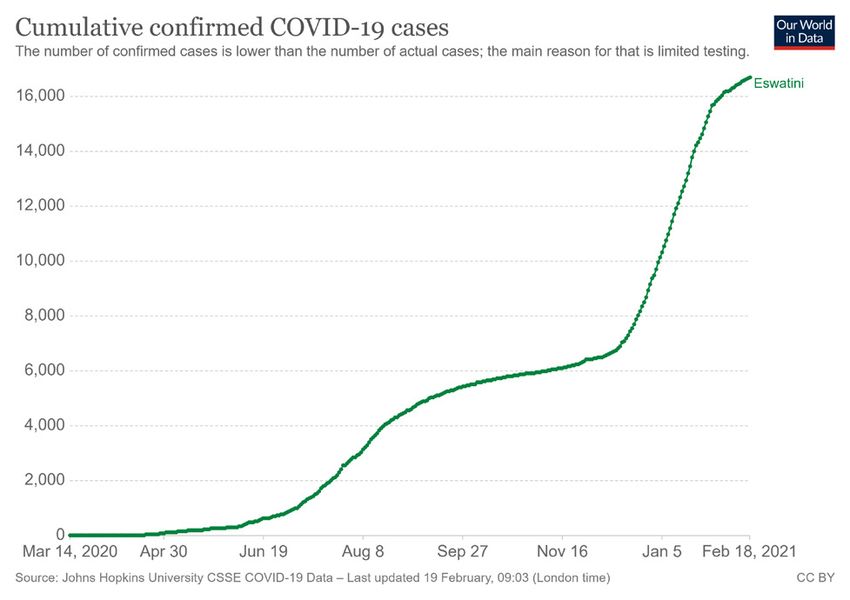
Comoros

Background
First case of Corona virus
was confirmed on 30 April
2020

Preventive                   •    The wearing of protective facemasks and social distancing measures is
Measures in Place                 mandatory in public. Religious gatherings are permitted, provided that social
                                  distancing is adhered to.
                             •    The number of passengers in public transport remains limited to 10 people
                                  in buses and four in taxis.
                             •    Regular washing of hands, social distancing (1-2 meters) encouraged at all
                                  times.
                             •    All weddings and public gatherings remain prohibited until further notice.
                                  Domestic flights, including inter-island travel, has resumed; all travelers are
                                  required to present a negative PCR test taken no more than 72 hours before
                                  departure.
                             •    Night curfews to restrict movement from 20:00-05:00 hours.

                             •    As from 31st December 2020, International flights resumed, provided the
                                  country of origin or destination is approved by the Comorian government.
                             •    International travelers are required to present a negative polymerase chain
Trade Facilitation /              reaction (PCR) test taken no more than 72 hours before arrival. Children aged
Business Support                  eleven and under are exempt from the test requirement.
                             •    Travelers who do not arrive with a negative PCR test will be required to
                                  quarantine for three to five days at a designated hotel until test results are
                                  negative.
                             •    All previously considered nonessential businesses remain open.
                             •    Support for economic operators and households (reduction of customs
                                  duties, deferral of tax obligations, etc.)
                             •    Import taxes on food, medicines, and items related to hygiene reduced by 30
                                  percent.
                             •    A fund to support employees associated with airport operations created.
                             •    The Central Bank reduced reserve requirements to 10 percent.
                             •    The authorities announced a restructuring of commercial loans and freezing
                                  of interest rates for some commercial loans.
Coordinating             Ministres de l’Economie, des Investissements, chargé del’Intégration Economique
Ministry (National       MORONI, Union des Comores
Contact Points)          Tél: +269 332 66 69, +269 339 10 15, +269 321 58 58
                         Email: minieco2019@gmail.com; sgmourtadhoi@gmail.com; Abdou_nassur@yahoo.fr

COVID-19 Response Measures           2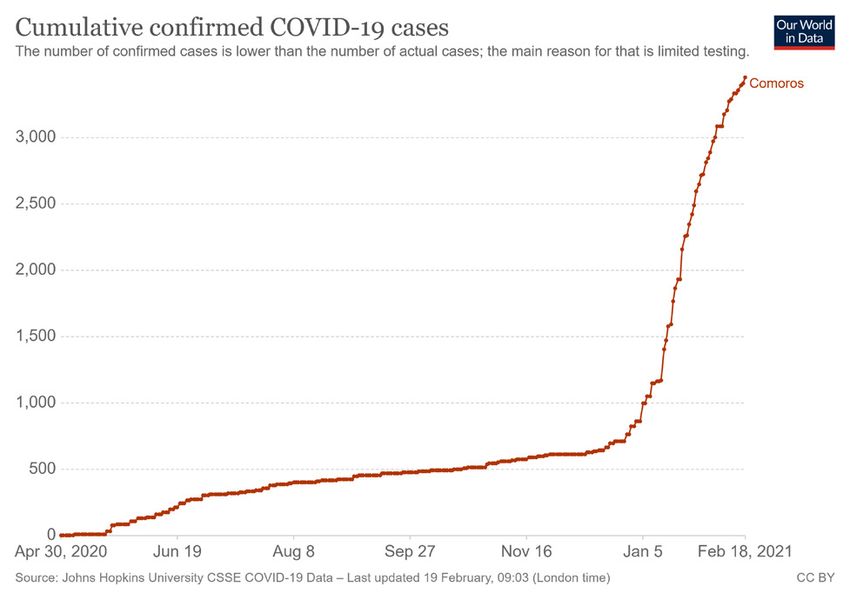
MEASURES IN PLACE IN MEMBER STATES

                                                                                       Democratic
                                                                                       Republic of
                                                                                       Congo

                                                                                        Background
                                                                                        The first case was reported
                                                                                        on 10 March 2020

Preventive              •      On 16th December 2020, DR Congo announced its approval of a locally pro-
Measures in Place              duced drug “Manacovid” as an anti-COVID drug.
                        •      International flights lifted and flight services to DR Congo operational.
                        •      Places of worship, schools, stadiums, airports, night clubs, stadiums and
                               entertainment venues reopened in August 2020.
                     Dashboard that shows current information and information on COVID-19 put in place
                     on: https://www.stopcoronavirusrdc.info/

Trade Facilitation      •      The borders are open, and Customs officers are on duty
/ Business              •      Measures to facilitate the cross-border movement of relief consignments and
Support                        essential supplies include:
                        -      Emergency collection of in-bond pharmaceutical inputs and products;
                        -      Limitation of Customs controls to what is strictly necessary;
                        -      Authorization to make incomplete and provisional declarations;
                        -      Exemption from duties and taxes on pharmaceutical supplies and equipment
                               and essential supplies, in accordance with government instructions.
                        •      Measures to support the economy and ensure supply chain continuity include:
                               Access to goods removal credit;
                               -      Adoption of measures allowing payment by instalments of Customs duties
                                      and taxes and of penalties;
                               -      Suspension of checks at outposts;
                               -      Action to facilitate compliance with the formalities for Customs clearance
                                      of goods;
                               -      Measures adopted in accordance with government guidelines, in particular
                                      as regards exemption from duties and taxes on pharmaceutical inputs
                                      and medical equipment and the suspension of Value-Added Tax (VAT) on
                                      imports of basic necessities.
                        •      Promotion of use of e-payments to reduce contamination risks in bank notes.
                        •      Fast tracking of ASYCUDA World Implementation approved.

Coordinating         Ministre des Affaires Etrangères et de la Coopération Internationale 238, Avenue de la Justice
                     KINSHASA/GOMBE
Ministry
                     République Démocratique du Congo
(National Contact    Tél: +243 998 126 526, +243 818 118 061
Points)              Courriel: minicir@yahoo.fr zachtshim@gmail.com
                     DRC Embassy in Lusaka : Tél : +260 975 852896 , Courriel : ambardclusaka@gmail.com
                                                                                                                      3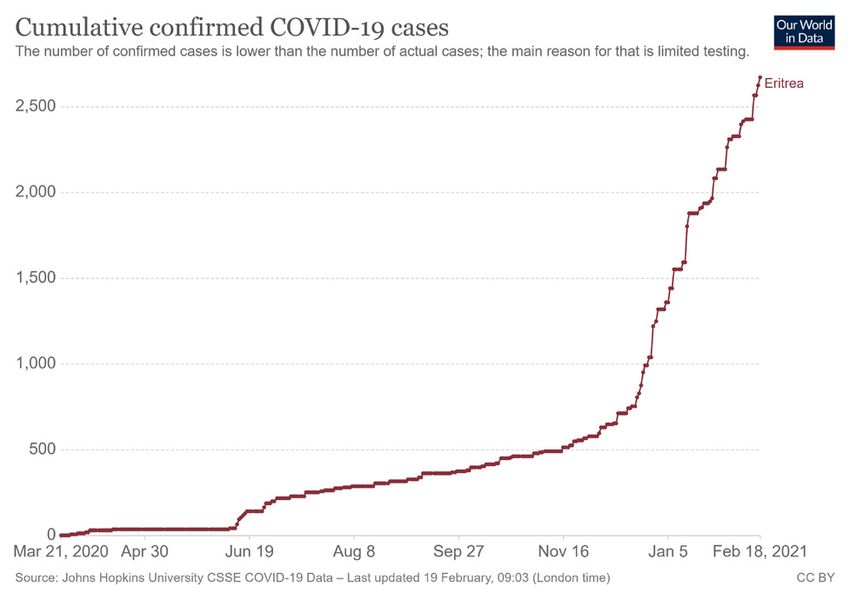
Djibouti

                                                                                    Background
                                                                                    First case was reported on 18
                                                                                    March 2020

Preventive            •      Inter-Ministerial Committee chaired by the Prime Minister and subcommittees
Measures in                  established in 2020 to observe the COVID-19 situation and impact and conduct
Place                        necessary responses.
                      •      Djibouti-Ambouli International Airport operational for commercial flights. All
                             passengers entering Djibouti tested for COVID-19 upon arrival by Ministry of
                             Health personnel. Sea ports and border posts open to receive outsiders. Upon
                             arrival at Ambouli International Airport, travelers identified with the virus either
                             go into isolation and treatment or depart Djibouti on the next available flight
                             without leaving the airport.
                      •      Airlines may require passengers heading to Djibouti to show a negative
                             COVID-19 test certificate before allowing them to board their flight.
                      •      Use of facial masks in all public or private spaces in which social distancing
                             cannot be observed is mandatory.
                      •      Places of worship opened in line with very strict measures of ensuring
                             protection including wearing of facial masks and social distancing.
Trade                 •      Cargo movement and services permitted.
Facilitation          •      Hotels and grocery stores operational.
/ Business            •      Port communities have raised awareness among Ethiopian drivers on
Support                      compliance with barrier measures and brochures in Amharic language
                             produced and disseminated to the latter.
                      •      The Djibouti Port and Corridor is still operational with an alerting protocol
                             being implemented by the port communities in case of any new COVID-19
                             cases being detected.
                      •      Djibouti Ports and Free Zones Authority (DPFZA) introduced online payment
                             gateway facility for the port community in order to limit physical visits to ports
                             and free-zones premises and decrease online documentation completion time,
                             enable savings on transportation while respecting government measures to
                             contain the spread of the pandemic
Coordinating       Ministre Délégué auprès du Ministre de l’Économie et des Finances, chargé du Commerce,
                   des PME de l’Artisanat, du Tourisme et de la Formalisation
Ministry           B.P. 24 DJIBOUTI
(National          République de Djibouti
Contact Points)    Tél : + 253 21325441 +253 77851345 + 253 21355177
                   Fax : + 253 21 35 49 09 Courriel: ministre.commerce.dj@gmail.com; ali.d.abdou@gmail.com;
                   hassanchehem@ hotmail.fr

COVID-19 Response Measures     4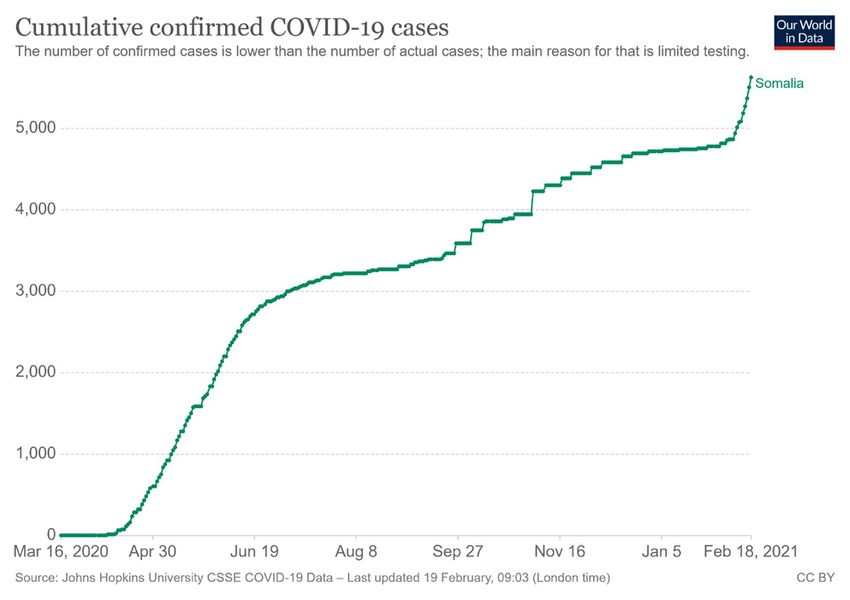
MEASURES IN PLACE IN MEMBER STATES

                                                                              Egypt

                                                                              Background
                                                                              The first case reported on 14
                                                                              February 2020

Preventive    •   Restaurants and cafes to operate at 50 percent capacity. An immediate fine of
Measures in       LE4,000 (USD 254) will be applied on violating establishments such as restaurants
Place             and cafes, and the facility will be closed for a week. In the event of repeat violations,
                  the closing period will be doubled.
              •   From 3rd January 2021, an immediate fine of LE50 (USD 3.17) would be applied on
                  individuals failing to adhere to the precautionary measures, such as by not wearing
                  a mask. Violators unable to pay the fine will be arrested. Wedding ceremonies and
                  funeral gatherings continue to be banned.
              •   On 28th December 2020, the government announced that it is imposing an EGP 50
                  (USD 3.17) fine for those who choose to not wear masks in public and in case it is
                  not paid, the case will be taken to the prosecution to take necessary action.
              •   Exams to continue as per the precautionary measures that need to be taken.
              •   On 18th November 2020 the Government ordered the medical sector to create a
                  protocol of medical treatment for COVID-19 cases that would apply to all health
                  facilities across the country and could be accessed by all citizens.
              •   On 18th November 2020 the Government announced that the Central Bank of
                  Egypt would provide financial assistance to all health establishments to enhance
                  their capacity to purchase all necessary medical supplies.
              •   Egypt officially reopened schools on 17th October 2020 to start the new academic
                  year while implementing precautionary measures against the COVID-19.
              •   Flights and tourism activities resumed in the following three governorates: Red
                  Sea, Marsa Matrouh, and South Sinai. Egypt has temporarily suspended the visa
                  requirement for travellers that are staying at a resort in Sharm el Sheikh, Dahab,
                  Nuweiba and Taba for a maximum of 15 days, and are landing at the airport of
                  Sharm El Sheikh
              •   Mandatory quarantine for visitors who test positive for Coronavirus in a government
                  isolation hospital.
              •   Adoption of an integrated plan which covers early detection, quarantine and
                  treatment measures, as well as raising public awareness.
              •   As from 1st September 2020 visitors into Egypt are required to present Polymerase
                  Chain Reaction (PCR) test results. The decision excludes Arab and foreign tourists
                  arriving on direct flights to Sharm El-Sheikh, Taba, Hurghada, Marsa Alam and
                  Marsa Matrouh airports, as well as transit passengers to those airports.

                                                                                                              5
Preventive • Official conferences and meetings allowed at a maximum of 50 participants
Measures in provided that the capacity of the hall in which the conference or meeting takes
Place place is no less than 100 people.
• Public parks and beaches to remain closed.
• Theatres, cinemas, and museums have been reopened with limited capacity.
• Restriction of public gatherings in schools, universities, bars, clubs, malls, public
transport, public gathering places and tourists’ locations.
• Public transport resumed and operates between 4 a.m. and midnight.
• Daily fumigation of all terminals, means of transport and roads.
• Public transport operators restricted to 50% of capacity of conveyance Increased
number of metro coaches in operation
• The government has expanded the cash transfer programs known as Takaful and
Karama (Solidarity and Dignity). In addition, the government has instituted new
programs to provide cash transfers to irregular workers who are substantially
affected by the crisis and distribute medical and sanitation kits to poor villagers.
• Fiscal policy is being eased to support the economy and address crisis needs,
including increases in health spending (26 percent) and social protection (10
percent).
• Allocation 100 billion Egyptian pounds (6.35 billion U.S. dollars) to finance the anti-
COVID-19 comprehensive plan and its precautionary measures.
• All services provided by ministries and governorates to citizens, such as civil
registry services, work permits, passports and renewal of traffic licenses, are all
suspended.
• Limiting cash withdrawals and deposits to avoid overcrowding during payroll and
pension disbursement. A daily limit of 10,000 Egyptian pounds (around 630 USD)
for individuals and 50,000 (around USD 3,180) for businesses is applied.
• Launched an online awareness campaign against COVID using animation. This is
also aimed at curbing misinformation.
Trade • On 1st October 2020 the Egyptian Government extended the duration of a number
Facilitation of policies and incentives designed to boost the country’s struggling tourism
/ Business sector, and these include:
Support - Waiving of visa fees until April 30th next year (2021) for tourists visiting the
governorates of South Sinai, the Red Sea, Luxor and Aswan;
• On 1st September 2020, the government introduced the New Tax Amnesty Scheme
and extended the Dispute Settlement Process.
• On 2nd September 2020, the Government introduced Solidarity Contribution on
Employment and Pension Income.
• The National Bank of Egypt announced a one-year savings deposit program with a
15% interest rate.
• Egypt secured an additional loan of USD5.2 billion on 27th June 2020 from the
international Monetary Fund to help ameliorate the economic impacts of COVID-19.
• The Central Bank of Egypt extended the tenor of all bank loans to businesses for
six months and provides debt relief for individuals.
• The exemption from the taxation of capital gains on securities listed on the
Egyptian stock exchange (EGX) for Egyptian residents extended to 1 January 2022
(originally due to expire 17 May 2020).
• The exemption from the taxation of capital gains on securities listed on the
Egyptian stock exchange (EGX) for non-residents will be made permanent.
• Withholding tax on dividends paid by companies listed on the EGX reduced from
10% to 5%.
• The Egyptian Ministry of Trade and Industry (the Foreign Trade Sector) put the
following measures in place in 2020:
- Documents, such as commercial invoices, would be accepted without being
accredited by the Chambers of Commerce (this usually being a requirement)
and
- Certificates of Origin would be accepted without authorization from the
Egyptian Embassy abroad.
COVID-19 Response Measures 6MEASURES IN PLACE IN MEMBER STATES
Trade • Stamp duty on transactions on the Egyptian stock exchange (EGX) reduced from
Facilitation 0.15% to 0.125% for non-residents.
/ Business • The grant of an “immediate” financing for the import of key commodities.
Support • Trade between Egypt and Saudi Arabia to be done through trailers only without
trucker by using RORO ships.
• General Authority for Investment and Free Zones (GAFI) currently permits local
companies to hold meetings virtually via conference and/or video calls.
• The EGX developed electronic trading support systems allowing remote access
to several platforms, including customer coding, electronic membership system,
financial solvency, and OMNI accounts.
• Allocation of USD 6.35 billion to raise wages and pension
• A USD 2.7 billion loan was requested and granted by the IMF, as an emergency
support;
• Write-off EGP 17 billion from 226 distressed firms
• Starting 1st July 2020 scheduled international flights and foreign tourists allowed
to travel to resorts that have been least affected by the Coronavirus.
Ministry of Trade and
Coordinating Industry CAIRO
Arab Republic of Egypt Tel: +20(2)2342190
Ministry Fax: +20 2 27940554
(National Fax: +20(2) 23422197
Contact Points) Email: a.elwassal@tas.gov.eg; m.ali@tas.gov.eg
Egyptian Embassy in Lusaka: E-mail: Lusaka@ecs.gov.eg; Lusakaecs@outlook.com Tel: +260-
211-251151, Fax: +260-211-250284
7Eritrea
Background
The first case was reported
on 21 March 2020
Preventive • Lockdown was declared on 2nd April 2020.
Measures in • National Task Force on COVID-19 was established at high and lower levels and has
been issuing regulations and implementing Guidelines.
Place
On 22nd December 2020 the Government reviewed restrictive measures earlier put in place
and retained the following:
• Domestic travel from one village or city to another in the country is banned.
• Funeral and mourning events may be limited to ten persons. Other social events are
prohibited.
• Private vehicles or other individual means of transportation are not allowed to
operate. Trucks are exempted from this restriction for tasks limited to freight
services.
• All citizens, except those engaged in indispensable developmental and security
tasks directed to stay at home.
• Only a maximum of two members of a household are allowed to go out from their
homes to buy essential food items during the day. This conditional permission also
holds for emergency medical treatment.
• All trading activities and transactions banned. Similarly, weekly markets that occur
in various parts of the country also remain closed.
• All government institutions ceased from performing routine services and functions
to focus on indispensable developmental and security tasks and most public sector
employees stay at home.
• People that have been confined to their homes are not allowed to use their private
cars during the period of lockdown, except the citizens employed in institutions that
have been allowed to continue their functions.
• All public and private education institutions that will continue their operations
will have to strictly observe social distancing and all personnel of the public and
private bodies that will continue their operations will be issued with permits by their
respective institutions.
• Food production, supply and processing enterprises as well as grocery stores,
pharmacies and banks will continue to provide services. These institutions will close
at 8:00 p.m. every evening.
Trade Facilitation • Major productive and service sectors (manufacturing, food processing,
/ Business construction, and transport) in operation.
Support • Citizens in the rural areas engaged in farming and animal husbandry continues
their occupational activities.
Ministry of Trade and Industry
P. O. Box 1844 ASMARA State of Eritrea
Coordinating Tel: + 291 1117103, Fax: +291 1120586; +291 1124175
Email : ericomesa2@gmail.com; abdulrah78@gmail.com; zeferfd@gmail.com
Ministry The Eritrean Ambassador to Kenya and Permanent Representative to
(National Contact COMESA New Waumini House 2nd Floor
P O Box 38651
Points) Westlands,
NAIROBI
Kenya
Tel:+254-2-443164 , Fax: +254-2-443165, E-mail: beyeneruesom@gmail.co
COVID-19 Response Measures 8MEASURES IN PLACE IN MEMBER STATES
Eswatini
Background
The first coronavirus case
was reported on 13 March
2020.
Preventive • On 16 January 2021, Acting Prime Minister Themba Masuku urged
Measures in Emaswati to immediately stop engaging in the custom of ‘kufukama’ as a means
Place to curb the spread of #COVID19.
• On 20th January 2021 Eswatini extended coronavirus restrictions by banning
alcohol sales for thirty days, including the sale of traditional homebrew.
• On 24 November 2020 Eswatini announced the following:
- Introduction of a two-year jail term for people who break coronavirus regulations
on the size of gatherings under new measures.
- Fines amounting to E25,000 (US$1,630) to be imposed.
- Compulsory wearing of masks in public or when travelling in private vehicles with
passengers.
- Arrest and 100 Emalangeni fine for people who break rules about wearing a face
mask in public places, including public transport of which an additional fine of
E800 will be imposed on the public transport drivers for allowing unmasked
passengers on board.
- Those in charge of gatherings, including weddings, funerals or community
meetings, to take necessary steps to prevent the spread of COVID-19 or face the
stipulated fine.
- The number of people attending functions such as weddings, funerals or
memorial services or an arts and entertainment event in closed areas, not to
exceed 100 and 200 people if held in an open area.
- Night gatherings still banned, including vigils.
• On 21st November 2020, Government announced the end of the national
emergency to control the spread of COVID-19
• On 13th October 2020, the government announced that some schools in the
Kingdom will continue to remain closed until at least January 2021 in line
with recommendations from health experts that there could be a new surge in
coronavirus cases.
• Intensive screening and mandatory self-isolation for residents/citizens coming
from high risk countries,
• Enhanced coordination and collaboration among stakeholders through one
channel of communication and conducting joint inspections,
• Collaboration with neighboring countries through sharing of information on
national developments that impact the movement of goods across the border,
• Provision of PPE to staff and sensitization on the pandemic,
• Restricted entry to foreign nationals coming from high-risk countries.
9Trade • The Government issued a supplementary budget for public healthcare amounting
Facilitation to E100 million (app. US$ 5.38 million) or 0.14 percent of GDP.
/ Business • Redirected low priority recurrent spending to the fight against the pandemic and
Support health infrastructure.
• The following applies for businesses:
a. Reinforcement of cleaning and sanitization protocols,
b. At Point of Sale (POS), there shall be a dedicated resource whose sole job will
be to enforce social distancing measures as patrons make payment for their
shopping.
c. Management obliged to ensure that at no point in time does the number of
people exceed 20 inside any establishment. For smaller retail shops, this figure
shall even be lower. In any event, social distancing of 1.5 metres apart shall be
observed without fail. Sanitise counters, doors and areas subject to frequent
contact by people.
d. Management obliged to enforce these measures at all times and the Ministry of
Commerce, Industry and Trade with the help of duly authorised agencies such as
Business Eswatini and FESBC shall ensure compliance.
e. Employers to ensure that public transport in which their employers are transported
are sanitized both at boarding and disembarking.
• Deco Shops to operate three times a week
• Through the Central Bank of Eswatini, a reduction of the discount rate by 100
basis points to 5.5 percent; Reduced the reserve requirement to 5 percent
(from 6 percent); Reduced the liquidity requirement to 20 percent (from 25) for
commercial banks and to 18 percent (from 22) for the development bank
• Encouragement of greater use of electronic payments;
• Encouragement to banks by the Central Bank to consider loan restructuring and
repayment holidays.
• Cross Border Trade to operate normally;
• Borders open to travelers with effect from 1 December 2020 under strict
adherence to guidelines
• Provision for later completion of clearance procedures
• Fast tracking clearance of goods for the fight against COVID-19, i.e. medicaments.
Clearance can be done after, controls still exercised
• Enhanced Customs collaboration with other stakeholders i.e. Health
(communication to clients through one channel, joint inspections, etc.)
• Provision of PPE to the Customs staff, sensitization on the pandemic.
Ministry of Commerce, Industry and Trade
Coordinating MBABANE
Ministry (National Eswatini
Tel: (+268) 404 3201, Fax: (+268) 404 3055
Contact Points) Email: itd@realnet.co.sz; nkambulesib@gmail.com
COVID-19 Response Measures 10MEASURES IN PLACE IN MEMBER STATES
Ethiopia
Background
The first case was reported
on 13 March 2020.
Preventive Measures • On 22nd October 2020, Ethiopia introduced a new law for compulsory
in Place wearing of masks in public failure of which citizens will either be fined or
face jail of up two years. Other restrictions introduced prohibit
o shaking hands and
o sitting of more than three people at a table or not keeping “two adult
steps” - around six feet apart.
• Released over 4,000 prisoners to prevent overcrowding in prisons and
contain the spread of the coronavirus
• Postponement of elections from 29th August 2020 to a new date to be
determined
• The mandatory 14-day quarantine of arrivals from abroad shortened to as
few days as three. In addition, passengers from abroad who hold COVID-19
negative certificates are mandated to isolate themselves for only three
days after giving samples and stay for 14 days at home before joining their
communities.
• Closure of all-night clubs and places of entertainment effective 20th March
until further notice
• Mass gatherings in places of worship including mosques and churches
suspended. Other public gatherings, including sporting events also
suspended. Greetings by handshake also not allowed.
• Government employees ordered to work from home.
• House to house screening and diagnostic testing conducted.
• COVID-19 Response Fund established for resource mobilization. Comprises
both private and public institutions. Contributions are both financial and
non- financial and include buildings, hotels, vehicles, sanitary items, masks,
etc.
11Trade Facilitation / • Extra funding for healthcare facilities
Business Support • Removal of the restriction on floor price for flower exports that was
previously set by the National Bank of Ethiopia
• National Bank of Ethiopia has availed 15-billion-birr (About USD 450 million)
liquidity for private banks to enable them to provide debt relief and additional
loans to their customers in need and especially the businesses adversely
affected by COVID-19
• Clamping down price gouging by retailers to protect low income households
• Emergency support of $82.8M from the World Bank to mitigate the economic
impact of COVID-19
• Ethiopia has relaxed rules for mobile banking and money transfers, opening
the market to all local businesses to encourage people to go cashless to
control the spread of coronavirus
• Commercial banks ordered to give priority to importers that import goods to
combat COVID-19 like ventilators, sanitary goods and medical equipment,
including testing kits, when providing forex.
• Ministerial level macro-economic management sub-committee has been
set up
• Waived all duties and taxes on all medical supplies and equipment imported
to fight COVID- 19
• Border closure in effect but no restrictions on cargo movements from
Djibouti to Ethiopia. Custom offices operating on both sides. However,
shortage of trucks to Djibouti due to spike in demand
• Customs and Revenue authorities are facilitating continuity of business
by implementing e-documents and e-payments and pre-arrival clearance
procedures and exempting some required documents such as certificate of
origin.
Coordinating Ministry Ministry of Trade and Industry
(National Contact P.O. Box 704
Points) ADDIS ABABA, Ethiopia
Tel:+251 115513990, +251 115527676
Email: harrimisganu.arga@gmail.com; lisanework@yahoo.com; fikrutadesse@
gmail.com;
saronlakewethiopia@gmail.com
COVID-19 Response Measures 12MEASURES IN PLACE IN MEMBER STATES
Kenya
Background
The first case was reported
on 13 March 2020.
Preventive • Schools reopened on 4th January 2021. Schools are expected to adhere to all the
Measures in necessary COVID-19 measures. All extra-curricular activities such as sports, drama,
Place music and prize-giving days, involving more than one school remain prohibited for
the next 90 days; and all exchange visits between schools shall remain prohibited
for the same period
• On 29th November 2020 the Government issued a directive banning the serving
of food in funerals and weddings to curb the spread of COVID-19. In addition, the
Government stated that funeral services will be limited to 100 people and only 15
close members of the deceased will be allowed at the grave site.
On 4th November 2020, the Government revised COVID-19 measures as follows:
• all State and Public Officers aged 58 and above to work remotely;
• all political gatherings and rallies suspended for 60 days.
• curfew revised and enforced to run between 10 p.m. and 4 a.m. till March 2021.
Initially the curfew time was from 11 p.m. to 4 a.m.
• all bars and restaurants open to the public must close by 9 p.m.
• Religious gatherings to be limited to 1/3 of venue seating capacity.
• Fines and jail time introduced for those found in breach of the various measures in
place.
• Minimized congestion in public transport and limiting visitors to hospitalized
patients in both public and private hospitals.
• Public transport including all matatus, hospitals and shopping malls are encouraged
to provide soap, water and hand sanitizers and ensure that all their vehicles and
premises are regularly cleaned and disinfected.
• Government registries and the courts closed except for the handling of emergency
matters.
• Government offices, businesses and companies encouraged to allow employees
to work from home except for those working in critical or essential services.
• Kenya Medical Research Institute developed a local testing kit
• International and domestic flights operational.
• Mandatory PCR-Covid-19-Free certificate for all international arrivals issued not
more than 96 hours prior to departure.
• Mass production of sanitizers, masks and ventilators by private sector in Kenya.
13Preventive • Temperature readings for truck crews to be taken at entry points and at designated
Measures in weighbridges which are: Namanga; Busia, Gilgil, Mariakani; Malaba and Taveta.
Place • Truck occupants to keep temperature/readings/health forms until they exit Kenya
unless they are Kenyan residents; stringent screening of the trucks; limited numbers
of crew and passengers, and any truck crew member who exhibits symptoms
occupants subject to a 14 days quarantine.
• Cashless transactions encouraged and facilitated to limit contact.
• Stringent medical screening at all border points. Only drivers, loader plus the
clearing agent are allowed across the border.
• A 100-percent tax relief for low-income-earning persons up to KES24,000
• Reduced the top Pay-As-You-Earn (PAYE) rate from 30 percent to 25 percent.
• Appropriation of KES 10 billion through cash transfers to the vulnerable members
of society.
• Disbursement of KES 1 billion for the recruitment of additional medical personnel.
• On 4 December government announced the return to pre- Covid-19 situation on the
following with effect from January 2021:
Trade a. The VAT rate reverts to 16% from the current 14
Facilitation b. The Individual Income tax rate reverts 30% from the current 25%
/ Business c. The Corporate Tax rate reverts to 30% from the current 25%.
Support • Cashless transactions such as mobile money and credit cards are encouraged.
• 24-hour Call Centre and information portal set up and manned by Kenya Private
Sector Association (KEPSA)
• Lowering of Central Bank Rate (CBR) to 7.2%
• Lowering of Cash Reserve Ration (CRR) to 4.2%
• Central Bank of Kenya offered flexibility to banks on loans that were active as of
March 2020 to maintain liquidity levels
• Assessment and restructuring loans taken by corporate borrowers (and SMEs)
based on their respective circumstances arising from the pandemic.
• Cargo movement allowed to continue however spike in transport requirements
has led to a strained supply of trucks.
• Mandatory requirement for all returning cargo crew to self-isolate for a period of
14 days straining cargo operations.
• Office hours for Customs Offices changed to 9.00 – 3.00pm at a 50% reduced
staffing. There is also reduced access to Customs officers and other officials.
• Kenya Ports Authority has reduced workforce to two shifts.
• KPA enabled online document submission systems to reduce human contact at
Mombasa Port
• Mandatory pre-arrival report of ships
• Allocated of USD 100 Million to fast-track payment of outstanding VAT refunds
and other pending payments to SMEs. USD 30 million as seed capital for SME
Credit Guarantee Scheme.
• Allocation of USD 20 Million soft loans to hotels and related establishments.
• Allocation of USD 15 Million to assist flower and horticultural producers to access
international market.
• Enforcement of “Buy Kenya, Build Kenya” policy.
• Allocated of USD 6 Million to purchase locally manufactured vehicles.
• Trade related essential services providers, Customs, Immigration, and Port Health
officials are exempted from the provisions of curfew and required to work 24
hours.
COVID-19 Response Measures 14MEASURES IN PLACE IN MEMBER STATES
Coordinating Ministry of Industrialization, Trade & Enterprise Development
Ministry P.O. BOX 30547-00100
Kenyatta Avenue NAIROBI
(National
Tel: +254-20 2731531/2-44, +254-20 310983
Contact
Fax +254 20 3313600
Points)
E-mail: pa@industrialization.go.ke, psfortrade@gmail.com; b_makau@
yahoo.co.uk;
jnwkario@gmail.com Website: www.industrialization.go.ke
Kenya Ministry of Health:
Twitter: @MOH_Kenya, Facebook: MinistryofHealthKE, website: http://www.health.go.ke/
KRA Contact Points:
· For Domestic Taxes and all frequently requested services, log on to: https://itax.kra.
go.ke/KRA-Portal/
· For Customs related taxes, log on to ICMS (Integrated Customs Management Systems)
and the Simba System
· For Supply Chain Management (SCM) or e-procure-
ment, log on to: http://www.kra.go.ke/en/tender
· For additional support, call our Contact Centre on Tel: 020 4 999 999, 0711 099 999 or
Email: callcentre@kra.go.ke
15Libya
Background
The first case was reported
on 3rd April 2020
BACKGROUND
Preventive • Large public gatherings banned
Measures in • Flights resumed at the Mitiga Airport in the Libyan capital Tripoli on 9th August
Place 2020.
• A special committee that includes the ministries of interior, finance and health
formed to develop a policy and procedures for repatriating Libyans from abroad.
• The Supreme Committee for Combating COVID-19 closed all vegetable and meat
markets, but bakeries and some shops remain open to meet people’s needs.
• Points of Entry (PoEs) to screen travelers arriving from affected areas established
at three airports (Mitiga, Misrata and Benina), four seaports and land border entry
points at Ras Ijdier, Wazen and Msaed.
• Testing is being undertaken for truck drivers travelling over the Tunisian/ Libyan
border with drivers required stay for 14 days in Zwara for quarantine.
• Authorities in both the West and East have started to repatriate Libyan citizens
stranded overseas (those wishing to return are in Egypt, Tunisia and Turkey).
• Returning citizens are tested and allowed to quarantine at home for 14 days.
• Following government directives issued on 14th November 2020, Libyan authorities
Trade reopened the land border with Tunisia.
Facilitation • Cargo transportation exempted from ban
/ Business • Eastern authorities reopened borders from 31st August 2020.
Support
• No penalties apply to the late filing of corporate income tax, personal income tax
and stamp duty returns.
• Customs and Revenue authorities are facilitating continuity of business by
implementing e-documents and e-payments and pre-arrival clearance procedures
and exempting some required documents such as certificate of origin.
Ministry of Economy and Industry
P.O. Box 4779 TRIPOLI, LIBYA
Coordinating Cell: +218 928 344531, Fax: +218 214 831394, Email: libya_zambia@yahoo.com
Ministry Ministry of Foreign Affairs. Minister Plenipotentiary TRIPOLI
(National Libya
Contact Cell: +218 91 0123447, Email: elseed.ali@hotmail.com
Points) Embassy of the State of Libya
P O Box 35319
LUSAKA, Zambia
Tel : +260(211) 253055/255388, Fax : +260(211) 251239, Mobile: 0955 208900/0977 977605
E-mail : libya_emb_zm@foreign.gov.ly; farajzarroug@gmail.com
COVID-19 Response Measures 16MEASURES IN PLACE IN MEMBER STATES
Madagascar
Background
The first case reported on 20
March 2020.
Preventive On 11th January 2021 the Government reviewed and retained COVID-19 restrictive
Measures in measures as follows:
Place • All shops, restaurants, places of worship, and recreational centers are permitted
to operate without significant restrictions, as long as social distancing and
sanitization measures are followed.
• Gatherings are permitted with no more than 200 participants.
• The wearing of a protective facemask remains mandatory in public spaces.
• Domestic are permitted and all air travelers will be subjected to a Polymerase
Chain Reaction (PCR) test taken no less than 48 hours before departure. Only
those with a negative test result will be permitted to board flights.
• All public transport is permitted to resume business.
On international travel:
• International travel to Nosy Be International Airport (NOS) is permitted; however,
international travel to other airports remains prohibited. In addition, testing is
required upon entry to Nosy Be International airport. Travelers are requested to
quarantine until test results are known. If the test is positive, travelers are required
to visit a state-mandated health centre for treatment.
• Travelers who enter the country will need to provide proof of a negative COVID-19
test taken no more than 72 hours prior to arrival.
• Travel from countries experiencing an elevated number of COVID-19 infections,
such as the US, remains suspended until further notice.
• Beginning 17th September 2020 curfew hours in the capital Antananarivo
shortened to start from 23:00hrs to 04:00hrs. The earlier curfew put in place was
from 22:00 hours to 04:00 hours. Grocery stores can operate as well until 18:00
hours.
• Public markets operational for only three days a week subject to strict SOPs;
• 14-day quarantine mandatory for individuals who have had possible exposure to
COVID-19; travel limited to essential services and work;
• All entertainment venues closed, and all sporting events suspended.
17• Cash-transfers and in-kind necessities to the poorest and those unemployed.
Trade • Gradual relaxation of lockdown allowing movement and public transportation
Facilitation from 0600-1300 hours
/ Business • Price controls introduced by government to regulate the prices of essential
Support
services and to prevent businessmen from taking advantage of the situation to
hike prices
• Ports are operational while respecting governmental procedures.
• Customs offices Tamatave and Antananarivo will ensure maximum service
with minimum contact. However, humanitarian aid, pharmaceuticals and basic
necessities will be given priority.
• Temporary suspension of all exports of drugs and other health products
Coordinating Secrétaire général du Ministère des Affaires
Ministry (Na-
Étrangères 1, rue Andriamifidy, Anosy ANTANANARIVO 101
tional Contact Madagascar
Points)
Tél: +261 34 49 555 89 / +261 34 66 635 44
Courriel : sg.mae.gov@gmail.com; rthm12@yahoo.fr;
Director of the COMESA- Tripartite Department Directorate of Regional Integration
Ministry of Foreign Affairs
Tel.: +261 34 39 388 95, +261 34 66 635 86
Email: dcrmae2019@gmail.com; mbola.andriana@gmail.çom mar.rabi@yahoo.fr
COVID-19 Response Measures 18MEASURES IN PLACE IN MEMBER STATES
Malawi
Background
The first case reported on 2nd
April 2020
• Malawi declared a State of National Disaster effective 12th January 2021 in all its
Trade 28 districts. The declaration follows the death of two Cabinet Ministers on 12th
Facilitation January 2021 and a spike in infections and COVID 19 related death.
/ Business
• A curfew remains in place from 21:00hrs to 05:00 a.m.
Support
• All bars and restaurants are required to close at 20:00 hours.
• All businesses and public service buildings must be sanitized at least once a week
and fitted with handwashing facilities at entrances and exits.
- Travelers entering Malawi are required to produce a PCR negative certificate of
not more than 10 days old from a designated testing laboratory from the country
of origin.
- Travelers arriving without a PCR certificate will have their samples taken at their
own cost and will be required to self-quarantine as the results are awaited.
- Non-Malawian arriving travelers who test positive will be managed according to
the guidelines of Malawi at his/her own cost.
- Restriction of all gatherings, including religious ones, to not more than 50 persons
- Markets in the country to close no later than 5:00 p.m where all merchants and
customers must observe standard SoPs.
• From 14th August the Government eased COVID-19 rules on public gatherings by
allowing up to 100 people to gather.
• On 7th September schools opened in Malawi but with strict adherence to health
guidelines by both learners and teachers. Schools were closed on 20th March
2020.
• As of 9th August 2020, mandatory wearing of face masks in all public spaces
declared failure of which can result in a fine of 10,000 Malawian Kwacha (USD 13).
• Beginning 9th August 2020, all markets, shops and businesses that are in close
proximity to hospitals ordered to close.
• Introduction on 1st August 2020 of the Zikomo Presidential Award as a token of
thanks to the most dedicated health care workers in the fight against COVID-19.
• Recruitment of 2000 health workers to support the fight against COVID-19
• Mandatory 14 days quarantine for all travelers from COVID-19 affected countries
19• Opening of institutional isolation and treatment centers in the cities of Blantyre,
Trade Lilongwe and Mzuzu (this is a Preventive Measure).
Facilitation • Reduction of fuel prices to lower the transport costs
/ Business • Application of tax waivers on the importation of essential goods for Corona
Support
Virus management
• Reserve Bank of Malawi to allow banks to offer a three-month moratorium on
interest payments on loans to small- and medium-sized businesses
• The country’s Competition and Fair-Trading Commission to put in place strict
monitoring of price controls and punish anyone found increasing prices
• The government to increase loans under the Malawi Enterprise Development
Fund that will help micro, small and medium scale businesses that have been
seriously affected by COVID-19
• Tobacco markets to remain open and allowed to operate without disruption to
protect small farmers and bolster foreign currency receipts.
Coordinating Minister of Industry, Trade and Tourism
Ministry P. O. Box 30366 LILONGWE 3 Malawi
(National Contact Tel: +265 999 969669; +265 1 770244, +265 1 780244, 780647
Points) Fax: +265 1 770680, +265 1 780680, 782183
Email: minci@malawi.net; ken.ndala@gmail.com, kelphas.m@gmail.com
COVID-19 Response Measures 20MEASURES IN PLACE IN MEMBER STATES
Mauritius
Background
The first case was reported
on 18th March 2020
• Covid-19 vaccination programme launched on 26th January 2021 giving
priority to front line workers including health care professionals, employees
Preventive of the tourism industry as well as senior citizens and those with underlying
Measures in Place
medical conditions
• On 18th September 2020 announced a phased easing of travel restrictions.
As from 1st October 2020, borders reopened to Mauritian nationals, residents
and tourists travelling to Mauritius for long stays. Visitors will have to undergo
a PCR test 5 days prior to travel to Mauritius. Upon arrival in Mauritius, a 14-day
quarantine will be mandatory at an establishment approved by the authorities.
• Treatment of COVID-19 patients in hospitals and community infection control
measures under implementation including contact tracing in line with WHO
recommendations;
• Sensitization of the population on the precautionary and hygiene measures
including, the wearing of masks, use of hand sanitizers, home confinement
and social distancing through media campaigns in appropriate languages;
• Shopping authorized in supermarkets and shops selling essential commodities
based on alphabetical order under strict conditions subject to sanitary control;
• Postponement of court cases;
• Food safety nets for vulnerable persons put in place.
Trade Facilitation • Provision of a Special Relief Fund to economic operators to meet cash flow
/ Business Support and working capital;
and related • Setting up of a standing committee to explore ways to limit the impact of the
measures Covid-19 on trade and businesses.
• Exemption of municipal fees for some 13,000 market stallholders;
• Lines of credit and soft loans made available to support vulnerable companies/
SMEs from the import-export sector and tourism industry.
• Financial Support/Assistance to individuals by Commercial Banks and other
financial entities:
• Introduction of contactless transactions by some commercial banks;
• A loan scheme was provided to Mauritians stranded abroad to cater for their
needs;
• COVID-19 Support to Households Programme introduced to defer the capital
repayment of home loan.
21Trade Facilitation Employment-related measures
/ Business Support • Both public and private sector employees have been working from home;
and related • Work Access Permits issued to those in need of accessing their places of
measures work;
• Wage Assistance subsidy provided to companies for payment of staff salaries;
• Financial support provided to workers in the informal sector/ planters/
fishermen;
• Hotline put in place to facilitate inter-alia, complaints and employments laws;
Other measures:
• A COVID-19 Solidarity Fund created to support the population;
• Capital Market activity has been suspended until further notice;
• The Government has applied for a grant of MUR 26bn from the World Bank;
• Payment of vehicle insurance and renewal of road taxes deferred by a month;
• Electricity consumption rates reduced for low income groups/ small
businesses;
• Control of prices of several basic commodities such as rice, cheese, flour etc;
Minister of Foreign Affairs, Regional Integration and International Trade PORT LOUIS
Coordinating Republic of Mauritius
Tel: (230) 405 2541; (230) 405 2622
Ministry
Fax: (230) 211 3148, (230) 2137674
(National Contact
Email: sfa@govmu.org; secretariatmofa@govmu.org; mphokeer@govmu.org; skhundoo@govmu.org
Points)
Focal Point – Ministry of Health & Wellness
Mr. S. Ramasawmy,
5th Floor, Emmanuel Anquetil Building, Port-Louis, Mauritius
Tel: 230 201 1892
Fax: 230 201 2330
Email: swrasawmy@govmu.org
COVID-19 Response Measures 22MEASURES IN PLACE IN MEMBER STATES
Rwanda
Background
First case was reported on 8
March 2020
Preventive • On 14th February 2021 health authorities rolled out a mass testing exercise for Kigali
Measures in City residents who presented symptoms of COVID-19;
Place • Rwanda on 5th January 2021 banned transport in and out of the capital Kigali and
extended an evening curfew for another 15 days. On 2nd February 2021, Government
extended the lockdown in Kigali until 8th February 2021 to contain the spread of the
pandemic. Under the lockdown;
• Unnecessary movements are restricted except for essential services such as medical,
grocery shopping, and banking among others, according to a government statement.
• The Cabinet directed most public and private employees to work from home, with the
new measures expected to be reviewed after 15 days.
• While inter-districts public transport is restricted, most businesses are closed save
those distributing and delivering essential services such as food, medicine, hygiene
and cleaning products, and fuel. They are ordered to operate at 30% capacity, and
close by 6 p.m. local time (1600 GMT).
• Educational institutions and places of worship have also been shut with schools, both
public and private, advised to revert to remote learning.
• Tourism activities such as hotels, tour operations will continue to work in line with
health guidelines.
• The Kigali International Airport, the country’s main airport, however, will remain open
with arriving travelers required to present a negative COVID-19 test taken within 120
hours prior to departure.
• Designated hotels for arrivals will remain open in accordance with the COVID-19
prevention measures, whereas departing travelers must also present a negative
COVID-19 result.
• Beginning 8th February 2021, visitors to Rwanda to be required to present a negative
Covid-19 PCR test taken within 72 hours of boarding their flights.
• On 23rd January 2021, Government commenced random testing exercises in all Kigali
city cells.
• With effect from 17th December 2020, the Ministry of Health cleared 42 private clinics
to start testing patients for COVID-19 using antigen rapid tests.
• Beginning 11th December 2020, the Government issued guidelines to control the
spread of COVID-19 with regard to the resumption of entertainment activities (live
performances) and exhibitions as follows:
• All concerts should request the authorization of the events from the district
administrations or send it to the City of Kigali with a copy to the Ministry of Youths and
Culture and Rwanda
23Preventive • Development Board. This should be done ten days prior to the event and the proposal
Measures in should contain all the information regarding the concert including the venue, organizer,
Place etc.
• With regard to social distancing measures, participants should not exceed 50 per cent
of the venue capacity and seats must be placed 1.5 meters apart and two meters
apart for tables.
• Vocalists, singers and dancers will be allowed to perform without a mask, however
they should maintain a two-meter distance between them and three meters from the
audience (as well as the audio-visual crew). Speakers should also sanitize their hands
as they share microphones.
• Exhibition organizers should have the minimum booth of 2m x 2m spacing having two
people per booth with a physical distance of 1m between seated exhibitors. During the
exhibitions, visitors are not allowed to touch the merchandise.
• Cultural shows will only last for three hours maximum and all participants will be
required to have a negative Covid-19 test certificate.
• All events must use e-ticketing methods to issue the tickets and restaurant services
will be authorized once the organizers have requested so, and clearly stated how it will
be used in accordance with Covid-19 protocols.
• Movement to be allowed for passport holders and those with temporary travel permit,
unlike previously when people also used national IDs to cross.
• Travelers to follow health protocols, including rapid tests for COVID-19 before being
allowed to proceed to their destinations.
• Government established an online platform for people in need of essential services
including visiting hospitals, attending to emergencies, shopping etc. to apply for
clearance of movement.
• Commercial flights to and from the country were allowed to operate as from 1st
August 2020. RwandAir resumed international flights on 1st August 2020 starting with
Africa routes. RwandAir to resume weekly flights to the London and Brussels routes
beginning October 3rd, 2020. Health measures put in place to safeguard the health of
passengers, crew, and airport staff as provided by Ministry of Health and ICAO.
• Places of worship operational subject to approval by local authorities.
• Domestic and international tourists visiting Volcanoes National Park, Nyungwe
National Park, and other parks must test negative for COVID-19 – at their own cost -
within 48 hours prior to visiting the parks.
• All passengers arriving in Rwanda by commercial flights including those in transit
required to show proof of a COVID-19 PCR negative test from a certified laboratory
taken within 72 hours of arriving in Rwanda. A second PCR test to be conducted upon
arrival – with results delivered after 24 hours.
• Apart from the national Kigali National Reference Laboratory, other satellite testing
labs set up in COVID-19 hotspots areas of the country which include the districts of
Kirehe, Rubavu, Rwamagana, Nyagatare, and Rusizi, This is to hasten the process of
• generating results for patients to ensure timely interventions.
COVID-19 Response Measures 24MEASURES IN PLACE IN MEMBER STATES
Trade Facilita- • Rwanda Revenue Authority (RRA) announced temporary measures to support
tion/ Business businesses as Rwanda and the world continue to grapple with effects of Covid-19.
Support The measures are in line with the “Support Business for Economic Resilience” theme
of 2021 and are as follows:
• Extension of “Quitus Fiscal-2020” validity
• Extension of the deadline for rental income tax, trading license
• Temporary suspension of strict debt recovery measures
• Flexibility in customs operations
• On 8th January 2021, Rwanda launched a new COVID-19 treatment facility with a
capacity of admitting over 136 patients in its Intensive Care Unit (ICU).
• The Ministry of Health has launched a new COVID-19 treatment facility with a capacity
of admitting over 136 patients in its Intensive Care Unit (ICU).
• On 18th January 2021, Rwanda closed schools in Kigali to curb COVID-19 spread.
• Hotels to operate and offer tourism and conference services but must adhere to the
provided health guidelines.
• Religious wedding ceremonies allowed to take place but should not exceed 30 people.
• Restaurants and cafes allowed to operate until 7;00 p.m.
• Social distancing to be observed in public places.
• Wearing of face masks is mandatory in public places and multi-family settings.
• Maximum utilization of non-intrusive cargo scanners for homogeneous goods.
• The whole clearance process for imports, exports and transit is conducted in the
Rwanda Electronic Single Window (RESW) which minimizes to a great extent any
human intervention.
• Authorized trucks carry not more than two people including the driver.
• All cargo and conveyors shall be offloaded and transshipped at the Customs point of
entry (i.e. Rusumo and Kagitumba Customs Border Posts).
• Warehousing facilities available for loading, offloading and warehousing of cargo at
the entry points;
• Inland Cargo depots shall be availed for effective loading and transshipment exercises
at the Customs entry point;
• Clearing of goods to be done using the pre-clearance mechanisms currently in place
• i.e. SCT Clearance framework and payment of duties and taxes before the arrival of the
goods quick release at the entry border posts;
• All declaration documents accompanying cargo must be submitted electronically to
customs administration to avoid paper manipulation;
• Clearing agents must declare the full detailed description of goods to expedite the
clearance and release of goods;
• Clients with perishable goods and consignments that require special warehousing
facilities such as petroleum products shall be allowed to proceed to destination after
change of crew members (truck drivers) in respect with the current health guidelines
in places;
• Transit cargo to be escorted upon entry to the final destination and truck drivers to
stop only at designated points.
• The Central Bank of Rwanda provided a Rwf50 billion ($54 million) facility and reduced
the reserve requirement ratio for commercial banks from 5 per cent to 4 per cent to
Coordinating Ministry of Trade and Industry
Ministry (Na- B. P. 73 KIGALI Rwanda
tional Contact Tel: +250-784855445, +250788415515
Points) Email: ps@mineacom.gov.rw msebera@minicom.gov.rw
25You can also read


