Call to Action Vitamin A for the Management of Measles in the United States - March 2020 - National Foundation for Infectious Diseases
←
→
Page content transcription
If your browser does not render page correctly, please read the page content below
Call to Action
             Vitamin A for the Management of Measles
             in the United States

March 2020
Call to Action
Experts gathered to discuss
                                                   Vitamin A for Measles
the use of vitamin A for the
management of measles                              Management in the US
in the United States (US)
The recommendations in this Call to Action
are based on discussions from a November           Overview
2019 Summit convened by the National
                                                   Measles is an acute, highly contagious disease that results
Foundation for Infectious Diseases (NFID).
                                                   from infection with measles virus and is an important
NFID invited multidisciplinary subject             cause of morbidity and mortality worldwide.¹ Measles
matter experts representing pediatric              was declared eliminated (the absence of endemic virus
infectious disease, ophthalmology,                 transmission in a defined geographical area, such as a
infection prevention and control, pediatric        country or region, for more than 12 months) in the US
                                                   in 2000. However, outbreaks continue to occur in the
hospital medicine, public health, healthcare
                                                   US, largely in unvaccinated people. According to the
epidemiology, nursing, pharmacy, infectious        Centers for Disease Control and Prevention (CDC), in 2019
disease researchers, and those involved in         there were more than 1,200 measles cases in 31 states,
the most recent US measles outbreaks, to           representing the most cases seen in the US in 25 years.²
discuss the use of vitamin A in US measles
                                                   Measles is a paramyxovirus transmitted between humans
management, and specifically:                      that attacks epithelial structures (e.g., eyes, oropharynx,
                                                   lungs, and intestines) with the respiratory tract rarely
∙ Published literature and gaps
                                                   escaping impact. A characteristic rash typically appears
∙ Current understanding of the                     14 days after exposure, generally two to three days
                                                   after fever and upper respiratory symptoms begin. The
  physiologic role and immune impact               infection can result in severe, sometimes permanent,
  of vitamin A                                     complications including pneumonia, seizures, brain
                                                   damage, and even death.¹
∙ Current recommendations and
  adherence                                        Measles is the most contagious infectious disease
                                                   currently known to humans. Ninety percent of
∙ Key research challenges and needs                susceptible people exposed to the virus become infected,
  in the US                                        unless they are immune. A measles, mumps, rubella (MMR)
                                                   vaccine, given in a two-dose series, one at 12–15 months
∙ How to best optimize language                    and another at 4–6 years, is the best prevention against
                                                   measles. Protection of vulnerable individuals who have
  and practices to help provide clarity
                                                   been exposed to the virus is achieved by giving measles
  to US healthcare professionals and               vaccine within 72 hours of exposure, or intramuscular
  the public                                       or intravenous immunoglobulin up to day six after
                                                   exposure, to prevent disease. Treatment of individuals
                                                   with measles is typically supportive in nature, including
                                                   acetaminophen or ibuprofen, and intravenous fluids.
                                                   Additional interventions, such as antibiotics, may be
                                                   indicated for measles-related complications.¹ There is
                                                   currently no antiviral medication available specifically for
                                                   measles treatment.

                                               1
The management of patients with measles also includes               are 900 mcg RAE and 700 mcg RAE per day for men and
provision of vitamin A for reducing complications and               women, respectively. For pregnant and breastfeeding
mortality. Vitamin A deficiency affects the severity of             women, the recommendations are higher. For children
measles, delays recovery, can lead to measles-related               under 13, the recommendations fall within the 300 - 600
complications, including blindness, and is associated               mcg RAE range dependent upon age. Individuals can get
with a higher rate of deaths.3,4,5 Vitamin A has been               the recommended amounts through a balanced diet.⁹
recommended for decades by the American Academy
of Pediatrics (AAP) and the World Health Organization               Vitamin A deficiency in the US is rare.10 It is much more
(WHO) for hospitalized children with measles.6,7 However,           common in low- and middle-income countries because
recent studies show that vitamin A has not been used                individuals often have limited access to foods containing
appropriately to treat US children with measles—either              vitamin A from animal-based food sources and/or do not
by not using vitamin A at all or by using insufficiently low        commonly consume fresh fruits and vegetables.9
doses.8 The reason for this is unknown.                             Because of the important role vitamin A plays in immune
With an increased number of measles cases in the US,                function, vitamin A deficiency affects the severity
existing international guidelines in place, and the known           of illness and the rates of deaths associated with measles.
benefits of vitamin A well-documented, why is there                 Studies in low- and middle-income countries have found
low adherence to these recommendations? It is timely                vitamin A deficiency to be associated with severe
and relevant to refresh the evidence on this topic and              measles-related complications and death in children,
urgently disseminate knowledge of this important                    delaying recovery, and promoting xerophthalmia.
infectious disease intervention to practicing healthcare            Xerophthalmia is the term used to describe the ocular
professionals in the US.                                            manifestations of vitamin A deficiency including night
                                                                    blindness, severe conjunctival dryness, and Bitot
In November 2019, NFID convened a Summit that included              spots (white keratin build up on the conjunctiva and
multidisciplinary subject matter experts from across the US         characteristically seen in vitamin A deficiency). In worse
representing pediatric infectious disease, ophthalmology,           case scenarios, corneal ulceration can develop and lead
infection prevention and control, pediatric hospital                to blindness.3,4,5,11
medicine, public health, healthcare epidemiology, nursing,
pharmacy, infectious disease researchers, and those
involved in the most recent US measles outbreaks, to
discuss the use of vitamin A in US measles management.                 In the US, studies have shown that
The following report outlines key discussion points and
                                                                       hospitalized measles patients are
recommendations from the Summit.
                                                                       frequently vitamin A deficient, with low
The Role of Vitamin A                                                  serum vitamin A levels correlating with
                                                                       the severity of measles disease.12,13,14
in Measles Infection
                                                                       One study among US children with measles
Vitamin A, or retinol, is a micronutrient that is critical in          showed that children with no known
supporting the immune system, vision, reproduction, and
                                                                       prior vitamin A deficiency exhibited
cellular communication. It is known as an anti-infective
vitamin because of its role in enhancing immune function               a significant decline in their serum retinol
including immunoglobulin expression and cellular immune                levels during the acute phase of measles.
response. Diet is the primary source of vitamin A from                 This decline in circulating retinol was
foods such as milk, eggs, cheese, fortified cereals, leafy             associated with increased duration of fever,
green vegetables, orange vegetables, fish, and meat
(in particular liver). Less commonly ingested, but high in
                                                                       higher hospitalization rates, and decreased
vitamin A, is cod liver oil. The recommended daily allowance           antibody titers. In the study, plasma retinol
for vitamin A depends on your age and sex. Average daily               levels returned to normal during the
recommended amounts are listed in micrograms (mcg)                     recovery phase.14
of retinol activity equivalent (RAE). Recommendations

                                                                2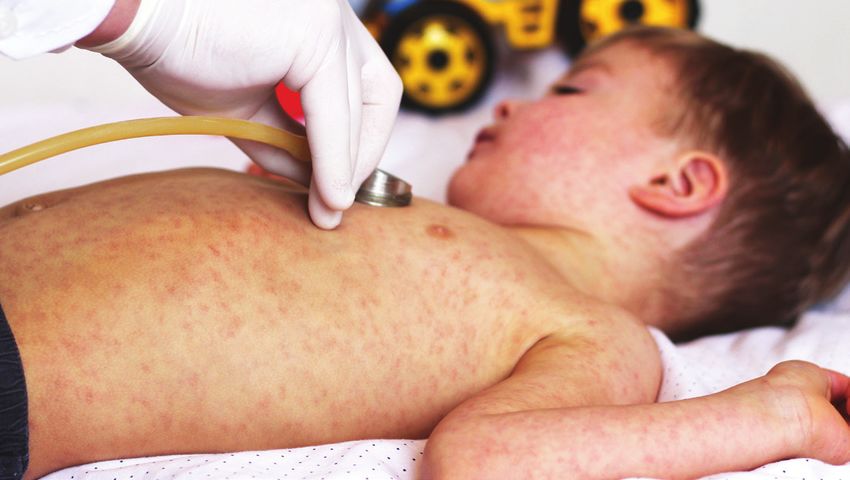
In the past two decades, research has helped explain the       History of Vitamin A for Measles
mechanisms involved in the interaction between measles
infection and vitamin A deficiency. See Figure 1 below.        Management Globally
However, measuring retinol levels during infection is          In 1932 in London, England, Joseph B. Ellison, MD and
time consuming, and tests can be costly. In addition,          colleagues were the first to suggest that vitamins A and D
there is a need for clarity on what test to use, and how       may have a protective effect during measles infection
test results should impact clinical care. The need for         by limiting the severity of pulmonary complications.17
additional research remains, as the mechanisms by              Since then, studies have shown reductions in morbidity
which vitamin A affects immune function have not been          and mortality in children with measles treated with
completely examined at the molecular level but vitamin A       vitamin A in low- and middle-income countries.3,18,19
is inexpensive and, if needed, acts quickly.
                                                               In contrast, recognition of vitamin A deficiency increased
                                                               in the 1980s following research published in The Lancet
                                                               from Alfred Sommer, MD and colleagues that found
                                                               vitamin A deficiency dramatically increased mortality. The
    Figure 1                                                   study showed that the mortality rate among Indonesian
    This figure illustrates three mechanisms by which          children with mild xerophthalmia was on average four
    infections are known to impair vitamin A status:           times the rate, and in some age groups eight to 12 times
    decreased intake due to anorexia, decreased                the rate, compared to children without xerophthalmia.20
    absorption, and increased urinary excretion.16
                                                               To demonstrate the link between even mild vitamin A
                                                               deficiency and pediatric mortality, Sommer and
                 Central Nervous System
                                                               colleagues conducted large-scale, community-based,
                                                               randomized trials from 1983 through 1992. The first
                                            Intake
                                                               large-scale randomized field trial of the impact of 200,000
                                            Absorption         international units (IU) of vitamin A supplementation
   Anorexia                                 Utilization?
                                                               every six months on subsequent child mortality in Aceh,
                                                               Indonesia, was published in 1986. The results showed
                                            Excretion
                                                               a 34 percent reduction in mortality among children
                                                               age 1–5 years.18 These results were replicated in
                                                               subsequent trials in Africa and Asia.

                                                               Following this study, questions were posed: was vitamin
                                                               A deficiency responsible in part for the large number
   Release                                                     of measles deaths observed in children, and would
   from                                     Requirement?       management with vitamin A reduce measles case fatality?
   Liver                                    Site of            Follow-on studies in several African countries showed
                                            Inflammation       that vitamin A in children with measles could reduce fatality
   Urinary
   Loss                                                        by roughly 50 percent, as Ellison had also observed.3,19
                                            Retinol
                                            oxidation?

                                                           3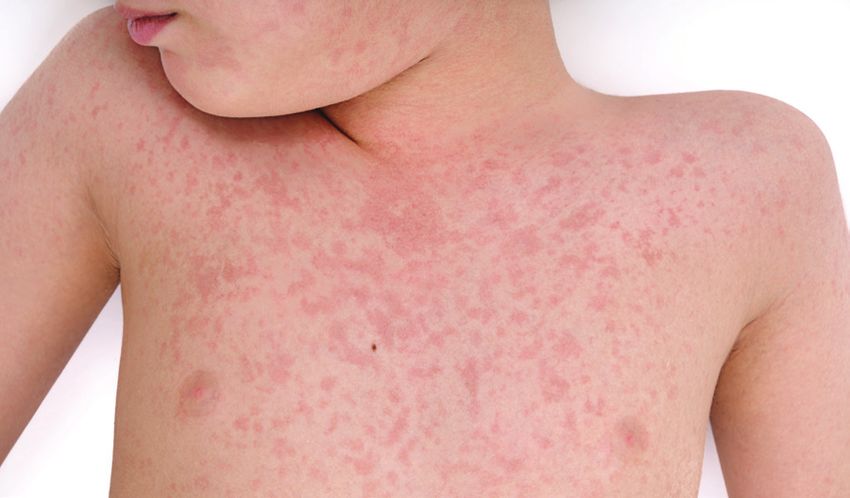
“Plain and simple. To improve clinical
Recommendations and Guidelines                                         outcomes, children with measles need
for Vitamin A in Measles                                               age-appropriate doses of vitamin A.”
Management—Global and US                                              —Alfred Sommer, MD, MHS
Soon after many of the vitamin A trials were published,                Bloomberg School of Public Health
WHO and The United Nations Children’s Fund (UNICEF)
issued a joint statement recommending that vitamin A
be administered to all children diagnosed with measles
in communities where vitamin A deficiency (serum retinol           The AAP Committee revisited that language in 2018

Red Book: Report of the
Committee on Infectious Diseases
American Academy of Pediatrics
2018–2021. 31st Edition
Vitamin A. Vitamin A treatment of children with
measles in resource-limited countries has been
associated with decreased morbidity and
mortality rates. Low serum concentrations
of vitamin A also have been found in children in         Where We Are Today: Vitamin A
the US, and children with more severe measles
illness have lower vitamin A concentrations.             and Measles Management in the US
WHO currently recommends vitamin A for all               Adherence to Guidelines
children with acute measles regardless of their
                                                         Over the past two decades, regardless of the
country of residence. Vitamin A for treatment
                                                         recommendations from AAP, WHO, and others, there has
of measles is administered once daily for two
                                                         been limited use of vitamin A for measles management
days, at the following doses:
                                                         in the US. A retrospective, descriptive study from Hester,
∙ 200,000 IU for children 12 months or older;            Spaulding, Stinchfield, et al. looked at patients age 0–18
∙ 100,000 IU for infants 6 through 11 months             years admitted between January 2004 and December
 of age; and                                             2018 to a hospital contributing data to Pediatric Health
                                                         Information Systems (PHIS). In that study, 52 US children’s
∙ 50,000 IU for infants younger than 6 months.
                                                         hospitals reported on average 12 years of data to PHIS,
An additional (e.g., a third) age-specific dose          and 34 hospitals reported at least one measles-related
should be given two through four weeks later             admission (median of three admissions per hospital).
to children with clinical signs and symptoms             Of these, only 39 percent reported using vitamin A
of vitamin A deficiency.                                 to help manage measles infection.⁸
Even in countries where measles is not usually           Additionally, in hospitals that did administer vitamin A,
severe, vitamin A should be given to all                 most children were not receiving the age-based
children with severe measles (e.g., requiring            high-dose recommended by WHO and AAP. The majority
hospitalization). Parenteral and oral formulations       received 10,000 IUs versus the recommended 50,000–
of vitamin A are available in the US.                    200,000 IUs (see Table 1).8 This is currently the only known
                                                         study in the US evaluating the use of vitamin A in managing
                                                         measles infection.

                                                     5
Vitamin A Prophylaxis vs. MMR Vaccination
  Table 1
  Summary of Vitamin A Utilization8                                           In addition to low adherence to published guidelines
                                                                              among US healthcare professionals, it has been
  n=47
                                                                              reported that some parents are using vitamin A
                                                           n (%)              prophylactically despite the lack of evidence to suggest
                                                                              a role in preventing measles. Vaccination remains the
  Vitamin A Doses                                                             only proven preventive measure.
    1 dose                                                13 (28)
                                                                              In the 2019 measles outbreak in the US, the majority of
    2 doses                                               32 (68)
                                                                              cases occurred in Orthodox Jewish communities in New
    3 doses                                                2 (4)              York City and the New York suburb of Rockland County.
  Vitamin A Route                                                             In both of these areas, a minority of community members
                                                                              who were skeptical about vaccines have been opting out of
    Any oral solid                                        36 (77)             vaccination for their children, driving vaccine rates down,
    Any oral liquid                                       10 (21)             and allowing the highly contagious virus to spread.
    Any intramuscular                                      3 (6)              Regarding the use of vitamin A, some members of
  Vitamin Max Dose (ku)                                                       the Orthodox Jewish community began to rely on
                                                                              recommendations from families who gave their children
    10 ku                                                 29 (62)
                                                                              a spoonful of cod liver oil daily, which contains vitamin A,
    25 ku                                                  2 (4)              irrespective of measles exposure and as an alternative
    50 ku                                                 6 (13)              to MMR vaccination. Other members of the community
                                                                              began circulating their own guidance on dosage of vitamin
    Unavailable                                           10 (21)
                                                                              A maintaining that “people who took vitamin A got the
  Vitamin A Level Obtained (lab)                           2 (4)              measles much later” than those who did not.25 It should
  Days from Admission to Vitamin A                         1 (0)              be noted that vitamin A does not prevent measles.
                                                                              It is not appropriate for parents to use vitamin A as
    0 days                                                22 (47)
                                                                              a preventive measure.
    1 day                                                 19 (40)
                                                                              Additionally, a 2019 outbreak of measles in the island
    >1 day                                                6 (13)
                                                                              nation of Samoa that has caused more than 82 deaths26
                                                                              has drastically increased social media commentary
*For patients with >1 dose of vitamin A the second dose was on average        regarding vitamin use in measles prevention and
 given 1 day after the initial dose. Range (0–2 days).
                                                                              management. Comments on social media have suggested
*For patients with >2 doses of vitamin A the third dose was given 1 day
                                                                              the use of vitamin A, vitamin C, or selenium to prevent
 after the second dose.
                                                                              measles. Further education aimed at the general public
                                                                              is required to help distinguish effective vs. ineffective
                                                                              measures in measles management.

                                                                          6
Current Challenges                                                        Issue: Lack of current US-specific
                                                                          data verifying effectiveness of
A key goal of the Summit was to better understand
underlying challenges related to vitamin A guideline                      vitamin A for measles management
adherence, and research gaps that would, in turn, help       While the impact of vitamin A on morbidity and mortality
provide clarity to US healthcare professionals and the       rates have been well-documented in low- and middle-
public. From the diverse challenges reported, several        income countries, far less is known about the efficacy of
common issues emerged.                                       vitamin A supplementation in countries with a low measles
                                                             mortality rate and a population at lower risk for vitamin
                                                             A deficiency. The children in the studies by Sommer,
                                                             Hussey, and Klein were substantially different in growth
             Lack of current US-specific data                parameters from the average child in the US. Additionally,
             verifying effectiveness of vitamin A            the current evidence mostly supports the use of vitamin A
                                                             supplementation in children under age 2 years.7,18,19,20 This
             for measles management
                                                             may lead to confusion regarding recommendations for
                                                             supplementation in resource-limited versus well-resourced
             Confusion around recommendations                countries and for young children only, or for all children
             from WHO and AAP                                with measles.

                                                             Another item that warrants clarification is correlation
             Confusion around dosing with                    of vitamin A levels during measles infection. If vitamin A
             new unit of measure                             stores are depleted at the time of measles infection, does
                                                             that warrant use independent of underlying nutritional
                                                             status? Summit participants discussed baseline vitamin A
             Challenges with access and                      levels, with differing views on the importance of
             administration of vitamin A                     determining baseline levels prior to treating with vitamin A.

                                                             More clarity in this area is warranted. Specifically, is there
             Concerns about vitamin A                        value in measuring vitamin A levels in measles patients
             toxicity                                        upon admission and prior to supplementation? Is it
                                                             feasible to get test results back in a timely fashion that are
                                                             meaningful enough to even consider drawing retinol levels?
             Parental reliance on potentially
             inaccurate word-of-mouth
             recommendations

                                                         7
Issue: Confusion around Issue: Confusion around
recommendations from dosing with new unit
WHO and AAP of measure
Fortunately, in the US, most healthcare professionals have A Cochrane review of eight randomized controlled trials
never encountered a case of measles. Limited experience of treatment with vitamin A for children with measles
with the disease, therefore, may lead to lack of familiarity found that 200,000 IU of vitamin A on two consecutive
with the guidelines. days reduced mortality from measles in children younger
than age 2 years.27 Research from Hester, et al. shows
Additional reasons for the low adherence to published that most children treated in the US are not receiving
recommendations may include guidance that seems a high enough dosage of vitamin A–only 10,000 IUs vs.
contradictory, not applicable to US children, and/or that the recommended 100,000–200,000 IUs.8,9
leaves too much room for interpretation. Specifically,
Summit participants noted that: Additionally, vitamin A is listed on many food and
supplement labels in IUs even though nutrition scientists
∙ The published recommendations are all worded rarely use this measure, favoring RAE. Under new FDA
slightly differently.6,7 regulations which went into effect January 1, 2020, vitamin
∙ The language leaves too much room for interpretation, A is now listed on food and dietary supplement product
especially regarding hospitalization. The question was labels only in mcg RAE and not IUs, which may further add
posed: Is vitamin A only for children in the intensive to healthcare professional confusion.9
care unit, or for all hospitalized children, or all children
including outpatients? The distinction is unclear.
∙ Recommendations focus on the benefits of vitamin
Vitamin A Dosing in Measles
A in resource-limited countries. With such a focus, [IU to RAE equivalent]
the rationale may not be clear for US healthcare
Age Dose IU Dose mcg RAE
professionals who rarely treat measles and are often
dealing with better-nourished children. < 6 months 50,000 15,000
∙ Recommendations do not consider different age ranges,
6–11 months 100,000 30,000
patient populations, or regions. The most severe cases
of measles in California, one of the recent outbreak sites,
≥ 12 months 200,000 60,000
have been in adults, but the current guidelines
only address children.
IU = international unit
RAE = retinol activity equivalent
“It is urgent that we provide clarity on
the recommendations so that healthcare
professionals do not need to interpret
the guidance when they are in the throes
of a measles outbreak.”
—Henry H. Bernstein, DO
Hofstra/Northwell Cohen Children’s
Medical Center
8Issue: Challenges with Published reports on vitamin A acute toxicity between
1944 to 2000 show 55 cases (50 in ages 0–2 years). The
access and administration
lowest dose that caused toxicity in children 0-2 years
of vitamin A was 11,500 IU/kg and the median dose was 47,850 IU/kg.28
In addition to confusion around dosing, there may also There appears to be no evidence of long-term
be challenges in dispensing vitamin A, which is not consequences of administration of high doses of vitamin
prescribed often and has a two-year shelf life. Many A beyond nausea/diarrhea lasting 24 hours, which many
hospital pharmacies either do not carry vitamin A, children with measles have upon admission due to the
or may only stock one formulation. The stocked vitamin virus, so the difference would be hard to detect. Symptoms
A certainly will not be in the therapeutic high-doses of vitamin A toxicity are poor appetite, nausea, vomiting,
recommended in the guidelines. If pharmacies do not have diarrhea, sensitivity to light, and dry, rough skin9, which are
vitamin A, it will need to be special ordered. Placing special also common presenting symptoms of measles.
orders may negatively impact time to treatment, and it is
unclear that the formulation that healthcare professionals
specify (e.g., liquid) will be readily available. Vitamin A is Issue: Parental reliance on
traditionally formulated in oral formulations, and most potentially inaccurate word-of-
commonly and cost-effectively, capsules. Questions
mouth recommendations
loom–how do you give larger than usual vitamin A doses
to infants or children who cannot swallow capsules? Pockets of unvaccinated populations have been growing
Insurance coverage for vitamin A may also be an issue since both in the US and globally, due to lack of confidence in
vitamin A is not a medication but a nutritional supplement. vaccines, allowing for outbreaks of vaccine-preventable
diseases such as measles.
During the 2019 measles outbreak in New York, word-of-
Issue: Concerns about
mouth recommendations advocating vitamin A prophylaxis
vitamin A toxicity propagated, regardless of measles exposure and as
an alternative to MMR vaccination. Without properly
Summit participants emphasized the need to protect
combatting misinformation, this type of false information
children with measles from further morbidity due to high
will continue to spread from outbreak to outbreak within
vitamin A doses administered. “First, do no harm” was
vaccine-hesitant communities.25
a commonly heard phrase during the Summit discussions.
Because vitamin A is fat soluble, the body stores excess
amounts, and these levels can accumulate. If too much is
stored, it can become toxic. The tolerable upper daily dose
of 3,000 mcg of preformed vitamin A, more than three
times the current recommended daily level, is thought to
be safe. However, there is some evidence that this much
preformed vitamin A might increase the risk of bone
loss, hip fracture, or some birth defects.9 The potential
for toxicity is real though not commonly described in the
literature. Part of the discussion at the Summit centered
on the 1993 AAP Red Book Committee review of the
vitamin A recommendations in measles management.
The topic of vitamin A toxicity was explored because it
was noted that potential toxicity occurred in cumulative
doses of greater than 1,000,000 IU over two to three
weeks. No reports of vitamin A toxicity in children with
measles have been documented.23
9Overcoming Barriers:
Recommendations
While the challenges are varied, four primary
recommendations emerged that may help narrow
the education and adherence gap.
Recommendation: Clarify AAP Red Book
recommendations on vitamin A for
measles management
While there is notably more research to be done, current
evidence suggests that the benefits of vitamin A for
measles management outweigh the risks. The literature
shows significant benefit for reducing measles case
fatality and severity by administering age-appropriate
high-dose vitamin A supplements, without serious side
effects.3,17,19 Thus, a healthcare professional making a
clinical decision WHO should consider prescribing high
dose vitamin A per WHO guidelines.
However, as currently written, the recommendations in the
US leave too much room for interpretation and should be
clarified. Summit participants recommended that the AAP
Red Book Committee consider clarifying the following:
1) Population—consider using either “all children”
or “all hospitalized children;” consider removing terms
like “acute measles” and “severe measles,” which may
not be helpful if the clinician has never seen measles
2) Age range—do the recommendations apply to all
children ages 0 to 18 years, or only those under age 5
years? Should adults with measles receive vitamin A?
3) Dosing—consider converting dosing to RAE,
and adding formulations
4) Safety—consider providing clarity around safety
of high doses of vitamin A
10Suggested Recommendation
After carefully considering the risks and benefits, Summit participants agreed that the US recommendations
should include the following:
∙ Vitamin A should be prescribed for pediatric patients in the US with a confirmed measles diagnosis. A
thorough history of recent vitamin A supplementation should be taken prior to recommending vitamin A.
∙ At time of diagnosis, vitamin A should be given by mouth once daily for two days at the following
age-based doses:
∙ 200,000 IU for children 12 months or older (60,000 mcg RAE)
∙ 100,000 IU for infants 6 through 11 months of age (30,000 mcg RAE)
∙ 50,000 IU for infants younger than 6 months (15,000 mcg RAE)
∙ An additional dose should be given in two to four weeks for children known to be previously
vitamin A deficient or those who have eye complications caused by measles
∙ These recommendations are based on studies demonstrating improvements in mortality and morbidity
from children with measles in resource-limited countries; there were limited adverse events in these trials.
∙ Measles infection is associated with inducing a decrease of vitamin A, which is necessary for immune
function and epithelial cell integrity.
Recommendation: Conduct further research Recommendation: Educate healthcare
on vitamin A for measles management professionals about the role of vitamin A
within the US and MMR vaccine in measles management
Measles is in a unique period in the US, with an increased There are many ways we can educate healthcare
number of infections, yet low outbreak case counts, professionals about guidelines for vitamin A for measles
making studies challenging. Nevertheless, a research management and current low adherence rates including
agenda on the topic is imperative. The immunology behind webinars, review articles, posters, and presentations at
vitamin A is complicated, and the lack of research on the scientific conferences. NFID is committed to educating
impact of vitamin A on measles morbidity and mortality healthcare professionals on measles prevention and
in the US compared with the rest of the world is limited. management, including MMR vaccination as the best way
While Summit participants acknowledge that healthcare to prevent measles and vitamin A as the best management
professionals must make decisions based on the best approach to reduce complications from measles. NFID
available data, the group advocated for additional research encourages other organizations to join forces in these
moving forward. educational efforts.
The group recommended, as feasible, large-scale,
randomized trials that evaluate the efficacy of a vitamin
A protocol for use in hospitalized pediatric patients with
measles in the US. Assessing outpatients with mild to
moderate measles and the impact that vitamin A might
have on patient outcomes such as days of illness and
immune impact would also be an important study.
11Recommendation: Provide clear,
direct messaging to parents about
measles prevention and management Summary
With the increased number of measles
The primary message to parents is clear: vitamin A does
cases in the US, guidelines in place, and
not prevent measles. MMR vaccine is a safe and effective
way to protect you and your family from measles. Parents the benefits of vitamin A documented,
should not forego MMR vaccine and instead use vitamin A now is the time to urgently disseminate
as a preventive measure. Opportunities exist to: this information to healthcare
professionals and the public.
∙ Educate parents about vaccines, and specifically
MMR vaccine Bottom line: All children in the US
presenting with measles should receive an
∙ Clearly state what is known to be effective in measles
management (vitamin A) and what is not (vitamin C,
age-appropriate dose of vitamin A as part
vitamin D, selenium, etc.) of a comprehensive measles management
protocol. Multiple studies in populations
∙ Explain that vitamins are not all alike and should not in which vitamin A deficiency is prevalent
be conflated for the treatment of measles, and that
have shown this simple, quick means of
parents should consult with healthcare professionals
for measles management improving vitamin A status can dramatically
reduce the risk of serious complications
∙ Educate about good sources of vitamin A (e.g., and death from measles, with minimal
a healthy diet). Adequate dietary vitamin A intake
detectable incidence of side effects.
is very important to support the immune system and
should be used with vaccination, not as a substitute Additionally, AAP and other professional
for vaccination organizations need to revisit their
guidelines in order to provide the
utmost clarity to healthcare professionals.
“Vitamin A does not prevent measles, Lastly, a research agenda for better
but it can impact the outcome.” understanding the mechanism of vitamin A
in measles management within the US,
—Patricia A. Stinchfield, RN, MS, CPNP, CIC and other resource-rich countries, needs
Children’s Minnesota
to be established.
Now is the time for action: professional
associations and medical experts on the
front lines of infection prevention and
control are stewards of public health.
Implementation of the recommendations
outlined in this Call to Action must be
considered. It is a shared responsibility to
protect and educate our communities how
to best manage the impact of measles as
a vaccine-preventable disease.
12Participants
The following individuals participated in the 2019 NFID Jill A. Morgan, PharmD, BCPS, BCPPS
Measles and Vitamin A Summit, which served as the Chair, Department of Pharmacy Practice and Science,
basis for this Call to Action. NFID expresses sincere University of Maryland School of Pharmacy
appreciation for the following experts who volunteered
their time in the development of this Call to Action. Walter A. Orenstein, MD
Associate Director of the Emory Vaccine Center and
Henry H. Bernstein, DO Professor of Medicine, Pediatrics and Global Health,
Professor of Pediatrics, Zucker School of Medicine Emory University
at Hofstra/Northwell Cohen Children’s Medical Center NFID Past President
Current Advisory Committee on Immunization Practices
(ACIP) Voting Member Adam J. Ratner, MD, MPH
Associate Professor of Pediatrics and Microbiology and
James D. Campbell, MD, MS
Chief, Division of Pediatric Infectious Diseases, New York
Professor, Department of Pediatrics, Division
University School of Medicine
of Infectious Diseases and Tropical Pediatrics,
University of Maryland School of Medicine, Jennifer B. Rosen, MD
Center for Vaccine Development and Global Health Director, Epidemiology & Surveillance, Bureau of
Immunization, New York City Department of Health
Amanda C. Cohn, MD and Mental Hygiene
Executive Secretary, Advisory Committee on Immunization
Practices, National Center for Immunization and Respiratory Alfred Sommer, MD, MHS
Diseases, Centers for Disease Control and Prevention Dean Emeritus, Professor, Department of Epidemiology,
International Health, Bloomberg School of Public Health;
Kathleen Harriman, PhD, MPH, RN
Ophthalmology, School of Medicine
Section Chief, Vaccine Preventable Disease Epidemiology,
California Department of Public Health Patricia A. Stinchfield, RN, MS, CPNP, CIC
Gabrielle Z. Hester, MD, MS (Summit Chair)
Senior Director, Infection Prevention and Control,
Medical Director of Clinical Outcomes and Pediatric
Infectious Disease Nurse Practitioner, Children’s Minnesota
Hospitalist, Children’s Minnesota
NFID Vice President
Neal A. Halsey, MD
Professor Emeritus and Director Emeritus, Institute Alicen B. Spaulding, PhD, MPH
for Vaccine Safety, Johns Hopkins Bloomberg School Scientific Investigator, Children’s Minnesota
of Public Health Research Institute
Blima Marcus, DNP, RN, ANP-BC, OCN
Nurse Practitioner, Memorial Sloan Kettering Cancer Center
Acknowledgment
and Adjunct Professor, Hunter-Bellevue School of Nursing We would like to thank Julia L. Hurwitz, PhD from St. Jude
Children’s Research Hospital for her contributions.
Michael J. Mina, MD, PhD
Assistant Professor of Epidemiology, and Assistant This activity is supported by a research grant from
Professor in Immunology and Infectious Diseases, Harvard NFID to Children’s Minnesota.
T.H. Chan School of Public Health, Associate Medical
Director, Clinical Microbiology and Molecular Virology,
Department of Pathology, Brigham and Women’s Hospital,
Harvard Medical School
13References
1. Centers for Disease Control and Prevention. Measles 15. West C. Vitamin A and Measles. Nutrition Reviews. 2000 Feb;
(Rubeola). For Healthcare Professionals. 2019. https://www. 58(2): S46-S54
cdc.gov/measles/index.html. Accessed February 2020.
16. Stephensen C. Vitamin A, Infection, and Immune Function.
2. Centers for Disease Control and Prevention. Measles Cases Annu Rev Nutr. 2001.21:167–92.
and Outbreaks. 2019. https://www.cdc.gov/measles/cases-
17. Ellison JB. Intensive Vitamin Therapy in Measles. Br Med J.
outbreaks.html. Assessed February 2020.
1932 Oct 15; 2(3745):708-711.
3. Hussey GD, Klein M. A randomized, controlled trial of
18. Sommer A, Tarwotjo I, Djunaedi E, West KP, et al. Impact
vitamin A in children with severe measles. N Engl J Med.
of vitamin A supplementation on childhood mortality.
1990;323:160–4 10.
A randomised controlled community trial. Lancet. 1986;
4. Measles vaccines: WHO position paper. Wkly Epidemiol Rec. 1:1169–73.
2009;84:349–60.
19. Barclay AJ, Foster A, Sommer A. Vitamin A supplements and
5. Perry RT, Halsey NA. The clinical significance of measles: mortality related to measles: a randomized clinical trial. Br.
a review. J Infect Dis. 2004;189(Suppl 1):S4–16 10. Med J. 1987 Jan. 294: 294-296.
6. Joint WHO/UNICEF Statement on Vitamin A for measles: 20. Sommer A, Hussaini G, Tarwotjo I, et al. Increased Mortality
Weekly Epidemiological Record. 1987: 62 (19),133 - 134. in Children with Mild Vitamin A Deficiency. Lancet. 1983 Sept;
322(8350): 585-588.
7. Committee on Infectious Diseases. Red Book® 2018 Report
of the Committee on Infectious Diseases, 31st Edition 21. Tonascia JA. Meta-analysis of published community trials:
impact of vitamin A on mortality. In: Public health significance
8. Hester GZ, Nickel AJ, Stinchfield PA, et al. Demographics,
of vitamin A deficiency and its control—proceedings of the
Complications and Resource Utilization for Patients
Bellagio meeting on vitamin A deficiency and childhood
Hospitalized for Measles Across US Children’s Hospitals.
mortality. New York: Helen Keller International, 1993.
Pediatr Infect Dis J. 2019 Sep; 38(9):977-978.
22. Beaton GH, et al. Nutrition Policy Discussion Paper #13,
9. National Institutes of Health: Office of Dietary Supplements.
Geneva, 1993.
Vitamin A: Fact Sheet for Healthcare Professionals. http://ods.
od.nih.gov/factsheets/VitaminA-HealthProfessional/ 23. Committee on Infectious Diseases. Vitamin A Treatment
Accessed February 2020 . of Measles. Pediatrics. 1993 May. 91(5): 1014-1015.
10. Centers for Disease Control and Prevention. Second Nutrition 24. Committee on Infectious Diseases. Red Book®: 2006 Report
Report. 2012. http://cdc.gov/nutritionreport/pdf/4page_%20 on the Committee on Infectious Diseases. http://redbook.
2nd%20nutrition%20report_508_032912.pdf. solutions.aap.org/DocumentLibrary/2006%20RB.pdf.
Accessed February 2020 . Accessed February 2020.
11. Diab L, Krebs, N. Vitamin Excess and Deficiency. 25. Marcus B. Presentation: Measles Outbreak NYC: 2018-2019.
Pediatr Rev. 2018;39(4):161-179. NFID Measles in Vitamin A Summit. 2019.
12. Butler JC, Havens PL, Day, SE, et al. Measles Severity and 26. Government of Samoa. Measles Outbreak 2019. http://www.
Serum Retinol (Vitamin A) Concentration Among Children in samoagovt.ws/. Accessed February 2020.
the United States. Pediatrics. 1993 June; 91(6): 1176-1181.
27. Yang HM, Mao M, Wan C. Vitamin A for treating measles in
13. Arrieta AC, Zaleska M, Stutman HR, et al. Vitamin A levels in children. Cochrane Database Syst Rev 2011;2005.
children with measles in Long Beach, California. J. Pediatrics.
28. Myhre A, Carlsen M, Bohn S, et al. Water-miscible, emulsified,
1992 Jul; 121(1):75-8.
and solid forms of retinol supplements are more toxic
14. Frieden, TR, Sowell AL, Henning KJ, et al. Vitamin A levels than oil-based preparations. Am J Clin Nutr. 2003 Dec.
and severity of measles. New York City. Am J Dis Child. 1992 78(6):1152-1159.
(146): 182-186.
143 MEASLES AND VITAMIN A
THINGS PARENTS NEED TO KNOW ABOUT
Measles is making a comeback
around the world
Every year, measles is brought into the US by unvaccinated travelers who get
infected by the virus while in other countries. Anyone who is not vaccinated
is at risk of getting measles. Misinformation continues to circulate about
the role that vitamins, specifically vitamin A, plays in managing the disease.
1. Vitamins do NOT prevent measles
Only the measles vaccine can prevent measles—All children should get 2 doses of MMR
(measles-mumps-rubella) vaccine to prevent measles
Vitamins should NOT be used to prevent measles
2. Giving high doses of vitamins may be dangerous
Routinely getting an overload of vitamins can actually hurt you—For example, too much
vitamin A can cause dizziness, nausea, headache, coma, and even death
Due to the danger of overdoses, high-dose vitamin A should only be used in the management of
measles under the direct supervision of a healthcare professional once a diagnosis is confirmed
3. The best way to prevent measles is through vaccination
Stay up-to-date with all recommended vaccines, including MMR
Stay healthy by exercising and eating a balanced diet. The best sources of vitamin A include: milk,
eggs, cheese, fortified breakfast cereals, leafy green vegetables, orange vegetables, and fish.
#GetVaccinated to #PreventMeasles
LEARN MORE AT
www.nfid.org/measlesCopyright © 2017 National Foundation for Infectious Diseases. www.nfid.org Copyright © 2020 National Foundation for Infectious Diseases. www.nfid.org
You can also read


