CELTA at Live Language - Live Language Associates 10 Somerset Place, Glasgow, G3 7JT
←
→
Page content transcription
If your browser does not render page correctly, please read the page content below

CELTA
           at Live Language
Live Language Associates             0141 221 0793
10 Somerset Place, Glasgow, G3 7JT   heather.whytock@live-language.com   www.live-language.com/celta
Why
                                                                  What is the difference between TEFL and CELTA?
                                                                  You may have seen many different TEFL            these can range from short weekend courses
                                                                  courses advertised online. TEFL is actually      to much longer ones. CELTA (now known as
                                                                  an acronym for ‘Teaching English as a Foreign    Certificate in Teaching English to Speakers of
                                                                  Language’ so it is essentially the name          Other Languages) is the most prestigious of

CELTA?
                                                                  of the industry. There is a wide range of        all TEFL programme options.
                                                                  qualifications you can take to teach English,

                                                                  What can I do with the CELTA?
                                                                  There is no doubt that CELTA can open            France to name a few! From our experience
The CELTA (The Certificate in English Language
                                                                  doors to new adventures. With the CELTA,         having the CELTA does ensure better pay and
Teaching to Adults), administered by Cambridge                    the world really is your oyster! All the         better working conditions compared with
University ESOL is an internationally recognised                  English teachers at our centre, Live Language,   what may be offered to teachers with other
qualification. It is the industry standard for teaching           have the CELTA qualification as a minimum        certificates from shorter, weekend, TEFL
English to adults. The CELTA is your passport to jobs             requirement. They have also worked in            courses. Completing your CELTA will enable
abroad as well as in the UK.                                      countries such as Japan, Korea, the United       to teach both face-to-face and online.
                                                                  Arab Emirates, Bahrain, Vietnam, China and

The CELTA Course
The CELTA course is made up of 120+ hours and is very demanding. It requires a lot of time, motivation and energy. You are expected to not only attend 100%
of the contact hours, but also use your own time e.g. evenings and weekends for completing lesson planning and written assignments. These tasks are time-
consuming, and trainees must be aware that the course will take up the majority of their time, leaving little for other commitments. It is highly recommended to
be free of work commitments during the CELTA course. The face-to-face CELTA course is completed over four weeks and the 100% online CELTA is completed
over 5 weeks.

Due to the ongoing situation with COVID-19, we have taken the decision to run our CELTA courses fully online until the end of June 2021. Please note that this
does not make any difference to the CELTA certificate you will receive on successful completion of the course. All input sessions and Teaching Practice will take
place over Zoom.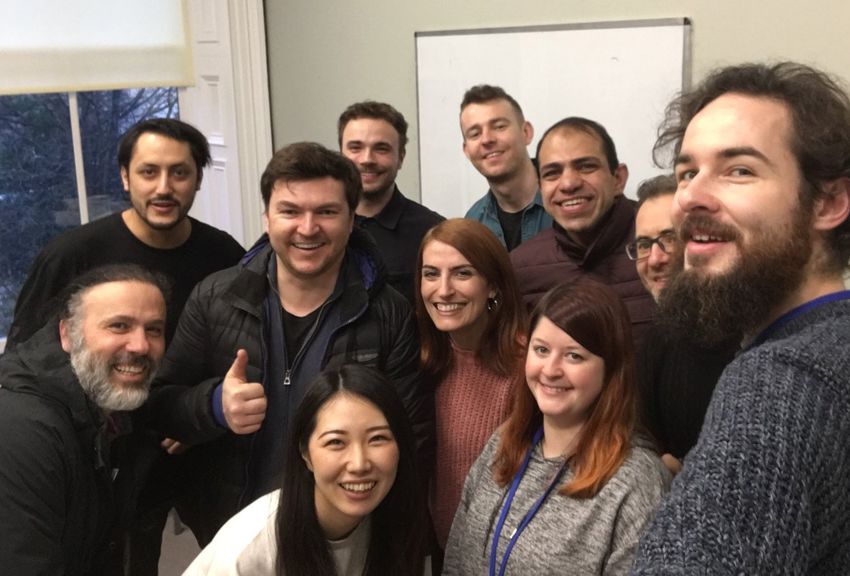
Teaching English                           I’d recommend the CELTA course to
                                           anyone, especially if you have a sense

in the UK and
                                           of adventure. I can’t think of any better
                                           way to give yourself the opportunity
                                           to see the world and improve your

Abroad
                                           career prospects at the same time. If
                                           you want, you can quite simply move
                                           to another country, on a short-term
                                           or long-term basis. It’s really up to you.
                                           Allison Steven

       The CELTA was a challenging         I look back at my time in Spain and
       and     rewarding     educational   realise how lucky I was to have had
       experience. It helped me develop    such a great opportunity to live and
       my understanding of teaching        teach in a fantastic country. I also
       theory and practice. It gave me     had the time to travel and experience
       the opportunity to live and work    the culture, meet friends for life and
       abroad, and to enjoy many a         improve my level of Spanish. Everyday
       plate of pasta!                     working abroad was exciting and was a
                                           great way to practise and develop my
       Rachael Kerr
                                           teaching skills. Thanks to completing
                                           the CELTA, I can look forward to new
                                           adventures in the future.
                                           Jane Adams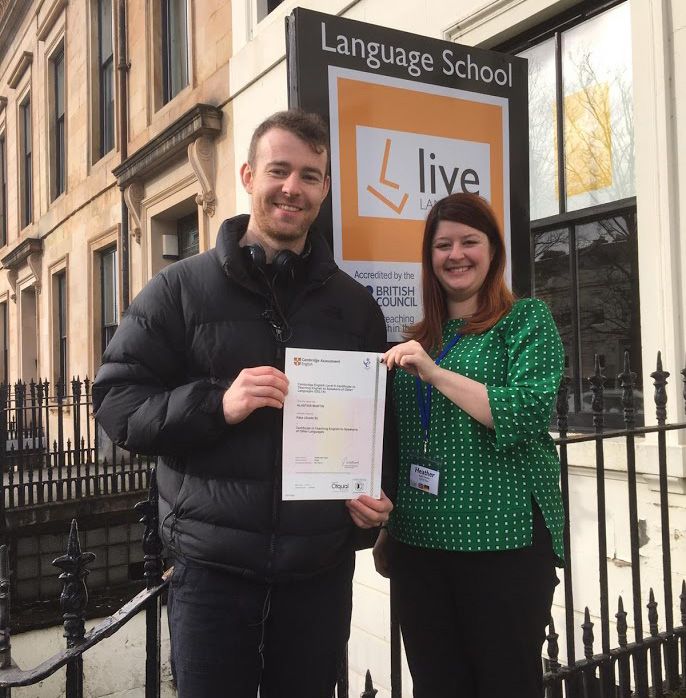
Who can take the
CELTA course?                                                                                   •
                                                                                                        All candidates must:

                                                                                                    Be at least 20 years old by the start
One of the more unique aspects of the CELTA course is the wide range of ages and backgrounds
                                                                                                    of the course.
that make up our groups of trainees. Some of our trainees have recently graduated from
university. Some trainees have recently retired and others are looking for a career change.     •   Be educated to a level that would be
                                                                                                    eligible for university entry.
In addition to this, the course attracts primary and secondary teachers looking to acquire
training on the skills needed to help pupils with a different first language.                   •   Be committed to 100% attendance
                                                                                                    and be able to work to tight
                                                                                                    deadlines.
                                                                                                •   Possess the necessary skills to
                                                                                                    complete the written assignments
                                                                                                    and teaching practice assessments
If you decide to study the CELTA with us, you will:
                                                                                                    during the course.
                                     • Have a ratio of one tutor to a maximum of six
                                       candidates.
                                                                                                Non-native speakers of English must be
                                     • Be tutored by highly skilled, creative and experienced   able to prove that they are competent
                                       tutors.                                                  users of the English language (written
                                     • Observe a variety of different teaching styles and       and spoken) in order to teach students
                                       methods.                                                 of a range of different levels. If English
                                                                                                is not your native language, you will be
                                     • Get support from our friendly staff.                     asked to provide proof of your English
2020 Spring group                                                                               level (IELTS / C1 / C2)
What does the course involve?
  Input Sessions: These sessions are intended to help raise the candidate’s awareness of a range of approaches and techniques for teaching through
  tutor demonstrations, workshop style tasks, micro-teaching by candidates and group discussions. These sessions cover a wide range of features of
  ELT including teaching language, teaching skills, teaching in a variety of contexts and a great deal more.

  Observations: As part of your course you will observe experienced teachers. You will see classes at a variety of levels. You will observe a total
  of six hours of lessons on the course. In addition to this, you will also carry out peer observations of other candidates. These observations will raise
  awareness of different methodologies, approaches and classroom management techniques which you can then trial in your own teaching practice.

  Lesson planning sessions: There will be guidance for effective lesson planning and the chance to discuss ideas and lesson plans with your fellow
  candidates. There is a high level of lesson planning support offered by tutors during the first stage of the course. Although there is still support offered
  to candidates in the final stages of teaching practice, more autonomy and independent lesson planning is expected.

  Teaching practice: Each candidate will undertake a total of six hours of teaching practice over the course. Your classes will be made up of adult
  volunteer students. There will be at least six students in each class and the level of the classes could range from Beginner to Advanced level.

  Feedback sessions: Your tutor will also provide both oral and written                       During each teaching practice, candidates are expected to fill
  feedback following each teaching practice covering the four areas above.                    out peer observation tasks and provide constructive oral criti-
  He/she will assess the overall performance, clearly highlighting areas of                   cism for each other in the following group feedback session.
  strengths and areas to work on for the next lesson.                                         Candidates must be prepared to give and receive criticism in a
                                                                                              constructive manner.
How will I be
assessed?
There are two methods of assessment on
the course, written assignments and the
                                             Written Assignments
continuous assessment of your teaching       There are a total of four written assignments to be completed over the course period. Each one
practice. The five areas of assessment are   should be between 750-1,000 words in length. The written assignments cover the following four
below:                                       areas:
                                             • Focus on the learner
•   Learners and teachers and the teaching   • Language related tasks
    and learning context.                    • Language skills related tasks
                                             • Lessons from the classroom
•   Language analysis and awareness.
•   Language skills: reading, listening,     You will draw on your observations and reading to complete these tasks. If your assignment does
                                             not meet the provided rubric requirements on fist submission, you have the chance to resubmit. If
    speaking and writing.
                                             you resubmit your assignment and it still does not meet the rubric requirements, the assignment
•   Planning and resources for different.    will be marked a fail. You can fail one assignment and still pass the course overall, provided that
    teaching contexts.                       you have shown you have met all the requirements in the other areas of the course.
•   Developing teaching skills and
    professionalism.                         Course assessment
                                             All parts of the course are internally and continuously assessed using standardised Cambridge
                                             criteria. In addition to this, an officially-recognised Cambridge ESOL assessor will visit during
                                             the course for the purpose of external moderation. Candidates will be given a provisional grade
                                             during the assessor’s visit: Pass A, Pass B, Pass or Fail. These results need to be externally
                                             verified and final grades and certificates are sent to the centre within four to eight weeks. A Pass
                                             shows trainees have satisfactorily met all course requirements and criteria. If a candidate has
                                             demonstrated higher than satisfactory skills in teaching, they will be awarded a grade B and those
                                             who demonstrate exceptional planning and teaching skills will be awarded a grade A. In addition
                                             to the grade, candidates will also receive a course report from their tutor the week after the
A day in the life of a CELTA trainee
100% Online Course
Morning                                             Afternoon                                               Evening

7.00am Wake up and get ready for the day.           1.00-2.00pm Lunch. After having something               5.45pm Go for a walk! A very much needed
8.55am Go online. Download the materials            to eat, make sure the materials and slides are in       opportunity to get off the computer screen and
for the first input session and enter the Zoom      order, especially if you will be sharing your screen.   stretch.
meeting to start the day.                           2.00-4.35pm Teaching practice. (Each lesson             6.15pm Arrive home and have dinner.
9.00-10.30am First Input Session of the day.        lasts 45 minutes and there is a 10-minute break         7.30pm Work on upcoming lessons and/or
                                                    between lessons. You will either be teaching or         the next written assignment. Lesson planning
10.30-11.00am Break. Get some coffee,               observing your peers).
download documents for the next input session.                                                              entails doing some reading and writing different
Make sure the materials for the teaching practice   4.35-5.00pm Break. Check that your self-                documents. For the written assignments, you need
are ready and uploaded in your portfolio folder.    reflection and peer feedback documents are              to do more reading and follow the guidelines
                                                    ready.                                                  provided by your tutors. The time allocated for
11.00am-noon Second Input Session of the                                                                    these tasks can vary per lesson type and amount
day.                                                5.00-5.45pm Teaching Practice feedback. This
                                                                                                            of reading you have to do, but it can take around
                                                    is a group session where we can reflect on our
Noon - 1pm Supervised Lesson Planning.                                                                      3-4 hours of your evening.
                                                    lessons and provide feedback for our peers. Pay
Ensure your handouts are ready to be sent to        attention to the strengths and points to work on        11.30pm Get offline, call it a day and go to bed.
students. Practice and get familiarized with the    for your next teaching practice.
break-out rooms and other Zoom functions you
need to use in your lesson.
Top tips                                   #1 Assignments are more straight-forward than you think.

                                           “Read and understand the assignments’ requirements thoroughly before writing and always
                                           use the checklists before submitting. If the assignment focuses on the learners, think from your
                                           students’ perspective. If the assignment focuses on you, reflect upon your learning progress
Uyen’s top 3 tips that helped her to get   throughout the course. Don’t overcomplicate it and you’re grand.”
through a month of INTENSIVE training

                                            #2 Teamwork is key.                                 #3 Lesson planning is
                                                                                                important but don’t overdo it.
                                            “Your assigned teaching group will be                “Once you’ve completed the lesson plan,
                                            your comfort zone for an entire month of             move on to practising. It’s important that
                                            an intensive course, so don’t be shy about           you recognize your areas to work on in
                                            developing new friendships. Everyone                 order to improve your skill-set gradually
                                            is there to support and help each other              over the course of the 8 lessons. You
                                            to get through, so communication is                  can spend hours on planning, which is
                                            very important. If you’re nervous before             important for theory, but practice makes
                                            teaching, run through your lessons with              perfect.”
                                            your friends and kindly ask for feedback.
                                            This works wonders!
                                            *Don’t forget about your tutors because
                                            they’re part of the team as well.”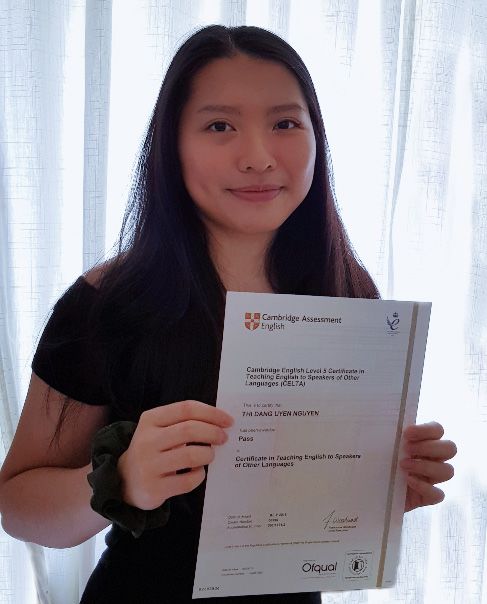
Why Live Language?
                Live Language is a                           We are located to the west                      We have been a CELTA centre
                professional and                             of Glasgow city centre and                      since November 2016 and have
 Professional                               Accessible                                         Quality       helped many trainees achieve their
                friendly language                            easily accessible by public
                school.                                      transport.                                      CELTA qualification since then.

Meet Our Team
Heather - Head of Teacher Training and CELTA Tutor                         Daniella - Freelance Teacher Trainer and CELTA Tutor
                          • Has worked in Live Language since 2011                                • Completed CELTA in 2007 and DipTESOL
                            and is the in-house CELTA Tutor.                                        in 2012.
                          • Has supported over 100 candidates to                                  • Has taught in both Scotland and Italy.
                            successfully complete their CELTA course.
                                                                                                  • Taught at Live Language for 9 years.
                          • Has worked in Germany, China, Italy and
                            Kazakhstan.                                                           • Former Director of Studies for St. Andrew’s
                                                                                                    College Language Schools.
                          • Has experience in a wide range of different
                            teaching contexts e.g. General English,                               • Experienced British Council Global Teacher
                            IELTS and Cambridge Suite exams.                                        Trainer.

                          • DipTESOL qualified                                                    • British Council Materials Designer, App
                                                                                                    Content Creator, Social Media Content
                          • Experienced British Council Teacher.                                    Creator and Administrator.

          If you would like to ask Heather a question about the CELTA, then please email heather.whytock@live-language.com
TESTIMONIALS
                                     “Personally, I took the course because I needed a
                                     certification that could validate my experience as an English
                                     language teacher. By taking the CELTA at Live Language I
                                     got so much more. The input sessions and support during
                                     the Teaching Practice have taught me many things I did not
                                     know before and I constantly found myself learning how
                                     to improve my lessons. The CELTA has definitely provided
                                     me with the tools to teach confidently. I also had a great
                                     time, lots of good moments and laughs. Thank you for
                                     everything.” Stephanie

                                                                         “I was a little apprehensive going into a fully online
                                                                         CELTA. Not only was teaching totally new to me but
                                                                         I was worried about the intensity of the course and
                                                                         working from home. As it turned out, I didn’t need
                                                                         to worry about any of that! Heather and Daniella
                                                                         created an interactive and supportive environment
                                                                         throughout the course, which let me learn an
                                                                         incredible amount whilst also building relationships
                                                                         with my fellow trainees.” Tim

“I took the CELTA because I wanted   “I took the CELTA course because I had been out of university for a few years and had
to do something that would help      finally realised that teaching English was something I very much wanted to pursue. I was
me completely change my life and     hoping to take part in the face-to-face course originally but of course COVID-19 changed
I am so thankful I chose to do it    everyone’s plans! The 100% online course turned out to be brilliant, all of us trainees
with Live Language. The tutors are   became friends via zoom with ease and now I feel confident in applying for jobs asking
so helpful and knowledgeable and     for experience with online lessons, which is something I wouldn’t have done if the course
the course was well put together.    had been face-to-face. A definite silver lining in the current climate! Overall, I couldn’t
It was a challenge but a rewarding   recommend this course enough. I feel very confident in applying for teaching jobs now
one and I am excited for the         and have become a part of a great network to get started in this industry.” Lorna
future.” Liz
Course dates & Prices
Dates Final application deadline Group Interview Dates*
Monday 11th January – Friday 12th February Friday 18th December 2020 Friday 11th December 2020
Monday 1st March – Friday 1st April Monday 1st February Friday 29th January
Monday 19th April – Friday 21st May Monday 22nd March Friday 19th March
Monday 7th June – Friday 9th July Monday 10th May Friday 7th May
Monday 16th August – Friday 17th September Monday 19th July Friday 16th July
Monday 4th October – Friday 5th November Monday 6th September Friday 3rd December
*If you are unable to attend the group interview, we are able to offer one-to-one interviews or interviews over Skype or Zoom.
Course price for 2021
£1300
Selection Process
1. Download the application form from www.live-language.com/celta
2. Complete the application form and email it to Heather Whytock heather.whytock@live-language.com Documents to send us
We review your application and if all requirements are met as this stage, you are invited for a group
3. • an up-to-date CV
interview.
4. After the interview, review the pre-interview task and find out more about what the course entails. • passport-sized photo
5. We will send out offers of places shortly after the group interview. • copies of educational
certificates
6. If you are successful, a non-refundable deposit of £300 is required to secure your place on the course.
• evidence of your English
You will be sent a pre-course task to complete in order to raise awareness of the content of the CELTA.
7. language level (if a non-
It is also recommended that you buy at least one methodology and one grammar book to help you.
native speaker)
8. Payment of the remainder of the fees is due 4 weeks before the start of the course.
A week before the course begins the centre will be in touch to provide you with information about the
9.
first day of the course.You can also read


