CENTRE FOR STUDIES IN RELIGION & SOCIETY - UVic
←
→
Page content transcription
If your browser does not render page correctly, please read the page content below
CENTRE FOR STUDIES IN RELIGION & SOCIETY
NEWSLETTER                                                                                          VOLUME 29 | 2020-2021

What’s Wrong with ‘Religion’?                      The Jews, I assert, are not and never have       Question.” As Aamir Mufti has pointed
                                                   been defined by a shared “religion,” and,        out, the very “projects of secularism”—
Daniel Boyarin                                     moreover, should avoid being so pegged.          citizenship, separation of church and state,
                                                   Until quite recently, it was commonly held       national language, national literature and

W     hat makes one a Jew? Currently there
      seem to be two options: one is religious
(joins a synagogue, eats kosher, prays and
                                                   that religion itself is a universal and that
                                                   every human group has a “religion.” It has
                                                   proven notoriously difficult to define the
                                                                                                    culture—“have circled around the question
                                                                                                    of the Jews” and their place in the state. It
                                                                                                    would seem, then, that defining Jews in
invests oneself in a “faith”) or one is Zionist    word “religion” and thus to delineate the        terms of “religion” also can only emerge as a
(supports the so-called State of the Jews or       concept, despite myriad attempts. Yet even       product of modernity.
Jewish State). One can do both of course. But      if we seem to have a pretty good idea what
the question on an individual level is whether     we mean when we can call something a
one can do neither and meaningfully live           religion in everyday usage, the category
a Jewish life. If the only alternative to the      remains troubling. The concept of “religion”
Jewish State is a “religion,” then many Jews       as an autonomous sphere of human activity,
might very well want to declare themselves         separate or separable from other “secular”
not Jews or ex-Jews.                               spheres of activity such as law, politics,
                                                   kinship, and economics, is a distinctively
The purpose of my book-in-progress is to           modern (and “Western”) idea. Given this,
provide a third alternative, one that makes        it becomes very difficult to imagine how a
possible robust and engaging life for Jews         Jewish religion (imagining we could define
in the future without entailing thereby a          what that is) could possibly exist as such
mononational state or the entanglements            before any religion does, that is, before one
that ensue from being a “Faith,” as the idiom      such sphere is separated out, isolated from
goes. In the research I hope to complete in        cultural activity in general, and named—
Victoria, my task will be to show why it is a      however defined—“religion.”
bad idea to imagine the Jews as a “religion,”
still less a “faith,” or as the Germans say “Ein   This point can be sharpened even further,
Glaube [a belief ].” To ask the question another   for it seems that the forces that historically
way: why is it unsatisfactory to posit the Jews    produce the very category of “religion” as a
as a group defined by and comprised of             distinct entity from the “secular,” during the
those folks who share particular beliefs and       seventeenth century in Europe are precisely      Known to locals as “San Pedro, San Pablo,” this church was
practices dependent on those beliefs?              the same forces that raise the “Jewish           the first parish built in Bantayan, Philippines

                                                                                                    Religious Identity Formation,
                                                                                                    Sexual Orientation and
                                                                                                    Mental Health Among Filipinx
                                                                                                    Immigrant Youth
                                                                                                    Drexler Ortiz

                                                                                                    I t is a striking feature of the contemporary
                                                                                                      Philippines that so many LGBTQ+ self-
                                                                                                    identify as Christian. That is not to say that
                                                                                                    sexual minorities have been accepted and
                                                                                                    integrated into contemporary Filipinx (i.e.,
                                                                                                    Filipina/o/x) culture. After over 300 years of
                                                                                                    Spanish colonization and half a century of
                                                                                                    American occupation, Catholic and Protestant
                                                                                                    Christianities have become the dominant
                                                                                                    forms of religion, replacing traditional
                                                                                                    indigenous spiritualities. These colonial
                                                                                                    religious systems have generally suppressed
                                                                                                    gender-crossing and propagated instead a
                                                                                                    colonial ideology of heterosexuality. Sexual
                                                                                                    minorities, though still visible, are often
                                                                                                    relegated to the margins of Filipinx society.
                                                                                                    And yet, many Filipinx sexual minorities

                                                                                                    [CONTINUED ON P. 5]

We acknowledge with respect the Lekwungen peoples on whose traditional territory the university stands and the Songhees, Esquimalt and
                          WSÁNEĆ peoples whose historical relationships with the land continue to this day.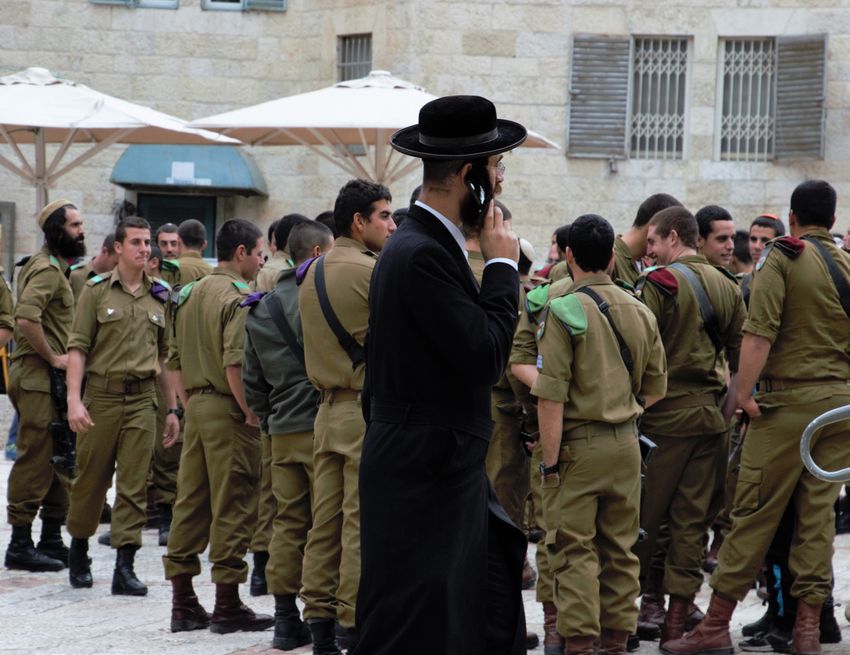
CSRS UPDATES
Exciting Additions
R achel Brown joined the CSRS as the
Centre’s first Program Coordinator in
August 2019. She has a PhD in Religion
and Cultural Studies from Wilfrid Laurier
University (2016) and specializes in material
religion, especially religion and food,
migration, and contemporary Islam in Europe
and North America.
Rachel first came to the CSRS as a visiting
graduate student fellow when she was
writing her dissertation in 2014. Over the
course of her 8-month fellowship, she fell in
love with the centre and the community that
grows here every year. She loved it so much
that she managed to stay on as the Religious
Message from the Director And so, “in these uncertain times,” how might
Studies Teaching Fellow for another year
we foster conversations between people
and a half before heading out into the wider
Paul Bramadat from so many societies and academic fields?
academic world. Teaching at the University
This newsletter went to press in August 2020,
I n these uncertain times…. If you are like and we are still unclear how we would do this. of Evansville was a great adventure, but
me, in virtually every letter and email you’ve ultimately Rachel knew that she wanted to
composed since early March, these words What I can promise, though, is that we will come home to Canada, and part of that was
are preceded by “How are you doing in…” or continue to: a) offer public lectures delivered a drive to come home to the CSRS. When the
perhaps, “The [manuscript, grades, report, by our fellows and other colleagues; b) offer position of Program Coordinator opened up,
poem, taxes…] will be a little late because we our fellows a chance to participate in our Rachel jumped at the chance to contribute to
are all in….” Whether this global pandemic famous “coffee talks”; and c) offer workshops the centre in this way and has been enjoying
and the robust resistance to systemic racism which combine scholarly and public the ride ever since.
we are seeing are the birth pangs of a more dimensions. In all likelihood we will use both
Zoom and physically distanced in-person When Rachel is not working at the CSRS she is
just and beautiful new world or the pathetic
formats. Indeed, we are all learning about eating or drinking something delicious and/
final howls of a debauched old one (or,
the many benefits of these media. It’s not or adventurous, playing and reading with her
strangely, both) is not yet clear.
just possible, but practically certain, that “in two little ones, Eli and Leia, or playing board
Normally, I use this column to stir up this unprecedented time,” we will extend the games with her friends and her husband
excitement about our line-up of lectures, centre’s already long reach. Nonetheless, all Marc.
projects, workshops, and international plans for this year will be subject to change
visitors. We chose our 2020-21 visiting and (and perhaps enhancement). Stay tuned.
local graduate students, faculty members,
and community sabbaticant scholars in Two items in this newsletter capture well
December 2019. Whether they are doctoral the contributions the centre can make to
students in their final year, visiting scholars addressing the crises we see around us. First,
working on their magnum opus, or local I am thrilled to announce the Indigenous
“insiders” reframing their community’s Arts and Research Fellowship. Thanks to our
approach to reconciliation outreach, we partnership with, and the generosity of, CSRS
choose people first and foremost because of community fellow and Advisory Council
the projects they propose. All CSRS fellows member, Michelle Brown, we are able to
(past and present) present ambitious plans to offer six $10,000 fellowships to Indigenous
cross intellectual chasms, and I am immensely graduate students, faculty members, and
proud of them. artists over the next several years.
However, in addition to the criterion of Second, our John Albert Hall event in the
academic excellence, we try to select fellows second term will allow us to gather several
from a broad range of cultural and intellectual of the world’s leading thinkers to reflect on
backgrounds because we know the centre’s what we are all learning “in these unusual
distinctive ethos depends on the sustained, times” about the structural problems of our
critical, face-to-face interactions between societies. This event should help scholars
people one wouldn’t ordinarily meet in a of religion and society to participate
single department. constructively in both reflections on the past,
and re-imaginations of the future. Rachel Brown, CSRS Program Coordinator
– PAGE 2 –
CSRS UPDATES
Breaking News: Indigenous
Arts and Research Fellowship
T he CSRS is delighted to announce the
creation of the Indigenous Arts and
Research Fellowship. Fellowships include a
$10,000 award, a private office at the CSRS,
and full access to CSRS community life.
These fellowships are made possible
through a generous contribution from Do You See a Pattern? the privilege of working with committed
local indigenous scholar, artist, and activist, donors to create the Harold Coward India
Michelle Brown, together with matching Paul Bramadat Research Fellowship, the Heather J.
funds provided by the CSRS. Michelle is a Lindstedt and Brian A. Pollick Fellowship,
long-time friend of the centre, former CSRS
community sabbaticant, and co-facilitator of
the Reconciliation and Relationship dialogue
A s I worked with Michelle Brown to create
the Indigenous Arts and Research
Fellowship this summer, I realized that her
the Artist in Residence Fellowship (created
by Yvonne Hsieh to honour her parents,
Chih-Chuang and Yien-Ying Wang Hsieh),
series hosted at the centre. Michelle currently contribution is the latest in an august tradition the Katherine Young Travel Award for
serves on the CSRS advisory council. at the centre. In the last ten years I have had Studies in Religion and Society, and now
Michelle’s IARF. These new fellowships stand
alongside those established decades ago by
Indigenous Arts &
gifts from Allen and Loreen Vandekerkhove,
the Vandekerkhove Family Foundation, Ian
Stewart, and many others.
Research Fellowship
In addition to fellowships that bring scholars
to the CSRS, we are fortunate to have
on-going relationships with community
partners to support the Distinguished
Lecture in Islam and the John Albert Hall
at the Centre for Studies in Religion and Society programs.
I am humbled by the generosity of our
fellows and friends. If you would like to create
We are looking for First Nations, Inuit, or Métis graduate a fellowship for students, artists, or faculty
members, or if you would like to contribute
students, faculty and artists interested in pursuing an to our on-going research and community
academic or artistic project in which reconciliation as well as engagement activities, please let me know.
Christi Belcourt, Offerings to Save the World (2017)
spiritual, cultural, or religious themes are central concerns. Acrylic on Canvas. Image courtesy of Christi Belcourt
(christibelcourt.com).
Fellowships include: Application deadlines:
A $10,000 award November 16, 2020 for
Private office at the CSRS academics and April 5,
Full access to CSRS 2021 for artists.
community activities
For further information visit: uvic.ca/csrs/fellowships
or contact us at csrs@uvic.ca
– PAGE 3 –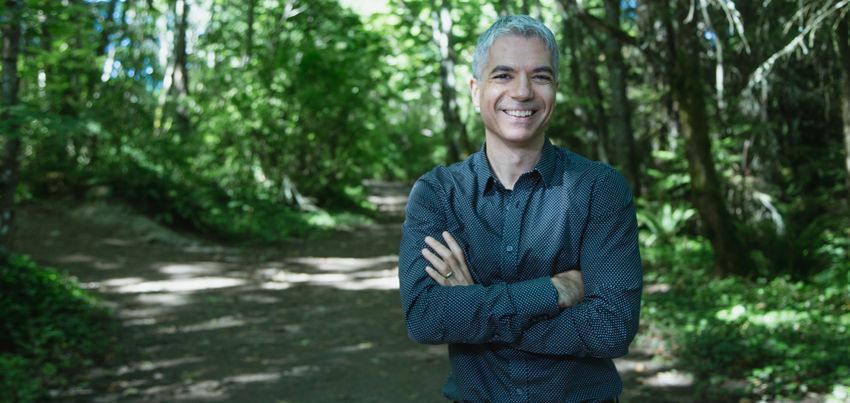
RESEARCH
Archetypes of Mindfulness I sat in Zen and Shingon temples. Much later, support during this challenging time.
as a professor in The Netherlands, I began
Chris Goto-Jones to facilitate meditation and mindfulness And now, I have the great privilege of a year
in more therapeutic frameworks, for at the CSRS to reflect on this journey, to
I ’ve been trying to remember when this
journey first began. However, perhaps
happily, sensitive and delicate as they may
students and for the local communities. In
2016, just as I moved here to Victoria, we
launched the massive open online course
analyse some of the (mountains of ) data that
are emerging from the MOOC, to frame a new
therapeutic approach to mindfulness within
be, beginnings are not always crisp and (MOOC), De-Mystifying Mindfulness (Leiden the context of the Medical Humanities,
clear. Sometimes they emerge slowly and University, Coursera & FutureLearn), seeking and to write a book about the same. My
imperceptibly; before you know it, you’re to provide responsible information about approach to this book echoes the approach
already underway. (and training in) mindfulness to anyone taken in the online course, but enriched by
anywhere in the world for free. To date, we’ve the accounts of participants in that course.
In this particular case, I have memories of had nearly 200,000 participants from dozens I analyse the meaning and significance of
being a child studying kendo and karate of countries take that course – doctors, mindfulness and meditation to different
in provincial England, meditating at the therapists, students, soldiers…. During the people using the device of four philosophical
start and end of every class. Perhaps it had COVID pandemic, we’ve seen thousands archetypes: the monk, the ninja, the doctor,
already begun then? And then later, as a of additional participants every week, and and the zombie. Perhaps I am drawing on
student of Kyoto School Philosophy in Japan, we’ve been working hard to provide extra my own experiences of meditation in each of
those modes….
At the most basic: the monk models spiritual
purity, wisdom and enlightenment through
meditative practices including mindfulness;
the ninja models self-mastery, esoteric
accomplishments, and consummate skill
through disciplined meditative practices
including mindfulness; the doctor models
practical utility and professional care, seeking
to deploy meditative practices (including
mindfulness) in reliable treatment protocols
to help people survive (in capitalism); the
zombie models the zero-level of human life
whence the ego has been lost, leaving a slow,
confused, selfless body staggering around
capitalist society as a kind of slave. The
zombie is clearly not an aspirational model!
But, it represents a relatively common fear.
I’m grateful and honoured to be able to do
this work with our wonderful colleagues at
Image: art by SIKU, concept by Chris Goto-Jones CSRS, and I look forward to seeing where the
(2016) next small steps on this long journey might
take me.
Cascadia Research Project Nears Completion
Paul Bramadat
I am pleased to report that we have sent our of qualitative and quantitative data, the book
manuscript off to the University of British offers an impressively detailed description
Columbia Press for their consideration. and interpretation of the “bioregion”
This is the first scholarly reflection on the sometimes called Cascadia. This part of North
peculiar religious, irreligious, and spiritual America was once framed as exceptional but
landscape of the Pacific Northwest of the now may be a harbinger of changes we might
US and Canada. Authors include Americans, see elsewhere. As such, we hope the book
Canadians, religious insiders and outsiders, will have an impact on the study of religion
sociologists, anthropologists, historians, and and society in other parts of the continent,
religious studies scholars. Based on a new set and the world.
– PAGE 4 –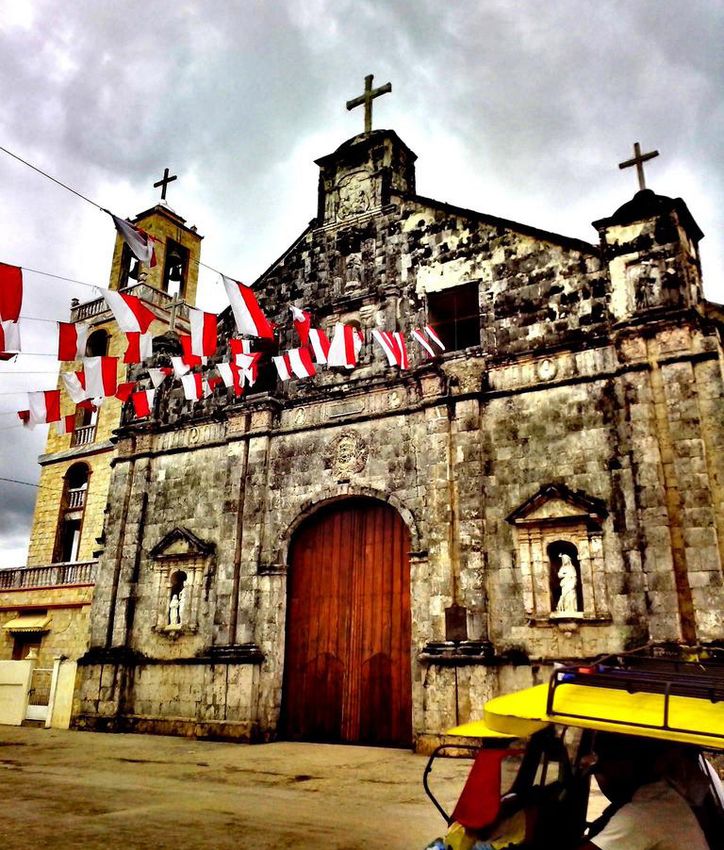
RESEARCH
[CONTINUED FROM P. 1] Research Collaborations There are also interesting forces at work in
these settings due to the rise of personal,
continue to identify as Christian. Why do
they stay? And what are the consequences
Sheryl Reimer-Kirkham typically post-institutional, embodied, and
often political, forms of spirituality.
for mental health of contending with A window onto religion in the public sphere,
religious and sexual identities that are widely Prayer as Transgression? The Social Relations It is certainly true that many individuals
perceived to be incompatible? of Prayer in Healthcare Settings tells much in our societies are distancing themselves
about how people live well together, even from conventional religious institutions,
In my master’s thesis, I focused on the ideas, practices, and life-ways. As such, one
in the face of personal crises and fragilities,
different ways Filipinx immigrant youth in might expect that we would see less and
suffering, diversity, and social change.
Canada form a religious identity. Those that less tension between medical science and
were more likely to be involved and interested religion (or spirituality). However, broadly
in their Filipinx heritage were also more likely speaking, ways of thinking about the body
to be strongly committed to their Christian and wellness continue to be informed by
religious identity. In other words, religious what we might call positivist biomedicine
commitment is positively associated with on the one hand, as well as perspectives
Filipinx heritage, highlighting the extent to about the body grounded in Christian norms
which religion and ethnicity are intertwined. and practices and “other ways of knowing”
Additionally, scholars have found that some (e.g., reiki, Traditional Chinese Medicine,
Filipinx immigrants use religion as a social homeopathy, Ayurveda, yoga, intuition,
space as well as a place to seek mental acupuncture, neo-paganism, Indigenous
health support, emphasizing that youth’s medicines), on the other hand.
relationship with their religious congregation
is imperative to understanding their religious At present, the overlapping fields of medical
experience.. humanities and health humanities provide
contexts in which we can open up critical
My current research focuses on the conversations about health in societies in
interactions of Filipinx immigrant youth with which conventional and emergent religious
their religious congregation. I compare how and spiritual movements coexist.
heterosexuals and sexual minorities may
differ in the ways they form their religious We are planning a workshop for October 2021
identity when they experience negative (postponed from October 2020 due to the
and positive social interactions with other pandemic) that involves experts from the US,
religious Filipinx. I also examine whether Canada, and the UK, all of whom are working
sexual minorities face more mental health on the ways healthcare contexts respond
struggles in light of poorer interactions with Drawing on critical ethnographic research
in Vancouver and London, the book reveals to new shifts in religion and spirituality. The
their religious congregation. major debates about public health, civil
how prayer occurs in hospitals, long-term
care facilities, and community-based clinics. society, and neo-liberalism that have been
My goal is to understand the conditions inspired by the pandemic will play a role in
that provide for the safety and inclusion of Who prays? Why do they pray? What does
prayer entail? When is prayer irrelevant or not events meant for specialists as well those
sexual minorities in non-affirming religious designed for public interaction. We look
spaces. This is especially important for sexual welcome? The book’s insights reflect the rich
collaboration of an international team, led forward to involving members of the public
minority immigrants, when church may be and also CSRS fellows, friends, and local
the only place they find people from their by Sheryl Reimer-Kirkham (TWU) and Sonya
Sharma (Kingston U), and including Paul clinicians in the lectures and discussions.
particular ethnic group.
Bramadat and Rachel Brown from the CSRS.
My research is also relevant for mental health
practitioners who might benefit by being Health Humanities and New
informed about the risks and benefits that
Filipinx sexual minorities receive by being a Spiritualities in a New World
part of their ethnic religious group. This may
help practitioners navigate the common
Paul Bramadat
A
therapeutic issue of whether one should stay s many readers will know, the CSRS has
or leave their ethnic religious group, which a long track record of research about
is not as straightforward for Filipinx sexual healthcare and religion or spirituality. It has
minorities. been quite valuable to focus on the often
counter-intuitive (past and present) ways
religious communities have reflected on
and responded to healthcare dilemmas (e.g.,
hospice palliative care, genomics, genetic
modification, vaccine hesitancy, chaplaincy).
– PAGE 5 –
RESEARCH
The Legacy of Indian Missions
in the United States
Maggie Jones
I n the early seventeenth century, the French
Jesuit missionary Jean de Brébeuf lived
amongst the Huron peoples in New France,
learning their language, spiritual beliefs,
and cultural practices. Given his grasp of
the language, de Brébeuf slowly introduced
elements of Christianity to the Huron peoples
in their own tongue. A century earlier Spanish
Franciscan missionaries established parishes
across what are now parts of Mexico and
the southern United States. The Franciscan
parishes emulated Spanish towns and
attempted to integrate Indigenous groups
into the European way of life, often teaching
vocational skills like carpentry, weaving, and
“German Christians Celebrating Luther-Day in Berlin in 1933, Speech by Bishop Hossenfelder.” Wikimedia Commons. blacksmithing. Protestant missions arrived
Bundesarchiv_Bild_102-15234,_Berlin,_Luthertag.jpg from England along the Eastern Seaboard in
the seventeenth century, but it was not until
Theological Justification for influences. Some of these church leaders
after the Revolutionary War that the number
were less radical and reemphasized the more
Anti-Semitism before and commonly accepted view that Judaism was of Protestant missions increased substantially
during the Holocaust rendered irrelevant by Christianity. Others in America.
went even further, stating that Protestant
Eliza McClenagan Christianity must be completely “cleansed” While the timing and approaches of the
of Judaic elements. Despite the fact that missions varied, they were implemented
T o what extent were the German churches Christianity originated from Judaism, they according to a shared goal, namely
complicit with the Nazi regime during the believed that Judaism had become a “sinful” converting local populations to Christianity.
Holocaust? While it is certainly true that some influence on Protestantism. This process was largely based on the
churches, especially the Confessing Church, presumption among Western states that God
spoke out against the Nazis’ treatment of the Focusing on the work of one particularly gave Christian nations the right to colonize
Jews, most remained silent. Others, such as radical theologian, Friedrich Andersen, I unknown lands, so long as they were
the Deutsche Christen, or German Christian aim to determine the extent to which these converting souls to Christianity.
movement, actively supported the Nazi supercessionist ideas provided theological
regime, publishing a “de-Judaized” version justification for the more radical anti-Semitic Today there are vast differences in the
of the Bible and refusing to allow Jewish actions of the German Christian movement. economic conditions across Indigenous
converts to serve as leaders in their churches. nations in the Americas, which economists
How could these particular churches justify I argue that the time period directly before the have traced back to historical events
supporting the anti-Semitism expressed Holocaust can be seen as a bridge between that have had a lasting impact on the
by the Nazi regime? Did they simply give more ‘benign’ anti-Judaic theological ideas economic trajectory of Indigenous societies.
in to external political pressure, or were already existent within Protestantism and Following this framework, our project
there more foundational reasons for their the more radical anti-Semitic measures taken uses a quantitative approach to relate
oppressive actions? by the German Christian movement during contemporary differences in economic
the Holocaust. By condemning the Jewish outcomes to the legacy of historical Indian
My research examines these questions by elements within Protestant Christianity, missions in the United States. Specifically,
analyzing the prevalence of anti-Jewish pastors and theologians such as Andersen we ask whether missionary presence is
sentiments in Protestant theological created a space in which Judaism (and the correlated with measures of economic
documents written in the years preceding the Jews) became not only unnecessary to development in Indigenous societies across
Holocaust, showing how these views were Christianity, but antithetical to Christianity the nineteenth and twentieth centuries and
increasingly radicalized during the Holocaust. and Christian society. German Christian anti- whether the chosen practices and timing
Prior to World War II, a number of prominent Semitism was neither a by-product of Nazism, of different religious denominations have
Protestant pastors and theologians took nor merely an attempt to conform to Nazi impacted development.
advantage of the revival of racial nationalism doctrine; it was an active effort to capitalize
in Germany and began attempting to on the Nazi position in order to realize and The economics literature has found historical
establish a “Germanized” version of radicalize goals already existent within their missionary presence to be associated with
Christianity that was free from Jewish theology. a variety of outcomes across developing
nations, including increases in educational
– PAGE 6 –
RESEARCH
attainment, mixed effects on health, the rise
of democracy, and the persistence of certain
cultural norms. Given the unique history of
Indigenous-settler relations in America, the
existing findings in this literature may not
apply in the American context. During my
time as a CSRS fellow, I will attempt to replicate
the findings from developing regions in the
American context. In particular, I will examine
whether we see similar correlations with
missionary context and long run outcomes
like income, education, culture, and health.
Our goal is that this project will provide a
greater understanding of how the presence
of historical missions has impacted
contemporary economic development
among Indigenous nations in North America.
We expect to comment on the role of different
religious practices in promoting or hindering
economic development by leveraging the
“Tom Torlino, Navajo, before and after.” Black and white photographic portrait of a Navajo by J. N. Choate. Image courtesy of
information we collect on different practices the Richard Henry Pratt Papers, Beinecke Rare Book & Manuscript Library.
across denominations.
Assessing Refugee Claims hearing. In questioning the credibility of credibility assessments in refugee status
claimants, for example, adjudicators may determinations.
on Religious Grounds: An make assumptions about which systems
Interdisciplinary Approach of belief or practice constitute a religion Led by Raymond Chiu (Brock University) the
and which do not. Alternatively, they may team is made up of scholars working in the
Kathryn Chan make assumptions about what knowledge areas of psychology, organizational behavior,
a claimant must have to be considered an cross-cultural management, and law. I will
T he number of asylum-seekers is growing.
According to the UNHCR Global Report
for 2017, asylum-seekers (persons seeking
authentic member of a particular religious
group.
use my faculty fellowship at the CSRS to work
on the law and religion aspects of the project,
and look forward to sharing initial results at a
refugee status whose claims have not yet Despite the large number of religious refugee public lecture next spring.
been adjudicated) accounted for 3.1 M of claimants, there is little literature on the
the 19.9 M refugees worldwide, a figure that adjudicative challenges raised by religious
increased more than 15 percent over the year refugee claims. With support from SSHRC
previous. A substantial portion of asylum- and the CSRS, an interdisciplinary team of
seekers base their claims on allegations of Canadian scholars is trying to fill that void.
religious persecution. International law and The Religious Refugee Claims project has
Canadian law define Convention refugees three main parts. First, the team will analyze
as people who have a well-founded fear of decisions of the Immigration and Refugee
persecution based on race, religion, political Board (IRB) to develop an understanding of
opinion, nationality, or membership in a the religious concepts and psychological
particular social group. A study of almost theories that Board members apply when
90,000 refugee asylum claims made in formulating their judgments. Second, the
Canada between 2013 and 2017 found team will analyze case law—the appeals and
that nearly 10,000 of those asylum-seekers judicial reviews of IRB decisions—to shed
claimed to “have a well-founded fear of light on the relationship between the IRB’s
persecution based on…religion.” front-line assessment of the arguments and
credibility of religious refugee claimants,
Religious persecution claims are difficult and the appellate courts’ overall approach to
for front-line adjudicators. While race and the adjudication of religious refugee claims.
nationality are often readily visible, religion Third, the team will develop a psychological
is manifest in internal thought and external account of the religiosity and experience of Rohingya children in Aceh, 2015. Wikimedia-commons.
behaviours, both of which are difficult to refugee claimants, identifying measures of
assess within the confines of a refugee religiosity that can be employed to improve
– PAGE 7 –
COMMUNITY
End of an Era: An Interview That’s not what you were ordained to be.
You were not ordained to be a property
with Logan McMenamie manager. Unburden yourselves. Go and have
communion with nature. You might not want
Scott Dolff, CSRS Research Fellow to go back into the buildings.
I sat down for a remote tea and a chat with
former bishop of the Diocese of Islands and What do you see as the role of ecumenical
Inlets, Logan McMenamie. What follows are discussion and conversation across faiths
excerpts from our wide-ranging discussion. or religions? Is there a way to hear the
prophetic voice of other traditions?
How do you understand the role of bishop?
Logan McMenamie I think you do need to. We always say, “Let’s
M artin Brokenleg preached at my
consecration, and he challenged me
not to be a “prince bishop.” I believe that was
The diocese is out ahead of the rest of
the Anglican Church in Canada on certain
focus on what we have in common and
celebrate that.” But let’s also look at what
makes us different. What is different about
social issues. What was your experience
easy for me, in the sense that I grew up on trying to push the envelope? being a Buddhist? What is different about
the west coast of Scotland, my family was being a Muslim? About being a Roman
a working class family, I tend to lean to the Um, frustrating. I really like to think that we Catholic? Concentrate on that and what we
left politically. But he also said to me, “don’t are ahead of the church as a whole on the can learn, how we can grow. For a long time
be a CEO bishop.” That was difficult with all issue of marriage. It was a decision that did we thought we were the only way. How do
of the regulations that are coming in, the not come cheaply. The general synod that we sit down and learn from other people?
stuff around human resources, employment voted down the amendment to the marriage
standards; you get involved in that very canon was frustrating. But I was very moved You expressed partisan views on political
quickly. So I tried as much as I could not to when I came back and the leadership said issues—Wet’suwet’en hereditary chiefs,
be that, but to be what he challenged me to “We are with you bishop. Just go ahead.” The pipelines and so on. What do you see as the
be. He asked me to be a “Si’em” bishop. Si’em clergy were very supportive. Not all clergy. role of the church in speaking to society?
means “honoured one,” “family chief.” That But overwhelmingly in the diocese they Can one be a prophet and a bishop?
was my goal, to be that, and to treat everyone said, “it’s time.” I am hoping the motions that
who came into my office the same. went forward around the privileged position That is a role that we really need to rediscover.
that the bishops have in this system will be If the church sees in society those who
What will you miss? reviewed in the next general synod. are vulnerable and not being cared for, or
policies that are going to hurt people, then
The part I enjoyed most of all was being How do you deal with the colonial element the church has a role to speak to that, to be
with folk on a Sunday, being with parishes. of the church? What does the church need prophetic. But it is pastoral as well. Those
Certainly I will continue, when the time is to do to disengage itself from that legacy? who are not going to be happy about what
right, the work of First Nations communities. you have to say, you need to look out for
I will miss the opportunity that is before us I think that part of my sacred journey was those folk as well. Martin Luther King, Jr., who
as a church in the midst of Covid. As I said to to name that—we have to de-colonize is one of my heroes, said”we will not suffer
clergy, “If after all of this we just go back to ourselves. We as Anglicans need to from the anger of evil men, but from the
doing what we have done, shame on us!” symbolically leave and reenter the land. Only silence of our friends.” There is a liturgy now
this time as we reenter the land, do not come and the response says, “we are what we do
Are there any moments that stand out? as a colonial power, as if we are bearing the with our silence.”
Creator, but come to experience the Creator
St. Michael’s was the largest residential in the creation. The church needs to look The Cascadia bioregion is trending away
school in Canada. I was asked by the local at itself, at its buildings. The cathedral says, from institutional affiliation and towards
First Nation to speak [during a ceremony “Look, England has come!” How could we do alternative forms of spirituality. Do you see
at the site], and I spoke about coming as a that differently? Also names. The business something instructive in that movement?
colonial church, and how we had tried to name now is the Diocese of the Islands and
recreate them in our image, that we had Inlets — an attempt to be named by the land, Part of the diocesan vision is emerging
not respected their language, their culture, rather than to name the land. communities. What does it mean to gather
their teaching. We came “as if were carrying people together who have a variety of
the Creator on our back.” I said that we had Speaking of buildings: if you had carte understandings of what the divine is like?
so much to learn from your language, your blanche what would you do? They are like-minded in one sense: they want
culture, from your tradition, and if we listen to community, they want ritual, they want a fair
that, if we engage with that, we will become We have become property managers. relationship with one another, and they want
a better church and a better people. And I This is a crisis time for the church. Most a relationship with the divine. How do you
apologized on behalf of the church, for the of our churches survive through rentals. gather those folk together? That, I think, is
sexual abuse, the physical abuse, the cultural The younger clergy were really challenged the hope we have in the Cascadia region to
and the spiritual abuse. by that. I said, you don’t have to be that. meet people where they are at.
– PAGE 8 –
COMMUNITY
What the Buddha Never Taught a story that began in 2011 with a CSRS- offers both inner peace and personal insight.
sponsored public reading by Mr. Ward. At the same time, the path is not always
Martin Adam Shortly afterwards the author agreed to allow straightforward. Our production showcases
for an adaptation to be made. In 2017-18 the kinds of complication that can result
W hat the Buddha Never Taught is a new
play by Martin T. Adam. Scheduled
for December 9-20, 2020 at Vancouver’s
Martin was joint CSRS Artist in Residence with
Jeffrey Renn (Theatre), leading to a public
tabled reading by UVIC theatre students. In
when modern western enthusiasts attempt
to put the Buddha’s ancient teachings into
practice in a post-modern, globalized world.
Jericho Arts Centre, the production will be April 2019 two staged readings were held.
staged by Theatre Alive, a Salt Spring Island In this play, as the protagonist discovers a
based theatre company. It brings together a The production exposes audiences to a possible murder, western paradigms of justice
West-coast production team: director Chris religious minority whose presence in Canada and free choice are brought into conversation
Humphreys, musical director Scott White, has seldom been made the object of artistic with Buddhist understandings of the human
and Hornby Island musicians Marc Atkinson attention. At the same time, the influence of condition and the nature of action (karma).
and James Emerson. Buddhist sensibilities can be seen everywhere, Our production chooses action — on stage
from music and film to advertising and social — as the appropriate vehicle to represent
activism. The project breaks new ground in the ongoing encounter of East and West.
opting for a quintessentially North American It adopts the original spirit of Ward’s book:
artistic form — the musical — as a medium intellectual honesty, deep respect for the
to represent the west’s engagement with Buddhist tradition and its teachings, and a
Buddhism and Buddhist ways of seeing. This healthy recognition that sometimes laughter
choice can be seen as a very Buddhist one, is indeed the best medicine. We think the
exemplifying the kind of cultural adaptation Buddha would agree.
for which Buddhism itself has historically
been known. An album of play’s twenty-one songs is
scheduled for release this summer.
Since the 1950s Buddhism has increasingly
become the spiritual tradition of choice for The Vancouver production will play
many North Americans, a good percentage to a reduced audience and will be
of whom remain secular-minded and livestreamed. For further details see www.
skeptical of organized religion. Attractive for whatthebuddhanevertaughtmusical.com.
its meditative practices and non-doctrinaire
approach to spiritual life, the Buddhist path
The play is based upon a well-known
work of autobiographical travel literature
by Vancouver born author, Tim Ward. Mr.
Ward’s book is a humorous account of
the spiritual journey of a young Canadian
backpacker and philosophy student residing
at an international Buddhist monastery in
Thailand. Our production adopts this basic
premise to provide a platform for a theatrical
celebration of the western encounter with
Buddhism.
The production marks the culmination of
– PAGE 9 –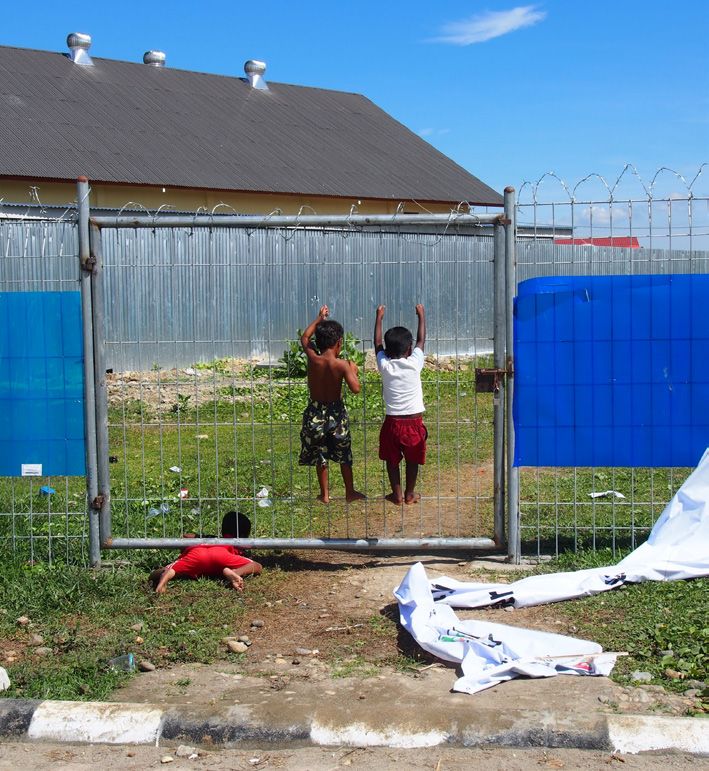
FELLOWS
questions and internal thoughts. Letters to A Welcome and Introduction:
Rumi crosses all genders, race, faiths and
ethnicities leaving the reader to ask: where John Thatamanil
do I truly belong? What have I found? Am I
found? How should I be? Rachel Brown
CSRS Program Coordinator
I leave you with an excerpted letter inspired
by the epigraph on Rumi’s Facebook page:
Dear Rumi,
Isat down with Visiting Research Fellow John
Thatamanil, over Zoom, to talk about where
he’s come from, what brought him into our
CSRS community, and what he’s working on
What if you were caught in a hairball? now. John is Associate Professor of Theology
and World Religions at Union Theological
I woke up to limp fingers – my arm was pinned Seminary in New York.
in an awkward position. I shot up in bed, shook
my arm – waited. Is this what paralysis feels Give me a bit of a trajectory of where
like? The fingers became conscious. Then, I you’ve come from in your academic life.
continued my morning gratitude practice:
I did my undergraduate work at Washington
vision – check; University in St Louis. My Masters of Divinity
and PhD were at Boston University. My MDiv
hearing – check; mentor, Robert Neville, who is a philosophical
theologian, was long committed to engaging
appendages – check; other religious traditions. So, I suppose I
didn’t have a typical MDiv because most
speech – check;
MDiv students still don’t have much exposure
memory – check. to other religious traditions. I went upstairs
Letters to Rumi [for my PhD] to the Division of Religious
I was thirty-four when I was told I had MS. and Theological Studies (DRTS). When I first
Meharoona Ghani That’s all I needed: another barrier. I was eight- met with the Buddhologist David Eckel and
years-old when I learned I was different. Yup, said, “I’d like to apply” and told him that I
CSRS Artist-in-Residence was thinking of comparative theology, he
those white kids surrounded my sister and me,
said, “Well if you’re going to do that and be
I recall a question at eight-years-old. I was on made fun of our names and yelled “Paki” and
“Hindu.” serious, you have to learn Sanskrit.”
the veranda of my cousin’s house in Nairobi,
Kenya when I was asked: “what do you want David was also very keen that I knew theory
to be when you grow up?” “A writer…I want This Rocky Mountain born and raised Golden
girl....who had labels imposed on her, or had of religion and I took a basic theory course;
to write books,” I said. I forgot this until one that proved to be of greater importance to
fine unemployed morning while surfing chosen labels and tossed them out, is unraveling
that hairball. I still don’t quite belong. my scholarship than I could have imagined.
Facebook to find someone to write for advice, If you don’t know the field, your writing
I found a page for Rumi. I joined it. I was becomes confined within the disciplinary
Rumi –
reminded of my love for this 13th century boundaries of theology. And if that’s
Sufi theologian and poet from Konya, Turkey. you. Embody. dominantly mono-religious, then you are not
I began to share Rumi’s poetic newsfeeds only bereft of theory but also of conversation
onto own Facebook page. Then, I decided My. Every experience, partners outside Christian theology. My new
to respond on my page to the poetic quotes book, Circling the Elephant, has a chapter on
with “Dear Rumi” … Letters to Rumi was born. every one. My. Skin. Hair. genealogy of religion which deconstructs
the category of religion, and then another
Letters to Rumi is a memoir expressed in Veins. Bones. Soul. Senses. chapter which offers my own constructive
letters using lyrical prose interspersed with theory of religion. I could not have written
poetry / anecdotes / narratives. I draw upon Swallowed. You. Spit out. those without my time at BU.
the spirit of the free poetic self-expression
in the Mushaira tradition of the South Asian Hairball. I. Unravel. A How did you end up at Union?
subcontinent (gatherings in which poets
perform poetic works), as well as the Ghazal, WTF attitude. I. Some of my mentors studied and taught
a strain of 7th C Arabic poetry that expresses there. Union is the former home of Paul Tillich,
the pain of loss or separation and the beauty Write. Letters my primary inspiration in philosophical
of love in spite of that pain. Letters to Rumi theology. So this was the appropriate place
moves from a journey of self-discovery to to you.
for me to continue the work he was doing. I
a wider examination of justice, equity and Love always, think of his final essay, “The Significance of
humanity through my lived experiences, the History of Religions for the Systematic
family, ancestry, faith, spirituality, sacredness, Meharoona (your light of the moon) Theologian,” as the baton he hands off to me.
– PAGE 10 –FELLOWS
undertaking, to use one of Foucault’s terms, But Not Religious are really interested in
technologies of the self. You have to do therapeutic regimes: meditation, yoga,
something: meditate, undertake some kind etc., but because the interpretive schemes
of ascesis. mediated to us by religious traditions have
come under suspicion, or have fallen into
I argue that we need wisdom and obsolescence, we’ve got many people who
interreligious wisdom because we’ve come are doing various therapeutic regimes but
to a point where we’re in a situation of world without any conception of how those fit
loss, where the world’s gone missing, we can’t into some reading of the world. My candid
find it, and we ourselves have forgotten how worry about that turn is then the de facto
to undertake disciplines of transformation interpretive scheme is provided to you by
that might give us a half a chance of finding capitalism. Therapeutic regimes become an
the world. Our post-truth, fake news culture, accommodation to social norms that happen
and our inability to live in accord with to be in the air, and it all gets commodified.
ecological constraints are all elements of a It’s all, of course, de facto white; it won’t really
cultural psychosis in which we simply don’t address questions of power, marginalization,
see the reality. race and indigeneity. I think my categories
help me name what I think I see going on in
You write prolifically for blogs and various places like the Pacific Northwest.
news sites, can you tell me a little bit
about why being a public intellectual is an Is there anything else that the CSRS
important role for you? community should know about you??
If you’ve put in the long and hard work that it All of this work begins because I am an
I love the image of Tillich handing you takes to become a writer and a teacher, then immigrant. It’s due to my being a young
a manuscript scroll as a baton in some it seems a provincial use of your schooling to person who came here [to the US] when I
cosmic theological relay race. So, what are contribute solely to one’s academic discipline. was nearly 9, and trying to figure out what
you working on now? It’s as though you forget that you’ve become it means to be Indian in North America.
a writer, not just a writer of say comparative That motivated me to study these other
I am working on the idea of interreligious theology. You’ve become a teacher, not just traditions. Those traditions are much more
wisdom. I’ve been inspired by my friend to the handful of students in your classroom interested in transforming me than informing
and theological giant, Edward Farley. He but you’re potentially a teacher for people me. So, if I keep engaging these traditions for
argued that the very genre of theology has who need to hear these ideas beyond the information rather than transformation, I’m
undergone radical transformation. In its ambit of your classroom. And I also wonder doing violence to the traditions I claim to be
earliest meaning, theology was the pursuit if the very idea that I am only to write for learning from. This entire trajectory is shaped
of sapientia, wisdom, but in our moment, my discipline isn’t part of the problem I’m by the fact that I’m an immigrant, trying to
theology has come to mean scientia, science, identifying when I’m talking about theology reconnect to the traditions that are part of my
narrowly construed, a university discipline. reduced to scientia? If what I’m writing and larger cultural history but were left behind in
I’ve long been impressed by his sense of cultivating in myself is a kind of wisdom, then the process of being dislocated from India.
theology as religious knowing of ultimate it should be on offer to anyone interested.
reality, a habitus acquired by contemplative
practice. So, if you are doing comparative How do you feel like this work that you’re
theology, and if “theology” for the people doing might impact the broader CSRS
you are learning from—in my case Hindus and/or Victoria community?
and Buddhists—remains the pursuit of
wisdom leading to liberation, but you’re still I don’t know that it’s much that I’m bringing,
doing theology as university discipline, then so much as it is what you’re bringing me. I’m
why should they be interested? I want to say mindful that I still have a ton to learn about
that the Buddhists and Hindus are right; we this region. My work might help me to offer
need to recover a conception of theology as a hypothesis about the region though. The
wisdom with their help.. Pacific Northwest, Victoria and surroundings,
have a real commitment to, what in my
I am also inspired by Foucault, who makes a recent work I’ve called therapeutic regimes.
brilliant argument that the enlightenment, In my theory of the religious, I argue that
and I’m paraphrasing here, is the first moment religious traditions are like spice cabinets
in western history in which all one needed to and pantries out of which we cook up
know the truth was to open one’s eyes. Prior interpretive schemes and therapeutic
to the enlightenment, it was assumed that regimes; we employ therapeutic regimes
if you wanted to know the truth, you had to to comport ourselves properly to what
become the kind of person who was capable the interpretive schemes say the world is
of seeing the truth. Which usually meant like. In the Pacific Northwest, the Spiritual John Thatamanil
– PAGE 11 –2020-21 FELLOWS
IAN H. STEWART GRADUATE VISITING RESEARCH FELLOWS
Edmund Pries
STUDENT FELLOWS (Wilfred Laurier University)
Daniel Boyarin Abelard and Heloise: An
Isabelle Kostecki (University of California, Berkeley) Exploration of a Peaceable, Love-
based Approach to Atonement
(UMontreal, Anthropology) Why the Jews Aren’t a Religion
An Anthropological Study of
End-of-Life Rituals in Hospitals in Jennifer Selby
Quebec and Western Switzerland (Memorial University)
Zachary Buck Romance and the Secular Body
Drexler Ortiz (National and Kapodistrian
(UVic, Psychology) University of Athens)
Sexual Minority Filipinx Immigrant The Phenomenology of Healing in
Youth: Religious Identity and the Cult of Asklepios John Thatamanil
Mental Health (Union Seminary)
Abby Day The Quest for Interreligious
CSRS GRADUATE STUDENT (University of London) Wisdom: Religious Diversity and
FELLOWS Baby Boomers and Beyond: A Theological Method
Century of Religious Change
Randa El Khatib Edda Wolff
(UVic, English) (Durham University)
Paradise Lost and Early Modern David Eagle Religious Imagery in the
Biblical Cartography (Duke University) Reconciliation Process of the
Anglican Diocese of BC and
From Seminary to Early Ministry:
Indigenous Communities
How an Elite Divinity School
Shapes Religious Leaders
Eliza McClenagan
(UVic, Germanic and Slavic Studies) Shuangyang Wong
German Christians and the Manvinder Gill (Zhejiang Gongshang University)
De-Judaization of Protestant (McMaster University) Inter-religious Dialogue through
Theological Texts in Nazi Germany Music and Painting: Another Way
Problem Drinking in Second-
Generation Sikh-Canadians to Understand Zen
WINNIFRED LONSDALE
GRADUATE STUDENT FELLOW Deepali Yadav
Chris Goto-Jones (Banaras University)
Katey Flechl (University of Victoria) The Paradox of Ghandi’s Saintliness
(UVic, History) Archetypes of Mindfulness
Female Education and
Enlightenment Discourse in Post-
Revolutionary America
ARTISTS IN RESIDENCE
Jingjing Li
HEATHER J. LINDSTEDT & (Leiden University) Meharoona Ghani
BRIAN A. POLLICK GRADUATE Authenticity and Contextuality: Letters to Rumi
Buddhist Texts as Lived Objects
STUDENT FELLOW
Françoise Keating
(UVic, Art History and Visual Isabelle Mutton
Studies) (University of Exeter)
Fifteenth-Century Heart Holocaust Memorials in Ottawa Terry Marner
Spirituality: René d’Anjou and and London: Sacred Secular Space Searching for Home-Finding
Religious Rebirth Fingerposts in Neuroscience
– PAGE 12 –2020-21 FELLOWS
FACULTY FELLOWS Robert Florida Graham McDonough
Ethical Issues in Modern Buddhism How Catholic Schools can be
Kathryn Chan Thought of as Sites of Inter-
Religious and Ecumenical Dialogue
(Faculty of Law)
Assessing Religious Refugee
Claims on Religious Grounds: Law, Christopher Gillespie
Psychology and Religion When Church and State Collide: Brendon Neilson
Secularism in Early 21st Century Post-Christian Diaspora: How
North America
Maggie Jones Millenials are Making Meaning
after Leaving the Church
(Department of Economics)
The Economic Legacy of Indian
Missions in the United States Nicola Hayward
The Use of Funerary Art for
Commemorating Social Identity: Jordan Paper
The Case of the Via Latina’s
ASSOCIATE FELLOWS Samaritan Woman
Theology Throughout Most of the
Human Past: The Spiritual Life
and Understanding of Gathering-
Hunting Peoples
Angela Andersen Victor Hori
Islamic Architectures: Muslim The Modernization of Buddhism in
Spaces of Prayer, Ceremony and Global Perspective Paige Thombs
Learning Beyond the Mosque Religion and Lawyers: Strange
Bedfellows or Intimate Partners?
Russell Callaghan
A Comparison of “Mindfulness” Chelsea Horton
in Buddhism and Medical/ Living Histories of Religion,
Psychological Interventions Irreligion, and Settler Colonialism
in the Pacific Northwest Lycia Trouton
Cross-Community Mourning
Harold Coward Graham Jensen through Decorative Design in the
Liturgical Service, N. Ireland
Word, Chant and Song in the Major Unorthodox Modernisms: Varieties
Religions: Spiritual Transformation of Personal Religion in Twentieth-
Century Canadian Poetry
Carolyn Whitney-Brown
Michel Desjardins Lesley Jessop Henri Nouwen’s Unfinished Last
Food: Connector to People’s Students or Tailors? A Manuscript: The Flying Trapeze
Spiritual Worlds Re-evaluation of the Sculptures
on the Routh Transept of the
Cathedral of Notre-Dame in Paris
Grace Wong Sneddon
Erica Dodd Francis Landy Chinese Canadian Spirituality in
Treasures of the Early Christian The Book of Isaiah the 21st Century
Church
Scott Dolff Lytton McDonnell Katherine Young
Evangelicals and the Environment Tuneful Trances: Music, Mysticism The Divyaprabandham,
in the United States and Re‐enchantment in Modern Canonization and Śrīvaisnava
America Formation: Musical Tropes and
Identity Negotiations
– PAGE 13 –EVENTS
Thursday Public Lecture Series
These CSRS lectures feature our fellows and special guests. They are held from 5:00-6:00pm Pacific Time on Thursdays throughout the academic
year, with the exception of some special lectures (see dates below with an asterisk* for exceptions). Due to precautions related to Covid-19,
lectures are online only. All lectures include a live audience Q&A.
For further lecture details and updates, visit our website at: uvic.ca/csrs/events/.
September 17, 2020 Gary Kuchar Literature, Religion and the Senses of Place in the English Civil
War
September 24, 2020 Nikki Sanchez Exploring Emergent Media for Indigenous Sovereignty and
Resurgence
October 1, 2020 Sheryl Reimer-Kirkham, Sonya Prayer as Transgression? The Social Relations of Prayer in
Sharma, Rachel Brown and Healthcare Settings
Melania Calestani
October 8, 2020 Erica Greenup Leaving Catholicism: Secularization among Women on
Vancouver Island since the 1960s
October 15, 2020 Tamsin Jones Farmer, Victor Hori Should ‘Religious Insiders’ Teach Religious Studies?
and Russell McCutcheon
October 22, 2020 Drexler Ortiz The Role of the Congregation: Religious Identity Among
Filipinx Sexual Minorities
October 29, 2020 Chris Goto-Jones Archetypes of Mindfulness
November 5, 2020 Merinda Simmons and John What just Happened? Religion and Politics in the US
Thatamanil
November 19, 2020 Jingjing Li Buddhist Texts as Lived Objects
November 26, 2020 Tim Gosley The Heart Coffer: Spiritual Explorations through Puppetry
*December 3, 2020 (5:00-6:30pm) Esi Edugyan with Tim Lilburn Values for a New World
*January 7, 2021 (5:00-6:30pm) Miroslav Volf Values for a New World
January 14, 2021 Françoise Keating Creating a Civil Society: A Manuscript of René d’Anjou
January 21, 2021 Daniel Boyarin What’s Wrong with ‘Religion’?
January 28, 2021 Randa El Khatib Early Modern Biblical Cartography in John Milton’s Paradise
Lost
*February 2, 2021 (Tu 11:00am-12:30pm) Noam Chomsky Values for a New World
February 11, 2021 Maggie Jones The Economic Legacy of Indian Missions in the United States
February 25, 2021 Manvinder Gill Tense Misalignments: Exploring Sikh Canadians’ Relationship
with Alcohol
*March 4, 2021 (5:00-6:30pm) Linda Woodhead Values for a New World
March 11, 2021 Kathryn Chan The Adjudication of Religious Refugee Claims
*March 16, 2021 (Tu 11:00am-12:30pm) JAH Guest Panel Featuring: Noam Chomsky, Miroslav Volf, Esi Edugyan, Linda
Woodhead
March 25, 2021 Meharoona Ghani Letters to Rumi
April 1, 2021 Eliza McClenagan Purifying Protestantism: Anti-Jewish Theology and the
Holocaust
– PAGE 14 –You can also read


