Council Tax 2020/21 How your money is spent - Derby City Council
←
→
Page content transcription
If your browser does not render page correctly, please read the page content below
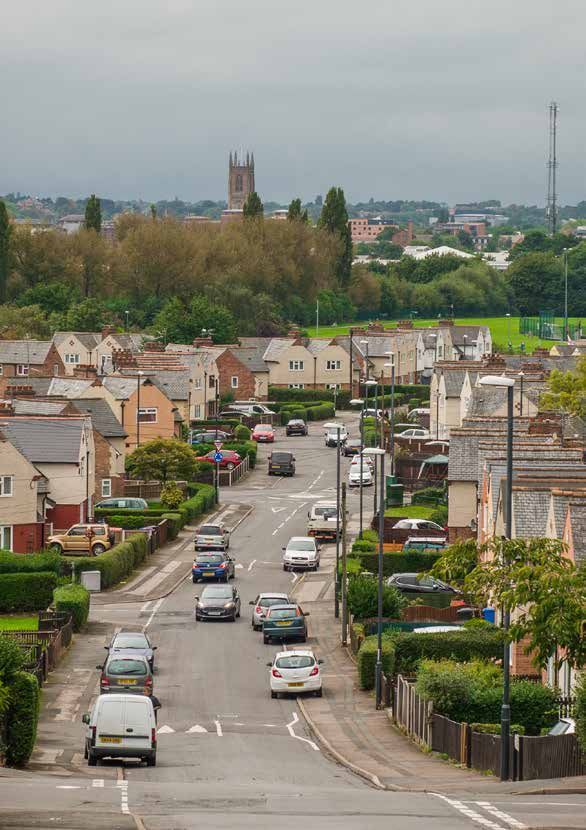
Council Tax 2020/21 How your money is spent

Introduction from Councillor Chris Poulter                             3

    1. Your Council Tax and Spending Plans                                 4
      Council Tax                                                          4
      Adult Social Care Precept                                            4
      Derby City Council Revenue Budget                                    5
      2020/21 Gross Expenditure                                            6
      Derby City Council - Capital Investment                              6
      Flood Defence Levy                                                   6
      Derbyshire Fire Authority                                            7
      Police & Crime Commissioner for Derbyshire                           9
      Council Tax Bands                                                    10
      Council Tax Liability                                                10
      Empty Homes Premium                                                  10
      Discounts                                                            11
      Empty and Unoccupied Property Discount                               11
      Exemptions                                                           11
      Help for disabled people                                             12
      Appeals                                                              12
      How Council Tax changes are shown on your bill                       13
      Pay your Council Tax over 12 months                                  13

    2. Help paying your Council Tax                                        14
      Council Tax Support - help for people on a low income                14
      Housing Benefit                                                      15
      How to make a claim for Housing Benefit and/or Council Tax Support   16
      Other available advice                                               16
      Council Tax Hardship Scheme                                          16

    3. Business Rates                                                      17
      Appeals                                                              17
      Small Business Rates Relief (SBRR)                                   17
      Pay your Business Rates over 12 months                               18
      Reducing your Business Rates                                         18

2
Introduction
Dear Resident, We’ve listened to residents on the need for
bigger, longer-term improvement projects
When formulating this year’s budget, we throughout the city. New services, facilities
worked hard on planning how to make and schemes in Derby are woven heavily
Derby an even better place to live. Derby is into this year’s budget, though we will always
a city to be proud of and we’re committed ensure that this offers value for taxpayer’s
to continually maintaining, improving and money before we put spades in the ground.
building for those who live here.
That said, ensuring that money is being
There is still work to be done to ensure invested into projects will make Derby a
we continue to make Derby as financially city that desirable to live in and visit. We’re
sustainable as possible, with nearly £9m improving and modernising our highways,
revenue of savings needed by 2022/23. housing and leisure facilities such as
National growing demands on services, Moorways swimming pool. One scheme
particularly within the adult and children social which has proved particularly timely is that of
care sector, play a large part in this. You can Our City Our River, which works to improve
see our plans to address this in our medium Derby’s flood defences. As we’ve seen in
term financial plan report. recent months, this is more vital now than
it ever has been. These projects are all
These pressures, combined with shortfalls investments in ours and Derby’s future. That
from previous Government settlements, considered, we have budgeted for an extra
means we have increased Council Tax by £3m worth of funding over the next 3 years
3.99%. This will increase payments by less to tackle climate change and ensure the
than £1 a week for some taxpayers in the city. reduction of Derby’s carbon emissions.
While this is not a decision we take lightly,
2% of the increase will be used to specifically Our plans have been put together with the
support the investment that Adult’s and citizens of Derby at its heart. We’re committed
Children’s social care greatly needs. to ensuring that, in spite of rising demands,
our budget remains fair and responsible for all
who live in Derby.
Councillor Chris Poulter
Leader of Derby City Council
31. Council Tax and Spending Plans
Council Tax
There are three separate council taxes included in your total bill – set by Derby City Council,
Derbyshire Fire Authority and Derbyshire Police and Crime Commissioner.
Derby City Council, Derbyshire Police and Crime Commissioner and Derbyshire Fire Authority have
applied increases to Council Tax levels of 3.99%, 4.6% and 1.98% respectively.
There is no change to the 2020/21 Council Tax Referendum limits that were set for local authorities
in 2020/2021, Authorities have the flexibility to increase their core Council Tax requirement by up to
1.99%, plus levy an additional 2% increase precept for Social Care.
Derby City Derby City Derbyshire
Derbyshire Fire Total
Band Council (excl Council Police and Crime
Authority Council Tax
ASC precept) ASC precept Commissioner
A 896.97 85.44 151.07 51.82 1,185.30
B 1,046.46 99.68 176.24 60.46 1,382.84
C 1,195.96 113.92 201.42 69.09 1,580.39
D 1,345.45 128.16 226.60 77.73 1,777.94
E 1,644.44 156.64 276.96 95.00 2,173.04
F 1,943.43 185.12 327.31 112.28 2,568.14
G 2,242.42 213.60 377.67 129.55 2,963.24
H 2,690.90 256.32 453.20 155.46 3,555.88
Adult Social Care Precept
The Secretary of State made an offer to adult social care authorities. (“Adult social care authorities”
are local authorities which have functions under Part 1 of the Care Act 2014, namely county
councils in England, district councils for an area in England for which there is no county council,
London borough councils, the Common Council of the City of London and the Council of the Isles of
Scilly.)
The offer was the option of an adult social care authority being able to charge an additional
“precept” on its council tax without holding a referendum, to assist the authority in meeting its
expenditure on adult social care from the financial year 2016-17. It was originally made in respect
of the financial years up to and including 2019-20. If the Secretary of State chooses to renew
this offer in respect of a particular financial year, this is subject to the approval of the House of
Commons.”
4For the financial year 2020-21 government has allowed Councils with social care responsibilities
to increase their council tax by a further 2%, on top of the core principle, to be spent exclusively on
social care.
Derby City Council Revenue Budget
The revenue budget pays for the day-to-day running costs of all of Derby City Council’s services.
The costs of schools are met in full by the Government’s Dedicated Schools Grant. The net*
costs of all other services after use of reserves** are financed from a combination of Council Tax,
Retained Business Rates and Government funding in the form of the Revenue Support Grant and
other Specific Grants.
*Net means expenditure less income.
**Reserves are the balance of funds not spent and held to provide for any future financial risks and
potential one-off spending needs that could arise.
Budget and Council Tax 2020-21 2019-20 Change
£M £M £M
Gross spending on general services 641.326 625.550 15.776
Gross spending on Housing Revenue
Account add 60.585 59.418 1.167
Gross Expenditure 701.911 684.968 16.943
Income from services subtract 137.763 138.563 - 0.800
Use of reserves subtract 2.772 7.492 - 4.720
Business Rates subtract 45.890 47.631 - 1.741
Revenue Support Grant and Top Up subtract 29.280 28.811 0.469
Dedicated schools grant subtract 253.297 235.441 17.856
Housing Benefit Subsidy subtract 69.879 82.863 - 12.984
Other Specific Grants subtract 63.058 52.330 10.728
Collection fund surplus (Council Tax) subtract - 2.580 - 5.486 2.906
Council Tax Requirement equals 102.552 97.323 5.229
The Council Tax Requirement is the amount needed to meet the anticipated net expenditure for
services provided by the Council. The amount required from Derby City’s Council Tax is divided
by Derby’s tax base of 69,592.06 to calculate a charge for Band D properties of £1,473.61. This
represents a movement of 3.99% from the previous year. The charges for the other bands of
property are then calculated in proportions to the Band D charge.
The tax base is the number of dwellings in Derby to which a Council Tax charge applies converted
into an equivalent number of Band D dwellings.
For further information about Derby City Council’s budget contact the Director of Financial Services,
Derby City Council, The Council House, Corporation Street, Derby, DE1 2FS.
52020 - 2021 Gross Expenditure £702 million
£253.297m Schools
£107.813m Adult Services
£79.088m Housing Benefit
£78.978m Communities and Place
£69.879m Children’s Services
£61.536m Housing (including Housing Revenue Account)
£51.321m Central Services
More details on the Council’s budget and value for money strategy can be found on
www.derby.gov.uk
Derby City Council - Capital Investment
Derby City Council’s capital budget is to pay for major investments that will remain in use over several
years. The approved capital budget for 2020-2021 is £183 million and will invest in health and safety
works on a number of council buildings as well as investing in the Councils ICT infrastructure. The
budget also includes investment in the city’s regeneration, improvements to the A52, investment in
new build social housing and a new swimming pool at Moorways as well as major improvements to
our flood defense’s. The majority of the costs are met by grants and contributions capital receipts and
assumed borrowing.
For 2020-2021, our programme includes assumed borrowing of £85.3 million. This attracts no
Government support and is effectively using the Councils cash flow until there is a need to borrow.
Flood Defence Levy
The Environment Agency levy for flood defence is £80,475 in 2020 - 2021. This is included in the
Council’s gross spending on services within central services. The Government funds most of the flood
defence service directly. For further information regarding the Flood Defence Levy budget please
contact the Environment Agency at Sapphire East, 550 Streetsbrook Road, Solihull, B91 1QT or email
enquiries@environment-agency.gov.uk.
6Derbyshire Fire Authority
At the Fire and Rescue Authority meeting on 13 February 2020 Derbyshire Fire and Rescue Authority
approved the level of Council Tax for the year 1 April 2020 to 31 March 2021. The Authority agreed to
set a 1.98% increase in council tax with a budget of £39.9m for 2020/2021.
The table below shows the council tax bandings and council tax levels.
Council Tax Band Valuation Council Tax 2020/2021
Band A £0 - £40,000 £51.82
Band B £40,000 - £52,000 £60.46
Band C £52,001 - £68,000 £69.09
Band D £68,001 - £88,000 £77.73
Band E £88,001 - £120,000 £95.00
Band F £120,001 - £160,000 £112.28
Band G £160,001 - £320,000 £129.55
Band H £320,001 or above £155.46
*illustrated above 1991 Valuations used by the Valuation Office Agency (VOA)
Our Budget Requirement and Funding
The Settlement Funding Assessment for 2020/2021 is £13.2m, an increase of £0.2m (1.5%)
compared to the 2019/2020 allocation of £13.0m.
Budget Requirement Comparison for year 2019 through 2020 and year 2020 through 2021
Amount in millions Amount in millions
Expense Details of pounds for 2019 of pounds for 2020
through 2020* through 2021
Gross Expenditure for services 40.2 43.2
Contribution to Reserves 0.8 0.8
Income (to be subtracted from sum) 3.1 4.1
Total Budget Requirement 37.9 39.9
*Original Budget
7The Service experienced significant funding reductions in its Revenue Support Grant over the period
2011/2012 to 2019/2020. Derbyshire Fire and Rescue Service has secured on-going savings in
the region of £11.5m as part of a concerted and timely approach to address the impact of funding
reductions.
For further information please follow the link below
www.derbys-fire.gov.uk/about-us-our-vision/what-we-spend-and-how-we-spend-it/our-budget-
and-your-council-tax
Contact the Chief Fire Officer on:
Email: enquiries@derbys-fire.gov.uk
Tel: 01773 305305
Address: Derbyshire Fire Authority, Butterley Hall, Ripley, Derbyshire, DE5 3RS
PLAN A SAFE
ESCAPE
w w w. d e r b y s - f i re . g o v. u k
For further information please go to www.derbys-fire.gov.uk/keeping-safe/plan-a-safe-escape/
8Police & Crime Commissioner for Derbyshire
2020/21 Budget and Council Tax Requirement
To see further information regarding the Police & Crime Commissioner’s budget for 2020/21, his plans
for investment in communities and also how it affects the council tax requirement, please refer to the
leaflet hosted on the Commissioner’s website (https://www.derbyshire-pcc.gov.uk/Budget2020-21).
The budget for policing Derbyshire in 2020/21 has been set at £189.879m, an increase of £11.8m
from 2019/20.
Of this, £108.026m is provided by the Government’s Police Grant. The amount contributed by the
police part of the council tax has increased and now totals £72.8m. A further £2.375m has been
allocated to Derbyshire to further fund additional police officers and is payable as recruitment targets
are met during the year.
This means that the annual amount of council tax paid by a Band D (the average) household towards
policing in 2020/21 will increase from the £216.60 paid in 2019/20 to £226.60, an increase of £10 per
annum (4.6%).
The Police & Crime Commissioner’s council tax requirement is calculated as follows:
2019/20 £M 2020/21 £M
Police & Crime Commissioner 6.439 6.741
Chief Constable 172.721 183.138
Use of Reserves to fund the budget deficit (1.098)
Net Budget Requirement 178.062 189.879
Main Government Grant (100.504) (108.026)
Pensions Grant (8.700) (8.700)
Collection Fund Surplus (0.425) (0.394)
Council Tax Requirement (Precept) 68.433 72.759
Are you a Derby resident or
business owner?
myAccount is the easiest way to manage a range of Council
services online - anytime, anywhere and from any device
Sign up at derby.gov.uk/myaccount
myAccount
9Council Tax Bands
The Listing Officer at the Valuation Office Agency will have placed your property into one of the eight
Council Tax bands listed below. The valuation range uses the open market value of the property as
at 1 April 1991. You can see the Council Tax Banding List on the Valuation Office Agency website:
www.voa.gov.uk.
The movement in general prices will not be a reason for changing your valuation band. The amount
of Council Tax charged for each band depends on the tax set for Band D - the Council Tax for all the
other bands is worked out from that figure.
Band Property Values Ratio Band D
A Up to and including £40,000 6/9
B £40,001 to £52,000 7/9
C £52,001 to £68,000 8/9
D £68,001 to £88,000 9/9
E £88,001 to £120,000 11/9
F £120,001 to £160,000 13/9
G £160,001 to £320,000 15/9
H More than £320,000 18/9
Council Tax Liability
There is only one Council Tax bill for each domestic property. The person who is liable is normally
the person living in the property who either owns or rents it. Couples and co-owners are jointly
liable. There are some circumstances where the owner is liable which include:
•• The property is a residential care home.
•• The property is a house in or intended for multiple occupation
•• The property is empty
Empty Homes Premium
From April 1 2020, properties that have been unoccupied and substantially unfurnished for more
than two years will be subject to a 100% premium, increasing Council Tax liability to 200% of the
normal Council Tax charge. For properties unoccupied and substantially unfurnished for five years
or more a premium of 200% will apply increasing Council Tax liability to 300% of the normal Council
Tax charge.
10Reducing your Council Tax
Discounts
The full Council Tax charge is based upon a property being occupied by two or more adults. For
Council Tax purposes an adult is classed as someone aged 18 or over. If a property is occupied by
one adult, you can get a 25% discount on your Council Tax bill. For Council Tax purposes, some
people are not counted when we decide how many adults are living in the property.
These people include:
•• anyone under 18 years of age
•• 18 and 19 year olds who are at school or have just left school
•• full-time students, student nurses, apprentices and young people on youth training schemes
•• patients living in hospital or a care home
•• people who have learning difficulties or have mental health issues - they must be entitled to
certain state benefits
•• people in prison, unless they are in prison for not paying Council Tax, a fine or detained elsewhere
•• people staying in some hostels and night shelters.
A full list appears on the website: www.derby.gov.uk/counciltax
If, after disregarding a person or persons the number of adults resident is only one, a 25% discount
can apply. If all residents are disregarded a 50% discount can apply. This discount does not apply
where someone who normally lives in the property is temporarily absent.
Empty and Unoccupied Property Discount
Properties classed as empty and unoccupied will attract a 100% discount for a period of up to 28
calendar days. This applies from the date the property first becomes empty and unoccupied. If the
property remains empty and unoccupied then, on day 29, Council Tax is charged at 100% of the
normal occupied rate.
Exemptions
Some occupied or unoccupied properties are exempt from Council Tax. This means there is no
Council Tax to pay for a certain period. These include;
Unoccupied properties
•• Awaiting probate or letters of administration to be granted or for up to six months after they have
been granted
•• After being used by a charity that owns them
11Occupied properties
•• Students’ halls of residence or properties where only full time students live
•• Occupied only by people who have learning difficulties or mental health issues and who are
entitled to certain state benefits
A full list of properties that are exempt appears on the website: www.derby.gov.uk/counciltax
Help for disabled people
Your Council Tax may be reduced if a disabled person is living in the property. To get a reduction the
property must have one of these:
•• a room, other than a bathroom, kitchen or lavatory that is used mainly by the disabled person
and is required for meeting the needs as a result of their disability, for example a room used for
treatment.
•• an extra bathroom or kitchen that is required to meet the needs of the disabled person, or
•• enough space for the use of a wheelchair where one needs to be used inside.
You will be charged as if your property was in the next lower valuation band. Homes in Band A can
also get a reduction.
Appeals
Liability appeals
You can appeal if you think your bill is wrong because:
•• you are not the person who should pay the Council Tax
•• your property should be exempt or you should be receiving a discount
•• you are entitled to a disabled person’s reduction.
•• you are not getting the right amount of Council Tax Support.
To appeal, write to the Council Tax team and set out the reasons why you feel the Council’s decision
is wrong. If you are not satisfied with the outcome of the appeal, or have not received a response to
the appeal within two months, you can make a further appeal to the Valuation Tribunal.
Valuation Tribunal, Hepworth House, 2 Trafford Court, Doncaster DN1 1PN.
You can appeal directly to the Tribunal against a Council Tax Penalty, without first having to contact
the Council.
12Appeals against Council Tax Banding
There are only limited circumstances when taxpayers can challenge their bandings; these include:
•• After demolition
•• Conversion of houses to flats
•• Physical changes in locality affecting value.
•• If you think your property has not been valued correctly.
And within six months of:
•• A band change to your property made by the Listing Officer
•• A band change to a similar property to yours made by the Tribunal
•• Becoming liable to pay Council Tax on a property.
Appeals should be made to the Valuation Office Agency through this website
www.gov.uk/challenge-council-tax-band
Appealing against your liability or your band does not allow you to withhold payment of your Council
Tax. You should continue to pay as normal and, if your account is amended following an appeal, you
will be advised of your revised payments. For enquiries: Telephone 03000 501 501, web:
www.gov.uk/contact-voa
The Council has the power to reduce Council Tax where discounts and exemptions do not apply.
Each case will be judged on its merits, and we will only consider using this power in exceptional
circumstances.
How Council Tax changes are shown on your bill
The change in the amounts being charged by Derby City Council, Derbyshire Police and Crime
Commissioner and Derbyshire Fire Authority for 2020/21 are shown on your bill as a percentage
change to one decimal point.
Pay your Council Tax over 12 months
You can pay your current year Council Tax over 12 monthly instalments. To receive 12 instalments
you must have made your request by 15 April 2020 and then you will receive a new bill which shows
instalments running from April 2020 to March 2021.
This can be done online at www.derby.gov.uk/apply
132. Help Paying your Council Tax
Council Tax Support - help for people on a low income
Derby’s Council Tax Support Scheme is for those at working age. The Scheme for 2020/21 has
been set; all working age households in Derby will have to pay something towards their Council Tax.
Within the Scheme for 2020/21:
•• Support is capped at Derby’s Council Tax Band A charge
If your property has been placed in Council Tax Band B or above, the maximum amount of
Council. Tax Support will be calculated as though your property was in Band A.
•• The maximum support that anyone can get is 70% of their Council Tax charge
•• No Second Adult Rebate
Second adult rebate is no longer awarded under the Council Tax Support Scheme.
•• Maximum amount of £6,000 capital to be held
Capital of £6,000 or more disqualifies you from being awarded Council Tax Support.
•• Minimum award of £4.00 a week
If, when calculated, Support is less than £4.00 a week, Support will not be awarded.
•• We are using the Housing Benefit rules and deductions relating to non-dependents
A non-dependent is another adult living in the household with the claimant and their partner
– for example a grown-up son or daughter. Sometimes, depending on the circumstances, we
make deductions from the claimant’s Council Tax Support entitlement, to reflect the fact that the
nondependent needs to contribute to the household living costs. For 2020/21 we will use the
Housing Benefit rules to decide when and how much deduction(s) to apply. However, where the
nondependent has gross income of less than £100.00 a week, we will use a weekly deduction of
£4.00 instead of the Housing Benefit rate.
•• Family premium is included in the Council Tax Support calculation
This means that if a family qualifies for some Council Tax Support, they will receive extra help.
•• Temporary Absence rules
If someone is temporarily absent from their home for more than four weeks because they have
left Great Britain - England, Scotland and Wales – in most instances their entitlement to Council
Tax Support will end.
•• Claims can only be backdated for up to a maximum of three months from when the claim
is made
If you delay making your claim at the time you need help, we can only backdate your claim for up
to a maximum of three months, if you are able to show you have good cause for not making your
claim at the right time.
14Pensioners are not affected by Derby’s Council Tax Support Scheme; they receive support using
different rules made by Central Government.
The amount of your Council Tax Support award will be shown on your bill
Housing Benefit
Universal Credit Full Service was introduced in Derby on 11 July 2018. This affects how most
people at working age can claim help with their housing costs.
It means that most working age people will have to make two separate claims for help with their
Council Tax and their rent.
Pensioners
If you are a pensioner, you are not affected by Universal Credit. You should make one joint Housing
Benefit and Council Tax Support claim with the Council at www.derby.gov.uk for help with your rent
and your Council Tax.
If you are a couple and one of you is a pensioner and the other is working age, you will need
to make two separate claims as a couple: one for help with your Council Tax (Council Tax Support)
at www.derby.gov.uk and one for help with your rent (Universal Credit) at https://www.gov.uk/
apply-universal-credit.
Working age
If you are at working age and need help with your rent, you can only apply for Housing Benefit if you
are in one of the following groups:
•• you are living in Specified Accommodation (and you need care, support or supervision);
•• you have been placed in temporary accommodation by the Council;
•• you receive Severe Disability Premium (SDP) as part of a benefit award, or you receive SDP as
part of a benefit award that has ended in the last month and you remain entitled to SDP.
If you are in one of these groups you need to make one joint Housing Benefit and Council Tax
Support claim with the Council at www.derby.gov.uk for help with your rent and your Council Tax.
If you are not in one of the above groups you need to make two separate claims: one for help
with your Council Tax (Council Tax Support) at www.derby.gov.uk and one for help with your rent
(Universal Credit) at https://www.gov.uk/apply-universal-credit. This includes if you are a couple
and one of you is a pensioner and the other is working age.
15How to make a claim for Housing Benefit and/or Council Tax
Support
If there’s no Support shown on your bill, but you feel you may be entitled to it, you need to fill in
a claim form as soon as possible. Claims are made online at www.derby.gov.uk. For those who
cannot access the internet at home, public computers are available in the Council House reception
area, Council House, Corporation Street, Derby DE1 2FS.
Other available advice
When you get your Council Tax bill, if you need to talk to someone about it you can receive
confidential help, support or advice from the following:
•• Derby Homes’ Derby Advice team on 01332 643395 (for Derby Homes tenants only)
•• The National Debtline on 0808 808 4000, or see the budgeting tools at www.nationaldebtline.org
•• The Money Advice Service on 0800 138 7777, or go online at www.moneyadviceservice.org.uk
•• Step Change at www.stepchange.org
Council Tax Hardship Scheme
If you feel paying your Council Tax bill will place you in hardship you can apply for Council Tax
Hardship assistance, as part of the Council’s Single Discretionary Award Scheme at
www.derby.gov.uk
CHANGE A LIFE.
FOSTER
FOR DERBY CITY COUNCIL
Visit derby.gov.uk/fostering
or call 01332 640880
163. Business Rates
Business Rates are payable on non-domestic properties.
Apart from properties that are exempt from business rates, each non-domestic property has a
Rateable Value (RV) which is set by the Valuation Office Agency (VOA). The VOA draws up and
maintains a full list of all rateable values. The rateable value of your property is shown on the front
of your bill.
After a Rateable Value has been determined it is multiplied by the national non-domestic multiplier,
which is set by central government each year. The multiplier set by government for the financial
year 2020/21 is £0.512p
If the rateable value is less than £51,000 and the property is occupied then the lower multiplier is
used. The again is set by central government and for 2020/21 is £0.499p.
Appeals
From 1 April 2017, the rateable values on non-domestic properties will be based on the valuation
date of 1 April 2015.
You can find and review your rateable value on the VOA’s website here:
www.gov.uk/correct-your-business-rates.
If you have reason to believe that your rateable value
•• CHECK - review and confirm the facts about your property held by the VOA
•• CHALLENGE – once the facts are established, explain why you believe your valuation is wrong.
An appeal on your 2017 rateable value is not possible, and may not be necessary, until you have
completed CHECK and CHALLENGE.
For enquiries about the assessment of your rateable value, contact:
Telephone: 03000 501 501, web: www.gov.uk/contact-voa
Small Business Rates Relief (SBRR)
The thresholds for this relief are:
A Rateable Value between £0 - £12,000 provides 100% relief.
A Rateable Value between £12,000 - £15,000 provides a sliding scale of relief from 100% to £0
entitlement.
The lower multiplier of £0.499p will now be used for a Rateable Value below £51,000 on occupied
properties.
17Pay your Business Rates over 12 months
You can pay your current year Business Rates over 12 monthly instalments. To receive 12
instalments you must have made your request by 15 April 2020 and then you will receive a new bill
which shows instalments running from April 2020 to March 2021.
Email: business.rates@derby.gov.uk
Reducing your Business Rates
Business Rates reliefs are available that may reduce the amount you have to pay.
•• Small Business Rates Relief
•• Unoccupied property relief
•• Partly occupied property relief
Derby City Council operates its own Discretionary Rate Relief scheme and for the financial
year beginning on 1 April 2020, depending upon your business or organisations individual
circumstances you may be entitled to one or more of the following discretionary rate reliefs.
•• Top-up relief for Charities and Community Amateur Sports Clubs
•• Relief for non-profit making organisations
•• Enterprise Zone Relief
•• Office Space Occupied By Local Newspapers Relief
•• Supporting Small Business Relief
•• Revaluation Support Relief
•• Pub Relief
•• Retail Discount
State aid
The award of discretionary rate relief is considered likely to amount to State aid. However, it
will be State aid compliant where it is provided in accordance with the De Minimis
Regulations (EC 1407/2013). The De Minimis Regulations allow an undertaking to receive
up to EUR 200,000 ‘De Minimis’ aid over a rolling three-year period.
UK withdrawal from the European Union (EU)
Whilst the UK left the EU on 31 January 2020, the Withdrawal Agreement negotiated by the
Government and the EU provides that during the implementation period State aid rules will
continue to apply as now and will be subject to control by the EU Commission as at present.
Therefore Derby City Council will continue to apply State aid rules, including De Minimis, to
the discretionary rate relief during the implementation period.
18More information about State aid can be found on the state aid section of the government’s
website https://www.gov.uk/guidance/state-aid.
If you are and your business or organisation are receiving, or have received, any ‘De Minimis’
aid granted during the current or two previous financial years (from any source), you should
contact us immediately on business.rates@derby.gov.uk giving details of the aid received. If
you are unsure whether or not any aid you may have received amounts to state aid, you may
want to consider obtaining independent advice before you respond. You should also contact
us, using the same email address, if you want to refuse discretionary rate relief telling us why
you want to refuse it.
If you are not receiving any of the discretionary rate reliefs and you think you
should, please contact us on business.rates@derby.gov.uk giving us details of your business
or organisation and which discretionary rate relief you think you are entitled to.
For more information please visit www.derby.gov.uk/business-rates.
On 7 May Local and Police and
Crime Commissioner Elections are
taking place across the City
If you are eligible to vote but aren’t registered yet go to www.gov.uk/registertovote
by Tuesday 21 April 2020 to make sure you can take part.
If you are unable to vote in person on 7 May and need a postal vote or proxy vote
application form contact the Elections Team at elections@derby.gov.uk or on 01332
640837. The deadline for us to receive completed postal vote applications is 5pm
Wednesday 22 April 2020. The deadline for us to receive completed proxy vote
applications is 5pm Wednesday 29 April 2020. Further information about voting
including postal and proxy arrangements is available at
https://www.electoralcommission.org.uk/i-am-a/voter.
Polling Stations are open from 7am until 10pm on Thursday 7 May. If you vote by
post we must receive your completed postal vote by 10pm Thursday 7 May 2020.
If you need further information contact the team at
elections@derby.gov.uk or on our helpline 01332 640837.
19We can give you this information in any other
way, style or language that will help you
access it. Please contact us on: 01332 642428
Minicom: 01332 640666
Polish
01332 642428 640666
Punjabi
0133264XXXX
718000
642428 640666
206182
Slovakian
01332 642428
Urdu
01332 718000
01332 642428
640666
Derby City Council The Council House Corporation Street Derby DE1 2FS
www.derby.gov.ukYou can also read


