Creating Shared Value and Sustainability Report 2022 - Advancing regenerative food systems at scale
←
→
Page content transcription
If your browser does not render page correctly, please read the page content below

Creating Shared Value and
Sustainability Report 2022
Advancing regenerative food systems at scale

A message
Contents
3 Our progress against
our commitments
from our
4 Our approach
10 On the road to net zero
15 Looking at the
whole landscape
Chairman
19 More regenerative
practices on farms
23 Protecting biodiversity
and CEO
25 Regenerating the water cycle
29 Ingredients produced
sustainably
33 Human rights and
resilient communities
37 Supporting tasty and
balanced diets
42 Food safety and quality
43 Packaging and circularity
Standing firm on our commitments. After years of progress, the recent rise in food insecurity
is deeply concerning. Our commitment to maintaining 47 Opportunities for
everyday basic food supplies and providing affordable young people
Facing last year’s challenges was difficult, but doing so
nutrition is unwavering. In 2022, we delivered
has only strengthened our resolve. Just as the COVID-19 51 Our diverse and
approximately 130 billion servings of affordable nutrition
pandemic began to ease, supply chain disruptions inclusive culture
fortified with at least one of the “big four” micronutrients:
worsened, inflation surged and energy shortages took 55 An employer of choice
iron, iodine, vitamin A and zinc.
hold. The invasion of Ukraine and its knock-on effects were
Nestlé CEO Mark
also felt around the world. Every business, community 59 The foundations of
Schneider (left)
With this report, Nestlé becomes the first company to ethical business
and household faced tough choices in navigating our and Chairman Paul
disclose the nutritional value of its entire global portfolio. Bulcke (right) in
turbulent world. Vevey, Switzerland. 63 About this report
We have benchmarked all in-scope products using the
Health Star Rating (HSR) system – a nutrient profiling
Nestlé remains committed to nutrition, health and wellness.
system applied by the Access to Nutrition Initiative (ATNI)
The company has made great progress in reducing the
– and we have also disclosed sales from our wide range of companies benchmarked in ATNI’s Spotlight on Lobbying over the past fifteen years and, as these regulations are
sodium, sugar and saturated fat in its products over the
specialized nutrition products, which are not covered by the scorecard, released in December 2022. We aim to lead implemented, aim to continue our leadership in both
past decade and that work continues. At the same time, we
HSR system. the way, and do so in part, through our continued support transparency and performance. We invite you to read and
are working to advance regenerative food systems and help
for initiatives that seek to drive change, such as the enjoy this report and share your feedback with us.
address food security. Drawing on our strong foundation in
As a global company, we have a role to play in international UN Global Compact.
Creating Shared Value we focus our energy and resources
efforts to combat societal issues. In 2022, Nestlé experts
to make a positive impact at scale.
participated in discussions in support of the UN Treaty After the invasion of Ukraine, our focus has been on
on Plastic Pollution, the UN Climate Change Conference keeping our employees and their families safe, maintaining
Our greenhouse gas emissions have fallen below our 2018
(COP27) in Egypt, the UN Biodiversity Conference (COP15) our Ukrainian operations wherever possible and supporting Welcome to the Nestlé
baseline even as we have grown, demonstrating that we are
in Montreal and World Water Week, to name just a few. the Ukrainian people. Nestlé has committed more than Creating Shared Value and
making progress on our Net Zero Roadmap. This journey
While some may doubt our motives and question the level CHF 55 million to the people of Ukraine, including our Sustainability Report 2022.
is not without challenges – we source raw materials from
of corporate influence in international negotiations like recent CHF 40 million investment in a new production We report on the topics that are
hundreds of thousands of smallholder farmers who need
these, in reality, we are there to push for policymakers to facility, underlining our commitment to helping the most material to our stakeholders
customized technical assistance at a local level to help
make faster progress, raise standards and drive change country rebuild. and our business. In this report
them stay deforestation-free and make the transition to
across our industries. we cover our approach and
regenerative practices. We are supporting farmers through
New regulations mean that from 2024, our sustainability performance on each topic,
initiatives like the Nescafé Plan 2030 and our income
Our advocacy work is carried out in a responsible manner. reporting will no longer be a voluntary exercise. We are Paul Bulcke U. Mark Schneider supported with expert voices
accelerator program for cocoa-farming families.
We are pleased to rank first among 25 food and beverage proud to have been a leader in sustainability reporting Chairman Chief Executive Officer and case studies.
Creating Shared Value and Sustainability Report 2022 2
Our progress
We are aiming for our
coffee supply chain to be
assessed deforestation-free
by 2025.
against our
commitments 2022 data for KPIs on this page
are EY assured.
The EY limited assurance report
and conclusion can be found
at www.nestle.com/assurance-
statement
Our Reporting Scope and
Methodology for ESG KPIs
document provides details and
definitions and can be found here
About Nestlé COMMITMENT KEY PERFORMANCE INDICATOR 2020 2021 2022
Read more about independent
We aim to reduce our greenhouse gas (GHG) emissions by 20% by 2025 and 50% by 2030 from Million tonnes of CO2e reductions compared with business-as- assurance of this report on
275 000 2018 levels, on the road to net zero by 2050 at the latest usual scenario1
N/A -4.0 -6.42 page 63.
Employees across 1. Our current KPI compares our GHG
all our operations We aim to achieve and maintain 100% assessed deforestation-free primary supply chains (for Percentage of our primary supply chains for meat, palm oil, pulp emissions in 2022 with a business-
N/A 97.2% 99.1%
meat, palm oil, pulp and paper, soy and sugar) by 2022 and 2025 for cocoa and coffee and paper, soy and sugar assessed as deforestation-free (%) as-usual scenario. We will report
188
reductions against our 2018 baseline and
progress toward our commitments in
We aim to source 20% of key ingredients through regenerative agriculture methods by 2025 Percentage of key ingredients sourced through future reports.
Countries we sell in N/A N/A 6.8%
and 50% by 2030 regenerative agriculture methods3 (%) 2. A significant change in our calculation
methodology in 2022 means data for 2021
94.4
and 2022 are not comparable.
We aim to reduce water use in our factories by 6 million m3 between 2021 and 2023 Water use reduction in factories (million m3) -1.69 -2.30 -2.38 3. In 2022, only the following sources are
included in regenerative agriculture
Billion volumes: fresh milk, Ecuadorian cocoa,
Group sales in CHF green coffee and Libby’s vegetables
sourced through direct procurement/
We aim for 100% of key ingredients volumes to be produced sustainably by 20304 Percentage of key ingredients produced sustainably (%) N/A 16.3% 22%5 Farmer Connect or for Nespresso, Nestlé
Nutrition cereals and vegetables that are
traceable back to a farm/cooperative level
Number of servings of affordable nutrition with micronutrient and raw materials that are covered by
120.0 128.66 129.2 the Living Soils initiative with Earthworm
fortification (MNF) (billions) Foundation for Nestlé France. The
denominator includes all raw materials
By 2025, we aim to design above 95% of our plastic packaging for recycling in scope.
Percentage of plastic packaging designed for recycling7 (%) 74.8% 74.9% 81.9% 4. Key ingredients refers to 14 key
and continue to work toward 100% being recyclable or reusable
agricultural raw materials that cover 95%
of our annual sourcing by volume: cereals
and grains; cocoa; coconut; coffee; dairy;
By 2025, we aim to reduce virgin plastics by one third, versus our 2018 baseline Percentage virgin plastic reduction (versus 2018 baseline) (%) -4.0% -8.1% -10.5% fish and seafood; hazelnuts; meat, poultry
and eggs; palm oil; pulp and paper; soy;
spices; sugar; and vegetables.
By 2030, our ambition is to help 10 million young people around the world have access to Millions of young people around the world with access to 5. Change in definition in 2022 means
2.45 3.89 5.62 year-on-year data are not comparable.
economic opportunities economic opportunities since 2017 See Ingredients produced sustainably.
6. Number corrected to adjust for some
We aim to increase the proportion of women in our top 200+ senior executive positions to Percentage of women in the top 200+ senior products that were reclassified.
25.6% 27.2% 30.2%
30% by 2022 executive positions (%) 7. As per Ellen MacArthur
Foundation definitions.
Table of contents Creating Shared Value and Sustainability Report 2022 3
Our Advancing regenerative
approach food systems
we stayed true to our course and, as we survey security and quality. In an external context, the
Rob Cameron our progress to date, it is even clearer that we concept of a “just transition” was frequently
Global Head of Public Affairs are on the right path. Indeed, it is the only truly discussed during 2022 and at Nestlé we are
and ESG Engagement, Nestlé
pragmatic course to take. playing our part in the move from concept
to delivery.
Climate achievements
In terms of achievements during the year, No stone left unturned
As 2023 began, much of the northern our greenhouse gas emissions fell below Of course, emissions from some commodities
hemisphere was gripped by extreme weather. our 2018 baseline for the first time, despite such as dairy are higher than others. We are
Across North America a so-called “once in a company growth. Our emissions fell by 6.4 exploring – and deploying – a wide variety of
century freeze” spelt death and destruction million tonnes compared with a business-as- tools to make deep and rapid cuts in methane
for some, and chaos and disruption for usual-scenario, and we will endeavor to further emissions. Some stakeholders would have us
many. In Europe, extraordinary warmth reduce them, even as we grow. diversify from dairy altogether. That is not our
triggered a welcome fall in gas prices but saw way. The atmosphere makes no distinction
meteorological records tumble throughout At Nestlé, we recognize that immediate actions between who owns the source of emissions
the continent. Meanwhile, countries from and reductions are needed so we have taken and simply transferring ownership somewhere
Australia to Nigeria and Pakistan were still steps to reduce our Scope 1 and 2 emissions. else will not help. We are committed to
recovering from the devastating floods However, the greater part of our emissions is driving those emissions down and that is
experienced in 2022. Climate change is now from Scope 3 and this is where our promise to what we are doing.
a lived experience, not a future projection. For advance regenerative food systems at scale is
a company as dependent on agriculture as coming to life. We recognize that achieving net There was some welcome progress in the
Nestlé, this matters – greatly – and is why we zero is not possible unless there are actions international arena in 2022. While progress at
are so determined to play our part by reaching taken to fight deforestation and to restore the COP27 Climate Conference was less than
Rob
net zero no later than 2050. Cameron
degraded forests and plant new trees. hoped for, it was far better than many had
speaking feared. And the UN Biodiversity Conference
at COP27 This is why we are so committed to our Forest agreement to protect and preserve 30% of the
In last year’s report, we set out the case for in Egypt in
action to advance regenerative food systems. November Positive strategy. This strategy puts people at planet and 30% of degraded ecoystems by
2022 on the center, with concern for livelihoods, land 2030 showed that international agreement is
Of course, 2022 saw many unexpected and regenerative
extreme challenges. Notwithstanding these, agriculture. rights and human rights. For maximum and possible, and we look forward to playing our
long-lasting impact, our actions must be taken part in delivering on this goal. The Uruguay
in a context that goes beyond the farmgate round of talks in pursuit of a legally binding
and into our broader sourcing landscape. global plastics treaty was another important
step forward on a highly complex issue. As a
At Nestlé, we are making it our We also know that it is not possible for us final note, our presence at such international
to achieve net zero without fully scaling up events, along with many other like-minded
business to advance regenerative food regenerative agriculture practices. We are businesses, is to encourage policymakers
systems at scale – our own resilience and adopting a similar, people-centric approach as
we have for forests by supporting farmers to
to act. We want to see a “high-level playing
field” and we will continue to raise our voice
success depend on it. make the transition to regenerative agriculture.
During 2022, we worked closely with farmers
in pursuit of a just transition to a net zero and
regenerative food system. All of our advocacy
around the world to help them adopt practices activities are carried out in line with the aims
that will help store carbon in soil while and ambitions of the Paris Climate Agreement.
improving soil health, biodiversity, and water
Table of contents Creating Shared Value and Sustainability Report 2022 4
Strategy overview Consumer appetite for change is accelerating, too. Our
reach means we have a unique opportunity to deliver on
Nestlé viewpoint
Our purpose is to unlock the power of food to enhance and drive up demand for sustainable, nutritious diets.
The impact
quality of life for everyone, today and for generations to This is why we are reformulating our products, rapidly
come. Creating Shared Value is the way we set out to expanding our portfolio of plant-based choices and working
of our brands
achieve this purpose. It is an approach to business that with farmers to rethink every dimension of dairy to become
seeks to be good for us, our shareholders, society and net zero. Good food is at the center of our business, so
the planet. Our value creation strategy builds from this we want to use the breadth of our products and brands
foundation in our product portfolio. to make sustainable choices available and attractive to
everyone, everywhere.
A climate-centered approach Even as we grow, we will continue to endeavor to drive
Elsewhere, Gerber is taking action to deliver waste-free
down our emissions and get to net zero. We aim to halve
The climate crisis is exacerbating the global food crisis. An factories and carbon-neutral recipes, while Cerelac aims
our carbon footprint this decade from 2018 levels and will Maureen Kingston
unsustainable food system – responsible for up to a third to source 100% of its key ingredients through regenerative
report our progress, transparently. To achieve that, we Global Marketing Strategy Lead
of the world’s emissions – is making the problem worse. agriculture methods by 2030 – well ahead of our global
are working on transforming every aspect of our business
We must move rapidly to a better way of nourishing our commitment of 50%.
– from switching our trucks to alternative fuels and our
growing population, equitably, affordably and sustainably.
factories to renewable electricity, to improving circular
This is why we want to accelerate the shift to regenerative
packaging solutions that reduce plastic and can be more How our brands are contributing to It is exciting to see our brands taking ownership of their
sustainability journeys and delivering meaningful impact.
easily recycled or reused. These transformations are not
farming in this decade. By 2030, we expect half of our
key ingredient volumes will come from farms engaged
just good for the climate: becoming a business that puts our strategy.
regeneration at the core of our company reduces our
in practices that enrich the soils, replenish natural water Our brands play a critical role in delivering our global
costs and makes us more resilient – and this is good for
cycles and/or soak up carbon. Building on actions that sustainability commitments. Each brand’s contribution is
Nestlé, too.
ensure our key supply chains are deforestation-free, we unique, reflecting the differing sustainability challenges and
are applying this same regenerative mindset to help local opportunities that each category faces. Yet collectively, their
Our B Corp-certified brands
communities protect forests and restore ecosystems. We efforts cumulate in our corporate sustainability impact.
In April 2022, Nespresso became B Corp-Certified, joining
want to help preserve the natural resources that all aspects
a global community of businesses that meet the highest
of life, food and our business rely on. With this in mind, we have developed the Brand
standards of sustainability and social responsibility.
Nestlé Health Sciences North America also achieved Contribution Framework, to help each brand identify the
The shift to regenerative farming will only succeed by role they will play in helping us achieve our corporate
this certification in November. The move means that
putting farmers’ needs and aspirations at the center – this goals. Our brands identify how they can best contribute
approximately 10% of Nestlé global sales are now
is not only fair, we believe it’s a condition for success. This across three commitment areas: People, families and pets,
B-Corp certified.
means partnering with the more than 600 000 farmers People and planet, and People in communities. Once
in our supply chain to share, develop and embed new they have identified the topics within each area to focus on,
approaches together, while backing them up where needed each brand makes a sustainability promise, with supporting
with the technical and financial help they need to start and actions and indicators for measuring progress, and selects
sustain the journey. It also means respecting the rights minimum one area where they want to lead the way in
of communities and indigenous peoples in the places our comparison with their peers. The brands’ actions are then
ingredients come from. And we must go further – helping brought to life through our packaging and communications,
farmers in the most climate-vulnerable regions to increase to inform our consumers who increasingly are seeking to
their resilience, adapt to adverse weather, while paying make sustainable choices.
them more for products they grow regeneratively, so their
families and communities also prosper from helping to Brands in action
build a better food system. There are plenty of examples among our well-known
brands. Purina PetCare has been working with farmers
in France to improve soil health and sequester carbon
since 2020. Nestlé Waters is working at a local level, from
national parkland in Spain to farmlands in Pakistan, to help
regenerate the local water cycle. The Nestlé Waters brands
don’t see regenerative practices as one element of their
sustainability promise, but as central to the entire effort.
Table of contents Creating Shared Value and Sustainability Report 2022 5
Governance
Our governance structure
BOARD COMMITTEES
Sustainability Audit
Committee (SC) Committee (AC)
The SC reviews the The AC is informed
BOARD OF DIRECTORS Company’s sustainability of the content of our
agenda including the non-financial reporting
The board is responsible for the company’s strategy measures which ensure and audit process of
and organization, including financial and non-financial the Company’s long-term selected assured metrics.
reporting. This comprises identifying and enforcing sustainability strategy
both statutory and internal disclosure rules on ESG and its ability to create
matters, particularly where ESG risks may affect shared value.
the Company’s performance.
Sound governance is integral to building deforestation, plastic packaging designed for recycling,
reduction of water use in factories, affordable nutrition with
trust and maintaining our license to micronutrients and the global youth initiative. Full details of
EXECUTIVE BOARD CREATING SHARED VALUE (CSV) COUNCIL
board-level remuneration and bonuses are available in our
operate. It is a cornerstone of our ability Compensation Report. The Company’s Executive Board is responsible for the The CSV Council is an external advisory body
to create shared value. The ESG and Sustainability Council oversees our
execution of the Company’s sustainability strategy,
which includes the handling of the mandatory
that advises senior management on a range of
sustainability issues.
sustainability strategy. The Council is chaired by our reporting obligations, with delegation to the ESG and
Our governance structure reflects our purpose, enables Executive Vice President (EVP) Head of Strategic
our strategy, and supports our commitments. Our Sustainability Council.
Business Units and Marketing and Sales. The Council
environmental, social, governance (ESG) and sustainability has the following workstreams: 2050 Net Zero,
strategy is at the heart of our decision-making. Our Sustainable Packaging, Water, Sustainable Sourcing
sustainability agenda and performance is reviewed by the and Communications and Advocacy. The structure helps
Sustainability Committee of the Board of Directors. to accelerate and standardize decision-making on a
global level. ESG & SUSTAINABILITY COUNCIL ZONES &
The Board of Directors, which includes 12 independent
MARKET
members, along with the Chairman, CEO and Executive The ESG and Sustainability Council provides strategic
In 2022, the Council welcomed three new members – the MANAGEMENT
Board, is responsible for supervising our Creating Shared Head of Zone North America and the Head of Zone Greater leadership and execution support, and drives the
Value strategy and program. Executive Board remuneration China, as Nestlé added two new geographical Zones to implementation of Nestlé’s sustainability strategy, Management is
Sound governance
is linked to ESG indicators. ESG objectives (15% of the underpins sustainability its management structure, and the Deputy EVP and Chief including our 2050 Net Zero Roadmap, ensuring focus responsible for
target) are annually set by the Compensation Committee performance. Shown here,
Communications Officer. The Council meets every month and alignment. ensuring the provision
our Chairman addressing
and reflect selected performance measures from the stakeholders for our and regularly reports to the full Executive Board. of relevant data
Nestlé ESG/Sustainability agenda. For 2022, they relate to 2022 AGM. Five workstreams: for the Group non-
We monitor our Creating Shared Value and sustainability – 2050 Net Zero financial reporting,
performance against key performance indicators using an – Sustainable Packaging and for complying
internal dashboard. Performance data are generated on a – Water with the non-financial
quarterly basis and progress is reviewed by the ESG and – Sustainable Sourcing reporting obligations
Sustainability Council. – Communications and Advocacy at local level.
For full details of our governance structure, see our latest Key:
Corporate Governance Report.
Board level
ESG STRATEGY & DEPLOYMENT UNIT
Nestlé executive
Ensures execution, monitors external developments,
and defines KPIs in support of Nestlé’s sustainability External advisory
strategy. Coordinates sustainability activities and has the
Approves
oversight of internal ESG data and external disclosures.
It also advises Nestlé’s ESG and Sustainability Council. Reports
Advises
Table of contents Creating Shared Value and Sustainability Report 2022 6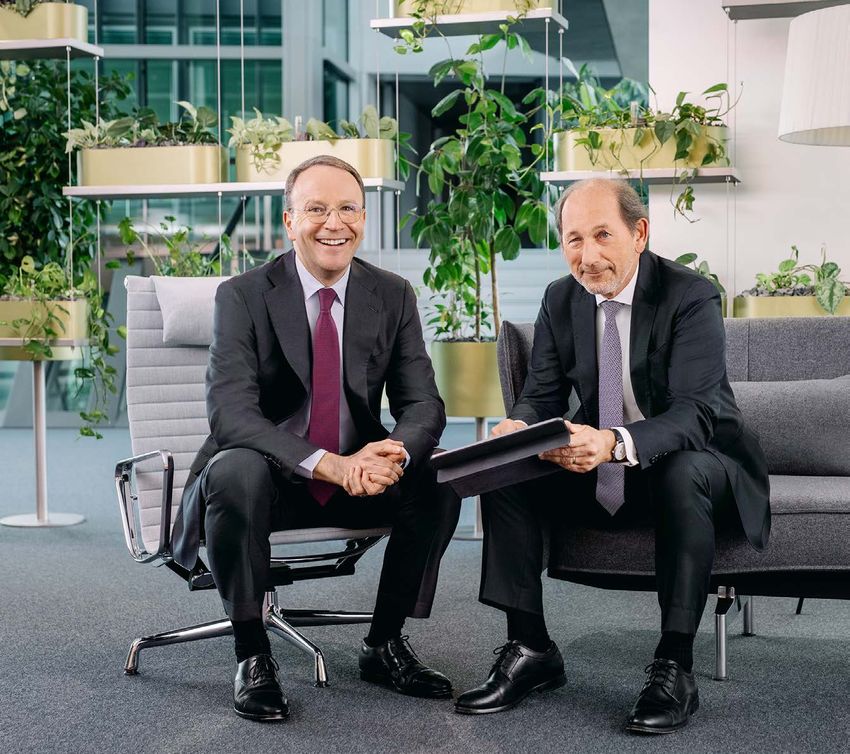
Our material topics
Materiality matrix
The following chapters
and accompanying reports
14 Health and nutrition provide more details on each
9 Water management
Environmental & social material topic:
Major
10
8 Ecological impacts impacts of ingredient
supply chain Advancing regeneration
7 GHG emissions*
1 2 3 4
18 Product quality & safety
It is critical to identify our key risks and The topics identified as among the most important by both
internal and external stakeholders are:
On the road to net zero
material issues. By understanding which
5 6 7
– Health and nutrition
19 Circular economy Protecting biodiversity
– Environmental and social impacts of the ingredient
topics impact our stakeholders and supply chain
22 Employee health
& safety
28 Customer satisfaction 8
Significant
12 Human rights & Regenerating the water cycle
business the most, we can determine – Water management
– Ecological impacts
6 Physical impacts of
climate change*
23
labor practices
Employee acquisition,
20 Packaging lifecycle
management
9
Impact of Nestlé on people and the environment
where our focus should be. – Greenhouse gas emissions
– Product quality and safety
15
16
Access & affordability
Product labeling &
talent management &
retention***
Ingredients produced
sustainably
marketing 21 Employee engagement, 10 11
– Packaging lifecycle management
The world constantly changes. We need to stay on top of diversity & inclusion**
Human rights and
those changes and how they can affect our stakeholders resilient communities
Since 2020, ecological impacts (affecting natural resources,
and our operations. Specifically, we need to identify 2 Systemic risk 12 13
biodiversity and ecosystems) and circular economy were management
17 Changing consumption
where Nestlé has the greatest impact on society and the patterns Supporting tasty and
Moderate
among the topics to have gained importance for both
environment. We also need to know which topics have the 11 Animal welfare 24 Business ethics 3 Critical risk 29 Business models & balanced diets
internal and external stakeholders. All these topics are management
greatest potential to influence our business success. This is 5 Air emissions 13 Community relations innovation & technology 14 15 16 17
covered in this report. 25 Management of the
why we carry out a comprehensive materiality assessment legal & regulatory
27 Cybersecurity & Food safety and quality
information security
at least every two years. environment 18
Packaging and circularity
In 2022, we worked with an independent third party to Risk management 19 20
conduct desk research and interviews with 55 internal and
At a Group level, our approach to risk is aligned to our 4 Organizational set-up Our diverse and inclusive culture
external stakeholders. The desk research identified 29 short-
Negligible
purpose, with a focus on operational, strategic, compliance 1 Governance structures and efficiency 21
and long-term material topics that were then explored during & mechanisms
and reputational risk across our financial and non- 26 Data privacy An employer of choice
the interviews. The external stakeholders included suppliers, management
financial landscapes. A risk assessment at Group level is 22 23
investors, customers, non-governmental organizations and
conducted annually. The foundations of
business associations. Internally, they included executive
Negligible Moderate Significant Major ethical business
board members, functional heads and market heads. Their
ESG topics are built into our ERM process. This helps 24 25 26 27
respective tasks were to classify Nestlé’s impact on each
to ensure that the full range of sustainability topics are Importance and impact on Nestlé’s business success Annual Review
topic and each topic’s impact on Nestlé.
incorporated into the risks and opportunities that are 28 29
* Chapters Looking at the whole landscape and More
considered across the company. regenerative practices on farms also cover this topic. TCFD Report
The process was overseen by the ESG and Sustainability ** An Employer of choice also covers this topic.
6
Council and the outcomes were reviewed by the *** Opportunities for young people also covers this topic.
Risks relating to the environmental and social impact of
Sustainability Committee of the Board. The results are
the supply chain, including exposure to human rights
helping us identify risks and opportunities and adjust our
risks, are reviewed at Group management level. There is Our materiality process
strategies and priorities accordingly.
also a detailed supplier risk program in the procurement
function. If required, cases relating to our risk assessment
processes are escalated to the Executive Board and related Material Establish Stakeholder Materiality Review Publish in
Materiality assessment results findings are reflected in decision-making processes at an
The results of our 2022 materiality assessment are
operational and strategic level. topics external engagement assessment strategies CSV and
supporting decisions on where to focus our resources.
As a business leader, we are committed to transparency
selection context Sustainability
Enterprise Risk Management (ERM) is the process of
identifying and addressing risk. The full alignment of our
and action on climate-related risks and opportunities. Report
As such, we have aligned our reporting with the
materiality and ERM processes help give us essential short-
recommendations of the Taskforce on Climate-related Sustainability AI software analysis and 55 interviews conducted Quantitative Identify risks and Share results internally
and long-term visibility on key topics.
Financial Disclosures (TCFD). Our TCFD-aligned Accounting Standards analysis of environment and surveys collected and qualitative opportunities in results and externally
Board (SASB) aligned input assessed and adjust priorities
disclosures, including our analysis undertaken in 2022, can
material topics selected accordingly
be found in our 2022 Climate Risk and Impact report.
Table of contents Creating Shared Value and Sustainability Report 2022 7
Stakeholder
Examples of engagement in 2022
engagement Employees Suppliers Consumers Customers Investors and analysts
How did we engage? How did we engage? How did we engage? How did we engage? How did we engage?
– Regular internal – Periodic supplier meetings – Brand campaigns – Regular leadership meetings – Annual General Meeting
communication campaigns and workshops – Key opinion leader labs – Nestlé Net Zero Roadmap – Regular investor meetings and
– Regular forums and – Regular safety training – Site visits and open days communications investor days
panel events for contractors – Annual Nestlé CSV & – Forum and panel events – Regular analyst calls
– Regular surveys and webinars – Annual conferences Sustainability Report – Workshops on joint – Periodic Chairman’s
– Periodic performance and – Periodic audits and – Interaction via social sustainability roadmaps Roundtables
Considering external feedback is development reviews
– Collective action for employees
assessments media channels
Key topics covered?
– Annual Nestlé CSV &
Sustainability Report
fundamental to our approach. Key topics covered? Key topics covered? – Nestlé Net Zero Roadmap
Key topics covered? – Advancing regenerative food – Connecting brand sustainability and commitments Key topics covered?
We engage with stakeholders at a local, regional, national – Corporate strategy and systems at scale plans with key opinion leaders – Brand and category – Company performance
and international level. When doing so, we apply the workplace culture – Human rights and labor rights – Company performance sustainability strategies and results
Nestlé Corporate Business Principle of “transparent – Employee and management – Internal and external and strategy – Recyclable or – Business development, goals
interaction and communication” to foster collaboration, performance, staff welfare stakeholder performance – Sustainability performance reusable packaging and forecasts
knowledge sharing, open discussion and deep dialogue. and benefits and strategy – Alternative delivery systems – Company sustainability
– Sustainability and regeneration What did we do? (refill and reuse) strategy performance,
Our stakeholder universe is large and varied and we engage – Internal and external reporting – Piloted the Child Risk What did we do? – Plant-based and development and outlook,
with our stakeholders in many different ways. However, of non-compliance concerns Assessment Framework toolkit – Held a stakeholder engagement “Better for you” options including environmental,
each project, launch, collaboration, campaign and event and questions with a supplier in 2021 and initiative with key opinion social and governance issues
has a common purpose: to help advance regenerative food Nestlé employees speaking at
completed the pilot in 2022 leaders before the launch of What did we do? and commitments
systems at scale. a workshop at COP27 in Egypt What did we do? – Took part in and sponsored the the Nescafé Plan 2030 – the – Responded to sustainability – Implications of climate
in November 2022, on efforts
to advance regenerative food
– Ran Employee Resource Sustainable Brands Conference feedback was used to refine the requests including through change, COVID-19 and
Throughout the year, we also consult regularly with our systems at scale. Groups focused on people with in San Diego, United States, final details EcoVadis and CDP geo‑political issues
CSV Council, an external advisory council established disabilities, such as THRIVE where we shared our progress – Engaged consumers, media – Nestlé Professional organized a
in 2009 and formed of a group of experts from a broad – Continued to create an on advancing regenerative food and partners to amplify a LinkedIn webinar about Nescafé What did we do?
range of fields, from corporate responsibility, strategy and open culture and dialogue systems at scale, focusing on dialogue around diversity and Plan 2030 for its out-of-home – Engaged with the investment
sustainability to nutrition, water and rural development. around disability with our our Nescafé, Libby’s and Gerber inclusion with Nestlé Canada, customers and provided a community through our
The Council has an advisory role. In 2022, topics discussed NestAbility network brands in particular KitKat Chocolatory and Friends specific social media toolkit Annual General Meeting and
included implementation of the Nestlé packaging vision – Promoted the inclusion of – Launched the Nescafé Plan of Ruby and website banners; over 500 regular investor meetings and
and commitments, progress on our Net Zero Roadmap people with disabilities through 2030 as an online webinar. – Communicated Generation people attended the webcast analyst calls
and regenerative agriculture commitments, the roll out membership of the ILO Global Over 1000 registrants were in Regeneration proof points – Nestlé was recognized as a – Held Chairman’s Roundtables
of our income accelerator program and our commitment Business and Disability Network attendance – including suppliers related to our promise to Giga-Guru partner – a supplier virtually and face-to-face
to provide transparency on the nutritional value of the and signing The Valuable – Worked with an independent advance regenerative food with a SMART goal and during the year with
Nestlé portfolio. The Council also discussed how to 500 commitment to elevate third party to interview systems at scale publicly reported emissions investors in Germany, Japan,
develop our sustainability reporting in light of incoming disability inclusion to our 55 internal and external reductions – under Walmart’s Singapore, Switzerland and
regulatory requirements. leadership agenda stakeholders as part of our Project Gigaton the United Kingdom
– Continued to raise awareness materiality assessment. – Built joint roadmaps and action
In 2022, we were pleased to be ranked first among of Speak Up, our internal and These included suppliers plans together with customers,
25 food and beverage companies benchmarked in the external reporting channel for and customers unlocking synergies.
ATNI’s Spotlight on Lobbying scorecard, released in non-compliance concerns and – World Water Week panel event – Continued partnership testing of
December 2022. Nestlé received the highest score for questions. The global rollout and engagement with suppliers refill-and-reuse delivery systems
its policy commitments and management systems, and of the channel was completed and scalable business models
the second highest score for disclosures. during the year
Table of contents Creating Shared Value and Sustainability Report 2022 8
Governments, international Global partnerships Industry associations Academia and the science Farmers, local communities
organizations, NGOs How did we engage? How did we engage? community and young people
How did we engage? – Developed new partnerships – Development initiatives How did we engage? How did we engage?
– Participation at the 27th – Participated in global events – Regular forums and – The World Food Forum – Income accelerator
Conference of the Parties to panel events – Regular stakeholder program launch
the United Nations Framework Key topics covered? – Annual conferences consultations – Nescafé 2030 Plan
Convention on Climate Change – Plastics use and – Regular communication – Nestlé International – Pilot projects for farmers
(COP27) and the United Nations tackling pollution campaigns Nutrition Symposium – Development initiatives
Our global partnership with
World Central Kitchen helps Community engagement
provide meals for people
Biodiversity Conference (COP15) – Corporate responsibility, – Forums and panel events Nestlé has been engaged in giving programs since our
facing catastrophic events.
event in Montreal strategy and sustainability Key topics covered? Key topics covered? – Community engagement foundation over 150 years ago. Today, improving access to
– Supporting the UN Treaty on – Nutrition, water and – Corporate climate action – Transforming food and investment healthier foods, as well as providing relief to people and
Plastic Pollution negotiations rural development – Safeguarding natural resources innovation through science communities during disasters, helps support what we do.
– Participation at UN General – Emergency relief – Employee health and well-being and collaboration Key topics covered? In 2022, we donated more than CHF 120 million, and most
Assembly Week in New York – Present and future – Farmer agronomy support of our contributions were related to food access.
What did we do? What did we do? nutrition challenges – Net zero in dairy
Key topics covered? – Entered a global partnership – Continued to work with the – Preserving nutritional goodness – Economic opportunities In Ukraine, since the invasion, our focus has been on
– Food system issues and with World Central Kitchen, World Business Council for from farm to fork for young people keeping our employees and their families safe, maintaining
climate change a non-profit organization that Sustainable Development on our operations wherever possible, as well as supporting
– Regenerative agriculture specializes in providing meals corporate climate action What did we do? What did we do? the people of Ukraine. In 2022, Nestlé committed a
– “Water positive” development for people who have been – Provided ongoing support to – Co-organized with Swiss Food – Launched our innovative CHF 40 million investment for a new production facility and
– Plastics pollution affected by catastrophic events. the International Chamber of & Nutrition Valley an official side income accelerator program, more than CHF 14 million in contributions to the people of
– Biodiversity – Entered the Business Coalition Commerce and Business for event during the FAO Science with a digital stakeholder event, Ukraine, together with the International Federation of Red
for a Global Plastics Treaty, Nature in calling for strong and Innovation Forum. The attended by 470 participants Cross and Red Crescent Societies. We have provided more
What did we do? to support the development action by policymakers to focus was transforming food from 44 countries than 4200 tonnes of food donations through various local
– Worked with the Government of an ambitious, effective safeguard natural resources innovation through science – Continued to offer farmers close and international partner organizations. With the UkraiNEST
of Egypt to help journalists and legally binding UN treaty – Continued to work with the and collaboration agronomy support and worked Foundation, we organized an employee fundraising to
understand food systems to end plastic pollution. The Consumer Goods Forum, as a – Carried out consultations with directly with them on various restore the homes of our colleagues in the country.
issues ahead of COP27. We also coalition is convened by the member of the Employee Health global health experts to gather pilot projects. This includes
sponsored pavilions and stands. Ellen MacArthur Foundation and Well-being working group. insights on present and future our international network of In June 2022, Nestlé entered a global partnership with
Nestlé’s Head of Operations and WWF and supported by – Worked with the CEO Water nutrition challenges and inform 14 R+D Accelerators World Central Kitchen, a non-profit organization that
spoke on accelerating strategic NGO partners Mandate and WASH4Work our nutrition approach – Gave farmers a platform specializes in providing meals for people who have been
the transition to resilient – Hosted more than 20 for their voices to be heard affected by catastrophic events. Nestlé has supported
food systems leading scientists at the at COP27 World Central Kitchen in an initial one-year agreement and
– Took part in a panel event Nestlé International Nutrition – Created the Youth with a CHF 1 million donation to its Climate Disaster Fund.
during World Water Week Symposium to assess scientific Entrepreneurship Platform, or During the year, we engaged with World Central Kitchen to
in Stockholm, where the evidence on preserving YEP, a single, online location support various communities stricken by extreme weather
UN Water Mandate and the nutritional goodness from where young people can events related to the climate crisis, including those affected
“water positive” concept farm to fork discover the wide range of help by floods in Pakistan, as well hurricanes Fiona and Ian in
were discussed we can offer to bring innovation Puerto Rico and the United States.
– Called for leaders to create to life
a global framework to Our offices and 344 factories around the world support
tackle plastic pollution their local communities in many ways, including through
through the World Economic job creation and economic growth. They also organize
Forum ahead of the UN charitable activities, including support for events in and
Nestlé sponsored stands
Environment Assembly and pavillions at COP27. around Vevey, Switzerland, home to our headquarters.
Table of contents Creating Shared Value and Sustainability Report 2022 9
On the road
NET ZERO ROADMAP
Progress on our roadmap to 20% reduction in greenhouse gas emissions
by 2025 and 50% reduction by 2030 and net zero by 2050
to net zero
2018 baseline (million tonnes of CO2e)
6.4
110 Peak carbon Million tonnes of CO2e reductions compared
100 99.7* Business-as-usual scenario
with business-as-usual scenario
93.3 Actual emissions
90 94.3* 68% 28% 4%
2018 baseline Ingredient Manufacturing Packaging
80
sourcing
70
60
50
Key initiatives
40 delivering GHG
emissions reductions
30
in 2022
20
10
0
2018 2019 2020 2021 2022 2030
Net Zero Roadmap launched
GHG EMISSIONS RENEWABLE ELECTRICITY
Total Scope 1, 2 and 3 GHG emissions Renewable electricity sourced
(million tonnes of CO2e) in all our sites at year end (%)
Scope 1 2020 2021 2022 50.5% in 2020
(emitted directly)
121.52* 120.62* 63.7% in 2021
Scope 2 116.59 115.83 112.90 78.4% in 2022
(emitted indirectly
market-based) 108.90
Scope 3
(in scope for
Net Zero Roadmap) 2018 baseline:
In scope for Net Zero Roadmap
Scope 3
(not in scope for
Net Zero Roadmap)
100%
by 2025
Climate change is already here. 1.63 1.44 0.76
Urgent action is needed. At Nestlé, 3.30 3.35 3.24
we have put peak carbon behind us SDG CONTRIBUTIONS
and are driving down emissions in our
operations and supply chain.
* Restated due to acquisitions, divestures, emissions factor
restatements and adjusted scope.
Table of contents Creating Shared Value and Sustainability Report 2022 10Background Scope 3 emissions: Nestlé’s Forest Positive strategy and
Regenerative Agriculture Framework.
Nestlé viewpoint This allows us to recognize and reward the more
progressive farmers that have already made the necessary
Climate change is no longer a future concern. It is transition. At the same time, we recognize the huge
Climate-smart
already here. In 2022, much of the northern hemisphere Alongside the focus on Scope 3, we are working to challenge farmers in country B face and continue to provide
experienced extreme heat, drought and wildfires. systematically reduce emissions in Scopes 1 and 2, by technical and financial support to bring their methods up
sourcing
Hurricanes battered North America and the Caribbean. reducing the carbon footprint of our factories and fleet cars. to where our industry needs them to be. It’s a two-fold
Devastating flooding hit Nigeria and Pakistan and Asia was approach – a fair reward mechanism and a just transition –
affected by heavy typhoons. Meanwhile, data from NASA that underpins how much volume we shift and to where.
shows that global temperatures have increased by up to
1.01°C since pre-industrial times. What is less well known Harder in practice
perhaps – sea levels are over 10cm higher than in 1993, While that sounds simple in theory, in practice it’s not
the ocean is more than three times as hot as it was in 1980 straightforward. Our decisions need to be backed up by
and arctic sea ice has shrunk by an average of 12.6% every accurate emissions data mapped at farm level. And while
decade since 1979. Benjamin Ware we already collect and validate this with our suppliers for
Head of Climate Change and
dairy, cocoa, coffee and palm oil, there’s still work to do.
Food system topics such as land-use change, agricultural Sustainable Sourcing
production, packaging and waste management are linked Additionally, in many places, we have pre-agreed volume
to up to one-third of global greenhouse gas emissions. At commitments upon which people’s livelihoods depend.
the same time, the effects of climate change have already
begun to impact food systems. Altered weather patterns
How shifts in sourcing can reduce our Clearly, economic viability and security of supply still
factor in purchasing decisions. And let’s not forget taste –
are affecting growing seasons and making crop yields less carbon footprint. different regions often grow different varieties of a crop that
predictable, while increases in extreme weather such as can taste slightly different and impact recipes.
droughts and floods are threatening food security. Around the world farmers are at different stages of the
We must continue to act to help avoid the worst potential
Production of Brominata™,
a red seaweed-based Innovation to tackle transition toward regenerative agriculture practices. One Despite these challenges, shifting sourcing in this way is
way we can reduce our footprint is by switching more
climate scenarios and protect vulnerable communities,
feed supplement with
potential to decrease farm emissions volumes to suppliers, cooperatives and farmers in countries
already underway, as exemplified by the total volume of our
commodities now coming from assessed deforestation-free
enteric methane production
including those whose livelihoods depend on agriculture. by ruminants. When dairy cows digest their feed they produce methane, of origin that already have regenerative agriculture practices verified origins or certified as sustainably produced. This
which has a far greater global warming potential than in place – while helping farmers in other regions to make accounts for 25% of the Scope 3 emissions saved through
CO2. So-called “enteric fermentation” is the largest source the shift as well, supporting a just transition. implementation of our Net Zero Roadmap.
Approach of emissions in fresh milk production, followed by feed
production and manure. The bulk of our carbon footprint is already present when For more information on climate-related risks and
In 2020, we launched our Net Zero Roadmap, a Science we purchase raw materials such as dairy, coffee, cocoa, opportunities, see our Climate Risk and Impact report.
Based Targets initiative (SBTi)-aligned plan to reduce Working with external partners, we are exploring the use palm oil and meat. Packaging and shipping are much
Nestlé’s emissions. It has enabled us to put peak carbon of novel feed supplements, wearable devices, improved less significant – only a fraction of the carbon footprint
emissions behind us and make progress toward our nutrition and immunological approaches that decrease compared with how the raw material is produced. This
greenhouse gas (GHG) emissions reduction targets for 2025 enteric methane production, but do not negatively impact means selecting ingredients produced using climate-smart
(20% reduction) and 2030 (50% reduction). the yield of nutritious and safe milk or animal welfare and practices can make a significant difference, even if they are
health. For example, in the United States, we are facilitating shipped from further away.
Because climate intersects every part of our company, it research to assess the efficacy and the human, animal and
forms one of the five workstreams of our ESG Strategy and environmental health and safety aspects of a seaweed- A reward mechanism
Deployment Unit. based feed supplement, which has the potential to reduce Let’s take coffee beans as a hypothetical example. Imagine
enteric methane emissions significantly. that well-established farmers in country A are already
A detailed analysis of our GHG emissions, carried out when practicing agroforestry, such as intercropping trees for
setting our 2018 baseline, showed that 95% of our footprint In parallel, we are looking at scientific approaches to timber with coffee trees and employing smart irrigation
was made up of Scope 3 emissions from activities in our reduce emissions related to manure management and techniques. Meanwhile, farmers in country B have focused
supply chain such as farming and land use, and just 5% feed production. We test and validate these innovative on amplifying monoculture-intensive coffee production but
was Scope 1 and 2 emissions from our own operations. technologies in our research farm network prior to rolling have not yet embraced sustainable measures.
Dairy and livestock ingredients are our largest single source them out in our supply chains. For example, in the United
of emissions – dairy alone accounts for one-third of our States, we are rolling out vermicomposting, which uses If the carbon data show that a unit of coffee from country A
total emissions. worms to naturally degrade manure with lower methane has a carbon footprint of 3kg, while the same amount from
production – replacing the need to capture and store the country B has a carbon footprint of 5kg, then by shifting
To make progress toward our net zero commitment, we gas. The worms also remove up to 99% of wastewater bigger volumes to country A, we can notably reduce our
focus primarily on our upstream supply chain including our contaminants and generate castings that can be used as carbon footprint.
dairy and livestock sourcing. We have developed two main fertilizer to improve soil health. This practice targets one of Sourcing from locations already implementing practices such
strategic approaches upstream that will help tackle our the largest sources of emissions on many dairy farms. as agroforestry can reduce our carbon footprint.
Table of contents Creating Shared Value and Sustainability Report 2022 11Scope 1 and 2 emissions coffee grounds (from capsule recycling) and other locally
All of our Scope 1 and 2 emissions are being addressed as produced industrial organic waste to convert into renewable
part of our Net Zero Roadmap, and our actions contribute energy. The electricity produced is injected into the Swiss
to our absolute emissions reductions. grid, while part of the heat is valorized at the Henniez
factory. The bottling site used 74% of renewable energy in
We continued to make progress toward our commitment to 2022. A liquid by-product of the process serves as a highly
source 100% renewable electricity across our sites globally efficient and odorless organic fertilizer and is recovered and
by 2025, reaching 78.4% renewable electricity sourced used by the contributing farmers.
in our manufacturing sites in 2022 (2021: 63.7%). Our
factories in Australia, India, Indonesia, New Zealand, South As part of our Net Zero Roadmap, we committed to
Africa, Thailand and Vietnam increased their purchases switching our global car fleet to lower emissions options by
Performance The Nestlé Waters
“glass train”,
of renewable electricity this year. In Europe, 93% of our
factories were running on 100% renewable electricity. The
2022. At the end of the year, 41% of our fleet had switched
to lower-emissions options. We compensated emissions
to return Vittel
In 2022, our GHG emissions remained decoupled from and S.Pellegrino majority of the renewable electricity we use is generated from the remaining 59% that we could not switch, mainly
business growth, as we again achieved higher revenues bottles, marks a
offsite by third-party suppliers. In addition to the 78.4% as a result of a lack of available vehicles and infrastructure
new step toward
and lower absolute emissions. Our total absolute Scope 1, more sustainable of renewable electricity sourced, we currently have onsite in some markets. We will seek to increase the proportion
2 and 3 GHG emissions reduced from 120.6 million* in 2021 transport.
generation at nine factories in Europe and the Middle East, of lower-emission vehicles in our fleet as availability and
to 112.9 million in 2022. and this may expand in the future. infrastructure improves.
As per our SBTi approved roadmap, our in-scope In North America, Nestlé completed its second large-scale As part of our ongoing Green Fleet Project, the shift to
emissions have now reduced by 6.4 million tonnes to solar energy farm investment. Combined, the solar energy electric, biofuel, hybrid or plug-in hybrid vehicles continued
93.3 million tonnes compared with a projected business- farms will represent nearly 50% of Nestlé’s electricity in in 2022, with our Green Fleet increasing from 27.2% in 2021
as-usual scenario of 99.7 million tonnes. In addition, actual the United States, thereby halving its Scope 2 greenhouse to 41.0% of our entire corporate fleet. Meanwhile, we rolled
emissions of 93.3 million tonnes have fallen below our gas emissions. out electric trucks in Germany, Italy, Spain, Sweden and
Dairy is our largest Scope 3 emissions
single source of Scope 3
2018 baseline of 94.3 million tonnes for the first time since Switzerland, along with hydrogen trucks in Switzerland. emissions – something we In line with SBTi guidance, our total reported Scope 3
introducing our Net Zero Roadmap, despite revenue growth Some factories are also switching to renewable sources
are hoping to tackle with emissions include some categories that are not currently
pilot farms.
over the same four-year period. Emissions reductions are
the result of a wide range of projects in our agricultural 6.4 of thermal energy. In Indonesia, one factory has switched
from fossil fuels to locally supplied rice-husk-based biofuel.
Energy consumption
2020 2021 2022
covered by our SBTi-aligned GHG emissions reduction
target. These emissions accounted for less than 33% of
supply chains, as well as in our factories. All reductions Million tonnes of Scope 3 emissions in the 2018 baseline. These include
A second factory is expected to complete the switch in Energy consumption 81 385 568 82 779 476 80 131 120
associated with a project meet the accounting principles set CO2e reductions (Gigajoules) consumer use of sold products, purchased services, leased
compared with 2023. We have introduced industrial heat pumps replacing
41.0%
out in the GHG Protocol Corporate and Project standards. the use of fossil fuels in La Penilla, Spain, saving 2000
Energy consumed that is 23.1 25.3 30.6 assets, capital goods and investments. As a result, our total
business-as- renewable energy (%)
tonnes of CO2e, per year, and in Konolfingen and Orbe Scope 3 emissions reported for 2022 (108.9 million tonnes)
usual scenario Energy consumed that was 12.2 10.2 6.0
We are proud of our progress but know there is more to do in Switzerland, saving 1000 tonnes of CO2e per year. Our supplied from grid electricity (%)
Global fleet switched are higher than the Scope 3 emissions that fall within our
to reduce our absolute emissions on our way to net zero to lower-emission SBTi-aligned target (89.3 million tonnes).
by 2050 at the latest. We are still adapting our approach 4.3 Nestlé Waters facility in Henniez, Switzerland, works with a
third-party biogas plant, which collects manure, Nespresso
options (27.2% in
in response to what we learn. Many of our emissions Million tonnes of 2021, 17.6% in 2020) Dairy ingredients are our single largest source of Scope 3
reduction projects will take time to implement but we CO2e removals emissions. We are working with leading universities and
remain confident they will yield results to keep us on track. secured in 2022 NGOs to support net zero efforts in dairy farming around
the world (see the Making swiss dairy a climate star case
In addition to these emissions reduction projects,
we secured 4.3 million tonnes of CO2e removals by
10.7 study). This includes investing in at least 25 pilot farms in
15 countries to test scalable, low-carbon and regenerative
Million tonnes of
implementing nature-based solutions that transfer CO2e reductions agriculture practices that may help those farms achieve net
CO2e from the atmosphere into carbon stores. Our net achieved compared zero GHG emissions.
zero commitment does not rely on offsetting. These with a business-as-
removals take place within our supply chains and the usual scenario, and Currently, we have one pilot farm in South Africa that aims
landscapes where we source our raw materials, and help removals secured to achieve net zero in the near future, and another in the
restore forests, wetlands and peatlands, or improve land in 2022 United States aiming for net zero by 2025. Twenty-three
management. Secured removals are the total carbon that other pilot farms are investigating exciting possibilities
will be captured and stored (e.g. in trees or soils) over the to support net zero efforts. In Spain, we are engaging
20- or 30-year lifetime of a project. Every year, we will track with more than 200 dairy farmers to implement emission
the actual carbon removal and storage across our value reduction practices, which are aimed at reducing their
chain in the reporting period (known as delivered removals * Restated due to Nestlé’s large-scale footprint by 40% by 2026. In the UK, since 2015 we have
or ex-post carbon accounting). These removals will be acquisitions, divestures, solar energy investments worked with more than 70 farmers to plant more than
emissions factor will provide nearly half
reported as progress in line with the SBTi FLAG guidance restatements and our electricity in the
42 kilometers of hedgerows and protected more than
(released November 2022). adjusted scope. United States. 40 kilometers of rivers and streams.
Table of contents Creating Shared Value and Sustainability Report 2022 12You can also read


