E-learning comes of age: Web-based education provided by the International League Against Epilepsy - the International League Against ...
←
→
Page content transcription
If your browser does not render page correctly, please read the page content below
Review article
Epileptic Disord 2020; 22 (3): 237-44
e-learning comes of age:
Web-based education
provided by the International
League Against Epilepsy
Copyright © 2020 John Libbey Eurotext. Downloaded by MONSIEUR SANDOR BENICZKY on 30/06/2020.
Sándor Beniczky 1 , Ingmar Blümcke 2 , Stefan Rampp 3 ,
Priscilla Shisler 4 , Eva Biesel 5 , Samuel Wiebe 6
1 Department of Clinical Neurophysiology, Danish Epilepsy Centre and Aarhus
University Hospital; Affiliated partner of the ERN EpiCARE, Department of Clinical
Medicine, Aarhus University, Denmark
2 Department of Neuropathology, University Hospitals Erlangen, Collaborating Partner
of the ERN EpiCARE, Erlangen, Germany
3 Department of Neurosurgery, University Hospital Erlangen, Germany and Department
of Neurosurgery, University Hospital Halle (Saale), Germany
4 ILAE Headquarters Office, USA
5 ILAE Academy, USA
6 Department of Clinical Neurosciences and Clinical Research Unit, Cumming School of
Medicine, University of Calgary, Canada
Received April 15, 2020; Accepted May 07, 2020
ABSTRACT – Education tools and programs using interactive digital content,
distributed on the internet, are increasingly becoming an integral part of
postgraduate medical education. The coronavirus pandemic and global
lockdown hoisted a major challenge for traditional teaching courses. A
timely solution is to focus attention and reinforce web-based teaching pro-
grams. For more than 15 years, the ILAE has been developing and managing
a wide range of e-learning programs. This paper provides an overview on
the e-learning portfolio of the ILAE, including tutored e-courses, self-paced
interactive e-courses and online multimedia resources, all linked to the
ILAE curriculum and learning objectives addressing specific levels of profes-
sional experience. All e-learning programs will become available through
the new ILAE Academy platform (www.ilae-academy.org), in July 2020. e-
learning is an important tool for reaching the global educational mission of
the ILAE.
Key words: distance education, epilepsy, e-learning, ILAE, online education
e-learning denotes an educational internet learning, web-based learn-
approach that uses electronic media ing and many others (Sangrà et
doi:10.1684/epd.2020.1157
and devices in combination with al., 2012). e-learning has been a
Correspondence: information and communication game-changer in education, includ-
Sándor Beniczky technologies and is mainly deliv- ing postgraduate medical education
Visby Allé 5,
4293 Dianalund,
ered via internet. Synonyms are: (Zehry et al., 2011; De Leeuw et al.,
Denmark distance education, computerized 2016; Huynh, 2017). The main advan-
electronic learning, online learning, tages of e-learning are: flexibility,
Epileptic Disord, Vol. 22, No. 3, June 2020 237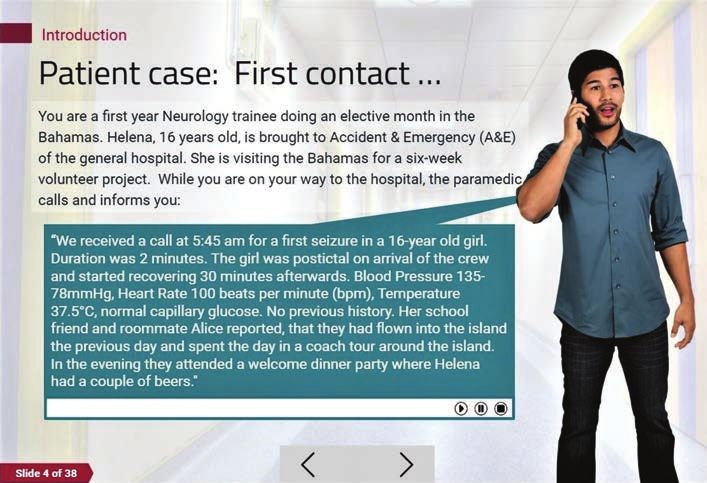
S. Beniczky, et al.
broad resource-sharing capacity enabling global Table 1. ILAE e-learning.
reach, and cost-effective scalability (Sandars and
Schroter, 2007; Allen and Seaman, 2011). Participants VIREPA courses:
can choose a comfortable and accessible place with EEG in the Diagnosis &
time to study, which is important in postgradu- Management of Epilepsy –
ate medical education (Curran and Fleet, 2005). The three courses: Basic,
mobility restrictions during the 2019-2020 coronavirus Tutored e-learning Advanced, Pediatric.
pandemic highlighted further the importance of e- courses Epilepsy & Sleep
learning on a global level.
e-learning must be targeted to specific audiences, Online course on epilepsy
hence postgraduate e-learning programs require spe- for primary care physicians
cific elements important for adult learning (Cook in Latin America
Copyright © 2020 John Libbey Eurotext. Downloaded by MONSIEUR SANDOR BENICZKY on 30/06/2020.
and Dupras, 2004; Childs et al., 2005). Applying Learn From Cases
learning-theories and quality models contributes to Interactive, self-paced
the success of e-learning programs (Sangrà et al., 2012). ebrain sessions on epilepsy
e-learning courses
For example, active student engagement approaches Epilepsy Imaging
and problem-based learning are essential, as demon-
strated by their efficacy in medical education (Ruiz et Diagnostic Manual
al., 2006; Maggio et al., 2013). Seminars in Epileptology:
The International League Against Epilepsy (ILAE) was educational review papers
among the first international medical organizations to Online multimedia in Epileptic Disorders
recognize the huge potential of e-learning in postgrad- resources
uate education, and, for more than 15 years, has been Video-EEG educational
working on developing and implementing these edu- database in Epileptic
cational resources to achieve its educational mission. disorders
Recently, the ILAE published its competency-based Histopathology tutorials
educational curriculum for epileptology (Blümcke et
al., 2019). It is contemplated that e-learning will play a
major role in addressing the learning objectives of the
curriculum (ILAE, 2020a).
The goal of this paper is to provide an overview of management of epilepsy (basic, advanced and pedi-
the broad ranging e-learning activities and resources atric), and one on sleep and epilepsy (advanced).
offered by the ILAE. These include tutored e-courses VIREPA courses are tutored e-learning courses, offered
(Virtual Epilepsy Academy: VIREPA), self-paced inter- in English. Each course is held once a year, with the
active e-learning courses, and online multimedia exception of the basic EEG, offered twice per year.
resources (table 1). The ILAE Academy (ILAE, 2020b) The number of participants is limited to 30-35 per
has integrated its e-learning program into a virtual course, to facilitate intensive interaction with tutors
platform (www.ilae-academy.org) of educational activi- and among the students. Courses have a duration of
ties, based on the learning management system, Totara six months and consist of 7-9 thematic units, each
LearnTM . Along with face-to-face courses and educa- with two tutors and lasting two to three weeks, plus a
tional activities at ILAE congresses, e-learning offerings final assignment. Supplementary documents 1-4 show
on the ILAE Academy are an essential tool for the edu- the thematic units and the tutors of the four VIREPA
cational mission of the League. Combining a variety of courses (see accompanying supplementary material).
approaches will allow for blended learning activities Interaction with the tutors is based on asynchronous
that address the needs and goals of learners, optimized discussion fora within the e-learning platform, to
for individuals’ learning styles. enable communication among participants in differ-
ent time zones around the globe (figure 1). Most units
involve a teamwork of students within small work-
Tutored e-learning courses groups, including individual and group assignments.
Discussion fora allow for communication, collabora-
The VIREPA (Virtual Epilepsy Academy) courses, tion and exchange of material among members of each
initially developed within the European Epilepsy workgroup.
Academy (Wehrs et al., 2007) in 2006, were transferred Each thematic unit has an e-textbook, written by the
to the sub-commission on Distance Education of the tutors specifically for the topic of the unit. In addition, a
ILAE in 2009. Currently, four VIREPA courses are avail- virtual library is available with recommended literature
able: three of them are on EEG, on the diagnosis and (review papers, textbook chapters and guidelines).
238 Epileptic Disord, Vol. 22, No. 3, June 2020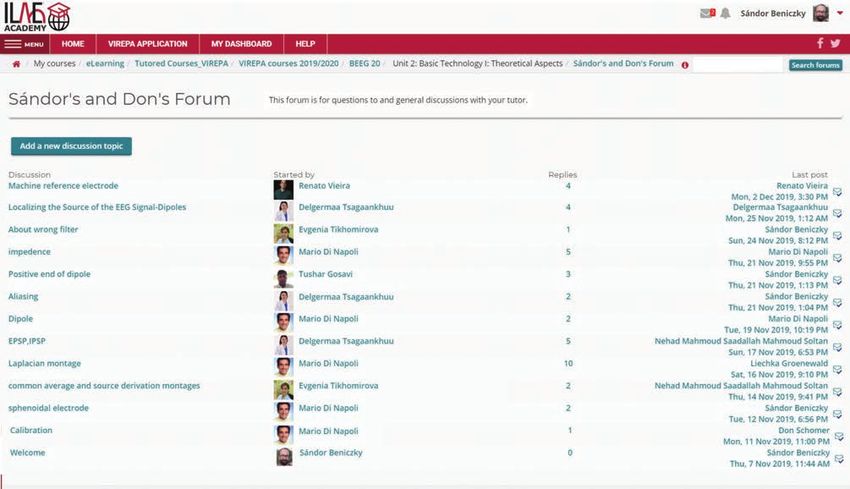
ILAE e-learning
Copyright © 2020 John Libbey Eurotext. Downloaded by MONSIEUR SANDOR BENICZKY on 30/06/2020.

                                                                                               Figure 1. Example of a discussion forum in VIREPA (Unit 2; Basic EEG course).

                                                                                               While reading these e-resources, students can contact               The dedication and generous contribution of the 57
                                                                                               the tutors to clarify aspects that they do not fully under-         tutors, who are experts from around the globe and do
                                                                                               stand. Each unit has student-engagement tasks and                   the tutoring pro bono, is essential for the success of
                                                                                               evaluations. The tasks vary from unit to unit: for exam-            the VIREPA courses.
                                                                                               ple, students are required to evaluate EEG samples                  Self-assessment quizzes are completed by the stu-
                                                                                               posted by the tutors, post their own de-identified sam-              dents before and after the courses. At the end of each
                                                                                               ples or cases demonstrating a pattern or topic named                unit, the students submit an online feedback question-
                                                                                               in the task or answer multiple-choice questions related             naire that is used to continuously improve the quality
                                                                                               to the topic of the unit. Students are encouraged to                of the courses. Since 2006, 1,117 students from 114
                                                                                               interact during the course, for example by comment-                 countries representing all ILAE regions have graduated
                                                                                               ing on each other’s postings. These virtual networks                from the VIREPA courses. Approximately half of the
                                                                                               proved to be starting points of real-world friendships,             students (n=569) came from low and middle-income
                                                                                               and VIREPA alumni often interact with each other -                  countries and received financial support from the ILAE
                                                                                               also after the end of the VIREPA courses- on social                 in the form of bursaries. The remaining students paid
                                                                                               media, ILAE courses and congresses. Depending on                    full participation fees. Table 2 shows the number of
                                                                                               their postings and participation, students are granted              students who completed the various VIREPA courses,
                                                                                               credit points for each unit. Students receive a course              and the main results of the post-course student feed-
                                                                                               certificate, provided they qualify.                                  back. Supplementary documents 5-9 show the detailed
                                                                                               The VIREPA courses are mainly intended for physicians               results of the pre- and post-course student surveys
                                                                                               dealing with patients with epilepsy. Course direc-                  (see accompanying supplementary material). At the
                                                                                               tors review student applications which are submitted                end of the courses, the vast majority of the students
                                                                                               online. As the number of qualified applicants regularly              (89-98%) would recommend to others the course they
                                                                                               exceeds the number of available places, students are                have completed and were interested in taking other
                                                                                               accepted on a first-come-first-served basis.                          courses themselves.
                                                                                               A typical thematic unit requires 6-8 hours per week                 In addition to the VIREPA courses, the ILAE more
                                                                                               of student time. Tutors, on the other hand, devote                  recently started offering online tutored educational
                                                                                               significant time and energy in preparation, super-                   courses in Spanish and Portuguese for primary care
                                                                                               vision of the course interactions and evaluation.                   physicians in Latin America. The courses are based

                                                                                               Epileptic Disord, Vol. 22, No. 3, June 2020                                                                            239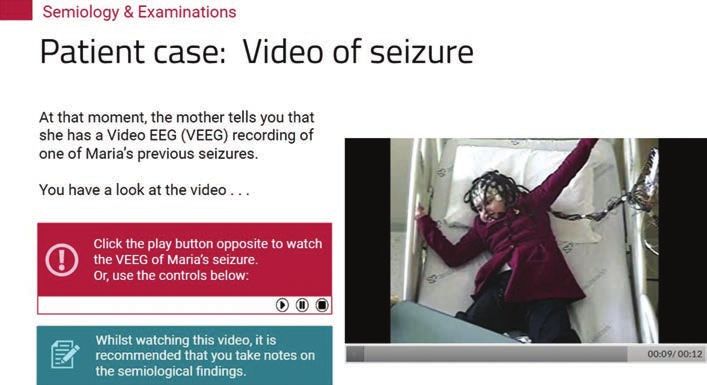
S. Beniczky, et al.
Table 2. Alumni of the VIREPA courses and the main results of the post-course feedback.
VIREPA Course Number of Number of I would recommend I am interested in other
editions students the course to others. VIREPA courses.
EEG - Basic 21 672 89% 93%
EEG - Advanced 6 159 98% 88%
EEG - Pediatric 9 249 97% 95%
Sleep & epilepsy 4 75 94% 98%
Copyright © 2020 John Libbey Eurotext. Downloaded by MONSIEUR SANDOR BENICZKY on 30/06/2020.
on an interactive, e-learning platform (MOODLETM ). relevant clinical examination and treatment. Each case
A detailed description of the Latin American course has also contains specific scenarios for counselling and
been recently published in a report from the Education follow-up. Common errors in medical practice are
Commission of the ILAE (Carrizosa et al., 2018). From foreseen and addressed in each scenario. The par-
85 participants completing the course evaluation, 98% ticipant is fully engaged in the role of healthcare
would recommend the course to other colleagues, and professional facing a specific patient with a spe-
99% showed interest in taking other similar e-learning cific problem. Clinical videos, EEGs and neuroimaging
courses. results are presented and accompanied by relevant
explanations (figure 3). These diagnostic tests are
explored to varying depths, depending on the learn-
Interactive self-paced e-learning ers’ level. For example, Level 1 teaching courses do
courses not require expertise in reading EEG or MRI, but more
advanced courses will require learners to be able
One of the new educational initiatives of the ILAE to interpret these tests. An important goal of these
is the creation of self-paced, web-based e-learning courses is to teach efficient clinical decision-making,
courses which rely heavily on multimedia resources. taking into account the cost and time required by var-
In this educational offering, interaction with learners ious diagnostic tests and their potential impact on
is not based on tutors, but on a variety of activity unnecessary delays of initial therapy.
types and assignments (quizzes, exercises, reflection Interactive quizzes, exercises and reflection phases
phases) which are built into the instructional design. with subsequent feedback build realistic medical
Some of the many advantages of this educational scenarios of high probability and low complexity,
offering is that the number of participants is not lim- which are common in the clinical practice of learners
ited, the students can start the courses when they in Level 1.
prefer, and they can proceed at their own pace. Additional course-specific resources and further read-
Here we highlight three of the self-paced e-learning ings from ILAE resources as well as e-learning, such as
offerings: “Learn From Cases”, ebrain, and Epilepsy ebrain sessions (see below) are provided as supple-
Imaging. mentary materials.
After finishing the educational content, students com-
plete a 10 to 15-question exam pertaining to the case.
“Learn From Cases”
A score of 80% or higher is required to obtain an
Learn From Cases is a course concept developed by ILAE certificate for the corresponding course. Learn-
the ILAE, consisting of a series of case-based e-learning ers that successfully complete all 15 cases achieve the
modules aimed at the entry level (Level 1) of the ILAE required learning objectives of the ILAE curriculum for
educational curriculum (Blümcke et al., 2019; ILAE, level 1 and are eligible to receive a corresponding ILAE
2020a), and covering the most common epilepsies certificate.
in children and adults. The modules are developed Level 1 cases cover the most common childhood and
by a team of distinguished authors and ILAE experts juvenile epilepsies, focal and generalized epilepsies in
and reviewed by neuropsychology experts to help children and adults, emergencies, infection and psy-
build appropriate patient-clinician interaction and chogenic non-epileptic seizures.
communication. To assess our case-based e-learning approach, we
The aim of these courses is to guide the learner tested three pilot cases involving almost 50 participants
in a step-by-step manner through a specific clinical worldwide. The results demonstrated high relevance
case (figure 2), encompassing the correct diagnosis, and usability:
240 Epileptic Disord, Vol. 22, No. 3, June 2020ILAE e-learning
Copyright © 2020 John Libbey Eurotext. Downloaded by MONSIEUR SANDOR BENICZKY on 30/06/2020.
Figure 2. Screenshot of the introduction for the first contact scenario of a case.
Figure 3. Screenshot of another case, in which the learner is expected to review a seizure video and take notes, as the next task is to
recall typical semiology signs.
– 80% assessed the cases as excellent, with 75% rating presented in English, however, translation into various
the content as very relevant (in total, 94% very relevant other languages is planned, starting with Spanish in
and relevant on a 5-point scale). 2020.
– About 75% rated the scenario-based, step-by-step,
and interactive approach as very valuable (in total, 97%
ebrain e-learning sessions on epilepsy
as valuable and very valuable on a 5-point scale).
– Finally, 97% stated that they would like to do another ebrain is a comprehensive web-based training
course and 98.3% would recommend the course to a resource in clinical neuroscience (Dassan, 2012;
colleague. Holmes, 2012; Thomson, 2013) developed under the
Deployment of the case-based learning offering will be auspices of the Joint Neurosciences Council (JNC). A
done in stages. The initial cases are planned for mid- total of 50 ebrain sessions related to epilepsy will be
2020, and the entire set by the end of 2020. All cases are available on the ILAE Academy, covering aspects of
Epileptic Disord, Vol. 22, No. 3, June 2020 241S. Beniczky, et al.
Copyright © 2020 John Libbey Eurotext. Downloaded by MONSIEUR SANDOR BENICZKY on 30/06/2020.
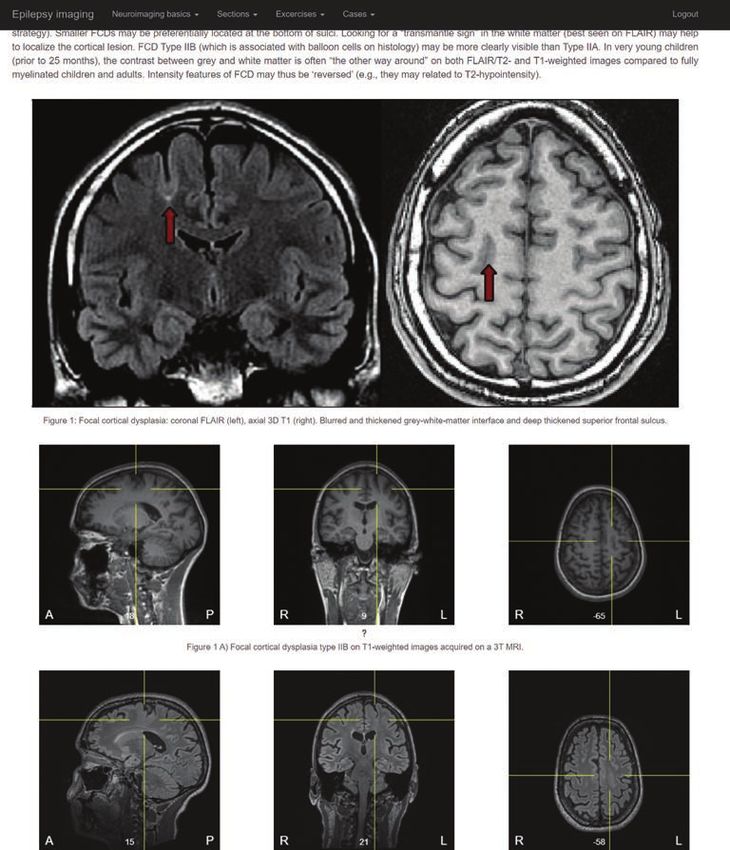
Figure 4. Screenshot of one of the text chapters showing illustrative figures (top) and embedded MRI viewers (middle and bottom
row) with multi-planar reconstruction enabled.
diagnosis and treatment, using the well-known, inter- completion are provided if the assessment is passed
active ebrain format. All sessions have been reviewed with a score of at least 80%.
by ILAE experts and were recently adapted by JNC.
These interactive, multimedia-rich lessons address
Epilepsy Imaging
basic topics in epileptology such as clinical assess-
ment, comorbidities, treatment, management of Epilepsy Imaging consists of a self-paced e-learning
epilepsy in children, women, and the elderly, neu- course which covers the basics of brain neuroimaging
ropsychological aspects, seizure classification, and in epileptology. The web-based training concept pro-
transient loss of consciousness. Supplementary doc- vides introductory text in seven chapters describing
ument 9 lists the ebrain modules that will be available basic methodological aspects, important anatomical
on the ILAE Academy e-learning platform. landmarks of the brain, as well as the imaging features
Each ebrain session is a self-contained 20-minute unit of the most frequent epileptogenic lesions on struc-
of knowledge that starts with learning objectives, tural brain MRI. Self-learning exercises and practice
presents the content, and ends with a summary of questions provide an opportunity to actively engage
key learning points and final a quiz. Certificates of with the material. A number of cases from clinical
242 Epileptic Disord, Vol. 22, No. 3, June 2020ILAE e-learning
practice connect the imaging data to findings from within the search fields (i.e. etiology, phenomenology,
other relevant diagnostic tests. The course provides localization, syndrome). This is one of the largest col-
an integrated online MRI-viewer (figure 4) support- lections of epilepsy videos and video-EEGs published
ing multi-planar reconstruction, flexible navigation, by a journal.
adjustment of brightness and contrast, and other
features. Installation of additional software is not
necessary. Histopathology tutorials
Nine web-based tutorials, lasting 5-10 minutes each,
Online multimedia educational address the Level-1 learning objectives pertaining to
common brain lesions in epilepsy. In each tutorial,
resources the histopathology slide of a given case is introduced
using digital microscopy, accompanied by recordings
A number of educational resources developed under
Copyright © 2020 John Libbey Eurotext. Downloaded by MONSIEUR SANDOR BENICZKY on 30/06/2020.
highlighting the specific cellular components of
the auspices of the ILAE provide additional material for
the lesion, anatomical landmarks, stainings used
learners and are freely accessible on the internet. The
and perisurgical or other laboratory artefacts. The
following are some examples.
same series focusing on differential diagnosis will be
offered for Level-2 learners.
The Epilepsy Diagnostic Manual
EpilepsyDiagnosis.org is a web-based tool developed Conclusion
in partnership between the ILAE and eResearch at the
University of Melbourne, Australia. The site provides The ILAE offers a wide variety of e-learning courses,
easy-to-use, reliable information on seizure types, educational tools and resources. The continuous
epilepsy types, syndromes and etiologies, including increase of participants and large number of students
genetic correlates and differential diagnosis. The main applying for these courses and the overwhelmingly
target audience is clinicians in primary and secondary positive feedback reinforce the high educational value
care settings, caring for people with epilepsy. The plat- of the ILAE e-learning programs. Further development
form contains a multimedia database including video, of e-learning will play an increasingly important role
EEG and neuroimaging examples of salient seizure and in achieving the ILAE educational mission.
epilepsy types. It is available in English and Spanish,
and it has over 35,000 viewers monthly.
Useful links
Seminars in Epileptology https://www.ilae.org/education
https://www.ilae-academy.org
These are educational review papers published online
https://www.epilepticdisorders.com
in Epileptic Disorders, the official educational jour- http://www.epilepsy-imaging.org
nal of the ILAE. A series of seminars is being created
to specifically address the learning objectives of
the ILAE curriculum in epileptology and constitute
a core source of information for learners partici- Supplementary data.
pating in other ILAE Academy educational activities. Supplementary documents are available on the
Supplementary document 10 (see accompanying sup- www.epilepticdisorders.com website.
plementary material) lists the first seminar series
addressing level-1 learning objectives. The educational Acknowledgements and disclosures.
value of these seminars is enriched by the case pre- We would like to express our gratitude to Walter van Emde
sentations and the self-assessment multiple-choice Boas, who contributed significantly to developing and coordinat-
ing the VIREPA courses; Kate Riney, who created and maintains
questions included in each review.
epilepsydiagnosis.org; Finola Quinn, who serves as course coor-
dinator; Deborah Flower who contributed to the development
Video-EEG educational database in Epileptic and maintenance of the ILAE homepage; the course directors
and tutors of the VIREPA courses (supplementary documents 1-
Disorders 4); and members of the ILAE Young Epilepsy Section for assisting
A large collection of video and video-EEGs with illustra- with translation of educational materials. Thanks are due also
to the numerous members of the ILAE community who have
tive, educational cases is available on the homepage of contributed to the creation, testing and implementation of ILAE
Epileptic Disorders (www.epilepticdisorders.com). On educational material, and not least, to ILAE members who over
the journal website, these can be accessed either from the years have devoted themselves to the education of epilepsy
a list of all videos or by searching for specific key words professionals around the world.
Epileptic Disord, Vol. 22, No. 3, June 2020 243S. Beniczky, et al.
SB serves as editor-in-chief of Epileptic Disorders. SW received Holmes D. ebrain brings the e-learning revolution to the neu-
educational grants from UCB Pharma, Eisai and Sunovion. The rosciences. Lancet Neurol 2012; 11: 126-7.
remaining authors do not have disclosures related to the work
presented in this paper. Huynh R. The Role of e-learning in Medical Education. Acad
Med 2017; 4: 430.
ILAE. Explore the ILAE Curriculum for Epileptology.
References 2020. Available at: https://www.ilae.org/education/ilae-
curriculum
Allen IE, Seaman J. Going the distance: online education in
the United States, 2011. The Sloan Consortium: Organizations ILAE. Academy. 2020. Available at: https://ilae-academy.
Committed to Quality Online Education, 2011. remote-learner.net/
Blümcke I, Arzimanoglou A, Beniczky S, Wiebe S. Roadmap
Maggio LA, Tannery NH, Chen HC, Cate O, O’Brien B.
for a competency-based educational curriculum in epilep-
Evidence-based medicine training in undergraduate medical
Copyright © 2020 John Libbey Eurotext. Downloaded by MONSIEUR SANDOR BENICZKY on 30/06/2020.
tology: report of the Epilepsy Education Task Force of
education. Acad Med 2013; 88: 1022-8.
the International League Against Epilepsy. Epileptic Disord
2019; 21: 129-40.
Ruiz JG, Mintzer MJ, Leipzig RM. The impact of
Carrizosa J, Braga P, Albuquerque M, et al. Epilepsy for pri- e-learning in medical education. Acad Med 2006; 81:
mary health care: a cost-effective Latin American e-learning 207-12.
initiative. Epileptic Disord 2018; 20: 386-95.
Sandars J, Schroter S. Web 2.0 technologies for undergrad-
Childs S, Blenkinsopp E, Hall A, Walton G. Effective e-learning uate and postgraduate medical education: an online survey.
for health professionals and students-barriers and their solu- Postgrad Med J 2007; 83: 759-62.
tions. A systematic review of the literature-findings from the
HeXL project. Health Info Libr J 2005; 22(2): 20-32. Sangrà A, Vlachopoulos D, Cabrera N. Building an inclu-
sive definition of e-learning: an approach to the conceptual
Cook DA, Dupras DM. A practical guide to developing framework. International Review of Research in Open and
effective web-based learning. J Gen Intern Med 2004; 19: Distance Learning 2012; 13: 145-59.
698-707.
Curran VR, Fleet L. A review of evaluation outcomes of web- Thomson S. ebrain: the electronic learning platform
based continuing medical education. Med Educ 2005; 39: for clinical neuroscience. Br J Neurosurg 2013; 27:
561-7. 577-9.
Dassan P. Changing the face of learning: ebrain and UCL Wehrs VH, Pfäfflin M, May TW. e-learning courses in
distance learning diploma in clinical neurology. Neurology epilepsy-concept, evaluation, and experience with the
2012; 79: 2359-60. e-learning course “genetics of epilepsies”. Epilepsia 2007; 48:
872-9.
De Leeuw RA, Westerman M, Nelson E, Ket JC, Scheele F.
Quality specifications in postgraduate medical e-learning: an Zehry K, Halder N, Theodosiou L. e-learning in medical edu-
integrative literature review leading to a postgraduate medi- cation in the United Kingdom. Procedia Social and Behavioral
cal e-learning model. BMC Med Educ 2016; 16: 168. Sciences 2011; 15: 3163-7.
244 Epileptic Disord, Vol. 22, No. 3, June 2020You can also read


