Financial Aid 101 - pottsville.k12.pa.us
←
→
Page content transcription
If your browser does not render page correctly, please read the page content below

Financial Aid 101
Your Presenter

Tiffanie DeVan
Higher Education Access Partner
PA Higher Education Assistance Agency (PHEAA)
717-884-2200
tdevan@pheaa.org

Financial Aid Basics
Financial Aid: financial assistance to help students pay the cost of an
education at a post-secondary school.

•   Paying is the joint responsibility of the student and parent(s), to the extent
    possible
•   Eligibility criteria may apply in order to receive/maintain financial aid, such as:
     » Males 18-25 yrs. of age, must register with Selective Service
     » Students must maintain satisfactory academic progress
     » Additional criteria may be required based on the type and source of aid

•   Some students may not qualify for all forms of aid
•   Must apply every year to be considered

•   Students should play an active role in the process
     » Talk with children about goals/plans (review educationplanner.org & mysmartborrowing.org)
     » Take advantage of college fairs & school visits (ask about cost and available aid)
Necessary Things to Consider

Students - Return On Investment
 Your Academic Major Choice, Academic Demands

 What will be your Expected Salary?
   Versus the Cost of the Education?

 What are the Employment Demands? Now/Future?

 Where are your best Employment Options?
   Big city? Rural location? Cost of Living where you work?

Financial Aid Basics
Cost of Attendance(COA):
Expected Family Contribution
Costs that the student can expect to (EFC)
incur during the school year (direct +
indirect costs)
A measure of how much the student
& family are expected to contribute to
• Direct costs: billed by the school the cost of the student’s education.
The EFC is calculated from a federal
• Indirect costs: not included in bill formula using info collected from the
but may be incurred FAFSA
School costs include: Financial Need = COA - EFC
Tuition and fees
• Schools will determine need after
Room and board reviewing financial aid applications
Books and supplies
• Schools will create an award package
Transportation based on need and available funding at
Miscellaneous living their schools
expenses
Types of Financial Aid
GIFT AID: (Free Money)
Grants: based on financial need and generally does not have to be
repaid
Student must complete financial aid paperwork to determine eligibility
Looks at COA & EFC
Scholarships: aid, usually based on merit, that generally does not have
to be repaid. Most students must meet certain qualifications to receive
and maintain scholarships.
Academic & athletic
Talent (music, art, etc.)
Grades, religious, ethnic or cultural background
Select criteria determined by scholarship organization(s)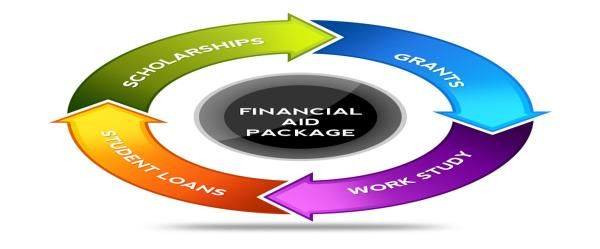
Scholarships
National: offered by organizations with national exposure
(ex: Gate’s Millennium, McDonalds, etc.)
Earlier due dates (Fall)
More competition
Local & Regional: public, private, civic organizations, etc.
Due dates vary (many due in the Spring)
Less Competition and smaller award amounts
Post-Secondary: offered by post-secondary institutions often using
endowments/donations from alumni, trusts, corporate and community
organizations
Check the school’s financial aid page on website
Stop in at the financial aid department on campus
Scholarship Tips Students should: • Start Early and Search Often - never too early • Create an Academic Resume that highlights activities such as: Academic success - awards, national honors society, etc. Extra Curricular Activities – sports, clubs, employment, etc. Community Involvement/Volunteerism – track with whom and hours • Create an Essay(s)- Write an essay, free from errors, that can be tweaked based on individual scholarships (be creative) • Secure Letter of Recommendations early • Pay attention to deadlines and understand the terms

Types of Financial Aid
SELF HELP AID:
Work Study: Student obtains job, often coordinated through the
campus and/or State.
Wages earned help cover the cost of attendance
Not offered at all schools
Student Loans: Borrowed money that must be repaid (with interest)
Federal Direct Loans -Student’s Name
Federal PLUS Loans -Parent’s Name
Private/Alternative Student Loans – Varies amongst lender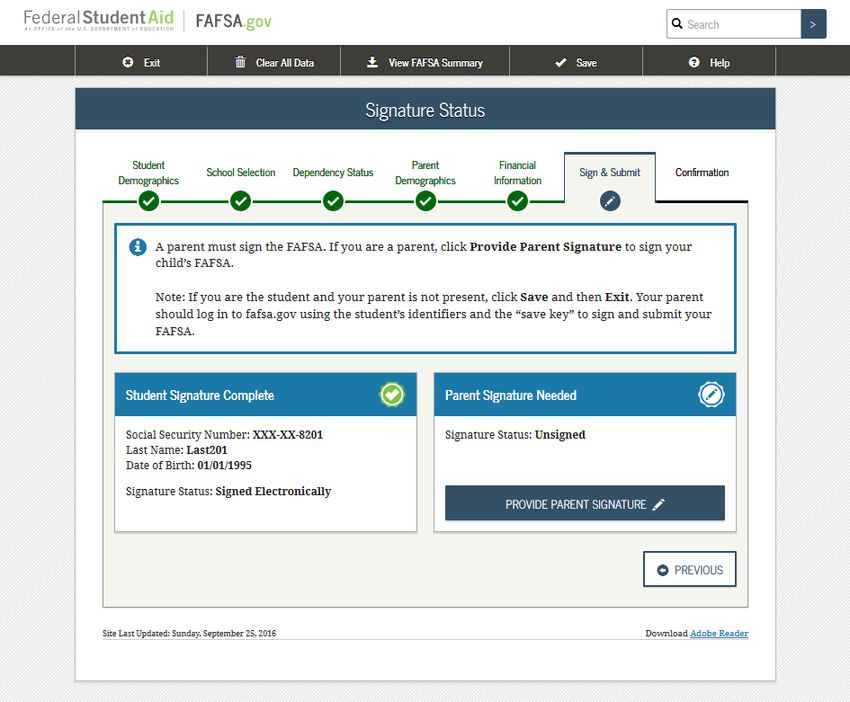
Federal Direct Loans
(Student Aid Guide- pg.30)

                      Undergraduate Students                                    Graduate Students

                                        Independent or dependent students
                                                                               Graduate or
  Annual Limits   Dependent Students    whose parents are unable to borrow a
                                                                               Professional Studies
                                        PLUS Loan

                  $5,500 Total          $9,500 Total
  1st   Year      No more than $3,500   No more than $3,500 may
                  may be subsidized     be subsidized

                                                                               $20,500 each academic year
                  $6,500 Total          $10,500 Total
                                                                               Graduate / Professional
  2nd Year        No more than $4,500   No more than $4,500 may
                                                                               students are no longer eligible
                  may be subsidized     be subsidized
                                                                               for subsidized loans

                  $7,500 Total          $12,500 Total
  3rd Year
                  No more than $5,500   No more than $5,500 may
  and beyond
                  may be subsidized     be subsidized
Federal Direct Loan:
Aggregate Limits
Undergraduate Education
(Dependent Student)
$31,000
($23,000 maximum Subsidized Loan)
Undergraduate Education
(Dependent Student OR Dependent Students $57,500
whose Parents were denied PLUS Loan) ($23,000 maximum Subsidized Loan)
Graduate / Professional Education
$138,500Funding Sources Federal Government (Federal Department of Education) Grants (PELL, TEACH, etc.) Federal student loans (Direct & PLUS student loans) studentaid.ed.gov or 800-433-3243 & studentloans.gov State Government (PHEAA) Grants (PA State grant) Special state-aid programs (PATH, PA-Tip, etc.) PA Forward www.pheaa.org or 800-692-7392 Schools/Colleges Institutional grants & scholarships Work study Private/Public/ Civic Organizations, etc. Scholarships & Private student loans
Federal Need-Based Grant
Programs
• Pell Grant (2019-20 max award $6,195)
» Max eligible EFC: $5,576
• Campus-based aid – amounts determined by FAO
» FSEOG………………up to $4,000
» Federal Work-Study…FAO determines
Students must be enrolled at least half-time and meet
satisfactory academic progress
Must complete the FAFSA
Additional details: PA Student Aid Guide, p 28
Visit StudentAid.ed.gov to see all federal aid sources.Pennsylvania State Grant
PA State Grant: max award $4,123
Awarded to eligible PA residents who demonstrate financial need
Must attend an approved post-secondary school
Out of State schools in DE, MA, OH, WV & DC: max $526
Veterans: up to $702
Cost Tier Final Maximum Final DE Award
Award
$0 - $12,000 $2,193 $1,645
$12,001 - $19,000 $3,509 $2,631
$19,001 - $29,000 $3,772 $2,829
$29,001 - $32,000 $4,123 $3,092PA State Administered Programs • State Work-Study - job related to major • Blind or Deaf Beneficiary Grant • Educational Assistance Grant (EAP) – National Guard • Chafee Education and Training Grant – co-administered with the PA Department of Human Services • Postsecondary Educational Gratuity Program (PEGP) • Partnerships for Access to Higher Education (PATH) • Pennsylvania Targeted Industry Program (PA –TIP) • Ready to Succeed Scholarship (RTSS) • For details, see the PA Student Aid Guide, page 26 or visit PHEAA.org.
Partnerships for Access to Higher Education
(PATH)
Current PATH partners- PHEAA.org/PATH

• PHEAA PATH Grant match – up to $2,500

• The student must be enrolled at least half-time in a
  PHEAA-approved postsecondary institution

• Student must have received a PA State Grant for the
  semester or quarter for which they are nominated to
  receive a PATH Grant
PA Targeted Industry Program (PA-TIP)

Targeted industries at approved
schools:
   » Energy
   » Advanced Materials and Diversified
     Manufacturing
   » Agriculture and Food Production
• Need-based awards up to the
  maximum State Grant award
• Many requirements of State Grant,
  except:
   » Program must be at least 10 weeks but
     less than 2 years
• Must file a FAFSA & PA - TIP
  application
Financial Aid 101
FormsFinancial Aid Forms
Know which financial aid forms each school requires
All Schools Require:
Free Application for Federal Student Aid (FAFSA)
Required by PHEAA, and some scholarship organizations as well
FAFSA.ED.GOV or FAFSA.GOV
State Grant Form (SGF) through PHEAA
Required for first -year students (addl. information may be required in subsequent years)
Can link to the State Grant application from FOTWs confirmation page or may access
at www.pheaa.org
Some Schools Require:
CSS Profile (College Scholarship Service) required by some postsecondary schools
and scholarship organizations
https://student.collegeboard.org/css-financial-aid-profile
Institutional Financial Aid Forms
Internal forms specific to each school
Required by some schoolsFAFSA - Free Application for Federal
Student Aid (FAFSA.GOV)
The FAFSA is a federal form used to determine student
eligibility for the following:
• Federal programs, such as
Pell Grants, work-study, and
student loans
• State programs, such as
Pennsylvania State Grant, and
other special programs
• School programs, such as
need-based grants and
scholarshipsFree Application for Federal
Student Aid: FAFSA
• All students who wish to be considered for financial aid must complete the
form.
• Answer each question based on the day you are completing the form, except
tax return/income.
• Make sure you are completing the correct FAFSA (2020-2021 AY)
Enrollment Dates When can students submit the Tax
(year student attends college) FAFSA Return
July 1, 2019-June 30, 2020 October 1, 2018 – June 30, 2020 2017
July 1, 2020-June 30, 2021 October 1, 2019 – June 30, 2021 2018
July 1, 2021-June 30, 2022 October 1, 2020 – June 30, 2022 2019Pay Attention to Deadlines!
• FAFSA - Apply as early as October 1st of the year prior to when you will attend
college (Deadline for Seniors is June 30, 2021)
• School Deadlines – check out your college(s) websites to see if they list a
priority filing deadline.
• PA State Grant Deadlines
» May 1, 2020 – First-time and renewal students attending colleges, universities &
college transferrable programs (excluding community colleges)
» August 1, 2020 – First-time students attending community college; a business,
trade or technical schools, hospital school of nursing; Open Admissions Institutions
or a 2-year non-transferrable degree program at a Jr or 4-year college.
File the FAFSA by the earliest deadline2020-2021 FAFSA Prep
Information Needed for FAFSA
Social Security Federal Tax Returns and 2018 Untaxed Income Checking and Savings
Numbers W-2’s (2018) Account Statement
Balances as of FAFSA
Filing Date
Investment Records Email Addresses
(optional)What Information is Required?
The FAFSA is broken down into seven sections that asks
for specific information needed to determine the family’s
EFC.
Student Demographics (legal name, SS#, alien
registration, permanent address, etc.)
School Selection :
Must choose at least 1 school
Only schools listed will receive results of FAFSA
Update PA State Grant with final school choice
Dependency Status answer questions to determine
status
Parent Demographics (legal name, SS#, size of
household, number of students attending college, etc.)
Financial Information (income and asset information)
Sign(student & 1 parent) & Submit (register for a
Federal Student Aid ID)
ConfirmationWhose information goes on the FAFSA?
• Dependent Student and Parent(s)
Who is considered the parent?
• Biological/legal parents who live in the same household
• Adoptive parents
• Divorced or Separated Parents (not living in the same household)= Custodial
Parent:
• the parent student lived with most during the last 12 months,
• if equal: the parent that provided the most financial support
• Stepparents (married & living with the custodial parent)
• Independent student – student’s information only
(& spouse, if married)
• Anyone else the student is living with – NOWho Is Independent? 24 or older on Jan 1st of award year Married Veteran (includes active duty personnel) Working on graduate level degree Emancipated minor Legal guardianship Orphan, in foster care or ward of the court at anytime when student was age 13 or older Have legal dependents other than spouse Student deemed homeless by proper authority
Financial Information:
See page 16 of the PHEAA Student Aid Guide for more
details
Income: Students and parent(s) must answer income questions
Assets:
Some families qualify for a Simplified EFC Formula and do not need to report assets
If total asset amounts are higher than the Asset Protection Allowance, then the net
value of the assets must be reported
“As of today, does the total amount of your (parent’s) current assets exceed (a specific amount
unique to the applicant)”
Assets are reported as of the date the application is filed
529 plans owned by the student or the custodial parent are reported as Parental Investments on
the FAFSA
Do not report the value of:
Qualified retirement funds
Life insurance policies
Primary home
Family business, if it employs less than 100 full-time employees
Family farm, if the family lives on the farm
Do not include: GI Bill, Dependents Education Assistance Program, VA Vocational Rehabilitation
Program, VEAP Benefits, etc.IRS Data Retrieval Tool (DRT)
The IRS DRT allows students and
parents to transfer IRS tax return
income into the FAFSA.
• Sensitive data will be encrypted
• Unable to use DRT if :
• Married filing separate or
Married filing Head of
Household
• Filed a Puerto Rican or
All Info must foreign return
match tax
return! • Marital status is different
than return
• Identity Theft flag is on
accountFSA ID: Don’t forget to sign!
The Federal Student Aid ID allows the
student and parent to electronically sign
the FAFSA (student & 1 parent must sign)
Signature is accepted for PA State Grant
FSA ID owner should create his or her
own account (obtain FSA ID early)
Forgot ID/Password:
Register a mobile phone to recover
FSA ID or answer challenge
questions
Call or chat with Federal Student Aid
CenterFAFSA Confirmation Page • Apply for the State Grant from the Confirmation Page • Provides EFC, Pell grant & Direct Student loan eligibility • Provides information about the schools listed on the FAFSA (graduation, transfer & retention rates)
PA State Grant Form
(SGF)
• Link off the FAFSA Application
Confirmation Page
» Missed the link or it wasn’t available?
◦ Link in an email sent to
student/parent from PHEAA, OR
◦ Go to PHEAA.org;
State Grant Program;
and complete the form
• Additional questions needed
to determine PA State Grant eligibility:
» Enrollment status (full-time/part-time)
» Value of PA 529 College Savings Program
» Program of study for students in
vocational programs
» Employment status
Help screens are available for all questionsSpecial Circumstances If things change… • Recent death or disability • Reduced income/Unemployment • Unusual Circumstances • Contact schools listed on FAFSA: Only a school can change a FAFSA based on your circumstances • Contact PHEAA for the PA State grant
Financial Aid 101 Forms are Filed – Now What?
The Process Continues
After the FAFSA is filed:
Student receives Student Aid Report (SAR) & makes corrections, if needed
Information goes to school & families undergo a Need Analysis
Expected Family Contribution (EFC) for dependent students is based on:
Parental income & assets
Asset protection allowance based on age of older parent up to approx. 9-12%
Contribution divided by the # of children in college at the same time
Student income & assets
Cost of Attendance
No asset protection allowance: assessed at 20%
Income protection allowance of $6,840 (19/20 AY) - EFC
Amounts over $6,840 assessed at 50%
= Financial Need
Family size and number of family members in college
Age of older parent
• After analysis, Financial Aid Award letters are sent to the students
• Student reviews letters & researches optionsComparing Packages
SCHOOL A B C D
COST $ 6,600 $15,000 $25,000 $45,000
EFC (stays the same for all schools) $ 3,000 $ 3,000 $ 3,000 $ 3,000
NEED $ 3,600 $12,000 $22,000 $42,000
Federal & State Grants $2,000 $ 7,000 $ 10,500 $23,000
Institutional Grants or $ 14,500
Scholarships
LOANS (Direct Lending) $4,600 $ 5,500 $ 0 $ 5,500
WORK STUDY (after you work a job!) $0 $ 0 $ 0 $ 3,000
TOTAL AID $ 6,600 $12,500 $25,000 $31,500
GAP (Cost – Aid) $0 $ 2,500 $0 $13,500
ACTUAL COST
(Cost – FREE Money) $4,600 $ 8,000 $0 $22,000
What happens if there is a gap and all costs are not covered?Options to Cover the Cost
of Education
• A school doesn’t care how you come up with the
balance, just that you do
• Families can CHOOSE the methods of borrowing and
funding combinations that meet their needs to cover
balances - it’s unique to your resources.
You can mix & match balances!
Savings – Family Tuition Payment Plans – reimbursement programs
529 College Saving Plans – School 401K – Withdrawal or loans
Family Federal Student Loans – (See a financial advisor or
U Promise credits – DOE your HR Dept)
Family, friends Parent PLUS Loans – DOE Credit Cards – Banks
Scholarships – Private Education Loans – (be cautious)
Various sources, Banks Student part-time job –
including schools Institutional Loans – School Students work-study/private
Grants – Federal/State jobs
Home Equity Loans – Banks
programs
Employers – TuitionFinancial Aid 101 Student Loans
Be a Smart Borrower
• Exhaust all free financial aid options before borrowing student loans
• Seek federal student loans before private student loans
• Only borrower the amount needed (loans must be repaid)
• Do your research!

•   MySmartBorrowing.org: An interactive, online tool created by PHEAA that helps
    students and families:
    » Estimate career, salaries & college tuition
                                                       Select a         Factor in
    » View the impact of savings on overall cost       Career           Savings
    » Calculate loan repayment
    » Avoid borrowing too much money

                                                       Select a
                                                       School           Get
                                                                        Results
Student Loans
Federal Direct Federal PLUS Private Loans
Loans Loans
• Loan is in the student’s • Loan is in the parent’s • Loan is in the student’s
name name name (cosigner is
generally required)
• Max. borrowing limits • Must meet credit
requirements
• May receive a Direct • Student or Cosigner must
– May apply with a
Subsidized and/or credit worthy cosigner meet income & credit
Direct Unsubsidized requirements
– If denied, student may
loan borrow additional
unsubsidized amount • May borrower up to the
• Fixed rate: 4.53% COA minus any other aid
• May borrower up to the
• Origination fee of COA minus any other aid
1.059% of the amount • Variable or fixed interest
requested • Fixed interest rate: 7.08% rate
• Deferred payments • Origination fee of 4.236% • May have cosigner
release clauses
• Must complete the • Payments may be
FAFSA deferred • Terms vary by lender
• Must complete entrance – Do your research
• Student must complete
exam & MPN the FAFSA – Read the fine printStudent Loans
PHEAA’s new PA Forward Student Loan Program is designed
specifically for PA students and families.
Because student loans must be paid back, we always encourage students and families to borrow only what is
needed to cover costs. If you need additional funds after obtaining financial aid through grants, scholarships,
and federal loan programs, consider a PA Forward Student Loan.
• Undergraduate
• Parent
• Graduate
• Refinance (coming soon)
For more information visit
PHEAA.org/PAForwardFinancial Aid 101 Final Thoughts & Wrap-Up
Resources
• Federal Student Aid Information Center
   » Email, call or chat with customer service agents
   » Phone: 800-433-3242 (800-4-FED AID)
   » Website: FAFSA.gov
   » Fafsa4caster: estimated EFT, PELL and Direct Loan Eligibility
                                                PHEAA
• PHEAA                                         American Education Services
   » Email: granthelp@pheaa.org                 FedLoan Servicing

   » Phone: 800-692.7392
                                                @PHEAAaid
   » Website: PHEAA.org                         @FedLoan Servicing
      ◦ MySmartBorrowing.org                    @aesSuccessorg

      ◦ Educationplanner.org

                                                PHEAA
• Financial Aid Offices
Your Presenter Tiffanie DeVan Higher Education Access Partner PA Higher Education Assistance Agency (PHEAA) 717-884-2200 tdevan@pheaa.org
You can also read


