From Accessible Parking to Housing Vouchers: A Overview of Fair Housing Topics
←
→
Page content transcription
If your browser does not render page correctly, please read the page content below

The Texas Governor’s Committee on People with Disabilities
                                 April 9, 2021

From Accessible Parking to Housing Vouchers:
     A Overview of Fair Housing Topics
                                  presented by

             Jeffrey Riddle, Texas Workforce Commission
  Nathan Darus, Texas Department of Housing and Community Affairs
    Cate Traz, Texas Department of Housing and Community Affairs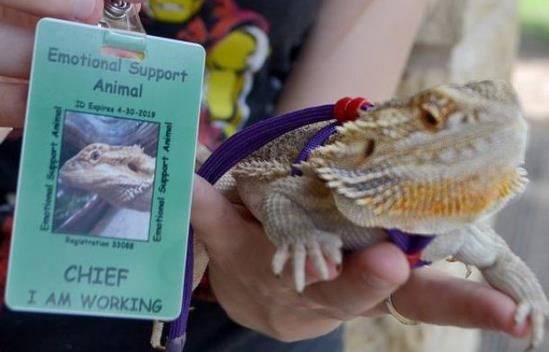
Presenters
Jeffrey Riddle                   Nathan Darus                       Cate Tracz
Training Specialist              Fair Housing Research Specialist   Manager of Fair Housing, Data
Civil Rights Division            Texas Department of Housing        Management, and Reporting
Texas Workforce Commission       and Community Affairs              Texas Department of Housing
Jeffrey.Riddle@twc.state.tx.us   Nathan.Darus@tdhca.state.tx.us     and Community Affairs
512-756-3949                     (512) 475-0306                     cate.tracz@tdhca.state.tx.us
                                                                    512-475-4595

                                                                                                    2
The Fair Housing Act provides for fair
housing, within constitutional
limitations, throughout the United
States. The Texas Fair Housing Act
supplements the federal Act by:             THE FAIR HOUSING
• Creating state procedures for
  investigating and settling complaints
                                                   ACT
• Providing rights and remedies
  substantially equivalent to federal law
• Delegating enforcement power to the
  Texas Workforce Commission Civil
                                             THE TEXAS FAIR
  Rights Division (CRD)                       HOUSING ACT
 Texas Fair Housing Act: Texas Property
           Code, Chapter 301

                                                               3
• A Disability is:

                                  • A mental or physical
                                    impairment that
                                    substantially limits at least
                                    one major life activity
PROTECTED CLASS: DISABILITY
                                  • A record of an impairment
                                  • Being regarded as having
                                    an impairment

                                                                    4
What are Reasonable Accommodations
and Modifications?
REASONABLE ACCOMMODATIONS REASONABLE MODIFICATIONS
• A change, exception, or • A structural change to a
adjustment to a rule, policy, dwelling unit or common
practice, and/or service area
i.e. Pet policy, trash i.e. Accessible ramps,
policy/practices accessible lifts, changing
parking layout to add
accessible parking
5
Reasonable Accommodation
      If a person has a disability, a landlord cannot refuse to make a
         reasonable accommodation in the rules, the policies, the
         practices, or the services if the accommodation is necessary
         for the person with a disability to use the housing.

Example of a FH Violation:

“You must pay all pet fees and rent,
even though you have a service animal.”

                                                                         6
Reasonable Modification
     If a tenant has a disability, a landlord cannot refuse to let that
     person make reasonable modifications to the person’s dwelling
     or common use areas, at that person’s own expense, if
     necessary for that person to use the housing.

Example of FH Violation:
“A wheelchair ramp can’t be installed
there, so you can’t live in this complex.”

                                                                          7
Rules for Reasonable
Accommodation Requests
 • Accept verbal requests

 • Immediately begin the interactive
   process

 • Carefully draft, review, and revise the
   policy on a regular basis

 • Ask for appropriate, reliable, disability-
   related information

 • Provide prompt responses

 • Document all actions and interactions        8

Asking about the Disability
When both the disability and the disability related need is apparent or already
known:
       You may not ask any additional questions or request further verification.

When the disability is apparent, but the disability related need is not apparent or
previously known:
       You may only ask for verification of the disability related need, not
       verification of the disability.

When the disability is not apparent or previously known and the need is not
apparent or previously known:
       You may ask for verification of the disability and the disability related
       need for the accommodation.
Questions to Determine Who Pays for
Modifications
   Is it a single-family or multi-family dwelling unit?

   Does the property receive federal financial assistance?

   When was the property built for first occupancy?

   Does the property participate in the Low-Income Housing Tax Credit Program?

   What type of accessibility feature is being requested?

   Does an agreement exist between the parties?

               Source: Fair Housing Council of Greater San Antonio               10
Requesting Parking Assistance • A person does not need to have a handicap placard or plate to request accessible parking in their home. • Those allow for parking in official spots. • A person might have a temporary mobility disability and need accommodation short term. • A housingprovider cannot refuse a request for a parking accommodation, even if you do not have handicap placards.
Example
“A housing provider has a policy of providing unassigned parking
spaces to residents. A resident with a mobility impairment, who is
substantially limited in her ability to walk, requests an assigned
accessible parking space close to the entrance to her unit as a
reasonable accommodation. There are available parking spaces
near the entrance to her unit that are accessible, but those spaces
are available to all residents on a first come, first served basis.”

What should the housing provider do?
The housing provider should make an exception to its policy of not
providing assigned parking spaces to accommodate this resident.
Resources
  •   The US Department of Veterans Affairs (VA) offers the Specially Adapted Housing Grant.
  •   The American Red Cross provides financial assistance for eligible active military service members, veterans, and
      direct members of their families.
  •   The Army Wounded Warrior Program (AW2) provides financial assistance to qualified soldiers, veterans and their
      families for a variety of expenses.
  •   The Gary Sinise Foundation’s Restoring Independence Supporting Empowerment (RISE). The program provides
      grants for modifying existing living spaces or constructing new Smart Homes.
  •   The National Council of State Housing Agencies (NCSHA)offers individuals and families several different types of
      support. Their website provides a tool for locating available offices and organizations in your state that may be able
      to provide you with the assistance you seek.
  •   The National Resource Center on Supportive Housing and Home Modification provides a state directory for finding
      a broad range of local resources for home modification financial aid.
  •   The Assisted Living Conversion Program (ALCP) is a program established by the U.S. Department of Housing and
      Urban Development (HUD). It’s specifically for seniors who need home modifications to accommodate needs,
      including those related to a disability.
Resources
• Rebuilding Together AmeriCorps helps many groups of people build new homes or modify existing ones.
• The Rural Housing Repair Loans and Grants program is funded by the United States Department of Agriculture
(USDA). Recipients must be 62 years or older and from low-income households.
• The Self-Sufficiency Grant from ModestNeeds.Org seeks to offer support to individuals and families who need help
with unexpected or emergency expenses, as well as outstanding monthly bills left unpaid because of extenuating
circumstances.
• The Individual Adaptive Equipment Grant from the Travis Roy Foundation is for people who are paralyzed from a
spinal cord injury. It is open to all ages. Those who need home modifications, such as ramp construction or grab bar
placement, are encouraged to apply.
• Lions Clubs International provides resources and financial help to those with a hearing impairment or visual
disability.
• The American Parkinson Disease Association funds patients with disabilities related to degenerative disease.
• The Rehabilitation Engineering Society of North America (RESNA) Catalyst Project aims to provide technical
assistance for home modification. Funds are granted to individuals through state-level programs.Complaints & Conciliation
• If you have a complaint filed against you:

                  • You will be notified of the allegations
                  • You likely will be invited to mediate
FAIR              • If you decide not to mediate, you may
HOUSING             file an answer that is,
COMPLAINTS
                      • In writing
                      • Under penalty of perjury
                      • May be amended at any time

                                                              16
                                                                   16
Conciliation
• Conciliation is like mediation but used in the housing compliant process.
• Conciliation is a free service
• Both parties must agree to the conciliation
• Conciliation is confidential
• A lawyer is not needed, but can be used
• Can happen anytime during the process of the complaint
• Conciliation does not pause, or halt, the investigation until an agreement
is signed
17TDHCA Complaint Process
• There are 3 ways to file a complaint within the TDHCA complaint process:
1. Submit a written complaint online on this website:
https://public.tdhca.state.tx.us/pub/t_complaint.complaint_add1
2. Mail your complaint to this address: PO Box 13941, Austin, TX 78711-3941
3. Fax your complaint to this number: 512-475-0070
• The Complaint Submission System is to be used only for complaints
dealing with TDHCA programs and funded properties
• Once a complaint is filed, you will receive a notice from TDHCA with 15
business days indicating the complaint has been resolved, or that it will
be resolved by a certain date.TRAINING & TECHNICAL ASSISTANCE
Texas Civil Rights Division
CRDTraining@twx.state.tx.us
Contact the Texas Department of
Housing and Community Affairs at
(512) 475-0306
Fair.Housing@tdhca.state.tx.us
FHEOI@tdhca.state.tx.us
19HUD Guidance on Assistance Animals Presented by: Texas Department of Housing and Community Affairs
What’s the Difference?
What is the difference between service animals, emotional support
animals and assistance animals?
                                              Animals   Pets
  For the purposes of the Fair
  Housing Act, assistance
  animals refers to both                 *Assistanc
                                             e*
  service animals and
                                         *Animals*
  emotional support
  animals. It also includes
  other animals that do work,       Service       Emotional
  perform tasks, or assist an       Animal         Support
  individual with a disability.        s           Animals

                                                                    21
What is “Readily Apparent?”
• Guiding an individual who is blind or has low vision
• Pulling a wheelchair
Service Animals, Part 2.2
Service Animals
• Providing assistance with stability or balance to an
individual with an observable mobility disability Further inquires are
unnecessary and
inappropriate because
Yes the animal IS a service
Is it readily apparent animal. Grant the
Yes The animal counts as a
that the dog is trained to requested service animal. Grant
do work or perform tasks accommodation, if the requested
Yes for the benefit of an accommodation, if
otherwise reasonable.
individual with a otherwise reasonable.
disability?
No Housing provider may ask
Is the animal in substance
The animal does not
1) Is the animal required No qualify as a service
a dog? The animal is not a
service animal, but
because of a disability? animal, but may be
2) What work or task has another type of
No may be another type of
the animal been trained to assistance animal for
assistance animal for which a reasonable
which a reasonable perform?
accommodation may be
accommodation may be required. Proceed to Part
required. Proceed to 2.
Part 2
What does it mean to perform “work” or
“tasks?”
• If the individual identifies at least one action the
dog is trained to take which is helpful to the
disability other than emotional support.
22HUD Guidance, Part 3
Criteria for Deciding Whether to Grant the Accommodation
Proceed to Part 4
Yes
Has the person requesting the
accommodation provided information
which reasonably supports that the
animal does work, performs tasks,
provides assistance, and/or provides
Does the person have an Yes therapeutic emotional support with
observable disability or respect to the individual’s disability? No
does the housing provider The housing provider is not required to
(or agent making the grant the accommodation unless this
determination for the Yes information is provided, but may NOT
provider) already have deny the accommodation UNLESS the
information giving them requester has been provided a
reason to believe that the reasonable opportunity to provide the
person has a disability? No information. The provider is
No Has the person requesting the
encouraged to direct the requester to
accommodation provided information
that reasonably supports that the the Guidance on Documenting an
person seeking the accommodation has Individual’s Need for Assistance
a disability? Animals in Housing
23Information about the Disability
Information about Disability May Include:
• A determination of disability from a federal, state, or local government agency.
• Receipt of disability benefits or services (Social Security Disability Income (SSDI),
Medicare, or Supplemental Security Income (SSI) for a person under age 65, veterans’
disability benefits, services from a vocational rehabilitation agency, or disability benefits or
services from another federal, state, or local agency.
• Eligibility for housing assistance or a housing voucher received because of disability.
• Information confirming disability from a health care professional, - e.g. physician,
optometrist, psychiatrist, psychologist, physician’s assistant, nurse practitioner, or nurse.
Determination that an individual does not qualify as having a disability for purposes of a
benefit or other program does not necessarily mean the individual does not have a disability
for the purposes of the Fair Housing Act, Section 504 of the Rehabilitation Act, or the
Americans with Disabilities Act.
24Disability Determination
DOJ Regulations and ADA Amendments Act of 2008
Under the Department of Justice’s regulations implementing the ADA Amendments Act of
2008, which HUD considers instructive when determining whether a person has a disability
under the Fair Housing Act, some types of impairments will, in virtually all cases, be found to
impose a substantial limitation on a major life activity resulting in a determination of a
disability. Examples:
• Deafness • Diabetes
• Blindness • Epilepsy
• Intellectual Disabilities • Muscular Dystrophy
• Partially or completely missing limbs or • Multiple Sclerosis
mobility impairments requiring the use • Human Immunodeficiency Virus (HIV)
of a wheelchair infection
• Autism • Major Depressive Disorder
• Cancer • Bipolar Disorder
• Cerebral Palsy • Schizophrenia
25Part 4 – Type of Animal
Cats and Dogs and Peacocks and Turtles, oh my.
Is the animal commonly kept in households?
Yes No
Animals commonly kept in households:
Dogs, cats, small birds, rabbits, hamsters,
A reasonable accommodation may not need
gerbils, other rodents, fish, turtles, or other
to be provided except in very rare
small, domesticated animals that are
circumstances…
traditionally kept in the home for pleasure
rather than commercial purposes
The accommodation should be provided
under the FHA… If the individual is requesting to keep a
unique animal, then the requestor has the
substantial burden of demonstrating the
disability-related need for the specific animal
…Except reptiles (other than turtles),
barnyard animals, monkeys, kangaroos,
and other non-domesticated animals are not
considered common household animals. If the requestor submits documentation from
a health care professional confirming the need
for this specific type of animal
26What Do I Need to Do to Request a Reasonable
Accommodation?
Basic guidelines for what you might need
• There are three criteria you need to satisfy:
Establish that you have a disability;
Identify the accommodation that you need; and
Establish the disability-related need for the accommodation
• Some disabilities are readily apparent.
Individuals using wheelchairs or walkers likely mobility disability
Individuals with a white/red/yellow cane likely visual impairment/disability
Readily apparent disabilities already satisfy the first criterion
27Presentation for the Governor's Committee on People with Disabilities: An Overview of Fair Housing Topics April 9, 2021
Agenda
         • Overview of TDHCA

         Programs and
         Activities

         • How to Find Help

                               29
Texas Department of Housing and Community
Affairs
Mission
Administer assigned programs efficiently, transparently, and lawfully and to invest its
resources strategically and develop high quality affordable housing which allows Texas
communities to thrive.
What We Do
Administer state and federal programs through partners to those in need.
Who We Serve
Households earning extremely low, very low, low and moderate incomes
How We Do What We Do
We serve Texans through a network of local partners, e.g., Units of local government,
nonprofits, community-based organizations, etc.
30Types of Programs Administered by TDHCA
• Rental Assistance (short and long • Multifamily New and Rehab
term) Construction
• Energy Related Assistance • Single Family Development
• Homelessness Services • Owner Financing and Down Payment
Assistance
• Supportive Services for low income
individuals • Owner Rehabilitation Assistance
31Housing Choice Vouchers (Section 8)
• TDHCA’s Housing Choice Voucher Program directly administers approximately 900
Housing Choice Vouchers.
• The 2021 renewal funding from HUD is approximately $7.2 million.
• TDHCA administers vouchers in 34 counties.
• Additionally, the program is able to serve clients anywhere in the state through the
Project Access Program.
The Project Access program utilizes Section 8 Housing Choice Vouchers administered
by TDHCA to assist low-income persons with disabilities in transitioning from nursing
facilities or other institutions into the community by providing access to affordable
housing.
32How to find the TDHCA assistance provider
in your area:
Visit www.tdhca.state.tx.us and click on the big grey “Help for Texans” tab.
33How to find reduced rent apartments in
the TDHCA portfolio
Use the Vacancy Clearinghouse database on the Help for Texans page
34How to find reduced rent apartments in
the TDHCA portfolio
https://hrc-ic.tdhca.state.tx.us/hrc/VacancyClearinghouseSearch.m
35Need help finding assistance in your area?
• Email us at info@tdhca.state.tx.us
• Call us at 512-475-3800 or 1-800-525-0657
• Auxiliary aids and services are available upon request to individuals with
disabilities. Relay Texas: 800-735-2989 (TTY) and 711 (Voice).
36TDHCA Rules on Accessibility and
Reasonable Accommodations
• 10 TAC Chapter 1, Subchapter B: Accessibility and Reasonable Accommodations
These rules set forth requirements that all TDHCA programs and assisted properties
comply with Americans with Disabilities Act, Section 504 of the 1973 Rehabilitation Act
and the Fair Housing Act.
37Accessibility in Multifamily Developments
- Audio/Visual Units
All Multifamily Housing Developments that submit full applications after January 1, 2014,
must have:
a minimum of 5 percent of Units that are accessible to persons with mobility
impairments,
and
a minimum of 2 percent of the Units must be accessible to persons with visual and
hearing impairments.
• TDHCA requires fire alarms that both emit sound and bright lights for persons with
auditory or visual impairments.
38Disability Advisory Workgroup (DAW)
• TDHCA maintains the DAW to provide ongoing guidance
to the Department on how TDHCA's programs can most
effectively serve persons with disabilities.
• This informal workgroup augments TDHCA's formal
public comment process, affording staff the opportunity
to interact with and receive input more informally and
in greater detail from various stakeholders and to get
feedback on designing and planning more successful
programs for persons with disabilities.
39What is the Texas Rent Relief Program?
• The first COVID-19 statewide rental assistance program
• For low income households behind on rent/utilities
• Support for households financially impacted by COVID-19
• $1.17 billion available for assistance
• Projected an additional billion with the American Rescue Plan Act
40Texas Eviction Diversion Set-Aside
• 10% allocated for those already sued for eviction
• Justice of Peace will refer the tenant/landlord to the program
• To apply:
oBoth parties must agree
oUse eviction docket number through the same process at
TexasRentRelief.com
oFor diverted cases, eviction record will be sealed
41Who Can Apply?
For Information or To Apply
• Tenant
Go Online 24/7: TexasRentRelief.com
• Landlord (inviting tenant)
• Landlord on behalf of Call Toll Free: 833-9TX-RENT
Tenant 833-989-7368
• Utilities are requested by Monday-Saturday 8 a.m. to 6 p.m.
tenant Assistance available in multiple languages
42THANK
TEXAS DEPARTMENT OF
HOUSING AND COMMUNITY AFFAIRS
CATE TRACZ YOU!
MANAGER OF FAIR HOUSING
CATE.TRACZ@TDHCA.STATE.TX.US
512.475.4595
NATHAN DARUS
FAIR HOUSING SPECIALIST
NATHAN.DARUS@TDHCA.STATE.TX.US
512.475.0070You can also read


