Inspiring People Acknowledging our Profession Venturesome Damsels Museum Outreach Artists in Residence Connecting with Community - Museums Aotearoa
←
→
Page content transcription
If your browser does not render page correctly, please read the page content below
Inspiring People
             Acknowledging our Profession
             Venturesome Damsels
             Museum Outreach
March 2018

             Artists in Residence
             Connecting with Community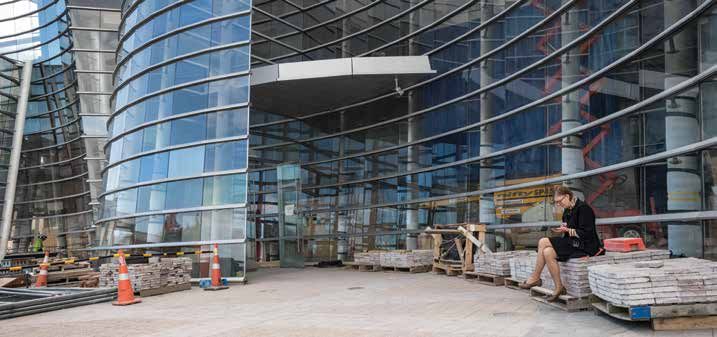
Contents                                        Museums Aotearoa
Eds Quarter                                3    Te Tari o Ngã Whare Taonga o te Motu
Message from the Board                     4    Museums Aotearoa, Te Tari o Ngā Whare Taonga o Te Motu, is the
                                                independent professional association for New Zealand’s museums and
Supporting Canterbury Muserums             5    galleries and those who work for them.

Hanging Up Her Hat(S)                      6    We support the museums of Aotearoa to be thriving and sustainable. Kia tino
                                                toitū, tōnu i ngā whare taonga o Aotearoa.
Taking Stock                               8

Kā Huru Manu                              10
                                                Contact Details
Policy Matters!                           12    169 Tory Street, Wellington 6011
                                                PO Box 10-928, Wellington 6143
New Faces, New Lives                      13    Tel: 04 499 1313
                                                Email: mail@museumsaotearoa.org.nz
Autism Initiatives                        14    Web: www.museumsaotearoa.org.nz

Staff Changes                             15    Contributions
                                                We welcome article suggestions and contributions. For enquiries about
Tūhura                                    16    contributing to MAQ please contact us at mail@museumsaotearoa.org.nz.

Becoming a Venturesome Damsel             17    Staff
                                                Phillipa Tocker, Executive Director
Museum Expeditions                        18    Cindy Jemmett, Administration Assistant

Museum Profile                            19    Board
                                                Cam McCracken (Chair)
Individual Profile                        20      Director, Dunedin Public Art Gallery
                                                Dale Bailey
Associate Profile                         21      Director Collections, Research and Learning, Te Papa
                                                Courtney Johnston
Dame Cheryll Sotheran                     22      Director, The Dowse Art Museum
                                                Riah King-Wall
Russell Beck                              23      Emerging Museum Professionals appointee
                                                Marilyn Kolhase
My Favourite Thing                        24      Pacific Advisory member
                                                Andy Lowe
                                                  Director, Te Manawa
                                                Greg McManus
Next issue                                        Chief Executive, Waitangi National Trust
                                                Henriata Nicholas
June 2018                                         Exhibitions Coordinator, Te Awamutu Museum
                                                Matariki Williams
Copy due 1 June                                   Curator Mātauranga Māori, Museum of New Zealand Te Papa Tongarewa

                                                Advertising
                                                Enquiries about advertising in this publication, or mailing flyers, should be
Cover Images                                    addressed to the Museums Aotearoa office

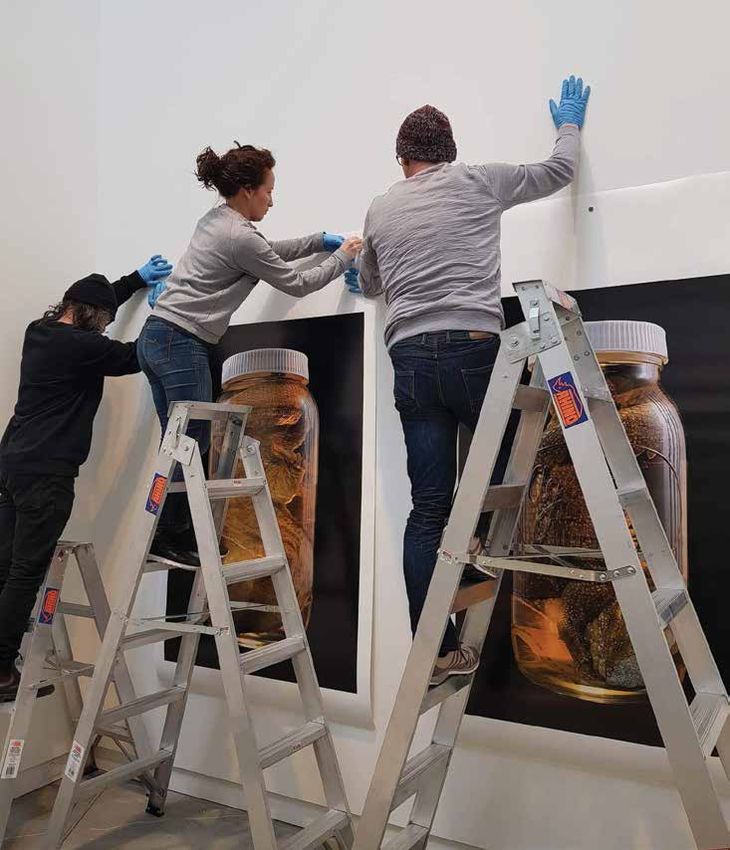
Main. Ngāi Tahu Artists in Residence at CoCA    Disclaimer
install artwork.                                The opinions expressed in this publication are not necessarily those of the
                                                Editor or of Museums Aotearoa
Lower. Touch-Sensitive Plants | He Rāu Pawera
Ki Te Pā at Tūhura Science Centre               ISSN 1177-7362

2 MAQ March 2018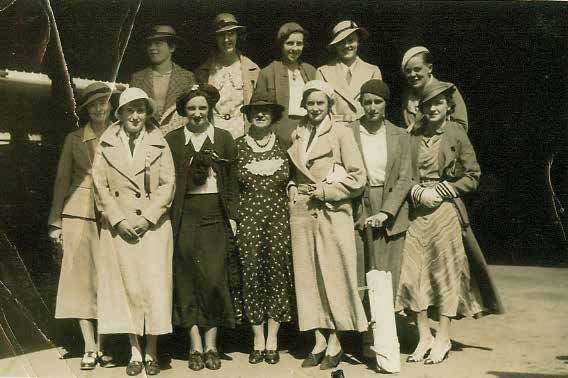
EDs Quarter
I begin 2018 by acknowledging some departures. First Talei Langley, who
has been Museums Aotearoa's Museum Membership Manager for the past 5
years. In that time Talei has completed her postgrad qualification in Museum
& Heritage Studies, taken our admin systems into the cloud, managed
conference registration, been active in the EMP network and the first point
of contact for members. She has also evolved MAQ into the publication it is
today – one that people want to contribute to and to read. Talei has taken up
the role of Registrar and Gallery Assistant at the NZ Portrait Gallery, and
I am delighted to see her taking this next step on her museum career path.

Someone who helped me on my own career path is Jenny Harper. Tributes
are flowing in ahead of Jenny's retirement as Director of Christchurch Art
Gallery at the end of March. She has always been a staunch advocate for
museums, galleries and the people who work in them, and I was privileged to
work for and with her at Victoria University of Wellington, as well as during
her time on the MA Board. I'm sure many readers will share the wry smile
with which I read Felicity Milburn's article (p6), and wish Jenny well on her
'free range' journey.

This issue of MAQ also acknowledges two stalwarts of the museum sector
who have passed away recently. Both Dame Cheryll Sotheran and Russell
Beck will be remembered for their passion, commitment and drive, and both
leave enduring legacies on which to build (p22 and 23).

MA is here to help make connections, enable professional development and
advocate for and with our members. In Policy Matters (p12) I talk a bit more
about the challenges of advocacy.

Other content in this MAQ explores new developments, programmes and
ideas. Recently I have been talking to groups of new museum studies students
at Massey and Victoria. I was introduced as the longest-serving Executive
Director of MA, which made me think about changes in our sector in recent
years – and there have been many. Museums and galleries are in a constant
state of change and renewal, as possibilities expand along with our visitors'
expectations.

It is inspiring to see how museum professionals and organisations are evolving
to meet and exceed these expectations. Being part of the MA whanau, sharing,
learning and supporting each other, is an important catalyst for our evolution.
I look forward to meeting up with many of you at our MA18 conference in
Christchurch in May, sharing 'Outside Insights', challenging ourselves and
celebrating our successes.

Ngā mihi,

Phillipa Tocker
Executive Director, Museums Aotearoa

                                                                                  2018 March MAQ 3
Message from the Board
Kia ora tatou, nga mihi nui

This year is my first on the Museums Aotearoa
Board and I am very much enjoying learning more
about our sector. I am looking forward to meeting
more of you at the conference in Christchurch
later this year. At our last Board meeting we
were discussing how best to engage with the new
government to explain the impact and value we
all add to Aotearoa New Zealand. I think we still
have a way to go to convince many policy makers
about how significant our museums, galleries and
libraries are in our society.

I work at Te Papa and we are very excited about
the opening this month of our new Toi Art
gallery after being closed for a year. It’s a major
new investment in New Zealand Art and we
have some really exciting new works from New
Zealand artists to open with. Next time you are in
Wellington it would be well worth a visit.

Dale Bailey
Director – Collections, Research and Learning,
Museum of New Zealand Te Papa Tongarewa

4 MAQ March 2018
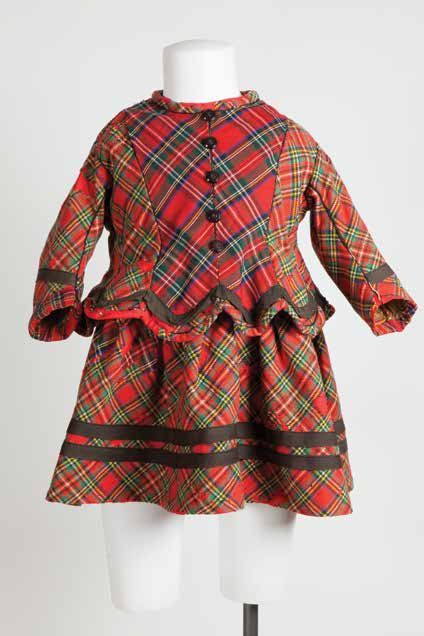
Supporting Canterbury Museums

                                                  Representatives of Canterbury’s regional museums met in January to give feedback on support needs

Canterbury Museum and the Air Force                                                   The first phase of this project grouped requests
                                                                                      for support into the areas described above and
Museum of New Zealand have been working                                               sought feedback from museums on which was
                                                                                      their highest priority. The clear favourites were a
together over recent months on a project that                                         requirement for help to:

aims to identify relevant support that could be                                         1. Attract funding by providing help to better
                                                                                           define projects and create forward plans with
offered to Canterbury’s regional museums.                                                  supporting business cases. This would assist
                                                                                           with better prepared funding applications
This project follows the closure of the Canterbury Cultural Collections                    and involve planning needs workshops and
Recovery Centre, which was set up at the Air Force Museum to help                          assistance with defining museum goals and
museums affected by Canterbury earthquakes (including Lyttelton Museum                     purpose.
as described in Museums Aotearoa Quarterly December 2017). It is hoped                  2. Training and development and sharing of
that a new initiative will deliver a legacy of ongoing support for Canterbury’s            hands-on skills and other expertise. This
regional museums. The research and consultation stage of the project was                   would include facilitating working bees and
completed in January.                                                                      opportunities to share time, expertise and
                                                                                           network.
Canterbury has an estimated 100 museums, archives and historical societies
which hold heritage collections for the public good. They tell local urban            Canterbury Museum and the Air Force Museum
and rural stories, and nationally significant stories of our history and of           of New Zealand will use the findings of this
internationally-important events and figures. Their value is reflected in the         research and consultation to seek funding for the
passion of those dedicated to their care, management and display, of whom             next phase of the project.
many are volunteers.
                                                                                      Note from the Steering Group
The challenges faced by museums in the region reflect national trends and             The steering group will meet over the coming
their local situation. Museums have generously shared what they find difficult,       weeks to determine how best to provide support
where they need help and where they see themselves going. Fostering these             to Canterbury’s regional museums. Our strategy
conversations was a productive activity and helped us build a picture of the          will be to deliver support that museums have
current and future needs of the sector.                                               identified as their area of greatest need and where
                                                                                      we can measure the impact. It is also intended that
Today’s museums face new demands including changes to the way people                  whatever is provided in the short term becomes
volunteer and spend their time. Core museum activity has grown to embrace             self-sufficient in the longer term.
digital media, and tasks like fostering good governance, planning succession
and managing changes to core volunteers and staff remain a challenge                  Michael Brown
                                                                                      Canterbury Museums Support Officer
The main areas for support that emerged in our research were: raising funds;
formal direction and planning; attracting and retaining volunteers; reaching
visitors and considering visitor perspectives; opportunities for networking;
and a host of collections management skills.

                                                                                                                             2018 March MAQ 5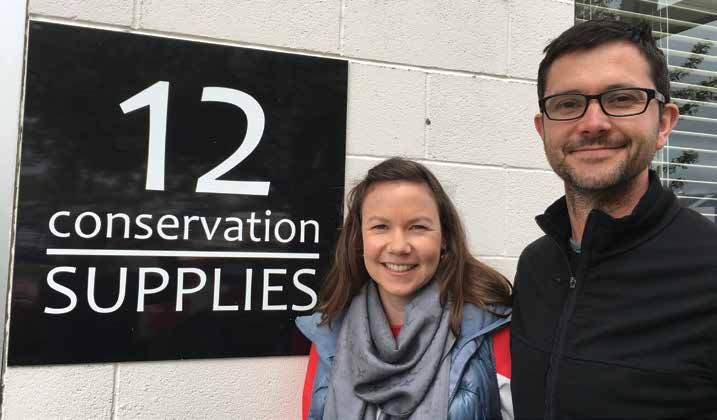
Hanging Up Her Hat(s)
When Jenny Harper ends her term as Director of Christchurch Art Gallery                 History at the Courtauld Institute, University of
Te Puna o Waiwhetū in April, she’ll hang up two very different hats. The                London, following that up with a Diploma in
first represents the kind of legacy that was probably firmly in her sights when         Museum Studies at the University of Sydney the
she took up the position in October 2006: that of the respected leader of               following year. After working in curatorial roles at
an institution finally raising the bar after its early years of operation saw it        the National Gallery of Australia and Queensland
reviewed in 2005 as ‘polite, low-paced and not rebellious enough’. The second           Art Gallery, she returned to New Zealand in 1986
hat, though, is one she never saw coming: the high-vis plastic helmet of                to work at the National Art Gallery in Wellington,
commander-in-chief for a post-quake gallery without walls.                              first as Senior Curator, International Art, then
                                                                                        as Director. She was part of the institutional
Five years into her term, when she welcomed guests into the gallery’s foyer             planning team for the Museum of New Zealand
on the evening of Thursday 10 February 2011, Harper and her team had                    Te Papa Tongarewa, where she became Director,
much to celebrate: annual attendances of more than half a million visitors,             Art and History, before taking up a position as
a $1.8 million bequest, the gift of more than 200 works by artist Max                   Head of Art History at Victoria University of
Gimblett, and three new exhibitions with accompanying publications – and                Wellington. Subsequently appointed Assistant
all this following the hugely popular Ron Mueck exhibition, staged despite              Vice-Chancellor (Academic), she was a key player
the unexpected disruption of the Canterbury earthquake on 4 September                   in the establishment of the Adam Art Gallery Te
the previous year. Te Puna o Waiwhetū was back on the map and finally                   Pātaka Toi.
operating at full-throttle, with an exciting year ahead. Just 12 days later, that
future was in disarray, as the building rapidly transformed into a civil defence        Since her shift to Christchurch, Harper has been
operations centre following the devastating 6.3 earthquake of 22 February.              New Zealand’s Commissioner at the Venice
                                                                                        Biennale three times, in 2009, 2011 and 2013.
Harper’s already impressive directorship had changed course, too. No-one                In 2012, Michael Parekowhai’s Venice Biennale
knew it then, but it would be half a decade before the Gallery opened again             exhibition On First Looking into Chapman’s Homer
to the public. Five long years in which the building was commandeered                   was reconfigured on the edge of Christchurch’s
for non-art purposes – first as the earthquake response HQ, then to house               inner city ‘red zone’ as part of Christchurch Art
Christchurch City Council staff displaced from their damaged building                   Gallery’s celebrated post-quake ‘Outer Spaces’
and finally for the Gallery’s own repair programme. Her focus shifted from              programme, fulfilling a promise the artist made to
ambitious programming and soaring visitor numbers to the challenge of                   the city after the earthquakes. Encouraged by the
retaining staff, maintaining morale and finding, somehow, a meaningful place            tremendous public response to the show, Harper
for art within the recovery and rebuild.                                                led a record-breaking crowd-funding campaign
                                                                                        to secure one of Parekowhai’s sculptures for
When Harper joined Christchurch Art Gallery Te Puna o Waiwhetū in                       Christchurch’s public collection (a record broken
2006, she brought extensive professional and academic experience. Having                last year by a second Harper-led campaign to
graduated with a Master of Arts degree in Religious Studies from the                    secure a work by Ron Mueck).
University of Canterbury, she completed a Master of Philosophy in Art

                                      Jenny Harper outside Christchurch Art Gallery Te Puna o Waiwhetū prior to re-opening, 2016. Photo: John Collie

6 MAQ March 2018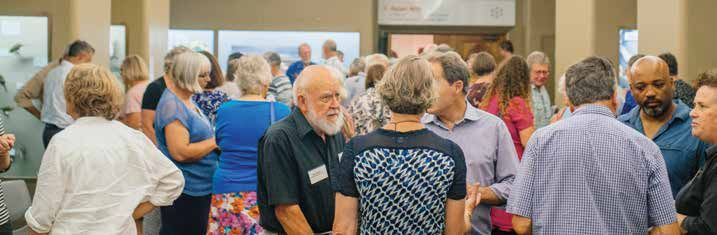
Established in 2008 as a means of enlivening              As the Gallery focussed on making art part of the city again, Harper had to
the Gallery’s external walls, forecourt and other         split her focus. She was also overseeing the repair of the building, and the
operational areas with temporary art projects,            ground underneath it, which had liquefied and settled unevenly. She fought
the Outer Spaces programme took on new                    to ensure appropriate funds were allocated, and then doubled down: not
significance following the closure of the building.       only must the building be repaired, but it should be retrospectively base-
With the collection unavailable, the Gallery              isolated, ensuring resilience in the event of future seismic action.
shifted into project mode, working with artists to
inject what Harper called ‘moments of surprise,           Harper’s staff will remember the ‘eyes on the prize’ tenacity she exhibited
humour, colour and wonder’ into the devastated            throughout every stage of her directorship (and also, possibly less fondly,
city. Between closure and reopening, the Gallery          the free, unsolicited proof-reading service she offered at any hour of the
realised 101 Outer Spaces projects, from large-scale      day). Perhaps her most important quality, though, was her ability, through
wall works and site-specific installations on vacant      humour, strength of will and a gimlet-eyed stare, to bring people – artists,
sections to poster runs and after-dark projections.       staff, politicians, supporters – along with her on the ride. During the Gallery’s
It established three temporary galleries in a city        bleakest days, when many staff were reeling from the impact on their families
with few remaining venues for artists, developed          and homes, she never gave up, buoying us all with her unflagging belief in
and toured the major Shane Cotton survey The              the importance of what we were doing for Christchurch. Former senior
Hanging Sky and provided more than 900 lessons            curator (now Head Curator, International Art for the Art Gallery of New
to 20,000 Canterbury school students.                     South Wales) Justin Paton remembers the “conspiratorial glee” with which
                                                          she approached the Gallery’s operations, making every day feel like a special
Harper led from the front with audacity and               mission. “[S]he knew, while hitting her Key Performance Indicators, that art
adaptation, tenaciously asserting the importance          can’t be KPI-ed. It needs a heart and soul as well as brains and also a sense of
of art as ‘essential business’ in the rebuilding city.    mischief. Jenny had those, has those, and in a sideswiped city, she understood
Faced by funding reductions, she responded with           what art at its heart can be – proof there are human beings still at home
an endowment programme that aimed not only                and determined to keep things interesting.” Now, as the Gallery consolidates
to raise $5 million dollars, but to acquire five          its post-rebuild identity under a new, yet-to-be appointed director, Harper
exceptional works for the collection. Michael             moves into what she describes as the ‘free-range’ phase of her career. That, no
Parekowhai’s Chapman’s Homer was followed by              doubt, will be worth watching too.
Bill Culbert’s suspended light sculpture Bebop,
Martin Creed’s 46-metre neon work proclaiming             Felicity Milburn
‘Everything is going to be alright’ and Cosmos,           Curator, Christchurch Art Gallery Te Puna o Waiwhetu
a large, re-installable wall painting by Bridget
Riley. The final work, a Ron Mueck sculpture
made especially for Christchurch, will arrive later
this year.

                           Jenny Harper with Bridget Riley’s Cosmos (2016-17), Christchurch Art Gallery Te Puna o Waiwhetū, 2017. Photo: John Collie

                                                                                                                               2018 March MAQ 7
Taking Stock

 Scaffold crew with Martin Langdon checking out their mahi.                                            Sitting down for our first feast together.                       Ron Bull opening
                                                                                                                                                                            up the pōhā.

Paemanu : Nohoaka Toi                                                                                               The kaupapa of the nohoaka was grounded in
                                                                                                                    Kāi Tahutanga and the kai didn’t fall short of
Ngāi Tahu Artists in Residence at CoCA                                                                              this! From koura and weka to tītī, customarily
                                                                                                                    preserved in a bull-kelp and totara bark pōhā. As
As I approached the Centre of Contemporary Art (CoCA) in Christchurch                                               we gathered around the makeshift dining room
with my oversized marae suitcase there was a sense of familiarity to this                                           Ron Bull ceremoniously opened the poha and
journey – this was not the first time I’d arrived at the locked doors of an art                                     pulled 12 tītī from each which were later cooked
gallery with my briefcase in tow. Nineteen years earlier my Ngāti Kahungunu                                         on totara bark over the open fire out back.
roots led to our hapū descent on Te Papa Tongarewa. There I was privileged
to work with my Ngāti Hinewaka whānau on the creation of Mākotukutuku                                               As we sat down for kai that evening in the north
wharepuni and I got to hang with the late renowned artist Cliff Whiting and                                         wing of the wharepuni of which, only just prior to
his crew of hungry (mind and puku) carvers. This time it was my Ngāi Tahu                                           our occupation, was the catwalk for the infamous
whakapapa that were leading my poto waewae through these doors.                                                     FAFSWAG, I realised that we were about to
                                                                                                                    establish our Nohoaka Toi whānau – I was going
At the doors of our newly established houpuni1 , I was greeted by a sweaty                                          to feel closer to home than when I walked through
Martin Langdon, who, I later discovered, had just been carting several metres                                       the doors for the first time. That’s what kai does –
of scaffolding up two flights of stairs. This was not for installation purposes but                                 feeds the puku, enriches the kōrero and connects
was in itself a thought provoking installation – one that interrupts the view of                                    you with those around you. Similarly, on our first
collaborative wall drawings and also reflects the video works in the opposite                                       night and our first meal at Te Papa all those years
gallery displaying live footage at Takiroa, a nearby houpuni protected by steel                                     ago, our whānau and Cliff ’s whānau grew into one
fencing. I dropped my bag into the wharepuni and followed him up the stairs.                                        whānau that was now permanently rooted inside
                                                                                                                    the walls of Te Papa Tongarewa.
A crew of scaffolders and the installation obscured the view of fine earth-
coloured wall drawings inspired by our tupuna; and a four metre high                                                Over the coming days leading up to the opening,
charcoal tīrewa (traditional drying rack for kai) created in response to the                                        Khye and Jen (CoCA gallery staff ) worked hard
notion of sustenance for a community and gifting and receiving. Artists were                                        to accommodate us. In an attempt to separate the
encouraged to place what they’d created and in return take one home.                                                snorers from the quiet sleepers, we appropriated
                                                                                                                    the gallery board room on the second floor as our
I was settled in by the very warm and welcoming Areta Wilkinson, chair of                                           second wharepuni. We quickly discovered however,
Paemanu, a calm and collected Simon Kaan, co-chair, and Vicki Lenihan                                               that someone was in denial so rather than fighting
who I quickly learnt was the assertive but caring aunty that looked after all,                                      it, we had a very early start with a brisk walk a
fed us and told us off when we needed it. Ross Hemera arrived later that day                                        couple of blocks to the YMCA for a horoi.
and directed the unpacking and placement of the kohatu mauri, “the spiritual
focal point of the nohoaka”2 on loan from Te Ana Rock Art Trust. I’d heard                                          During install, as my involvement with Paemanu
that, as a child, Ross was often camped out in the caves with a pencil and                                          was one day-fresh, I was able to float between
paper recreating his tīpuna’s marks or reimagining his own while his father                                         artworks and artists assisting with mounts and
fished in a nearby river.                                                                                           having light and heavy kōrero about things like kai
                                                                                                                    and where we’ve come from, where we grew up or

1. A houpuni is a shelter from the elements, and a haven from which to contemplate the environment. It is wahitapu, a site of significance – a place to light our fires (ahikā), a lay-by
between the mountains and the sea, a recess where travellers rejuvenate and take stock, a decorated space where visual and oral knowledge is passed on (wānanga); a place to strengthen
family bonds (whanaungatanga) (an extract from Paemanu’s exhibition concept).
2. Bull, R. (2017). Editorial. Scope: Kaupapa Kai Tahu, 4, 6-11. Retrieved from http://www.thescopes.org/assets/Uploads/FULL-PDF-kai-tahu-Scope-.pdf

8 MAQ March 2018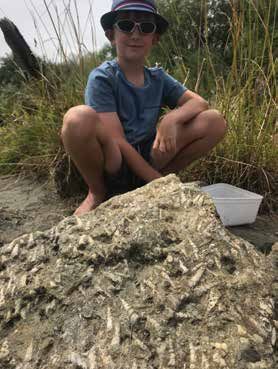
Visitors to the gallery took part in wānanga adding residue to the installation - Para (residue).   A four metre tall tīrewa (traditional drying rack)
                                                                                                      created in response to the notion of sustenance.

even the more serious subject of “mauri” dropped in to the kōrero by Nathan
Pohio. We also discussed the deliberate shifts taken by Paemanu in Nohoaka
Toi which had the potential to make or break:

 1. the works in the exhibition were to be without names and labels… work
    was created, fed and developed in a collective space so ownership was not
    one person’s to claim;
 2. Nohoaka Toi was curated by Paemanu senior artists - not a single curator.

Coincidently, on opening night Māori and Pākeha curators and artists gathered
at the lower end of Te Ika-a-Maui at the City Gallery for the symposium:
Tai Ahiahi /// Tai Awatea: Curating Contemporary Māori Art, to discuss and
debate questions such as: What is Māori Art? What is contemporary Māori                                                     Keeping the fires burning.
Art? What is curating? How has contemporary Māori art been curated and
by whom? And what does it mean to curate contemporary Māori Art?

Over the next few months, Paemanu campers would regather and revisit, and
in doing so, leave their mark of temporary occupation: wood chips from local
carvers, words and drawings of poets on sheets of acetate film projected onto
the walls, or an installation of nohoaka residue, threaded onto hot-pink deep
water fishing tackle and lead weights. These wānanga would be enriched with
kōrero, laughter and yes, most importantly… good kai.

It very quickly became apparent for me that Nohoaka Toi was significant in
several ways:

 1. aesthetically it was beautiful, sharp as well as conceptually challenging;                                                            Wharepuni.
 2. although I’m sure it wasn’t without its challenges, the curation appeared
    seamless in its collective approach by contemporary Ngāi Tahu artists;
 3. residency within a contemporary art gallery was taken to the next level
    most aptly put by one of the Ngāi Tahu nannies, “If you’re going to occupy
    then occupy”;
 4. a sense of connectedness between artists was created or further enhanced
    through sleeping, talking and eating together…

A whānau was established grounded in the kaupapa of nohoaka and now
permanently rooted within the walls of Christchurch’s 138 years young,
Centre of Contemporary Art.

Rongomaiaia Te Whaiti
Ngati Kahungunu & Ngai Tahu
Pukenga (Lecturer), Toioho Ki Apiti Maori Visual Arts,
 Toi Rauwharangi College of Creative Arts, Massey University

                                                                                                                                2018 March MAQ 9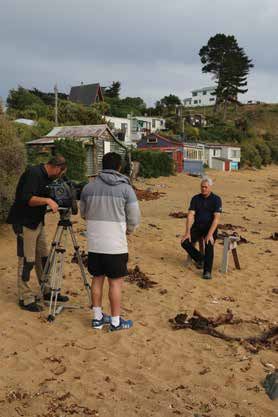
Ka Huru Manu
Ko taku taunahanahataka, ko                                  The atlas is rendered on-screen as a map of southern New Zealand smothered
                                                             in tiny green squares demarking place names that cover the length and
taku tōpuni ki te whenua.                                    breadth of Te Waipounamu. As the name of the project suggests, the place
                                                             names are like feathers on a korowai that cloaks the land. Many of them
My names are the treasured                                   have been lost for generations; rendered obsolete by Pākeha colonisers,
                                                             cartographers and the whims of the Royal Geographic Society of London
cloak which adorns the land.                                 which assumed responsibility for place naming in the new British colony
                                                             of New Zealand soon after the Treaty was signed. Thus, Kā Huru Manu
When Kā Huru Manu, the online, digital Ngāi Tahu             serves as a re-assertion of Ngāi Tahu mana over the landscape as well as
Atlas (www.kahurumanu.co.nz) was launched at                 an educational tool. It also embodies an act of significant generosity on the
the Ngāi Tahu Hui-a-Iwi in November last year,               part of the Ngāi Tahu Papatipu Rūnanga who have chosen to share their
it was the culmination of more than a decade of              information publicly through this platform.
dedicated work by Ngāi Tahu marae communities,
kaumātua and Te Rūnanga o Ngāi Tahu staff.                   The atlas includes over 1,000 traditional Māori place names drawn from
                                                             whānau manuscripts, published books, surveyor’s notebooks, 19th century
Kā Huru Manu is beautifully designed; when you               maps, newspaper articles, and a vast array of other unpublished material. It
arrive at the landing page, a slideshow of striking          also features information about a selection of ara tawhito (traditional travel
cinemagraphic landscape images unfolds. Delve                routes) and historical Māori land allocations (Native Reserves). The latter
deeper and you will discover the story behind                appear devastatingly small on the map - a powerful visual reminder of the
this extraordinary project which draws upon                  landlessness wrought upon Ngāi Tahu in the nineteenth century.
mātauraka (knowledge) dating back generations
and utilises the latest Geographical Information             Te Rūnanga o Ngāi Tahu began mapping place names in the early 2000s in
System (GIS) technology to record and map                    an effort to protect iwi values in the high country through the Tenure Review
Ngāi Tahu stories and place names onto a virtual             process. This work soon expanded to cover the entire Ngāi Tahu takiwā (tribal
landscape.                                                   area) but the roots of Kā Huru Manu go back much further. The project builds
                                                             on research undertaken by the iwi for Te Kerēme, the Ngāi Tahu Claim. That
                                                             research culminated in the collection and collation of vast amounts of tribal
                                                             information that was presented as evidence before the Waitangi Tribunal at a
                                                             series of hearings held between 1987 and 1990.

                                                             A key researcher during the Claim period, the late Trevor Howse, was one of
                                                             the paepae of kaumātua who helped to guide the development of Kā Huru
                                                             Manu: “In the timeframe of the Claim, we didn’t have enough time to use
                                                             all the information we gathered. We certainly didn’t have the technology
                                                             that is now available to us,” he said. As Takerei Norton, Archives Manager
                                                             and project lead for Kā Huru Manu says, “We owe a huge debt to people
                                                             like Trevor Howse, Jane Davis, Edward Ellison, Tipene O’Regan and all the
                                                             others. They have created an extraordinary resource and we’re honoured to be
                                                             building on that.”

                                                             Practical work on the project started in the early 2000s using large scale paper
                                                             topographic maps. As technology advanced, the mapping shifted to a digital
                                                             environment and by 2016 almost 6,000 place names had been mapped on
                                                             to the tribal GIS system. Although the GIS technology has been critical,
                                                             the heart of the work has been carried out in the field with Ngāi Tahu
                                                             communities. “We’ve been holding wānanga with our people throughout the
                                                             takiwā,” says Takerei. “You just couldn’t do this work back in the office without
                                                             local knowledge. I think of places like Murihiku, where local fishermen have
                                                             been able to help us locate old fishing markers and rocks that we have old
                                                             place names for.”

   Ngāi Tahu kaumatua David Higgins being interviewed by     Initiated to record Ngāi Tahu history on a tribal platform for Ngāi Tahu
   Takerei Norton and filmed by Stan McFerrier at Moeraki,   whānui, Kā Huru Manu is “a unique and innovative programme that
2015. Te Rūnanga o Ngāi Tahu, Ngāi Tahu Communications.      emphasises the importance of our history and making sure our people have
                                                             greater access to it,” says Takerei. He says it is a vital resource for the tribe
                                                             – one that has never been created before – and he believes it will become a
                                                             model for other iwi and indigenous people throughout the world. With the
                                                             launch of the website, Kā Huru Manu is also proving an important resource

10 MAQ March 2018
A cultural mapping hui held with Kāti Huirapa ki Puketeraki at Puketeraki Marae in 2015. From left to right: Khyla Russell, Hinerangi Ferrall-Heath,
Helen Brown, Kyle Davis, David Higgins, Takerei Norton, Matapura Ellison and Stan McFerrier. Te Rūnanga o Ngāi Tahu, Ngāi Tahu Communications.
for the wider public through the sharing of selected tribal information from
the broader project. In many cases, historical and cultural information about
the iwi is being brought into the public domain (in a readily accessible form)
for the first time.
There is ongoing demand from within the iwi and from the wider public, for
accurate and appropriate information about local Māori history and Kā Huru
Manu is helping to bridge this gap.
A number of museums within the Ngāi Tahu takiwā have already undertaken
storytelling work with Ngāi Tahu, utilising research from Kā Huru Manu.
These include the Ashburton Museum, Akaroa Museum, and the Queenstown
Visitor Centre. Kā Huru Manu is a living project; the work is ongoing, and in
time, the Papatipu Rūnanga will share additional information on the website.
In the meantime, Kā Huru Manu is already a rich resource which is helping
to bring Ngāi Tahu history to life.
Administered by the Ngāi Tahu Archive Team alongside the 18 Ngāi Tahu
Papatipu Rūnanga, Kā Huru Manu is part of the broader work of the Ngāi Tahu
Archive Team to gather Ngāi Tahu knowledge and make it more available to Ngāi
Tahu whānui.
Helen Brown
Kairangahau matua Tiaki Taonga
Te Runanga o Ngai Tahu
Hinerangi Ferrell-Heath and Wendy Heath standing with
For any enquiries, email kahurumanu@ngaitahu.iwi.nz Takerei Norton during a cultural mapping hui with Te
Rūnanga o Waihao in South Canterbury, 2010. Te Rūnanga
o Ngāi Tahu Collection, Ngāi Tahu Archive, 2017-0272.
2018 March MAQ 11Policy Matters!
In December MAQ I wrote about the opportunities that our new One way to engage significant community support
government might offer for our sector. Now we're well past the first 100 is through the Annual and Long Term Plan
days, and both government and officials are starting to understand how to processes, which are currently underway across
work with each other. We now know that PM Jacinda Ardern is taking an the country. Again, the tone and arguments to
active lead as Minister for the Arts, Culture & Heritage portfolio, and has use need careful consideration, as too strident
already been to several museum sector events. Associate Minister Grant an opposition can set up a political battle. This
Robertson has delegated oversight for Te Papa, Ngā Taonga and some other happened in Tauranga a decade ago, when the
government agencies, as well as the cultural/economic interface. Associate museum project became an election target between
Minister Carmel Sepuloni has responsibility for Treaty of Waitangi warring council factions, and was effectively killed
Protocols, Waitangi National Trust, Auckland Council's review of cultural off when museum supporters lost their seats.
institutions, and cultural focus for Pasifika and the social sector. We now
have a new leadership in the Opposition too, so there will be another period But carefully framed arguments, with plenty of
of settling in. weight but not too much heat, can and do sway
councils. Auckland Mayor Phil Goff said he'd
Outside of the elected MPs, Museums Aotearoa and other such organisations include increased funding for the Auckland Art
are pretty much unchanged. In our sector, we continue to work with many Gallery in the draft LTP, and consultation is now
of the same people at the Ministry for Culture & Heritage, and other open (until 28 March). Other councils with open
government and independent agencies such as Tourism Industry Aotearoa consultation where museums and galleries have
(TIA), Creative New Zealand, ServiceIQ and LIANZA. sought additional support are Palmerston North
for development at Te Manawa, and Tauranga
A common interest in evidence and data is shared across these organisations. which seems to be successfully reviving its
MA gathers two important datasets, one about our museum and gallery museum project.
institutions – staffing, collections, funding and operations – and the other
about visitors. The annual National Visitor Survey has now been going for We encourage our members to be proactive and
10 years and we have data from nearly 30,000 exit interviews across over 80 considered in rallying community support in
museums, galleries and heritage places of all kinds. council consultations – it is the voters who are your
best local advocates. MA will write submissions
Our challenge now is to make the best use of our own data, and integrate it in support of museums and galleries if requested,
with others where appropriate. We are in discussion with several organisations. especially where we can helpfully add heft to a
TIA and Tourism NZ, working with government departments such as good community advocacy campaign.
MBIE and Statistics NZ, are well advanced in this area. A major initiative is
underway to develop a comprehensive tourism insights framework which will Phillipa Tocker
draw on a range of datasets from different sources. Some work has already Executive Director, Museums Aotearoa
been completed, such as the www.dgit.nz tool which helps identify domestic
tourism marketing strategies regionally.
In the broader cultural sector it is more complicated. Museums cannot talk
about 'yield' in the same way as tourism – more visitors does not automatically
translate into more income, and sometimes the added costs for maintenance,
staff support, cleaning etc are not sustainable. So most museums prefer to
discuss our value in terms of benefits and impacts rather than economics, but
we still need to use language that number-crunchers can relate to.
Council consultation
The same advocacy goals and challenges apply in the local council arena. You
may have seen the recent public campaign to support increased funding (or
fight reduced funding) for the Auckland Art Gallery. The way such a campaign
is framed requires considerable diplomacy. In this case the push came from a
friends group, not within the gallery – as with government agencies, council
funded institutions have to go through established formal channels to make
their bids, and cannot be seen to speak out against their funders.
12 MAQ March 2018New Faces, New Lives
In 2016 I returned from Australia to take up Networking
the role of museum director at Ashburton
Museum. Announcing the move to friends and In the centre of Ashburton Museum’s newly developed long-term exhibition
family coincided with a feature length article area is a curved portrait wall, designed to enable quick changeovers of images.
about the city, published in the New Zealand At that time featuring founding figures of the district, we decided to stage an
Listener on 6 February, Waitangi Day. Written intervention and, working quickly, transform this area into a contemporary
by Sally Blundell and titled ‘The reinvention of reflection of Ashburton’s community.
Ashburton’, the article told the story of many
newcomers to the district. At least half a dozen First the wall was painted electric blue and reimagined as a place reflecting
museum colleagues and friends sent me copies of new faces and new lives. My team implemented a simple formula and snowball
the article – each a gesture I really appreciated, effect to collect portraits and stories from newcomers throughout the district.
and a surprise in numbers. The only rule was that to be included you had to be ‘from somewhere else’.
Newcomers We worked with a local Newcomers Network to devise a short questionnaire
asking: where did you come from, why did you come here, what do you love
I’d not thought of the word ‘newcomers’ before, most about Ashburton and why did you stay here? The answers would also
even having been one elsewhere, as usually a give long term residents insight into newcomer’s experience, and they’d see
relocation to a new city seemed like a blending the district afresh, through new eyes.
into the local community, rather than a distinct
category of a new type of ‘local’. In Ashburton, Impact and outcomes
I learnt, newcomers was a widely understood
term, used to describe anyone who had recently The Newcomers Network helped collect many portraits, and we also invited
relocated to the district. museum visitors personally, networked through sports teams and council
colleagues, attended community events and morning teas, and leveraged
There was no limit on how far one travelled relationships with other’s willing to pass on the story, including local
to become a newcomer. Newcomers arrived in newspapers. The portrait project was augmented by inclusion of a beautiful
Ashburton in large numbers after the Canterbury and moving video of interviews with locals, exploring identity and belonging
earthquakes, and many have shifted to the in Ashburton's migrant community.
district from Christchurch, rather than make the
daily commute for work. Many others relocate It was a simple formula, using basic resources, and surprisingly effective.
internationally. Outcomes have included new collection donations, including a significant
collection of objects and archives from descendants of the first Chinese
The outcome is a varied and multicultural city, with families in the district. We also added an exhibition exploring themes of local
a huge diversity of personal stories worth exploring. identity and carried these themes through to an ANZAC exhibition, looking
As a social history museum, it’s imperative that we at cultural exchange during both World Wars. We hosted a panel discussion
reflect and include this diversity in programming. for the Plains FM, Speak Up Korerotia human rights programme.
Collections In partnerships with a number of community organisations, the museum
hosted a series of workshops on cultural competency for volunteers and staff
Ashburton Museum’s collection presented a of community groups and schools throughout the district.
challenge. It is a collection born of a classic
mid-century impetus to record and collect The images, video and stories collected are an invaluable insight into
predominantly settler colonial histories, Ashburton’s present. While it’s good to have overcome limits in collections,
complemented by a significant archaeological and to have rapidly enhanced their complexity, the most satisfying outcome
assemblage showing local Māori occupation and is to see the impact on visitors, especially newcomers and school students.
resource use around 600 years ago. We’ve become used to visitors moved to tears by the compelling content.
Throughout New Zealand, this type of collecting, The museum hosts a large numbers of school students and community
often coinciding with city and borough groups each year for a variety of public programmes. One outcome we hadn’t
centenaries, led to heightened awareness of the anticipated is that, without fail, every group that comes to the museum now
need for museums and an urgency to collect. While makes a tangible connection to people they know on the wall. Students
substantially added to over the following decades, especially like to list everyone they know and recognise. Whether newcomers
like most collections, reflecting a rapidly changing or long term locals, visitors know these familiar faces, and discover ways they
contemporary community would take agility. We too share in new lives.
also needed to work within our resources.
Tanya Zoe Robinson
Director, Ashburton Museum
Opposite: Angelina knows most people on the wall
2018 March MAQ 13Autism Initiatives
Putting Autism at the 'Social stories' are a pre-visit material that are uploaded to museum websites
for individuals to read before their visit. Social stories describe, in simple
Centre of our Museums language, what visitors may expect when they visit an institution, or attend
a special event, in terms of relevant social cues, perspectives, and common
Autism Spectrum Condition remains one responses. Social stories may also use photographs to accompany text, which
of the most common but poorly understood illustrates the situation. Pre-visit materials should be available to autistic/
developmental disabilities in the world today. In high-functioning individuals and their family/group upon arrival to the
Aotearoa, one person in 66 lives with a strand museum, so those without smartphones or a printer can easily access the
of the condition, which is equivalent to around documents and use them during their visit.
65,000 people. Despite comprising a significant
portion of our population, individuals living on Sensory Rooms/Chill Out Spaces
the spectrum face barriers to accessibility on a
daily basis, and often miss out on engaging with The unfamiliarity of new environments paired with sensory triggers can
our museums, galleries and heritage institutions. result in intense stress and fear for some individuals, and potentially lead to
a meltdown. A meltdown can manifest in numerous forms – from screaming
Over the past year, New Zealand museums and and lashing out, to completely shutting down, which puts much stress and
galleries have been making significant strides to emotional exhaustion on both the individual and family/group. An effective
engage with these communities in different ways. way to alleviate these stresses, is for institutions to provide a sensory room,
While it is promising to see initiatives such as or quiet space of the day, for the child to relax in. A sensory room is a safe
programming and outreach being implemented, space that is separate from crowds and other distractions, and may contain
it is critical that museums capitalise on the objects such as fibre optics, cushions, bean bags, books, and other sensory
opportunity to engage with these groups, and toys to focus the child’s attention, and have them relax and engage their
think about the various ways in which we can place senses. The sensory room at the Brooklyn Children’s Museum in New York
autism at the centre of our organisations. Museums includes a swing that can hold a parent and child at the same time, tunnels to
have the unique opportunity to counter inequality hide in, and opportunities for movement. These spaces are separate from the
and advocate for disenfranchised communities in commotion of usual gallery spaces, and are private so parents can relax with
society, and we owe it to autistic adults, teenagers their child in a calm environment.
and children not to leave them behind.
Tailored Programming
But how do we get there? In this article, I have
included some key examples of different ways Developing inclusive, tailored programming is an effective way museums
we can take on a more inclusive approach when can engage with autistic communities, particularly families with high-
it comes to engaging with autistic communities. functioning children. Some existing programmes can be adapted to suit by
Some of the suggestions are short-term and making adjustments to gallery spaces in the aim of becoming low-sensory.
relatively easy to implement, and others are long Low-sensory programmes are relaxed versions of regular programmes, where
term suggestions that may be developed over a lighting is dimmed down, and sounds and volume lowered to create a calming
period of time. space for individuals. Institutions may even consider replacing fluorescent
lighting with LED lighting, as fluorescent bulbs create a sub-visible flicker,
Social Stories and Visual Aids which can contribute towards headaches and migraines. As many people
affected by Autism Spectrum Condition are hyposensitive or hypersensitive
Pre-visit materials and visual aids are key tools that to certain stimuli, it is important that organisations consider these steps, or as
can mitigate stress involved in visiting museums an alternative, provide visitors with noise cancelling headphones, sunglasses
and galleries for individuals on the spectrum. or visors to help the individual cope with sensory triggers during their visit.
Two research studies undertaken in 2013 by the
Smithsonian Institution, and another in 2016 at
the Dallas Museum of Art, sought to highlight
significant barriers to accessibility for families
with children on the spectrum. As was discussed
in both studies, the unpredictable nature of autism
paired with fear of judgement by other museum-
goers and employees were primary factors that
discouraged families from visiting museums.
14 MAQ March 2018Subject-Specific Programming Easily Accessible
Subject-specific programming is an opportunity for museums, galleries and Information on Website
heritage institutions to utilise their collection to develop a particular kind of
programme for visitors on the spectrum. These organisations have a distinct Although this may seem evident, the main thing
advantage to connect with individuals that are highly interested in a certain that families and educators of individuals on the
subject area, and provide them with an interesting and engaging experience. spectrum look for is easily accessible information.
An example of where this approach to programming has been successful is Institutions should explore adding an ‘accessibility’
Subway Sleuths at the New York Transit Museum. Subway Sleuths capitalises section to their websites, which may include, but
on their collection to provide a hands-on programme that relates to children is not limited to, opening times, sensory maps,
who are highly interested in transport and transit. It also has a strong focus social stories, current autism/sensory-friendly
on peer-to-peer interaction and a push for children to develop their social exhibitions, as well as links to information
skills and build confidence. Participants are invited explore the collection, on programmes. The Melbourne Museum is
solve transit mysteries, become transit experts, and share that enthusiasm particularly successful in the way it conveys this
with others. Each class takes place after school hours, and has staff on hand information to visitors, and has a section on their
that are trained in autism support. By pushing for social interaction among website called ‘The Autism-friendly museum.’
children, bonds and friendships are fostered through mutual interest. This area includes a great deal of information and
invites customers to provide feedback on their
experience and help the museum offer an even
better product to visitors.
Kelsey Hankins
Duty Supervisor and Outreach and Education
Intern (MMHP), Te Tuhi
Staff Happenings
Eric Holowacz has taken up his new role as Talei Langley has left Museums Aotearoa to be the Registrar and Gallery
Director at Whakatāne Museum, after a sojourn Assistant at the NZ Portrait Gallery.
overseas. Eric is known in Wellington from his
work previous with Toi Poneke and has held Sasha Greig is leaving her position as Front of House and Retail Team
similar positions in Australia. Leader at The Dowse Art Museum at the end of March to travel overseas.
Museum Manager Gary Ross has left South Maree Mills is now Curator at Waikato Museum.
Otago Museum after sixteen years to pursue new
opportunities. Alice Tyler is moving from the Gus Fisher Gallery to be Manager
Programming at the Centre of Contemporary Art in Christchurch (CoCA).
Suzi Nock has left ServiceIQ to be Event Sales Romy Willing will be CoCA's new Executive Director, and Jennifer Shields
Manager at Auckland Museum. Clare Savage is remains as manager Gallery Operations.
now the ServiceIQ Sector Manager for museums.
2018 March MAQ 15Tuhura
Tūhura Otago Community house. The wider Tūhura precinct also encompasses the digitally interactive
Beautiful Science Gallery and Perpetual Guardian Planetarium, which were
Trust Science Centre. both completed in December 2015 during stage one of the project.
After four years of planning and five months of Tūhura attempts what no science centre in Australasia has done before:
construction, Tūhura Otago Community Trust communicating an indigenous culture narrative alongside science narrative
Science Centre doors opened to the public on for a public audience. At the core of Tūhura is the Kāi Tahu creation account.
Saturday 16 December at Otago Museum. This was adopted as the guiding framework within which we have interwoven
science and Mātauraka Māori. In order to convey the full breadth and depth
Tūhura, which means to discover or reveal, of the Kāi Tahu account and insights, we broke down the whakapapa into
captures the essence of our aim for the science six zones and allocated specific multimodal scientific interactives to each of
centre which is to encourage self-guided discovery these. This enabled us to create haptic experiences which allow our visitors to
and wonderment about the world around us. have authentic moments of discovery and investigation.
The $2.5 million redevelopment of Otago One of our iconic interactives is called The Void | Te Kore, a Yayoi Kusama-
Museum’s former Discovery World Tropical Forest inspired room which creates the illusion of infinity using mirrors and lights.
was supported with $500,000 in funding from This interactive is an artistic interpretation of the marriage of the science of
the Otago Community Trust. Tūhura is home to the Big Bang with the notions of Te Kore (the absolute nothing), Te Pō (the
over 45 new hands-on science interactives and a darkness) and Te Ao (the advent of light) – key concepts that explain the
refreshed Tropical Forest | Kahere Pārūrū butterfly genealogy of the Kāi Tahu world. Through an artistic light show, visitors can
see this development from nothingness towards light.
Other key interactives include the Torque Table | He Tēpu Tōpana, Flight
Zone | He Wāhi Rere, and Animation Station | Taupuni Kiriata. Torque
Table | He Tēpu Tōpana challenges visitors to explore the science of angular
momentum while simultaneously giving us an avenue to discuss Maori
parallels, such as pōtaka (spinning tops). Flight Zone | He Wāhi Rere is a
vertical wind tunnel which allows visitors to experience hands on learning of
aerodynamics, alongside narratives of Tāwhirimātea, atua of wind and storms.
Our visitors can round out their whole experience by creating a stop motion
film at Animation Station | Taupuni Kiriata, our modern interpretation of a
whare tāpere.
Finally, our most impressive interactive is a 7.5 metre-high spiral slide, Life
Spiral | Tōrino Pītau Ira (which our Director Dr Ian Griffin was the first to
experience!). Inspired by the DNA double helix and funded by a $100,000
grant from The Lion Foundation, this interactive is one which I thoroughly
recommend as an afternoon break to get the adrenaline flowing.
The refreshed Tropical Forest | Kahere Pārūrū environment continues to not
only house over 1,000 exotic pūrerehua, but also a variety of other species
including tarantulas, terrapins, birds, and an exciting new resident, Eurycnema
goliath, more commonly known as the Goliath stick insect. These stunning
Giant Stick Insects on Living Environments creatures grow up to 25 cm in length, and lay up to 1000 eggs within a 12
Coordinator Eden Gray. month period. Our visitors are able to get up-close and personal with these
gentle giants on weekends and throughout the school holidays in shows run
by our Science Communicators.
As a pioneering facility, Tūhura has taught us an enormous amount about
what culturalism means to us as a community institution, and our overall
responsibility as a museum in ensuring that diverse sources of knowledge
and understanding are valued and shared. Our mahi has paid off, with over
20,000 people visiting Tūhura since its December opening to the end of
January 2018, along with a vast amount of positive feedback from across
the community.
Samantha Botting
Virtual Body Table | He Tēpu Mātai Tinana Science Centre Manager, Otago Museum
16 MAQ March 2018Becoming a Venturesome Damsel
In 2018 we are celebrating
Suffrage 125. Although it
refers specifically to women’s
right to vote, Suffrage 125 is
also an opportunity to celebrate
women’s achievements in
other aspects of history.
In the lead up to the Women’s Cricket World
Cup being held in New Zealand in 2021, the
New Zealand Cricket Museum’s main project is
a book focusing on the history of women’s cricket The Wellington women's cricket team (featuring Ina Lamason, front row, third from right)
in Aotearoa. While the title is still to be decided, leaving for Auckland and the first Hallyburton Johnstone Shield challenge match, 1936
my preferred option is ‘Venturesome Damsels’. An
1890s reference to women playing cricket in New 1973 she was the assistant manager for the White Ferns team who played in
Zealand, this phrase captures both the innovative the first Women’s World Cup.
spirit and challenges that these women have faced
throughout the game’s history. In fulfilment of The brief for my internship took the view that my role as a collection assistant
my Masters in Museum and Heritage Practice would allow me to learn and make discoveries about the history of women’s
at Victoria University of Wellington, I have been cricket. This has proved to be correct: I now possess a great deal of knowledge
given the opportunity to be an intern at the Cricket about players, which has allowed me to suggest people for oral history
Museum working on this project as a Collections research. But beyond this, I have stumbled upon interesting stories. For
and Research Assistant. At present, I have example, I discovered a woman who is potentially the first Chinese woman
catalogued both the Eris Paton and Ina Lamason to play domestic cricket in New Zealand. Thelma Sew Hoy, of the prominent
Collections into eHive and, in the process, have Dunedin Chinese family, played for Otago for 18 years, beginning in the
come to know the women behind the game. 1940s and retiring in the early 1960s. In March, the Cricket Museum is
hosting an event in Christchurch to bring people with oral history knowledge
Many will be familiar with the phrase, ‘a photo together. We are hoping to help Mary Speight (nee Webb), who played for
can speak a thousand words,’ and through my Otago from 1950 to 1961, to attend this event. Mary played with Thelma
cataloguing I have seen the truth behind this and I am excited to learn what information Mary may bring to the story of
common saying. The bulk of the Eris Paton Thelma Sew Hoy.
Collection relates to the 1954 White Ferns tour
of England. Through the photos of this tour I Women’s cricket is undervalued in New Zealand. While I grew up playing
began to recognise key players in New Zealand beach and backyard cricket with my siblings, I admittedly took little interest
international cricket, such as Ina Lamason, Rona in women playing cricket with any seriousness. The ‘Venturesome Damsels’
McKenzie and Phyl Blackler, and prominent team largely consists of former-players. Recently we held a meeting to discuss
figures in English women’s cricket such as the oral history component of the project. In a room full of women fighting for
captain Mollie Hide. I quickly learnt that I enjoy an aspect of women’s history to be told, I experienced the most empowering
researching to identify players in photographs. moment of my career and I am proud to be a part of the ‘Venturesome
Through research of games and connections with Damsels.’
other photographs I began finding out who people
were and what their role in the game was. Tiffany Jenks
Intern, New Zealand Cricket Museum
Ina Lamason is a huge figure in the history of
women’s cricket. She helped establish the first
Wellington domestic team and was selected to
captain the first White Ferns team when England
toured New Zealand in 1935. Unfortunately, Ina
was injured playing for Wellington in a warm-up
game against England and could not play in New
Zealand’s first official Test at Lancaster Park a
week later. Ina dedicated her life to cricket and in
2018 March MAQ 17Museum Expeditions Growing an interest in museums and nature The South Canterbury Museum in Timaru has endeavoured to provide a range of child-focused activities in school holiday periods. Our mission is to extend a simple invitation to all, to explore our heritage. As a result, programmes draw on both our collections and a range of natural and cultural heritage sites outside of the Museum. Programmes offered over January 2018 had a focus on natural heritage. There is a strong demand for this area, both in formal education programmes and informal visits. Our programmes offered two activities each week for three weeks. This was promoted through the Museum Explorers Club network, a free membership club for primary school students, with over 2,000 current members. The Club provides members with incentives for frequent visits, and provides the Museum with contacts for email marketing of programmes. Members of the Museum’s Heritage Education team and I, along with two student interns, ran the programmes. Places in the sessions were not booked, attendees simply turned up, accompanied by adults. Week 1 had an afternoon trip out to a riverbed fossil site 10 kilometres west of Timaru, followed up by a fossil-handling afternoon session later in the week. 120 people attended with field trip, with parents and caregivers almost as excited as the children about discoveries in a fossil-rich area of sandstone Handling a massive helmet conch shell in the Museum riverbed. The follow-up session provided attendees with the opportunity to handle a range of robust fossil specimens from the collection and learn more about life in the past. This was followed by a sea creature focused week which saw around 80 attendees exploring rock pool life at low tide, followed by the chance to get a closer look at a range of marine life specimens at the Museum later that week. The final week’s programme had an invertebrate focus, exploring a native bush area in the local botanic gardens and a Museum-based “zoom-in” session using microscopes to examine insect and spider specimens. These programmes have developed over several years, through curriculum- linked education sessions and more informally as holiday programmes. These programmes were free, and invariably result in increased interest and involvement with the Museum by many participants. The programmes succeed in creating effective informal learning experiences, where family groups become excited about natural heritage. Positive experiences build connections and a sense of involvement and even ownership among those taking part – we are their museum. Our programmes rely upon the individual expertise and enthusiasm of our team members. Many museums might not have personnel confident with natural history subjects or collections. It is likely that individuals within the wider community could be found to work with the museum to provide similar Getting up close to fossil turret shells from programmes. There is a passion for nature, and for experiences that families the Eocene period west of Timaru. can enjoy together. Local museums have the opportunity to make further inroads into their communities through providing experiences like these. Philip Howe Director, South Canterbury Museum 18 MAQ March 2018
You can also read


