LINKING VALUE AND MATHS ANXIETY - Mathematical Association of ...
←
→
Page content transcription
If your browser does not render page correctly, please read the page content below

THE MATHEMATICAL                   THE COMMON
                                          DENOMINATOR
                                                                                                      1/21
       ASSOCIATION OF VICTORIA

LINKING VALUE AND MATHS ANXIETY

                                   Dr Sarah Buckley, Senior Research Fellow, Australian Council for Educational Research
INSIDE
                                   Across school communities, the start of the school year brings new challenges and

 6   Intentional fun: learning
     through enjoyment
                                   opportunities. Some students or teachers may have decided to make the new year about
                                   improving their mathematics/mathematics teaching or focussing more on mathematics.
                                   However, for others the prospect of new mathematical challenges will produce the tension

 9   One minute with
     Peter Sullivan
                                   and worry characteristic of mathematics anxiety. For these students and staff, their anxiety
                                   may be an obstacle to future improvement with research showing that mathematics anxiety
                                   can negatively impact on mathematical performance and mathematics-related choices

10   Adventures in counting with
     picture story books
                                   (Ashcraft & Kirk, 2001; Ma, 1999).

                                   When discussing mathematics anxiety and how it relates to other academic concepts, some

14   VCE SACS:
     measurement
                                   people find it surprising to learn about its relationship with value. Many people assume that
                                   students that are mathematically anxious do not value mathematics as a tool or subject area.
                                                                                                           Continued on page 3
                                                                                          © The Mathematical Association of Victoria
THE COMMON DENOMINATOR, TERM 1 2021

                                                     FROM THE PRESIDENT
                                                     Michael O'Connor

    THE COMMON                                                            RISING TO THE               As teachers, it is part of the development of
    DENOMINATOR                                                           CHALLENGE AND               our craft that we remain open to exploring
    The MAV’s magazine                                                    EXCEEDING ALL               and seeing in new ways so that we can better
    published for its members.                                            EXPECTATIONS                guide our students.
    _____________________________
    Magazine 278, January 2021                                            One hundred and ten         2020, while challenging in so many ways,
                                                                          sessions, eight hundred     provided us with a wealth of examples
    The Mathematical Association of                                       participants and an         of why mathematics is fundamental to
    Victoria, 61 Blyth Street                        incalculable number of hours of preparation      civilisation.
    Brunswick VIC 3056                               over many months. This was MAVCON
                                                                                                      Statistics, disease modelling, e-commerce,
                                                     2020: Engaging Mathematics. In a year
                                                                                                      communication, genome sequencing,
    ABN: 34 004 892 755                              beset by challenges I want to begin this
                                                                                                      the list goes on. It was a year where
    Tel: 03 9380 2399                                article by congratulating the conference
                                                                                                      conversations and decisions required new
    Fax: 03 9389 0399                                team and the presenters on rising to the
                                                                                                      and deeper understanding of mathematical
                                                     occasion! Particular thanks to Jacqui
                                                                                                      ideas by people in the street.
    office@mav.vic.edu.au                            Diamond and Ann Downton without whom
    www.mav.vic.edu.au                               the conference would not exist.                  Educationally, 2021 will be a year of
                                                                                                      preparing for change. The VCE and the
    Office hours:                                    A benefit of the December 2020
                                                                                                      Australian Curriculum are both being
    8.30am – 5pm                                     conference’s digital format is that all of the
                                                                                                      reviewed. Implementation of the changes
    Monday to Friday                                 sessions were recorded and the resource
                                                                                                      resulting from these reviews will occur
                                                     material loaded to the conference website.
                                                                                                      over the next couple of years. MAV will
    President: Michael O’Connor                      For teachers who attended the conference
                                                                                                      provide a voice for mathematics teachers in
    CEO: Peter Saffin                                there is automatic access to all the material
                                                                                                      these processes and professional learning
                                                     for the day (or days) you attended. It is
                                                                                                      opportunities, as well as support as they are
    The Common Denominator is edited                 also possible for teachers and schools who
                                                                                                      implemented.
    and produced by Louise Gray,                     wish to take advantage of this repository
    Stitch Marketing.                                for professional learning throughout 2021.       I am sure that for many of us, the process,
                                                     The pricing schedule can be found on the         or even the thought, of yet another change
    Print Post Approved                              MAV website.                                     to what we teach can be daunting. The
    Publication No: PP100002988                                                                       world moves on though. Our choice is in
                                                     In particular, I would encourage everyone to
    _____________________________                                                                     how we engage with change. We have an
                                                     watch James Tanton’s keynote on Exploding
    MAV publications including the website,                                                           opportunity to look anew at something we
                                                     Dots. James provides a thoroughly
    newsletters, journals and magazines,                                                              think we know from a new perspective and
                                                     engaging session connecting place value,
    may contain third party advertisements,                                                           greater experience.
                                                     different bases and algebra together into a
    content and links to third party sites. The
    Mathematical Association of Victoria
                                                     beautifully sequenced whole. I found it most     The support of its members is MAV’s
    does not make any representation as              enlightening as James took us on a journey       core purpose. Make the most of what
    to the accuracy or suitability of any            through mathematics that we already know         the association has to offer and actively
    of the information contained in those            and showed it to us from a new perspective.      engage with other members in deepening
    materials or sites and does not accept any       It is akin to walking along a newly found        understanding and providing the best
    responsibility or liability for the conduct or   bush trail and arriving at a clearing that we    possible outcomes for the students in our
    content of those advertisements, content         know we have seen before, but never quite        care.
    and sites and the offerings made by the          from this perspective.
    third parties.
    Third party advertisements and links             Understanding mathematics is more than
    to other sites where goods or services           just being able to perform routines and
    are advertised are not endorsements or
                                                     arrive at the correct answers. It is about
    recommendations by the Mathematical
    Association of Victoria of the third party
                                                     seeing the world around us in ever greater
    sites, goods or services. MAV takes no           depth and clarity.
    responsibility for the content of the ads,
    promises made, or the quality/reliability
    of the products or services offered in all
    advertisements.

    For more information about advertising
    with MAV email office@mav.vic.edu.au.
    _____________________________

2    © The Mathematical Association of Victoria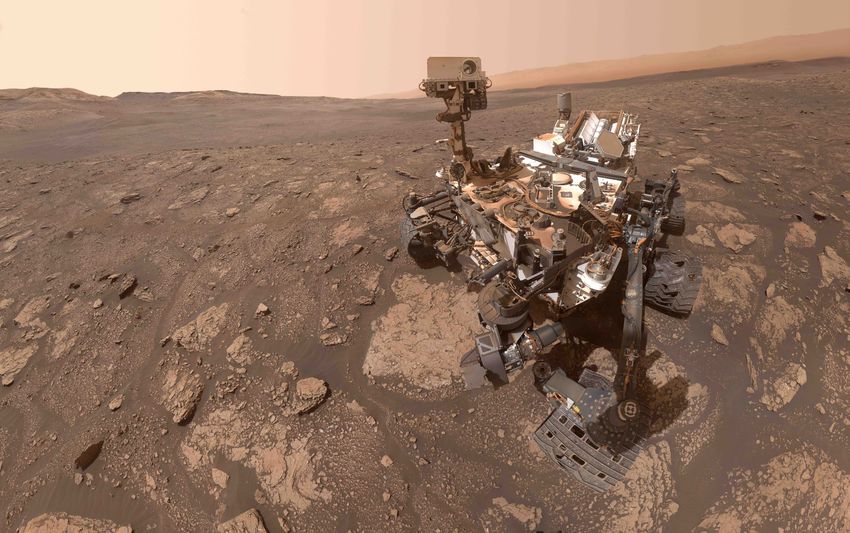
THE COMMON DENOMINATOR, TERM 1 2021

LINKING VALUE AND MATHS ANXIETY
Dr Sarah Buckley, Senior Research Fellow, Australian Council for Educational Research                                 CONT. FROM PAGE 1.

But if you think about anxiety as an emotion,
it is not possible to be anxious about
something unless there is value attached
in some way. Pekrun’s control-value theory
of achievement emotions considers
mathematics anxiety as the emotion
experienced when an individual believes
they cannot exert much control over their
mathematical learning and this combines
                                                 Figure 1. The impact of mathematics anxiety on mathematics performance.
with some kind of valuing of mathematics
(Pekrun, 2006). Wentzel and Wigfield             Schaeffer & Beilock, 2013; Park, Ramirez &      S. L. (2013). Mathematics anxiety and
(1998) describe academic value:                  Beilock, 2014; Ramirez, Shaw & Maloney,         stereotype threat: Shared mechanisms,
                                                 2018) that psychological strategies are an      negative consequences and promising
•     interest value (I value mathematics
                                                 important part of the process of addressing     interventions. Research in Mathematics
      because I am interested in it and I like
                                                 mathematics anxiety and avoidance of            Education, 15(2), 115-128.
      it)
                                                 mathematics. This is particularly the case
• utility value (I value mathematics             for mathematically anxious teachers who         Park, D., Ramirez, G., & Beilock, S. L. (2014).
      because it is useful for my career and/    may find that their anxiety stops them          The role of expressive writing in math
      or future) and                             from accessing resources to strengthen          anxiety. Journal of Experimental Psychology:
• attainment value (I value mathematics          their content and pedagogical content           Applied, 20(2), 103-111.
      because I consider it important).          knowledge. They may also feel like their
                                                                                                 Pekrun, R. (2006). The control-value theory
Attainment value could be reported by            mathematics anxiety is a chronic condition
                                                                                                 of achievement emotions: Assumptions,
students who also present with negative          that they are unable to escape. In these
                                                                                                 corollaries, and implications for educational
attitudes towards mathematics. The myth          cases where anxiety is acting like a barrier,
                                                                                                 research and practice. Educational
that ‘being good at mathematics means            psychological strategies like expressive
                                                                                                 psychology review, 18(4), 315-341.
that you are smart’ might lead someone to        writing, mindfulness and reappraisal can
value mathematics because of a perceived         help teachers to reduce the symptoms            Ramirez, G., Shaw, S. T., & Maloney, E.
link to general intelligence. Their attainment   of their mathematics anxiety to a more          A. (2018). Math anxiety: Past research,
value combined with personal judgements          manageable level. From here, these              promising interventions, and a new
of poor control over mathematical learning       teachers may feel more comfortable to           interpretation framework. Educational
may cause them to experience mathematics         seek support from colleagues and may be         Psychologist, 53(3), 145-164.
anxiety.                                         more open to opportunities for developing
                                                 content and pedagogical content                 Wentzel, K. R., & Wigfield, A. (1998).
An area where the relationship between           knowledge and improving mathematics             Academic and social motivational influences
anxiety and value is particularly evident is     teaching confidence.                            on students' academic performance.
teacher mathematics anxiety. The anxiety                                                         Educational Psychology Review, 10(2), 155-
that some teachers feel about mathematics        REFERENCES                                      175.
and/or teaching mathematics often comes
                                                 Ashcraft, M. H., & Kirk, E. P. (2001). The
from a place of valuing mathematics.
                                                 relationships among working memory,              For more information about
These teachers know that mathematics
                                                 math anxiety, and performance. Journal of        mathematics anxiety and some of the
is important and want to make sure they
                                                 Experimental Psychology: General, 130(2),        research that underpins the concepts
can teach their students effectively. This is
                                                 224-237.                                         discussed here, Sarah Buckley has
why it is so important to provide effective
support for colleagues who are anxious                                                            written a monograph for the Victorian
                                                 Buckley, S., Reid, K., Goos, M., Lipp, O. V.,
about mathematics Unfortunately, teachers                                                         Department of Education and Training,
                                                 & Thomson, S. (2016). Understanding
and students who experience high levels of                                                        visit www.education.vic.gov.au/school/
                                                 and addressing mathematics anxiety using
mathematics anxiety often procrastinate                                                           teachers/teachingresources/discipline/
                                                 perspectives from education, psychology
when engaging in mathematics or avoid                                                             maths/Pages/evidence-and-research.
                                                 and neuroscience. Australian Journal of
it altogether. This can present as a huge                                                         aspx.
                                                 Education, 60(2), 157-170.
obstacle to mathematics leaders who want
to help their colleagues overcome their          Ma, X. (1999). A meta-analysis of the            The monograph is one of eight that has
anxiety and improve their mathematics            relationship between anxiety toward              been commissioned by the Department
teaching confidence.                             mathematics and achievement in                   to support principals, learning leaders
                                                 mathematics. Journal for Research in             and teachers better understand and
There is a growing conversation in the           Mathematics Education, 30(5), 520-540.           tackle important issues related to
research literature (e.g. Buckley, Reid,                                                          mathematics using evidence-based
Good, Lipp & Thomson, 2016; Maloney,             Maloney, E. A., Schaeffer, M. W., & Beilock,     perspectives.

                                                                                                       © The Mathematical Association of Victoria   3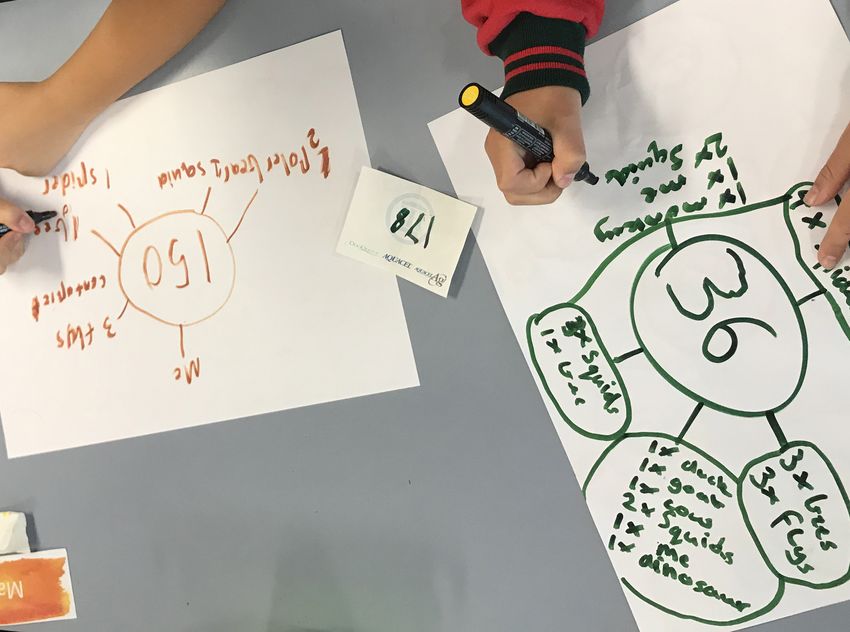
THE COMMON DENOMINATOR, TERM 1 2021

    YOUR MAV MEMBERSHIP
                                                     MAV is a highly active association with         •   Primary and early childhood
                                                     over 450 individual members, and nearly             conference
                                                     900 institutional members, including            •   Student activities
                                                     schools. This provides membership benefits
                                                                                                     •   Newsletters, magazine and journals
                                                     to a growing network of over 13,500
                                                     mathematics educators.                          •   Publications and resources through
                                                                                                         MAVshop
                                                     MAV supports its members by working             •   Advocacy and representation
                                                     with experts including leading education
                                                     academics and researchers, education
                                                                                                     HOW I CAN I GET INVOLVED IN
                                                     consultants, exemplary classroom teachers,
                                                                                                     THE MAV?
                                                     the Victorian Department of Education,
                                                     The Victorian Curriculum and Assessment         MAV depends on its members for success.
                                                     Authority (VCAA), and various education         Extend your professional learning and get
                                                     partners to provide services in the interests   involved in MAV’s activities:
                                                     of members and the wider community.
                                                                                                     •   Present at MAV’s annual conference
                                                     MAV’s core services include:
                                                                                                     •   Join one of our networks, or start your
                                                     •     Professional learning                         own with MAV support
                                                     •     In-school consulting                      •   Write for MAV’s journals Vinculum
                                                                                                         and Prime Number and/or the MAV
                                                     •     Professional advice
                                                                                                         magazine, Common Denominator.
                                                     •     Annual conference
                                                                                                     •   Join committees and working parties

    MATHS TALENT QUEST
    FOR STUDENTS OF ALL YEAR LEVELS

    GET INVOLVED IN 2021
    The MTQ aims to promote interest in mathematics and foster positive attitudes
    amongst students, teachers and parents. The focus is on the process of mathematical
    investigations.
                                                                                                         ?
    WHO CAN ENTER?
    Individuals, small groups or classes from Prep - 12.

    HOW DO I ENTER?                                                                            INVESTIGATE                 COMMUNICATE
    On the MAV website: www.mav.vic.edu.au/student-activities/maths-talent-quest.html

    WHEN DO I ENTER?
    Registration opens Monday 19 April and close Monday 26 July.

    JUDGING
    Online judging will take place from 16-20 August 2021.
                                                                                              COLLABORATE                  WORK LIKE A
    For more information contact jbowden@mav.vic.edu.au or                                                                MATHEMATICIAN
    www.mav.vic.edu.au/student-activities/maths-talent-quest.html

               THE MATHEMATICAL                                             TO FIND OUT MORE VISIT WWW.MAV.VIC.EDU.AU
               ASSOCIATION OF VICTORIA                                      OR CALL +61 3 9380 2399
4    © The Mathematical Association of Victoria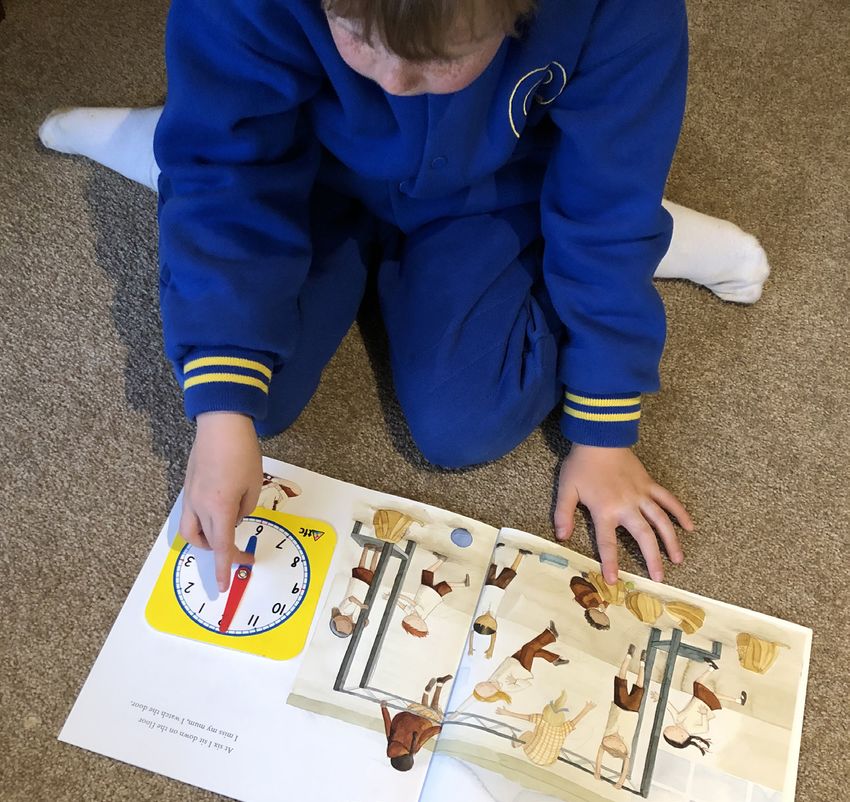
THE COMMON DENOMINATOR, TERM 1 2021

•   Develop resources                        EDUMAIL EMAIL CHANGES
                                                                                                      You should have received your
•   Pilot mathematics initiatives                                                                     membership renewal notices for
                                             Edumail email addresses have now
•   Develop a PD event at your school or     changed and MAV is keen for members to                   2021. We look forward to you
    venue                                    update their details via our website. It only            renewing your support for MAV,
•   Judge the MTQ awards, or                 takes a minute.                                          and ask you to pay your invoices
•   Organise a maths games day for your                                                               as soon as possible.
    region.                                  •      Click the blue Login button at the top
                                                    right of the website to login using your          Thank you to those who have
                                                    current email address and password.               already renewed.
THERE IS A MEMBER                            •      Click the blue My Details button at the
CATEGORY FOR YOU                                    top right of the website.                         If you or your school have any
                                             •      Select Update my details                          questions regarding membership,
•   Individual member (teachers,
                                             •      Select Click here to update your email            please contact Michael Green,
    academics, student teachers and
                                                    address, add your new email and                   mgreen@mav.vic.edu.au or
    those with an interest mathematics
                                                    current password to update.                       telephone 9380 2399.
    education)
•   Institutional member (primary and
    secondary schools and early childhood
    centres)
•   Associate member (industry partners
    or resource providers)

STATEWIDE MATHEMATICS
GAMES DAYS 2021
•   A new setting for mathematics                    LEVEL        DATE                         HOST SCHOOL
•   Novel and challenging tasks
                                                     Year 3       Friday 6 August              Derrimut Primary School, Derrimut
•   FUN!
                                                     Year 4       Friday 20 August             Lowther Hall, Essendon
A Maths Games Day is an opportunity for              Year 5       Tuesday 27 July              St Patricks Catholic Parish Primary School, Mentone
students to develop their mathematical talents       Year 5       Tuesday 27 July              PEGS, Essendon
and thinking skills in a setting where maths is      Year 5/6     Friday 3 September           Kilmore Primary School
regarded as fun and worthwhile with like-minded
                                                     Year 6       Friday 10 September          Lumen Christi, Point Cook
students from a diverse range of schools.
                                                     Year 6       Friday 10 September          Genazzano, Kew
It is an ideal way for students to participate in    Year 7       Monday 16 August             Overnewton Anglican, Taylors Lakes
mathematical activities without the usual class      Year 7       Monday 16 August             Waverley Christian College, Narree Warren South
room pressures and is a very effective vehicle       Year 8       Wednesday 25 August          PEGS, Esssendon
for getting young people – particularly in the
                                                     Year 8/9     Wednesday 11 August          Federation University, Gippsland
middle years of schooling – excited about maths.
Problem solving and mathematical games address       Year 9       Thursday 12 August           Williamstown High School, Williamstown
the Victorian Curriculum proficiency strands.        Year 10      Wednesday 1 September        Trinity Grammar, Kew

Questions? Contact Jen Bowden (Primary) or           Year 11/12   Monday 23 August             TBC
Helen Haralambous (Secondary).

          THE MATHEMATICAL                                           TO FIND OUT MORE VISIT WWW.MAV.VIC.EDU.AU
          ASSOCIATION OF VICTORIA                                    OR CALL +61 3 9380 2399
THE COMMON DENOMINATOR, TERM 1 2021

 INTENTIONAL FUN
 Andrew Lorimer-Derham, Inventor Think Square and Mirrogram

 If you asked your learners to choose three
 words to describe maths with, what do you
 think they’d say? Have a look at Figure 1.
 On the top are the words your average
 person associates with maths. The larger the
 text the more frequent the response. On
 the bottom are the most common words
 mathematicians associate with maths.

 The disposition of your average learner
 presents an enormous barrier for maths
 teachers. Thankfully this is something that
 can be changed. For the last seven years, it
 has been my privilege to help students (and
 teachers) enjoy maths through what I call
 ‘intentional fun’.

 An article explaining intentional fun seems
 pretty counterintuitive, so what I’d like
 you to do is visit thinksquare.com.au/play
 and spend 5-10 minutes having some
 intentional fun. Select Tumbling Towers or
 Mathematic-tac-toe (preferably both) and
 see how far you can get. The remainder of
 this article won’t make sense until you do.

                                                Figure 1. Words that most people associate with maths (top) and words that mathematicians
 WELCOME BACK. I HOPE YOU                       associate with maths (bottom). Word clouds gathered by Tracy Zager.
 ENJOYED YOURSELF.

 Now have a look at the worksheets (Figure
 2). How long would they take your average
 learner to complete? How would they feel
 about them? What sort of thinking do they
 require? Do they encourage risk taking,
 creativity, imagination? These worksheets
 are the equivalent of the games you’ve just
 played. Let’s compare the two and see how
 they stack up.

 EFFICIENCY

 During professional development
 workshops I like to get teachers to estimate
 how long these worksheets would take
 their average learner to complete. Their
 estimates consistently exceed the time it
 would take to play the game equivalent. If     Figure 2.
 maths was about completing worksheets
 then well-designed games would win on that
 front.

6 © The Mathematical Association of Victoria
THE COMMON DENOMINATOR, TERM 1 2021

PROFICIENCY

In addition to learning to follow a process,
these games require an enormous amount
of mathematical reasoning by making if/
then statements, deciding on the best
place to position numbers, using logic and
proportional reasoning to predict outcomes,
etc. Games require all four proficiencies
while worksheets usually require just one
(fluency).

Side note: Fluency is important, but only
when it is applied to solve problems, reason
and understanding the world around us.
Fluency is a tool like a hammer. It’s only
useful if you use it to build something.

DISPOSITIONCY!

If we think back to the words people              Figure 3.
associate with maths, worksheets tend to
elicit terms like ‘boring’, ‘lost’ and ‘wrong’.
The alternative invites curiosity, play,
imagination and creativity – all things
mathematicians associate with maths.

REAL WORLD APPLICATION

What I also love about games is that they
are dynamic, like maths is in real life. Both
cause you to think on your feet, respond,
adapt, rethink your strategy and reflect,
because there is rarely a ‘one size fits all’
solution to problems. For example, before
we purchased solar panels, I decided to
work out how long it would take before we’d
break even. Being a maths teacher, I went
into full-nerd mode and performed a crazy
number of calculations. I even considered
the extra interest we’d pay on our house
loan by spending on solar and not having
that money in our offset account! Despite
my best efforts, my calculations were wildly
out as electricity prices increased as did the
rebate for selling power back to the grid. I      Figure 4. Students enjoying an intentional fun workshop.
also hadn’t factored in having kids, buying a
new fridge or working from home for most          Einstein was way ahead of his time when          START SMALL BUT PLEASE START
of 2020! For those curious we broke even          he said back in 1931, ‘Imagination is more
in around 5 years (I had calculated 7!)           important than knowledge.’ This is true          The power to shift your learners’ disposition
                                                  now more than ever. Let’s give our learners      toward maths rests with you. Your efforts
SKILLS FOR THE FUTURE                             opportunities to create, discover and            make a difference, no matter how small. So
                                                  play. You’d be amazed at what happens to         start today. There are plenty of free games
The world is constantly changing. As              students’ disposition when you do. At the        and ideas to get you inspired on the Think
educators our job is to prepare our learners      end of intentional fun workshops, I often ask    Square website, thinksquare.com.au.
with the skills they need to thrive. The days     students to describe the session with three
of repeating a process to pay the bills are                                                        If you’d like support building more
                                                  words. Figure 3 shows the twenty most
numbered. Skills that require little creativity                                                    intentional fun in your maths classrooms or
                                                  common words from over 350 students at
are quickly being replace by robots.                                                               would like to share a success story, please
                                                  25 different schools from Years 3-10.
                                                                                                   get in touch, andrew@thinksquare.com.au.
                                                                                                         © The Mathematical Association of Victoria   7
NEW!

      200 PAGES OF CLEAR MATHS LEARNING!
      Introducing Nelson Maths 7–10, a new series of write-in workbooks. With 200 pages of
      worksheets, puzzles, topic assignments and 40 weekly homework assignments, these
      workbooks are designed for structured maths learning anytime and anywhere.
                                                                                                                    $15.95

            9780170454452                  9780170454520              9780170454537               9780170454544
              Available now                  Available now             Available now                Available now

                                                                    WE’VE CREATED A HUB FOR ALL
                                                                    THINGS NELSON MATHS! CHECK
                                                                   IT OUT: NELSONSECONDARY.COM.
                                                                   AU/NELSON-MATHS-WORKBOOKS

             9780170454551                 9780170454568
           Available Term 1 2021         Available Term 2 2021

Ann Marie Mosley                   Kim Lowe                      Jillian Lim
VIC Education Consultant           VIC Education Consultant      VIC Education Consultant
0409 894 188                       0417 199 515                  0419 311 318
annmarie.mosley@cengage.com        kim.lowe@cengage.com          jillian.lim@cengage.com
THE COMMON DENOMINATOR, TERM 1 2021

ONE MINUTE WITH PETER SULLIVAN
I'M..

Peter Sullivan and an Emeritus Professor
from Monash University. Even though I
am retired from the university I still work
on research projects and with schools and
systems. I like to lead professional learning
on approaches to engaging inclusive
mathematics teaching.

THE BEST PLACE I'VE EVER BEEN
WAS...

Wilson’s Promontory. I have travelled on
five continents and have been to cultural,
historical and natural highlights around the
world but the magnificent scenery, isolation
and natural state of the mountains, rivers
and beaches of the Prom provoke both
wonder and peace.

THE BIGGEST LESSON 2020
TAUGHT ME...

To live your life while you can. Even though I
missed out on overseas and local adventures
due to the virus, I was able to look back
on happy memories of places I have been
and people I have known. Even now, future
prospects are more likely to be local.           Emeritus Professor Sullivan.

MY HOPES FOR 2021 ARE...
                                                 THE SIMPLEST BUT MOST                        I'D NEVER LEAVE HOME WITHOUT...
That we face life and the world without          EFFECTIVE PIECE OF TEACHING
                                                 WISDOM IS...                                 Checking that my socks match and my
fear and learn to value and enjoy safe social
                                                                                              shoes match (although that sometimes does
interactions wherever they might be.
                                                 We have two ears, two eyes and one mouth     not happen).
AN EFFECTIVE EDUCATORS CAN...                    and we should use them in that ratio.
                                                                                              COFFEE OR TEA?
Be a learner, can aim for improvement, can       ACADEMIA IS THE RIGHT PLACE
                                                 FOR ME...                                    I have one of each every day usually made
make decisions based on evidence, can
                                                                                              at home (even without lockdown).
examine critically every belief, and can think
                                                 While I enjoyed my classroom teaching,
for themselves.                                                                               THE BIGGEST CHANGE I'D LIKE TO
                                                 I have had the privilege of working with
                                                 prospective and practising teachers and      SEE IN EDUCATION IS...
MATHEMATICS EDUCATION IS
DEAR TO ME BECAUSE...                            helping them to broaden their thinking
                                                                                              For school leaders and teachers to make
                                                 of what is possible with education and
                                                                                              decisions on school and class organisation,
The thrill of having insights is available to    mathematics education in particular.
                                                                                              pedagogy, assessment or anything else
nearly everyone, and for me the purpose
                                                 I GET JOY FROM...                            based on locally collected data (of which
of mathematics education is to explore
                                                                                              schools have plenty) rather than on the
how to provoke self generated insights
                                                 Seeing my grandchildren develop and          latest fad.
about mathematics or its uses and to foster
                                                 mature, seeing my own children as parents,
curiosity in all teachers and students.
                                                 keeping old friends and making the
                                                 occasional new ones, and learning about
                                                 myself and the world.                         Who would you like to see profiled in
                                                                                               Common Denominator? Email
                                                                                               suggestions to office@mav.vic.edu.au.

                                                                                                    © The Mathematical Association of Victoria   9
THE COMMON DENOMINATOR, TERM 1 2021

   HOW MANY LEGS?
   Cathy Epstein/Rodgers - Mathematics education consultant and School Numeracy Leader, St Peter’s and St Paul’s Bentleigh

                                                                                       Tally (no. of animals with
                                                               Number of legs                                                   Total of legs
                                                                                            this many legs)

                                                                   2 legs                                                      2 x 6 = 12 legs

                                                                                                                                5 x 4 = 20
                                                                   4 legs                                                        3 x 4 = 12
                                                                                                                              20 + 12 = 32 legs

                                                                   6 legs                                                      2 x 6 = 12 legs

                                                                   8 legs                           Octopus                         8 legs

   AN ADVENTURE IN COUNTING                                       10 legs                            Squid                         10 legs

   Did you know that if a squid rode in on a                        100                          Centipede                          100
   buffalo there would be 14 legs altogether?
   How would the count multiply if a centipede          Total of legs altogether                                                  174 legs
   came wriggling by? And why does the              Table 1.
   entrance of a slug or maggot not affect the
   count?? These are some of the problems           So what can we use to help us count the
   you can solve as you investigate this            number of legs as each interesting guest
   delightful story by Kes Gray and Jim Field.      arrives at the party?

   But the big question is… How many legs are       After much discussion we arrived at two
   at the party?                                    ways that we thought we might test. Some
                                                    children chose to use a 200 counting chart
   It is party time and a weird and wacky variety   and counter so they could count on as the
   of animals are invited! How Many Legs is         story developed.                                    However we counted, in the end, we were
   a wonderfully creative story that can be                                                             unanimous in the decision that there were
   an adventurous way to explore efficient          While others decided on using a tally,
                                                                                                        in fact 174 legs, not including the table! We
   strategies to count a large collection.          marking against the number of legs as
                                                                                                        then compared this with our estimate. How
                                                    each animal arrived at the party and then
                                                                                                        close were we? What was the difference
   LEVEL 3 CLASS INVESTIGATION                      collating the tally at the end. Table 1 shows
                                                                                                        between our estimate and the total?
                                                    how we calculated the total using the tally.
   The first time I read this to my Level 3 class
                                                                                                        As an independent follow up activity I put
   we simply enjoyed the story and talked           Counting with the 200 chart presented
                                                                                                        two scenarios on the board and asked the
   about all the different types of animals         more challenges and discussion as the
                                                                                                        children to choose one to investigate:
   we saw, discussing how many legs each            story developed. (E.g. what was the best
   animal had. I asked the students to estimate     way to add 10). While the tally evoked              Option 1: At my party I counted 36 legs.
   how many legs they thought there were            more discussion regarding efficient ways to         Who could have come to my party?
   altogether at the party and write this on a      multiply and add at the end of the story.
   post-it note. The students also shared the                                                           Option 2: At my party I counted 150 legs.
   strategies they may have used to arrive at       We calculated the total using an empty              Who could have come to my party?
   their estimation.                                number line which in turn led to a rich
                                                    discussion on the variety of strategies to          Before we began, we looked at things we
   I revisited this page where the party            add the collections of legs. Here are two           might need to consider before we got
   organiser was trying to count the number of      different ways tallies were collated.               started and listed these on the board:
   legs and asked. ‘Was this the most efficient
                                                                                                        •     The number of legs on different
   way to keep track of or work out the total
                                                                                                              animals
   number of legs?’
                                                                                                        •     Are we including ourselves?
   Discussion led to the conclusion that                                                                •     Factors of 36 and 150
   although it was a good way to track the
                                                                                                        •     Factors if we split numbers to calculate
   number of legs, it would be hard to calculate
                                                                                                              and solve e.g. 36 = 30 and 6 or 20
   how many legs by using just this poster and
                                                                                                              and 16 and 150 = 100 + 50
   we could see how he lost count!

10 © The Mathematical Association of Victoria
THE COMMON DENOMINATOR, TERM 1 2021
Although option 1 had a smaller number
I knew the children would find this more
challenging as they had to consider what
goes into 36. With 150, many chose the
option of beginning with a centipede as it
had 100 legs, then 50 became an easier
number to partition. (5 squid)
SOME OF OUR ANSWERS
Isla, who sometimes finds mathematics
challenging chose 150 legs to have at her
party. Initially she decided she was going to
have 1 centipede (100legs), 4 squid (40
legs), 1 octopus ( 8 legs), and herself to get
150 legs.
She then changed her mind because she
loves kittens and kicked the octopus out
and instead invited 2 kittens to replace the
8 legs.
Sienna chose the number 36 and quickly
found a number of ways to get the total
number of legs including 2 squid (20 legs)
2 goats (8 legs), 1 duck (2 legs) and a bee
who had 6 legs to bring the total to 36!
The children loved the task and all of them
quickly got to work investigating.
I plan to revisit How Many Legs as the
children are quite keen to write their own
version and give it to a friend to solve.
A FOUNDATION APPROACH
When investigating counting, our
Foundation team also read How Many
Legs, to their class and followed up with a
creative task that involved counting legs on
farm animals. The children were asked to
grab a handful of farm animals, estimate the
number of legs in their hand and then sort
their animals in a way that may help them
to count the total number of legs. (e.g. into
groups of animals with 2 legs and animals
with 4 legs etc). They then got them to
write and draw number sentences explaining
who came to their farm party.
This book is available from MAV's
online shop, www.mav.vic.edu.au/shop.
© The Mathematical Association of Victoria 11THE COMMON DENOMINATOR, TERM 1 2021
STIMULATING THINKING
Jennifer Bowden, Helen Haralambours and Danijela Draskovic – Education consultants, Mathematical Association of Victoria
A picture sparks 1000 maths concepts! Use this picture as a prompt to stimulate thinking. If you have other ideas for investigations or
lessons that could stem from the ideas here, add them to the conversation on our social channels. You can find us on Facebook,
@mathematicalassociationofvictoria and on Twitter, @mav_info.
FOUNDATION - YEAR 2 YEARS 3 AND 4 YEARS 5 AND BEYOND
• Estimate how many cubes are in the • Estimate how many cubes are hidden in • Estimate what percentage of the cubes
image. Can you explain your thinking? the image. Justify your thinking. are hidden in the image. Justify your
thinking.
• How could you sort the flags into • What fraction of the flags have red
groups? Think of another way you can on them? Can you describe this as a • If you were choosing a cube at random
sot them in groups. percentage? from the visible cubes, what is the
probability you would select one with
• Name five different shapes you can see • Create a T chart or Venn diagram to the colour yellow on it?
on the flags. explain the similarities and differences
between a cube and a rectangular • What is the probability of selecting two
• There are a few different stars on the prism. cubes in a row with black on them?
flags. Identify the different types of
stars, how many points do they have? • If you were going to teach a younger • Survey your family or friends. Which
Are their sides always equal? child how to identify one third, which of these flags can they identify and
flag would you use? Why? name the country they belong to?
• Survey your family or friends. Which of Give each person surveyed a score as a
these flags can they identify and name • There are many examples of right percentage of the total flags.
the country they belong to? angles in the image above? Find three
– six examples of acute angles. • Create a Venn diagram to explain the
• The flags are on squares in this image, similarities and differences between
normally flags are represented on • Research the countries each of the a cube, a rectangular prism and a
rectangles. List 3 – 6 other 2D shapes flags belong to. Create a data display parallelepiped.
you know the names of. or graph to show which of the continent
of the world the flags belong to. • There are many examples of right
• Name the features of a cube that angles in the image. Find at least two
distinguishes them from other 3D • Many different countries use the different examples of each of the
shapes. colours red, yellow and green. following: acute angles, obtuse angles
and reflex angles. Define each type of
• Look at the image of the American flag • How many different flags can you
angle. Can you define the term ‘angle’?
on the top of the cube. Can you explain create with different combinations
what steps (flips, slides, turns) you of these colours? • If the flag of Djibouti was placed on a
would need to do to make it sit directly • Research which countries have square face, with the point where white,
on top of the flag image on either side all these colours on their flag and green and blue all meet is exactly in the
faces of the cube? locate these on a map. middle, work out all the angles in the
image (including the ones in the star).
• Create your own flag that uses at least • Choose a flag that has three or more
three colours and three 2D shapes. colours. Using precise mathematical • Describe the following countries’ flags
language, describe what the flag looks to a peer using mathematical language.
• Choose one of the flags in the image,
like to a peer. See if your peer can See if your peer can accurately draw
using mathematical language describe
accurately draw the flag. each of the flags. Each flag has
what the flag looks like to a peer. See if
taboo words you cannot say in your
your peer can guess which flag you are • The flag of the USA has 50 stars description. Good luck!
talking about. representing the 50 states and 13
stripes representing the 13 original • Sweden. (Taboo word: cross)
colonies. If there were 9 cubes with 6 • Bahamas. (Taboo words: point/
faces covered with the American flag, pointy)
how many stars and stripes would there
• South Africa. (Taboo words: ‘Y’,
be in total.
point/pointy)
• If you were going to teach a younger
child how to identify the fractions one-
third and one-quarter, which flag would
you use? Why?
12 © The Mathematical Association of VictoriaTHE COMMON DENOMINATOR, TERM 1 2021
© The Mathematical Association of Victoria 13THE COMMON DENOMINATOR, TERM 1 2021
VCE SACS: MEASUREMENT
Andrew Stewart
THROWING A MATHS PROBLEM
Name Men Women
Finding material for use in school Shot 7.26 kg, 110 – 130 mm diameter 4.0 kg, 95 – 110 mm diameter
assessed coursework can be a challenging
Hammer 7.26 kg 4.0 kg
experience. This article contains
suggested task material for the geometry Discus 2.0 kg, 22 cm diameter 1.0 kg, 18 cm diameter
and measurement module in further Table 1. Specifications for shot, hammer and discus for men and women.
mathematics based on questions from the
MAV Trial Exam papers.
2017, Exam 2 Question 1
This paper draws on a number of ideas from A shot put ball, as used in the shot put field event, is spherical in
a common theme to provide SAC material. shape, has a smooth surface and has a diameter of 120 mm as shown
Sporting fields or courts offer a rich diversity in the diagram alongside.
of opportunities on which to base tasks.
(a) What is the volume of the shot put ball as shown? Round your
All dimensions – for equipment or field answer to the
layout – given in the questions for the nearest cubic centimetre.
trial examinations are based on the actual (b) The shot put ball used in international men’s competition must weigh 7260 g.
dimensions as specified for each particular (c) The shot put ball used in international women’s competition must weigh 4000 g.
sport. These dimensions are meticulously weight
detailed to ensure all events are set up in If density = , what is the density of this shot put ball, in grams per cubic
volume
the same way. The International Amateur centimetre correct to one decimal place?
Athletic Federation (IAAF) has issued a
downloadable technical manual (in two Figure 1.
parts) that gives the specifications for each
sport (IAAF, 2019). Chapters 1-3 in the Material Brass Copper Lanthanum Lead Silver Vanadium
first of these two parts contain the necessary Density 8520 8940 6145 11 340 10 490 5494
information.
Table 2. Selection of materials with their densities in kg m-3.
The shot put balls, discuses and hammers
for male and female competitors are of Event Circle diameter Line length Width
different sizes and weights, so this gives
an opportunity for similar figure problems. Discus 2.50 m 80 m 48 m
Details of these differences are given in Hammer throw 2.135 m 100 m 54 m
Table 1. Some of these events also have Shot put 2.135 m 25 m 15 m
different sizes for junior competitors which
could also be taken into consideration. Table 3. Key specifications for discus, hammer and shot fields.
Some of this information was as follows (see
Figure 1.)
TASK ONE Both of these tasks will require some from the centre of the throwing circle with
organisation and careful thinking, and an angle of 34.92º between them at the
Find the limits of density, correct to will probably take around 30 minutes to centre of the circle. Each of these events has
two decimal places in grams per cubic complete using a calculator. A modified a specified line length, and width at the end
centimetre, of material to form shot put form of the trial examination question here of the lines, as given in Table 3.
balls with the required weight (7.260 kg or may be required as a lead in for either task.
4 kg) with diameters in the required range These event fields are similar figures, and
(110 – 130 mm, 95 – 110 mm) a set of tasks based on one of these events
in one year could become the basis for a
TASK TWO similar set of tasks based on another event
in a later year. Students could be given
Given a list of materials and their densities, diagrams with most of the key information
for example, in Table 2, which could be used and be required to find the missing values
to form shot put balls of the correct weight (side lengths or angles), as well as areas
within the size limits for either/both of men of the defined triangles or sectors if the
and women? The specifications for the field events of
discus, hammer and shot put are similar. end of the fair throw area is made part of a
See Engineering ToolBox (2004), for Each event has a throwing circle from which circle. Given the length of a particular throw
example, for a large list of metals and their the throw is made. The fair throw landing (or the world or Australian record for that
densities. area is defined by a pair of lines emanating event), determine the fraction (percentage)
14 © The Mathematical Association of VictoriaTHE COMMON DENOMINATOR, TERM 1 2021
of the field that has been covered or is yet to
be covered. 2017, Exam 2 Question 3
Michael, the chief supervisor of officials, is conducting a training session on a practice
If the event field is a particular orientation, field as shown in the diagram below. The centre line of the landing region on the
then bearings may be calculated for the key practice field runs due west-to-east.
lines, to locate where a particular throw (or
throws) landed, or to locate where particular
officials may stand given key information as
in Question 3 2017 (see Figure 2).
For the hammer throw and the discus throw,
the throwing circle is required to have a
safety cage around it, opening out to the
landing region. The IAAF specifications Michael is currently standing at a point (marked M on the diagram above) to the north
for each event’s safety cage (IAAF, 2019) of the landing region and 30.0 m from point O (the centre of the circle). When Abebe,
could form the basis of further problems or the chief Kenyan official, stands on the centre line of the landing region at point A which
investigations, such the requirements for is a distance of 23.0 m from point O, Abebe is due south of Michael.
the length of framing material or the area of If another official stood at point O, at what bearing, correct to the nearest whole
mesh. degree, would Michael be from this official?
The throwing circle for the shot put has
some special features that can form the Figure 2.
basis of tasks (see Figure 3).
Problem: How would the volume of the stop 2017, Exam 2 Question 3
board be calculated? The throwing circle in the main arena is shown in
greater detail in the diagram alongside. The centre
Bearings may be calculated for foul lines of the circle is marked O, and its diameter is 2.135 m.
or to locate where throws landed, given At the front is a stop board (shaded grey) which the
key information similar to Question 3, (see throwers are not allowed to step on or across. It is
Figure 4). 1.20 m long. The sides of the stop board meet the
circumference of the circle at points P and Q. What
Answers: (a) 81.40 m (b) 104° is the magnitude of the angle POQ? Give your
REFERENCES answer correct to two decimal places.
Engineering ToolBox, (2004). Metals Figure 3.
and Alloys - Densities. [online] At www.
engineeringtoolbox.com/metal-alloys-
densities-d_50.html 2016, Exam 2 Question 3
IAAF (2019) Track and Field Facilities The actual orientation of the javelin field at the Mildura Athletics Stadium is West-East.
Manual. At www.iaaf.org/about-iaaf/ Kai’s first throw travelled 85.41 m on a bearing of 078ºT.
documents/technical Kai’s second throw landed at a spot which was 38.00 m on a bearing of 187ºT from the
landing spot of his first throw.
(a) How far, in metres correct to the nearest centimetre, did Kai throw the javelin on his
second throw?
(b) On what bearing, correct to the nearest whole degree, did Kai’s second throw travel?
Figure 4.
MAV produces VCE Trial Exams which
you can find online at:
www.mav.vic.edu.au/mav-shop
© The Mathematical Association of Victoria 15THE COMMON DENOMINATOR, TERM 1 2021
MEASURING TIME
Terence Mills and Patrick Mills
Figure 1. Curiosity rover on Mars. Image courtesy of NASA.
We might think that we have the metric the sun rises, or when it sets, or some other The calendars of ancient Egypt have to
system in Australia, yet there are 60 astronomical event occurs. Although the be inferred from records maintained over
minutes in an hour, 24 hours in a day, 7 starting point for the day could be arbitrary, centuries. Each year started on the autumn
days in a week, and 12 months in a year, and this question highlights the link between equinox (22 September in our calendar)
the months do not have the same number time and natural events. Likewise, we and had 365 days. In each year, there were
of days, and let’s not forget leap years and might ask, ‘How could one define a year, 3 seasons, each season had 4 months,
daylight saving. or a month, or a week?’ These could be and each month had 30 days. Since that
interesting questions for class discussion. would come to only 360 days in the year,
The variability in the dates of Easter, 5 non-working days were added in honour
Ramadan, and Chinese New Year is a In our calendar, which is known as the of 5 different gods. Although the Egyptian
mystery to many. How did we get into Gregorian calendar, the year is defined as calendars were remarkably accurate, even
this mess? The answer involves history, one revolution of the Earth around the Sun scholars in ancient Egypt realised that their
astronomy, astrology, religion, culture, and the month is based on the revolution of calendar was only an approximation, and it
politics, and, of course, mathematics. the Moon around the Earth. The weeks are was modified several times (Sewell, 1963).
Holford-Strevens (2005) is an another matter altogether: weeks can bleed
authoritative, short survey. into neighbouring months or years. Many civilisations have had several
calendars in operation simultaneously.
Ever since the time of Euclid, definitions CULTURAL FACTORS One calendar would be for commerce and
have had a fundamental place in government, and the other for religious or
mathematics because they form the The recent research on calendars used
cultural purposes. We still see this today
foundations of mathematics. We can see by Indigenous Australians is fascinating.
in Australia. As far as our everyday life is
this in the measurement of time. How could These calendars tend to be based on
concerned, the year starts on 1 January. For
a ‘day’ be defined? environmental variables, perhaps because
tax purposes, the financial year starts on 1
we can observe local environmental events
July. In the Catholic Church, the liturgical
Most of us agree that a new day begins at more easily than astronomical events,
year begins on the first Sunday of Advent,
the stroke of midnight. However, it might although these events may be connected.
which is on the fourth Sunday before
be argued that the beginning of one day CSIRO (n.d.) provides some wonderful
Christmas.
and the end of the previous day is when examples.
16 © The Mathematical Association of VictoriaTHE COMMON DENOMINATOR, TERM 1 2021
If you have students from several different
Month Number of days Selected features
cultures or language backgrounds in your
class, it would be interesting to compare the Gemini 61 1st Gemini, spring equinox
origin of the names of the days in different Cancer 65
languages.
Leo 66 24th Leo, Mars at aphelion
A CALENDAR FOR MARS Virgo 65 1st Virgo, summer solstice
Since astronomy plays such an important Libra 60
role in the calendar, rethinking timekeeping Scorpius 54
and the calendar will be necessary for Sagittarius 50 1st Sagittarius, autumn equinox
the colonisation of Mars. The Gregorian
calendar is not suited for a Martian year Capricorn 47 Beginning of dust storm season
lasting 669 Mars days. Aquarius 46 16th Aquarius, Mars at perihelion
In his fascinating book, The Case for Mars, Pisces 48 1st Pisces, winter solstice
Robert Zubrin (2011) proposes a new Aries 51 End of dust storm season
calendar for Mars. Reflecting on a calendar Taurus 56 56th Taurus, New Year's Eve
for Mars takes us back to definitions of units
of time. Since Mars has two moons with very Table 1: Martian calendar proposed by Zubrin (2011, p. 181).
short orbital periods, a lunar definition of
a month is not satisfactory. Zubrin argues
that dividing the Martian year into twelve REFERENCES
even months is unpractical. This is because
CSIRO. (n.d.). Indigenous seasons
the distance of Mars from the Sun varies
calendars. Retrieved from www.csiro.au/en/
by 19%, resulting in seasons with uneven
Research/Environment/Land-management/
lengths. By comparison, Earth’s distance to
Indigenous/Indigenous-calendars
the Sun varies by 3%. Zubrin’s solution is
to make months 30 degrees of the orbit of Holford-Strevens, L. (2005). The history of
Mars instead of one twelfth of a year. The time: A very short introduction. Oxford, UK:
lengths of these months range from 46 to Oxford University Press.
66 days, which is a big variation. Simple
sentences like ‘My baby is three months Sewell, J. W. S. (1963). The calendars
old’ would be hard to understand. Zubrin and chronology. In S. R. K. Glanville
suggests that these months be named after (Ed.), The legacy of Egypt, (pp. 1–16 ).
the constellations that Mars passes through Oxford, UK: Oxford University Press.
relative to the Sun. See Table 1. He explains Retrieved from https://archive.org/details/
how this Martian calendar corresponds to TheLegacyOfEgypt/page/n29/mode/2up
our calendar (Zubrin, 2011, p. 182).
Zubrin, R. (2011). The case for Mars: The
The image of the Curiosity rover on the plan to settle the red planet and why we must
surface of Mars in Figure 1 shows why dust (Revised and updated ed.). New York, NY:
storms are a problem on Mars. According to Free Press.
Table 1, the dust storm season lasts from the
month of Capricorn to the month of Aries.
An important part of mathematics
education is to enable students to see
mathematics in the wider world beyond the
text book and the classroom. Measuring
time and constructing calendars offer many
opportunities in this direction at all year
levels. Thinking about a calendar for Mars
may well be useful for 21st century learners!
© The Mathematical Association of Victoria 17THE COMMON DENOMINATOR, TERM 1 2021
TODAY WE HAVE NO PLANS
Alicia Clarke –School maths leader, St. Mary’s Primary School
This picture story book follows a family’s
busy week, with each page going through
the activities completed each day, and ends
with the family spending a lazy Sunday
together.
The weekdays are busy as Mum, Dad and
the children race around to school and
different extra-curricular activities, each of
which happens on a certain day at a certain
time. The days of the week are listed in
order, and there is also reference to times
of day such as morning, afternoon and
night. Children will relate to this story as
they themselves will be familiar with many
of the activities – getting ready for school,
swimming lessons, sports, grocery shopping,
and school days. The beautiful illustrations
and rhyming text make the story very
enjoyable to read and engage with!
Along with being a beautiful story to read
with children, this book has a clear focus for
classroom mathematics learning. It goes
through each day of the week in sequence,
and discusses events that happen each
day. This links directly with the Victorian
Curriculum, under the Measurement and
Geometry strand, as below:
Victorian Curriculum
Achievement Standards PRE-SCHOOL through each page to find the day of the
Level D (Towards Foundation) week mentioned, and list these in order on
There is much research about the power of the board.
Identify the days of the week in sequence. parents reading to children before they start
school. Reading with and to young children This story is readily available online and
Foundation Level is no doubt a powerful contributor to the another way to do this may be to display
Connect days of the week to familiar events development of Early Literacy Skills, but each page of the story on the interactive
and actions. engaging in books such as Today We Have whiteboard and have students physically
Compare and order the duration of events No Plans can add the element of developing underline the day of the week. Students can
using the everyday language of time. early numeracy skills as well. By simply then engage in small group or independent
reading the story and emphasising the day learning tasks such as sequencing days of
Level One of the week on each page parents can begin the week cards in order, with enabling and
Describe duration using months, weeks, to introduce their pre-schoolers to the extending questions as listed below:
days and hours. time concept of days of the week. This can
be extended into everyday life by having • Which day comes before Tuesday?
Today We Have No Plans is a great discussions with children such as ‘Today is
• Which day comes after Friday?
springboard for a maths sessions on days Thursday. On Thursdays you go to Kinder’
of the week and sequence of events in or ‘It is night time so we are going to bed’. • Which day comes between Wednesday
Foundation and Year 1 classes. Here are and Friday?
FOUNDATION
some activities that could be completed by
To assist students in connecting familiar
students of different ages after engaging in The Victorian Curriculum indicates that
events to the days on which the occur, it is
the story. students in Foundation should be able to
helpful to have students construct a weekly
name the days of the week in sequence, as
timetable, where they draw something
well as connect familiar events to days of the
that happens on each day of the week,
week, for example, on Tuesdays we have our
for example, my show and tell day is
sports lesson. After reading the story Today
Monday, on Tuesday we have library and on
We Have No Plans, the class can search
Wednesday we have sport.
18 © The Mathematical Association of VictoriaTHE COMMON DENOMINATOR, TERM 1 2021
Another useful activity for Foundation A PICTURE STORY BOOK STUDY
students is to have students sort events into OF TIME
morning, afternoon and night (see image
above). This may be slightly different for There are many picture story books which
each individual student and can promote focus on the days of the week. Two of the
excellent discussion, for example, Tom does better known ones are The Very Hungry
his homework before dinner but Sarah does Caterpillar and Diary of a Wombat.
her homework before school. By using Today We Have No Plans along with
YEAR ONE these books, an entire unit on time could be
constructed, with the picture story books
At Level One, the curriculum indicates placing the concepts within relatable and
the students now need to begin to explore engaging contexts for students. Sequencing
time in terms of duration rather than just the days of the week, exploring different
sequence. Today We Have No Plans can times of day and duration of events and
easily be extended to provide a springboard connecting events to days and times which
for students in Year 1 and above. A great they occur are all skills and concepts that
example of this is to have students identify can all be linked with these beautiful picture This book is available from MAV's
the time each event is occurring. For story books. online shop, www.mav.vic.edu.au/shop.
example, the story talks about the children
having swimming lessons after school.
What time might their swimming lessons
be? Students can show this time on small
analogue and digital clocks. A further
extension may be: if the swimming lesson
goes for 1 hour, what time will it finish?
© The Mathematical Association of Victoria 19THE COMMON DENOMINATOR, TERM 1 2021
MATHS300
Marissa Cashmore – Mathematics education consultant and teacher at Macclesfield Primary School
Figure 1.
Maths300 is an online library of rich, open generous and funny grandad, who I got to For one garden bed, how many tiles are
ended, inquiry-based maths tasks. There are spend a lot of time with. In fact, he spoilt us needed? What about for two garden beds?
over 200 lessons to choose from that range rotten! He would take us to the shops, and
from Foundation to Year 12. always buy us a bucket of chips, or walk us
down to the library to feed the ducks in the
Maths300 lessons cover a wide range of pond. Everyone adored him. My grandad
concepts and each content area, in every also loved gardening, but he was constantly
year level. With clear links to the Australian in battle with the snails when his vegetable
Curriculum, multiple skills and strategies patch started to grow.
across many concept areas of mathematics
and cross curricular connections, are In his memory, I would like to create
covered within one task. Tasks I have used, a vegetable garden. I’ve found some
such as Potato Olympics and A Snail’s awesome tiles that have a snail repellent
Holiday incorporate science, literacy, and finish on them to keep the snails away. I was
technology. wondering if you could help me to work out
how many tiles, I need to create my garden.’
Let me share a favourite lesson I’ve used to
teach algebra to Year 4, 5 and 6 students. Giving the students an insight into who my
grandad was and how important he was to
LESSON #016 GARDEN BEDS me, allowed my students to enter the task
and become invested and connected to the
Garden beds can be introduced in a
problem.
variety of ways, acting out, modelling
and visual representations. It is a brilliant With the students in a gallery style circle and
lesson to introduce and develop students large paper tiles in the centre, students start
understanding of algebra. visualising what the garden beds might look
like. Students are invited to come forward to
I start the task with a story shell: ‘I was a
start creating them.
very lucky girl growing up, I had a caring,
20 © The Mathematical Association of VictoriaYou can also read


