M.Sc. Psychology (Conversion) ODL Programme Handbook 2020 - 2021 C808A-5200
←
→
Page content transcription
If your browser does not render page correctly, please read the page content below

M.Sc. Psychology (Conversion) ODL
              Programme Handbook
                    2020 – 2021
                    [C808A-5200]

Page 1                             Last updated 26 June 2020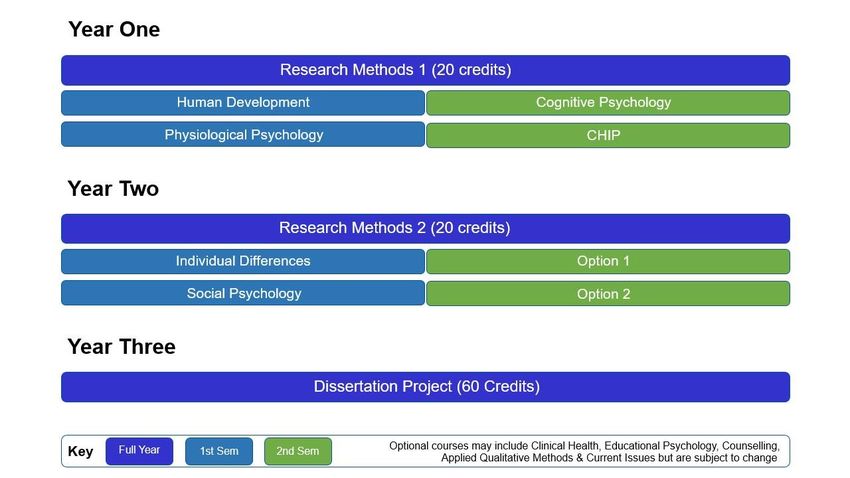
Contents
1.      Overview of M.Sc. Psychology (Conversion) Programme .............. 5
1.1. Introduction ........................................................................................................... 5

1.2. Structure of the M.Sc. ........................................................................................... 5

1.3. Aims and Objectives ............................................................................................. 6

1.4. Intended Learning Outcomes .............................................................................. 6

1.5. Skills and Other Attributes................................................................................... 6

1.6. Expectations of Engagement .............................................................................. 7

1.7. Academic Skills & Preparation for the Programme .......................................... 7

1.8. Programme Director and Programme Administrator details ........................... 8

2.      M.Sc. Psychology (Conversion) Programme: In Depth .................. 9
2.1. Admission .............................................................................................................. 9

2.2. Programme Requirements ................................................................................... 9

2.3. Programme Structure ........................................................................................... 9

2.4. Teaching Methods (in brief) ............................................................................... 10

2.5. Assessment, Reassessment, & Moderation Procedures ............................... 11

2.6. Submission Information ..................................................................................... 12

2.7. Late Submission, Extensions, & Good Cause................................................. 12

2.8. Plagiarism ............................................................................................................ 15

2.9. GDPR .................................................................................................................... 16

2.10. Ethical Clearance ................................................................................................ 16

2.11. Academic Appeals .............................................................................................. 16

2.12. Complaints ........................................................................................................... 17

2.13. Minimum Requirement for Award of a Masters Degree, Rules for Award of
Distinction/Merit, & Early Exit Awards ....................................................................... 17

3.      Teaching and Learning Methods .................................................... 19
3.1. Coursework & Study Methods ........................................................................... 19

3.2. Assessment ......................................................................................................... 20

Page 2                                                                               Last updated 26 June 2020
3.3. Dissertation Project ............................................................................................ 20

3.4. Professional Skills & Psychological Literacy .................................................. 21

4.      Staff & Teaching Resources............................................................. 22
4.1. Staff Resources ................................................................................................... 22

4.2. Pastoral Resources............................................................................................. 23

4.3. Teaching Resources ........................................................................................... 24

5.      Feedback ............................................................................................ 26

6.      Course Outlines (Core) .................................................................... 27
6.1. Cognitive Psychology ........................................................................................ 27

6.2. Human Development .......................................................................................... 27

6.3. Individual Differences ......................................................................................... 28

6.4. Physiological Psychology.................................................................................. 28

6.5. Dissertation Research Project........................................................................... 29

6.6. Research Methods 1 ........................................................................................... 29

6.7. Research Methods 2 ........................................................................................... 30

6.8. Social Psychology .............................................................................................. 30

6.9. Conceptual and Historical Issues in Psychology ........................................... 31

7.      Course Outlines (Options) ............................................................... 32
7.1. Clinical Health Psychology ................................................................................ 32

7.2. Counselling Psychology .................................................................................... 32

7.3. Educational Psychology .................................................................................... 33

7.4. Current Issues in Psychology ........................................................................... 33

7.5. Applied Qualitative Methods ............................................................................. 34

8. BRITISH PSYCHOLOGICAL SOCIETY AND BPS SCOTTISH
BRANCH ................................................................................................... 35
BRITISH PSYCHOLOGICAL SOCIETY (BPS) ............................................................ 35

BPS SCOTTISH BRANCH (BPS-S).............................................................................. 36

9.      Quality Assurance............................................................................. 37
Page 3                                                                           Last updated 26 June 2020
9.1. Quality Assurance Agency ................................................................................ 37

9.2. University Quality Assurance ............................................................................ 37

9.3. School Quality Assurance ................................................................................. 37

9.4. External Examiner ............................................................................................... 37

9.5. Student Feedback ............................................................................................... 37

Page 4                                                                          Last updated 26 June 2020
1. Overview of M.Sc. Psychology
   (Conversion) Programme
1.1. Introduction
Welcome to the School of Psychology and to the MSc Psychology (Conversion)
programme. We are delighted that you have decided to come and study with us. The
programme is led by the School of Psychology, however staff from both the School of
Psychology and the School of Education collaborate in the delivery of this unique
programme. We aim to provide you with access to a range of specialist expertise and a
curriculum that will hopefully both stimulate and challenge you. We hope to stretch you
intellectually and provide you with skills that will be helpful in your future career
whatever that may be.

If there is anything you are not sure about, please feel free to contact;
Programme Director: Dr Chiara Horlin (chiara.horlin@glasgow.ac.uk) or,
Programme Administrator: Lynda Young (Lynda Young@glasgow.ac.uk).

This handbook has been designed to provide an overview of the programme, and to
summarise the University regulations that apply specifically to this programme and to
postgraduate programmes here at Glasgow in general. This handbook does not,
however, cover information about registration or payment of tuition fees. Students will
use My Campus to register. Details can be found at:

http://www.gla.ac.uk/services/registry/support/registration/newstudents.

1.2. Structure of the M.Sc.
The Psychology M.Sc. (conversion) ODL programme consists of a series of core and
optional courses taken over 3 academic sessions. A year by year breakdown can be
found below in Figure 1.
Core courses form the basis of our BPS accreditation and include;
    • Research Methods,
    • Individual Differences,
    • Cognitive Psychology,
    • Physiological Psychology,
    • Social Psychology,
    • Human Development and,
    • Conceptual & Historical Issues in Psychology.

Along with the core courses, students will choose two optional courses in their second
year from a range of topics. These topics may include Educational Psychology, Clinical
Health Psychology, Current Issues in Psychology, and Counselling Psychology, but are
subject to change and contingent upon staff availability.

In the final year students will also undertake a supervised Research Project
(dissertation) which is the final component of the BPS accreditation.

                                      Page 5 of 38
Figure 1. Overview of each year of the programme. Years One and Two will take place
between September-July of each year and Year 3 will take place between September-
March (this may be subject to small changes).
1.3. Aims and Objectives
The programme is designed to provide students with a broad and critical awareness of
psychological theory and practice and provides a range of courses and practical
experience in relevant methods for scientific research. It is anticipated this approach
will help students develop enquiring, problem-oriented minds with sufficient awareness
of important research and applications in psychology to enable successful pursuit of
careers in psychology and related disciplines.
1.4. Intended Learning Outcomes
By the end of this programme, students will be able to:
• Critically evaluate principal and specialised theories of psychology.
• Identify, interpret and evaluate contemporary and historical research in
psychology.
• Evaluate ways in which psychological theory can inform practice.
• Identify the ethical issues raised when people participate in psychological
research or receive psychological treatment.
• Review the contrasting perspectives as to the nature of science and critically
evaluate the extent to which Psychology may be considered scientific.
• Critically evaluate the influence of social, cultural and historical factors on
psychological theory and research.
1.5. Skills and Other Attributes
By the end of this programme, students will be able to:
Page 6 Last updated 26 June 2020Subject-specific/practical skills
• Evaluate psychological research design and methodologies
• Use a range of statistics and research methodologies appropriate to psychology
• Demonstrate programming skills in R
• Plan and carry out Psychology research projects, writing them up as journal
style reports
• Design and conduct an original, significant empirical research project on a
psychological topic.
Intellectual skills
• Identify, conceptualise and define new and abstract problems in psychology
• Demonstrate original and creative responses to problems and issues within
Psychology
Transferable/key skills
• Critically review, consolidate and extend knowledge, skills, practices and
thinking in a discipline
• Demonstrate written and graphical communication skills.
1.6. Expectations of Engagement
Alongside the great flexibility of learning online, and part-time, there are unique
challenges to this method of study that may differ from your previous experiences. This
is especially important in a conversion course as you may not have prior background in
Psychology or related Science disciplines and may have to prepare well before
classes. If you do not have prior background in Psychology or Science disciplines, you
may wish to do preparatory study in the months prior to your first year in the
programme.
To maximise your opportunity for success in this programme we strongly recommend
students engage in all teaching resources, formative assessments and feedback
opportunities in a self-paced but timely manner. As this is a part-time programme of
study please do consider how these activities might balance with full-time work and
your other commitments. We will endeavour to provide all formative and summative
assessment deadlines at the beginning of academic sessions to facilitate your long-
range planning, with changes to these made only in response to extraordinary
unforeseen circumstances. However, planning, organisation and self-paced study will
be fundamental to your completing the programme in the manner and timeframe
intended. If at any point you find yourself struggling to keep with course content, failing
to catch up during reading weeks and missing deadlines, please don’t hesitate to
contact relevant teaching staff or the programme director so we may best support you.
1.7. Academic Skills & Preparation for the Programme
Many students applying to this programme have a diverse range of background
experience and bring a multitude of different skills with them. This may or may not
include skills and knowledge that is foundational to degrees in Psychology. Prior to the
programme commencing you may wish to spend some time exploring or consolidating
information that will support your studies in the programme, and potentially alleviate
any anxiety about exploring a new academic field.
Page 7 Last updated 26 June 2020There are many open-source textbooks that will be helpful familiarise you to foundational language and terminology in Psychology: https://open.umn.edu/opentextbooks/subjects/psychology Statistics and research methods are areas that can be particularly daunting to many students who are not familiar with them or have not engaged with them in a while. You will be instructed in this material as part of the programme and fully supported as you progress, however before commencing the programme you may wish to explore some of this in advance, and in particular the programming language, R, used for quantitative research methods. To this end you may wish to explore the Overview and Chapters 1 and 2 of the one of the teaching resources you will use on the programme: https://psyteachr.github.io/msc-conv-odl/ Once enrolled in the course each student has access to an independent Moodle module that will guide and support your development in the academic skills essential for this programme. In this Moodle resource we will focus on the process of developing your research and study skills, and the module is split into the following domains accordingly; sourcing information, critical reading, academic writing, and presentation skills. 1.8. Programme Director and Programme Administrator details Programme Director Education co-ordinator Programme Administrator Dr Chiara Horlin Dr Kara Makara Fuller Ms Lynda Young School of Psychology School of Education School of Psychology 62 Hillhead Street St Andrew’s Building 62 Hillhead Street Tel: 0141 330 8493 Tel: 0141 330 5386 Tel: 0141 330 5089 Chiara.Horlin@glasgow.ac.u Kara.MakaraFuller@glasgow.ac.u Lynda Young@glasgow.ac.uk k k Page 8 Last updated 26 June 2020
2. M.Sc. Psychology (Conversion)
   Programme: In Depth
2.1. Admission
The requirement is that the applicant has already obtained a second-class honours
degree, class 2:1.
If you are a prospective student and have any questions regarding degree
requirements, language requirements, suitability of references or information about
fees, please feel free to contact the Postgraduate Admissions team directly:
https://www.gla.ac.uk/postgraduate/contact/

Applicants from overseas must conform to the University’s proficiency in English
language requirements. Details can be found on the Psychology (Conversion) ODL
programme page, under the tab ‘Entry Requirements’. Please see:
www.gla.ac.uk/postgraduate/taught/psychologicalscienceconversion/

Once your application is approved you will register for the course via My Campus.
Details of when and how you should do this will be sent to you by the Admissions
Service before the programme begins.

2.2. Programme Requirements
The programme is offered on a part-time basis only, the normal period of study being
30 months;

               Study Activity                    Academic Session
 Year One      Core Courses                      September to July
 Year Two      Core & Optional Courses           September to July
 Year Three    Dissertation Project              September to March

Each candidate shall undertake a prescribed course of study and shall also be required
to submit a project report.

For administrative purposes students are located in the College of Science and
Engineering.

2.3. Programme Structure
The components of the M.Sc. Psychology (Conversion) ODL are as follows and
constitute 180 credits across 3 academic sessions (60 credits per year). Full
descriptions of all core and optional courses can be found in Chapters 6 and 7
respectively.

Core Courses
Below is a list of course courses for each year of the programme. Full year courses are
20 credits, and semester-length courses are 10 credits. The Dissertation Project in
Year Three is 60 credits.

Page 9                                                    Last updated 26 June 2020
Core Optional Credit
s
Year One
Full Year Research Methods 1 20
Semester 1 Human Development 10
Physiological Psychology 10
Semester 2 Cognitive Psychology 10
Conceptual & Historical Issues in Psychology 10
Year Two
Full Year Research Methods 2 20
Semester 1 Individual Differences 10
Social Psychology 10
Semester 2 Option 1 10
Option 2 10
Year Three
Full Year Dissertation Project 60
180
Optional Courses
All optional courses are 10 credits and take place in the second semester of Year Two.
Optional Course selection will take place towards the end of Year One during which
students will choose two options from the range of optional courses offered during the
next academic session. Currently available courses are listed below but are subject to
staff availability and require a minimum number of interested students in order to run
and be pedagogically viable.
• Applied Qualitative Methods
• Current Issues in Psychology
• Educational Psychology
• Clinical Health Psychology
• Counselling Psychology
2.4. Teaching Methods (in brief)
The programme comprises approximately 180 hours of virtual instruction by staff
distributed across three academic sessions, as well as guided independent study and
facilitated group activities.
Virtual instruction includes but is not limited to;
recorded lectures;
virtual workshops with teaching staff and peers;
drop-in tutorial sessions;
synchronous and asynchronous discussion forums;
online meetings with project and dissertation supervisors.
Please note that lecture notes and recordings will be made available on the University’s
Virtual Learning Environment: Moodle.
Guided independent study and group activities will be supported with set readings and
formative activities facilitated by teaching staff.
Please see Section 3 for more extensive guidance regarding these teaching and
learning methods.
Page 10 Last updated 26 June 20202.5. Assessment, Reassessment, & Moderation Procedures
A variety of assessment methods are used as appropriate to the subject matter of the
different courses. These include but are not limited to essays, critical reviews, scientific
reports, case study reports, electronic presentations and podcasts. Critical and
reflective scientific writing will be present throughout all courses on this programme.
The assessment scheme and our method for aggregating marks across courses
conform to the university’s standard assessment scheme below.
SCHEDULE A
ALL COURSES Primary verbal descriptors of attainment of
Primary Gloss Secondary Aggregation intended Learning Outcomes
Grade Band* Score
A Excellent A1 22 Exemplary range and depth of attainment of
A2 21 intended learning outcomes, secured by
A3 20 discriminating command of a comprehensive
A4 19 range of relevant materials and analyses, and by
A5 18 deployment of considered judgement relating to
key issues, concepts and procedures.
B Very Good B1 17 Conclusive attainment of virtually all intended
B2 16 learning outcomes, clearly grounded on a close
B3 15 familiarity with a wide range of supporting
evidence, constructively utilised to reveal
appreciable depth of understanding
C Good C1 14 Clear attainment of most of the intended learning
C2 13 outcomes, some more securely grasped than
C3 12 others, resting on a circumscribed range of
evidence and displaying a variable depth of
understanding
D Satisfactory D1 11 Acceptable attainment of intended learning
D2 13 outcomes, displaying a qualified familiarity with a
D3 9 minimally sufficient range of relevant materials,
and a grasp of the analytical issues and concepts
which is generally reasonable, albeit insecure
E Weak E1 8 Attainment deficient in respect of specific intended
E2 7 learning outcomes, with mixed evidence as to the
E3 6 depth of knowledge and weak deployment of
arguments or deficient manipulations
F Poor F1 5 Attainment of intended learning outcomes
F2 4 appreciably deficient in critical respects, lacking
F3 3 secure basis in relevant factual and analytical
dimensions
G Very Poor G1 2 Attainment of intended learning outcomes
G2 1 markedly deficient in respect of nearly all intended
learning outcomes, with irrelevant use of materials
and incomplete and flawed explanation
H 0 No convincing evidence of attainment of intended
learning outcomes, such treatment of the subject
as is in evidence being directionless and
fragmentary
CR CREDIT REFUSED Failure to comply, in the absence of good cause, with the published
requirements of the course or programme, and/or a serious breach
of regulations
Reassessment
If students fail to meet the threshold grade C3 for the award of the degree the Board of
Examiners may approve that reassessment of the dissertation or substantial piece of
coursework is allowed. Only one resubmission is permitted. The Programme Director
will advise students in this position.
Reassessment or resit opportunities may be offered after exam boards have been held
Page 11 Last updated 26 June 2020and may require a student to resubmit the original assessment or sit an alternative
assessment depending on the course and the nature of the assessment itself.
Moderation Procedures
All assessments are graded and moderated per the University’s policy regarding
moderation and second marking. The full policy can be found here:
https://www.gla.ac.uk/media/Media_216411_smxx.pdf
The relevant section as it pertains to all coursework within this programme is extracted
below and describes processes related to second and double marking by two members
of staff. The only exception to this procedure are those assessments that are
electronically auto-marked (e.g. quizzes & R worksheets). However, any electronic
auto-marking is checked by the Course Coordinator to ensure accuracy & consistency.
2. Honours and taught postgraduate assessments
Unless these take the form of multiple-choice examinations (which must still be checked) all
summative assessments in this category must involve some degree of second or double marking.
In the case of coursework and examinations this should involve second marking of a sample of
the work. This sample should be 10% (or at least 10 and including all borderline fails) of the
assessments except where a single piece of coursework (for example a project or dissertation)
constitutes the whole assessment for a particular course. Where this last applies best practice
suggests that the coursework should be double marked as should the dissertation, project, etc.
that forms the independent work required for an honours or masters degree. At the very least
these types of assessment should, if practicable, be second marked with a 100% sample. Where
there is disagreement between the markers, an attempt should be made to resolve this by
discussion.
2.6. Submission Information
All submissions must meet the deadline set.
By the submission deadline, all coursework must be uploaded to plagiarism-checking
software and then submitted in its final form. Students will have the option of submitting
a draft that can be reviewed before making a final electronic submission.
More details of electronic submissions will be made available on Moodle.
All written coursework (unless otherwise advised) should be;
• Presented in Arial, Geneva or Times New Roman, 12-point font, double-spaced
with 1-inch (2.54cm) margins.
• Formatting of your report should be written and formatted according to APA
guidelines. You can use either version 6 or version 7 of the APA style guide.
All work must be submitted with a University Title Page and Plagiarism Statement
(downloadable from the Moodle site for each assessment).
2.7. Late Submission, Extensions, & Good Cause
All deadlines for summative assessments will be confirmed and communicated at the
beginning of each academic session in order that you may plan accordingly. Below is a
Page 12 Last updated 26 June 2020provisional assessment schedule for the 20/21 academic session. In extraordinary
circumstances these dates may be adjusted from this provisional schedule.
Coursework and other material completed during the academic year needs to be
submitted via Moodle by the deadline specified. All deadlines can be found in the
“Assessment Information” area of each course Moodle, as well as the Moodle calendar.
Submitting Late Without Good Cause
The University has compulsory regulations covering the late submission of work as
follows:
• Work submitted not more than five working days after the deadline will be
graded and feedback returned in the usual way.
• The primary grade and secondary band so determined will then be reduced by
two secondary bands for each working day (or part of a working day) the work
was submitted late.
• Work submitted more than five working days after the deadline will be awarded
Grade H (zero).
Further details on penalties for late submission of coursework can be found at
http://www.gla.ac.uk/media/media_124293_en.pdf
Requesting Extensions & Submitting Good Cause
If, before a submission deadline has passed, you find your progress has been hindered
due to illness or exceptional circumstances, contact the Programme Director as soon
as possible. Course leads and tutors cannot provide extensions for course work.
When contacting the Programme Director you must also submit a request for Good
Cause via My Campus.
The University operates a strict policy regarding extensions and the consideration of
Good Cause. Good cause will be considered on two grounds:
• Health: you must enclose a letter from your doctor with your application
• Personal circumstances: preferably you should enclose a letter from your doctor
or provide a letter from the Student Counselling Service with your application
http://www.gla.ac.uk/services/counselling/).
If you are not able to provide documented evidence at the time of your request, you
may return to the application on My Campus and provide it later.
Based on the circumstances of your request you may be offered a short-term
extension of up to 5 working days only from the original submission date. No
extensions longer than this are possible.
Penalties for late submission of coursework will not be imposed if good cause is
established for the late submission following the definitions and procedures set out in
the University Calendar.
More Information about Good Cause.
It is your responsibility to bring any factors that may have affected your academic
performance to the attention of the University, and you must do this as soon as
possible.
The Code of Assessment which is published in Section 16 of the Fees and General
Information section of the University Regulations covers incomplete assessment and
good cause (paragraphs 16.45 – 16.53). Click here for University Regulations.
Page 13 Last updated 26 June 2020Below is a summary of the key points. If you are unclear about anything, please contact
your Programme Director, Dr Chiara Horlin.
• All coursework submitted late will be penalised in line with University
regulations unless Good Cause is established. See below for a definition of
Good Cause.
• To submit a Good Cause form, go to the Student Centre on My Campus and
select My Good Cause. You should also upload any supporting evidence at this
time or as soon as possible.
• Good Cause forms must be completed within a week (5 working days) of the
assessment date.
• All Good Cause applications will be reviewed in the School in which the course
sits.
• The outcome of the application will be determined at the discretion of the
Programme Director who must be satisfied that the candidate submitting the
application has been prevented by circumstances beyond their control from
submitting the relevant work on time.
• Exemption from a late penalty will be commensurate with the duration of the
circumstances causing the late submission and will be subject to a limit of three
working days.
• Where the application for exemption from penalties is not submitted until after
the deadline for submission of the work itself, relief from a late penalty will
normally be granted only where the circumstances preventing the candidate
from submitting work on time have also prevented application for a deferral of
the deadline for submission.
• In the case of missed assessments, a grade of CW (Credit Withheld) will be
returned unless Good Cause is established for why the assessment was
missed. If Good Cause is established, then the student will be returned as MV.
The student will then be required to take a re-assessment in the August diet if
they wish to progress to the next year of study. If the student has initially been
returned as CW, their performance in the August diet will be capped at 12.0,
however if they have been returned as MV their grade will be uncapped.
‘Good Cause’ means illness or other adverse personal circumstances affecting you
and resulting in you either, missing an examination, failing to submit coursework on
time, or clearly prejudicing your performance in the assessment. [Chronic illness is not
covered unless there has been a short term worsening of the condition which
specifically affects an assessment]. If it is accepted that your assessment was affected
by good cause, the work in question will be set aside and you will (as far as is
practicable) be given another opportunity to take the assessment with the affected
attempt discounted. Please note that Boards of Examiners are not permitted to award
marks on the basis of undemonstrated performance and therefore your grade(s) will
not be increased because your performance was impaired by medical or other personal
circumstances.
Time Limit. You must notify the University no later than one week (i.e. within 5 working
days) after the due date for submission of the assessment affected. The information
you provide will be treated confidentially. Please do not shy away from divulging
important information. It will be treated sensitively. Without your information the Board
of Examiners will not be able to take the matter into account. Furthermore, you will not
be able to appeal against your assessment result on the grounds of adverse medical or
personal circumstances unless you can provide a good reason why this information
could not be presented in time.
Page 14 Last updated 26 June 2020Instructions on Submitting Good Cause
Submission of a Good Cause Claim is the mechanism that allows your circumstances
to be considered by the Board of Examiners. Please note all Good Cause Claims must
be submitted within a week of the date of the affected assessment.
To submit a Good Cause Claim on MyCampus:
1. Go to the ‘Student Centre’ and select My Good Cause from the Academics
menu
2. Select the relevant course(s)
3. Complete the report in MyCampus (there is provision for particularly sensitive
information to be provided separately, out with the system, but a claim report
must still be entered into MyCampus)
4. Add supporting evidence by uploading documents.
If you encounter any difficulties with this process please contact Dr Chiara Horlin
immediately to let her know you have a problem with your Good Cause Claim.
What Will Happen to Your Good Cause Claim?
The Programme Administrator and/or Programme Director will ensure that your claim is
considered and this will be in accordance with the section of the Code of Assessment
which covers incomplete assessment and good cause (paragraphs 16.45 to 16.53).
The outcome of your claim will be posted into the Approval Information section on your
Good Cause Claim in My Campus. If it is accepted that your assessment was affected
by good cause, your request for a 5-working day extension may be approved or the
work in question will be set aside and you will (as far as is practicable) be given
another opportunity to take the assessment with the affected attempt discounted (this
may vary depending on the course and the method of assessment).
2.8. Plagiarism
During your time as a student at the University you will carry out a number of
assignments. You are expected to present your own work and thought, substantially in
your own words. However, you will often draw on other people's work from books,
reports and articles. Sometimes students are tempted to ‘borrow’ chunks of material
(verbatim or with minor alteration) and use it as their own. This is plagiarism.
There is nothing wrong with using other people's information, ideas and occasionally
their words in a brief quotation. Indeed, you will be encouraged to read widely and to
develop or criticise views expressed by others. However, you must be very careful to
ensure that any information or ideas which come from outside sources are
acknowledged.
Where you use a book or report as a source for your discussion, the work should be
cited in the text and included in the reference list. Direct quotations, such as
paragraphs from books or reports, must be placed in quotation marks and the source
cited immediately after the quotation. If you are not sure how to acknowledge a
source, seek advice from the course organiser or tutor.
Full information on the University’s Plagiarism Policy can be found at:
https://www.gla.ac.uk/myglasgow/leads/students/plagiarism/
Page 15 Last updated 26 June 20202.9. GDPR The General Data Protection Regulation (GDPR) came into effect in May 2018. Along with the new Data Protection Act 2018, this marks a significant update to data protection laws and changes in how the University stores personal data. For information on what this means for students, please visit the Data Protection and Freedom of Information Office section of the University website: https://www.gla.ac.uk/myglasgow/dpfoioffice/guidanceforstudents/. For details of the University’s Student Privacy Notice please see: https://www.gla.ac.uk/myglasgow/dpfoioffice/gdpr/privacynotices/studentprivacynotice/ Please note due to the nature of this online programme, your image and/or voice may be recorded during webinars, seminars and online tutorials that use video conferencing software. Recordings of these sessions may be uploaded to our secure password- protected learning platform. If you do not wish for your face/voice to be included, you may turn off your camera/microphone before a recorded session and you will always be asked for consent to record on these occasions. 2.10. Ethical Clearance M.Sc. Dissertation Projects Your dissertation topic will be guided by and negotiated with your dissertation supervisor. If conducting research involving human subjects, materials, or data, M.Sc. students should obtain ethical clearance using the ethics form on the programme Moodle site. This is filled out by the student and checked by the supervisor. It is then submitted to the relevant School or College Ethics Committee for approval. Ethical approval must be granted by the University prior to beginning data collection or access to databases is provided. IMPORTANT: If the project involves working with vulnerable groups (e.g. children or persons will disabilities), students should seek ethical approval as above. In addition, students should seek advice about whether they need to join the “Protection of Vulnerable Groups Scheme (the PVG Scheme, former Enhanced Disclosure Scotland scheme)”. The University policy regarding this issue is available at: http://www.gla.ac.uk/services/humanresources/mgrs-admin/mgr-guidance/pvgscheme/ If the project involves working with clinical populations or data from the NHS, students have to submit a proposal to the NHS research Ethics System. Forms are submitted through the integrated research applications system (IRAS) available here: https://www.myresearchproject.org.uk/ Guidance from the University of Glasgow can be found at: https://www.gla.ac.uk/research/strategy/ourpolicies/ 2.11. Academic Appeals An appeal is defined as a request for a review of a decision of an academic body charged with making judgements concerning student progression, assessment or awards. The University has a duty to maintain and enhance the quality of provision for students and to provide an effective system for handling appeals and complaints (see below). The University upholds the principle that students should have a full opportunity to raise appeals against Page 16 Last updated 26 June 2020
academic decisions without fear of disadvantage and in the knowledge that confidentiality will
be respected.

An appeal must be despatched in writing to Mrs Pat Duncan, Head of Academic & Student
Administration, College of Science and Engineering, Room 318 Level 3, Boyd Orr Building,
Glasgow G12 8QQ within 14 days of the intimation to the student of the decision against which
he or she is appealing, stating the grounds of the appeal. Appeals will not be entertained
against marks or decisions of examiners, or other matters of academic judgement, but
only on grounds of unfair procedure or medical evidence.

Specific guidance regarding process, support/advice etc. is available at:
https://www.gla.ac.uk/myglasgow/senateoffice/studentcodes/students/academicappeals/

2.12. Complaints
Complaints about any core element of the M.Sc. programme should be made to the
M.Sc. Programme Director. The University and School are committed to providing an
excellent educational experience for our students. The University has a duty to
maintain and enhance the quality of its provision and to provide an effective system for
handling complaints. The University has a Complaints Procedure which allows
complainants to raise matters of concern without fear of disadvantage and in the
knowledge that privacy and confidentiality will be respected. Further details about the
University Complaints procedure can be found on the Senate Office website:
http://www.gla.ac.uk/services/senateoffice/studentcodes/students/complaints/

2.13. Minimum Requirement for Award of a Masters Degree,
    Rules for Award of Distinction/Merit, & Early Exit Awards
You require the following for award of an MSc:
   • A grade point average of C3 (12) in the taught courses
   • Minimum 75% of credits at grade D3 (9) or better
   • All credits at F (3) or above
   • A grade D3 (9) or above in the Dissertation

The following extracts describe the rules for the Award of Distinction or Merit for this
programme. The calculation of these rules is often difficult for students as they proceed
through their degree so we don’t recommend focussing too intently on them. The full
policy can be found here:
https://www.gla.ac.uk/myglasgow/senateoffice/policies/uniregs/regulations2019-
20/scieng/genericpgtodl/
9.2   A candidate will be eligible for the award of Merit on achieving at the first attempt:
       a) a grade point average of at least 15.0 in the 180 or more credits completed
       on the programme; and
       b) a grade point average of at least 14.0 in the taught courses; and
       c) a grade of at least C1 in the substantial independent work.

9.3 Where a candidate has satisfied the requirements set out at §9.2 (b) and (c), and
their grade point average for the 180 or more credits completed on the programme at
the first attempt falls within the range 14.1 to 14.9 the Board of Examiners shall have
discretion to make the award with Merit.

9.4 A candidate will be eligible for the award of Distinction on achieving at the first
attempt:

Page 17                                                         Last updated 26 June 2020
a) a grade point average of at least 18.0 in the 180 or more credits completed
on the programme; and
b) a grade point average of at least 17.0 in the taught courses; and
c) a grade of at least B1 in the substantial independent work.
9.5 Where a candidate has satisfied the requirements set out at §9.4 (b) and (c), and
their grade point average for the 180 or more credits completed on the programme at
the first attempt falls within the range 17.1 to 17.9 the Board of Examiners shall have
discretion to make the award with Distinction.
There are two exit points for students who decide they do not wish to complete the full
Programme:
• The requirement for the award of a Postgraduate Certificate is a grade point
average of D3 (9) or above in 60 credits, with not less than 40 of these credits
at grade D or above.
• The requirement for the award of a Postgraduate Diploma is a grade point
average of D3 (9) or above in 120 credits, with not less than 80 of these credits
at grade D or above.
Page 18 Last updated 26 June 20203. Teaching and Learning Methods
The programme comprises approximately 180 hours of virtual instruction by staff
across three years, as well as guided independent study and facilitated group activities.
Virtual instruction includes but is not limited to:
recorded lectures;
virtual workshops with teaching staff and peers;
drop-in tutorial sessions;
synchronous and asynchronous discussion forums;
online meetings with group project and dissertation supervisors.
Your direct contact with individual staff members may take the form of virtual zoom
meetings individually or within small groups, as well as online mediums like emails,
Microsoft Teams, Moodle private messages or discussion boards. Direct contact with
your peers will also take place both synchronously and asynchronously for both
formative and summative activities. However, a significant amount of your learning
hours will take the form of guided independent study - time spent reading, researching,
reflecting and preparing for assessments.
We will guide you in these activities via the virtual learning environment (VLE) Moodle
site where we will load recorded lectures, readings, supportive materials, and
homework exercises you can access for class preparation each week.
3.1. Coursework & Study Methods
Recorded Lectures
Lectures deliver structured information about a topic area and lectures may consist of
facts, theories and explanations and the lecturer’s own views. They are aimed at
providing explanations to stimulate your psychological literacy and develop your critical
and evaluative thinking so view them as a scaffold of information that you can use as a
starting point in your psychological enquiry. For most sessions a recorded lecture will
act to introduce topics to guide your independent study, or to summarise and reflect on
resources/activities provided within a session.
In addition to lecturers from teaching staff you may be provided with recordings of other
seminars, online lectures or videos to support and compliment core material.
You should take personal notes during lectures. Note-taking is an important skill,
requiring you to listen, identify key points, summarise and write, all at the same time.
Guidance on taking notes at lectures and other key writing skills can be found via the
Learning Enhancement and Academic Development Service (LEADS) writing and
study advice page:
https://www.gla.ac.uk/myglasgow/leads/students/writingstudyadvice/
Small Group Teaching
In the online environment small group teaching may take the form of group Zoom
tutorials, discussion boards, forums, collaborative documents, and discussions on
Teams. These activities will vary between synchronous (real-time/live) activities and
asynchronous discussions (times that suit you within a specified time frame). These are
one of the practical elements of the course and provide opportunities for you to address
specific topics in depth, use specialised software, develop communication and
collaborative skills, and engage with your peers. In the labs small groups will be formed
in order to carry out the qualitative and quantitative projects and to act as working
groups. As much as possible, and dependent on cohort size, we will aim to facilitate
group membership based on similar time zones if synchronous discussions are
Page 19 Last updated 26 June 2020required. The qualitative mini-project will have scheduled live lectures, but virtual
meetings for mini- projects and other group tasks will be negotiated with your
supervisor or group members.
Private Study
As previously stated, the majority of your notional learning hours will be guided or self-
directed independent study. You will use the core materials provided and may wish to
source additional support materials for further clarity or to supplement deeper interest
or understanding in particular aspects of the programme. Teaching staff are always
happy to provide recommendations for extension materials if you find particular interest
in an aspect of individual courses.
3.2. Assessment
A variety of assessments will be used in the courses to assess the intended learning
outcomes of the programme.
Formative activities include but are not limited to:
Directed learning activities with online feedback from peers and or tutors
MCQ sessions to consolidate learning or core concepts
Discussion boards and forums
Discussion and debate ‘blocks’
Concept mapping
Video recorded presentations
Exercises for data analysis, research evaluation reports
Ongoing feedback on research projects.
Summative assessments include but are not limited to:
Design of information pamphlet
Worksheets involving the programming language R
Critical reflection/review
Portfolio e.g. short pieces of evaluative writing/peer review/data analysis/
Proposal for research project
Essay
Blog posts
Research report
Literature review
Video recordings
Ethical debate.
3.3. Dissertation Project
For the dissertation project in your third year of the programme you will be paired with a
member of staff as your dissertation supervisor. Where possible, and contingent upon
staff availability, you will be paired with a supervisor whose research activities align
with your interests. The nature and scope of your dissertation project will then be
negotiated with your supervisor and will take into account their research activities, your
interests, and your developed skillset to-date. Some projects may involve acquiring
new skills and experiences. This will be supported by your supervisor but is
significantly driven by your own independent contribution. You will be expected to work
continuously throughout this third academic session, communicate openly with your
supervisor, and meet a series of formative deadlines and milestones for certain
activities within this project.
Page 20 Last updated 26 June 2020Your research project will culminate in a written dissertation as the major summative assessment piece for this course and will consist of a 10,000 word report (up to 12,000 words if qualitative). Your supervisor will read and provide feedback on ONE draft of the Introduction, Methods, & Results. Once submitted, your dissertation will be independently double marked by two members of staff (one of whom will be your dissertation supervisor). 3.4. Professional Skills & Psychological Literacy During your time on the M.Sc. programme you will also work on attributes to enhance your future employment prospects. Why is Psychological Literacy Important? Psychology has relevance to any context in which humans work together or where human performance is an issue. Many students who take psychology do not or never intend to progress to psychology-oriented jobs. For those students the application of Psychology is even more relevant. You will notice that there is overlap between skills for psychological literacy and graduate attributes at the University of Glasgow (http://www.gla.ac.uk/students/attributes/yourattributes/) These are not skills that can be taught, but rather skills that you gain through experiences, discussion, use of your knowledge and reflection. Our remit is to give you opportunities where you can build and reflect on these skills. Think about this as building a CV of psychological literacy. Collaborative Group Work One of the most important skills you will develop is the ability to collaborate and work effectively as part of a team. This is core to the skillset of any Psychologist and is a fundamental requirement of BPS accreditation. Throughout this programme you will be required to work as part of a small group or pairs to equitably contribute work and collaborate on shared or independently-submitted pieces of summative assessment. Page 21 Last updated 26 June 2020
4. Staff & Teaching Resources
4.1. Staff Resources
Coordinator roles and contact details are listed. Enquiries should normally be made to
the Programme Administrator in the first instance (Lynda.Young@glasgow.ac.uk).

   Staff & their Roles in
                                        Location                     Email                  Ext.
           M.Sc.
 Dr Chiara Horlin                    Psychology, 442,
                                     62 Hillhead St.      Chiara.Horlin@glasgow.ac.uk        8493
 (Programme Director)

 Dr Kara Makara                      Education, 620
 (Education Course Coordinator;      St Andrews Bldg.     Kara.MakaraFuller@glasgow.ac.uk    5386
 Individual Differences)

 Dr Maria Gardani                    Psychology, 413,
                                     58 Hillhead Street
                                                          maria.gardani@glasgow.ac.uk        3610
 (Physiological Psychology)

 Dr Dely Elliot                      Education, 628
 (Educational Psychology)            St Andrews Bldg.     Dely.Elliot@glasgow.ac.uk          2467

 Dr Leyla De Amicis                  Education,
                                     St Andrews Bldg.     Leyla.DeAmicis@glasgow.ac.uk       2733
 (Cognitive Psychology)

                                     Psychology, 424,
 Dr Lorna Morrow (CHIP)              58 Hillhead Street   Lorna.Morrow@glasgow.ac.uk         7661

 RM2

 Dr Linda Moxey                      Psychology, 530
                                     62 Hillhead St.
                                                          Linda.Moxey@glasgow.ac.uk          6277
 (Counselling Psychology)

 Dr Maxine Swingler                  Psychology, 451,
                                     62 Hillhead St.
                                                          Maxine.Swingler@glasgow.ac.uk      2127
 (Research Methods 2: Qualitative)

 Dr Emily Nordmann                   Psychology, 412
 (Research Methods 1,                62 Hillhead St.      Emily.Nordmann@glasgow.ac.uk       1629
 Dissertation Supervisor)

 Dr Helena Paterson (Social          Psychology, 452
                                     62 Hillhead St.      Helena paterson@glasgow.ac.uk      5088
 Psychology)

 Dr Kate Reid                        Education, 666
                                     St Andrews Bldg.     Kate.Reid@glasgow.ac.uk            3413
 (Clinical Health Psychology)

 Dr Yvonne Skipper                   Education,
                                                          Yvonne.Skipper@glasgow.ac.uk
                                     St Andrews Bldg.
                                                                                             1754
 (Human Development)

 Dr Kerry Kilborn                    Psychology 438
                                     62 Hillhead St.
                                                          Kerry.Kilborn@glasgow.ac.uk        4686
 (Dissertation Supervisor)

 Dr Jude Stevenson                   Psychology 433
                                     62 Hillhead St.
                                                          Jude.Stevenson@glasgow.ac.uk       6718
 (Dissertation Supervisor)

Page 22                                                                 Last updated 26 June 2020
Dr Holly Scott
Psychology 438
(Physiological, Dissertation 62 Hillhead St. Holly.Scott@glasgow.ac.uk 8403
Supervisor)
4.2. Pastoral Resources
There are a range of pastoral support and student guidance systems in place for
students on the M.Sc. programme:
M.Sc. Programme Director
The M.Sc. Programme Director’s role is to supervise the delivery of the M.Sc.
Programme and monitor the overall student experience. They may be called upon to
advise students as a group or individually on their performance, concerns or complaints
about the M.Sc. programme. They will deal with queries from students and staff.
Education Course Co-ordinator
For courses taught by Education staff you can contact the Education Co-ordinator with
questions.
Course Leads/Coordinators
Students are encouraged to contact course organisers with any concerns about issues
relating to a particular course or to discuss progress. Organisers must provide advice
on assignments and appropriate feedback on work. Consultation hours of teaching
staff are regularly posted on the web and staff regularly support students through
Moodle forums.
Academic Advisors
The role of the Academic Adviser is mainly pastoral – they will support you and be
there to discuss and advise on matters that may affect your performance on the
programme. They may re-direct you to other sources of help as appropriate. Your
academic advisor for this programme is the Programme Director, Dr Chiara Horlin.
Dean for Graduate Studies
Students may also consult the Dean for Graduate Studies, Professor Susan Waldron
(Susan.Waldron@glasgow.ac.uk), if all other consultations have failed to resolve
issues.
Effective Learning Adviser
The College of Science & Engineering employs an Effective Learning Adviser whose
role it is to assist students, particularly mature students and non-graduates, to
maximise their potential. The Effective Learning Adviser runs regular study skills
workshops and students may self-refer or be referred by the course organiser for one
to one sessions.
Effective Learning Adviser
College of Science & Dr James James.Bowness@glasgow.ac.u
Engineering Bowness k
International Students Dr Julia Bohlmann Julia.Bohlmann@glasgow.ac.uk
International Students Dr Micky Ross Micky.Ross@glasgow.ac.uk
Writing Adviser Dr Jennifer Boyle Jennifer.Boyle@glasgow.ac.uk
(Dissertation Writing only)
Page 23 Last updated 26 June 2020For details of one to one appointments see also: http://www.gla.ac.uk/services/sls/offer/learningadvice/scienceengineering/ Student Disability Adviser The University’s Disability Service helps applicants with a disability to assess the range of facilities available and provides advice on sources of support. The University has experience of supporting students with a range of disabilities including sight, hearing, mobility difficulties and a number of unseen disabilities including dyslexia. Support includes special teaching materials and equipment (including computers), flexible assessment and examination procedures and financial support. For further information, contact Disability Service, on 0141 330 5497 (disability@glasgow.ac.uk). The Disability Coordinator for Psychology is Dr Maria Gardani maria.gardani@glasgow.ac.uk Information for students with a disability and special needs at University of Glasgow can be found on the web at: http://www.gla.ac.uk/services/disability/ Care at Psychology The School also offers support for students who feel they cannot cope/are overwhelmed/are alone. This service provides a place to talk in confidence; advice on sources of help available; advice on how to deal with the Good Cause procedures; and help communicating with course tutors, other Schools and units. Please contact care@psy.gla.ac.uk. Alternatively, please contact us during our office hours: Dr Linda Moxey, (0141 330 6277, Thursdays 2-4pm GMT) and Dr Maria Gardani, (0141 330 3610, Mondays 10am – noon GMT). 4.3. Teaching Resources Moodle There is a dedicated Moodle (VLE) site containing course information, lecture slides, podcasts of lectures, links to external sites, and student forums. Information Technology The I.T. Education Unit runs a range of courses designed to allow students to acquire basic computing skills. For more information, consult the web page:- http://www.gla.ac.uk/services/it/forstudents/ittraining/. Social Media Etiquette Social networks provide an excellent resource for sharing ideas/concerns, accessing information and building friendships but it is important to also be aware of the potential pitfalls of this resource. Note the excellent advice provided by the SRC on how to avoid some of the potential pitfalls of Social Networking, this can be accessed at the following link: https://www.glasgowstudent.net/advice/health-and-safety/social-networking/ We want to ensure that you are aware of this advice so that you do not intentionally or unintentionally infringe the University’s Student Code of Conduct by making comments that are inappropriate or potentially intimidating or threatening to others. As highlighted within this advice from the SRC it is important to remember that comments you make on these social networks are more permanent and less private than you may think. The SRC Student Advice centre is also happy to talk to anyone who has concerns in relation to this issue: http://www.glasgowstudent.net/advice/ The School and the University are keen to ensure that a safe learning environment is provided to all students free from any intimidating or bullying behaviour subsequently action will be taken against students alleged to have breached this Code, further Page 24 Last updated 26 June 2020
You can also read


