NATIONAL COUNCIL OF PROVINCES (NCOP) - Ministerial Briefing to the NCOP Vaccine Rollout Plan 25 February 2021 Minister of Health Dr Zl Mkhize
←
→
Page content transcription
If your browser does not render page correctly, please read the page content below
NATIONAL COUNCIL OF PROVINCES
           (NCOP)

Ministerial Briefing to the NCOP
      Vaccine Rollout Plan
       25 February 2021

         Minister of Health
           Dr Zl Mkhize
FRAMEWORK FOR VACCINE IMPLEMENTATION

                                                             Governance Structures

                                         Communication, stakeholder guidance, training
                                                   (provinces, districts, public sector and private sector)

                                                                     Distribution
                                                                                                                                             Safety, Effectiveness,
 Prioritizing population   Allocation of vaccine                  (Supplier to Point                   Administration
                                                                                                                                             Uptake, Second dose
                                                                       of Use)

                                                                                            Supply – Monitor, Track Report

                                                                                                                          Vaccine Uptake, Use, and Coverage                           Data
                                                                                                                    Adverse Events Following Immunization (AEFI)
                                                                                                                   Vaccine Effectiveness Monitoring and Reporting

                                                          Regulatory Considerations

                                                                 Budget & Finance
                                                                                                          Adapted: From The Factory To The Frontlines: US Department of Health and Human Services)

                                                                                                                                                                                                     2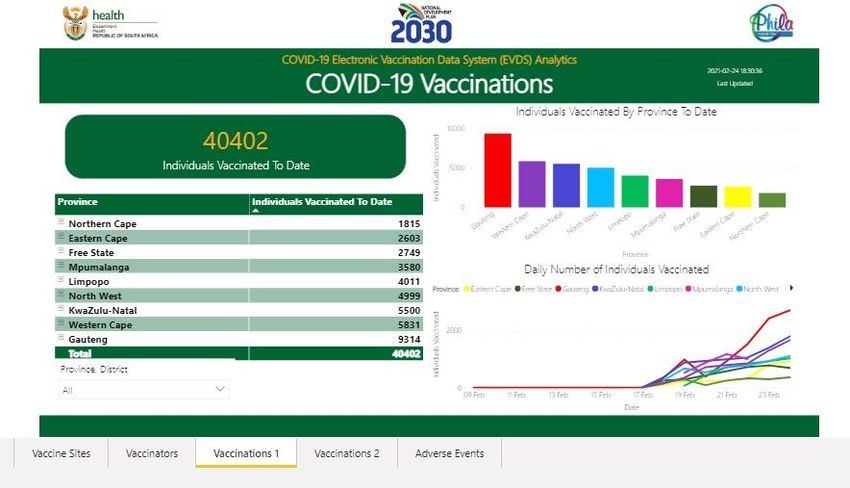
WHY ARE VACCINES IMPORTANT
The aim of vaccination is to:
• To prevent morbidity and mortality.
• To achieve herd immunity and prevent ongoing transmission.

When a person gets vaccinated against a disease, their risk of infection is also reduced – personal protection

'Herd immunity', also known as 'population immunity', is the indirect protection from an infectious disease that
happens when immunity develops in a population either through vaccination or through previous infection.
Herd immunity does not mean unvaccinated or individuals who have not previously been infected are themselves
immune. Instead, herd immunity exists when individuals who are not immune, but live in a community with a high
proportion of immunity, have a reduced risk of disease as compared to non-immune individuals living in a community
with a small fraction of immunity.

Lowering the possibility for a pathogen to circulate in the community protects those who cannot be vaccinated (due
to health conditions, like allergies, or their age) from the disease targeted by the vaccine.

                                                                                                                     3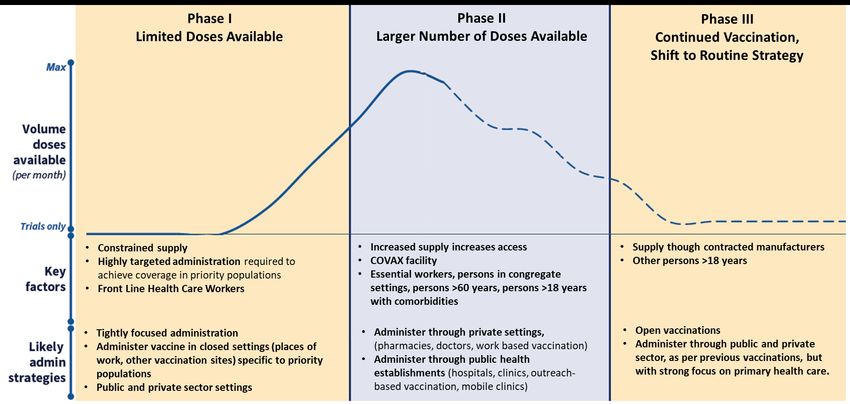
IDENTIFICATION AND PRIORITISATION OF TARGET POPULATION

  Vaccines will not be available for everyone immediately, and a prioritization system will have to be applied.
  Guided by the MAC on Vaccines.
  Priority will be given to those:
  • in roles considered to be essential for societal functioning;
  • most at risk of infection and serious outcomes, for example, those over 60 years, those with comorbid
     conditions and those living in overcrowded settings,
  • most at risk of transmitting SARS-CoV-2 to others.

                                                                                                                  4
PHASED APPROACH BASED ON AVAILABILITY OF VACCINES

                               Adapted: From the factory to the frontlines: US Department of Health and Human Services)
                               Illustative and not to scale.

                                                                                                                          5
PHASED APPROACH FOR VACCINE INTRODUCTION

  Phase I
  Health care workers (HCW)      Phase II
  All health sector workers
  Target population: 1,000,000
                                 Essential workers                Phase III
                                 Target population: 2,500,000
                                 Persons in congregate settings   Other persons >18 years
                                 Target population: 1,100,000
                                 Persons >60 years
                                 Target population: 5,000,000
                                 Persons >18 years with co-
                                 morbidities
                                 Target population: 8,000,000

                                                                                            6
PHASE I: SEQUENCING OF HEALTH CARE WORKERS

    Category 1gory 4                   Those in contact with patients
    Category 2                         Those not in contact with patients.

•    Phase 1a: All patient-facing workers in hospitals and Emergency Medical Services workers

•    Phase 1b: All patient-facing workers in other health care facilities/establishments

•    Phase 1c: All patient-facing workers working at community level

•    Phase 1d: Non-patient facing workers in the health sector

•    Within facilities, start with settings associated with highest exposure.

                                                                                                7
PHASE 1: HEALTH CARE WORKER SERVICE DELIVERY PLATFORM
Work-based vaccination programme:
Public and private hospitals
• Most suitable for hospital linked HCWs
Outreach work-based vaccination programme:
Mobile teams move from facility to facility
• Most suitable for HCWs in PHC, CHC and private medical centres
Vaccination Centres: Remote or facility-based
vaccination centres e.g. pharmacies or other settings
• Suitable for independent HCWs
8PHASE 2 AND 3: HIGH RISK PRIORITY GROUPS AND
GENERAL PUBLIC SERVICE DELIVERY PLATFORMS
Health facility Vaccination Centres: Facility
vaccination: based or standalone
vaccination centres e.g.
Suitable in rural settings pharmacy practices, GPs or
for community access NGOs
Outreach vaccination
programme: Service Work-based vaccination
provided by outreach programme: Suitable for
teams essential workers e.g.
Suitable for congregated mining sector, industry and
settings e.g. old age departments
homes
9National COVID Vaccination Programme Status
Paused Sunday 6 February
• Following concerns regarding efficacy of the Oxford-AstraZeneca
(CoviShield) vaccine against mild-moderate COVID caused by the
501.V2 variant.
• CoviShield may still play a role in the National Programme but more
local research is needed.
• There is likely to be significant lag period (approx. 3 months) before
another vaccine is registered in South Africa.
• We sought other more urgent but safe and effective options
10Ensemble study
• The ENSEMBLE study was conducted in multiple regions (North and South America,
Africa) at a time when the incidence of SARS-CoV-2 infection was very high and new
lineages of the virus were emerging.
• A single dose of Ad26.COV2.S vaccine was efficacious in the prevention of moderate to
severe/critical COVID-19 with VE of 67% and 66% post Day 14 and post Day 28 post
vaccination.
• The onset of efficacy was evident as of day 14, with efficacy increasing through day 56,
especially against severe disease.
• In South Africa the vaccine was 57% effective, where nearly all of the cases were due to
infection with the new variant.
11Ad26.Cov2.S Vaccine (J&J) Protects Against Severe COVID-19 In South Africa- most
robust clinical data against the variant of all vaccines globally
Tested in 43 783 people from 4 continents including 6,576 people in South Africa
100% 100% 100%
100%
85% protection
protection
57%
protection
0% 0% 0%
Moderate-severe Severe COVID Death
COVID
12Safety • The vaccine had an acceptable safety profile. • Common reactogenicity events • No safety signals observed. • No anaphylaxis • Ad26 vector given to more than 200 000 people
What are the next steps for this vaccine?

    • JNJ have applied for “Emergency Use” and have
      submitted a request for an EUA at the FDA.
    • They are submitting EUAs to other regulators.
    • There is a rolling submission with SAHPRA in
      South Africa.
Making The Safe Efficacious AD26.Cov.S Vaccine (JnJ) Available Immediately
Safe
No safety concerns from trial, past
trials or rollout programmes
Efficacious
Excellent protection against
severe disease
Easy to rollout
Shelf life of up to 2 years at -20°C
Can be stored at fridge
temperature for 3 months
Single shot
Not yet licensed
15A programme to enable rapid protection of healthcare workers
Why is the vaccine being introduced in a research setting

• The product has been show to be effective and safe
• It takes time to have the product licensed which will likely happen in coming weeks
• Through the Sisonke programme, South Africa’s valued healthcare workers were
  offered priority vaccination and access to this effective and safe vaccine
• Without this, we run the risk of healthcare workers being at risk as a third wave
  arrives in South Africa
• SAPHRA has approved use of the JnJ vaccine and the Sisonke program is making the
  vaccine available while full licensing through SAPHRA will take a couple of months
• Starting today means we can protect our front line workers

• Register now : https://vaccine.enroll.health.gov.za/#/

                                                                                        17
Phased Approach For Vaccine Introduction
Phase I Phase II Phase III
Health care workers (HCW) Essential workers Other persons >18 years
All health sector workers Target population: 2,500,000 Target population: 22,500,000
Target population: 1,250,000 Persons in congregate settings
Target population: 1,100,000
Persons >60 years
Target population: 5,000,000
Persons >18 years with co-morbidities
Target population: 8,000,000
Open label
Expansion through usual vaccination centres
programme
License for use Full Licence
in Open Label
Programme
18Phased approach based on availability of vaccines
Adapted: From the
factory to the
frontlines: US
Department of
Health and Human
Services)
Illustative and
not to scale.
19The first tranche of 80 000 doses of vaccine is on its way… Make
history and be vaccinated
Belgiu
m
South Africa
O.R. Tambo
20
20Sisonke rollout
COVID-19 Vaccine
Administration Centres
5 easy steps for healthcare workers: Healthcare managers: What you need to know
1. Register on EVDS 300 000 to 500 000 doses expected in next 2 months
2. Respond to SMS invite for early access 80 000 doses expected next week
3. Provide consent to take part 18 sites across the country initially
4. Receive your vaccination voucher Focus on large hospitals
5. Attend vaccination centre for administration Research staff to help maintain cold chain and draw up doses
Vaccinators to administer
21*Doses
Distance from Kits
Hospital Province HCW Supply Research Site (public & Vials Vaccinators
Research Site (km) (20 vials)
Overview private)
ec Livingstone Hospital Eastern Cape 2 135 PHOENIX Pharma (Pty) Ltd 6 3 200 1 600 80 7
ec Nelson Mandela Academic Nelson Mandela Academic Research
Eastern Cape 3 314 1 4 920 2 460 123 10
Hospital Unit
fs Universitas (C) Hospital Free State 2 544 Josha Research CRS 5 3 800 1 900 95 8
fs Pelonomi Hospital Free State 2 061 Josha Research CRS 4 3 080 1 540 77 6
gp Chris Hani Baragwanath Hospital Gauteng 7 426 Soweto HVTN CRS 0 11 080 5 540 277 23
gp Steve Biko Academic Hospital Gauteng 3 803 Synexus SA - Watermeyer 12 5 720 2 860 143 12
kz Inkosi Albert Luthuli Central
KwaZulu-Natal 3 868 CAPRISA eThekwini CRS 6 5 760 2 880 144 12
Hospital
kz Prince Mshiyeni Memorial
KwaZulu-Natal 3 380 Chatsworth CRS 8 5 040 2 520 126 11
Hospital
lp Pietersburg Hospital Limpopo 2 747 Elandsdoorn CRS 191 4 080 2 040 102 9
lp Mankweng Hospital Limpopo 2 055 Elandsdoorn CRS 201 3 080 1 540 77 6
mp Rob Ferreira Hospital Mpumalanga 1 326 Mzansi Ethical Research Centre 189 2 000 1 000 50 4
mp Witbank Hospital Mpumalanga 1 099 Mzansi Ethical Research Centre 32 1 640 820 41 3
nw Klerksdorp-Tshepong Tertiary
North West 3 856 Aurum Institute Klerksdorp CRS 0 5 760 2 880 144 12
Hospital
nw Job Shimankana Tabane Hospital North West 1 762 Aurum Institute Rustenburg CRS 1 2 640 1 320 66 6
nc Robert Mangaliso Sobukwe
Northern Cape 2 599 Clinical HIV Research Unit (CHRU) 520 3 920 1 960 98 8
Hospital
wc Groote Schuur Hospital Western Cape 3 847 Groote Schuur HIV CRS 0 5 760 2 880 144 12
FAM-CRU (Family Clinical research
wc Tygerberg Hospital Western Cape 4 935 1 7 400 3 700 185 15
Unit)
*Please see assumptions on the next slide. Indicative allocations only. Confirmed allocations
TOTAL 78 880 39 440 1 972 164
will be formally communicated with provincial HODs
222. Notification sent to all 3. Eligible beneficiary within 4. Complete JnJ consent
1. HCW self registers catchment area receives 5. Voucher issued
beneficiaries to confirm registration, process
vaccination site and registration code SMS to opt in to JnJ program
Study team Recipient
8. Vacinnee 9. Vaccinator confirms
6. Vaccinee 7. Screening proof of registration, ID preps Mark receives a
screened for confirmatory
arrives Station document and Voucher injection vaccination
COVID-19 code previously provided
SMS
as complete
23How do I get my vaccine? https://vaccine.enroll.health.gov.za/#/
2425
Vaccinate and save lives!

                            26
You can also read


