NEWS Q3|21 Association Internationale de la Couleur International Colour Association Internationale Vereinigung für die Farbe
←
→
Page content transcription
If your browser does not render page correctly, please read the page content below
AIC Logo in the Colors of the Argentinean Flag

                                                         R. 40. G: 16. B 66 Bookmark

Association Internationale de la Couleur
                                                 NEWS
International Colour Association
                                                 Q3|21
Internationale Vereinigung für die Farbe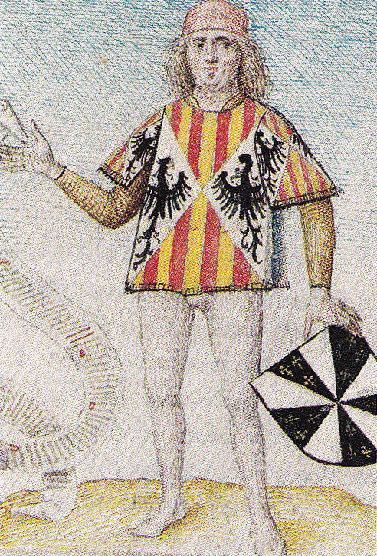
Association Internationale de la Couleur
International Colour Association
NEWS
Internationale Vereinigung für die Farbe 03|21
EDITORIAL
Queridos a cionados al color,
We have received a great variety of submissions from inside and outside of our association again and it seems that the newsletter is slowly
becoming established as a vehicle of reporting large and small milestones, recent events and future plans, all related to colour - of course.
With our featured member organisations we will travel across continents. We began with Belgium in the heart of Europe and then moved to
Canada. In this issue we will travel to South America and feature Argentina. Again, the temptation to clad the AIC logo in the colours of the
respective national ag was irresistible. GRUPO ARGENTINO DEL COLOR has been a very active member throughout the history of AIC, having
been the host of three AIC events: the 1989 Congress in Buenos Aires, the 2010 Interim Meeting in Mar del Plata and the 2019 Midterm Mee-
ting in Buenos Aires. The group's members have regularly served on our Executive Committee and José Luis Caivano has been the AIC's presi-
dent and most recently our auditor. The group has compiled a number of colour schemes for various AIC events in Argentina (The 2019 colors
were inspired by the diversity of colors of the jacaranda) and some of these colours found their way into the background pages of this newslet-
ter in slightly muted ways.
PROPOSALS AND SURVEY OF COLORS USED IN BOOKMARKS AND “TULMAS” (POMPOMS)
COLOR SCHEMES
R: 92 R: 142 R: 110 R: 167 R: 92 R: 71 R: 37 R: 15
G: 77 G: 96 G: 64 G: 155 G: 77 G: 47 G: 19 G: 5
B: 161 B: 166 B: 156 B: 203 B: 161 B: 127 B: 86 B: 54
COLOR SCHEMES
R: 92 R: 142 R: 110 R: 167 R: 92 R: 71 R: 37 R: 15
G: 77 G: 96 G: 64 G: 155 G: 77 G: 47 G: 19 G: 5
B: 161 B: 166 B: 156 B: 203 B: 161 B: 127 B: 86 B: 54
Quinquela Martin.
R:134 R: 134 R: 0 R: 0 R: 0 R: 0 R: 0 R: 0
Rosewood (jacarandá) Sculpture “Floralis Genérica”, United Nations Plaza Barrio La Boca (La Boca neighborhood) La Boca neighborhood (Barrio La Boca) May Plaza (Plaza de Mayo) Obelisk and rosewood (Obelisco y jacarandá) Valley of the Moon (Valle de la Luna).
Autonomous City of Buenos Aires, Argentina. Autonomous City of Buenos Aires, Argentina. Calafate. Santa Cruz, Argentina. Jacarandá. Píxeles. Ciudad Autónoma de Buenos Aires, Argentina. Autonomous City of Buenos Aires, Argentina. Autonomous City of Buenos Aires, Argentina. Autonomous City of Buenos Aires, Argentina. Iguazu Falls. Misiones, Argentina. Purmamarca, Jujuy. Argentina. Cerro de los Siete Colores. Jujuy, Argentina. San Juan, Argentina
G: 196 G: 196 G: 108 G: 91 G: 151 G: 169 G: 148 G: 118
B: 224 B: 224 B: 171 B: 164 B: 174 B: 160 B: 140 B: 122
R:134 R: 134 R: 0 R: 0 R: 0 R: 0 R: 0 R: 0
G: 196 G: Basic
196 G: 108 G: 91 G: 151 G: 169 G: 148 G: 118
Enlarged
B: 224 B: 224 B: ARGENTINA.
171 B: 164 B: 174 B: 160 B: 140
FLAG COLORS. COLOR SCHEMES
B: 122
Basic Enlarged
R: 181 R: 99 R: 49 R: 0 R: 0
G: 156 G: 82 G: 16 G: 107
R: 117 G:R:100
255 R: 117 R: 132 R: 181 R: 99 R: 49 R: 0 R: 0
R: 181 R: 99 R: 49 198R: 0B: 156
R: 0
G: 156 G: 82
B:
G: 16 G: 107 G: 100
B: 66 B: 165
G: 170 B:G:92
255 G: 170 G: 53 G: 156 G: 82 G: 16 G: 107 G: 100
B: 219 B: 255 B: 219 B: 17
B: 198 B: 156 B: 66 B: 165 B: 92 B: 198 B: 156 B: 66 B: 165 B: 92
60% 30%
aprox.
Stripes Sun
Colors used in bookmarksColors used in bookmarks
FLAG
Celeste: L*: 67,27 a*: -6,88 b*: -32,23 C*: -32,95 H*: 257,96
Tolerancia: DE CMC 2:1 : £ 1,0
It is customary in many international scienti c organisations that holding of ce is part and parcel of one's academic or professional advance-
Amarillo: L*:74,97 a*:29,22 b*: 81,58 C*: 86,65 H*: 70,30
Tolerancia: DE CMC 2:1 : £ 1,5
Castaño: L*: 44,53 a*: 27,16 b*: 22,48 C*: 35,25 H*: 39,62
Tolerancia: DE CMC 2:1 : £ 1,5
ment and at the same time this service brings an academic network to the AIC community. Within this context of give and take, it is all the
Blanco: Grado de blanco CIELAB
Grado de blanco W mínimo ³ 70
-1 < Tolerancia < +1
SUN DETAIL
more admirable, to nd people who have lent their time and enthusiasm over the years to an organisation purely for the love of its subject.
DECRETO 1650/10 – SIMBOLOS NACIONALES
Normas IRAM – DEF D 7679: 2002
Bandera Argentina de ceremonia. Características.
http://manuelbelgrano.gov.ar/wp-content/uploads/2013/10/IRAM_7679_2002.pdf
Two of these people who have become an integral part of the AIC and have made a clear imprint through their scholarship, experience, invol-
vement and integrity, will be featured in the next two issues of this newsletter: Verena M. Schindler and Robert Hirschler.
In future issues, we also plan to call attention to artists whose work focuses in particular on issues of colour. Please send your suggestions.
The deadline for submissions for the next newsletter will be November 15, 2021.
R. 40. G: 16. B 66 Bookmark
Ralf Weber | Editor
newsletter@aic-color.org
fi
fl
fi
fi
fi
NEWS FROM OUR MEMBER ORGANISATIONS - AUSTRALIA

                      COLOUR CONNECTIONS SYDNEY 2021 POST-CONFERENCE SURVEY
                      Our post-conference survey indicated a very high level of satisfaction from our attendees, with 91%
                      rating the conference either "above average" or "far above average" relative to comparable events they
                      had participated in. 77% or more expressed the highest level for satisfaction with the conference as a
                      whole, with the work done by the conference organizers, and with the information provided on the
                      conference web page. Our experiment of scheduling a discussion break among the session speakers
                      and chair after every two presentations, responding to but not restricted to questions raised by attende-
                      es in the chat, proved highly successful in promoting interaction among the speakers, and 80% of re-
                      spondents found it to be either "very valuable" or "extremely valuable". Food for thought!

                      WEBINAR SERIES
                      The series of free webinars hosted by the NSW Division continued on July 3 when Kristen Tivey of the
                      Helen Frankenthaler Foundation and the Isamu Noguchi Foundation and Garden Museum of New York
                      gave a very insightful presentation on the pioneering abstract painter Hilma af Klint, with particular
                      reference to her use of colour. Kristen discussed in detail the "Swan Series" from af Klint's magnum
                      opus "Paintings from the Temple" and deftly answered the numerous questions submitted by our en-
                      thusiastic global audience. The Swan Series was the focus of Kristen's Master’s Thesis at the Pratt Institu-
                      te of New York. Then on August 15 artist Adrien Lucca gave a webinar from Belgium on the topic of
                      “Light on Painting”, which was included in the program of National Science Week 2021. Adrien gave us
                      a close look into the research methods that go into his paintings, installations and publications, which
                      use chemistry, spectrometry, electronics and computer science for artistic purposes. The webinar was
                      dedicated to the memory of Max Luescher, a founding member of the Colour Society of Australia who
                      passed away in March last year, and who was an expert on colours of surface coatings, printing inks and
                      plastics, and on colour appearance under different sources of illumination. Recordings of both webinars
                      along with the rest of our free webinar series and our national conference are available in the Members’
                      Area of the Colour Society of Australia website: https://coloursociety.org.au/. To hear about future webi-
                      nars and other events this year please check the home page of the CSA website or follow us on Face-
                      book or Instagram.

                      LECTURES | SEMINARS
                      CSA NSW September webinar "Concerning the Shape of Color" with Marcia R. Cohen, Professor Emerita
                      SCAD Atlanta (USA), Sep 25, 2021 11:00 AM AEST, UTC+10:00
                      "My presentation for the Colour Society of Australia takes a circuitous path through my color theory
                      pedagogy in the classroom and my studio practice. Over the decades teaching color theory I recreated
                      historical models of color science inquiry drawn from research. Bringing together the ideology of Goe-
                      the, Chevreul, Neo Impressionism and the Bauhaus into our present moment for added depth in the
                                                                                                                                     Color of the Sun in the Argentinian Flag

                      classroom. This idiosyncratic exploration was in uential for my studio practice as well and this presenta-
                      tion will give an overview of the interdependence of color theory history in my artwork and ideas". -
                      Marcia R. Cohen
                      Registration by September 24 is essential at https://coloursociety.org.au/event-4468097

                                                                                                                                                   2
                 fl
CLASSES
                     The CSA maintains colour-related public short courses and workshops.
                     Colour Made Simple (online, on call) – Seven courses on colour theory for manufacturing with former
                     AIC President Nick Harkness in assoc. with Prof. Stephen Westland, and Dr. Vien Cheung, School of De-
                     sign, University of Leeds. https://colour-theory-for-manufacturing.thinki c.com/
                     Understanding and Applying Colour (National Art School, online, 4x per year) – Eight 3hr sessions on:
                     what is a colour?; colour attributes; biological and psychological aspects of colour vision; artists' paints;
                     digital colour; mixing processes; colour and light; history of theories of colour. With CSA President Dr
                     David Briggs. https://sites.google.com/site/djcbriggs/tmct
                     Colour Theory Lecture Series: Beyond “Red, Yellow, Blue” (Sydney Art School, Hornsby) – Series of three
                     sessions per term with Dr Jean Pretorius. Check website for updates regarding next dates. https://syd-
                     neyartschool.com.au/painting-classes/art-theory-history-professional-practice#Colour-Theory
                     Painting classes (Hamley Studio, Mt Kuring-Gai, Sydney) – Various live painting classes and workshops
                     with CSA member Sally Ryan. https://www.hamleystudio.com.au/classes-and-workshops
                     CPD sessions and webinars (Colour Collective, Sydney) – CPD sessions and webinars with CSA member
                     Dr Zena O'Connor including Demystifying Colour, Colour Psychology and Perceived vs Speci ed Colour.
                     https://the-colour-collective.com/home#events-workshops
                     Colourplay workshops and retreats (Sydney and regional NSW) – 1- and 2-day colour-focused painting
                     workshops and longer retreats with CSA member Kristine Ballard. https://www.kristineballard.com/
                     workshops/
                     Colour & Design Psychology online courses – including a ve-day mini course, one-day workshops and
                     masterclasses through to a six-month professional colour mentoring programme with CSA Associate
                     Member Karen Haller. https://karenhaller.com/

INDIVIDUAL MEMBERS - THE COLOR COLLECTIVE SIDNEY (VIA OUR MEMBER ZENA O'CONNER)

                     In an intiative aimed at bolstering community connection and positivity during the extended Sydney
                     Covid-19 lockdown in July-August 2021, the Colour Collective Sydney hosted a social media-based pro-
                     ject. The colour community in Sydney was encouraged to post images on Instagram #ColourMeHappy-
                     Sydney. The response generated the sharing of plenty of colourful images and lots of cross-community
                     comment and connectivity. We were happy to provide another opportunity to bolster our community
                     and the project garnered an abundance of positive responses not just from individuals but also from the
                     corporate sector with one organisation posting, “One of our favourite sites is @the.colour.collective. Not
                     only are their posts bright and colourful but they are always interesting, providing fun, colour-based
                     facts. We’re jumping on board their latest mission by posting our version of a colourful, lovely quirky
                     image with the hashtag #ColourMeHappySydney”.
                                                                                                                                     Color of the Sun in the Argentinian Flag

                     The Colour Collective Sydney continues to work with our industry partners to spread evidence-based
                     information about colour application across multiple sectors. One important workshop session initiated
                     by the Aged Care Industry Association (ACIA) involved a workshop developed by Dr Zena O’Connor, one
                     of the founders of the Colour Collective Sydney. This workshop, ‘Colour Design for Aged Care and De-
                     mentia Care’ focused on evidence-based colour strategies and the ways in which colour design can be
                     effectively applied in aged care and dementia care facilities. The workshop focused on key colour design
                     aims: (1) Address the variable vision capacity and visual challenges experienced in general and in parti-
                     cular older people and people living with dementia. (2) Enhance environmental visual literacy and help
                     improve orientation, way nding, and the safe operation of daily activities. (3) Ensure that colour design
                     strategies are underpinned by the imperatives of inclusivity, diversity and user centred involvement in
                     decision-making and respect for all people using healthcare environments and especially older people
                     and people living with dementia.                                                                                              3
      fi
                          fi
                                       fi
                                                              fi
NEWS FROM OUR MEMBER ORGANISATIONS - ISCC / INTER SOCIETY COLOR COUNCIL

                               2nd ISCC Symposium on Color Education
                               The 2nd Annual ISCC Symposium on Color Education was held virtually on Saturday, June 25, 2021.
                               This symposium was enjoyed by 96 color colleagues from 19 countries. Maggie Maggio and Robert
                               Hirschler were co-chairs for the morning and afternoon sessions, respectively. The GoToTraining plat-
                               form was used for the rst time under the expert technical support of Dave Wyble! Speakers were avail-
                               able at the end of their session for a lively 30-minute Question and Answer (Q&A) period using the
                               Zoom platform. The theme of this year’s Symposium was “Perspectives on Color Education.”
                               The rst session included talks by four color educators from different disciplines who presented each of
                               their approaches and featured student work from their innovative courses. The keynote speaker for the
                                rst session was David Batchelor discussing “Why Color?” He spoke about his concern that our built
                               environment is becoming colorless and showed a number of his projects that are all focused on cele-
                               brating color in sculptural form. Next Jennifer Logan in her talk, “On Site Insight”, discussed the rein-
                               carnation of her Bauhaus-inspired Lighting, Color and Design class as she moved the curriculum from
                               being mostly concentrated on standard exercises and ColorAid papers to individual student creative
                               processes. Agata Kwiatkowska-Lubańska from the Jan Matejko Academy of Fine Arts in Kraków, Poland
                               spoke about “Subtractive Color Mixing as a Support for Color Memory”. Based on her extensive research
                               on color memory, she presented compelling evidence that our color memory can be developed and is
                               much better than we think. Dr. Jennifer Kruschwitz, from the University of Rochester Institute of Optics,
                               shared “Connecting Optics Outcomes through Color by Use of a Monochromator”. Her Geometrical Ray
                               Optics course features hands-on explorations using prism monochromators and grating monochroma-
                               tors to measure angle relationships using different lights. Her students delight in being able to connect
                               math to the experiments while reinforcing their observation skills. “The Art of the Three-Color Process”
                               was given by Rebecca Michaels from the Tyler School of Art and Architecture in Philadelphia. She
                               teaches students the three-color process of photography as a way to viscerally understand color theory.
                               She also demonstrated methods for teaching students how the additive and subtractive primary colors
                               used in reproductive photographic processes actually function.
                               The second session featured broader presentations by color educators looking ahead to the future of
                               color education. The keynote speaker was Robert Hirschler discussing “Bauhaus In uence on Color
                               Education: a Critical Homage”. Hirschler made the point that there was no speci c curriculum for
                               teaching color at the Bauhaus. Instead, the subject of color was integrated into the workshops by the
                               teachers including Kandinsky, Albers, Klee, Itten. At the Bauhaus, a group of extremely talented artists
                               revolutionized the way color should be taught. The way color was taught by them, with a practice before
                               theory approach, is still relevant today. Next, Teresa Marie Rhyne presented a detailed summary of her
                               use of Albers concepts to visually organize large amounts of data in order to reduce the amount of time
                               it takes to produce computer weather simulations. Finally, Ingrid Calvo Ivanovic discussed “Color Design
                               Training Itinerary: A Framework for the Future of Color Education”. Ingrid shared her doctoral research
                               focused on the development of a Color Design Training Itinerary (CDTI). The CDTI will be an expansive
                                                                                                                                           Color of the Sun in the Argentinian Flag

                               educational framework for organising a variety of different training paths in color education courses
                               worldwide.

                               Recordings of the presentations and Q & A sessions were sent to all attendees!

                                                                                                                                                         4
fi
     fi
              fi
                                                                fi
                                                                     fl
NEWS FROM OUR MEMBER ORGANISATIONS - ISCC

                     ISCC Color Impact 2021 For the Built Environment
                     The Inter-Society Color Council (ISCC) along with the International Association of Color Consultants -
                     North America (IACC-NA) hosted Color Imapct 2021 For Built Environment as a virtual conference from
                     Sunday, June 13 through Tuesday, June 15, 2021. The 133 attendees represented 24 countries and 6
                     continents with North America and Europe having the greatest representation. The focus of the confe-
                     rence was the Built Environment, so 75% of the attendees listed Architecture or Interior Design as their
                     industry, but others included education, art and science plus combinations thereof. Keynote talks were
                     given by such well-known experts as Shashi Caan, Kory Stamper, Eve Ashcraft, Massimi Caiazzo, and Jill
                     Pilaroscia. This online conference was very well-organized and featured satisfying personal interactions!
                     Past, present and future approaches gave insights as to how color in the “Built Environment” has been
                     changing over time. In spite of the fact that there were some divergent viewpoints, the basic and con-
                     stant elements of environmental design remained throughout. Speakers emphasized that color in the
                     “Built Environment” includes not only color but also extends to a wide array of disciplines. Enlightening
                     insights were shared on cross-cultural interactions that were manifest in both research and completed
                     projects. A common theme throughout was that art and science form an entangled pair. Another
                     strength of the conference was the insight of researchers and designers who deal with color in very
                     different ways. Recordings of the presentations were sent to all attendees!

                     ISCC Macbeth Award
                     The 2020 Macbeth award was presented to Roland L. Connelly, Sr. on May 11, 2021. The Macbeth
                     Award is given for one or more recent outstanding contributions in the eld of color. The delay was due
                     to the impact of COVID on travel, as well as the time required to recreate this cherished and unique
                     ISCC award. ISCC member Ann Laidlaw presented the award to Roland Connelly in Mt. Gilead, NC.

                     ISCC Webinar Report
                     On May 12, 2021, Kine Angelo presented a webinar on “The Greying of Norway”. Her talk explored the
                     slow change in the coloring of Norwegian architecture. Houses and buildings that once featured reds,
                     yellows, and greens have been making a dramatic change toward a uniform, achromatic color scheme.
                     Kine walked the audience through this change, relating the social and political conditions that led to
                     the current, largely neutral, color schemes.
                     The webinar drew about 50 attendees from a broad international and interdisciplinary audience, inclu-
                     ding attendees from academia and industry, and those from Romania, Spain, The Netherlands, Portu-
                     gal, Hong Kong, Canada and of course Norway.
                     Please check the ISCC website at www.iscc.org for upcoming events.

                     NEXT GENERATION COLOR!
                                                                                                                                    Color of the Sun in the Argentinian Flag

                     We are excited to report that Fluorescent Fridays are off to a colorful start—the fourth event in the series
                     took place on June 25. The format was rapid- re mini-talks. Each of the six university students described
                     their cutting-edge research that ranged from exploring immersive color appearance in augmented
                     reality, designing a synesthetic installation of color and sound, developing Ultra-Deep Black for cotton
                     textiles, and color mapping six-thousand-year-old Iranian architecture, to integrating color and comfort
                     in rehabilitation spaces, and exploring food waste with pigment-producing bacteria to develop vibrant
                     hues for wearable textiles

                                                                                                                                                  5
                fi
                                        fi
NEWS FROM OUR MEMBER ORGANISATIONS - APCOR PORTUGAL

                         Chromatic Instants Series | Archinews
                         We recently published the Chromatic Instant #8 Casa en barrio Coghlan, ciudad de Buenos Aires, AR, a
                         house in the Coghlan neighborhood of Buenos Aires, by Jose Luis Caivano. In the author’s words “The
                         work consisted of the reform and expansion of a house with parts built in 1920 and others in 1970. The
                         feeling of being surrounded by nature was recreated, making natural-looking materials, irregular
                         shapes, colors and textures coexist with elements of a more technological appearance, precise dimensi-
                         ons, sharp angles, regular lines, uniform colors and textures. The blue-yellow contrast predominates in
                         the architecture, while red was used in certain details, with green only in the vegetation. Among other
                         chromatic and textural subtleties, the blue of some exterior walls enhances the vegetation and gives a
                         visual sense of depth.” (José Luis Caivano) To know more explore: facebook @apcor.org

                         APCor members’ activities
                         Exhibitions
                         “Voar na idade dos sonhos, 1, 2, 3” – Rui Barreiro Duarte. Oil painting.
                         COLLECTIVE ART EXHIBITION: DREAM ne arts poetry, Claustros in Biblioteca Municipal de Portalegre,
                         17th July to 16th October 2021.

                         Performances
                         "Bodygraphy" – Susana Ribeiro, Art performance produced in July 2021 in Oporto, Portugal.
                         Bodygraphy is an artistic concept of intervention in the landscape through a performance action that
                         involves the trilogy of body / colour / space.

                         Recent APCor members’ publications
                         Duarte, R. (2021). ALI e BABÁ, (Illustrations by Rui Barreiros Duarte). Lisbon: Rui Barreiros Duarte, April
                         2021, pp.1-52. ISBN:978-989-98182-9-3. Legal Deposit 481764/21.
                         Duarte, R., Pinheiro, A.P. (2020). Architecture in Extreme Contexts. Lisbon: Rui Barreiros Duarte, Novem-
                         ber 2020, pp.1-190. ISBN 978-989-98182-8-6. Legal Deposit 477120/20.
                         Pinheiro, A.P. (2021). “BREEAM and LEED in architectural rehabilitation”, in Industry 4.0 – Shaping The
                         Future of The Digital World. Proceedings of the 2nd International Conference on Sustainable Smart
                         Manufacturing (S2M 2019), Manchester, UK, pp. 349-353. ISBN 978-0-367-42272-1.
                         Pinheiro A.P., Duarte R. (2021). “Blue in Alentejo: authenticity and sustainability”. The International
                         Scienti c Conference of the Color Society of Russia: Selected Papers / ed. by Yulia A. Griber and Verena
                         M. Schindler. Smolensk: Smolensk State University Press, pp.277-282. ISBN: 978-5-88018-660-0.
                         http://color-lab.org/ les/283/bop_rucolor2020_with0.pdf
                                                                                                                                       Color of the Sun in the Argentinian Flag

     NEWS FROM OUR MEMBER ORGANISATIONS - ICA BELGIUM
                         ICA Belgium hosted three Sunday Morning Color Talks, where participants listen
                         to interesting lectures while enjoying their morning coffee in their pyjamas.
                         https://ica-belgium.org/events/past-events/

                                                                                                                                                     6
fi
        fi
                  fi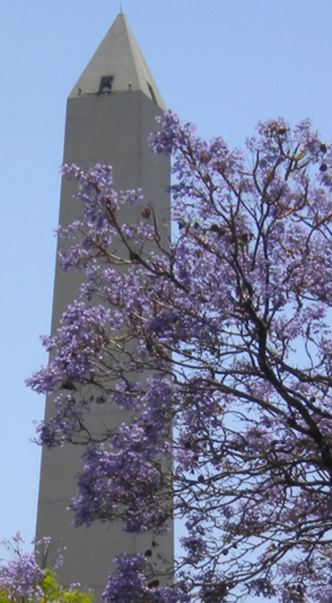
REPORT: AIC CONGRESS MILAN 2021

                                                                       AIC 2021 – 14th Congress of the International Colour Association or-
                                                                       ganized by Gruppo del Colore – Associazione Italiana Colore
                                                                       Chairs: Prof. Dr. Maurizio Rossi, Prof. Dr. Alessandro Rizzi

                                                                       The AIC 2021 Congress was fascinating and absolutely interesting; it offered an
                                                                       overview of state-of-the-art research on colour worldwide. One of the highlights
                                                                       was the talk of the internationally renowned Italian cinematographer Vittorio Sto-
                                                                       raro who is responsible for the cinematography (the art of photography and came-
                                                                       rawork in lm-making) of such iconic movies as The Conformist, Apocalypse Now,
                                                                       and The Last Emperor. Congratulazioni! Un successo meritatissimo!

                                                                       The congress was an impressive multidisciplinary online event: 5 days in a row, 12
                                                                       hours a day, with 236 oral presentations, 7 invited speakers, 2 Award lectures, 1
          Vittorio Storaro                                             Premio Colore GdC 2021 lecture, 59 session chairs, 112 members of the peer-
                                                                       review committee, 2 sponsors, 15 patronage associations, and 320 participants
                                                                       from 36 countries. The programme included 4 special sessions and in addition 4
                                                                       study group meetings.

                                                                       AIC 2021 began with a special session on beauty care and hairstyle and ended
                                                                       with a special session on books on colour. A dense programme with single sessi-
                                                                       ons on the rst and fth days and parallel sessions in between captivated the
                                                                       attention of the international audience, who could enjoy the many high quality
                                                                       oral presentations.
          AIC 2021 Chairs Maurizio Rossi and Alessandro Rizzi (left)

                                                                       A very special day was September 2nd when I introduced not only the CADE Award
                                                                       recipient Jean-Philippe Lenclos, but also the renowned Italian designer Clino Trini
                                                                       Castelli, both of whom delivered wonderful talks about their experience of colour
                                                                       across the decades and disciplines.

                                                                       An online conference needs a “control tower” which, in this case, was based at
                                                                       Università degli Studi di Milano. Special thanks to Alice Plutino and Albana Muco
                                                                       for their much‑appreciated friendliness and professionalism in all online matters.
                                                                                                                                                             Colors from the Sun Symbol in the Argentinian Flag

                                                                       To best accommodate the wide range of time zones, the invited and the Judd and
          Online Congress Committee Chair Alice Plutino                CADE Award lectures, as well as the of cial events (opening and closing ceremony,
                                                                       and general assembly), were scheduled around Italian midday. It would have
                                                                       been preferable to meet in person; nevertheless, I enjoyed the online version of
                                                                       the congress and its excellent organization. Limited interaction was possible via
                                                                       the live chat for Q&A on the instant streaming video web page, but of course I
                                                                       terribly missed the “coffee breaks” to engage with people.

                                                                       Warmest congratulations to Maurizio, Alessandro, GdC–Associazione Italiana Colo-
                                                                       re President Marcello Piccollo, and their team of 24 volunteers, who were mem-
                                                                       bers of the Italian colour group. Thank you for this inspiring and captivating con-
          Thank you. Paul Green-Armytage and Maggie Maggio             gress, which will last in the memories of the participants for ever.

                                                                       Verena M. Schindler
                                                                                                                                                                               7
fi
     fi
                    fi
                                        fi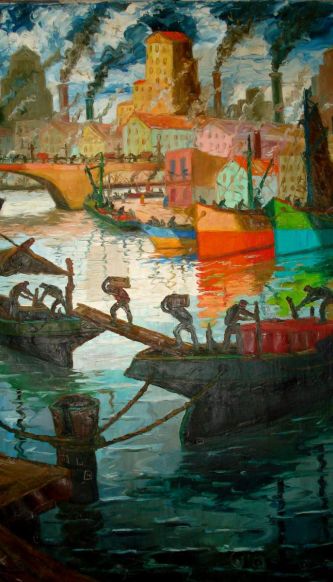
UPCOMING CONFERENCES

                          LIM 2021 – September 20–21, 2021 online
                          The London Imaging Meeting (LIM) is a yearly topic-based conference focused on the future of imaging
                          science. The theme for 2021 is “Imaging for Deep Learning”.
                          https://www.imaging.org/site/IST/IST/Conferences/LIM/LIM_Home.aspx

                          Dia Brasileiro da Cor 2021 – September 21, 2021 online
                          Annual Conference of ProCor
                          https://www.procor.org.br

                          Farbe und Solaranlage / Color & Solar Energy – September 24, 2021
                          Besichtigung eines Objekts in Basel, SWITZERLAND
                          Organized by pro colore – Swiss Association for Colour
                          https://procolore.ch/treff-farbe-solaranlagen/

                          Farbgestaltung in der Architektur – October 8–10, 2021
                          Weissenhofsiedlung, Weissenhof Museum im Haus Le Corbusier, Sttuttgart, GERMANY
                          Organized by pro colore – Swiss Association for Colour
                          https://procolore.ch/agenda/

                          Light for Life - Living with Light - CIE Midterm Meeting,
                          Kuala Lumpur, MALAYSIA – September 27–29, 2021 online
                          https://malaysia2021.cie.co.at/welcome-cie-2021

                          Farbwerkstattgespräch DFZ, GERMANY – October 1–2, 2021 online
Deutsches Farbenzentrum   Organized by Deutsches Farbenzentrum e. V. – Zentralinstitut für Farbe in Wissenschaft und Gestaltung
                          https://deutsches-farbenzentrum.de/ankuendigung-farbwerkstattgespraech-dfz-am-1-und-2-
                          oktober-2021-online/

                          DfwG-Jahrestagung 2021, Kerpen-Horrem, GERMANY – October 6–7, 2021
                          Location: Imaging Engineering GmbH, Kerpen-Horrem bei Köln
                                                                                                                                     Color of the Sun in the Argentinian Flag

                          Hauptversammlung mit Wahl: 6. Oktober 2021
                          http://dfwg.de/aktuelles/

                          6th ACA Conference, Yogyakarta, INDONESIA – November 2–3, 2021 online
                          Asia Color Association Conference, This year, the 6th ACA2021 is organized by Department of Agro-In-
                          dustrial Technology Faculty of Agricultural Technology in collaboration with School of Postgraduate Uni-
                          versitas Gadjah Mada and will be held online on 2-3 November 2021. The program committee of the
                          6th ACA2021 Yogyakarta invites authors to submit their full paper for presentation at the conference.
                          http://acaconference2021.id
                                                                                                                                                   8
UPCOMING CONFERENCES

                          Color and Imaging Conference CIC29 – November 2021 online
                          The 29th Color and Imaging Conference will be held online during the rst half of November
                          https://www.imaging.org/

                          Farbe, Raum und Gesundheit – August 26–27, 2022

Deutsches Farbenzentrum   Farbe, Raum und Gesundheit (Colour, Space and Health), Berlin, GERMANY
                          International Conference Venue: Humboldt-Universität Berlin
                          Organization: Deutsches Farbenzentrum e. V. – Zentralinstitut für Farbe in Wissenschaft und Gestaltung
                          deutsches-farbenzentrum.de

CALL FOR PAPERS

                          Sexo, Color y Erotismo AMEXINC – November 24–26, 2021
                          II Congreso Internacional de la AMEXINC y V Encuentro Mexicano del Color
                          Venue: UNAM, Universidad Nacional Autónoma de Mexico, Mexico City
                          Organised by Asociación Mexicana de Investigadores del Color, A. C. (AMEXINC)
                          Call for Papers: Abstract (1,000 characters without spaces)
                          http://amexinc.mx/category/congresos/

                          RIPAM 9 Lisbon – March 23-25, 2022
                          Rencontres internationales du patrimoine architectural méditerranéen
                          Abstract submission deadline: October 31, 2021
                          Theme: "Cultural migrations and the matrix of belonging to the Mediterranean condition"
                          Venue: Faculty of Architecture of the University of Lisbon, PORTUGAL
                          http://ripam.fa.ulisboa.pt/index.php/en/

                          AIC 2022 – June 13-16, 2022
                          Midterm Meeting of the International Colour Association, Toronto, CANADA “Sensing Colour”
                          800-word abstract submission deadline: Friday, January 7, 2022
                                                                                                                                   Color of the Stripes of the Argentinian Flag

                          Call for Papers: http://www.aic2022.org/authors/call-for-papers/
                          Organised by Colour Research Society of Canada (CRSC)
                          http://www.aic2022.org

NEXT AIC NEWSLETTER
DEADLINE                  NOVEMBER 15, 2021
                                                                                                                                                   9
                                            fi
LECTURES | SEMINARS
POSITIONS – Healing Architecture
Discourse on the in uence of atmospheric environmental factors
such as colours, light and surfaces on human well-being and
20 ber er –
em mb
21
health.
ez ve
. D No
15 3.
Online lecture series Best Practice for Healthcare Architecture
November 3, 2021 - December 15, 2021
Video streaming every Wednesday 6:00 PM - 7:00 PM (CET) on the YouTube
Channel Color Education.
Organised by the German Colour Association – Central Institute for Colour in
Science and Art at University of Wuppertal in cooperation with Bauhaus Uni-
versity Weimar. Moderation of the event: Dr. Alexandra Abel (architectural
psychologist at Bauhaus University Weimar, Prof. Dr. Axel Buether (Chairman
German Colour Association) and students to be announced.
Diskurs zum Einfluss atmosphärischer
https://colour.education/positionen-healing-architecture-2/
Umweltfaktoren wie Farben, Licht und
Veranstaltugssprachen:
1) November 3, 2021 Thomas Bögl [LIAG Architekten Den Haag NL]
Oberflächen auf das Wohlbefinden und die
Gesundheit des Menschen.
Veranstalter:
Eine kostenfreie Online-Anmeldung können
Prinses Máxima Centrum, Utrecht NL
Sie auf www.colour.education
LAY oder per Scan auf den hier abgedruckten
2) November 10, 2021 Jason Danziger [Thinkbuild Architecture Berlin D]
QR-Code vornehmen.
Sie werden automatisch weitergeleitet.
Soteria Berlin, St. Hedwig Krankenhaus, Berlin D
3) November 17, 2021 Andrea Möhn Architects [Rotterdam NL]
Daycare Centre Felsoord, Delft NL
4) November 24, 2021 Peter Defesche [Defesche Van den Putte Architecture
and Urbanism, Amsterdam NL] Emma Children‘s Hospital, Amsterdam NL
5) December 1, 2021 Morten Rask Gregersen [NORD Architects A/S Copenha-
gen NV DK] Alzheimer Village, Dax FR
6) December 8, 2021 Petra Wörner [Wörner Traxler Richter Frankfurt/Dresden/
Munich D, Basel CH] University Hospital Aachen Redevelopment and restructu-
ring of the nursing area
7) December 15, 2021 Prof. Alex de Rijke [dRMM London UK]
Maggie’s Oldham, Royal Oldham Hospital UK
Streaming languages: German and English Color of the Stripes of the Argentinian Flag
Kaleidoscope Lecture Series Online
Causes of colour in minerals are mysterious and diverse.
Katherine Dunnell, Royal Ontario Museum, reveals a peak behind the curtain
into the mineral world.
Thursday, September 22, 2021, 7:00 PM – 8:00 PM (EDT)
Organized by Colour Research Society of Canada
https://www.colourresearch.org/events-1
10
flEXHIBITIONS
Anton Ginzburg, New York
Dresden University Color Research and Teaching Collection
Anton Ginzburg (*1974 in St. Petersburg, lives in New York) is the second fel-
low of the artist residency at Schau er Lab@TU Dresden since January 2021. In
his presentation DRESDEN SERIES, around 50 gouaches created during Ginz-
burg's stay in Dresden will be shown alongside selected objects from the Co-
lour Research and Teaching Collection. The basis for the serially designed ab-
stract works is an algorithm that generates geometric structures, but also color
combinations, which are then modi ed and adapted in the artistic process.
Likewise, references to objects from the Mathematical Models Collection and
the Colour Research and Teaching Collection at TU Dresden, among others, are
taken up and varied.
Le Corbusier and Color, Pavillon Le Corbusier
Through November 28, 2021
Pavillon Le Corbusier, Höschgasse 8, CH-8008 Zürich, Switzerland
“Color in architecture is a means as powerful as the ground plan and section.”
Le Corbusier was fascinated by color, and by the spatial and associative proper-
ties of color, his whole life long. A universal artist, he made color an integral
part of his architectural concept and developed “color keyboards” to match. The
Zurich pavilion marks the culmination of his lifelong preoccupation with color
in architecture. This exhibition retraces the most important milestones of Le
Corbusier’s polychromy with some 100 photographs, originals, and plans. It
shows how his uniquely intelligible position has forfeited none of its topicality
and interest. Three large-format installations assure visitors of a sensually im-
mersive experience of color.
https://museum-gestaltung.ch/en/ausstellung/le-corbusier-und-die-farbe/
MoMA Alexander Calder: Modern from the Start
Through January 15, 2022
Drawn from MoMA’s collection and augmented with key loans from the Calder
Foundation, the exhibition celebrates one of the most beloved artists of the
Color of the Stripes of the Argentinian Flag
20th century and presents rarely seen works, including the large-scale Man-
Eater with Pennants, which will be on view in the Sculpture Garden for the rst
time in more than 50 years after new conservation.
https://www.moma.org
11
fl
fi
fiEXHIBITIONS
Signac the collector, Musée d'Orsay, Paris
October 12, 2021 – February 13, 2022
Over the last fteen years, collecting has been the subject of renewed interest
and has been the subject of numerous studies, exhibitions and publications. In
this context, the Signac collection is a real textbook case because it re ects the
viewpoint and preferences of an artist who was particularly active on the art
scene of his time. The collaboration with the Signac archives, which preserve, in
addition to the artist's correspondence, the notebooks in which he recorded his
purchases, makes it possible to establish a precise inventory of the paintings,
drawings and prints that belonged to him.
A self-taught artist, Signac learned his trade by looking at the works of the Im-
pressionists, in particular those of Claude Monet, Edgar Degas, Gustave Caille-
botte and Armand Guillaumin, most of which were in his collection. His rst
acquisition is a landscape by Paul Cézanne.
musee-orsay.fr
Sous le l, Fabric art in the collections of Daniel Cordier
and Les Abattoirs, Toulouse
For the rst time at Les Abattoirs, an exhibition is devoted exclusively to fabric
in all its forms: woven, sewn, stretched, cut, torn, diverted, embroidered, pain-
ted, shaped, designed, worn, etc. It combines some twenty historical fabrics by
unknown artists from all continents with works by contemporary artists who
have explored the materials and strategies of the craft and garment industry.
Some of them have reappropriated long-standing thread techniques such as
embroidery and sewing to experiment with new forms. By relying on so-called
feminine, artisanal and domestic knowledge, these works are often marked by
a commitment to break away from the classical norms of the Beaux-arts, to free
themselves from social codes. Fabric has several uses, between the functional
and the decorative. As a tapestry, it insulates by decorating cold places. In clot-
hing, it associates utility with adornment but can also become an object of
controversy: the fruit since the XIXᵉ century of a globalised industry, it does not
escape debates on exploitation, ecology, but also on assignment and emanci-
pation. Here, several artists highlight the ongoing discussions about the free-
dom of women's bodies. Others are interested in a former workout garment,
the jogging suit, which has become a symbol of street culture, and then of
Color of the Stripes of the Argentinian Flag
youth culture as a whole, between af rmation of freedom and uniformity.
Penn Museum The Stories We Wear
September 25, 2021 – June 12, 2022 Philadelphia, Pennsylvania
Showcasing 2,500 years of style and adornment through approximately 250
remarkable objects, The Stories We Wear reveals how clothing and accessories
offer powerful expressions of identity—examining the purpose and meaning
behind what we wear. Discover a spectacular array of attire, jewelry, uniforms,
regalia, and tattoos. Explore common threads woven throughout stories that
transcend language, culture, and time.
Associated with this exhibition is a webinar series, “Mayan Threads in Transiti-
on: The Stories They Tell.” 12
fi
fi
fi
fi
fl
fiEXHIBITIONS
Georgia O'Keeffe, Centre Pompidou, Paris
September 8, 2021 – December 6, 2021
The Centre Pompidou presents the rst retrospective in France of Georgia
O'Keeffe (1887-1986), one of the greatest gures of 20th century North Ameri-
can art. The exhibition, which features some one hundred paintings, drawings
and photographs, offers a complete overview of her artistic career. Georgia
O'Keeffe, who died at the age of 98, lived through most of the aesthetic adven-
tures of the previous century. In the 1920s, she belonged to the select circle of
inventors of American modernism, then in the 1930s she participated in the
search for identity that marked the United States, before becoming a pioneer of
"hard edge" abstract painting in the 1960s.
www.centrepompidou.fr
The Textile Museum, George Washington University
Handmade: Creating Textiles in South Asia
August 11, 2021 – April 10, 2022
GW Art History Professor Cristin McKnight Sethi invited a group of artists in
Bangladesh, India and Pakistan to create new textiles inspired by artworks in
The Textile Museum Collection. These contemporary makers interpreted centu-
ries-old textile techniques, patterns and motifs in fresh ways, presenting their
new works alongside historical counterparts.
Image: Embroidered phulkari textile. Photo by Lori Kartchner
Wheaton Arts and Cultural Center, Down Jersey Folklife Center
Mayan Traje: A Tradition in Transition
September 24, 2021 – December 31, 2021 Millville, New Jersey
Featuring some of the nest examples of Guatemalan weaving and embroide-
ry created by Guatemalan Maya artists over a hundred years till modern days,
this exhibition showcases various techniques and materials employed in the
creative process. They also illustrate how changes in designs and the adoption
of new materials have become a part of the Mayan living traditions and have
helped maintain their vitality over time. Most of the displayed artworks are
Color of the Stripes of the Argentinian Flag
from the collection of the Friends of the Ixchel Museum (FOIM).
CFCE Antigua Utz Qawach: Designing Our Well-Being
Through October 24, 2021 Antigua, Guatemala
This exhibition of art pieces (rugs made with recycled fabric through the rug-
hooking technique) and embroidery, designed and made by hand by various
Mayan artists from the Guatemalan highlands, explores the theme of “What
does well-being mean to you?”
https://www.facebook.com/pg/multicoloresguatemala/posts/
13
fi
fi
fiPUBLICATIONS
Color Research and Application
Professor Andrew Stockman of the UCL Institute of Ophthalmology is the new
Editor-in-Chief of Color Research and Application. He holds the Steers Chair of
Investigative Eye Research at the UCL Institute of Ophthalmology and is an
Honorary Consultant at Moor elds Eye Hospital.
He earned a BA in experimental psychology at Oxford University and received
his PhD from Cambridge University in 1984 for work on human colour vision.
For the next 17 years, he worked at the University of California at San Diego,
rst as a NATO/SERC Postdoctoral Fellow, then as a research scientist. In 2001,
he became a professor at the UCL Institute of Ophthalmology, where he leads
the Visual Neuroscience and Function theme. More in his bio:
https://onlinelibrary.wiley.com/page/journal/15206378/homepage/meetthee-
ditors
Interview
Interview conducted with the renowned French linguist and colour lexicogra-
pher Annie Mollard-Desfour published in "Portraits en Lettres Capitales", Le
blog littéraire de Dan Burcea, in French and Romanian: https://lettrescapita-
les.com/portrait-en-lettres-capitales-annie-mollard-desfour/
More about Annie Mollard-Desfour: https://www.annie-mollard-desfour.com
Sigila, no. 47 "Couleurs / Cores"
Revue transdisciplinaire franco-portugaise sur le secret.
Éditions de la Maison des sciences de l'homme, Paris, co-éditeur Association
Gris-France ISBN-10 9-7829-12 94046-X , 200 pp. With a preface by Annie
Mollard-Desfour.
It is a pluridisciplinary issue on colour, perception, literature, art, etc. in French
and Portuguese,
http://www.editions-msh.fr/livre/?GCOI=27351100295420&fa=details Colors from the Sun Symbol in the Argentinian Flag
BUETHER Axel. 2020. Die geheimnisvolle Macht der Farben:
Wie sie unser Verhalten und Emp nden beein ussen
Munich: Droemer. ISBN 978-3-426-27787-4 (German), 320 pp.
As a product of evolution, colors ful l vital functions for nature and man. We
communicate with our environment through the language of colours, which
secretly has a great in uence on our emotional life, our social behaviour and
our health. Buether describes how colours affect our psyche. To this end, he
takes a look at the 13 basic colours, traces their symbolism in cultural history
and shows their effects on our psyche.
14
fi
fl
fi
fi
fi
flPUBLICATIONS
TORRES BARCHINO Ana (Ed.). 2020. Modi cations of the visual
comfort in residential centers to improve the quality of life for the
elderly.
Valencia: Editorial Universitat Politècnica de València. ISBN 978-84-9048-866-
9 (Spanish/English) download available
This publication presents the results obtained from a research project funded
by the State Research Programme 2016-2019. It focuses on a colour analysis of
residential homes for the elderly and the development of a set of mechanisms
for the visualization of chromatic parameters.
ARNKIL Harald. 2021. Colours in the Visual World.
Espoo: Aalto Arts Books, ISBN 9789526404042 (English), 294 pp.
ARNKIL Harald. 2021. Värit havaintojen maailmassa.
Espoo: Aalto Arts Books. ISBN 978-952-64-0265-9, ISBN 978-952-64-0266-6
(ePub) (Finnish), 312 pp.
Colours are all around us and they affect our daily lives, but what exactly are
they and what is their function? A closer look at colours raises many questions:
Can colour be measured? How does changing illumination affect the percepti-
on of colours? What is colour harmony? Do colours affect our emotions?
Colours in the Visual World provides answers to these and other questions. It
inspires the reader to discover and creatively use colour by tapping artistic
knowledge and recent ndings of perceptual science. Colours in the Visual
World is a resource of colour facts and phenomena for students of art, design,
and architecture, as well as all those interested in the world of colour.
The book is based on the author’s 20 plus years of experience in teaching, re-
searching and creating with colour. Each chapter includes assignments that
serve as a starting point for independent study and experimentation. A glossary
helps to clarify colour concepts and terminology.
Colors from the Sun Symbol in the Argentinian Flag
SANDFORD Jodi L. 2021. The Sense of Color:
A Cognitive Linguistic Analysis of Color Words.
Perugia: Aguaplano. ISBN 9788885803718 (English), 327 pp.
Stress is put on the aspects of embodiment, cognitive operations, and concep-
tualization of COLOR and SEEING terms. It presents a model specifying the
primary conceptual metaphors and metonymies, with the complex that works
together to structure our usage of color/seeing terms in natural language. The
model includes COLOR as a source domain yielding SEEING IS COLOR, COLOR
as a target domain yielding COLOR IS A LOCATION, COLOR IS AN OBJECT, etc.,
and color metonymy: COLOR ATTRIBUTE IS ACCESS FOR COLOR ENTITY. It fur-
ther elaborates on color in grammatical functions and speci c linguistic con-
structions the book illustrates in each section.
15
fi
fi
fiPUBLICATIONS: ROY OSBORNE'S NEW LOOK AT OLD BOOKS
Roy Osborne re-assesses a historical book in order to show that many
works on colour have not lost their validity, even in current colour rese-
arch
Modern Chromatics, with Applications to Art and Industry
(published in 1527, with 14 French editions to 1614 and 7 Italian editions
1565-1618)
The author of the book is given as Sicille hérault, Sicily Herald to Alfonso V of
Aragon, elsewhere identi ed as Jean Courtois (c. 1375-1436), marshal of
Hainaut (now a province of Belgium). An acrostic poem at the end of the text
identi es its actual compiler as Gilles Corrozet (1510-68), whose grandfather
Pierre Le Brodeur initially published it in Paris. Corrozet took Sicille’s Le Blason
de toutes armes et éscutz, a 5,000-word heraldic manual written about 1420
and printed in 1495, deleted its middle section on shields, and added a
10,000-word ‘second tract’, which offers a unique synopsis of contemporary
European color symbolism. Though one may think of ‘color psychology’ as not
much more than a century old, an essential concern of the medieval herald was
not only to consider the visibility of coats of arms (especially on the battle eld)
but also the aptness of their colors in relation to the perceived virtue and cha-
racter of noblemen permitted to bear them. Though the rigidity of the book’s
A contemporary drawing of Jean Courtois (circa 1420) wearing a
tabard bearing Alfonso V’s arms of party per saltire of Aragon (in color allocations was criticized by François Rabelais in his Gargantua of 1534,
chief and base or, four pallets gules) and Sicily (in dexter and Corrozet became a highly successful author after issuing the rst modern gui-
sinister argent, an eagle sable). With his left hand he rejects his debook (on the City of Paris) in 1532, combining text, pictures, and maps. In
previous patron’s shield, bearing the arms of Maria d’Enghien:
1565, his Blason was translated into Italian, with ‘Sicillo Araldo’ given as its
gyronny of ten, argent and sable crusilly or. Jean’s Le blason de
toutes armes et escutz (Paris, 1495) was the rst book on colour author. Its in uence was expanded further after parts of it were included in
to be printed in Europe. Lomazzo’s Trattato dell’arte della pittura (1584), in which Chapter 58 of Book 6
summarizes the symbolism of Jean Courtois’ original seven heraldic tinctures.
Colors from the Sun Symbol in the Argentinian Flag
16
fi
fl
fi
fi
fi
fiFOCUS ON: VERENA M. SCHINDLER
While AIC is composed of national member organisations, it is the individuals who form its soul
by their engagement and their dedication to the issue of colour in all its facets. Some of these
people have been participating in AIC activities for many years and engage in the organisation's
administrative activities to the point that we have taken their involvement in the international
colour community for granted.
Verena M. Schindler has been one of those people who has actively worked in the background of
the organisation for many years. Many of us have received her monthly, sometimes weekly
emails from the Environmental Colour Design Study Group with interesting news, not only about
colour, but about cultural events, interesting books, people and more. We have listened to her
lectures about colour in the French urban landscape, and many of us have participated in the
study group meetings she organised.
Verena is a multicultural person in whom the heart of Europe fuses with South American culture.
Born in Chile to a Chilean mother and a Swiss father, she grew up in Concepción. She is a true
polyglot. At home she spoke Spanish, while at school German was language of instruction. At the
age of 11, the family moved to Switzerland, where not only did Verena need to pick up more
German, but also Zurich's local dialect. (It's no wonder that other languages such as English,
French and Italian followed soon thereafter.) All in all, such a transplantation from one culture
into another is a challenge in many respects––not only in terms of expressing oneself in a diffe-
rent language, but also getting used to a different colour environment. In the midst of a sea of
formal dark blue and black Swiss dresses, a young girl stood out with her uorescent green,
bright yellow and turquoise Chilean sweaters.
For someone with such a colourful background it is no surprise that her education and professio-
nal career are multifaceted. The three Master’s degrees which she earned span from artistic edu-
cation to art and architectural history and theory. With a Master in Fine Arts from Lucerne Universi-
ty, Verena worked as an art teacher in Lucerne and Zürich, while pursuing studies at the University
in Zürich in art history, Spanish literature and linguistics. This led to her second Master’s degree in
Light and Shadow Self-Portraits Art History. In uential teachers were Stanislaus von Moos, who wrote about Le Corbusier (Ele-
mente einer Synthese, 1968) and Arthur Rüegg (Le Corbusier's Polychromie architecturale,
1997). Finally, she moved away from Zurich to study at the world-renowned Bartlett School of
Architecture and Urban Planning at University College London where she earned a Master of
Science in the History of Modern Architecture.
Verena then taught and conducted research at the Sigfried Giedion Archive and at the Institute for
the Theory and History of Architecture (gta) of the ETH Zürich for several years. The architecture
department at ETHZ (Swiss Federal Institute of Technology) was a bellwether of modernism in
architecture at that time––concrete, glass, steel, and a monochrome appearance of surfaces. Dis-
covering the colourful modernism of Bruno Taut's 1920s settlements in Berlin and Magdeburg
during her travels after the fall of the Berlin Wall was a revelation for her as she experienced rst
White Strip in the Argentinian Flag
hand the polychrome world beyond the purist architectural ideology of the architectural schools.
Further interest in colour was sparked through her participation in an international conference at
Curtin University in Perth where she met Paul Green-Armytage who encouraged her to participate
in the 9th AIC Congress 2001 in Rochester. It was there that she rst became acquainted with the
AIC. Verena learned that AIC actually had its roots in Switzerland with a Congress in 1965, and she
joined the Swiss Association for Colour PRO COLORE. Subsequently, she has represented PRO
COLORE at the AIC since 2006 Since then most of her work has focussed on colour in one way or
another. For many years she produced issues of the journal WA - World Architecture (one of the
issues, for example, focusses on renowned architect Jean Nouvel and another on Peter Zumthor).
With Werner Spillmann and other co-authors she produced the book Farbsysteme 1611–2007. It 17
is a book on colour systems, which unfortunately has not yet been translated into English.
fl
fi
fl
fiVERENA M. SCHINDLER
Video Still
One of the colour systems that plays an important role for Verena is the colour circle by French mathemati-
cian, librarian, and early experimental psychologist Charles Henry (1859-1926). The Neo-Impressionist
painters Georges Seurat and Paul Signac are just two examples of artists he has in uenced. His approach
is based on psycho-physiological insights as well as aesthetic theories that lead to a set of universal laws
featuring contrast, rhythm and phenomena capable of being measured. In particular, Henry assigned a ‘
direction’, i.e., a degree of expansive energy, to each colour.
Many of us also know Verena through her association with the Atelier Cler (France and Michel Cler) in Pa-
ris, an atelier where artists and architects worked together on chromatic landscapes studies and planning
projects, where she mainly worked on a theoretical-conceptual level being involved with colour concepts
in design, architecture and urbanism.
I rst learned of Verena M. Schindler via her role as the organiser of the AIC 2011 Midterm Meeting 'Inter-
Charles Henry Cercle Chromatique
action of Colour and Light' in Zürich, and during which my institute for the rst time presented our newly
Paris 1889
emerging concept of a three-week intensive course on colour in architecture. Her involvement in AIC not
only includes more than 30 papers delivered at various events, but also as an Executive Committee mem-
ber from 2010 to 2013. Her knowledge of the intricacies of the statutes has been a help for many of cers
in the organisation over the years.
In 2006, she was elected Chair of the AIC Study Group on Environmental Colour Design [https://aic-co-
lor.org/sg-ecd], one of the most active and productive study groups in our organisation with over 290 ac-
tive members. Verena's own news-list-serve regularly provides its members with news about the latest
events in the colour community. The study group organises well attended meetings within AIC conferences
as well as international conferences outside of AIC.
Some of her recommendations for books on colour include:
Alain Buisine, Dictionnaire amoureux et savant des couleurs de Venise. Cadeilhan: Zulma, 1998;
White Strip in the Argentinian Flag
Farb-Systeme 1611–2017 Lynn Gamwell, Exploring the Invisible: Art, Science and the Spiritual. Princeton University Press, 2002;
Aux origines de l’abstraction 1800–1914. Paris: Éditions de la Réunion des musées nationaux, 2003;
María Emilia Orendáin, En busca de Luis Barragán. Guadalajara Jalisco: Ediciones de la Noche, 2004;
and, Werner Spillmann (Ed.), Farb-Systeme 1611–2017. Basel: Schwabe, 2009, (2nd edition, 2010).
Verena M. Schindler is a contributor we highly value at AIC. I personally have two wishes. One is that I hope
that Verena will continue to play an active role in the AIC in the future and the other––to learn the back-
ground of her middle initial––has now been ful lled: the initial M in her name is in honour of her mo-
ther’s grandmother who, in the late 19th century, left Switzerland for Chile at age 10 and stands for Marga-
rita.
Ralf Weber 18
fi
fi
fi
fl
fiAIC MEMBER SPOTLIGHT – ARGENTINA
As one of our most active members, Argentina has already hosted
three AIC conferences and meetings, and is the focus of this member spotlight
GRUPO ARGENTINO DEL COLOR
The Argentine Color Group (Grupo Argentino del Color,
GAC) was created in 1980 by initiative of Roberto Daniel
Lozano, with the support of a group of professionals and
technicians from the industry, who were soon joined by
professionals, teachers and students from the elds of
arts, design and architecture. The GAC connects institu-
tions and people whose aim is the study of color in all
possible elds of interest or application: science, tech-
nology, design, arts, etc.
The GAC is conducted by an executive committee. Its
presidents have been: Roberto Daniel Lozano
(1980-1992), Gustavo Adrián Defeo (1992-1994), José
Daniel Lozano, GAC founder and its 1st presi- José Luis Caivano, AIC president in AIC 2008, Luis Caivano (1994-2004), María L. F. de Mattiello
dent, 2010 Stockholm (2004-2008), Omar E. Burgos (2008-2012), and María
Paula Giglio (2012 to the present). From its foundation
until 1994, the GAC had its headquarters at the National Institute of Industrial Technology, and then it moved to the Faculty of Architecture,
Design and Urbanism of the University of Buenos Aires.
In addition to active members and national honorary members, the GAC has honorary members from other countries. Among them we have
counted: Heinz Terstiege (Germany), Tarow Indow (USA), Yoshinobu Nayatani (Japan), Alan Robertson (Canada), Frederick Simon (USA), Robert
Hunt (UK), Manfred Richter (Germany), Enrique Hita (Spain), and John Hutchings (United Kingdom).
The GAC and the International Color Association
In 1981 the GAC joined the International Color Association (AIC), and since then it is the national group that represents Argentina in that orga-
nization.
The contribution of GAC members to the AIC conferences and activities has been continuous. Lozano was a regular participant in AIC conferen-
ces in the 1970s and 1980s: York (UK) 1973, Troy (USA) 1977, Berlin 1981, Monte Carlo 1985. With an established national association, Loza-
no proposed Argentina to be the venue for the 6th International Congress. This proposal was accepted by the AIC executive committee in
1981, and in March 1989 Buenos Aires received delegates from all over the world at that conference. During the term preceding the confe-
Colour from the Sun Symbol in the Argentinian Flag
rence (1985-1989), Lozano was also a member of the AIC executive committee. The participation of GAC members in international color con-
gresses and AIC activities increased from then on.
In 1997, Caivano was appointed as chairman (with Leo Oberascher as co-chair) of the AIC Study Group on Environmental Color Design. In
2001, Lozano received the AIC Deane B. Judd Award in the 9th congress in Rochester, USA. At the AIC assembly 2001, Caivano was elected
member of the executive committee, then he was elected vice-president for the period 2004-2005, and became president of the AIC for the
term 2006-2009. Two other GAC members were also part of the AIC executive committee in the next terms: María Luisa Musso (2010-2013)
and Gabriela Nirino (2014-2017). More recently, from 2018 to 2021, Caivano was appointed to serve as auditor of the AIC.
The GAC has exerted a decisive in uence on the foundation of national color associations in other Latin American countries: Brazil, Bolivia,
Chile, Mexico, and Uruguay, some of which joined the AIC as regular members. In addition, under the auspices of the GAC, Peru had its rst
national color conference in 1999, although Peru did not create a national association after that.
Besides this, we can point out that the GAC has been represented in the most important international journal in the eld, Color Research and
Application, when Lozano acted as a member of the editorial committee, from 1976 to 1977, and Caivano as associate editor from 2005 to the
present. Since 2005, the GAC is one of the endorsing societies of this journal. In addition, Caivano and Musso are members of the editorial
board of the Journal of the International Color Association (JAIC)
19
fi
fl
fi
fi
fiYou can also read


