Pomonal Primary School Emergency and Critical Incident Management Plan 2019-2020
←
→
Page content transcription
If your browser does not render page correctly, please read the page content below
Pomonal Primary School

       Emergency and Critical Incident
       Management Plan 2019-2020

                      2859 Ararat - Halls Gap Road, Pomonal, VIC, 3381
                      03 5356 6292 / pomonal.ps@edumail.vic.gov.au

                      Department of Education and Training

                            Date Approved: 3/09/2019

Emergency Management Plan: Pomonal Primary School - 2019-2020
Printed: 27/05/2020
Page 1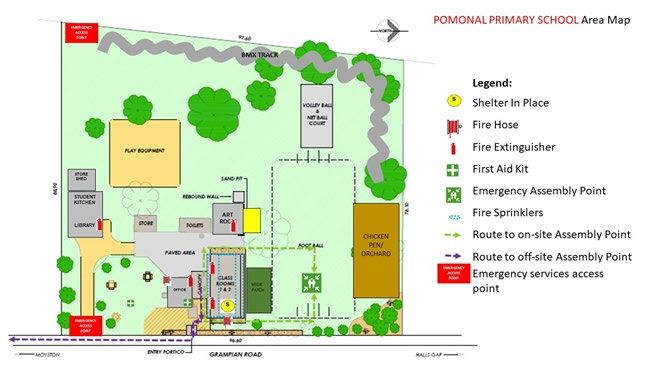
Purpose
The purpose of this Emergency and Critical Incident Management Plan (EMP) is to provide a detailed
plan of how this school campus will prepare and respond to emergencies and critical incidents that may
impact on student and/or staff health, safety and well-being and/or school operations.

Context
Schools have the authority to activate their EMPs when an event warrants a response. Schools should
know how to access multiple information sources including the VicEmergency app,
https://www.emergency.vic.gov.au, emergency services and/or the Department of Education and
Training.

All principals and key school staff should download the VicEmergency app on their phone with a watch
zone around their school to receive alerts and information regarding hazards and incidents in their vicinity.

Should the principal or school be made aware of an emergency in the local area, the principal or
nominated person will consult the following sources for information:
   1. Call ‘000’ for life-threatening or time critical emergencies.
   2. Contact the Incident Support and Operations Centre (ISOC) on 1800 126 126.
   3. Seek support from your region/regional Manager, Operations and Emergency Management or
        Emergency Management Support Officer if required.
   4. Check the VicEmergency app or www.emergency.vic.gov.au for up to date information on
        warnings and incidents.
   5. Contact your Senior Education Improvement Leader.
   6. Check the Department of Education and Training web site for incident updates.

Emergency Management Plan: Pomonal Primary School - 2019-2020
Printed: 27/05/2020
Page 2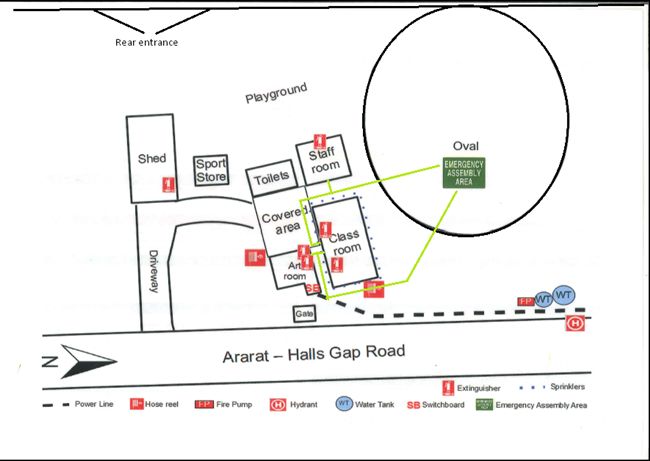
Distribution List
Name                                       Position Title and Organisation   Communication Date   Email or Postal
                                           Name                                                   Address

All School staff                           Pomonal Primary School            08/11/2018           Pomonal Primary
                                                                                                  School

Peter Shelley                              Pomonal Fire Brigade              09/11/2018           C/O Pomonal
                                                                                                  General Store,
                                                                                                  Pomonal, Vic, 3381

Emergency Management Plan: Pomonal Primary School - 2019-                                             Printed: 27/05/2020

Page | 3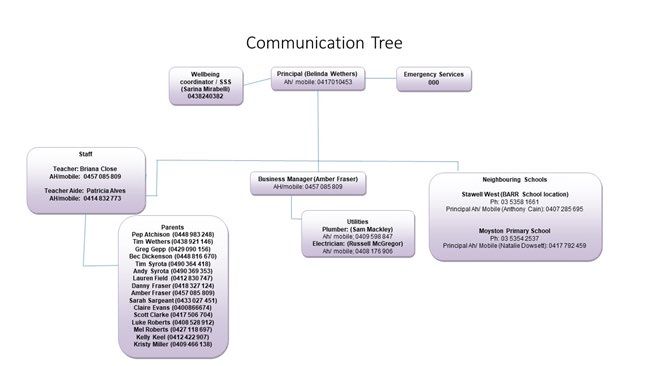
Facility Profile
      School Name/Campus Name                 Pomonal Primary School

      Address                                 2859 Ararat - Halls Gap Road, Pomonal, VIC, 3381

      Phone                                   03 5356 6292

      Email                                   pomonal.ps@edumail.vic.gov.au

      Fax                                     0

      DET Region                              SOUTH-WESTERN VICTORIA

      DET Area                                Central Highlands Area

      LGA                                     Ararat (RC)

      BOM/Fire District                       South West District

      Is your school on Bushfire              Yes
      At- Risk Register?

      Bushfire At-Risk Register               Category 2
      Category

      Operating Hours                         8:30-4:30

      Number of Students                      20

      Number of Staff                         6

      Number of Buildings                     6

      Is the School a designated              No
      Neighborhood Safer Place?

      Shelter-In-Place Location               Pomonal Primary School

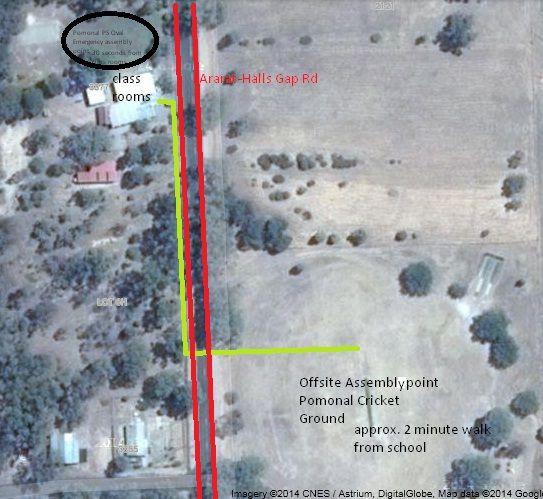
      On-site Evacuation Location             Pomonal Primary School Oval

      Off-site Evacuation Location            Pomonal Cricket Ground

Emergency Management Plan: Pomonal Primary School - 2019-                                        Printed: 27/05/2020

Page | 4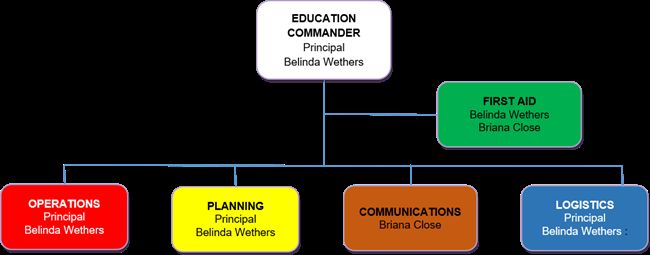
Typical method used for                 email, school newsletter, phone
         communications to school
         community

         Is this school has other                No
         services or users of the site?

       Other Services/Users of Site
Service/User     Location                    Number of Student       Emergency Contact    Phone                 Mobile
Name                                         or Visitor

       Building Information Summary
       Telephones (landlines)
         Location                                                                        Number

         Staff room/Office, Senior class room, Junior class room, Art room, shed         53566292

       Alarms
         Description                   Location                              Monitoring           Number
                                                                             Company

         Fire                          N/A

         Intrusion                     N/A

         Other                         N/A

       Utilities
         Description                   Location                       Service               Location of shutoff
                                                                      Provider              Instructions

         Gas / Propane                 Behind Art building in wire                          Portable cylinder
                                       cage

   Emergency Management Plan: Pomonal Primary School - 2019-                                                    Printed: 27/05/2020

   Page | 5
Water Mains located in front Grampians Water
garden between the two
gates
Electricity Kitchenette in Office Kitchenette in Office
Sprinkler System
Control Valve Location Front of school on junior classroom wall
Shutoff Instructions Location Fire pump near water tanks
Boiler Room
Location N/A
Access N/A
Emergency Power System
Type N/A
Location N/A
Provides power to N/A
Shutoff Instructions Location N/A
Building and Site Hazards
Location Number
Additional Profile Information
Additional Info
Emergency Management Plan: Pomonal Primary School - 2019- Printed: 27/05/2020
Page | 6Emergency Management Plan: Pomonal Primary School - 2019- Printed: 27/05/2020 Page | 7
Emergency Kit Checklist
Checklist                                                           Yes / No

Student data and parent contact information (contained in EMP)      Yes

Student and staff with additional needs list (contained in EMP)     Yes
including any student medications

Staff contact information                                           Yes

List of staff on the IMT                                            Yes

Facility keys                                                       Yes

Standard portable First Aid Kit. Refer to First Aid Kits Contents   Yes
Checklist

Torch with replacement batteries (or wind up torch)                 Yes

Whistle                                                             Yes

Megaphone                                                           Yes

Portable battery powered radio                                      Yes

Copy of facility site plan and EMP including evacuation routes      Yes

Water                                                               Yes

Sunscreen and spare sunhats                                         Yes

Plastic garbage bags and ties                                       Yes

Toiletry supplies                                                   Yes

Sanitary products                                                   Yes

    Review Emergency kit checked date

Date emergency kit checked                                    02/09/2019

Next check date                                               07/09/2020

Emergency Management Plan: Pomonal Primary School - 2019-                      Printed: 27/05/2020

Page | 8
Drill Schedule
School Term Drill Type Contact Person Schedule Date Actual Date
13/09/2019 09/11/2018
Term 2 Emergency Drill (Go to 01/11/2019
shelter)
Term 3 snake (Go to shelter) Belinda Wethers 13/08/2019
Term 4 Bushfire (ember attack) -Full Belinda Wethers 01/11/2019
lock down
Emergency Management Plan: Pomonal Primary School - 2019- Printed: 27/05/2020
Page | 9First Aid Training
Staff Member Training Completed Date Qualified To
Belinda Wethers Provide First Aid HLTAID003 19/03/2022
Briana Close Provide First Aid HLTAID003 19/03/2022
Amber Fraser Provide First Aid HLTAID003 19/03/2022
Other Training Record
Staff Member Training Type Date
Belinda Wethers Asbestos Training
Emergency Management Plan: Pomonal Primary School - 2019- Printed: 27/05/2020
Page | 10Students or Staff with Additional Needs
To ensure adherence to the provisions of the Information Privacy Act 2000 you should
not record personal details here.
Add summary of those with additional needs or medical conditions below, without
including personal details.
Category Number of Staff Number of Students
Autism 0 1
Severe behaviour disorder 0 2
Emergency Management Plan: Pomonal Primary School - 2019- Printed: 27/05/2020
Page | 11Risk Assessment
Identified Hazards Description of Risk Existing Controls Effectiveness of Risk Rating Controls to be implemented Revised Risk Rating
existing controls
Bushfire/Grassfire Probable Cause: Bushfire rapidly Effective
spreading from forest in close • Routine check by plumber of emergency sprinkler Consequence During an elevated fire danger period ensure a Consequence
proximity to the school. Possible system heightened state of readiness. As appropriate,
Major Severe
Consequences: Fatality and/or • Routine pump inspection and fire hoses this will include:
permanent disability from burns. • Annual Fire drill in conjunction with CFA Likelihood • Consultation with local/District CFA to Likelihood
Serious injury from smoke • Ensure gutters are clear of debris. Possible obtain advice on current bushfire Possible
inhalation. Stress or psychological • Check CFA website, alerts during the bushfire Risk Level conditions that could impact the facility. Risk Level
injury requiring extensive clinical season. Use CFA app with notifications turned on. • Ensure lines of communication with
High Extreme
support for multiple individuals. • Working bees to clear and clean up school twice relevant emergency services are
per year, plus gardener to control grass and available. good mobile phone
foliage. coverage
• EMP is reviewed and socialised with staff, • A staff member will regularly monitor
school council and community before fire season. CFA and Bureau of Meteorology
Staff and parents aware of plan and understand their role websites, listen to ABC local radio and
within it. check the VicRoads website for road
closures and CFA App.
• Consider cancelling excursions.
• act upon Arborists report as to fire
hazards posed by trees
• Shelter in Place (SIP) maintained in
good working order and capable to hold
all staff and students
Convene the IMT and consider other actions and
confirm state of readiness.
Intruder Probable Cause: Unknown/known Effective
person entering the facility and • Lockdown/lockout/ evacuation procedures Consequence • Staff will share information on a 'need Consequence
demonstrating threatening practiced. to know' basis concerning parent
Minor Minor
behaviour due to: Police • Encourage engagement of parents in school issues.
operation/siege, pursuit of an activities. Likelihood • The school will increase number of staff Likelihood
offender. Drug affected or mentally • In relation to court orders / custody papers: Rare on yard duty as required, develop a Rare
unstable person Armed intruder. o the school maintains a register of current Risk Level roster and monitor attendance of yard Risk Level
Custodial/Parent dispute. Probable documents duty teachers.
Low Low
Consequences: Physical and/or o parents are advised of the relevant school • Where necessary, the school will seek
psychological harm to staff and/or processes and duty of care to other legal advice and obtain a trespass
students. students and staff. order for parents who use threatening
behaviour.
• If there is an escalation of Intruder
incidents, the school will consider:
• issuing yard duty staff with two-way
radios linked to an office base station
• liaising with local police to arrange a
prompt response to any call for
assistance
Emergency Management Plan: Pomonal Primary School - 2019- Printed: 27/05/2020
2020
Page | 12Building fire Probable Cause: A building fire Fire services equipment (fire hose reels, fire extinguishers, Effective • all non-essential electrical equipment to
resulting from: Stored chemicals fire blankets, hydrants) is tested and tagged as per Consequence be checked and switched off every day Consequence
such as cleaning fluids. Incident in Australian Standards.
Moderate Moderate
kitchen. Exploding gas tank. Faulty • A Workplace Inspection is completed once per
electrical wiring. Faulty electrical term to check that exit signs and other emergency Likelihood Likelihood
equipment. Probable equipment is working. Unlikely Rare
Consequences: Risk of injury from • Communication systems (telephone system) tested Risk Level Risk Level
burns or smoke inhalation. on a regular basis.
Medium Low
• A fire blanket (tested and tagged to Australian
Standards) is available in all kitchen areas.
• All electrical equipment is tested and tagged as per
Australian Standards and that frayed leads,
damaged equipment and so on are disposed of in
an appropriate manner.
snake bite Probable Cause: Snake hiding in Inspect school yard for hazardous areas. Remove all timber, Needs Improvement
garden/ debris in school yard. building supplies and garden materials around school yard Consequence • Ensure working bees are scheduled Consequence
Probable Consequences: prior to summer. prior to summer break.
Moderate Moderate
Poisoning and/or injury requiring
urgent medical attention Likelihood Likelihood
Possible Unlikely
Risk Level Risk Level
Medium Medium
Flooding Probable Cause: Iron off building Ensure server and other important infrastructure is stored in Acceptable Conduct regular roof inspections and provide
getting blown off in storm most secure building. Consequence report to department to seek additional funding Consequence
Probable Consequences: to repair roof/ building (building is 130 years old
Severe Moderate
Electrical wiring getting wet and and has some significant issues).
shorting out; roof collapsing due to Likelihood Lock and prohibit access to building if deemed Likelihood
moisture in roof cavity; equipment Possible unsafe. Possible
getting wet; mould Risk Level Electrical inspection if leaking occurs to ensure Risk Level
building safety.
Extreme Medium
Pandemic Probable Cause: Student Notify parents if students unwell and send them home. Acceptable Notify school community if there have been
attending school unwell Probable Separate unwell student from other students. Consequence reported contagious diseases. Consequence
Consequences: Spread of illness/ Encourage regular hand washing. Don't allow students to Don't permit families to send students to school
Moderate Moderate
contagious symptoms to other share food/ water bottles until they are out of the contagious zone
students, parents and the Likelihood Likelihood
community Possible Unlikely
Risk Level Risk Level
Medium Medium
Loss of essential Lack of availability of school Ensure facilities are regularly maintained. Acceptable If known in advance that essential services are
services resources such as computers Use public toilets across the road Consequence scheduled, plan to relocate students to merge Consequence
Lack of availability of fresh drinking Relocate to Hall if water/ toilets likely to be out for half a day with Moyston or plan an excursion.
Moderate Insignificant
water and water for flushing toilets or more.
Plan flexible lessons that can be delivered without IT Likelihood Likelihood
Unlikely Unlikely
Risk Level Risk Level
Medium Low
Emergency Management Plan: Pomonal Primary School - 2019- Printed: 27/05/2020
2020
Page | 13Child Abuse Probable causes: Domestic Effective Engage Student Services to provide additional
violence; Substance abuse; • Recognise indicators of Child Abuse Consequence support for child. Consequence
Stress/isolation; Mental health • Child Safe Standards Engage Grampians community Health to support
Major Moderate
problems/intellectual disability; • PROTECT protocol family.
Lack of parenting skills Probable • Student Critical Incident Advisory Line Likelihood Likelihood
consequences: Physical and • Student Support Services/Student Welfare Coordinator Rare Unlikely
psychological Risk Level Risk Level
trauma/distress/injury;
Medium Medium
Depression/apathy; Inability to
concentrate;
Emotional/behavioral/learning
problems; Eating Disorder
Information Security Probable Causes: Hacking; Effective Closely monitor student IT use.
Malware virus; Unprotected • Privacy (including DET’s Schools’ Privacy Policy) Consequence Don't allow sharing of passwords Consequence
systems/passwords; Accidental • Privacy, Department provided software
Moderate Minor
Probable consequences: • Privacy (requests for Information about Students)
Inconvenience Inability to • Acceptable use of ICT Resources Likelihood Likelihood
access/use computer system; • Staff member manages and reviews school’s privacy Possible Unlikely
Loss/corruption of files/data; practices Risk Level Risk Level
privacy breach • Regular privacy audit to determine what information the
Medium Low
school collects, how it is used and with whom information
is shared.
• Examine data security arrangements
• BYOD usage and guidelines
• Password protocols for ICT
Medical Emergency Probable causes: Acceptable Obtain up to date medical records before taking
Accident/misadventure; • Staff trained in first aid Consequence students off school grounds on excursions or Consequence
known/unknown illness Probable • First Aid Kit camps.
Major Moderate
consequences: Ill health, • Staff observant to signs of illness Ensure students are adequately supervised and
recuperation; hospitalization; • Medical history – staff/students Likelihood not permitted to engage in dangerous behaviour. Likelihood
impact on continuity of education; • First Aid and Infection Control Procedure Possible Ensure adequate staff: student ratios is met for Unlikely
Psychological distress for those • Medication Authority Form and authority to administer Risk Level outdoor activities. Risk Level
witnessing incident
High Medium
Mental Stress Probable causes: Exposure to Acceptable Monitor student and staff well-being.
distressing event; • Student Support Services Consequence Discuss concerns with parents/ staff and provide Consequence
Anxiety/depression; illness; • Well-being staff in school support to seek counselling assistance.
Major Moderate
ongoing issues with challenging • Safe Minds Encourage staff to take time off if they are not
students/ parents Probable • Navigator Program
Likelihood coping with the challenging work environment. Likelihood
consequences: Psychological • Student Engagement and Inclusion Guidance Likely Modify staff tasks Possible
trauma/distress; Attempted • Building Resilience Framework Risk Level Risk Level
suicide; Suicidal ideation/self- • Victorian Anti-bullying and Mental Health Initiative
Extreme Medium
harm; Interrupted learning
Missing person - Probable causes; Lost or Acceptable Ensure head counts are conducted prior to
school or school separated whilst on • School records attendance Consequence leaving any locations. Consequence
camp/excursion camp/excursion; Truancy; • Student engagement policy to promote school Provide comprehensive safety briefings.
Major Moderate
Unknown - i.e. distress Probable attendance and address truancy, which is staged Advise students to stay in last place and wait for
consequences: injury; interrupted • Recess and lunchtime supervision. Likelihood staff to find them Likelihood
education; psychological • Behaviour Support Plans to address individual truancy. Possible Unlikely
trauma/distress Risk Level Risk Level
Emergency Management Plan: Pomonal Primary School - 2019- Printed: 27/05/2020
2020
Page | 14• Student Activity Locator to be completed ahead of all High Medium
camps (which includes outlining all students to attend
camp)
• List of students to attend camp to be held at school site
and by Teacher in Charge on camp.
• School excursion/camp risk assessment
Traumatic Probable causes:
Death/Injury/Grief Accident/misadventure; Existing • Student Support Services
illness; Sudden medical • Well-being staff in school
emergency Probable • Managing Trauma Guide
Consequences: Distress/anger; • Incident Support and Operations Centre referrals
Disruption to school operations; • Employee Assistance Program
Disruption to school operations;
Stress, psychological injury,
impact on well-being requiring
support
Violence, Aggression Probable causes: underlying Site based policies and strategies Acceptable School Wide Positive Behaviour strategy
and/or harassment abuse or exposure to family • Lunchtime and recess supervision Consequence Restorative Justice practice Consequence
violence; developmental factors • School based security measures e.g. duress alarm, Routine detention if students act in an
Major Moderate
Probable Consequences: physical CCTV inappropriate manner.
or psychological harm; Disruption • Behavioral Code of Conduct Likelihood Likelihood
to learning/continuity of education • School social media strategies to address online Possible Possible
harassment Risk Level Risk Level
• Requirement for multiple staff to be present at meetings
High Medium
or incidents involving aggressive parent or student
School pursues specific interventions or referrals as
required/appropriate:
• Trespass order
• Child Protection referral
• Family violence referral
Specific supports for students with challenging behaviors and
interventions:
• Referral to Student Support Services (SSS)
• School Wide Positive Behaviour Support strategies
(Behaviour Support Plans etc.)
• Restraint and Seclusion procedures
• Respectful Relationships
• Health and Human Services Behaviour Support Services
• More advanced supports accessed as appropriate e.g.
Engagement of a Student Support Services visiting
professional
• School welfare officer/coordinator engaged
Training
• Diffusion strategies and training for staff
• Conflict management training
• Awareness training and resources – Building Resilience
and Preventing Radicalisation to Violent Extremism
Specific support for teacher/staff in dealing with challenging
behaviors
• Employee Assistance Program (EAP) for impacted staff
• Principal Mentor Program
• Proactive Wellbeing Supervision
Emergency Management Plan: Pomonal Primary School - 2019- Printed: 27/05/2020
2020
Page | 15• Principal Health Checks
• Early Intervention Principal Support Service
Refer to additional resources for impacted persons
• School breakfast club (where available)
• School wide Positive Behaviour Support
• Koori inclusive School Wide Positive Behaviour Support
Emergency Management Plan: Pomonal Primary School - 2019- Printed: 27/05/2020
2020
Page | 16Core Emergency Response Procedures
Core Procedures Procedure Instructions
On-site evacuation/relocation When it is unsafe for students, staff and visitors to remain inside the school building the Chief
procedure Warden on-site will take charge and activate the Incident Management Team if necessary.
• Call 000 for emergency services and seek and follow advice.
• Evacuate students, staff and visitors to Pomonal Primary School Oval.
• Report the emergency and evacuation to Incident Support and Operations Centre (24
hour, 7 days) on 1800 126 126.
• Take your emergency kit/first aid kit (including your student and staff attendance lists
and a copy of this EMP).
• Once at your primary and/or secondary assembly point/s, check all students, staff and
visitors are accounted for.
• Ensure communications with emergency services is maintained.
• Wait for emergency services to arrive or provide further information.
• Notify your region and seek advice from your regional Manager, Operations and
Emergency Management if required.
• Confirm with emergency service personnel that it is safe to return to normal
operations.
• Maintain a record of actions/decisions undertaken and times.
• Contact parents as required.
Actions after on-site evacuation/relocation procedure
• Ensure any students, staff or visitors with medical or other needs are supported.
• Advise the Incident Support and Operations Centre and the region (regional Manager,
Operations and Emergency Management) that the evacuation is over.
• Determine whether to activate your parent re-unification process.
• Determine if there is any specific information students, staff and visitors need to know
(for example, parent reunification process or areas of the facility to avoid).
• Contact the SSSO Network Coordinator if required.
• Print and issue pre-prepared parent letters and give these to students to take home.
• Ensure all staff are made aware of Employee Assistance Program contact details.
• Seek support from your region/regional Manager, Operations and Emergency
Management if required.
• Undertake operational debrief with staff and Incident Management Team to identify
any on-site evacuation and procedural changes that may be required.
• Complete your Post Emergency Record.
Off-site evacuation procedure If it is unsafe for students, staff and visitors to remain on the school grounds the Chief Warden
on-site will take charge and activate the Incident Management Team if necessary.
• Call 000 for emergency services and seek and follow advice.
• Identify which off-site assembly point you will evacuate staff, students and visitors to.
• Evacuate staff, students and visitors to Pomonal Cricket Ground.
• Report the emergency and evacuation to Incident Support and Operations Centre (24
hour, 7 days) on 1800 126 126.
• Take your emergency kit/first aid kit (including your student and staff attendance lists
and a copy of this EMP).
• Once at primary and/or secondary assembly point/s, check all students, staff and
visitors are accounted for.
• Ensure communications with emergency services is maintained.
• Wait for emergency services to arrive or provide further information.
Emergency Management Plan: Pomonal Primary School - 2019- Printed: 27/05/2020
Page | 17• Notify your region and seek advice from your regional Manager, Operations and
Emergency Management if required.
• Confirm with Emergency Service personnel that it is safe to return to normal
operations.
• Maintain a record of actions/decisions undertaken and times.
• Contact parents as required.
Actions after off-site evacuation procedure
• Ensure any students, staff or visitors with medical or other needs are supported.
• Advise the Incident Support and Operations Centre and the region (regional Manager,
Operations and Emergency Management) that the evacuation is over.
• Determine whether to activate your parent re-unification process.
• Determine if there is any specific information students, staff and visitors need to know
(for example, parent reunification process or areas of the facility to avoid).
• Direct all Media enquiries to DET Media Unit on 8688 7776.
• Contact the SSSO Network Coordinator if required.
• Print and issue pre-prepared parent letters and give these to students to take home.
• Ensure all staff are made aware of Employee Assistance Program contact details.
• Seek support from your region/regional Manager, Operations and Emergency
Management if required.
• Undertake operational debrief with staff and Incident Management Team to identify
any off-site and procedural changes that may be required.
• Complete your Post Emergency Record.
Lock-down procedure When an external and immediate danger is identified and it is determined that the students
should be secured inside the building for their own safety the Chief Warden on-site will take
charge and activate the Incident Management Team if necessary.
• Call 000 for emergency services and seek and follow advice.
• Initiate the lock-down and provide instructions to staff, for example, close internal
doors and windows, remain in classroom, sit below window level or move into
corridors.
• Check that all external doors (and windows if appropriate) are locked.
• If available, allocate staff to be posted at locked doors to allow students, staff and
visitors to enter if locked out.
• Report the emergency and lock-down to the Incident Support and Operations Centre
(24 hour, 7 days) on 1800 126 126.
• Divert parents and returning groups from the school if required.
• Ensure a telephone line is kept free.
• Keep public address system free.
• Keep main entrance as the only entry point. It must be constantly monitored and no
unauthorised people allowed access.
• If safe to do so, have a staff member wait at the main entry to the school to guide
emergency services personnel.
• As appropriate, ascertain that all students, staff and visitors are accounted for.
• Notify your region and seek advice from your regional Manager, Operations and
Emergency Management if required.
• As appropriate, confirm with emergency services personnel that it is safe to return to
normal operations.
• Maintain a record of actions/decisions undertaken and times.
• Contact parents as required.
Actions after lock-down procedure
• Ensure any students, staff or visitors with medical or other needs are supported.
Emergency Management Plan: Pomonal Primary School - 2019- Printed: 27/05/2020
Page | 18• Advise the Incident Support and Operations Centre and the region (regional Manager,
Operations and Emergency Management) that the lock-down is over.
• Determine whether to activate your parent re-unification process.
• Determine if there is any specific information students, staff and visitors need to know
(for example, parent reunification process or areas of the facility to avoid).
• Direct all Media enquiries to DET Media Unit on 8688 7776.
• Print and issue pre-prepared parent letters and give these to students to take home.
• Contact the SSSO Network Coordinator if required.
• Ensure all staff are made aware of Employee Assistance Program contact details.
• Seek support from your region/regional Manager, Operations and Emergency
Management if required.
• Undertake operational debrief with staff and Incident Management Team to identify
any lock-down and procedural changes that may be required.
• Complete your Post Emergency Record.
Lock-out procedure When an internal immediate danger is identified and it is determined that students should be
excluded from buildings for their safety the Chief Warden on-site will take charge and activate
the Incident Management Team if necessary.
• Call 000 for emergency services and seek and follow advice.
• Announce lock-out with instructions about what is required. Instructions may include
nominating staff to:
o Lock doors to prevent entry
o Check the premises for anyone left inside
o Obtain Emergency Kit
• Go to the designated assembly point/s Pomonal Cricket Ground.
• Check that students, staff and visitors are all accounted for.
• Report the emergency and lock-out to the Incident Support and Operations Centre (24
hour, 7 days) on 1800 126 126.
• Notify your region and seek advice from your regional Manager, Operations and
Emergency Management if required.
• Where appropriate, confirm with emergency services personnel that it is safe to return
to normal operations.
• Maintain a record of actions/decisions undertaken and times.
• Contact parents as required.
Actions after lock-out procedure
• Ensure any students, staff or visitors with medical or other needs are supported.
• Advise the Incident Support and Operations Centre and the region (regional Manager,
Operations and Emergency Management) that the lock-out is over.
• Determine whether to activate your parent re-unification process.
• Determine if there is any specific information students, staff and visitors need to know
(for example, parent reunification process or areas of the facility to avoid).
• Print and issue pre-prepared parent letters and give these to students to take home.
• Direct all Media enquiries to DET Media Unit on 8688 7776.
• Ensure all staff are made aware of Employee Assistance Program contact details.
• Contact the SSSO Network Coordinator if required.
• Seek support from your region/regional Manager, Operations and Emergency
Management as required.
• Undertake operational debrief with staff and Incident Management Team to identify
any lock-out and procedural changes that may be required.
• Complete your Post Emergency Record.
Emergency Management Plan: Pomonal Primary School - 2019- Printed: 27/05/2020
Page | 19Shelter-in-place procedure When an incident occurs outside the school and emergency services or the Chief Warden
determines the safest course of action is to keep students and staff inside a designated building
in the school (as evacuation might reasonably expose people to a greater level of danger until
the external event is handled), the Chief Warden on-site will take charge and activate the
Incident Management Team if necessary.
• Call 000 for emergency services and seek and follow advice.
• Chief Warden activates the Incident Management Team.
• Move all students, staff and visitors to the pre-determined shelter-in-place area senior
and junior classrooms.
• Take your emergency kit/first aid kit (including your student and staff attendance lists
and a copy of this EMP).
• Report the emergency to the Incident Support and Operations Centre (24 hour, 7
days) on 1800 126 126.
• Check that all students, staff and visitors are accounted for.
• Ensure communications with emergency services is maintained.
• Wait for emergency services to arrive or provide further information.
• Notify your region and seek advice from your regional Manager, Operations and
Emergency Management if required.
• Where appropriate, confirm with emergency service personnel that it is safe to return
to normal operations.
• Maintain a record of actions/decisions undertaken and times.
• Contact parents as required.
Actions after shelter-in-place procedure
• Ensure any students, staff or visitors with medical or other needs are supported.
• Advise the Incident Support and Operations Centre that shelter-in- place is over.
• Determine whether to activate your parent re-unification process.
• Determine if there is any specific information students, staff and visitors need to know
(for example parent reunification process or areas of the facility to avoid).
• Direct all Media enquiries to DET Media Unit on 8688 7776.
• Print and issue pre-prepared parent letters and give these to students to take home.
• Ensure all staff are made aware of Employee Assistance Program contact details.
• Contact the SSSO Network Coordinator if required.
• Seek support from your region/regional Manager, Operations and Emergency
Management as required.
• Undertake operational debrief with staff and Incident Management Team to identify
any shelter-in-place and procedural changes that may be required.
• Complete your Post Emergency Record.
Emergency Management Plan: Pomonal Primary School - 2019- Printed: 27/05/2020
Page | 20Specific Emergency Response Procedures
Specific Procedure Instructions
Procedures
Bushfire/Grassfire
• Call 000 for emergency services and seek and follow advice.
• Report the emergency immediately to the Chief Warden who will convene the IMT if necessary.
• Determine appropriate response strategy (evacuate or shelter-in-place) in consultation with emergency services, if possible.
• If evacuation is required and time permits before you leave:
o make sure you close all doors and windows
o turn off power and gas.
o Turn on Sprinkler system
• Check that all students, staff, visitors and contractors are accounted for.
• Report the emergency to Security Services Unit on 9603 7999.
• Listen to TV or local radio on battery-powered sets for bushfire/weather warnings and advice.
• Ensure staff and students do not hinder emergency services or put themselves at risk by going near damaged buildings or trees.
• Notify your region and seek advice from your regional Manager, Operations and Emergency Management if required.
• Direct all Media enquiries to DET Media Unit on 9637 2871.
• Contact parents as required.
Intruder
• Call 000 for emergency services and seek and follow advice.
• Report the emergency immediately to the Chief Warden.
• Do not do or say anything to the person to encourage irrational behaviour.
• Initiate action to restrict entry to the building if possible and confine or isolate the threat from building occupants.
• Determine whether evacuation, lock-down or shelter-in-place is required. Do this in consultation with the Police where
possible.
• Evacuation only should be considered if safe to do so.
• Report emergency to the Security Services Unit on 9603 7999.
• Notify your region and seek advice from your regional Manager, Operations and Emergency Management if required.
• Contact parents as required.
• Direct all Media enquiries to DET Media Unit on 9637 2871.
Building fire
• Call 000 for emergency services and seek and follow advice.
• Activate the fire alarm.
• If appropriate, follow the procedure for on-site evacuation.
• Report the emergency immediately to the Chief Warden who will convene your IMT if necessary.
• Extinguish the fire (only if safe to do so).
• Evacuate to the school oval, closing all doors and windows.
• Check that all areas have been cleared and notify the Chief Warden.
• Check that all students, staff, visitors and contractors are accounted for.
• Report emergency to the Security Services Unit on 9603 7999.
• Notify your region and seek advice from your regional Manager, Operations and Emergency Management if required.
• Contact parents as required.
• Direct all Media enquiries to DET Media Unit on 9637 2871.
snake bite Ensure the snake is away from casualty/ first aider.
Avoid moving the casualty
• Call’ 000’ if immediate/life threatening
• Administer first aid
• Contact parent/guardian of affected student
• Contact Incident Support and Operations Centre (ISOC) on 1800 126 126
• Record evidence (if applicable)
• Keep other students away from the emergency/incident
• Provide support for students who may have witnessed early stage of emergency
Flooding
• Contact Plumber to stop leak
• If damage to building has occurred, contact
• Call’ 000’ if immediate/life threatening
• Administer first aid
• Contact parent/guardian of affected student
• Contact Incident Support and Operations Centre (ISOC) on 1800 126 126
• Record evidence (if applicable)
• Keep other students away from the emergency/incident
• Provide support for students who may have witnessed early stage of emergency
Pandemic Student arriving with an illness or experiencing illness symptoms at school and spreading germs to other students, staff.
• Contact family members to ask them to collect unwell student ASAP.
• Keep student isolated form other students and staff to avoid the spread of illness.
• Disinfect areas students has been in contact with eg. bathrooms, tables etc.
Emergency Management Plan: Pomonal Primary School - 2019- Printed: 27/05/2020
Page | 21• Contact parent/guardian of student(s) impacted and advise family of Departmental guideline regarding the
isolation period (eg. how long they need to stay away from school for).
• Notify other parents of reported illness and the signs and symptoms to look out for.
• Contact ‘000’ if immediate/life threatening and require police/ambulance attendance
• Determine whether evacuation, lock-down or Shelter in Place is required.
• Administer first aid as required.
Child Abuse
In the event of an incident, disclosure, or suspicion of child abuse, the school will:
• Follow the Four Critical Actions for Schools about Responding to Incidents, Disclosures and Suspicions of Child
Abuse hyperlinked at
https://www.education.vic.gov.au/Documents/about/programs/health/protect/FourCriticalActions_ChildAbuse.pdf
• Report the incident internally to the Incident Support and Operations Centre (ISOC) by calling 1800 126 126. If you require
additional advice and support with managing the incident, ask to consult with the Incident Management and Support Unit (IMSU),
available on the same phone number.
This is an abridged version of schools’ obligations which are outlined in more detail in Identifying and Responding to All
Forms of Abuse in Victorian Schools hyperlinked at
https://www.education.vic.gov.au/Documents/about/programs/health/protect/ChildSafeStandard5_SchoolsGuide.pdf
For suspected student sexual offending, the school will:
• Follow the Four Critical Actions for Schools on Responding to Student Sexual Offending hyperlinked at
https://www.education.vic.gov.au/Documents/about/programs/health/protect/FourCriticalActions_SSO.pdf.
• Report the incident internally to ISOC by calling 1800 126 126. If you require additional advice and support with managing the
incident, ask to consult with the IMSU, available on the same phone number.
The Four Critical Actions is a summary of schools’ obligations which are outlined in greater detail in Identifying and
Responding to Student Sexual Offending hyperlinked at
https://www.education.vic.gov.au/Documents/about/programs/health/protect/SSO_Policy.pdf
In the event of an incident, disclosure, or suspicion of child abuse, the school will:
• Follow the Four Critical Actions for Schools about Responding to Incidents, Disclosures and Suspicions of Child
Abuse hyperlinked at
https://www.education.vic.gov.au/Documents/about/programs/health/protect/FourCriticalActions_ChildAbuse.pdf
• Report the incident internally to the Incident Support and Operations Centre (ISOC) by calling 1800 126 126. If you require
additional advice and support with managing the incident, ask to consult with the Incident Management and Support Unit (IMSU),
available on the same phone number.
This is an abridged version of schools’ obligations which are outlined in more detail in Identifying and Responding to All
Forms of Abuse in Victorian Schools hyperlinked at
https://www.education.vic.gov.au/Documents/about/programs/health/protect/ChildSafeStandard5_SchoolsGuide.pdf
For suspected student sexual offending, the school will:
• Follow the Four Critical Actions for Schools on Responding to Student Sexual Offending hyperlinked at
https://www.education.vic.gov.au/Documents/about/programs/health/protect/FourCriticalActions_SSO.pdf.
• Report the incident internally to ISOC by calling 1800 126 126. If you require additional advice and support with managing the
incident, ask to consult with the IMSU, available on the same phone number.
The Four Critical Actions is a summary of schools’ obligations which are outlined in greater detail in Identifying and
Responding to Student Sexual Offending hyperlinked at
https://www.education.vic.gov.au/Documents/about/programs/health/protect/SSO_Policy.pdf
In the event of an incident, disclosure, or suspicion of child abuse, the school will:
• Follow the Four Critical Actions for Schools about Responding to Incidents, Disclosures and Suspicions of Child
Abuse hyperlinked at
https://www.education.vic.gov.au/Documents/about/programs/health/protect/FourCriticalActions_ChildAbuse.pdf
• Report the incident internally to the Incident Support and Operations Centre (ISOC) by calling 1800 126 126. If you require
additional advice and support with managing the incident, ask to consult with the Incident Management and Support Unit (IMSU),
available on the same phone number.
This is an abridged version of schools’ obligations which are outlined in more detail in Identifying and Responding to All
Forms of Abuse in Victorian Schools hyperlinked at
https://www.education.vic.gov.au/Documents/about/programs/health/protect/ChildSafeStandard5_SchoolsGuide.pdf
For suspected student sexual offending, the school will:
• Follow the Four Critical Actions for Schools on Responding to Student Sexual Offending hyperlinked at
https://www.education.vic.gov.au/Documents/about/programs/health/protect/FourCriticalActions_SSO.pdf.
• Report the incident internally to ISOC by calling 1800 126 126. If you require additional advice and support with managing the
incident, ask to consult with the IMSU, available on the same phone number.
The Four Critical Actions is a summary of schools’ obligations which are outlined in greater detail in Identifying and
Responding to Student Sexual Offending hyperlinked at
https://www.education.vic.gov.au/Documents/about/programs/health/protect/SSO_Policy.pdf
Information
Security • Contact your IT specialist technician for advice and support
• If you require support from IMTD contact the Service Desk through one of the following mechanisms:
o Phone 1800 641 943
o Email servicedesk@edumail.vic.gov.au
o Submit an IT Service Request through the Service Gateway
• If the incident involves sensitive and/or personal information that may identify an individual without their consent
• Phone the privacy help desk on 8688 7967
• Email privacy@edumail.vic.gov.au
• Consider notifying the Media Unit on 8688 7776
• If the information security breach is considered malicious contact local police
• Offer impacted staff option to access EAP (as applicable)
• Offer Student Support Services support to impacted students (as applicable)
Emergency Management Plan: Pomonal Primary School - 2019- Printed: 27/05/2020
Page | 22Medical If a medical emergency occurs on a school site or on a camp/excursion
Emergency • Call’ 000’ if immediate/life threatening
• Administer first aid
• Contact parent/guardian of affected student
• Contact Incident Support and Operations Centre (ISOC) on 1800 126 126
• Record evidence (if applicable)
• Keep other students away from the emergency/incident
• Provide support for students who may have witnessed early stage of emergency
Mental Stress
• If there is immediate and/or life threatening concern for an individual’s health or wellbeing contact ‘000’
• Administer first aid (if appropriate) – keep physically and emotionally safe
• Report the incident to the Incident Support and Operations Centre on 1800 126 126
• Consider whether the following supports are appropriate:
o School’s student wellbeing officers
o Student Support Services
o Doctors in Secondary Schools
o Kids Helpline - 1800 55 1800
o Headspace in schools 0458 559 736
o Lifeline - 13 11 14
o Referral to the Navigator program for wraparound support for disengaged learners
o Suicide prevention resources from Beyond Blue and/or Headspace
o CAT Team – acute mental health triage
Missing person - If student/child is missing and/or cannot be accounted for:
school or school
camp/excursion • Search the immediate area
• Contact the parent/career
• Contact ‘000’ for police to report child missing
o Provide a description, time last seen and location
• Report the incident to the Incident Support and Operations Centre on 1800 126 126
Traumatic If death or injury occurs on a school site (that impacts or risks impacting the health, safety and wellbeing of students or
Death/Injury/Grief staff):
• Contact ‘000’ for police/ambulance attendance
• Contact the Incident Support and Operations Centre (ISOC) on 1800 126 126
• Seek Student Support Services support
• Refer to the ‘Managing Trauma’ guide to support, plan for, and lead an effective recovery including:
• Develop a Communications Plan – check what information can be released:
o Notification (as appropriate) to school community – letter, newsletters, emails, phone calls, text
messages or SMS alert
o Limit exposure to ongoing trauma, distressing sights, sounds and smells
o Continue to identify those most at risk and triage for support
o Consider tribute, memorial, ritual
• Monitor the wellbeing of staff
• Actively implement self-care strategies
• If the incident occurs on school premises/camp/excursion
o Preserve the evidence
o Contact Region – i.e. Senior Education Improvement Leader, regional Manager, Operations and
Emergency Management
o Contact Legal Division on 9637 3146
o Consider a Worksafe Notification 13 23 60
o Contact Communications Division/Media Unit on 8688 7776
Violence, Violence, aggression, harassment, on school site:
Aggression • Intervene only if safe to do so
and/or • Contact ‘000’ if immediate/life threatening and require police/ambulance attendance
harassment • Initiate action to confine or isolate the aggressor
• Determine whether evacuation, lock-down or Shelter in Place is required.
• Administer first aid if required and safe to do so
• Contact parent/guardian of student(s) impacted
• Report the incident to the Incident Support and Operations Centre (ISOC) on 1800 126 126
• Seek Student Support Services or School Wellbeing Officer support to develop a behaviour management plan
• Record evidence (if applicable)
• If multiple students involved and/or witness incident, isolate to preserve the integrity of the evidence until
interviews etc can take place
If staff are directly impacted:
• Consider lodging an eduSafe report
• Consider whether a report to WorkSafe is required
• Contact Employee Assistance Program for support
• Consider liaison with the Principal Early Intervention Program
Emergency Management Plan: Pomonal Primary School - 2019- Printed: 27/05/2020
Page | 23If there is an allegation of reportable conduct:
• Notify the Employee Conduct Branch on 9637 2595 or employee.conduct@edumail.vic.gov.au and follow their
advice
Loss of essential When there is a loss of essential services (power, water, communications):
services • Determine which services are affected and the extent of the impact.
• Respond to any immediate threat to student and staff safety and isolate/secure buildings/areas if necessary.
• Call 000 if emergency services are required to respond e.g. power lines down in front of school.
• Contact the relevant provider/s to report outage and ascertain when restoration will occur.
• Consider consequential impacts, e.g. power outage will impact on phone lines and IT systems.
• Contact your Senior Education Improvement Leader or regional Manager, Operations and Emergency Management for
advice and support if necessary.
• Report the loss of essential services to the Security Services Unit on 1800 126 126.
• Contact parents as required.
• Refer to the school’s Business Continuity Management Plan if the essential services are likely extend beyond 24 hours.
• Insert any additional steps, including mitigation steps that you have identified in your risk assessment
Emergency Management Plan: Pomonal Primary School - 2019- Printed: 27/05/2020
Page | 24Emergency Contacts
During emergency, refer any of the emergency contacts
School Contacts
Key Roles Name Phone Phone (After Mobile
Hours)
Principal Belinda Wethers 53566292 0417010453
Business Manager Leanne McCready 53566292
School Council President Felicity Pitt
Teacher Brianna Close
Art Teacher Kaye Powell
Teacher Aide
CRT Kim McCann
DET Contacts
Roles Name Phone Mobile
Regional Director Wendy Timms 8397 0301
Regional Office (swvr@edumail.vic.gov.au) General enquiries, 1300 333 232,
Manager, Operations & Emergency Andrea Cox (03) 4334 0509 0407 861 841
Management
Emergency Management Support Officer Peter Woodman 03 5215 5220 0436 678 268
Incident Support and Operations Centre 1800 126 126
(ISOC)
Programmed Maintenance Services 1300 133 468
OHS Advisory Service 1300 074 715
Employee Assistance Program 1300 361 008
Media Unit (on call 24/7) (03) 8688 7776
SEIL Paul Nolan 0438 124 383
Emergency Management Plan: Pomonal Primary School - 2019- Printed: 27/05/2020
Page | 25SSSO Team Leader Sarina Mirabilli 53378488 0439959778
Local / Other Organizations
Name Phone
Ararat City Council 03 5355 0200 - SES (flood, storm and 132 500
earthquake)
School Bus Emergency Contacts
Bus Routes Areas Services Schools serviced or bus Contact Details
coordinating school
NA NA NA NA
Emergency Management Plan: Pomonal Primary School - 2019- Printed: 27/05/2020
Page | 26Incident Management Team
IMT Structure
Roles Primary Contact Secondary Contact
Chief Warden/Education
Commander Name: Name:
Belinda Wethers Briana Close
Phone/Mobile: Phone/Mobile:
0417010453 0457085809
Planning Officer
Name: Name:
Belinda Wethers Briana Close
Phone/Mobile: Phone/Mobile:
0417010453 0457085809
Operations Officer (Area Warden)
Name: Name:
Belinda Wethers Briana Close
Phone/Mobile: Phone/Mobile:
0417010453 0457085809
Communications Officer
Name:
Briana Close
Emergency Management Plan: Pomonal Primary School - 2019- Printed: 27/05/2020
Page | 27Phone/Mobile:
0457085809
Logistics Officer (Warden)
Name: Name:
Belinda Wethers Briana Close
Phone/Mobile: Phone/Mobile:
0417010453 0457085809
First Aid Officer
Name: Name:
Belinda Wethers Briana Close
Phone/Mobile: Phone/Mobile:
0417010453 0457085809
Emergency Management Plan: Pomonal Primary School - 2019- Printed: 27/05/2020
Page | 28Incident Management Team Roles &
Responsibilities
Core Procedures Procedure Instructions
Chief Warden/Education Pre-Emergency
Commander • Maintain current contact details of IMT members.
• Conduct regular exercises/drills.
• Ensure students/staff with special needs list and staff trained in first aid list are up to
date.
• Ensure our emergency response procedures are kept up-to-date.
• Ensure staff on the IMT are aware of their responsibilities.
During Emergency
• Attend the emergency control point.
• Ascertain the nature and scope of the emergency.
• Ensure that the emergency services have been notified.
• Ensure the appropriate response has been actioned.
• Convene our IMT as required.
• Initiate evacuation of affected areas/lock-down/lock-out/shelter-in-place as required.
• Brief the incoming emergency services and respond to their requests.
• Report the emergency to the Security Services Unit on 9589 6266.
Post- Emergency
• When the incident is rendered safe or the emergency services returns control, notify
the IMT members to have staff and students return to normal operations.
• Organise debrief with the IMT and, where appropriate, with any attending emergency
Service.
• Compile a report for the IMT and region and notify Security Services Unit (24 hour, 7
days) and the region.
Planning Officer Pre-Emergency
• Assist the Chief Warden.
• Identify resources required.
• Participate in emergency exercises/drills.
During Emergency
• Attend the emergency control point.
• Ascertain the nature and scope of the emergency.
• Report any changes in the situation to the Chief Warden.
• Act as directed by the Chief Warden.
• Plan for contingencies.
Post- Emergency
• Collect and evaluate information relating to the emergency.
• Identify recovery needs and develop a recovery plan (if required).
Operations Officer (Area Pre-Emergency
Warden) • Regularly check and report on deficiencies of emergency equipment and kits.
• Coordinate Safety practices (e.g. clear egress paths, access to first attack equipment
e.g. fire extinguishers and disposal of rubbish) by wardens throughout their areas.
• Participate in emergency exercises/drills.
During Emergency
Emergency Management Plan: Pomonal Primary School - 2019- Printed: 27/05/2020
Page | 29On hearing alarm or becoming aware of an emergency, the Operations Warden will:
• Attend the emergency control point.
• Communicate with the Chief Warden by whatever means available and act on
instructions.
• Implement the emergency response procedure relevant to the floor or area and
ensure that the Chief Warden is notified.
• Direct logistics officer (wardens) to check the floor or area for any abnormal situation.
• Commence evacuation if the circumstances on their floor or area warrant this.
• Control the movement of people.
• Co-opt persons as required to assist a logistics officer (wardens) during an
emergency.
• Ensure that any implications for regular bus/student transport arrangements for the
school or clients schools are addressed.
• Confirm that the logistics officer’s (warden) activities have been completed and report
this to the Chief Warden or a senior officer of the attending emergency services if the
Chief Warden is not contactable.
Post Emergency
• Compile report of the actions taken during the emergency for the debrief.
Communications Officer Pre-Emergency
• Assist the Chief Warden.
• Attend training in the use of the school’s communication system.
• Maintain records and logbooks and make them available for emergency response.
• Ensure emergency and parent contact details are up-to-date.
• Participate in emergency exercises/drills.
During Emergency
• Attend the emergency control point.
• Ascertain the nature and location of the emergency. Maintain up to date information.
• Confirm that emergency services have been notified.
• Notify appropriate IMT members.
• At the direction of the Chief Warden provide instruction and information to staff,
students and parents as required.
• Keep a log of events that occurred during the emergency.
• Act as directed by the Chief Warden.
Post- Emergency
• Collate logs of events completed by all IMT members during the emergency for the
debrief and ensure they are secured for future reference.
• Contact parents as required.
Logistics Officer (Warden) Pre-Emergency
• Ensure staff and students are aware of the emergency response procedures.
• Carry out safety practices (e.g. clear egress paths, access to first attack equipment
e.g. fire extinguishers and disposal of rubbish).
• Participate in emergency exercises/drills.
During Emergency
Persons selected to perform as Logistics Warden will carry out activities as set out in the
emergency response procedures and as directed by the Operations Warden (Area Warden).
Activities may include the following:
• Attend the emergency control point.
• Operate the communication system in place.
• Check that any fire doors and smoke doors are properly closed
Emergency Management Plan: Pomonal Primary School - 2019- Printed: 27/05/2020
Page | 30You can also read


